Any unauthorized distribution or use of this publication may constitute a direct violation of the author's and. This article focuses on the latest but periodic advertisement of the United Nations Sustainable Development Goals (SDGs), their purpose, prospects and limitations. At the Institute for African Studies at the same university, oral tradition, cultural studies and archeology were used to recall and document the arts and sciences of the African past.
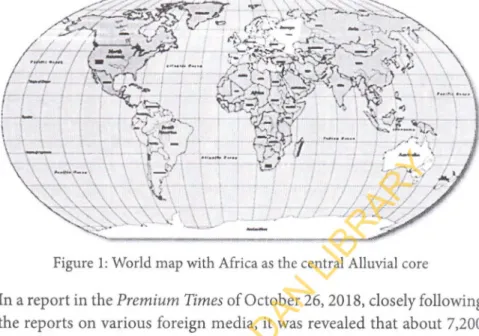
Two centuries earlier, it was fashionable to move from the core centers in search of labor for the industrial drive of the core centers. These questions determine the success or otherwise of the assumptions of development and its sustainability. Ubuntu is the dialectic of being and existence in the formation of the individual and the collective in a balanced interaction of interest and fulfillment.
It is necessary to say that the questioning of the patterns of culture is also its reinvention. That is why I mentioned Immanuel Kant, in the context of other analytical thinkers from the 18th or 19th century before the advent of the colonial enterprise..;.
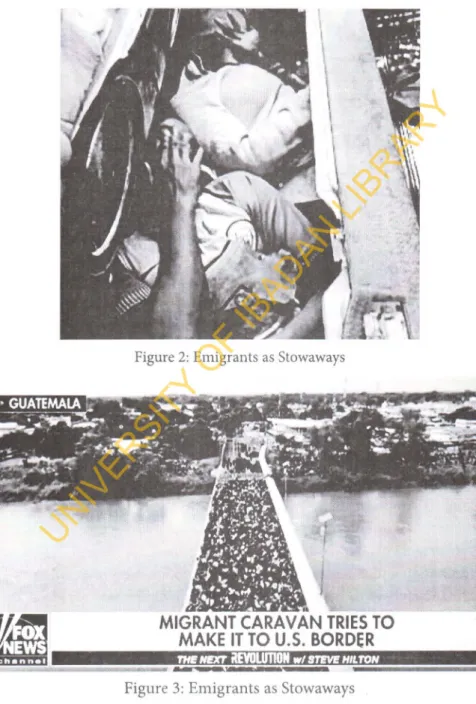
Stavrianos' division of Third World history into three stages is insightful and important, even if it relegates Africa too far to the back burner. He believes that the first phase of the Third World was between 1400-1770, when commercial capitalism integrated Eastern Europe and Latin America as appendages to Western Europe. At that time, commercial capitalism was simply using Africe ms as workers in the New World.
This phase coincides with the consolidation of the third world era in Africa, but not in Europe (cf. For our purpose, a wholesale acceptance of the phases may not be correct for the calculation and historical calculation in the continent of Africa for the above reason and because Africa The dream of an 'industrial' age is still unrealized. At the end of the nineteenth century, Western European powers believed that the world was divided into two blocs: the civilized and the barbarian.
This was the doctrine of Darwinism: "the theory of natural selection", "selection of species", "survival of the fittest", etc. Andre Gunder Frank presented this in "The Sociology of Development and Underdevelopment of Sociology" (1969). . The current understanding of the United Nations' plans for sustainable development keeps falling into the same error.
It is no coincidence that these three powers controlled the focal point of the colonial enterprise until Germany lost its colonies as a direct consequence of its defeat in the First World War. Further explanation of the basic rules and concepts of Marxist theories leads to a very interesting logical understanding of the mechanics of social production as well as the controlling ideology of society. He was able to place historically, in the scale of organized labor, American Society ahead of the British.
It is also worth noting that Marxism and Communism played a major role in the political economy of the Cold War.
How can we all meet at a Common Centre?
The Will and the Wish to Re-member our World
The past is the lamp for the present; the present must not be mortgaged, for its foundations will be the foundation for securing the future. As you can see, the hope of the current generation is both critical and crucial. He identified the imperialist tendencies of the Soviet Union, but he believed that the west had so far dominated and exploited the rest of the world.
How is it possible to shift that dominant center from the concept of T to that of 'WE'. We must invent a free 21st century in which young African Americans are not targeted by American police and ultra-white nationalists. There was a universal iconic spirit of a remarkably equal temperament in the embodiment of the patriot and the nationalist.
This language was able to generate a corresponding and influential corpus of literature and culture which continues to dominate the world even in the absence of the empirical empire. Nigeria and the larger continent of Africa is full of youth; a total of two-thirds of the entire population. Let's take a quote from one of the leading sociologists from the clear, American youth is in ferment.
This movement seeks to reposition humanity and our world in the context of the seventeen sustainable development goals set by the United Nations in 2015. MacArthur, Gordon and Betty Moore, William and Flora Hewlett, Robert Wood Johnson, Oprah Winfrey, Mo Ibrahim, Elon Musk, John Soros and Warren Buffet.' The irony is twofold. This is strongly reminiscent of the thinking of the French anarchist philosopher Pierre Proudhon, who claims in his pamphlet 'Qu'est-ce que la propriete?' (1840) that private property is theft.
Giving aid through the Bretton Woods institutions of the developed world will not be the solution to the recovery and feeding of the third world.
Ubuntu and Nigeria's African Story
From the outset, there was a clash between the personalities of the chief ministers of the three regions – each arguably more important than the erudite Federal Prime Minister, Alhaji Abubakar Tafawa Balewa. In the eyes of the West, Obafemi Awolowo of the Western Region seemed more statesmanlike: at the start of the conference, the London Times ran a full-page advertisement announcing his declaration of freedom under the headline "This I Believe". In contrast, the US-educated Prime Minister Nnamdi ("Zik") Azikiwe of the Eastern Region appeared to have learned more in the US.
At one point, Sardauna accused Awolowo of sending his followers to Israel to be trained as saboteurs in the north - a charge concocted from the fact that western Nigeria imported agricultural experts from Israel to advise its farmers. In the same sense that I was talking about sustainable goals and dreams, Kantian logic can recognize that independence and problems are analytic in the sense that one is a consequence of the other. The only difference was that the Lancaster House Conference at the time met to discuss a federalist constitution rather than the unitary constitution of the current era.
The ambitions of the four leaders; the three regional prime ministers and their prime minister showed an aspiration to invent the dream of sustainable development and goals through independence from the colonial burden, but the historical personalities had through their uneasy relationship revealed that sense of foreboding that eventually overtook Nigeria in its continued attempt to reinvent itself as a nation. What remains to be seen is whether, in the context of this uneasy historical and geographical relationship, sustainable goals and the dreams of development and utopia are ultimately achievable. Beyond the cultural dress of the leaders negotiating independence, it is the philosophy rather than the hardware of their culture that will come to the rescue if truly negotiated, interrogated development is to be achieved.
The unique concept of Ubuntu among the Bantu-speaking people of the lower Congo is an invaluable localization of the universal in the particular; a measured democratization of the spirit in the collective will of society. It is the representation of the soul of mankind as distilled from the cosmic absolute; the all-encompassing crystallization of the divine and the human. In this philosophy, he is constantly perceived as an inherent, indivisible part of the whole; the fundamental basis of our cosmographic existence.
Africans have a thing called Ubuntu; it is about the essence of man, it is part of the gift that Africa will give to the world. Lack of expertise cannot be an excuse when we consider the statistics of the contributions of African scientists and intellectuals to the development of their host nations, where they retreated into exile because their home nations could not give them the opportunities they needed for optimal development and fulfillment. . However, there is some hope in the recommendations of the late leader of Guinea-Bissau, Amilcar Cabral.

UN Sustainable Developm ent Goals
Professor Oladele Olatunde Layiwola is twice Director of the Institute of African Studies at the University of Ibadan in Nigeria and former Director of the University Media Centre. He obtained an honors degree in English from the University of Ife (now Obafemi Awolowo University), Nigeria in 1981, and won a Commonwealth Scholarship to study for a Ph.D. in Theater Studies at the School of English, University of Leeds, UK from 1983— 1986. On his return to Nigeria, he joined the University of Ibadan where, due to his versatility, he has taught across five departments – African Studies, English, communication and.
Professor Layiwola was a member of most of the main committees of the University Senate and was a member of the University's Governing Council from 2003 to 2007. In 1995 he was a Visiting Fellow at the University of Ulster, Colera ine, United Kingdom, on a Fellowship from the Association for the Development of Commonwealth Universities (ACU). In 1996, he was a visiting scholar at Queens University, Belfast, Armagh Campus, also in Great Britain, where he had the privilege of organizing the first international postcolonial conference.
In 1999 he was visiting fellow at the African Humanities Institute, University of Ghana, Legon and at the Center for the Advanced Study of African Societies, Northwestern University, Evanston, Illinois, USA. From he was a member of the Executive Committee and Nigerian representative, International Association for the Study of Anglo-Irish Literature (IASAIL). Van he was editor of African Notes, the international Journal of the Institute of African Studies; he served as a judge for the Association of Nigerian Authors (ANA) Book Awards in 1991 and 1992; served as Editor of The News, Lagos from he was Hon.
He has recently given plenary papers at international conferences at the University of Ibadan, Nigeria and the University of the West Indies, Jamaica. In 2012, Professor Layiwola was elected a Fellow of the Nigerian Academy of Letters (NAL), the highest humanities academy in Nigeria. He was also a member of the Board of Directors of the UNESCO Center for African Culture and International Understanding, Osogbo, Osun State.
He is a Life Patron of the Boys and Girls Brigade and a Life Patron of the Nigerian Red Cross.