THE IMPACT OF THE FEDERAL HIGHWAY SAFETY COMMISSION'S PUBLIC EDUCATION PROGRAMS ON THE BEHAVIOR OF COMMERCIAL DRIVERS IN URBAN CENTERS. I certify that this study was conducted by Muhammed Kazeem Abiodun SUNMOLA (Matric No 83632) of the Department of Adult Education, University of Ibadan, Ibadan, Nigeria, under my supervision.
UNIVERSITY OF IBADAN
ABSTRACT
CHAPTER ONE INTRODUCTION
- Background to the Study
- Statement of the Problem
- Objectives of the Study
- Research Questions
- To what extent have the public enlightenment programmes of the FRSC influenced commercial drivers‘ behaviour (overspeeding, dangerous overtaking, nonuse of seat
- To what extent has each of the FRSC‘s public enlightenment programmes influenced commercial drivers‘ behavior?
- To what extent have language of instruction, delivery strategies, timing and adequacy of contents of FRSC‘s public enlightenment programmes influenced commercial
- What is the perception of commercial drivers on the effectiveness of the FRSC‘s public enlightenment programmes?
- Significance of the Study
- Scope of the Study
RQ2: To what extent has each of the FRSC's public lighting programs influenced the behavior of commercial drivers? RQ5: What is the perception of commercial drivers about the effectiveness of the FRSC's public lighting programs.

CHAPTER TWO
LITERATURE REVIEW AND THEORETICAL FRAMEWORK
Driver and Road Safety Technology
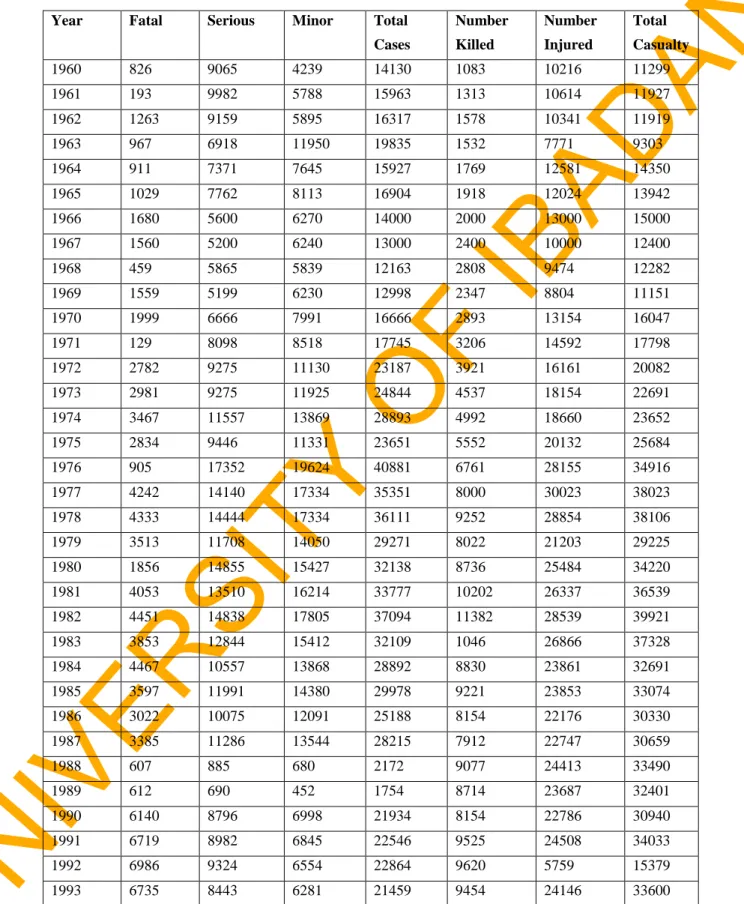
WHO (2005) found that pedestrians accounted for between 41 percent and 75 percent of all road traffic deaths in developing countries. Research evidence shows that the human element is responsible for 80 to 85 percent of all road traffic accidents.
Concept of Road Safety
The first phase of the road safety approach is the enforcement of road traffic rules and regulations. Proper education of the road users is a real tool that will ensure a reliable road safety policy that will bring about a drastic reduction in the level of road traffic accidents.
The FRSC Public Enlightenment Programmes
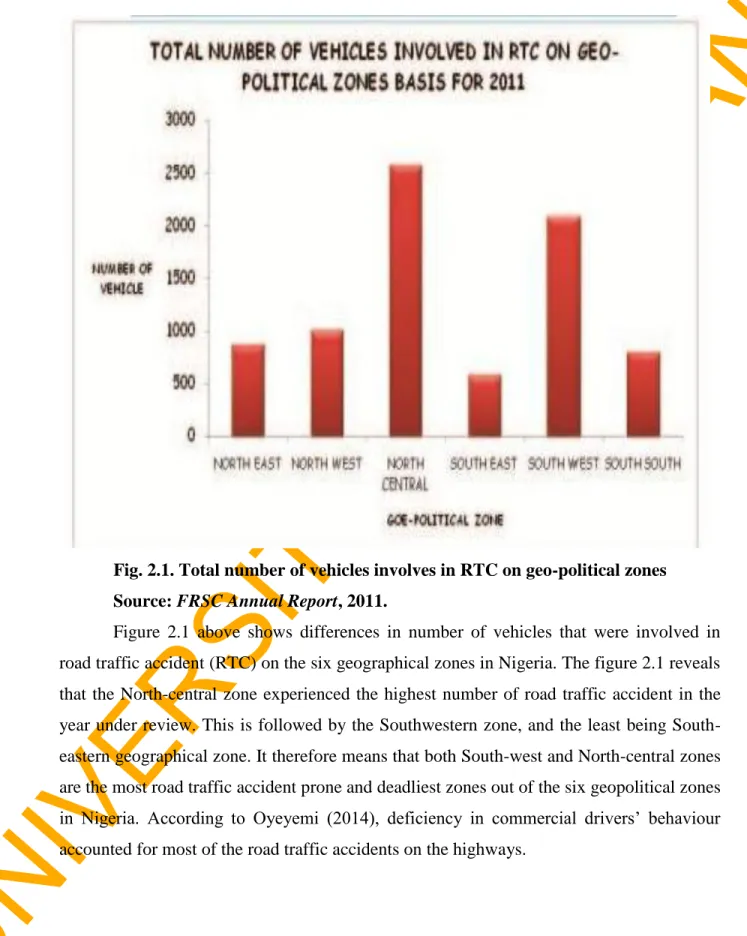
Figure 2.1 shows that most traffic accidents occurred in the north-central zone in the year in question. According to Oyeyemi (2014), the deficient behavior of commercial drivers accounted for the majority of highway accidents.
The FRSC Mass Media Campaign and Commercial Drivers’ Behaviour
Although it is a legal requirement for vehicle owners (private or commercial) to have an approved vehicle fire extinguisher, many drivers are not familiar with its use in an emergency (Osita 2009). In Lagos State, for example, drivers and other road users have been empowered under the Lagos State Security Trust Fund to call the toll-free number 767 or 112 in any emergency.
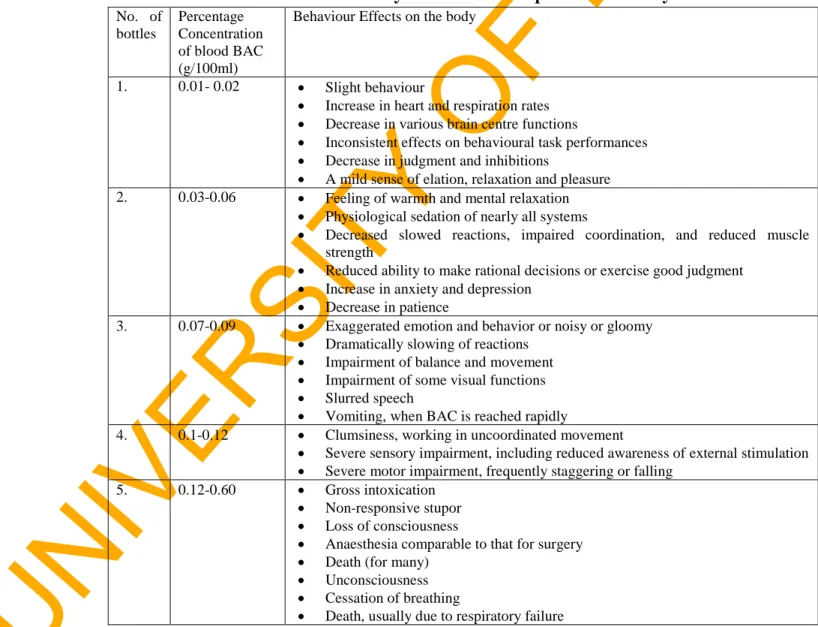
The FRSC Don’t Drink and Drive Campaign and Commercial Drivers’
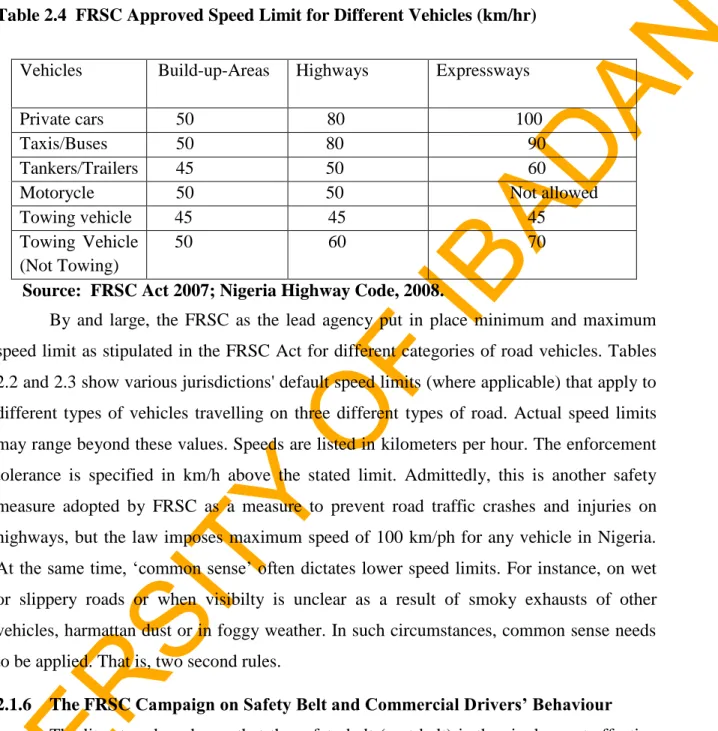
As can be seen from Table 2.3, the FRSC specifies the braking distance and braking distance for different speed limits as approved for different vehicles. The FRSC also publicizes and publishes approved speed limits, stopping and stopping distances on radio, television and in the pages of newspapers.
The FRSC Campaign on Safety Belt and Commercial Drivers’ Behaviour The literature has shown that the safety belt (seat belt) is the single most effective
Zegeer and Bushell (2012) add that one of the most effective measures to protect occupants from injury in the event of an accident is the installation and use of seat belts and child seats. Eghaghe (2010) emphasizes that both seat belts and crash helmets have been proven to save lives and reduce the severity of injuries, and that all vehicle occupants should be appropriately restrained when traveling in a motor vehicle.
The FRSC Campaign on Cell Phone and Commercial Drivers’ Behaviour
The FRSC Motor Park Rally and Commercial Drivers’ Behaviour
Each of the road safety lectures are conducted simultaneously by FRSC facilitators at motor fleets accredited by the FRSC. According to the FRSC campaigns, every road user must have basic knowledge of first aid.
Road Transport Safety Standardization Scheme (RTSSS)
- The Federal Road Safety Commission Historical Background
The Federal Military Government appointed Professor Oluwole Soyinka as the pioneer Chairman of the Commission. In accordance with the FRSC Act cap 141 laws of the Federation of Nigeria (LFN) passed by the National Assembly as Federal Road Safety Commission (Establishment) Act 2007.
UNIVERSITY OF IBADAN 50
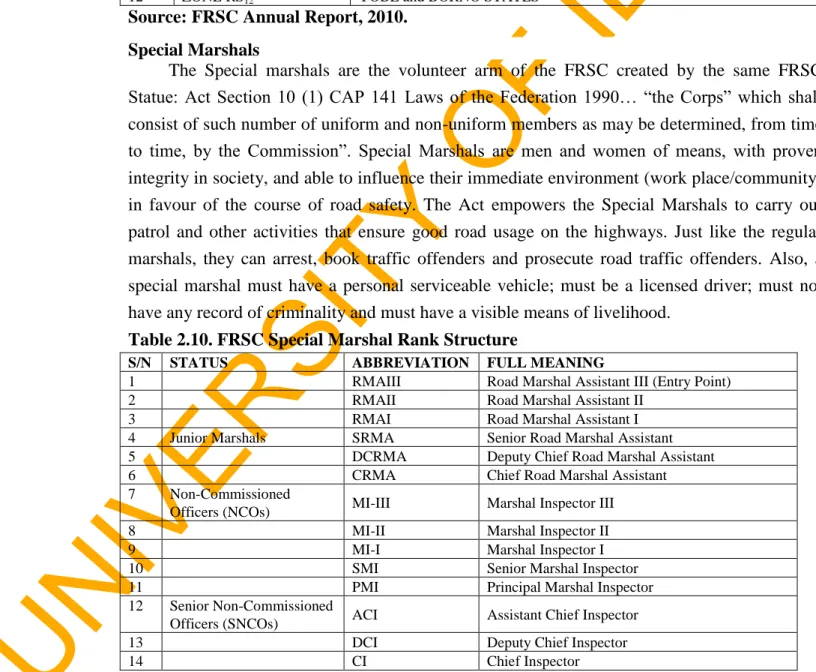
The services of a regular officer are permanent, receive monthly salary/allowances, and pensionable as opposed to special officer whose services are voluntary in nature. One of the primary characteristics of a common officer is that they serve as a liaison officer. The special officers are the voluntary arm of the FRSC created by the same FRSC Statue: Act Section 10 (1) CAP 141 Laws of the Federation 1990.
Special Marshals are skilled men and women with proven integrity in the community and able to influence their immediate environment (workplace/community) for the benefit of road safety.
Administration of Special Marshal
Unit Level: The Unit Command is the grass root level of the Commission. Special Marshals at this level are coordinated by a Special Marshals Unit Coordinator who
National Level: This is the management body of the Special Marshals, at the National Level; the Special Marshals are headed by the National Coordinator who
- Functions of Special Marshals
- Appointments of Patrons and Honourary Special Marshals
- Patrol Operations of the Special Marshals
- Workshops, Conferences and National Submit of the Special Marshals
- Road Safety Clubs
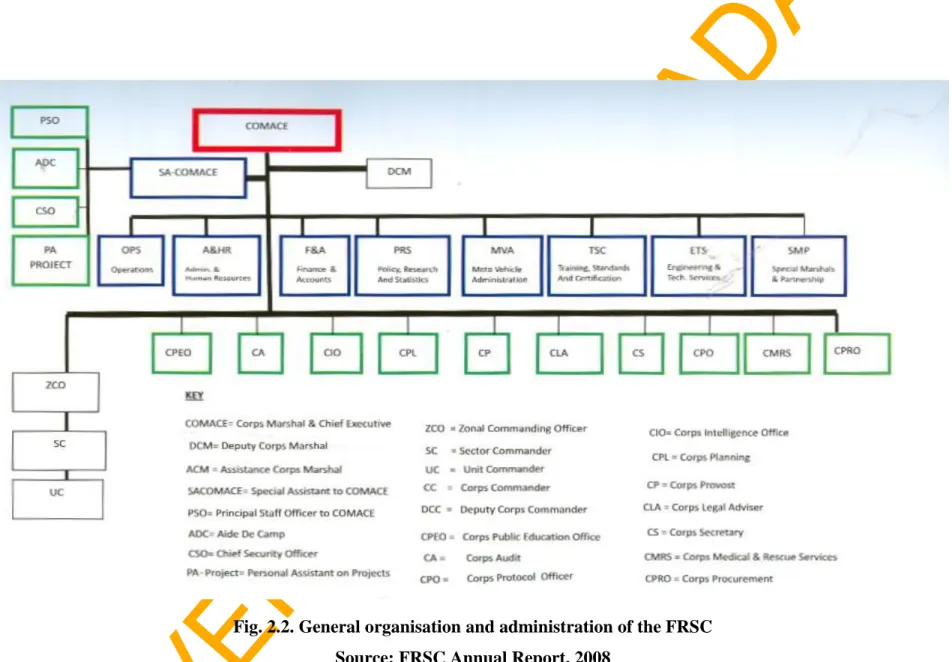
- FRSC Administration
- Operations Department (OP)
- Administration and Human Resources Department (AHR)
- Policy, Research and Statistics Department (PRS)
- Motor Vehicle Administration Department (MVA)
- Engineering and Technical Services Department (ETS)
- Special Marshal and Partnership Department (SMP)
- Finance and Accounts Department (FA)
- FRSC Offices
- Corps Planning Office (CPO)
- Corps Legal Advicer (CLA)
- Corps Intelligence Office (CI)
- Corps Provost Office (CP)
- Corps Audit Office (CA)
- Corps Public Education Office (CPE)
- Corps Medical and Rescue Services Office (CMRS)
- Corps Protocol Office (CPO)
- Corps Secretary’s Office (CS)
- Corps Procurement Office (CPO)
- FRSC Standard Approaches to Enforcement of Road Safety Regulations The FRSC officials, as well as, the special marshals use public enlightenment and
- FRSC and I.C.T Based Road Safety Initiatives
- FRSC Affiliations, Collaborations and Associations Road Safety Officers Wives Association
- Road Network and Status of Highways in Nigeria
- Road Traffic Control Devices (RTCDs)
- Best Road Safety Practices
- Empirical Studies
- Theoretical Framework
- Social Cognitive Theory
- The Theory of Reasoned Action (TRA)
- The Theory of Planned Behaviour (TPB)
- Constructing a Framework for Improved Safety Behaviour among Commercial Drivers in Urban Cities in Southwestern Nigeria
- Hypotheses
At this point, it should be noted that Special Marshals attach great importance to the public lighting of road users. Also, the Special Marshal organizes a conference in the third quarter of the year at the Zonal level. The third level of the FRSC is the road safety clubs which are made up of youths in schools and colleges.
The Board of Directors is responsible for the policy making and administration of the Federal Road Safety Commission. The department is mainly charged with the function of managing the Commission's financial portfolio. The Arrive Alive Road Safety Initiative (AARSI), is one of the initiatives duly accredited by the FRSC.

CHAPTER THREE
Research Design
Population
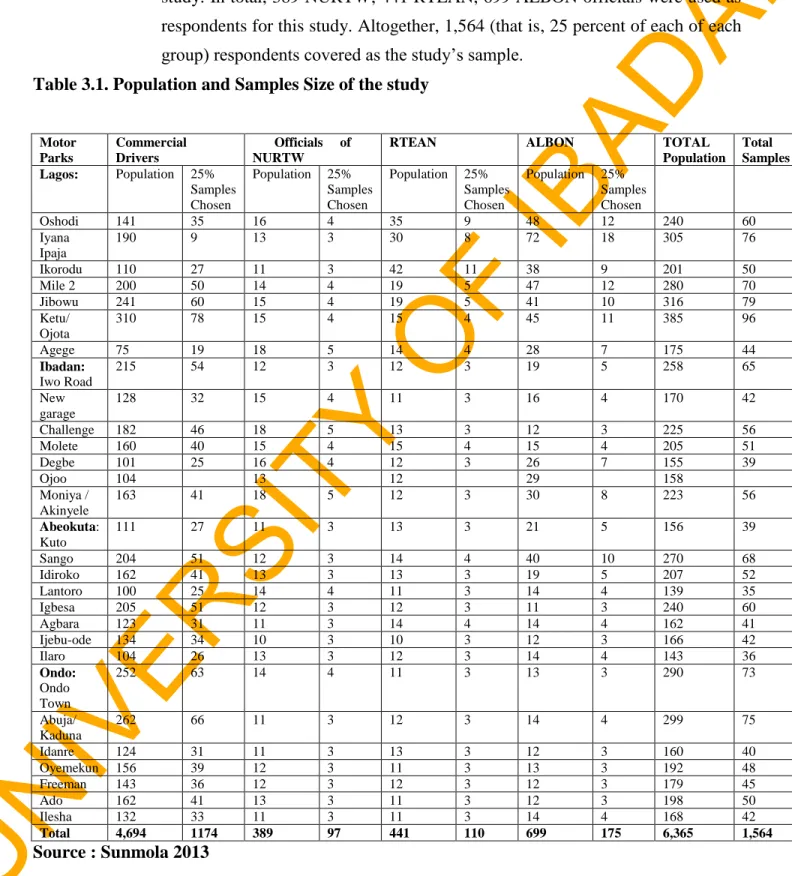
Sample and Sampling Technique
Stage 1: The purposive sampling technique was used to select seven motor parks from each of the four urban cities; making a total of 28 motor parks
Stage II: The stratified sampling technique is used to divide the population sample into four categories: commercial drivers, NURTW, RTEAN, and ALBON in each of
The snowball technique was used to select commercial drivers who are bonafide members of NURTW and ALBON and had at one time attended any of the
Stage V: The simple random sampling technique was used to select officials of the NURTW, ALBON and RTEAN in each of the 28 motor parks used for this
Instruments
- Drivers’ Perception of FRSC Public Enlightenment Programme Inventory (DPFPEPI)
- Commercial Drivers’ Behaviour Inventory (CDBI)
- Drivers’ Compliance and Road Traffic Rules and Regulations Scale (DCRTRRS)
The validation process helped adapt some questions to the stated objectives. The reliability of the questionnaire was determined using a pre-test method conducted among test drivers at Oshodi motor park, Lagos. This validation process helped adapt some questions to the stated objectives.
This validation process helped make necessary adjustments to some questions to meet the stated objectives.
Focus Group Discussion (FGD)
Key Informant Interview (KII)
- KII Sub-themes
- Procedure for Data Collection
- Procedure for Research
- Data Analysis
In Table 4.1 it is clear that the number of questionnaires recovered from the respondents is 99%; unrecovered has no significant effect on the findings. This initial contact made it possible for the administration of the questionnaires on the commercial drivers and the cooperation received during the FGD sessions. Additionally, content analysis was adopted for the qualitative data collected using FGD and KII sessions.
Furthermore, content analysis was adopted for the qualitative data collected using FGD and KII sessions.
CHAPTER FOUR
RESULTS AND DISCUSSION OF FINDINGS
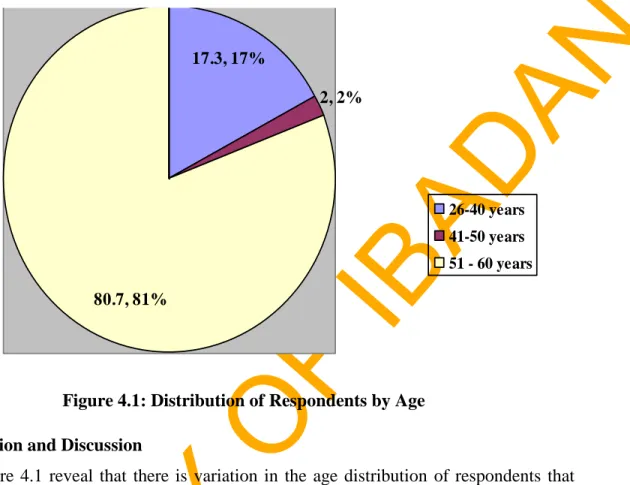
It is also evident that the majority of the respondents used for this study participated in the public education programs of the FRSC; in their productive age, shows a large presence of young people in the driving profession. This result is evident in the population of male respondents in all the selected fleets that made up the population of this study. Besides the fact that a large proportion of the respondents were men, it confirms that commercial driving is very much a man's job.
Literature search shows that it is difficult for women to challenge traditional gender roles, explains the reason why only few women were found only in the management profession and exposed to the various public enlightenment programs of the FRSC.
Married Single
Influence of the FRSC Public Lighting Programs on Commercial Drivers' Behavior towards Road Traffic Accident Prevention and Reduction in Urban Centers in South Western Nigeria. When asked to comment on the relevance of the public enlightenment programs of the FRSC. It always shows that various public relief programs of the FRSC have direct impacts on the behavior of the commercial drivers and have contributed a lot to the reduction of the road traffic accidents in the urban cities in the Southwest.
On the question of the effect of the FRSC programs on the behavior of commercial drivers in relation to the prevention and reduction of traffic accidents in the cities of the South West region.
CHAPTER FIVE
SUMMARY, CONCLUSION AND RECOMMENDATIONS
Summary
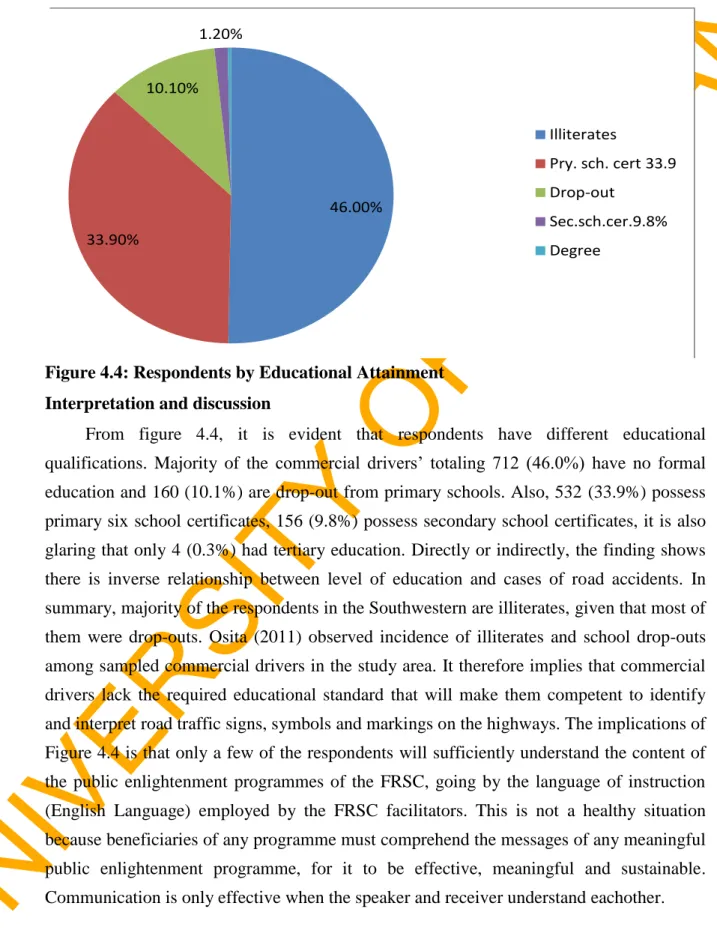
Furthermore, the results also show that the majority of respondents, 76 percent used the road on a daily basis, while 31 percent traveled the road five times a week, 25 percent used the road three times a week and 2 percent of respondents used the roads once a week. Further, the results also show that the majority of respondents (46 percent) were illiterate with no access to formal education; 10 per cent had dropped out of school, while only 33 per cent had primary six school leaving certificates, 9 per cent had upper secondary school certificates and only one per cent had a diploma certificate. Further, the result shows that only 11 percent of the respondents have gone through a government-approved driving school.
Finally, the findings also show that the majority of the respondents, 97 percent, had been exposed to the various awareness programs of the FRSC which helped in reducing road accidents.
Recommendations
This step will enable the majority of commercial drivers in the cities of the southwestern states to participate in the public education programs on a regular basis. Issuance of valid driving license should also be for those who have attended one of the FRSC accredited driving schools. In a related development, the public education department of the FRSC should ensure that the language of instruction of the resource personnel should be the language understood by the majority of the participants (local language).
This is because adult learning involves the use of the local language of the immediate community.
Contributions to Knowledge
In conclusion, the application of these recommendations will address the five pillars of the UN Decade of Action on Road Safety: Road Safety Management; safer roads and mobility; Safer vehicles; Safer road users and response after an accident. After that, reducing road accidents to about 50 percent by 2015 and 2020 will make Nigeria the 20th safest country in the world will be a reality. Behaviors of commercial drivers such as drunk driving, excessive speeding, use of mobile phone either to receive, make or send text messages while driving, non-use of seat belts by both drivers and other occupants of vehicles are major stumbling blocks to sustainable road safety programs in Nigeria.
The issue of road safety is a serious matter that deserves political will from all levels of government so that the rampant traffic accident in the cities of the south-western part of the city can be drastically reduced to the absolute minimum.
Limitations to Study
Driving as a profession is dominated by men and the majority of commercial drivers are not only in their prime and have less than 5 years of driving experience, but have also not passed government approved driving school.
Suggestions for further Studies
New strategies for solving road safety problems are developed through research, relevant data and essential information for road safety and planning. The study was conducted in the urban cities of the South West; The same could be replicated in other geographical zones in Nigeria to discover whether the results and findings can be used to generalize. An attempt should also be made to investigate the impact of FRSC PEP on pedestrians in further research on road transport in southwestern Nigeria.
The question of when and how drivers will manifest the impact of PEP in their professional lives is another question that can be answered by other research in this area.
Conclusion
An Assessment of the Role of the Federal Road Safety Commission in Ensuring Sustainable Reduction in Road Accidents in Nigeria. Proceedings of the 14th Four Continents Road Safety Conference, Bangkok, Thailand, 14-16 November 2007. Time to act: World Health Organization global road safety status report, Geneva.
8 The content of the FRSC programs could not incorporate successful road safety practices in other countries.