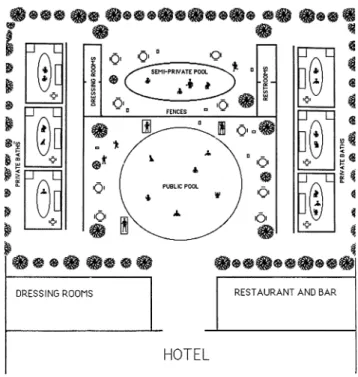
Additional information about world spas can be found on the official website of the International Spa Association. Feedback, both pros and cons, about the content and style of the Quarterly Bulletin is always appreciated. Heat exchangers must be designed to withstand the corrosive effects of the chlorine in the pool water and against scale or corrosion from the geothermal water.
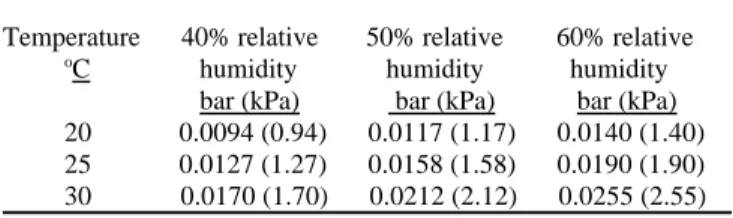
As the temperature of the pool water increases or the relative humidity of the air decreases, the rate of evaporation increases.
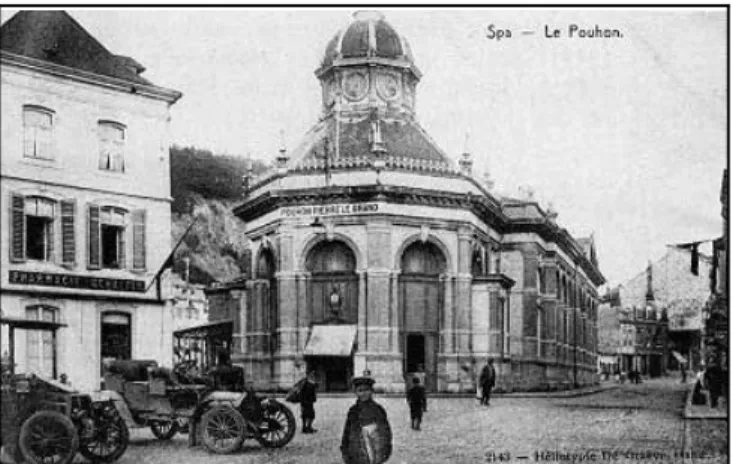
Pearl of the Ardennes”
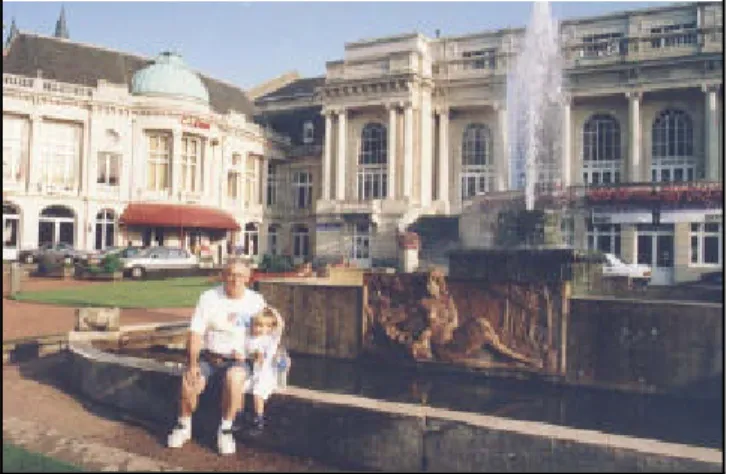
Formerly known as "Rabid", the spring was famous for intoxicating anyone who drank from it, even causing hallucinations. In the center of the square is a fountain surrounded by benches and flowers, erected in 1925.
BATH
A WORLD HERITAGE SITE
1738–The start of construction of the Royal Mineral Water Hospital reflected a new period of belief in the healing properties of waters. While digging the foundations for the new great pump room, many of the first finds related to the Roman temple were made. The Kings Spring is located beneath the existing pump rooms and rises naturally in the Kings Bath, at the center of the Roman Bath Museum.
The Hetling Spring is located opposite the existing Hot Bath, on Hot Bath Street. The existing head of the sump will be reconfigured to take water to the new Beau Street plant site, but will retain its presence in the redeveloped Cross Bath. However, as part of the new development, it is still necessary to provide treatment for the three proposed springs prior to their use in the new Bath Spa complex.
However, the total energy consumption of the building is not limited to heating and heat loads. However, it has a higher CO2 output because it does not use spring water as efficiently. The design of the building system has now been developed to directly use as much spring water as possible and to use a combination of CHP and boiler.
BADEN-BADEN
A FAMOUS THERMAL SPA WITH A LONG HISTORY
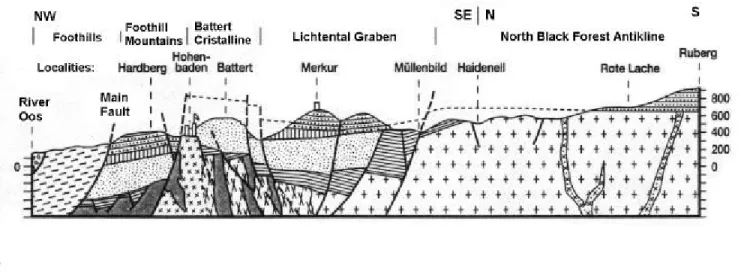
The earliest traces of human life in the Oos River valley date back to the Stone Age, ca. On August 24, 1689, a great fire reduced most of the city and castles to cinders and ashes. The existence of hot springs is related to deep faults on the eastern edge of the Upper Rhine Graben.
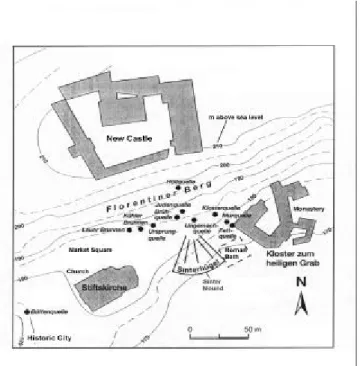
The crystalline rocks of the Black Forest are displaced downward by almost 2 km (about 6500 ft) in the graben, and a number. Geological profile through the faults at the eastern end of the Upper Rhine Graben in Baden-Baden (from Landesarchiv BW, 1995). The original springs are mostly located near the main thermal fault (Figure 5) at the SE slope of the "Florentiner Berg".
However, the temperature and chemistry of the artesian water found here is similar to the springs. In 1973/74 a deep borehole was drilled in the graben west of the city, following seismic profiling (Vibroseis) the year before. Geological and tectonic map of the main thermal area (after Maus & Sauer, 1972; from Landesarchiv BW, 1995).
BAD SCHINZNACH, AN ONGOING GEOTHERMAL SUCCESS STORY
The idea was to tap the known aquifer in a downdip position to produce water with higher temperatures and protected from the inflow of cold surface water. The drilling site was selected based on the criteria of minimum distance to the spa and maximum depth of the aquifer. The well encountered the Upper Muchelkalk at three levels as expected, but with very different hydrological characteristics.
The upper limb produced thermal water with a temperature of 45oC and the characteristic calcium-sodium-sulphate-chloride mineralization of the old Schniznach wells. The deeper limbs of the Upper Muschelkalk produced much less water, but with temperatures of up to 64oC. The different mineralization indicates that the deeper levels of the upper Muschelkalk were detached from the upwelling aquifer.
The reinjection scheme serves the dual purpose of maintaining hydrological balance and protecting the aquifer from cold flow near the surface groundwater (Figure 4). A 500 kW heat pump extracts 17oK from the geothermal cycle and produces 4.5 GWh of emission-free thermal energy annually (Figures 5 and 6). To add to the enjoyment of the area, a wooded area with many hiking trails is also offered.

LES THERMES D’AIX-LES-BAINS
GEOTHERMAL WATERS OF D'AIX-MARLOIZ The sulphurous water of a small stream running through Marlioz was known by the inhabitants of Aix to cure acne and minor skin disorders. Rebuilt in 1982, the Aix-Marlioz baths treat ear, nose and throat disorders as well as various allergies. Applications of thermo-vegetable-mineral clays are made from a maceral argillite in thermal waters which transforms calcareous clay into a plastic state.
It is mainly used for the treatment of rheumatism and for the recovery of various injuries such as for joint mobilization. The Phytomer Centre, the Aqualioz-Thalgo Espace and the Adelphia Baths all have a fitness area with heated pools, sauna, whirlpools and hydromassage, a therapy area, a beauty center and various specialized treatments. Today, the Chevalley Baths invest 307 million francs (US$44.5 million) in one of the largest building sites in the Rhône-Alpes region.
The aim is to complement the treatments already offered by the national baths and to strengthen the reputation of Aix-les Bain in the treatment of rheumatism. Aix-les-Bains will modernize the nineteenth-century bathhouse, renovate the beach and renovate the water sports center and aquarium. Further details about the baths and the town can be found on their website: www.aixlesbains.com.
SPAS IN JAPAN
It is famous for its valley of hell, a large indentation in the earth from which various types of sulphurous, salt and mineral water and mud spout, gurgle and steam for the health and relaxation of its patrons. Spa areas of particular interest to Westerners include Nikko, in Tochigi Prefecture northeast of Tokyo; Kusatsu, in Gumma Prefecture northwest of Tokyo; Hakone, just south of Tokyo in Kanagawa Prefecture; Katsuura and Shirahama in Wakayama Prefecture convenient to Nara and Osaka; Arima in Hyogo Prefecture convenient for Kyoto;. Your best bet for a first Japanese spa experience may be Atami, a picturesque resort on the slopes of an extinct volcano overlooking Sagami Bay, about 55 minutes south of Tokyo by Kodama Express to JR Atami Station.
Popular since the 18th century, when Japan's shoguns walked ceremoniously down the Tokkaido Road to the waters of Atami – rich in calcium, magnesium and other minerals said to be good for relieving bronchitis, constipation, eczema and indigestion and aiding relaxation and anxiety relief – Atami, often referred to as Japan's Rivera – minus the beach – is a favorite spot for lovers, honeymooners and company-sponsored parties and outings. If you're used to American spa hotels with scheduled activities, playgrounds, gyms and trainers, you might be confused by the Japanese penchant for solitude and seclusion, but in Japan solitude is considered a status symbol, and nowhere is better. to be enjoyed in Atami than in Horai. Trained in shiatsu and other forms of massage, licensed massage therapists and massage therapists are available by appointment to come to your room to relax and tone your body.
Each of the 17 suites at the Horai is equipped with a square cypress bath for you to steam up to your chine in, perhaps for half an hour before dinner. But to miss the communal co-bathhouse is to bypass the great passion of the Japanese – immersion in water so hot it's barely bearable, keeping still so the hot water doesn't hurt, a sacramental rite of rebirth. Yoshi Furutani, the owner's wife, and Yukimasa Kinjo, the assistant manager, explain that guests do not come to Horai for the stair-climbing exercise or for the healthy diet, but for the therapeutic properties of the water, the view, the peace, and the loneliness
BALNEOLOGICAL USE OF THERMAL WATER IN THE USA
The Mohawk and Iroquois Indian tribes frequented the springs during hunting trips to the area. The first written record of resources by European settlers was in the early 1600s (Swanner, 1988). Due to use and declining flow at the springs in the early 1900s, New York State formed Saratoga Spa State Park, and now manages geothermal activity including the only geyser east of the Mississippi River.
The current Saratoga Spa Park has 10 springs with seven other springs located around town. Hot Springs, Arkansas was one of the most popular commercial spas in the United States, created to emulate the development of the great spas of Europe. The main geothermal attraction in the area is Hot Springs State Park with its 120 l/s Big Horn Spring.
At least eight hot springs in the area have created large terraces along the river. For them this was the 'beautiful land' and 'the furnace place'. In the early 19th century, Spanish explorers visited the area in search of a possible mission site. By the turn of the century, there were more than thirty resorts in the area, including bathhouses, mineral springs, and resort hotels.
GEOTHERMAL SPAS IN THE CZECH REPUBLIC AND SLOVAKIA
Initially, visitors bathed in uncovered bathing pits dug along the banks of the Vah River and covered with straw mats or tree branches. The spa was privately owned until 1940 when it became state property (Czechoslovakia State Spa and Curative Springs in the Slovak Republic). Hydrotherapy, electrotherapy, rehabilitation and remedial exercises, underwater massage, massage, medications and medial nutrition are all components of the complex treatment system.
Piestany is the headquarters of the Research Institute for Rheumatic Diseases, founded in 1952 to study complex immunological processes in diseases of the locomotor system. The city is hidden in the valley of the river Teple, which is surrounded by forested hills and precipitous cliffs, so that the city is only one block wide on both sides of the river. The Karlsbad thermal water recharge area is located in the upper granite blocks on both sides of the rift valley.
Research by balneologists has shown that the greatest success with this water is achieved in the treatment of chronic diseases of the digestive system (intestine and stomach) and a number of metabolic problems. Long-term results are mainly achieved in diseases of the bile ducts and the liver. The leakage of thermal springs into the Tepla riverbed through the aragonite beds has affected the flow of the springs used for curative purposes.