Many teachers commented that the lesson study process enabled them to learn from their peers. However, there was less availability of substitute teachers for the small rural schools participating in the lesson study. Taken together, evidence from the pilot study of learning suggested value for both teachers and students.
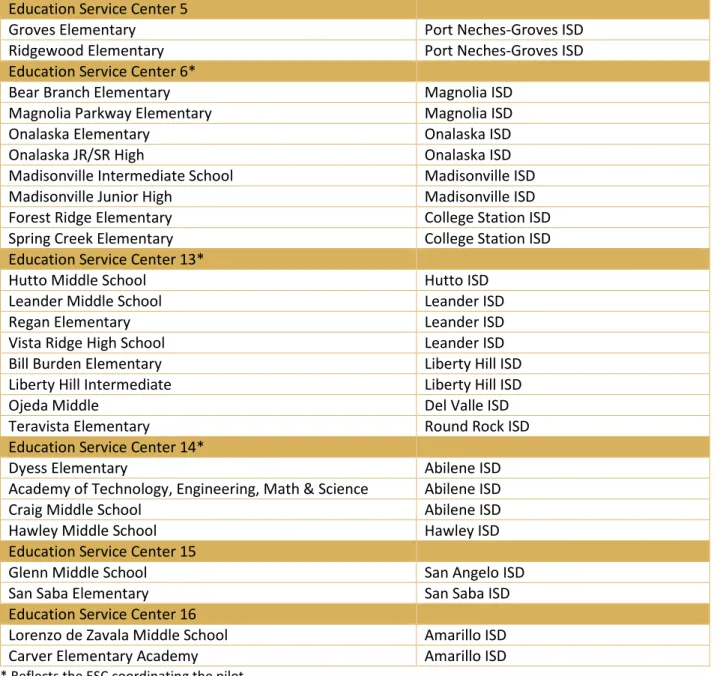
The Texas Education Agency (TEA) began a pilot project of the Lesson Study Professional Development Program in the fall of 2016. How did the lesson study professional development pilot program affect teachers' sense of self-efficacy. What were the perceptions of students about the lessons developed through the lesson study process.
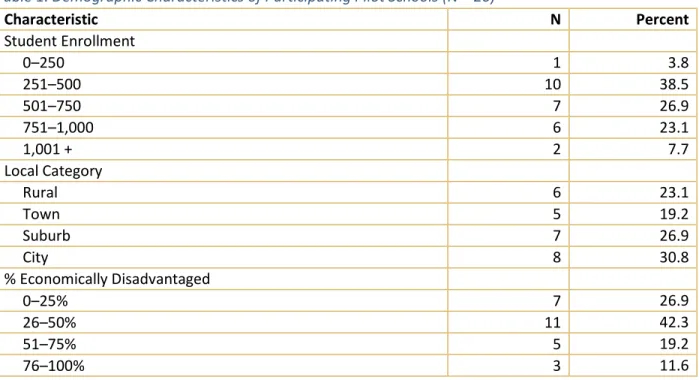
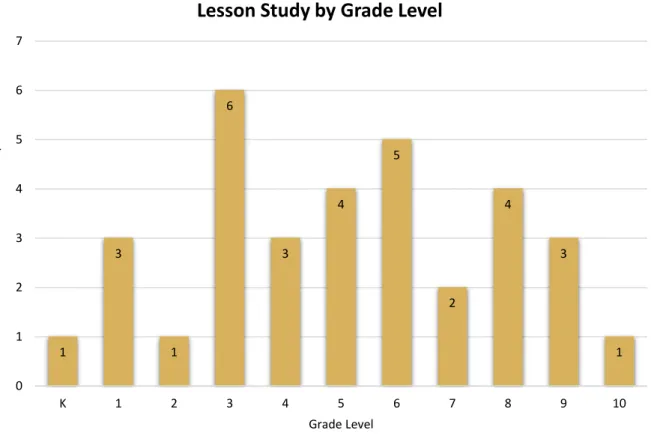
The number of teachers who participated in the pilot lesson study in all schools during the fall semester was 120. In some cases, teachers within the group selected more than one grade level as the target of the lesson study.
Lesson Study by Grade Level
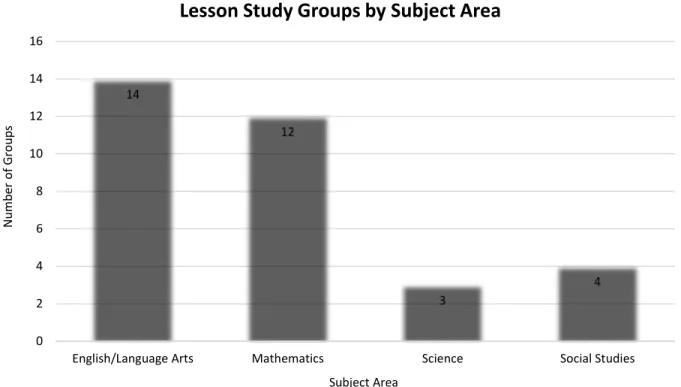
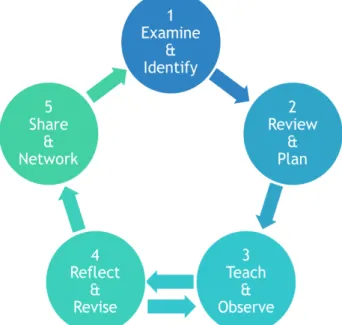
Groups consisted of 2 to 5 teachers and these groups were led through the lesson study process (Figure 1) by a facilitator from one of the regional ESCs. Groups identified a target level, subject area, and TEKS for the lesson study, although the construction of the lesson study groups varied based on campus size and needs. For example, groups composed of teachers who taught the same subject, the same grade, or sometimes a combination of both (e.g., a group of 3rd grade math teachers, a group of 6th, 7th, and 8th grade science teachers, a group of American History and English 1 teachers who creating an interdisciplinary lesson).
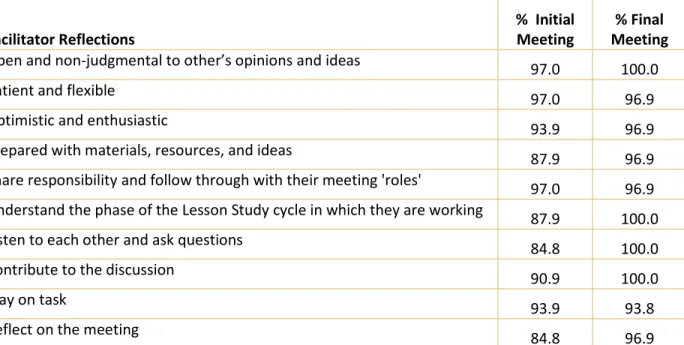
When the focus of a lesson study was on more than one grade level, the group typically focused on grades 3 through 5 or 6 through 8. Data was collected from ESC facilitators, teachers, administrators, and students throughout the lesson study process . Lesson study facilitators responded to a survey about the attitudes of their group members and provided reflections on the lesson study process after each weekly meeting.
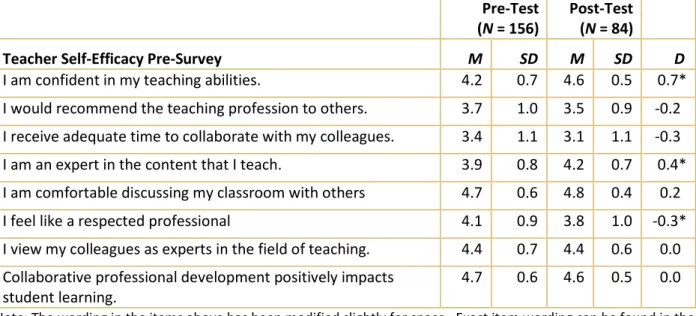
After completing the professional development program, teachers completed a pretest and posttest measure of their level of self-efficacy and a 10-item survey about the learning process of the lesson. In addition, an administrator at each of the participating schools was asked to complete a survey about their observations of the instructional professional development program. Finally, students were given a pre-test and post-test assessment to assess what they had learned in the lesson.
Students were also invited to answer a short survey and a personal interview about their experience with the lesson.
Lesson Study Groups by Subject Area
RESULTS
Review and Plan
It is rare that we have time to research and use all available resources to thoroughly plan for our students. It was especially enlightening for me to think intensely about how I could develop grade-level materials for ELLs.”. Targeting a TEK[sic] and doing intentional research on this topic was an eye-opener for me because it helped me see where we have gone wrong as educators over the years and how important it is to to ensure that students have a very real understanding of fractions, fractions and total parts.”.
Reflect and Revise
Most Beneficial Lesson Study Phase
The lesson planning was extremely valuable because we were able to really look at the TEK[sic], break it down and see what it really asks, and find lesson plan resources that focused on that TEK[sic].”. I feel as teachers we are very in tune with what children need, and what they struggle with. We rarely have or take the time to stop and reflect on what we could have changed.".
With any regular lesson we teach, we don't have a chance to review the lessers right away. We always say, 'Well, NEXT YEAR I'll change that part of the lesson.' We don't have time or [the]. With this [lesson study] we were given both the time and opportunity to really improve the lesson, and it made a significant difference and impact.”.
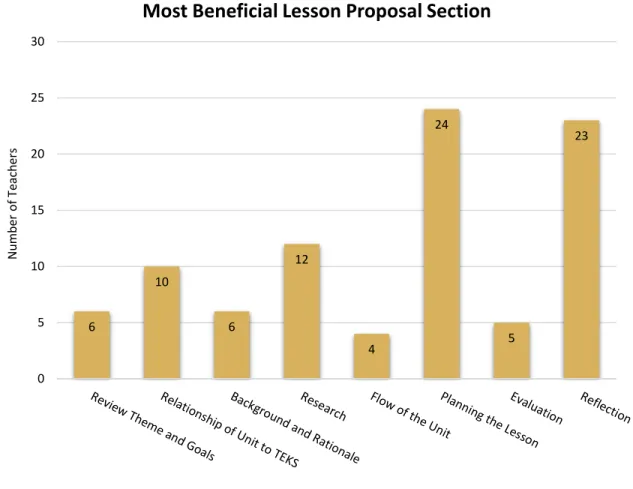
Teachers were also asked which part of the lesson proposal was most useful to them. A lesson proposal is the teacher's documentation of the collaborative work done during the lesson study cycle. Planning the lesson” and “Reflection” were the most common parts of the lesson study proposal reported by teachers.
Again, the benefit of time to plan and reflect was a common theme among teachers' comments.
Most Beneficial Lesson Proposal Section
Examine & Identify
Most Challenging Lesson Study Process
Teachers also noted that the time taken to complete Phase 2 of the lesson study process was not, in fact, reflective practice. The percentage of teachers who responded positively to repeating the lesson study process and without a stipend is shown in Table 6. About half of the teachers who participated in the lesson study pilot indicated that they would like to go through the lesson study process again (51.1%).
At least one administrator from each of the 26 schools participating in the lesson study was asked to complete a survey about the professional development program (Appendix B). All administrators (100.0%) believed that the lessons designed through lesson study were aligned with the T-TESS framework. This percentage is based on the 23 administrators who were able to observe part of the Lesson Study.
Some administrators expressed concern that the lesson study process seemed to cause confusion for some teachers. These comments were supported by facilitators who also suggested that the lesson study process seemed unclear to teachers during the initial group meetings. The number of students who received lessons was more comparable between the pilots in ESC 6 and ESC 14.
Note: Means reflect the percentage of correct responses on the assessment developed by the lesson study group. The percentage of students who thought the lesson was typical is reported by ESC-pilot in Table 13. The percentage of students who responded positively to how well they enjoyed the lesson is reported by ESC-pilot in Table 14 .
Despite the amount of data, many of the responses were specific to the individual lessons taught by the lesson study groups.

SUMMARY AND RECOMMENDATIONS
Evidence gathered from the learning study process suggested value for both teachers and students. There appeared to be confusion about the time frame for each phase of the lesson study process. Changes were made during the pilot in response to participant feedback, but program managers may wish to focus on how the details of the lesson study process are shared with participants.
Consider summer or other existing professional development structures as an option for teaching learning. One option may be to carry out elements of the teaching study process over the summer. Two half-day lesson study sessions can help shorten the length of the lesson study process and facilitate a shorter timeframe (2–3 weeks).
Teachers expressed concern about the impact of potential changes to TEKS and whether the lessons developed through the lesson study process would continue to be relevant to teachers in the future. Worryingly, some teachers focused more on the quality of the video than on the process of learning the lesson. This should be emphasized to teachers so that the elements of the learning process can be properly prioritized.
A lesson differs from a practice in that it is an intention. together they develop a research-based lesson. Lesson learning is not intended to replace existing practices, although elements of the learning process may inform them. Using existing teacher evaluations can help assess the effectiveness of an instructional professional development program without requiring additional surveys.
Data were collected from teachers and students who did not participate in the lesson study process.
3 Mathematics 3(4)(E) The student is expected to present multiplication facts using a variety of approaches such as repeated addition, groups of equal size, arrays, surface patterns, equal jumps on a number line, and skip counting. Mathematics 3(4)(K) The student is expected to solve one-step and two-step problems involving multiplication and division within 100 using object-based strategies; pictorial patterns, including arrays, area patterns, and equal sets; properties of operations; or recall of facts. Mathematics 3(5)(B) The student is expected to present and solve one- and two-step multiplication and division problems within 100 using arrays, bar graphs and equations.
Mathematics 3(8)(B) The student is expected to solve one- and two-step problems using categorical data represented by a frequency table, dot plot, pictogram or bar graph with scaled intervals. 4 Mathematics 4(4)(H) The student is expected to solve one- and two-step problems involving multiplication and division, including the interpretation of remainders, fluently. 5 Mathematics 5(3)(J) The student is expected to present division of a unit fraction by a whole number and division of a whole number by a unit fraction such as 1/3 ÷ 7 and 7 ÷ 1/3 set by means of objects and image models, including area models.
The student is expected to solve problems by calculating conversions within a measurement system, customary or metric. Mathematics 7(11)(B) The student is expected to write and solve equations using geometric concepts, including the sum of the angles in a triangle, and angle ratios. 8 Mathematics 8(8)(C) The student is expected to model and solve one-variable equations with variables on both sides of the equal sign representing mathematical and real-world problems using rational number coefficients and constants.
Studies 6(1)(A) The student is expected to trace the characteristics of various contemporary societies in regions resulting from historical events or factors such as invasion, conquest, colonization, immigration and trade. Studies 8(4)(D) The student is expected to analyze the issues of the Constitutional Convention of 1787, including the Great Compromise and the Three-Fifths Compromise. Studies 8(19)(C) The student is expected to explain the importance of personal responsibility, including taking responsibility for his behavior and supporting his family.
Studies 8(19)(D) The student is expected to identify examples of responsible citizenship, including obeying rules and laws, keeping abreast of public issues, voting, and serving on juries.