I authorize Ryerson University to release this thesis to other institutions or individuals for research purposes. I further authorize Ryerson University to reproduce this thesis by photocopy or other means, in whole or in part, at the request of other institutions or individuals for research purposes. This thesis examines the ways in which fashion designers think about themselves, the design process and the fashion industry.
This research developed the concept of "craft fashion design" as a distinct subset of design for further study and reflection by organizations, the fashion industry and educators. To Julia and Lorna: Thank you for creating an uninterrupted physical and virtual island. Marta Braun: I am grateful to you for agreeing to participate in my examination committee and for editing my initial draft.
After finally receiving the much-appreciated nod from you that meant, "Yes, I'm willing to work with you on it" after a few kicks at other suggestions, I am indebted to you for your vision, experience, knowledge and drive help me through the process of writing this thesis.
Introduction
The design process attempts to codify the techniques and rules used by a particular design sector. In fact, the design thinking process does not lead to a neatly packaged solution, even if it is guided by a step-by-step process (Ling, 2010; Merholz, 2009). Design process research has been able to identify the tactical steps that creative individuals take when developing new products.
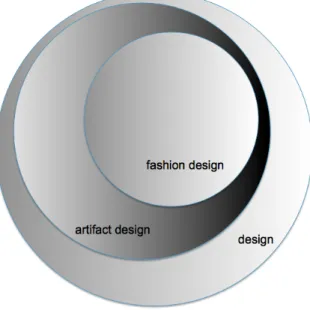
This study attempts to expand design thinking by examining artisan fashion designers who must act as both creators and business managers in design and decision making. Within fashion, the design sector can be further divided into artistic, commercial and artisanal. While the term "artisanal designer" has recently been coined by Choi (2003), her focus is on the adoption of information and communication technology (ICT) by fashion designers.
Referring to the design-oriented group as “artisan designers,” she describes them as “artists rather than business owners.
Literature Review
- Design and Design Processes
- Forms of Cognition
- Designers
- Fashion Design Businesses and Processes
- The Canadian Fashion Industry
- Fashion and Culture: The Ecosystem
- Gaps in the Research Literature
- Situating the Researcher in the Study
The growth of this sector is driven by small businesses, including craft designers, not only in fashion, but also in graphic, interior and industrial design. Understanding how these entrepreneurs operate and the factors that influence their success or failure is therefore of interest. Participants are small business owners who perform key design functions in their organizations.
Research Methods and Data Sources
- The Relevance of the Study
- Rationale of Research Method
- Research Question
- Expected Contribution to the Field
- Scope
- Sampling
- The Participants in the Study
- Participant Profiles
- Data Collection
- Interviews
- Documents
- Data Preparation
- Data Analysis – Background
- Open Coding
- Selective Coding
- Theoretical Coding
- Memo Writing
- Theoretical Sorting
- Data Analysis – Cycles
- Cycle 1 – Open Coding
- Cycle 2 – Categorization
- Cycle 3 – Coding On
- Cycle 4 – Data Reduction
- Cycle 5 – Writing Analytical Memos
- Cycle 6 – Validation
- Cycle 7 – Synthesis
- Reliability and Validity
- Description of Instruments
- Discussion of Problems Encountered
The scope of this study involves an inductive, qualitative approach to the analysis of data obtained through interviews with twelve fashion designers working in or near Toronto, Ontario, Canada. Chapter 2, Literature Review: This chapter introduces concepts that inform and support the complexity of observations made through the data collected. Chapter 4, Research findings and discussion: This chapter presents the results of the data analysis and is structured around the three parts of the research question.
Research Findings and Discussion
How Designers Think About Themselves – RQ Part 1
- Theme: Identity and Self-Perception
- Title of Fashion Designer
- Talent
- Skill
- Perceived Respect for Self in Industry
- Expectations
- Theme: Perception of Others in Field
How Fashion Designers Think About the Design Process – RQ Part 2
- Theme: Definition of Design
- Theme: Transformation
- Design Process Roles
- Designer to Artifact
- Artifact to Consumer
- Designer to Consumer
- Level of Satisfaction
- Work-Life Balance
How Fashion Designers Think About the Business of Design and Their Role
- Theme: Decision Making
- Rational Decision Making
- Irrational Decision Making
- Theme: Organizational Effectiveness
- Function
- Approach to Work Practice
- Relationship with Non-Creative Process
- Risk Tolerance
- Sharing Expertise
Exploring Relationships
- Relationship between Decision Making and Label Type
- Relationship between Label and Approach to Work Practice
- Relationship between Career Stage and the Non-Creative Process
- Relationship between Label and the Non-Creative Process
- Relationship between Perceived Respect and Career Stage
- Relationship between Personal/Professional Satisfaction and
- Relationship of Intensity to Innovation during Career Stages
Design Thinking, Design Process, and Decision Making
Conclusion
Contribution to Existing Literature
- Artisanal Fashion Design
- Design Thinking
- Design Process
- Decision Making
This study applied a grounded theory (GT) approach, used seven cycles while conducting the analysis, and developed concepts to better understand how fashion designers think about themselves, the design process, and their role in the business. As Turner (1983) states, GT is concerned with discovering small aspects of society in order to understand it, and thereby improve the way we deal with everyday life. This research has provided insights into the following areas: 1) artisanal fashion design; 2) design thinking; 3) design process; and 4) decision-making. This study suggests that artisan fashion designers think differently than managers and other designers in the industry.
Assuming that managers are primarily concerned with a focus on completing a project on time and on budget, the design thinking process aims to free them from constraints that inhibit the design process. The findings from this study suggest that design thinking is not only a conflict between individuals, but also a conflict within individuals. Participants in this study confirmed that the process is not always done in the same order and can change from season to season.
In fact, almost all the designers in this study had developed their own version of the process. Without a design definition paradigm, it is difficult to evaluate the steps of the design process and to assess whether the process results adequately address the design problem. While this study confirms existing concepts, it extends the design process model with an additional factor.
While the planning process is considered undefined and iterative; it is not only a step-by-step activity, but also one that is strongly influenced by transformative emotions. This finding suggests that the “evaluate and judge” step in the planning process model (Cross, 2007) involves not only analytical but also cognitive functions. Since the role of cognition is an important factor in the planning process, it is also important in decision-making.
It requires cognition to allow emotion, feeling and intuition to guide and influence the design process (Eagen et al., 2011). However, the designers in this study evaluated and finalized decisions that directly affected their business at the same time they participated in the design process.
Implications
- Fashion Design Entrepreneurs
- The Fashion Industry
- Government
- Educators
Designers are so busy managing the day-to-day activities that they run the risk of not creating new and innovative products, and for the same reason they lose sight of the business goals. The fashion industry is fast-paced, competitive and - as a business - a complex network of creatives, managers, communicators and clients involving designers, suppliers. Artisan fashion designers may feel overwhelmed by the demands of not only their business, but also the industry.
There are mechanisms built into the industry infrastructure aimed at helping and supporting emerging and established design talent. While the Canadian industry is still centered around existing fashion hubs in Quebec, Ontario and British Columbia, the growth of online business opportunities excludes many newer businesses from taking advantage of the industry network if they are not located near a fashion hub. The Canadian fashion industry should consider establishing a Canadian fashion design strategy that provides equal access to all designers, an improvement over the current fractured network of local and regional activities.
The current infrastructure is outdated and does not meet the capabilities of not only artisanal fashion designers, but also the industry as a whole. According to the nature of the survey, the results are focused on the individual, including his/her view of himself/herself, design and role in the industry. And while the results of this study can only suggest that participating designers may be poorly prepared and supported in part due to the limitations of the current Canadian fashion ecosystem, this phenomenon may be systemic.
The Canadian fashion industry could do well to raise the profile of its talent and. While Canadian fashion design entrepreneurs are not currently eligible to receive arts and culture support from the federal government or most provinces, the Quebec provincial government has invested in its fashion sector. It would be valuable to reassess the potential role of governments in helping to develop Canada's fashion industry.
Developing world trade, the trend to move manufacturing to lower cost countries, and changing consumer tastes have led to rapid changes within the fashion industry around the world. Programs that train and educate students destined to enter the fashion industry must consider what skills are required in the new economic order.
Limitations
Fashion schools will need to offer more opportunities to use experiential learning tools, such as charettes, with which students from various disciplines such as design, science and. Instead, all disciplines should be seamlessly connected for a complete learning experience that leads to successful employment opportunities in the industry and the creation of new small businesses to stimulate the creative economy.
Future Research
A grounded theory approach to developing themes has resulted in a deeper understanding of the opportunities and challenges faced by entrepreneurs in the fashion industry. The findings have suggested further research into artisanal fashion design, the role of materiality and the importance of embodiment in the design process. Markets, design and local agglomeration: The role of the small independent retailer in the functioning of the fashion system.
Management research based on the design sciences paradigm: The search for field-tested and grounded technological rules. I am interested in how designers think about themselves, about design and about their role in the organization. Interested in how designers think about themselves, about design and about their role in the organization.
Thank you for agreeing to participate in my survey, how designers think about themselves, about design and about their role in the organization. Thank you for taking the time to consider my request to participate in a study on how designers think about themselves, about design and their role in the organization. I understand that unfortunately your schedule does not allow you to attend the interview.
During the interview, I may ask follow-up questions to clarify or expand on points. I am interested in how designers think about themselves, about design and about their role in the organization. As a potential participant, you have national media coverage or are a member of a fashion association.
Study findings can be used in a thesis, reports, papers, presentations and other publications. The record will be deleted six months after the end of the study on or about April 2013. At any particular point in the study, you may refuse to answer any particular question or stop participating altogether.
Your signature also indicates that you agree to participate in the study and have been told that you can change your mind and withdraw your consent at any time.
Employment by Occupation, 2006