A re-employment opportunity is developed in the new sectors of the economy or in the traditional. Although the transfer question is an area that needs to be investigated separately, some of the above points are discussed tangentially in the background section of the study. Between the study areas, some of the policy differences are attributable to the different political institutions under which they were formulated.
Economic growth in County Cork is a regional manifestation of national policies and directives and the attractiveness of the region as a location for economic activity. The Halifax Regional Municipality operates under the jurisdiction of the Province of Nova Scotia, which legislates in accordance with the constitutional powers granted to it, particularly in relation to taxation and resources. Nova Scotia has not been central to market forces operating in the wider global economy, despite Halifax being one of the lowest cost centres, with inherent strength in the knowledge industry, within the group of 86 cities analyzed from major industrial nations (KPM G Peat M arwick 1999).
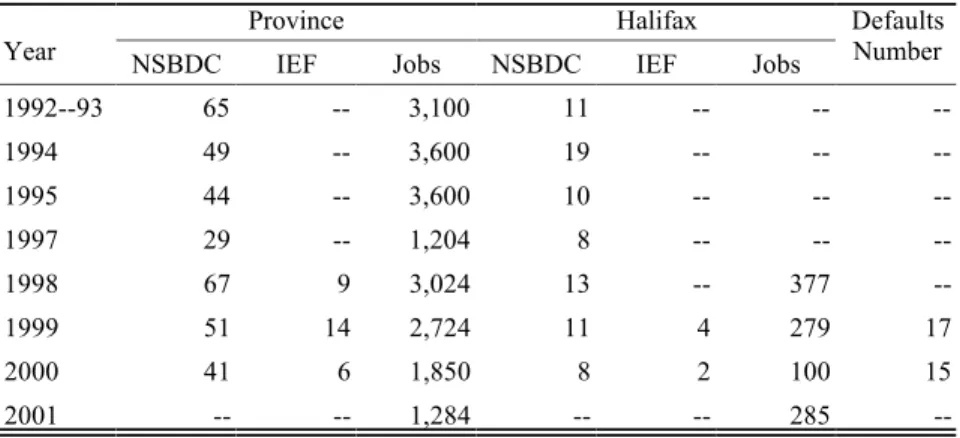
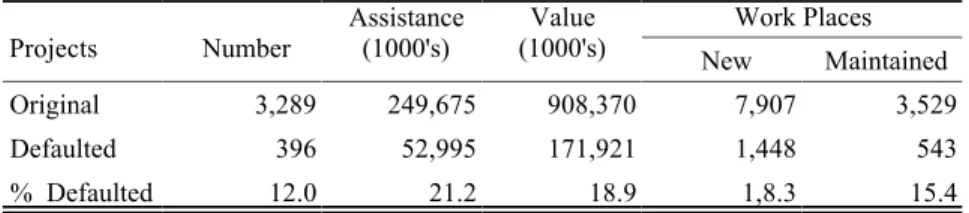
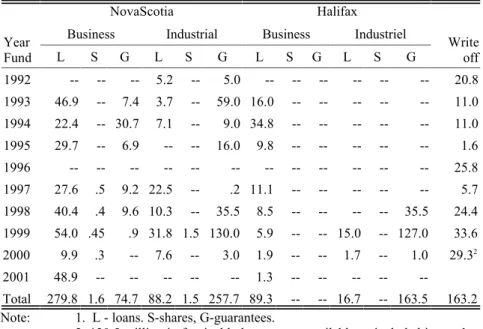
Call centers were attracted to Nova Scotia in part through wage discounts that corporations negotiated with higher levels of provincial government. The NSBDC Annual Report dated March 31, 2000 summarizes the cumulative impact of financial assistance. Although write-offs of approximately 40% of loans are recorded in the NSBDC's annual reports, they are not accompanied by associated job losses.
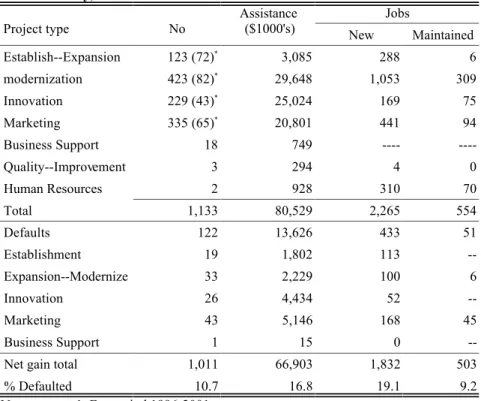
They were accompanied by a brief description of the firms' activity by a standard four-digit industry code, the number of jobs to be provided or retained and the number of assisted firms that are no longer in operation with the resulting job losses. of work. .
Analy sis
Statistics Canada (2002) lists food and paper manufacturing as the top two industries in its 1999 survey of manufacturing firms in Nova Scotia. In this sector, less than 5% of the 30,000 individuals are employed in all manufacturing companies. The effect is greater if we look at call centers as restructuring services in the new information technology.
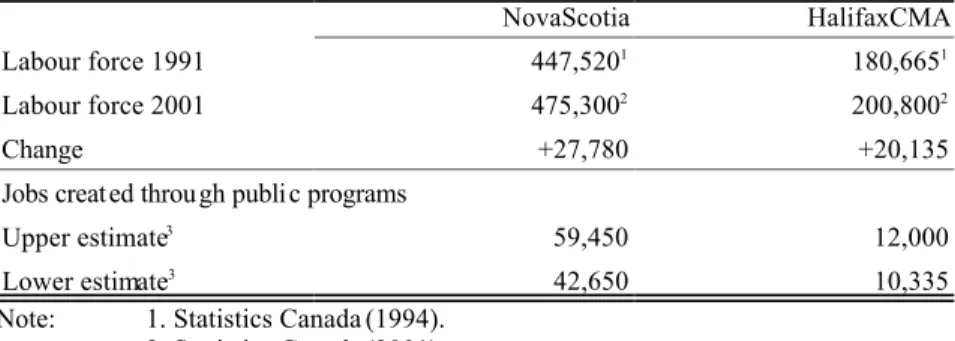
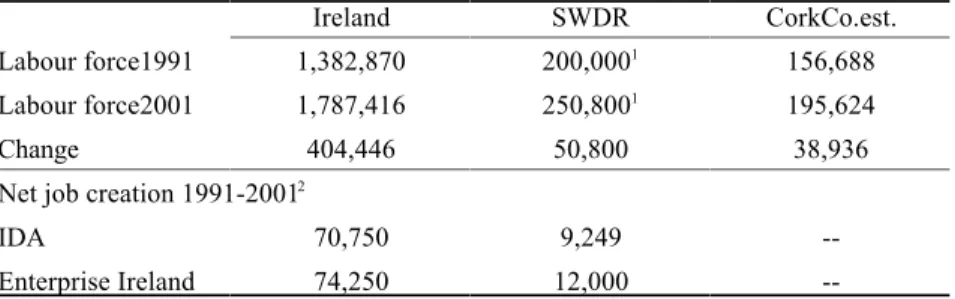
A comparison of job creation and labor force growth provides additional insight into the impact of the development programs on the Nova Scotia and Halifax economies. In Table 5, the dual economies of Halifax County and the rest of the province are re-illustrated. The various development programs reviewed claim to have created many more employment opportunities than the decline in unemployment or labor force growth would suggest, with the exception of the Halifax region.
This discrepancy may be the result of the short-term impact of the initiatives, an overestimation of the impacts and double counting. Or the programs were unable to cope with a very rapid contraction in the resource sectors resulting from moderate nization processes, the decline of the cod fishery or the banning of inefficient enterprises. A good part of this increase took place in the counties of Colchester, Hants and Kings.
If one further considers the difference (5 percentage points) in the unemployment rate between Metropolitan Halifax and the rest of the province, it becomes clear that the development measures could not significantly stimulate economic activities in the periphery. Nor has there been sufficient expansion by local or extra-provincial enterprises within similar activities to establish economic clusters and self-sustaining economically-generating learning regions. Growth in Halifax County was less directly dependent on economic development programs.
While the picture is more positive, growth so far does not appear to be based on major new restructuring or an increase in the manufacturing base, although the energy sector could become a bigger economic catalyst in the future. . Economic expansion has been limited and is still highly dependent on traditional sectors.
Overview of Irish National Policies
Membership in the EU in 1973 brought political and economic discipline which has been lacking until now. Finally, foreign firms, particularly American ones, with operations in the chemical, computer manufacturing, international communications technology, and support services sectors were successfully recruited. Whether Ireland can sustain this rapid pace of economic growth and continue to operate at full capacity will be determined in the next decade.
The 2001-2003 global recessions in computer, software, and communications technology slowed the pace of American investment and development, although it has eased labor shortages in high-skill areas. IDA Ireland's mandate is to attract and expand foreign firms in the international manufacturing and service sector. The existing productivity gap in the domestic manufacturing sector is also reflected in the domestic primary sectors.
In 2001, Enterprise Ireland client companies provided 148,116 jobs, of which 40% were in the traditional consumer, industrial and natural resources sectors, 26% in food and allied products, 20% in metals and engineering. and 14% in software and international services (Enterprise Ireland 2001). During the year, net new jobs were created, and almost all of these were within the software and international services sector. Domestic funding approvals for Enterprise Ireland in the SWDR are carried out at the D ublin office, the Cork office and five local regional boards.
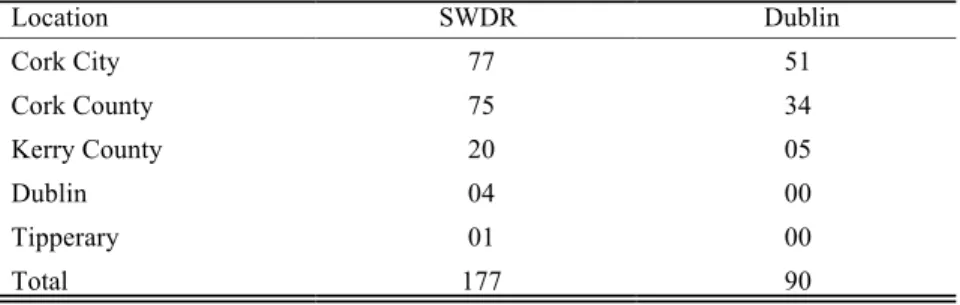
IDA regional offices provide assistance in non-monetary aspects of location and expansion. Currently, E nterprise Ireland has established firms in DR SW and has 23,937 jobs (Enterprise Ireland 2001). A thirteen-day panel on formation technology firms is appearing at SWD R serving international clients.
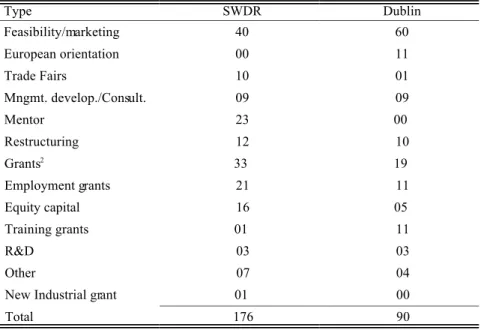
The Dublin office was more involved in the areas of training, European orientation, management development and restructuring of companies in difficulty. The latest statistics show that 13% of IDA's total national employment is in the SWD R. Most employment takes place in the high value-added information and communications technology sector (46 companies), which provides 41% of the work. places.
Sixteen other firms in related health care areas manufacture blood filtration products, orthopedic joint implants, hearing aids, surgical devices, and laser op htalm ic equipment. Local level input into the regional development process is provided by the five regional enterprise boards set up in 1994, one for County Kerry, one in Cork City and three in Cork County (North South, West).

Comparisons and Findings
In Nova Scotia, there is no formal provincial social agreement to increase stability and harmony in the laboratory of our markets. Foreign companies are strongly focused on production in the computer, communications, electronics and chemical sectors. When large flows into the energy sector occurred, the impact on domestic employment was mitigated by offshore companies that had their own workforce and suppliers.
It is unclear whether the economic agglomerations emerging in Ireland/Cork are fully developed or still in the emergent phase. It also did not achieve the same level of success as the Cork region in developing key clusters in new economic sectors - the software, communications, electronics, healthcare and pharmaceutical sectors. In part, the lower level of achievement can be attributed to the role played by national, provincial and community economic stimulus programs.
Companies wishing to use Canada/Nova Scotia as a base for exporting their products to the US did not have a similar advantage in corporate tax rates that encouraged manufacturing and enabled them to take advantage of transfer pricing. Furthermore, the flow of private development capital into high value-added manufacturing sectors was significantly less in Nova Scotia/Halifax than in Ireland/SWDR. Nova Scotia and the Canadian government were not required by an external agency to develop a sense of discipline, as was required of Cork and the Irish government in competing for, developing and monitoring the effectiveness of long-term planning funded through EU structural funds.
Federal transfer payments to Nova Scotia are primarily intended to provide a level of social, educational and health services comparable to the national average. Halifax has also not been able to benefit to the same extent as Cork from a national body of highly trained experts who can accelerate projects. Both Halifax and Nova Scotia, in response to historic slowdowns in economic performance, are developing different economic directions, focusing on new economic endeavors with more promising long-term growth potential.
It will take time for Halifax and Nova Scotia to achieve their new goals and this can only happen with the cooperation of the Canadian government to put the appropriate level of technical, fiscal, marketing, tax and trade mechanisms in place. New member states in the EU with similar economic activities and much lower wage rates will put pressure on weak agricultural and resource-based sectors. Not all of Ireland/Cork's policies are transferable to Nova Scotia/Halifax due to the different structures of the economic blocs they belong to.
Report on the 2001 T urina Conference - Local Development: Competition, Cooperation and Territorial Issues.