An Overview of Stormwater Management in Ontario and a Case Study of the Etobicoke Exfiltration System Master of Applied Science, 2012. The Etobicoke Exfiltration System is used as a case study to demonstrate some aspects of proposed stormwater management changes and to demonstrate the benefits of addressing five characteristics of stormwater (volume, maximum flow, quality, duration, frequency) throughout the year.
Introduction
Background
Problem Identification
Objectives and Scope
Structure of the Report
The purpose of this literature review is to discuss urban stormwater impacts and the history of stormwater management in Ontario. The effectiveness of stormwater management in protecting the province's water bodies is analyzed through the use of watershed case studies, Ontario Environmental Commissioner Reports, and reports on stormwater basin impacts.
Impacts of Urbanization
- Watershed Hydrology
- Stream Geology
- Water Quality
- Aquatic and Terrestrial Ecosystems
- Summary
Dissolved organic carbon and ammonium are also positively correlated with imperviousness (Hatt et al., 2004). The ability to support aquatic diversity declines as tolerant species have better survival rates (Deering et al., 2003).
History of Stormwater Management in Ontario
- Prior to 1990
- The 1990’s
- Beyond 2000
- Stormwater Management Objectives
- Stormwater Management Practices
- Summary
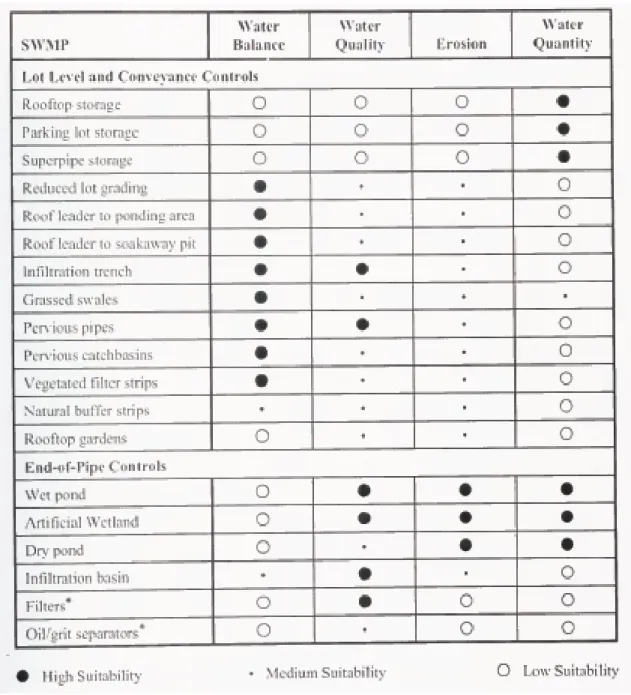
By the late 1990s, the focus on stormwater management included water quality, sediment and erosion control, aquatic habitats, and baseflow maintenance (CVC & TRCA, 2010). The design of BMPs and LIDs must meet the criteria requirements to meet some of the stormwater management goals listed above.
Review of the Effectiveness of Ontario’s Stormwater Management
- Ontario Watersheds
- Humber River Watershed
- Don River Watershed
- Etobicoke and Mimico Creeks Watershed
- Lake Simcoe
- Rouge River Watershed
- Summary of Watershed Case Studies
- Environmental Commissioner’s Reports
- Stormwater Ponds
- Summary
Only 30% of the urban area has stormwater management, mainly in the form of detention ponds. These reports provide some assessment of the state of stormwater management and its problems.

Etobicoke Exfiltration System
- Purpose
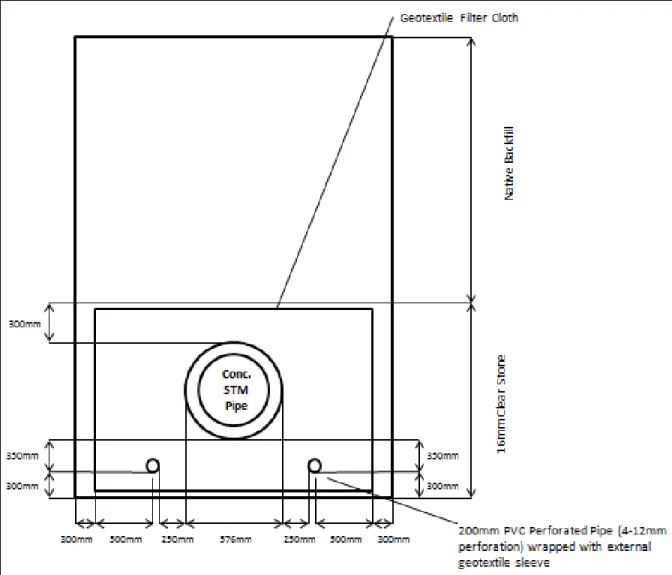
- System Description
- System Dynamics
- Pilot Projects
- Description of Drainage Areas
- Maintenance
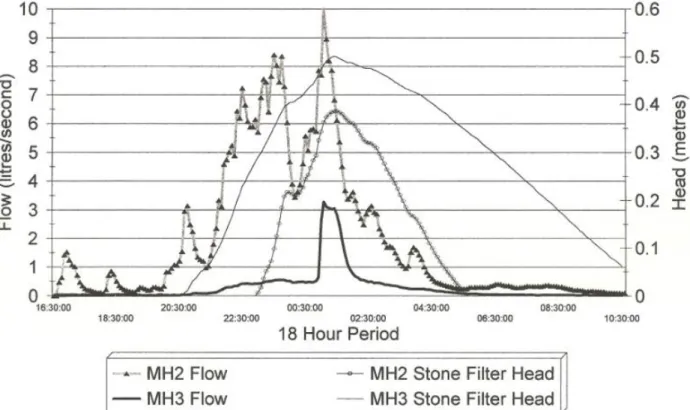
- Performance and Observations
- Cost Comparison
- Research Needed
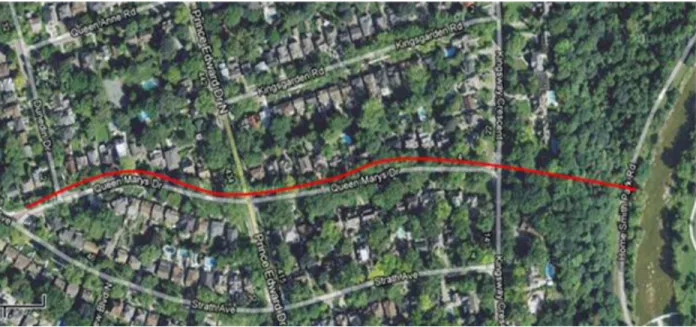
Two sites were selected for the EES pilot studies: Queen Mary Drive and Princess Margaret Boulevard. The low cost of EES is highlighted when we compare it to the cost of a stormwater pond.
Stormwater Management in Other Jurisdictions
- British Columbia
- Alberta
- Maryland
- Summary of Non-Ontario Stormwater Management
The goal of stormwater management in Alberta is to "develop efficient drainage systems that balance the objectives of maximizing drainage efficiency and minimizing adverse environmental impacts" and "maintain the natural hydrologic cycle (CH2M Gore & Storrie Limited, 1999). Characteristics of runoff targeted for control are peak flow, volume, and quality. The goal of stormwater management in Maryland is to "maintain post-development, as closely as possible, pre-development runoff characteristics and protect resources natural (CWP & MDE, 2009). The target runoff characteristics are peak flow, volume and quality, and it does not appear that duration or frequency is a focus or acknowledgement.

Gaps
Methods
Introduction to Methods
Four Seasons based Stormwater Management
The stormwater impacts on the receiving water body that result from inadequately addressing the four seasons of stormwater characteristics in Ontario will be discussed, along with the identification of some measures that can be taken to adequately manage each season's runoff. This section concludes with a conclusion based on the seasonal management literature review to justify that stormwater should be managed on a seasonal basis for the entire year.
Stormwater Management Based on Regional Conditions
Revision of Stormwater Management Objectives
EES Modelling
Model Selection
MIDUSS was chosen for this research because it is the only available stormwater model that includes a design option for EES. Once the design was verified, the original EES design and calculations were incorporated into the model as a design option (Tran, 2011a).
Selection of Historic Events
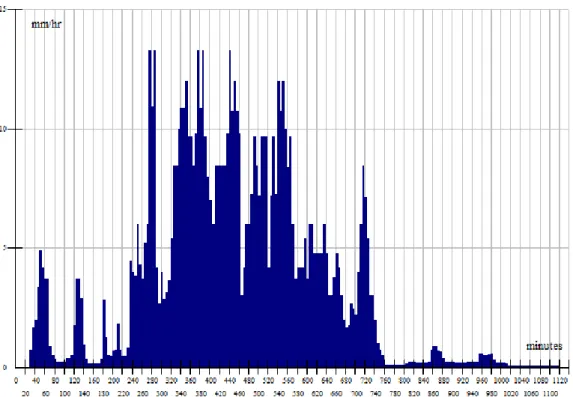
Smith, the model developer, was asked to peer-review the EES design and calculations. As such, the recreated and original hyetographs of the 5–6 October 1995 storm were very similar.

Calibration
- Catchment
- Storm Sewer Pipe Design and Flow Diversion
- Trench
The design of the storm sewer pipe and the flow diversion calculations are discussed in detail. Therefore, the inlet capacity of the round-framed herringbone grate was determined to be about 0.0387 m3/s.
Modeling
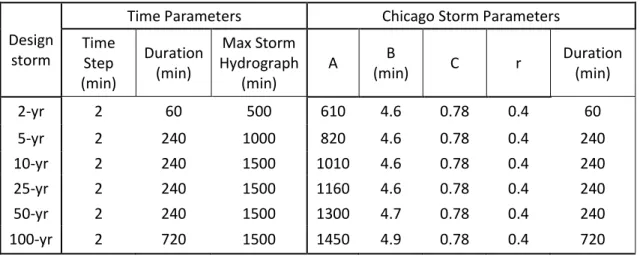
- Synthetic Storms
- Running the Model
This is the same rainfall station used for model calibration using the 5–6 October 1995 storm (Candaras, 1997). These modeling steps were performed for all Chicago storm return periods between 2–100-year events.
Pre-Development Runoff
Once accepted, the 'Pipe' command window automatically reopened where the original pipe parameters were then entered and could accommodate the new adjusted inflow. The 'Route Pipe' command was then selected, followed by the 'Next Link' command which led to the design of the trench.
Objective 3: EES Fulfilment of New Stormwater Management Objectives
Four Seasons based Stormwater Management
Characteristics of Ontario’s Seasons
- Summer
- Fall
- Winter and Spring
- Summary of Seasonal Characteristics
Therefore, it is not correct to use precipitation hydrological and hydraulic processes to manage snowmelt and rain on snow (Maksimovic et al., 2000). This can also be said for other seasons, spring and autumn (Maksimovič et al., 2000).

Ontario’s Stormwater Practices for the Seasons
Impacts on the Water Body
To make matters worse, the use of detention basins does not allow stormwater infiltration, so the base flow is reduced. In general, failure to consider all characteristics of the four seasons in Ontario can result in negative impacts to a receiving water body.
Adaptations
This is achieved by the sodium ion taking the place of the metal at the soil particle adsorption site, effectively placing the metal in dissolved form where it can be mobile in runoff (TRCA, 2009f). This is confirmed by a study by CH2M Hill (2003) who reported that there was about a 10°F temperature rise between the inlet and outlet of the ponds tested.
Summary
Stormwater Management Based on Regional Conditions
Local Climate
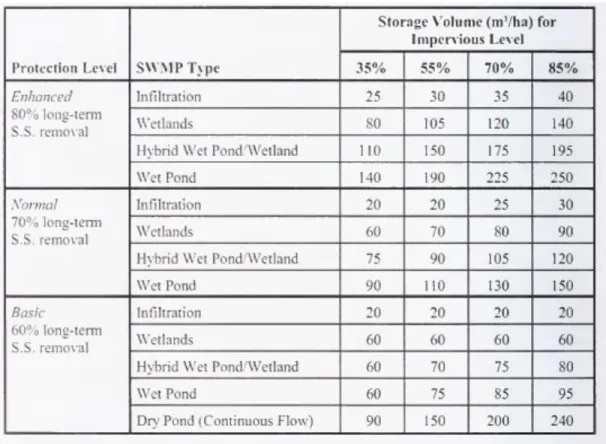
In both scenarios, the currently used design criteria for water quality storage requirements may negate any beneficial effects that would otherwise have occurred. In addition, Ontario's water quality requirements for stormwater treatment storage are based on modeling that assumes a constant particle size distribution for loading suspended solids for all storms (Bradford & Gharabaghi, 2004).
Characteristics of the Receiving Water Body and Drainage Area
Design Criteria
When implementing storm collection practices, it is essential to consider the local climate and the type of storms that occur in the area in order to better plan for the intensity, frequency, and duration of storms in that region and the associated erosive energies and particle size of suspended solids. distributional relationships. Additionally, although this model was for BMP use in Ontario, it used the particle size distribution proposed by the US EPA (Bradford & Gharabaghi, 2004).
Performance Targets
While Ontario has set efficiency ratings for suspended solids removal at end-of-pipe facilities, little consideration has been given to what ratio of suspended solids the stream requires to maintain its geomorphology. Is the stream supplied the appropriate ratio of suspended solids to maintain its stability.
Acidic Rain
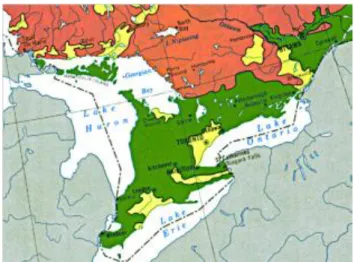
Eastern Canada has been more affected by acid rain due to the large regional production of SO2 and NOx and the presence of the Canadian Precambrian Shield geological formation, which is unable to neutralize the acidity of the rain. As Figure 26 shows, the ability of Ontario soils to neutralize acidity varies across the province.
Upstream and Downstream Development
Summary
Proposed Stormwater Management Objectives
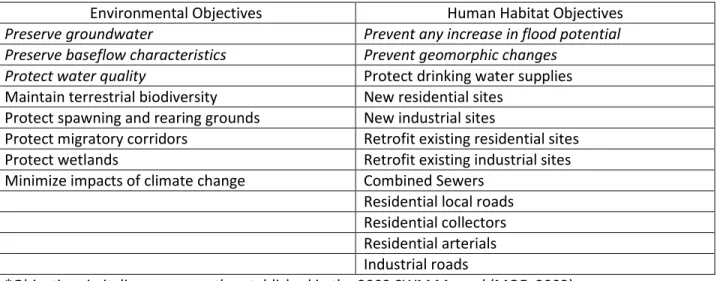
Support for Environmental Objectives
- Maintain Terrestrial Biodiversity
- Protect Spawning and Rearing Grounds
- Protect Migratory Corridors
- Protect Wetlands
- Minimize Impacts of Climate Changes
Salmonids also require their roe (spawn) to contain oxygen, which is associated with substrate composition and water velocity (Armstrong et al., 2003). A study by Curry et al. 1997) of lake brook trout (cold water species) found that 81% of hatchlings studied traveled.
Support for Human Habitat Objectives
- Protect Water Quality for Drinking Purposes
- Land Use Type: Residential vs. Industrial
- Land Use Type: Transportation Roads
- New Developments vs. Retrofitting
Therefore, it is recommended that the goal of water quality protection is related to drinking water and water used for recreational purposes. For residential thoroughfares, lower traffic density/road use results in lower pollutant loads in road runoff (Davis et al., 2001).

Summary
Integrating climate change into stormwater management is also essential in addressing and minimizing impacts on both the environment and human habitat. Furthermore, the development of human habitat targets represents another step in the right direction for stormwater management.
Modeling Results
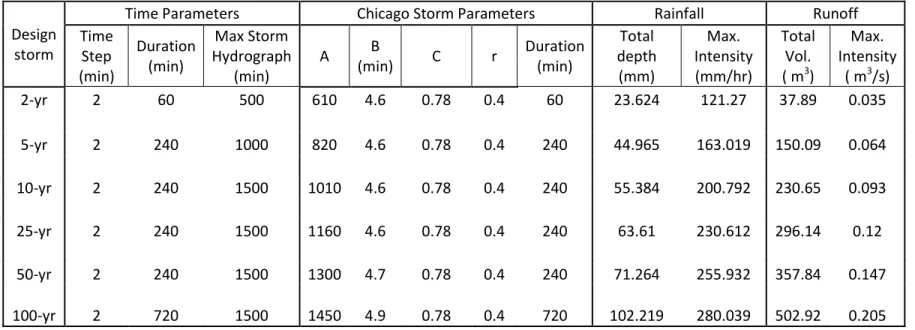
Rainfall and Runoff Characteristics
Trench Hydraulics
Comparison of C Factors
In comparison, the scenario with factor C 1 gave significantly different results in terms of overflows and peak flows (Table 19). Modeling with a C factor of 1 showed that fewer overflows occurred and that overflow volumes and peak flows were significantly smaller during the 2- to 100-year storms (Table 20).
Comparison to Pre-development
Furthermore, the reduction of runoff volume beyond that of pre-development rates has resulted in the runoff duration of the post-development hydrograph also decreasing as there is less volume overflow. An example of the difference between the pre- and post-development hydrographs is shown in Figure 31, with Appendix A containing a comparison of the hydrographs of all the modeled design storms.

Discussion
Second, although the runoff volume of the 5-year storm was slightly higher than the historical event, it exceeded the storage capacity of the ditch of 135 m3. Of the synthetic storms modeled, only the 2-year storm runoff volume was below the ditch storage capacity.
EES and Fulfilment of Objectives
Environmental Objectives
- Preserve Groundwater
- Preserve Baseflow Characteristics
- Protect Water Quality
- Maintain Terrestrial Biodiversity
- Protect Spawning and Rearing Grounds
- Protect Migratory Corridors
- Protect Wetlands
- Minimize Impacts of Climate Change
Although there are no wetlands near these pilot areas, the EES is assumed to be able to protect wetlands because of the functions it can provide that support wetlands. The runoff duration of these extreme storms also decreases at the EES outlet as some of the runoff is infiltrating the entire system.

Human Habitat Objectives
- Protect New Residential Sites
- Retrofitting Existing Residential Sites and Combined Sewers
- Protect Residential Local Roads/Collectors
- Prevent any Increase in Flood Potential
- Prevent Geomorphic Changes
- Other Objectives
This reduced the risk of possible groundwater contamination when the road runoff was infiltrated by the EEA. The design of EES to include cut-off walls under each manhole and to wrap the trench in geotextile fabric also positively affected the integrity of the road.
Summary
Although a large concentration of pollutants is known to be trapped in the sediment within the perforated pipes, much research remains to be done on the routes and mechanisms of pollutants thereafter. Without this information, it is best to be conservative in implementing the EES to reduce the risk of groundwater contamination in areas requiring special protection (i.e. drinking water aquifers) and in areas known to have high pollution loads (i.e. industrial sites ). and roads, busy residential areas and highways).
Conclusion and Recommendations
In addition, some regions may experience storms with 90% of annual rainfall having a precipitation depth of more than 25 mm. The success of the EES in achieving these objectives is the result of addressing the five stormwater characteristics year-round.
Future Research
In addition to emphasizing the areas of stormwater management that need to be modified, the case study of the EES demonstrated its effectiveness in addressing the five stormwater characteristics. Modeling also showed that it captures and infiltrates 100% of the Mississauga's 1-hour, 2-year Chicago storm of 25 mm and 121 mm/hr rainfall depth and peak intensity, respectively.
Storm sewer system and EES under Princess Margaret Boulevard
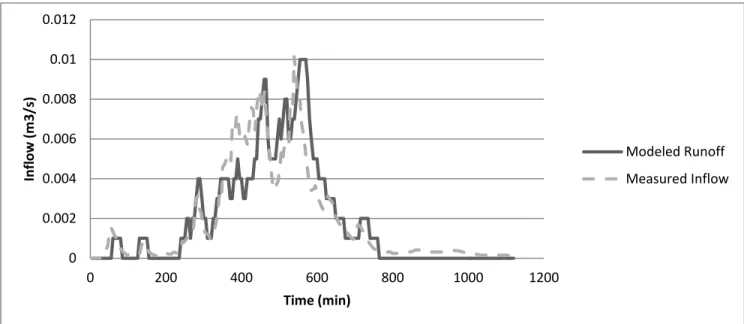
Calibrated trench parameters, C factor 0.63
Calibrated trench parameters, C factor 1
Pipe diversion of inflow hydrograph of Mississauga’s 100-yr Chicago storm
EES trench hydraulics - Mississauga’s 2-yr Chicago storm
EES trench hydraulics - Mississauga’s 5-yr Chicago storm
EES trench hydraulics - Mississauga’s 10-yr Chicago storm
EES trench hydraulics - Mississauga’s 25-yr Chicago storm
EES trench hydraulics - Mississauga’s 50-yr Chicago storm
EES trench hydraulics - Mississauga’s 100-yr Chicago storm, C factor 0.63
EES trench hydraulics - Mississauga’s 100-yr Chicago storm, C factor 1
Retrieved July 31, 2012, from Conservation Ontario: http://www.conservation-ontario.on.ca/find/southwestern.html. Retrieved January 15, 2012 from Ontario Environmental Commissioner: http://www.eco.on.ca/uploads/Reports-.
Pre-development and post-development EES runoff hydrographs for Mississauga’s 2-yr Chicago
Pre-development and post-development EES runoff hydrographs for Mississauga’s 5-yr Chicago
Pre-development and post-development EES runoff hydrographs for Mississauga’s 10-yr Chicago
Pre-development and post-development EES runoff hydrographs for Mississauga’s 25-yr Chicago
Pre-development and post-development EES runoff hydrographs for Mississauga's 50-yr Chicago
Pre-development runoff hydrograph for Mississauga's 100-yr Chicago storm
Post-development EES hydrograph for Mississauga's 100-yr Chicago storm
Retrieved June 1, 2012, from Conservation Ontario: http://www.conservation-ontario.on.ca/about/mandate.html Conservation Ontario. Retrieved July 31, 2012, from Toronto Regional Conservation Authority: http://www.trca.on.ca/the-living-city/watersheds/.