Facultad Latinoamericana de Ciencias Sociales, FLACSO Ecuador Departamento de Desarrollo, Ambiente y Territorio
Convocatoria 2013-2015
Tesis para obtener el título de maestría en Estudios Socioambientales
La deforestación y la participación de mujeres en el manejo de recursos naturales: una comparación de casos de estudio de comunidades indígenas y colonas en la provincia de
Napo, Ecuador
[Deforestation and Female Participation in Natural Resource Management: Comparing Case Studies in Indigenous and Colonist Communities in the Province Of Napo, Ecuador]
Heather Cassandra Hutchison
Asesora: Ivette Vallejo
Lectores: Anita Krainer y Eduardo Bedoya
Quito, marzo de 2016
Dedication
Table of Contents
Summary ... ix
Acknowledgements ... x
Introduction ... 1
1. The Problem of Deforestation ... 2
2. Guidelines and Regulations Regarding Land Reform and Deforestation ... 8
3. The Problem of Defining Deforestation ... 11
4. An Escalating Problem: Deforestation Around the World ... 13
5. The Research ... 17
6. Structure of the Thesis ... 19
Chapter 1. Theoretical Framework and Research Methodology ... 20
1.1. Framing Research through Political Ecology ... 20
1.2. The Economics of Analytical Marxism ... 24
1.3. Anthropology and the New Cultural Ecology ... 28
1.4. Ecofeminism and Gender Analysis ... 30
1.5. Research Methodology ... 33
1.6. Research Techniques Used for Data Collection ... 38
1.7. Fieldwork ... 45
Chapter 2. Contextualization: A Growing Port City on the Amazon Frontier ... 52
2.1. General Overview of the Ecuadorian Amazon and the Province of Napo: The New Extractive Frontier, Colonization and Socioeconomic Growth ... 52
2.1.1. Local Economy in the Province of Napo ... 55
2.1.2. Geographic and Sociodemographic Background of the Province of Napo ... 57
2.1.3. Local Deforestation Trends ... 64
2.2. Study Area: The Parish of Puerto Misahuallí, “A Little Star of Tourism” ... 67
2.2.1. Deforestation in the Study Area ... 70
Chapter 3. Two Cultures, One Land: The Idiosyncrasies Of Amazonian Culture ... 73
3.1. The Kichwa of Shiripuno: “An independent people, an ecological community.” ... 73
3.1.1. A Brief History of Shiripuno: The Story of Los Abuelos ... 76
3.1.2. “Living in Harmony”: Territory, Nature, Animals, Humans ... 80
3.1.3. Local Economy: Las Chakramamas and the Native Chakra System ... 87
3.1.4. “An Independent People”: Relationship with External Actors ... 90
3.2. The Kichwa of Ilayaku Sardinas: ... 92
3.2.2. Relationship with the Territory and Forests ... 95
3.2.3. Local Economy ... 95
3.2.4. From Mining to Toilets: Relationship with External Actors ... 99
3.3. The Colonists of Pununo ... 99
3.3.1. Relationship with Territory and Forest ... 103
3.3.2. Family Economy and Economic Diversity ... 106
3.3.3 Relative Independence of Colonist Families ... 110
3.4. Interfamiliar and Intercommunity Conflicts, Attitudes and Relationships ... 112
Chapter 4. Women in Misahuallí ... 117
4.1. The Role of the Woman in the Family Unit ... 117
4.2. The Role of the Woman in the Household Economy ... 119
4.3. The Role of the Woman in the Community ... 124
4.4. The Impact of AMUKISHMI and Community Tourism ... 125
4.5. The Role of the Woman in Resource Management and Decision-Making ... 129
Conclusion ... 133
1. The Demanding, Dynamic Roles of Women in Misahuallí ... 133
2. Female Participation in Resource Management and Decision-Making Structures . 136 3. The Implications of Female Participation on Family Economy and Environment . 139 Appendices ... 144
Appendix 1. Change in land cover in continental Ecuador ... 144
Appendix 2. Summary of Gender Roles for Men and Women of Different Age Groups, Compared Between Shiripuno and Pununo ... 145
Appendix 3. Complete list of interviews conducted by author ... 149
List of Acronyms ... 152
Ilustrations
Figures
1.1. Accumulated Pressure in the Amazon Rainforest 2
1.2. Roads and Highway Systems in Amazon Region 3
1.3: Total Net Deforestation Rate per Canton 16
1.4. Map of Actors for the Universe of the Study Defined in the Research 35
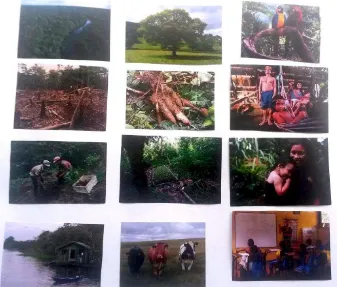
1.5. Photos Used in “Dialogue with Photos” to Provoke Discussions and Ideas within Focus Groups and Family Groups 40
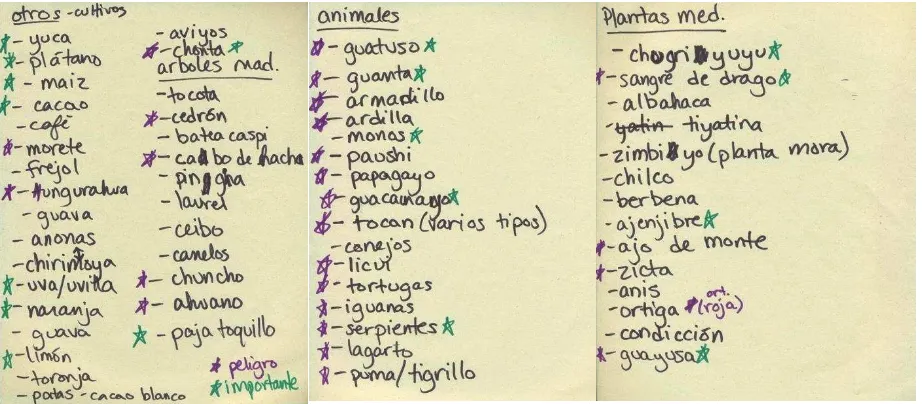
1.6. Inventory of Biodiversity, Focus Group with AMUKISHMI Women’s Association, Kichwa Community of Shiripuno 42
1.7. Prioritization of Problems, Colonist Family Group, Pununo 45
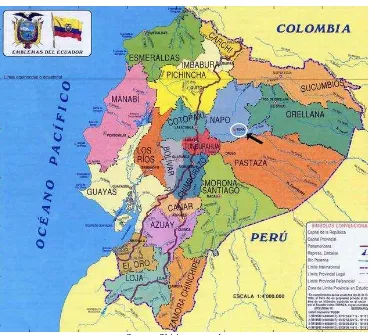
2.1. Map of Ecuador (City of Tena indicated by arrow) 58
2.2. Population and Growth Rate in the Province of Napo from 1950 to 2010 61
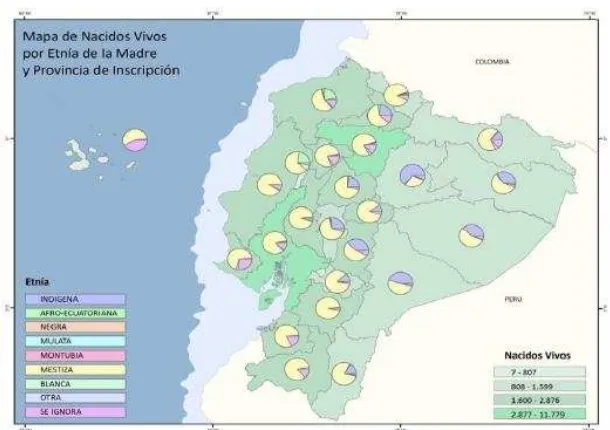
2.3. Map of Live Births According to Mother’s Ethnicity and Province of Registration per Province, 2011 63
2.4. Map of Changes in Birth Rates from 2006 to 2011, by Province 63
2.5 Land Use and Land Cover in Continental Ecuador 65
2.6. Map of Deforestation in Continental Ecuador, Period 1990-2000 65
2.7. Map of Deforestation in Continental Ecuador, Period 2000-2008 66
2.8. Map of Parish of Puerto Misahuallí 68
2.9. Land Cover in the Study Area, Parish of Puerto Misahuallí 69
2.10.Economic Activities in Study Area, Parish of Puerto Misahuallí 70
2.11. Zones Studied in Land Use and Vegetation Cover in the Sumaco Biosphere 71
2.12. Primary Forest Cover in Zone 1 of the Sumaco Biosphere Reserve From 2008 with Projections to 2023 71
2.13. Map Indicating Pressure of Current Deforestation Trends on Native Forests in Zone 1 72
3.1. Map of Puerto Misahuallí (Shiripuno indicated with red arrow) 74
3.2 Map of Puerto Misahuallí (Pununo indicated with red arrow) 93
3.3. Map of Puerto Misahuallí (Ilayaku Sardinas indicated with red arrow) 100
3.4. Map of Relative Locations of Colonist Families’ Homes and Farms 102
1.1.Research Variables and Subvariables 36-38 2.1. Past and Future Project Population Growth in Parish of Puerto Misahuallí and Canton of
Tena, Period 1990-2020 62
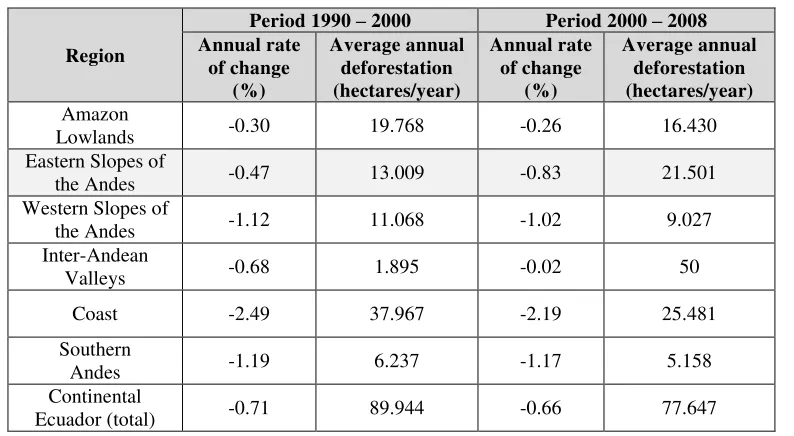
2.2. Deforestation Rates for Six Sub-regions and Continental Ecuador, Periods 1990-2000 and 2000-2008 64
2.3. Deforestation Rates per Province in the Ecuadorian Amazon, Periods 1990-2000 and 2000-2008 67
3.1. Overview of the Five Colonist Families of Pununo 101
4.1 Summary of 24-Hour Routine Across Three Case Studies, Comparing the Daily Activities of Adult Men and Women 121
4.2: Consolidated Seasonal Calendars Dictated by Women of Shiripuno and Pununo 122
Photos 1.1. Focus Group with Men and Women of Shiripuno 47
1.2. Men and Women Working in a Group in Ilayaku Sardinas 48
1.3. Groups of Men and Groups of Women Working in Ilayaku Sardinas 48
1.4. Activities with Family Group 50
3.1. Family Tree of Leonardo Rivadeneyra and María Grefa, the Founding Family of Shiripuno 75
3.2. Timeline of Shiripuno by Male and Female Community Members 77
3.3. The Sacred Rock of Shiripuno 81
3.4. Present and Future Drawing of Shiripuno by Young Adult (19) Female Community Member 83
3.5. Diachronic Drawings of Past, Present and Future of Key Elements Completed by Two Separate Groups of Women of AMUKISHMI 85-86 3.6. Drawings of Community, Male and Female 86
3.7. Chakras of Shiripuno with manioc and plantain 87
3.8. Map of Actors, Product of Focus Group with Women of AMUKISHMI Women’s Association 91
3.9. Agriculture along Road Leading to Ilayaku Sardinas 93
3.10. Cattle and Land Cleared for Pastures along Road to Ilayaku Sardinas 94
3.11. Past Drawings of Community By a Group of 5 Women 95
3.14. Social Mapping Completed by Two Separate Groups of 5 Men and 4 Men 98
3.15. Community Timeline Completed by Male and Female Heads of 100
3.16. Diachronic Drawings of Past, Present and Future of Key Elements (Family, Community, Water, Crops, Forest, Flora/plants, Fauna/animals, Other Forest Resources) Completed by Female Head of Household 105
3.17. Map of Farm Completed by Male Head of Household 106
3.18. Timber Ready to Be Picked-Up by Intermediary Buyer 107
3.19. Past/Present/Future Drawing of Land Completed by Male Head of Household 108
3.20. Female Head of Household Milking Cows to Make Cheese 109
3.21. Present Drawing of Farm 109
3.22. Maps of Actors Completed by Female Head of Household, Family # 3 and Male Head of Household, Family #4 111
3.23. Home Garden with plantain, manioc, ají 115
4.1. Female Head of Household Unloading Timber, Youngest Child in Tow 120
4.2. Community Tourism Project of Shiripuno 126
Declaración de cesión de derecho de publicación de la tesis
Yo, Heather Cassandra Hutchison, autora de la tesis titulada, La deforestación y la participación de mujeres en el manejo de recursos naturales: una
comparación de casos de estudio de comunidades indígenas y colonas en la provincia de Napo, Ecuador, declaro que la obra es de mi exclusive autoría, que la he elaborado para obtener el título de maestría concedido por la Facultad Latinoamericana de Ciencias Sociales, FLACSO Ecuador.
Cedo a la FLACSO Ecuador los derechos exclusivos de reproducción, comunicación pública, distribución y divulgación, bajo la licencia Creative Commons 3.0 Ecuador (CC BY-NC-ND 3.0 EC), para que esta universidad la publique en su repositorio institucional, siempre y cuando el objetivo no sea obtener un beneficio económico.
Quito, marzo de 2016.
Summary
Over the past century, deforestation of the world’s valuable rainforests has been a
primary factor in the growing problems of climate change, jeopardizing the future of the planet. In the Amazon Rainforest, poor resource management and unsustainable
agricultural practices have been key drivers leading to the rapid progression of the agricultural frontier, resulting in unprecedented clearing of rainforest to make way for more agriculture and consistently shrinking the rainforest. Through fieldwork completed in three communities in the Province of Napo in the northern Ecuadorian Amazon, this research explores the relationship between greater participation of women in resource management and decision-making processes and decreasing local deforestation rates.
The research carried out in this thesis reveals that the differing socioeconomic and cultural structures of non-indigenous colonist and indigenous Kichwa communities in the Province of Napo directly impact the time, resources, influence and alternatives women have in their households and in communities, which directly influence the degree to which they are able to participate in decision-making processes related to resource management. In the cases studies, colonist women tended to have limited time, resources, influence and alternatives, and thus they participated very little in decision-making processes at all levels. Kichwa women, on the other hand, had more flexibility in terms of time, resources, influence and alternatives, and thus had stronger voices and participated more actively in community decision-making and resource management, particularly when their participation was formalized through a Women’s Association. Based on these finding, this study seeks to define conditions, components and
Acknowledgements
This thesis would not have been possible without the support and openness of the people of the community of Shiripuno, and in particular the women of the
AMUKISHMI Women’s Association, the community of Ilayaku Sardinas, and the
families of Pununo in the parish of Misahuallí. Without the time, activities and stories they shared with me, my research and fieldwork would have had limited success. A special thanks to all of those strong women who let me into their homes and their lives and shared a bit of their culture and life with me.
Introduction
Deforestation is a problem with numerous direct and indirect impacts on the
environment, social issues and the overall survival of the planet. Every tree cut down diminishes the amount of oxygen available to breathe, interrupts carbon sequestration processes the keep carbon emissions in check, and destroys the habitats of countless species. Deforestation can also lead to territorial conflicts, endanger cultures and livelihoods, and create dependence on the unsustainable use of forest resources.
Together, these impacts are causing a domino effect that will only continue to aggravate the impacts of global warming and make it ever more difficult to mitigate the effects of climate change. Unfortunately, despite the grave consequences of deforestation, such activities have yet to be controlled.
While there has been a significant amount of research exploring different social,
economic, and cultural factors for consistently high rates of deforestation in the Amazon Basin and the consequences of such activities have been well documented, the role of women in decision-making and resource management has not received just attention. The research in this thesis aims to explore the relationship between the participation of women in decision-making related to resource management in Amazon communities and the deforestation patterns in those same communities. The analysis involved in this thesis project seeks to expand current academic knowledge and understanding of the factors involved in high deforestation rates by demonstrating how lower female participation in decision-making and resource management leads to unsustainable resource use and extensive agriculture patterns. This understanding can be applied to any context where deforestation and/or unsustainable agriculture wreak environmental havoc, though it is especially important in rainforest ecosystems, where the loss of vegetation makes the soil vulnerable to erosion and leads to a variety of other related problems in these regions.
Furthermore, this expanded knowledge lays a foundation for the rounded analysis of the problem of deforestation, which then allows for the formation of comprehensive
female participation and influence in the region, it becomes possible to design local, regional, national and international initiatives and policies focused on empowering women and strengthening those mechanisms. Without taking into account the critical roles of local women, however, the debate on deforestation will continue producing mediocre solutions that, in the past, have failed to effectively curb deforestation rates and to mitigate the consequences they have on climate change.
1. The Problem of Deforestation
The problem of deforestation in the Amazon came to the public eye during the 1980s, when satellite-based images of the estimated land cover in the Basin became
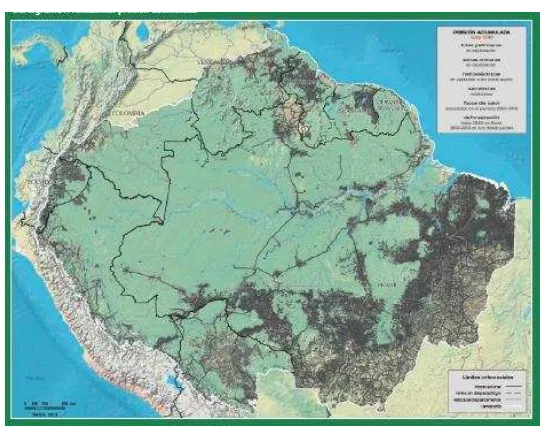
widespread, spurring international pressure at a number of international summits by environmental groups seeking more responsible management of the Amazon Rainforest (Perz 2002). What caught the world’s attention was dramatically changing land cover in the Amazon Basin. In the Ecuadorian Amazon, the annual deforestation rate in 1999 was 1.8%, one of the highest in South America, a rate at which, if maintained, the rainforest is expected to be depleted in a matter of decades (Pichón and Bilsborrow 1999). Figure 1.1 shows that the pressure on the rainforest (indicated by the dark gray
areas) represents the majority of Ecuador’s Amazon region, while other countries in the
[image:12.595.161.433.528.742.2]Amazon face relatively lower pressure in relation to their overall territory covered by rainforest.
Figure 1.1. Accumulated Pressure in the Amazon Rainforest
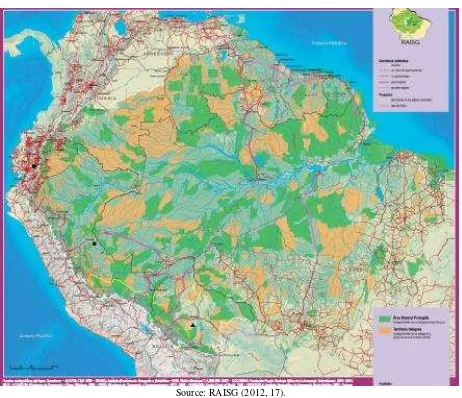
Figure 1.2. Roads and Highway Systems in Amazon Region
Source: RAISG (2012, 17).
Most Amazonian countries experienced a similar pattern of deforestation as a result of the expansion of the agricultural and extractive frontier. The key factor was the
discovery of commodities, such as rubber, gold, oil or wood, which led to the
construction of roads and the consolidation of national territory to facilitate and control commodity extraction (Muratorio 1991; Schmink and Wood 1992; Whitten 1976; Whitten et al. 1989). During the mid-twentieth century, the Ecuadorian Amazon (a region largely ignored by the government before the twentieth century) entered the political scene as the last frontier left to be conquered (Whitten 1976). Following the
violence and smuggling of the country’s extractive resources into Peru that
Ecuadorian government needed to consolidate its borders and regulate the region’s
extractive economy (Muratorio 1991; Schmink and Wood 1992; Whitten 1976). When the oil boom of 1967 struck, the construction of new roads and the growth of the communications network enabled migration into previously unreachable regions (Pichón and Bilsborrow 1999; Muratorio 1991).
The greatest impact of the expansion of the extractive frontier into the Amazon has been the resulting highway system built to facilitate extraction. As shown in Figure 1.2, Ecuador has the highest density of highways in the Amazon region, with 37.5 km of highways per square kilometer (RAISG 2012). By comparing Figures 1.1 and 1.2, the grey areas indicating high pressure on the rainforest reflects the greater highway density
in Ecuador’s northeast Amazon, thereby supporting the direct relationship between road construction and high deforestation rates (RAISG 2012; Christian Velasco, interview by author, 2015, interview CVA05192015).
In addition to the expansion of the extractive frontier, overpopulation in other parts of these countries resulted in land scarcity, leading to two complementary scenarios: 1) peasant farmers chose to migrate to the Amazon in search of land; and 2) governments encouraged depopulation of densely populated areas by selling cheap land packages in the Amazon (Evans et al. 2001; Muratorio 1991; Perz 2002; Pichón and Bilsborrow 1999; Thapa et al. 1996; Schmink and Wood 1992; Whitten 1976; Whitten et al. 1989). Beginning in the 1960s and 1970s, demographic pressure as a result of an increasing population resulted in land inequality and poor soil quality in the highland and coastal regions of Ecuador. In response to the growing demographic crises, the Ecuadorian government started to encourage settlement or “colonization” of the “vacant” lands of the Amazon. Furthermore, as in other countries in the Amazon Basin, the state had
largely ignored the Amazon region, a peripheral region considered “backwards” and an
impediment to national development. At this time, however, the Amazon transformed into a region of opportunity with endless land and resources yet to be exploited
The high rate of unplanned, chaotic migration into the Amazon that resulted from the
state’s colonization efforts led to conflicts over land tenure, hostility with indigenous populations living in the region, and haphazard deforestation as squatters strove to claim their land (Pichón and Bilsborrow 1999; Schmink and Wood 1992; Whitten et al. 1989). While many people blame extractive industries for deforestation, evidence suggests that unsustainable local demographic and economic activities, poverty and population growth, and the expansion of roads and highway systems into the Amazon have also had significant, impacts on deforestation trends (RAISG 2012). Although it has been more than three decades since heavy migration to the Amazon began, some scholars have suggested that population growth and in-migration to the region will continue and the current impacts – particularly, global warming and climate change – on the planet will escalate (Carr 2004; Thapa et al. 1996; Pichón and Bilsborrow 1999).
According to Malthusian theory, population growth has a positive correlation with high deforestation rates, implying the importance of analyzing demographics of the region in question. In the Ecuadorian Amazon, the population growth rate was 6% during the 1970s and 1980s, more than double the national average (Carr 2004), which can be
compared to the region’s annual deforestation rate of 1.9% in 1999 (Pichón and
Bilsborrow 1999). This relationship is also observed in the region studied in this thesis, the province of Napo. From 1974 to 1990, the northeastern provinces of Napo and Sucumbíos had the highest rate of population growth in the country at 6.7% per year;
these same provinces also had the country’s highest deforestation rate from 1965-1984 at 1.4% per year (Thapa et al. 1996). In recent decades, the Province of Napo has continued experiencing increasing deforestation rates, with a deforestation rate of -0.21% (1,682 hectares) per year for the period 1990-2000 and -0.35% (2,735 hectares) per year for the period 2000-2008 (Ministerio del Ambiente del Ecuador and Programa Socio Bosque 2012). The Province of Napo’s population also increased consistently during this period at a rate of about 3% per year for the period 2001-2010 (INEC 2010).
the effects of the capitalist market economy have yet to analyze the relationship between deforestation and gender analysis (Feldstein and Poats 1989; Bunker 1985; Schmink and Wood 1992; Escobar 1995). A deeper and more recent analysis of the role and influence of women in household and community decision-making in relation to access, control and management of natural resources is essential to be able to formulate a comprehensive solution to deforestation at the local level.
A number of studies indicate that the Amazon region, particularly for colonist
communities, is a high-fertility region primarily due to the labor demands of agriculture in the region. The lack of these factors in many Amazonian communities, paired with the high family-based labor demand of subsistence farming, results in higher fertility rates and thus may have a direct correlation with deforestation rates (Carr 2004; Evans et al. 2001; Lobao and Brown 1998; Pichón and Bilsborrow 1999; Thapa et al. 1996).
Furthermore, the unique agricultural pattern of expansion of particular communities in the Amazon has also been an influential factor in escalating deforestation rates. Early colonist communities often began producing solely for subsistence, but they soon expanded to cash crops to sell outside the home, followed by pastureland for cattle, which requires large amounts of land, and other land-intensive productive activities they or their families had previously done in their homeland (Bedoya 1995; Lu et al. 2010; Evans et al. 2001; Perz 2002; Pichón and Bilsborrow 1999; Thapa et al. 1996; Rudel and Horowitz 1996). However, it is critical to point out that these variations and patterns in productive activities are not unique to the colonists in the Amazon.
Several studies compare agricultural and economic activities of colonist communities and different indigenous communities in the Ecuadorian and Peruvian Amazon with the
community’s local deforestation rate to determine the impact of its agroeconomic activities on the surrounding forests (Lu et al. 2010; Lu, et al. 2012; Bedoya 1995; Rudel et al. 2002; Rudel and Horowitz 1996). Bedoya (1995) provides case studies in the Peruvian Amazon to demonstrate that agricultural patterns in indigenous
agricultural patterns and deforestation rates more similar to colonist communities than some of the other indigenous groups studied. Lu et al. (2010) discuss similar
observations when examining varying deforestation patterns between colonist
communities and different indigenous communities in the Ecuadorian Amazon, and Lu et al. (2012) analyze these differences more in-depth in a subsequent research study. The latter study reveals that some indigenous groups, such as the Shuar and Kichwa communities studied, have sedentary lifestyles, agriculture-based diets and household economies much more similar to those of the colonist communities than to other indigenous groups, such as the Cofanes and Waorani, who are much less sedentary and rely more heavily on hunting and gathering. Furthermore, Rudel et al. (2002)
demonstrate that it is not unusual for indigenous communities to adopt the same environmentally-destructive economic activities as colonists, such as cash crops and livestock raising.
These studies on different colonist and indigenous communities illustrate a number of important points. First, it demonstrates that deforestation is not a black and white issue, with the “good indigenous people” trying to save the rainforest and the “bad colonists” selfishly destroying the Amazon. There are varying degrees of both deforestation and conservation occurring in each community, thus generalizing based on ethnicity or culture is not a realistic strategy to stop deforestation. Moreover, no indigenous or colonist community is the same as another, and some indigenous communities may be equally, if not more, at fault for local deforestation trends. Based on these conclusions, it is clear that local agricultural activity and economies must be analyzed on a case-by-case basis to understand the local impact on deforestation rates (Lu et al. 2010; Lu et al. 2012; Bedoya 1995; Rudel et al. 2002; Rudel and Horowitz 1996). Within the study of agriculture, however, the influence women have had has largely been invisible
(Feldstein and Poats 1989; Rocheleau et al. 2004b).
Over the past ten years or so, the Ecuadorian government has created a number of programs and initiatives to encourage more sustainable agricultural production,
incentivize forest conservation, discourage illegal logging, and promote cutting timber
these programs is Programa Socio Bosque, which offers small monetary incentives to preserve forest cover, thereby reducing deforestation and erosion. While it is a positive sign that the current government is organizing programs and offering incentives in favor of forest conservation and sustainability, the success of such programs can only be determined over time. Critics argue, however, that many of these programs fail to take into account the distinctive economic rationale and reality of certain groups and individuals and, thus, they do not effectively deter unsustainable agricultural practices and illegal logging (Aníbal Gómez, interview by author, 2015, interviewAG05122015). Moreover, such initiatives failure to incorporate the potential benefits the participation of women could lend to ensuring sustainability in agriculture.
2. Guidelines and Regulations Regarding Land Reform and Deforestation Regarding land tenure rights, a series of agreements led up to the Constitution of 2008, which currently serves as the basis of indigenous and private property rights. The 2004 Forestry Law on the conservation of natural areas and wildlife laid out the procedure for allocating government lands, forests and plant life to ensure their protection and
sustainable use. The Ecuadorian Strategy for Sustainable Forest Development was
established by the MAE (Ecuador’s Ministry of the Environment) for the years 2007 -2011, and incorporates Agreement No. 244 which sets forth regulations for sustainable forest management of dry forests; Decree No. 931 which defines the responsibilities related to the regulation, development, commercialization and exploitation as well as the sustainable management of forestry resources; Agreement No. 39 which lays out the guidelines for sustainable forest management in the exploitation of rainforest;
Resolution No. 78 which establishes the restoration costs for primary forest and for the loss of environmental benefits in the humid tropical rainforest; Decree No. 969 which
creates Ecuador’s Forest Promotion and Development Unit (called PROFORESTAL,
2015); and Agreement No. 169 which creates the program Socio Bosque which offers incentives for protecting forest cover. Most of these Agreements and Decrees went into effect in 2008, so they reflect many of the same principles set forth in the new
The Constitution of 2008 grants indigenous communities “titular authority” over their ancestral communal lands, which makes up more than half of the country’s remaining
forestland. This Constitution further states that ancestral communal land is not
“divisible, conveyable or subject to legal attachment” (USAID 2011). Furthermore, the Constitution of 2008 also recognizes and guarantees the right to property as public, private, communal, state and associative lands. Indigenous tenure rights depend on the form of land tenure, three of which are identified in the Constitution. The first form of indigenous land tenure is in indigenous reserves, in which case indigenous groups are given a legal communal title to large areas of lands that encompass different indigenous communities. A second form of indigenous land tenure is community tenure, in which communities receive a legal title through customary land tenure laws. The third form of indigenous land tenure is protected areas, where the state publically and legally owns the lands, but indigenous groups are granted the legal rights to use the lands for their livelihoods (USAID 2011).
Up until 2010, the Instituto Nacional del Desarrollo Agrario (INDA), or the National Institute for Agrarian Development, was directly responsible for land titling and
registration throughout Ecuador. When INDA dissolved in 2010, the Sub-Secretariat for Land and Agrarian Reform, a department within the Ministry of Agriculture, became the entity responsible for land titling and management. There is currently a Bill for Land Reform waiting to be passed by the National Congress, which will establish the entity or create a new entity to take charge of land titling issues. In the meantime, however, the Sub-Secretariat for Land and Agrarian Reform has limited staff and resources to carry out all of the responsibilities needed to manage the country’s land titling processes,
there are no longer ancestral rights granted for “ancestral lands” unless the community
currently occupies that same territory. Instead, the Sub-Secretariat grants private land
that most Kichwa communities are no longer on their ancestral lands and, as in the case of Shiripuno and Ilayaku Sardinas, have only occupied their current territory for two or three generations.
The lack of adequate regulation or the failure to effectively implement those regulations has been an important factor in high deforestation rates in Ecuador. For example, between 17.5% and 54% of wood extracted in Ecuador is cut down and sold or traded illegally. As these extraction activities are out of the government’s control and thus regulations that encourage sustainability and environmental protection cannot be enforced. This is part of the reason why, according to Meija and Pacheco (2013), Ecuador has an annual deforestation rate of 1.5%, which is four times higher than in other countries in the region.
In addition, the Ministry of Agriculture (MAGAP) also manages programs related to forest conservation, including the Incentive for Forest Plantations for Commercial Use, which encourages participants to reforest certain areas to be able to use that timber in the future. However, these programs have not been implemented effectively thus far in the Amazon region. Another new program is the Agenda for the Productive
Transformation of the Amazon, the goal of which is to implement sustainable
agricultural practices that intensify soil use to decrease poor agricultural practices and reduce the need to continually clear new land thereby slowing the expansion of the agricultural frontier. Unfortunately, this program does not incorporate gender analysis or encourage female participation directly. Nonetheless, it will be interesting to see the impact of the first program of its kind in the Amazon region when it goes into effect in May 2016 (Jimena Falconí, interview by author, 2015, JF08062015).
Overall, the new regulations, guidelines and programs designed to promote forest conservation and regulate the local drivers of deforestation in Ecuador are relatively new and are still adjusting to the reality of life in the Ecuadorian Amazon. For this reason, further research into the intricacies and difficulties of life in the Amazon is still needed to inform and make such regulations and programs more effective. The research and fieldwork carried out in this thesis aimed to do just that, by exploring the family and cultural dynamics of kichwa and colonist communities in the northern Amazon,
emphasizing gender roles in local resource management and the participation of women in decision-making processes.
3. The Problem of Defining Deforestation
Part of the inability to find a consensus to confront the problem of deforestation lies in understand what exactly “deforestation” is. Deforestation does not have a universal definition, nor is it measured in the same way by all sources. According to the United Nations Framework Convention on Climate Change (UNFCCC), a fundamental tool for
the minimum 10 percent threshold” (Schoene et al. 2007). The FAO further explains
that “deforestation implies the long-term or permanent loss of forest cover and implies
transformation into another land use”, a loss which can only be caused by repeated
human-induced or natural disturbances (Schoene et al. 2007). Unfortunately, these definitions generally do not include loss of forest cover due to logging or other forest loss as this does not imply a conversion of land use, or where reforestation (whether natural or artificial) will occur as this does not imply long-term forest loss (Schoene et al. 2007).
Moreover, analyzing the definition and/or calculation of deforestation at smaller, more local levels, where policies and economic activities are planned, controlled, and/or monitored in a way that directly affects activities that impact deforestation, is also critical when discussion deforestation trends and possible efforts and initiatives to address deforestation. The Ecuadorian Dirección Nacional Forestal (or the National Forestry Office) defines deforestation as:
a process of the anthropic conversion of forestland into another land cover and land use; below the threshold of height, canopy cover or area established in the definition of forest. Areas with removed forest plantations as a result of agriculture or logging and where it is expected that the forest regenerate naturally or with the help of silvicultural practice are not considered deforestation (Ministerio del Ambiente del Ecuador and Programa Socio Bosque 2012, 14) 1.
Therefore, based on this definition, the government of Ecuador does not include areas deforested as a consequence of agricultural activities in assessments and monitoring of deforestation activities, thereby ignoring a sector that, in many areas of the country, has a significant impact on land use and land cover and therefore significantly contributes to deforestation, as will be explored in this thesis, taking these local considerations and
variations in calculating deforestation rates is critical when evaluating varying deforestation numbers from different sources.
The complexities of deciding what constitutes deforestation and what does not has made it difficult to reach a consensus not only in defining the term, but also in determining how and to what extent to confront deforestation. For example, the FAO indicates that
some entites aim to “avoid deforestation”, which could simply refer to a nominal decrease in the deforestation rate, while others may seek to do “as much as possible” to choose alternatives with less impact on deforestation (without necessarily committing to impacting deforestation rates). Still others may set a goal of zero deforestation, in the hopes of drastically reducing deforestation. The lack of clarity in both defining deforestation as well as in setting goals to counter deforestation have led to limited action, ineffective international policies and a non-existent consensus on how to tackle deforestation and how to implement effective policies to mitigate the impacts of deforestation on climate change.
Another problem preventing urgent action is a limited public knowledge of the
relationship between deforestation and climate change. Although many people believe that global warming and gas emissions are the result of burning oil and gas, in reality, 25% to 30% of the annual greenhouse gases released is the result of deforestation. That is 1.6 billion tons of greenhouse gas emissions each year. Since forests store carbon in a process called carbon sequestration, when they are cut down or burned, the carbon they store is released into the atmosphere (Food and Agriculture Organization of the United Nations 2006). As greenhouse gas emissions are a key factor in speeding up global warming and climate change, controlling these emissions as soon as possible is essential to mitigating the effects of climate change.
4. An Escalating Problem: Deforestation Around the World
agricultural land. In the 1990s, according to the study, the global deforestation rate was 16 million hectares per year; in the 2000s, this number decreased to 13 million hectares per year. However, despite these improvements, the study states that South America had the highest net annual loss of forests from 2000 to 2010 with a total of four million hectares lost per year. According to the FAO, forests cover 31% of the total land area of the planet or over four billion hectares. However, the net annual loss of forests as of 2010 was equivalent to an area of about the size of Costa Rica, indicating a largely unsustainable rate of forest loss (World deforestation decreases, but remains alarming in many countries 2010).
In 1990, Ecuador’s national land cover was 15,519,590 hectares, which made up 62% of the national territory. Of that land cover, 12,896,224 hectares were primary forest. The amount of land cover decreased in 2000 to 14,503,682 hectares, 58% of the national territory, and the total amount of primary forest reduced to 11,816,204 hectares. This change from 1990 to 2000 included a decrease in national land cover of 1,015,908 hectares. In 2008, the national land cover included 14,123,637 hectares, covering 57% of the national territory, and implying a reduced area of primary forest to 11,307,627 hectares. This period from 2000 to 2008 represents another decrease of about 380,045 hectares, a deforestation rate of -0.66% or 77,647 hectares/year (Ministerio del
Ambiente del Ecuador and Programa Socio Bosque 2012). These numbers mean that between 1990 and 2008, approximately 19,000 km2 of primary forest was lost. The annual net deforestation rates for the periods 1990-2000 and 2000-2008 were 1291.5 km2 and 753.9 km2, respectively (see Appendix 1 for more detailed information regarding changes in land cover during these periods) (Sierra 2013).
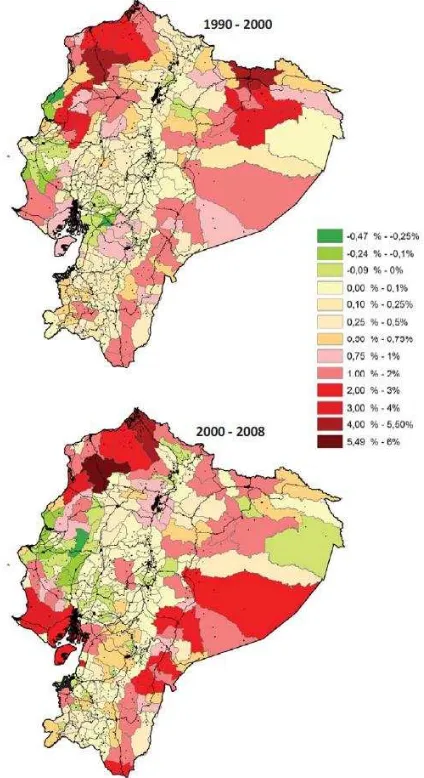
characteristics of the region. Furthermore, despite the decreasing rates of deforestation, the relatively small numbers of -0.66% may seem to be minuscule, the reality is actually quite different. This rate of -0.66% actually represents 77,647 hectares per year. As the amount of primary forest was estimated at a little over 11,300,000 hectares in 2008, a decrease of 77.6 thousand hectares per year is, in fact, quite significant. For example, take into consideration the map in Figure 1.3. The negative deforestation rates (green and light green colors) represent areas where regeneration of land cover is greater than deforestation in that same canton. The greater deforestation rates (red and dark red colors), however, represent areas with greater deforestation than regeneration in each canton. Although, as can be observed in the two maps in Figure 1.3, there are more areas with more regeneration than deforestation in 2008 than in the 1990s, there are also more areas with more deforestation than regeneration, and several of these areas also have an even greater gap between deforestation and regeneration, as can be seen by more, darker red areas in 2008.
Other estimates of deforestation differ, sometimes slightly, sometimes significantly because of different sources (some of which may possibly be biased) and different criteria regarding what is considered deforestation. For example, some definitions do not include forest loss because of agriculture and others do not include areas that have been reforested, thereby causing differences in information depending on the source. According to the Food and Agriculture Organization of the United Nations estimated
that Ecuador’s forest cover was 11.68 million hectares in 2000, then it decreased to 9.86
Figure 1.3: Total Net Deforestation Rate per Canton
Source: Sierra (2013, 7). Calculated as: (Deforested Area/Net Regenerated Area per canton in km2)/ (Net National Deforestation Area in km2)*100. Positive numbers indicate deforestation > regeneration;
negative numbers indicate regeneration > deforestation.
In continental Ecuador, 11,679,822 hectares of the country’s territory is covered by
Evidence shows that changes in forest cover are often related to changes in land use, and more often than not are caused by expanding agricultural activities in Ecuador. Between 1990 and 2000, 99.4% of areas deforested during this period were transformed into agricultural and pasture lands. Of the remaining deforested lands, 0.14% of the land became infrastructure, such as urban areas and dense rural settlement, while 0.46% was dedicated to other activities. Similarly, 99.4% of the lands deforested from 2000 to 2008 were converted into agricultural and pasture lands. These changes in land use indicate an overall increase of agricultural and pasture lands of 97.5% between 1990 and 2000 and of 95% between 2000 and 2008 (Sierra 2013). The next section discusses the regulations and drivers related to deforestation in Ecuador.
5. The Research
Given that the relationship between the participation of women in resource management has not been directly linked to deforestation rates, this thesis aimed to fill that gap in the knowledge and information available about deforestation trends. To do so, the research involved in this thesis has centered on the impact of culture and gender relations on female participation in local economic systems, in local agricultural activities for subsistence versus for the market, and in decision-making related to natural resource management, as well as whether that participation influences local deforestation rates.
The main question this research proposal focused on was what the implications are for
understanding the relationship between women’s participation in resource management
decisions that may impact local deforestation rates? Considering current female participation in indigenous and colonist communities in the region, what role can women play in recovering rainforest ecosystems and sustainability initiatives in the region? By understanding the impact women can have in deforestation, we move closer to proposing alternative solutions to the problem of deforestation based on in-depth gender analysis.
The overall purpose of this thesis was to analyze the present condition of women and the current degree of female participation related to local economic activities and livelihood in the northern Amazon region of Ecuador in the Province of Napo and their relation to deforestation rates. This research also had four secondary objectives, the first of which was to analyze the differences in deforestation rates between indigenous and colonist communities. Secondly, it aimed to understand the role of women in decision-making, economic activities, and resource management in colonist and indigenous communities. In addition, this thesis project sought to determine what public space, if any, women have to participate in public initiatives designed to mitigate and reduce deforestation, as well as how they have been able to utilize that space to become involved in local decision-making and resource management thus far. Finally, the research hoped to identify the current degree of female participation in decision-making and resource management, as well as to propose recommendations in order to encourage greater female participation in the hopes of promoting sustainable resource management that leads to decreased rates of deforestation.
The results of the research and analysis involved in this thesis project were expected to reveal logical results in line with the distinct relationships between women and the
environment compared to men and the environment, as well as those relationships between indigenous people and nature compared to non-indigenous people and nature. Generally speaking, rural women and indigenous people have a closer connection with the
expected to result in more comprehensive efforts to halt current deforestation trends as well as encourage the sustainable use of local natural resources.
6. Structure of the Thesis
Through these three case studies, this thesis delves into a deep analysis of the implications of the differences between indigenous and colonist cultures on female participation, as well as the effects of the ability to organize as a form of empowering women in these
Chapter 1. Theoretical Framework and Research Methodology
In order to effectively analyze the multitude of topics, actors and factors that come into play in discussing complex themes such as deforestation, female participation in
resource management, and the relationship between these two, it is critical to lay out an established set of theories and concepts used across a range of other interrelated fields.
This thesis emerges primarily from the field of Political Ecology, with its relevant subthemes focused on economics, here explored through Analytical Marxism; anthropology, emphasizing Cultural Ecology; and gender, primarily through the politicized theory of Ecofeminism. Other key topics explored in this chapter that support the research completed for this thesis include the Negative Socioeconomic Impacts of Capitalism and the Commercialization of Nature, the Agricultural Frontier and Changing Agricultural Patterns in the Amazon, Gender Analysis in Agriculture and Conservation, Feminist Ecological Economics, Gender Analysis in relation to Land and Territory, and Feminist Geography. By exploring these primary overarching theoretical areas, supported by the more specific, applied theories in the secondary theories, the research, conclusions and recommendations that are analyzed and proposed in this thesis can claim a higher academic integrity and can be the justified basis for real actions and further research on this and related topics.
1.1.Framing Research through Political Ecology
The theoretical basis for this thesis pulls primarily from the economic and social strains of Political Ecology. While Political Ecology itself is a relatively new and thus
continuously evolving field, the principal work dealt with involves the convergence and mutual relationship between society, the environment and culture. Political Ecology, along with many of the topics discussed supporting the research in this theory, has evolved from classic Marxist theory and branched into various directions through additions and alterations to classic Marxism, including, but not limited to, Analytical Marxism, Neo-Marxism, and Structural Marxism (Leff 2006; Alimonda 2011; Peet and Watts 1996; Biersack 2011; Escobar 1998). However, the theory needed for this
Cultural Ecology, and Ecofeminism, a gender-based socio-environmental movement. Before delving into these subtheories, however, it is first fundamental to define Political Ecology and how it contributes to the work carried out for this thesis.
Political Ecology is a relatively new and thus continuously transforming field with concepts transcending and overlapping traditional theories and categories. According to
Leff, it “not only concerns the conflicts of ecological distribution, but it also explores
the power relations that interweave the worlds of different people and the globalized
world in a new light”2 (2006, 1). Based on this definition, it is clear that there are a number factors involved, including environmental, cultural, political and social topics. The interaction between local cultures and people and the globalized world and politics indicates interactions that are fluid and constantly transforming themselves. For this reason, the theory of Political Ecology itself has its roots in Marxist theory, especially in analytical and structural Marxism, which analyze different structures and varying roles of actors within the economic system.
Another key economic component of Political Ecology is the rise of the
Commercialization of Nature (Alimonda 2011; O’Connor 1994; Escobar 1995).
According to Alimonda (2011), the expansion of capitalism has led to the incorporation of nature, as the source of primary materials, into the economic system as a mere product, subjugated to the control of the market, assigned a monetary value and able to be owned and exploited by the owners of the means of production. The biodiverse resources of nature and the native populations that depended on the environment were
thus colonized and dominated, as the “modern project always implied the exercise of a
bio-power over nature, meaning a power not only over the physical-graphical spaces, the soil and subsoils, natural resources, [and] flora and fauna […] but also power over
the human beings subordinated through domination”3 (Alimonda 2011, 52). This
2 Translated by the author. Source reads: “A la ecología política le conciernen no solo los conflictos de distribución ecológica, sino el explorar con nueva luz las relaciones de poder que se entretejen entre los mundos de vida de las personas y el mundo globalizado” (Leff 2006, 1).
domination and subjugation of the environment and native communities has, according to Political Ecology, defined the modern relationship between society and the
environment. The negative socioenvironmental impacts of the tendency to
commercialize nature and natural resources are described, alongside those of capitalism, later in this chapter.
Moving away from economic theory, Political Ecology has continued to expand and incorporate other components, including politics, culture and, most recently, social movements. Two important contributions from the political spectrum of Political
Ecology include Immanuel Wallerstein’s World-Systems and Andre Gunder Frank’s Dependence Theory. The former sets up the structure of the world system, with the center being the primary market and the periphery being the source of primary materials for the exploitation and over-exploitation of natural resources. According to
Dependence Theory, the periphery, which is primarily located in the “Third World”,
depends on the economic activities and control of the center, creating a vicious cycle of dependence that results in the endless exploitation of the periphery’s resources
(Biersack 2011). These two theories are critical in understanding the position of
Ecuador’s Amazon region in the country’s national economy in regards to market
-oriented agricultural production, as well as the Amazon region’s position as the
peripheral source of natural resources for the world economy. Furthermore, these theories demonstrate how this relative position of dependence at the scale is leading the Amazon to towards over-exploitation and natural resource (forest resources) depletion.
Based on the above theories of the Commercialization of Nature, Dependence Theory, and World-Systems Theory, Blaikie and Brookfield (Biersack 2011; Peet and Watts 1996) explain the relationship between marginalization and land degradation. As local communities are marginalized as part of the periphery, they become impoverished and are pressured by the excessive demands of the center to increase production, leading to the unsustainable use of natural resources. This relationship is held together by an
environment and depletion of natural resources, a trend that is clearly illustrated in the
Amazon region in Stephen G. Bunker’s book, Underdeveloping the Amazon (1985).
The cultural components of Political Ecology, with roots in structural anthropologist theory, concentrate on the principal concepts of Cultural Ecology. Cultural Ecology is based on the fact that human cultures are constantly adapting to the environment and that different cultures adapt to environmental changes in distinct ways. For this reason, cultures depending on different environments have developed differently. Moreover, Cultural Ecology suggests that it is possible that certain cultures may adapt imperfectly to the environment, resulting in socio-environmental conflicts (Biersack 2011). This relationship between culture and the environment explains why different communities adopt distinct resource management strategies, often rooted in the community’s history, value, and relationship with the environment, that they implement when adapting to varying environmental conditions. In the cases studied in this thesis, these different forms of adaption through different resource management strategies can be seen in the Kichwa communities and the colonists living in the same region, based on their perceptions and the history of their relationships with the environment. These cultural differences manifested through unique resource management and adaptation strategies reflect what Leff describes as “value pluralism”, implying that different cultures place
distinct values, meanings and symbols on the same territory, resources, and forests (Alimonda 2011).
Based on the recognition of value pluralism, Political Ecology began to incorporate social movements into the analysis of the relationship between society and nature.
Social movements, in particular Ecological Feminism, “advance a unique approach to
biodiversity conservation and appropriation. This approach is couched in terms of cultural difference, territorial defense, and some measure of social and political
subsistence and survival of those groups (Escobar 1998; Biersack 2011). Thus the emergence of Ecological Feminism demonstrates how rural, marginalized women may react to environmental problems by developing unique, localized resource management strategies that encourage conservation and the sustainable use of natural resources.
In conclusion, the consideration of all the different elements of Political Ecology mentioned above is critical in understanding the relationship between culture, the environment and society. As Lipietz states:
Human beings product and reproduce their subsistence collectively, which necessarily implies that their relationship with the natural environment is always mediated by social relations of domination and consensus. Decisions related to what to produce, how to organize work processes, how to distribute the surplus and for what purposes are necessary when referring to situations of domination and consensus (Alimonda 2011, 41) 4.
Thus, Politic Ecology has a clear direct and indirect influence on rationalizing decision-making relating to resource management strategies in distinct cultures and
socioeconomic situations. Analyzing these concepts in the case studies involved in this thesis is critical to understanding the influence of distinct social groups on resource management and economic decision-making.
1.2.The Economics of Analytical Marxism
According to classic Marxist economics, capitalism is an economic system based on interclass conflict and private ownership of the means of production (Roemer 1989). One consequence of capitalism, according to David Harvey (2012), is accumulation by dispossession, which involves privatizing public land and wealth, thereby concentrating them resources in the hands of the few who prioritize their own private gain.
Furthermore, O’Connor (1994) cites the accumulation of capital and so-called
“conservation” strategies dictated by capitalism as key factors driving competition, often leading to political and military struggles seeking control over resources. Bunker describes these processes in the Amazon Basin, relating uneven economic power structures to the impoverishment of local communities and depletion of natural
resources, claiming that “local dominant classes’ responses to world market
opportunities ultimately impoverished the resource base on which their own wealth and
profits depended” (1985, 238).
According to Bunker, energy flows and control over energy processes are essential to understanding the relationship between ecosystems as well as social and economic formations in a region. Bunker defines the connection between local communities and the environment:
If social organization is adaptation to the relevant total environment, and if power is achieved through control over the environments of others […], social organization and social power are both reduced as the environment itself is impoverished. The reduction of social organization reduces the effective use of social power (Bunker 1985, 248).
In the Amazon, the sequence of extractive economies and uneven modes of production has depleted the natural environment and prevented the development of social
organization, leading to the impoverishment of local communities and the environment (Bunker 1985).
While classical Marxist economics defines economic value in terms of labor power, Roemer defines value in terms of commodity inputs, thus shifting exploitation and class from the sphere of production to that of market exchange (1988). Furthermore, Roemer
asserts that exploitation, defined by Marx as “to make use of a resource” (as opposed to the more common definition of “to take unfair advantage of a resource”), is not always
immoral, thereby providing the justification for natural resource and labor exploitation central to capitalism (Roemer 1989).
O’Connor (1994) and Escobar (1995), on the other hand, discuss the negative ecological
sustainable development, integral to modern development theory, resulted in the commercialization and subjugation of peasants, women and nature, making them essentially invisible. By bringing them into the global capitalist economy, Escobar
claims, peasants are now considered “backwards” and “irrational”; women are
marginalized from the production process, diminishing their economic position and relationship to men; and nature has been redefined as mere stocks of capital, allowing nature to be manipulated and exploited in the name of development.
According to Karl Polanyi, the “Market Society” can be described as the single human
invention of the modern market economy together with the modern nation-state, marking a significant transformation in economic rationale (1992). Prior to the Market Society, individuals based economic decisions on reciprocity and redistribution, focusing primarily on production for household use and consumption. In modern Market Society, however, individuals focus on maximizing production, orienting activities towards the global capitalist market (Polanyi 1992).
Roemer employs rational choice and game theory to justify how individuals make economic decisions to maximize their profits in a commodity market, making decisions to maximize personal gain and exploiting resources before they are exploited by other actors (Roemer 1988; 1989). When incorporated into economic theory, these theories explain the exploitation of resources, illuminating the rationale in decision-making and economic models seen in agricultural expansion.
Considering the importance of the relationship between nature and women, the theory
of the colonization of nature is fundamental, as described by O’Connor (1994), Escobar
(1995), and Alimonda (2011) in which the commodification of nature is the result of internalizing natural resources into the capitalist market economy. Alimonda states,
“cultural distribution conflicts have been created when the capitalist model of nature takes cultural precedence […], geared not only towards a single ‘product’ but towards the accumulation of capital” (2011, 75).5Similarly, Escobar explains, “as [resources]
are being incorporated into the world capitalist economy, even the most remote
communities in the Third World are torn apart from their local context and redefined as
‘resources’” (1995, 194). Commodification devalues and justifies the exploitation of
resources. The result, asserts O’Connor (1994), is the view of nature as something to be
claimed or bought for little to no cost by international entities at the expense of local communities.
In addition, Alimonda claims that power, a result of differing culture systems and values, is the primary factor that drives distributive-ecological conflicts (2011). Bunker similarly describes how power over energy flows, by means of extraction processes, affects social relationships and social organization (1985). Therefore, understanding the commodification of nature and its influences on the power structure has important implications for analyzing the role of women in resource management decisions and their relative power within a given community.
As a considerable amount of research has shown, the degradation of the soils,
underdevelopment and unequal relationships of power have forced local communities to make some difficult economic decisions. Unfortunately, as described in Blaikie and Brookfield (1987), Whitten, et al. (1989), Bedoya (1995), and several articles in the book, Lands at Risk in the Third World: Local-Level Perspectives (1987) by Peter D. Little and Michael M. Horowitz, many poor, rural families like those along the
agricultural frontier in the Amazon region have few other choices other than to continue unsustainable agricultural practices.
Although many try to blame these farmers for unsustainable agriculture and
to bank or private loans used to by cattle or new technologies, forcing them to prioritize activities with faster, more profitable yields just to be able to survive until tomorrow (Whitten et al. 1989; Bedoya 1995). Thus, it is essential to consider that each society has its own unique socioeconomic structure and sets of values, which may or may not
incorporate different aspects of Marx’s economics in distinct ways.
1.3.Anthropology and the New Cultural Ecology
In this research, the overarching theories of Anthropology with an emphasis on more recent studies in the New Cultural Ecology.6 Tim Ingold (2000) differentiates
anthropology from other fields because its purpose “is not to judge the truth of the
proposition but to understand what it means, given the context in which it is advanced”
(14), which thus implies considering that the everything, not just human beings, have agency and intentionality. Based on this idea, anthropology is a study of the system of
“discursive worlds of culturally constructed significance” in which human beings live,
or the observation of a cosmology, the relation between these different worlds of culture (Ingold 2000, 14). The result of these different cultures and cosmologies is what is
known as “perceptual relativism”, or the idea “that people form different cultural
backgrounds perceive reality in different ways since they process the same data of experience in terms of alternative frameworks of belief or representational schemata”
(Ingold 2000, 15). , no two communities have the same point of view, belief system, economy, lifestyle or culture as no two communities have the same history, experiences, cultural backgrounds, and so on. Perceptual relativism, thus, explains how the situation of women in a Kichwa community and that of women in a colonist community may be quite different despite having similar physical surroundings and depending on the same ecosystems.
In addition, Descola and Pálsson (2001) challenge the traditional perceptions of the dichotomous relationship between nature and society in anthropology, which often oversimplifies the role of nature as static and the relationship between nature and
6 On the one hand, Cultural Ecology explores the cultural relevance of the relationship between nature and society, in other words the mutual impact between culture and Political Ecology, and the adaption of a given culture to its surroundings. The New Cultural Ecology, on the other hand, takes the relationship
society as two distinct forces, black and white. Instead, they claim that there is no clear distinction between culture and nature, and that what is often believed to be human domination over nature is merely one form of conceptualizing the relationship between humans and non-humans, which, in this case, would be the social objectification of nature. Thus, this is not the only relationship between nature and culture, nor is it the only conceptualization of nature. Descola and Pálsson (2001) also state that these conceptualizations are the products of unique cultural history and factors, which manifest themselves in the form of rituals, symbols, language, and other forms of cultural expression. This complex relationship between nature and culture can be observed through such cultural expressions, making it possible to better understand a
culture’s greater conceptualization of nature and cosmology.
Marvin Harvis and Lesley White (Descola and Pálsson 2001) further challenge these traditional concepts by proposing that there is a more intricate and less black and white relationship between nature and society. They claim that cultures are constantly
evolving in response to the environment, and that societies in turn are altering nature. There is a constant process of mutual evolution as cultures adapt to nature, which in turn is adapting to changes in the culture. Furthermore, based on Perceptual Relativism, each culture has a distinct strategy to adapt to the environment, therefore different cultures adapt differently to a given environment (Descola and Pálsson 2001).
Considering the complex, continuous process of mutual adaptation between cultures and nature, it is therefore essential to understand that one culture’s adaptation strategy to the
environment may subsequently cause changes in the environment that will force other cultures relying on the same environment to adapt to those environmental changes. This interrelationship between the environment and different cultures in a similar area may
demonstrate how a colonist’s strategies to adapt to conditions in the Amazon may alter
both society and the environment that result from those adaptation strategies. These complexities and evolving relationships is key to understanding that communities in the Amazon cannot be generalized based on culture, ethnicity, location, etcetera in their impact on deforestation, as well as the importance of analyzing each community’s
situation individually when tackling local deforestation problems (Lu et al. 2010; Lu et al. 2012; Bedoya 1995; Rudel et al. 2002; Rudel and Horowitz 1996).
1.4.Ecofeminism and Gender Analysis
Ecofeminist, also known as Feminist Political Ecology, emerged in the 1980s as a
segment of the feminist movement questioning traditional, “masculine” history and
ideologies. This particular brand of feminism challenges the ages old ideas of progress
and development, often symbolized by the Enlightenment notion of man’s control and domination over nature (Shiva 1988; Mies and Shiva 2010). Feminist Political Ecology theory contends that this idea of progress and development also applies to man’s control and domination over women as a consequence of the spread of the enlightenment and
the “western industrial man”. The result of this male-dominated view, which argues that only paid labor is considered “productive” work, thereby ignoring man’s relationship
with nature and devaluing the “non-productive” work taking place at home, which is primarily the responsibility of women (Shiva 1988; Mies and Shiva 2010). According to Shiva (1998), the crises, both economic and related to natural resources, seen today are a direct result of the devaluation and subjugation of nature and women.
As a result, Feminist Political Ecology advocates a drastic paradigm shift, which must, undoubtedly, be led by women. Shiva asserts:
Recovering the feminine principle as respect for life in nature and society appears to be
the only way forward, for men as well as women, in the North as well as the South. […]
Women’s struggles for survival through the protection of nature are redefining the
Furthermore, Shiva (1988) describes the new paradigm as a redefinition of two concepts traditionally dominated by men: knowledge and the production of intellectual value, as well as wealth and economic value. As women often prioritize survival and subsistence first, they place a greater value, both economically and intellectually, on protecting the environment and natural resources (Shiva 1988; Mies and Shiva 2010).
Therefore, based on Feminist Political Ecological theory, the historical exclusion of women from the social and economic sphere has led to the degradation of the
environment and economic crises. In order to reverse the effects of this degradation and exclusion, it is essential to include women into the discussion, thereby providing a voice sympathetic to the condition of nature that will prioritize its protection in search of survival and sustenance.
Feldstein and Poats (1989) develop a framework for gender analysis in agriculture, citing the critical role women play in agricultural production, noting that their access to resources and technology are often constrained by gender barriers. Consequently,
gender analysis, the “examination of cross-culturally variable social roles of men and
women” (Feldstein and Poats 1989, 3) is fundamental for a comprehensive
understanding of and improving social structures that may negatively affect agricultural processes and sustainable resource management. Similarly, Schmink (2004), Rocheleau et al. (2004a), and Collins (1992) all emphasize the need to recognize the role of women in production and resource management, claiming that women face distinct conditions that create vulnerability to environmental degradation for some and a more harmonious relationship with the environment for others. For this reason, women are key actors in conservation and sustainability initiatives at the local level. Moreover, the role gender analysis plays in agriculture and conservation needs to be central to research related to deforestation, as this thesis aims to do.