
Ensembles of Artificial Neural Networks: Analysis and Development of Design Methods
415
0
0
Texto completo
(2)
(3) Ensembles of Artificial Neural Networks: Analysis and Development of Design Methods Ph.D. Thesis. Joaquín Torres Sospedra 2011.
(4)
(5) “To me it seems that those sciences are vain and full of error which are not born of experience, mother of all certainty, first hand experience which in its origins, or means, or end has passed through one of the five senses.” Leonardo Da Vinci 1452-1519. Italian polymath, scientist, mathematician, engineer, inventor, anatomist, painter, sculptor, architect, botanist, musician and writer..
(6)
(7) i. Abstract This thesis is focused on the analysis and development of Ensembles of Neural Networks. An ensemble is a system in which a set of heterogeneous Artificial Neural Networks are generated in order to outperform the Single-network based classifiers. However, this proposed thesis differs from others related to ensembles of neural networks [1, 2, 3, 4, 5, 6, 7] since it is organized as follows. In this thesis, firstly, an ensemble methods comparison has been introduced in order to provide a rank-based list of the best ensemble methods existing in the bibliography. This comparison has been split into two researches which represents two chapters of the thesis. Moreover, there is another important step related to the ensembles of neural networks which is how to combine the information provided by the neural networks in the ensemble. In the bibliography, there are some alternatives to apply in order to get an accurate combination of the information provided by the heterogeneous set of networks. For this reason, a combiner comparison has also been introduced in this thesis. Furthermore, Ensembles of Neural Networks is only a kind of Multiple Classifier System based on neural networks. However, there are other alternatives to generate MCS based on neural networks which are quite different to Ensembles. The most important systems are Stacked Generalization and Mixture of Experts. These two systems will be also analysed in this thesis and new alternatives are proposed. One of the results of the comparative research developed is a deep understanding of the field of ensembles. So new ensemble methods and combiners can be designed after analyzing the results provided by the research performed. Concretely, two new ensemble methods, a new ensemble methodology called Cross-Validated Boosting and two reordering algorithms are proposed in this thesis. The best overall results are obtained by the ensemble methods proposed. Finally, all the experiments done have been carried out on a common experimental setup. The experiments have been repeated ten times on nineteen different datasets from the UCI repository in order to validate the results. Moreover, the procedure applied to set up specific parameters is quite similar in all the experiments performed. It is important to conclude by remarking that the main contributions are: An experimental setup to prepare the experiments which can be applied for further comparisons. A guide to select the most appropriate methods to build and combine ensembles and multiple classifiers systems. New methods proposed to build ensembles and other multiple classifier systems..
(8) ii. keywords Multilayer Perceptron, Radial Basis Functions, Multiple Classifier Systems, Ensembles of Neural Networks, Boosting methods, Cross-Validation Committees, Stacked Generalization and Mixture of Experts..
(9) iii. Acknowledgments This thesis has been developed at the Neural Networks & Soft Computing research group of the Universitat Jaume I. First of all, I am very grateful to my advisors, Carlos Hernández-Espinosa and Mercedes Fernández-Redondo for their guidance and support during its development. They provided extremely valuable help with the many difficulties that arose during this period. I have learned a great deal after all these years of working with them. Secondly, I would like to thank Pedro Gomez-Vilda for the opportunity he gave me to collaborate in the project ‘Modelado y clasificación automática de patrones de voz patológica para su aplicación clı́nica sobre Internet’. This project was my first contact with a serious research and it encouraged me to continue my PhD studies. Thanks in general to the Department of Engineering and Computer Science of the Universitat Jaume I for providing me the framework for carrying on my research and teaching work, and to the local and national institutions that have provide the funds for making this research possible. This thesis would not have been developed without the funds provided by the Universitat Jaume I and its FPI doctoral grant (PREDOC/2005/44) and the projects ‘Modelado y clasificación automática de patrones de voz patológica para su aplicación clı́nica sobre Internet (TIC2002-02273)’ and ‘Desarrollo de métodos de diseño de conjuntos de redes neuronales (P1-1B200403)’. These grants not only have funded my research, some material required by the laboratory and research group has also been bought thanks to them. I would also like to thank the members, current and former, of the laboratory and department who I have been working with for their warm welcome and their help and encouragement from the beginning. These staff have eased my life at work and they made me feel at home. Finally, I would also like to specially thank Marı́a Angeles López-Malo for using their valuable time to introduce me to the field of researching. Her advice boosted my confidence so I decided to continue with a PhD. I am specially thankful to Patricio Nebot-Roglá and Gabriel Recatalá-Ballester, for their friendship and their extremely valuable advices. Thanks also to all my friends who have made my years at the university so enjoyable. Among those already mentioned, thanks to Wirz, Juan Carlos, Xavi, “Van der Khul” football team, and many others, though not mentioned by name, they have not been less important to me. And last but not least, to my wife Ana Fortuño and my family, for their capacity to listen, to advise and for their patience with me, and, above all, for giving me their unconditional support, regardless of what I was doing with this special bussiness. Joaquı́n Torres Sospedra Castellón, Mars 2011.
(10)
(11) v. Resumen Esta tesis se centra en el análisis y desarrollo de Conjuntos de Redes Neuronales. Un conjunto es un sistema en el que un numero determinado de Redes Neuronales Artificiales heterogéneas se entrenan con el fin de superar el rendimiendo de clasificadores basados en una única red. Sin embargo, esta tesis difiere de las tesis relacionadas con los conjuntos de redes neuronales de otros investigadores [1, 2, 3, 4, 5, 6, 7] ya que en ella se ha realizado lo que detallamos a continuación. En esta tesis, en primer lugar, se ha introducido una comparativa de métodos de diseño de conjuntos con el fin de proporcionar una lista ordenada con los mejores métodos de conjuntos. Esta comparativa se ha dividido en dos estudios los cuales se representan con dos capı́tulos de esta tesis. Además, hay otro paso importante relacionado con los conjuntos de redes neuronales que es la forma de combinar la información proporcionada por las redes neuronales individuales. Se pueden aplicar diferentes alternativas para conseguir una combinación apropiada de las redes del conjunto. Por esta razón, se ha realizado en esta tesis una comparativa de combinadores. Por otra parte, hay otras alternativas para generar sistemas basados en múltiples clasificadores que son muy diferentes a los métodos de conjuntos. Los sistemas más importantes son Stacked Generalización y Mixutre of Experts. Estos dos sistemas serán también analizados en esta tesis. Fruto de los conocimientos adquiridos es la propuesta de nuevos métodos de conjuntos que aparecen en esta tesis. Concretamente estos son: dos nuevos métodos Boosting, una metodologı́a de conjuntos llamada Cross-Validated Boosting y dos algoritmos de reordenamiento. Los métodos de diseño de conjuntos que hemos propuesto en esta tesis, en general, obtienen los mejores resultados. Por último, todos los experimentos realizados se han llevado a cabo en un marco experimental común. Los experimentos se han repetido diez veces en diecinueve bases de datos del repositorio UCI con el fin de validar los resultados. Por otra parte, el procedimiento aplicado para establecer los parámetros especı́ficos es bastante similar en todos los experimentos realizados. Es importante concluir señalando que las principales contribuciones de esta tesis son: Un marco experimental para preparar los experimentos que se pueden aplicar para otras futuras comparaciones. Una guı́a para seleccionar los métodos más adecuados para crear y combinar conjuntos de clasificadores y sistemas de múltiples clasificadores. Nuevos métodos de diseño de conjuntos de redes neuronales y otros Sistemas de Múltiples Clasificadores..
(12) vi. Palabras clave Perceptron Multicapa, Funciones de Base Radial, Sistemas de Múltiples Clasificadores, Conjuntos de Redes Neuronales, Sobre entrenamiento de patrones conflictivos, Validación Cruzada, Generalización Apilada y Mezcla de Expertos.
(13) vii. Agradecimientos Esta tesis se ha desarrollado en el grupo de investigación Redes Neuronales y Computación Suave de la Universitat Jaume I. En primer lugar, estoy muy agradecido a mis directores, Carlos Hernández Espinosa y Mercedes Fernández Redondo para su orientación y apoyo durante el desarrollo de esta tesis. Su ayuda ha sido primordial para superar las numerosas dificultades que surgieron durante este perı́odo. He aprendido mucho después de todos estos años de trabajo con ellos. En segundo lugar, quisiera dar las gracias a Pedro Gómez Vilda por la oportunidad que me dió para colaborar en el proyecto “Modelado y clasificación automática de patrones de voz patológica para su Aplicación Clı́nica sobre Internet”. Este proyecto fue mi primer contacto con una investigación seria y me animó a continuar con mis estudios de doctorado. Gracias en general al Departamento de Ingenierı́a y Ciencias de los Computadores por proporcionarme el material y apoyo para realizar mi trabajo de investigación y docente, y a las instituciones locales y nacionales con cuyos fondos ha sido posible realizar esta investigación. Esta tesis no se habrı́a podido desarrollar sin los fondos aportados por la Universitat Jaume I y su programa de Becas FPI (PREDOC/2005/44) y por los proyectos ‘Modelado y clasificación automática de patrones de voz patológica para su Aplicación Clı́nica sobre Internet (TIC2002-02273)’ y ‘Desarrollo de métodos de diseño de los conjuntos de redes neuronales (P1-1B2004-03)’. Estas ayudas no sólo han financiado mi investigación, también algunos materiales requeridos para el grupo de investigación han podido ser adquiridos gracias a ellas. También me gustarı́a agradecer a los miembros, actuales y anteriores, del laboratorio y el departamento con el que he estado trabajando por su cálida acogida y su ayuda desde el principio. Estos compañeros han facilitado mi vida en el trabajo y me hicieron sentir como en casa. Por último, también quiero agradecer especialmente a Marı́a Ángeles López Malo por utilizar su valioso tiempo para introducirme en el campo de la investigación. Sus consejos me ayudaron a tomar la decisión de realizar el programa de doctorado. Estoy especialmente agradecido a Patricio Nebot Roglá y Gabriel Recatalá Ballester, por su amistad y sus consejos muy valiosos. Gracias también a todos los amigos que han hecho mis años en la universidad tan agradable. Entre los ya mencionados, gracias a Juan Carlos, Xavi, “Van der Khul” equipo de fútbol, Wirz, y otros muchos, que aunque no menciono, no han sido menos importantes para mı́. Y por último, pero no menos importante, a mi mujer Ana Fortuño y mi familia, por su capacidad de escuchar, para asesorar y por su paciencia conmigo, y, sobre todo, por haberme dado su apoyo incondicional, independientemente de lo que estaba haciendo con este negocio tan especial. Joaquı́n Torres Sospedra Castellón, Marzo de 2011.
(14) viii.
(15) Contents 1 Introduction 1.1 Historical Background . . 1.2 Motivation and Objectives 1.3 Tools . . . . . . . . . . . . 1.4 Contributions . . . . . . . 1.5 Thesis outline . . . . . . .. . . . . .. . . . . .. . . . . .. . . . . .. . . . . .. . . . . .. . . . . .. . . . . .. 1 3 3 5 7 8. 2 Pattern Recognition with Artificial Neural Networks 2.1 Introduction . . . . . . . . . . . . . . . . . . . . . . . . 2.2 Preliminar definitions . . . . . . . . . . . . . . . . . . . 2.2.1 Pattern recognition and Classification . . . . . . 2.2.2 Artificial Neural Networks . . . . . . . . . . . . 2.2.3 Network Architecture . . . . . . . . . . . . . . . 2.2.4 Learning process . . . . . . . . . . . . . . . . . 2.3 Artificial Neural Networks . . . . . . . . . . . . . . . . 2.3.1 Neurons . . . . . . . . . . . . . . . . . . . . . . 2.3.2 The Multilayer Feedforward architecture . . . . 2.3.3 Training a Multilayer Feedforward Network . . 2.3.4 The Radial Basis Functions architecture . . . . 2.3.5 Training a RBF network . . . . . . . . . . . . . 2.3.6 Training RBF with exponential generator units 2.4 Comparing the network architectures studied . . . . . . 2.4.1 Experimental setup . . . . . . . . . . . . . . . . 2.4.2 Results . . . . . . . . . . . . . . . . . . . . . . . 2.4.3 Analysis of the results . . . . . . . . . . . . . . 2.5 Conclusions . . . . . . . . . . . . . . . . . . . . . . . .. . . . . . . . . . . . . . . . . . .. . . . . . . . . . . . . . . . . . .. . . . . . . . . . . . . . . . . . .. . . . . . . . . . . . . . . . . . .. . . . . . . . . . . . . . . . . . .. . . . . . . . . . . . . . . . . . .. . . . . . . . . . . . . . . . . . .. 9 11 11 11 11 12 12 13 13 15 18 20 22 23 24 24 24 26 27. . . . . . . .. 29 31 31 31 31 32 33 33. . . . . .. . . . . .. . . . . .. . . . . .. . . . . .. . . . . .. . . . . .. . . . . .. . . . . .. 3 Designing Ensembles and other MCS 3.1 Introduction . . . . . . . . . . . . . . . . . 3.2 Preliminar definitions . . . . . . . . . . . . 3.2.1 Multiple Classifier Systems . . . . . 3.2.2 Ensembles of Neural Networks . . . 3.2.3 Diversity and Neural Networks . . 3.3 Why Ensembles and MCS classify better? 3.3.1 Tumer and Ghosh framework . . . ix. . . . . .. . . . . . . .. . . . . .. . . . . . . .. . . . . .. . . . . . . .. . . . . .. . . . . . . .. . . . . .. . . . . . . .. . . . . .. . . . . . . .. . . . . . . .. . . . . . . .. . . . . . . .. . . . . . . .. . . . . . . .. . . . . . . .. . . . . . . ..
(16) . . . . . . . . . . .. . . . . . . . . . . .. . . . . . . . . . . .. . . . . . . . . . . .. . . . . . . . . . . .. 35 36 36 37 37 39 39 39 41 42 46. 4 A comparative study of ensemble methods (I) 4.1 Introduction . . . . . . . . . . . . . . . . . . . . . . . . . . . 4.2 Analyzed Methods . . . . . . . . . . . . . . . . . . . . . . . 4.2.1 Methods that modify the target equation . . . . . . . 4.2.2 Methods that directly modify the training algorithm 4.3 Experimental Setup . . . . . . . . . . . . . . . . . . . . . . . 4.4 Results and discussion . . . . . . . . . . . . . . . . . . . . . 4.5 Conclusions . . . . . . . . . . . . . . . . . . . . . . . . . . .. . . . . . . .. . . . . . . .. . . . . . . .. . . . . . . .. 49 51 51 52 55 63 64 66. 3.4. 3.5 3.6. 3.7. 3.3.2 Diettrich reasonings . . . . . . How ensembles are grouped? . . . . . 3.4.1 Sources of diversity . . . . . . 3.4.2 Final classification . . . . . . Simple Ensemble . . . . . . . . . . . First experiments on ensembles . . . 3.6.1 Experimental setup . . . . . . 3.6.2 Raw results . . . . . . . . . . 3.6.3 General measurements . . . . 3.6.4 Analysis of the general results Conclusions . . . . . . . . . . . . . .. . . . . . . . . . . .. . . . . . . . . . . .. . . . . . . . . . . .. . . . . . . . . . . .. . . . . . . . . . . .. . . . . . . . . . . .. . . . . . . . . . . .. . . . . . . . . . . .. . . . . . . . . . . .. . . . . . . . . . . .. . . . . . . . . . . .. . . . . . . . . . . .. 5 A comparative study of ensemble methods (II) 5.1 Introduction . . . . . . . . . . . . . . . . . . . . . . . . 5.2 Analyzed Methods . . . . . . . . . . . . . . . . . . . . 5.2.1 Methods that statically modify the learning set 5.2.2 Boosting methods . . . . . . . . . . . . . . . . . 5.3 Experimental Setup . . . . . . . . . . . . . . . . . . . . 5.4 Results and discussion . . . . . . . . . . . . . . . . . . 5.5 Conclusions . . . . . . . . . . . . . . . . . . . . . . . .. . . . . . . .. . . . . . . .. . . . . . . .. . . . . . . .. . . . . . . .. . . . . . . .. . . . . . . .. 69 71 71 72 77 86 87 91. 6 A comparative study of ensemble combiners 6.1 Introduction . . . . . . . . . . . . . . . . . . . 6.2 Analysed Combiners . . . . . . . . . . . . . . 6.2.1 Combiners based on averaging . . . . . 6.2.2 Voting schemes . . . . . . . . . . . . . 6.2.3 Competitive combiners . . . . . . . . . 6.2.4 Other combiners . . . . . . . . . . . . 6.2.5 Feature Based Combination . . . . . . 6.2.6 Two-Layered MCS . . . . . . . . . . . 6.3 Experimental Setup . . . . . . . . . . . . . . . 6.4 Results and discussion . . . . . . . . . . . . . 6.4.1 Combining ensembles of MF networks 6.4.2 Combining ensembles of RBF networks 6.5 Conclusions . . . . . . . . . . . . . . . . . . .. . . . . . . . . . . . . .. . . . . . . . . . . . . .. . . . . . . . . . . . . .. . . . . . . . . . . . . .. . . . . . . . . . . . . .. . . . . . . . . . . . . .. . . . . . . . . . . . . .. 93 95 95 96 97 99 102 109 111 113 114 114 121 125. x. . . . . . . . . . . . . .. . . . . . . . . . . . . .. . . . . . . . . . . . . .. . . . . . . . . . . . . .. . . . . . . . . . . . . ..
(17) 7 Adding diversity by reordering the training set 7.1 Introduction . . . . . . . . . . . . . . . . . . . . . . 7.2 Ensemble methods and reordering procedures . . . 7.2.1 Original training set order . . . . . . . . . . 7.2.2 Static reordering . . . . . . . . . . . . . . . 7.2.3 Dynamic reordering . . . . . . . . . . . . . . 7.2.4 Simple Ensemble* . . . . . . . . . . . . . . . 7.3 Experimental Setup . . . . . . . . . . . . . . . . . . 7.4 Results and discussion . . . . . . . . . . . . . . . . 7.4.1 Reordering on Simple Ensemble . . . . . . . 7.4.2 Reordering and weight initialization strategy 7.4.3 Reordering on classic ensemble methods . . 7.5 Conclusions . . . . . . . . . . . . . . . . . . . . . .. . . . . . . . . . . . .. 127 129 129 130 131 132 132 134 135 135 138 139 146. . . . . . . . . . .. . . . . . . . . . .. 149 151 151 155 157 160 161 161 163 171 176. 9 Stacked Generalization 9.1 Introduction . . . . . . . . . . . . . . . . . . . . . . . . . . . . . . 9.2 Stacked Generalization . . . . . . . . . . . . . . . . . . . . . . . . 9.2.1 Ting & Witten’s implementation . . . . . . . . . . . . . . 9.2.2 Ghorbani & Owrangh’s implementation . . . . . . . . . . . 9.2.3 Two new combiners based on Stacked Generalization . . . 9.3 Experimental Setup . . . . . . . . . . . . . . . . . . . . . . . . . . 9.4 Results and discussion . . . . . . . . . . . . . . . . . . . . . . . . 9.4.1 Original Stacked methods . . . . . . . . . . . . . . . . . . 9.4.2 Ensemble combiners based on the stacked idea . . . . . . . 9.4.3 Stacked and Stacked+: Ensembles as combination networks 9.5 Conclusions . . . . . . . . . . . . . . . . . . . . . . . . . . . . . .. . . . . . . . . . . .. 179 181 181 183 184 186 187 188 188 189 193 196. . . . .. 199 201 201 205 208. . . . . . . . . . . . .. 8 Improving Boosting methods 8.1 Introduction . . . . . . . . . . . . . . . . . . . . . . . 8.2 Averaged-Conservative Boosting . . . . . . . . . . . . 8.3 Weighted-Conservative Boosting . . . . . . . . . . . . 8.4 Cross-Validated Boosting . . . . . . . . . . . . . . . . 8.5 Experimental Setup . . . . . . . . . . . . . . . . . . . 8.6 Results and discussion . . . . . . . . . . . . . . . . . 8.6.1 Ensembles generated with ACB and WCB . . 8.6.2 Results of Cross-Validated Boosting . . . . . . 8.6.3 ACB and WCB with Cross-Validated Boosting 8.7 Conclusions . . . . . . . . . . . . . . . . . . . . . . .. 10 Mixture of Experts 10.1 Introduction . . . . . . . . . . . . . . . . . . 10.2 Mixture of Experts . . . . . . . . . . . . . . 10.2.1 Applying other network architectures 10.3 Mixture as an ensemble combiner . . . . . . xi. . . . .. . . . .. . . . .. . . . .. . . . .. . . . . . . . . . . . .. . . . . . . . . . . . .. . . . . . . . .. . . . . . . . . . . .. . . . .. . . . .. . . . . . . . . . . . .. . . . . . . . . . .. . . . .. . . . . . . . . . . . .. . . . . . . . . . .. . . . .. . . . . . . . . . . . .. . . . . . . . . . .. . . . .. . . . . . . . . . . . .. . . . . . . . . . .. . . . .. . . . . . . . . . . . .. . . . ..
(18) 10.4 Experimental Setup . . . . . . . . . . . . 10.5 Results and discussion . . . . . . . . . . 10.5.1 Original Mixture models . . . . . 10.5.2 Mixture as an ensemble combiner 10.6 Conclusions . . . . . . . . . . . . . . . .. . . . . .. . . . . .. . . . . .. . . . . .. . . . . .. . . . . .. . . . . .. . . . . .. . . . . .. . . . . .. . . . . .. . . . . .. . . . . .. . . . . .. . . . . .. 210 211 211 213 215. 11 Conclusions and future work 217 11.1 Summary of the Thesis . . . . . . . . . . . . . . . . . . . . . . . . . 219 11.2 General Conclusions . . . . . . . . . . . . . . . . . . . . . . . . . . 224 11.3 Publications . . . . . . . . . . . . . . . . . . . . . . . . . . . . . . . 230 11.3.1 Ensembles of RBF networks . . . . . . . . . . . . . . . . . . 230 11.3.2 Ensembles of MF networks: Comparisons . . . . . . . . . . . 231 11.3.3 Ensembles of MF networks: Boosting improvements . . . . . 232 11.3.4 Ensembles of MF networks: Reordering the training set . . . 232 11.3.5 Ensembles of MF networks: Advanced models, Stacked and Mixture . . . . . . . . . . . . . . . . . . . . . . . . . . . . . 232 11.3.6 Other publications . . . . . . . . . . . . . . . . . . . . . . . 233 11.4 Citations to our work . . . . . . . . . . . . . . . . . . . . . . . . . . 234 11.5 Future work . . . . . . . . . . . . . . . . . . . . . . . . . . . . . . . 237 11.5.1 Continuing the research in ensembles . . . . . . . . . . . . . 237 11.5.2 Other researches related to ensembles of neural networks . . 237 11.5.3 Real optimized applications . . . . . . . . . . . . . . . . . . 240 A Datasets A.1 Introduction . . . . . . . . . . . . . . . . . . . . A.2 Arrhythmia Data Set . . . . . . . . . . . . . . . A.3 Balance Scale . . . . . . . . . . . . . . . . . . . A.4 Cylinder Bands . . . . . . . . . . . . . . . . . . A.5 Liver Disorders Data Set . . . . . . . . . . . . . A.6 Credit Approval Data Set . . . . . . . . . . . . A.7 Dermatology Data Set . . . . . . . . . . . . . . A.8 Ecoli Data Set . . . . . . . . . . . . . . . . . . . A.9 Solar Flare Data Set . . . . . . . . . . . . . . . A.10 Glass Identification Data Set . . . . . . . . . . . A.11 Heart Disease Data Set . . . . . . . . . . . . . . A.12 Image Segmentation Data Set . . . . . . . . . . A.13 Ionosphere Data Set . . . . . . . . . . . . . . . A.14 The MONK’s problems Data Set . . . . . . . . A.15 Pima Indians Diabetes Data Set . . . . . . . . . A.16 Haberman’s Survival Data Set . . . . . . . . . . A.17 Congressional Voting Records Data Set . . . . . A.18 Vowel Recognition (Deterding data) . . . . . . . A.19 Breast Cancer Wisconsin (Diagnostic) Data Set xii. . . . . . . . . . . . . . . . . . . .. . . . . . . . . . . . . . . . . . . .. . . . . . . . . . . . . . . . . . . .. . . . . . . . . . . . . . . . . . . .. . . . . . . . . . . . . . . . . . . .. . . . . . . . . . . . . . . . . . . .. . . . . . . . . . . . . . . . . . . .. . . . . . . . . . . . . . . . . . . .. . . . . . . . . . . . . . . . . . . .. . . . . . . . . . . . . . . . . . . .. . . . . . . . . . . . . . . . . . . .. 247 249 249 249 250 250 250 250 251 251 251 252 252 252 253 253 253 254 254 254.
(19) B Equations and parameters B.1 Introduction . . . . . . . . . . . . . . . . . . . . . . B.2 New equations to adapt trainable parameters . . . . B.2.1 CELS . . . . . . . . . . . . . . . . . . . . . B.2.2 Decorrelated . . . . . . . . . . . . . . . . . . B.2.3 EENCL - NCL . . . . . . . . . . . . . . . . B.3 MF Network parameters . . . . . . . . . . . . . . . B.4 RBF Network parameters . . . . . . . . . . . . . . B.5 Parameters of the ensemble methods . . . . . . . . B.5.1 Adaptive Training Algorithm for Ensembles B.5.2 Cooperative Ensemble Learning System . . . B.5.3 Evolutionary Ensemble with NCL . . . . . . B.5.4 Decorrelated . . . . . . . . . . . . . . . . . . B.5.5 Observational Learning Algorithm . . . . . . B.5.6 Bagging with Noise . . . . . . . . . . . . . . B.5.7 Weighted-Conservative Boosting . . . . . . . B.6 Parameters of the ensemble combiners . . . . . . . B.6.1 Choquet Integral . . . . . . . . . . . . . . . B.6.2 Feature-Based Combiners . . . . . . . . . . B.6.3 BADD Defuzzyfication Strategy . . . . . . . B.6.4 Combination by Zimmermann’s Operator . . B.6.5 Dynamically Averaged Networks v2 . . . . . B.7 Parameters of Stacked Generalization . . . . . . . . B.8 Parameters of Mixture of Experts . . . . . . . . . . C Complete Results C.1 Introduction . . . . . . . . . . . . . . . C.2 Complete results of ensemble methods C.2.1 Traditional ensemble methods . C.2.2 Reordering on ensembles . . . . C.2.3 Improving boosting . . . . . . . C.3 Results of combination methods . . . . C.4 Other Multi-net systems . . . . . . . . Bibliography. . . . . . . .. . . . . . . .. . . . . . . .. . . . . . . .. . . . . . . .. . . . . . . .. . . . . . . .. . . . . . . . . . . . . . . . . . . . . . . .. . . . . . . .. . . . . . . . . . . . . . . . . . . . . . . .. . . . . . . .. . . . . . . . . . . . . . . . . . . . . . . .. . . . . . . .. . . . . . . . . . . . . . . . . . . . . . . .. . . . . . . .. . . . . . . . . . . . . . . . . . . . . . . .. . . . . . . .. . . . . . . . . . . . . . . . . . . . . . . .. . . . . . . .. . . . . . . . . . . . . . . . . . . . . . . .. . . . . . . .. . . . . . . . . . . . . . . . . . . . . . . .. . . . . . . .. . . . . . . . . . . . . . . . . . . . . . . .. 255 257 257 257 258 258 259 259 260 260 262 262 264 265 265 266 267 267 267 268 268 268 268 278. . . . . . . .. 281 283 283 283 283 283 283 283 379. xiii.
(20)
(21) List of Figures 1.1 1.2. Two different collaborations . . . . . . . . . . . . . . . . . . . . . . NN &SC Laboratory . . . . . . . . . . . . . . . . . . . . . . . . . .. 2.1 2.2 2.3 2.4 2.5 2.6 2.7 2.8. Biologic Neurons - Structure and Interconnection . . . . . Artificial neuron description . . . . . . . . . . . . . . . . . Graphical representation of the different transfer functions Multilayer Feedforward Network . . . . . . . . . . . . . . . Graphical description of an iteration of Backpropagation . Generating the Training, Validation and Test sets . . . . . Mean Square Error on Training and Validation sets . . . . Radial Basis Functions Network Structure . . . . . . . . .. 3.1 3.2 3.3 3.4 3.5. Ensemble Basic Diagram . . . . . . . . . . . . . . . . . . . . . . . . Tumer and Ghosh’s Framework . . . . . . . . . . . . . . . . . . . . Diettrich arguments . . . . . . . . . . . . . . . . . . . . . . . . . . . Sources of Diversity in Neural Networks . . . . . . . . . . . . . . . Example of the increase in performance. Ensembles of MF networks and dataset vowel. . . . . . . . . . . . . . . . . . . . . . . . . . . . Representation of the Theoretical, Worst and Typical Simple Ensemble Graphical representation of IoP and P ER . . . . . . . . . . . . . .. 3.6 3.7 5.1 5.2 5.3. . . . . . . . .. . . . . . . . .. . . . . . . . .. . . . . . . . .. . . . . . . . .. 4 6 13 14 14 16 18 19 20 21 32 34 35 36 38 38 41. 5.4 5.5 5.6. Generation of the different training sets for Cross-Validation version 1 Generation of the different training sets for Cross-Validation version 2 Generation of the different training sets for Cross-Validation version 2.5 . . . . . . . . . . . . . . . . . . . . . . . . . . . . . . . . . . . . Generation of the different training sets for Cross-Validation version 3 Generating the training set for Disjoint and Overlapping partitions Adaboost training basic diagram . . . . . . . . . . . . . . . . . . .. 6.1 6.2. Basic Stacked Generalization model . . . . . . . . . . . . . . . . . . Basic Mixture of Experts model . . . . . . . . . . . . . . . . . . . .. 112 112. 7.1 7.2 7.3. Simple Ensemble space and zoom . . . . . . . . . . . . . . . . . . . Simple Ensemble* output space . . . . . . . . . . . . . . . . . . . . Simple ensemble and Simple Ensemble* . . . . . . . . . . . . . . . .. 130 133 136. xv. 72 73 74 75 77 79.
(22) 8.1 8.2 8.3 8.4 8.5. Updating the sampling distribution in Adaboost . . . . . . . . . . . Updating the sampling distribution in Aveboost (a) and Conserboost (b) . . . . . . . . . . . . . . . . . . . . . . . . . . . . . . . . . . . . Updating the sampling distribution in Conserboost after normalization Updating the sampling distribution in ACB . . . . . . . . . . . . . Generating T 0 in Cross-Validated Boosting . . . . . . . . . . . . . .. 152 153 154 159. 9.1 9.2 9.3 9.4 9.5. Stacked Generalization model . . . . . . . . . . . . . . . . . Generating the level-1 training set of Stacked Generalization Stacked Generalization applied by Ting & Witten . . . . . . Stacked Generalization applied by Ghorbany & Owrangh . Diagrams of a) Stacked & b) Stacked+ combiners . . . . . .. 181 182 184 185 186. 10.1 10.2 10.3 10.4. Mixture of Experts Structure . . . . . . . . . . . . . . . . . . . . . . Basic Network Structure . . . . . . . . . . . . . . . . . . . . . . . . Mixture - Graphical representation . . . . . . . . . . . . . . . . . . Example of the training algorithm of Mixture as an ensemble combiner. 201 202 204 209. Diagram of best ensemble alternatives . . . . . . . . . . . . . . . . . Path planner based on classification with neural networks . . . . . . Breast Cancer diagnostic . . . . . . . . . . . . . . . . . . . . . . . . Spam percentage in email - January 2010 (Kaspersky Labs) . . . . Example of the process of detecting and classifying a suspicious mass in a mammography . . . . . . . . . . . . . . . . . . . . . . . . . . . 11.6 Image captured at an orange grove (left) and predicted classes (right) 11.7 Captured image with: (a) borders and center of the path, (b) desired path . . . . . . . . . . . . . . . . . . . . . . . . . . . . . . . . . . . 11.8 Desired path from other captured images . . . . . . . . . . . . . . .. 226 228 229 241. 11.1 11.2 11.3 11.4 11.5. xvi. . . . . .. . . . . .. . . . . .. . . . . .. 151. 242 243 244 245.
(23) List of Tables 2.1 2.2 2.3. Performance of the single network . . . . . . . . . . . . . . . . . . Performance of K-Nearest Neighbors . . . . . . . . . . . . . . . . Training resources required . . . . . . . . . . . . . . . . . . . . . .. 24 25 26. 3.1 3.2 3.3 3.4 3.5 3.6. Performance - Simple Ensemble of MF networks . . . . . . . . . . Performance - Simple Ensemble of RBF networks . . . . . . . . . Simple Ensemble - General results . . . . . . . . . . . . . . . . . . T-Test of Single-Network versus Simple Ensemble for RBF networks Number of patterns correctly classified at least by one network . . T-Test - MFSE versus RBFSE . . . . . . . . . . . . . . . . . . .. 40 40 43 44 45 46. 4.1 4.2 4.3 4.4. Ensemble Comparison 1 - General Results . . . . . Statistical results of the best methods versus Simple Statistical results among the best methods . . . . . Statistical results of original ATA and EENCL . . .. . . . . . . Ensemble . . . . . . . . . . . .. . . . .. . . . .. 64 65 65 66. 5.1 5.2 5.3 5.4. Ensemble Comparison 2 - General Results . . . . . Statistical results of the best methods versus Simple Statistical results among CVC methods . . . . . . . Statistical results among Boosting methods . . . . .. . . . . . . Ensemble . . . . . . . . . . . .. . . . .. . . . .. 87 88 89 90. 6.1 6.2. Combining SE of MF networks . . . . . . . . . . . . . . . . . . . Differences of Output Average and the other combiners - SE of MF networks . . . . . . . . . . . . . . . . . . . . . . . . . . . . . . . . Combining DECOv1 of MF networks . . . . . . . . . . . . . . . . Combining CVCv2 of MF networks . . . . . . . . . . . . . . . . . Combining Conserboost of MF networks . . . . . . . . . . . . . . Performance of dataset ionos with Output Average . . . . . . . . Performance of dataset ionos with Bayesian Combination . . . . . Difference in performance of Bayesian and Output Average in ionos Difference in mean P ER of Bayesian and Output Average . . . . Performance of Output Average and the best combiner for each dataset . . . . . . . . . . . . . . . . . . . . . . . . . . . . . . . . . Combining Simple Ensemble of RBF networks (Original ensemble) Combining Simple Ensemble of RBF networks (Threshold norm.). 6.3 6.4 6.5 6.6 6.7 6.8 6.9 6.10 6.11 6.12. xvii. 114 115 116 116 117 118 118 119 119 120 121 122.
(24) 6.13 6.14 7.1 7.2 7.3 7.4 7.5 7.6 7.7 7.8 7.9 7.10 7.11 7.12 7.13 7.14 7.15 8.1 8.2 8.3 8.4 8.5 8.6 8.7 8.8 8.9 8.10 8.11 8.12 8.13 8.14. Combining Simple Ensemble of RBF networks (min-max normalization) . . . . . . . . . . . . . . . . . . . . . . . . . . . . . . . . . 123 Combining Simple Ensemble of RBF networks (sum normalization) 123 Reordering on Simple Ensemble . . . . . . . . . . . . . . . . . . . Comparing reordering algorithms to classic ensemble methods . . Statistical results - Reordering on Simple Ensemble . . . . . . . . Reordering on Simple Ensemble with initial interval [−0.25, . . . , +0.25] . . . . . . . . . . . . . . . . . . . . . . . . . . . Reordering on Simple Ensemble with initial interval [−0.5, . . . , +0.5] Reordering on Simple Ensemble with initial interval [−1.5, . . . , +1.5] Static reordering on classical ensemble methods . . . . . . . . . . Dynamic reordering on classical ensemble methods . . . . . . . . . Statistical results - Reordering on classic ensemble methods (I) . . Statistical results - Reordering on classic ensemble methods (II) . Statistical results - Reordering on classic ensemble methods (III) . Statistical results - Reordering on classic ensemble methods (IV) . Statistical results - Reordering on classic ensemble methods (V) . Statistical results - Reordering on classic ensemble methods (VI) . Statistical results - Reordering on CVCv3 after repeating the experiments 20 times . . . . . . . . . . . . . . . . . . . . . . . . . .. 135 137 137 138 138 139 140 141 142 143 143 144 144 145 145 154 156 157 161 162 164 165 165 166 167 168 169 170. 8.15 8.16 8.17. General Results of Aveboost and Conserboost . . . . . . . . . . . . Comparison of the performance of Adaboost and Conserboost . . . Performance of CVCv3 and Conserboost . . . . . . . . . . . . . . Results of the new ensemble methods ACB . . . . . . . . . . . . . ACB and WCB compared to their original boosting methods . . . Results of the new Cross-Validated Boosting methods . . . . . . . Best combiner of the new Cross-Validated Boosting methods . . . Best CVC method of the new Cross-Validated Boosting methods . Cross-Validated Boosting vs. Adaboost (I) . . . . . . . . . . . . . . Cross-Validated Boosting vs. Adaboost (II) . . . . . . . . . . . . . Cross-Validated Boosting vs. Original methods (I) . . . . . . . . . Cross-Validated Boosting vs. Original methods (II) . . . . . . . . . Resume of the Statistical comparison . . . . . . . . . . . . . . . . General performance of ACB and WCB with Cross-Validated Boosting . . . . . . . . . . . . . . . . . . . . . . . . . . . . . . . . . . . Better combiner for the new methods . . . . . . . . . . . . . . . . Statistical test-ACB and Cross-Validated Boosting . . . . . . . . . Statistical test-WCB and Cross-Validated Boosting . . . . . . . .. 9.1 9.2 9.3 9.4. Original Stacked Models . . . . . . . . . . . . . . . . Statistical Results - Original Stacked Models . . . . . Combining ensembles of MF networks with Stacked . Combining ensembles of RBF networks with Stacked. 188 189 190 192. xviii. . . . .. . . . .. . . . .. . . . .. . . . .. . . . .. . . . .. 171 171 173 175.
(25) 9.5 9.6. Stacked with ensembles of combination networks . . . . . . . . . . Stacked+ with ensembles of combination networks . . . . . . . . .. 194 195. 10.1 10.2 10.3. Mixture of Neural Networks . . . . . . . . . . . . . . . . . . . . . Extract of the complete results . . . . . . . . . . . . . . . . . . . . Mixture as ensemble combiner . . . . . . . . . . . . . . . . . . . .. 211 212 214. B.1 B.2 B.3 B.4 B.5 B.6 B.7 B.8 B.9 B.10 B.11 B.12 B.13 B.14 B.15. MF Network parameters . . . . . . . . . . . . . . . . . . . . . . . RBF Network parameters . . . . . . . . . . . . . . . . . . . . . . Adaptive Training Algorithm - Best Epoch (ATA-BE ) Nite values Adaptive Training Algorithm - Last Epoch (ATA-BE ) Nite values Cooperative Ensemble Learning System - λ values . . . . . . . . . Evolutionary Ensemble with NCL - λ values . . . . . . . . . . . . Evolutionary Ensemble with NCL - Nite values . . . . . . . . . . Evolutionary Ensemble with NCL - Ngenerations values . . . . . . . Decorrelated v1 - λ values . . . . . . . . . . . . . . . . . . . . . . Decorrelated v2 - λ values . . . . . . . . . . . . . . . . . . . . . . Observational Learning Algorithm - σ values . . . . . . . . . . . . Bagging with Noise - σ values . . . . . . . . . . . . . . . . . . . . Weighted Conservative Boosting - α value . . . . . . . . . . . . . . Cross-Validated WCB - α value . . . . . . . . . . . . . . . . . . . Parameters of Original Stacked - Ghorbani & Owrangh’s implementation . . . . . . . . . . . . . . . . . . . . . . . . . . . . . . . . . Parameters of Original Stacked - Ting & Witten’s implementation Parameters of the combiner STC on MFSE experts . . . . . . . . Parameters of the combiner STCP on MFSE experts . . . . . . . Parameters of the combiner STC on Adaboost experts . . . . . . . Parameters of the combiner STCP on Adaboost experts . . . . . . Parameters of the combiner STC on Conservative experts . . . . Parameters of the combiner STCP on Conservative experts . . . . Parameters of the combiner STC on Inverse experts . . . . . . . . Parameters of the combiner STCP on Inverse experts . . . . . . . Parameters of the combiner STC on RBFSE experts . . . . . . . Parameters of the combiner STCP on RBFSE experts . . . . . . Parameters of the combiner STC on RBFSEthreshold experts . . . . Parameters of the combiner STCP on RBFSEthreshold experts . . . Parameters of the combiner STC on RBFSEmin−max experts . . . Parameters of the combiner STCP on RBFSEmin−max experts . . Parameters of the combiner STC on RBFSEsum experts . . . . . . Parameters of the combiner STCP on RBFSEsum experts . . . . . Parameters - MIX-BN-BN . . . . . . . . . . . . . . . . . . . . . . Parameters - MIX-MF-BN . . . . . . . . . . . . . . . . . . . . . . Parameters - Mix-MF-MF . . . . . . . . . . . . . . . . . . . . . . Parameters - Mix-SE-MF . . . . . . . . . . . . . . . . . . . . . . .. 259 260 261 261 262 262 263 263 264 264 265 265 266 266. B.16 B.17 B.18 B.19 B.20 B.21 B.22 B.23 B.24 B.25 B.26 B.27 B.28 B.29 B.30 B.31 B.32 B.33 B.34 B.35 B.36. xix. 269 269 270 270 271 271 272 272 273 273 274 274 275 275 276 276 277 277 278 278 279 279.
(26) B.37 Parameters - MIX-SE-BN . . . . . . . . . . . . . . . . . . . . . .. 280. C.1 C.2 C.3 C.4 C.5 C.6 C.7 C.8 C.9 C.10 C.11 C.12 C.13 C.14 C.15 C.16 C.17 C.18 C.19 C.20 C.21 C.22 C.23 C.24 C.25 C.26 C.27 C.28 C.29 C.30 C.31 C.32 C.33 C.34 C.35 C.36 C.37 C.38 C.39 C.40 C.41 C.42. 284 284 285 285 286 286 287 287 288 288 289 289 290 290 291 291 292 292 293 293 294 294 295 295 296 296 297 297 298 298 299 299 300 300 301 301 302 302 303 303 304 304. Performance Performance Performance Performance Performance Performance Performance Performance Performance Performance Performance Performance Performance Performance Performance Performance Performance Performance Performance Performance Performance Performance Performance Performance Performance Performance Performance Performance Performance Performance Performance Performance Performance Performance Performance Performance Performance Performance Performance Performance Performance Performance. -. Simple Ensemble of MF networks . . . . . . . . . . CELS of MF networks . . . . . . . . . . . . . . . . DECOv1 of MF networks . . . . . . . . . . . . . . DECOv2 of MF networks . . . . . . . . . . . . . . EVOL of MF networks . . . . . . . . . . . . . . . . OLA of MF networks . . . . . . . . . . . . . . . . . ATA-LE of MF networks . . . . . . . . . . . . . . ATA-BE of MF networks . . . . . . . . . . . . . . EENCL-LG of MF networks . . . . . . . . . . . . . EENCL-BG of MF networks . . . . . . . . . . . . Bagging of MF networks . . . . . . . . . . . . . . . BagNoise of MF networks . . . . . . . . . . . . . . CVCv1 of MF networks . . . . . . . . . . . . . . . CVCv2 of MF networks . . . . . . . . . . . . . . . CVCv2.5 of MF networks . . . . . . . . . . . . . . CVCv3 of MF networks . . . . . . . . . . . . . . . DP of MF networks . . . . . . . . . . . . . . . . . DPR of MF networks . . . . . . . . . . . . . . . . OP of MF networks . . . . . . . . . . . . . . . . . OPR of MF networks . . . . . . . . . . . . . . . . Boosting 3 of MF networks . . . . . . . . . . . . . Adaboost of MF networks . . . . . . . . . . . . . . Aveboost of MF networks . . . . . . . . . . . . . . Aveboost 2 of MF networks . . . . . . . . . . . . . TCAv1 of MF networks . . . . . . . . . . . . . . . TCAv2 of MF networks . . . . . . . . . . . . . . . Aggreboost of MF networks . . . . . . . . . . . . . Conserboost of MF networks . . . . . . . . . . . . . Inverseboost of MF networks . . . . . . . . . . . . ARCx4 of MF networks . . . . . . . . . . . . . . . SE of MF networks with Static reordering . . . . . SE of MF networks with Dynamic reordering . . . SE* of MF networks with Static reordering . . . . SE* of MF networks with Dynamic reordering . . CVCv1 of MF networks with Static reordering . . . CVCv1 of MF networks with Dynamic reordering . CVCv2 of MF networks with Static reordering . . . CVCv2 of MF networks with Dynamic reordering . CVCv2.5 of MF networks with Static reordering . CVCv2.5 of MF networks with Dynamic reordering CVCv3 of MF networks with Static reordering . . . CVCv3 of MF networks with Dynamic reordering . xx.
(27) C.43 C.44 C.45 C.46 C.47 C.48 C.49 C.50 C.51 C.52 C.53 C.54 C.55 C.56 C.57 C.58 C.59 C.60 C.61 C.62 C.63 C.64 C.65 C.66 C.67 C.68 C.69 C.70 C.71 C.72 C.73 C.74 C.75 C.76 C.77 C.78 C.79 C.80 C.81 C.82 C.83 C.84 C.85. Performance - DECOv1 of MF networks with Static reordering . . Performance - DECOv1 of MF networks with Dynamic reordering Performance - DECOv2 of MF networks with Static reordering . . Performance - DECOv2 of MF networks with Dynamic reordering Performance - Adaboost of MF networks with Dynamic reordering Performance - Aveboost of MF networks with Dynamic reordering Performance - Aggreboost of MF networks with Dynamic reordering Performance - Conserboost of MF networks with Dynamic reordering Performance - ATA-LE of MF networks with Static reordering . . Performance - ATA-LE of MF networks with Dynamic reordering Performance - ATA-BE of MF networks with Static reordering . . Performance - ATA-BE of MF networks with Dynamic reordering Performance - EENCL-LG of MF networks with Dynamic reordering Performance - EENCL-BG of MF networks with Dynamic reordering Performance - ACB of MF networks and Output Average . . . . . Performance - ACB of MF networks and Boosting Combiner . . . Performance - WCB of MF networks and Output Average . . . . Performance - WCB of MF networks and Boosting Combiner . . Performance - CVCv2Adaboost of MF networks and Output Average Performance - CVCv2Adaboost of MF networks and Boosting Combiner . . . . . . . . . . . . . . . . . . . . . . . . . . . . . . . . . . Performance - CVCv3Adaboost and Output Average . . . . . . . . Performance - CVCv3Adaboost and Boosting Combiner . . . . . . Performance - CVCv2Aveboost and Output Average . . . . . . . . Performance - CVCv2Aveboost and Boosting Combiner . . . . . . Performance - CVCv3Aveboost and Output Average . . . . . . . . Performance - CVCv3Aveboost and Boosting Combiner . . . . . . Performance - CVCv2Aveboost2 and Output Average . . . . . . . Performance - CVCv2Aveboost2 and Boosting Combiner . . . . . Performance - CVCv3Aveboost2 and Output Average . . . . . . . Performance - CVCv3Aveboost2 and Boosting Combiner . . . . . Performance - CVCv2Aggreboost and Output Average . . . . . . . Performance - CVCv2Aggreboost and Boosting Combiner . . . . . Performance - CVCv3Aggreboost and Output Average . . . . . . . Performance - CVCv3Aggreboost and Boosting Combiner . . . . . Performance - CVCv2Conserboost and Output Average . . . . . . Performance - CVCv2Conserboost and Boosting Combiner . . . . Performance - CVCv3Conserboost and Output Average . . . . . . Performance - CVCv3Conserboost and Boosting Combiner . . . . Performance - CVCv2Inverseboost and Output Average . . . . . . Performance - CVCv2Inverseboost and Boosting Combiner . . . . Performance - CVCv3Inverseboost and Output Average . . . . . . Performance - CVCv3Inverseboost and Boosting Combiner . . . . Performance - CVCv2ACB and Output Average . . . . . . . . . . xxi. 305 305 306 306 307 307 308 308 309 309 310 310 311 311 312 312 313 313 314 314 315 315 316 316 317 317 318 318 319 319 320 320 321 321 322 322 323 323 324 324 325 325 326.
(28) C.86 C.87 C.88 C.89 C.90 C.91 C.92 C.93 C.94 C.95 C.96 C.97 C.98 C.99 C.100 C.101 C.102 C.103 C.104 C.105 C.106 C.107 C.108 C.109 C.110 C.111 C.112 C.113 C.114 C.115 C.116 C.117 C.118 C.119. Performance - CVCv2ACB and Boosting Combiner . . . . . . . . Performance - CVCv3ACB and Output Average . . . . . . . . . . Performance - CVCv3ACB and Boosting Combiner . . . . . . . . Performance - CVCv2WCB and Output Average . . . . . . . . . . Performance - CVCv2WCB and Boosting Combiner . . . . . . . . Performance - CVCv3WCB and Output Average . . . . . . . . . . Performance - CVCv3WCB and Boosting Combiner . . . . . . . . Performance - Combination of Simple Ensemble of 3 MF networks Performance - Combination of Simple Ensemble of 9 MF networks Performance - Combination of Simple Ensemble of 20 MF networks Performance - Combination of Simple Ensemble of 40 MF networks Performance - Combination of DECOv1 of 3 MF networks . . . . Performance - Combination of DECOv1 of 9 MF networks . . . . Performance - Combination of DECOv1 of 20 MF networks . . . Performance - Combination of DECOv1 of 40 MF networks . . . Performance - Combination of CVCv2 of 3 MF networks . . . . . Performance - Combination of CVCv2 of 9 MF networks . . . . . Performance - Combination of CVCv2 of 20 MF networks . . . . Performance - Combination of CVCv2 of 40 MF networks . . . . Performance - Combination of Conservative Boosting of 3 MF networks . . . . . . . . . . . . . . . . . . . . . . . . . . . . . . . . . . Performance - Combination of Conservative Boosting of 9 MF networks . . . . . . . . . . . . . . . . . . . . . . . . . . . . . . . . . . Performance - Combination of Conservative Boosting of 20 MF networks . . . . . . . . . . . . . . . . . . . . . . . . . . . . . . . . . . Performance - Combination of Conservative Boosting of 40 MF networks . . . . . . . . . . . . . . . . . . . . . . . . . . . . . . . . . . Performance - Combination of Simple Ensemble of 3 RBF networks Performance - Combination of Simple Ensemble of 9 RBF networks Performance - Combination of Simple Ensemble of 20 RBF networks Performance - Combination of Simple Ensemble of 40 RBF networks Performance - Combination of Simple Ensemble of 3 RBF-Threshold networks . . . . . . . . . . . . . . . . . . . . . . . . . . . . . . . . Performance - Combination of Simple Ensemble of 9 RBF-Threshold networks . . . . . . . . . . . . . . . . . . . . . . . . . . . . . . . . Performance - Combination of Simple Ensemble of 20 RBFThreshold networks . . . . . . . . . . . . . . . . . . . . . . . . . . Performance - Combination of Simple Ensemble of 40 RBF-Threshold Performance - Combination of Simple Ensemble of 3 RBF-MinMax networks . . . . . . . . . . . . . . . . . . . . . . . . . . . . . . . . Performance - Combination of Simple Ensemble of 9 RBF-MinMax networks . . . . . . . . . . . . . . . . . . . . . . . . . . . . . . . . Performance - Combination of Simple Ensemble of 20 RBF-MinMax networks . . . . . . . . . . . . . . . . . . . . . . . . . . . . . . . . xxii. 326 327 327 328 328 329 329 330 330 331 331 332 332 333 333 334 334 335 335 336 336 337 337 338 338 339 339 340 340 341 341 342 342 343.
(29) C.120 Performance - Combination of Simple Ensemble of 40 RBF-MinMax networks . . . . . . . . . . . . . . . . . . . . . . . . . . . . . . . . C.121 Performance - Combination of Simple Ensemble of 3 RBF-Sum networks . . . . . . . . . . . . . . . . . . . . . . . . . . . . . . . . . . C.122 Performance - Combination of Simple Ensemble of 9 RBF-Sum networks . . . . . . . . . . . . . . . . . . . . . . . . . . . . . . . . . . C.123 Performance - Combination of Simple Ensemble of 20 RBF-Sum networks . . . . . . . . . . . . . . . . . . . . . . . . . . . . . . . . C.124 Performance - Combination of Simple Ensemble of 40 RBF-Sum networks . . . . . . . . . . . . . . . . . . . . . . . . . . . . . . . . C.125 Performance - Experts of Ting & Witten as ensemble . . . . . . . C.126 Performance - Implementation of Stacked by Ting & Witten . . . C.127 Performance - Experts of Ghorbani & Owrangh as ensemble . . . . C.128 Performance - Implementation of Stacked by Ghorbani & Owrangh C.129 Performance of Stacked Combiners - STC - SE - SN . . . . . . . C.130 Performance of Stacked Combiners - STCP - SE - SN . . . . . . C.131 Performance of Stacked Combiners - STC-Adaboost-MFSN . . . . C.132 Performance of Stacked Combiners - STCP-Adaboost-MFSN . . . C.133 Performance of Stacked Combiners - STC-CVCv3ConserboostMFSN . . . . . . . . . . . . . . . . . . . . . . . . . . . . . . . . . C.134 Performance of Stacked Combiners - STCP-CVCv3ConserboostMFSN . . . . . . . . . . . . . . . . . . . . . . . . . . . . . . . . . C.135 Performance of Stacked Combiners - STC-Inverse-MFSN . . . . C.136 Performance of Stacked Combiners - STCP-Inverse-MFSN . . . . C.137 Performance of Stacked Combiners - STC-RBFSE-MFSN . . . . . C.138 Performance of Stacked Combiners - STCP-RBFSE-MFSN . . . . C.139 Performance of Stacked Combiners - STC-RBFSEthreshold -MFSN . C.140 Performance of Stacked Combiners - STCP-RBFSEthreshold -MFSN C.141 Performance of Stacked Combiners - STC-RBFSEmin−max -MFSN C.142 Performance of Stacked Combiners - STCP-RBFSEmin−max -MFSN C.143 Performance of Stacked Combiners - STCP-RBFSEsum -MFSN . . C.144 Performance of Stacked Combiners - STCP-RBFSEsum -MFSN . . C.145 Performance of Stacked Combiners - STC-MFSE-MFSE . . . . . C.146 Performance of Stacked Combiners - STCP-MFSE-MFSE . . . . C.147 Performance of Stacked Combiners - STC-MFSE-CVCv3ACB and Output Average . . . . . . . . . . . . . . . . . . . . . . . . . . . . C.148 Performance of Stacked Combiners - STC-MFSE-CVCv3ACB and Boosting Combiner . . . . . . . . . . . . . . . . . . . . . . . . . . C.149 Performance of Stacked Combiners - STCP-MFSE-CVCv3ACB and Output Average . . . . . . . . . . . . . . . . . . . . . . . . . . . . C.150 Performance of Stacked Combiners - STCP-MFSE-CVCv3ACB and Boosting Combiner . . . . . . . . . . . . . . . . . . . . . . . . . . C.151 Performance of Stacked Combiners STC-MFSECVCv3Conserboost and Output Average . . . . . . . . . . . . . . . xxiii. 343 344 344 345 345 346 346 347 347 348 348 349 349 350 350 351 351 352 352 353 353 354 354 355 355 356 356 357 357 358 358 359.
(30) C.152 Performance of Stacked Combiners CVCv3Conserboost and Boosting Combiner . C.153 Performance of Stacked Combiners CVCv3Conserboost and Output Average . . . C.154 Performance of Stacked Combiners CVCv3Conserboost and Boosting Combiner . C.155 Performance - MIX-BN-BN . . . . . . . . . C.156 Performance - MIX-MF-BN . . . . . . . . . C.157 Performance - MIX-MF-MF . . . . . . . . . C.158 Performance - MIX-SE-BN . . . . . . . . . . C.159 Performance - MIX-SE-MF . . . . . . . . .. xxiv. . . . . . . . .. STC-MFSE. . . . . . . . . . . STCP-MFSE. . . . . . . . . . . STCP-MFSE. . . . . . . . . . . . . . . . . . . . . . . . . . . . . . . . . . . . . . . . . . . . . . . . . . . . . . . . . . . . . . . . . .. 359 360 360 361 361 362 362 363.
(31) List of Algorithms 2.1 2.2 3.1 4.1 4.2 4.3 4.4 4.5 4.6 4.7 4.8 4.9 5.1 5.2 5.3 5.4 5.5 6.1 6.2 6.3 6.4 7.1 7.2 7.3 7.4 8.1 8.2 8.3 10.1 10.2. MF Network Training{T ,V } . . . . . . . . . . . . . . RBF Network Training{T ,V } . . . . . . . . . . . . . . Simple Ensemble {T ,V , Nnetworks } . . . . . . . . . . . CELS {T ,V , P arameters} . . . . . . . . . . . . . . . DECOv1 {T ,V , P arameters} . . . . . . . . . . . . . . DECOv2{T ,V , P arameters} . . . . . . . . . . . . . . EVOL {T ,V , P arameters} . . . . . . . . . . . . . . . OLA {T ,V , P arameters} . . . . . . . . . . . . . . . . ATA {T ,V , P arameters} . . . . . . . . . . . . . . . . EENCL {T , V , P arameters} . . . . . . . . . . . . . NCL {T ,V , P arameters} . . . . . . . . . . . . . . . . F itness{ensemble, Nnetworks , Ndescents } . . . . . . . . . Adaboost {T , V , Nnetworks } . . . . . . . . . . . . . . . Aveboost2 {T , V , Nnetworks } . . . . . . . . . . . . . . . TCAv1 {T , V , Nnetworks } . . . . . . . . . . . . . . . . . Dist Update TCAv1 {Dist, net} . . . . . . . . . . . . . Aggreboost {T , V , Nnetworks } . . . . . . . . . . . . . . Choquet Inegral . . . . . . . . . . . . . . . . . . . . . . Calculate reference point of the training set { net , T net Determining Zimmerman parameters { a , b , d } . . . Frequency-Sensitive Competitive Learning . . . . . . . Original Network Training{T ,V , net} . . . . . . . . . Static Network Training {T ,V , net} . . . . . . . . . . Dynamic Network Training{T , V , net} . . . . . . . . Simple Ensemble* {T , V , Nnetworks } . . . . . . . . . ACB {T , V , Nnetworks } . . . . . . . . . . . . . . . . . . WCB {T , V , Nnetworks } . . . . . . . . . . . . . . . . . . Cross-Validated Boosting {T , V , Nnetworks } . . . . . . . Mixture of Experts . . . . . . . . . . . . . . . . . . . . Ensemble combiner based on Mixture of Experts . . . .. xxv. . . . . . . . . . . . . . . . . . . } . . . . . . . . . . .. . . . . . . . . . . . . . . . . . . . . . . . . . . . . . .. . . . . . . . . . . . . . . . . . . . . . . . . . . . . . .. . . . . . . . . . . . . . . . . . . . . . . . . . . . . . .. . . . . . . . . . . . . . . . . . . . . . . . . . . . . . .. . . . . . . . . . . . . . . . . . . . . . . . . . . . . . .. . . . . . . . . . . . . . . . . . . . . . . . . . . . . . .. 18 23 37 52 53 54 55 57 58 60 61 62 79 81 82 82 84 104 105 107 109 131 131 132 133 155 156 158 202 208.
(32)
(33) Acronyms - ACB: Ensemble method “Averaged-Conservative Boosting” - Adaboost: Ensemble method “Adaptive Boosting” - Aggreboost: Ensemble method “Aggressive Boosting” - ANN : Artificial Neural Network - ARCx4 : Ensemble method “Arcing Classifier ” - ATA: Ensemble method “Adaptive Training Algorithm” - ATA-BE : Ensemble method “Adaptive Training Algorithm, selecting the Best Epoch” - ATA-LE : Ensemble method “Adaptive Training Algorithm, selecting the Last Epoch” - Aveboost: Ensemble method “Averaged Boosting” - Aveboost2 : Ensemble method “Averaged Boosting version 2 ” - BADD: Combiner “Basic Defuzzyfication Distribution” - Bagging : Ensemble method “Bootstrap Aggregating” - Bagnoise: Ensemble method “Bootstrap Aggregating with noise” - CELS : Ensemble method “Cooperative Ensemble Learning System” - Choqet ddd : Combiner “Choquet Integral with Data-Dependent Densities” - CN : Combination Network (in Stacked Generalization model) - Conserboost: Ensemble method “Conservative Boosting” - CVC : Ensemble method “Cross-Validation Committee” - CVCv1 : Ensemble method “Cross-Validation Committee version 1 ” - CVCv2 : Ensemble method “Cross-Validation Committee version 2 ” - CVCv2.5 : Ensemble method “Cross-Validation Committee version 2.5 ” - CVCv2ACB: New Cross-Validated Boosting ensemble based on “CrossValidation Committee version 2 ” and “Averaged-Conservative Boosting”. xxvii.
(34) - CVCv2Adaboost: New Cross-Validated Boosting ensemble based on “CrossValidation Committee version 2 ” and “Adaptive Boosting” - CVCv2Aggreboost: New Cross-Validated Boosting ensemble based on “Cross-Validation Committee version 2 ” and “Aggressive Boosting” - CVCv2ARCx4 : New Cross-Validated Boosting ensemble based on “CrossValidation Committee version 2 ” and “Arcing Classifier ” - CVCv2Aveboost: New Cross-Validated Boosting ensemble based on “CrossValidation Committee version 2 ” and “Averaged Boosting” - CVCv2Aveboost2 : New Cross-Validated Boosting ensemble based on “CrossValidation Committee version 2 ” and “Averaged Boosting version 2 ” - CVCv2Conserboost: New Cross-Validated Boosting ensemble based on “Cross-Validation Committee version 2 ” and “Conservative Boosting” - CVCv2Inverboost: New Cross-Validated Boosting ensemble based on “CrossValidation Committee version 2 ” and “Inverse Boosting” - CVCv2TCAv1 : New Cross-Validated Boosting ensemble based on “CrossValidation Committee version 2 ” and “Totally Corrective Adaptive Boosting version 1 ” - CVCv2TCAv2 : New Cross-Validated Boosting ensemble based on “CrossValidation Committee version 2 ” and “Totally Corrective Adaptive Boosting version 2 ” - CVCv2WCB: New Cross-Validated Boosting ensemble based on “CrossValidation Committee version 2 ” and “Weighted-Conservative Boosting” - CVCv3 : Ensemble method “Cross-Validation Committee version 3 ” - CVCv3ACB: New Cross-Validated Boosting ensemble based on “CrossValidation Committee version 3 ” and “Averaged-Conservative Boosting” - CVCv3Adaboost: New Cross-Validated Boosting ensemble based on “CrossValidation Committee version 3 ” and “Adaptive Boosting” - CVCv3Aggreboost: New Cross-Validated Boosting ensemble based on “Cross-Validation Committee version 3 ” and “Aggressive Boosting” - CVCv3ARCx4 : New Cross-Validated Boosting ensemble based on “CrossValidation Committee version 3 ” and “Arcing Classifier ” - CVCv3Aveboost: New Cross-Validated Boosting ensemble based on “CrossValidation Committee version 3 ” and “Averaged Boosting” - CVCv3Aveboost2 : New Cross-Validated Boosting ensemble based on “CrossValidation Committee version 3 ” and “Averaged Boosting version 2 ” - CVCv3Conserboost: New Cross-Validated Boosting ensemble based on “Cross-Validation Committee version 3 ” and “Conservative Boosting” xxviii.
(35) - CVCv3Inverboost: New Cross-Validated Boosting ensemble based on “CrossValidation Committee version 3 ” and “Inverse Boosting” - CVCv3TCAv1 : New Cross-Validated Boosting ensemble based on “CrossValidation Committee version 3 ” and “Totally Corrective Adaptive Boosting version 1 ” - CVCv3TCAv2 : New Cross-Validated Boosting ensemble based on “CrossValidation Committee version 3 ” and “Totally Corrective Adaptive Boosting version 2 ” - CVCv3WCB: New Cross-Validated Boosting ensemble based on “CrossValidation Committee version 3 ” and “Weighted-Conservative Boosting” - DAN : Combiner “Dynamically Averaged Networks” - DANv1 : Combiner “Dynamically Averaged Networks version 1 ” - DANv2 : Combiner “Dynamically Averaged Networks version 2 ” - DECO: Ensemble method “Decorrelated ” - DP: Ensemble method “Disjoint Partitions” - DPR: Ensemble method “Disjoint Partitions with replications” - EENCL: Ensemble method “Evolutionary Ensemble with Negative Correlation Learning” - EENCL-BG: Ensemble method “Evolutionary Ensemble with Negative Correlation Learning, selecting the Best Generation” - EENCL-LG: Ensemble method “Evolutionary Ensemble with Negative Correlation Learning, selecting the Last Generation” - EN : Expert Network (in Mixture of Experts and Stacked Generalization models) - EVOL: Ensemble method “Ensembles Voting On-Line” - FSCL:“Frequency Sensitive Competitive Learning” (clustering algorithm) - GN : Gating Network (in Mixture of Experts model) - Inverboost: Ensemble method “Inverse Boosting” - IoP: Increase of Performance (measurement) - KNN : K-Nearest Neighbors - MCS : Multiple Classifiers System - MF : Multilayer Feedforward (network architecture) - MFSE : Simple Ensemble of Multilayer Feedforward Networks - MSE : Mean Squared Error. xxix.
(36) - NCL: Ensemble method “Negative Correlation Learning” - OLA: Ensemble method “Observational Learning Algorithm” - OP: Ensemble method “Overlapping Partitions” - OPR: Ensemble method “Overlapping Partitions with replications” - PER: Percentage of Error Reduction (measurement) - RBF : Radial Basis Functions (network architecture) - RBFSE : Simple Ensemble of Radial Basic Functions - RBFSEmin−max : Simple Ensemble of Radial Basic Functions with mix-max normalization - RBFSEsum : Simple Ensemble of Radial Basic Functions with sum normalization - RBFSEthreshold : Simple Ensemble of Radial Basic Functions with threshold normalization - SE : Ensemble method “Simple Ensemble” - SE* : Special version of the ensemble method “Simple Ensemble” - SG: Stacked Generalization - SN : Single Network - STC : “Stacked Generalization” combiner - STC+: “Stacked Generalization plus” combiner - STCP: “Stacked Generalization plus” combiner - TCA: Ensemble method “Totally Corrective Adaptive Boosting” - TCAv1 : Ensemble method “Totally Corrective Adaptive Boosting version 1 ” - TCAv2 : Ensemble method “Totally Corrective Adaptive Boosting version 2 ” - UCI : University of California, Irvine - W. Ave: Combiner “Weighted Average” - W.Ave ddw : Combiner “Weighted Average with Data-Dependent Weights” - WCB: Ensemble method “Weighted-Conservative Boosting” - WTA: Combiner “Winner Takes All ”. xxx.
(37) Chapter 1. Introduction 1.1. Historical Background . . . . . . . . . . . . . . . . . . . . . . . . . . . . .. 3. 1.2. Motivation and Objectives . . . . . . . . . . . . . . . . . . . . . . . . . .. 3. 1.3. Tools . . . . . . . . . . . . . . . . . . . . . . . . . . . . . . . . . . . . . .. 5. 1.4. Contributions. . . . . . . . . . . . . . . . . . . . . . . . . . . . . . . . . .. 7. 1.5. Thesis outline . . . . . . . . . . . . . . . . . . . . . . . . . . . . . . . . .. 8. 1.
(38)
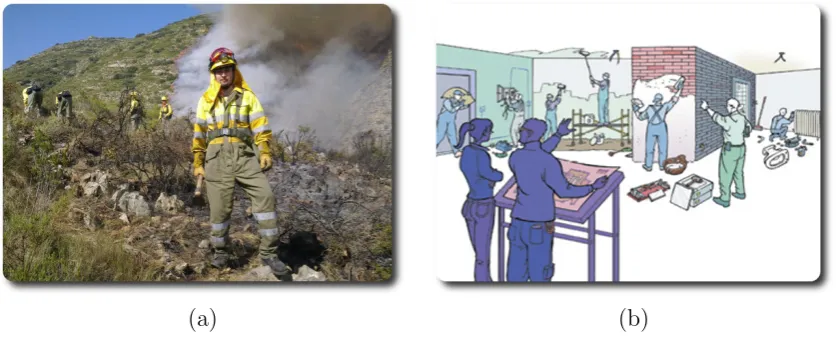
(39) Chapter 1. Introduction. 1.1. Historical Background. The research on Artificial Neural Networks started in 1943 when McCulloch Pitts discovered that an increase in computational resources could be obtained by combining simple processing units [8]. Nowadays, some ideas he suggested are still being used. After a few years of research done by Donald O. Hebb [9], H. D. Block [10] and Frank Rosenblatt [11, 12], Minsky and Papert demonstrated in [13] that the perceptron has some limitations that do not allow it to solve non-linear separable classification problems. A simple function like the XOR problem could not be implemented by a perceptron. In the 80’s, the research on the field of Neural Networks revived. In 1989 the director of the Defense Advanced Research Projects Agency, henceforth DARPA, of United States started funding projects related to Neural Networks. Moreover, John Hopfield, a well-known American scientist, started working on the Neural Networks field and published two important papers [14, 15]. Furthermore, David B. Parker [16] and Yann LeCun [17] proposed simultaneously a new learning algorithm to train neural networks which could solve non-linear functions. This algorithm was called Backpropagation and the XOR problem could be solved with it. Finally, in June 1987 the First International Joint Conference on Neural Networks, also known as IJCNN, took place in Washington, USA. Then, this research field was consolidated by other important publications and conferences.. 1.2. Motivation and Objectives. Although a neural network can be used for signal processing and data segmentation, among other disciplines, in the current research they are going to be used to solve classification problems. Moreover, there are some areas in which a single neural network can be applied as medicine, trade, statistics, among others, as indicated in references [18, 19]. However, important improvements are being done in the field called Multiple Classifiers Systems (MCS ) based on neural networks. Better results in classification can be obtained if a set of different networks collaborate, in a cooperative or in a competitive way, in order to solve a problem. Analogously, in the real world, humans and other biological systems tend to collaborate, in some different ways, in order to achieve a main goal or a portion of it as shown in the next figures. Sometimes, collaboration requires strict rules or a centered supervision. Concretely, figure 1.1 (a) shows some firefighters collaborating in order to extinguish a fire. Although all of them are cooperating and sharing the same goal, some firefighters are close to the fire whereas there are others on a helicopter (although they do not appear on the picture). They are not doing exactly the same, but they share the same objective. This is an example of cooperation in which all the elements, in this case firefighters, are solving the same problem. 3.
(40) Ensembles of ANNs: Analysis and Development of Design Methods. (a). (b). Figure 1.1: Two different collaborations. Figure 1.1 (b) shows a flat or an office which is being rebuilt. This figure is quite representative because there are bricklayers, plumbers, electricians and painters performing specific tasks which are part of a bigger task, the repair of the flat. This is an example of cooperation in which each element is solving a specific part of a task. In both cases, there is at least a supervisor who controls the elements of the system. There is a team or a person who coordinates the firefighters, specially in severe cases. In the case of the office, two people are clearly supervising the jobs done in the office. Nowadays, some advances in classifiers are given by different kinds of Multiple Classifier Systems. There are cooperative and competitive models which can be successfully applied to neural networks in order to generate accurate classifiers. These models are inherited by our nature and our society because cooperating and collaborating is the first option to overcome big problems in daily life. We consider that Multiple Classifier Systems based on neural networks are quite interesting so they should be deeply analysed and compared. Moreover, an appropriate mechanism to fuse the information provided by the networks should be also strongly considered for a deep study as an important part of the design of a MCS. However, the proposed methods in the literature, to design or combine the networks of an ensemble, are introduced without performing an exhaustive or representative comparison with other traditional methods. In most of the cases, there are only references to Bagging and Boosting approaches as important ensemble methods. Moreover, the criteria to setup the experiments and validate the results depends on the author. So comparing the methods that have been proposed in the bibliography is nearly impossible with the results provided by each author, even if the same datasets were used. Two methods can not be directly compared if the experimental setup differs. 4.
(41) Chapter 1. Introduction Additionally, some recent ensemble methods or combiners are proposed exclusively to solve an own specific problem. These proposals do not include information about the accuracy of the proposed system on other problems or datasets. So comparing these new methods to traditional ones is impossible. Furthermore, there are a huge number of methods to design and build ensembles of neural networks. Also, the research on ensembles is still important as recent papers published in the most important conferences on neural networks show. For these exposed reasons, we think that the importance of the proposal of new methods is highly reduced if there is not an objective and robust basis to measure the accuracy or performance of the proposed method and to establish the rules for a further comparison with other methodologies. We think that it is necessary to perform an exhaustive study of the different ensemble methods and ensemble combiners proposed in the bibliography. On the one hand, we will establish the basis and criteria to measure the accuracy of ensembles. On the other hand, we will propose a rank based list of the best ensemble alternatives according to its performance. Finally, the study of traditional ensemble methods and other models improves the knowledge on this field. So the proposal of new ensembles is easier and possible. In this thesis, new ensemble alternatives and models have been proposed by modifying a traditional ensemble or by mixing some different approaches into a single procedure. We can conclude by remarking that the main objectives of this thesis originally were: Perform a complete comparison of methods to design/build Multiple Classifiers Systems. A high number of alternatives will be analyzed and their performance will be tested carrying out a common experimental setup. Perform a deep comparison on ensembles combiners. Similarly, the comparison among combiners will not be reduced to simple or well known procedures. Some methodologies will be analyzed and tested. Analyze more complex Multiple Classifier Systems, such as Stacked Generalization and Mixture of Experts, and adapt them to the ensemble approach if possible. Design new ensemble methods. In this thesis, we propose some new ensemble variants, a new ensemble methodology called Cross-Validated Boosting and two reordering algorithms.. 1.3. Tools. A high number of alternatives to generate multiple classifiers systems along with ensemble combiners have been implemented to develop the current dissertation. To carry out these experiments, a large capacity of calculus and digital storage have been required.. 5.
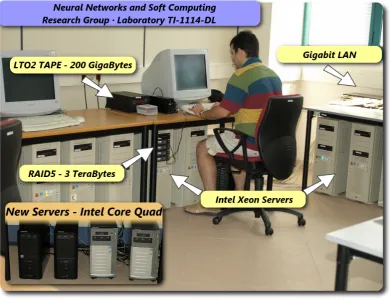
(42) Ensembles of ANNs: Analysis and Development of Design Methods Nowadays, the Neural Networks and Soft Computing research group (NN &SC) of Universitat Jaume I has several computers in the laboratory TI-1114-DL (figure 1.3), which are powered by Intel Xeon processor, exclusively for research tasks. Moreover, each computer have enough main memory to run the experiments and enough secondary memory to temporally store the data generated. Finally, there are two RAID 5 systems to keep the generated data before storing it on DDS4 tapes. Recently, some new computers based on Intel Core Quad and Intel i7 technology have been added to the laboratory so the computational capacity has been highly increased. Moreover, a new digital LTO2 tape recorder has been bought to definitively store the generated data. Finally, a new 3GB RAID 5 system has been introduced in a Xeon computer to temporally store the data. The laboratory equipment has been shared with other members of the Neural Networks and Soft Computing group and undergraduated students. Concretely, Maria del Carmen Ortiz Gomez was researching on the optimization of the RBF network design for her PhD thesis whereas Elena Prades Carceller performed some experiments for her final undergraduated project. The supervisors of this thesis, Carlos Antonio Hernández Espinosa and Marı́a de las Mercedes Fernández Redondo, have also performed some experiments related to different projects in the laboratory.. Figure 1.2: NN &SC Laboratory 6.
(43) Chapter 1. Introduction The programming language chosen to implement the simulations is MatLab. MatLab is a development system whose operations on vectors and matrices are highly optimized so it perfectly fits on developing neural networks. Arithmetical operations related to high-sized matrices are often required in the training procedure of neural networks, [20]. Finally, only free software has been utilized in order to prepare this thesis and the published papers. LATEX has been used to write the thesis whereas the figures, plots, graphs and diagrams have been prepared with Open Office. Some books and manuals related to LATEX [21, 22, 23] and Open Office have been reviewed.. 1.4. Contributions. All the main objectives previously described have been successfully reached as it is shown in this thesis. The main contributions, in a general way, derived from the research performed are: A base to prepare the experiments and simulations for further comparisons is proposed in this thesis. This procedure is better than a criteria based on each author, because when a new method is proposed their results can be easily compared with the rest of the methods employed in this thesis in a common experimental configuration, like the setup we propose and has been utilized. A guide to select the most appropriate methods to design ensembles and multiple classifiers systems. In the conclusions chapter, a reduced list of methods or models to build ensembles and Multiple Classifier Systems (MCS ) is proposed as methods or models that should be seriously considered for classification tasks. This recommendation is the final conclusion of the comparisons done. A ranking of the best combiners, the procedures to fuse the networks which fit better on a wide number of databases and ensemble alternatives. New methods to build ensembles and multiple classifier systems. After reviewing and implementing traditional alternatives, new ones have been proposed. Some of this new variants have provided excellent results on several datasets and they also are on the top of the best performing ensembles shown in the comparison ranking. New combiners applied to ensembles of neural networks. The experiments done in this thesis show that some of these new ways used to fuse the networks of an ensembles have improved the performance of the original ensembles. Furthermore, the global research done in this thesis has been published in the most important conferences as we will show in the last chapter related to the general conclusions.. 7.
Figure
+7


Documento similar
The number of characters per line also varies depending on a number of factors, including the alphabet and the medium: TV subtitles are usually limited to 37
Experimental results have demonstrated that artificial neural networks can substantially reduce the number of model parameters and surpass the performance of previous approaches
Thus, the forecasting results of hybrid intelligent method is better than GMDH & MLF neural networks methods and this indicates that there are some profi table opportunities
• Difference: The network is removed from all the ensem- bles where it is present, and the performance of such ensembles with the network removed is measured. The value of
It is characteristic in such systems that the slightest variation of the initial conditions causes two identical chaotic systems to show trajectories that rapidly evolve
If we start from a basically homogeneous data set that is not rotationally aligned, then the classification will group images according to their relative orientation (examples 1 and
A simple APL2 program (385 instructions in all), packaged with the interpreter as an executable PC program, executes five different application courses:..
This project is going to focus on the design, implementation and analysis of a new machine learning model based on decision trees and other models, specifically neural networks..
