
Realzando la Conciencia de los Estudiantes Hacia la Solidaridad como Valor Social
92
0
0
Texto completo
(2) STUDENTS’ CONSCIOUSNESS TOWARDS SOLIDARITY. ENHANCING STUDENTS´ CONSCIOUSNESS TOWARDS THE SOCIAL VALUE OF SOLIDARITY. MAIRA STEFANÍA GÓMEZ MORALES. UNIVERSIDAD DISTRITAL FRANCISCO JOSE DE CALDAS FACULTAD DE CIENCIAS Y EDUCACIÓN PROYECTO CURRICULAR LICENCIATURA EN EDUCACIÓN BASICA CON ÉNFASIS EN INGLÉS COMO LENGUA EXTRANJERA BOGOTÁ D.C. 2016.
(3) STUDENTS’ CONSIOUSNESS TOWARDS SOLIDARITY. NOTE OF ACCEPTANCE. Research Work Advisor Álvaro Quintero Polo. Juror. Juror. 3.
(4) STUDENTS’ CONSIOUSNESS TOWARDS SOLIDARITY. 4. “La Universidad no se hace responsable de las ideas, ni del contenido del presente trabajo debido a que éstas hacen parte única y exclusivamente de sus autores”.. Capítulo XV, articulo 177, Acuerdo Número 029 de 1988 del consejo superior de la Universidad Distrital Francisco José de Caldas..
(5) STUDENTS’ CONSIOUSNESS TOWARDS SOLIDARITY. 5. ACKNOWLEDGEMENTS. I would like to thank God for guiding me to the purpose of my life, enlightening me through this process and strengthening me with patience and wisdom to do my best and love my profession. Second, thanks to my family, boyfriend and friends who have supported me to cope with every challenge during my career and their unconditional love. Moreover, I want to express gratitude to every person who has enriched my life and the students that made this project possible. Finally, I would like to give special credit to my teachers and tutor, Álvaro Quintero, for leading me in this process and contributing with their knowledge and dedication to my academically and personal growth..
(6) STUDENTS’ CONSIOUSNESS TOWARDS SOLIDARITY. 6. Abstract This qualitative research addresses students’ conscientization to the social value of solidarity as it is portrayed in the responses to short stories among fourth graders at a public school in Bogotá. The pedagogical intervention was implemented within an inquiry based approach and students’ exposure to short stories that led them to become aware and reflect on their role in society through the enhancement of their ideas, opinions and thoughts. Students’ statements were identified and interpreted through, questionnaires and field notes that were analyzed to the light of the theoretical sources consulted in this study. The findings revealed that students’ reconstruction of the social value of solidarity has to do with the recognition of the other’s vulnerability and the relationship of this concept to friendship and respect values. This study demonstrated that students’ reflections give account of a reality that needs to be understood and transformed by the participants of the society, so when students related the stories to their lives and context they became more aware of their role in their communities and the way they and the others act. Key words: conscientization, solidarity, critical pedagogy, shorts stories..
(7) STUDENTS’ CONSIOUSNESS TOWARDS SOLIDARITY. 7. Resumen Esta investigación cualitativa aborda la concientización de los estudiantes hacia la solidaridad como valor social y su representación en las respuestas a historias cortas entre estudiantes de cuarto grado de un colegio público de Bogotá. La intervención pedagógica fue implementada a través de un enfoque basado en indagación y la exposición de los estudiantes a historias cortas, que los guiaron a ser más conscientes y reflexionar a cerca de su rol en la sociedad a través de sus ideas, opiniones y pensamientos. Los enunciados de los estudiantes fueron identificados e interpretados a través de cuestionarios y notas de campo que fueron analizados a la luz de las fuentes teóricas consultadas en este estudio. Los resultados revelaron que la reconstrucción de los estudiantes hacia la solidaridad tiene que ver con el reconocimiento de la vulnerabilidad del otro y la relación de éste concepto con los valores de amistad y respeto. Éste estudio demostró que las reflexiones de los estudiantes dan cuenta de una realidad que necesita ser entendida y transformada por los participantes de la sociedad, de esta manera, cuando los estudiantes relacionaron las historias a sus vidas y contexto, ellos fueron más conscientes de su rol en su comunidad y la manera en la que ellos y otros actúan. Palabras clave: Concientización, solidaridad, pedagogía crítica, historias cortas..
(8) STUDENTS’ CONSIOUSNESS TOWARDS SOLIDARITY. 8. TABLE OF CONTENTS. Chapter I Introduction. 7. Problem Statement. 9. Research Question. 11. Research Purpose. 11. Specific objectives. 11. Chapter II Literature Review. 12. Chapter III Research Design. 29. Research approach and type of study. 30. Context and Participants. 30. Instruments for data collection. 31. Ethical issues. 33. Chapter IV Instructional Design. 35. Pedagogical Intervention. 35. Instructional objectives. 38. Theory of learning. 39. Theory of teaching. 40. Theory of language. 42. Methodology. 42. Description of material. 44. Criteria for evaluation. 45. Chapter V Data Analysis. 46. Chapter VI Conclusions. 69. Chapter VII Implications for further research. 72. Chapter VIII Limitations of the study. 74. References. 75. Annexes.
(9) STUDENTS’ CONSIOUSNESS TOWARDS SOLIDARITY. 9. CHAPTER I. INTRODUCTION. This study conducted in a public school in Bogotá is focused on the exploration of fourth graders´ outcomes in their process of conscientization towards the social value of solidarity. These outcomes were described and interpreted in terms of opinions and reflections made by students through the data collected to gain a thorough understanding of the social phenomena presented in this particular environment. This research is framed under a qualitative paradigm that emerged from students’ difficulties evidenced in the needs assessment when relating short texts to their personal experiences and context. Also, the relevance to highlight students’ awareness of the knowledge they have acquired through their experiences and their role in the society that allow them to make part of a social justice transformation that has to do with equity and recognition of the other through the conscientization towards the social value of solidarity. Considering the need of creating an appropriate environment for reflection about social aspects with fourth graders at school, the implementation of reading strategies, activities and dialogue were included with the purpose of empowering students to deeply read short stories and help them to make connections to their own realities taking into account students´ skills in their mother and foreign language. The theoretical foundations of this study are Critical Pedagogy which seeks to create spaces in the classroom where students’ voices are brought in order to connect their knowledge gained through their social background and experiences to the conceptions about solidarity as a.
(10) STUDENTS’ CONSIOUSNESS TOWARDS SOLIDARITY. 10. social value that allow students and teacher to reconstruct their ideas and have a better understanding of their realities and context. Moreover, the emphasis on working on solidarity as social value was discussed from different perspectives that helped me to describe, interpret and understand students’ conscientization towards this social value. Bearing in mind that reading is a complex process in which students not only learn new vocabulary but also learn to interpret notions of time, space, characters, values, culture, history among others; the development of this skill is necessary to enhance students in their learning process of English as a foreign language. That is why I decided to implement inquiry based learning that allowed students to pass from a superficial reading to a deeper comprehension of what students read in the sessions, making connections of the short stories to their realities and become aware of the situations around them that reflected their perceptions towards solidarity. Finally, in order to maintain a clearer view of this qualitative research, the organization of this document will be explained as follows; first an overview of the research study including the introduction, the problem statement and the research question and objective. Secondly a literature review where I discussed the main constructs which were the foundations of this project, then the research and instructional design. Continuing, the reader will find the data analysis in which students’ statements and field notes were described and interpreted in the light of the theoretical sources that supported this study in order to understand students’ process of conscientization towards the social value of solidarity, as well as the conclusions obtained at the end of this experience, references, annexes and the appendices..
(11) STUDENTS’ CONSIOUSNESS TOWARDS SOLIDARITY. 11. PROBLEM STATEMENT I consider students in the classroom as active people who not only acquire specific contents through the subjects they study but also who acquire values, beliefs and construct their role as part of a community in this case their school, their neighborhood or their city. In this work, fourth graders are encouraged to take part in the transformation of their English language classroom realities in which as human beings they become critical, respectful, responsible, and independent. Such transformation has to do with alternatives to reduce a gap that is created as a consequence of intolerance, aggression and disrespect from some social actors against other actors in educational settings. That gap calls for the promotion of social values that students potentially have to tackle conflicts caused by it and that students face day by day. Bearing in mind the need of this transformation mentioned above there is an immerse relevance also to change the perception about students´ role to make them part of this process by highlighting their voices reflected by their ideas, opinions and thoughts about the reality they take part of which also takes part in the classroom settings. According to Hatchman & Rolland (2001) it is clear to us that student voice is the missing piece, so often left out, in school transformation. Even though, "...They [students] are in a very real sense, the primary stakeholders in their own learning process we do not necessarily listen to them" (Lincoln 1995 cited by Hatchman & Rolland, 2001, p. 2). Freire cited by Wachob (2009) asserts when stating the problem of the traditional education in which students voices do not take place in the classroom but also that teachers have the potential to combine scholarly reflection and practice in the service of educating students to be thoughtful and active citizens; in this case the need of including students' voices about their.
(12) STUDENTS’ CONSIOUSNESS TOWARDS SOLIDARITY. 12. life experiences and let them take action in their learning process constructing their own perspectives appears as an important component in the social transformation and educational practices. During my pedagogical experience carried out at a public school located in Bogotá with a group of twenty fourth graders, I initially noticed a positive and enthusiastic attitude towards the English class which created a good environment to develop different activities that allowed students to work on their language development. However, through the development of some of the lessons, students revealed a struggle when relating what they were learning and their real life experiences related to social values. Thus, a needs assessment was applied to consider students' voices about the relationship between their life experiences and the specific social values of respect and solidarity. After analyzing students' responses to the questions established in the needs assessment related to the way they could apply those principles to their context, their answers were in the majority of the cases focused on surface aspects of reading comprehension practices in the traditional English class which misled their attention from the sensible issues they have experienced in their lives. This can be illustrated with some excerpts resulting from the needs assessment: One student´s response to the question: did you find any teaching in the story Juana the giraffe? Was: …“no tiene enseñanza”, in the next point the student had to write any life experience related to the story and the answer was: “no aplica…”1. Moreover through one of the reflective journals written when finishing the classes I found:. 1. “No tiene enseñanza” refers to: “It does not have any teaching”, and “no aplica…”: “it does not apply”.
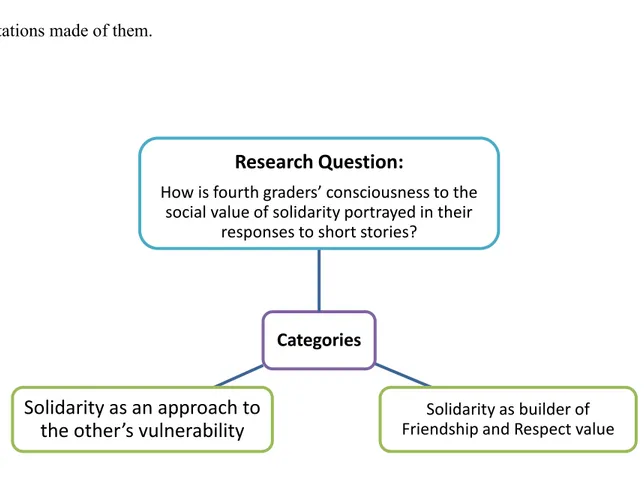
(13) STUDENTS’ CONSIOUSNESS TOWARDS SOLIDARITY. 13. Students were confused when they were asked to think about situations at school or around them that reflected any relation to the topic learned, some students’ claims were: “no entiendo, no sé teacher…” (Teacher reflective journal, April 25th, 2012) This information called my attention and made me wonder about the way students were relating the topics addressed in class and if there was any space in the classroom for them to analyze and evaluate in a critical way what they were learning, which made students to successfully complete exercises related to the English class but not in those where they had to analyze, compare and relate that knowledge with their social reality.. RESEARCH QUESTION How is fourth graders’ consciousness to the social value of solidarity portrayed in their responses to short stories? RESEARCH PURPOSE To characterize fourth graders´ consciousness to the social value of solidarity as it is portrayed in their responses to short stories in order to add understanding to the way they make sense of their being as social actors.. Specific objectives: . To highlight students’ life experiences and thoughts through the use of short stories.. . To identify and interpret students’ responses to stories in order to understand their social awareness in relation to the social value of solidarity..
(14) STUDENTS’ CONSIOUSNESS TOWARDS SOLIDARITY. 14. CHAPTER II LITERATURE REVIEW. This study initially focused on the promotion of critical thinking taking into account the phenomenon presented in the classroom about the struggle that students were having when establishing relations between the topics learned and their life experiences. In order to enlighten this phenomenon, I started a search about critical thinking considering that this would be an appropriate way to address students and help them to go beyond the specific content of the class, get familiarized with it to find possible application of the new knowledge to their lives. However, I realized that critical thinking was just the frame within which the instructional part of this study was set but was not the main concept that was at the core of the phenomenon that I intended to explore, that is to say, students´ opinions and life experiences put them together to work on the conscientization towards solidarity as a social value. The literature on critical thinking seems to emphasize on the development of intellectual skills leaving aside the social purpose of learning. As a result, Critical Pedagogy appears as the main construct to be discussed through which students are encourage to voice their opinions and life experiences to take part of the social transformation. Critical pedagogy setting the path for students’ conscientization Provided that this study has its theoretical foundation in Critical Pedagogy (CP), in this chapter, my first point is about the relationship between students’ life experiences and one of Freire’s postulates about Critical Pedagogy seeking to identify possibilities in the classroom by offering schema to connect word to world and by its unyielding urgency of transformation.
(15) STUDENTS’ CONSIOUSNESS TOWARDS SOLIDARITY. 15. (Freire, 1970). This has to do with the idea that there is a remaining need to create a space in the classroom that includes students´ knowledge gained from their world experiences and allow them to establish connections between those experiences and what they learn to build new knowledge and gain a better understanding of their reality. For that reason, Critical Pedagogy serves as the bridge to empower students and bring their voices into the classroom to encourage them to become active participants of the society. Bearing in mind this emergency for transformation the following point that I will address in this chapter is related to the way consciousness is portrayed towards the social value of solidarity and the relevance of this process in the promotion of a social justice transformation in the EFL classroom. Freire cited by Boswell (2011) states his posture about solidarity by saying that “solidarity requires that one enter into the situation of those with whom one is solidary; it is a radical posture" (p. 34). Moreover, in the exploration of this notion Freire argues that in order to commit to true acts of solidarity one has to go through the liberating process known as “conscientization”, in which people come to understand one´s notions of charity and build a new sense of solidarity. For instance, this process of conscientization seeks to engage students in the (re)construction of their notions about solidarity through the recognition of the other. In order to understand the urgency for transformation claimed by Freire above, I consider relevant to reflect about the current practices in our educational settings that will help us to make sense of the principles that CP entails. That is why I would like to start describing a problem debated nowadays about the education in Colombia that has been making emphasis on the achievement of standards established in the different subjects. This issue has led us to focus on models based on skills development where teachers are mainly concerned to help students to accomplish international standards and language proficiency..
(16) STUDENTS’ CONSIOUSNESS TOWARDS SOLIDARITY. 16. Colombian authors like Correa and Usma (2013) discuss the actions taken by the Colombian government in the promotion of the Program for Strengthening the Development of Competencies in a Foreign Language that attempts to increase the level of English proficiency of teachers and students to include the country into globalization processes. Correa and Usma in the attempt to present an alternative proposal to the model established by these policies that consist on a critical sociocultural model that seeks to include all stakeholders to improve the teaching and learning of English in the State. Likewise, Perez and Echeverri (2014) in their article “Making Sense of Critical pedagogy in L2 Education Through a Collaborative Study Group” argue that the Colombian government has included the use of imported standards like the Common European Framework of Reference as guidelines to measure language proficiency in order to respond to the demands of global markets and support the economic development. Perez and Echeverri also characterize the current educational practices in Colombia within an instrumentalist model that persist on the transmission and development of skills. According to the ideas presented Perez and Echeverri about the instrumentalist model, one characteristic of this model is “the marked focus on the teaching of language structures and communicative functions that have little to do with students’ lives outside the classroom” (p. 173). In relation to that the authors distinguish that “within this model teachers seem to be regarded as mere delivers of content that is not related to students´ lives, as trainers in skills that do not necessarily help students cope with issues they face every day” (Perez and Echeverri, 2014, p. 174)..
(17) STUDENTS’ CONSIOUSNESS TOWARDS SOLIDARITY. 17. It is then evident that this reality shows us how teachers and students have to cope with different issues inside and outside the classrooms. Here you find teachers and students struggling with issues such as poverty, violence, intolerance among others. Taking this into account, teachers cannot pretend to come into the classroom and teach specific contents excluding these concerns and expecting their students to forget about their lives during class, while developing skills that isolate their lives experiences. Perez and Echeverri (2014) asserts when they state: In a country like Colombia, where signs of oppression and injustice are so evident, we believe that English teachers here will be doing their students a disservice if they limit themselves to teaching grammar structures and communicative functions that are not related to students’ real lives. (p. 174) In this traditional perspective students are not the only ones affected by the traditional education; teachers also suffer the effects of an education that conceives them as channels of information separated from their students in which teachers aim to plan the content of the syllabus that students submissively adapt to it. Freire (1970) supports this idea when claiming that teachers keep the legacy of banking education when they internalize the belief that their main role is to be merely concerned with the transmission of information and distances themselves from students´ life concerns so that the power of structure of the system is maintained. On the contrary, the principles of CP in opposition to the traditional education determine the relationship between students and teachers in which they cooperatively work on the process of learning to make sense of the knowledge and the world. Freire (1970) claims by the expression “reading the world and reading the word” that education is produced collaboratively.
(18) STUDENTS’ CONSIOUSNESS TOWARDS SOLIDARITY. 18. and collectively through the reality of students’ lives. In connection to my initial idea, CP serves as the channel to bring students´ thoughts, beliefs, aspirations and experiences into the classroom and give value to them. The beginning of a transformation on educational projects must be at the level of the people´s aspirations and dreams, their understanding of reality and their forms of action and struggle (Freire, 1970). Guerrero and Quintero (2013) investigated the voices of elementary school teachers about Colombian educational policies through a study conducted in five localidades from Bogotá, Colombia. This study reveals the oscillating identities built by teachers who have been marginalized in the participation of the creation and reformulation of Colombian policies, but at the same time, teachers who have found a way to fulfill the demands of the State and the needs of their students. The findings of this study brought to light on the one hand, the contradiction towards traditional models that see teachers as instructors since the teachers who took part of this study claimed to know who their students are, their contexts and their needs. On the other hand, that there is no policy that prepares teachers to face the issues they handle daily at schools and more important that “love” is one of main motivations of teachers’ daily practice; Guerrero and Quintero state: “Love gives them the strength and the wisdom to take actions that result in quality of life for their students. In this sense, their autonomy is manifested in the fact that, different from the view of the government, they view education as a powerful tool to transform lives in the long term. While the objective of educational policies is that students achieve certain levels on State exams, teachers are concerned about helping them to become good citizens, good people. (p.200).
(19) STUDENTS’ CONSIOUSNESS TOWARDS SOLIDARITY. 19. This conception about love took me to the heart of what I internalized from reading about CP and the studies and articles that attempted to criticize and evaluate the current educational models. This is how I realized that education is about love and how I see myself through the others eyes, how I recognize the others in that process and how together we make sense of this world. Wink (2000) points out that critical pedagogy encourage people to find the magic of discovery based on our own life experiences and its potential is all about people. “Education is radically about love” (Freire cited by Wink 2000 p.2). I consider that there is a remaining need for transformation but at the same time a growing hope for changing our realities. Now, to me this is an inspiring idea that highlights the role that teachers and students have in the adoption of a critical perspective that allow them change the perception of both of them. For instance, I would like to exemplify this idea with an inspiring blog published by Nickalls (2015) called: “I wish my teacher knew: the hashtag that’s changing the way teachers see their students”, in which the author describes the story of Kyle Schwartz, a third grade teacher at a Denver elementary school in the United States, who started a hashtag movement with a simple assignment that reflects the needs and thoughts that her students wanted her to know about their lives through notes they wrote and the impact that these notes had for her understand her students’ lives and struggles. These are some of the students’ notes that Schwartz posted on her twitter:.
(20) STUDENTS’ CONSIOUSNESS TOWARDS SOLIDARITY. 20. Through this lesson Schwartz expresses that students were inspired to help each other and that the intent of the assignment is to build community in the classroom. The author of this article finally concludes that “keeping an open dialogue between teachers and students is an.
(21) STUDENTS’ CONSIOUSNESS TOWARDS SOLIDARITY. 21. essential and often overlooked aspect of communication”, but also believes that this exercise is evidence of how teachers can make a huge impact as well as it reminds us that students can teach us as much as teachers can, “We just have to listen”. In the same train of thought, Samacá (2012) refers on her article towards the reflection of our classrooms through a critical pedagogy view that being a teacher implies time to listen to our students´ problems, to make them feel loved as well as listen to them expressing their personal points of view about situations that are not necessarily academic. This process requires a transformation of students and teachers conception that Wink (2000) considers as the result of the interaction between the two of them. Looking for the spaces in our classes to bring up students´ voices must be teachers’ concern and task, which it may be challenging and sometimes we may get confused about the most accurate way to do it. For this reason, Critical pedagogy portrays the way to start lighting the path for teachers and students for a social change in the classroom. As the author of the article mentioned above, dialogue between students and teachers is an indispensable aspect in communication; even though, from a critical point of view is the base for the change of educational practices that I will explain in detail below. “No matter if they are students of the university or kids in primary school or workers in a neighborhood or peasants in the countryside, my insistence on staring from their description of their daily life experiences is based in the possibility of starting from the concreteness, from common sense, to reach rigorous understanding of reality”.(Freire and Shor,1987, p. 20).
(22) STUDENTS’ CONSIOUSNESS TOWARDS SOLIDARITY. 22. This statement reflects the conception of a dialogical education conceived by Freire that consists on the understanding of the world on a first place by understanding students’ life experiences to gain comprehension on concrete concepts of the reality. That means when the teacher comes to class, he/she has planned the object to study with students, despite that fact, teachers and students must get involved in a reflection of the object to study in which students can establish a relation with their life experiences in order to make sense of the concepts and start a reconstruction of these ones accompanied by the teacher. This brings up the question of what dialogue means in this alternative education and how this dialogue enriches the purpose of this education that is a social transformation. Assuming that humans are communicative beings who communicate to each other, dialogue seeks to extend that natural ability and become more critical communicative beings. However, “communicating is not mere verbalism, not mere ping pong of words and gestures. It affirms or challenges the relationship between the people communicating, the object they are relating around and the society they are in” (Freire and Shor, 1987, p. 14). Thus, dialogue comes to transform the communicating process into a reflection about the reality of the society within this process take part. In this conception, Freire and Shor (1987) claims that dialogue raises the awareness about the social relations and recreates the knowledge as well as the way we learn. For instance, when students and teachers meet upon reflection in the classroom about their reality, dialogue breaks down the traditional idea of the relation between them in which the teachers come and present the ideas that students are supposed to adopt and later on to produce in the same way. In this process of reflection mediated by an open dialogue students and teachers realize about what they.
(23) STUDENTS’ CONSIOUSNESS TOWARDS SOLIDARITY. 23. know and they do not know which leads them to act critically to transform their reality (Freire and Shor, 1987).. Conscientization towards the social value of Solidarity At this point one may be wondering about the place that takes the conception of “conscientization” that was initially mentioned in this chapter and the relation with the social value of solidarity. Thus, I would like to clarify the idea about the role that this concept that some people will find unknown or bizarre as I did at the beginning of this study. In this respect, standing on a critical perspective that seeks to enhance students´ voices with the purpose of transforming the role of them and teachers as listeners and speakers that recreate their relations and start reflecting about their lives. “Critical pedagogues claim that when students and their teachers know that they know, the phenomenon of conscientization has taken place, Abraham (2005). In this perspective, not only the teachers are the owners of the knowledge but so are students, and putting both together we can transform learning and teaching experiences into a meaningful practice for them. Given that, conscientization lead students’ to understand the notions of their realities and what they have learned from it and at the same time to recognize what others have learned. Thus students reconstruct their ideas about social values (solidarity in this study specifically) when they meet upon reflection with their teacher and peers to interact about their conceptions and life experiences..
(24) STUDENTS’ CONSIOUSNESS TOWARDS SOLIDARITY. 24. Here, the relevance that dialogue has in the achievement of conscientization appears as the first step to approach the other as an equal (Boswell, 2011). Essentially, when students and teachers get involved in this process they become more open to listen to the other´s opinions and perspectives of the world, beyond that, this process lights up the spark of awareness about students’ knowledge and the importance in the (re)construction of the reality. According to Freire cited by Boswell (2011) conscientization “is primarily a subjective feeling if new insight” (p.14). As result of these new insights, students get closer to the liberation process of breaking down the barriers of class and conflicts that separate one to each other. Provided that solidarity as a social value comes up as the notion constructed in society to bring together people in a sense of charity, help equity and hope. As shown by Samacá (2012), classrooms are partly affected by the real representation of society in which students express what they are and the social values they have learnt in their families. Moreover the author claims that for those who want to transform the school settings by working on values such as respect, tolerance, justice, and equity, it is important to highlight the activities that empower students to explore their feelings from the inside. Katsarou, Picower and Stovall (2010) points out that in the development of conscientization one has to cultivate a close knowledge about one’s teaching environment. This involves a transformation in the classroom in which teachers promote activities that allow students to share their opinions, concerns, dreams and experiences with the purpose of understanding their contexts and needs. This transformation calls for social justice by working in a sense of solidarity in which “teachers must recognize issues and concerns that affect students and their communities” (p.150)..
(25) STUDENTS’ CONSIOUSNESS TOWARDS SOLIDARITY. 25. When carrying out this study and working with students I realize the importance of getting to know the environment and the context in which I was working. Firstly, it helped me to understand the dynamic of the group and the way their relationships were recreated in the classroom, their considerations about the other and how these considerations were reconstructed when sharing with their peers. Secondly, it helped me to approach myself to students and gain a better understanding of their needs and issues. Hence, while reflecting with students about social aspects my awareness about my role as teacher changed and my comprehension of the reality was also reconstructed. Based on this experience I strongly agree with Wink (2000) when she claims that students and teachers are empowered to have confidence in their own knowledge, ability and experiences though the process of conscientization. Thus, conscientization can only take place through the interaction between teachers and students since it highlights their knowledge and experiences gained during their lives and bring them together in order to understand their contexts and realities. Now, the relevance of this process of conscientization with a social transformation has to do with the emphasis on students’ awareness of the knowledge they have acquired though their experiences and lives and the recreation of this knowledge through the dialogue led with their classmates and teacher that will allow them to realize about their power to act upon the realities they reflect about. In fact, Daniel Schipani cited by Boswell (2011) argues that only when people find the interrelation between knowledge and power at the heart of conscientization real transformation happens. In accordance with the need of fostering social values that help students to act in the construction of a better society the conscientization towards the social value of solidarity emerge as vital in the idea of a social transformation..
(26) STUDENTS’ CONSIOUSNESS TOWARDS SOLIDARITY. 26. Given that, students’ conscientization lead them to reconstruct their ideas about the social values that are initially constructed at the heart of the society students have had contact with at the center of family and which continues at school when they socialize with their friends and peers. In this connection, this study attempts to explore the notions that students reconstruct in the classroom toward the social value of solidarity taking into account that students are considered people in process of formation who come to class with knowledge they have acquired in their families. Then, with the purpose of exploring students’ conscientization towards the social value of solidarity it is important to understand the conception of social value and especially about solidarity but also the process in the development of these notions. For this reason I will go through some conceptions I found about social values and its connection with the process of conscientization. Social values are defined by Dueñas (cited in Gómez and Rojas, 2012) as values acquired by humans from society that help them to be an integral human being. In addition, Gómez and Rojas (2012) in their study about the reflection on social values through an EFL story telling experience characterizes social values as the ones that help to value the world, the society and its people, moreover, allow individuals to make choices from different options based on his/her personal interests. Similarly to this Hernandez, Parada and Sanchez (2009) state toward the conception of social values as the human perception of what is good, better and best for the self that have been internalized in the socialization process given in society, with family, group of pairs at school, and the most important values for a person constitute the core of their personality, guidance, orientates individuals’ decision making and are the base of their selfconcept and self-esteem..
(27) STUDENTS’ CONSIOUSNESS TOWARDS SOLIDARITY. 27. In this respect the exploration of students’ perceptions and ideas about the social value of solidarity has an important role in the process of conscientization since students start being aware of their actions and what orient them; which I consider is the first step to take action in the reality. According to Hayes (1913) individuals’ actions are like a shield in which one side is exposed to the world and the other pressed against the heart, for instance, he explains that when we refer to experiences we refer to physical actions but when we refer to value, they can only exist in “consciousness” and can never be seen or weighed. However, according to Gómez and Rojas (2012) every person has to live a process when acquiring and shaping values; this process has to do with moral development and its evolution is developed along ages and the interaction with the context. From this perspective it is considered in this study solidarity as a moral value that is acquired through socialization in group or personal experiences. When students meet up upon reflection towards their considerations about solidarity and the analogies they make from the stories to their lives and experience their moral development and simultaneously their consciousness are growing up. Provided that I believe that the process of acquiring and shaping values is a constant activity that people conscious or unconsciously is constantly working on and developing. Also, that as these perceptions and beliefs are socially built, it changes with the time and according to the context. As this process is highly remarked by socialization, Gómez and Rojas (2012) affirm that values are initially acquired at home and then move forward at school. This point is relevant because when students go to school they come with knowledge they are not fully aware and when they socialize with their classmates and peers, students find out other perspectives and start shaping their ways to perceive, interact and participate in society (Hernandez, Parada and.
(28) STUDENTS’ CONSIOUSNESS TOWARDS SOLIDARITY. 28. Sanchez, 2009). This process is known according to CP as conscientization and it attempts not only to build communicative exchanges but dialogue, through the members of a community. Finally, as a consequence of the process of conscientization students’ are led to reconstruct their own notions about solidarity. Solidarity as previously stated is considered in this study as a moral value but I have decided to go through different perspectives of this term to have a better understanding of students’ ideas and experiences in relation with the conception of it. To start, Freire (cited in Boswell, 2011) states that "when one sheds pious, paternalistic, and sentimental actions, one can move one step closer to solidarity, a state in which one "risks an act of love" (p. 35). That is to say that solidarity as a social value bring us together in sentimental actions that allow us to step on the other´s shoes to understand how they feel and give support. I realize that students express this sensitivity towards the other in their opinions reported in the questionnaires and the ideas they shared about the actions presented in the story but also when they made their analogies with their life experiences. This sense of solidarity in which sentimental actions allow individuals to approach the other in the understanding of his/her needs, also permit the inclusion of other people in the relationships commonly recognized by students which promotes the idea of equity where I see myself as an equal to the other no matter the conditions, the social status, the place of belonging or the race. Wojtyla (cited in Boswell, 2011) states that “when one adopts an attitude of solidarity, one interacts with an "acute sense" of understanding the needs of the other” (p.89). This implies sensitivity in relation to the self and the other in which students are able to see themselves though the other and understand the other’s needs and vulnerability..
(29) STUDENTS’ CONSIOUSNESS TOWARDS SOLIDARITY. 29. According to Rorty (1989) a sense of solidarity is created when humans share suffering experiences that lead to the realization of people who are totally different can be “us” and not and impersonal “they”. From this perspective solidarity appears again as a value that seeks to create a sense of equity between people who do not have a direct relation through the bonds that emerge from the understanding and partnership when one faces a vulnerable situation. Students’ life experiences are representation of the realization of the suffering experiences they share with other people that let them to perceive themselves through the other. Nevertheless, in contrast to these considerations about solidarity as a social value other conceptions has been contemplated by authors like Anne Carr (cited by Boswell, 2011) who claims that solidarity is reflected as a spirituality of friendship, interdependence and community. In this respect, solidarity serves as the chain that consolidates the sense of friendship between individuals even though it discriminates the other who is not part of that group of people one is related to, in other words “friendship demands that some are excluded from the relationship and it cannot include everyone” (Healy, 2011 p.232). A study conducted by Mendez and Garcia (2012) on the elementary schoolers’ power and solidarity relations in an EFL classroom reported that different forms of exercising power and solidarity are presented in the classroom in which solidarity has a connotation when students align with their partners regarding certain issues. This allows learners to establish more equity among them. Additionally, the authors found that students show solidarity towards each other when they work together in order to achieve a general benefit for the group which let the authors concluded that solidarity is constantly developing in the classroom where learners identify themselves with the others..
(30) STUDENTS’ CONSIOUSNESS TOWARDS SOLIDARITY. 30. I realized from my experience in the classroom that students’ notions about solidarity vary according to their own backgrounds but also that these notions may change with the socialization of them with their classmates and teacher. Besides, the interaction between students is a reflection of these notions of solidarity that generates and sensitivity towards the others’ perspectives, moreover, when they were working together in the activities proposed they showed this partnership sense towards the accomplishment of the tasks. To conclude, I believe that CP sets up the path for students and teachers to the transformation of education that has to do with the engagement of students’ voices and experiences that are reflected through the dialogue that leads them to take part of the process of conscientization. This process allow students to understand the notions about solidarity as a social value that they have learned from their experiences and backgrounds and bring them together to recreate and reconstruct students’ perspective of the world..
(31) STUDENTS’ CONSIOUSNESS TOWARDS SOLIDARITY. 31. CHAPTER III RESEARCH DESIGN. This study is framed under a qualitative research carried out in a public school in Bogotá, Colombia. The aim of this study is to characterize fourth graders´ outcomes in their process of conscientization towards social values that will be described and interpret in terms of opinions and experiences through the data collected to gain a thorough understanding of the social phenomena presented in this particular environment. Given that the qualitative paradigm deals with the explanation of social phenomena in which attitudes, opinions, experiences, and feelings of individuals produce certain information (Hancock, 1998), it fits the purpose of this study to highlight students’ thoughts and opinions in the classroom to understand their realities and take part of the transformation of it. In addition, this study attempts to describe and interpret students´ outcomes as mentioned above considering those the starting point for the understanding of their process of consciousness towards solidarity, providing student’s ideas and relations they make with their realities, this process situated in the thought, language, aspirations and conditions of students and shaped by the training of the teacher who is simultaneously a classroom researcher (Freire and Shor, 1987). For instance, qualitative research seeks to make sense of and meaning from descriptions often distinct of this paradigm in order to understand the educational world (Lankshear and Knoble, 2004). Moreover, all research is interpretative since it is guided by a set of beliefs and feelings about the world and how it should be understood and studied (Denzin and Lincoln,.
(32) STUDENTS’ CONSIOUSNESS TOWARDS SOLIDARITY. 32. 2000) which is described by Lankshear and Knoble as the nature of qualitative approaches to acknowledge that research actually (re)constructs realities. Following this train of thought, this study is set up within a qualitative and interpretive research taking into account that it deals with qualitative data characterized by students’ opinions, experiences and feelings towards the social value of solidarity that were interpreted with the purpose of gaining a better understanding of a social phenomenon based on beliefs and feelings which foundations come from the theoretical background of the study. Context and Participants This study was carried out in a public school located in the 10th zone of Bogotá (Engativá). This school is divided into two facilities, the principal building focusing on fourth, fifth, and high school and the second one housing pre-scholar grades and primary until third grade. The principal headquarters is two floors and contains one library, two cafeterias, one teacher room, a computer lab which had not been currently used while equipment was being repaired, a radio station, sport areas, one auditorium and a small room in which students can prepare performances. The classroom in which this study took place is well distributed and had a large space that allowed the teacher and students to move around when necessary. It had around 40 seats, one teacher desk and it has not any media material, however, teachers could book in advance the use of mobile media equipment that was available for delivery into the classroom. This research was carried out with 22 fourth graders of the afternoon shift, who are between 9 and 11 years old from low and middle-income households. As fifth and forth graders are situated in the same building of high school sometimes students of primary school have.
(33) STUDENTS’ CONSIOUSNESS TOWARDS SOLIDARITY. 33. negative influence of students from higher grades and also some problems appeared due to this fact. Fifteen students were selected taking into account the relevance of the data content in the instruments gathered in contribution to the understanding of the phenomenon to explore in this study. In this study, fourth graders are considered people who are in the process of formation in the conscientization towards social values. According to this process of formation the school made specific emphasis on the promotion of social values presented in the principles of the institution such as: kindness, punctuality, auto control, quality, equality, collaboration, respect for the commitments, honesty, sense of belonging and loyalty with the school and the classmates; finally prudence. Moreover, the school frames the profile of its students as “balanced in his/her individuality and his/her social being, characterized by respect for life and recognition for the other´s rights, with ability to harmoniously live with him/herself and people surrounding”.2 Bearing this in mind, I started this research project with the attempt of exploring students´ process of construction of these social values, considering also the perceptions expressed by the teacher towards students as sometimes conflictive and hard to manage, emphasizing the need of promotion of values over the instruction based on the subject contents. Instruments for data collection In this study, students account for their perceptions and opinions in the process of sensibilization towards social values, for this purpose two main instruments were applied in order to gather the data to be analysed to the light of the theoretical sources consulted for the understanding of the phenomenon of this research as it is illustrated later in (Graphic 1) that 2. This information can be found in the official web site of the school. http://www.iejas.edu.co/.
(34) STUDENTS’ CONSIOUSNESS TOWARDS SOLIDARITY. 34. explains the triangulation methodology in order to validate the information gathered from the data collected. . Questionnaires. For the validity of the information gathered I included some questionnaires to analyze specific information about the students’ ideas, and to identify and interpret students´ process of conscientization towards the social value of solidarity during the pedagogical intervention. Bell (2005) claims that: Questionnaires are a good way of collecting certain types of information quickly and relatively cheaply and that they are useful to analyze and interpret data. Students written statements are the main input of this instrument as introspective data. . Field notes:. In order to record the observations about the reflections carried out during the lessons where students´ claims and opinions towards social values took place, field notes were taken during and complemented after the classes while students were developing the activities and dialogue with the teacher. According to Lankshear and Knoble (2004), field notes are descriptions of what is taking place as well as direct quotations of what is said wherever possible. These are descriptions and accounts of events in the research context, which are written in a relatively factual and objective style. It focuses on answering who, what, where, when, how, why questions (Burns, 1999). This instrument is useful to see and describe students’ opinions and thoughts in the classroom, but also their attitudes towards the readings, the discussions and the sharing ideas moment as an observational data that provided students’ claims as the principal input of this instrument..
(35) STUDENTS’ CONSIOUSNESS TOWARDS SOLIDARITY. 35. In terms of validity of the information, I carried out the confrontation of the instruments that account students´ voices as the introspective data, the theory and other studies that illuminates the study and the observational data gathered from the field notes in order to develop the pertinent data analysis.. Students’ DECLARATIVE STATEMENTS AND ANALOGIES (Questionnaires & drawings). Theoretical sources/other studies. Researcher’s observation (Field notes). Graphic1. Methodological triangulation Ethical issues Bearing in mind the responsibility that lies on the researcher when developing a research, some important aspects were considered to ensure the reliability, validity and credibility of this study. First, the participants were explained about the purpose of the study and the methodology to follow along the sessions, taking into account their rights and maintaining a respectful treatment through the whole study. On the other side, students were aware of the fact that the participation in the study was optional and they could stop being part of it at any time but also considering they were under the.
(36) STUDENTS’ CONSIOUSNESS TOWARDS SOLIDARITY. 36. age of eighteen, consent forms were summited with explanation of the intention of the research and the responsibility in the preservation of students´ anonymity in order to be signed by fourth graders´ parents authorizing their children participation in the research. (See consent form in Annex 1) Secondly, in order to approach reliability this study provides detailed description of setting, participants, methodology, methods and process of the research. Moreover, the evidence interpreted was gathered by excerpts from the data, guaranteeing students’ voices were the main unit data to support the findings of the research. Finally, methodological triangulation of the multiple data collection methods as illustrated in graphic 1, give account of the validity and credibility of the research, in which participants’ questionnaires were used as introspective data supported by the other sources..
(37) STUDENTS’ CONSIOUSNESS TOWARDS SOLIDARITY. 37. CHAPTER IV INSTRUCTIONAL DESIGN. This pedagogical intervention was carried out by the teacher researcher with students from the afternoon shift in a public school located in the Northwest of Bogotá. During the pedagogical intervention the teacher researcher was acting as participant-observer, teaching and observing simultaneously while getting to know the participants through the activities proposed for each lesson, but also recording the observations made in the field notes at the end of each session to review the most relevant insights and aspects to work on previous sessions but also to keep record of students process toward the phenomenon in study. The participants in this intervention were twenty two students whose ages ranged from nine to eleven, who showed management of basic vocabulary and grammar in English and a low level on their reading development. Based on the difficulties presented and the interest expressed by students to work on their reading skills the following pedagogical intervention was designed. The pedagogical intervention: Using short stories within an inquiry based approach Taking into account that the phenomenon of this research has to do with students’ conscientization about the relation between their social realities and the knowledge learnt at school, a selection of short stories was chosen to study this phenomenon through the responses students gave to them, but also as part of the pedagogical innovation. These authentic stories such as: “The good Samaritan, The Sower, The Pipeline among others” (See graphic 3) served as an effective tool to start working on students´ reading process.
(38) STUDENTS’ CONSIOUSNESS TOWARDS SOLIDARITY. 38. in English based on the fact that students expressed not having read any text in the foreign language before. As some of the stories were known by most of students they helped them to feel familiarized with the language and understand the main ideas of the stories, suiting students’ English proficiency and making the reading process more enjoyable. Based on learners’ needs these stories were also picked because of their simplicity to read and the variety of situations in which students were analyzing, interpreting and answering questions that were stated to get students’ meaning negotiation. Collie & Slater (2002) stated that the criteria of suitability to make a decision on the selection of texts depend on each particular group of students, their needs, interests, cultural background and language level, giving a particular relevance therefore in the relation of these texts to the life experiences, emotions, or dreams of the learner. For instance, short stories in this study had an important role because children were able to relate them with their cultural background in which they have had contact with the stories in different places. These include church, home and religious classes which allowed them to bring their knowledge gained through these experiences actively and in response to them. In addition, the short stories worked with students during the sessions are characterized by meaningful teachings that lead students to become aware and reflect on their social role in the society, creating a positive environment in the promotion of dialogue among students and teacher, considering dialogue as the base for students’ consciousness and enhancement of their ideas, opinions and thoughts. Now, considering that short stories were the main tool to work with students in order to portray their responses towards the social value of solidarity; the need of putting into practice an.
(39) STUDENTS’ CONSIOUSNESS TOWARDS SOLIDARITY. 39. approach that suited the purpose of promoting dialogue, reflection and bring students’ knowledge into class came up. For this reason, I decided to implement in this pedagogical intervention the inquiry based approach taking into account the following important aspects. First, inquiry based approach is explained as the process of inquiry that solves questions, curiosities and doubts about complex phenomenon of life (Barell, 2007). Thus, involving learners in a process of inquiry leads them to the reflect and gain a better understanding of their realities, considering different perspectives and solutions to the problems and situations they have to cope in their daily life. Second, inquiry based approach is significant to be implemented in EFL when dealing with literary selections. Gellis (2002) points out that it has been designed for students with limited expertise in literary criticism. As mentioned above, students had not had experience on reading in English before, so this approach was appropriate to motivate learners to start this process and help them to relate the content of the class to their real lives. Hence, inquiry based approach not only set the frame for this pedagogical intervention but also it consequently addresses students to improve their critical skills when inferring information, contrasting and comparing with previous knowledge students have gained through their lives. In this way, problem situations and questions were established from the stories read through different activities in class like questionnaires, posters, drawings and discussions to be analyzed by students, stimulating reflection and interaction between the participants in order to engage them in their process of conscientization, constructing and reconstructing new perspectives of the world..
(40) STUDENTS’ CONSIOUSNESS TOWARDS SOLIDARITY. 40. Consequently, I found Inquiry based approach meaningful for this intervention because it enriches students’ intellectual and personal process. Barell (2007) reports some of the researched-based reasons to include inquiry based approach in which it is portrayed that it develops critical thinking skills that lead students to deeper understanding of the information and generates cooperative learning when motivating students to think and make choices with peers, affecting assertively students’ accomplishment. Maintaining the purpose of guiding students to become aware of their own knowledge to be an active participant of the social transformation through the reconstruction of their notions about the social value of solidarity, the implementation of inquiry based approach seeks to help students to find those new insights when inquiring about different problems and question about their own perspectives, bringing them up through the responses, the relations and interpretations they make on what they read on the text and what they live and think.. Objective: . To encourage students to read short stories in English in order to reflect on. them and give meaning to their real life experiences. Specific objectives: . To promote students’ reflection and expression of their ideas, thoughts and. opinions through the responses given to problems and questions based on short stories. . To lead students in the use of reading strategies to infer and identify the. main ideas and characters of a short story in English..
(41) STUDENTS’ CONSIOUSNESS TOWARDS SOLIDARITY. 41. The following graphic illustrates the main concepts taken into account along the pedagogical intervention:. Language as mean of interaction to create relationships and construct new knowledge.. Human vocation is to take action which changes the world for improvement of life condition.. Inquiry Based Learning. Graphic2. Pedagogical intervention. Theory of learning Learners are involved in their own process of learning when they have the opportunity to explore, analyze and solve different problems in which they not only learn new constructs but they activate their cognitive skills to apply the knowledge to solve their inquiries. Elementary scholars are usually given the questions and the solutions to facilitate the learning process for them; however it causes a negative effect when they are exposed to different situations in which they have to apply what they have learnt. Thus I consider that inquiry based learning is not only appropriate but also effective way to meaningfully learn a foreign language because students.
(42) STUDENTS’ CONSIOUSNESS TOWARDS SOLIDARITY. 42. learn the content, language form and function, develop the four basic skills: reading, speaking, listening and writing moreover their cognitive and critical skills. Morales and Landa (2004) remark inquiry-based learning stimulates learning when students face the cognitive conflict of each situation, so knowledge is constructed by evaluating the different individual interpretations about the same phenomenon. Thus, in this process student has a principal role more than the teacher, because they are the source of their own knowledge. One of the characteristics of inquiry-based learning is “that it serves as a strategy in which students acquire interpersonal abilities, attitudes and values, knowledge, critical thinking, and formative evaluation” Estella and Esther (2009).. Theory of teaching For the development of this pedagogical intervention I consider that the role of the teacher goes beyond of standing in front of students to teach some topics or give instructions considering learners as empty recipients who need to be filled by teachers. On the contrary, in this study students have a crucial role in their own learning process in which their ideas, their own constructs and their perspectives are the base of the construction of the knowledge, in this way, they learn from us as teachers but we also learn from them as students. As a consequence of traditional practices that poses student – teacher role as depositories and depositor teaching has had the connotation of being a memorization process (Freire, 1972). Against this traditional idea CP appears as an alternative type of education that conceives education as a tool to empower individuals in terms of democracy and more fair society. According to the founder of the critical pedagogy Paulo Freire cited by Wachob (2009) he starts.
(43) STUDENTS’ CONSIOUSNESS TOWARDS SOLIDARITY. 43. with “the assumption that the human vocation is to take action which changes the world for improvement of life condition” (p. 10). This conception of critical pedagogy fit this study and the pedagogical intervention because the purpose of the lessons presented here go beyond of the merely linguistic outcomes but they are designed to hear students’ outcomes towards different situations and the relation they found of these situations inside the short analogies with their own realities. Based on CP the role of teacher is to be transformative intellectuals that are required to be social – politically conscious and strive not only for educational advancement but also for personal transformation (Kumaravadivel in Wachob 2009). In this respect I as teacher wanted to be a stimulator of the creation of problems, inquiries and doubts that students could analyze and evaluate to give possible solutions and interpretations of them. According to Giroux in Wachob (2009) “Empowering students to become critical and active citizens rests on teachers who have the potential to combine scholarly reflection and practice in the service of educating students to be thoughtful, active citizens”. Students in this process of critical thinking development are conceived as active citizens who has certain roles and rights but also citizens of values in the society, values that are transmitted in the school, however what I have had the opportunity to observe during this pedagogical experience is that students have not had the opportunity to evaluate how these values take place in their real context. In this case, short analogies were a tool to show students certain principles carried out in different situations stimulate students’ connection of these ideas with in their own context..
(44) STUDENTS’ CONSIOUSNESS TOWARDS SOLIDARITY. 44. Theory of language Based on CP language learning is conceived not just as a simple matter of input and output, dividing the individual human being attempting to learn a foreign or second language, it is embedded in the personal as well as the social and political milieu (Wachob, 2009). He argues that students do not only receive certain structural input in the foreign language in order to get certain output, but language is the mean to interact and create student- teacher and studentstudent relationship in order to construct their own knowledge. In this study, the participants were developing activities that helped them to develop the entire set of skills: reading listening, speaking, writing, but more than that, students were engaged in activities that allowed them to participate, discuss and express their ideas in the classroom though the activities planned for each lesson. Methodology With the purpose of encouraging students to read short stories in English and reflect on them, the methodology of this pedagogical intervention was divided into four main steps that were carried out during its development. The first step was the literal reading of the short stories chosen for each session. In order to do so, students were introduced to the stories with new vocabulary in English and a variety of visual materials such as cartoons, videos, posters and pictures that helped them to follow and identify the principal events of the stories and their characters. The second step of the methodology was to compare information within the short stories in which students were asked simple questions like what, who and when some facts and.
(45) STUDENTS’ CONSIOUSNESS TOWARDS SOLIDARITY. 45. characters took place in the stories. These comparisons were helpful to clarify students’ ideas on the short stories and check their understanding of them. The third step was led through discussions on the contrast of the main ideas of the stories and students’ experiences and context. In this part, students were able to share their ideas and thoughts about the way they related the stories to their life. How questions were used here in order to stimulate students’ reasoning and portray the progress on students’ thinking skills to process more complex ideas and empower them to relate them to a real context. Finally, the last step has to do with students’ production of conclusions. Here, students were given problematic situations related to their real contexts to think about possible solutions and conclusions about the way they can apply the knowledge gained from the short stories to real situations. These conclusions were expressed orally and written through the questionnaires developed and dialogues held in class, which were recorded by teachers’ field notes. In the chart below it is shown the time spent during the development of the pedagogical intervention which was three months approx. There was one session per week of ninety minutes, however, some of the classes were affected because of the holidays and different events that were taking place at school in which students had to take part of. For this reason, each session was focused on a short story and the development of the activities planned towards it as it is illustrated in the lesson plans (See in Annex 2). In addition, in order to keep record of students’ reading process and gather the data needed for this study, two main questionnaires were conducted, at the beginning and the end of the intervention as it can be found in the annexes as well. (See Annex 4).
(46) STUDENTS’ CONSIOUSNESS TOWARDS SOLIDARITY. 46. PLANNING THE IMPLEMENTATION OF THE PEDAGOGICAL INTERVENTION Date. Lessons. Sept 6. Helping Others (Questionnaire). Sept 20. Jewish VS Samaritans. October 4. Chinese Farmer. October 25. The Sower. Nov 8. Treating Others. Nov 22. The Pipeline (Questionnaire). Graphic3. Topics & Short Stories. Description of Materials: The materials used for this pedagogical intervention were diverse and visual; taking into account students’ proficiency all the activities were thought in order to call the attention of the students to stimulate reflection and discussion. I used videos, colorful images, posters, cartoons, and power point presentations to present the short stories to students, in order to engage students in their reading process; we read together and individually. These short stories appeared as the main material to work on with students and was relevant in students reading process since it provided new vocabulary in English, that serve to explain not only the social aspect but also some functions of the language such adjectives and WH questions. Based on the inquiry approach students develop two questionnaires with open- ended and close-ended questions that were related to the stories but also the statement of problematic.
(47) STUDENTS’ CONSIOUSNESS TOWARDS SOLIDARITY. 47. situations. They also used materials like paintings, coloring paper, color crayons, markers to create collages and creative works to carry out the different activities guided by the teacher and orally express the production step of the methodology.. Criteria for evaluation: Students were evaluated taking into account their reading, writing and speaking process, their disposition to learn, their attitude towards the development of the activities proposed, their curiosity, and their interest. For the criteria it was also important the participation in class, all the contributions of the students were taken into account. Despite the fact that students’ production was mainly in their native language taking into account their proficiency to orally express their ideas and thoughts which was the most relevant production for this study. Students were able to read the short stories in English and understand the main ideas of them and answer basic questions and develop simple exercises related to English grammar, but also to put in use some vocabulary in use in short writing productions. These productions were also evaluated and reflected the influence of inquiry based approach and short stories used to work in the raising of awareness of social aspects but also the function of the foreign language and increase students’ vocabulary. Through this intervention students developed some reading comprehension activities and also some assignments that were evaluated. These assignments and worksheets were valued during students’ process..
(48) STUDENTS’ CONSIOUSNESS TOWARDS SOLIDARITY. 48. CHAPTER V DATA ANALYSIS In this chapter the reader will be able to find the procedure that was followed step by step in order to analyze the data collected through students’ questionnaires in which students’ written statements towards solidarity as a social value appears as the main data unit, the field notes taken during the sessions and finally the theoretical sources and other studies that shed the light on the understanding of students’ process of conscientization to the social value of solidarity. Additionally, it will show the process through which the categories emerged from the data and it will give account of the phenomenon that this study attempted to explore. On the first hand, students’ questionnaires were taken as the first and the main instrument that gives account of students’ opinions, ideas and life experiences in an individual way. For instance, they provided the most relevant data that led to the answer of the research question. Then, the field notes showed students’ statements that supported their ideas on the questionnaires as a collective way to gather the information they felt more open to express orally and collectively. Finally, theoretical sources were used with the purpose of supporting the findings that came up in the first-order data and the field notes. In order to start the data analysis, I decided to follow the process of organization and coding of the data based on the Grounded Theory by Corbin and Strauss (2002) that is described as the analytical process in which the data is broken down, integrated and conceptualized to create new theory. For that purpose I used a four entrance data management chart in which I organized the data according to the instruments and the theory that was related to the research phenomenon. (See annex 3: Data Management chart).
Figure
Documento similar
rous artworks, such as sonorou s poetry; d) instances of nOlHu1islie music, such as sonorous activiti es with soc ial, bu t not necessarily aes thetic, funct ions. Lango
On the other hand at Alalakh Level VII and at Mari, which are the sites in the Semitic world with the closest affinities to Minoan Crete, the language used was Old Babylonian,
In this study, based on the same students as this study, it was found that a positive attitude of the school and teachers towards parents could explain evolutions in parent
Instrument Stability is a Key Challenge to measuring the Largest Angular Scales. White noise of photon limited detector
In addition, some works made by students reflect the lack of application, specialised, lifelong-learning and ethical competencies in the management of information, which coincides
In the “big picture” perspective of the recent years that we have described in Brazil, Spain, Portugal and Puerto Rico there are some similarities and important differences,
In the case of teacher B, the activation empha- sis was placed on conceptual definitions of the students’ previous knowledge, while teacher D’s class presented a question
must be based on the value of human work and free enterprise. It has also the objective of assuring a dignified life based on social justice. As a means to achieve certain goal,
