DOCTORAL THESIS
Title Entrepreneurship in the service of society:
Antecedents and implications
Presented by MYRTO CHLIOVA
Centre ESADE BUSINESS SCHOOL
Research Unit ENTREPRENEURSHIP INSTITUTE
/ INSTITUTE FOR SOCIAL INNOVATION
Department STRATEGY AND GENERAL MANAGEMENT
Directed by DR. JAN BRINCKMANN
ii | Page
ABSTRACT
Entrepreneurship has been recently advocated as a solution for creating social
value and addressing persistent social problems. Where development aid and
governments have failed to drastically improve conditions for the majority of the
world´s population, scholars and practitioners express faith that “social
entrepreneurship”, the application of entrepreneurship to social value creation,
might be more successful. Yet, such assertions have not received academic
scrutiny in proportion to the enthusiastic rhetoric supporting them. Hence, it
remains inconclusive how and why social entrepreneurship has emerged as an
ascending organizational category, as well as what its consequences are for
societies, organizations and individuals. This doctoral thesis aspires to shed light
on this important but underexplored and undertheorized phenomenon. It
examines facets of both the symbolic construction and the actual effectiveness of
social entrepreneurship, drawing implications oriented towards both theory and
iii | Page
ACKNOWLEDGEMENTS
This thesis would not have been possible without the invaluable support and help I
received throughout the long journey of the PhD. I want to thank foremost my
parents for instilling me with academic curiosity from a young age, for encouraging
my aspirations over the years, and for always lending a sympathetic ear to my ups
and downs, even when they were not quite sure what my research was about! I
also want to thank my beloved brother for always being there to provide
emotional support over the years. Special thanks go to my friend Dimitra for
sharing the tribulations of PhD life and giving constant encouragement. Also to
friends Marina, Andreas, Maroula, Katerina, Chryssoula, Loukas, Eleni, Mes, Yarid,
Anna, Maria and Evi, George for their support over these years. And of course to
my PhD and post-doc colleagues Jorge, Delia, Jen, Nuria, Esther, Jana, Solange,
Monica, Theresa, Albert, and the all the other “usual suspects” comprising the PhD
community at ESADE for their friendship and for providing a supportive sounding
board for sharing ideas throughout the years.
This thesis would also not have been possible without the guidance and help of my
two PhD supervisors, Jan Brinckmann and Alfred Vernis, who trusted me, were
enthusiastic of my ideas, and provided advice, contacts and funding towards the
realization of this research. Thank you also to Nina Rosenbusch for being a
wonderful co-author and a joy to work with. Special thanks go to the people
running the PhD program at ESADE, Nuria Agell, Pilar Gallego, Silvia Espin and
Vicenta Serra, for making my time at the university as smooth as possible. Many
thanks also to Pedro Parada for trusting me to co-teach with him, and for being
supportive of my efforts overall.
I would also like to thank Roz Cohen and Jim Thompson at the Snider
iv | Page
MacMillan (Mac) for the encouragement, inspiration, and for his efforts to
empower international scholars and to promote social entrepreneurship. My work
has also benefited tremendously from feedback from a number of colleagues, at
ESADE and abroad, who have reviewed my work or provided insights during
workshops and conferences. Among others I want to thank Guillermo Casasnovas,
Marc Ventresca, Alex Gotsopoulos, Tyler Wry, Federica Saluzzo, Panikos Georgallis,
Matt Hawkins, Delia Mannen, Suntae Kim, Theresa Veer as well as the participants
of the 2015 Swissier workshop, for generously dedicating the time to provide
comments and suggestions on earlier versions of the work included in this thesis.
Finally, I would like to thank the entrepreneurs and advocates of social
entrepreneurship that offered their time to recount to me their stories and
journey so far, and to the many others I did not have the pleasure to meet, who
are working with enduring enthusiasm to tackle big obstacles and improve the
lives of millions of people. You have been a constant inspiration for my research.
v | Page
TABLE OF CONTENTS
GENERAL INTRODUCTION ... 1
CHAPTER 1: 1.1RELEVANCE OF THE TOPIC ... 1
1.2THEORETICAL PERSPECTIVES LEVERAGED ... 3
1.3ALTERNATIVE THEORETICAL PERSPECTIVES... 5
1.4STRUCTURE OF THE THESIS ... 9
1.4.1 Essay I ... 10
1.4.2 Essay II ... 11
1.4.3 Essay III ... 12
1.5CONTRIBUTIONS ... 13
RESONANT AMBIGUITY: THE EMERGENCE OF AN ORGANIZATIONAL CHAPTER 2: CATEGORY AT THE INTERSTICES OF BUSINESS, DEVELOPMENT AND NON-PROFITS ... 21
2.1ABSTRACT ... 22
2.2INTRODUCTION ... 23
2.3THEORETICAL FOUNDATIONS ... 27
2.3.1 Organizational category emergence ... 27
2.3.2 Categorical straddling, hybridity and ambiguity ... 29
2.3.3 Category dominance versus resonant ambiguity ... 30
2.4METHODS ... 32
2.4.1 Data Sources ... 33
2.4.2 Data Analysis ... 38
2.5CASE ANALYSIS ... 40
2.5.1 Origins of the social entrepreneurship category ... 40
2.5.2 The emergence of an ambiguous organizational category ... 43
2.6A MODEL OF THE EMERGENCE OF RESONANT AMBIGUOUS CATEGORIES ... 46
2.6.1 Enabling conditions ... 46
vi | Page
Removal of boundaries ... 49
Shifts in broader societal beliefs ... 50
New opportunities and threats ... 51
2.6.2 Divergent category frames ... 52
Membership criterion ... 53
Focal actor ... 54
Locus of activity ... 55
Embedded identity ... 55
2.6.3 Moral, cognitive and pragmatic legitimacy of category frames ... 56
2.6.4 Category resonance with key audiences: academia, new elites, governments.. 59
2.6.5 Confluence of category frames ... 61
Category competition ... 62
Category diffusion and adaptation ... 64
2.6.6 Emergence of an ambiguous category ... 67
2.7DISCUSSION ... 69
2.7.1 Limitations and future research ... 74
APPENDIX 1: SUPPLEMENTARY FIGURES... 83
APPENDIX 2: ILLUSTRATIVE QUOTATIONS ... 85
AMBIGUOUS CLASSIFICATION: ANTECEDENTS AND OUTCOMES ... 97
CHAPTER 3: 3.1ABSTRACT ... 97
3.2INTRODUCTION ... 99
3.3THE IMPORTANCE OF A CATEGORICAL PERSPECTIVE ... 101
3.4AMBIGUOUS CATEGORY EMERGENCE ... 105
3.5ANTECEDENTS OF THE PERSISTENCE OF AMBIGUOUS CLASSIFICATION ... 108
3.6BENEFITS AND COSTS OF AMBIGUOUS CLASSIFICATION ... 118
3.6.1 Benefits and costs at the individual and organizational level ... 118
vii | Page 3.7 RELATIVE BALANCE BETWEEN THE BENEFITS AND COSTS OF AMBIGUOUS CLASSIFICATION
... 130
3.8DISCUSSION AND CONCLUSIONS ... 132
IS MICROCREDIT A BLESSING FOR THE POOR? A META-ANALYSIS CHAPTER 4: EXAMINING DEVELOPMENT OUTCOMES AND CONTEXTUAL CONSIDERATIONS ... 147
4.1ABSTRACT ... 148
4.2EXECUTIVE SUMMARY ... 149
4.3INTRODUCTION ... 152
4.4THEORY AND HYPOTHESES ... 156
4.4.1 Microcredit, entrepreneurship and venture outcomes ... 157
4.4.2 Microcredit and personal finance outcomes ... 160
4.4.3 Microcredit and human development outcomes ... 160
4.4.4 Context-related Moderators ... 163
4.5METHODS ... 168
4.5.1 Search and identification of studies ... 168
4.5.2 Inclusion criteria ... 169
4.5.3 Measures ... 171
Dependent variables ... 171
Independent variables ... 172
Moderating variables ... 172
Control variables ... 173
4.5.4 Data Analysis ... 175
4.5.5 Robustness checks ... 177
4.6RESULTS ... 178
4.7DISCUSSION ... 182
4.7.1 Theoretical implications ... 182
viii | Page
4.7.3 Limitations and future research ... 189
APPENDIX 1: OVERVIEW OF STUDIES INCLUDED IN THE META-ANALYSIS ... 202
APPENDIX 2: OPERATIONALIZATIONS OF DEPENDENT VARIABLES ... 209
APPENDIX 3: DETAILED RESULTS OF MODERATION ANALYSIS ... 210
GENERAL CONCLUSIONS, IMPLICATIONS AND FUTURE RESEARCH ... 215
CHAPTER 5: 5.1THE PHENOMENON OF “SOCIAL ENTREPRENEURSHIP” ... 216
5.2IMPLICATIONS FOR THEORY ... 222
5.3IMPLICATIONS FOR POLICY ... 227
5.4IMPLICATIONS FOR PRACTITIONERS ... 232
ix | Page
LIST OF FIGURES
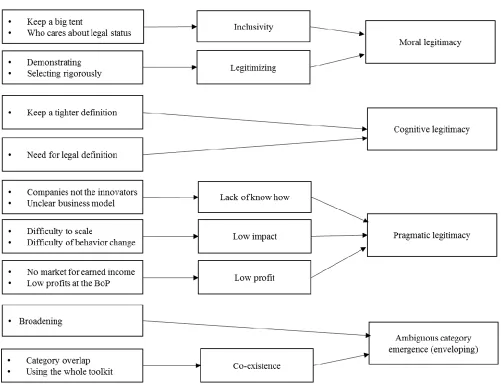
Figure 2.1: Illustrative examples of coding process followed to induce theoretical dimensions
... 39
Figure 2.2: Enabling conditions and processes in the emergence of a resonant, ambiguous organizational category ... 47
Figure 2.3: Audiences of the ambiguous category of social entrepreneurship... 68
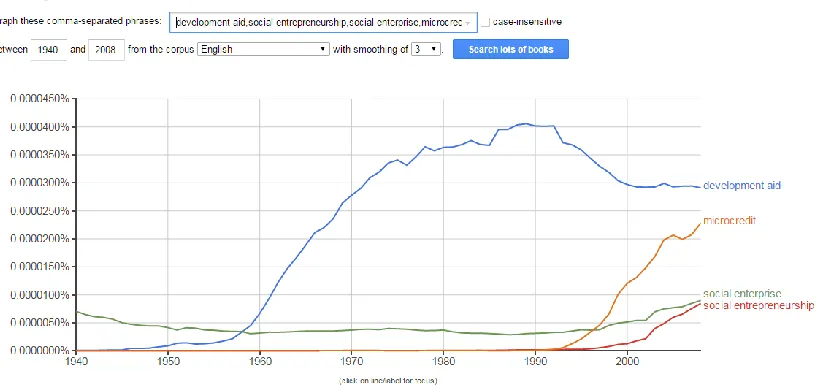
Figure 2.4: Longitudinal occurrence of terms “development aid”, “microcredit”, social enterprise” and “social entrepreneurship” in catalogued books, 1940-2008 ... 83
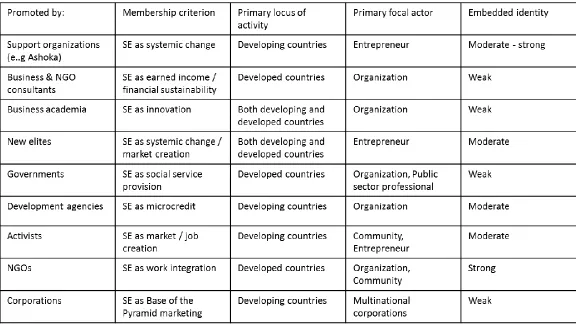
Figure 2.5: Frames competing to define the category of social entrepreneurship ... 84
Figure 3.1: A framework of benefits and costs of ambiguous classification ... 131
x | Page
LIST OF TABLES
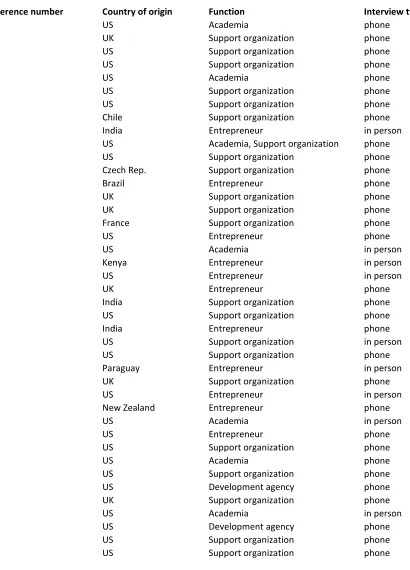
Table 2.1: Respondent and interview characteristics ... 36
Table 4.1: Effect of microcredit on different outcomes ... 180
Table 4.2: Summary of effect of country-level moderators on MC outcomes ... 181
Table 4.3: Studies examining education effects ... 202
Table 4.4: Studies examining women’s empowerment effects ... 203
Table 4.5: Studies examining financial well-being effects ... 204
Table 4.6: Studies examining health and nutrition effects ... 206
Table 4.7: Studies examining venture growth effects ... 207
Table 4.8: Studies examining venture profits effects ... 208
Table 4.9: Studies examining venture survival effects ... 208
Table 4.10: Operationalizations and Frequency of Dependent Variables ... 209
Table 4.11: Effect of country-level moderators on Financial Well-being ... 210
Table 4.12: Effect of country-level moderators on venture growth ... 211
Table 4.13: Effect of country-level moderators on women´s empowerment ... 212
Table 4.14: Effect of country-level moderators on education ... 213
1 | Page
General Introduction
Chapter 1:
1.1
Relevance of the topic
The idea of applying entrepreneurship tools and practices to effect social value
creation has gained increasing popularity in recent years. Proponents of so-called
“social entrepreneurship” in both academia and the business world predict that
such practices can indeed deliver social value (Austin, Stevenson, & Wei‐Skillern, 2006; Bruton, Ketchen, & Ireland, 2013; Mair & Marti, 2006) and help address
persistent social problems such as poverty, climate degradation, unemployment,
or lack of health and sanitation. As governments and international aid have not
2 | Page
Moyo, 2011), hopes have been raised regarding the potential of bottom-up,
entrepreneurial solutions to effect change (Easterly, 2007; Prahalad, 2009).
Entrepreneurship has been celebrated as a means of creating prosperity and
fostering growth (King & Levine, 1993; Schumpeter, 1934), particularly in Western
societies, and by analogy its application to social issues is expected to be
beneficial. Thus, given the substantial policy implications of suitable solutions to
persistent global problems and the lack of alternatives, especially in developing
countries, the imperative of scientifically assessing the merits and potential
limitations of social entrepreneurship is clear (Bruton et al., 2013; Dacin, Dacin, &
Tracey, 2011; Dacin, Dacin, & Matear, 2010).
Yet, while the rhetoric surrounding entrepreneurial solutions for social value
creation has been gathering momentum, scientific examination of the
phenomenon has not produced robust evidence to match it. Complicating
matters, definitional debates and the lack of public data on social
entrepreneurship have hindered the development of a solid foundation of
scholarly research on social entrepreneurship (Dacin et al., 2010; Rivera-Santos,
Holt, Littlewood & Kolk, 2014). Studies have tended to approach its examination
through illustrative case studies or theoretical work, but with some notable
exceptions rigorous quantitative or qualitative methods have not been applied to
the task. In development economics, on the other hand, empirical studies have
been common but with little theoretical explanation of the underlying dynamics at
play (Bruton et al., 2013). Thus, it is not clear if the emergence of the phenomenon
is driven by its actual effectiveness, or by the successful symbolic fabrication of a
resonant concept.
In order to better assess the common “wisdom” that entrepreneurial solutions are
justified as a means towards social value creation, I look at three aspects of the
3 | Page
emergence and development? Second, what theoretically shapes the societal
costs and benefits of the phenomenon? Third, is there evidence that its actual
development trajectory yields positive net societal benefits?
1.2 Theoretical perspectives leveraged
To assess the symbolic emergence and ascendance of the phenomenon of social
entrepreneurship, and to answer the first two questions, I draw on literature on
the sociology of organizations. An extensive body of work already exists that
examines the sociological drivers of institutions and organizations (DiMaggio &
Powell, 1991; Lounsbury & Beckman, 2014; Tolbert & Zucker, 1999). While this
literature has to a great extent endeavored to explain the permanence and
stability of organizational phenomena (DiMaggio & Powell, 1983; Meyer & Rowan,
1977), in recent decades scholars have also emphasized explanations of change in
organizational phenomena (Dacin, Goodstein, & Scott, 2002; DiMaggio, 1988). In
conjunction, such studies have greatly informed our current understanding of both
stability and change in fields and organizations, which cannot be attributed to
effectiveness alone, but is dependent on underlying sociological processes. While
this literature is extensive, there are still opportunities to expand it to new
phenomena such as social entrepreneurship (Dacin et al., 2010), and to new
theoretical perspectives, such as those examining organizational and market
categories (Kennedy, 2008; Pontikes, 2012; Wry, Lounsbury, & Jennings, 2013).
An emerging literature within organizational sociology is looking more specifically
at the emergence and the ascendance or demise of new organizational categories,
which frequently form the basis for emerging markets (ibid). Eschewing analyses
4 | Page
(Battilana, 2006; Battilana, Leca, & Boxenbaum, 2009), or on abstract logics as
drivers of change (Thornton & Ocasio, 1999), studies of organizational categories
can illuminate the complex political and cognitive processes of negotiation and
consensus between a variety of actors, which ultimately result in the
transformation of markets and fields or in the emergence of entirely new areas
(Khaire & Wadhwani, 2010; Lounsbury & Crumley, 2007; Lounsbury & Rao, 2004;
Powell & Sandholtz, 2011; Weber, Heinze, & DeSoucey, 2008; Wry et al., 2013). I
have thus chosen to study the symbolic attributes and trajectory of social
entrepreneurship from such a theoretical perspective, so as best to capture and
represent the interplay between multiple actors and broader societal conditions,
as well as their role on the emergence of a social entrepreneurship. In parallel, my
study of social entrepreneurship extends theory on organizational categories, as it
constitutes a compelling case for understanding the emergence of resonant yet
ambiguous organizational categories, as I will explain in more detail below.
For my examination of the substantive effectiveness of the phenomenon, and for
answering the third question I have posed, I have chosen to draw on perspectives
from development economics and entrepreneurship. Development economists
have been very active assessing certain aspects of the phenomenon of social
entrepreneurship, particularly those related to the area of microcredit (Hermes &
Lensink, 2011; Morduch, 1999). Their analyses are highly rigorous from an
empirical perspective, typically based on extensive quantitative data.
Nevertheless, the relevant literature frequently lacks a deep analysis of the
underlying drivers of certain observed outcomes, and is thus limited in its
theoretical contributions (Bruton et al., 2013). At the same time, entrepreneurship
scholars rarely focus on the actual effectiveness of microcredit or other types of
social entrepreneurship (for an exception see Bradley, McMullen, Artz, & Simiyu,
2012). I conjecture that this can partly be due to the nascent status of this
5 | Page imperative to present a strong theoretical basis when publishing research in the
respective journals.
To resolve this impasse, I have leveraged the theory of capabilities of Sen (1999),
which pertains to the field of development economics and has won its author the
Nobel Prize in Economics. I argue that this theory is particularly suited to the study
of phenomena such as social entrepreneurship, and entrepreneurship more
broadly, whose social outcomes and objectives can be equally important to their
financial ones. I complement this theoretical positioning with additional studies
from the area of entrepreneurship that explicitly acknowledge the multiple
outcomes of the entrepreneurial process (Ansari, Munir, & Gregg, 2012; Fauchart
& Gruber, 2011; Miller, Grimes, McMullen, & Vogus, 2012).
In section 1.4 I briefly explain how my essays address current limitations in the
afore-mentioned literatures and in section 1.5 I foreshadow the contributions to
the relevant bodies of academic work.
1.3 Alternative theoretical perspectives
While delineating the literatures that primarily form the backbone of this thesis, I
would also like to mention other available theoretical perspectives and their
relation to my work. Due to the format of this thesis, each essay draws mainly on
one to two perspectives, as outlined above. Yet, there are a number of adjacent
literatures that have in the past been used for examining the social
entrepreneurship phenomenon and that I touch upon throughout this thesis. Here
I wish to acknowledge and briefly discuss these as well.
As mentioned, institutional theory encompasses a broad range of sub-literatures,
6 | Page
literature and the positioning of my findings have thus taken into account
discussions regarding institutional entrepreneurship, social movements,
organizational forms, institutional logics and demands, hybrid organizations,
hybrid categories, and systems of professions. The institutional entrepreneurship
literature has mainly focused on efforts of individual actors, be they individuals or
organizations, to enable lasting change in institutions and other organizational
phenomena (David, Sine, & Haveman, 2012; Greenwood & Suddaby, 2006;
Maguire, Hardy, & Lawrence, 2004). Given that certain specific actors were indeed
more active than others in the establishment of social entrepreneurship, I refer to
some aspects of this literature in my essays. Social movement scholars offer
another explanation for change in organizations and institutions – that driven by
organized collectives (Benford & Snow, 2000; Rao, 1998; Rao, Monin, & Durand,
2003). While a case can be made that social entrepreneurship is a movement, it
appears to be a very loosely organized one, driven mainly by elite audiences. Thus,
the conceptualization of social entrepreneurship as an organizational category
more closely represents my findings; yet, insights from social movement theories,
such as those pertaining to ascendance or resonance of different frames (Benford
& Snow, 2000; Morrill, 2006) have permeated my discussions. Similarly, I have
referred to literature developed by population ecologists, who treat the
emergence of new categories as “forms” (Hannan, Pólos, & Carroll, 2007; Hsu,
2006). This literature has many points of overlap with the literature on
organizational categories, yet it focuses mainly on the effects of population
density and organizational positioning at a highly aggregate level, and less on the
political and cognitive drivers of new categories.
Institutional scholars have also paid particular attention to broader institutional
logics, their impact on organizations and the responses of these organizations to
competing institutional demands (Besharov & Smith, 2014; Greenwood, Raynard,
7 | Page influential articles have used an institutional logics perspective to talk about issues
related to social entrepreneurship, given that social enterprises naturally need to
cater to and accommodate multiple expectations related to their economic as well
as social objectives (Battilana & Dorado, 2010; Besharov & Smith, 2014; Kent &
Dacin, 2013; Pache & Santos, 2010; Tracey, Phillips, & Jarvis, 2011). The insights of
this literature that have been most relevant to my thesis relate to the persistence
of multiple logics at the field or organizational level (Besharov & Smith, 2014;
Greenwood et al., 2011; Kaplan, 2008). While in this thesis I adopt a different unit
of analysis, that of the organizational category, arguments from this literature are
especially useful to my theory building sections.
The dual nature of social entrepreneurship has furthermore been conceptualized
through theories of hybrid organizations and categories (Battilana & Dorado,
2010; Battilana, Sengul, Pache, & Model, 2014; Pache & Santos, 2012; Powell &
Sandholtz, 2011; Wry et al., 2013). Hybrid organizations borrow elements from
multiple logics in order to create novel structures. Similarly, hybrid categories are
formed through a process of bricolage, or mixing, of previously unrelated
elements into a novel category (ibid). Both phenomena are very relevant to the
symbolic creation of social entrepreneurship and insights from the respective
theoretical perspectives are dispersed throughout my thesis. Finally, earlier
sociological research has offered several findings regarding the emergence of new
professions and the jurisdictional disputes and competition between them
(Abbott, 1988, 2005). While, as I will show, social entrepreneurship has not
managed to become an institutionalized profession, this literature has valuable
conclusions to offer for analyzing the case of social entrepreneurship, and its
renewed discovery and application to the emerging organizational category
8 | Page
The theoretical perspectives examining the substantive effectiveness of social
entrepreneurship have been markedly more limited than those addressing its
symbolic effects. Within management and entrepreneurship literatures, a relevant
emerging stream is grouped under the rubric of Base of the Pyramid (BoP)
research (Kolk, Rivera-Santos, & Rufín, 2013). Following the highly popular
articulation of the “BoP proposition” (Prahalad, 2009; Prahalad & Hammond,
2002), calling multinational organizations to target the extremely poor and
ostensibly realize concurrent impact and profits, increased interest has been
generated around BoP ventures in the field of practice and research. However, as
a field of research, relevant literature is nascent and theoretically fragmented
(Kolk et al., 2013). Thus, researchers typically need to borrow from other
perspectives in order to confer their research greater theoretical depth, according
to the specific angle or interpretation of each study. For example, excellent
accounts of BoP phenomena have been developed by Kistruck and colleagues
using an identity spillover perspective (Kistruck, Sutter, Lount, & Smith, 2012) and
a social intermediation perspective (Kistruck, Beamish, Qureshi, & Sutter, 2013),
and by Rivera-Santos & Rufin (2010) using a networks theory perspective. Finally,
other scholars have leveraged psychology- or opportunity-based theories to
examine social entrepreneurship (Bradley et al., 2012; Frese, 2000). While highly
informative, these theories are less suitable to address the more macro level
questions examined in this thesis. In my essays, I nevertheless acknowledge some
9 | Page
1.4 Structure of the thesis
This thesis is a monograph, following a three-article format. The two first essays
have not yet been published, while the third is forthcoming in the Journal of
Business Venturing (May 2015). Each of the three essays addresses one of the
interconnected broader questions that drive my research: First, which factors
have enabled the phenomenon´s emergence and development? Second, what
theoretically shapes the societal costs and benefits of the phenomenon? Third, is
there evidence that its actual development trajectory yields positive net societal
benefits?
The first two essays adopt a perspective that addresses primarily the symbolic and
sociological antecedents and outcomes of the phenomenon. While the first
focuses mainly on the antecedents of social entrepreneurship and draws on
empirical data, the second adopts a theory development approach to offer more
generalized propositions regarding the outcomes of social entrepreneurship and
similar organizational categories. Finally, the third essay assesses the substantive
effects of one variant of social entrepreneurship, based on analysis of empirical
data. References and additional tables and figures supporting each essay can be
found at the end of the respective chapter. Together, my essays aspire to provide
a holistic view of the phenomenon at hand by addressing both its symbolic and
substantive aspects. In the discussion section, findings and contributions are
integrated to offer concrete suggestions and conclusions for academics,
practitioners and policymakers. In the following paragraphs I explain in brief the
10 | Page
1.4.1
Essay I
In the first essay I focus on the antecedents and process of the emergence and
evolution of the phenomenon of social entrepreneurship. I approach this topic
from an organizational theory perspective, drawing on literature on organizational
categories for guidance. While social entrepreneurship has not managed to
consolidate into an institutionalized field or profession, it has enjoyed increasing
resonance as an organizational category, whose boundaries have nevertheless
remained ambiguous. Organizational sociologists have been increasingly
emphasizing the role of emerging categories as shifting “truces” at the societal
level (Khaire & Wadhwani, 2010; Vergne & Wry, 2014), acknowledging their
initially contested and ambiguous boundaries (Kennedy, 2008; Pontikes, 2012;
Rao, 1998). Yet, ambiguity is treated as a temporary condition that recedes once
contestation is resolved in favor of one emerging category with clear boundaries
and a dominant definition (Grodal, Gotsopoulos, & Suarez, forthcoming; Suarez,
Grodal, & Gotsopoulos, 2015). My study of social entrepreneurship challenges the
expectations of extant literature, according to which emerging categories
converge towards a dominant category frame over time. Following common
practice in the study of institutional change (Granqvist, Grodal, & Woolley, 2013;
Greenwood & Suddaby, 2006; Maguire et al., 2004), I use a qualitative
methodology based on extensive interview and archival data, synthesized through
rigorous coding and grounded theory principles. Findings provide a novel
theoretical lens and empirical evidence with which to better understand the
drivers behind the ascendance of social entrepreneurship. They furthermore
inform theory on the conditions and processes that enable organizational
categories to become resonant while remaining ambiguous. My proposed
framework highlights how fragmentation and new opportunities across fields give
11 | Page pragmatic legitimacy. In the absence of one frame that is superior across these
dimensions, and in the presence of multiple key audiences with substantial power
and resources, an ambiguous category can emerge that envelops divergent
frames, and yet becomes resonant.
1.4.2
Essay II
In the second essay I deepen my inquiry into the factors that shape the societal
costs and benefits of the phenomenon of social entrepreneurship. I argue that for
social entrepreneurship to persist as an ambiguous yet resonant category, there
need to be benefits for the organizational category and the organizations that
affiliate themselves with it, which outweigh the respective costs. I therefore
endeavor to conceptually develop both the antecedents and the outcomes of
resonant, yet ambiguous organizational categories. I draw on the example of social
entrepreneurship and other organizational categories that exhibit similar
properties, in order to elaborate my arguments. Until not long ago ambiguous
classification evoked a clearly negative connotation (Zuckerman, 1999), as the
failure to belong to a category with concrete boundaries and membership criteria
was deemed detrimental for the prosperity of members associated with it (Grodal
et al., forthcoming; McKendrick & Carroll, 2001; Ozcan & Santos, forthcoming;
Zuckerman, 1999). Furthermore, even as ambiguous classification is gradually
being recognized by organizational scholars as a necessary step towards novelty
(Durand & Paolella, 2013; Kennedy, 2008), its role is assumed to subdue over time
as it gives way to dominant categories with clear boundaries (Grodal et al.,
forthcoming; Suarez et al., 2015). Moving beyond conceptualizations that focus
exclusively on the transient role of ambiguous classification in category emergence
12 | Page
that accounts for both benefits and costs of ambiguous classification at the
organizational as well as category level of analysis. My synthesis and extension of
theory provides a plausible explanation for the emergence and implications of
social entrepreneurship, while elucidating the dynamics behind the ascendance of
resonant yet ambiguous categories more broadly.
1.4.3
Essay III
In the third essay included in my thesis I test one major instance of the
phenomenon of social entrepreneurship to explore whether and how net benefits
exist. I thus focus on the effectiveness of the most popular and widely diffused
variant of social entrepreneurship, microcredit. The microcredit model, which
advocates extending microloans to the poor at reasonable interest rates, has
achieved considerable success at face value and challenged conceptions regarding
the credit-worthiness of poor clients, boasting exemplary loan repayment rates
(Yunus & Jolis, 2003). Yet, it exemplifies the contested nature of social
entrepreneurship, since a growing body of literature has provided conflicting
predictions and findings regarding its effectiveness (Hermes & Lensink, 2011;
Khavul, Chavez, & Bruton, 2013; Morduch, 1999). I draw on the capability
approach of Nobel Laureate Amartya Sen (1999) to delineate the ways in which
microcredit could be expected to act as a means that reinforces the capability of
poor people to live lives that they value. Sen’s theory of capabilities (ibid), as well
as recent work in entrepreneurship scholarship (Ansari et al., 2012; Fauchart &
Gruber, 2011; Miller et al., 2012), highlight the need to examine human
development outcomes of entrepreneurship in tandem with financial outcomes.
Sen´s arguments also hint at the importance of contextual moderators that could
13 | Page a quantitative meta-analysis methodology that is relevant in the case of extensive
extant empirical literature that remains inconclusive (Brinckmann, Grichnik, &
Kapsa, 2010; Hedges & Olkin, 2014). In summary, my findings suggest that the
effect of microcredit appears to be positive yet moderate, and varying depending
on the outcome and context examined. I conclude that entrepreneurial solutions
for social value creation rightfully exist and can be beneficial, especially under
extremely adverse contexts where other alternatives are lacking, while cautioning
that excessive enthusiasm might be unfounded.
1.5 Contributions
Taken together, my dissertation essays aim to advance scientific understanding of
the phenomenon of social entrepreneurship, while also extending conclusions to
inform theories of entrepreneurial and organizational phenomena that exhibit
similar dynamics. With this thesis I thus offer several contributions to extant
literature.
First, I advance institutional perspectives on the emergence and evolution of
categories that take into account the persistence of resonance in the face of
definitional ambiguity. I show how organizational categories, such as social
entrepreneurship, can exhibit persisting resonance while their boundaries remain
ambiguous. I distill conditions and processes that enable such categories to
emerge, supplementing theories of categorical emergence and deepening the
scholarly understanding of the symbolic properties of social entrepreneurship.
Second, I conceptualize the benefits and costs that resonant ambiguous
organizational categories can confer at multiple levels of analysis, in order to
14 | Page
categorization that transcends focus on either its negative or its positive
consequences, synthesizes the two and draws attention to their interrelated
nature. Accordingly, I advance literature on ambiguous classification (Pontikes,
2012; Wry et al., 2013; Zuckerman, 1999), while also depicting the specific
conditions that drive the persistence of the category of social entrepreneurship.
Third, I provide evidence regarding the extent that confidence can be placed on
the ability of entrepreneurial solutions to contribute meaningfully to the
improvement of human welfare. By focusing on the specific context of microcredit
I am able to illuminate the effectiveness of this one variant of social
entrepreneurship. Concomitantly, I inform economic and entrepreneurship
research, by showing how development interventions can have variable effects on
financial and human development outcomes depending on varying levels of
“instrumental freedoms” (Sen, 1999) in the local context.
The three thesis essays in the following chapters thus constitute the body of this
PhD thesis. Each of them provides detailed information on the research gap and
question addressed, the methods used, and the findings and conclusions
generated. A final section of synthesized discussion and conclusions ensues after
the three essays. The outcomes of my thesis have been interpreted with an eye
towards guiding scholars, policy makers and entrepreneurs that work directly on
the phenomenon of social entrepreneurship, as well as on other inter-disciplinary
emerging phenomena where similar dynamics might be present.
15 | Page References chapter 1
1. Abbott, A. (1988). The system of professions: An essay on the division of expert labor: University of Chicago Press.
2. Abbott, A. (2005). Linked Ecologies: States and Universities as Environments for Professions. Sociological Theory, 23(3), 245-274. 3. Ansari, S., Munir, K., & Gregg, T. (2012). Impact at the ‘bottom of
the pyramid’: the role of social capital in capability development and community empowerment. Journal of Management Studies, 49(4), 813-842.
4. Austin, J., Stevenson, H., & Wei‐Skillern, J. (2006). Social and commercial entrepreneurship: same, different, or both? Entrepreneurship theory and practice, 30(1), 1-22.
5. Battilana, J. (2006). Agency and institutions: The enabling role of individuals' social position. Organization, 13(5), 653-676.
6. Battilana, J., & Dorado, S. (2010). Building sustainable hybrid organizations: The case of commercial microfinance organizations. Academy of Management Journal, 53(6), 1419-1440.
7. Battilana, J., Leca, B., & Boxenbaum, E. (2009). 2 How Actors Change Institutions: Towards a Theory of Institutional
Entrepreneurship. The Academy of Management Annals, 3(1), 65-107.
8. Battilana, J., Sengul, M., Pache, A.-C., & Model, J. (2014). Harnessing productive tensions in hybrid organizations: The case of work integration social enterprises. Academy of Management Journal, amj. 2013.0903.
9. Benford, R. D., & Snow, D. A. (2000). Framing processes and social movements: An overview and assessment. Annual review of sociology, 611-639.
10.Besharov, M. L., & Smith, W. K. (2014). Multiple institutional logics in organizations: Explaining their varied nature and implications. Academy of Management Review, 39(3), 364-381.
11.Bradley, S. W., McMullen, J. S., Artz, K., & Simiyu, E. M. (2012). Capital is not enough: Innovation in developing economies. Journal of Management Studies, 49(4), 684-717.
12.Brinckmann, J., Grichnik, D., & Kapsa, D. (2010). Should
16 | Page
13.Bruton, G. D., Ketchen, D. J., & Ireland, R. D. (2013).
Entrepreneurship as a solution to poverty. Journal of Business Venturing, 28(6), 683-689.
14.Dacin, M. T., Dacin, P. A., & Tracey, P. (2011). Social
entrepreneurship: A critique and future directions. Organization Science, 22(5), 1203-1213.
15.Dacin, M. T., Goodstein, J., & Scott, W. R. (2002). Institutional theory and institutional change: Introduction to the special research forum. Academy of management journal, 45(1), 45-56. 16.Dacin, P. A., Dacin, M. T., & Matear, M. (2010). Social
Entrepreneurship: Why We Don't Need a New Theory and How We Move Forward From Here. Academy of Management Perspectives, 24(3), 37-57.
17.David, R. J., Sine, W. D., & Haveman, H. A. (2012). Seizing
Opportunity in Emerging Fields: How Institutional Entrepreneurs Legitimated the Professional Form of Management Consulting. Organization Science, forthcoming, 1-22. doi:
http://dx.doi.org/10.1287/orsc.1120.0745
18.DiMaggio. (1988). Interest and agency in institutional theory. Institutional patterns and organizations, 3-21.
19.DiMaggio, & Powell, W. W. (1983). The Iron Cage Revisited: Institutional Isomorphism and Collective Rationality in
Organizational Fields. American Sociological Review, 48(2), 147-160. 20.DiMaggio, P. J., & Powell, W. W. (1991). The new institutionalism in
organizational analysis (Vol. 17): University of Chicago Press Chicago, IL.
21.Doucouliagos, H., & Paldam, M. (2008). Aid effectiveness on
growth: A meta study. European journal of political economy, 24(1), 1-24.
22.Durand, R., & Paolella, L. (2013). Category stretching: Reorienting research on categories in strategy, entrepreneurship, and
organization theory. Journal of Management Studies, 50(6), 1100-1123.
23.Easterly, W. (2007). The White Man's Burden: Why the West's Efforts to Aid the Rest Have Done So Much Ill and So Little Good: Penguin Books.
24.Fauchart, E., & Gruber, M. (2011). Darwinians, communitarians, and missionaries: the role of founder identity in entrepreneurship. Academy of management journal, 54(5), 935-957.
17 | Page 26.Granqvist, N., Grodal, S., & Woolley, J. L. (2013). Hedging your bets:
Explaining executives' market labeling strategies in nanotechnology. Organization Science, 24(2), 395-413.
27.Greenwood, R., Raynard, M., Kodeih, F., Micelotta, E. R., & Lounsbury, M. (2011). Institutional complexity and organizational responses. The Academy of Management Annals, 5(1), 317-371. 28.Greenwood, R., & Suddaby, R. (2006). Institutional
entrepreneurship in mature fields: The Big Five accounting firms. Academy of Management Journal, 49(1), 27-48. doi:
10.5465/amj.2006.20785498
29.Grodal, S., Gotsopoulos, A., & Suarez, F. (forthcoming). The Co-evolution of Technologies and Categories during Industry
Emergence. Academy of Management Review, amr. 2013.0359. 30.Hannan, M. T., Pólos, L., & Carroll, G. R. (2007). Logics of
organization theory: Audiences, codes, and ecologies: Princeton University Press.
31.Hedges, L. V., & Olkin, I. (2014). Statistical method for meta-analysis: Academic press.
32.Hermes, N., & Lensink, R. (2011). Microfinance: Its impact,
outreach, and sustainability. World Development, 39(6), 875-881. 33.Hsu, G. (2006). Jacks of all trades and masters of none: Audiences'
reactions to spanning genres in feature film production. Administrative Science Quarterly, 51(3), 420-450.
34.Kaplan, S. (2008). Framing contests: Strategy making under uncertainty. Organization Science, 19(5), 729-752.
35.Kennedy, M. T. (2008). Getting counted: Markets, media, and reality. American Sociological Review, 73(2), 270-295.
36.Kent, D., & Dacin, M. T. (2013). Bankers at the gate: Microfinance and the high cost of borrowed logics. Journal of Business Venturing, 28(6), 759-773.
37.Khaire, M., & Wadhwani, R. D. (2010). Changing landscapes: The construction of meaning and value in a new market category— Modern Indian art. Academy of Management Journal, 53(6), 1281-1304.
38.Khavul, S., Chavez, H., & Bruton, G. D. (2013). When institutional change outruns the change agent: The contested terrain of entrepreneurial microfinance for those in poverty. Journal of Business Venturing, 28(1), 30-50.
18 | Page
40.Kistruck, G., Sutter, C., Lount, R., & Smith, B. (2012). Mitigating principal-agent problems in base-of-the-pyramid markets: an identity spillover perspective. Academy of Management Journal, amj. 2011.0336.
41.Kistruck, G. M., Beamish, P. W., Qureshi, I., & Sutter, C. J. (2013). Social Intermediation in Base‐of‐the‐Pyramid Markets. Journal of Management Studies, 50(1), 31-66.
42.Kolk, A., Rivera-Santos, M., & Rufín, C. (2013). Reviewing a decade of research on the" base/bottom of the pyramid"(BOP) concept. Business & Society, 0007650312474928.
43.Lounsbury, M., & Beckman, C. M. (2014). Celebrating Organization Theory. Journal of Management Studies.
44.Lounsbury, M., & Crumley, E. T. (2007). New practice creation: An institutional perspective on innovation. Organization studies, 28(7), 993-1012.
45.Lounsbury, M., & Rao, H. (2004). Sources of durability and change in market classifications: A study of the reconstitution of product categories in the American mutual fund industry, 1944–1985. Social Forces, 82(3), 969-999.
46.Maguire, S., Hardy, C., & Lawrence, T. B. (2004). Institutional entrepreneurship in emerging fields: HIV/AIDS treatment advocacy in Canada. Academy of Management Journal, 47(5), 657-679. doi: 10.2307/20159610
47.Mair, J., & Marti, I. (2006). Social entrepreneurship research: A source of explanation, prediction, and delight. Journal of world business, 41(1), 36-44.
48.McKendrick, D. G., & Carroll, G. R. (2001). On the genesis of organizational forms: Evidence from the market for disk arrays. Organization Science, 12(6), 661-682.
49.Meyer, J. W., & Rowan, B. (1977). Institutionalized organizations: Formal structure as myth and ceremony. American Journal of Sociology, 340-363.
50.Miller, T. L., Grimes, M. G., McMullen, J. S., & Vogus, T. J. (2012). Venturing for others with heart and head: How compassion encourages social entrepreneurship. Academy of Management Review, 37(4), 616-640.
51.Morduch, J. (1999). The microfinance promise. Journal of economic literature, 1569-1614.
19 | Page American law, 1965–1995. Unpublished manuscript. University of
California, Irvine.
53.Moyo, D. (2011). Dead Aid: Why Aid is Not Working and how There is Another Way for Africa: Penguin Books Limited.
54.Ozcan, P., & Santos, F. M. (forthcoming). The market that never was: Turf wars and failed alliances in mobile payments. Strategic Management Journal.
55.Pache, A.-C., & Santos, F. (2012). Inside the hybrid organization: Selective coupling as a response to conflicting institutional logics. Academy of Management Journal, amj. 2011.0405.
56.Pache, A. C., & Santos, F. (2010). When worlds collide: The internal dynamics of organizational responses to conflicting institutional demands. The Academy of Management Review (AMR), 35(3), 455-476.
57.Pontikes, E. G. (2012). Two Sides of the Same Coin How Ambiguous Classification Affects Multiple Audiences’ Evaluations.
Administrative Science Quarterly, 57(1), 81-118.
58.Powell, W. W., & Sandholtz, K. (2011). Amphibious Entrepreneurs and the Emergence of New Organizational Forms.
59.Prahalad, C. K. (2009). The fortune at the bottom of the pyramid, revised and updated 5th anniversary edition: Eradicating poverty through profits: FT Press.
60.Prahalad, C. K., & Hammond, A. (2002). Serving the world's poor, profitably. Harvard business review, 80(9), 48-59.
61.Rao. (1998). Caveat Emptor: The Construction of Nonprofit
Consumer Watchdog Organizations. American Journal of Sociology, 103(4), 912-961.
62.Rao, Monin, P., & Durand, R. (2003). Institutional Change in Toque Ville: Nouvelle Cuisine as an Identity Movement in French
Gastronomy. American Journal of Sociology, 108(4), 795-843. 63.Rivera-Santos, M., Holt, D., Littlewood, D., & Kolk, A. (2014). Social
entrepreneurship in sub-Saharan Africa. The Academy of Management Perspectives, amp-2013.
64.Rivera-Santos, M., & Rufín, C. (2010). Global village vs. small town: Understanding networks at the Base of the Pyramid. International Business Review, 19(2), 126-139.
65.Schumpeter, J. A. (1934). The theory of economic development: An inquiry into profits, capital, credit, interest, and the business cycle (Vol. 55): Transaction publishers.
20 | Page
67.Suarez, F. F., Grodal, S., & Gotsopoulos, A. (2015). Perfect timing? Dominant category, dominant design, and the window of
opportunity for firm entry. Strategic Management Journal. 68.Thornton, P. H., & Ocasio, W. (1999). Institutional logics and the
historical contingency of power in organizations: Executive
succession in the higher education publishing industry, 1958-1990 1. American journal of Sociology, 105(3), 801-843.
69.Tolbert, P. S., & Zucker, L. G. (1999). The institutionalization of institutional theory. Studying Organization. Theory & Method. London, Thousand Oaks, New Delhi, 169-184.
70.Tracey, P., Phillips, N., & Jarvis, O. (2011). Bridging Institutional Entrepreneurship and the Creation of New Organizational Forms: A Multilevel Model. Organization Science, 22(1), 60-80.
71.Vergne, J. P., & Wry, T. (2014). Categorizing categorization research: Review, integration, and future directions. Journal of Management Studies, 51(1), 56-94.
72.Weber, K., Heinze, K. L., & DeSoucey, M. (2008). Forage for thought: Mobilizing codes in the movement for grass-fed meat and dairy products. Administrative Science Quarterly, 53(3), 529-567. 73.Wry, T., Lounsbury, M., & Jennings, P. D. (2013). Hybrid vigor:
Securing venture capital by spanning categories in nanotechnology. Academy of Management Journal, amj. 2011.0588.
74.Yunus, M., & Jolis, A. (2003). Banker to the poor: micro-lending and the battle against world poverty: PublicAffairs.
21 | Page
Resonant ambiguity: The emergence of an
Chapter 2:
organizational category at the
interstices of business, development
and non-profits
1
1This essay has been accepted for presentation at the 2015 EGOS and the 2015 Academy of
22 | Page
2.1 Abstract
Organizational sociologists are reaching consensus that the path towards societal
change often passes through the emergence of new organizational categories with
initially ambiguous and contested boundaries. Nevertheless, ambiguity is treated
as a temporary condition that recedes once contestation is resolved in favor of
one emerging category with clear boundaries and a dominant definition. Our study
of the emergence of the category of “social entrepreneurship” challenges the
assumption that one category frame will become dominant over time. Instead, it
offers insights into the conditions and processes that enable organizational
categories to become resonant even while remaining ambiguous, namely
accommodating multiple category frames that embody the expectations of
multiple audiences. Our proposed model highlights how fragmentation and new
opportunities across fields give rise to multiple category frames that enjoy varying
degrees of moral, cognitive and pragmatic legitimacy. In the absence of one frame
that is superior across these dimensions, and in the presence of multiple key
audiences with substantial power and resources, an ambiguous category can
emerge that envelops divergent frames, and yet becomes resonant. In
juxtaposition to views of ambiguous categories as temporary and vulnerable, our
model explains the emergence and persisting resonance of such categories in
23 | Page
“The notion of ambiguity must not be confused with that of absurdity. To declare
that existence is absurd is to deny that it can ever be given a meaning; to say that
it is ambiguous is to assert that its meaning is never fixed, that it must be
constantly won.”
Simone de Beauvoir, 1948, The ethics of ambiguity, p. 129
2.2 Introduction
Change in organizational fields frequently manifests itself at the level of
organizational categories, whose boundaries shift to reflect changing dynamics
and the resulting consensus among category audiences (Khaire & Wadhwani,
2010; Pontikes, 2012). Newly formed categories embody the result of shifts in
belief structures, political negotiations, innovations that emerge from everyday
practice and understandings around the appropriate cognitive features of
organizational categories (Kennedy, 2008; Navis & Glynn, 2010; Rao, Monin, &
Durand, 2005; Rosa, Porac, Runser-Spanjol, & Saxon, 1999; Smets, Morris, &
Greenwood, 2012). Being affiliated with a novel category emerging at the
interstices of previously established ones might nevertheless be detrimental to the
success of organizations (Zuckerman, 1999, 2004), as audiences of the category
are likely to perceive them as illegitimate or diluted, and thus penalize them. Yet,
certain organizations pursue affiliations with emerging categories that are initially
ambiguous (Purdy & Gray, 2009; Rao et al., 2005; Rosa et al., 1999), in order to
reap the advantages that come with being part of a novel organizational category
and actively shaping its boundaries (Pontikes, 2012; Santos & Eisenhardt, 2009).
Thus, organization scholars are increasingly recognizing categorical ambiguity as a
24 | Page
organizational categories (Durand & Paolella, 2013; Pontikes, 2012; Wry &
Lounsbury, 2013; Wry, Lounsbury, & Jennings, 2013).
These studies typically assume that categories will gradually progress towards a
consensus. Different category frames are likely to compete with each other, with
one emerging as victorious (Grodal, Gotsopoulos, & Suarez, forthcoming; Kent &
Dacin, 2013; Rao, 1998; Suarez, Grodal, & Gotsopoulos, 2015). Such a convergence
towards a dominant category, which can be influenced by the relative political
powers of important audiences, as well as their cognitive biases, enables the new
category to set the foundations for the emergence and growth of an established
field or market. If the novel category fails to transition through this stage, and
achieve political as well as cognitive consensus, it is expected to succumb to the
costs of novelty and ultimately dissolve as interest of the respective audiences
wanes (Grodal et al., forthcoming; McKendrick & Carroll, 2001; Ozcan & Santos,
forthcoming). Yet, these accounts overlook how under certain conditions
organizational categories can fail to embody a consensus and remain ambiguous,
while at the same time manage to sustain resonance to multiple audiences, grow
and diffuse. In such cases, it would seem that the benefits derived from ambiguity
outweigh its costs, so that category audiences will opt for cooperation, when
competition for dominance becomes an unfeasible strategy. Thus, while the role
of ambiguity in category emergence has been brought to the fore recently, we lack
an understanding of the conditions and processes through which categories can
become resonant while remaining ambiguous, instead of succumbing to the
dominance of one of the competing frames (Kent & Dacin, 2013; Lounsbury,
Ventresca, & Hirsch, 2003; Rao, 1998). Our research study thus aims to extend
theories of organizational categorization by answering the following question:
How and why do organizational categories become resonant while remaining
25 | Page To shed light on the phenomenon of resonant ambiguous categories, we draw on
the case of the emergence of the novel category of “social entrepreneurship”,
which we argue is both ambiguous and thriving over time. Ambiguity has not been
a quick, transient phase in the evolution of this organizational category. While
highly ambiguous categories might be vulnerable to legitimacy threats and
inherent tensions in the longer term (Wry, Lounsbury, & Glynn, 2011), as we will
show, the ambiguity of the category of social entrepreneurship has persisted and
increased over time, casting it as a theoretically relevant setting for studying the
how and why questions behind the emergence of resonant yet ambiguous
categories. Our study employs a qualitative research design to address this
question. Since processes of sociological change often entail both political
contestation and negotiations of cognitive elements by actors and audiences
intent in shaping the emerging consensus around new organizational categories,
an in-depth qualitative research design was deemed most appropriate for yielding
rich data. Our design aims to capture the linkages between field-level conditions,
institutional actors and broader category audiences to develop a comprehensive
and balanced account of the emergence of resonant ambiguous categories.
Primary and archival data was synthesized through a grounded theory
methodology (Gioia, Corley, & Hamilton, 2013; Strauss & Corbin, 1990) to help
build and elaborate theory on category emergence that incorporates an
explanation of resonant ambiguity.
Findings show that the emergence of multiple category frames that are widely
fragmented and driven by diverse emerging opportunities is an initial step in the
creation of a resonant ambiguous category. When the divergent frames and their
boundaries enjoy varying degrees of political, cognitive and pragmatic legitimacy,
then competition among them might not render one of them as clearly superior.
Thus, competition might subdue when resonance of individual frames, and
26 | Page
no single category frame musters enough support to become dominant.
Audiences might decide to cooperate and accept an inclusive, overarching
category that envelops divergent frames, while overlooking the costs of persistent
ambiguity. Moreover, such an ambiguous organizational category can become
resonant to further audiences and diffuse broadly, contradicting current
expectations.
The main contribution of this study is the theoretical explanation of the conditions
and processes that enable the emergence of categories that are resonant yet
ambiguous. While scholars have been debating the merits and costs of ambiguity
as an end outcome (Durand & Paolella, 2013; Pontikes, 2012; Wry et al., 2013;
Zuckerman, 1999), we consider the understudied conditions that enable such
ambiguity to grow and persist over time. Understanding the origins of resonant
ambiguity can better illuminate the existence and reemergence of underlying
tensions that can prove to be either fruitful, or dangerous, or both, to the
category’s ascendance. We extend theories of categorical emergence (Grodal et
al., forthcoming; Jones, Maoret, Massa, & Svejenova, 2012; Kennedy, 2008;
Pontikes, 2012; Wry et al., 2013) by showing the processes through which societal
conditions external to the category, as well as cognitive properties internal to
different frames of the emerging category can interact and ultimately lead to the
emergence of an overarching ambiguous category that aligns itself with broad
audience expectations. We thus advance theory that responds to calls to study
emergence and change as “important dependent variables in their own right” and
to further explicate the role of ambiguous novel categories in these processes
27 | Page
2.3 Theoretical Foundations
2.3.1
Organizational category emergence
Organizational categories have been an implicit theme in organizational studies,
often straddling different sub-streams of research (Vergne & Wry, 2014), before
they have been themselves acknowledged and categorized as an explicit new
stream of literature in recent years (Durand & Paolella, 2013; Glynn & Navis,
2013). More broadly, categories refer to “socially constructed partitions or
taxonomies that divide the social space into groupings of objects that are
perceived to be similar” (Bowker & Star, 2000; Grodal et al., forthcoming; Suarez
et al., 2015, p. 438). Consequently, the prevailing perspective on organizational
categories assumes they are socially constructed when “a mutual understanding of
the material and symbolic resources that serve as a basis to assess membership in
the category” emerges between its members and various audiences (Vergne &
Wry, 2014, p. 68). Audiences are not necessarily homogeneous and consist of two
broad types: producers on the one hand, and consumers or evaluators on the
other (Pontikes, 2012). Producers are typically expected to actively engage in the
theorization of the category, which includes the delineation of membership
criteria and boundaries (Jones et al., 2012; Rao, 1998; Rao, Monin, & Durand,
2003; Santos & Eisenhardt, 2009). Consumers and evaluators are assumed to be
somewhat more passive in their contributions to category definition, yet they are
a critical component in reaching the mutual understanding mentioned (Grodal et
al., forthcoming; Khaire & Wadhwani, 2010). A favorable reception of the
theorized category by audiences can enable it to thrive, so audiences can
indirectly exert pressures to the producers or proponents of categories regarding
28 | Page
et al., 2012). Finally, members are drawn to an organizational category if it offers
them an identity that they value, or for opportunistic reasons, as long as the
benefits of affiliation outweigh the respective costs (Glynn & Navis, 2013;
Granqvist, Grodal, & Woolley, 2013; Rao et al., 2003; Weber, Heinze, & DeSoucey,
2008). Thus, the eventual consensus around a new category´s boundaries emerges
between the producers, consumers and members of an organizational category
through a process of negotiation and co-creation (Glynn & Navis, 2013; Rosa et al.,
1999).
New organizational categories usually draw on innovations that have originated in
the field of practice but also rely heavily on the social construction of these initial
marginal practices into a distinct conceptualization (Jones et al., 2012; Lounsbury
& Crumley, 2007). The changes that enable such emergence can be evident at
multiple levels (Tracey, Phillips, & Jarvis, 2011; Zilber, 2006). At a broader level,
the emergence of organizational categories depends on their alignment to broader
ascending societal beliefs that confer them legitimacy (Thornton & Ocasio, 1999;
Zilber, 2006). Changes in organizational categories most times also necessitate the
active role of institutional or organizational actors who act as facilitators of change
(Clemens & Cook, 1999). Proponents of new categories typically engage in
theorization and framing, enable collective organization, and establish affiliations
with allies in order to make a convincing case for the new proposed consensus
(David, Sine, & Haveman, 2012; Rao et al., 2003). They might also need to foster
the creation of a collective identity related to the organizational category, while
developing regular exchanges and routines that can embed the category into the
institutional structure (Maguire, Hardy, & Lawrence, 2004; Weber et al., 2008; Wry
et al., 2011). Other influential actors can also actively shape its creation, for
instance through their endorsement and the resources they procure (Purdy &
Gray, 2009; Rao, 1998; Weber et al., 2008). Finally, at the micro level, individuals
29 | Page they choose to resist, adopt, selectively adopt or translate the organizational
category’s frame (Ansari, Fiss, & Zajac, 2010; Granqvist et al., 2013).
Organizational categories that manage to bridge expectations at the levels of
society, institutional actors and individuals are thus better poised to ascend and
thrive.
2.3.2
Categorical straddling, hybridity and ambiguity
Ideally, an organizational category minimizes differences within the category while
maximizing differences across the focal and adjacent categories (Mervis & Rosch,
1981). Yet in practice boundaries of organizational categories can exhibit different
degrees of fuzziness and membership can be partial, ranging across a gradient
(Mervis & Rosch, 1981). Research has revealed some of the costs and benefits of
straddling different categories instead of being affiliated with a single one. For
instance Zuckerman (1999) has convincingly showed the penalties that
organizations can face when they straddle more than one category that the key
audience of financial analysts covers. This phenomenon has been termed the
“categorical imperative”, referring to the need for organizations to fit neatly and
coherently into a single category. More recent approaches have nevertheless
challenged the universal application of the categorical imperative and ultimately
added nuance to the understanding of this phenomenon. The categorical
imperative can be more pronounced in markets that are relatively inert, and is of
greater value to audiences of consumers and evaluators (Durand & Paolella, 2013;
Pontikes, 2012). Fitting neatly into a category is therefore a property of a stable
status quo.
In contrast, under conditions of change, where the consensus around an emerging
30 | Page
less relevant (Pontikes, 2012). Audiences of producers might deviate from
established categories in their effort to define and control an emerging
organizational category (Santos & Eisenhardt, 2009). Producers are more likely to
engage in such efforts, defying the short term costs of the categorical imperative,
when they enjoy particularly high or low status in their previous categories, which
reduces their pressure to conform (Kennedy & Fiss, 2013; Phillips & Zuckerman,
2001; Rao et al., 2005; Sgourev, 2013). Moreover, the emergence of new
organizational categories can take place at the interstice of institutional fields,
defined as “a mesolevel location that forms from overlapping resource networks
across multiple organizational fields in which the authority of the dominant
resource network does not prevail” (Morrill, 2006, p. 6). Interstitial spaces open up
opportunities for hybrid categories that “mix elements of multiple categories” to
emerge (Wry et al., 2013, p. 1311). Examples of emerging organizational
categories at the interstices of fields are biotechnology, nanotechnology, mobile
communications or alternative dispute resolution (Granqvist et al., 2013; Ozcan &
Eisenhardt, 2009; Powell & Sandholtz, 2011; Purdy & Gray, 2009; Wry et al., 2013).
Thus, activity at the interstices of fields can constitute fertile ground for the
emergence of new organizational categories later on.
2.3.3
Category dominance versus resonant ambiguity
Hybrid categories can suffer the liabilities of the categorical imperative, due to an
initial lack of legitimacy and focus, yet recent research acknowledges that this
imperative tends to wane as the category becomes more established (Durand &
Paolella, 2013; Rao et al., 2005). During the initial emergence of such hybrid
categories, different audiences are likely to compete to promote their own view of