
Media Literacy to Promote Critical Thinking in the EFL Classroom
127
0
0
Texto completo
(2) MEDIA LITERACY TO PROMOTE CRITICAL THINKING. Media literacy skills to promote critical thinking in the EFL classroom. Yolanda Zárate León Thesis director: Clelia Pineda Báez (PhD). “A thesis submitted as a requirement to obtaining the degree of M. A. in Applied Linguistics to the Teaching of English”. Universidad Distrital Francisco José de Caldas School of Science and Education M.A. in Applied Linguistics Bogotá-Colombia,. 2.
(3) MEDIA LITERACY TO PROMOTE CRITICAL THINKING. Note of acceptance Thesis Director ___________________________________ Name: .Clelia Pineda Báez (PhD). Jury ____________________________________________ Name: Carmen Helena Guerrero Nieto (PhD). Jury ____________________________________________ Name: Martha Isabel Espitia Cruz. 3.
(4) MEDIA LITERACY TO PROMOTE CRITICAL THINKING. Acuerdo 19 de 1988 del Consejo Superior Universitario Artículo 177: “La Universidad Distrital Francisco José de Caldas no será responsable por las ideas expuestas en esta tesis”.. 4.
(5) MEDIA LITERACY TO PROMOTE CRITICAL THINKING. 5. Abstract This qualitative descriptive research study aims to characterize ninth graders‟ comprehension of media messages, specifically TV advertisements, when engaged in EFL media literacy activities. It describes the way students related media messages to their own social environment. Media literacy strategies such as questioning and discussing were used as part of the pedagogical proposal to promote students‟ thinking skills in a public school in Bogotá, Colombia. Results of this project showed that building a critical viewer attitude and helping students advance from a passive reception of media messages to an active analysis of information requires systematic guidance from a teacher. Consequently, media literacy activities served not only to build a critical capacity in students but also to foster argumentative skills. This research demonstrates that media necessitates critical thinking education in the same way that higher order critical thinking requires the implementation of a set of activities that challenge students‟ mental processes. Key concepts: media literacy, thinking skills, TV advertisements.
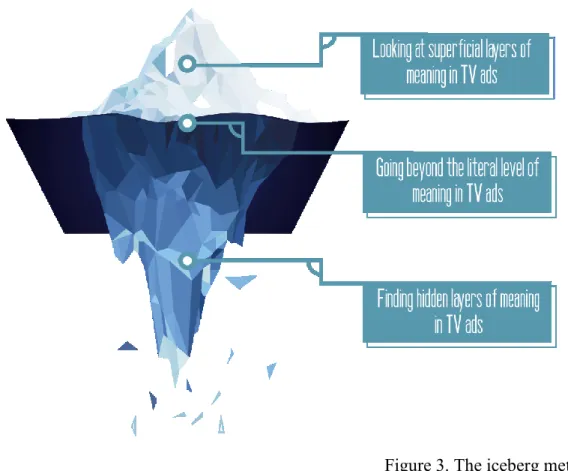
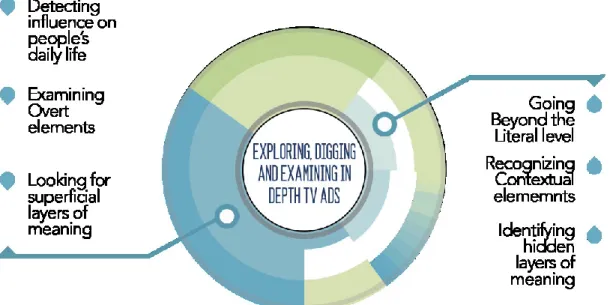
(6) MEDIA LITERACY TO PROMOTE CRITICAL THINKING. 6. Table of contents. Chapter I. Statement of the problem Needs Analysis Research Questions Research Objectives Justification. 5 8 9 18 18 18. Chapter II. Literature review Critical Thinking Media Literacy. 21 21 26. Chapter III. Research Design Type of study Context Participants Ethical Issues Instruments Artifacts Transcripts Field Notes Role of researcher Validity and Reliability. 32 38 40 42 43 44 44 45 45 46 46. Chapter IV Instructional Design Vision of Curriculum Pedagogical Route Vision of Language Vision of Classroom Type of Activities Organization of the content. 48 48 48 48 48 53 56. Chapter V. Data Analysis Framework of Analysis. 59 60 64 64 67 69 74 82 85. Abstract. Exploring, digging and examining in depth Looking for superficial layers of meaning Examining overt elements Recognizing contextual elements Going beyond the literal level Identifying hidden layers of meaning Understanding influence on people’s daily life.
(7) MEDIA LITERACY TO PROMOTE CRITICAL THINKING. 7. Positioning themselves as critical viewers Living the Contradiction: Facts and fiction Noticing social issues of inequity and injustice Identifying themselves as consumers. 89 90 99 100. Chapter VI. Conclusions and Implications Limitations of the study. 103 108 109 110. Questions for further research References. List of Tables Table 1 Respondent teacher‟s information Table 2 Media Literacy Standards and objectives Table 3 Instructional Design Planning. 11 54 55. List of Figures Figure 1 Results of one student mock SABER 11 Figure 2 Comparative ICFES SABER 11 Figure 3 Media Literacy Artifact Sample Figure 4 Iceberg Metaphors Figure 5 First Category and Dimensions Figure 6 Second Category and Dimensions Figure 7 Tomato ketchup advertisements Figure 8 Artifact about strategies Figure 9 Artifact about identification of strategies Figure 10 Artifact about humor Figure 11 Artifact about audience and topic identification Figure 12 Photos of students’ works about fast food Figure 13 Artifact about students’ opinion Figure 14 Artifact about ad’s intentions Figure 15 Artifact about students’ opinion Figure 16 Artifact Figure 17 Artifact about family Figure 18 Artifact about student’s opinion Figure 19 Artifact about student’s opinion Figure 20 Artifact about student’s opinion Figure 21 Media Literacy and Critical Thinking relation. 13 16 57 62 64 64 68 69 69 74 76 79 80 83 87 91 91 95 96 97 107.
(8) MEDIA LITERACY TO PROMOTE CRITICAL THINKING. 8. Appendix. Appendix A. Teachers‟ Survey Appendix B. English Teachers‟ Survey Appendix C Students‟ Survey Appendix D. ICFES Saber 11Test 2014 Appendix E. Principal‟s permission Appendix F. Consent Form Appendix G. Workshop. 108 121 123 124 125 126 127.
(9) MEDIA LITERACY TO PROMOTE CRITICAL THINKING. 9. Chapter 1 Statement of the Problem. For many years, the development of critical thinking has been an area of concern in education all over the globe (McBrien, 2005; Haywood, 2004; Schwarz & Brown, 2004; Pineda, 2003; Astleitner, 2002; Paul, 1992) and it has been considered an aspect that teachers should stimulate in all the subjects of the curriculum including the English as a Foreign Language (EFL) field (Willingham, 2008; Davidson, 1994; Elder & Paul, 1994). One of the main goals of education, and a key aspect in teachers‟ job, is to help students develop and refine their higher order or critical thinking abilities in order to contribute actively to solve the problems of their social context. One indispensable area to stimulate is students‟ abilities to analyze and examine the information they receive so that they can make informed and appropriate choices. The rapid technological developments have made it possible for people to have access to an infinite amount of information. Media in this regard, plays an important role in the diffusion of information and exercises a strong influence on people, including young audiences. Parents and teachers express their concerns about the negative influence that television and Internet, in particular, have on youngsters‟ minds and the manipulation which leads them to accept the information they see on media without questioning its validity. Moreover, values promoted by television are frequently opposite to the ones school and families want to promote. Colombia as well as other countries is facing the challenges imposed by the flow of indiscriminate content to which students are continuously exposed to and to the threats of using that information without a careful reflection of what it is and what it implies. Kellner and Share (2009) state that.
(10) MEDIA LITERACY TO PROMOTE CRITICAL THINKING. 10. Since television programs, cellular phones, video games, music, and even toys have become major transmitters of culture, tellers as well as sellers of the stories of our time, it is now more than ever, that children need to learn how to critically question the messages that surround them and how to use the vast array of new tools available to express their own ideas and participate fully ( p. 4). Hence it is necessary for the school to prepare the students to be active participants in the interpretation, analysis and evaluation of media messages by means of alternative literacy programs that consider the socio cultural dimension of the language instead of just reading and writing mechanically. Consequently, such preparation should enable students to face the challenges of the modern society to deal with the amount of information they face on a daily basis, to reflect on it in depth and to react to it accordingly because as Rideout, Roberts and Foehr (2005) state “without question, this generation truly is the media generation, devoting more than a quarter of each day to media” (p. 39). The needs analysis in “Class I.E.D.”, which is the school where this research took place, revealed that EFL practices neither took into account opportunities for critical thinking nor did they use the media as sources of information. The information collected for the diagnostic stage evidenced that there was a need to incorporate activities and cognitive skills in the EFL lessons to help students confront the messages sent through to the new technologies. Even though they permit more accessibility to information, children are more vulnerable to become passive consumers and they are very frequently manipulated by advertisers whose main goal is to sell goods and services. Therefore, schools need to prepare students to be more critical towards the kind of cultural values and ideas media promote..
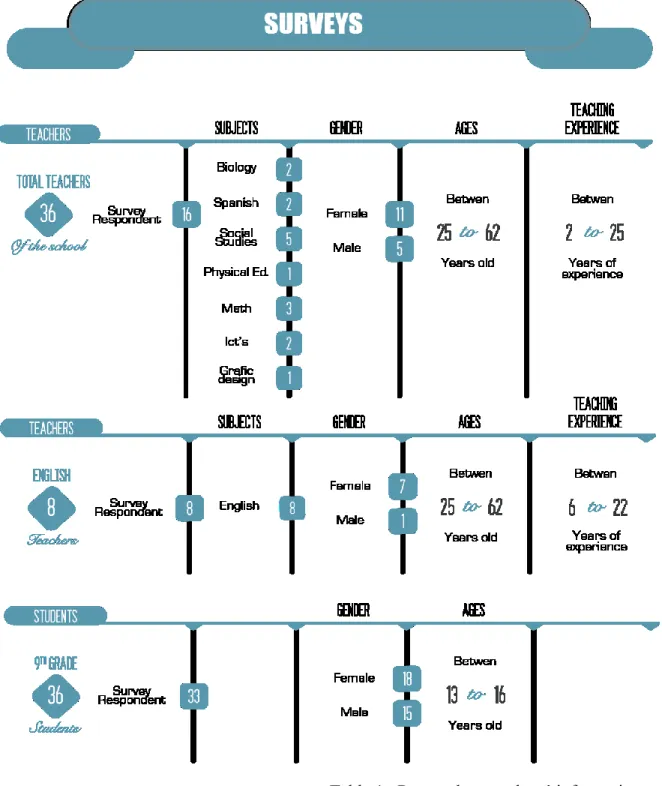
(11) MEDIA LITERACY TO PROMOTE CRITICAL THINKING. 11. Needs Analysis For the needs analysis, two surveys (Appendix A and B) were implemented in the first semester of 2014 in the school IED Class, a school located in Kennedy, one of the most densely populated zones in Bogotá. The participants were ninth graders whose ages ranged between 13 and 16 years old. The first survey was answered by teachers from different subjects. The questions were directly oriented to identify the teaching practices they used to stimulate the development of students‟ cognitive processes and their opinions related to the skills of thought promoted in the different courses and the topics that they addressed in every particular area of knowledge. Another survey was applied to eight of the English teachers of the school to determine teachers‟ perceptions in regards to the thinking abilities students had developed, as well as the pedagogical practices they applied to help students improve cognitive processes. These two surveys showed that teachers from different subjects, including English language, perceived that students needed to have some strategies to be more active when receiving information, express their opinions based on evidences, decide among alternatives based on trustful sources of information and structure their arguments. Consequently, there was a need to develop pedagogical practices to stimulate the use of more complex higher-order critical thinking skills. Likewise, in the survey answered by 16 school teachers, they expressed that children needed to develop some habits for studying and learning. Teachers were asked to select from a list of 8 items those they considered that needed reinforcement. A high percentage of the respondents (62%) indicated that students needed to learn to formulate questions, 42% stated that they needed to revise information, and 55% pointed out the need to analyze something whenever it poses a doubt. In addition, they expressed that the cognitive strategies mostly used in classes were memorizing, looking for information and classifying data..
(12) MEDIA LITERACY TO PROMOTE CRITICAL THINKING. 12. Table 1. Respondent teachers‟ information..
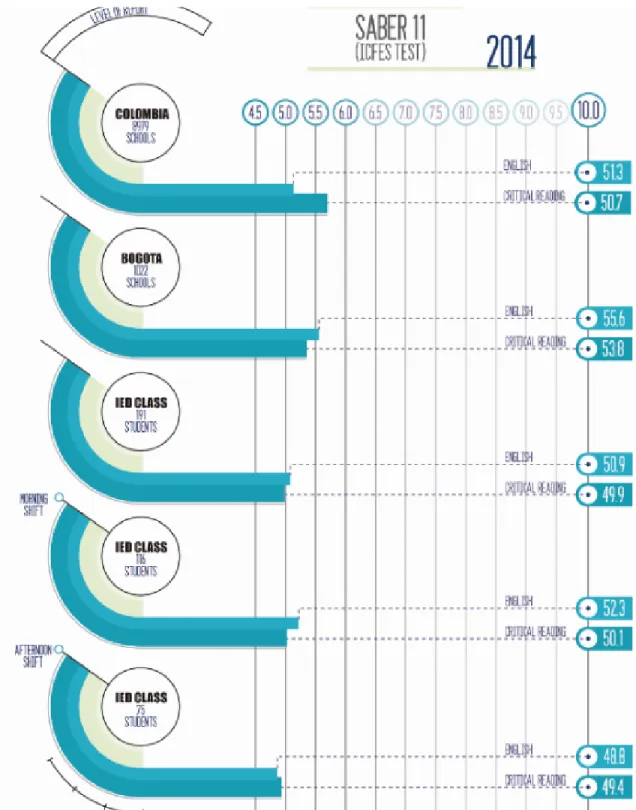
(13) MEDIA LITERACY TO PROMOTE CRITICAL THINKING. 13. Another survey (Appendix C) was applied to 33 students from ninth grade. The students‟ survey intended to gather information on students‟ habits and use of critical thinking skills, and indicated that students felt they lacked motivation to participate in debates. They also pointed out that they did not have opportunities to work on controversy or argumentation or to establish a personal position towards an issue. |In addition to the surveys, a reading workshop was implemented with most of the students of the school (Appendix G). It was part of the school newspaper project. The objective was to analyze the abilities of the students to perform literal, inferential and argumentative levels of reading comprehension, which are the ones that a critical thinker need to develop. Another purpose of this workshop was to test to what extent students analyzed and evaluated ideas and concepts. To do so, students analyzed some articles from the school newspaper about topics like the celebration of October 12th, the Discovery of America, the meaning of the National Anthem and a popular song about Latin-American identity. They expressed their opinions about the information given and presented arguments in favor or against these controversial issues presented in the task. The answers showed that most of the students needed to refine their ability to analyze information and to support their points of view. Their responses tended to repeat segments of the text and in some occasions there were no answers to the questions posed. On the other hand, it is important to note that the ICFES Saber 11 evaluation has recently started to evaluate critical reading in Spanish (Appendix D). However, this aspect is not necessarily included in the evaluation of the English component of the test. It may be due to the strong emphasis on mastering language skills such as vocabulary and grammar, which in turn is the result of the type of learning proposed by the Ministry of Education. For many years, schools have been led to use the Common European Framework of Reference that does not necessarily foster critical thinking. According to some authors (López, Ropero & Peralta, 2011), this may.
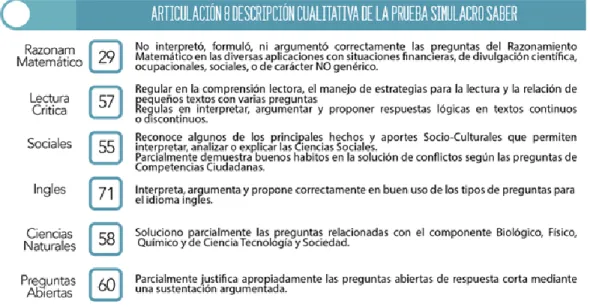
(14) MEDIA LITERACY TO PROMOTE CRITICAL THINKING. 14. prevent students to use complex cognitive abilities, and may not permit to include advanced levels of linguistic competence. These guidelines influence the curricular programs and the objectives of the English plans of the school in terms of cognitive processes. This lack of emphasis on thinking skills in the teaching and learning processes in EFL interferes with the development of integral aspects of the language learning. Figure 1 shows the results obtained by a student. This is used to illustrate that that the score given for critical thinking (57 out of 100) is very low and shows the need to improve abilities to interpret, argue and propose logical answers to different kind of texts. In relation to English the results showed that different types of questions were evaluated but there is no indication of testing higher order thinking skills.. Figure 1. Results of one student in the mock exam of ICFES SABER 11.
(15) MEDIA LITERACY TO PROMOTE CRITICAL THINKING. 15. Table 2. Comparative of critical thinking ICFES SABER 11.
(16) MEDIA LITERACY TO PROMOTE CRITICAL THINKING. 16. With respect to the impact of media, Kline, Steward and Murphy (2006) asserted that media influence children‟s socialization and academic achievement positively and negatively. Television can support learning of more advanced students who count with parents‟ supervision because it is an important source of information. However, assiduous exposition to screens does not have such positive effect on students who do poorly on the school because this activity distracts them from reading, doing homework or studying. Students in the school Class IED expressed that they watched TV when they were alone at home or when they did not have any other social activity which happens very frequently on their daily routines. Besides, as any other young person on a globalized culture these students are very interested on gadgets such as computers tablets and mobile phones, are usually familiar with video games and participate in online social networks. In order to guide students to become critical thinkers and analytical writers, it is necessary to propose innovative practices that help them participate more actively and reflect and express more appropriately and effectively the results of their analysis. In the same direction, it is important to implement a variety of tasks that foster students‟ argumentation, guide their thinking and help them support their ideas. In addition, there must be guidelines for helping them to share their views with their partners with respect and tolerance. In other words, it is relevant to create an environment where students feel they can express themselves, interact and exchange their opinions in regards to the problems they can see on their daily lives. This proposal aims at using the resources that media provides as a way to establish connections with the students‟ interests and the problematic issues of the society which are always present in these forms of communication. It aims at increasing the opportunities for participation improving students‟.
(17) MEDIA LITERACY TO PROMOTE CRITICAL THINKING. 17. abilities to compare and contrast ideas, describe causes and effects, argue for or against an issue or put forward a point of view. Critical Media literacy is at the core of this proposal. It is defined as “the ability to access, analyze, evaluate and communicate information in a variety of forms” (Schwarz & Brown, 2005, p. 11). In that sense media education is the process of teaching and learning about media. Rogers (2014) asserts that critical literacy education “holds the promise of meeting the needs of all students and, at the same time, engaging learners to use literacy practices in ways that matter in the world” (p. 242) This integration of theory and practice, out of school literacy practices and teaching activities of the school is positive because through these type of education students are empowered to face every day problems related to power and justice and make them aware of the possibility everyone has to contribute to social change. Rogers (2014) asserts that critical literacy education “holds the promise of meeting the needs of all students and, at the same time, engaging learners to use literacy practices in ways that matter in the world” (p. 242) This integration of theory and practice, out of school literacy practices and teaching activities of the school is positive because through these type of education students are empowered to face every day‟s problems related to power and justice and make them aware of the possibility everyone has to contribute to social change. Media Literacy is an applied linguistic perspective, which uses the principle of inquiry as it requires skills of observation and imagination and a sense of agency (Thoman & Jolls, 2002). Students use these abilities to explore, question, experiment, or make new meanings of the information they examine. This pedagogic approach uses two main strategies: Dialogue-based teaching and learner-centered participatory decision making in order to teach students to process information they receive on a daily basis and to handle and respond to that information assertively (Thoman & Jolls, 2002)..
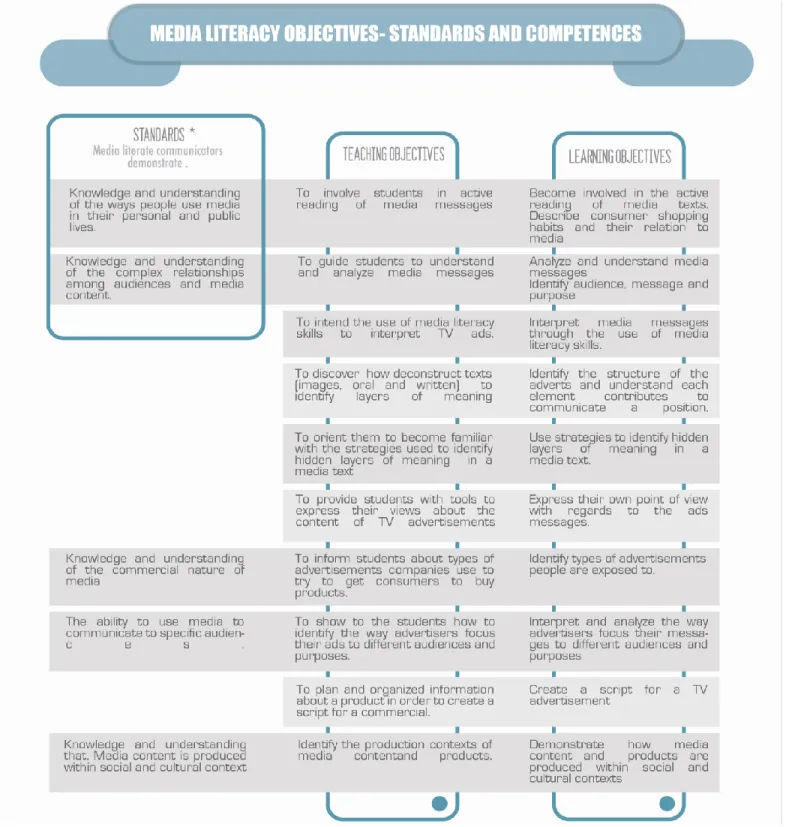
(18) MEDIA LITERACY TO PROMOTE CRITICAL THINKING. 18. Media literacy provides tools to help students analyze messages critically. It “offers opportunities for learners to broaden their experience of media, and helps them develop creative skills in making their own media messages” (Rideout, 2012, p. 4). The intention of using critical media literacy as a pedagogical tool was to help students develop a critical view of media. This proposal included activities in which they had to analyze TV advertisements to understand how images, ideas, styles and language were constructed and presented to consumers. By means of discussion groups, writing and the use of artifacts, students debated issues such as social beliefs, ideologies, and stereotypes. They stated a position about the adverts and expressed their own decisions in regards to the credibility of the content of the messages. They also reflected about the structure of the advertisements scripts, including drawings, slogans and logos to offer a product. In addition, they analyzed the way advertisers select the information they want to show, or the strategies they use to hide messages. In sum, the lessons were designed to help students see the other side of the TV ads production and consequently analyze that it is possible to produce different ethical and more acceptable positions towards media messages. Also, a studentcentered, critical and democratic pedagogy was used in this project. Based on Freire (1973) and Dewey‟s ideas (1916), it centered on the premise that education takes shape as a dialogue in which teachers and students mutually investigate everyday themes, social issues, and academic knowledge. Through dialogue and problem-posing, students become active agents of their learning. The implementation of lessons centered on media literacy skills and EFL learning to respond to the need to foster criticality among my students, led me to pose the following research questions and objectives:.
(19) MEDIA LITERACY TO PROMOTE CRITICAL THINKING. 19. Research Questions 1. How do students comprehend media when involved in EFL media literacy activities? 2. How do they position themselves in relation to the media messages?. Research Objectives 1. To characterize ninth graders‟ comprehension of media messages when they are engaged in EFL media literacy activities. 2. To analyze the positions students assume in the analysis of media in connection to their own social environment. Justification The needs analysis done in this project revealed that it was necessary to incorporate pedagogical actions in the EFL classroom to open up the possibility for students to express their ideas, share and discuss controversial topics and in general analyze information that students watch on media such as TV from different perspectives. Students do possess a repertoire of skills that can be used as the point of departure to refine their higher order thinking skills. It is teachers‟ responsibility to guarantee that they have plenty of opportunities to develop their analysis, synthesis and argumentation levels. It is my contention that innovative practices can be introduced in the EFL classroom to enable students to understand information, process it and react to it accordingly. According to Paul (1992) the school needs to provide opportunities to create relations between students‟ lives and the education field. For this reason, this proposal uses.
(20) MEDIA LITERACY TO PROMOTE CRITICAL THINKING. 20. television advertisements like a bridge or interaction and motivation to improve higher order critical skills. In other words, the goal is to foster the critical reading of media messages. For this study is important the role of TV advertisements on media literacy education because these mass media messages influence people in different ways. The problem of persuasion and manipulation of the information presented on TV commercials has been the focus of interest of authors like Goaltly (2000) who explains how adverts appeal and reproduce value systems and attitudes. (Cook, 2002) explicates the methods publicity practices to convince and manipulate consumers and the strategies used by writers and producer of adverts. Williamson (1978) illustrates how advertisements are composed and understood both visually and verbally and how to read them and analyze them. Likewise, Fairclough (1999) explores the relationship between advertisements and lifestyle. Dyer (2007) discusses the current social importance of ads, and the relation to the communicative theory. Boske & McCormack (2001) emphasized how impressionable participants were to “believing whatever was presented” was “reality” and how dangerous these negative messages were to understanding the world around them. Several realized how often they internalized media messages as the “truth” rather than thinking about what was really going on” (p. 175). For those reasons including TV advertisements on this research work was a form not only to attract students‟ interest but more importantly it contributed to develop critical media literacy skills. Understanding and applying higher order mental processes prepare students to assume critical perspectives towards the problems that they have to face in the modern society. This project might be useful for teachers as well as for those who are in search of strategies to motivate and encourage them to participate more in engaging activities that foster learning while stimulating cognitive skills..
(21) MEDIA LITERACY TO PROMOTE CRITICAL THINKING. The following chapters present the theoretical foundations of this paper, the research design I used to answer the questions along with a description of the pedagogical intervention and the analysis and findings that emerged from this project.. 21.
(22) MEDIA LITERACY TO PROMOTE CRITICAL THINKING. 22. Literature review “For years, many educators (and some parents, too) have stood like ostriches, sticking necks in the sand and trying very hard to ignore media culture. Television became the enemy of the fine arts, culture, history and all that is best about civilization. The reasoning went like this: if only we ignore it, our children will ignore it and all will be as it was before television” (Hobbs, 1996, p. 8).. This document is an overview of recent articles written in relation to concepts that are the core of this research project which aims at developing students‟ critical thinking through analysis and reflection of media literacy. This text presents a brief description of the articles, including context, purpose, methodology and findings, looking for relations with the current research problems. Besides, it presents a summary of some important insights in relation to critical thinking perspectives and media literacy theoretical pillars. Critical thinking. To develop students‟ critical thinking is one of the most important objectives of education. Most educators assert that teaching and learning processes are not complete if the school does not provide students the necessary tools to face the basic problems of their own lives. In that sense, critical thinking refers directly to the way one solves problems dealing with daily life. Consequently, several scholars have suggested changing schooling aims from content to a cognitive educational perspective. In this approach the primary goal is the teaching and learning of formal processes of logical thinking “with the objective of helping each student to become an independent life-long learner who can generate and apply his/her own cognitive strategies to a very wide variety of content” (Haywood, 2004, p. 249)..
(23) MEDIA LITERACY TO PROMOTE CRITICAL THINKING. 23. To develop an appropriate understanding of the role critical thinking has in the EFL classroom, it is necessary to have a clear definition of critical thinking. Sarigoz (2012) asserts that “critical thinking means that the individual features his/her such intellectual thinking skills as reasoning, analyzing, problem solving, reading comprehension, scientific thinking, creative thinking, and judgment and deciding accurately” (p. 5315). Critical thinking, as a high level of cognitive function, "is a purposeful, self-regulatory judgement which results in interpretation, analysis evaluation, and inference, as well as explanations of evidential, conceptual, methodological or contextual consideration upon which the judgement is based" (Astleitner, 2002, p. 53). The study of critical thinking has been the object of researchers like Echeverri and McNulty (2010) who explore the way reading strategies could develop thinking skills. Their perspective provides students with resources for comprehension and application in the reading process. Hence, the pedagogical implementation used strategies like making predictions, prior knowledge, graphic organizers, and the technique of questioning. This research work was carried out with 30 eighth grade students in a public, elementary-high Normal School in Antioquia, Colombia. These researchers found that the application of cognitive strategies developed comprehension and application, responded to students‟ needs, and improved active participation, while students became more independent readers. It was important to see reading as a process, focus on the readers‟ background knowledge, experiences, interactions with the text, and interactive reading tasks like collaborative learning groups. This research project is relevant for this study because it provides important information about implementation and strategies for students to develop higher order thinking skills..
(24) MEDIA LITERACY TO PROMOTE CRITICAL THINKING. 24. Ruiz (2013) conducted a study with 33 third graders in a public school in Bogotá, Colombia which explored the role of project work in the development of critical thinking. The question focused on critical thinking skills evidenced when project work was implemented. The theoretical framework was based on Giroux‟s (1989) socio-political perspective, Paul and Elder‟s (2005) theory about thinking,. The researcher used strategies from Bloom (1984) and Anderson‟s (2001) updated taxonomy. The results showed that project work helped students enhance critical thinking skills, as well as be more reflective and critical about what they read, wrote, and expressed. The pedagogical design focused on collaborative inquiry in literature circles that explored different perspectives with relation to the given topics. In that way, conversations, stories, and dialogues were opportunities for students to construct and explore their understanding with others. In Norato and Cañon‟s study (2008), six cognitive knowledge domains were applied in reading activities. The researchers‟ aims were to determine teenagers‟ cognitive processes developed in English class and to find how reading strategies helped develop the cognitive processes. The authors stated that thinking skills are improved when syllabi allows the teacher to develop different types of thinking activities in which students can build creativity, use background information, and work cooperatively. Reading strategies were worked with Bloom‟s taxonomy; his cognitive domains help students learn more than the language itself. Texts were found to be more meaningful because they allowed students to move from knowledge to evaluation domains. Hence, they found more motivation to participate in reading activities. The researchers articulated the syllabus and the reading program to the domains of the students they wanted to strengthen. Additionally, they explored the way students‟ English learning skills and cognitive processes can be developed in the ESL classroom..
(25) MEDIA LITERACY TO PROMOTE CRITICAL THINKING. 25. Yiqi‟s (2012) study explored classroom interaction that enhanced students‟ critical thinking ability in a Hong Kong secondary school. In this investigation, 44 students participated in the physical classroom and online with the help of iLAP. Observational data were generated during liberal studies classes through field notes and audio-recorded classroom interaction. This research was based on three interdisciplinary methodological traditions involved in classroom discourse analysis, namely ethnography of communication, micro ethnography, and interactional sociolinguistics. Yiqi (2012) affirms that prior knowledge is the first pedagogical principle for fostering higher-order thinking in the classroom. If students have fragmented knowledge and cannot use knowledge flexibly and meaningfully, it would be difficult to advance to more complex mental processes like solving problems. Yiqi states that thinking skills are developed in the context of rich knowledge domains. In the physical classroom students can obtain basic facts and content knowledge from the teacher, which serves as the basis for higher order thinking development. In the Web 2.0 tool more intellectual encounters among students are facilitated, which contributes to the development of critical thinking. This cyber classroom seems to be more student-centered while face-to-face classes tend to be more teacher-centered. In this research, results indicated that the use of iLAP contributed to the development of students‟ independent thinking and argumentative skills. The improvement of digital technology permits students and teachers to go beyond physical classroom settings and illustrates the efficacy of technology in critical thinking development. This research is relevant to the present investigation because it revealed that new technologies contribute to increasing mental processes, allow students to be more independent thinkers, and create connections between school activities and the real world..
(26) MEDIA LITERACY TO PROMOTE CRITICAL THINKING. 26. Sarigoz (2012) conducted a research work which aimed at assessing high school students‟ critical thinking skills. It used a 21-question survey prepared by the researcher and applied in four different schools in Hakkari, Turkey. It used a descriptive method and during the analysis of data, the survey used quantitative properties as statistical methods. The aim of this study was to specify the attitudes and thoughts of high school students regarding critical thinking skills according to their sex and class level. This study exposed that critical thinking skills vary between school types. Those schools were Anatolian High School, Science High School and Vocational High School. The study revealed that secondary school students‟ thoughts regarding critical thinking skills did not change in accordance with sex or class level. This research suggested that students should have critical thinking lessons so they acquire these abilities. Teachers should be educated concerning critical thinking teaching and learning in order to help students develop these skills. Finally, parents should attend courses in order to help children improve these educative goals. García, Sagre, and Lacharme (2014) conducted a research work in a public university in Cordoba, Colombia with undergraduate English students. The main goal was to find difficulties when analyzing critical reading information. The authors implemented a set of activities where discourse analysis and Systemic Functional Linguistics were used to analyze methodology and texts which might affect reading comprehension. The findings showed that students need to be given the necessary tools to identify the structure of texts in terms of language, genre, functions, form, linguistic features, words, and intentions in order to lead to complex analyses of discourses. This proposal is relevant for this work because in my school students are not normally exposed to the analysis of ideas in texts that require careful study of words, phrases, structures, and purposes. For that reason, it would be very useful to foster cognitive skills such as inferring, implying, and applying complex mental processes, like this research suggests..
(27) MEDIA LITERACY TO PROMOTE CRITICAL THINKING. 27. The previous mentioned authors made proposals which intend to foster critical thinking skills in the processes of teaching and learning a second language. The way each study worked varies from cognitive perspectives to a broader view of socio-cultural literacies. There seems to be awareness in the literature of the importance of contextual situated applications and suggestions for methodological strategies like cognitive skills development through project work, collaborative inquiry, metacognitive strategies, implementation of new resources, content-based activities, examining the structure of texts, and discourse analysis. These findings contribute to ideas on how to implement diverse activities that permit innovation in the EFL classroom where improving mental processes is relevant for contemporary education. Although many language programs continue emphasizing traditional literacy, others see potential in New Literacies to help students become critical viewers in this saturated media age. Considine (1999) asserts that ML (media literacy) intends to involve cognitive abilities in the pedagogical practices, with the objective to help students develop understanding of social and political issues which are present in media information. Consequently, understanding media requires critical thinking education because people must be able to decode messages critically in order to interpret them. This perspective is not only a means to improve abilities to read and interpret information but also to develop different mental processes. Media literacy New technologies have provided people with a richness of elements that are used in photographs, videos, television, images, and sound; media messages are powerful means of persuasion and manipulation. Media directs its information to different kind of viewers and listeners, among which are children and young people. They are usually the target of companies and organizations interested in manipulating them or in guiding them to accept certain ideologies and viewpoints while discarding or even rejecting others without careful reflection. Media.
(28) MEDIA LITERACY TO PROMOTE CRITICAL THINKING. 28. Literacy is a perspective of literacy education which takes into account the influence of media on people in general and on children in particular. This perspective intends to face problematic issues which arise from media information and proposes new alternatives that prepare students to read and interpret those messages. Schools in the United States include in their curricula Media Literacy skills in order to help students read, write, speak, and listen from a critical point of view concerning image-based electronic media, television, radio, newspapers, and advertising messages. Hobbs (1996) states “media literacy is not a new subject area and it is not just about television: it is literacy for the information age” (p 7). Hobbs also mentioned the accepted definition of Media Literacy as "the ability to access, analyze, evaluate and produce communication in a variety of forms", which was agreed upon in a conference sponsored by the Aspen Institute in 1992. There are several reasons for American educators to include this topic in teaching and learning goals, namely the inclusion of contemporary culture, the need to protect young people from dangers that are widespread in media, and the possibility of analyzing and appreciating media products with appropriate tools. Additionally, ML provide students with abilities to create their own media messages and understand the way power and manipulation exist in those messages. ML programs prepare students to make appropriate decisions as consumers as well as citizens. In Europe, ML has a longer tradition. According to Hobbs (1996), “ML has gained some measure of official status within Great Britain, Canada, Australia, Scotland, Spain and other nations, where it is required as part of the language arts program in grades 7 through 12” (p. 12). In many communities educators have begun the process of thinking seriously about expanding the concept of literacy to include media. Hobbs (1996) highlights that ML skills are needed to be effective, skillful, and critical consumers of media messages. She thinks these skills are essential.
(29) MEDIA LITERACY TO PROMOTE CRITICAL THINKING. 29. for students‟ participation in a democratic society. It is important at this point to state that students in the school IED Class rarely have the opportunity to develop critical understanding of media messages and to strengthen reasoning and analytical skills. Ivanović (2014) explains that the school system needs to integrate the study of media because students are exposed to value judgements which are opposed to the family and school. The author mentioned that “the time of schooling is a time of learning and acquiring important skills as well, it is important to form a critical attitude towards media content ” (p. 249). For these reasons ML can contribute to understanding social values promoted in media. It is important to know how media constructs the systems of meaning that operate in their messages, as well as their sources and reasons for creating certain information. Ivanović stressed that media provides educational activities that might allow students to work with innovative and informal means of information. She adds that it is possible to have a positive perspective of new media literacy because it permits people to expand their knowledge and allows people to communicate broadly in a globalized age. Šramová (2013) described in her article the importance of evolving media literacy at the school level. This author found a close connection between the development of children´s consuming behavior and cognitive development. She explained this relationship on the basis of Piaget‟s theory in this manner: The sensorimotor stage between the ages of zero to two represents the period in which wishes, desires, and preferences emerge. However, in this developmental stage these cannot yet be considered consumerism. Later, children ages two to seven years are in the preoperational stage of cognitive development and do not distinguish between media reality and social reality. At this age the child becomes an active media user preferring entertainment and adventure contents, visual objects, and cartoon figures. The child realizes his/her existence as an individual having his/her own needs, wishes, and desires. At the age of five, children reach.
(30) MEDIA LITERACY TO PROMOTE CRITICAL THINKING. 30. more sophisticated ways of negotiating; these outcomes play an important part in family communication. The author explains that the concrete operational stage (between the ages of seven to twelve) is the period in which children‟s thinking develops and logical structures are created. The individual is able to distinguish between his/her opinions and other people´s opinions. However, his/her ability to distinguish between fantasy and reality is still inconsistent. Therefore, the interpretation of content, including media content, is distorted. Nevertheless, compared to the previous developmental stage, his/her view of the world is more realistic. The individual is highly critical of the entertainment and commercial contents lacking realism. His/her ability to distinguish commercial content in advertising is much more sophisticated. The child becomes an independent shopper and his/her materialism increases. They are attracted to sport and media heroes. During this period there is more interaction within peer groups, which starts to influence the child´s consumer preferences. Šramová draws attention to how the learning process takes place and how the child gradually develops his/her cognitive schemes. She emphasized that understanding commercial content depends on the maturity of an individual‟s cognitive processes. The paper concluded that developing ML may help children understand marketing messages and improve their ability to critically analyze those messages. Kafai, Peppler, and Warschauer (2011) exposed findings from several recent studies to demonstrate that contemporary youth communities move easily in new media literacies and computer education environments; they showed how these two domains are complementary. This study‟s aim was to unravel historical developments that might have promoted these distinct trajectories of new media literacies and computer education in and outside school. This study is relevant for my project because it highlights the critical consumption of media information which.
(31) MEDIA LITERACY TO PROMOTE CRITICAL THINKING. 31. should be included in curriculum. At the same time media message production becomes a complementary component of media literacy programs. Bustamante, Aranguren and Arguello (2004) explored the incidence of television on cognitive and pedagogical aspects, they intended to use the active reception of television messages as a tool to develop teaching and learning processes. These authors asserted in this study that it is necessary to examine the relation between communication and education, these researchers cited Pérez and Aguaded who highlighted that the appropriation of media and the critical usage of their messages is relevant if we want to canalize the new literacies effects on audiences. Findings suggest that Colombian television has three challenges: to face political and ideological constrains; to improve educational quality and to overtake the discriminatory barriers of its symbolic system, in order to integrate education and mass media communication. The study of ML has been the object of research for various individuals. For example, Vargas (2010) proposed a pedagogical implementation in which critical discourse in language learning and teaching facilitated the critical analysis of media manipulation. The purpose of the text was to illustrate how to improve students‟ ways of thinking. This proposal started from examining media information in the light of students' personal views, feelings, and emotions and then moved on to analysis and interpretation of socio-cultural representations of mass media. The bases of the study were argumentation, collaboration, and project work. The author concluded that it is necessary that schools provide with opportunities for students to use appropriate pedagogical tools to confront media representations critically. Mora (2014) explored in his article the role of technology as an open space to active participation and a factor that permits more access to learning. The language exchanges that take place in virtual spaces are considered more creative; learning the language is more meaningful than traditional class. These exchanges have changed the opportunities to use the language in a.
(32) MEDIA LITERACY TO PROMOTE CRITICAL THINKING. 32. variety of ways because people engage in conversations about shared interests. These interactions become a community of practice. To this respect Mora (2014) asserts that “English in more authentic scenarios, for richer cultural exchanges, and in a more meaningful language immersion than what language courses may offer them” (p. 116). According to this author, English has become the first language of the new technologies; in this environment the active participation of people is more authentic. Besides, Communities of practice in virtual contexts permit cultural exchanges in a more realistic manner. Another important aspect of the influence of new technologies in modern life is the fact that interactions are not limited by physical boundaries or geographical factors, due to the global nature of this environment. Monte (2008) proposed an exploratory research project in which Brazilian students from different school levels analyzed the meaning construction of images based on an epistemological perspective. This qualitative investigation of ethnographic characteristics used writing descriptions of students‟ views on certain aspects of a film. It used collective interviews as the main instruments of data collection. This work aimed at determining the impact of digital language and evidenced the abilities of students to interpret and understand digital environments, as well as the process of construction of knowledge from the new literacies‟ perspective. The theoretical framework in this study comes from critical literacy and digital epistemologies, both in new literacies or multi-literacies studies. The article acknowledges the fact that critical literacy plays an important role in the globalized digital society, where meaning making becomes a fundamental ability and an aspect that should be considered in education. Pulido and Tortajada (2008) proposed an educative model based on interaction and dialogue, which was used in the program “e-learning”. This article showed two Media Literacy Projects developed in Barcelona and Tarragona. The first, called The Dialogic Media Literacy (DIMELI) took place during 2002 and 2004 with the participation of Verneda Sant Martí Adults.
(33) MEDIA LITERACY TO PROMOTE CRITICAL THINKING. 33. Association. The main objective was to apply dialogic principles in a Media literacy program. The e-Quality Project was coordinated by FACEPA (Federación de Asociaciones Culturales y Educativas de Personas Adultas) during 2004 and 2005. The purpose of this project was to empower democratic participation and the use of ICTs in adult communities with low opportunities to critically read the media. This study‟s main findings showed not only ICT improvement but also critical understanding of media information. ML activities permitted students to be receptionists and producers of media messages with a more active and analytical perspective. García, Ramirez, and Rodriguez (2014) carried out a project with a pedagogical aim of establishing students‟ degree of media literacy competency. Researchers surveyed 2,143 students from kindergarten to grade 12. Four online questionnaires were applied at each of the school stages. Empirical-analytical methodology based on experimentation with posterior statistical analysis was used in this research work. Since students didn‟t show abilities as media prosumers, the researchers realized that it was necessary to complement the curriculum with basic competences of literacy in order to develop “prosumer culture”. The term prosumer, according to the authors, means that citizens should be able to consume and produce media messages critically, responsibly, and creatively. The writers stated it is necessary to teach abilities and content through comprehensive training that allows students to understand media in a critical manner in order to help young people actively participate in society. Results showed students need to develop a more profound analysis of contents. It was also very important to realize that the use of technological devices does not necessarily imply that people are media proficient. Low achievement on reception and production tests showed students need more preparation in Media Literacy abilities. Finally, the.
(34) MEDIA LITERACY TO PROMOTE CRITICAL THINKING. 34. values dimension and ideology is present at a basic level and requires improvement regarding moral behavior characteristics. A research work aimed at determining the needs of media literacy teaching in a Turkish classroom was carried out by Sur, Ünal, and Iseri (2014).. It involved 246 students from sixth grade, 72 students from seventh grade and 127 students from eighth grade, and four media literacy teachers. This study used interviews -qualitative measurements- and surveys -quantitative measurements- to analyze student views in regards to media literacy education. The study wanted to examine the extent of the relationship between students‟ attitudes towards media education and students‟ media literacy levels. It also wanted to establish if media literacy levels vary according to parents‟ educational level. These researchers used a “media literacy assessment scale” which measures three factors; “having true knowledge”, “ability to analyze and form a reaction” and “ability to hear/see the implicit messages”. The main findings were that teacher in-service programs had acceptable content for Media Literacy classes but needed more training for activities. Teachers expressed they have difficulties with these lessons because they did not have in-service training on how to give media literacy classes. The more students‟ attitude levels on media literacy increase, the more media literacy levels rise. This study concluded that students should read daily newspapers and listen to the radio in media literacy classes because those activities affect media literacy levels and attitudes in a positive way. Finally, this research showed there is no significant difference between the educational level of the parents and the students‟ attitudes regarding media literacy lessons and media literacy levels. Pereira, Pinto, and Pereira (2012) developed a study at the University of Minho in Portugal. The aim was to respond to the lack of resources and materials that could be used to promote media education in different contexts. Its focus was to empower children and young.
(35) MEDIA LITERACY TO PROMOTE CRITICAL THINKING. 35. adults to critically assume the reception of media messages and become active consumers of traditional and more modern communication media. Two hundred children from ten schools from north Portugal were participants in this project. It was proposed to the students, who were between 6 and 15 years old, to express themselves through drawings and texts to enrich a publication and taking in mind students‟ perceptions. The content was mainly centered on the relationship between children and teenagers and the media. The texts were written based on national and international research. The paper presents three booklets that were created. The first related to TV, the second to video games, and the third to the internet and social networks. Finally, 9000 copies were distributed around the country to students of different socio-economic levels. According to the results, the reception analysis and the context of the media, particularly the family environment, plays an important role. Media builds up a social reality but it is a socially constructed reality, Thus, the ideas and opinions that are shown on media are not always explicit but do influence social and political life. For those reasons, the authors found that it was relevant to create materials which support parents‟ interest of debating and commenting on media. This helps children understand the messages and contribute to media literacy education not only in school but also at home in order to close the gap between theory and practice in this field. Manghi and Haas (2015) carried out a project whose pedagogical aim was to explore the semiotic potential of a set of images used by teachers of elementary and secondary students in a public school in Chile. The study systematizes methodological tools from Social Semiotics and multimodality. Thus, Multimodal Discourse Analysis, the concepts of ideational or representational metafunction, and the categories of Visual Grammar Design were used. The instructional component included an audiovisual corpus of lessons of a complete curricular unit..
(36) MEDIA LITERACY TO PROMOTE CRITICAL THINKING. 36. Social studies and science videos from the subjects in third and sixth grade of elementary and first grade of secondary school were analyzed. The results showed how a meaning in an image is modified when teachers use them in face-to-face interaction. This analysis should help teachers select and organize images in terms of improving the learning process and teaching materials they prepare for students. The challenge for the schools is to generate opportunities to analyze and comprehend texts critically with the mediation of the teacher (Farías & Araya, 2014). The purpose is to help students assume an active position towards multimodal texts and their meanings. Casallas (2012) study took a sample of 2141commercials from private television channels in Colombia, 455 of which contained elements related to science. These commercials were analyzed in a statistic and semiotic stand. This research work examined the role of mass media because they permit public debate and discussion of social issues, opens the door to communicate personal opinions, and creates interest on the part of the audience. This author‟s work was focused on representations and images broadcasted by television, those representations provide clues about the relationship between society and science. The author concluded that mass media has the capacity to select information and broadcast what it wants according to its own interest and criteria in favor of some audiences and against others. The article highlights the role of the media in consuming society and raises awareness of the media‟s influence in our daily lives. In the same direction, the article pinpoints the need to provide students with opportunities to find out how this problem is related to them and to analyze the way the society is presented on television messages. Mills (2010) conducted work that aims at exploring a decade of New Literacies Studies. His article describes the theoretical, methodological, and practical implications of this perspective of literacy. This researcher noted that traditional literacy perspectives are not adequate for.
(37) MEDIA LITERACY TO PROMOTE CRITICAL THINKING. 37. understanding the combination of texts of this digital era. In media education, knowledge and literacy practices are taken as constructions of particular social groups. This study showed that the integration of new media literacies in the curricula generates better results in terms of outcomes and motivation. Likewise, they permit students to improve social, technical, and cultural skills. Students' experiences, identities, values, and patterns of engagement with new media are closer to new educational objectives. To conclude, these studies have demonstrated that new technologies, television included, permit students to be more creative because they are able to modify literacy practices according to their interest and purposes. Media literacy practices led students to critically evaluate new media messages, as both consumers and producers. Several research studies have found New Literacy studies have examined how students can be taught to question and challenge implicit and explicit social messages of new media. Students can be guided toward analyzing and evaluating multimedia sources (websites, books, magazines, newspapers) and the multimedia texts including research reports, news broadcasts, editorials, films, dances, and poetry. They demonstrated how an inquiry-based, critical media approach could be taught to foster students‟ participation in the reading of new technologies information (Buckingham, 2003). In the aforementioned studies, one of the most relevant trends was the integration of Media Literacy into the official curriculum; most of the authors found that multimodal and digital forms of representations have important effects on English language learning. These research studies reported improvement in oral and written competences, and the learning of the second language was accelerated because participants were able to express their opinions and were more motivated to practice the language. The implementation of these projects helped researchers show critical analysis of information and cognitive skills development as relevant advance of current education.. In.
(38) MEDIA LITERACY TO PROMOTE CRITICAL THINKING. addition, the methodology increased the critical comprehension of media messages, including where participants started to value their own opinions. From receptacles of information they became producers. One of the most important outcomes of these projects is that people became active citizens who generated their own spaces for debate about social problems which were linked directly to reality. Another relevant result was that participants were aware of the importance of media in society as well as the role it plays in the construction of public opinion.. 38.
(39) MEDIA LITERACY TO PROMOTE CRITICAL THINKING. 39. Research Design A previous chapter stated that in the “I.E.D Class”, EFL practices do not usually provide opportunities for students to develop critical thinking. Thus, it is clear that there is a need to incorporate pedagogical actions to foster these cognitive skills. It is an important aim of education to prepare students with appropriate argumentative tools to express and support their opinions towards the huge amount of information they are exposed to on a daily basis. The research questions this research project intended to answer were: How do students comprehend media when involved in EFL media literacy activities? and secondly, how do they position themselves in relation to media messages? The research objectives were to characterize ninth graders‟ comprehension of media messages when engaged in EFL media literacy activities and to describe the way students relate media messages to their own social environment. Type of Study This project is based on a qualitative descriptive view and a sociocultural approach to literacy which can positively contribute to the analysis of the process of learning and development of media literacy skills. These perspectives consider that education systems play an important role in transformation of society, particularly in regards to social and economic injustice awareness (Dewey, 1916; Freire. 1973). For these authors it is imperative critical thinking skills development in the school to permit students become active citizens in modern society. In this context Critical literacy refers to those approaches that “consider social and political functions of literacy practices and using its abilities to produce a social change”. (Rogers, 2014, p. 243). This author suggests that literacy practices should address specific social justice issues intending samples with explicit social issues related to the students‟ own.
(40) MEDIA LITERACY TO PROMOTE CRITICAL THINKING. 40. community. Orlowski (2006) situates critical media literacy as a structured framework of knowledge which assumes the impact the media has on issues of equity, social justice, and democracy For this particular research study I decided to use Critical media literacy perspective of Applied linguistics because it responds to the need of observing, interpreting and analyzing the way students comprehend media information and how they take a stand towards the information they watch on television advertisements. Buckingham (1998) explains that Critical literacy “encourages individuals to promote critical thinking, apply analytical tools to media practices, examine connections among media, self and others, and understand issues of power and the media‟s role in the constitution of identities” (168) Theories about investigation state that qualitative research is a system of inquiry that seeks to build a holistic, largely narrative description to inform the researcher‟s understanding of a social or cultural phenomenon. In this type of work: “researchers study things in their natural settings, attempting to interpret phenomena in terms of the meanings people bring to them” (Denzin & Lincoln, 2000, p. 3). In the same sense, Merriam (2009) asserts that qualitative research deals with questions about how people interpret their experiences, how they construct their worlds, and finally what meaning they attribute to their experiences. This study intended to examine the researcher‟s own context and to describe and understand how students undertake the examination of different media, as well as if there are any changes in argumentation and inferential skills as a result of the tasks proposed. The type of qualitative research method that best contributes to this study is Grounded theory. Dornyei (2007) clarifies that it is necessary to fulfill two conditions to call a study “Grounded theory” . First researcher has to follow the analytical sequence system: open coding, axial coding and selective coding; secondly the outcome of the research is the production of some.
(41) MEDIA LITERACY TO PROMOTE CRITICAL THINKING. 41. theory. Consequently the present research intended to use the empirical data provided by the school context to produce some new theoretical insights. Strauss and Corbin (1990) refers about Grounded theory as a method of analysis whose purpose goes beyond describing certain topics because it looks for building rather than only testing theory and “gives the research process the rigor necessary to make the theory good science” (p. 57) This type of investigation includes explanatory theory that intends to be closer to the reality. This qualitative research study describes a pedagogical intervention in a particular context, a public school in Bogotá, and the way proposed activities affect the abilities of students in relation to their argumentative competences as well as their inferential skills. The aim is not to generalize the results but to see how this particular population manages to improve their critical thinking abilities and to analyze how media literacy prepares students to use the aforementioned skills.. Context School “I.E.D Class” is located in Kennedy, one of the most densely populated zones in Bogotá, Colombia. Families in this social context deal with several economic and social constraints; many have only one parent working most of the time. For that reason, students do not have enough support for school duties. Their most common entertainment activities are watching TV and using the Internet. Because of economic limitations families move frequently from one zone of the city to another; students are usually forced to change schools. This prevents students from completing their studies in the same school. Academically, students show low levels of achievement in English and in critical reading, which is evaluated in Spanish. This is shown in the results of the Icfes Saber 11 evaluation of the Ministry of Education, as it was explained in the first chapter of this research study (see Figures 1 and 2)..
(42) MEDIA LITERACY TO PROMOTE CRITICAL THINKING. 42. The vision of Class IED school presented in the Institutional Educative Project PEI, states that educational and teaching objectives are mainly oriented to identify competences which allow students to choose a working field according to their own interests and traits, taking into account their abilities and knowledge of every subject. These students take part in the formation of an articulation plan between high school and university called “Educación Media Fortalecida” through the program Communication in Graphic Design. Universidad Minuto de Dios, a private university, is the academic support of the project which intends to establish a connection between secondary education and university studies. The school adopted the “teaching for understanding” model several years ago, which intends to improve the ability of students to comprehend and use knowledge to produce new results, acquire thinking skills, and expand creativity. Students are asked to think in terms of concepts and situations, rather than memorize information. This interdisciplinary model has worked very well in primary school but has been difficult to apply in the secondary cycles. This methodology requires a lot of time for preparing lessons and extra effort on the part of teachers to organize interdisciplinary didactic units with teachers from other subjects although sometimes the school agenda does not provide sufficient time. In the school IED Class there are several projects which intend to impart a more profound understanding of students‟ problems, like PRAE (Environment project), PILEO (reading and writing project in Spanish); Democracy and Sexual Education projects.. These projects‟ main goal is make students aware of their own reality and contribute with solutions in their social context. Hence, literacy is a concept that has an important role in interdisciplinary scenarios as it permits students to go further than simple memorization of content to reach a level of interpretation and reflection about the information they receive. Since English plans are not included in one of those projects neither have connections with the other subjects of the.
(43) MEDIA LITERACY TO PROMOTE CRITICAL THINKING. 43. curriculum, there is a gap in relation to the promotion of critical thinking skills and reading literacy in the inclusion of pedagogical strategies to make English class more meaningful and relatable to students. In this particular context, English teachers have tried to change the traditional methods and grammatical perspective, which is still present in the teaching practices, to a more communicative view.. In the classroom students are encouraged to express ideas and opinions and share different kinds of knowledge related to their context and daily life. However, the communicative competences are lower than the expected because children start English learning process very late, usually in the sixth grade rather than in preschool as normally happens in most private institutions. Besides,, many students do not have the minimum resources like the book suggested by the school to support their learning processes. For that reason students have to share a few available books, sometimes causing disruptions and disciplinary inconveniences which affect teaching and learning development. Participants The population that has been selected for this research project is composed of 43 ninth graders, 18 boys and 25 girls, whose ages range between 13 and 16 years old. These students attend the public school IED Class, located in the Kennedy zone of Bogotá. The group is one that had been assigned to work under my supervision. Oliver (2010) explains that purposeful sampling is a form of non-probability sampling in which decisions concerning the individuals are made by the researcher, as is the case in this group of ninth graders. Some types of research design necessitate researchers making a decision about the individual participants who would be most likely to contribute appropriate data, both in terms of relevance and depth. In typical case sampling the researcher is interested in a sample of the population because they are normal or typical. In typical case sampling, the researcher cannot.
(44) MEDIA LITERACY TO PROMOTE CRITICAL THINKING. 44. use the sample to make generalizations about a population, but the sample could be illustrative of other similar samples. These participants were selected because they have homogeneous characteristics in terms of age, grade and cognitive conditions. Likewise, this group has some heterogeneous conditions in terms of English skills level and argumentative abilities which I considered a relevant contribution to the richness of the data that it was expected to be collected at the beginning of the research process. Ethical Issues A consent form (see Appendix F) was delivered to parents in order to permit them to know the objectives of the research and give their children permission to participate. In addition, the letter informed parents about the possibility of asking questions and requiring information for the project, as well as changing students‟ names in order to protect their identity. Students were informed of the project and were given the opportunity to decide whether they wanted to participate or not. Besides a parental consent form, a written letter of permission was delivered to the principal of the school, giving her information about the duration and requirements of the project (see Appendix E). Instruments Different instruments were used to collect data to respond to the research questions proposed. The primary stage was observation because it is the first contact in the classroom. There are several factors to define what to observe. Merriam (1998) asserts that the researcher may decide to observe the classroom, setting, students‟ behavior, interaction, etc. For this research work observation of students‟ interest and attitudes towards the activities and the active participation on the solution of the tasks provided valuable information..
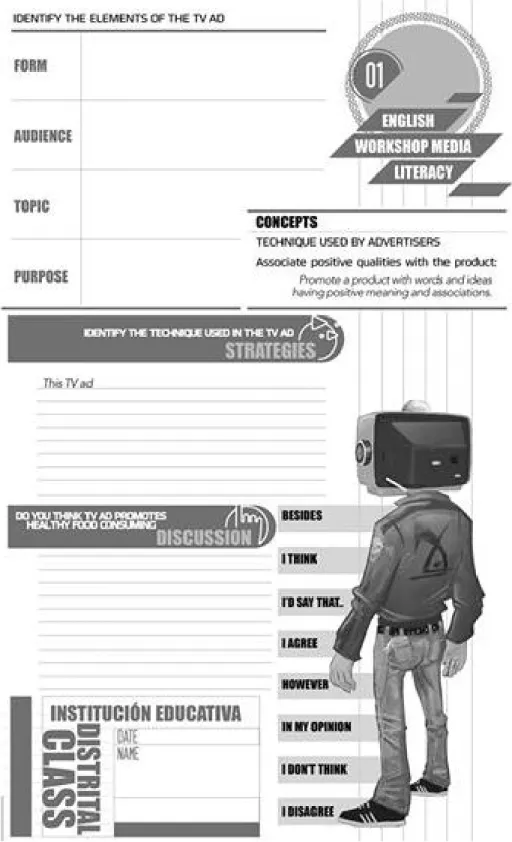
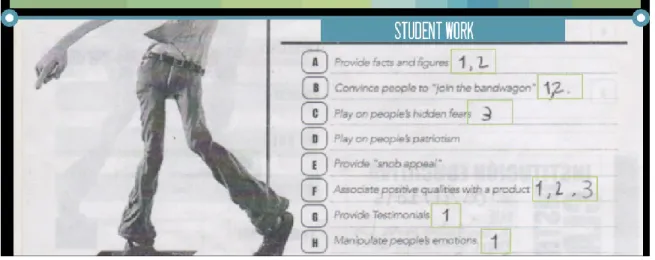
(45) MEDIA LITERACY TO PROMOTE CRITICAL THINKING. 45. Artifacts. Cárdenas (2005) explains that artifacts are documents that provide descriptive records which enable the researcher to derive insights different from those provided by observations and interviews. Examination of records, texts, and products of work provide physical traces of the culture of students, classrooms, and schools. In this particular project, students participated in written activities that promoted thinking and reflection. Some examples included advertisements they had to analyze, vocabulary related to media literacy information, useful expressions needed to develop the tasks of the units, strategies of media literacy, grammar information, and a problematic situation or question which students had to solve at the end of each didactic unit. The students‟ conclusions, ideas, comments, and supported opinions were registered in a compilation of their school work through the media literacy units (see Figures 1 and 2). These artifacts served as a formative and summative assessment. They were creative and personal ways of writing about critical media literacy and related to what students understood and considered important to communicate. These students started with previous knowledge and recalled and retrieved information in order to relate what they already knew with new information. Afterwards, they had to complete charts, mind maps, diagrams, etc. with the purpose of organizing their ideas and presenting them clearly in an eye-catching manner; Students had to solve a problem which intended to stimulate discussion among them; otherwise, a controversial issue make students reflect about a social issue relevant to analyze in the advertisement. Finally, they used their creativity to propose solutions to the problematic situations; agreed about what to write and the best way to express their conclusions with their knowledge of the English language..
(46) MEDIA LITERACY TO PROMOTE CRITICAL THINKING. 46. Transscripts. In this particular project the use of video and audio transcripts was very useful because they permitted the collection of information from students‟ conversations and discussions. These verbal interactions during the intervention phase were valuable data of what worked or didn‟t work with the purpose of making adjustments to the inquiry-based learning units. The students‟ performances were useful to demonstrate their understanding and were ways to document student learning (Cárdenas, 2005). In this particular study the record of the students‟ opinions and ideas in relation to the topics and their ability to support their arguments were important sources of information for the research objectives. Field notes. Information which comes from the teacher-researcher perspective was gathered through field notes taken immediately after class. Those notes were a written account of what happened in the class, including the inquiry-based lessons and students‟ improvement of processes that took place during classroom activities. This information gave important insights about the pedagogical procedures used to develop thinking skills. It contributed to argumentative practices and inferential processes that take place during piloting sessions. The following definition of field notes written by Burns (1999) clearly illustrates the importance of these instruments in a research work. Notes, or field notes as they are often referred to in qualitative research, as descriptions and accounts of events in the research context which are written in a relatively factual and objective style. They generally include reports of nonverbal information, physical settings, group structures and records of conversations and interactions between participants. The observations recorded in notes can be oriented in different ways, from overall impressions of the classroom, to specific aspects of the research, to recordings made about one or two students. Note information focuses on answering, who, what, where, when, how, why questions.
Figure
+7

Documento similar
The results obtained from students’ responses to the questionnaire used in this research study indicate that the academic trajectory of students in the Language Teaching program at
In this chapter we briefly motivate manifold learning methods from the point of view of having to deal with high dimensional problems in big data and then we present and analyze
In addition to the different successions and conceptions of computational thinking, in order to be able to work effectively in the classroom and carry out an adequate
Thus, the objectives of this study were to describe the involvement in bullying and cyberbullying victimization and perpetration of students from the minority and majority groups
The aim of this paper is to demonstrate that reading authentic literary material in the English as a Foreign Language (EFL) classroom can improve students’ language learning skills as
In addition, this research study has other uses: to use the media to promote equality in the design, production and management of science and technology; to
Thus this study seeks to identify, from a quantitative point of view, the communicative skills of the public biomedical research centres from Castile and León, based on
The selection of newspapers aimed to take into account media representing all the political positions and ideologies in the Basque Country: from the centre-right
