1
HABITAT III POLICY PAPER
10 – HOUSING POLICIES
29 February 2016
1
This Habitat III Policy Paper has been prepared by the Habitat III Policy Unit 10 members
and submitted by 29 February 2016. The Policy Paper template provided by the Habitat III
Secretariat has been followed.
2 EXECUTIVE SUMMARY
Housing stands at the center of the New Urban Agenda. Expansion of housing opportunities will support the achievement of SDGs, especially SDG Housing Target 11.1, but larger SDGs of poverty alleviation, health, economic development, social cohesion, gender equality and environmental sustainability. This Policy Unit (PU) urges all United Nations (UN) member states to prioritize housing as one of the highest priorities in their government agenda, and to strengthen the institutional capacity of their housing departments to achieve ambitious goals, in collaboration with civil society, donor, and private sector partners.
At least two billion more people will require housing in urban and rural areas in 2030
The expected global population increase of 1.18 billion by 2030 combined with the existing housing deficit (currently 880 million people live in inadequate housing in cities), implies that approximately two billion people will require housing in 2030. This creates an unprecedented housing challenge. Although progress has been achieved in several key areas since Habitat II, the scale has not been commensurate to the size of the global housing deficit. Today, 130 million more people reside in urban slums than in 1995, a year before Habitat II. As the globe continues to urbanize, every county will need more options for affordable, adequate, and safe housing.
Only a renewed commitment – both
programmatically and financially – will reduce the global housing deficit
Given these challenges, this policy paper calls for a renewed commitment and a different approach. Given the estimated $929 billion needed to improve the housing of those currently living in inadequate housing in cities, currently available global resources are woefully insufficient to realize the SDG Housing Target. Combining multiple solutions—land, finance, and construction—with multiple partnerships — governments, private sector, civil society and donors —will close the affordable housing gap. Beyond increasing financing, this policy paper invites the global community to pursue a new strategic approach that includes reforms in five areas:
1. Create an integrated housing framework: embed housing strategies into urban plans and sector policies at both the national and municipal levels (e.g. in services, land use,
transportation) to better integrate housing programs into decision-making;
2. Adopt an inclusive approach: support participatory processes and fair housing policies, and address housing for vulnerable and special needs groups;
3 4. Improve housing conditions: improve habitability (protection from natural elements,
hazards and diseases) in urban and rural locations, access to basic services (water, sanitation, lighting, electricity, and garbage disposal), legal right to secure tenure (including compliance with a continuum of land rights, promotion of gender‐equal land rights, and prohibition of housing discrimination and forced eviction); and
5. Upgrade informal settlements: support neighborhood upgrading programs and incremental housing in informal settlements.
Foster collaboration between local communities, governments, civil society, private sector and donors to implement a Habitat III housing action plan
The success of the New Urban Agenda will depend on the collaboration in its design and implementation by all stakeholders. All levels of government will have a role in creating enabling environments for housing policies and legislation, and in ensuring that the right to adequate housing for all. Civil society organizations will be critical in creating access to adequate housing and infrastructure by building partnerships with residents. The private sector will be essential in mobilizing resources to supply a menu of housing options including rentals, housing preservation, and rehabilitation, as well as in expanding the affordable housing stock. The donor community will play a key role in elevating visibility and in mobilizing support for housing in the international development agenda.
Monitor progress towards achieving the global housing agenda
4 1. VISION AND FRAMEWORK OF THE POLICY PAPER’S CONTRIBUTION TO THE NEW URBAN AGENDA
Housing is at the heart of achieving the New Urban Agenda under Habitat III. The Sustainable Development Goals (SDGs) call upon member countries to “ensure access for all to adequate, safe and affordable housing and basic services and upgrade slums [by 2030]”i. For both developing and developed countries, upgrading of existing housing and expansion of housing stock to accommodate future population growth constitutes key goals of the New Urban Agenda. A serious commitment – both programmatically and financially – is required to reduce qualitative and quantitative housing deficits. The global housing goals are hence comprised of improving the lives of the 881 million urban people presently in informal settlements; and of ensuring opportunities for the additional growth in global population by 1.18 billion people by 2030.ii
a. Global housing goals can be achieved through the adoption and enforcement of a comprehensive housing framework
The achievement of global housing goals will be possible through programmatic attention to five dimensions: an integrated housing framework, inclusive housing, affordable housing, adequate housing, and informal settlement upgrading.iii
i. Integrated Housing Framework: the embedding of housing into urban plans and both citywide and national sectoral investment strategies (as they relate to urban services, land use, transportation and environmental sustainability) to improve livability and accessibility within urban areas;
ii. Inclusive Housing: the commitment to support participatory processes, fair housing policies, and to address housing for special needs groups;
iii. Affordable Housing: the adoption of policies and measures to improve affordability of home ownership; subsidy policies to enable low-income households to rent or own adequate housing; revenue and capital generating policies, and mechanisms that limit property speculation;
iv. Adequate Housing: measures that provide for habitability (protection from natural elements, hazards, and disease), access to basic services (including to water, sanitation, lighting, electricity, and garbage disposal), legal right to secure tenure (including compliance with a continuum of land rights, promotion of gender‐equal land rights, and prohibition of housing discrimination and forced eviction); and
v. Informal Settlement Upgrading: support of neighborhood upgrading programs and protection of incremental housing.
Operationalizing these five dimensions will require respect for rule of law, democratic structures, appropriate legal frameworks, accountability and co-operation between all relevant actors. Nuanced understanding of the local conditions of poverty and of low-income settlements will be essential.
b. A substantial amount of capital needs to be mobilized to significantly reduce the global housing deficit
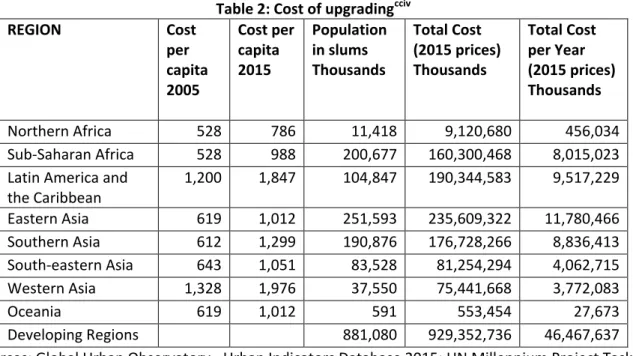
5 access for all to adequate, safe and affordable housing and basic services and upgrade slums.” Based on a methodology applied to estimate the cost of upgrading for the UN Millennium Development Goals (MDGs)iv, an estimated $929 billion will be needed to improve the housing of all 881 million
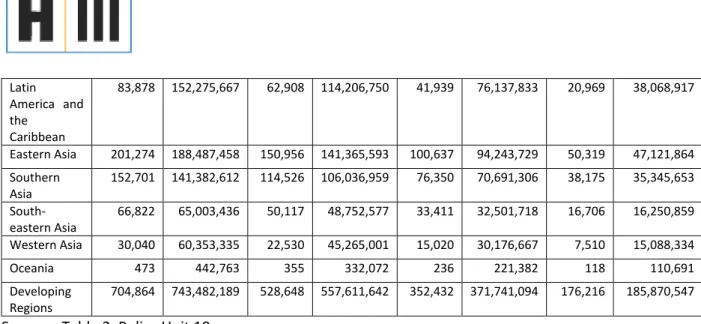
current residents in inadequate housing in cities. Improving the dwellings of just 20 percent of these residents, or 176.2 million people, would require a total of $185.9 billion (a more complete analysis is provided in Section 5.3 and Annex III).
c. The achievement of an inclusive housing policy depends on a range of interlocking external factors within the New Urban Agenda
Many legislative policies not specifically targeted to impact housing, can produce large indirect effects on housing, especially for low income families. Likewise, other SDGs and the five broader themes in the New Urban Agenda also significantly impact access to adequate, safe affordable housing. Achieving the SDG housing goals will directly impact poverty alleviation (Goal 1), gender equality (Goal 5), water and sanitation (Goal 6), and combatting climate change (Goal 13). As illustrated in Figure 1, housing closely interconnects with the other five policy areas of the New Urban Agenda, which, as defined by the Habitat III Secretariatv, encompass: (i) social cohesion and equity—livable cities; (ii) urban frameworks; (iii) spatial development; (iv) urban economy; and (v) urban ecology and environment. Several Policy Unit Frameworks reinforce these linkages, which stress the use of inclusive housing policy to achieve the New Urban Agenda. Right to the Cities and Cities for All (Policy Unit 1), for example, calls upon member states to “enshrine the right to adequate housing in policy… establish standards for adequate housing through community driven processes….enact laws that protect against forced evictions… strengthen State housing policies… [and] provide housing options in locations that allow citizens to remain close to existing social networks.” Likewise, Urban Ecology and Resilience (Policy Unit 8) underscores the “need for systemic planning, which simultaneously integrates housing, transport, energy and green systems.”
6 Figure 1. Linkages between Housing Policy and the New Urban Agenda
• The linkages between housing and social cohesion are critical for responding to the housing needs of low-income residents, integrating refugees, and ensuring safety.
Social Cohesion
• Governments must have sufficient resources and accountablity to provide housing services. Collaboration between levels of government, along with civil society and housing developers, will optimize affordable housing production.
Urban
Frameworks
• Regulatory constraints on land supply—land allocation practices, density thresholds, floor-area ratios, and plots sizes— have large implications on the supply of affordable housing. Expanding housing options in city centers can limit urban sprawl.
Spatial
Development
• Effective and efficient housing policies can expand employment in the building sector and increase employment. Housing programs should foster local economic development through live/work housing options and neighborhood revitalization. Proper location and siting of housing programs could improve the functioning of the urban economy and labor markets.
Urban Economy
• To build resilience, governments must design programs to reduce the vulnerability of housing, including enforcing building codes. Efforts to encourage medium and high-density housing will reduce transportation costs and air pollution.
7 2. POLICY CHALLENGES
The demand for housing grows every day, as people migrate to cities and create new households. The global urban population, fuelled by both inward migration to cities and the natural population increase of existing urban residents, has increased more than five-fold since 1950, from 746 million to 3.9 billion in 2014x. This growth has greatly elevated the demand for adequate, safe, and accessible housing. The global urban population is estimated to grow by an additional 1.18 billion from 2014 and 2030 and 2.46 billion from 2014 to 2050.xi Responding to the existing housing deficit, while also planning for anticipated future housing needs – especially in areas experiencing high urban growth – forms the crux of the housing policy challenge. Effective response to this challenge will yield benefits beyond the housing sector itself, as housing not only drives urban developmentxii, urban form and density, but also plays an important role in generating employment and economic growthxiii.
Great strides have been made in the housing sector since the adoption of the 1996 Habitat Agenda. These include:
Progress in the monitoring of global housing needs: Habitat II did not contain monitoring frameworks or targets. The MDGs did, however, address informal settlements through a specific target: “Achieve, by 2020, a significant improvement in the lives of at least 100 million slum dwellers” (target 7.D). The inclusion of this target helped place slums on the international development agenda. Since, national governments and statistical offices have improved their capacity to measure slum conditions and to design policies to improve conditions.
Right to adequate housing: More than 100 countries now recognize the right to adequate housing in their constitution and national legislation. Some countries have pursued policies geared to creating policy, institutional and regulatory frameworks that facilitate the production of housing.xiv
8 investments dedicated to housing were curtailed and the scope of state engagement reduced. Less government intervention in the majority of cases resulted in fewer or no housing opportunities for the poorest and the most vulnerable.
Equally important, evidence questions the degree to which the international community actually met the MDG slum-upgrading target. UN-Habitat has recognized that these goals were set too low and that they were achieved by the activities of China and India alone.xvii Given the low standards of the definitions for improved water and improved sanitation facilities, it is questionable whether several countries significantly improved the lives of slum dwellers. According to its own definition of slumsxviii, the UN was able to claim that India’s urban slum population decreased between 2000 and 2010, while India’s own official sources showed an expansion of slum residents.xix Security of tenure was not included in the MDG goal in spite of its inclusion in UN-Habitat’s definition of slums. The inclusion of secure tenure would likely have resulted in significantly lower MDG success rates given the resistance of improving tenure for many of the urban poor globally. Furthermore, the final version of the SDGs lacked a poverty threshold for urban environments which has led to an underreporting of urban poverty.xx
The next sections describe specific challenges across the five dimensions — integrated housing framework, inclusive housing, affordable housing, adequate housing, and informal settlement upgrading. They apply to a broad spectrum of human settlements in central cities, peri-urban areas, city-regions, suburbs, mega-cities, towns, villages and metropolitan areas. To this end, housing policies that span a continuum from rural to urban – instead of a crude urban-rural dichotomy – is likely to serve member states better, given the vast interconnections that bind these geographies together.
2.1 Integrated Housing Framework
Evidence illustrates harmful outcomes from uncoordinated sector policies – in transportation, infrastructure, and land use – that fail to consider housing in their plans. Many ambitious, multi-billion dollar housing have been built in peripheral areas without public transportation access and proximity to job markets. Such poorly designed projects have become “vacant industrially produced housing units on the outskirts” rather than effective solutions to address affordable housing.xxi The lack of an integrated housing framework has worked against density and has, instead, contributed to urban sprawl and segregation.xxii The lack of attention to transit-oriented housing development contributes to high carbon footprint for transportation, which accounts for 23 percent of total energy related CO2 emissions.xxiii/xxiv
9 Integrated housing frameworks create compact, socially inclusive, connected cities that foster sustainable urban development.xxvii The concentration of people and infrastructure has positive externalities and reduces the high capital costs of a sprawling city with extended road, water and sewer lines and storm water drainage systems.xxviii
2.2 Inclusive Housing
The right to adequate housing remains unrealized for a distressing number of urban dwellers, especially the poor, the vulnerable,xxix and special needs groups (migrants, persons with disabilitiesxxx and HIV, older persons, gender identify, and youth, and other marginalized groups). According to the UN Economic Commission for Europe Charter on Sustainable Housing, poor, disadvantaged, and vulnerable populations often lack affordable and adequate housing as well as other public services such as water and sanitation.xxxi They live in precarious conditions and often address their housing needs informally. Since approximately half of the 72 million displaced persons – refugees and internally displaced persons (IDPs) – in the world live in urban areas,xxxii expanding housing options to this population will yield significant benefits. Recent studies show that migrants often settle in urban areas; they are disproportionately represented among the urban poor in many informal settlements.xxxiii
A number of factors hinder the provision of housing for vulnerable groups. The first is economic: the significant increase in housing costs undermines access to adequate and affordable housing, particularly for vulnerable groups. For instance, western European countries suffer from increasing homelessness, as vulnerable groups are financially excluded from home ownership and rental marketsxxxiv and in Africa, incremental self-build housing is becoming increasingly difficult due to high cost and/or lack of land, putting increasing strain on already vulnerable groups.xxxv The second obstacle constitutes welfare and housing regimes –e.g. safety net issues, legal and institutional frameworks – as countries struggle with significant income differentials. The third factor entails social barriers: discrimination against certain groups.xxxvi Mass housing and slum upgrading programs lack attention to specific needs of these groups, thereby increasing their vulnerability.xxxvii/xxxviii Exclusionary zoning is another factor that significantly affects the supply of adequate, affordable housing. According to the Equitable Housing Institute, exclusionary zoning “consists of government regulations (generally local) that require large lot sizes, large square footage per dwelling, and/or other high-end features – in such a large amount of the residentially-zoned land in the jurisdiction – that low- and moderate-income people are deprived of the opportunity to live reasonably near their workplace.” This zoning regulation is common in suburban areas as affordable housing developments are burdened with protracted site plan and permit processes that result in excessive housing costs for lower income people.xxxix Although zoning regulations were created to protect private property rights, the exclusionary zoning regulations have led to housing segregation and discrimination.xl
10 residential, commercial, cultural, institutions and industrial uses.xlii The implementation of mixed use zoning is highly encouraged because it has a number of benefits including increased density, more compact development, the promotion of a sense of place and community, and the creation of greater connectivity between neighbourhood and communities.xliii
Indigenous people and women particularly face housing discrimination. Indigenous communities are often exposed to harmful situations when urban areas expand to engulf their ancestral lands, which often increases their vulnerability to forced evictions.xliv Dakar (Senegal), Mexico City and provincial towns of Temuco in Chile are some of the cities that have experienced this urban growth. In most countries, lack of security of tenure is experienced by women, as their property rights are limited by customs, social norms and legislation – despite the fact that women constitute the majority of small farmers and undertake more than 75 percent of agricultural activities. The lack of secure tenure hampers their opportunities to overcome poverty and to thrive economically;xlv but above all it denies them the right to adequate housing.
2.3 Affordable Housingxlvi
One of the more daunting challenges of urbanization has been the provision of adequate housing that people can afford. In 2011, 2.2 billion people still survived on less than US$2 a dayxlvii, a grossly inadequate income to afford living and housing. From slum residents to middle-income households, it is estimated that 330 million households are currently financially stretched by housing costs; this number could grow to 440 million by 2025.xlviii Even in developed countries like the United States, 20% of the population is reported to spend greater than 50% of their income on housing costs. There are also large but unknown numbers of people who live “on the street” individually, in groups, or as families.xlix
Since the outset of the 2008 financial crisis, repossessions and mortgage debt have become critical issue in developed countries. Hundreds of thousands of homes were repossessed or subject to foreclosure following the financial crisis.l In developed countries, the sub-prime mortgage market collapse in the United States constrained mortgage lending. This has disproportionately affected minority households and first-time homeowners, who have been unable to take advantage of the subsequent low prices and interest rates. Particularly in Europe, the mortgage debt (as a percent of GDP) rose dramatically following the credit crisis. In Greece, the rates rose from 5.8 percent in 1998 to 33.9 percent in 2008. Across the same period, rates rose in Ireland from 26.5 percent in 1998 to 90.3 percent, in Italy from 7.8 percent to 21.7 percent, and in Spain from 23.9 percent to 64.6 percent.li Since 1996, housing inequality between generations has increased in Europe and elsewhere. As European governments have invested less in social housing, there is a shortage of affordable housing for new households. This shortage is so acute in major city centers that governments are setting aside housing for municipal workers who are then able to purchase housing jointly with a non-profit housing provider or rent on favorable terms.lii
11 requirements (especially difficult for the many who are employed in the informal market).liii To obtain access to a subsidy for a mortgage loan, households generally need a certain level of savings and formal participation in the labor market. These requirements exclude a large portion of the low income population.liv
Zoning and building regulations have often overlooked the importance of location of social housing, resulting in their siting in peripheral areas, which often raises service delivery costs and limits the socio-spatial integration of the poorest. Insufficient access to land and dysfunctional urban land markets remain some of the most pervasive constraints on the provision of adequate housing. The challenge of accessing adequate housing is compounded by rising costs of land in several urban areas. Land usually represents between one fourth and one third of the final price of a housing unit. Due to the lack of land management tools and the scarcity of urban services many cities experience very rapid processes of land inflation.lv Furthermore, poorly designed regulations on floor-area ratios (FAR)lvi and minimum plots sizes that are biased towards higher income households have often constrained affordable housing.lvii
The dependence on energy-inefficient building designs can increase housing costs. The global building stock, composed mainly of residences, is responsible for more than 40 percent of global energy uselviii and represents the single largest contributor to greenhouse gas emissions.lix In Eastern Europe, the deregulation of natural gas and the resulting higher energy costs impacts even middle income families forced to shutter several rooms in the winter to lower the cost of heating. Historic centers are particularly in need of weatherizing and climate proofing given their age of their buildings and facilities.
Affordability is further constrained by undeveloped partnerships for expanding housing and government programs in the housing sector, including cutbacks in housing provision, land supply, procurement, servicing and even regulation. Few governments have promoted enabling policy environments which balance the needs of households with market scalability. Likewise, both in the developed and developing countries, inadequate legal frameworks and lack of incentives for the provision of social rental housing, have decreased its supply and have increased rents to unaffordable levels.lx
2.4 Adequate Housing
Adequate housing can be evaluated applying UN-Habitat’s five factors defining a slum:
a) Access to improved water: According to the WHO/UNICEF Joint Monitoring Program (JMP), which provides global statistics on water and sanitation, a substantial proportion of water from an “improved” source is feacally contaminated, irregular, and difficult to access.lxi The significant undercounting of unsafe and unaffordable drinking water works against achievement of the SDG of “by 2030, the achievement of universal and equitable access to safe and affordable drinking water for all.”
12 governments often face increasing problems with generating the revenues required to meet the costs of adequate service provision, especially sanitation facilities. This renders them ineffective in fully enforcing frameworks that guarantee basic sanitation.
c) Sufficient living area – not overcrowded: While housing for the middle classes may be over-provided in many cities, the poor are generally under-housed; many living in single rooms.lxiii In Africa, the growing urban population has overstretched existing infrastructure and services in most countries.lxiv The deficiencies in housing quality overshadow the quantitative deficit. In Latin America, for example, approximately 9.6 million households suffer from overcrowding (three or more people per room).lxv The poor quality housing, which is often insecure, hazardous and overcrowded, elevates everyday risk (physical accidents, fires, extreme weather, and infectious diseases) as well as disaster risk (storms/high winds, earthquakes, landslides, floods, fires and epidemics).lxvilxvii
d) Structural quality/durability of dwellings: Many jurisdictions have adopted codes inappropriate for their context or have not updated their codes to current international standards where there are life safety issues. This is exacerbated by inadequate and corrupt building code enforcement. The devastating 2010 earthquake in Haiti impacting 3.5 million people is an example of a country with outdated seismic codes, inadequate building code enforcement, and informal settlements located in high hazard zones.lxviii
e) Security of tenure: Security of tenure is hampered by forced evictions, displacement, and the failure to recognize a continuum of land rights. Every year, millions of people around the world are evicted from their homes and land, against their will and without consultation or equitable compensation. Between 1998 and 2008, forced evictions affected at least 18.6 million peoplelxix, despite the fact that international law explicitly recognizes the right to security of tenure and has repeatedly declared the practice of forced eviction to be a gross and systematic violation of human rights. A growing number of urban migrants and IDPs also confront insecure tenure and the resulting threat of further displacement, not only as a result of natural hazards and renewed conflict, but also as an increase in forced evictions.lxx Tenure informality and the forced evictions tend to disproportionately affect women and further exacerbate their vulnerability.lxxi Thousands of people are also being displaced from their homes because of natural disasters, some of which are related to climate change. Hurricanes, tsunamis and earthquakes all result in the displacement of peoples from their homes and lands.lxxii Housing policies that solely promote the ownership model tend to benefit middle-income segments and fail to serve the poorest quintile. Few housing authorities have experimented with alternative tenure models, such as lease-to-own or rental housing. Such models have substantial potential, given that there are approximately 1.2 billion people renting across the world.lxxiii
2.5 Informal Settlement Upgrading
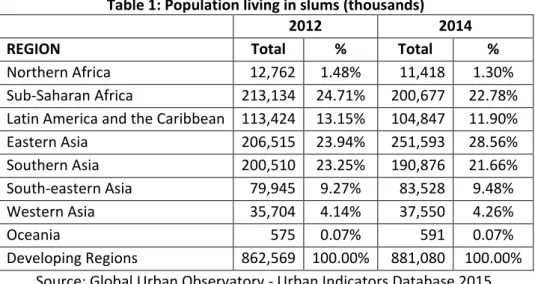
13 2000lxxiv, the number of slum dwellers around the world continues to grow at around 10 percent every year, intensifying the problem worldwide.lxxv The proportion of the urban slum dwellers is most acute in Africa (61.7 percent), followed by Asia (30 percent), Latin America and the Caribbean (24 percent), and Arab States (13.3 percent).lxxvi For example, 60-70 percent of housing in Zambian cities,lxxvii 70 percent of housing in Lima, 80 percent of new housing in Caracas,lxxviii and 90 percent of housing in Ghanaian citieslxxix are provided by the informal sector. UN-Habitat estimates that over 881 million people are currently living in slums in developing country cities, an increase from 792 million in 2000 (see Table 1).lxxx To respond to these challenges, local and national governments are supporting a range of neighbourhood upgrading programs that range from small, single-sector interventions to comprehensive, multi-sector slum upgrading programs.
Table 1: Urban Slum Population at Mid-Year by Region (thousands), 1990-2014
Region 1990 1995 2000 2005 2007 2010 2014 % change (1990-2014)
Developing Regions 689,044 748,758 791,679 830,022 845,291 871,939 881,080 27.9%
Northern Africa 22,045 20,993 16,892 12,534 13,119 14,058 11,418 -48.2%
Sub-Saharan Africa 93,203 110,559 128,435 152,223 163,788 183,199 200,677 115.3%
Latin America & the Caribbean
106,054 112,470 116,941 112,149 112,547 112,742 104,847 -1.1%
Eastern Asia 204,539 224,312 238,366 249,884 250,873 249,591 251,593 23.0%
Southern Asia 180,960 189,931 193,893 195,828 196,336 195,749 190,876 5.5%
Southeast Asia 69,567 75,559 79,727 80,254 79,568 84,063 83,528 20.1%
Western Asia 12,294 14,508 16,957 26,636 28,527 31,974 37,550 205.4%
Oceania 382 427 468 515 534 563 591 54.7%
14 3. PRIORITIZING POLICY OPTIONS – TRANSFORMATIVE ACTIONS FOR THE NEW URBAN AGENDA
To assist policy- and other decision-makers implement the proposed policy framework, experts appointed for Policy Unit 10 hereby put forth practical guidelines and a menu of prioritized actions. These recommendations are based on critical review of documents, exchange of 35 award-winning and globally recognized practices in housing policy (see Annex IV), and rigorous discussions (both in-person and virtual).lxxxi UN-Habitat’s Housing at the Center of the New Urban Agenda approach provides guiding principles that can help policy- and decision-makers elevate housing within the new urban agenda, thereby ensuring access for all, to adequate, safe and affordable housing.lxxxii These principles can help highlight the narrow focus on housing construction and expand it to a holistic housing development framework, integrated with urban planning practice. They place people and human rights at the forefront of urban sustainable development (see Box 1).
Box 1. Housing at the Center of the New Urban Agenda Principles
Housing is inseparable from urbanization. Housing policies and strategies at national and local levels should therefore be integrated into urban development policies and coordinated with economic and social policies.
Housing is a socioeconomic development imperative. Housing is a precondition for human survival. Housing is critical for the sustainable socioeconomic development of people and cities. While housing provision is important for improving livelihoods, living standard and welfare, it is also a significant source of wealth, economic growth and employment – a major component of the economic development agenda.
Systemic reforms, strong states and long-term policy and finance are needed to enable access to adequate housing for all. National and local authorities should re-assume a leadership role in formulating, regulating, implementing and monitoring policies to respond to housing needs and affordability constraints, especially in the poorest segments of the population. Financing for housing should be established and increased, especially for low-income groups.
A twin-track approach, with curative (slum upgrading) and preventive (new provision) housing policies and programs, should be promoted. This approach should be implemented via the participatory and coordinated efforts of national and local governments, development finance institutions, private sector and civil society.
15 Prioritized Housing Policy Recommendations
3.1 Integrated Housing Framework
Adopt housing policies that integrate and drive the integration of holistic policy frameworks at all levels
An integrated approach means designing and implementing policies to ensure that homes have access to jobs and services (adequate education, health care and transport) and keep communities intact. Such a holistic approach also promotes and protects the cultural and historical typology of communities. The Habitat II Agenda invited governments to integrate housing policies with broader policies in urban planning, including population, environmental, land and infrastructure policies. Governments are urged to promote policies that encourage key construction inputs of housing (e.g.
land, finance and building materials) while addressing urban demographics. Most importantly, governments were called upon to establish mechanisms for transparency and cost-effective management of infrastructure.lxxxiii
To implement an integrated housing framework, coordination is required between nation states and non-governmental organizations and across multiple levels of governments. National level institutions – ranging from informal bodies to formal departments with regulatory authority – play a key role in organizing actions among ministries who are responsible for urban policies (horizontal coordination). Local level institutions can facilitate agreements among municipalities (inter-municipal coordination). Finally, it is essential to harmonize every relationship configuration between national-, regional- and municipal- levels (vertical coordination).lxxxiv
Adopt regional and municipal policies to expand infrastructure networks
The alignment of housing location and labor markets is critical in fostering and enhancing productivity and growth. lxxxv Policies to expand infrastructure networks are needed – at all levels of government – to keep a pace with population and economic growth.lxxxvi The national government plays a key role in leading cross-municipal cooperation in complex metropolitan areas, and in fostering interagency and inter-ministerial coordination within and across jurisdictions.lxxxvii
Human rights principles and standards are of extraordinary relevance for urban development, to create socially sustainable and inclusive cities. Targeting the poorest and most vulnerable groups is crucial if the situation is not to deteriorate. Interventions should focus on addressing the root causes that prevent their access to adequate housing.”
16
3.2 Inclusive Housing
Adopt policies at all levels that include participatory processes
Member states are encouraged to promote participatory dialogues among all stakeholders by creating enabling environments and building capacity at both national and local levels. By taking into account stakeholders’ capacity, project goals and local context requirements, participatory strategies are especially effective in helping the poor address their housing needs.lxxxviii Participatory enumeration, a survey method, whereby the urban poor count and map their communities, is a proven first step in enhancing tenure security.lxxxix
Adopt fair and inclusive housing policies at all levels that prevent discrimination and which address housing for special needs groups
The right to adequate housing for all can be progressively realized by focusing (technical, legislative and financial) efforts – including those that specifically address the special needs of the most vulnerable and marginalized groups – to support adequate, healthy, safe and affordable options. To enhance social cohesion (i.e. avoid segregation, gentrification and gated communities) while combatting homelessness, development of mixed communities is encouraged.
Inclusive housing policies and strategies are instrumental in addressing the challenge of slums.xc A rights-based approach in promoting fair housing policies helps empower the poor while minimizing inequalities and discrimination in the housing sector.xci The incorporation of gender aspects in housing and urban development policies and practices will enhance inclusiveness as women, men, boys, and girls experience and benefit from urbanization differently.xcii/xciii A gender-sensitive approach will increase active involvement of all stakeholders, including women, and benefit the whole population.xciv
Member states are invited to align policies with the “Right to the City” vision, which outlines inhabitants’ rights and responsibilities to collectively shape their city’s growth and transformation processes.xcv While this Policy Paper does not endorse the full platform of The World Charter for the Right to the Cityxcvi as a definition of the “Right to the City”, we support the Charter’s vision of “the equitable usufruct of cities within the principles of sustainability, democracy, equity, and social justice”.
3.3 Affordable Housing
17 Adopt housing policies that expand and improve the
affordable housing stock
A legal framework that stimulates long-term investment and provides new options for housing finance is critical in expanding affordable housing stock. Housing banks should be better supported to serve low-income households and credit should be supplemented by guarantee funds and special purpose entities to provide access to housing finance to many who have been traditionally excluded.xcvii Low Income Financial Institutions can play an important role in offering tailored short-term loans to create new credit instruments that can facilitate home ownership.
The UN Statistical Commission is well positioned at identifying conditions necessary to ensure affordability. This research could explore ways to expand credit options and housing supply – to address scarcity, which raises prices and may lead to informality.
Adopt policies that limit property speculation
Policies to reduce property speculation and to promote the social regulation of real estate can be strengthened at the local level if municipalities adopt inclusive housing ordinances and appropriate land and property taxation policies.
Adopt policies that support green infrastructure
Such policies would include the development of energy-efficient housing and technologies that can reduce both the cost of housing and the environmental impact.
3.4 Adequate Housing
Adopt housing and zoning polices that ensure health, safety and security.
Adopt policies to reduce the impact of climate change and improve energy efficiency.
Adopt policies that improve access to basic services such as water and sanitation.
Adopt policies that improve access to lighting, electricity and garbage disposal in urban and developed rural areas.
Adopt policies that recognize a continuum of land rights for all.
18 cadastral system.
To fulfill their commitment to realize the right to adequate housing for all –in a manner fully consistent with human rights standardsxcviii by improving living and working conditions in a sustainable manner – member states are encouraged to adopt policies that support legal security of tenure, availability of services, affordability, habitability, accessibility, location, and cultural adequacy.
The commitment to ensuring the right to adequate housing means that states have obligations to
respect, protect and fulfill this right, i.e. to: refrain from interfering directly or indirectly with the enjoyment of this right (respect); prevent third parties from interfering with this right (protect); adopt appropriate legislative, budgetary, judicial, promotional and other measures to fully realize this right (fulfill).xcix States are encouraged to incorporate international standards in e adopting the right to adequate housing into domestic legislation. This approach helps improve remedial measures and enable courts to adjudicate violations by reference to the international Covenant on Economic, Cultural and Social Rights and other specific laws regarding the right to adequate housing.c
Box 2. Dimensions of the Right to Adequate Housing
Security of tenure: All persons should possess degree of security of tenure guaranteeing legal protection against forced evictions, harassment and other threats. Tenure could comprise of rental accommodation, cooperative housing, lease, owner occupation, emergency housing, and informal settlements including occupation of land or property.
Availability of services, materials, facilities, and infrastructure: Adequate housing should provide all persons with access to facilities essential for health, security, comfort, and nutrition including safe drinking water, adequate sanitation, energy for cooking, heating, lighting, food storage, refuse disposal, and emergency services.
Affordability: The attainment of satisfaction of other basic needs should not be threatened or compromised by the costs associated with housing. Member states should take steps to ensure housing related costs is consummate with income levels.
Habitability: Adequate housing should provide the occupants with adequate space and protect them from cold, damp, heat, rain, wind or other threats to health, structural hazards, and disease. Member states are encouraged to apply the health principles in relation to adequate housing prepared by World Health organization.
19 Location: Adequate housing should allow access to employment, health care services,
schools, childcare center, and other social facilities. Additionally, housing should not be situated at polluted sites or proximity to pollution sources that threaten right to health of the inhabitants.
Cultural Adequacy: Adequate housing should respect and take into account the expression of cultural identity and diversity of housing by ensuring the cultural dimension of housing are not sacrificed.
Source: Committee on Economic, Social and Cultural Rights, General Comment 4, The right to adequate housing (Sixth session, 1991), U.N. Doc. E/1992/23, annex III at 114 (1991.
States are invited to support the work of the UN Special Rapporteur on Adequate Housing, which focuses on “the legal status and content of the right to adequate housing; homelessness; forced evictions; globalization and the right to adequate housing; discrimination and the enjoyment of the right to adequate housing; the development of indicators; access to water and sanitation as elements of the enjoyment of the right to adequate housing; and women’s right to adequate housing.” This rapporteur facilitates UN agencies’ support of efforts by governments, civil society and national human rights institutions to realize the right to adequate housing.ci
Member states are called upon to respect, implement, and monitor the standing Habitat Agenda which includes, inter alia: providing legal security of tenure and equal access to land to all people, including women; promoting access to safe drinking water, sanitation, and other basic services to all, especially the vulnerable and disadvantaged groups including the homeless; and promoting locally available and environmentally sound construction technologies to encourage energy saving methods and protect human health.cii
3.5 Informal Settlement Upgrading
Adopt policies that support and protect incremental housing and slum upgrading programs
Member states and local governments can adopt policies that support and protect incremental housing and slum upgrading programs. The number of people moving into slums is increasing despite efforts made to achieve the MDG in informal settlement upgrading. Since Habitat II, a range of neighborhood upgrading projects have been developed, which range from small, single-sector interventions to comprehensive multi-sector slum upgrading programs that include attention to public space, citizen security, infrastructure, land tenure, and educational facilities.ciii To achieve SDG 11, these programs need to be significantly expanded and new commitments need to be forged by member states, local governments, civil society, and private sector.
Improving neighborhood-upgrading programs, a key component of housing policies, will require:
20 engineering, environmental, etc.), the need for sustained inter-institutional coordination, and reliable monitoring and control mechanisms. Enhanced technical capacity would especially improve operations and maintenance in neighborhood upgrading programs. Many public utility companies are often not accustomed to working in areas undergoing upgrading where is it is often difficult to maintain technical teams and services.civ
2. Emphasis on community development: Neighborhood upgrading programs yield best results when community development activities are included as specific components and are sustained for at least a year after the completion of physical construction.cv
3. Expanding incremental housing: Given that incremental housing accounts for up to 70 percent of the global housing stockcvi (and upwards of 90 percent in many less developed countries), new programs are needed to support the incremental improvement of dwellings over time.cvii This would encompass a broad array of approaches, e.g. home improvement financing coupled with technical assistance including planning, construction oversight and access to quality building materials. These integrated services require building alliances between financial institutions and construction firms, materials suppliers, and other private sector entities – effectively creating new value chains.cviii
21 4. KEY ACTORS FOR ACTION – ENABLING INSTITUTIONS
The successful development and implementation of the New Urban Agenda will depend on the collaboration of all stakeholders. The Habitat III Secretariat and the Bureau of the Preparatory Committee also validated the creation of the General Assembly of Partners (GAP) as one way to help create an inclusive platform composed of 14 Partner Constituent Groups (PCGs) that incorporate the nine major groups, the Habitat Agenda partners and others.cx The sections below provide several models to encourage key actors to collaborate in monitoring and implementing housing policies.
4.1 National, Regional, State, and Local Governments:
National, regional, state, and local governments all play essential roles in providing enabling environments for inclusive housing policies and legislation that ensures a right to adequate housing. Governments play a significant role in ensuring affordable housing for its residents. According to the UN, governments have an obligation to respect, by ensuring the non-interference of the right to adequate housing; to protect, by preventing third parties from interfering with the right to adequate housing; and to fulfill, by adopting appropriate legislative, administrative, budgetary, judicial, promotional and other measures to ensure right to adequate housing.cxi
Governments can improve the effectiveness of housing systems by to promoting transparency, accountability, and ethical practices in the sector. To address the needs of people with limited or no access to credit, housing finance and microfinance should be integrated into the broader financial system in order to mobilize more resources, both domestically and internationally. National, regional, state, and local governments can allocate budgetary funding to municipal governments for neighborhood improvement, poverty reduction and slum upgrading and other programs to improve the lives of current and future city residents.
Governments are requested to support and implement policies to eradicate all forms of discrimination by enhancing the accessibility of housing finance systems to all borrowers regardless of race, color, sex, language, religion, political or other opinion, national or social origin.cxii Governments can reaffirm their commitment to the Habitat Agenda by “improving living and working conditions on an equitable and sustainable basis, so that everyone will have adequate shelter that is healthy, safe, secure, accessible and affordable and that includes basic services, facilities and amenities, and will enjoy freedom from discrimination in housing and legal security of tenure” by:
“Enabling all key actors in the public, private and community sectors to play an effective role - at the national, state/provincial, metropolitan and local levels - in human settlements and shelter development; “
22 Local governments play a key role in housing policy and New Urban Agenda planning and implementation process. Raising revenue and allocating budgetary resources are essential for ensuring that homelessness, public transportation, livelihood and jobs, regulatory and zoning processes, and health-related issues are addressed, as stipulated in the Habitat Agenda. Local governments are strongly encouraged to address environmental challenges, especially in urban areas. With the implementation of the SDGs, the Sendai Framework for Disaster Risk Reduction, and the United Nations Framework Convention on Climate Change, local governments will play an even greater role in reducing greenhouse gases and ensuring disaster prevention.
4.2 Civil society organizations
The UN Human Rights Council initiatives on civil society recognizes the “crucial importance of the active involvement of civil society, at all levels, in processes of governance and in promoting good governance, including through transparency and accountability, at all levels, which is indispensable for building peaceful, prosperous and democratic societies.”cxiv This requires CSOs to protect the right to adequate housing by playing a catalytic role in promoting awareness of such rights, mobilizing communities to express their housing concerns, shaping strategies, and influencing housing policies and regulations.
CSOs are well known for their ability to mobilize the poor – to help articulate their demands and to build partnerships for program planning and implementation.cxv CSOs play a critical role as mediator between communities and governments and help enhance the communities’ participation in providing and/or upgrading shelter, and deserve greater financial and institutional support. CSOs include housing organizations that often organize land trusts and housing cooperatives.cxvi In Asia, for example, such grass-roots organizations operate in informal settlements or low-income areas, and work with residents to develop their savings capacity and capital base.cxvii In South Africa, such entities are instrumental in the provision of housing through the subsidy system.cxviii CSOs play a vital role in developing, expanding, and strengthening the networks of people committed to improving the lives of the slum dwellers.cxix
4.3 Private Sector
In accordance with the Habitat II Agenda, the private sector was encouraged to “mobilize resources to meet varying housing demands including rentals, housing maintenance, and rehabilitation as well as participate in the efficient and competitive management of delivery of basic services.” The private sector includes land developers, construction firms, professional organizations, and financial institutions involved in funding public-private partnership housing projectscxx by increasing private contributions through equity and loan instruments, pension funds, and employer subsidies.cxxi/cxxii In Africa, for example, governments have reduced their role as direct providers to address market failures; the private sector is supplying housing through various policy instruments. cxxiii In India, partnerships between public and private sectors have replaced the traditional public housing supply. In Latin America, low-income earners are granted subsidies to access privately produced housing.cxxiv/cxxv The private sector also produces 80 percent of new housing in Central and Eastern Europe.cxxvi
23 institutions. To provide affordable housing, the private sector requires incentives (adequate capital and financial returns) and enabling environment (development process and public policy).cxxvii The private sector can play a valuable role through the development of the construction materials industry to respond to support self-help builders and improve the efficiency of incremental construction. In Latin America, for example, there is a general lack of assembled or semi-assembled components to facilitate this process. Small and medium size semi-artisan companies could develop such components using simple machinery. The private sector is strongly encouraged to promote the use of locally available materials to enhance access to housing.
4.4. Donors
Per the Habitat II Agenda, the donor community is encouraged to “rais[e] the priority of adequate shelter for all and sustainable human settlements development among multilateral and bilateral donors and mobiliz[e] their support for the national, sub-regional and regional plans of action of developing countries.” It is essential that donors’ harmonize and make their actions transparent in the housing domain, per the Paris and Accra Accords.cxxviii The OECD Development Assistance Committee (DAC) could play a valuable role in encouraging policy dialogue, research, and coordination with respect to international urban assistance.cxxix
International agencies and donors are well placed to support effective actions aimed at tackling immediate problems associated with housing. The donor community can support projects to upgrade slums, to increase the housing stock, and to improve infrastructure and service provision. In particular, donors can provide loan guarantees to enable banks to provide bridge loans to community-based organizations to implement neighborhood upgrading programs. Donors can also support housing voucher systems to enable IDPs in temporary shelter to purchase vacant permanent housing. Donors can also support new low-cost housing models that can be used in post-disaster situations, and can develop new programs to support incremental housing in these contexts. In post-disaster contexts, it is particularly important for organizations to empower beneficiaries and utilize participatory approaches to provide assistance and housing designs that are culturally appropriate. Donors should prioritize the use of local construction materials, supply chains, and “intentionally design shelter and settlements activities to promote skills development, livelihoods, and broader economic recovery.”cxxx
24 5. POLICY DESIGN, IMPLEMENTATION AND MONITORING
5.1 Housing Policy Framing
Member states can develop and strengthen national institutions responsible for the provision and upgrading of housing by adopting UN-Habitat’s “Housing at the Center” approachcxxxii and by:
Mandating the preparation of an official housing policy if one does not already exist; Including housing as one of the highest priorities in the national government platform; Reporting on the proportion of the national government budget allocated to housing; and Creating and/or strengthening a ministry or department of housing in the national
government (dedicated exclusively to housing policy).
For housing policy and monitoring recommendations for both the national and local levels, see Table 2.
5.2 Housing Policy Design
Member states and local governments can strengthen housing policy design by:
Conducting an institutional analysis to understand the housing policy environment;
Assessing housing needs, taking into account population growth, rate of urbanization, rate of new household formation, and the amount that households are willing to spend on housing;
Analyzing housing supply, particularly the provision of land and infrastructure;
Evaluating regulations governing and impacting the housing sector, including building codes, standards, development permits, land use by-laws and ordinances, and planning regulations; Revising legal and regulatory frameworks, including laws, codes, norms, and ordinances,
which restrict the supply of affordable housing.cxxxiii
25 Box 3. Sample Indicators for a Housing Assessment
The following represents a range of indicators that might be considered in developing a national housing assessment:
Social housing budget as a percentage of the total national government budget
Qualitative and quantitative housing deficit
The government has a neighborhood upgrading program in low-income settlements
Spatial distribution of national population
Current and projected rates of urban and rural population growth
Rates of poverty and slum growth in urban areas
Analysis of approved physical plans for urban expansion to accommodate population
Subnational estimates of investment requirements for urban services
The existence and enforcement of a national housing policy
Availability of secondary mortgage markets and microcredit for housing
Types of subsidies available
Degree to which exclusionary housing policies are prohibited
House price-to-income ratio
Source: Habitat for Humanity Global Housing Indicators (2016);United Nations Statistics Division (various years), Compendium of Human Settlements Statistics / Compendium of Housing Statistics; Inter-American Development Bank Housing Indicators Platform (RG-T2289); Angel, S. (2000), Housing Policy Matters: A Global Analysis. Oxford University Press.
5.3 Implementation and Analysis of Financial Resources Required
The achievement of global housing goals will require expanding funding for large-scale affordable housing and for the expansion of housing finance options for the urban poor need. While private sector investment in housing has increased, significant challenges deter higher investment in pro-poor, affordable housing.cxxxv/cxxxvi Based on a methodology applied to estimate the cost of upgrading for the UN Millennium Development Goalscxxxvii, an estimated $929 billion will be needed to improve the housing of all 881 million current residents in inadequate housing. Improving the dwellings of just 20 percent of current slum residents, or 176.2 million people, would require a total of $185.9 billion (See Annex III for methodology). Based on the cost distribution assumptions provided by the Task Force, to upgrade the 881 million people living today in slums donors will need to provide $306 billion, governments $530 billion, and communities $93 billion.
26 to be woefully insufficient to meet the need of households.cxxxviii Moreover, subsidies have a built-in bias against poor households, as they usually require a minimum income threshold or proof of formal employment.cxxxix
To fund housing improvement projects, serious challenges remain. In a fiscally tight environment, social investments have not typically been prioritized at the local or national government levels. Furthermore, in an era of decentralization, municipal or subnational government agencies often face new responsibilities without sufficient capital transfers or statutory rights to mobilize local revenues. Often, there is an absence of functioning municipal taxation systems and effective financial tools that capture land-value increases, which in turn could raise municipal revenue and increase funding for housing. Despite the critical role they play for poor urban dwellers to engage in savings and loans, community-based finance options are also weak and disconnected from main stream financial institutions.cxl Evidence suggests that the provision of urban services significantly raises land values and, under certain conditions, can promote private investment in housing.cxli
International agencies have a crucial role to play in supporting housing. At the strategic level, the gap left by absentee governments and the weak performance of other actors have led to a failure to place housing as a priority issue in the international development agenda.cxlii Despite the benefits of adequate housing, including improvements to healthcxliii and the environmentcxliv, lending from several donor organizations has tended to move away from housing.cxlv The donor community is a key partner to stimulate innovation in housing finance, affordable housing designs, urban service delivery, and municipal revenue collection to ensure long-term financial sustainability. Equally important, the donor community can better promote hybrid value chains in which the private sector (e.g. cement or floor tile companies) partner with microfinance providers and citizen groups to lower housing production costs.cxlvi
The United Nations is encouraged to create an Intergovernmental Panel on Sustainable Urbanization to translate SDG Goal 11 into operational terms.cxlvii Given the substantial cost of implementing the Goal 11, the UN could commission this Panel to conduct a detailed empirical study on the cost to achieve this goal by 2030. This research would update the previous research prepared for the UN Millennium Project Task Force on Improving the Lives of Slum Dwellers (2005).cxlviii The output of this research would provide detailed cost estimates by country and evaluate scenarios to cover costs through different levels of commitment from donors, national and local governments, and beneficiaries. Beyond slum upgrading, the research would also provide cost estimates for provision of affordable housing for low-income residents. Such research will help generate sorely needed housing affordability data in many developing countries, where such information is “the exception rather than the rule.”cxlix
5.4 Monitoring and Evaluation of Housing Policies
28 6. CONCLUSION
Urbanization will continue to be a major driver for social, economic, and political development in the future, affecting health, economic development, culture, and governance. As the United Nations Population Fund foresaw during Habitat II, “the growth of cities will be the single largest influence on development in the 21st century.”cli In preparation for this shift this policy paper has offered guidance in creating, implementing, and monitoring housing policy. To this end, it seeks to contribute to Habitat III’s mandate to “address the unfinished business of the Habitat Agenda and the Millennium Development Goals and, looking forward, serve as a vital plan of action for the post-2015 United Nations development agenda.”clii
29 APPENDIX I: HOUSING POLICY RECOMMENDATIONS AND MONITORING
Policy Paper Assumptions 1. Alignment with SDG
Goal 11: Make cities inclusive, safe, resilient and sustainable
Target 11.1: By 2030, ensure access for all to adequate, safe and affordable housing and basic
services and upgrade slums
2. Access to adequate housing is a human right
3. All policies apply across the urban to rural continuum unless noted
4. Vulnerable/ Special needs group references include: marginalized, displaced people/ migrants, older persons, children and youth, homeless, minority groups, and persons with disabilities, women, etc.
Housing Policy Recommendations
Target Outcomes Monitoring Activities
1) Integrated Housing Framework Adopt housing policies
that drive the
integration of holistic policy frameworks at all levels.
- Broader territorial approach: Regional, metropolitan and municipal planning ensures housing access to jobs and other services – adequate education, health care, and transport for all neighborhoods.
- Housing policies with clear objectives aligned with SDGs and national/state/municipal/ local needs.
Detailed metrics are collected and documented for
- Reasonable travel times from low- income communities to jobs and services.
- Progress toward applicable SDGs.
Adopt regional and municipal policies to expand infrastructure networks.
- Infrastructure plans are adequate to meet future population growth.
- Approved physical plans in the city and its surrounding municipalities for urban expansion to accommodate population growth.
- Recent capital investment plans for urban expansion to
30 Housing Policy
Recommendations
Target Outcomes Monitoring Activities
2) Inclusive Housing Adopt policies at all levels that include participatory processes
- Empowering policy environment that leads to adequate housing and a sustainable place to live for all.
- Broad, representative
stakeholders actively participate in the preparation of the housing policy documents; e.g.
community, civic sector, private sector.
- Housing policies include clear engagement processes for all stakeholders: consultative at the regional and metropolitan levels, with full engagement at the local and city levels.
- Progress on the official housing policy documents at all levels is publicly reported.
Adopt fair housing policies at all levels that prevent discrimination and address housing requirements of special needs groups.
- Exclusionary housing practices are illegal at all levels.
- Policies, laws, or regulations prohibit the refusal to rent or sell property to someone based on race, religion, ethnicity, gender, or marital status.
- Fair housing policies, laws, and regulations are enforced.
- Residential neighborhoods in the cities are not segregated by race or religion.
- Social housing units supply for vulnerable/special needs groups meet the demand,
- Presence of social welfare service programs that support the housing needs for special needs groups1.
Detailed metrics are collected and documented on:
- Agency budget for homelessness and vulnerable groups;
- Number of homelessness per 1000 persons;
- Demographic demand by vulnerable and special needs categories,1
- Social housing and services available for special needs groups.1
3) Affordable Housing Adopt policies to improve housing affordability for home ownership
- Policies adopted that promote affordable housing finance for low-income families.
Detailed metrics are collected on: - Capital availability and market