
Environmental governance from a gender perspective. Theoretical reflections and case studies
578
0
0
Texto completo
(2) ENVIRONMENTAL GOVERNANCE FROM A GENDER PERSPECTIVE Theoretical Reflections and Case Studies. Doctoral Thesis Mercedes Agüera Cabo. 2010.
(3) DOCTORAL THESIS ENVIRONMENTAL GOVERNANCE FROM A GENDER PERSPECTIVE Theoretical Reflections and Case Studies. Mercedes Agüera Cabo. -2010DOCTORATE IN THE ENVIRONMENT. GEOGRAPHY FOR TERRITORIAL PLANNING AND THE ENVIRONMENT. Directed by: Dr. M. Josefa Bru Bistuer, University of Girona and Dr. Silvio Funtowicz, European Commission’s Joint Research Centre Doctoral thesis submitted in order to obtain the degree of Doctor of Philosophy of the University of Girona and the European mention..
(4) La Dra. M. Josefa Bru Bistuer, catedràtica del Departament de Geografia de la Universitat de Girona,. CERTIFICO: Que aquest treball, titulat “Environmental Governance from a Gender Perspective: Theoretical Reflections and Case Studies”, que presenta Mercedes Agüera Cabo per a l’obtenció del títol de doctora, ha estat realitzat sota la meva direcció i que compleix els requeriments per poder optar a Menció Europea.. Signatura,. Girona, 22 de juliol de 2010.
(5) For Bru and Leo, and their little brother or sister..
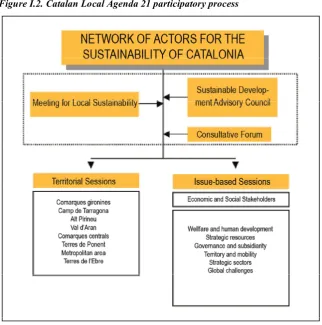
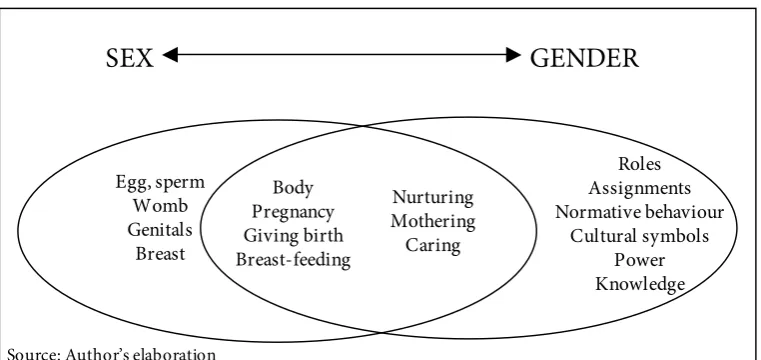
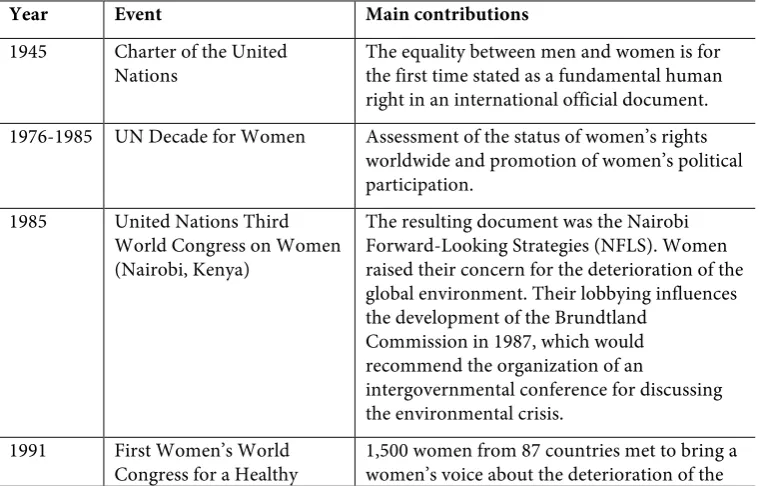
(6) ACKNOWLEDGEMENTS. Thank you to the institutional support of the University of Girona (Spain) and of the Joint Research Centre (JRC) of the European Commission in Ispra (Italy).. Thank you to my scientific advisors: To Josepa Bru, for her teachings and intellectual and personal advices, and for her generosity and support, even in the hardest moments, during the last ten years. And to Silvio Funtowicz, for his hospitality during the years I spent at the JRC in Italy.. Thank you to my colleagues of the KAM team of the JRC in Ispra, Italy: To Ângela Pereira, Tiago Pedrosa and Giuseppe Munda, and, specially, to Matthieu Craye, whose talks on uncertainty and on gender were definitively inspiring.. Thank you to the two people that have contributed to the English editing of the study: to Inge Ceuppens, who supervised the first publication of this study in an international journal; and to Spencer Groves, who has supervised the present thesis.. And least but not last, a very special thank you to all my family for their support, particularly: To my mother, Mercedes Cabo (her insistence and help was essential to give an end to the study). And to my partner, Héctor Saravia, who gave an unconditional support to this project, from the day he accepted with any doubt to move with me to Italy, to the day I have finally written the last sentence of this work..
(7) List of publications based on the thesis Agüera-Cabo, M. (2008). L’activisme femení en conflictes ambientals. Reflexions en clan feminista i apunts per a la gestió del medi. Documents d’Anàlisi Geogràfica, 51, 1-10. Agüera-Cabo, M. (2007). From equity to Difference. Contributions of gender perspectives to the governance of the environment. European Commission. EUR 22656 Agüera-Cabo, M. (2006). Are environment-related governance practices gender neutral? Lessons from grassroots activism in Catalonia (Spain). Proceedings of the International Conference EASST “Reviewing Humanness: Bodies, Technologies and Spaces”, Lausanne, Switzerland, August 2006 Agüera-Cabo, M. (2006). Learning From Women’s Grassroots Activism: Gender Reflections On Environmental Policy Science and Participatory Processes. Proceedings of the PATH Conference “Participatory Approaches in Science and Technology”, Edinburgh, England, June 2006 Agüera-Cabo, M. (2006). Gender, Values and Power in Local Environmental Conflicts. The Case of Grassroots Organisations in North Catalonia». Environmental Values, 15.4, pp. 479-504. Agüera-Cabo, M. (2004). Environmental Governance and Participation Processes: Challenges for Feminist Geography. Proceedings of the International Geographical Union (IGU) Congress, Glasgow, England, August 2004.. ix.
(8)
(9) List of figures Figure I.1. Location of the case studies. 44. Figure I.2. Catalan Local Agenda 21 participatory process. 52. Figure 1.1. Sex and gender in the construction of femininity. 88. Figure 1.2. Feminisms’ emphasis on sex, gender, equality and difference. 90. Figure 1.3. Cultural and political ecofeminisms. 95. Figure 2.1. Female and male representation in the Catalan Local Agenda 21 participatory process. 142. Figure 4.1. Priotirisation of environmental concerns by gender. 243. Figure 4.2. Distribution of home responsibilities among the family members. 245. Figure 4.3. Gender tendencies in pro-environmental attitudes. 247. Figure 8.1. Illustration representing Nature unveiling “her” secrets. 362. List of tables Table I.1. Methodological strategy and tasks. 42. Table I.2. Characteristics of the conflicts according to the grassroots organizations. 45. Table I.3. Questionnaires and interviews of activists in the grassroots organization. 49. Table I.4. Discussion groups in issue-based and territorial participatory sessions of A21CAT. 53. Table 2.1. Assessment and action recommendations as reported by the four major environment-related international reports. 123. Table 2.2. Milestones of the main intergovernmental events dealing with the environment and gender (1945-2005). 132. Table 2.3. Women and gender-related issues addressed by the Preliminary Consultative Document of the Agenda 21 of Catalonia. 144. xi.
(10) Table 3.1. Large-scale and quantitative studies on gender differences in environmental concerns considered in the comparison of bibliographical results. 157. Table 3.2. Synthesis of findings of gender differences in risk perceptions and environmental concerns in American sociological studies. 176. Table 3.3. Synthesis of results of testing diverse interpretative hypothesis about risk perceptions and environmental concerns in American sociological studies. 178. Table 3.4. Views of science and technology: hopes, expectations and confidence. 183. Table 3.5. Scientific and technological risks. 185. Table 3.6. Ethical considerations and scientific responsibility. 186. Table 3.7. Science-society communication and political decision-making. 187. Table 3.8. Conformity with the development model. 188. Table 3.9. Gender tendencies in the views of European citizens about ethical and decision matters related to the environment, science and technology (Eurobarometer 2005). 189. Table 3.10. Women and men’s feeling of engagement in science and policy (Eurobarometer 2005). 193. Table 3.11. Scientific awareness by gender (Eurobarometer 2005). 194. Table 3.12. Gender differences in interests in information for the Spanish population (2004). 195. Table 3.13. Gender differences in main interests in general information for the Spanish population (2004). 195. Table 3.14. Gender differences in main interests in general information for the Spanish population (2006). 196. Table 3.15. Percentage of correct answers given by gender for the quiz for evaluating citizens’ scientific knowledge (Europeans, science and technology, Eurobarometre, 2005).. 197. Table 3.16. Gender differences in the use of information related to health and security in everyday life for the Spanish population (2004). 199. xii.
(11) Table 3.17. Social values and beliefs (Eurobarometer 2005). 201. Table 3.18. Feeling of engagement in science and policy (Eurobarometer 2005). 202. Table 4.1. “I don’t know a lot about environmental problems. What worries me most is what happens in my village and how this affects the quality of life of people close to me.”. 216. Table 4.2. Profile of the members involved: previous experience in civil society organisations. 218. Table 4.3. Sociological profile of the members of each organisation. 221. Table 4.4. Reasons for mobilisation of the members of Coordinadora Antilínia de les Gavarres, based on interviews. 228. Table 4.5. Reasons for mobilisation of the members of Salvem les Valls, based on interviews. 228. Table 4.6. “Health risks are what worry me most about environmental problems”. 231. Table 4.7. Health risks as a main reason for mobilisation of interviewed members of Coordinadora Antilinia de les Gavarres. 232. Table 4.8. Prioritisation of general environmental concerns. 233. Table 4.9. “What worries me most about environmental and land problems is how they could affect people’s quality of life.”. 236. Table 4.10. “The loss of our landscape and historical memory is what worries me most about the environment.”. 238. Table 5.1. After your involvement in the conflict, did you change your level of confidence in the Government of Catalonia (Generalitat de Catalunya)?. 261. Table 5.2. After your involvement in the conflict, did you change your level of confidence in politicians?. 261. Table 5.3. After your involvement in the conflict, have you changed your level of confidence in scientists who carry out research into the potential effects of magnetic fields people’s health? (Members of Coordinadora Antilínia de les Gavarres). 274. Table 5.4. After your involvement in the conflict, have you changed your level of confidence in the expert technical team in charge of designing the. 274. xiii.
(12) high tension power line? (Members of Coordinadora Antilínia de les Gavarres) Table 5.5. After your involvement in the conflict, did you change your level of confidence in local inhabitants?. 277. Table 5.6. After your involvement in the conflict, did you change your level of confidence in the mass media?. 278. Table 5.7. After your involvement in the conflict, have you changed your level of confidence in ecologist organizations? (Members of Salvem l’Empordà). 279. Table 5.8. After your involvement in the conflict, have you changed your level of confidence in economic developers that locate their business in the Empordà region? (Members of Salvem l’Empordà). 279. Table 6.1. Distribution of tasks between genders in the organization of Salvem les Valls (case 3). 285. Table 6.2. Distribution of tasks between genders in the organization of Coordinadora Antilínia de les Gavarres (case 1). 286. Table 6.3. Distribution of tasks between genders in the organization of Salvem l’Empordà (case 2). 305. Table 6.4. Interest in feminism of female activists interviewed from Salvem l’Empordà. 314. Table 8.1. Basic moral differences between genders according to Gilligan’s work. 349. Table 9.1. Legitimacy status derived from the association of dualisms in Western thinking. 396. Table 9.2. Synthesis of basic differences between technical and cultural rationality as described by Krimsky and Plough (1988). 399. Table 9.3. Consideration of gender in the “Gender Impact Assessment of the specific programmes of the Fifth Framework Programme of the EC”. 413. Table 9.4. Example of the contribution of gender studies to energy-related politics: “Gender and Energy. A Perspective from the North” (Roehr, 2001). 416. Table 10.1. Gender mainstreaming environmental governance: Synthesis. 456. xiv.
(13) CONTENTS Abstract / Resum / Resumen. 23 27. Preface 31 Introduction Methodology. 40. Case studies. 44. Grassroots organizations in the North of Catalonia. 44. Case 1: “Coordinadora Antilínia de electromagnetic fields and health risks. les Gavarres”:. 47. Case 2: Salvem l’Empordà: against overexploitation of the territory in tourism, industry and agriculture. 47. Case 3. Salvem les Valls: biodiversity and landscape conservation Local Agenda 21 of Catalonia (A21CAT). 48. Local Agenda 21 of Catalonia (A21CAT). 51 57. PART 1. Theory and practice on gender and environmental governance: a state of the art Introduction. 59. Chapter 1. Women, nature and feminisms. 63. 1.1. Women’s nature in modern Western thinking. 63. 1.1.1. Antecedents: discourses on women’s nature in ancient Greece and Middle Ages. 64. 1.1.2. Equality and difference in Enlightenment thinking and the legacy of the biological determinism of the nineteenth. 65. xv.
(14) century 1.2. Feminist perspectives on femininity. 71. 1.2.1. Sex versus gender. 72. 1.2.2. Ethno-androcentric power relations. 75. 1.2.3. What happens with sexual difference?. 77. 1.2.4. Sex and gender as fictions of a heterosexual order. 82. 1.2.5. Interactions between sex and gender. 87. 1.2.6. Feminisms: a review. 89. 1.3. Ecofeminist perspectives on women, nature and the environment. 91. 1.4. Gender studies on the environment. 99. 1.4.1. Women, sustainable urban planning and mobility. 100. 1.4.2. Women, consumption and health. 103. 1.4.3. Women, pollution and security. 104. 1.4.4. Women’s participation in environment-related grassroots movements. 105. 1.4.5. Gender, climate change and energy. 106. 1.4.6. Gender and landscape. 107. 1.4.7. Women and sustainable development. 108. 1.4.8. Women and global environmental governance. 110. Summary of chapter 1. 112. Chapter 2. Governance, sustainable development, and gender perspective. 117. 2.1. Governance. 117. 2.1.1. Opportunities and challenges offered by governance. 119. 2.1.2. Environmental governance. 121. 2.2. International politics facing the environmental crisis. xvi. 122.
(15) 2.3. Sustainable development: re-inventing progress. 126. 2.4. Women’s groups lobbying international politics on the environment. 131. 2.5. Local governance: participation processes and the consideration of gender. 138. 2.5.1. Women’s underrepresentation in Local Agenda 21. 140. 2.5.2. Gender biases in environmental knowledge in the Local Agenda 21. 143. Summary of chapter 2. 146. PART II: Exploring theory on the field: gender, environmental concerns, and women’s activism. 149. Introduction. 151. Chapter 3. Gendered views on the environment, science and technology. 155. 3.1. Gender differences in environmental concerns and technological risks: a bibliographical analysis. 155. 3.1.1. Findings. 165. 3.1.2. Interpretative hypothesis. 168. 3.2. Male and female views on the environment, science and technology in Europe. 182. 3.2.1. Confronting (gendered) biases: science and technology versus ethics and society. 183. 3.2.2. Interpretation of gender tendencies in the two suggested biases. 192. 3.3. Open challenges: Science and citizens in dialogue. 202. Summary of chapter 3. 206. Chapter 4. Gender and values in local environmental conflicts. 209. xvii.
(16) 4.1. Characteristics of the grassroots movements under study. 210. 4.2. Hypothesis and assumptions underlying the empirical research. 213. 4.3. Life experience versus ideology. 214. 4.3.1. Where are women and what are they like? Sociological profile of ideology and life experience-based organisations. 221. 4.3.2. Experience and ideology-based argument in current and previous grassroots movements. 224. 4.4. Gender tendencies in women’s concerns about local conflicts and the global environment. 227. 4.4.1. Health risks as a female concern for the environment. 231. 4.4.2. A gendered approach to quality of life. 235. 4.5. Women are not a group! Acknowledging differences between women. 240. 4.6. Gendered tendencies in environmental activists’ opinions about general environmental concerns and in pro-environmental attitudes. 242. Summary of chapter 4. 249. Chapter 5. Confidence in policy, science and society in conflict situations: a gender approach. 253. 5.1. “Apolitical”, “unideological”, “against politics”?. 254. 5.1.1. The impact of conflict dynamics on grassroots activists’ level of confidence in politics. 257. 5.1.2. Public participation: a strategy to solve the crisis of traditional forms of government?. 258. 5.2. How gender tendencies influence trust in politics. 260. 5.3. Science and expert technical knowledge in question. 264. 5.3.1. The political use of scientific uncertainty. 266. 5.3.2. Gender marks in the health controversy of case 1. 273. 5.4. Gender marks in the level of confidence in different actors involved in the conflicts. xviii. 276.
(17) Summary of chapter 5. 281. Chapter 6. Women are supporting/ Women are leading: confronting scenarios of gender power relations in the grassroots movements. 283. 6.1. Gender biases in the organization and workings of grassroots movements. 284. 6.1.1. “Natural” male leadership?. 289. 6.1.2. Informal gender rules and behaviour for leading and discussing 6.2. Transgressing the androcentric order. 293 296. 6.2.1. A women’s group inside the grassroots movement: time, values and participation according to female activists. 297. 6.2.2. Towards a form of citizen participation based on gender equality. 303. 6.2.3. Acknowledging gender ideology, empowering women. 312. 6.3. Sacrificies, conflicts and ruptures: gendered impacts of grassroots activism. 314. Summary of chapter 6. 318. PART III: From the field back to theory: feminist reflections on values, science and legitimacy. 323. Introduction. 325. Chapter 7. Caring for the environment: from “motherhood” to feminist ethics. 331. 7.1. The maternal instinct or the androcentric construction of motherhood?. 331. 7.2. Scientific discourses on motherhood. 334. xix.
(18) 7.3. Feminist encounters with motherhood. 335. 7.4. Women, mothers and nature. 339. Summary of chapter 7. 344. Chapter 8. The moral and cognitive legitimacy of a “carer stand”. 347. 8.1. From “women’s morality” to feminist ethics. 347. 8.2. Ecofeminist ethics. 354. 8.3. The androcentric footprint in science. 359. 8.4. Feminist empiricism. 363. 8.5. Feminist epistemologies. 367. 8.5.1. Objectivity: a feminist reading. 369. 8.5.2. The standpoint of the carer. 370. 8.5.3. Standpoint theory revised. 372. 8.6. Situated knowledge. 373. Summary of chapter 8. 375. Chapter 9. Scientific rationality versus women’s “common sense”: tacking the issue of legitimacy. 381. 9.1. The feminist potential of discursive democracy. 382. 9.2. The failure of modern science as a solving strategy for complex environmental problems and the deliberative alternative to post-normal science. 385. xx.
(19) 9.3. Complexity and uncertainty: opportunities for changing power and legitimacy balances. 390. 9.4. Who are legitimate actors? Technical versus cultural rationalities. 394. 9.5. Cultural rationality, women and the “carer stand”. 400. 9.6. Gender legitimacy in rhetoric styles and discursive practices. 404. 9.7. Feminist and gender contributions to environmental knowledge. 406. 9.7.1. Gendered expertise. 407. 9.7.2. Epistemological contributions: interdisciplinarity and responsible science. 411. 9.7.3. Gender studies on the environment: empowering women and enhancing communication between science and society. 414. Summary of chapter 9. 418. Conclusions. 423. 10. Final conclusions. 425. 10.1 Summary of conclusions of parts I, II and III. 425. 10.2. Gender mainstreaming environmental governance. 442. 10.2.1. Meta-strategic level: challenges. 443. 10.2.2. Strategic level: objectives. 448. 10.2.3. Tactical level: agents involved. 450. 10.2.4. Management level: actions. 451. 10.2.5. Evaluation. 454. Bibliography. 465. ANNEX. 495. ANNEX 1. Enquiry to members of Coordinadora Antilínia de les Gavarres. 499. xxi.
(20) ANNEX 2. Enquiry to members of Salvem l’Empordà. 517. ANNEX 3. Enquiry to members of Salvem les Valls. 533. ANNEX 4. Interviews to members of Coordinadora Antilínia de les Gavarres. 553. ANNEX 5. Interviews to members of Salvem l’Empordà. 569. xxii.
(21) ABSTRACT In the second half of the twentieth century we saw the environmental debate escalate into one of the most challenging and complex issues that authorities at international, national, regional and municipal levels have to deal with. The inherent complexity of environmental problems, which brings out the interconnections between the economic, socio-cultural and ecological dimensions of the territory, is increased by the social, scientific and political focuses of the debate, and their interdependencies. In the framework of governance, scientific and technical assessments are a relevant but not “unique” source for legitimating environmental policymaking. The discussion is opened towards the consideration of different existing perspectives on the environment. Such a fundamental turn in the decision-making processes opened by governance makes it a challenging framework for the introduction of feminist and gender insights into environment related issues. And vice-versa: it is in the framework of governance that feminist and gender perspectives bring innovative theoretical reflections on the environment that did not fit the technical orientation of traditional environmental management. In addition, feminist and gender studies also offer a specific outlook to analyze and improve the inclusion of citizens in participation processes opened by political decision-making. The main objective of the present study is to systematize and explore in-depth the perspectives brought by feminism and gender to environmental governance. What is the specificity of a feminist and gender outlook? In what sense does it bring new light to environmental governance processes? Such questions are explored empirically and theoretically. The empirical part of the study consists of a bibliographical analysis, a gender analysis of Local Agenda 21 of Catalonia and a study of three cases of environmental grassroots organizations in the north of Catalonia. All in all, the contents of the study are presented in three parts that can be summarized as: conceptual and theoretical assumptions (“Part I. Gender and environmental governance. Theory and practice: a state of the art”); empirical findings (“Part II: Exploring theory in the field: gender, environmental concerns, and women’s activism”); and theoretical reflections (“Part III: From the field back to theory: feminist reflections on values, science and legitimacy”).. 23.
(22) Finally, the concluding chapter systematizes the empirical and theoretical findings of the research and brings a practical proposal to “gender mainstreaming” environmental governance.. RESUM Durant la segona meitat del segle XX hem assistit a l’escalada del debat ambiental fins a convertir-se en un dels reptes més complexes amb els que han d’enfrontar-se les autoritats tant a nivell internacional, nacional, regional com municipal. La complexitat intrínseca dels problemes ambientals, els quals presenten interconnexions entre les dimensions econòmica, sociocultural i ecològica del territori, s’incrementa encara més pels diferents enfocaments que participen en el debat: social, científic i polític, i les seves interdependències. En el marc de la governança, l’assessorament científic i tècnic continua essent essencial, però deixa de ser la única font possible per a legitimar la presa de decisió política respecte a la gestió del medi ambient. La discussió s’obre a la consideració de les diferents perspectives (científiques, socials i polítiques) que existeixen respecte al nostre entorn. Aquest gir fonamental que han viscut els processos de decisió de la mà de la governança són també un marc encoratjador per a la introducció de la perspectiva de gènere i feminista respecte al medi ambient. I vice-versa: en el marc de la governança, la perspectiva de gènere i feminista aporta reflexions teòriques innovadores respecte al medi ambient, que no trobaven un lloc en l’orientació tècnica amb la que tradicionalment s’havia tractat la gestió ambiental. A més, els estudis de gènere i feministes també aporten una mirada específica respecte a la inclusió de la ciutadania en els processos de participació que s’han generalitzat arran de l’aplicació dels principis de la governança. El principal objectiu d’aquest estudi és explorar en profunditat i sistematitzar les perspectives que aporten els estudis de gènere i feministes a la governança del medi ambient. Quina és l’especificitat d’una mirada de gènere i feminista? En quin sentit aporten una nova llum als processos de la governança ambiental? Aquestes qüestions són explorades empírica i teòricament. La part empírica de l’estudi inclou l’anàlisi bibliogràfica, l’estudi des de la perspectiva del gènere de l’Agenda 21 de Catalunya, i l’anàlisi de gènere de tres casos de mobilitzacions ambientals que van tenir lloc al nord de Catalunya.. 24.
(23) Els continguts de la tesi es presenten en tres parts que es poden resumir en: punts de partida conceptuals i teòrics (“Part I. Gènere i governança ambiental. Teoria i pràctica: la situació actual”); recerca empírica (“Part II: Explorant la teoria sobre el terreny: gènere, preocupacions ambientals i activisme de les dones”); i reflexions teòriques (“Part III: del treball de camp cap a la teoria: reflexions feministes sobre els valors, la ciència i la legitimitat”). Finalment, el capítol de conclusions sistematitza les aportacions empíriques i teòriques de la recerca i desenvolupa una proposta pràctica per a la introducció transversal de la perspectiva de gènere a la governança del medi.. RESUMEN Durante la segunda mitad del siglo XX hemos asistido a la escalada del debate ambiental hasta convertirse en uno de los retos más complejos que tienen que afrontar las autoridades tanto a nivel internacional, nacional, regional, como municipal. La complejidad intrínseca de los problemas ambientales, los cuales presentan interconexiones entre las dimensiones económica, sociocultural y ecológica del territorio, se incrementa aún más a causa de los diferentes enfoques que participan en el debate: social, científico y político, y sus interdependencias. En el marco de la gobernanza, el asesoramiento científico y técnico continua siendo esencial, pero dejan de ser la única fuente posible para legitimar la toma de decisión política respecto a la gestión del medio. La discusión se abre a la consideración de las distintas perspectivas (científicas, sociales y políticas) que coexisten en relación a nuestro entorno. Este giro fundamental que han vivido los procesos de decisión de la mano de la gobernanza, son también un marco esperanzador para la introducción de la perspectiva de género y feminista en lo que se refiere al medio ambiente. Y viceversa: en el marco de la gobernanza la perspectiva de género y feminista aportan reflexiones teóricas innovadoras respecto al medio ambiente, que no tenían posibilidad de intervención en la orientación técnica con la que tradicionalmente se había tratado la gestión ambiental. Además, los estudios de género y feministas también aportan una mirada específica en relación a la inclusión de la ciudadanía en los procesos de participación que se han generalizado a raíz de la aplicación de los principios de la gobernanza.. 25.
(24) El principal objetivo de este estudio es explorar en profundidad y sistematizar las perspectivas que aportan los estudios de género y feministas a la gobernanza del medio ambiente. Cual es la especificidad de una mirada de género y feminista? En qué sentido aportan una nueva luz a los procesos de la gobernanza ambiental? Estas cuestiones son exploradas empírica y teóricamente. La parte empírica del estudio incluye el análisis bibliográfico, el estudio desde la perspectiva de género de la Agenda 21 de Cataluña, y el análisis de género de tres casos de movilizaciones ambientales ocurridas en el norte de Cataluña. Los contenidos de la tesis se presentan en tres partes que se pueden resumir en: puntos de partida conceptuales y teóricos (“Parte I. Género y gobernanza ambiental. Teoría y práctica: la situación actual); investigación empírica (“Parte II: Explorando la teoría sobre el terreno: género, preocupaciones ambientales, y activismo de las mujeres”); y reflexiones teóricas (“Parte III: del trabajo de campo a la teoría: reflexiones feministas sobre los valores, la ciencia y la legitimidad”). Finalmente, el capítulo de conclusiones sistematiza las aportaciones empíricas y teóricas de la investigación y desarrolla una propuesta práctica para introducir transversalmente la perspectiva de género en la gobernanza del medio ambiente.. 26.
(25) Pensar en femenino, y antes que ello, pensar lo femenino es diseñar toda una estrategia de aproximación, es, primeramente, intentar elegir como ver el problema, un método o métodos por medio de los cuales la falsación sea menor. Pues una vez adoptada determinada perspectiva, ésta pone en marcha un entramado de resortes que te trasladan inexorablemente a uno de los caminos más transitados, desde donde rara vez se retoma el punto del que se partió. (Rodríguez-Magda, 1994). Preface The present thesis began life in 2003 thanks to a three-year grant from the European Commission to work with the Knowledge Assessment Methodologies (KAM) group of the Joint Research Centre, located in Ispra, Italy. KAM has produced and inspired a large part of the literature on post-normal science, a robust theory that reflects on the challenges and solving strategies of the management of complex environmental problems in situations of high scientific uncertainty and conflicting values. The starting point of the thesis was a research project entitled “Women, science and nature. Readings of the ethno-androcentric bias in scientific and ideological thought developed on the society/nature relationship”. This project had been presented to obtain the Certificate of Advanced Studies of the Doctorate in Environment, awarded by the University of Girona in 2002. However, in contrast to the situation that had inspired that initial investigation, the thesis I started at the KAM group met two big challenges that decisively influenced the direction it would take in the future. First of all, it started to be elaborated in a research group that had not previously dealt with gender issues, and which, although open to the arrival of new topics and approaches, did not explicitly consider gender as a relevant aspect of their research on environmental governance and participatory decision-making.. 27.
(26) The experience was itself a source of epistemological reflection because of the absence of the scientific and ideological research environment found when working in one’s own disciplinary community. As the feminist epistemologist Evelyn Fox Keller points out by referring to scientific communities as language communities, members of a consolidated research group do not only share theories and methodologies, they also share words, assumptions, and a specific outlook on the world:. Sharing a language means sharing a conceptual universe. It means more than knowing the “right” names by which to call things; it means knowing the “right” syntax in which to pose claims and questions, and even more critically it means sharing a more or less agreed-upon understanding of what questions are legitimated to ask, and what can be accepted as meaningful answers. […] To know what kind of explanations will “make sense”, what can be expected to account as “accounting for”, is already to be a member of a particular language community. (1992: 27-28). To investigate for and in a well-defined scientific (and ideological) community is also common in the case of gender studies, the theoretical tradition from which the present research comes. Gender studies used to be elaborated inside the women, gender or feminist studies’ group of a university department or research institution. The same community informs, supports and assesses the development and content of the research activity, which obviously deals with the conceptual assumptions, specific language and theoretical references that are completely taken for granted by the community members. In contrast, outside a gender studies research community the conceptual universe that would be naturally assumed was not in place. Therefore, even the theoretical references of the research were themselves a potential issue of debate. Such a special situation showed me the importance, and also the difficulties, of communicating gender studies to a wider scientific audience. Yet I would venture to say that this situation strongly influenced the research questions that finally guided the empirical part of the thesis, as set out in part II. Moreover, I also think it profoundly influenced an intention that existed from the beginning of the research but that took a specific form in this context: the research was not developed thinking exclusively of gender scholars as potential readers, but also having in mind a diversity of scientists and professionals dealing with environmental governance who are not necessarily aware of gender issues. For this reason part I. 28.
(27) includes two introductory chapters that establish basic conceptual aspects of the study. The theoretical foundations of feminism, ecofeminism and gender, and their readings and interpretations related to nature and the environment (which are well-known to a gender/feminist scholar but not generally to scientists) are set out in chapter 1. Conceptual aspects of governance, sustainable development and international politics of the environment (which are basic for scholars dealing with environmental politics, but not necessarily familiar to a feminist/gender reader) are introduced in chapter 2. The second challenge I faced was that the KAM research group, in which I developed the most important part of the thesis, and the institution it belongs to, the Joint Research Centre of the European Commission, are strongly oriented towards the production of scientific knowledge that is useful for policy-making. Again, this has not usually been a strong priority for gender studies that, at least until recently, have neither reached nor received much interest from political spheres. Therefore, another key challenge underlying the research process was to systematize and give a practical sense to the powerful theoretical contributions of gender studies that could be applied to environmental management and decisionmaking, particularly under the new participatory paradigm opened up by governance. In this sense, a short time after starting the thesis, Matthieu Craye, one of my colleagues at the KAM group, compared his work on scientific uncertainty and policy making with gender studies and offered me a reflection that I now think carefully summarizes—using the community language and the worldview of postnormal scientists—the type of contributions I would like the present research about gender approach to environmental governance to bring to policy-making: I see the things I do on uncertainty and on discussion schemes for pedigree of knowledge mainly as an opening to institutional change. From our conception of the science-policy interface, we try to conceive another role for scientists in policymaking. However, traditional interactions between science and policy are so well institutionalised that it is difficult to create the conditions for change. Then proposing a discussion scheme focusing on uncertainty instead of on “facts” and ”results” can be an initiator of change, because you put the science “at risk”, you challenge vested beliefs about roles and rules. It is a bit like making a crack in something so that “the light gets in” (and people become more reflexive and self-. 29.
(28) critical). So gender studies could perhaps develop “tools” to support women making a difference, by first creating “doubt” about current beliefs and practices1.. In contrast to his argument, I do not think gender studies only helps to empower women’s contributions, although this is obviously a fundamental task. But I certainly think the ability to make a “crack” that allows “light to get in” and to promote “people” (women and men) to be “more reflexive and self-critical” is the most powerful quality of feminist and gender studies. Adapting again Craye’s words, I would venture to say that gender studies puts our “vested beliefs” “at risk” by demonstrating the unequal power relations at the basis not only of society and politics, but also of our scientific tradition and applied investigations. In the case of environmental governance, they open fundamental questions regarding the gender bias implicit in the management of the environment, as well as unequal power relations in participatory democracy opened by governance processes. In order to reflect on such questions and all the meanings and new interpretations they suggest we will evolve from empirical evidence (part II) to explore feminist and gender studies in all their complexity (part III). Throughout the theoretical reflections of part III, I propose the reader follow some of the paths of reflection opened by such theoretical traditions, taking in their community language and worldviews, and to afterwards apply these contributions to environmental management without losing their essence. I hope that by the end of this empirical and theoretical adventure I have created a “crack” for an alternative and risky perspective on environmental governance, empowered by a gender outlook. If that happens, this research will have achieved its most challenging and ambitious goals, and the words at the heading of this preface, borrowed from the feminist philosopher Rosa M. Rodriguez-Magda, will return to the mind of the reader full of meaning and bright clarity.. 1. Transcription of e-mail from M. Craye, 2004.. 30.
(29) Introduction In the second half of the twentieth century we saw the environmental debate escalate into one of the most challenging and complex issues that authorities at international, national, regional and municipal levels have to deal with. The inherent complexity of environmental problems, which brings out the interconnections between the economic, socio-cultural and ecological dimensions of the territory, is increased by the social, scientific and political focuses of the debate, and their interdependencies. At a social level, we must acknowledge that political recognition of environmental degradation was preceded by—and to a large extent is a response to—civil society mobilizations, in which the task of ecology groups should be acknowledged. NGOs and different forms of organized civil society had a fundamental role in lobbying the international debate on the environment at the Earth Summit in Rio in 1992, through the Global Forum. At a local level, groups of organized citizens have also been an important feature of protests concerning environmental conflicts. It is reasonable to argue that the increasing number of citizens that have organized themselves at a local level to challenge political and economic decisions are in many cases motivated by local environmental conflicts. Such a multilevel situation of social activity has provoked a slow and unequal process of political recognition of the existence of multiple and conflicting environmental values. At a scientific level, in the last two decades a discussion has opened up and been consolidated on the failure of “science” to offer a trustworthy degree of certainty when explaining the nature, extent and foreseeable consequences of complex environmental problems. Such uncertainty is one of the causes that has fuelled the legitimacy crisis of political authorities in preventing and solving environmental degradation and its negative consequences. A fundamental aspect of the discussion is the role played by science in policy-making, because in the case of environmentrelated problems the traditional strict delimitation between scientific evidence and social values is weakened. For instance, Irwin and Wynne point to conflicts related to quality of life, pollution and hazards or global environmental change as situations in which “as well as technical judgements having to be made, the ‘facts’ cannot stand apart from wider social, economic, and moral questions.” And, because of that they point out that “the relationship between science and the public may not be so straightforward as suggested in the conventional treatment which assumes a clear boundary between ‘facts’ and ‘values’” (1996: 3).. 31.
(30) Finally, at a political level, as a result of the above-mentioned effects, the concept of “governance” is gaining increasing prominence in local, European and global political contexts, as a promising strategy to address the legitimacy crisis of governments by proposing plural and transparent decision-making processes involving politicians, scientists, stakeholders and citizens. In the framework of governance, scientific and technical assessments are a relevant but not “unique” source for legitimating environmental policymaking. The discussion is opened towards the consideration of different existing perspectives on the environment. That means there is the potential to involve the different interests, values and ideologies of a diverse range of social actors, and consider issues related to perceptions, the equity of different conceptions, and ethical aspects. Consequently, it also allows a more suitable context for the introduction of an analysis of environmental problems from social disciplines. Such a fundamental turn in the decision-making processes opened by governance makes it a challenging framework for the introduction of feminist and gender insights into environment related issues. And vice-versa: it is in the framework of governance that feminist and gender perspectives bring innovative theoretical reflections on the environment that did not fit the technical orientation of traditional environmental management. In addition, feminist and gender studies also offer a specific outlook to analyze and improve the inclusion of citizens in participation processes opened by political decision-making. What is the specificity of a feminist and gender outlook? In what sense does it bring new light to environmental governance processes? The main objective of the present study is to systematize and explore in-depth the perspectives brought by feminism and gender to environmental governance. To answer these questions the thematic branch of feminism known as ecofeminism offers two promising leads: (1) A powerful theoretical framework to analyze historically and anthropologically the domination, exploitation and commodification of nature in symbolic and physical terms, by linking it to the cultural order that has traditionally legitimated women’s oppression, and; (2) The suggestion that women show specific perspectives on, values for and interests in the environment. In relation to the second proposal, which I expound in more detail later, the radical and essentialist branch known as cultural ecofeminism argues that there is a. 32.
(31) specific link between women and nature, related to the experience of female biological processes such as pregnancy, giving birth and nurturing a child. In this case, most women from industrialized countries would be alienated by androcentric Western lifestyles and consumption patterns, blinding them to recognize their “natural” engagement with nature (Mies and Shiva, 1997). In contrast, the branch of ecofeminism that (taking the terminology proposed by Puleo, 2006) I will refer to as constructivist develops a social and political interpretation of the links between women and the environment, and rejects biological readings. Theorists state we may focus on gender—the historical, cultural, social and ideological construction of femininity—to explain the specificity of women’s concerns for the environment (Rocheleau et al., 1996). Unlike other feminist analysis, ecofeminism has put theory into practice. This communication between real-life and intellectual elaboration, concerned with demonstrating the role of women in environmental protection, has been very much focused on developing countries. However, some cases do exist for Northern countries, which are the interest of the present study. Unfortunately, empirical work elaborated with a theoretical connection with the constructivist branch of ecofeminism is scarce and rather scattered. Some empirical contributions developed for Northern countries, including Spain, focus on the case of women’s activism in toxic waste mobilization, and they are a fundamental reference and inspiration for the empirical work of the present study. But there is not really a systematic and in-depth exploration of how gender biases citizens’ concerns, values and interests in the environment, and why. In this sense, the present thesis takes on the goal of contributing to clarifying the relevance of gender in the analysis of citizens’ concerns for the environment, focusing particularly on systematizing the specificity of women’s perspectives and interests. In addition, the ideological antagonism underlying the cultural and the constructivist branches of ecofeminism has largely prevented the latter from engaging in a serious consideration of arguments related to the experience of motherhood, more directly connected to biological aspects of female reproduction, and widely used by cultural ecofeminism. Certainly this is an argument that easily leads to essentialist interpretations, but it can also be a source of reflection for social and political perspectives, as it is going to be treated in the present research. Finally, none of the branches of ecofeminism has a clear orientation towards influencing environmental management and decision-making. As previously mentioned, this absence is a basic challenge for the present thesis.. 33.
(32) All in all, the contents of the study are presented in three parts that can be summarized as: conceptual and theoretical assumptions (“Part I. Gender and environmental governance. Theory and practice: a state of the art”); empirical findings (“Part II: Exploring theory in the field: gender, environmental concerns, and women’s activism”); and theoretical reflections (“Part III: From the field back to theory: feminist reflections on values, science and legitimacy”). Part I includes two introductory chapters that establish the conceptual and theoretical assumptions that guide the empirical analysis and the discussion in the subsequent parts. Chapter 1 describes the theoretical assumptions about feminism and gender studies that underlie the development of the study. Ecofeminist perspectives and the basic elements of the discussion regarding the links between women and the environment are also described. Finally, it summarizes the most relevant thematic approaches of gender studies to the analysis of the environment: sustainable urban planning and mobility, consumption and health, pollution and security, environment-related grassroots movements, climate change and energy, landscape analysis, sustainable development and global environmental governance. Chapter 2 discusses the multiple interpretations that coexist concerning governance and briefly reconstructs the history of the concept at an international governmental level. In this chapter I also write about the emergence of the concept of sustainable development in international forums, and the strategic alliances it establishes with governance. Next, I deal with the work of women’s groups lobbying international politics on the environment. Finally, the chapter focuses on participation processes as a fundamental aspect in the application of environmental governance at local level. In this study, environmental governance practices are conceived as complex processes that are sometimes guided by institutions, sometimes the result of conflict situations with citizens. On the one hand, an important number of institutions are implementing tools for promoting participatory decision-making. For instance, Local Agenda 21 is an important mechanism to promote the involvement of scientists, stakeholders and citizens in discussions about the social and economic challenges of sustainable development at local and regional levels. However, as I will show in more detail later, the assessment of Local Agenda 21 initiatives often reveals a failure to involve. 34.
(33) a plurality of perspectives, and a low political commitment to dealing with controversial issues and applying the results of the participatory process. On the other hand, grassroots organizations emerging as a result of environmental problems develop other forms of participation that are an alternative to the institutional vertical approach. Indeed, they may oppose political authorities, and their influence in the decision-making process is based on lobbying them. Most of the time grassroots groups do not influence political decision-making as much as they would like, and dissatisfaction with and distrust of politics and politicians increases among their members. Nevertheless, an extended diversity of social and economic agents take part in the public discussion on the environment and by consensus, negotiation or conflict, they influence the decision-making process in some way. In this sense, both institutionally guided participatory process and grassroots organizations may be considered a kind of laboratory for reflecting on the introduction of a gender perspective. In chapter 2 a case of institutional participation process, Local Agenda 21 of Catalonia, will be analyzed in terms of gender balance in the organization of the participation activities and the consideration of gender in the knowledge informing the discussion. The case will help to illustrate the consequences of gender-blindness in the design and development of institutional participation processes. After that, the discussion will evolve from pointing to the problems of ignoring gender in terms of representation, to exploring how gender is relevant to interpreting concerns, interests and values for the environment and how gender inequalities bias power relations in participatory processes. That analysis will be developed for the case of grassroots organizations in the later chapters of Part II. Part II focuses on the empirical analysis of the research, presented in chapters 3 to 6. As mentioned above, a fundamental contribution of the constructivist branch of ecofeminism is to point out how gender shapes citizens’ values, interests and perspectives on the environment, though this hypothesis has not been thoroughly tested. In chapter 3 I present findings from sociological studies that, independently from ecofeminist theories, have found statistical significance of gender tendencies in environmental concerns and risk perception. The main results, as well as the arguments that have been analyzed to explain such tendencies, are presented and reflected upon in detail.. 35.
(34) Most contributions are from American academia, and few studies focus on Europe. In order to have a better picture of the influence of gender in the views on the environment of European and Spanish citizens, statistical results from surveys published by the Eurobarometer and the Spanish Foundation for Science and Technology (FECYT) will be analyzed in the second part of chapter 3. Results will help to explore issues related to gender tendencies in citizens’ interests in scientific information, perception and confidence in science and technology, opinions about the ethical and social responsibility of science, and about political decision-making. A hypothesis about the gender tendencies observed will also be expounded. Whereas data explored in chapter 3 allows a broad and statistically significant perspective of the influence of gender in citizen’s concerns, values and interests on the environment, a more fine-grained analysis is not possible. On the other hand, qualitative analysis enables the exploration of other types of questions, as will be seen in the next chapter. In chapter 4 gender biases in the concerns, values and interests regarding the environment are further explored using a qualitative approach. In this case not the general population but citizens engaged in specific environmental conflicts are surveyed. The difference is significant, not only because the sample corresponds to a segment of the population publicly defending environmental concerns, but also because we can focus on specific environmental problems affecting people and not on hypothetical problems used in statistical studies. The results presented are from a study elaborated by the author of three cases of environmental grassroots organizations in the north of Catalonia. As introduced above, grassroots groups are a specific form of participation in the decision-making process for which some different aspects related to gender can be analyzed. A fundamental objective of governance is to combat the loss of confidence in traditional forms of decision-making. The case studies offer an interesting opportunity to assess the effects of the conflicts on the confidence of the grassroots members in relation to scientific and technical experts, politicians and local inhabitants. In addition, gender biases in the results obtained are suggested. This issue is developed in chapter 5. Finally, grassroots groups also allow us to explore questions related to gender biases in the organization and in the deliberation forums of participatory processes. Does structural gender inequality in society bias the organization of the group? Does the dominant androcentric model prevailing in public life in any way. 36.
(35) influence the participation process of grassroots organizations? These questions will be tackled in chapter 6. Part III reflects on the empirical findings of part II by referring, on the one hand, to the consideration of issues related to perceptions, the equity of different conceptions, and ethical aspects, and on the other to links between and contributions of gender studies to environmental social theory and post-normal science. The discussion starts in chapter 7 by reflecting on the empirically-supported hypothesis that women’s concerns for the environment are strongly biased by their role as carers. The finding suggests the relevance of analyzing the influence of motherhood on the construction of women’s identities and their life experiences, and to reflect on the alternative readings brought by feminism and ecofeminism. First of all, the patriarchal ideological projections of the role of the mother and their influence on the construction of femininity will be discussed from a historical perspective. In contrast, feminist readings of motherhood will also be presented, discussing the benefits and handicaps of alternatives shown by the main theoretical branches. Finally, the discussion will focus on the specific relation between motherhood, women and nature recognized by ecofeminist theory. A fundamental objective of chapter 7 is to reflect on the assumptions that will allow us to refer to the “carer stand” as a specific way of seeing the environment. It is a way of seeing that is particularly relevant, but not exclusive to women. Therefore it is necessary to avoid essentialist interpretations of women as “natural” carers of the environment. These assumptions are necessary to fully interpret the theoretical elaborations presented in the following chapters. In chapters 8 and 9 I will deal with the issue of legitimacy from different points of view. The central argument is that a fundamental gender bias in the participatory process is the different weight of legitimacy implicitly associated with the values, reasoning, rhetoric and discursive styles associated with masculinity and femininity. In particular, masculinity (not necessarily meaning males) is implicitly considered the neutral norm in decision-making forums. This means that arguments elaborated according to the interests and values of a “carer stand” or defended with such a discursive style (implicitly associated with femininity, but not necessarily defended exclusively by women) are powerless. Chapter 8 focuses the discussion on feminist theory and is divided into two parts. First, I reflect on the concept of a carer stand by referring to feminist approaches to moral theory and ethics. In particular, the work of Carol Gilligan on the. 37.
(36) significance of gender in moral development will help to explore in depth the characteristics of the specific view of a carer. The discussion on morality will finally introduce feminist approaches to ethics, particularly ecofeminist ethics. The second part of chapter 8 presents feminist epistemological reflections on science. The critical path walked by science feminists to deconstruct modern science is relevant as they propose a radically different reading of the legitimacy of a cognitive subject. Such theorists oppose the modern ideal that knowledge is the result of an impersonal and objective research process. On the contrary, they argue it is the result of a social and political position. From this perspective, I explore the argument developed by science feminists who affirm that a feminist/female standpoint is an “insurrectional” perspective for the construction of knowledge. Finally, chapter 9 directs the discussion of legitimacy towards reflections specifically related to the practice of governance processes. The discussion starts by pointing to the benefits and critical aspects of discursive democracy for a feminist insight. In this context, post-normal science is explored from a gender perspective, as it proposes a particular application of Habermas’ ideal of discursive democracy to the management of complex environmental problems. For post-normal science scholars, governance is a high democratic model of political decision-making that involves in-depth modifications of traditional ways of addressing environment-related issues. Scientific knowledge is itself under scrutiny and is considered as a means (and not an end) in the decision-making process, which may inform such a diversity of perspectives. Both complexity and scientific uncertainty are fundamental aspects of that new model of environmental decision-making. They lead to a potential change of power relations and legitimacy balances, as some case studies of the application of postnormal science will show. The increased legitimacy played by values offers a challenging path for the introduction of a gender perspective. However, I will argue that perspectives on the environment that have been traditionally underrepresented may continue to be ignored or powerless if a gender strategy is not considered. The discussion will be presented by the case of encounters between technical and cultural rationalities. As an alternative, I will present specific strategies for the consideration of gender in environmental participatory decision-making.. 38.
(37) Finally, the concluding chapter systematizes the empirical and theoretical findings of the research and brings a practical proposal to “gender mainstreaming” environmental governance.. 39.
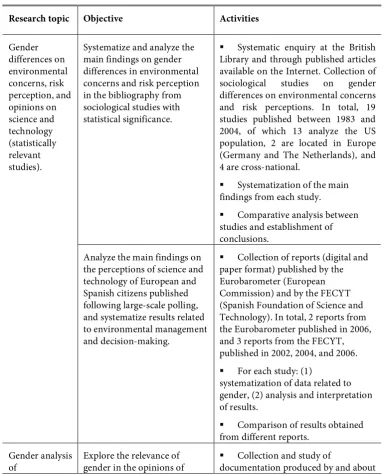
(38) Methodology The research process evolved from continuous feedback between theoretical building and field research findings. Thus the methodological approach has been very flexible, adapting it to advances in the research. The research activity has included empirical and theoretical work. The empirical content has been elaborated by: 1. A comparative analysis of bibliographical resources of sociological studies on gender differences on environmental concerns and risk perception. 2. Interpretation of statistical data from European and Spanish polls of social perception of science and technology. 3. Qualitative analysis of four case studies: three grassroots organizations for environmental conflicts and a Local Agenda 21 process (all case studies are located in Catalonia, Spain). The theoretical work consisted in consulting bibliographical resources from richly diverse fields: gender studies, feminism, environmental social theory, post-normal science, environmental ethics and political theory. The following table shows in detail the methodological strategy and the tasks implemented.. 40.
(39) Table I.1. Methodological strategy and tasks Research topic. Objective. Activities. Gender differences on environmental concerns, risk perception, and opinions on science and technology (statistically relevant studies).. Systematize and analyze the main findings on gender differences in environmental concerns and risk perception in the bibliography from sociological studies with statistical significance.. Systematic enquiry at the British Library and through published articles available on the Internet. Collection of sociological studies on gender differences on environmental concerns and risk perceptions. In total, 19 studies published between 1983 and 2004, of which 13 analyze the US population, 2 are located in Europe (Germany and The Netherlands), and 4 are cross-national. Systematization of the main findings from each study. Comparative analysis between studies and establishment of conclusions.. Analyze the main findings on the perceptions of science and technology of European and Spanish citizens published following large-scale polling, and systematize results related to environmental management and decision-making.. Collection of reports (digital and paper format) published by the Eurobarometer (European Commission) and by the FECYT (Spanish Foundation of Science and Technology). In total, 2 reports from the Eurobarometer published in 2006, and 3 reports from the FECYT, published in 2002, 2004, and 2006. For each study: (1) systematization of data related to gender, (2) analysis and interpretation of results. Comparison of results obtained from different reports.. Gender analysis of. Explore the relevance of gender in the opinions of. Collection and study of documentation produced by and about. 41.
(40) environmental concerns and power-relations in grassroots organizations for environmental conflicts (qualitative study).. activists from three grassroots groups involved in environmental conflicts from the north of Catalonia. Main interests: Interests and values involved in claims; Awareness and threats in the conflict; Formal and informal knowledge produced around the conflict; Attitudes and roles in the participation process; . Political empowerment;. Perception of scientific uncertainty and political legitimacy; General interests and values in environmental issues; Everyday responsibilities that affect the environment; Commitment and personal involvement in sustainable development.. 42. organizations and environmental conflicts: websites, information leaflets produced by the groups, and articles in local newspapers. Interviews with the leaders of the organizations (July 2003). Observation of one of the general meetings of a grassroots group (July 2003). Questionnaires to the most active members of the organizations (108 enquiries returned) (September 2003March 2004). Processing of data and interpretation of results from the questionnaires. In-depth interviews of activists (19 activists interviewed) (December 2004). Processing, analysis and interpretation of the interviews..
(41) Gender assessment of a Local Agenda 21 process.. Gender assessment of expert knowledge and informative inputs to the participatory process of Local Agenda 21 of Catalonia (A21CAT).. Epistemological and theoretical background and reflection.. Establishment of theoretical foundations of the study, and reflection on empirical results obtained.. Search for information about Local Agenda 21 initiatives in Europe on the ICLEI website (www.iclei.org). Search for information on the A21CAT website (www.gencat.cat/): structure of the participation process, participants involved in each of the phases (from consultation to meetings), documentation produced by the technical office for informing participants in thematic and territorial participation meetings. Meeting with the A21CAT director (July 2003): presentation of the research, short interview and collection of paper documentation. Analysis of information: (1) assessment of gender-balance according to groups of participants, diverse phases of the participation process and issue-based discussion groups; (2) consideration of gender through information offered to the participatory process. Search for, analysis of and reflection on bibliography dealing mainly with the following issue-based areas: Gender and feminist theoretical approaches and empirical studies on the environment. Feminist approaches to moral theory and ethics. Feminist scientific epistemology. Theoretical approaches to governance and participatory democracy. Post-normal science. Environmental social theory.. 43.
(42) Case studies As introduced above, four case studies have been considered. The first three consist of grassroots organizations involved in environmental conflicts taking place in the north of Catalonia, Spain. The fourth case deals with a Local Agenda 21 process in the region of Catalonia. The four cases are described in detail below.. Grassroots organizations in the North of Catalonia The qualitative analysis comes from three cases of environmental grassroots organizations in the north of Catalonia. Catalonia is situated in the north-east of Spain, covering approximately 32,000 km² and with a population of about seven million. With its own language—Catalan— and a strong historical cultural identity, Catalonia has had an autonomous government since the Spanish constitution of 1978. The Generalitat de Catalunya’s political jurisdiction includes territorial planning and development. Figure I.1. Location of the case studies. Source: author’s elaboration. 44.
(43) The three grassroots groups analyzed were campaigning to stop the development of large tourist and infrastructure projects that they considered would result in a high environmental impact (see table I.2). They principally opposed the Catalan government and, in many cases, other economic stakeholders involved in the conflicts.. Table I.2. Characteristics of the conflicts according to the grassroots organizations Case 1. Coordinadora Antilínia de les Gavarres. Case 2. Salvem l’Empordà. Case 3. Salvem les Valls. Description The grassroots movement opposes the construction of a high tension power line to provide the Costa Brava with more energy. A number of precoastal villages are heavily affected by this power line.. Description The grassroots movement opposes projects to develop golf resorts, residential and tourist developments, pig feeding farms, ports, aerodromes, wind power parks and new industrial areas in the Empordà region.. Description The grassroots movement opposes a project to build a road and a tunnel that crosses a Pre-Pyrenean natural area and an emblematic landscape.. 45.
(44) Alleged Social and Economic Impact Health risks. There is important scientific uncertainty about health risks associated with magnetic fields. The grassroots movement is concerned with the possible development of cancers in people living close to the high tension power line. In particular, people who already have cancer or heart problems run even higher risks due to the proximity of magnetic fields. Decrease of quality of life. Noise produced by the infrastructure / degradation of vegetable gardens in the vicinity of the high tension power line / anxiety as a result of uncertainties about the health consequences of the infrastructure / breaking up of the landscape.. Alleged Social and Economic Impact Decrease in the quality of life. Soil water contamination (nitrates) from pig macro-farms and overexploitation from golf courses reduce availability of drinking water / noise produced by aerodromes / breaking up of the landscape, etc. Negative effects on local identity. Degradation of the Empordà rural and natural landscape / degradation of social cohesion in the region.. Alleged Social and Economic Impact Decrease in quality of life. Noise / air contamination / destruction of the landscape. Economic impacts. Negative effects on the development of emerging nature tourism / negative effects on agriculture due to the potential changes in land use. Negative effects on local identity. Degradation of the local identity in the Garrotxa, strongly symbolized by the natural landscape.. Alleged Ecological Impacts Impact on the landscape and the natural area of the Gavarres; increased fire risk.. Alleged Ecological Impacts Soil-water contamination and decreased water supply due to golf resorts and pig macrofarms. Urban and industrial projects have an impact on the connection between natural parks and cause significant fragmentation of the coastline. Wind power parks change bird migration.. Alleged Ecological Impact Negative consequences of a new road construction on local fauna and flora. Potential changes in land use. Potential air pollution and its consequences.. Source: Author’s processing of information provided by organizations’ representatives and from grassroots organizations’ websites, 2005.. 46.
(45) Case 1: “Coordinadora Antilínia de les Gavarres”: electromagnetic fields and health risks The first grassroots organization studied, the citizens’ movement Coordinadora Antilínia de les Gavarres, or “Les Gavarres Civil Platform Against the High Tension Power Line” (case 1), mobilized in 1997-98 against the construction of a high tension power line in a populated area of the province of Girona. The plan for this infrastructure was designed by the electricity board FECSAENHER and was supported by the autonomous government, the Generalitat de Catalunya. Both bodies saw a need for a greater energy supply for the tourist services of the Costa Brava during the high season, prompting them to initiate this project. However, unclear scientific evidence, in other words a high level of uncertainty, about the effects of the high tension power line on health prevailed among citizens. Citizens were concerned about the dangers of the installation to their well-being. The perceived potential health risks of the high tension power line led to the mobilization of the inhabitants of the villages that would be affected by the planned infrastructure. Not only did people consider health risks for the average healthy person. Magnetic fields were thought to have an even greater negative impact on those who, before the construction of the line, already suffered serious health problems, such as cancer or heart disease. Other negative consequences of the infrastructure played a role in the mobilization of citizens: a potential decrease in quality of life and negative effects on the landscape surrounding the village and in the natural area of the Gavarres. While the fieldwork was undertaken (July 2003 – December 2004), the high tension power line had already been constructed. As a result, the interviewed members of the grassroots organization also reported the negative consequences of the building and functioning of the infrastructure for the local inhabitants.. Case 2: Salvem l’Empordà: against overexploitation of the territory in tourism, industry and agriculture Our second case study involves Salvem l’Empordà (case 2), Catalan for “Save the Empordà”; it was founded in 2002 as a citizens’ organization to “save” the Empordà region from several projects they considered would have a high environmental. 47.
Figure


+7




Documento similar
I molt agraït també estic dels dies de desconnexió de tesi que al final de l'estada de recerca vaig poder passar a Broome poble i rodalies amb tenda de campanya amb el David Dureau
Aunque no es frecuente, también recibe el nombre de discontinuidad de Gutenberg el límite sísmico litosfera- astenosfera (Schmerr, 2012), como se puede apreciar en la tabla
De fet, el perfil del periodista de dades ha de ser una barreja entre enginyer i periodista o que, si no pot ser, s’ha de trobar una barreja que continga la capacitat d'anàlisi
Particularly, speaking of technological appro- priation from the perspective of gender implies putting people’s experience (in this case, that of women as subjects of gender) in
Últimes notícies: Aquest mòdul mostra una llista dels articles actuals i publicats més recentment.. Alguns dels que es mostren potser hagin vençut tot i ser els
qual pot veure qualsevol que hi passe, i que una maledicci6 procedent d'algun horrible ser, per enveja o per alguna altra causa originada per la tan freqüent maldat deis homes o de
Que l’ajuntament sigui admi- nistració educativa és una aspiració compartida per moltes ciutats i, de fet, podria ser una solució a alguns dels problemes del sistema educatiu
Per tant, com es pot comprovar, els exemples mostrats en aquest apartat (en alemany i català) comparteixen el significat fraseològic (i en alguns casos es tracta de somatismes
