rec
ibi
do e
ac
ept
EVALUATING THE ‘PULSE’ PROGRAM: UNDERSTANDING THE IMPLEMENTATION AND
PERCEIVED IMPACT OF A ‘TPSR’ BASED PHYSICAL ACTIVITY PROGRAM FOR
AT-RISK YOUTH
EVALUACIÓN DEL PROGRAMA ‘PULSE’: COMPRENSIÓN DE LA APLICACIÓN E IMPACTO PERCIBIDO DE UN
PROGRAMA DE ACTIVIDAD FÍSICA PARA JÓVENES EN RIESGO BASADO EN EL MODELO DE ENSEÑANZA DE LA
RESPONSABILIDAD PERSONAL Y SOCIAL (TPSR)
Bryce
BARKER
(Universisty of Ottawa – Canada)
Tanya
HALSALL
(Universisty of Ottawa – Canada)
Tanya
FORNERIS
(Universisty of Ottawa – Canada)
1ABSTRACT
The PULSE program is a community-based physical activity (PA) and life skills program designed to help
at-risk youth become more physically active. This program is based on the Teaching Personal and Social
Responsibility (TPSR) model and develops the physical and psychological skills needed for youth to
regulate PA participation. The purpose of this research was to examine the PULSE program and
measure changes in the five levels of the TPSR model and perceived impact. A mixed-method approach
was used that included one quantitative measure of self-ratings of the TPSR levels and qualitative
semi-structured interviews. The results indicated that the five TPSR levels showed a gradual increase
from the beginning to the end of the program and the qualitative findings supported the quantitative
findings as the youth discussed how they learned how to put forth effort, self-coach, become leaders
and transfer these skills outside of the program. The results demonstrate that the TPSR model is a
framework that can be used to teach youth self-regulatory skills to become more physically active.
Researchers and practitioners working to increase youth PA involvement should recognize the value
and importance of applying interventions that integrate self-regulatory skills development.
RESUMEN
El programa PULSE es un programa comunitario que pretende enseñar habilidades para la vida y
actividad física para ayudar a los jóvenes en situación de riesgo a ser más activos físicamente. Este
programa se basa en el modelo de Enseñanza de la Responsabilidad Personal y Social (TPSR) y
desarrolla las habilidades físicas y psicológicas necesarias para que los jóvenes regulen su
participación en la actividad física. El propósito de esta investigación fue examinar el programa PULSE y
medir los cambios y el impacto percibido en los cinco niveles del modelo TPSR. Se utilizó un enfoque de
métodos mixto que incluía una medida cuantitativa de la auto-evaluación de los niveles TPSR y
entrevistas semiestructuradas cualitativas. Los resultados mostraron un incremento gradual desde el
principio hasta el final del programa en los cinco niveles TPSR y los resultados cualitativos apoyaron los
hallazgos cuantitativos mediante la discusión con los jóvenes sobre cómo aprendieron a esforzarse,
auto-entrenarse, a convertirse en líderes y a transferir estas habilidades fuera del programa. Los
resultados demuestran que el modelo TPSR es un marco que se puede utilizar para enseñar habilidades
de autorregulación de la juventud para ser más activos físicamente. Los investigadores y los
profesionales que trabajan para aumentar la participación de los jóvenes en la actividad física deben
reconocer el valor y la importancia de aplicar las intervenciones que integran el desarrollo de
habilidades de autorregulación.
KEYWORDS. Teaching Personal and Social Responsibility (TPSR) model; positive youth development; physical activity;
self-regulation.
PALABRAS CLAVE. Modelo de Enseñanza de la Responsabilidad Personal y Social (TPSR); desarrollo positivo de la
juventud; actividad física; autorregulación.
1. INTRODUCTION
There are many diverse interventions designed to help children and youth increase their physical activity (PA) levels. However, it has been suggested that in order for such interventions to be effective researchers and practitioners should differentiate youth in terms of their demographics, such as age, gender and socioeconomic status (SES) (World Health Organization –WHO–, 2004). One sub-population that has been identified as potentially benefitting from more opportunities to increase PA are youth from families with low-incomes (Active Healthy Kids Canada –AHKC–, 2011; Anderson, 2009; Martinek & Hellison, 1998; Statistics Canada, 2008; World Health Organization, 2004). Indeed, SES alone has been repeatedly shown to be negatively associated with regular participation in PA in youth (Dishman, Sallis, & Orenstein, 1985; Sallis, Prochaska, & Taylor, 2000; Trost, Owen, Bauman, Sallis, & Brown, 2002; Van Der Horst, Paw, Twisk, & Van Mechelen, 2007). Since lower rates of PA are associated with decreased health and well-being there have been calls for effective PA interventions to offset these health disparities (Collingwood, 1997; Flynn, 2008; Pickett, Garner, Boyce, & King, 2002; Public Health Agency of Canada, 2010).
taken place in developmental psychology that has seen programs take a more strengths-based approach in helping enhance the development of youth rather than focus on deficits (Catalano, et al., 2004; Damon, 2004). This concentration on enhancing the development of the whole individual has been termed Positive Youth Development (PYD).
PA interventions for youth would benefit from the application of a preventative lens rather than dealing with the health consequences of an inactive lifestyle (e.g., diabetes, heart disease). Intentionally teaching and practicing healthy living skills will not only help change health behaviour in the short-term but will enable youth to engage in healthy behaviours for a lifetime. Interventions that focus on integrating PYD components with PA skill development may be more effective in increasing youth PA levels as opposed to interventions that just offer the opportunity to be active.
The Teaching Personal Social Responsibility (TPSR) model has been used as a program framework based on PYD principles and has been implemented in sport and physical education contexts (Hellison, 2003). The model was developed primarily for programming that targeted at-risk youth from low-income communities (Hellison & Walsh, 2002; Martinek & Hellison, 1998; Martinek, Schilling, & Hellison, 2006; Walsh, Ozaeta, & Wright, 2010). Within the program, there are five levels, including self-control, effort, self-coaching, leadership and transference. Self-Control relates to the ability to regulate one’s behaviour. Effort focuses on helping the youth achieve their personal best when learning new skills or behaviours within a program. Self-Coaching focuses on being able to set goals and work on these goals to improve personal performance within the program activities. Leadership is the ability to organize the group and lead parts or all of a program session. Transference focuses on applying the TPSR levels or skills outside of the program (Walsh et al., 2010). While the levels may represent an increase in difficulty for the youth, they are not meant to be strictly hierarchical as the youth will be working on multiple levels at most times in the program (Hellison, 2003). The overall objective of TPSR is to enhance personal and social responsibility through these five levels (Hellison, 2003).
A number of studies have examined the impact of TPSR programming on youth and have found positive outcomes including increases in personal and social responsibility, positive relationships with adults, and the ability to transfer the levels outside of the program (Buckle, Walsh, & Veri, 2011; Hellison & Walsh, 2002; Martinek, McLaughlin & Schilling, 1999; Walsh et al., 2010). The TPSR model has primarily been used in the context of physical education and sport, therefore further research is needed to test the extent to which TPSR is a viable program option in other program settings for at-risk youth, such as programming to promote PA.
2. METHOD
Context
The PULSE program was designed to provide a developmentally appropriate understanding of resistance training and aerobic training and incorporates the TPSR model as well as the teaching of additional life skills related to self-regulation such as goal setting, seeking social support, problem solving, overcoming barriers, leading a healthy lifestyle, managing emotions, and relaxation. The PULSE program began as a guided PA experience in the after-school period at a local community fitness facility. This guided experience was then followed by the provision of memberships to the community facility so that participants can continue to participate in PA more independently. The program was led by four leaders that included the lead author who has completed and obtained certification in personal training, a Masters student in Human Kinetics, and two fourth-year university students in Human Kinetics fulfilling their internship requirements. Overall, the program is broken into three phases and implemented over the course of five months.
The first phase of the program consisted of two months of two hour program sessions twice a week (16 sessions in total). Each session follows the program structure of the TPSR model. The first 5-10 minutes of the session consisted of relational time where the leaders discuss with the youth about what is going on in their daily lives. Following relational time was the awareness talk. The awareness talk addresses the five different TPSR levels outlined above and the additional life skills of goal setting, problem solving, seeking social support, overcoming roadblocks, emotional regulation and relaxation. The rationale for including additional life skills was to ensure that the youth were taught a variety of life skills that would help them learn how to self-regulate. The awareness talk was followed by the PA plan which was when the participants engaged in a variety of resistance and aerobic activities. Finally, a debrief meeting occurred at the conclusion of each session where the leaders discussed with the youth progress that had been made that day or any challenges or difficulties faced. The youth also took this time to complete self-ratings on the TPSR levels.
Participants and Procedure
Twenty-seven youth (aged 13-17, M=15.5) were recruited from two urban and priority schools to participate in the program. There were 21 males and 6 females in the program. Urban and priority schools are secondary schools in the province of Ontario that are located in low-income neighbourhoods and have been reviewed as in need of additional supports due to higher rates of dropout, youth crime and a lack of access to community resources (Ontario Ministry of Education, 2012). Participants were students from two schools located in different neighbourhoods within a city in Eastern Ontario, Canada. Thirteen youth completed the program from school A and fourteen completed from school B.
This study used a mixed-methods triangulation design whereby the quantitative data and qualitative data are considered of equal importance (Creswell & Plano Clark, 2007). For the quantitative component, the youth completed self-ratings of the five levels of the TPSR model at the end of each program session. To ensure the youth understood the levels and to help them focus on the levels, the leaders began each session by asking the youth to think about how they would do on each of the TPSR levels. Then, at the end of each program session they completed their self-ratings on each of the five levels. In addition, at the conclusion of the program a subsample of participants (N=16; 13 male and 3 female) who completed the program participated in a semi-structured interview regarding their experience of the program. These interviews were conducted outside of actual program time and as a result it was difficult to arrange meetings with all of the participants. All procedures were approved by the University’s Research Ethics Board.
Measures
TPSR levels. As mentioned above, at the end of each PULSE session the participants
recorded their perceived ability to meet the expectations of each of the five TPSR levels (Self-Control, Effort, Self-Coaching, Leadership, and Transference). Participants were instructed to fill out these self-ratings honestly based on how they were feeling that day, with the explicit understanding that some days would be better than others. The participants rated themselves on a 4-pt scale (1= Needs Work, 2= Okay, 3= Good, and 4= Great). To the knowledge of the researchers, this approach has not been used as a research tool to examine youth’s experience in a TPSR program however it has been used in TPSR programming as a strategy for checking in with youth before the program and debriefing the program session before closing the session (Martinek & Hellison, 1998; Hellison, 2003; Walsh, Ozaeta, & Wright, 2010). For the level of transference participants were asked to consider how they were using the skills outside of the program and how they had employed the levels and associated life skills since the last program session.
Qualitative Interviews. As mentioned above, semi-structured interviews were
experience in the program (e.g., Tell me a little bit about your experience in the PULSE program?), their experience learning about the five levels of the TPSR model as well as the other life skills taught in the program (e.g., What kinds of skills did this program get you thinking about?), and their plans for becoming more independent with regards to their PA (e.g., Do you feel like you want to continue doing physical activity after this program has finished? Why or why not?). The interviews were audio-recorded and transcribed. The length of the interviews varied from 12 to 39 minutes in length with an average length of 20 minutes.
Data Analysis
A time-series analysis was conducted to examine the self-ratings for each level of the TPSR model (self-control, effort, self-coaching, leadership, transfer). A time-series analysis was chosen as this type of analysis can help gain an understanding of participant’s progress throughout the program on the five different TPSR levels and also allowed an examination of how the focus of the different program sessions may have played a role in youth’s experience of the various TPSR levels.
The interviews were analyzed using an inductive-deductive content analysis (Miles & Huberman, 1994). This type of analysis allows for researchers to use past research or theories/models as a guide to identifying potential themes findings but also allows the identification of emergent themes that come solely from the data. In this study, the TPSR model was used in the deductive analysis, in particular the identification of discussion related to the five levels. The analysis began an initial reading to become familiar with the data followed by two rounds of coding the interviews. The first round focused on identifying themes and then the second round focused on further refining these themes. Once the final themes were identified, quotes that supported those themes were organized under the relevant theme. An independent auditor who was a graduate student familiar with qualitative data analysis reviewed the results of the content analysis to ensure the trustworthiness of the data (Neuman & Robson, 2012). Each of the participants was provided a number to protect anonymity and confidentiality, assigned based on the interview order and their school (letter A or B).
3. RESULTS
TPSR Self-Ratings
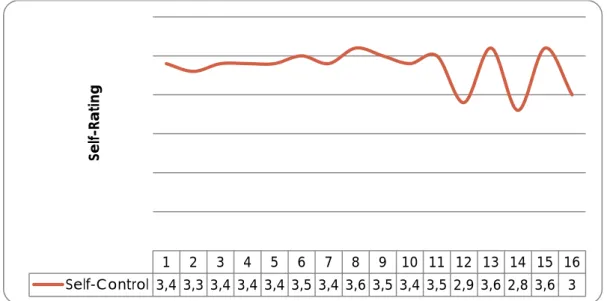
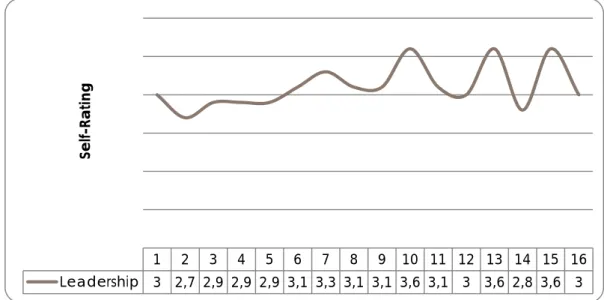
The time-series analysis showed that self-ratings of the five TPSR levels fluctuated throughout the course of the program but most levels showed a gradual improvement from the beginning to the end of the program (Figures 1-5). The results from each of the levels are presented separately along with a brief discussion of how the different program sessions may have impacted the different levels. Interpretation of the time-series are included to provide more context.
Self-Control
period of peaks and drops in the later sessions of the program. Interestingly, session eight was about managing emotions which could explain the slight rise observed in self-control for this specific session. A potential explanation for variability in self-self-control towards the end of the program was that these later sessions focused on transitioning to more self-directed exercise in the fitness facility, meaning that there was less direct supervision of participants. It may be that along with this increased freedom, participants may have struggled at times to keep themselves motivated to the same extent as when they knew they were being supervised more closely.
Figure 1. TPSR self-ratings across sessions for Self-Control
Effort
The time-series analysis results for effort showed that it was pretty consistent, ranging from good to great across the sessions. However, compared to self-control we see greater fluctuations. When examining these fluctuations of effort it appears that effort gradually increases from sessions 1-3 with a drop at session 4 and then rises again from sessions 5-11 with another drop in session 12 and then again a gradual increase until the end of the program. The increases from sessions 1-3 may represent the participant’s initial excitement with learning new activities and skills and therefore they continued to put forth increased effort. However, as there were slight fluctuations after session three when the youth settled into a routine, it is possible that the effort reflected how much the youth enjoyed each session or perhaps how energetic they felt that day. Similar to self-control, there was a drop when the program shifted to a greater focus on independence in session 12. Such independence may have initially led the participants to feel uncomfortable and therefore their level of effort decreased but again increased as they adapted to directing their own PA.
1 2 3 4 5 6 7 8 9 10 11 12 13 14 15 16 Self-Control 3,4 3,3 3,4 3,4 3,4 3,5 3,4 3,6 3,5 3,4 3,5 2,9 3,6 2,8 3,6 3
Sel
f-Ra
tin
Figure 2. TPSR self-ratings across sessions for Effort
Self-Coaching
The time-series analysis for self-coaching indicated a pretty consistent trend although there were slight increases for sessions 3, 5, 6, 7 and 16. What is most interesting with this finding is that in sessions 3, 5, 6 and 7 the concept of self-coaching was further broken down as the details of setting short and long term goals are discussed, as well as how to overcome barriers and seek help from others to achieve personal goals. Session 16 represented the last session in the intensive phase and a time when the youth had been practicing directing their own PA and it is possible that they were beginning to feel more competent in coaching and as a result rated themselves high on self-coaching.
Figure 3. TPSR self-ratings across sessions for Self-Coaching
1 2 3 4 5 6 7 8 9 10 11 12 13 14 15 16
Effort 3,2 3,4 3,6 3,1 3,3 3,5 3,3 3,6 3,5 3,4 3,6 2,8 3,2 3 3,4 3,8
Sel
f-Ra
tin
g
1 2 3 4 5 6 7 8 9 10 11 12 13 14 15 16 Self-Coaching 3 3 3,2 3,1 3,2 3,3 3,4 3,2 3,1 3,3 3,3 3 3 3 3,2 3,5
Sel
f-Ra
tin
Leadership
The results of the time-series for leadership also indicated consistency across the program in the self-ratings although it can be observed that there were spikes in the self-ratings towards the end of the program in sessions 10, 13 and 15. As the program progressed, participants were given more explicit responsibilities within the program to lead portions of the sessions such as warm-ups, stretching, and ensuring that participants were respectful of other members. These opportunities may have positively impacted how the participants saw themselves as leaders within the program.
Figure 4. TPSR self-ratings across session for Leadership
Transference
The time-series analysis for the level of transference showed that over the course of the program the youth’s self-ratings gradually increased and then showed a drop at session 12 and again in session 14. As the program progressed and participants had more experience practicing the life skills, they may have felt more confident using the acquired skills outside of the program. Session 12 marked a shift in the program to increased independence with less focus on teaching specific life skills. At this point the youth may not yet have recognized how they could transfer what they were learning in the program to other life contexts.
1 2 3 4 5 6 7 8 9 10 11 12 13 14 15 16 Leadership 3 2,7 2,9 2,9 2,9 3,1 3,3 3,1 3,1 3,6 3,1 3 3,6 2,8 3,6 3
Sel
f-Ra
tin
Figure 5. TPSR self-ratings across sessions for Transference
Qualitative Interviews
Five major themes emerged from the qualitative interviews, two themes related to program processes: the youth experienced the program as a new opportunity that was fun and motivating and the youth discussed how tracking their TPSR levels (through the self-ratings) during the program helped them maintain focus. The remaining three themes related to perceived impact. First, the youth expressed that they learned how to put forth effort which they were able to transfer out of the program. Second, the youth learned how to self-coach using goal setting. Third, the PULSE program led to an increase in leadership both in and outside of the program.
PULSE Provided a New Opportunity that is Fun and Motivating
Participants in the PULSE program described their overall experience as having an opportunity that was normally accessible and that this opportunity was fun and motivating. As one youth stated:
I kind of thought about how my life is, like my health life and how healthy I am and everything, and then you guys gave us a chance to change something and change what we wanted to do and it made us think like, ‘Oh, this is going to be how it is from here on, doing exercise, you know.’ It was like a first step in thinking about how you want to make life healthier. You know, choosing what you want to do. (B15)
A second youth expressed a similar experience “It’s a good opportunity for a high school student to find time after school to exercise for free” (A5). Another youth talked about how he enjoyed the opportunity to enhance his fitness for the football season: “It gave me opportunities because I got stronger, so it gave me a better chance of making my football team this year. My coach noticed that my body got bigger, so yeah it gave me opportunity” (A6). As mentioned above, a number of the youth talked
1 2 3 4 5 6 7 8 9 10 11 12 13 14 15 16 Transference 3,1 3 3,2 3,2 3,1 3,5 3,4 3,4 3,4 3,4 3,4 2,7 3,4 2,8 3,2 3,8
Sel
f-Ra
tin
about how the program was also very motivating in addition to being a unique opportunity. ”It was fun and that my friends were there and they motivated me and you guys motivated me to do the activities and to be healthy and it was actually the first time being in the gym like a professional gym” (B16).
Tracking TPSR Levels help Youth Focus
An emergent theme from the interviews was that tracking the TPSR levels through the self-ratings helped them think about what they could accomplish in each program session, and to focus on working harder. As one participant stated:
For example, we were asked before how we were going to do for that day and so yeah, that definitely helped sort of change our minds from, it sort of put us in the mind-set for how we were going to focus that and so it’s sort of like setting a goal for us before we even start so that we know what is expected of us. (B13)
For another youth, tracking the daily levels was a type of daily goal setting:
Just effort or know how much you wanted to do and what you wanted to do that day and trying to actually follow through on that…like, ’I’m going to do this today’ and if you did it you checked it off and if you didn’t you would work harder the next time. (A9)
Furthermore, participants found that tracking the levels served as frequent feedback on their performance and helped them adjust if necessary.
After you do it a couple of times you know what you’re going to be looking forward to so you know how to prepare yourself for whatever you’re doing that day. Basically by looking at your results from the day before you improve day by day automatically because you know what was wrong.
(A4)
Youth Learned to How to Put Forth Effort which Transferred Outside of the Program
The youth expressed that through participation in the program they learned how to put forth effort and persist in achieving their goals. As one youth stated “You learned about effort and planning on how much effort you’re going to put and then seeing if you can meet what your actual goal is that day” (A9). Another youth talked about how he learned to put forth a stronger effort when being active. “You always have to push yourself that extra mile, so I think just developing those skills in themselves, getting yourself to go a little bit further” (B15). Another youth expressed a similar experience “Now when I’m working out, I know if my hands are weaking out I can tell myself two more, two more so I teach self-coaching to me through the program” (B14).
Another youth discussed how even though he was familiar with the concepts of effort, being in the program helped enhance these skills:
you tend to put in a little more effort that way. You just naturally start to get used to working out with your friends/trainers, and you guys giving us a push, and then you come out of it and you always have that mentality, one more, one more, keep going; I think that really helped. (A2)
Other youth discussed how they learned that this skill could be helpful in life outside of the program:
Well, effort for sure. When I raised the money for Family and Children Services when I was running, the day before the run; I think honestly the day, two days before that I arrived I only managed to run 7km and I was just dead, I didn’t know how I was going to do 10km there but when I was running and I was on the track I just felt like, ‘I have to do this because it’s not just me it’s for other people’, stuff like that. I ran and I ran like twelve kilometres in one hour so it’s a huge jump. And so, if you put that effort in you’ll get the goal that you want…even if you’re really really tired you can still take one more step. Apply that concept to everything in your life and then nothing is stopping you. (B15)
Learning how to Self-Coach using Goal-Setting
Self-coaching using goal setting was a central feature in the PULSE program and it became evident through the interviews that the youth really learned how to develop goals. This youth talked about how he learned how important goal setting is:
Setting goals for yourself. I mean everybody can kind of understand how it’s important but I think just sitting down for a few minutes makes you understand how important it can really be. I just thought maybe I should start setting goals for myself, pushing myself for improvement, I think that really worked a lot more. (A2)
The youth also shared how they learned about setting short term goals in order to achieve long term goals. One youth explained, “Now I know that I need to set smaller goals to reach so that I can reach the big one” (A10).
In addition, the youth talked about how they could use these skills both in and outside of the program. As one youth stated: “Definitely setting goals. In the program it was weight lifting goals and stuff like that, but you can also set goals like get higher marks and do your homework, stuff like that” (A4). Similarly, this youth talked about how he would carry the skill of goal setting into his activities in the summer:
Finally, another youth discussed how he was sharing the knowledge he had learned in the program with others:
At the beginning of the program, and we had a sheet to put all your goals - where you’re going to be in five years from now… I actually do this constantly to my friends and that help them out ‘cuz most of them now still don’t know what they’re going to be so I just tell them how we did it in this program and that help me out. (B14)
The PULSE Program Led to an Increase in Leadership Both In and Out of the Program
Leadership was also a very pervasive theme for participants in the PULSE program. In general, the participants attributed some ability to be a leader outside of the program context to their experiences in the program. As one youth shared:
When I was in the program there was sometimes where I was trying to, I would try to help other people and I would try to take a leadership role but I think in my own way I try and be a leader because I was in the program. That helped me in keeping track and try to keep that in mind every day and every opportunity I would be trying to help other people. That’s the leader role and I try to take that every day of my life and the program helped me a little bit to keep that in check. (B14)
Other participants found the leadership component of the PULSE program to be central to their experience. They mentioned how the opportunities to be a leader in the program helped them to take more of a leadership role with their families, at school, and at work. One youth stated, “It got me thinking about being a leader. I’ve found myself helping people more in class, like if I notice someone struggling I try to help them” (A3).
Another youth expressed how learning to be a leader through the program helped him teach what he had learned to his brothers and at work:
It helped me with leadership skills, so to improve, it helped me to talk to more people and let them know how to work out and stuff like that, because I go with my brothers and work out a lot now, so I tell them how to hold the bar properly and stuff like that…and at my work you have to be able to have your voice heard and stuff like that, and being a leader is a big part of who I want to become so leadership was the most thing that caught me I guess in the program. (A6)
While another youth expressed how learning leadership in the program also helped him in his responsibilities in his work outside of the program:
come and help him. Or get kids in the atmosphere or mood of participating in the activities that we do and just being a leader. (B16)
4. DISCUSSION AND CONCLUSION
Taken together, the TPSR self-ratings and the qualitative interviews capture how the participants experienced the PULSE program, particularly as it related to the five levels of the TPSR model. The quantitative results showed that the self-ratings of the TPSR levels fluctuated throughout the program but the qualitative findings showed that the youth perceived that they had learned how to put forth effort, self-coach, become leaders and transfer the skills learned.
The TPSR level fluctuations may be explained by how the PULSE program is designed as different sessions that emphasize different skills. For example, the level of self-coaching was rated higher in sessions that focused on skills related to self-coaching such as goal setting and overcoming obstacles. Decreases in self-control may be explained by the decrease in the intensity of supervision youth took on more independence. In addition, some of the fluctuations in self-ratings may be explained by how the youth were encouraged to complete their self-ratings.
Participants were told to honestly assess their abilities and to recognize that ratings would fluctuate as every day can present new challenges which could impact the five levels. An emphasis built into the PULSE program is to help underscore to the youth that a long-term commitment to being physically active or working toward other valued goals would include being persistent even through days and weeks of lower motivation, higher perceived stress, and increased demands on their time. Therefore, throughout the program the youth were not discouraged to rate themselves lower when they may have been experiencing increased stress or decreased motivation. The program leaders wanted to help the youth learn to re-cover from set-backs and improve those levels in the next session. It was believed that by encouraging the youth to be honest in their ratings that they also would develop a greater sense of awareness of their behaviours which would ultimately lead to greater ability to self-regulate. These results were reinforced by the emergent theme that indicated the youth valued the process of tracking their TPSR levels; they learned that if they had a bad day that they would work harder on the levels at the following session.
Furthermore, participants may have initially rated their abilities as high because of a lack of understanding what the levels entailed. As their understanding improved through the program they may have experienced challenges that reflected a more realistic experience of the life skills drawn from TPSR. For example, the youth may have initially felt that they were good leaders but once they started to learn more about leadership they recognized that they still had leadership skills to develop and therefore this resulted in changes to the self-ratings throughout the program. As such, the above results may be expected in programs such as PULSE that teach youth new skills.
self-regulate their PA involvement by learning how to set goals and put forth effort to achieve those goals. Researchers have demonstrated that adults often lack the skills to self-regulate their PA behavior, including the ability to plan, execute, and revise their PA plans (Rhodes & Pfaeffli, 2010). Recent research also shows that learning how to self-regulate behaviour may help individuals to follow their intentions to be active and increase PA (Rhodes & Bruijn, 2013). As a result, incorporating the TPSR model into PA interventions may help individuals learn how to be physically active and develop the skills necessary to regulate this behavior.
The second important finding is that as a result of participating in the PULSE program, youth reported transferring what they had learned in the program to contexts outside of the program. A number of researchers assert that effective PYD programs are those that facilitate the transference of life skills that enable youth to succeed in a variety of contexts (Danish, 1996; Gould & Carson, 2008; Petitpas, Cornelius, Van Raalte, & Jones, 2005). Therefore, by integrating the TPSR model into a PA intervention the youth are not only being provided a unique and fun opportunity to be healthy and active as a youth but may also learn how to transfer these skills to enable them to live healthier lives as they mature.
This paper may be of special interest to researchers and practitioners interested in developing and evaluating youth PA interventions. With regards to youth development, this study highlights the potential utility of incorporating the TPSR model in a PA intervention. In relation to program evaluation, this research demonstrates the value of combining quantitative self-ratings of the five TPSR levels with qualitative interviews regarding these levels. The combination of these methods provides an understanding of both process and outcomes, which in turn provides a more comprehensive picture of program impact.
The above findings were demonstrated in an after-school program designed to enhance participation in PA, however the implications for coaches and teachers who use the TPSR within a physical education setting are similar (for example see Romar, Haag & Dyson, 2015). Adapting the five levels of TPSR within a curriculum or training program can help youth to understand and apply critical life skills in the context of their team or classroom, and transfer them to other areas of their lives. Future research in these areas may help to further clarify how the TPSR levels can be applied within these settings to build and transfer youth skills from the class and sport contexts.
recognized that while youth were asked to be honest in their self-ratings and in interviews, social desirability could have impacted the results.
In sum, this study provides initial evidence that the PULSE program, which integrates the TPSR model along with the learning of PA skills such as aerobic and resistance training, may help youth develop the necessary self-regulatory (goal setting, increasing effort) and leadership skills they need so that they can be physically active in their daily lives. Furthermore, the findings suggest that these specific self-regulatory skills can be transferred to other important settings such as school and family. As a result, it is recommended that researchers and practitioners working in the field of youth PA recognize the potential value of ensuring that PA interventions integrate the intentional teaching of self-regulatory skills. The TPSR model is one framework that can achieve this recommendation.
REFERENCES
Active Healthy Kids Canada. (2011). Don’t let this be the most physical activity our kids get after
school. The active healthy kids Canada 2011 report card on physical activity for children and youth. Toronto, ON: Active Healthy Kids Canada.
Anderson, J., Parker, W., Steyn, N. P., Grimsrud, A., Kolbe-Alexander, T., Lambert, E.V., & Mciza, Z. (2009). Interventions on diet and physical activity: What works. Geneva, Switzerland: World Health Organization.
Buckle, M., Walsh, D., & Veri, M. (2011). Impact of a TPSR-based soccer program on
gang-affiliated youth. Unpublished manuscript, University of San Francisco State University. San
Francisco, CA.
Catalano, R. F., Berglund, M. L., Ryan, J. A., Lonczak, H. S., & Hawkins, J. D. (2004). Positive youth development in the United States: Research findings on evaluation of positive youth development programs. The ANNALS of the American Academy of Political and Social
Science, 591(1), 98-124. Retrieved on September 15, 2015 from:
https://jjrec.files.wordpress.com/2016/04/catalano2004.pdf
Collingwood, T. R. (1997). Providing physical fitness programs to at-risk youth. Quest, 49, 67-84. Creswell, J. W., & Plano Clark, V. L. (2007). Designing and conducting mixed methods research.
Thousand Oaks, CA: Sage publications.
Damon, W. (2004). What is positive youth development? The Annals of the American Academy of
Political and Social Science, 591(13), 13-24.
Danish, S. J. (1996). Interventions for enhancing adolescents’ life skills. The Humanistic Psychologist,
24, 365-381.
Dishman, R. K., Sallis, J. F., & Orenstein, D. R. (1985). The determinants of physical activity and exercise. Public Health Reports, 100(2), 158-171.
Everson-Hock, E. S., Johnson, M., Jones, R., Woods, H. B., Goyder, E., Payne, N., Chilcot, J. (2013). Community-based dietary and physical activity interventions in low socioeconomic groups in the UK: A mixed methods systematic review. Preventive Medicine, 56, 265-272. Retrieved
Flynn, R. J. (2008). Communities that care: A comprehensive system for youth prevention and promotion, and Canadian applications to date. Institute for Crime Prevention Review, 2, 83– 106.
Gould, D., & Carson, S. (2008). Life skills development through sport: Current status and future directions. International review of sport and exercise psychology, 1(1), 58-78.
Hellison, D. (2003). Teaching responsibility through physical activity. Champlaign, IL: Human Kinetics.
Hellison, D., & Walsh, D. (2002). Responsibility-based youth programs evaluation: Investigating the investigations. Quest, 54, 292-307.
Martinek, T., & Hellison, D. (1998). Values and goal-setting with underserved youth. Journal of
Physical Education, Recreation & Dance, 69(7), 47-52.
Martinek, T., Mclaughlin, D., & Schilling, T. (1999). Project effort: Teaching responsibility beyond the gym. Journal of Physical Education, Recreation, and Dance, 70(6), 59-65.
Martinek, T., Schilling, T., & Hellison, D. (2006). The development of compassionate and caring leadership among adolescents. Physical Education and Sport Pedagogy, 11(2), 141-157.
Miles, M. B., & Huberman, A. M. (1994). Qualitative data analysis: An expanded sourcebook, (2nd
ed.). Thousand Oaks, CA: Sage.
Neuman, L.W. & Robson, K. (2012). Basics of social research: qualitative and quantitative
approaches (2nd ed.). Toronto, ON: Pearson Canada.
Ontario Ministry of Education (2012). Retrieved on September 25, 2015 from http://www.edu.gov.on.ca/eng/safeschools/urbanPriority.html
Pickett, W., Garner, M. J., Boyce, W. F., & King, M. A. (2002). Gradients in risk for youth injury associated with multiple-risk behaviours: A study of 11,329 Canadian adolescents. Social
Science & Medicine, 55(6), 1055-1068. doi: 10.1016/S0277-9536(01)00224-6.
Petitpas, A. J., Cornelius, A. E., Van Raalte, J. L., & Jones, T. (2005). A framework for planning youth sport programs that foster psychosocial development. The Sport Psychologist, 19, 6-80.
Public Health Agency of Canada. (2010). Curbing childhood obesity: A federal, provincial and
territorial framework for action to promote healthy weights. Ottawa, ON: Government of
Canada.
Rhodes, R. E., & Bruijn, G. J. (2013). How big is the physical activity intention–behaviour gap? A
meta‐analysis using the action control framework. British Journal of Health Psychology, 18(2),
296-309.
Rhodes, R. E., & Pfeaffli, L. A. (2010). Mediators of physical activity behaviour change among adult non-clinical populations: a review update. International Journal of Behavioral Nutrition
and Physical Activity, 7, 37-48.
Romar, J. E., Haag, E., & Dyson, B. (2015). Teachers’ experiences of the TPSR (Teaching Personal and Social Responsibility) model in Physical Education. Ágora para la educación física y el
deporte, 17(3), 202-219. Retrieved on Jannuary 15, 2016 from
http://agora-revista.blogs.uva.es/files/2015/12/agora_17_3a_romar_et_al.pdf
Sallis, J. F., Prochaska, J. J., & Taylor, W. C. (2000). A review of correlates of physical activity of children and adolescents. Medicine & Science in Sports & Exercise, 32(5), 963-975.
Statistics Canada (2008). Participation in sports. Retrieved March 10, 2012 from
Trost, S. G., Owen, N., Bauman, A. E., Sallis, J. F., & Brown, W. (2002). Correlates of adults' participation in physical activity: Review and update. Medicine & Science in Sports &
Exercise, 34(12), 1996.
Van der Horst, K., Paw, M. J., Twisk, J. W. R., & Van Mechelen, W. (2007). A brief review on correlates of physical activity and sedentariness in youth. Medicine & Science in Sports &
Exercise, 39(8), 1241.
Walsh, D. S., Ozaeta, J., & Wright, P. M. (2010). Transference of responsibility model goals to the school environment: Exploring the impact of a coaching club program. Physical Education &
Sport Pedagogy, 15(1), 15.