Otras secciones de este sitio:
☞ ☞ ☞ ☞
☞ Índice de este número ☞
☞ ☞ ☞
☞ Más revistas
Others sections in this web site:
☞ ☞ ☞ ☞
☞ Contents of this number ☞
☞ ☞ ☞
☞ More journals
Artículo:
Anesthesia for ambulatory surgery
Derechos reservados, Copyright © 2004: Colegio Mexicano de Anestesiología, AC Revista Mexicana de Anestesiología
Suplemento
Supplement 1 2 0 0 4
Volumen
edigraphic.com
C C
OLE
GIO ÍAA.C
.
ANTE S SOC
IED
AD MEXICANA DE ANESTE SIOLO
GÍA
Anestesiología
Anestesiología
Revista
Anestesiología
Anestesiología
AUTORES EXTRANJEROS Vol. 27. Supl. 1 2004
pp 43-51
INTRODUCTION
Ambulatory surgery accounts for over 60% of all elective operative procedures performed in the United States. With the recent growth in major laparoscopic and office-based surgery, this percentage may increase to 70% in the future. When surgery is performed outside the conventional hospi-tal environment, it can offer a number of advantages for pa-tients, healthcare providers, third-party payers, and even hospitals(1). Patients benefit from day-surgery because it minimizes costs, decreases separation from their home and family environment, reduces surgery waiting times, decreases their likelihood of contracting hospital-acquired infections, and appears to reduce postoperative complications. Com-pared to traditional hospital admissions, there is less pre-and postoperative lab testing pre-and also a reduced dempre-and for postoperative pain medication following ambulatory surgery. Unlike inpatient surgery, ambulatory surgery does not de-pend upon the availability of a hospital bed and may permit the patient greater flexibility in selecting the time of their elective operation. Furthermore, there is greater efficiency in the utilization of the operating and recovery rooms in the ambulatory setting, contributing to a decrease in the overall patient charges compared to similar hospital-based care.
COMPARISON OF GENERAL, SPINAL AND LOCAL ANESTHESIA
The optimal anesthetic technique in the ambulatory setting would provide for excellent operating conditions, a rapid recovery, no postoperative side effects, and a high degree of patient satisfaction. In addition to increasing the quality and decreasing the costs of the anesthetic services, the ideal an-esthetic technique would also improve operating room (OR) efficiency and provide for an early discharge home without side effects. Local anesthesia with intravenous (IV) sedation (so-called monitored anesthesia care [MAC]), spinal thesia, and general anesthesia are all commonly used anes-thetic techniques for ambulatory surgery. However, opinions
Anesthesia for ambulatory surgery
Paul F. White, PhD, MD, FANZCA
differ as to the “best” anesthetic technique for these surgical procedures(2-15). Rather than simply generalizing as to the best anesthetic technique for ambulatory surgery, it is neces-sary to individually analyze each surgical procedure. For example, in an Editorial in Anesthesia & Analgesia(16), Ke-hlet and White discussed the optimal anesthetic technique for inguinal hernia repair.
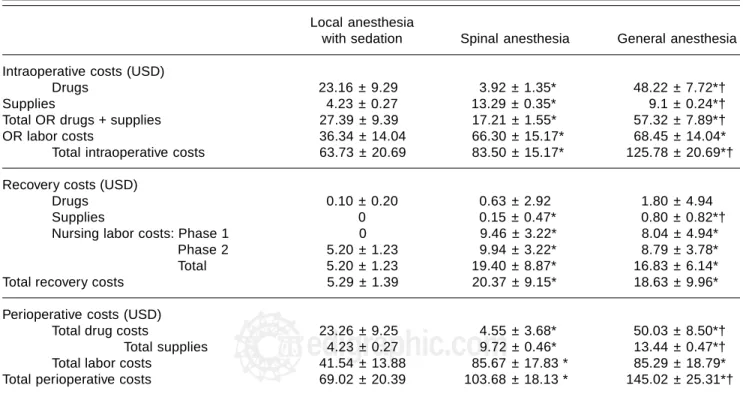
In the current cost-conscious environment, it is important to also examine the impact of anesthetic techniques on OR turnover times, as well as the recovery process after ambula-tory surgery because prolonged recovery times and reduced efficiency and productivity contribute to increased cost of surgical care (Tables I and II)(10). In addition, patient satis-faction with their perioperative experience and quality of recovery is improved when the anesthetic technique chosen for the procedure is associated with a low incidence of operative side effects [e.g., pain, dizziness, headaches, post-operative nausea and vomiting (PONV)](10,11). For example, routine use of prophylactic antiemetic drugs during general anesthesia has been found to increase patient satisfaction in “at risk” surgical populations(17). Furthermore, the use of local anesthetic infiltration and peripheral nerve blocks decreases postoperative pain after ambulatory surgery procedures ir-respective of the anesthetic technique(4,18,19).
White PF. Anesthesia for ambulatory surgery MG
edigraphic.com
Table I. Patient demographic characteristics, surgical, anesthetic, and recovery times for the three anesthetic techniques
used for anorectal in the ambulatory setting(10).
Local anesthesia Spinal anesthesia General anesthesia
Number (n) 31 31 31
Age (yr) 40 ± 9 43 ± 10 41 ± 9
Weight (kg) 83 ± 18 82 ± 16 82 ± 22
Height (cm) 171 ± 11 169 ± 8 172 ± 10
Sex (M / F) (n) 22/9 21/10 24/7
ASA physical status (I /II/III) (n) 10/18/3 10/16/ 5 11/15/5
Duration of surgery (min) 26 ± 14 26 ± 13 26 ± 15
Duration of anesthesia (min) 40 ± 15 72 ± 17* 75 ± 19*
Phase 1 PACU stay (min) 0 52 ± 18* 44 ± 27*
Phase 2 DSU stay (min) 71 ± 17 135 ± 113* 120 ± 52*
Time to oral intake (min) 12 ± 5 59 ± 18* 60 ± 29*
Initial Aldrete score in recovery (n) 10 ± 0 9.1 ± 0.4* 8.3 ± 0.7*†
Time to Aldrete score of 10 (min) 0 19 ± 7* 30 ± 19*†
Time to home-readiness (min) 76 ± 17 193 ± 112* 171 ± 58*
Duration of hospital stay (min) 116 ± 21 266 ± 112* 247 ± 65*
Values are mean ± SD
* p < 0.05 vs Local anesthesia with sedation † p < 0.05 vs Spinal anesthesia
PACU = Postanesthesia Care Unit DSU = Day-Surgery Unit
Table II. Incremental costs associated with the three anesthetic techniques for outpatient anorectal surgery(10).
Local anesthesia
with sedation Spinal anesthesia General anesthesia
Intraoperative costs (USD)
Drugs 23.16 ± 9.29 3.92 ± 1.35* 48.22 ± 7.72*†
Supplies 4.23 ± 0.27 13.29 ± 0.35* 9.1 ± 0.24*†
Total OR drugs + supplies 27.39 ± 9.39 17.21 ± 1.55* 57.32 ± 7.89*†
OR labor costs 36.34 ± 14.04 66.30 ± 15.17* 68.45 ± 14.04*
Total intraoperative costs 63.73 ± 20.69 83.50 ± 15.17* 125.78 ± 20.69*†
Recovery costs (USD)
Drugs 0.10 ± 0.20 0.63 ± 2.92 1.80 ± 4.94
Supplies 0 0.15 ± 0.47* 0.80 ± 0.82*†
Nursing labor costs: Phase 1 0 9.46 ± 3.22* 8.04 ± 4.94*
Phase 2 5.20 ± 1.23 9.94 ± 3.22* 8.79 ± 3.78*
Total 5.20 ± 1.23 19.40 ± 8.87* 16.83 ± 6.14*
Total recovery costs 5.29 ± 1.39 20.37 ± 9.15* 18.63 ± 9.96*
Perioperative costs (USD)
Total drug costs 23.26 ± 9.25 4.55 ± 3.68* 50.03 ± 8.50*†
Total supplies 4.23 ± 0.27 9.72 ± 0.46* 13.44 ± 0.47*†
Total labor costs 41.54 ± 13.88 85.67 ± 17.83 * 85.29 ± 18.79*
Total perioperative costs 69.02 ± 20.39 103.68 ± 18.13 * 145.02 ± 25.31*†
‡ Values are mean ± SD in United States dollars (USD) * p < 0.05 vs Local anesthesia with sedation
edigraphic.com
Other common concerns with spinal anesthesia include back pain, post-dural puncture headache and transient radicular irritation with lidocaine(22,23). Although MAC is associated with the lowest incidence of postoperative side effects(10,11), the possibility of transient nerve palsy is a concern when peripheral nerve block techniques are used(25,26).
The cost savings with the use of newer general anesthetic techniques are lost if institutional practices mandate minimum lengths of stay in the Phase 1 unit [Postanesthesia care unit (PACU)] and do not permit fast-tracking of patients who emerge rapidly from anesthetic directly to the Phase 2 [Day-surgery (“step-down”)] unit. Claims of reduced total costs with earlier discharge are commonly based on the assumption that there is a linear relationship between the costs of a service and the time spent providing it. However, since personnel costs are semi-fixed rather than variable, an additional 15-30 minute stay in the PACU may not be associated with increased costs to the institution unless the facility is working at or near its capacity(27). In that situation, a longer stay is potentially asso-ciated with a “bottleneck” in the flow of patients through the OR suites and recovery areas, requiring overtime payments to the nurses and/or the hiring of additional perioperative per-sonnel. There appears to be a much closer relationship be-tween lower costs and bypassing of the PACU (“fast-track-ing”), as the major factor in recovery care costs relates to the peak number of patients admitted to the PACU unit at any time(27). Fast-tracking can lead to the use of fewer nurses and a mix of less highly trained, lower wage nursing aides and fully-qualified recovery room nurses, and reduces “overtime” personnel costs for busy ambulatory surgery units. Shorter anesthesia times, the ability to bypass the PACU (Phase 1), and a decreased length of stay in the day-surgery (Phase 2) unit will reduce total institutional costs(28). Studies have dem-onstrated that “fast-tracking” ambulatory surgery patients de-crease the times to actual discharge (Tables I and III)(29,30).
The combination of low costs and high patient satisfac-tion suggests that the highest quality (cost/outcome)
anes-thetic may be achievable with a MAC technique assuming that the surgical procedure is amendable to this anesthetic approach (e.g., superficial surgical and endoscopic proce-dures). Cost estimates of different anesthetic regimens for ambulatory surgery are available (Table II)(10). Unfortunate-ly, many pharmacoeconomic studies have limited cost con-siderations to only the acquisition costs of the drugs and sup-plies rather than the total (direct + indirect) expenses associated with a given anesthetic technique. The total cost should include both the acquisition costs of drugs and the labor required for managing side effects (e.g., PONV, pain, drowsiness, bladder dysfunction). Since personnel costs con-stitute a major proportion of expenses in the OR and recov-ery areas, anesthetic techniques which require more time in the various phases of the perioperative process will not sur-prisingly be more expensive (Table II)(10,11).
The availability of improved sedation and analgesia tech-niques to complement local anesthetic infiltration has in-creased the popularity of performing surgery utilizing MAC techniques(31). The high patient satisfaction with local an-esthesia/sedation is also related to effective control of post-operative pain and the absence of side effects associated with the other commonly used general and spinal anesthet-ic techniques. The success of MAC techniques is depen-dent not only on the anesthesiologist, but also upon the skills of the surgeon in providing effective infiltration an-algesia and gentle handling of the tissues during the intra-operative period. Local anesthesia without any monitoring or intravenous adjuvants (so-called “unmonitored” local anesthesia), has been successfully used in situations where local anesthesia is able to provide excellent analgesia and patients do not object to being awake and aware of events in the operating room(32). The importance of good surgical skills is critically important because inadequate intraoper-ative control of pain can lead to prolonged surgery times and patient dissatisfaction with their surgical experience. In a prospective, randomized comparison of local
infiltra-Table III. Effect of fast-tracking on time to discharge and patient satisfaction after outpatient gynecologic laparoscopic
surgery(29,30).
Conventional recoveryFast-track recovery
Age (yr) 30 ± 6 28 ± 5
Weight (kg) 69 ± 22 74 ± 14
Surgery time (min) 36 ± 11 37 ± 12
Home ready (min) 151 ± 50 112 ± 46*
Discharged home (min) 206 ± 46 159 ± 63*
Patient satisfaction (0-100) 93 ± 5 94 ± 4
White PF. Anesthesia for ambulatory surgery MG
edigraphic.com
tion with spinal and general anesthesia(33), surgeons in Sweden suggested the technical difficulties and patient pain were “more intense” during surgery under local anesthe-sia. This finding is consistent with an earlier report by Fair-clough, et al(34). However, with these surgical provisions, it is widely accepted that superficial surgical procedures can be performed as safely and effectively under local anesthe-sia as under any other form of anestheanesthe-sia. In fact, the re-searchers in Sweden concluded that “for most patients, lo-cal anesthesia can be recommended as the standard procedure for outpatient knee arthroscopy”(33).
While most studies have suggested that local anesthesia (e.g., local infiltration and/or peripheral nerve blocks) are not only well-accepted by patients and surgeons for superfi-cial outpatient procedures (e.g., breast surgery, knee arthros-copy, anorectal surgery, and inguinal herniorrhaphy) but is also more cost-effective than either spinal or general anes-thesia(10,11,35), some studies have suggested that spinal anes-thesia is more cost-effective than general anesanes-thesia(5,7). These and other studies(13,15) have suggested that the use of smaller dosages of lidocaine (15-30 mg) or bupivacaine (3-6 mg) combined with a potent opioid (e.g., fentanyl, 12.5-25 µg, or sufentanil, 5-10 µg) contributes to a faster recov-ery of both motor and bladder function than conventional doses of the local anesthetic alone. Earlier discharge after spinal anesthesia using the so-called mini-dose techniques will clearly improve its cost-effectiveness in the ambulatory setting. Unfortunately, side effects such as pruritis and nau-sea are increased even when small doses of fentanyl (or sufen-tanil) are administered into the subarachnoid space(15).
Even though central neuroaxial blocks can be made more cost-effective by using smaller doses of short-acting local an-esthetics combined with potent opioid analgesics, use of MAC techniques for superficial (non-cavitary) ambulatory surgery procedures will result in the shortest times to home readiness, lowest pain scores at discharge, and smallest incremental costs when compared to both spinal and general anesthesia(10,11). Therefore, in situations where fast-tracking is permitted, the use of MAC techniques would appear to offer significant ad-vantages over both central neuroaxis blocks (i.e., spinal/epi-dural) and general anesthetic techniques.
The availability of more rapid and shorter-acting intrave-nous and inhaled anesthetics, analgesics and adjunctive drugs, as well as improved cerebral monitoring capabilities, has facilitated the recovery process after general anesthesia. For example, studies involving the use of “light” general anes-thetic techniques with a laryngeal mask airway device and local analgesia have demonstrated that outpatients undergo-ing superficial surgical procedures (e.g., hernia repair, breast surgery) are able to ambulate within 30 min and can be dis-charged home in less than 60 min after completion of their operation(36-38). When tracheal intubation is required [e.g.,
laparoscopic procedures, risk factors for aspiration (e.g., diabetics, morbidly obese, esophageal dysfunction)], use of minimal, effective doses of newer short-acting opioid anal-gesics (e.g., remifentanil) and sympatholytic (e.g., esmolol) drugs can facilitate the early recovery process and allow pa-tients to achieve earlier discharge times after ambulatory surgery(39-42). The use of the more costly drugs can be eco-nomically justified if improvements in recovery and work patterns can be demonstrated(43). However, anesthetic prac-tices have advanced to the point where cost savings from variations in drug use are only apparent when system-wide improvements are made in the efficacy of resource utiliza-tion (including personnel, space, time, consumables and cap-ital investments)(44).
FAST-TRACKING CONCEPTS
edigraphic.com
can lead to a faster emergence from anesthesia(52,53) and can be useful in predicting fast-track eligibility(54). Although the early studies involving propofol(52) and the newer volatile anesthetics sevoflurane and desflurane(53), suggested that the anesthetic-sparing effect could facilitate a faster emergence from anesthesia, these studies failed to demonstrate a de-crease in the times to discharge home because standard re-covery practices were used. However, if outpatients are al-lowed to recover via a fast-track pathway, use of cerebral monitoring can actually reduce discharge times(55).
While the availability of more rapid and shorter-acting anesthetic drugs (e.g., propofol, sevoflurane, desflurane, remifentanil) has clearly facilitated the early recovery pro-cess after general anesthesia,the preemptive use of non-opi-oid analgesics (e.g., local anesthetics, ketamine, nonsternon-opi-oidal antiinflammatory drugs, COX-2 inhibitors, acetami-nophen)(56) and antiemetics (e.g., droperidol, metoclopra-mide, 5-HT3 antagonists, dexamethasone)(57), will reduce postoperative side effects and accelerate both the immediate and late recovery phases after ambulatory surgery.
MULTIMODAL APPROACHES TO PREVENTING POSTOPERATIVE COMPLICATIONS
As more complex procedures are performed utilizing mini-mally-invasive surgical approaches (e.g., laparoscopic adrenalectomy, arthroscopic knee and shoulder reconstruc-tions), the ability to effectively control postoperative side effects may make the difference between performing a giv-en procedure on an inpatigiv-ent or ambulatory basis. For rou-tine antiemetic prophylaxis, the most cost-effective combi-nation consists of low-dose droperidol (0.5-1 mg) and dexamethasone (4-8 mg)(58). Interestingly, dexamethasone appears to facilitate an earlier discharge independent of its effects on PONV(59,60). Outpatients at high risk of PONV will benefit from the addition of a 5-HT3 antagonist (e.g., ondansetron, dolasetron, granisetron)(61,62) or an acustimu-lation device (e.g., SeaBand, ReliefBand)(63,64). Droperi-dol remains the most cost-efffective antiemetic assuming side effects can be avoided(65,66). Although controversy exists re-garding its potential for cardiac arrhythmias, droperidol has Table IV. Criteria for fast-tracking outpatients after ambulatory surgery. A minimum score of 12, with no score < 1 in any
individual category, would be required for a patient to be fast-tracked after general anesthesia(47).
I. Level of consciousness Score
• awake and oriented 2
• arousable with minimal stimulation 1
• responsive only to tactile stimulation 0
II. Physical activity
• able to move all extremities on command 2
• some weakness in movement of extremities 1
• unable to voluntarily move extremities 0
III. Hemodynamic stability
• blood pressure < 15% of baseline MAP value 2
• blood pressure between 15-30% of baseline MAP value 1
• blood pressure > 30% below baseline MAP value 0
IV. Respiratory stability
• able to breathe deeply 2
• tachypnea with good cough 1
• dyspneic with weak cough 0
V. Oxygen saturation status
• maintains value > 90% on room air 2
• requires supplemental oxygen (nasal prongs) 1
• saturation less than 90% with supplemental oxygen 0
VI. Postoperative pain assessment
• none or mild discomfort 2
• moderate-to-severe pain controlled with IV analgesics 1
• persistent severe pain 0
VII. Postoperative emetic symptoms
• none or mild nausea with no active vomiting 2
• transient vomiting or retching 1
• persistent moderate-severe nausea and vomiting 0
White PF. Anesthesia for ambulatory surgery MG
edigraphic.com
:rop odarobale FDP
VC ed AS, cidemihparG
arap
acidémoiB arutaretiL :cihpargideM
sustraídode-m.e.d.i.g.r.a.p.h.i.c cihpargidemedodabor
remained a safe and effective antiemetic for over 30 years(67). An aggressive multimodal approach to minimize PONV can improve the recovery process and enhance patient satisfac-tion(68). In addition to utilizing combination antiemetic ther-apy, simply insuring adequate hydration will minimize nau-sea and other side effects (e.g., dizziness, drowsiness, thirst) during the postoperative period(69).
A multimodal (or “balanced”) approach to providing postoperative analgesia is also essential in the ambulatory setting(70-72). Not surprisingly, pain has been found to be a ma-jor factor complicating recovery and delaying discharge after ambulatory surgery(73). The addition of low-dose ketamine (75-150 µg/kg) to a multimodal analgesic regimen improved post-operative analgesia and functional outcome after painful ortho-pedic surgery procedures(74,75). Following outpatient surgery, pain must be controllable with oral analgesics (e.g., acetami-nophen, ibuprofen, acetaminophen with codeine) before patients are discharged from the facility. Although the potent rapid-act-ing opioid analgesics (e.g., fentanyl, sufentanil) are commonly used to treat moderate-to-severe pain in the early recovery peri-od, these compounds increase the incidence of PONV and may contribute to a delayed discharge after ambulatory surgery(56,73). As a result of the concerns regarding opioid-related side ef-fects, there has been an increased interest in the use of potent non-steroidal anti-inflammatory agents (e.g., diclofenac, ketor-olac), which can effectively reduce the requirements for opio-id-containing oral analgesics after ambulatory surgery, and can lead to an earlier discharge home(76). Other less expensive oral non-steroidal analgesics (e.g., ibuprofen, naproxen)(77,78) may be acceptable alternatives to fentanyl and the parenteral non-selective NSAIDs if administered in a pre-emptive fashion. Re-cently, premedication with the COX-2 inhibitors (e.g., celecox-ib, rofecoxcelecox-ib, valdecoxcelecox-ib, parecoxib) has become more popular because they are devoid of potential adverse effects on platelet function(79). For routine clinical use, oral premedication with rofecoxib (50 mg), celecoxib (400 mg) or valdecoxib (40 mg) is a simple and cost-effective approach to improving pain con-trol and decreased discharge times after ambulatory surgery (80-84). The injectable COX-2 inhibitor, parecoxib, may prove
use-ful in the future(85,86). Finally, acetaminophen is a very
cost-effective alternative to the COX-2 inhibitors if it can be given in a high enough dose (40-60 mg/kg po or pr) prior to the end of surgery(87,88).
One of the keys to facilitating the recovery process is the routine use of local anesthetics as part of a multimodal regimen(56). Use of local anesthetic techniques for intraop-erative analgesia during MAC, as well as adjuncts to gen-eral (and spinal) anesthesia, can provide excellent analge-sia during the early postoperative recovery and postdischarge periods(4,18,19). Even simple wound infiltra-tion and instillainfiltra-tion techniques have been shown to improve postoperative analgesia following a variety of lower abdom-inal, peripheral extremity and even laparoscopic procedures. A wide variety of peripheral extremity blocks have also been utilized to minimize postoperative pain(89,90). More recently, use of continuous local anesthetic delivery systems (e.g., I-Flow) have been found to improve pain control after major ambulatory orthopedic surgery by extending periopheral nerve blocks(91-93). Patient-controlled local anesthetic delivery has also been described for improving pain relief after discharge home(94). Following laparoscopic procedures, abdominal pain can also be minimized by the use of a local anesthesia at the portals and topically applied at the surgical site(95,96). Shoulder pain is also common following laparoscopic surgery, and this has been reported to be reduced with subdiaphrag-matic instillation of local anesthetic solutions(95). Following arthroscopic knee surgery, instillation of 30 mL of bupivacaine 0.5% into the joint space reduces postoperative opiate require-ments and permits earlier ambulation and discharge(96). The addition of morphine (1-2 mg), ketorolac (15-30 mg), cloni-dine (0.1-0.2 mg) and/or triamcinolone (10-20 mg) to the in-traarticular local anesthetic solution can further reduce pain after arthroscopic surgery(97-99). Electroanalgesia can also be used as part of a multimodal treatment regimen(100). Future growth in the complexity of surgical procedures being per-formed on an ambulatory basis will require further improve-ments in our ability to provide effective postoperative pain relief outside the surgical facility (e.g., subcutaneous opioid PCA, patient-controlled local anesthesia with a disposable in-fusion system, transcutaneous analgesic delivery systems).
REFERENCES
1. White PF (Editor). Ambulatory anesthesia and surgery W.B.
Saun-ders Publishers, London. 1997;pp1-918.
2. Patel NJ, Flashburg MH, Paskin S, Grossman R. A regional
anesthet-ic technique compared to general anesthesia for outpatient knee ar-throscopy. Anesth Analg 1986;65:185-7.
3. Young DV. Comparison of local, spinal, and general anesthesia for
inguinal herniorrhaphy. Am J Surg 1987;153:560-3.
4. Tverskoy M, Cozacov C, Ayache M, et al. Postoperative pain after
inguinal herniorrhaphy with different types of anesthesia. Anesth Analg 1990;70:29-35.
5. Jankowski CJ, Hebl JR, Stuart MJ, et al. A comparison of psoas
com-partment block and spinal and general anesthesia for outpatient knee arthroscopy. Anesth Analg 2003;97:1003-9.
6. Fleischer M, Marini CP, Statman R, et al. Local anesthesia is
superi-or to spinal anesthesia fsuperi-or ansuperi-orectal surgical procedures. Am Surg 1994;60:812-5.
7. Chilvers CR, Goodwin A, Vaghadia H, Mitchell GW. Selective
edigraphic.com
8. Williams CR, Thomas NP. A prospective trial of local versus general
anaesthesia for arthroscopic surgery of the knee. Ann R Coll Surg Engl 1997;79:345-8.
9. Coloma M, Chiu JW, White PF, et al: Fast-tracking after immersion
lithotripsy: general anesthesia versus monitored anesthesia care. Anesth Analg 2000;91:92-6.
10. Li S, Coloma M, White PF, et al. Comparison of the costs and recov-ery profiles of three anesthetic techniques for ambulatory anorectal surgery. Anesthesiology 2000;93:1225-30.
11. Song D, Greilich NB, White PF, et al. Recovery profiles and costs of anesthesia for outpatient unilateral inguinal herniorrhaphy. Anesth Analg 2000;91:876-81.
12. Mulroy MF, Larkin KL, Hodgson PS, et al. A comparison of spinal, epidural, and general anesthesia for outpatient knee arthroscopy. Anesth Analg 2000;91:860-4.
13. Ben-David B, Maryanovsky M, Gurevitch A, et al. A comparison of minidose lidocaine-fentanyl and conventional-dose lidocaine spinal anesthesia. Anesth Analg 2000;91:865-70.
14. Williams BA, Kentor ML, Williams JP, et al. Process analysis in out-patient knee surgery: Effect of regional and general anesthesia on anesthesia-controlled time. Anesthesiology 2000;93:529-38. 15. Ben-David B, DeMeo PJ, Lucyk C, Solosko D. A comparison of
mini-dose lidocaine-fentanyl spinal anesthesia and local anesthesia/propofol infusion for outpatient knee arthroscopy. Anesth Analg 2001;93:319-25. 16. Kehlet H, White PF. [Editorial] Optimizing anesthesia for inguinal herniorrhaphy – general regional or local anesthesia? Anesth Analg 2001;93:1367-9.
17. White PF, Watcha MF [Editorial]: Postoperative nausea and vomit-ing: prophylaxis versus treatment. Anesth Analg 1999;89:1337-9. 18. Harrison CA, Morris S, Harvey JS. Effect of ilioinguinal and
ilio-hypogastric nerve block and wound infiltration with 0.5% bupiv-acaine on postoperative pain after hernia repair. Br J Anaesth 1994;72:691-3.
19. Ding Y, White PF. Post-herniorrhaphy pain in outpatients after pre-incision ilioinguinal-hypogastric nerve block during monitored ana-esthesia care. Can J Anaesth 1995;42:12-5.
20. Tong D, Chung F, Wong D. Predictive factors in global and anesthe-sia satisfaction in ambulatory surgical patients. Anesthesiology 1997;87:856-64.
21. Marshall SI, Chung F. Discharge criteria and complications after ambulatory surgery. Anesth Analg 1999;88:508-17.
22. Pollock JE, Neal JM, Stephenson CA, Wiley CE. Prospective study of the incidence of transient radicular irritation in patients undergo-ing spinal anesthesia. Anesthesiology 1996;84:1361-7.
23. Halpern S, Preston R. Postdural puncture headache and spinal nee-dle design. Metaanalyses. Anesthesiology 1994;81:1376-83. 24. Vloka JD, Hadzic A, Mulcare R, et al. Femoral and genitofemoral
nerve blocks versus spinal anesthesia for outpatients undergoing long saphenous vein stripping surgery. Anesth Analg 1997;84:749-52. 25. Price R. Transient femoral nerve palsy complicating preoperative
il-ioinguinal nerve blockade for inguinal herniorrhaphy. Br J Surg 1995;82:137-8.
26. Rosario DJ, Skinner PP, Raftery AT. Transient femoral nerve palsy complicating preoperative ilioinguinal nerve blockade for inguinal herniorrhaphy. Br J Surg 1994;81:897.
27. Dexter F, Tinker JH: Analysis of strategies to decrease postanesthe-sia care unit costs. Anesthesiology 1995;82:94-101.
28. Watcha MF, White PF. Economics of anesthetic practice. Anesthesi-ology 1997;86:1170-96.
29. Coloma M, Chiu JW, White PF, Armbruster SC. The use of esmolol as an alternative to remifentanil during desflurane anesthesia for fast-track out-patient gynecologic laparoscopy surgery. Anesth Analg 2001;92:352-7. 30. Coloma M, Zhou T, White PF, Forestner JE. Fast-tracking after
out-patient laparoscopy: reasons for failure after propofol, sevoflurane and desflurane anesthesia. Anesth Analg 2001;93:112-5.
31. Sa Rego MM, Watcha MF, White PF. The changing role of moni-tored anesthesia care in the ambulatory setting. Anesth Analg 1997;85: 1020-36.
32. Calleson, Bech T, Kehlet H. One-thousand consecutive inguinal her-nia repairs under unmonitored local anesthesia. Anesth Analg 2001;93:1373-6.
33. Jacobson E, Forssblad M, Rosenberg J, et al. Can local anesthesia be recommended for routine use in elective knee arthroscopy? A com-parison between local, spinal, and general anesthesia. Arthroscopy 2000;16:183-90.
34. Fairclough JA, Graham GP, Pemberton D. Local or general anaesthet-ic in day-case arthroscopy? Ann R Coll Surg Engl 1990;72:104-7. 35. Trieshmann HW. Knee arthroscopy: a cost analysis of general and
local anesthesia. Arthroscopy 1996;12:60-3.
36. Tang J, Chen L, White PF, et al. Use of propofol for office-based anesthesia: effect of nitrous oxide on recovery profile. J Clin Anesth 1999;11:226-30.
37. Tang J, Chen L, White PF, et al. Recovery profile, costs, and patient satisfaction with propofol and sevoflurane for fast-track office-based anesthesia. Anesthesiology 1999;91:253-261.
38. Tang J, White PF, Wender RH, et al. Fast-track office-based anesthe-sia: a comparison of propofol versus desflurane with antiemetic pro-phylaxis in spontaneously breathing patients. Anesth Analg 2001;92:95-9.
39. Song D, White PF. Remifentanil as an adjuvant during desflurane anesthesia facilitates early recovery after ambulatory surgery. J Clin Anesth 1999;11:364-7.
40. Song D, Whitten CW, White PF. Remifentanil infusion facilitates early recovery for obese outpatients undergoing laparoscopic chole-cystectomy. Anesth Analg 2000;90:1111-3.
41. Coloma M, Chiu JW, White PF, Armbruster SC. The use of esmolol as an alternative to remifentanil during desflurane anesthesia for fast-track outpatient gynecologic laparoscopic surgery. Anesth Analg 2001;92:352-7.
42. White PF, Wang B, Tang J, et al. Effect of intraoperative use of es-molol and nicardipine on recovery after ambulatory surgery. Anesth Analg 2003;97:1633-8.
43. Eger EI, White PF, Bogetz MS. Clinical and economic factors im-portant to anesthetic choice for day-case surgery. Pharmacoeconom-ics 2000; 17: 245-62.
44. Dexter F, Marcario A, Manberg PJ, Lubarsky DA. Computer simula-tion to determine how rapid anesthetic recovery protocols to decrease the time for emergence or increase the phase I postoperative care unit bypass rate affect staffing of an ambulatory surgery center. Anesth Analg 1999;88:1053-63.
45. Watkins AC, White PF. Fast-tracking after ambulatory surgery. J Pe-rianesth Nurs 2001;16:379-87.
46. White PF, Rawal S, Nguyen J, Watkins A. PACU fast-tracking: an alternative to “bypassing” the PACU for facilitating the recovery pro-cess after ambulatory surgery. J PeriAnesth Nurs 2003;18:247-53. 47. White PF, Song D. New criteria for fast-tracking after outpatient
an-esthesia: a comparison with the modified Aldrete’s scoring system. Anesth Analg 1999;88:1069-72.
48. Song D, Joshi GP, White PF. Fast-track eligibility after ambulatory anesthesia: A comparison of desflurane, sevoflurane, and propofol. Anesth Analg 1998;86:267-73.
49. Fredman B, Sheffer O, Zohar E, et al. Fast-track eligibility of geriat-ric patients undergoing short urologic surgery procedures. Anesth Analg 2002;94:560-4.
50. Apfelbaum JL, Walawander CA, Grasela TH, et al. Eliminating in-tensive postoperative care in same-day surgery patients using short-acting anesthetics. Anesthesiology 2002;97:66-74.
White PF. Anesthesia for ambulatory surgery MG
edigraphic.com
52. Gan TJ, Glass PS, Windsor A, et al. Bispectral index monitoring al-lows faster emergence and improved recovery from propofol, alfen-tanil, and nitrous oxide anesthesia. Anesthesiology 1997;87:808-15. 53. Song D, Joshi GP, White PF. Titration of volatile anesthetics using bispectral index facilitates recovery after ambulatory anesthesia. Anesthesiology 1997;87:842-8.
54. Song D, Van Vlymen J, White PF. Is the bispectral index useful in predicting fast-track eligibility after ambulatory anesthesia with pro-pofol and desflurane? Anesth Analg 1998;87:1245-8.
55. White PF, Ma H, Tang J, et al. Does the use of EEG bispectral index or auditory evoked potential index monitoring facilitate recovery af-ter desflurane anesthesia in the ambulatory setting? Anesthesiology 2004 (in press).
56. White PF. The role of non-opioid analgesic techniques in the manage-ment of pain after ambulatory surgery. Anesth Analg 2002;94:577-85. 57. White PF, Watcha MF. Postoperative nausea and vomiting:
Prophy-laxis versus treatment. Anesth Analg 1999;89:1337-9.
58. Tang J, Chen X, White PF, et al. Antiemetic prophylaxis for
office-based surgery: are the 5-HT3 receptor antagonists beneficial?
Anes-thesiology 2003;98:293-298.
59. Coloma M, Duffy LL, White PF, et al. Dexamethasone facilitates discharge after outpatient anorectal surgery. Anesth Analg 2001;92:85-8.
60. Coloma M, White PF, Markowitz SD, et al. Dexamethasone in com-bination with dolasetron for prophylaxis in the ambulatory setting: effect on outcome after laparoscopic cholecystectomy. Anesthesiol-ogy 2002;96;1346-50.
61. Tang J, Wang B, White PF, et al: Effect of timing of ondansetron administration on its efficacy, cost-effectiveness, and cost-benefit as a prophylactic antiemetic in the ambulatory setting. Anesth Analg 1998;86:274-82.
62. Zarate E, Watcha MF, White PF, et al. A comparison of the costs and efficacy of ondansetron versus dolasetron for antiemetic prophylax-is. Anesth Analg 2000;90:1352-8.
63. Zárate E, Mingus M, White PF, et al. The use of transcutaneous acu-point electrical stimulation for preventing nausea and vomiting after laparoscopic surgery. Anesth Analg 2001;92:629-35.
64. White PF, Issioui T, Hu J, et al. Comparative efficacy of
acustimula-tion (ReliefBand) versus ondansetron (Zofran) in combination with
droperidol for preventing nausea and vomiting. Anesthesiology 2002:97:1075-81.
65. Tang J, Watcha MF, White PF. A comparison of costs and efficacy of ondansetron and droperidol as prophylactic antiemetic therapy for outpatient procedures. Anesth Analg 1996;83:304-13.
66. Hill RP, Lubarsky DA, Phillips-Bute B, et al. Cost-effectiveness of prophylactic antiemetic therapy with ondansetron, droperidol, or pla-cebo. Anesthesiology 2000;92:958-67.
67. White PF. Droperidol: A cost-effective antiemetic for over thirty years. Anesth Analg 2002;95:789-90.
68. Scuderi PE, James RL, Harris L, Mimms GR. Multimodal antiemetic management prevents early postoperative vomiting after outpatient laparoscopy. Anesth Analg 2000;91:1408-14.
69. Yogendran S, Asokumar B, Cheng D, Chung F. A prospective, ran-domized double-blind study of the effect of intravenous fluid thera-py on adverse outcomes after outpatient surgery. Anesth Analg 1995;80:682-6.
70. Kehlet H. Postoperative pain relief – What is the issue? [Editorial] Br J Anaesth 1994;72:387-40.
71. Eriksson H, Tenhunen A, Korttila K. Balanced analgesia improves recovery and outcome after outpatient tubal ligation. Acta Anaesth Scand 1996;40:151-5.
72. Michaloliakou C, Chung F, Sharma S. Preoperative multimodal an-algesia facilitates recovery after ambulatory laparoscopic cholecys-tectomy. Anesth Analg 1996;82:44-51.
73. Pavlin DJ, Chen C, Penaloza DA, et al. Pain as a factor complicating recovery and discharge after ambulatory surgery. Anesth Analg 2002;95:627-34.
74. Menigaux C, Guignard B, Fletcher D, et al. Intraoperative small-dose ketamine enhances analgesia after outpatient knee arthroscopy. Anesth Analg 2001;93:606-12.
75. Menigaux C, Fletcher D, Dupont X, et al. The benefits of intraoper-ative small-dose ketamine on postoperintraoper-ative pain after anterior cruci-ate ligament repair. Anesth Analg 2000;90:129-35.
76. Coloma M, White PF, Huber PJ, et al. Effect of ketorolac on recov-ery after anorectal surgrecov-ery: Intravenous vs local administration. Anesth Analg 2000;90:1107-10.
77. Rosenblum M, Weller RS, Conrad PL, et al. Ibuprofen provides longer lasting analgesia than fentanyl after laparoscopic surgery. Anesth Analg 1991;73:255-9.
78. Raeder JC, Steine S, Vatsgar TT. Oral ibuprofen versus paracetamol plus codeine for analgesia after ambulatory surgery. Anesth Analg 2001;92:1470-2.
79. Souter AJ, Fredman B, White PF. Controversies in the perioperative use of nonsteroidal anti-inflammatory drugs. Anesth Analg 1994;79:1187-90.
80. Issioui T, Klein KW, White PF, et al. The efficacy of premedication with celecoxib and acetaminophen in preventing pain after otolaryn-gologic surgery. Anesth Analg 2002;94:1188-93.
81. Issioui T, Klein KW, White PF, et al. Cost-efficacy of rofecoxib ver-sus acetaminophen for preventing pain after ambulatory surgery. Anesthesiology 2002;97:931-7.
82. Recart A, Issioui T, White PF, et al. The efficacy of celecoxib pre-medication on postoperative pain and recovery times after ambula-tory surgery: a dose-ranging study. Anesth Analg 2003;96:1631-5. 83. Watcha MF, Issioui T, Klein KW, White PF. Costs and effectiveness
of rofecoxib, celecoxib and acetaminophen for preventing pain after ambulatory otolaryngologic surgery. Anesth Analg 2003;96:987-94. 84. Ma H, Tang J, White PF, et al. Perioperative rofecoxib improves early recovery after outpatient herniorrhaphy. Anesth Analg 2004 (in press).
85. Tang J, Li S, White PF, et al. Effect of parecoxib, a novel intravenous cyclooxygenase-2 inhibitor, on the postoperative opioid requirement and quality of pain control. Anesthesiology 2002;96:1305-9. 86. Desjardins PJ, Grossman EH, Kuss ME, et al. The injectable
cy-clooxygenase-2-specific inhibitor parecoxib sodium has analgesic efficacy when administered preoperatively. Anesth Analg 2001;93:721-7.
87. Rusy LM, Houck CS, Sullivan LJ, et al. A double-blind evaluation of ketorolac versus acetaminophen in pediatric tonsillectomy: anal-gesia and bleeding. Anesth Analg 1995;80:226-9.
88. Korpela R, Konvenoja P, Meretoja OA. Morphine-sparing effect of acetaminophen in pediatric day-care surgery. Anesthesiology 1999;91:442-7.
89. Ritchie ED, Tong D, Chung F, et al. Suprascapular nerve block for postoperative pain relief in arthroscopic shoulder surgery: A new modality? Anesth Analg 1997;84:1306-12.
90. Mulroy MF, Larkin KL, Batra MS, et al. Femoral nerve block with 0.25% or 0.5% bupivacaine improves postoperative analgesia fol-lowing outpatient arthroscopic anterior cruciate ligament repair. Reg Anesth Pain Med 2001;26:24-9.
91. Grant SA, Nielsen KC, Greengrass RA, et al. Continuous periopher-al nerve block for ambulatory surgery. Reg Anesth Pain Med 2001;26:209-14.
92. Illfeld BM, Morey TE, Wang RD, Enneking FK. Continuous popliteal sciatic nerve for postoperative pain control at home. Anesthesiology 2002;97:959-65.
edigraphic.com
94. Rawal N, Axelsson K, Hylander J, et al. Postoperative patient-con-trolled local anesthetic administration at home. Anesth Analg 1998;86:86-9.
95. Pasqualucci A, de Angelis V, Contardo R, et al. Preemptive analge-sia: Intraperitoneal local anesthetic in laparoscopic cholecystecto-my. A randomized, double-blind, placebo-controlled study. Anesthe-siology 1996;85:11-20.
96. Smith I, Shively RA, White PF. Effects of ketorolac and bupivacaine on recovery after outpatient arthroscopy. Anesth Analg 1992;75:208-12. 97. Stein C, Comisel K, Haimerl E, et al. Analgesic effect of
intraarticu-lar morphine after arthroscopic knee surgery. N Engl J Med 1991;325:1123-6.
98. Reuben S, Connelly NR. Postoperative analgesia for outpatient ar-throscopic knee surgery with intraarticular clonidine. Anesth Analg 1999;88:729-33.
99. Wang JJ, Ho ST, Lee SC, et al. Intraarticular triamcinolone acetonide for pain control after arthroscopic knee surgery. Anesth Analg 1998;87:1113-6.
100.White PF, Li S, Chiu JW. Electroanalgesia: its role in acute and chronic pain management. Anesth Analg 2001;92:505-13.
101.White PF. Ambulatory anesthesia advances into the new millennium. Anesth Analg 2000;90:1234-5.