
Environmental optimization of the public space of cities Action on urban pavements and elements to support sustainable mobility
291
0
0
Texto completo
(2)
(3) The present thesis entitled Environmental optimization of the public space of cities: action on urban pavements and elements to support sustainable mobility has been carried out at Sostenipra Research Group in the Institute of Environmental Science and Technology (ICTA) at Universitat Autònoma de Barcelona (UAB) under the supervision of Dr. Xavier Gabarrell and Dr. Joan Rieradevall, and Dr. Alejandro Josa, from the Department of Geotechnical Engineering and Geosciences and the Institute of Sustainability at Technical University of Catalonia-Barcelona Tech (UPC).. Bellaterra (Cerdanyola del Vallès), June 2014. Xavier Gabarrell Durany. Joan Rieradevall Pons. Alejandro Josa.
(4)
(5) “Así pues, como dice el proverbio: El camino brillante parece oscuro; El camino que avanza parece retroceder; El camino llano parece accidentado; La virtud superior está vacía como un valle; El blanco más puro parece manchado; La vasta virtud parece insuficiente; La realidad más simple parece cambiar… []…”. Movimiento, Lao-Tse.
(6)
(7) Table of Contents Acknowledgements................................................................................. ….i i Resumen ................................................................................................ iii …iii Summary .................................................................................................. …v v List of acronyms, abbreviations and notation .................................…vi vii Preface ..................................................................................................... …ixix Structure of the dissertation ................................................................ …xixi Part I. Introduction, Objectives and Methodological. ….1 framework ............................................................................................... 1 1-. Chapter 1. Introduction.........................................................5. 1.1. A vision for smart sustainable cities ........................................................................ 5 1.2. The role of urban public space .................................................................................. 7 1.2.1. Sustainable mobility................................................................................ 8 1.2.2. Urban infrastructure for urban mobility ............................................. 13. 1.3. Motivation of the dissertation ................................................................................. 18 1.4. Objectives of the dissertation .................................................................................. 20. 2-. Chapter 2. Methodological framework ..............................24. 2.1. Methodological approaches and tools .................................................................. 25 2.1.1. Industrial ecology ................................................................................. 25 2.1.2. Ecodesign ............................................................................................... 29 2.1.3. Life cycle assessment ............................................................................ 33. 2.2. Schematic overview of the research framework ................................................. 40.
(8) Part II. Environmental optimization of urban pavements. ............ 43. 3- Chapter 3. life cycle assessment of granite application in sidewalks ................................................................................. 47 4- Chapter 4. Planning strategies for promoting environmentally suitable pedestrian pavements in cities. ...... 75 Part III. Cleaner production of construction materials. .................. 93. 5- Chapter 5. Life cycle inventory analysis of granite production from cradle to gate. ................................................. 97 6- Chapter 6. Environmental management of granite slabs production from an industrial ecology standpoint. ....... 122 Part IV. Environmental optimization of urban elements. ............ 144. 7- Chapter 7. Environmental significance of slowcharging facilities for electric two-wheelers. ........................... 148 7.1. Introduction .............................................................................................................. 149 7.1.1. Urban charging infrastructure for electric vehicles .......................... 149 7.1.2. Case scenario ....................................................................................... 152. 7.2. Methodology ............................................................................................................ 153 7.2.1. Description of the charging facilities and system boundaries ......... 153 7.2.2. Use of charging facilities .................................................................... 155 7.2.3. Definition of the service ratios of charging facilities ........................ 155 7.2.4. Use conditions affecting the performance of charging facilities ..... 156 7.2.5. Environmental burden of low-voltage electricity supply ................ 157 7.2.6. Environmental impact assessment method ...................................... 157. 7.3. Results ........................................................................................................................ 158 7.3.1. Life-cycle environmental performance of E2W charging facilities . 158.
(9) 7.3.2. Environmental significance of charging facilities for the use phase of E2Ws ............................................................................................................. 160. 7.4. Discussion ................................................................................................................. 164 7.5. Conclusions ............................................................................................................... 169. Part V. Ecodesign of urban furniture .............................................. 172. 8- Chapter 8. Eco-innovation of urban furniture for supporting smart (pedestrian and e-bike) mobility in cities. ........................................................................................... 176 8.1. Introduction .............................................................................................................. 178 8.2. Materials and methods. .......................................................................................... 180 8.2.1. Description of the conventional and the eco-designed product systems.......................................................................................................... 182 8.2.2. Life cycle environmental impact assessment .................................... 183 8.2.3. Definition of scenarios for environmental comparison.................... 184 8.2.3.1.. Passive contribution to sustainability ...................................... 186. 8.2.3.2.. Active contribution to sustainability........................................ 186. 8.2.3.3.. Sensitivity analysis .................................................................... 188. 8.1. Results and Discussion ........................................................................................... 189 8.1.1. Life cycle environmental performance of CP and SP designs ......... 189 8.1.2. Passive contribution to sustainability by SP implementation and management ................................................................................................. 191 8.1.3. Active contribution to sustainability by SP_eBike (concept) implementation and management.............................................................. 196 8.1.3.1.. Clean e-bike charging ................................................................ 196. 8.1.3.2.. Environmental performance of CP_CCSeBike and SP_eBike. product systems........................................................................................ 198. 8.2. Conclusions ............................................................................................................... 200. Part VI. General conclusions ............................................................ 203.
(10) 9-. Chapter 9. General conclusions .......................................206. 9.1. Relevant Findings .................................................................................................... 206 9.2. Limitations of the research .................................................................................... 210 9.3. Transfer of knowledge ........................................................................................... 211. 10- Chapter 10. Future research .............................................. 214 Part VII. Supplementary material .................................................... 217. 11- Chapter 11. Supplementary information related to the case studies (Appendices)......................................................... 221 11.1. Appendix I. Supplementary material related to chapter 5. .......................... 221 11.2. Appendix II. Supplementary material related to chapter 6. ........................ 237 11.3. Appendix III. Supplementary material related to chapter 7. ....................... 270 11.4. Appendix IV. Supplementary material related chapter 8............................. 287. REFERENCES ............................................................................. 319.
(11) Acknowledgements. Embarcarme en la aventura de hacer un doctorado me ha permitido crecer exponencialmente tanto en lo personal como en lo profesional. Por ello, quiero agradecer a Xavier Gabarrell, Joan Rieradevall y Alejandro Josa por haberme abierto las puertas de esta Institución y dirigido a lo largo de todo este camino.. Agradecer a todos los compañeros de doctorado con los que he compartido momentos varios, Tito, Julia, Ramón, Jordi, Carles, Jesús, Raúl, Ileana, Montse, Roberto, Esther, Katherine, Sergio, Sara, Violeta, Pere, Anna Z, David, Anna P, Felipe, Hoque. Cada uno de vosotros me ha aportado algo que llevar en mis bolsillos. Gracias.. I would like also to thank all the group of people that I met during my stay at DCEA (AAU), especially to Per, Jannick, Randi, Stefano, for all the knowledge that you have share with me.. Eva, a ti te estoy especialmente agradecido. Hoy soy más sabio y libre gracias a ti, a toda tu luz. Sigue siendo tú misma. Siempre.. Ma, Demi, Gusti, son mi motor de vida. Sigamos luchándola. Los quiero mucho.. Cristin, gracias por haber aguantado todo este período a mi lado, siempre apoyándome y dándome cariño cuando más lo he necesitado. Gracias por rescatarme.. …Hoy es siempre todavía. Toda la vida es ahora.. i.
(12) ii.
(13) Resumen El planeamiento urbano empieza a estar fuertemente focalizado en la provisión de redes adecuadas de infraestructuras que estimulen el desarrollo de una movilidad sostenible. Sin embargo, la integración de criterios ambientales en el diseño y gestión de las infraestructuras necesarias para el sustento de la movilidad urbana es mínima. Teniendo en cuenta la enorme extensión y la creciente inversión global en el despliegue de nuevas infraestructuras urbanas para el sustento de la movilidad sostenible, la carga ambiental aportada al espacio público de las ciudades puede ser significativa. Esta tesis doctoral se centra en la caracterización del comportamiento ambiental del ciclo de vida de diseños convencionales de aceras de hormigón, asfalto y granito e instalaciones para la recarga de vehículos eléctricos de dos ruedas. Las aceras son pavimentos urbanos básicos implementados para el sustento de la actividad peatonal y ciclista como los modos de movilidad urbana más limpios. A su vez, las aceras son la matriz sobre la cual se distribuye un abanico diverso de elementos urbanos relacionados con el soporte de la movilidad sostenible. Las instalaciones para la recarga de vehículos eléctricos son un elemento urbano que se está implementando masivamente en las ciudades para promover la electrificación del parque de vehículos urbanos como una estrategia prometedora para reducir significativamente el consumo de petróleo y las emisiones contaminantes de la movilidad motorizada. A través de la aplicación de la metodología de Análisis del Ciclo de Vida se identifican los diseños ambientalmente más óptimos para reducir la carga ambiental aportada al espacio público y contribuir a incrementar el valor ambiental de promover la movilidad sostenible en las ciudades. Asimismo, la tesis busca identificar soluciones para mejorar el comportamiento ambiental de aquellos elementos que presentan un alto impacto con el fin de incrementar las ventajas ambientales alcanzadas en la escala urbana. Por un lado, se analiza desde una perspectiva de Ecología Industrial el potencial de producción limpia de losas de granito utilizadas en construcción. Por otro lado, se aplican principios de ecodiseño en la conceptualización de una eco-pergola (mobiliario urbano) que puede contribuir a sustentar una movilidad urbana multimodal (peatonal y bicicleta eléctrica). Como resultado del desarrollo de la tesis doctoral, se proveen inventarios completos y desagregados de los recursos movilizados (energía, agua y materiales) e impactos ambientales asociados a cada elemento objeto de estudio, se identifican puntos críticos y se definen una serie de criterios y buenas prácticas para la toma de decisiones que conlleven a optimizar el comportamiento del espacio público de las ciudades. iii.
(14) iv.
(15) Summary Urban planning starts to be heavily focused on the provision of adequate networks of urban infrastructures to stimulate a shift towards sustainable mobility in order to alleviate resource consumption and environmental impacts in cities. Nevertheless, the integration of life cycle environmental criteria in the design and management of the urban infrastructures required to support sustainable mobility is usually missing. Given the vast span and increasing global investment in the deployment of new infrastructure, the environmental burden imposed to the urban public space can be significant. This dissertation concentrates on the characterization of the life-cycle environmental performance of conventional designs of (concrete, asphalt and granite) sidewalks and charging facilities for electric vehicles (two-wheelers). Sidewalks are basic urban pavements implemented to support walking and cycling as the cleanest modes of urban mobility. Sidewalks also represent the matrix for the layout of different urban elements required to support sustainable mobility. Charging facilities for electric vehicles represent one urban element being heavily implemented in cities to encourage the electricification of the urban vehicle fleet as a promising strategy to cut oil consumption and pollutant emissions from motorized mobility. Life Cycle Assessment is applied in order to identify the most environmentally-friendly solutions and best practices to minimize the environmental burden imposed to the urban public space, thereby increasing the value of greening urban mobility. The dissertation also looks for solutions to improve the environmental performance of those product systems with high environmental footprint in order to achieve major environmental improvements at the urban scale. On the one hand, the potential for cleaner industrial production of granite tiles used in construction is analyzed from an Industrial Ecology approach (technological improvement, rainwater harvesting and byproduct synergies). On the other hand, ecodesign principles are applied in the conceptualization of an eco-pergola (street furniture) that can contribute to support multimodal (pedestrian and e-bike) mobility. As a result, this dissertation provides complete and disaggregated inventory data of the mobilized resources (energy, water, materials) and environmental impacts of the life cycle of each product system, identifies the most relevant hot-spots for environmental improvement and defines a set of criteria and best-practices for sustainability-based decision-making to minimize the environmental burden of the urban public space. v.
(16) vi.
(17) List of acronyms, abbreviations and notation CP. Conventional Pergola. CP_CCS. Conventional Pergola and Conventional Charging Station. CO2 eq.. Carbon dioxide equivalent emissions. DfE. Design for Environment. DMWS. Diamond Multi-Wire Saw. DMWS35. Diamond Multi-Wire Saw with 35 wires. DMWS100. Diamond Multi-Wire Saw with 100 wires. DU. Delay in the start of Use of a charging facility. E-BIKES. Electric Bikes. ES. Spanish. EU. European Union. EV. Electric Vehicle. EVCI. Electric Vehicle Charging Infrastructure. EVI. Electric Vehicle Initiative. E2W. Electric two-Wheelers. FR. French. FU. Functional Unit. GHG. Greenhouse Gases. GR. Greek. GS. Granite Sludge. GSR. Granite Sludge Recovery. GWP. Global Warming Potential. ICV. Internal Combustion Vehicle. IE. Industrial Ecology. IEA. International Energy Agency. ISO. International Organization for Standardization. ITeC. Institut de Tecnologia de la Construcció de Catalunya. LCA. Life Cycle Assessment. LCI. Life Cycle Inventory. LCIA. Life Cycle Impact Assessment. LED. Low Energy Demanding lighting equipment. MBGS. Multi-Blade GangSaw vii.
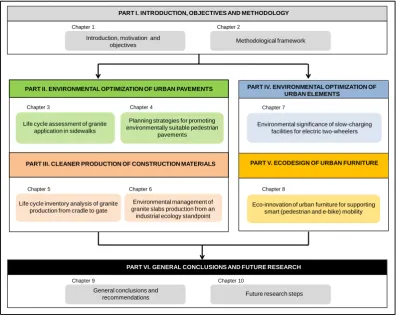
(18) MBGS180. Multi-Blade Gangsaw with 180 steel blades. M&R. Maintenance and Rehabilitation. NC. Normal Conditions. NSC. Natural Stone Council of US. ORP2. Outdoor Recharge Post with two sockets available. ORS6. Outdoor Recharge Station with six sockets available. PED. Primary Energy Demand. QALCC. Qualitative Assessment of Life Cycle Criteria. QR. Quick Renovation of a charging device. RWH. Rainwater Harvesting. SCGP. Spanish Cluster of Granite Producers. SP. Solar Pergola. spE. surplus photovoltaic Electricity. SP_eBike. Solar Pergola with e-bike charging. viii.
(19) Preface This doctoral thesis was developed within the research group on Sustainability and Environmental Prevention (Sostenipra) at the Institute of Environmental Science and Technology (ICTA) of the Universitat Autònoma de Barcelona (UAB) from October 2010 to June 2014. The research presented is the result of a multidisciplinary collaboration between Sostenipra-ICTA-UAB and the Department of Geotechnical Engineering and Geosciences (School of Civil Engineering) from the Technical University of CataloniaBarcelona Tech (UPC). This dissertation aims to determine the potential for environmental improvement of the public space of cities, working on the design and management of basic urban pavements, materials, elements and furniture required to support sustainable (pedestrian, cycling and electric) mobility. The dissertation is essentially based on the following research papers, which have either been published, are under review in international peer-reviewed indexed journals or will be submitted shortly for publication.. . Mendoza JM, Oliver-Solà J, Gabarrell X, Josa A, Rieradevall J, 2012. Life cycle assessment of granite application in sidewalks. International Journal of Life Cycle Assessment; 17: 580–592. DOI 10.1007/s11367-012-0391-1.. . Mendoza JM, Oliver-Solà J, Gabarrell X, Rieradevall J, Josa A, 2012. Planning strategies for promoting environmentally suitable pedestrian pavements in cities. Transportation Research Part D: Transport and Environment; 17:442–450. DOI: 10.1016/j.trd.2012.05.008.. . Mendoza JM, Feced M, Feijoo G, Josa A, Gabarrell X, Rieradevall J, 2013. Life cycle inventory analysis of granite production from cradle to gate. International Journal of Life Cycle Assessment, 19: 153-165. DOI: 10.1007/s11367-013-0637-6.. . Mendoza JM, Capitano C, Peri G, Josa A, Rieradevall J, Gabarrell X, 2013. Environmental management of granite slab production from an industrial ecology standpoint.. Journal. of. Cleaner. Production,. XX:. 1-10.. In. press.. DOI. 10.1016/j.jclepro.2014.03.056. . Mendoza JM, Josa A, Rieradevall J, Gabarrell X. Environmental significance of the slow-charging infrastructure for electric two-wheelers. Under review.. ix.
(20) . Mendoza JM, Sanye-Mengual E, Angrill S, García-Lozano R, Feijoo G, Josa A, Gabarrell X, Rieradevall J. Eco-innovation of urban furniture for supporting smart mobility in cities. Will be submitted shortly.. In addition, part of the research developed within the dissertation has been also presented in a series of international scientific conferences. The presenter is highlighted in bold letters:. . Mendoza JM, Oliver-Solà J, Arena AP, Moral A, Pablos L, García N, Irusta R, Josa A, Gabarrell X, Rieradevall J, 2011. The “CO2e-graph”: an environmental tool for guiding urban planning processes. Application to the public space. ISIE 2011 Conference - Science, Systems, and Sustainability, Berkeley-California 2011. Oral participation.. . Mendoza JM, Rieradevall J, Gabarrell X, Josa A, 2011. “Environmental optimization of electric vehicles slow-charging infrastructures through a life cycle management approach”. ISBN-10: 9400718985. LCM 2011 – Towards Life Cycle Sustainability Management, Berlin 2011. Oral participation.. . Mendoza JM, Gabarrell X, Rieradevall J, Josa A, 2011. Potential impacts of electromobility on the built environment of cities: the needs of comprehensive urban planning for its sustainable deployment. ECOTECH & TOOLS Conference – Environmental and Integrated Assessment of Complex Systems, Montpellier 2011. Oral participation.. . Mendoza JM, Rieradevall J, Gabarrell X, Josa A, 2011. Strategies for optimizing the use of electric vehicle charging infrastructures while minimizing the life-cycle environmental impact on the built environment in the city of Barcelona. Smart City Expo World Congress 2011 – Smart Society for Innovative and Sustainable Cities, Barcelona 2011. Poster.. . Mendoza JM, Sanyé-Mengual E, Angrill S, Gonzalez-Garcia S, Garcia R, Feijoo G, Moreira MT, Josa A, Gabarrell X, Rieradevall J, 2012. Smart urban furniture for promoting sustainable mobility in cities. Smart City Expo World Congress 2012 – Smart Thinking Solutions, Barcelona, 2012. Poster.. . Mendoza JM, Sanyé-Mengual E, Angrill S, Gonzalez-Garcia S, Garcia-Lozano R, Feijoo G, Moreira MT, Josa A, Gabarrell X, Rieradevall J, 2013. Promoting sustainable mobility through the ecodesign of multifunctional urban infrastructures. x.
(21) in the context of smart cities. The 6th International Conference on Life Cycle Management - LCM 2013, Gothenburg 2013. Poster. Furthermore, the PhD student has collaborated in teaching activities from 2010 to 2013 within the framework of the ICTA-UAB master's degree in Environmental Studies (MCD 2006-00362) and opportunity has been given to him to conduct a three months research training stay (April 2012 – July 2012) at the Danish Centre for Environmental Assessment (DCEA) in Aalborg University (AAU), Denmark.. Structure of the dissertation. The structure of the dissertation is organized into six main parts and ten chapters. Figure A presents a flow chart that can be used throughout the reading of this manuscript as a dissertation map. Below, a brief description of the content of each chapter of the dissertation is presented.. PART I. INTRODUCTION, OBJECTIVES AND METHODOLOGY Chapter 1. Chapter 2. Introduction, motivation and objectives. Methodological framework. PART IV. ENVIRONMENTAL OPTIMIZATION OF URBAN ELEMENTS. PART II. ENVIRONMENTAL OPTIMIZATION OF URBAN PAVEMENTS Chapter 3. Chapter 4. Life cycle assessment of granite application in sidewalks. Chapter 7. Planning strategies for promoting environmentally suitable pedestrian pavements. PART V. ECODESIGN OF URBAN FURNITURE. PART III. CLEANER PRODUCTION OF CONSTRUCTION MATERIALS. Chapter 5. Chapter 6. Life cycle inventory analysis of granite production from cradle to gate. Environmental significance of slow-charging facilities for electric two-wheelers. Chapter 8. Environmental management of granite slabs production from an industrial ecology standpoint. Eco-innovation of urban furniture for supporting smart (pedestrian and e-bike) mobility. PART VI. GENERAL CONCLUSIONS AND FUTURE RESEARCH Chapter 9. General conclusions and recommendations. Chapter 10. Future research steps. Fig. A Map structure of the dissertation. NOTE: PART VI collects supplementary material (chapter 11: appendices) related to the case studies presented in chapters 5 to 8.. xi.
(22) Part I. Introduction, Objectives and Methodological framework Part I of the dissertation includes two chapters. Chapter 1 presents a general vision of smart city development and describes the role of the urban public space to accomplish energy and climate sustainability targets. The relevance of urban design in shaping sustainable urban mobility networks is streesed. Emphasis is placed on the description of urban actions dedicated to stimulate walking, cycling and electric mobility. The introduction closes by highlighting the importance related to the provision of environmentally-friendly urban infrastructures to support sustainable modes of mobility. This is the foundation that fuels the motivation and the objectives of the dissertation. Later, chapter 2 describes the methodological approaches and tools applied throughout the dissertation.. Part II. Environmental optimization of urban pavements Part II of the dissertation focuses on the characterization of the life-cycle environmental impacts of standard designs of sidewalks with the aim to identify environmentally friendly construction solutions. Chapter 3 analysis the environmental performance of using granite tiles in sidewalk paving and whether using granite could help to reduce the environmental burden of sidewalks paved with standard (prefabricated) concrete tiles. Chapter 4 presents and compare the life-cycle embodied energy and greenhouse gas emissions of concrete, asphalt and granite sidewalks. This chapter emphasized the analysis of the variability on the environmental performance of the sidewalks according to changes in their maintenance and repair schedule. In this way, the best environmentally suitable design of sidewalks according to service life planning are identified.. Part III. Cleaner production of construction materials Part III looks for solutions to improve the environmental performance of the industrial production of granite tiles, which is the material that provides the highest environmental burden to sidewalks. Chapter 5 presents a comprehensive life cycle inventory (LCI) of the total energy, water and material inputs and waste releases related to the production of granite from cradle to gate. This chapter provides detailed LCI information related to the unit processes of quarrying, sawing, finishing, cutting for the production of polished, flamed, sandblasted and bush-hammered slabs and tiles. The. xii.
(23) most relevant hot-spots of the industrial production chain are identified. Chapter 6 analyzes the potential for cleaner production on the stage of granite block sawing into slabs, which is the most environmentally relevant unit process in the entire granite production chain. Cleaner production techniques based on the promotion of technological optimization, implementation of rainwater harvesting systems and material recovery of granite sludge. The environmental improvement of granite production is calculated according to a list of product environmental footprint indicators.. Part IV Environmental optimization of urban elements Part IV of the dissertation includes Chapter 7, which presents a comprehensive characterisation of the life-cycle embodied energy and greenhouse gas emissions of two conventional designs of slow-charging facilities widely implemented in the urban public space for charging electric two-wheelers (e-scooters). The chapter includes the analysis of a series of usage scenarios aimed to determine the relative environmental significance of the charging facilities for the use phase of electric two-wheelers. These scenarios base on the variability on the service ratio (lifetime energy supply) and the effect derived from upgrading the electricity mix towards renewable. The environmentally suitable solution is identified and criteria for life cycle environmental management are provided.. Part V Ecodesign of urban furniture Part V of the dissertation includes chapter 8, which presents the results from the application of ecodesign principles in the development of multifunctional urban furniture that can contribute to support multimodal sustainable mobility. The design of a conventional pergola, which provides diurnal shadow and nocturnal light for pedestrian comfort, is reconceptualised towards the development of a solar pergola (eco-product) that can support pedestrian and e-bike mobility with zero environmental cost. Different scenarios based on the variability on solar radiation, nocturnal lighting requirements and carbon intensity of the electricity grid mix are used to determine of the variability on the environmental performance of the product systems.. Part VI General conclusions and future research Part VI includes Chapter 9 that presents the general conclusions and recommendations from the dissertation. The chapter also describes some of the. xiii.
(24) limitations encountered during the development of the research and the transfer of knowledge. Chapter 10 presents a list of future research lines that can be followed to complement and extend this dissertation.. Part VII Supplementary material Part VII includes chapter 11, which presents a series of appendices with further descriptions and data related to the case studies presented in chapters 5 to 8.. [Note: Chapters from 3 to 8 of the dissertation presents an article that is either published (chapter 3-6), under review (chapter 7), or soon to be submitted to a peer-reviewed indexed scientific journal (chapter 8). For this reason, an abstract and a list of keywords are presented at the beginning of each chapter, followed by the main body of the article].. xiv.
(25) Part I. Introduction, Objectives and Methodological framework. 1.
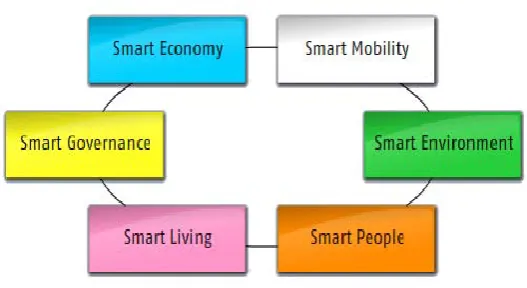
(26) 2.
(27) Chapter I. Introduction Chapter 1 presents a general vision of smart sustainable cities and describes the role of the urban public space to accomplish energy and climate sustainability targets. Emphasis is placed on the description of those urban interventions aimed to stimulate walking, cycling and the use of electric vehicles as clean and energy-efficient modes of mobility. The introduction is closed by highlighting the importance related to the provision of environmentally-suitable urban infrastructures to support sustainable modes of mobility with minimal environmental cost for the urban public space. This is the foundation that fuels the motivation and the objectives of the dissertation.. 3.
(28) Part I- Introduction, Objectives and Methodological Framework. 4.
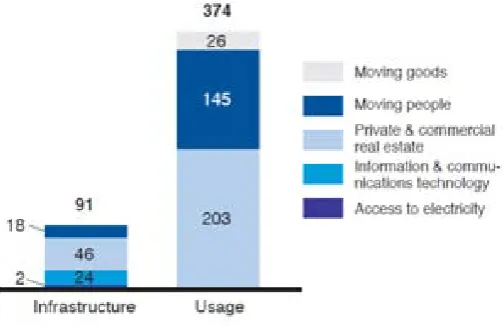
(29) 1-. Chapter 1. Introduction. Cha pter1 presents a g enera l v ision o f sma rt susta in ab le cities and describ es the ro leo f th e urba n pub lic spa ce to a ccom pli sh energy a nd clima te susta ina b il ity ta rg ets. The relev a nceo fa ddressing theurba n dim ensio n o fm ob ility th roug h appropria teurba n pla nning and desig n is stressed. Empha sis is pla ced o n the descriptio n o furb an in terv entio nsa im ed to stimulate wa lking , cy cli ng and th e use o felectric v ehicles a s clea n a nd energy -efficientm o deso f urb an m o bility . The intro ductio n is clo sed by hig hli ghting theim po rta nce rela ted to th e prov isio n o f env i ronm enta lly -suita ble urba n infra structures to suppo rt susta inab le mo des o fmo b il ity w ith m inima l env ironm enta l co st fo r the urb an pub li c spa ce. Thisis the fo unda tion tha tfuels them o tiva tion a nd theo b jectiv es o f th e disserta tio n. 1.1.A vision for smart sustainable cities Cities play a crucial role as engines of the socio-economic growth however they are places of high environmental pressure (European Union, 2011). Globally, with a population share of just above 50% but occupying less than 2% of the earth’s surface, cities concentrate 80% of economic output, over 75% of the world´s resources use, between 60% to 80% of total energy consumption, and approximately 75% of global greenhouse gas (GHG) emissions (Ash et al., 2008; Kamal-Chaoui and Robert, 2009; Pacione, 2009; UN Population Division, 2010; Lazaroiu and Roscia, 2012). This pattern reflects the concentration of particular activities within individual cities and urban areas. Predominantly, buildings, transport, and industry contribute 22% to 25% each to global GHG emissions (Herzog, 2009; UNEP, 2011a). Given the scale of resource consumption, energy use and contribution to climate change driven by rapid urbanization, there is an emerging consensus on the importance of promoting integrated strategies for making cities thriving centres of sustainable development and innovation (UN, 2013). In Europe, particularly, cities are considered instrumental elements for the successful achievement of the headline targets defined by the European 2020 strategy (European Commission, 2010a) through which it is aimed at contributing to transition the European Union (EU) into a smart, sustainable and inclusive economy. The European 2020 energy and climate targets for sustainable growth are aimed at reducing GHG emissions by 20 % from 1990 levels; increasing the input from renewable energy sources in the EU's overall final energy consumption to 20 %; and moving towards a 20% increase in energy efficiency. In order to achieve a decarbonised and energy efficient Europe today's urban planning has to drastically change (European Union, 2011). Many governments have started to argue that a holistic model for sustainable urban development requires the adoption of “smart city planning”. According to the European Innovation Partnership on Smart Cities and Communities (European Commission, 2013a), “Smart Cities” should be regarded as systems of people interacting with and using flows of energy, materials, services and financing to catalyse sustainable economic development, resilience, and high quality of life. A smart city is considered a well performing city in 6 principle components (Fig. 1.1), built on the smart combination of endowments and activities of 5.
(30) Part I- Introduction, Objectives and Methodological Framework. self-decisive, independent and aware citizens (Centre of Regional Science, 2007). Tools, methods and processes developed in this context should differentiate themselves by a holistic approach linking planning, design and operation while keeping in mind citizens’ needs.. Fig. 1.1 Main components of a smart city model. Source: Centre of Regional Science, (2014) (http://www.smart-cities.eu/model.html).. According to the European Innovation Partnership on Smart Cities and Communities (European Commission, 2013a), the achievement of the energy and climate sustainability targets for Europe 2020 (European Commission, 2010a), requires the wide-reaching rollout of integrated, scalable, sustainable smart city solutions, specifically in areas where energy production and use; mobility and transport; and information and communication technologies (ICT) are intimately linked. In this sense, plans for the development of smart cities concentrates on the following three vertical areas:. . Sustainable urban mobility – alternative energies, public transport, efficient logistics and planning;. . Sustainable districts and built environment – improving the energy efficiency of buildings and districts, increasing the share of renewable energy sources used and the liveability of the citizen;. . Integrated infrastructures and processes across energy, ICT and transport – connecting infrastructure assets to improve the efficiency and sustainability of cities.. In this process, a sustainable spatial planning, urban design and logistics deployment is essential and drives the attention to the urban public space as a key scale for 6.
(31) intervention to support such integrated solutions that lead to the development of smart sustainable cities.. 1.2.The role of urban public space. According to UN-HABITAT (2013a; 2013b; 2013c; 2013d), for promoting socially and economically vibrant and environmentally sustainable cities across the world, attention should be mostly focused to the need for better spatial planning related to public spaces and, particularly, streets:. . Firstly, the street system provides the connectivity matrix for the city, which is fundamental for urban mobility. The efficiency of this mobility is a determinant for urban economic productivity and environmental performance.. . Secondly, the street pattern also provides the matrix for the layout of urban basic services, mainly energy, water supply and sanitation, drainage, transportation, parking slots, and diverse urban elements, including street furniture, which support daily life within cities.. . Thirdly, the street pattern, including plazas and public gardens, is the key element of personal interaction and communication between the citizens. In that sense, it defines the cultural and political quality of city life.. . Fourthly, the walkability and bikeability of the spaces, the safety of the sidewalks and the form and location of shops along the street determines the quality and quantity of street life.. The urban public space represents therefore a system of systems, where layers of functional networks intersect and complement each other in a mutually reinforcing and beneficial way (UN-HABITAT, 2014). Nevertheless, if no environmental criteria are applied in the planning, design and management of the constructive solutions and elements that make up the structure and form and define the function of the urban public space, important environmental burdens can be imposed to the urban system (OliverSolà et al., 2009a; 2009b; 2009c; 2011; Petit-Boix et al., 2014; Rieradevall et al., 2011; Sanjuan-Delmás et al., 2014).. 7.
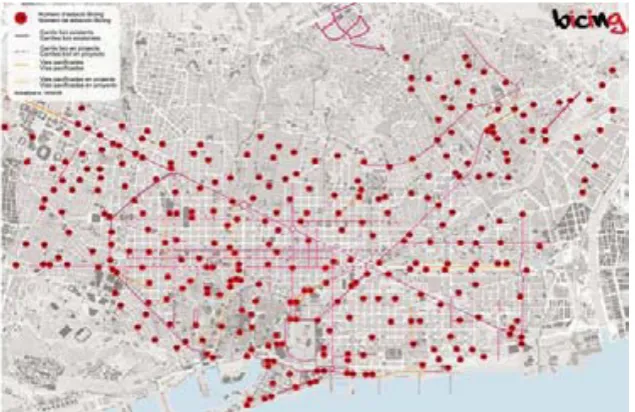
(32) Part I- Introduction, Objectives and Methodological Framework. The World Wide Fund for Nature (WWF) in a report entitle “reinventing the city” (WWF, 2008), indicated that $350 trillion will be spent on urban infrastructure and usage during the next three decades that will contribute to around 465 Gt of GHG emissions under business-as-usual (BAU) global projections (Fig. 1.2).. Fig. 1.2 Urban infrastructure and usage GHG emissions under BAU projections. Source: WWF (2008).. This huge expenditure on new urban infrastructure either can cause the environmental impact of cities to become more pronounced or can be a relevant opportunity to mitigate environmental impacts. The promotion of urban management practices can contribute to reduce GHG emissions stemming from the usage of existing urban infrastructure whereas the application of best practices in urban planning and design can provide sustainability into the development of new urban infrastructure (WWF, 2008). Thus, any decision taken at the level of the planning, design and management of the urban public space can actively contribute to a step forward in the improvement of the environmental performance of cities (Engel-Yan et al., 2005; Farreny et al., 2011a). And this consideration is specially relevant to tackle energy consumption and greenhouse gas emissions from urban mobility.. 1.2.1.Sustainable mobility. One of the most critical aspects of the planning, design and management of the urban public space is that it finally sculpts the urban form which has significant 8.
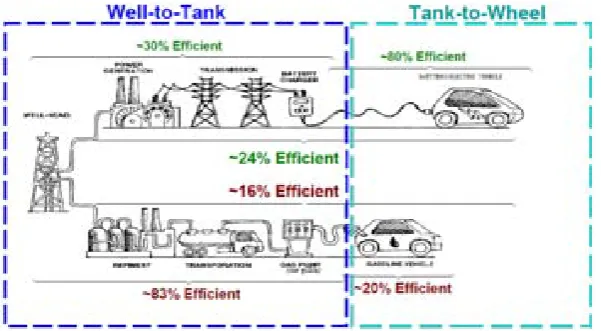
(33) consequences for urban mobility and the sustainability of cities. Kenworthy (2006) suggests that sustainable urban form and transport should be at the core of developing an eco-city. These factors form the shell or basic framework in which everything else about the city is embedded and must operate, and if they are not addressed only marginal changes in urban sustainability can be made. This concern has been also pointed out by Marshall (2008) who states that although much attention on mitigating global climate change has usually focused on alternative fuels use, vehicles technological improvement, and low-carbon electricity generation, better urban design (land-use patterns and the layout of transportation infrastructure) represents an important yet undervalued opportunity. The author suggests that long-term savings in carbon emissions from shifts in urban form could be comparable to those from vehicle technological innovation. In Europe, half of all road transportation fuel is combusted in cities (European Commission, 2007a), where traffic is responsible for at least 40% of GHG emissions and more than two-thirds of local noxious emissions arising from this mode of transport (European Commission, 2007b). The European 2020 Strategy (European Commission, 2010a) stresses therefore the importance to address the urban dimension of mobility in order to shape a modernised transport system that contributes to achieve the energy and climate sustainability targets. In this sense, the European White Paper on Transport (European Commission, 2011a) calls to take significant action in urban mobility planning in order to reach a 60% GHG emission reduction target by 2050 with respect to 1990 levels for the transport sector. New approaches to ensure best-practices in clean and energy-efficient urban mobility planning are emerging based on the need to shift towards more environmentally-friendly modes of mobility such as walking, cycling and public transport and greening a share of the urban motorized vehicle fleet (UNEP, 2011b; European Commission, 2013b).. Walking and cycling mobility. Advocating increased ratios in walking and cycling should become an integral component of urban mobility and infrastructure design (European Commission, 2011a). Walking and cycling are the cleanest, highest resource-efficient and healthier ways for the individuals to travel in urban areas. Cities with higher percentages of walking and cycling mobility trips have lower per capita energy use (Fig. 1.3), which translates into. 9.
(34) Part I- Introduction, Objectives and Methodological Framework. less dependence on fossil fuels, less pressure on other scarce resources such as land, and less emissions of GHG and air pollutants (UNEP, 2010).. Fig. 1.3 Energy consumption for passenger transport versus modal share. Source: IEA (2008).. According to the IEA (2009), improving the provision and accessibility of walking and cycling infrastructure through the design of integrated urban mobility networks can help to create cities and towns that are conducive to walking and cycling. On the one hand, connecting sidewalks and cycling paths to public transport stations expands the possible range of resource-efficient travel and increase ridership of public transport (UNEP, 2010). On the other hand, increased walking and cycling ratios has the added value of fostering a more physical active lifestyle with many health benefits for citizens, such as a decrease in obesity and related heart diseases (European Commission, 2011b; UN-HABITAT 2013c). Fig. 1.4 presents the cycle for walkable and bikeable cities.. Fig. 1.4 Cycle for walkable and bikeable cities. Source: UNEP (2010). Acronyms – NMT: Non-motorized transport. 10.
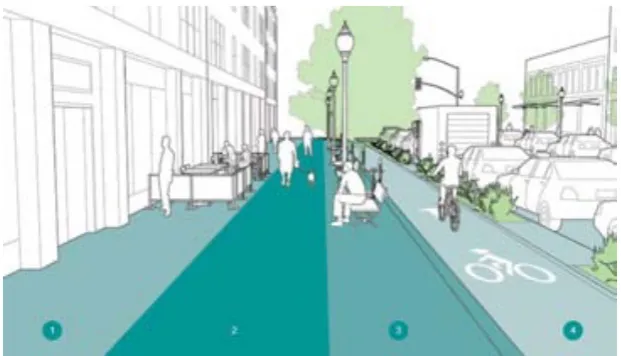
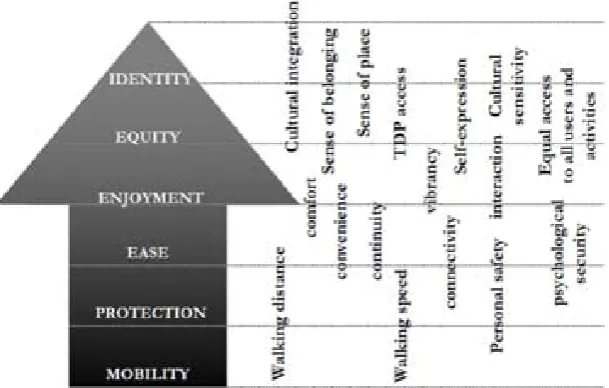
(35) Many cities around the world have recognised such structural opportunities for sustainable urban development. For instance, Copenhagen, Oslo, Amsterdam, Madrid and Stockholm (EIU, 2009), together with Curitiba, Vancouver and Portland in the Americas, have all prioritised compact urban development, creating walkable and bikeable urban neighbourhoods supported by accessible public transport systems. Particularly in Barcelona (one of the most densely populated cities in Europe) efforts by the City Council and local metropolitan administrations look to ‘democratise’ streets and public spaces, with action taken to improve accessibility, affordability and efficiency of the public transport network, promote cycling, walking and other alternative forms of transport (European Union, 2011). Barcelona’s public bicycle service (Bicing) is an example of a successful sustainable mobility programme which has been rapidly adopted by the targeted population (Fig. 1.5).. Fig. 1.5 Map of Barcelona´s bicing stations. Source: www.bicing.cat.. Well-designed streetscape (i.e. street connectivity and safety, complete sidewalk provisions and well-suited pedestrian and cycling routes of exemplary quality) is essential to draw city residents to the use of sidewalks and public spaces. In this sense, the model of “complete streets”, an acknowledgement that streets serve numerous purposes, not just moving cars and trucks, is gaining steam throughout Europe, much of North America and in parts of Eastern Asia. Many cities have started to reclaim land once given over to motorways and freeways to pedestrians, cyclists and public transport to ensure eco-efficiency of their infrastructural systems (UN-HABITAT, 2013b). However, 11.
(36) Part I- Introduction, Objectives and Methodological Framework. greening the urban motorised vehicle fleet is a fundamental issue to be addressed in order to achieve a clean and energy-efficient urban mobility.. Electric mobility. The gradual phasing out of conventional petrol-fuelled cars by the deployment of cleaner and energy-efficient vehicles represents a major challenge to achieve significant reduction of oil dependence, GHG emissions and local air and noise pollution in cities (European Commission, 2009a). The European White Paper on Transport (European Commission, 2011a) set the goal to halve the use of petrol-fuelled cars in urban mobility by 2030 and phase them out in cities by 2050 in order to achieve essentially CO2-free city logistics. In this sense, the European Green Cars Initiative (European Commission, 2008) launched a few years ago has the purpose of supporting research and development on clean and energy-efficient vehicles with a main focus placed on the electrification of mobility because electric vehicles (EVs) represent one of the most promising technology pathways for cutting oil use and GHG emissions on a motorized per-kilometre basis (IEA, 2012). Battery-powered EVs use an electric motor for propulsion with batteries for electricity storage. EVs offer the prospect of zero tailpipe emissions of GHGs and air pollutants, as well as very low noise and vibration. Another important advantage of EVs over conventional ICVs is the substantial energy efficiency (Fig. 1.6). EVs have up to three times the engine and drive-train efficiency of conventional ICVs (IEA, 2011).. Fig. 1.6 Well-to-wheel energy efficiency of EVs and ICVs. Source: Berry et al. (2009).. Within the last few years the promotion of electric mobility has been given first priority in the EU, US, Japan, China, and Korea, where the convergence with the use of 12.
(37) renewable energy sources for electricity production appears the most appealing strategy for reducing environmental impacts from urban motorized mobility (ERTRAC, EPoSS and SmartGrids, 2010). It is worth noticing that electrification of road transport refer to vehicles of many kinds including bikes, scooters and motorbikes, passenger cars, delivery vans, light and heavy-duty freight vehicles and vehicles for public transport (i.e. buses). However, light EVs such electric two-wheelers (E2Ws) (e-bike, e-scooters and emotorbikes) and small passenger e-cars are expected to have a rapidly rising market share that may facilitate the market entry of electric mobility in its entirety for the pervasive electrification of motorized urban vehicle fleets (ERTRAC, EPoSS and SmartGrids, 2012). The vision of the Electric and Plug-in Hybrid (EV/PHEV) Vehicles Roadmap developed by the IEA (2011) is to achieve by 2050 the widespread adoption and use of EVs and PHEVs (EV from now on), which together represent more than 50% of annual light duty vehicle (LDV) sales worldwide in order to contribute approximately a 30% reduction in LDV global GHG emissions. However, GHG reductions depend heavily on the carbon intensity of the electricity grid mix. Thus, GHG targets are based on the expected decarbonisation of global electricity generation. The initial deployment of electric mobility should be particularly encouraged therefore in urban areas of regions with available low carbonized electricity generation systems. However, the provision of adequate planned and designed public charging facilities is essential.. 1.2.2.Urban infrastructure for urban mobility. Infrastructure shapes mobility therefore no major changes in transport sustainability will be possible without the deployment of a properly planned and designed network of urban infrastructures and elements with the encouragement of an intelligent use of it (European Commission, 2011). The choice of infrastructure investments is central for cities to make up a significant share of urban traffic sustainable (European Commission, 2013b).. Urban pavements for supporting walking and cycling mobility. In order to stimulate comfortable walking and cycling activities, the provision of adequate sidewalks and other urban pavements (squares, pathways, rides, plazas) is 13.
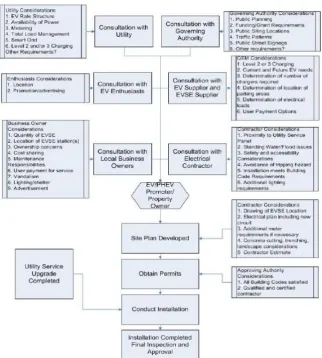
(38) Part I- Introduction, Objectives and Methodological Framework. essential. A sidewalk refers to a paved space running along the side of a carriageway with the main purpose of carrying pedestrian (and cycling) traffic. In the compact city of Barcelona (Spain) the urban public space accounts for 25.7% (25.9 km2) of the total urban area (101 km2). Streets alone represent 16.5 km2 that accounts for 16.3% of the total urban area and around two thirds of the entire urban public space, from which over 5.6 km2 are sidewalks (FAD, 2009). Sidewalks alone account for a notable share of the paved surfaces of the urban public space and their relevance is significantly increasing due to the growing investment related to urban development and refurbishment plans committed to support sustainable mobility in cities. Fig. 1.7 presents an overview of a sidewalk as a key basic element of the street system of cities.. Fig. 1.7 Overview of a sidewalk. Numbers: 1 – frontage zone; 2 – pedestrian through zone; 3 – street furniture/curb zone; 4 – enhancement/buffer zone. Source: NACTO (2013).. The consideration of user needs is a significant prerequisite in the design of sustainable street spaces (Mateo-Babiano and Ieda, 2007). In this process, a “user-need hierarchy” (Fig. 1.8) is applied to define the basic attributes to be considered in the design of suitable construction solutions to meet the demands of pedestrians and cyclists.. 14.
(39) Fig. 1.8 A pedestrian-need hierarchy. Acronyms: TDP - transport-disadvantaged persons. Source: Mateo-Babiano and Ieda (2007).. The user-needs criteria are aimed to increase the level of satisfaction that can influence user loyalty towards the use of the street space and, particularly, sidewalks. At the base of these needs is the desire for movement (mobility). Aside from this, pedestrians (and cyclists) have other physiological or psychological and sociological needs such as protection, ease, enjoyment or leisure, equity and identity. In this sense, a user (pedestrian/cyclist) need-hierarchy reflects both movement and non-movement as contributory towards increasing user satisfaction and comfort (Mateo-Babiano, 2009). In order to fulfil each criterion a series of basic attributes or parameters are considered. The criteria applied in sidewalk design, construction and management is mainly based therefore on the consideration of technical, economic and social factors, such as ergonomics, comfort, safety, durability, aesthetics, and price. The application of environmental criteria is missing.. Charging facilities to support electric mobility. Governments across the world are providing different economic stimuli to accelerate the deployment of an extensive publicly accessible urban charging network, which is considered one of the key milestones and challenges in the widespread adoption of EVs (Hacker et al., 2009; RAE, 2010; IEA, 2011; Eurelectric, 2012; Zubaryeva and Thiel, 2013). The deployment of EV charging facilities is taking place by means of offering different charging alternatives in private and public spaces across different urban locations. 15.
(40) Part I- Introduction, Objectives and Methodological Framework. Charging alternatives include slow and fast charging pilots and stations, inductive (wireless) and contact-running charging systems, battery swapping stations and wind and solar-powered charging parking (ERTRAC, 2012). Definitions of charging alternatives attempt to capture the range of charging times typically experienced by EVs according to the maximum amount of power provided and the way that the energy is delivery to their batteries (Eurelectric, 2011). Fig. 1.9 shows an illustration of an urban charging network for EVs.. Fig. 1.9 An urban charging network for EVs. Numbers: 1 – charging cabinets; 2 – charging posts; 3 – fast charging stations. SOURCE: CIRCUTOR (2013).. The Global EV Outlook (IEA, 2013) provides useful descriptions and information to understanding the present and future EV world landscape in the 18 membership countries of the Electric Vehicle Initiative (EVI), which seeks to facilitate the global deployment of at least 20 million EVs by 2020 (http://www.ieahev.org/). EVI countries have cumulative targets for the implementation of approximately 2.4 million of public slow chargers and 6,000 fast chargers by 2020. Meanwhile, in the EU, the recently released proposal for a European Directive on the deployment of alternative fuels infrastructure (European Commission, 2013c) sets out a minimum coverage for the implementation of EV charging facilities mandatory to be implemented by each Member. 16.
(41) State for 2020. The urban recharging EV networks range from 12,000 to up to 1,500,000 charging points, where at least 10% should be publicly accessible. However, guidance provided by government agencies on the implementation of charging facilities is focused mainly on their technical, economical and regulatory aspects, without incorporating environmental criteria for life cycle management (i.e. ETEC, 2009; TfL, 2010; BEAMA, 2012; CEA, 2013). Fig. 1.10 presents a schematic view of the main criteria considered for the implementation of EV charging facilities in the urban public space.. Fig. 1.10 Installation flowchart for public charging facilities. Acronyms: EVSE – Electric Vehicle Supply Equipment. Source: ETEC (2009).. The application of environmental considerations in the design, deployment and management of EV charging facilities is also missing.. 17.
(42) Part I- Introduction, Objectives and Methodological Framework. 1.3.Motivation of the dissertation. The provision of adequate planned and deployed urban infrastructures and elements are essential to stimulate a shift towards sustainable mobility. However, decisions should not be made based on partial data acting as indicators for whole system performance. In order to effectively mitigate environmental impacts from transportation modes, life-cycle environmental performance should be considered including both the direct and indirect processes, services and supporting infrastructures required for the development of mobility (Chester and Horvath, 2009). Access to life cycle environmental information is crucial in order to encourage the implementation of environmentallyfriendly solutions that contribute to reduce the environmental burden provided to the built public space, thereby increasing the value of greening urban mobility. A massive input of a variety of construction materials is ubiquitous across cities and stored as part of the huge network of paths, passages, broadways, squares and other pedestrian and cycling spaces. Given the vast span of these pavements and the increasing global annual investment in related construction and maintenance works, there is enough reason to believe that the pedestrian and cycling urban network itself represents an interesting opportunity for significant environmental improvement in cities. The relevance of this issue has been demonstrated by Oliver-Solà et al. (2009) who have analyzed the life cycle environmental impact of standard designs of concrete sidewalks. The results provided by the authors indicated that the life cycle environmental impact per square meter of concrete sidewalks can range from 19.7 kg CO2 eq. to 74.3 kg CO2 eq. (+ 277%), depending on the design implemented with regard to the function to be fulfilled (i.e. pedestrian traffic only, underground services and pedestrian traffic, motorized traffic and pedestrian traffic or motorized traffic plus pedestrian traffic plus underground services). As a consequence, “one-size-fits-all” solutions can entail a significant environmental burden to the urban public space. However, the quantitative research on the global environmental impacts of these urban infrastructures is still in its early stages. There is a need to promote the characterization of the life-cycle environmental performance of different standard designs of sidewalks and other equivalent urban pavements in order to define criteria for its potential environmental improvement. In this process, a careful consideration of the type of construction materials chosen for sidewalk paving is critical. These studies will allow urban planners to identify. 18.
(43) the most environmentally-friendly construction solutions and best-practices in urban management to minimize the environmental burden imposed to the urban public space. It is worth noticing that the space dedicated to sidewalks also represent the matrix for the layout of an extent and diverse spectrum of urban elements that provide specific functions and services to support urban mobility. These elements include traffic signals, street lighting lamps, traffic lights, bus canopies, pergolas, benches, to name a few. Each of these elements provides also a specific environmental burden to the urban public space that may be relevant if no environmental criteria are applied in their planning, design and management. This concern has been pointed out by Rieradevall et al. (2011) and González-García et al. (2011; 2012a; 2012b) who demonstrated the potential environmental savings resulted from the application of ecodesign principles in the development of an environmentally friendly street lamp and wooden-based urban furniture. For instance, the attributes of the eco-street lamp rely on energy and material efficiency. The use of a highly efficient light bulb and photovoltaic energy sources with a decrease in light pollution provide 71% reduction of the environmental impacts related to the use phase of the conventional product system and the dematerialization of the aerial structure and urban setting with the use of recycled materials contribute to around 60% reduction of environmental impacts related to the materials inputs. EV public charging facilities represent one urban element of particular interest. These elements are expected to gain mass presence in the urban environment in the near future. Hundreds to thousands of EV charging facilities have been already implemented in the public space of many cities worldwide to encourage and support the use of EVs. However, the scientific literature based on the analysis of the life cycle environmental performance of EVs is usually focused on considering their operation stage or their entire life cycle (vehicle production, operation and disposal) but without integrating the comprehensive characterization of the environmental significance of the charging facilities required to operate them (Hacker et al. 2009; Nemry and Brons 2010; Howey et al. 2011; MacPherson et al. 2012; Hawkins et al. 2013). Thus, little is known about the potential environmental burden that the EV charging facilities can place on the public space of cities and their relative environmental significance to the operation stage of EVs. In this early stage of deployment of electric mobility, it is fundamental to start analyzing the life-cycle environmental performance of different designs of EV charging facilities in order to minimize long-term environmental burdens.. 19.
(44) Part I- Introduction, Objectives and Methodological Framework. 1.4.Objectives of the dissertation. The main objective of this dissertation is to determine the potential for environmental improvement of the public space of cities by taking action on the design and management of basic urban pavements and elements required to support sustainable (pedestrian and electric) mobility. This general objective involves two particular interests:. A. Identification of the most environmentally-suitable solutions to minimize the environmental burden on the built urban space (chapters 3, 4, and 7). This particular interest involves the following specific objectives:. I.. Characterization of the life-cycle environmental impact of standard designs of (concrete,. asphalt. and. granite). sidewalks. and. comparison. of. their. environmental performance according to changes in their service lives. II.. Characterization of the life-cycle environmental performance of conventional designs (post vs. station) of public charging facilities for electric two-wheelers and analysis of their relative environmental significance for the operation stage of vehicles according to changes in the service ratio, usage conditions and electricity grid mix.. B. Identification and analysis of alternatives to improve the environmental performance of those elements and product systems with the highest environmental footprint in order to achieve major environmental improvements at the urban scale (chapter 5, 6 and 8). This particular interest involves the following specific objectives:. III.. Analysis of the potential for cleaner production of construction materials with poor environmental performance (granite) based on the promotion of technological optimization and the implementation of water management (rainwater. harvesting). and. waste. management. alternatives from an industrial ecology perspective.. 20. (by-product. synergies).
(45) IV.. Demonstration of the usefulness of the application of ecodesign principles and smart decision-making in the conceptualization and development of a CO2free multifunctional urban furniture (pergola) to support multimodal sustainable (pedestrian and e-bike) mobility in cities.. In order to achieve the main aim of the dissertation and give response to its particular interests, a series of transversal goals are outlined:. . Provision of complete and disaggregated inventory data of the mobilized resources (energy, water and materials) and waste releases along the life cycle of each product system analyzed.. . Identification of the most environmentally relevant hot-spots of the life-cycle of the different product systems, paying particular attention on the indicators of global warming potential and primary energy demand.. . Definition of variables and parameters to be considered in life cycle inventory modelling and environmental impact assessment (sensitivity analysis) in order to get an accurate picture of the environmental performance and potential for environmental improvement of the different product systems analyzed.. . Definition of criteria and proposal of best-practices for the environmental optimization and life-cycle management of the different product system to contribute actively to the environmental improvement of the urban public space.. 21.
(46) Part I- Introduction, Objectives and Methodological Framework. 22.
(47) Chapter II. Methodological framework Chapter 2 presents an overview of the general methodological frameworks and tools applied in this dissertation. In addition, it briefly presents the research framework that has been followed according to the results obtained in the different case studies.. 23.
(48) Part I- Introduction, Objectives and Methodological Framework. 2-. 24. Chapter 2. Methodological framework.
(49) 2.1.Methodological approaches and tools. Fig. 2.1 shows an overview of the methodological approaches and tools applied in the dissertation.. Chapters 3, 4, 5, 7. Industrial Ecology (IE). Plugrisost. Chapter 6. Life Cycle Assesment (LCA). Ecodesign. Chapter 8. Fig. 2.1. Methodological approaches and tools applied throughout the dissertation.. Life Cycle Assessment (LCA) is the core methodological tool used in the development of the dissertation. Ecodesign and Industrial Ecology (IE), including the plugrisost® analytical model, are wider frameworks applied to solve specific questions and goals arising in the research. Below, the general characteristics of the different methodological approaches and tools are described, starting from the broader to the more specific. Further information and descriptions can be found in chapters 3 to 8 of the dissertation, including the corresponding appendices with supplementary material.. 2.1.1.Industrial ecology. As argued in the seminal publication by Frosch and Gallopoulos (1989), IE looks to ecosystems as models for industrial activity to optimize resource efficiency (“the biological metaphor”). Many biological ecosystems are especially effective at recycling resources and thus are held out as exemplars for efficient cycling of energy and material resources in industry (Lifset and Graedel, 2002; Chertow, 2004). The concept requires that an industrial (and socio-economic) system be viewed not in isolation from its. 25.
(50) Part I- Introduction, Objectives and Methodological Framework. surrounding systems, but in concert with them. It is a systems view in which one seeks to optimize the total materials cycle from virgin material, to finished material, to component, to product, to obsolete product, and to ultimate disposal (Graedel and Allenby, 2010). IE has a primary focus on manufacturing processes and product design. It views firms as agents for environmental improvement because they possess the technological expertise that is critical to the successful execution of environmentally informed design of products and processes (Lifset and Graedel, 2002). The IE concept is made practical by operating at three basic levels (Fig. 2.2): at the firm or unit process level, at the inter-firm, district or sector level and finally at the regional, national or global level, where a range of different approaches, methods and tools for sustainability decision-making apply (Chertow, 2000; Ehrenfeld and Chertow, 2002).. Industrial Ecology. Firm level/Unit process. Inter-firm/Sector level. Regional/Global level. • Design for Environment. • Product life-cycles. • Budgets and cycles. • Industrial synergies. • Materials and Energy flows studies. • Pollution prevention. • Eco-efficiency • Industrial symbiosis • Eco-innovation. • Industrial sector initiative. • Dematerialization and decarbonization. • Green accounting. Fig. 2.2 Basic elements of IE seen as operating at different levels. Source: Chertow (2000) and Ehrenfeld and Chertow (2002).. A key element of IE is that it takes a systemic approach to analyse environmental problems in order to avoid narrow, partial analyses that can overlook important variables and, more importantly, lead to unintended consequences. Life cycle thinking (UNEP/SETAC, 2012) is therefore one basic approach which provide systems orientation.. The IE tools of LCA (chapters 3 to 8) and ecodesign (chapter 8) have been applied in the dissertation. Nevertheless, a wider IE approach is applied in chapter 6 in order to solve a series of specific research questions raised in that particular case. 26.
(51) study. It includes the use of the Plugrisost® analytical model, which is briefly described below.. Plugrisost analytical model. The software Plugrisost® (Morales-Pinzón et al., 2012a) is an IE analytical simulation tool based on system dynamics that facilitates and support the technical, economic and environmental evaluation of alternative water supplies (rainwater harvesting (RWH) and greywater systems) to contribute to the sustainable management of water resources. Plugrisost® software analyses the optimal design variables and performance of RWH and greywater systems, using tap water production and use as the reference system for comparison. Tap water production includes water catchment (lake, river and ground), treatment and distribution. RWH includes the catchment, storage, processing and distribution of rainfall. Greywater systems include catchment, treatment and reuse of wastewater. Fig. 2.3 presents a diagram of the basic components of Plugrisost® software.. Plugrisost® Tank size and design / Technical performance Large surfaces Rainwater. Rainwater storage. Neighbourhood. Greywater storage. Greywater Building. Tap water House. Resources on offer. Apartment. Scale of analysis. Economic costs. Ennvironmental impacts Economic and Environmental performance. Fig. 2.3 basic components of Plugrisost® software.. The software, although developed primarily to analyze the sustainability performance of the design and implementation of alternative supply systems at different urban scales (neighborhood, building, house and apartment), integrates the assessment of RWH and greywater supply systems for non-residential large surfaces such as industrial facilities and industrial areas. In this sense, the Plugrisost® software has been applied to determine the potential for RWH and use in the industrial production of granite, which is 27.
(52) Part I- Introduction, Objectives and Methodological Framework. a high water-intensive construction material (see chapter 6). Fig. 2.4 presents and illustration and a diagram of the relationship between determining factors in the optimal design of RWH systems.. Illustration of a RWH system. Industrial plot Roof Industrial facility Underground rainwater tank. Determining factors for RWH Rainfall Rainwater supply Run-off. Rainwater catchment. Filter. Rainwater storage tank sizing. Catchment surface. RWH. Rainwater demand Optimum rainwater tank size. Fig. 2.4 Determining factors for RWH and use in industrial facilities.. The sizing of rainwater storage tanks is central factor to be considered in building the RWH system. The optimal sizing of rainwater storage tanks is a function of rainwater catchment and rainwater demand. Rainwater catchment, in turn, is a function of the useful catchment surfaces available (roofs and/or paved areas) and rainfall. The criteria applied are meant to achieve a share of rainwater supply according to the daily water requirements of the system under consideration (Gabarell et al., 2013a). Following, a brief description of each determining factor in the optimal design of RWH systems is provided: Rainfall The first methodological step in modeling the potential for RWH consists of collecting historical daily rainfall records from the bioclimatic geography of interest. Historical rainfall records are inputs that reproduce past climate conditions, which, under certain assumptions, can be considered representative of future local conditions. The value captured by the model is the daily rainfall recorded by weather stations or estimated by stochastic models.. 28.
(53) Catchment surface The catchment surface corresponds to the useful space that could be dedicated for rainwater collection. When modelling a large area, it is assumed that the whole catchment area is connected and that rainwater can be captured in the same tank. Because not all of the rain can be harvested, a runoff coefficient and filter coefficient should be applied. Rainwater demand It corresponds to the defined amount of water to be daily satisfied by using rainwater inputs. Water demand can be modelled as either a constant or variable depending on the day or month of the year. However, in the absence of data, the daily average value is used unless indicated otherwise. Rainwater storage tank sizing The analytical model allows for determining the potential for RWH according to the variability in rainwater storage tank size using a dynamic balance between daily rainwater availability and demand. In this way, the statistically average potential for RWH can be defined. In this process, the yield for each volume of a rainwater tank is estimated according to the different scenarios previously defined. Rainwater harvesting According to the criteria used to determine the potential for RWH, the software model a large number of scenarios a by the combination of calculation variables and parameters in order to determine the optimum rainwater storage tank size. After obtaining an adequate volume for the rainwater tank, the Plugrisost program allows to perform a statistical analysis of the system using simulated rainfall through the application of probabilistic models. This analysis contributes to observe the variability on the percentage of the water demand met with rainwater supplies. Finally, the software can be used to model the economic and environmental performance of each particular scenario in order to determine the potential cost savings and environmental savings regarding the use of tap water inputs. Detailed descriptions about the Plugrisost® analytical model and software can be found in Morales-Pinzón et al. (2012a) and Gabarrell et al. (2013a). The software and a manual for users can be directly downloaded at http://sostenipra.ecotech.cat/.. 2.1.2.Ecodesign. Ecodesign (also called “Design for Environment”) is a conspicuous element of IE. More than 80% of the environmental impacts of products are determined at the design 29.
(54) Part I- Introduction, Objectives and Methodological Framework. stage (European Commission, 2012). Experience has shown therefore that pollution prevention and waste reduction through the early action in process and product design can be much more effective than “end-of-pipe” (corrective) environmental decisions (Hendrickson et al., 2002). Ecodesign has a product, process or service orientation, focusing on the reduction in the use of hazardous substances, decline in resource consumption, and facilitation of end-of-life management through re-use and recycling. By incorporating systematic environmental considerations into product, process and service design ex ante, industrial designers seek to avoid or minimize environmental pressures and impacts (Tukker et al., 2000; Lifset and Graedel, 2002). In this way, the environmental attributes of a product are given the same status as the more traditional product values considered right from the earliest stage of product design such as functionality, safety, ergonomics, endurance, image, quality, aesthetics and cost. Implicitly, ecodesign entails detailed consideration of the life cycle of products by taking (preferable) a cradle-to-grave approach, from the extraction and use of raw materials and natural resources, manufacturing processes, packaging systems, transport operations, product usage and end-of-life management (European Commission, 2012). Ecoodesign aims to prevent the shift of environmental burdens from one life cycle stage to another. In addition, ecodesign efforts can be concentrated at the level of those product´s hot-spots with high potential for significant environmental improvement in order to find suitable solutions that contribute to the development of environmentallyfriendly products.. Fig. 2.5 introduces a diagram of the ecodesign framework applied to solve the specific research questions raised in chapter 8 from the dissertation. A brief description of each basic methodological step is presented below. Further step-bystep descriptions can be found in chapter 8 and appendix IV.. 30.
Figure

+7
Documento similar
We focused on a few factors, which, as we believe, contribute to this ability and which previous research has identified most saliently as contributing
teriza por dos factores, que vienen a determinar la especial responsabilidad que incumbe al Tribunal de Justicia en esta materia: de un lado, la inexistencia, en el
No obstante, como esta enfermedad afecta a cada persona de manera diferente, no todas las opciones de cuidado y tratamiento pueden ser apropiadas para cada individuo.. La forma
The program is based on the following pillars: (a) students become the main agents of their learning by constructing their own knowledge; (b) the teacher must be the guide to
Urban agglomeration and even metropolization are linked to the urban –rural process emergence: the growth of most populated cities and the depopulation of less accessible rural
The Dwellers in the Garden of Allah 109... The Dwellers in the Garden of Allah
The draft amendments do not operate any more a distinction between different states of emergency; they repeal articles 120, 121and 122 and make it possible for the President to
The main goal of this thesis is to contribute to the knowledge in planetary science through the study of the upper atmosphere of giant planets undergoing hydrody- namic escape. We
