use of pesticides: perceived control and confidence
in this use
Un análisis cuantitativo del uso de Plaguicidas en los campesinos
colombianos: percepción del control y la confianza en este uso
Ysabel Polanco1; Juan C. Salazar2; Barbara Curbow3
1 PhD en Salud Pública, Universidad de Antioquia, Medellín, Colombia. Correo electrónico: [email protected].
2 PhD en Estadística. Universidad Nacional de Colombia, Medellín, Colombia. Correo electrónico: [email protected].
3 PhD Salud Pública. Department of Behavioral Sciences and Community Health, College of Public Health and Health Professions. University of Florida. Correo electrónico: [email protected].
Recibido: 04 de junio de 2013. Aprobado: 30 de abril de 2014.
Polanco Y,, Salazar JC,Curbow B. A quantitative analysis of Colombian campesinos’ use of pesticides: perceived control and
confidence in this use. Rev. Fac. Nac. Salud Pública 2014; 32(3): 373-382.
Abstract
Objective: this study aims to explore how campesino non pesticide users differ in their knowledge, attitudes and beliefs, and perceptions of control and confidence surrounding pesticide use compared to pesticide users. Methodology:
we collected 79 questionnaires with adult (male and female) rural agricultural campesinos in San Cristobal, Antioquia, Colombia. We examined the campesinos’ perceptions on pesticides’ harm for human health and the environment, as well as their beliefs, attitudes, perceived control, and perceived confidence related to pesticide use. Results: The findings differed between two campesino groups sampled: pesticide users and agroecological adherents. Pesticide users showed lower perceptions of pesticide harm for human health and the environment, lower perceived control about stopping pesticide
use (an increase of one unit in control decreases the logit of using pesticides by 74%), and lower confidence about stopping pesticide use than agroecological adherents (an increase of one unit in confidence decreases the logit of using pesticides by 64%). Discussion: Several individual factors influence the occupational safety and health of campesinos, including perceived control and confidence. We recommend that future public health and educational interventions should improve safety training and confidence so campesinos can gain control of the process for implementing behavioral change related to pesticide use reduction.
---Keywords: pesticides, campesinos, risk perception, perceived control.
Resumen
Objetivo: Este estudio pretende explorar como los campesinos no usuarios de plaguicidas difieren en su conocimiento, actitudes y creencias y percepciones de control y confianza en torno al uso de plaguicidas comparado con usuarios de plaguicidas.
Metodología: Colectamos 79 cuestionarios con hombres y mujeres adultas que son campesinos agricultores en San Cristóbal, Antioquia, Colombia. Examinamos las percepciones de estos campesinos sobre el daño de los plaguicidas sobre la salud humana y el medio ambiente. También se exploraron
confianza acerca de parar el uso de pesticidas comparado con los no usuarios de plaguicidas (el aumento de una unidad en la confianza, disminuyó el logit de usar pesticidas en un 64%). Discusión: Varios factores individuales influencian la salud ocupacional y la salud de los campesinos incluyendo la percepción del control y la confianza. Recomendamos que futuras intervenciones educativas en salud pública aumenten el
entrenamiento sobre prácticas seguras y la confianza. Así los campesinos pueden ganar control en el proceso de implementar cambios en su comportamiento relacionado con la reducción del uso de pesticidas.
---Palabras clave: plaguicidas, campesinos, percepción del riesgo, control percibido
* The term pesticide refers to any synthetic chemical substance intended for preventing, destroying, repelling, or mitigating pests. Pests can be insects, other animals, weeds, fungi, or microorganisms that cause damage to crops or animals. The term includes insecticides, herbicides, fun-gicides, and other substances used to control pests. Many of these substances are known to have adverse effects on human and ecosystem health because they are designed to kill or otherwise adversely affect living organisms. The term includes Organophosphate, Carbamates, Pyrethroid, and Organochlorineinsecticides. The definition excludes biopesticides derived from natural materials such as animals, plants, bacteria, and cer-tain minerals (e.g., canola oil, baking soda, garlic, peppers, herb extracts often used in agroecological practices). Biopesticides are divided into three categories: microbial pesticides (bacterium, fungus, virus or protozoan), biochemical pesticides (non-toxic naturally occurring substances such as insect sex pheromones and scented plant extracts), and plant-incorporatedprotectants [source http://www.epa.gov/pesticides/about/].
Introduction
Pesticides* have constituted an immediate solution to pest problems in crops [1]. However, pesticides have produced adverse effects on humans as well as the environment that make their use unsustainable [2-4]. Pesticides are also responsible for the emergence of increasingly resistant pests/pathogens and the destruction of natural pest enemies [1]. Biodiversity has been strongly altered by synthetic
pesticides. Pesticide residues in different ecosystems, soil,
water, air, animals, and plants are other deleterious results of conventional agricultural practices [5].
Campesinos in many countries where conventional agrochemical-based agriculture constitutes the predominant form of production in the agricultural sector directly suffer from all of the severe threats to human health and well-being posed by exposure to pesticides [6, 7]. Most of the pesticides that are banned in first-world countries are widely employed in Latin America [8]. In this article, we describe and analyze the individual factors of risk perceptions, knowledge, beliefs, and attitudes associated with pesticide use by campesinos employing a quantitative approach.
Many health alterations have been associated with pesticide use [9-12]. A variety of human systems can be affected, including the neurological, immunological, respiratory, and reproductive systems [6, 13-15]. Several potential means of exposure exist [5, 16, 17]. The greatest risk and highest toxicity are linked to skin and mucosa contact with pesticides during preparation, mixing, and application [18].
Effects of exposure range from acute intoxication to chronic conditions including developmental and neurologic alterations [6, 10, 12, 16]. Exposure not only affects the farmworker directly involved in the manipulation of toxic substances but also other household members such as children and pregnant
women [11, 14, 19]. Even though a growing concern exists about pesticide exposure of farmworkers and their families, relatively few studies have tried to test directly the association of behavioral factors with pesticide exposure in an agricultural population [20].
Several research studies have explored beliefs, attitudes, knowledge, risk perceptions, perceived confidence, and perceived control surrounding pesticide use [21-25]. Some of these studies have explored the perceptions of control, perceptions of risk, and pesticide knowledge among Latino farmworkers in the United States, finding limited knowledge and low risk perceptions (they do not feel at risk when they mix, prepare, or spray with pesticides). These findings suggest that more research is needed and that different public health interventions are important [21, 23, 26, 27].
Farmworkers are aware of the risks associated with pesticide exposure and have varying opinions regarding the individual’s perception of personal vulnerability [26]. In research performed with farmers and farmworkers in North Carolina, us, farmworkers believed that they had
been exposed to pesticides because they experienced symptoms during or after the application. Farmworkers believed that susceptibility to chemicals was inherent and beyond the individual’s control. This is an important finding because ideas about “control” often predict health behavior [22]. Thus, when farm workers felt they had “control” over a specific health outcome, they were more likely to adopt appropriate preventive measures and behaviors when confronting health threats, as in the case of pesticide exposure.
Previous work has indicated that farmworkers experience high levels of perceived risk from pesticides
and low levels of perceived control of pesticide use and
safety measures. In a study of farm workers, Arcury et al (2002) found that receiving information about pesticide safety reduced perceived risk and increased perceived control. However, perceived risk had a limited relationship to safety knowledge and was not related to safety behavior. Additionally, perceived control was not related to pesticide exposure knowledge but was strongly related to safety knowledge and safety behavior [23]. These results demonstrate that, for pesticide education to be effective, it must address aspects of control [28].
In the findings reported by Flocks (2007), farmworkers attributed extreme weather conditions, including hot and dry or hot and humid, as affecting their bodies and making them “weaker” and more vulnerable to pesticide exposure and absorption [25].
In Colombia, the situation related to pesticide use for agriculture is multifaceted and difficult to assess. The country is marked by sociopolitical instability, extreme poverty, rampant violence and corruption, and a rather strong influence of private capital and private interests in the design and implementation of public policies [19, 29]. This situation translates into weak regulatory frameworks in several forms, including work safety, labor rights, and compliance with the management of hazardous materials, of which pesticides are just an example [30].
Farming is a major sector of the Colombian economy [31]. The bulk of agricultural production is achieved by
conventional means of cultivation with heavy reliance on the agrochemical industry [31]. Regulation for pesticide use in Colombia exists but is not fully or consistently enforced (30). For example, several pesticides that are banned in other countries are still used in Colombia [6, 17, 29]. Additionally, the cut flower industry, a strong component of national agribusiness with high amount of exports annually, is dependent on the intensive use of synthetic pesticides and fertilizers, putting a large portion of the population of agricultural workers and their communities at high risk [19]. In Colombia, pesticide use and exposure is widespread [6]. Individual factors have been scantily studied finding limited knowledge about the harmfulness of pesticides among campesino communities, as well as issues of power with the bosses and social discrimination [19].
This study aims to explore how campesino non
pesticide users differ in their knowledge, attitudes and beliefs, and perceptions of control and confidence surrounding pesticide use compared to pesticide users. The research question in this study was: What are the attitudes, beliefs, and risk perceptions of campesino pesticide users and agroecological† adherents in San Cristobal, and how do they differ in these factors?
San Cristóbal is a corregimiento (Rural Division) in the municipality of Medellin (Central Antioquia, Colombia). It includes the head of the township and 17 veredas (rural subdivisions) [32], ten of which were selected for data collection in this project as follows: El Patio, El Llano, Las Playas, La Cuchilla, La Palma, El Carmelo, Travesías, Yolombo, El Uvito, and San José de la Montaña. San Cristobal maintains strong economic, commercial, and administrative ties with Medellin.
Agriculture constitutes the main economic activity in San Cristóbal, including cut flowers and a broad range of vegetables. San Cristóbal ranks as the largest horticultural rural division of Medellin and functions as a major source of produce to the latter [32].
Methodology
This study was based on quantitative methods. In this section, we describe the characteristics of participants, participant recruitment process, steps for the
administration of the instrument, data collection and analysis, and protection of human subjects.
Participants
All participants involved in this investigation worked in agriculture, and many of them combined this occupation with other partial jobs. Most of the participants were married (74.68%) adult males (54.43%) who have worked in agriculture for a substantial period (average ~36 years in the field). The average age was 53 years. The average amount of years of education was 6.15 (Std. Dev. 3.82). All the demographic information is described in table 1. The total sample of campesinos was
79. Out of this number, 43 (54%) were only pesticide users, 15 (19%) were in the transition stage in which they still used pesticides but were slowly introducing agroecological practices to a portion of the land they cultivate, and 21 (27%) were campesinos who had already changed completely to agroecological practices. For the analysis we put together the transition group with the agroecological group in the same non users group and named it agroecological adherents.
Jose de La Montaña, El Llano, and La Palma in order to present the project and contact possible participants.
Cognitive Interviews
In this study, we performed two cognitive interviews with campesinos to refine the instrument. I asked respondents to thinkaloud as they attempted to answer questions. This technique helped to identify problems with questions and indicated possible solutions [34]. The only confusion for participants was related to the initial five-item Likert scale designed to measure attitudes and beliefs about pesticide harmfulness to human health and the environment and usefulness of pesticides in crop production. This scale originally went from strongly agree to strongly disagree. After completing the cognitive interviews, we reduced the scale of some questions to three items (yes, neutral, and no) in order to simplify the options.
Board Meeting
We also attended the board of directors meeting of Asociación Campesina Agroecológica de la region de Boquerón, Corregimiento San Cristobal (Campesino Agroecological Association of the Boquerón) (acab). This association of campesinos works on different activities and at different levels with their associates, including education and training about agroecological practices, the planning of their harvest, technical support with the management of their crops, and organization of crop marketing, among others [35]. We went to this meeting with the aim of presenting the project to ACAB leaders and obtaining permission to
contact campesinos who belong to this association and constituted the sample of the non pesticide users.
Questionnaire
We constructed the questionnaire based on the following
components: questions about attitudes and beliefs in a
three-item likert scale [36] (e.g., pesticides affect my health, pesticides can affect water), questions about pesticide decision making in a five-item scale (e.g., when you decided to use pesticides, did you think it was a very good, good, neither good or bad, bad, or very bad decision?), perceived control about stopping pesticide use (the response options were on a scale of 1-10, and the question was: if you decide you want to stop using pesticides, how much control do you think you have?), perceived confidence about stopping pesticide use(the response options were on a scale of 1-10, and the question was:if you wanted to stop using pesticides, how confident are you that you could stop?), and demographic information. The first round of questionnaires was applied to a first group of campesinos (seeds) contacted through cier assistants. Following
[image:4.612.106.258.368.552.2]these initial questionnaires, we asked each contact to provide names and phone numbers of two or three Table 1. Demographic information of participants
Demographics (%)
Gender:
Male 54.43
Female 45.57
Marital status
Cohabitates 7.59
Divorced 5.06
Married 74.68
Single 8.86
Widow 3.80
Age (median) 53.00 years
Education (mean) 6.15 years
Education (std) 3.32 years
Sampling
This project used a purposive sampling strategy, which consisted of purposefully selecting participants who would best help to understand the problem and provide information pertaining to the research question [33]. The first step was to contact community leaders through personnel at the nongovernmental organization Corporaciónpara la Investigación y el Ecodessarrollo Regional (Corporation for Research and Regional Ecodevelopment) (cier). We attended several community
neighbors. We used snowball sampling techniques [37] in this portion of the study. The reading level of the
informed consent and questionnaire forms appropriate
for the target audience (fifth-grade level).
Data Analysis
This study included 79 questionnaires. First, we filled out the questionnaires on paper,then we entered the data into Excel 7® program sheets, and finally we saved the data on a computer. We stratified data by pesticide user (n = 43) or non-user (n = 36). The semi-structured portion had scales that provided ratings. We processed and analyzed the statistical data using SAS 9.2® software [38].
Analysis encompassed the following steps: 1) descriptive statistics for each item, 2) analysis of principal components of the scales to identify an appropriated structure, 3) Chi-square tests to compare responses among the groups (pesticide users and non pesticide users) across categorical variables, building
a score of probability for questions about attitudes and
beliefs, 4) performing logistic regression analysis to examine the relationship between pesticide use and the variables confidence and control, 5) calculating internal reliability using Cronbach’s alpha [39] for attitudes and beliefs, 6) running Spearman correlation coefficients to detect monotonecorrelations between the variable for attitudes and beliefs, and 7) conducting logistic regression analysis with a dichotomized version of perceived pesticide harm.
Human Subjects
Participants signed the informed consent form before the
questionnaire started. We conducted all questionnaires
in a private space. Each questionnaire had a unique code number to protect the privacy of participants. The study was approved by the Institutional Review Board of the University of Florida.
Results
Below is a description of the analysis and results from an exploration of the following individual factors among
participants: attitudes and beliefs related to pesticide use,
decision making about pesticide use, perceived control about stopping pesticide use, and perceived confidence about stopping pesticide use. I described and compared the findings between pesticide users and non- users. I report the findings in the following order: descriptive,
bivariate, scale development, and multivariate.
Descriptive
We obtained descriptive statistics of both demographic information and each item of the questionnaire to assess the nature of the normal distributions.
Decisions about pesticide use
[image:5.612.317.531.336.431.2]To evaluate campesinos’ perceptions about how good or bad the pesticide decision was, we provided a Likert scale with the following question: When you made the decision of using pesticides, do you think this decision was: 1=very good; 2=good; 3=neutral; 4=bad; 5=very bad. We obtained descriptive statistics to see the frequencies of responses. Most campesinos expressed that pesticide use is very good (35.9%) or good (28.1%). A minority considered it to be bad (16.67%) (table 2). Therefore, it was clear that pesticide use was accepted in this community, and it was considered to be something very good or good by the majority of participants.
Table 2.Frequency of pesticide decision options.
The decision to use pesticide
was Frequency Percent %
Very good 28 35.9
Good 22 28.1
Neutral 9 11.54
Bad 13 16.67
Very bad 6 7.69
Bivariate Analysis
Perception about pesticide harm
translates into use or not of pesticides). With a p-value of 0.0007, these variables were strongly associated.
We calculated a Receiver Operating Characteristic (roc) curve ‡, and the value was 0.776,meaning that the
model is suitable for classification. To assess the fit of the model, we calculated a likelihood ratio test (p-value <
0.0001). The effect size was measured as (0.205-1) x 100% = -79.5% which means that an increase in one unit in the
score of perceived pesticide harm decreases the logit of using pesticides by 79.5%.
Perceived control
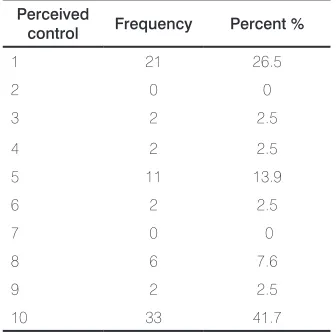
Campesinos were asked to rate their perceptions on their level of control to stop pesticide use on a scale of 1 (no control) to 10 (extreme control). Out of the total sampled population, 26.5 % responded perceiving no control to stopping pesticide use. However, 33% of participants responded perceiving maximum control (table 3). Participants who perceived maximum control were all non pesticide users. There is a clear difference between the amount of perceived control of pesticide users and non-users.
100% = -74.5% which means that an increase in one unit
in control decreases the logit§ of using pesticides by74.5%.
Perceived confidence
To assess how much confidence campesinos perceive they have to stop the use of pesticides, we used a scale of 1(no confidence) to 10 (extreme confidence). Most participants (57.7%) perceived no confidence at all to stop pesticide use. However, some participants (16.7 %) expressed perceiving maximum confidence (table 4). It is important to clarify that the class that represented perceiving maximum confidence was composed of agroecologists. In other words, there is a clear difference in perceived confidence between pesticide users and non-users.
‡ A Receiver Operating Characteristic (ROC) curve plots the sensitivity against the false-positive rate (i.e., one minus specificity) for a range of
[image:6.612.343.496.283.448.2]thresholds to help visualize test performance [40].
Table 3. Frequency of perceived control to stop pesticide use, with1 being no control and 10 being maximum control
§ Logit refers to the logarithm of the ratio of the probability of not using pesticide versus the probability of using pesticide (log(p/(1-p))) Perceived
control Frequency Percent %
1 21 26.5
2 0 0
3 2 2.5
4 2 2.5
5 11 13.9
6 2 2.5
7 0 0
8 6 7.6
9 2 2.5
10 33 41.7
To explore if pesticide users perceive having less control over their use of pesticides than non-users, We ran a logistic regression analysis using the variable pesticide use as the outcome variable (dependent) and perceived control as the predictor variable (independent). I treated the variable perceived control as continuous. The result showed that the association between pesticide use and control was significant (p-value = 0.0004), which means that higher control decreases the probability of using pesticides. We measured the effect size as (0.2549 - 1) x
Perceived confidence
Frequency Percent %
1 45 57.7
2 2 2.5
3 4 5.1
4 2 2.5
5 8 10.2
6 2 2.5
7 0 0
8 1 1.3
9 1 1.3
[image:6.612.94.262.370.536.2]10 13 16.7
Table 4. Frequency of perceived confidence to stop pesticide use,
with 1 being no confidence and 10 being maximum confidence.
To explore if pesticide users perceive having less confidence to use pesticides than non pesticide users, we fitted a logistic regression model using the variable pesticide use as the outcome variable (dependent) and perceived
confidence as the predictor variable (independent). We
treated the variable perceived confidence as continuous.
The analysis showed that the association between pesticide
use and perceived confidence was significant (p-value:
0.0007), meaning that higher confidence decreases the
probability of pesticide use. We measured the effect size as (0.3520 - 1) x 100% = -64.8%, which means that an
increase in one unit in confidence decreases the logit of using pesticides by64.8%.
Pesticide use with other variables
use) with other variables. This variable, pesticide use, was only significantly related with occupation (p-value = 0.0494) and residence (p-value =<.0001). It was borderline significant with age (younger than 53 years, which was the median, p-value = 0.0561). We dichotomized age in two categories: lower than 53 and higher than 53 (the median value).When we ran the test with age being continuous, we did not find association with pesticide use.
Scale Development
Perceived pesticide harm
We carried out principal components analysis (PCA) of the scales to visualize potential structures. We
implemented a principal component analysis to reduce
dimensionality from questions 1a to 1n (attitudes and beliefs).In order to explain more variability, we combined components 1 and 2 by using a weighted average that was used to create an individual score
called perceived pesticide harm. This score went from 42 (maximum score, when the participant answered no to all the questions) to 14 (minimum score, when participant answered yes to all the questions). Large values of this score were associated with people who do not have a high perception of harm caused by pesticide use and exposure on human and environmental health. Because this perceived pesticide harm does not have a reference value, to assess the definition of how large is “large,” we mapped the score into the scale 0-1 by using a logistic transformation. We called it perceived pesticide harm (logistic).
We wanted to explore if these variables that measure attitudes and beliefs were inter-related. For this, we used
an internal consistency indicator of reliability called
Cronbach’s alpha for variables that measured attitudes and beliefs (1a-1n). Results indicated an alpha of 0.64, indicating that the correlations of each item with every other item were good, although not very strong. We checked the values of alpha after deleting each item, and alpha only increased to 0.67when variable e (pesticides can affect the soil) was deleted.
To see the correlation between these variables, we ran Pearson correlation, which detects just linear correlation. We also ran Spearman correlation, which is very appropriate because it detects correlations when they are not necessarily linear (monotonic associations). These correlations can be curvilinear. The most important correlation of the variables 1a-1n (attitudes and beliefs) included: pesticide affects pregnant women’s health with pesticides can harm children’s health);pesticides can harm good insects with pesticides affected my health; pesticides can harm the water with pesticides can harm children’s health; pesticides can harm children’s health with pesticides can harm the water; and using pesticides allows me to provide more for
Type of variable
Name or variable
p-value Parameter
estimate Dependent
variable pesticide harmPerceived
Independent variable
Age (younger than 53)
0.0480 -0.2480
Independent
variable Residence:Llano
Other San José de la
Montana Travesias
0.0097 0.1805
[image:7.612.320.533.137.271.2]-0.2054 -0.1805 0.3219
Table 5. Beta regression procedure for estimating the odds of
perceived pesticide harm as a function of variables such as age, residence, and occupation.
Multivariate Analysis
Because perception of harm includes values between 0
and 1, we implemented a beta regression model using this score as a response. It is important to observe that a high perception of harm (closer to 1) means that the person has an enhanced perception of pesticides being harmful for health and the environment. Only perception of harm was significant with age (p-value: 0.0480) (younger than 53 years, which was the median) and with residence (p-value: 0.0097) (table 5).
Additionally, we explored how the variable perceived pesticide harm depends on the other variables. For this, we conducted a logistic regression procedure with a dichotomized version of the variable perceived pesticide harm as response (0 if perceived pesticide harm < 0 and 1 if perceived pesticide harm ≥ 0). Only perceived pesticide harm with age (younger than 53 years) as significant (p-value = 0.0529, borderline significant). This is crucial, as it implied that campesinos younger than 53 years have less of a perception of the degree of harmfulness of pesticides for human health and environmental than campesinos older than 53 years. It is important to clarify that, in this analysis, logistic regression works with perceived pesticide harm dichotomized.
Discussion
vs. a commitment to confront the established dogma in the case of the non-user.
Pesticide users largely believe that pesticides are not harmful for human health and the environment. In contrast, nonpesticide users have a higher perception of the harmfulness of pesticides for human health and the environment, especially among older participants (older than 53 years). Therefore, public health interventions in this pesticide user population should focus on increasing awareness about the harmfulness of pesticides for human health and the environment; this would be beneficial especially when targeted to younger community members.
Non pesticide users perceive that they have more control in relation to pesticide use than pesticide users. In the case of perceived confidence, most campesinos expressed having very little or no confidence to stop pesticide use. However, the few participants who perceived having high confidence were all nonpesticide users. Having higher control and higher confidence decreased the probability of using pesticides.
This study demonstrated that pesticide use for campesinos represents an environmental justice concern, as was also found in a study carried out
with farmworkers in the us [23]. A basic principle of
environmental justice is that local communities must have control over their environment. The environmental justice framework not only recognizes environmental injustice as it is associated with humans harming nature, but it also recognizes that environmental injustice arises from class, racial, and gender discrimination [41, 42].
For education on preventing/reducing pesticide use to be successful, it must address the crucial component of control over pesticide use. In pesticide use and
safety education interventions, campesinos should be told not only what they should do to reduce pesticide use and exposure but also why and how this behavior will decrease exposure and improve their health, i.e., building a clearer justification to explain behavior [23]. Subsequently, future public health interventions should be aimed at increasing perceived control and perceived confidence mainly among pesticide users. As a consequence, this could lead to greater behavioral change of decreasing pesticide use. In other words, the tools for community empowerment should be built with local communities instead of being brought in as an external set of appropriate rules and procedures. Examples of achievement in the change of paradigm implied for the non-users can serve as a valuable preliminary experience and a demonstration of how the problem of human health alterations and environmental degradation should have an interdisciplinary approach, for example in the conjunction of agroecology, public heath, and human behavior.
The individual factors that played a relevant role in the decision-making process of pesticide use included
entrenched, and often interdependent, sets of beliefs such as those related to pesticide use benefits (is necessary for crops, benefits crops), low perceived control, low perceived confidence, and low perception of pesticide harm for human health and the environment. Campesinos who adhere to these established categories were more likely to use pesticides. We built a conceptualmodel that describes the most influential individual factors in the decision-making process of pesticide use in San Cristobal, Colombia. The most relevant components included beliefs (pesticides are necessary for the crops, pesticides are not harmful for human health and the environment, and pesticides benefit crops, making them bigger and increasing their amounts), low perceived control, low perceived confidence, and low perception of pesticide harm (for human health and the environment). All these factors increase the probability of using pesticides (figure 1). Therefore, future public health interventions must include these components in order to reduce pesticide use in this community.
In terms of education, more programs and
[image:8.612.326.528.325.512.2]interventions are needed for campesinos who express the need and interest to learn more about the harmfulness of pesticides and the benefits of agroecological practices. Undoubtedly, this education must be accompanied by more support from stakeholders, institutions, and the local government in order to provide sustainability in these processes of change. These interventions must not be limited to present pre-manufactured information. Rather, these programs must help affected communities to build an appropriate local knowledge so as to gain awareness, control, and confidence in the process for implementing behavioral change on pesticide use and exposure dynamics.
Figure 1. Conceptual model of the decision-making process of
Moreover, future studies should attempt to use behavioral, environmental, and psychosocial measures to build a body of evidence with which to better understand the risk factors for pesticide exposure among agricultural workers [20].
Results obtained after statistical treatment of
perceived pesticide harm are more than worrying. They imply that younger agriculture workers possess less of a concern on the detrimental effects of pesticides on their personal health, on the health of the community around them, and, in general, on the health of the natural environment on which the local community ultimately depends. The new generation of campesinos may have a hard time reorienting its approach to agriculture in the direction of abolishing pesticide use though agroecological practices, therefore imposing serious threats for the health of the rest of the community. This finding stresses the idea of reinforcing research projects, educational campaigns, and public health programs among communities of agriculturalists in rural Antioquia where the adverse effects of pesticide use-abuse are just beginning to be documented. Doing so, this will work in the direction of strengthening our prospects in the struggle for social and environmental justice.
Research of this kind is limited in Colombia; therefore, more research is needed on different regions of Colombia with the aim of exploring in more detail the level of local knowledge, perceptions of risk and control, and the beliefs and attitudes related to pesticide use.
Acknowledgments
We thank the compton International Foundation,
which provided the funding for the study, and all the campesinos who participated.
References
1 Gomiero T, Paoletti MG, Pimentel D. Energy and environmental issues in organic and conventional agriculture. Critical Reviews in Plant Sciences. 2008;27(4):239-54.
2 Shiva V. Soil not Oil: Environmental Justice in a Time of Climate Crisis. Cambridge, MA: South End Press; 2009.
3 Harrison J. Pesticide Drift and the Pursue of Environmental Justice. First ed. London: Massachusetts Institute of Technology Press; 2011. 4 Pimentel D, Marklein A, Toth MA, Karpoff MN, Paul GS, Mc-Cormack R, et al. Food Versus Biofuels: Environmental and Eco-nomic Costs. Human Ecology. 2009 Feb;37(1):1-12.
5 Vergara RA. Intoxicaciones masivas con plaguicidas: importan-cia de sus efectos socioeconómicos. . III Seminario Nacional “Aconteceres Entomológicos”. Universidad Nacional de Colom-bia, Sede Medellín; 2000.
6 Nivia E. Mujeres y Plaguicidas: una mirada a la situacion actual, tendencias y riesgos de los plaguicidas. Estudio de caso Palmira, Colombia Palmira: Rapalmira; 2000 October 2012.
7 Jiménez M, Muñoz E. Plaguicidas y la salud. El caso del corre-gimiento de San Cristóbal. Pag 90. : Publicado por Corporación Penca de Sábila. ; 1993.
8 Altieri M. Agroecology: the science of natural resource mana-gement for poor farmers in marginal environments Agriculture, Ecosystems & Environment. 2002;93(1):1-24.
9 Pimentel D. Sustaining agriculture and the rural environment. Ecological Economics. 2007 Aug;63(2-3):636-.
10 Ott W, Steinemann A, Wallace L. Exposure Analysis. Boca Raton: Taylor & Francis group; 2007.
11 Freeman N. Children’s Risk Assessment. In: Robson M, Toscano W, editors. Risk Assessment for Environmental Health. San Fran-cisco: Jossey-Bass; 2007. p. 628.
12 Rothlein J, Rohlman D, Lasarev M, Phillips J, Muniz J, McCau-ley L. Organophosphate Pesticide Exposure and Neurobehavioral Performance in Agricultural and Nonagricultural Hispanic Wor-kers. Environ Health Perspect. 2006;114:691-6.
13 Quandt SA, Arcury TA, Austin CK, Cabrera LF. Preventing Oc-cupational Exposure to Pesticides: Using Participatory Research with Latino Farmworkers to Develop an Intervention. Journal of Immigrant Health. 2001;3(2):85-96.
14 Guillette E, Meza M, Aquilar M, Soto A, Enedina I. An Anthropo-logical Approach to the Evaluation of Preschool Children Expo-sed to Pesticides in Mexico. Environmental Health Perspectives. 1998;106(6):347-53.
15 Restrepo M, Muñoz N, Day N, Parra JE, Hernandez C, Blettner M, et al. Birth defects among children born to a population occu-pationally exposed to pesticides in Colombia. Scandinavian Jour-nal of Work Environment and Health. 1990;16:239-46.
16 Reigart J, Roberts J. Recognition and Management of Pesticide Poisonings. 5th ed. Washington DC: U.S. Environmental Protec-tion Agency; 1999.
17 Ministerio_de_Salud. Pesticidas en Latino América. Colección: Salud, Ambiente y Desarrollo. Santa Fe de Bogota, Colombia: Ministerio de Salud; 2010.
18 Montana_State_University. Personal Protective Equipment (PPE) for Pesticide Applicators. 2014 [cited 2014 February 27]; Availa-ble from: http://www.pesticides.montana.edu/reference/ppe.htm 19 Sanmiguel-Valderrama O. The feminization and racialization
la-bor in the Colombian fresh-cut flower industry. Journal of Deve-loping Societies. 2007;23(1-2):71-88.
20 Quandt S, Hernandex-Valero M, Grzywacz J, Hovey J, Gonzales M, Arcury T. Workplace, household, and personal predictors of pesticide exposure for farmworkers Environmental Health Pers-pectives. 2006;114(6):943 – 52.
21 McCauley L, Sticker D, Bryan C, Lasarev M, Scherer J. Pesti-cide Knowledge and Risk Perception Among Adolescent La-tino Farmworkers. Journal of Agricultural Safety and Health. 2002;8(4):397-409.
22 Quandt S, Arcury T, Austin C, Saavedra R. Farmworker and Far-mer Perceptions of Farmworker Agricultural Chemical Exposure in North Carolina Human Organizations. 1998;57(3):359-68. 23 Arcury T, Quandt S, Russel G. Pesticide Safety among
Farmwor-kers: Perceived Risk and Perceived Control as Factors Reflec-ting Environmental Justice. Environmental Health Perspectives. 2002;110(2):233-40.
25 Flocks J, Monaghan P, Albrecht S, Bahena A. Florida Farmwor-kers’ Perceptions and Lay Knowledge of Occupational Pesticides. Journal of Community Health. 2007;32(3):181-94.
26 Salazar M, Napolitano M, Scherer J, McCauley L. Hispanic Ado-lescent Farmworkers’ Perceptions Associated With Pesticide Ex-posure. Western Journal of Nursing Research. 2004;26(2):146-66. 27 Grieshop J, Stiles M, Villanueva N. Prevention and Resiliency: A
Cross Cultural View of Farmworkers’ and Farmers’ Beliefs about Work Safety. Human Organizations. 1996;55(1):25-32.
28 Vaughan E, Fridlund-Dunton G. Difficult socio-economic circum-stances and the utilization of risk information: A study of Mexican agricultural workers in the USA. Health, Risk & Society. 2006 September;9(3):323-41.
29 Cardenas A. Lineamientos de política sobre uso y manejo mesura-do de plaguicidas con énfasis en el sector agropecuario y forestal del departamento de Antioquia. Convenio Interinstitucional COR-NARE - LA CEIBA - DAMA Consejo Seccional de Plaguicidas de Antioquia Medellín. Colombia.; 2005.
30 Castro LA. Pesticides in Colombia: their application, use, and le-gislation. . In: Taylor.M, editor. Pesticides residues in coastal tro-pical ecosystems: distribution, fate and effects: Taylor and Francis group.; 2003. p. 375-99.
31 Perfetti J, Balcázar A, Hernández A, Leibovich J. Políticas para el desarrollo de la agricultura en Colombia. 2014 [cited 2014 February 26]; Available from: http://www.fedesarrollo.org.co/wp-content/uploads/2013/07/Libro-SAC_Web.pdf
32 Medellin Ad. Atlas Veredal de Medellin. Medellin: Universidad Nacional de Colombia; 2010.
33 Creswell J. Research Design: Qualitative, Quantitative and Mixed Methods Approaches. Third edition ed: SAGE Publications; 2009. 34 Drennan J. Cognitive interviewing: Verbal data in the design and
pretesting of Questionnaires. Methodological issues in Nursing Research. 2003;42:57-63.
35 ACAB. Asociacion Campesina Agroecologica de Boqueron. 2014 [cited 2014 January 22]; Available from: http://www.tien-dacolyflor.com/
36 Jamieson S. “Likert Scales: How to (Ab)use Them” Medical Edu-cation. 2004;38(12):1217-8.
37 Bernard H. Research Methods in Anthropology: Qualitative and Quantitative Approaches. Fourth edition ed: AltaMira Press 2006. 38 Delwiche L, Slaughter S. The Little SAS Book: A Primer Fourth
Edition ed: SAS Publishing 2008.
39 Cozby P. Methods in Behavioral Research. 10th ed. Fullerton: Mc Graw Hill; 2009.
40 Vittinghoff E, Glidden D, Shiboski SC, McCulloch CE. Re-gression Methods in Biostatistics: Linear, Logitic, Survival, and Repeated Measures Models. First ed. New York: Springer Science+Business Media; 2005.
41 Taylor D. The Rise of the Environmental Justice Paradigm: Injustice Framing and the Social Construction of Environ-mental Discourses American Behavioral Scientist. 2000 Ja-nuary;43(4):508-80.