
Inventory, assessment, and
monitoring
Handbooks
4
thedition
The Convention on Wetlands (Ramsar, Iran, 1971) is an
intergovernmental treaty whose mission is “the conservation and wise use of all wetlands through local, regional and national actions and international cooperation, as a contribution towards achieving sustainable development throughout the world”. As of October 2010, 160 nations have joined the Convention as Contracting Parties, and more than 1900 wetlands around the world, covering over 186 million hectares, have been designated for inclusion in the Ramsar List of Wetlands of International Importance.
What are wetlands?
As defined by the Convention, wetlands include a wide variety of habitats such as marshes, peatlands, floodplains, rivers and lakes, and coastal areas such as saltmarshes, mangroves, and seagrass beds, but also coral reefs and other marine areas no deeper than six metres at low tide, as well as human-made wetlands such as waste-water treatment ponds and reservoirs.
About this series of handbooks
This series has been prepared by the Secretariat of the Convention following the 7th, 8th 9th, and 10th meetings of the Conference of the Contracting Parties (COP7, COP8, COP9 and COP10) held, respectively, in San José, Costa Rica, in May 1999, Valencia, Spain, in November 2002, Kampala, Uganda, in November 2005, and Changwon, Republic of Korea, October-November 2008. The guidelines on various matters adopted by the Parties at those and earlier COPs have been prepared as a series of handbooks to assist those with an interest in, or directly involved with, implementation of the Convention at the international, regional, national, subnational or local levels. Each handbook brings together, subject by subject, the various relevant guidances adopted by Parties, supplemented by additional material from COP information papers, case studies and other relevant publications so as to illustrate key aspects of the guidelines. The handbooks are available in the three working languages of the Convention (English, French, and Spanish). The table on the inside back cover lists the full scope of the subjects covered by this handbook series at present. Additional handbooks will be prepared to include any further guidance adopted by future meetings of the Conference of the Contracting Parties. The Ramsar Convention promotes an integrated package of actions to ensure the conservation and wise use of wetlands. In recognition of these integrated approaches, the reader will find that within each handbook there are numerous cross-references to others in the series.
Copyright © 2010, Ramsar Convention Secretariat Citation: Ramsar Convention Secretariat, 2010. Inventory, assessment, and monitoring: an Integrated Framework for wetland inventory, assessment, and monitoring. Ramsar handbooks for the wise use of wetlands, 4th edition, vol. 13. Ramsar Convention Secretariat, Gland, Switzerland.
Reproduction of material from this publication for educational and other non-commercial purposes is authorized without prior permission from the Ramsar Secretariat, providing full acknowledgement is given. Series Editor: Dave Pritchard Series Supervisor: Nick Davidson Design and layout: Dwight Peck
Handbook 13
4
edition, 2010
Inventory, assessment,
and monitoring
An Integrated
Framework for wetland
inventory, assessment,
and monitoring
This 4th edition of the Ramsar Handbooks replaces the series published in 2007. It includes relevant guidance adopted by several meetings of the Conference of the Parties, in particular
Acknowledgements
The Integrated Framework for Wetland Inventory, Assessment and Monitoring (IF-WIAM) was prepared by the Scientific & Technical Review Panel’s Working Group on inventory and assessment, led by Max Finlayson, with significant contributions from Dave Pritchard. The IF-WIAM was developed from a COP8 (2002) Information Paper on the topic (included as the Appendix to this Handbook), which was prepared by Max Finlayson with the assistance of Dolf de Groot, Habiba Gitay, Dave Pritchard and the Ramsar Secretariat. The Secretariat is particularly grateful to Max Finlayson for his efforts in developing the IF-WIAM guidance and to Dave Pritchard for developing the later frameworks for describing wetland ecological character and for detecting, reporting and responding to change in ecological character.
All Resolutions of the Ramsar COPs are available from the Convention’s Web site at www. ramsar.org/resolutions. Background documents referred to in these handbooks are available at www.ramsar.org/cop7-docs, www.ramsar.org/cop8-docs, www.ramsar.org/cop9-docs, and
www.ramsar.org/cop10-docs.
Hana Cizkova explaining hydrological monitoring equipment, Trebon Ramsar Site, Czech Republic, 2007.
Table of Contents
AcknowledgementsGetting the most out of this Handbook Foreword
An Integrated Framework for wetland inventory, assessment and monitoring (IF-WIAM) I. Background
II. The importance of identifying, assessing and reporting the status of Ramsar Sites and other wetlands in the implementation of the Convention
III. The relationship between wetland inventory, assessment, monitoring and management
IV. Multi-scalar approaches to wetland inventory, assessment and monitoring
V. The Ramsar ‘toolkit’ of guidance available to Ramsar Parties for implementing the integrated wetland inventory, assessment and monitoring framework
• The Ramsar Framework for Wetland Inventory • Metadata records for wetland inventory • Types of wetland assessment
• Rapid assessment of wetlands • Indicator assessment
• The relationships among the different wetland assessment tools available through the Convention
• Wetland monitoring
• Applying wetland inventory, assessment and monitoring tools in the context of the wise use of wetlands
• [Applying wetland inventory, assessment and monitoring tools in the context of detecting, reporting and responding to change in the ecological character of wetlands]
VI. Gaps in Ramsar’s ‘toolkit’ of inventory, assessment and monitoring guidance VII. Priorities for improving integrated wetland inventory, assessment and monitoring Appendix
Assessment tools contained within the Integrated Framework for Wetland Inventory, Assessment and Monitoring (IF-WIAM)
Relevant Resolution
Resolution IX.1 Additional scientific and technical guidance for implementing the Ramsar wise use concept
2 4 6 7 7 9
11
12 16
18 21 21 22 22 24
27 27
29
29 31
33
Getting the most out of this Handbook
The Handbooks in generalThe purpose of the Ramsar Handbooks is to organize guidance material from relevant decisions adopted by the Contracting Parties over the years, according to subject themes. This helps practitioners to implement the internationally-agreed best practice in a way that is convenient to handle and more naturally matches their own everyday working environment.
The intended readership includes national and local staff of the government departments, ministries and agencies that act as Administrative Authorities for the Ramsar Convention in each country. Equally important users in many cases are managers of individual wetland areas, as some aspects of the guidance relate specifically to site management.
The Ramsar guidance has been adopted by member governments as a whole, and increasingly it addresses itself to the crucial roles of other sectors beyond the “environment” or “water” sectors. It is thus very important that these Handbooks should be used by all whose actions may benefit from or impact upon the wise use of wetlands.
A vital first step in each country therefore is to ensure adequate dissemination of these Handbooks to all who need or can benefit from them. Copies are freely available in PDF format from the Ramsar Secretariat in three languages on CD-ROM or by download from the Convention website (www.ramsar.org).
Other early steps would be, in each particular context, to clarify lines of responsibility and actively check how to align the terms used and approaches described with the reader’s own jurisdiction, operating circumstances, and organizational structures.
Much of the text can be used in a proactive sense, as a basis for framing policies, plans and activities, sometimes by simply importing relevant sections into national and local materials. It can also be used in a reactive sense as a source of help and ideas for responding to problems and opportunities, navigating subjects by the need of the user.
Cross-references, original sources, and further reading are liberally cited: the Handbooks will often not be the “last word”, but they provide a helpful “route-map” to further sources of information and support.
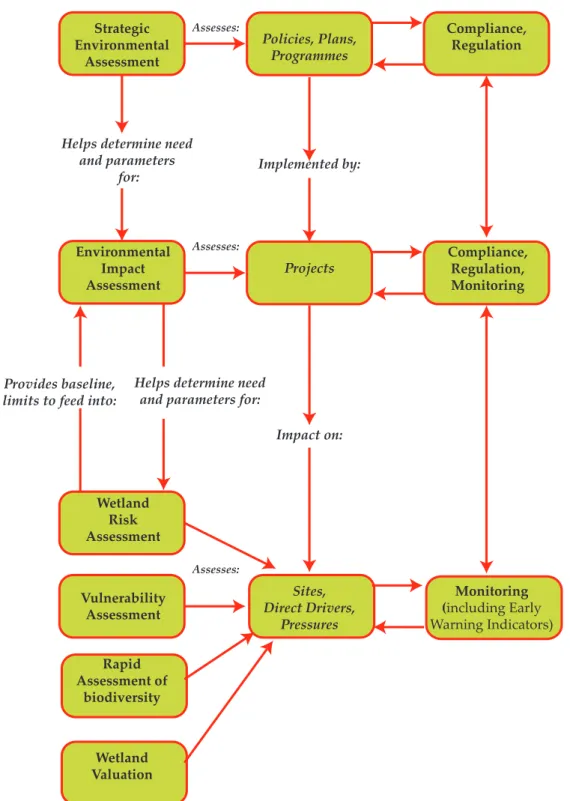
Strategic direction in the Ramsar Convention is provided by the Strategic Plan, the latest version of which was adopted by COP10 in 2008 for the period 2009-2015. All thematic implementation frameworks, including the Handbooks, sit within the context of the goals and strategies of this Plan and the priorities it highlights for the period covered.
This Handbook (Inventory, assessment, and monitoring)
Strategy 1.1 of the Strategic Plan 2009-2015, concerning wetland inventory and assessment, is to “describe, assess and monitor the extent and condition of all types of wetlands as defined by the Ramsar Convention and wetland resources at relevant scales, in order to inform and underpin implementation of the Convention, in particular in the application of its provisions concerning the wise use of all wetlands”.
The text in this Handbook is drawn mainly from Resolution IX.1 and its Annex E, and the
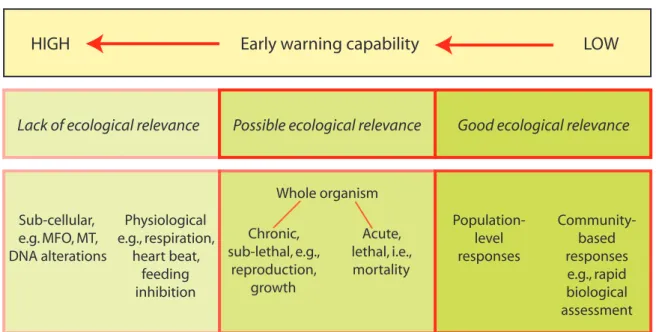
substance of it thus reflects formal decisions adopted by the Conference of Contracting Parties. The Handbook also brings together other resource materials relevant to the issue; the views expressed in these additional materials do not necessarily reflect the views of the Ramsar Secretariat or the Contracting Parties, and such additional materials have not been endorsed by the Conference of the Contracting Parties.
Foreword
The suite of guidance documents on the scientific, technical and policy implementation of the Ramsar Convention adopted by its Contracting Parties over the past 20 years (and compiled in this 4th edition of the Ramsar Wise Use Handbooks) is ever increasing. During the 2003-2005 triennium, the Convention’s Scientific & Technical Review Panel (STRP) recognized that a set of thematic frameworks would assist Parties to identify and use the guidance they need.
Such frameworks, prepared by the STRP and adopted by 9th meeting of the Conference of the Contracting Parties (COP9) in 2005 under Resolution IX.1, include the overarching Conceptual Framework for the wise use of wetlands and the maintenance of their ecological character (Handbook 1, 4th edition), a revised Strategic Framework and guidelines for the future development of the List of Wetlands of International Importance (Handbook 17, 4th edition), An Integrated Framework for the Ramsar Convention’s water-related guidance (Handbook 8, 4th edition), and An Integrated Framework for wetland inventory, assessment and monitoring (IF-WIAM) (this Handbook, 4th edition). COP10 (2008) added A Framework for Ramsar data and information needs (Handbook 14, 4th edition) and A Framework for processes of detecting, reporting and responding to change in wetland ecological character (included in Handbook 19, 4th edition). In addition, Handbook 15 (4th edition) now comprises A Ramsar Framework for wetland inventory and ecological character description.
Inventory, assessment and monitoring of wetlands are fundamental tools that provide the basis for many aspects of successful implementation of the Convention. The IF-WIAM focuses on the purposes of, and inter-relationships among, the different aspects and tools on wetland inventory assessment and monitoring available under the Convention’s guidance documents. As well as summarizing each of these available guidance documents, the IF-WIAM outlines how and when each of them should be used; it also identifies some other key topics on which guidance is provided elsewhere or may be expected at a later date from the STRP.
Importantly, the IF-WIAM also describes the wide range of different types of wetland assessment and shows how these are interrelated and should be used for different purposes. It also includes a summary of the framework for wetland monitoring, which is directly relevant to wetland site management processes, and which is included in full in Handbook 18, Managing wetlands, 4th edition.
An Integrated Framework for wetland inventory, assessment and
monitoring (IF-WIAM)
(adopted as Annex E to Resolution IX.1 by the 9th meeting of the Conference of the Contracting Parties, Kampala, Uganda, 2005)
I.
Background
1. Considerable attention has been paid by the Convention on Wetlands (Ramsar, Iran, 1971) to the importance of wetland inventory, assessment and monitoring as tools for the conservation and wise use of wetlands, as well as to their use through management planning processes to maintain and enhance the ecological character of Ramsar Sites and other wetlands under Article 3 of the Convention.
Relevant implementation commitments made by Contracting Parties in COP Resolutions and Recommendations
Resolution IX.1: Additional scientific and technical guidance for implementing the Ramsar wise use concept
THE CONFERENCE OF THE CONTRACTING PARTIES
7. WELCOMES the frameworks, guidelines and other advice provided as annexes C, D, and E to this Resolution and URGES Contracting Parties to make good use of them as appropriate […];
8. URGES Contracting Parties to draw these frameworks, guidelines and other advice to the attention of all relevant stakeholders, including inter alia government ministries, departments and agencies, water and basin management authorities, non-governmental organizations, and civil society; and FURTHER URGES Contracting Parties to encourage these stakeholders to take these guidelines into account […] in their decision-making and activities which relate to the delivery of the wise use of wetlands through the maintenance of their ecological character.
Resolution X.15: Describing the ecological character of wetlands, and data needs and formats for core inventory: harmonized scientific and technical guidance
THE CONFERENCE OF THE CONTRACTING PARTIES
7. INVITES Contracting Parties and those responsible for the management of Ramsar sites to apply these guidelines in the preparation of ecological character descriptions of Ramsar sites, and as part of their management planning processes, so that these descriptions constitute a complementary basis to the Information Sheets on Ramsar Wetlands (RIS) for detecting and notifying changes in ecological character, as established through Article 3.2 of the Convention text, and RECOMMENDS that Contracting Parties provide any completed descriptions of the ecological character of Ramsar sites to the Secretariat as a supplement to the information provided in the RIS.
Resolution X.16: A Framework for processes of detecting, reporting and responding to change in wetland ecological character
THE CONFERENCE OF THE CONTRACTING PARTIES
2. This has led to the adoption of a substantial suite of guidelines and other technical guidance on these matters by the meetings of the Conference of the Parties to the Convention, materials which have been designed to assist Contracting Parties and others in implementing these key Convention processes. Guidance adopted up to and including [COP10 (Changwon, Republic of Korea, 2008)] has been incorporated into Ramsar Wise Use Handbooks ([4th] edition) [15 (Wetland inventory), 16 (Impact assessment), 17 (Designating Ramsar Sites), 18 (Managing wetlands) and 19 (Addressing change in wetland ecological character)].
3. Furthermore, the Contracting Parties called in several COP8 Resolutions for the Scientific and Technical Review Panel (STRP) to prepare further guidance on different aspects of wetland inventory and assessment in order to fill gaps in the current toolkit. These include the “Ecological ‘outcome-oriented’ indicators for assessing the implementation effectiveness of the Ramsar Convention” (Resolution IX.1 Annex D), and “Guidelines for the rapid assessment of inland, coastal and marine wetland biodiversity” (Resolution IX.1 Annex E i.). Further detailed methodological guidance on several types of wetland assessment is being prepared by the STRP for publication as Ramsar Technical Reports.
4. Parties at Ramsar COP8 also requested the STRP to undertake and report on assessment of the status and trends in the ecological character of Ramsar Sites, as far as possible within the wider context of the status and trends of inland, coastal and marine wetlands (Resolution VIII.8), including through the work of the Millennium Ecosystem Assessment (MA) and through contributing to the work of the Convention on Biological Diversity (CBD) in developing and reporting on indicators of the status and trends for inland waters and coastal and marine biodiversity (Resolutions VIII.7 and VIII.8). 5. At COP8 Contracting Parties recognized that, with this increasingly large
suite of guidance on different aspects of wetland inventory, assessment and monitoring, there is a need to provide overall guidance to Parties and others on when and for what purposes to use the various different inventory, assessment and monitoring tools and guidelines, and in Resolution VIII.7 the Parties requested the STRP to consider the consolidation of the Convention’s guidance in the form of an integrated framework for wetland inventory, assessment and monitoring.
6. The integrated framework provided here focuses on the purposes of and interrelationships among the different aspects and tools for wetland inventory, assessment and monitoring and provides summary information on each aspect of the relevant guidance adopted by the Convention. It also includes additional aspects of guidance requested by Resolution VIII.7. 7. The integrated framework provides a rationale for applying the mechanisms
8. The related Resolution VIII.7 request for harmonization of definitions and terms throughout the suite of Ramsar guidance on inventory, assessment, monitoring and management of the ecological character of wetlands is addressed by Resolution IX.1 Annex A as part of the “Conceptual Framework for the wise use of wetlands and the maintenance of their ecological character” [incorporated in Handbook 1, Concepts and approaches for the wise use of wetlands].
II. The importance of identifying, assessing and reporting the status
of Ramsar Sites and other wetlands in the implementation of the
Convention
9. The delivery of the conservation and wise use of wetlands, in line with the commitments embodied in the Ramsar Convention, entails:
a) establishing the location and ecological characteristics of wetlands (baseline inventory);
b) assessing the status, trends and threats to wetlands (assessment); c) monitoring the status and trends, including the identification of
reductions in existing threats and the appearance of new threats (monitoring); and
d) taking actions (both in situ and ex situ) to redress any such changes causing or likely to cause damaging change in ecological character (management).
10. At the site scale, the Convention’s guidance on management planning, including the New Guidelines for management planning for Ramsar Sites and other wetlands (Resolution VIII.14; Ramsar Wise Use Handbook [18, 4th edition]), stresses that establishing the ecological character features of a site, and the factors that are positively or adversely affecting or likely to affect this character, is essential to the implementation of an effective management planning process.
11. At regional and global scales an understanding of the status and trends of wetland ecosystems has been recognized as an essential basis for the establishment of national and international policies, strategies and priorities for actions.
12. Monitoring and reporting the conservation status of designated Ramsar Sites and other wetlands will also provide an indication of the success of the Ramsar Convention as an international treaty and its mechanisms for achieving wetland conservation and wise use. Resolution VII.11 is explicit in Objective 4.1 of the Strategic Framework and guidelines for the future development of the List of Wetlands of International Importance: “To use Ramsar Sites as baseline and reference areas for national, supranational/regional, and international environmental monitoring to detect trends in the loss of biological diversity, climate change, and the processes of desertification.” The Convention’s “Ecological ‘outcome-oriented’ indicators for assessing the implementation effectiveness of the Ramsar Convention” (Resolution IX.1 Annex D) have been designed to address this issue […].
13. A number of studies have drawn together available information on the distribution, status and trends of wetland ecosystems and have shown substantial gaps in available information:
i) The Global Review of Wetland Resources and Priorities for Wetland Inventory [GRoWI], undertaken by eriss (Australia) and Wetlands International for the Convention in 1999, found that at that time only 7% of countries had adequate national wetland inventory and 25% of countries had no available national wetland inventory. Parties’ National Reports to COP8 indicated that although this situation had somewhat improved – 28 Parties indicated that they have comprehensive wetland inventory with national coverage (24%) and a further 51 that they had partial inventories (COP8 DOC.5) – there remain large gaps in the baseline information about the location and characteristics of wetlands. [All GRoWI reports are available at: http://www.wetlands.org/RSIS/ WKBASE/GRoWI/welcome.html].
ii) The MA’s synthesis report for the Ramsar Convention (Ecosystems and Human Well-being: Wetlands and Water. Synthesis), published in 2005, has concluded that “there is insufficient information on the extent of all wetland types such as inland wetlands that are seasonally or intermittently flooded and some coastal wetlands to document the extent of wetland loss globally”. Nevertheless this report has concluded that on available evidence past losses and present rates of loss and decline of inland and coastal wetland ecosystems and their wetland-dependent species are greater than those in marine and terrestrial ecosystems. [The synthesis report is available at: http://www.maweb. org/en/index.aspx].
14. By 2002, management plans, including monitoring programmes, were in place for all designated Ramsar Sites in only 24 Contracting Parties (20%) (COP8 DOC. 6), and the use of the Ramsar Sites network as a national and international network for monitoring the status and trends of wetland ecosystems, as envisaged by Objective 4.1 of the Strategic Framework and guidelines for the future development of the List of Wetlands of International Importance (Resolution VII.11), had not yet been established.
15. There is thus a need to ensure more comprehensive collection and
reporting of such information essential for determining future policies and priorities for wetland conservation and wise use, underpinned by a clearer understanding of the purposes and objectives of inventory, assessment and monitoring.
16. A number of inventory and assessment initiatives that have recently been developed or are ongoing support Convention implementation of different aspects of this integrated framework. These include:
ii) the development of the Asian Wetland Inventory methodology, a multiple purpose and multi-scalar approach (see also section 4 below, and […] (Finlayson C.M., Begg G.W., Howes J., Davies J., Tagi K .& Lowry J. 2002. A manual for an inventory of Asian wetlands (version 1.0). Wetlands International Global Series 10, Wetlands International, Kuala Lumpur, Malaysia. 72 pp. Downloadable in English and five Asian languages from: [http://www.wetlands.org/RSIS/WKBASE/awi/ default.htm]);
iii) the first phase of a Pan-European wetland inventory project, undertaken by Wetlands International and RIZA, the Netherlands (see [http://www.wetlands.org/RSIS/WKBASE/Default.htm]), which expanded and updated the European component of the 1999 Global Review of Wetland Resources and Priorities for Wetland Inventory;
iv) the preparation through the STRP of a wetland inventory metadatabase model (in response to Resolution VIII.6) for a creation of a standardised record of information about each wetland inventory (see also section 5) […];
v) the European Space Agency’s TESEO and GlobWetland projects, which [have developed] demonstration products based on earth observation (remote sensing) to improve the ability of wetland managers to better monitor and assess the condition of wetlands within their respective countries ([for example, see the first Globwetland project at] http:// www.globwetland.org/);
vi) The methodologies and results of the Millennium Ecosystem
Assessment (MA), focusing on assessment of ecosystem services and human well-being (reports, in the three Convention languages and several others, available on: http://www.millenniumassessment.org/en/ index.aspx); and
vii) The CGIAR Comprehensive Assessment of Water [Management in] Agriculture [see http://www.iwmi.cgiar.org/assessment/], led by the International Water Management Institute (IWMI), Sri Lanka, which is preparing a special report on wetlands, water and agriculture for the Ramsar Convention, based on a series of questions developed by the STRP.
III. The relationship between wetland inventory, assessment,
monitoring and management
17. Working definitions for wetland inventory, assessment and monitoring are incorporated into Ramsar’s Framework for Wetland Inventory (Resolution VIII.6).They are:
Wetland Inventory: the collection and/or collation of core information for wetland management, including the provision of an information base for specific assessment and monitoring activities.
Wetland Monitoring: the collection of specific information for management purposes in response to hypotheses derived from assessment activities, and the use of these monitoring results for implementing management. The collection of time-series information that is not hypothesis-driven from wetland assessment is here termed surveillance rather than monitoring (refer to Resolution VI.1).
18. The approach and the scope of activity for inventory, assessment and monitoring as separate components of the management process differ substantially, but these are not always well distinguished in implementation projects.
19. Importantly, wetland inventory and wetland monitoring require different types of information. Whilst wetland inventory provides the basis for guiding the development of appropriate assessment and monitoring, wetland inventories repeated at given time intervals do not in themselves constitute monitoring.
20. Essentially, wetland (baseline) inventory is used to collect information to describe the ecological character of wetlands; assessment considers the pressures and associated risks of adverse change in ecological character; and monitoring, which can include both survey and surveillance, provides information on the extent of any change. All three are important and interactive data gathering exercises. They should be considered as linked elements of this overall integrated framework which, when implemented, provides for identification of key features of the character of wetlands. Taken together, they provide the information needed for establishing strategies, policies and management interventions to maintain the defined wetland ecosystem character and hence ecosystem benefits/services.
21. However, in practice a clear distinction between inventory and assessment is hard to draw, and many projects and initiatives described as wetland inventory also include elements of assessment of the status of, and pressures and threats to, wetlands.
22. The data and information collected through inventory, assessment and monitoring are essential parts of an overall wetland management planning process, at site, catchment, national or regional scales. The management planning process provides the mechanisms for maintenance of the ecological character of the wetlands, drawing on the data and information provided by inventory, assessment and monitoring, as is set out in the Convention’s New Guidelines for management planning for Ramsar Sites and other wetlands adopted by COP8 (Resolution VIII.14) [incorporated in Handbook 18, Managing wetlands].
IV. Multi-scalar approaches to wetland inventory, assessment and
monitoring
24. Wetland assessment, as with inventory and monitoring, can be undertaken at discrete spatial scales using (different) appropriate techniques for each. Whenever possible, an integrated inventory, assessment and monitoring programme should be developed and conducted at a single appropriate scale. This can be achieved when an integrated analysis encompassing inventory, assessment and monitoring components is planned and implemented. However, these components are typically planned or undertaken separately. Wetland assessment should be undertaken at a spatial scale compatible with the scale of information contained within the wetland inventory. Subsequent monitoring should also be undertaken at a scale compatible with the assessment.
25. Since much wetland inventory, assessment and monitoring will be constrained by the scale and availablility of information, practitioners are encouraged to aggregate data wherever possible rather than attempt to disaggregate data. This is possible when subsequent analyses draw on data from larger scales (e.g., combining data collected at 1:10,000 scale to represent a composite image at 1:50,000 scale) rather than smaller scales where issues of accuracy and precision will likely constrain effective analysis.
26. The issue of scale has so far been most fully addressed in methodologies for wetland inventory, and this is summarized below, using the Asian Wetland Inventory method as an example. However, many of the scale issues for inventory are equally relevant for the application of wetland assessment and monitoring, but further evaluation of options for these elements of the overall process may be necessary.
27. Wetland inventory has been carried out at a number of spatial scales, with specific purposes at each scale. These cover:
i) global – purpose: presence/absence of wetlands in continents and islands;
ii) continental – purpose: distribution of regions dominated by wetlands within continents or islands;
iii) regional – purpose: range of specific wetland types; iv) local – purpose: characteristics of individual wetlands; and v) site – purpose: variability within individual wetlands.
28. Some wetland inventory methodologies, notably the Mediterranean Wetland Inventory and, more recently, the Asian Wetland Inventory (AWI), have been developed as multi-scalar approaches and have been recognized by the Ramsar Convention as appropriate for application for a variety of purposes. Depending on particular local, national and regional needs and priorities, they can be implemented at one or more scales, and their methods may be applied also to other regions of the world.
29. The Asian Wetland Inventory has been developed with multiple purposes in mind. These take into account the need for information at multiple scales (local to global) and include the need to:
i) develop standardised field data collection sheets; and
migratory species and desertification, and their implementation by governments;
in order to:
i) analyse long-term trends in wetlands and their natural resources; ii) enable regular revisions and updates of information on wetlands of
national and international importance; and
iii) disseminate these analyses for wider consideration and use in sustainable development and conservation of wetland resources. 30. The key feature of the AWI is the production of hierarchical and map-based
outputs at four levels of detail. The level of detail is related to the scale of the maps that are contained within a standardised GIS format with a minimum core data set. The hierarchical approach comprises a progression in scale from river basins to individual sites (see Figure 1).
31. The initial analysis (level 1) involves delineation of geographical regions (major river basins and islands) in Asia and encompasses a description of the geology, climate and ecology of each based on existing information sources. Level 2 analysis concerns delineation of wetland regions within each geographic region. This is done on the basis of similar climatic, geologic, hydrologic and vegetation features. Level 3 analysis undertakes grouping and description of wetland complexes within each region on the basis of more detailed information. Finally, level 4 analysis makes detailed descriptions of individual wetland habitats.
32. This approach results in the production of more detailed information on wetlands as the inventory progresses from levels 1 to 4, and it is anticipated that in many cases the implementation of an inventory will initially be undertaken at levels 1 and 2, followed, as resources become available, by levels 3 and 4.
33. While a hierarchical framework has been developed, it is not essential for all purposes to work through all levels of detail. The hierarchical approach is designed to respond to existing needs to obtain information at different levels and detail. A key point of this approach, however, is the adoption of compatible data fields and data management procedures to allow maximum use of the data, whether this is immediately planned or not for the particular purpose of an inventory exercise. However, for such reuse for different purposes, it is important to recognize the limits or constraints on interpretation of the original data.
34. At all levels of analysis the usefulness of existing information is first assessed and used as a basis for determining whether or not further analysis or collection of information is necessary. In many instances, analyses will be undertaken as follows:
Level 1 – desk study to describe the broad geologic, climatic and ecological features of each geographic region using existing datasets, increasingly available on the Internet;
Level 2 – desk study to identify the wetland regions within each geographic region using information already collated on geology, climate,
Level 3 – fieldwork and analysis to identify the physical, physico-chemical and biological features of wetland complexes within each wetland region; and
Level 4 – detailed fieldwork and analysis to describe the physical, physico-chemical and biological features of each wetland habitat within each wetland complex. This includes information on plant and animal assemblages and species, land and water use and wetland management. [See also Resolution X.15, Describing the ecological character of wetlands, and data needs and formats for core inventory: harmonized scientific and technical guidance.]
35. Data collection and analysis is based on standardised procedures and data management formats, although flexibility is not discouraged where Figure 1. The hierarchical approach to wetland inventory. Data fields most appropriate for each
level are shown, with the most data being collected at level 4 (shown at the base of the triangle).
INVENTORY
Geology, climate, biogeographic
region
Location; altitude; area; climate; hydrology; vegetation
Location; physical, physico-chemical and biological features;
juris-diction; ecosystem services
Location; physical, physico-chemical and biological features
(ecological character); land tenure; land use; management
issues and threats
Basic (”core”) inventory dataset stored in a database with GIS interface
Scale (nominal)
1 : 1,000,000
1 : 250,000
1 : 50,000
1 : 10,000 etc.
Level 1
River basin or island
Level 2
Wetland region
Level 3
Wetland complex
Level 4
necessary. Proforma data sheets for each level of analysis have been developed and are accompanied by guidelines for collecting the required information.
36. Similar multi-scalar procedures can be developed for wetland assessment and monitoring. These procedures will most likely build on the multi-scalar information collected under the inventory process and provide managers and others with analyses suitable for the scale of investigation.
37. However, detailed monitoring at broad scales is usually not possible because of its high cost, and thus monitoring at this scale must be cost-effective and sufficiently rapid to generate adequate first-pass data over large areas. The data may be adequate for management purposes or they may help managers to decide what type of further information may be required. 38. Typically, rapid assessment methods, including rapid biological assessment
(see also Appendix 1) and remote sensing, are applied at broad scales. For specific sites, however, more detailed, quantitative monitoring may be required, utilising designs that provide stronger inference about a putative impact.
V. The Ramsar ‘toolkit’ of guidance available to Ramsar Parties for
implementing the integrated wetland inventory, assessment and
monitoring framework
39. A substantial set of Ramsar guidance already exists for wetland inventory, assessment, monitoring, and management. Guidance adopted up to and including [COP10] has been compiled in Ramsar Wise Use Handbooks [(4th Edition) 15, 16, 18 and 19, as well as the present Handbook]. Key guidelines, definitions and other relevant guidance is listed in Table 1. Key aspects and features of the Convention’s guidance on wetland inventory, assessment and monitoring are summarized in the following sections of this integrated framework.
Table 1. Guidance available through the Ramsar Convention for implementing wetland inventory, assessment, monitoring and management. Note that a number of the wetland management guidances include aspects related to wetland inventory and assessment techniques.
COP Resolution and other sources Guidance compiled in Ramsar Handbooks [(4th Edition, 2010), Ramsar Technical Reports] Wetland inventory, assessment & monitoring
Definition of “Wise Use” (Recommendation 3.3)
[now updated in Resolution IX.1 Annex A] 1. [Concepts and approaches for the wise use of wetlands] Definitions of “ecological character” and
“change in ecological character” (Resolution VII.10). [updated in Resolution IX.1 Annex A]
1. [Concepts and approaches for the wise use of wetlands]
Conceptual Framework for the wise use of wetlands and the maintenance of their ecological character (Resolution IX.1 Annex A)
Integrated framework for wetland inventory, assessment and monitoring (Resolution IX.1 Annex E)
This Handbook
[…] [Describing the ecological character of wetlands, and data needs and formats for core inventory: harmonized scientific and technical guidance (Resolution X.15)]
[15]. Wetland inventory
Guidelines for Global Action on Peatlands
(Resolution VIII.17) [15]. Wetland inventory & [18], Managing wetlands Guidance for GIS applications for wetland
inventory, assessment and monitoring […] Ramsar Technical Report 2 Wetland inventory
A Framework for Wetland Inventory (Resolution
VIII.6) [15]. Wetland inventory
Wetland assessment
Wetland risk assessment framework (Resolution
VII.10) [18]. Managing wetlands
Assessing and reporting the status and trends of wetlands, and the implementation of Article 3.2 of the Convention (Resolution VIII.8)
[19]. Addressing change in [wetland] ecological character
[A Framework for processes of detecting, reporting and responding to change in wetland ecological character (Resolution X.16)]
[19. Addressing change in wetland ecological character]
[…] [Environmental Impact Assessment and Strategic Environmental Assessment: updated scientific and technical guidance (Resolution X.17)]
[16]. Impact assessment
Guidelines for the rapid assessment of inland, coastal and marine wetland biodiversity (Resolution IX.1 Annex E i.)
Ramsar Technical Report 1
Ecological ‘outcome-oriented’ indicators for assessing the implementation effectiveness of the Ramsar Convention (Resolution IX.1 Annex D)
-[…] [Guidance for valuing the benefits derived
from wetlands ecosystem services] Ramsar Technical Report 3 Methodologies for assessing the vulnerability
of wetlands to change in their ecological character
(Ramsar Technical Report in preparation)
Methodologies for assessing the environmental
water requirements of wetlands (Ramsar Technical Report in preparation) Wetland monitoring
A Framework for designing a wetland monitoring
New Guidelines for management planning for Ramsar Sites and other wetlands (Resolution VIII.14)
[18]. Managing wetlands
Principles and guidelines for wetland restoration
(Resolution VIII.16) [19]. Addressing change in [wetland] ecological character Guidelines for establishing and strengthening local
communities’ and indigenous people’s participation in the management of wetlands (Resolution VII.8)
[7]. Participatory skills
Participatory Environmental Management (PEM) as a tool for the management and wise use of wetlands (Resolution VIII.36)
[7]. Participatory skills
[Wetlands and river basin management: consolidated scientific and technical guidance (Resolution X.19)]
[9]. River basin management
Principles and guidelines on integrated coastal zone
management (Resolution VIII.4) [12]. Coastal management Guidelines for the allocation and management of
water for maintaining the ecological functions of wetlands (Resolution VIII.1)
[10]. Water allocation and management
Guidelines for Global Action on Peatlands
(Resolution VIII.17) [18]. Managing wetlands
Guidelines for the management of groundwater to maintain wetland ecological character (Resolution IX.1 Annex C ii.)
[11]. Managing groundwater
40. In addition, there are a number of other ecosystem and wetlands and water-related global assessment initiatives [in existence], whose methodologies may be of relevance to any further development and implementation of this integrated framework. These include, inter alia, the Millennium Ecosystem Assessment (MA), the Global International Waters Assessment (GIWA), UN Waters’ World Water Assessment Programme (WWAP), the CGIAR Comprehensive Assessment of Water [Management in] Agriculture, and the IUCN Species Survival Commission’s Freshwater Biodiversity Assessment Programme.
41. Furthermore, the assessment results of these and other synthesised assessments such as UNEP’s Global Environmental Outlook (GEO) and CBD’s Global Biodiversity Outlook (GBO) will provide assessment information helpful for decision-making and identification of priorities for the future conservation and wise use of wetlands in their broader landscape/ seascape context.
The Ramsar Framework for Wetland Inventory
42. The Framework for Wetland Inventory was adopted by COP8 in Resolution VIII.6[, as amended by Resolution X.15]. It provides a 13-step structured framework, supported by guidance on each step, for planning a wetland inventory. These steps are:
1. State the purpose and objective
2. Review existing knowledge and information
3. Review existing inventory methods 4. Determine the scale and resolution 5. Establish a core or minimum data set 6. Establish a habitat classification 7. Choose an appropriate method 8. Establish a data management system
9. Establish a time schedule and the level of resources that are required 10. Assess the feasibility & cost effectiveness
11. Establish a reporting procedure
12. Establish a review and evaluation process 13. Plan a pilot study
43. This planning framework is supported by examples of successfully applied standardized inventory methodologies from different regions, guidance on determining the most appropriate remotely-sensed data for a wetland inventory, a summary of different widely-used wetland classifications, and a standard metadata record for the documentation of wetland inventories. 44. The Framework for Wetland Inventory identifies a set of core (minimum)
data fields for […] wetlands (Table 2) which should be collected in each inventory, depending on the specific purpose of the inventory.
Table 2. Core (minimum) data fields for [wetland inventory (derived from the Annex to Resolution X.15)]
Revised core wetland inventory fields
(Harmonized with Ramsar ecological character description sheet) Site name:
Official name of site and catchment/other identifier(s) (e.g., reference number) Area, boundary and dimensions:
Site shape (cross-section and plan view), boundaries, area, area of water/wet area (seasonal max/ min where relevant), length, width, depth (seasonal max/min where relevant)
Location:
Projection system, map coordinates, map centroid, elevation Geomorphic setting:
Setting in the landscape/catchment/river basin - including altitude, upper/lower zone of catchment, distance to coast where relevant, etc.
Biogeographical region: Climate:
Overview of prevailing climate type, zone and major features (precipitation, temperature, wind) Soil:
Geology, soils and substrates; and soil biology Water regime:
Water source (surface and groundwater), inflow/outflow, evaporation, flooding frequency, seasonality and duration; magnitude of flow and/or tidal regime, links with groundwater Water chemistry:
Biota:
Plant communities, vegetation zones and structure (including comments on particular rarity, etc.);
Animal communities (including comments on particular rarity, etc.);
Main species present (including comments on particular rare/endangered species, etc.); population size and proportion where known, seasonality of occurrence, and approximate position in distribution range (e.g., whether near centre or edge of range)
Land use:
Local, and in the river basin and/or coastal zone Pressures and trends:
Concerning any of the features listed above, and/or concerning ecosystem integrity Land tenure and administrative authority:
For the wetland, and for critical parts of the river basin and/or coastal zone Conservation and management status of the wetland:
Including legal instruments and social or cultural traditions that influence the management of the wetland; and including protected area categories according to the IUCN system and/or any national system
Ecosystem services:
(for a list of relevant ecosystem services, see the Ramsar ecological character description sheet) Management plans and monitoring programs:
In place and planned within the wetland and in the river basin and/or coastal zone (see Resolutions 5.7, VI.1, VII.17, and VIII.14)
45. The Framework for Wetland Inventory recognizes that wetland inventory has multiple purposes, including:
a) listing particular types, or even all, wetlands in an area;
b) listing wetlands of local, national and/or international importance; c) describing the occurrence and distribution of wetland taxa; d) describing the occurrence of natural resources such as peat, fish or
water;
e) establishing a baseline for measuring change in the ecological character of wetlands;
f) assessing the extent and rate of wetland loss or degradation; g) promoting awareness of the value of wetlands;
h) providing a tool for conservation planning and management; and i) developing networks of experts and cooperation for wetland
conservation and management.
46. The Framework also stresses that an inventory should contain a clear statement of its purpose and objective. This should identify the habitats that will be considered, the range of information that is required, the time schedule, and who will make use of the information. A clear statement of the purpose(s) will assist in making decisions about the methods and resources needed to undertake the inventory.
Metadata records for wetland inventory
48. The Framework for Wetland Inventory also stresses the importance of establishing a publicly-accessible and standardized metadata record for each inventory undertaken, and it includes a standard model for wetland inventory metadata. Metadata has many elements that can include
information describing the age, accuracy, content, currency, scale, reliability, lineage, authorship and custodianship of an individual dataset. Recording and describing this information enables data to be easily located, identified, understood and managed. It also enables data to be used more efficiently and effectively.
49. Whilst ‘metadata’ is not a new concept, it has gained added significance through the increasing recognition of data collections and associated information as assets which need to be managed and maintained efficiently. A metadatabase can be viewed as the mechanism which links all of these data descriptions together to provide a comprehensive description of the dataset. The metadatabase stores descriptions of the data, not the actual data itself. Where possible, the data fields should be populated with values representing established international standards, to ensure consistency and quality in the data entry. The extent of subjective individual interpretations or descriptions should be minimised where possible, to avoid confusion or inconsistency. This is a particular concern when data are exchanged between organizations. By identifying the fields required for the metadatabase and recommending the parameters and file formats, it is intended that the metadatabase could be produced on a range of database platforms. Using standardized parameters should assist with the transfer of data between platforms.
Types of wetland assessment
50. There is a wide range of different types and methods of wetland assessment relevant to different aspects of Convention implementation, with each suited to, and designed for, different purposes and situations. These include: i) Environmental Impact Assessment (EIA)
ii) Strategic Environmental Assessment (SEA) iii) Risk Assessment (RA)
iv) Vulnerability Assessment (VA)
v) Change (status and trends) assessment vi) Species-specific assessment
vii) Indicator assessment
viii) Resource (ecosystem benefits/services) assessment ix) Assessment of values of wetland benefits/services
x) Environmental water requirement (environmental flows) assessment 51. The Ramsar Convention has adopted guidance on a number of these types
of assessments, and further guidance […]is being prepared by the STRP for publication as Ramsar Technical Reports (see Table 1). Summary information on a number of these types of assessment guidance available to the
Convention is provided in COP9 DOC. 24, [included as the Appendix to this Handbook].
Rapid assessment of wetlands
52. “Rapid assessment” of wetlands is an approach which, depending on the purpose of the assessment, involves one or more of the different types of wetland assessment listed in paragraph 50 above, but where the methods are adapted to permit the adequate collection, analysis and presentation of the assessment information when this information is urgently needed. It may also involve the rapid collection of ‘baseline’ wetland inventory information. Rapid assessment methods can be particularly useful in the assessment of the impacts of natural disasters such as storm surges, tsunamis and hurricanes.
53. Guidelines for the rapid assessment of inland water, coastal and marine biodiversity have been jointly developed by the Convention on Biological Diversity and the Ramsar Convention. A consolidated version of this guidance, covering the range of wetland types in the Ramsar Classification System, has been included in Resolution IX.1 Annex E i. This guidance focuses on assessments at the species level of biodiversity, and it recognizes that there is a need to develop rapid assessment guidance for wetland ecosystems further.
54. The guidance recognizes that the purposes for rapid assessment of wetlands include:
a) collecting general biodiversity data in order to inventory and prioritize wetland species, communities and ecosystems; obtaining baseline biodiversity information for a given area;
b) gathering information on the status of a focus or target species (such as threatened species); collecting data pertaining to the conservation of a specific species;
c) gaining information on the effects of human or natural disturbance (changes) on a given area or species;
d) gathering information that is indicative of the general ecosystem health or condition of a specific wetland ecosystem; and
e) determining the potential for sustainable use of biological resources in a particular wetland ecosystem.
55. The rapid assessment guidance in Resolution IX.1 Annex E i. includes a five-step procedure for designing a rapid assessment, modified from Ramsar’s structured framework for wetland inventory (Annex to Resolution VIII.6). Summary information on this approach to rapid assessment is also provided in COP9 DOC. 24 [see Appendix].
Indicator assessment
indicators are also generally components of hypothesis-driven wetland monitoring programmes (see below).
57. Ramsar has worked closely with the Convention on Biological Diversity in its development of a set of indicators designed to assess the progress towards achieving the 2010 target of significantly reducing the rate of loss of biodiversity. The results of assessment of many of these indicators, which will be reported through the CBD’s Global Biodiversity Outlook, will have relevance to the delivery of wetland conservation and wise use under the Ramsar Convention. [Successor indicators will guide assessments in the period after 2010]. The CBD’s 2010 global indicators […](UNEP/CBD/ COP/7/20/Add.3) are:
i) trends in extent of selected biomes, ecosystems and habitats; ii) trends in abundance and distribution of selected species; iii) change in status of threatened species;
iv) trends in genetic diversity of domesticated animals, cultivated plants, and fish species of major socio-economic importance;
v) coverage of protected areas;
vi) criteria and indicators for sustainable management of ecosystems; vii) biodiversity used in food and medicine;
viii) water quality in aquatic ecosystems; ix) trophic integrity of ecosystem; x) nitrogen deposition; and
xi) numbers and cost of alien invasions.
58. For Ramsar, and in response to Resolution VIII.26, the STRP has developed “Ecological ‘outcome-oriented’ indicators for assessing the implementation effectiveness of the Ramsar Convention”, which are provided in Resolution IX.1 Annex D. These indicators seek to go beyond the assessment and reporting of the status and trends of different aspects of wetlands and their conservation and wise use (such as the CBD 2010 indicators), and they are formulated in such a way as to yield insights into the Convention’s effectiveness, in conjunction with analysis of certain ‘process-oriented indicators’ such as those in the [format for National Reports to COPs]. 59. An initial tranche of eight effectiveness indicators, some with one or
more sub-indicators, has been developed, with a further five indicators recommended for further consideration and development. The initial eight indicators are:
Indicator Sub-indicator(s)
A. The overall conservation status of
wetlands i. Status and trends in wetland ecosystem extentii. Trends in conservation status – qualitative assessment
B. The status of the ecological character
of Ramsar Sites i. Trends in the status of Ramsar Site ecological character – qualitative assessment C. Trends in water quality i. Trends in dissolved nitrate (or nitrogen)
concentration
ii. Trends in Biological Oxygen Demand (BOD) D. The frequency of threats affecting
E. Wetland sites with successfully implemented conservation or wise use management plans
i. Wetland sites with successfully implemented conservation or wise use management plans
F. Overall population trends of wetland
taxa i. Trends in the status of waterbird biogeographic populations G. Changes in threat status of wetland
taxa i. Trends in the status of globally-threatened wetland-dependent birds ii. Trends in the status of globally-threatened wetland-dependent amphibians
H. The proportion of candidate Ramsar Sites designated so far for wetland types/features
i. Coverage of the wetland resource by designated Ramsar Sites
60. […] [The development of mechanisms for the implementation and assessment of these effectiveness indicators, and advice on a range of processes for reporting the results, is a continuing priority activity of the STRP (Resolution X.10 Annexes 1 and 2)].
The relationships among the different wetland assessment tools available through the Convention
61. Figure 2 illustrates the relationships among various assessment tools as a flow diagram that shows the linkages between the tools and the choices that may need to be made when assessing the condition of or change in a wetland.
62. The specific applications of each these individual assessment tools are summarized in COP9 DOC. 24 [see Appendix]. It is important to recognize that whilst each assessment tool has a specific application there can exist considerable overlaps between tools under some circumstances. In some instances, one or more specific tools can be used as part of a broader form of assessment. Practitioners need to consider the choice of tool or tools in relation to the specific purpose of the assessment they need to undertake. 63. The assessment tools and approaches shown in Figure 2 and described
further in COP9 DOC. 24 are relevant in one way or another to assessing change or potential change in wetlands. These can be effectively integrated in a hierarchical decision-making framework, so that there is an efficient flow of information and influence from one to the other. Some of the ways in which this can occur are:
• Strategic Environmental Assessment can provide a framework or context which helps to determine the need for, and the parameters of, relevant project-specific Environmental Impact Assessments, focusing on key issues, priority risks and opportunities.
• Environmental Impact Assessment can help determine the need for, and the parameters of, Vulnerability and Risk Assessments and Wetland Valuations.
as well as potential measures for reducing the risk of wetland degradation.
• Risk Assessment can also quantify the magnitude and likelihood of impacts, as part of an Environmental Impact Assessment.
Strategic Environmental
Assessment
Environmental Impact Assessment
Wetland Risk Assessment
Vulnerability Assessment
Rapid Assessment of
biodiversity
Wetland Valuation
Compliance, Regulation
Compliance, Regulation, Monitoring
Projects Policies, Plans,
Programmes
Sites, Direct Drivers,
Pressures
Monitoring (including Early Warning Indicators)
Helps determine need and parameters
for: Implemented by:
Helps determine need and parameters for: Provides baseline,
limits to feed into:
Impact on:
Assesses:
Assesses: Assesses:
• Wetland Valuation (of ecosystem provisioning, regulating, cultural and supporting benefits/services) can provide information to assist in articulating the benefits obtained from a wetland and hence support the concepts provided in Vulnerability and Risk Assessments.
• Information on impacts collected in the Environmental Impact Assessment process and through subsequent monitoring activities can feed into the Strategic Environmental Assessment process, as well as informing Vulnerability and Risk Assessments and Wetland Valuations.
• Rapid Assessment of biodiversity provides information that can guide Environmental Impact Assessment and support Vulnerability and Risk Assessment, and identify elements of biodiversity that could be used within Wetland Valuation.
64. Thus Strategic Environmental Assessment, Environmental Impact Assessment, and Vulnerability and Risk Assessment will help define the scope of monitoring for policies/plans/programmes, for projects and for site management, respectively.
65. The Convention’s Wetland Risk Assessment Framework (Resolution VII.10; Ramsar Handbook [18, 4th edition)) includes a substantial component addressing early warning indicators. Measurement of these indicators will draw on data from site management and monitoring and will feed back to adjustments in that management. Rapid Assessment of biodiversity can also provide early warning of impending change, but as illustrated in Figure 3 there is an inverse relationship between the extent of the ecological relevance of an indicator and the extent of early warning. Early warning indicators can also provide data to the monitoring stimulated in relation to projects by Environmental Impact Assessment.
Figure 3. The relationship between ecological relevance and early warning capability to measure biological responses (from the Annex to Resolution VII.10 Wetland Risk Assessment Framework).
HIGH
Early warning capability
LOW
Lack of ecological relevance Possible ecological relevance Good ecological relevance
Sub-cellular, e.g. MFO, MT, DNA alterations
Physiological e.g., respiration,
heart beat, feeding inhibition
Whole organism
Chronic, sub-lethal, e.g.,
reproduction, growth
Acute, lethal, i.e., mortality
Population-level responses
Community-based responses
Wetland monitoring
66. A framework for designing a wetland monitoring programme was adopted by COP6 (Resolution VI.1) in 1996 and is incorporated into Ramsar Wise Use Handbook [18 (4th edition)] “Managing Wetlands”. This monitoring framework is summarized in Figure 4.
67. The framework is not a prescriptive recipe for any particular monitoring programme. It simply provides a series of steps that can be used by wetland managers and planners, working in partnership with local users and managers, to design a monitoring programme based on their particular circumstances and needs.
68. When designing a monitoring program it is necessary to consider a number of principles that ensure valid results, analysis and interpretation (see also Downes etal. 2002. Monitoring Ecological Impacts: Concepts and Practice in Flowing Waters. Cambridge University Press, Melbourne, Australia). 69. Many monitoring techniques are also available in the MedWet monitoring
manual, which provides a listing and guidance on specific approaches (Tomas Vives, P. (ed). 1996 Monitoring Mediterranean Wetlands: A Methodological Guide. MedWet Publication, Wetlands International,
Slimbridge, U.K. & ICN, Lisbon, Portugal) (downloadable from:[http://www. medwet.org/2010/02/monitoring-mediterranean-wetlands-a-methodological-guide/]).
Applying wetland inventory, assessment and monitoring tools in the context of the wise use of wetlands
70. This integrated framework for wetland inventory, assessment and
monitoring, and the tools and methodologies it covers, forms one of several framework guidances developed by the STRP to assist Contracting Parties and others in more readily selecting and applying each of the increasing range of the Convention’s wetland conservation and wise use guidelines. 71. The STRP has also recognized the significance of the Millennium Ecosystem
Assessment’s Conceptual Framework for Ecosystems and Human Well-being in providing an overarching framework for the delivery of Ramsar’s wise use of wetlands (Resolution IX.1 Annex A). It provides a multi-scalar approach which indicates how and where policy and management interventions, including the different components of the Convention’s toolkit of Wise Use Handbooks, can be made (see Figure 1 in Resolution IX.1 Annex A).
72. Within this conceptual framework, most of the Convention’s tools for inventory, assessment and monitoring concern the maintenance of the ecological character of wetlands through interventions within wetland ecosystems themselves – between the components and processes of
Problems / Issues
State clearly and unambiguouslyState the known extent and most like cause Identify the baseline or reference situationObjective
Provides the basis for collecting the informationMust be available and achievable within a reasonable time periodHypothesis
Assumption against which the objectives are testedUnderpins the objective and can be testedMethods and
variables
Specific for the problem and provide the information to test the hypotheses
Able to detect the presence, and assess the significance, of any change
Identify or clarify the cause of the change
Feasibility / cost
effectiveness
Determine whether or not monitoring can be done regularly and continually
Assess factors that influence the sampling programme: avail -ability of trained personnel; access to sampling sites; avail-ability and reliavail-ability of specialist equipment; means of ana-lyzing and interpreting the data; usefulness of the data and information; means of reporting in a timely manner Determine the costs of data acquisition and analysis are
within the existing budget
Pilot study
equipmentTime to test and fine-tune the method and specialist Assess the training needs for staff involved Confirm the means of analyzing and interpreting the data
Sampling
Staff should be trained in all sampling methodsAll samples should be documented: date and location; namesof staff; sampling methods; equipment used; means of stor -age or transport; all changes to the methods
Samples should be processed within a timely period and all
data documented: data and location; names of staff; process -ing methods; equipment used; and all changes to the proto-cols
Sampling and data analysis should be done by rigorous and tested methods
Analyses
The analyses should be documented: data and location (orboundaries of sampling area); names of analytical staff;
methods used; equipment used; data storage methods
Reporting
Interpret and report all results in a timely and cost effec-tive manner
The report should be concise and indicate whether or not the hypothesis has been supported
The report should contain recommendations for manage-ment action, including further monitoring
Figure 4. Framework for designing a wetland monitoring programme (from Ramsar Wise Use Handbook [18, 4th Edition]). The arrows illustrate the feedback which enables assessment of the
programmes, it acts as an intervention between Indirect and Direct Drivers of Change.
[Applying wetland inventory, assessment and monitoring tools in the context of detecting, reporting and responding to change in the ecological character of wetlands
73. In addition to the assistance provided by this integrated framework to Parties in relation to the wise use requirement in Article 3.1 of the Convention, the framework is also relevant to the requirement in Article 3.2 to monitor, detect and report change or likely change in the ecological character of listed Ramsar Sites.
74. Guidance on compiling a baseline description of ecological character is provided in the Annex to Resolution X.15 (and in Ramsar Handbook 15, 4th edition); and the data fields in the “ecological character description sheet” provided there are harmonized with the revised core (minimum) data fields for wetland inventory in Table 2 above.
75. Resolution X.16, in its Annex, provides a Framework for processes of detecting, reporting and responding to change in wetland ecological character. This
complements the framework in the present Handbook, by applying the results of inventory (in terms of ecological character description), assessment and monitoring to the specific purposes of Article 3.2, and then extending this to cover processes of reporting and responding to change or likely change in wetland ecological character.
76. Resolution IX.1 Annex A has linked the concepts of wise use and ecological character, through its updated definition of “wise use”, to the effect that: “Wise use of wetlands is the maintenance of their ecological character, achieved through the implementation of ecosystem approaches, within the context of sustainable development.” Hence although the framework in Resolution X.16 is designed in the first instance to assist with implementing Article 3.2 in relation to listed wetlands of international importance (Ramsar Sites), aspects of it can apply equally to the implementation of Article 3.1 in relation to wetlands in general.]
VI. Gaps in Ramsar’s toolkit of inventory, assessment and
monitoring guidance
77. Although this Integrated Framework for wetland inventory, assessment and monitoring now includes a large number of different tools and approaches, a number of gaps in methodological guidance remain before it provides a comprehensive Ramsar framework for implementation by Contracting Parties and others. These [have been] identified in [successive] schedule[s] of actions for the scientific and technical implementation of the Convention […]([e.g.] Annex 2 to Resolution IX.2 and Annex 2 to Resolution X.10). They include:
i) development and testing of a hydro-geomorphically-based system of classification of wetland types, including an evaluation of how this relates to other possible systems and to the current Ramsar classification system;
![Figure 4. Framework for designing a wetland monitoring programme (from Ramsar Wise Use Handbook [18, 4th Edition])](https://thumb-us.123doks.com/thumbv2/123dok_es/5637956.130028/30.892.103.760.171.1036/figure-framework-designing-wetland-monitoring-programme-handbook-edition.webp)
