
Estudio de las dimensiones cognitiva y afectiva de la imagen de un destino turístico. Un enfoque a través de la teoría de las representaciónes sociales= Cognitive and affective dimensions of tourism destination image. An approach through the theory of soc
213
0
0
Texto completo
(2) AGRADECIMIENTOS. Durante el camino que lleva la realización de esta Tesis, son muchos los que me han acompañado y a todos ellos querría darles mi más sincero agradecimiento por todo su apoyo y ayuda en este largo, y a veces, duro camino. A mis directores. En primer lugar, a la profesora Dra. María Sicilia porque desde el momento que me dio clase de Publicidad en la Licenciatura de Investigación y Técnicas de Mercado me dije a mí misma, “si algún día se me ocurriera hacer el doctorado la elegiría como mi directora de tesis”, y así fue. Desde el primer día me dio buenos consejos, fue sincera y confió en mí. Gracias por aportarme tanto en todo momento. En segundo lugar, y no por ello menos importante, el profesor Dr. Salvador Ruiz por incorporarse a dirigir también este proyecto y por depositar su confianza en mí al hacerme partícipe en varios proyectos a lo largo de estos tres años. GRACIAS a los dos de corazón, porque hemos sido un buen equipo y espero que lo sigamos siendo. A mis compañeros del Departamento de Comercialización e Investigación de Mercados, por haberme ofrecido su ayuda y consejo cada vez que lo he necesitado. Especial mención merece Manoli, por prestarme su ayuda desde el primer momento, por ser mi compañera de congresos, de almuerzos, de pádel, pero sobre todo, por ser amiga. Además, juntas vamos a empezar una nueva etapa muy lejos de aquí y nos será de gran ayuda compartir esa experiencia tanto profesional como personalmente. También tengo que mencionar a Betty, las dos empezamos juntas este camino casi por casualidad y nos hemos apoyado en muchos momentos. Gracias también por estar ahí..
(3) A mis compañeras de la carrera pero sobre todo amigas, Lola y Mª Ángeles, por sus ánimos y su apoyo a lo largo de estos años. A la profesora Dra. Nina Reynolds y a la “Southampton Management School” por su buena acogida durante mi estancia. También merecen aquí mención especial, Longinos Marín y Alicia Rubio, compañeros y amigos con los que coincidí durante mi estancia y a los que estoy tremendamente agradecida por lo bien que se portaron conmigo allí. A la Fundación CajaMurcia, a la Fundación Seneca y al proyecto del Ministerio por su apoyo financiero para la realización de los dos últimos estudios empíricos. A mis amigos y amigas, en especial a Gonzalo por sus llamadas y apoyo desde la distancia en todo momento, a Lidia e Irene por estar siempre ahí y a Marina, porque no sé qué hubiera hecho sin esos cafés y esas risas con ella cuando más lo necesitaba. Confío en poder recompensaros algún día mis ausencias y falta de dedicación de estos últimos meses. Y para terminar, agradecer a mis padres y a mi hermano Fran su comprensión y paciencia por las horas junto a ellos que he sacrificado para darle los últimos empujones a la tesis, las tardes cortas de sobremesa, aguantar mis cambios de humor, etc. Y aun así no han dejado de apoyarme en todo momento y de hacerme más fácil este camino. También tengo que mencionar a Carmen, porque la considero ya parte de mi familia y porque también he sentido su apoyo en todo momento. GRACIAS POR TODO FAMILIA.. A todos, de nuevo, muchas gracias..
(4) A mis padres.
(5)
(6) TABLE OF CONTENTS.
(7)
(8) INTRODUCTION....................................................................................................................... 1 CHAPTER 1. DESTINATION IMAGE AND SOCIAL REPRESENTATION THEORY ..5 1.1 DESTINATION IMAGE ................................................................................................ 7 1.1.1 Dimensions of destination image ............................................................................... 8 1.2 SOCIAL REPRESENTATIONS THEORY................................................................ 10 1.2.1 Social representation vs. related concepts ............................................................... 10 1.2.2 Social representation theory in tourism ................................................................... 12 1.2.3 Sources of social representations ............................................................................. 15 CHAPTER 2. EMOTIONS AND COGNITIONS EVOKED BY A DESTINATION WEBSITE WITH USER-GENERATED CONTENT AND THEIR IMPACT ON IMAGE .................................................................................................................................................... 19 2.1 INTRODUCTION ......................................................................................................... 21 2.2 THEORETICAL BACKGROUND AND HYPOTHESES ........................................ 24 2.2.1 User-generated content (UGC) in tourism as a source of social representations ..... 25 2.2.2 Emotions and cognitions as antecedents of the affective and cognitive dimensions of destination image .............................................................................................................. 27 2.2.3 Overall destination image ........................................................................................ 35 2.2.4 Destination image and tourist behaviors .................................................................. 36 2.2.5 Control variable: General attitude toward reviews .................................................. 38 2.3 RESEARCH METHOD ................................................................................................ 39 2.3.1 Design and procedure .............................................................................................. 39 2.3.2. Instrument validation .............................................................................................. 41 2.4 RESULTS ....................................................................................................................... 43 2.4.1 Confirmatory factor analyses: reliability, convergent and discriminant validity..... 43 2.4.2 Descriptive analysis ................................................................................................. 46 2.4.3 Path analysis results ................................................................................................. 47 2.4.4 Rival model.............................................................................................................. 48 2.5 DISCUSSION AND CONCLUSIONS ......................................................................... 53 2.5.1 Managerial implications .......................................................................................... 55 2.5.2 Research limitations and suggestions for future research ........................................ 56 APPENDIX 1 Online questionnaire ................................................................................... 59 CHAPTER 3. MENTAL SIMULATION AS ANTECEDENT OF DESTINATION IMAGE: THE EFFECTS OF SOCIAL PICTURES AND SOCIAL INSTRUCTIONS TO IMAGINE .................................................................................................................................. 65 3.1 INTRODUCTION ......................................................................................................... 67 3.2 THEORETICAL BACKGROUND AND HYPOTHESES ........................................ 70 3.2.1 Mental simulation processing in online information search for tourists .................. 71 3.2.1.1 From self- referencing mental simulation to social mental simulation ................. 73 3.2.1.2 From non-social picture to social picture ............................................................. 75 3.2.1.3 From self-narratives to social instructions to imagine .......................................... 77 i.
(9) 3.2.2 Mental simulation and the dimensions of destination image ................................... 82 3.2.3 The relationship between the dimensions of destination image ............................... 85 3.2.4 Behavioral intentions................................................................................................ 87 3.3 RESEARCH METHOD................................................................................................. 90 3.3.1 Design and stimuli .................................................................................................... 90 3.3.2 Data collection and sample....................................................................................... 93 3.3.3 Instrument validation................................................................................................ 94 3.4 RESULTS ........................................................................................................................ 96 3.4.1 Manipulation checks ................................................................................................ 96 3.4.2 Confirmatory factor analyses: reliability, convergent and discriminant validity ..... 96 3.4.3 ANCOVA results ..................................................................................................... 98 3.4.4 Path analysis results ................................................................................................. 99 3.4.5 Rival model ............................................................................................................ 100 3.5 DISCUSSION AND CONCLUSIONS........................................................................ 104 3.5.1 Managerial implications ......................................................................................... 108 3.5.2 Research limitations and suggestions for future research ...................................... 110 APPENDIX 1. Experimental conditions........................................................................... 113 APPENDIX 2 Online questionnaire.................................................................................. 119 CHAPTER 4. SOCIAL PRESENCE AND VIVIDNESS AS ANTECEDENTS OF MENTAL SIMULATION: CREATING VIRTUAL EXPERIENCE THROUGH A PROMOTIONAL VIDEO ...................................................................................................... 127 4.1 INTRODUCTION ........................................................................................................ 129 4.2 THEORETICAL BACKGROUND AND HYPOTHESES ...................................... 132 4.2.1 Virtual reality experiences in tourism .................................................................... 133 4.2.2 Social presence and the web experience ................................................................ 136 4.2.3 Vividness ................................................................................................................ 140 4.3 RESEARCH METHOD............................................................................................... 144 4.3.1 Experimental design and stimulus .......................................................................... 144 4.3.2 Data collection and sample..................................................................................... 147 4.3.3 Instrument validation.............................................................................................. 148 4.4. RESULTS ..................................................................................................................... 150 4.4.1 Manipulation checks .............................................................................................. 150 4.4.2 Confirmatory factor analyses: reliability, convergent and discriminant validity ... 150 4.4.3 ANCOVA results ................................................................................................... 152 4.4.4 Path analyses .......................................................................................................... 153 4.4.5 Additional results about the indirect effect ............................................................ 155 4.5 DISCUSSION AND CONCLUSIONS........................................................................ 156 4.5.1 Managerial implications ......................................................................................... 158 4.5.2 Research limitations and suggestions for future research ...................................... 159 APPENDIX 1 Online questionnaire.................................................................................. 163 ii.
(10) CONCLUSIONS ..................................................................................................................... 171 SUMMARY IN SPANISH (RESUMEN EN ESPAÑOL).................................................... 177 REFERENCES………………………………………………………………………….........185. iii.
(11)
(12) INTRODUCTION.
(13)
(14) Introduction INTRODUCTION A travel is not physical product than can be inspected and tried out before purchase. It is an intangible experience and its initial image is fundamental. Image is recognized as an important factor in visitor destination choice behavior (Reilly, 1990; Gartner, 1993; Baloglu and McCleary, 1999; Sirgy and Su, 2000; Tapachai and Waryszak, 2000; Govers and Go, 2003; O'Leary and Deegan, 2005). Image is what the traveler really purchases (Mancini, 2005) and represents the main concept under research in this dissertation. Tourism is one of the sectors that provide the largest contribution to the economic development of countries. It contributes to the income and employment generation in society, as well as to the enrichment of many related industries. Tourism is an economic activity that already accounts for 5% of the world’s GDP (UNWTO, 2012) where competence is more and more intense. Moreover, tourist activity for a country like Spain is vital, representing around 10% of GDP (IET, 2013). Destinations very much compete based on their perceived images relative to competitors in the marketplace (Baloglu and Mangaloglu, 2001). Therefore, it is of high interest to develop a positive image of the destination in target markets to achieve a real competitive advantage. Internet has changed tourism consumer behavior dramatically (Mills and Law, 2004). Tourists have now online resources that enable them searching for possible destinations, transportation, accommodation and leisure activities, as well as the purchase of these services (Akehurst, 2009). Technological advancement and increased international competition thus affect the way in which tourism destinations are imagined, perceived and consumed. Creating a destination image is no longer a one-way ‘push’ process of mass communication, but a dynamic form of selecting, reflecting, sharing, and 1.
(15) Introduction experiencing (Molenaar 1996, 2002). Tourism is, indeed, often referred to as a hedonic consumption experience (Vogt and Fesenmaier 1998), which “designates those facets of consumer behavior that relate to the multisensory, fantasy and emotive aspects of one’s experience of products” (Hirschman and Holbrook 1982: p. 92). With experiential products like travel and tourism, the consumption experience is an end in itself. The planning of a trip is an ongoing enjoyable and interactive social process, where fantasy and emotions also play an important role and consumers are involved in ongoing information search (Decrop and Snelders 2004). By going through this process and collecting all this information, the consumer creates an ‘image’ or ‘mental representation’ (Alhemoud and Armstrong 1996; Crompton 1979; Kotler et al. 1993; Tapachai and Waryszak 2000) of what the travel experience might look like. Such an image is generally accepted that involves a combination of cognitive and affective components, upon which an overall image is generated about a specific destination (Stern and Krakover, 1993; Baloglu and McCleary, 1999; Beerli and Martin, 2004; Lin et al., 2007). Therefore, this image can influence destination positioning and ultimately the tourist’s behavioral intentions, as the visit or its recommendation. But tourism is also very much a social activity (Brown and Matthew, 2003). A tourist generally travels with others, e.g. as part of a family group. Destination image, whether that held by first time or by repeat visitors, is recognized by academics and destination managers/marketers as a key factor in destination choice (Chen and Hsu, 2000; Joppe et al., 2001; Klenosky, 2002; Hui and Wang, 2003; Kozat and Tasci, 2005). This dissertation is organized around the destination image formation model through the theory of social representation. The structure of the present research is shown in Figure 1.. 2.
(16) Introduction In the first chapter it is argued why social representations theory may offer some useful directions for improving our understanding of the role of image destination in tourism. Moreover, we discuss about the main the sources of social representations about a destination that we will develop in the following three chapters. In the second chapter we demonstrate that emotional and cognitive responses influence the affective and cognitive dimensions of the destination image, respectively, evoked by individuals exposed to content generated by other users. Then, we analyze the contribution of affective and cognitive components to the overall image. Finally, the effect of overall image on purchase intention and recommendation is also evaluated. In the third chapter we suggest that both the use of social pictures and the use of social instructions to imagine in a web site destination encourage mental simulation, which, in turn, influences the two dimensions of destination image. Moreover, the relationships of overall destination image and mental simulation with behavioral intentions are also tested. The fourth chapter focuses on the extent to which promotional videos about the destination may represent the pre-experience of a destination through mental simulation. Consequently, its purpose is to investigate whether both social presence and vividness of the virtual experience may have a positive impact on receiver’s mental simulation, which, in turn, influences on the dimensions of destination image. The relationships of overall destination image and mental simulation with behavioral intentions are also tested. Finally, the main conclusions obtained from this thesis are presented in a last section.. 3.
(17) Introduction. Figure 1. Research Structure. CHAPTER 1. DESTINATION IMAGE AND SOCIAL REPRESENTATIONS THEORY. CHAPTER 2. EMOTIONS AND COGNITIONS EVOKED BY A DESTINATION WEBSITE WITH USER-GENERATED CONTENT AND THEIR IMPACT ON IMAGE. CHAPTER 3. MENTAL SIMULATION AS ANTECEDENT OF DESTINATION IMAGE:THE EFFECTS OF SOCIAL PICTURES AND SOCIAL INSTRUCTIONS TO IMAGINE. CHAPTER 4. SOCIAL PRESENCE AND VIVIDNESS AS ANTECEDENTS OF MENTAL SIMULATION: CREATING VIRTUAL EXPERIENCE THROUGH A PROMOTIONAL VIDEO. GENERAL CONCLUSION. 4.
(18) CHAPTER 1 Destination Image and Social Representations Theory.
(19)
(20) Chapter 1 1.1 DESTINATION IMAGE The concept of destination image has attracted tourism research attention for over 20 years, resulting in a rich body of literature (Sheider and Sonmez, 1999). The interest on the topic has further increased with the development of new technologies, since there are more and more communication channels that may be used to create and/or modify a destination image. The destination image is defined as the sum of beliefs, ideas and impression that people have of a place or destination (Crompton, 1979; Konecnik, 2004). This is a complex and important concept in the destination-selection process. The relevance and relationship of destination images to tourism development were first studied by Hunt (1975) and Mayo (1975). The importance of a tourist destination’s image is widely acknowledged because it affects an individual’s subjective perception, consequent behavior and destination choice (Chen and Hsu, 2000; Joppe et al., 2001; Hui and Wan, 2003; Kozak and Tasci, 2005; Chi and Qu, 2008; Lee, 2009; Žabkar et al., 2010). Destination image may be analyzed from different perspectives and it is composed a variety of individual perceptions relating to various product/services attributes. In recent times, the emphasis on destination image has shifted from establishing its importance to different styles of image measurements to examining how it is formed (Gartner, 1993; Suh and Gartner, 2004). Image destination can be thought of as being formed through three stages: “a priori,” “in situ,” and “a posteriori” (Di Marino, 2008). Before tourists actually visit a destination, he/she forms a perception of a destination “a priori.” This involves an image being formed from a number of sources instead of the personal experience of having been to the destination themselves. Image “in situ” is what is referred to in services marketing 7.
(21) Chapter 1 as the moment of truth. At this point, when the tourists are at the destination, they are able to contrast their expectations to actual experience. Finally, image “a posteriori” refers to the idea that perceptions continue to evolve even after the actual visit (Di Marino, 2008). In this dissertation, we focus on the image before visiting the destination, i.e., in the perception of a destination “a priori”, because the initial image formation stage is the most important in the tourist’ destination selection processes (Gunn, 1972; Mercer, 1971). It is worth to be aware of the variety of sources from which customers, both actual and potential, derive information to form their initial destination image. Rather than assuming tourists perceive what the brand attempts to project as reality, Pike (2004, p.109) states that because “tourism services can only compete via images, it is imperative that marketers understand that perception is reality for them”. This is especially relevant for tourists who have no prior experience visiting a destination. Therefore, it is important to understand how tourists perceive destinations, the sources from which their image is derived, and how all of it can affect their purchase intentions. The image concept has generally been considered as an attitudinal construct consisting of an individual’s mental representation of knowledge (beliefs), feelings, and global impression about an object or destination (Baloglu and McCleary, 1999). 1.1.1 Dimensions of destination image Literature agrees that potential tourists’ destination images are formed through two main components: cognitive and affective elements (Baloglu and Brinberg, 1997; Baloglu and McCleary, 1999a, 1999b; Gartner, 1993; Walmsley and Young, 1998). The cognitive component refers to the individual’s own knowledge and beliefs about the. 8.
(22) Chapter 1 object and the affective component is associated with emotions and feelings about a destination (Baloglu and Brinberg, 1997; Gartner, 1993; Walmsley and Young, 1998). The affective component includes ideas such as how pleasant or how exciting or relaxing the destination is (Pike and Ryan, 2004). This is especially relevant for the tourism sector, due to the fact that the service is intangible in nature, and symbolic meaning likely plays a significant role. However, most studies of destination image have analyzed cognitive perceptions, focusing only on tangible physical attributes (Pearce, 1977; Pike, 2002a). The affective image component has been overlooked in tourism studies (Walmsley and Young, 1998). Only more recently have destination studies considered both cognition and affect toward destinations together. Pike’s (2002a) review of 142 destination image papers published in the literature during the period 1973-2000. He found that only six showed an explicit interest in affective images. Due the subjective evaluations involved in image formation, as well as the varying level of importance, or strength, of both cognitive and affective components among tourists, each will form a unique image of the destination (Lin et al., 2007). An overall image of a place is formed as a result of both perceptual/cognitive and affective evaluations of that place (Baloglu & McCleary, 1999). An important issue in destination image is to define the relationship between overall image and other components of image, together with a fact that the overall perception may be favorable or unfavorable (Ahmed, 1991). So, in this dissertation we will follow to researchers who believe that the destination image is formed by both cognitive and affective evaluations, which, in turn, lead to on overall image of the destination.. 9.
(23) Chapter 1 In order to summarize this section, we can conclude that destination image is a central element of tourism. Tourism marketers spend much time and effort working at destination image in order to entice potential visitors. Similarly, potential visitors spend much time and effort perusing destination images in order to choose a travel destination. However, despite of the fact that the concept of 'image' has been explicitly used in the areas of destination choice and tourism marketing and is recognised in critical analyses of the representations of tourism destinations and their residents, its potential role in other aspects of tourism is less clearly presented and discussed (Moscardo, 2011). Therefore, more effort should be devoted to this interesting concept in this context. Next, we argue that social representations theory may offer some useful directions for improving our understanding of the role of image destination in tourism. 1.2 SOCIAL REPRESENTATIONS THEORY 1.2.1 Social representation vs. related concepts Although there has been debate over how to define destination images (Pike, 2002), most definitions suggest that these destination images are a type of attitude. In social psychology attitudes can be defined as cognitive representations or frameworks that organise information about a topic and contain an evaluative dimension and directions for behaviour (Olson and Zanna, 1993). As it occurs with image, the attitude concept has progressively incorporated an affective dimension in its conceptualization (Hoyer y Macinnis, 2004; Agarwal and Malhotra, 2005; Allen et al., 2005). Social representations theory holds that we construct shared perspectives that enable us to make sense of the social world we inhabit and communicate with other people (Dickinson and Robbins, 2007). These shared perspectives form a widely accepted knowledge of the world on which individuals base their decisions. 10.
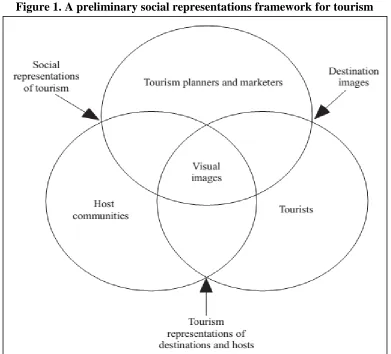
(24) Chapter 1 According to this theory, social representations are mental constructs that guide us and define reality (Halfacree, 1993). The world is organized, understood and mediated through these basic cognitive units. Social representations consist of both real images and abstract concepts, organized around figurative nuclei, which are a complex of images (Moscovici, 1984; Halfacree, 1993). As stated by Fredline and Faulkner (2000), “Representations are the mechanisms people use to try and understand objects and events in the world around them. They tend to turn the unfamiliar into the familiar, as objects and events are recognized on the basis of past experiences, and prior knowledge serves as the reference point of new encounters” (p. 767). As Pearce et al. (1996, p. 39) state: ‘Social representations theory is concerned with describing and understanding how and what people think in their ongoing everyday experiences and how a wider social reality influences these thoughts. Since 1961, when the theory of social representations (Moscovici, 1961) was first formulated, a large body of research has been developed, a fact which in it-self is a testimony to the heuristic value of the theory and to the extent of its impact on researchers in social psychology (Farr and Moscovici, 1984; Doise and Palmonari, 1986; Jodelet, 1989; Abric, 1994b). According to Moscovici, representations are universes of opinions about the objects in the social environment. For Herzlich (1973), representations are two-fold, being both the content and the process, i.e. they are a body of information and beliefs about an object, at the same time as they are the reconstruction of that object (Abric, 1987). In Moscovici's theory, the representation process is characterized by its social and collective dimension: representations are joint constructions about social objects, making the representation process only possible when a certain set of conditions are fulfilled.. 11.
(25) Chapter 1 Social representations are a growing field that has continued to attract new researchers across Europe, South America, Australasia and even the US over the last 40 years (Howarth, 2006). There has been an extensive range of topics researched, from Moscovici’s seminal study of psychoanalysis (1961/1976) to the public understanding of science and new technology (Bauer and Gaskell, 1999; Gaskell et al., 1999; Wagner and Kronberger, 2001), popular ideas of health and illness (Campbell and Jovchelovitch, 2000; Gervais and Jovchelovitch, 1998; Herzlich, 1973; Jodelet, 1991; Joffe, 2002), constructions of identities (Breakwell, 2001; Duveen, 2001; Howarth, 2002a) human rights (Doise et al., 1998; Doise, 2001; Le Duc, 2001) and tourism development (Andriotis and Vaughan, 2003; Fredline and Faulkner, 2000; Pearce et al., 1996; Yuksel et al., 1999). Drawing on the work of Moscovici (1981), social representations can be defined as myths, knowledge, images, ideas, and thoughts about a social object or, in other words, a matter of social interest such as tourism. According to Moscovici (2001), social representations are distinct from both attitudes and representations in that visual imagery is the central component of any social representation. Further, social representations theory explicitly addresses the link between the individual cognition and group social interaction. Philogene and Deaux (2001) note that social representations are created from social interactions within groups as members share their experiences. Once created though, these social representations then take on a life of their own, presented and repeated in the media and spread through further social interactions. 1.2.2 Social representation theory in tourism Several authors have called for a broadening of research approaches to destination images (Selby and Morgan, 1996; Pike, 2002; Kim and Richardson, 2003) and others 12.
(26) Chapter 1 have suggested that the two traditions of research into visual images could be brought closer together by focusing on the interaction between the individual and social levels of analysis (Jenkins, 2003). According to social representation theory, for the representation process to occur, a group of individuals must be confronted with a complex or unknown object, and the practical or conceptual appropriation of that object must have genuine social implications (Moliner, 1993a). Therefore, this connection between the social and the individual level of analysis of images may be explained trough the social representations theory. Social representations share many characteristics with the idea of tourism representations and with the conceptualization destination images as attitudes. Therefore, the development of individual attitudes and perceptions toward tourism may successfully be studied by examining the social representations. Specifically, social representations provide a framework for understanding and making sense of several types of experiences (including tourism) and guiding behavior (Fredline and Faulkner, 2000). According to Andriotis and Vaughan (2003, p. 173) social representations are a means for “constructing and understanding social reality”. In a similar vein, Pearce, Moscardo, and Ross (1996) suggest that social representations are particularly valuable for explaining social conflict or reactions to salient issues within a community. In particular, social representations are a means of constructing and understanding social reality (Meier and Kirchler, 1998, p. 757). Social representations theory also shares common ground with critical analyses of tourism representations through the argument that representations are created through social interaction (Moscovici, 2001). Social representations are also like the attitudes used in psychological studies of tourism in that they organize information for individuals and help to guide their actions and evaluations. 13.
(27) Chapter 1 (Liu and Sibley, 2006). Therefore, social representations may be applied to different aspects of tourism, such as destinations, accommodations, guide tours, and so on. In tourism, social representations theory has already been used to analyze community attitudes towards and responses to tourism development (Andriotis and Vaughan, 2003; Fredline and Faulkner, 2000; Pearce et al., 1996; Yuksel et al., 1999). There is a link between community perceptions of tourism and the representations of destinations and their residents chosen and promoted by tourism marketers (Pritchard and Morgan, 2001). Figure 1 presents a preliminary social representations model that highlights the interaction between three key groups in tourism development – destination residents, tourists, and those who develop and plan for tourism. Figure 1. A preliminary social representations framework for tourism. Source: Moscardo (2011) 14.
(28) Chapter 1 The model includes three key areas of intersection at which different social representations could operate. The intersection between each of the pairs of these groups creates an area for potential social representations. The intersection between marketers and tourists is where the current marketing research into destination images lies; the intersection between tourists and communities is where the research into tourism representations of destination and hosts is located; and the intersection between communities and marketers offers a new area of focus on social representations of tourism. At the centre of this model are the visual images that account for the various social representations held by different groups within the model. 1.2.3 Sources of social representations Sources of social representations can be classified into three groups (Fredline and Faulkner, 2000). The first group is direct experience. Existing representations have strong prescriptive powers, but direct experience of an event provides residents and past tourists with more information on which to base their perceptions, and this information is more directly under the control of the individual than other sources. However, when direct experience with a phenomenon is limited, other sources of social representations become more important. Social interaction, the second source of social representations, includes interaction with family, friends, colleagues, or casual acquaintances. This is a powerful mean of transmission of social representations and is probably closely related to group membership. People are likely to be affiliated with groups that have similar social identities to themselves, and they are inclined to adopt representations comparable with other group members (Breakwell, 1993). However, people are likely to be members of more than one reference group, and where such collectivities have different 15.
(29) Chapter 1 representations, individuals may be forced to reconcile contradictory positions (Dougherty et al., 1992). Significantly, not all members of a community have the same exposure or contact with the object or event that is the basis of the representation. As long as direct experience is limited, groups will borrow a social representation from some other source. In these cases, the media and other important individuals and groups are likely to be important references. The media, as the third source of social representations, has the potential to influence perceptions through the actual content of stories, as well as through their decision either to report or not particular issues. In addition, it is common for the media to present some issues in the context of a conflict between various subgroups, which enables observers to identify with a particular group’s perspective (Gamson et al., 1992). In tourism, two trends are of note: the rising use of the Internet for tourism promotion and the dissemination of tourism information. Tourists have a variety of sources through which they acquire information and ideas about a destination. Wagoner and Kadianaki (2007) point out that the framework that tourists use to make sense of their travel experiences is based on the social representations and symbolic resources‘ of their home community, including guidebooks, film, magazines and documentaries. The Internet provides tourists with a wide range of images, both verbal and visual, and arguably tourism marketers have less control than ever over the information that tourists can use to develop their own individual destination images (Money and Crotts, 2003). Prospective travelers have direct access to a great wealth of information provided by tourism organizations, private companies and increasingly by other users/consumers. The Internet provides a new type of information source that is more dynamic, interactive, and richer in content (Pan and Fesenmaier, 2006; Milligan, 2006). Given 16.
(30) Chapter 1 this importance of the Internet as an information source, Doolin et al. (2002) highlight that the content of tourism destination websites is particularly important, because it directly influences the perceived image of the destination and creates a virtual experience for the consumer. However, the research on the influence that this medium has on image, especially through its most expressive and relevant vehicle, the web site, still lacks of empirical support (Kim and Fesenmainer, 2008; Li et al., 2009; Jeong et al., 2012). This lack of research is especially visible in the tourism sector, where the industry has witnessed fundamental changes in the last years (Buhalis and Law, 2008; Minghetti and Buhalis, 2009). Few researchers have examined how destinations use the Internet as an image formation agent to promote its development (Choi et al., 2007) or the function that these webs have on the promotion and image of a tourist destination (Kim and Fesenmainer, 2008; Stergiou and Airey, 2003). Given its relevant on the image formation process, the present dissertation explores social representations formed by tourists through different online sources. Social representations have been studied using a wide variety of methods with an emphasis placed on diversity of data sources including both qualitative and quantitative approaches (Pearce et al., 1996). As social representations are created through and for social interaction, it is important to explore how they are described and used in everyday conversations and in the words of those who generate and use them. Social representations take on a life of their own once created and are reproduced in popular culture and mass media. A more thorough investigation of tourist’s perceptions about the destination image is required. Social representations may be inspired in different sources such as direct contact, social interaction, and the media as suggested social representations theory. To 17.
(31) Chapter 1 contribute to that research, in this dissertation we use three sources of social representations about a destination that we will develop in the following three chapters: (1) as a source of social interaction the influence of content generated by others users in a web destination is analyzed in Chapter 2, (2) as an example of common media sources, we use of social pictures and social instructions to imagine in a web destination in Chapter 3, and (3) as a source of direct experience, and taking into account that we are studying the image of the destination before visit and therefore there is still no direct experience with the destination, we use a promotional video about the destination as a virtual direct experience in Chapter 4. The previous debate can be summarized in three key points. Firstly, there is widespread agreement that the image of a tourist destination is one of the most explored fields in tourism research. Secondly, social representations theory could be a useful guide to understanding the role of destination images in tourism. Thirdly, the sources of social representation are direct contact, social interaction, and the media. This dissertation is based on these three points and focus on the effects of different sources of information as a method to explore social representations of tourist destinations and how they allow tourist to form an overall image of the destination they have not visited yet.. 18.
(32) CHAPTER 2 Emotions and cognitions evoked by a destination website with UserGenerated Content and their impact on image.
(33)
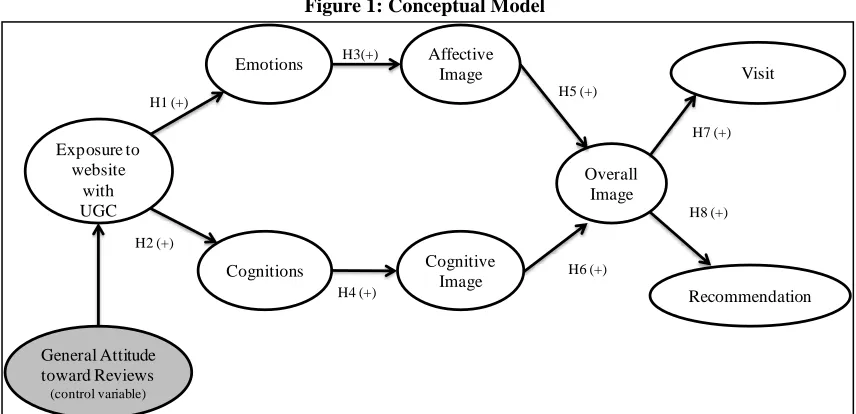
(34) Chapter 2. 2.1 INTRODUCTION The tourism industry has witnessed fundamental changes in the last years (Buhalis and Law, 2008; Minghetti and Buhalis, 2010). An increasing number of travelers are using the Internet for travel planning (Sigala et al., 2001; Litvin et al., 2008). Tourists have nowadays online resources that enable them searching for possible destinations, transportation, accommodation and leisure activities, as well as the purchase of these services (Akehurst, 2009). Online customer reviews are an important type of user-generated content (hereafter UGC), through which consumers share their experiences with products and services in order to help others make informed purchase decisions. UGC includes online information sources that are created, initiated, circulated and used by consumers who intend to educate each other and share information about products, brands, services, personalities and other issues (Blackshaw and Nazzaro, 2004). In this context, online UGC about travel destinations, hotels, and tourism services have become important sources of information for travelers (Pan et al., 2007; Sigala, 2008). Each year, hundreds of millions of potential visitors consult online reviews (Tripadvisor, 2012). Therefore, as a source of social interaction, UGC is very much related to the need for creating social representation about the destination. Academic research is very interested in studying this UGC phenomenon. Goldenberg et al. (2001) observed that consumer decision-making processes are strongly influenced by word-of-mouth (WOM) from other consumers. In addition, Gretzel and Yoo (2007) further found that reviews provided by other travelers are often perceived by readers to be. 21.
(35) Chapter 2 more up-to-date, enjoyable, and reliable than information provided by travel service providers. Image is also very relevant for tourist research since the services associated to this industry are mainly intangible a cannot be tried before consumption. The importance of Internet on the image formation process has been recently recognized by both academic and practitioners. Recent research on destination image (Echtner and Ritchie, 2003; Tasci and Gartner, 2007; Tasci et al., 2007) and on electronic platforms used by tourists (Schmallegger and Carson, 2008; Wenger, 2008) has flourished. Previous research has shown online browsing influences both the cognitive and the affective dimensions of image, although most of that research has focused just on the cognitive component (Echtner and Ritchie, 1991; Walmsley and Young, 1998; Chen and Uysal, 2002). This lack of research is especially visible in the tourism sector, where the influence of Internet on destination image is yet to be fully revealed as the virtual environment is broad and boasts different platforms, such as blogs and web forums that might have differential effects on the images held by tourists (Jani and Hwang, 2011). Emotions and cognitions are regarded as antecedents of image formation. The interplay between those two is object of extensive debate. Consumer behavior literature shows a strong influence of cognitive approaches (Allen et al., 2005), although a rich body of research has also investigated the role of emotions in persuasion (Burke and Edell, 1989; Batra and Holbrook, 1990; Agarwal and Malhotra, 2005, Allen et al., 2005). Nonetheless, while some studies have claimed that affective responses are involved in communication processes (Morris et al., 2002, Ruiz and Sicilia, 2004; Allen et al., 2005; Lopez and Ruiz, 2011), models have failed to combine both cognitions and emotions in a holistic. 22.
(36) Chapter 2 communication model. Methodological problems associated with emotions may underlie this flaw. Researchers have a tendency to adapt scales from emotion theorists. However, these measures are useful in the circumstances for which they were originally developed but suffer from several limitations when applied to capture consumption-related emotions (Hosany and Gilbert, 2010). Consumer emotional experiences are very broad and context specific. For example, “emotions that arise in the context of intimate interpersonal relationships are likely to differ in intensity and quality from emotions experienced when buying a pair of shoes” (Richins 1997, p. 129). As a result, existing emotion scales are difficult to be valid in a tourism context as they fail to take into account tourists’ and destinations’ specific characteristics. Destination and travel marketers are interested in influencing tourists’ behavior to encourage them to favor and purchase their products and services, including destinations. With the upsurge in use of UGC, as it occurs in blogs and web forums, the influence of tourism marketers on potential tourists seems to be diminishing (Pan et al., 2007). However, despite the crucial role they play in the modern tourism industry, little work has been done on how web forums and blogs are used to build a destination image (Wenger, 2008), particularly those capturing destination image in a holistic manner (Echtner and Ritchie, 2003; Carson, 2008). To the best of our knowledge, no previous research has studied the relationship between exposure to UGC on a web destination and the emotional and cognitive responses evocated by such content. The first goal of this chapter is to demonstrate that emotional and cognitive responses evoked by UGC may influence the affective and cognitive dimensions of the destination image, respectively. Following previous literature, we analyze the contribution of 23.
(37) Chapter 2 affective and cognitive components to the overall image. Finally, the effect of overall image on purchase intention and recommendation is evaluated. According to these objectives, we first review the literature and propose a set of hypotheses, then describe the methodology and present the results. Results of the study are then discussed in the light of previous studies’ findings, and implications and recommendations for future research are presented at the end of this chapter. 2.2 THEORETICAL BACKGROUND AND HYPOTHESES As a guide to the hypotheses development that follows, we begin with a brief overview of our model (see Figure 1). Destination image, measured by two dimensions, affective and cognitive, and the overall image represent our key constructs of the model. To analyze to what extent the exposure to UGC influences the emotional and cognitive responses generated by the web about the destination, we develop Hypotheses H1 and H2. Because of the need to study how destination image is created before visiting the destination, we propose that emotions and cognitions generated by the UGC will directly influence on the affective and cognitive dimensions of destination image, respectively. Hypotheses H3 and H4 support the antecedent structure. The combination of affective and cognitive dimensions of image gives rise to an overall image as proposed in Hypotheses H5 and H6. Moreover, destination image has a critical influence on travelers’ destination choice processes, therefore, the effect of overall image on visit intention and recommendation will be also hypothesized in Hypotheses H7 and H8. Finally, Figure 1 also includes the effect of general attitude towards reviews on exposure to UGC as a control variable. In what follows, the rationale used for each hypothesis is provided.. 24.
(38) Chapter 2. Figure 1: Conceptual Model Emotions. H3(+). Affective Image. Visit H5 (+). H1 (+). H7 (+). Exposure to website with UGC. Overall Image H8 (+). H2 (+). Cognitions H4 (+). Cognitive Image. H6 (+). Recommendation. General Attitude toward Reviews (control variable). 2.2.1 User-generated content (UGC) in tourism as a source of social representations The decision to research opinions of those who have visited and those who are planning to visit seems logical as the method captures both modified holistic images held by experienced tourists and the baseline and enhanced images held by potential tourists (Jani and Hwang, 2011). Liu et al. (2011) identified four objectives of online consumer reviews: (1) to assist consumers in making accurate choices, (2) to reduce the cognitive costs of making such choices, (3) to help consumers form an unbiased understanding of the product, and (4) to construct a set of evaluative criteria. Consumers are using electronic word-of-mouth (e-WOM) more and more to share opinions and experiences about products and services (Rezabakhsh et al., 2006; Mendes, Tan and Mills, 2012). We can find a great deal of content on the Internet for entertainment and providing reviews on products and services such as books, restaurants, and hotels (George and Scerri, 2007).. 25.
(39) Chapter 2 UGC is an electronic communication phenomenon enabled by Web 2.0, the second generation of web-based services, which allows people to collaborate and share information online (Cox et al., 2009). Because of the experiential nature of tourism services for which previous quality cannot be ascertained, WOM and, more recently, eWOM are much relied on by potential tourists in forming images (Gretzel et al., 2007; Pan et al., 2007; Cox et al., 2009). Consequently, UGC much serves as an information source for potential tourists (Ye et al., 2009). There is a higher perceived credibility of opinions expressed in UGC compared with traditional tourism information sources (Sarks, 2007). The answer to this evidence probably lies in the need to consume tourism products before an evaluation can take place (Senecal and Nantal, 2004; Rabanser and Ricci, 2005). Online reviews and WOM recommendations are a growing and important information source because of the perceived independence of the message source (Gitelson and Kerstetter, 1995; Crotts, 1999; Dellarocas, 2003; Johnson and Kayne, 2003; Hennig-Thurau et al., 2004; Pan et al., 2007; Litvin et al., 2008). A UK survey found consumers trusted more sites with reviews than professional guides and travel agencies (eMarketer, 2007). Similarly, Oellrich and Auhuber (2007) showed online customer ratings have high credibility among consumers in Germany and Austria. Furthermore, a study undertaken with Tripadvisor users found that looking at other tourists’ comments and travel blogs was the most popular online activity (Gretzel et al., 2007). Previous studies have shown that online travel reviews may influence the decisions of travelers (Gretzel and Yoo, 2008; Vermeulen and Seegers, 2009). Vermeulen and Seegers (2009) studied the impact of online reviews on the attitudes of travelers to hotels, and found that exposure to online reviews enhanced hotel awareness, and that 26.
(40) Chapter 2 positive reviews improved the attitudes of travelers toward hotels. Gretzel and Yoo (2008) also examined the role of travel reviews in trip planning processes, and demonstrated the importance of online consumer reviews at an individual level. However, the influence of online user-generated reviews in the tourism industry is still largely unknown both to tourism researchers and practitioners (Ye et al., 2011). To the best of our knowledge, there are no published articles that have studied the direct relationship between exposure to UGC and cognitive-emotional responses generated by the user. However, recent literature on UGC (Dufresne et al., 2010; Volo, 2010; Jani and Hwang, 2011) may be used to infer these effects Given their importance as an information source, UGC can help tourists and travelers to form emotions and cognitions about destination before their visit. Consumer’s access to information related to attributes, experiences and feelings shared by other tourists might help them to form an impression about the destination. Therefore, based on that information, they can generate a series of cognitions and emotions, respectively, related to the tourism destination. We, thus propose: H1: Exposure to website with UGC positively influences the emotions generated by the destination website. H2: Exposure to website with UGC positively influences the cognitions generated by the destination website. 2.2.2 Emotions and cognitions as antecedents of the affective and cognitive dimensions of destination image Emotions are now recognized to have a critical role in the consumption experience (Mora and Moscarola, 2010; Pollai et al., 2010; Li et al., 2012). Zajonc (1980) 27.
(41) Chapter 2 challenged us to consider more than cognition in our attempts to understand human behavior, while Holbrook and Hirschman (1982) have led the change to consider consumers '"feelings, fantasies, and fun" as part of the overall consumption experience. As suggested by Batra and Ahtola (1990, p. 159), “consumers purchase goods and services and perform consumption behavior for two basic reasons: (a) consummatory affective (hedonic) gratification (from sensory attributes), and (b) instrumental, utilitarian reasons.” Even though every product does not offers both hedonic and utilitarian attributes, previous studies suggest that hospitality and tourism products are likely to be high in both (Batra and Ahtola, 1990; Voss et al., 2003). Voss et al. (2003) developed a valid, reliable, and generalizable scale to measure the hedonic and utilitarian dimensions of consumers’ attitudes. In their interest in testing the scale, these authors analyzed the impact of these two dimensions of attitude on purchase intention, using involvement as a proxy for cognitive elaboration. They used the two-dimensional view of involvement (Zaichkowsky, 1990) in which affective involvement is associated with the personal relevance of the product as a result of emotional attachment, and cognitive involvement arises when personal relevance is based in logic. Consistent with prior research regarding the experiential view of consumption (Hirschman and Holbrook, 1982), Voss et al. (2003) conceptualized the hedonic and utilitarian constructs as dimensions of brand attitude. They proposed a model (Figure 2) in which affective involvement predicts the hedonic dimension, while cognitive involvement predicts the utilitarian dimension. The hedonic dimension of a consumption experience can be derived from a product’s uniqueness, symbolic meaning, or the emotional arousal and imagery it evokes (Holbrook and Hirschman, 1982; Spangenberg et al., 1997). This dimension is more subjective and personal than 28.
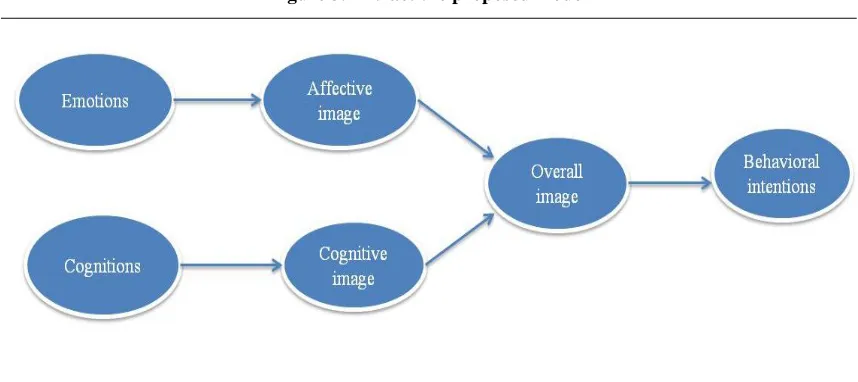
(42) Chapter 2 the utilitarian dimension (Babin et al., 1994). The utilitarian dimension, in contrast, is associated with a product or service proving instrumental in fulfilling functional goals. Figure 2. Central route Processing model with Hedonic and Utilitarian Dimensions of Attitude. Source: Voss et al. (2003). Research in consumer behavior indicates that cognitive models are limited in their ability to account for satisfaction evaluations and subsequent behaviors (Bagozzi, 1997; Erevelles, 1998; Phillips and Baumgartner, 2002; Smith and Bolton, 2002; Ladhari, 2007). In particular, the disconfirmation model might perform poorly in explaining satisfaction with services, since service encounters are not easily reduced to concrete, multi-attribute evaluations. Therefore, the inclusion of emotions into a theoretical framework is particularly critical for experiential services, including hedonic services (Mattila and Enz, 2002). Cognitive responses to a stimulus are an important antecedent of attitudes (Sicilia et al., 2005; Lopez and Ruiz, 2011). Research has shown that the net number of thoughts (favorable minus unfavorable) generated by the consumer when exposed to an action of communication has a direct influence on the attitude toward the stimulus and towards the brand or product displayed in the ad (Mackenzie et al., 1986; Lord et al., 1995; Sicilia et al., 2005; Lopez and Ruiz, 2011). 29.
(43) Chapter 2 The underlying rationale is based on the Elaboration Likelihood Model (Petty et al., 1983). Central to this model is a person’s elaboration or generation of cognitions when exposed to a stimulus. If a consumer exposed to a positive communication (destination website) will generate favorable cognitions as a consequence of exposure, then his/her attitude towards the destination website will be also favorable. However, if cognitions are unfavorable, a negative attitude will be formed. Cognitions serve, then, as predictors of consumers’ attitudes for the communication stimulus. This reasoning is clearly applicable to tourism destination and to the communication activities developed to promote them. The cognitive approach has dominated persuasion research, whereas the affective processes have been given a relatively minor role, in spite of the wide use of emotional appeals in advertising (Morris et al., 2002). Major methodological, theoretical, and empirical difficulties associated with affect have often “scared” and challenged researchers in the area, which may account for this imbalance (Schwarz, 1990). A similar imbalance may be appreciated in the cognitive and affective dimensions of attitude or image. In this vein, Shimp (1981) theoretically stated that cognitive and emotional responses towards a stimulus are related to the cognitive (utilitarian) and affective (hedonic) dimensions of attitude, respectively. As we will discuss later on this chapter, image’s conceptualization has also suffered from this bias. A major problem in emotion research, both in psychology and marketing, remains the interchangeable use of the terms affect, emotion, and mood (Bagozzi et al., 1999). We first distinguish between these related but conceptually different terms because the distinction may have important implications in operationalizing variables and interpreting the research findings. Affect is an umbrella term (or vector), with moods 30.
(44) Chapter 2 and emotions as instances of this feeling state (Cohen and Areni, 1991). A common distinction between moods and emotions lies in the intensity of the affective episode (Cohen and Areni, 1991). Moods are mild affective states that are easily induced and not attributable to a specific stimulus or object but rather are transient and pervasive feeling states (Gardner, 1985). On the other hand, emotions are described as episodes of intense feelings that are associated with a specific referent (Cohen and Areni, 1991). As such, importantly, emotions are tied to a specific referent such as a person, an object, or an event and instigate specific response behaviors. In summary, for the purpose of this study, affect and moods are seen to be conceptually distinct from emotions. Although previous research suggests that consumers’ mood states might bias their service evaluations (Knowles et al., 1993), this study focuses on emotions rather than generalized mood effects. We are thus interested in emotions elicited during website exposure (containing UGC) as opposed to pre-consumption mood states that the consumer brings into the situation. On the other hand, cognitions are any thought that comes out during the elaboration of the information, measured using a written protocol known as thought elicitation (Meyers-Levy and Malaviya, 1990, Sicilia et al., 2005). Therefore, in this study the measurement of emotions has followed a similar protocol to that used for information processing and known as thought elicitation. There are increasing attempts to understand the role of emotions in the context of tourism and hospitality. For example, past studies investigate the determinants of postconsumption emotions (Muller et al., 1991), or the relationship between emotions and key consumer behavior construct such as overall satisfaction (de Rojas and Camarero, 2008; del Bosque and San Martin, 2008), customer loyalty (Barsky and Nash, 2002), 31.
(45) Chapter 2 behavioral intentions (Bign et al., 2005; Jang and Namkung, 2009) and decisions to purchase tourism and leisure services (Chuang, 2007; Kwortnik and Ross, 2007). Emotions have been also used as a segmentation variable for leisure and tourism services (Bign and Andreu, 2004). This paper is in line with Kwortnik and Ross (2007), who found that tourists experience a variety of positive emotions as they plan their vacations, such as comfort and pleasure. However, empirical studies that consider the role of emotions in the context of tourist destinations remain sparse. Additionally, destination image is also viewed as an attitudinal construct that consists of cognitive and affective evaluations (Baloglu and McCleary, 1999). The proposed model considers that the affective component, also known as hedonic dimension (Batra and Ahtola, 1990), is associated with the emotions generated by the stimulus, while the cognitive or utilitarian component is related to the beliefs and perceived attributes of the stimulus. In a tourist context, the cognitive component refers to the beliefs or knowledge a person has of the characteristics or attributes of a tourist destination (Baloglu, 1999; Pike and Ryan, 2004), while the affective dimension is represented by the individual’s feelings toward the tourist destination (Chen and Uysal, 2002; Kim and Richardson, 2003). Therefore, the extract of the proposed model shown in Figure 3 is similar to the model depicted in Figure 2. The similarity that may be appreciated between the two models is due to the parallelism that exits between the hedonic dimension of attitude and the affective image and between the utilitarian dimension of attitude and the cognitive image.. 32.
(46) Chapter 2. Figure 3. Extract the proposed model. The image of a tourist destination is one of the most explored concepts in tourism research (Gartner and Shen, 1992; Chen and Hsu, 2000; Tapachai and Waryszak, 2000; Chen, 2001), widely used in empirical research (Fakeye and Crompton, 1991; Walmsley and Young, 1998; Beerli and Martín, 2004). Moreover, there are many possible approaches to studying destination image, because it has many implications for human behavior, as seen through disciplines such as anthropology, sociology, geography, and marketing (Gallarza et al., 2002). An increasing number of researchers have directed their attention to identifying what constitutes destination image (Lawson and Band-Bovy, 1977; Dichter, 1985). Much empirical research supports the premise that destination image is composed of two dimensions: cognitive and affective (Crompton, 1979). With some exceptions (Baloglu and McCleary, 1999; Mackay and Fesenmaier, 2000; Uysal et al., 2000), most destination image studies focus exclusively on the cognitive dimension and overlook the affective one. The cognitive dimension has been extensively examined in tourism literature (Fakeye and Crompton, 1991; Court and Lupton, 1997; Chen and Kerstetter, 1999; Leisen, 2001). However in tourism contexts, as Kim and Richardson (2003) point out, evaluation of affective qualities of places might become even more important than 33.
(47) Chapter 2 objective, perceptible properties of those places. Only recently, several studies (San Martín and Rodríguez del Bosque, 2008; Li et al., 2009; Wang and Hsu, 2010) have proposed the cognitive-affective nature of destination image. This concept is integrated not only by the individual’s cognitive evaluations, but also by their affective evaluations of a tourist destination (Kim and Richardson, 2003; Pike and Ryan, 2004). The coexistence of both components may better explain the image a tourist has of a destination (Baloglu and Brinberg, 1997). As our goal is to demonstrate the influence of consumers’ responses on the two dimensions of the destination image (cognitive and affective dimensions), these constructs should intervene in the model. Due to the convenience of incorporating emotions and the bi-dimensional perspective of the destination image, we will (a) use cognitive and affective dimensions of the destination image, and (b) use cognitions and emotions, as antecedents of the two dimensions of image (Figure 3). Thus, in an attempt to reach a more favorable image, individuals who produce a more number of net emotions (obtained by subtracting the number of negative emotions from the number of positive emotions) will generate a more favorable affective destination image. Similarly, individuals who produce a more number of net thoughts will generate a more favorable cognitive destination image. As such, cognitions and emotions generated by a destination website (including UGC) will directly impact on the cognitive and affective dimensions of image towards the destination, respectively. Formally, we propose: H3: Evoked emotions by potential tourists will have a positive influence on the affective dimension of destination image. H4: Evoked cognitions by potential tourists will have a positive influence on the cognitive dimension of destination image. 34.
(48) Chapter 2 2.2.3 Overall destination image As affirmed by Gartner (1993), people’s perceptions of various attributes within a destination will interact to form a composite or overall image of that destination. The combination of cognitive and affective evaluations gives rise to an overall or composite destination image that is greater than the sum of the parts (Calantone et al., 1989; Phelps, 1986; Fakeye and Crompton, 1991). Ahmed (1991) suggests that the evaluation of the overall image and its two main components should all be considered and assessed in order to understand the positioning of a destination. Indeed, the overall destination image has been considered to be a third component of the image, which may be similar to, or different from, the cognitive or affective perceptions of the destination (Gartner, 1993; Baloglu and McCleary, 1999a). Stern and Krakover (1993) depict that designative (cognitive) and appraisive (affective) images together form an overall image of a destination. Recently, several studies have included cognitive and affective attributes in the measurement of destination image (Baloglu, 2001; Kim and Richardson, 2003; Beerli and Martín, 2004; Wang and Hsu, 2010). In line with this approach, destination image should be considered a multi-dimensional phenomenon that includes not only beliefs or knowledge about the place’s attributes, but also the individual’s feelings toward the tourist destination. Consequently, we also propose in our context that positive cognitive and affective components would be positively related to the overall image of a destination. As such, we propose: H5: The affective dimension of image positively influences the overall destination image.. 35.
(49) Chapter 2 H6: The cognitive dimension of image positively influences the overall destination image. 2.2.4 Destination image and tourist behaviors The tourist behaviors include the choice of a destination to visit and subsequent evaluations and future behavioral intentions (Chen and Tsai, 2007); including destination recommendation (Kneesel et al., 2010). A positive WOM is not only an indicator of a tourist’s intention to continue the relationship with the destination, but also a reliable source of information for potential tourists (Yoon and Uysal, 2005). Thus the diffusion of the destination may be enhanced. Behavioral intentions have therefore become a fundamental strategic metric to evaluate the success of a tourism destination (Chen and Tsai, 2007; Wang and Hsu, 2010). Several studies have been conducted regarding the relationship between image and consumer’s intentions (Woodside and Lysonski, 1989; Sirakaya et al., 2001; Chalip et al., 2003; Gibson et al., 2008). As the tourism industry provides so much potential for destinations, it is imperative that marketers and DMOs understand the reasoning behind intention to visit. The existing literature suggests that destination image plays an important role in shaping tourists’ preferences as well as their decision to visit particular destinations (Woodside and Lysonski, 1989; Goodall, 1990; Tapachai and Waryszak, 2000). Similarly, intention to recommend the destination has been also considered as a good indicator of behavior in this context because most tourist decisions are based on WOM (Kneesel et al., 2010). Word-of-mouth (WOM) is defined as “informal, person-toperson communication between a perceived noncommercial communicator and a 36.
(50) Chapter 2 receiver regarding a brand, a product, an organization, or a service” (Harrison-Walker, 2001, p. 63). Due to the intangible nature of a service product, a consumer’s purchase decision usually involves higher levels of perceived risk than purchasing manufactured products. Positive WOM is an excellent source to reduce perceived risk for its clarification and feedback opportunities (Murray, 1991). In addition, it is considered an important information source influencing consumer’s choice of destination (Kozak and Rimmington, 2000; Oppermann, 2000; Weaver and Lawton, 2002; Yvette and Turner, 2002). Destination image plays and important role in behaviors. It has shown to influence the destination choice (Ashworth and Goodall, 1988; Mansfeld, 1992; Cooper et al., 1993; Bigne et al., 2001; Lee et al., 2005). As pointed out by Chon (1990), the overall destination image that the tourist has received through the web can directly affect his/her behavior. Literature has shown that the overall image of the destination is influential not only for the destination selection process itself (Baloglu and McCleary, 1999a) but also for tourist behavior in general (Ashworth and Goodall, 1988; Bigné et al., 2001; Cooper et al., 1993; Mansfeld, 1992). A positive overall assessment of the image of a tourism destination contributes to positive visit intentions (Bigné et al., 2008; Prayag, 2009). Similarly, Lee et al. (2005) argued that individuals having a favorable destination image would lead to greater levels behavioral intentions. In summary, the intentions to visit the destination and to spread a positive WOM may be considered the two most important behavioral consequences of destination image (Qu et al., 2010). Thus, we expect that if a person holds a positive overall image of a particular destination, s/he would be more likely to visit the destination and recommend it to others. Therefore, we propose:. 37.
(51) Chapter 2 H7: Overall destination image positively influences intention to visit the destination Regarding the intention to recommend the destination, previous research has shown that destination image may condition the after-decision-making behaviors including the willingness to recommend) (Ashworth and Goodall, 1988; Mansfeld, 1992; Cooper et al., 1993; Bigne et al., 2001; Lee et al., 2005). Therefore, research has established a positive influence of destination image on tourists’ intention to recommend behavior (Ashworth and Goodall, 1988; Mansfield, 1992; Milman and Pizam, 1995; Bigné et al., 2001). According to Bign et al. (2001) a person with a perceived positive image is more likely to recommend the destination. Thus, we expect that if a person holds a positive overall image of a particular destination, s/he would be more likely to recommend the destination it to others. Therefore, we propose: H8: Overall destination image positively influences intention to recommend the destination 2.2.5 Control variable: General attitude toward reviews Attitude has long been shown to influence behavioral intentions (Ajzen and Fishbein, 1980). A favorable attitude toward using UGC is more likely to encourage travelers to use UGC when making travel plans (Mendes et al., 2012). In a study of this kind, it is necessary to control variables that might change the effects of consumer reviews (Park et al., 2007; Lee et al., 2008; Park et al., 2009). As our main precedent in creating cognitive and emotional responses is the exposure to UGC in the destination web, we will need to control the general attitude toward reviews as a potential factor that may affect the results. Accordingly, we include the general attitude toward reviews as an additional predictor of exposure to UGC.. 38.
(52) Chapter 2 2.3 RESEARCH METHOD 2.3.1 Design and procedure Regarding the recruitment of subjects, Mowen and Brown (1980) proposed that students are homogeneous and are therefore suitable for researches. Moreover, due to their homogeneity as compared to a sample chosen from the general population, they are considered ideal samples for testing theoretical predictions about the relationships among variables (Calder et al., 1981), which is in line with the purpose of this study. Singh et al., (2000) also suggested that the effects of advertising on students and the common mass are the same. In addition, student samples have been used frequently in marketing studies (Keh and Pang, 2010; Wood, 2010; Samuelsen and Olsen, 2012; Troye and Supphellen, 2012,) and tourism studies (Kaplan et al., 2010; Lee and Gretzel, 2012; Yang et al., 2012). Data were collected in April 2012. College students were recruited through advertisements. After filling the questionnaire, students were thanked for participating and were given a gift. The survey population consisted of individuals over the age of 18 who had not previously visited the destination and who did not belong to that area. We collected 242 valid questionnaires. The sample average age was 22 years (ranging from 18 to 28) and 51.7% of the participants were women. The main dependent variables such as destination image and intention to visit and recommend the destination were not significantly affected by these variables. We used a real website of a rural destination as a surrounding stimulus in this study, in order to avoid distortion in behavior that could lead the direct exposure to UGC (see Figure 4). The selection of rural tourism services was motivated by the fact that image formation process mainly occurs through destination websites in this type of small 39.
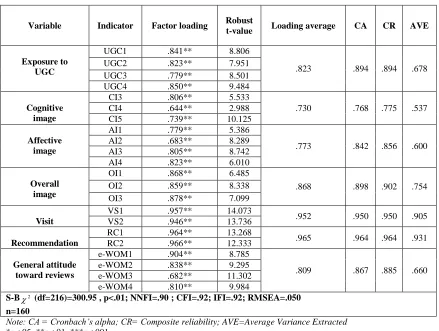
Figure

+7

Documento similar
The main result of the research outlines that, although Bucharest has the potential to develop as a tourist destination including to transiting passengers, the lack of
In this sense, we can remark the three most important contributions of this work: (1) we have idenfied, analyzed and enumerated the drawbacks that standard methods present when they
We argue that this approach has significantly higher potential for runtime- and energy savings than the previously proposed strategies for three reasons: (1) since the performance
Entre nosotros anda un escritor de cosas de filología, paisano de Costa, que no deja de tener ingenio y garbo; pero cuyas obras tienen de todo menos de ciencia, y aun
Through this chapter we have discussed about the fundamentals of additive manufacturing re- garding the di↵erent techniques that are used in the industry and focusing in the
o Si dispone en su establecimiento de alguna silla de ruedas Jazz S50 o 708D cuyo nº de serie figura en el anexo 1 de esta nota informativa, consulte la nota de aviso de la
There will be the recognition of the province of Girona as a potential tourist destination, a catalogue of the most appealing Dark Tourism products in Girona, the
In any case, it is clear that the image of a tourist destination is multidimensional in character, and so, in order to analyse and interpret it, the different types of components
