INSTITUTO TECNOLÓGICO Y DE ESTUDIOS SUPERIORES DE MONTERREY
PRESENTE.
Por medio.de la presente hago constar que soy autor y titular de la obra denominada
, en los sucesivo LA OBRA, en virtud de lo cual autorizo a el Instituto Tecnológico y de Estudios Superiores de Monterrey (EL INSTITUTO) para que efectue la divulgación, publication, comunicación pública, distribución, distribution publica y reproduction, asi como la digitalización de la misma, con fines académicos o propios al objeto de EL INSTITUTO, dentro del circulo de la comunidad del Tecnológico de Monterrey.
El Instituto se compromete a respetar en todo momenta mi autoría y a otorgarme el crédito correspondiente en todas las actividades mencionadas anteriormente de la obra
De la misma manera, manifiesto que el contenido académico, literario, la edition y en general cualquier parte de LA O B R A son de mi entera responsabilidad, por lo que deslindo a EL INSTITUTO por cualquier violación a los derecnos de autor y/o propiedad intelectual y/o cualquier responsabilidad relacionada con |a OBra QUe cometa el suscrito frente a terceros.
Nombre y Firma AUTOR (A)
A Prescriptive Model for Supply Chain Integration: an
Evolutionary Approach Edición Única
Title
A Prescriptive Model for Supply Chain Integration: an
Evolutionary Approach Edición Única
Authors
Canfield Rivera, Carlos E.
Abstract
Purpose : The main purpose of this study is to attain a
deeper understanding
about the evolutionary process that vertically integrated
firms need to undertake towards
supply chain integration. Mor e specifically it attempts to
answer two general research
questions: (a) What are the factors that enable/inhibit the
establishment of supply chain
integration practices, in a vertically integrated firm and: (b)
How can a congruent
prescriptive model be traced to assist VI firms in their
evolution towards supply chain
integration.
Design/Methodology/Approach: This study is framed in a
research program
characterized by two concurrent action research projects.
The core action research
involving the researcher in an organization contributing
with management to the
solution of reallife problems and a dissertation action
research whos e main purpose is
to make a distinctive contribution in the field of supply
chain integration.
Findings: Both projects are based on a process maturity
approach and consider
the gradual evolution of vertically integrated firms through
mor e integrated and
participative approaches, characterized by relational
exchanges. As a result of the
research some guidelines are proposed to help managers in
this transition. Supply chain
integration is contingent on external variables that might
hinder or foster its evolution.
The collateral results of the core action research project
revealed that supply chain
integration wa s not only a matter of technical and tactical
issues, but rather of strong
iv
considerations about hierarchies, resistance to change and
statusquo. incentive
misalignment, hidden agenda s and lack of a deliberate
strategic process amon g other
problems along the human dimension of integration.
Originality/value: As such, the model contributed to further
advancement in the
implementing supply chain integration in a vertically
integrated firm.
Discipline
Ciencias Sociales / Social Sciences
Item type
Tesis
???pdf.cover.sheet
.thesis.degree.nam
e???
Programa de Graduados en Administración
???pdf.cover.sheet
.dc.contributor.adv
isor???
Dr. Juan Gaytán Iniestra
???pdf.cover.sheet
.thesis.degree.prog
ram???
Campus Ciudad de México
Rights
Open Access
Downloaded
18Jan2017 06:01:14
I N S T I T U T O T E C N O L Ó G I C O Y D E E S T U D I O S
S U P E R I O R E S D E M O N T E R R E Y
C A M P U S C I U D A D D E M E X I C O
A P R E S C R I P T I V E M O D E L F O R S U P P L Y C H A I N I N T E G R A T I O N : A N
E V O L U T I O N A R Y A P P R O A C H
D O C T O R A D O E N A D M I N I S T R A C I Ó N
T E S I S P R E S E N T A D A P O R
C A R L O S E D U A R D O C A N F I E L D R I V E R A
A S E S O R
D R . J U A N G A Y T Á N I N I E S T R A
J U L I O 2 0 0 7
T E C N O L Ó G I C O D E M O N T E R R E Y .
BIB B I B L I O T E C A
A C K N O W L E D G E M E N T S
T h e L O R D I s M y S h e p h e r d A P s a l m o f D a v i d
T h e L O R D i s m y s h e p h e r d ; I s h a l l n o t w a n t . H e m a k e t h m e t o l i e d o w n i n g r e e n p a s t u r e s : h e
l e a d e t h m e b e s i d e t h e s t i l l w a t e r s . R e v . 7 . 1 7 H e r e s t o r e t h m y s o u l : h e l e a d e t h m e i n t h e p a t h s o f r i g h t e o u s n e s s f o r h i s n a m e ' s s a k e .
Y e a , t h o u g h I w a l k t h r o u g h t h e v a l l e y o f t h e s h a d o w o f d e a t h ,
I w i l l f e a r n o e v i l : f o r t h o u a r t w i t h m e ; t h y r o d a n d t h y s t a f f t h e y c o m f o r t m e .
T h o u p r e p a r e s t a t a b l e b e f o r e m e i n t h e p r e s e n c e o f m i n e e n e m i e s : t h o u a n o i n t e s t m y h e a d w i t h o i l ; m y c u p r u n n e t h o v e r .
S u r e l y g o o d n e s s a n d m e r c y s h a l l f o l l o w m e a l l t h e d a y s o f m y l i f e : a n d I w i l l d w e l l i n t h e h o u s e o f t h e L O R D f o r e v e r .
First of all, I w o u l d like to thank God for all the blessings received over this project. H E is the ultimate inspiration that allowed m e to endure and o v e r c o m e all h a r d s h i p s .
T h i s work is dedicated to my family: my wife Angelica and my daughters Stephanie and Karen. A special mention is given to my parents: My father for all his support. M y mother, w h o w a s not able to see its completion, but I am sure she k n o w s .
I a m sincerely grateful for the assistance of Dr. Pilar A r r o y o and Juan Gaytan, w h o helped m e along the dissertation research and writing process. Special thanks are given to the managerial staff of PA. w h o s e collaboration in this project w a s invaluable.
A B S T R A C T
Title o f Dissertation:
"A Prescriptive Model for Supply Chain Integration: An
evolutionary approach "
A u t h o r : Carlos Eduardo Canfield Rivera I n s t i t u t i o n : I T E S M C C M
D i r e c t o r : Dr. Juan Gaytán Iniestra
R e a d e r s : Dra. Pilar Arroyo and Dr. Enrique Bores
P u r p o s e : T h e main purpose of this study is to attain a deeper understanding about the evolutionary process that vertically integrated firms need to undertake t o w a r d s supply chain integration. M o r e specifically it attempts to answer two general research questions: (a) What are the factors that enable/inhibit the establishment of supply chain integration practices, in a vertically integrated firm and: (b) H o w can a congruent prescriptive model be traced to assist VI firms in their evolution t o w a r d s supply chain integration.
D e s i g n / M e t h o d o l o g y / A p p r o a c h : This study is framed in a research program characterized by t w o concurrent action research projects. T h e core action research involving the researcher in an organization contributing with m a n a g e m e n t to the solution of reallife p r o b l e m s and a dissertation action research w h o s e main purpose is to make a distinctive contribution in the field of supply chain integration.
F i n d i n g s : Both projects are based on a process maturity approach and consider the gradual evolution of vertically integrated firms through m o r e integrated and participative a p p r o a c h e s , characterized by relational exchanges. As a result o f the research some guidelines are proposed to help m a n a g e r s in this transition. Supply chain integration is contingent on external variables that might hinder or foster its evolution. The collateral results o f the core action research project revealed that supply chain integration w a s not only a matter of technical and tactical issues, but rather of strong
considerations about hierarchies, resistance to change and statusquo. incentive misalignment, hidden a g e n d a s and lack of a deliberate strategic process a m o n g other problems along the human dimension of integration.
O r i g i n a l i t y / v a l u e : A s such, the model contributed to further a d v a n c e m e n t in the field, filling a g a p by c o m b i n i n g present with emergent k n o w l e d g e in the process of implementin g supply chain integration in a vertically integrated firm.
S I N T E S I S (Translation)
T i t u l o d e la T e s i s : "Un Modeloprescriptive) para la integración de la Cadena de Suministro: Una aproximación evolutiva"
A u t o r : Carlos E d u a r d o Canfield Rivera I n s t i t u c i o n : I T E S M C C M
D i r e c t o r : Dr. Juan Gaytan Iniestra
L e c t o r e s : Dra. Pilar A r r o y o y Dr. Enrique Bores.
O b j c t i v o : El proposito central del presente d o c u m e n t o es aumentar la comprensión acerca del p r o c e s o evolutivo en el que incurren las e m p r e s a s verticalmente integradas en su transición hacia la integración en c a d e n a s de suministro. Especificamente tiene c o m o proposito resolver dos prcguntas generales: (a) ΏCuáles son los factores que favorecen o limitan la implantación de prácticas de integración de la cadena en una e m p r e s a verticalmente integrada? y; (b) Ώ C ó m o se p u e d e desarrollar un modelo congruente, de corte prescriptivo, que oriente la actividad de las e m p r e s a s verticalmente organizadas en su evolución hacia dichas formas de integración?
D i s e n o / M e t o d o l o g i a / P e r s p e c t i v a : Este estudio se inserta en un p r o g r a m a de investigación caracterizado por do s proyectos concurrentes de investigaciónacción. El proyecto central que involucra al investigador en una organización para contribuir con la administración de la m i s m a en la solución conjunta de un p r o b l e m a real de interes para la misma y un proyecto de tesis que tiene c o m o proposito fundamental el contribuir al avance en el conocimiento , en el area de integración de la cadena de suministro
R e s u l t a d o s : A m b o s proyectos están b a s a d o s en una perspectiva de maduración y consideran una evolución gradual de las e m p r e s a s verticalmente integradas hacia intercambios mas integrados y participativos con los d e m á s m i e m b r o s de la cadena. Como resultado de esta investigación, se proponen guνas que permiten orientar las decisiones de los a d m i n i s t r a d o r e s para alcanzar la transición deseada. La integración de la cadena de suministro, esta en función de variables externas que pueden limitar o favorecer su e v o l u c i ó n . Los resultados colaterales del proyecto central mostraron que
los aspectos técnicos y técticos no eran los únicos a considerar para la integración sino que de forma aim m a s decisiva. se deben considerar los aspectos j e r á r q u i c o s . de resistencia al c a m b i o y de statusquo. falta de alineación entre estrategias e incentivos. agendas ocultas y sobre todo la carencia de un proceso estratégico deliberado, c o m o parte de lo p r o b l e m a s orientados en la dimension h u m a n a de la integración.
O r i g i n a l i d a d / c o n t r i b u c i ó n : C o m o tal el modelo contribuye al avance en el conocimiento en el area de la integración de la cadena. intentando reducir las brechas. tanto teóricas c o m o prácticas al c o m b i n a r el conocimiento actual con el emergente. resultado de este trabajo, para el proceso de implantación de la integración de la cadena de suministro en el caso de las e m p r e s a s verticalmente integradas.
A C K N O W L E D G E M E N T S Ill
A B S T R A C T IV
S i N T E S I S ( T R A N S L A T I O N ) V I
LIST O F A B R E V I A T I O N S XII
LIST O F G R A P H S X I V
LIST O F T A B L E S X V
LIST O F F I G U R E S X V I
LIST O F M E N T A L M A P S XVIII
LIST O F M E N T A L M A P S XVIII
P R E F A C E X I X
1. I N T R O D U C T I O N 20
1.1. The new terms of competition: 20
1.2. Implementation problems of Supply Chain Management ( S C M ) and Supply Chain
Integration (SCI) initiatives 21
1.3. The purpose of the present research 22
1.4. Research Questions 23
1.5. Unit of analysis and study settings: 23 Productos Alimenticios: The vertically integrated group 24
Supply chains under study 25 1.6. Project description and deliverables 26
1.7. Relevance and significance of research 28
1.8. Dissertation Outline 29
2. T H E O R E T I C A L F R A M E W O R K F O R S C I 33
2.1. The notion of Supply Chain 33 Supply Chain: A definition for the present study 34
2.2. Supply Chain M a n a g e m e n t 35
Supply Chain Management: A definition for the present study 38
2.3. The Strategic Nature of S C M : 39
Perspecli\ es on Competiti\ e Adv antage 39
SCM and strategy 43 Insights on the strategic nature of SCM 44
2.4. The antecedent for Supply Chain Integration: Vertical Integration 45
Main Theoretical perspectives about Integration 46 The strategic choice: Vertical Integration (VI) 48
2.5. Supply Chain Integration 51
The e\ol\ ing path towards SCI 52 Anteceding SCI frameworks in the literature 56
A contingency approach towards SCI 57 Supply Chain Integration and performance: a strategic approach 59
SCI a unified approach, ground for the present work 60
3. T H E M U L T I D I M E N S I O N A L T R A N S I T I O N F R O M VI T O S C I 62
3.1. Organizational Integration in the present study 62
Perspectives on Organizational Integration 62 Organizational Integration: Working definitions for the present study 63
Stages of Organizational Integration 63
3.2. Information integration in the present study 70
Perspectives on Information integration 70 Working definitions for Information Integration and its managerial implications 70
Incidence of Information and Communication Technology (ICT) in SCI 72
Stages of Information Integration 73
3.3. Coordination structure integration in the present study 76
Perspectives on Coordination Structure 76 Coordination Structure Integration: Working definition 77
Stages of Coordination Structure 78
3.4. A reciprocal approach to the study of SCI 82
The interacting dimensions in the present study 83
4. M E T H O D O L O G Y 85
4.1. Action research 85
Comprising Action Research in the present study 85 Nature of the research: Paradigm Selection 86
Role of Prcundcrstanding in AR 88
4.2. The subject of study: A detailed account of PA 89
Access Negotiation: 89 A detailed perspective on Productos Alimenticios 90
Mapping the supply chains under study 92 Chain Number 2: Sugar Cookies in 1 Kg cardboard boxes 94
4.3. Data Collection Methods 96
Observation 96 Interviews 97 Documentary work 98
4.5. Application of Research Methods in the Present AR 98
The Fieldwork at PA 98
5. A N A L Y S I S O F T H E R E S U L T S : T H E I M P L E M E N T A T I O N O F T H E A R
C Y C L E S 103
5.1. Preunderstanding in this study 105
5.2. The first A R cycle 108
The first stage of the AR project: Planning 109
The second stage: Action in the AR project 117
Observation and reflection stages 122 Observation and reflection in the DARP 126
Monitor metastep: 127
5.3. Reinforcing the research process: The second AR cycle 127
The second CARP cycle at PA 129 The action, observation and reflection stages in the second DARP cycle 140
The design of the Prescriptive Model for SCI 141
Final Reflection in the CARP 149
6. T H E P R E S C R I P T I V E M O D E L IN A C T I O N 152
6.1. Description of the model 152
A contingency approach to SCI in the model 153 The multidimensionalitv of integration in the model 154
6.2. Operating the model 155
6.3. Five steps toward implementation of SCI in the VI firm under the guidelines of the
prescriptive model 156
6.4. Model implementation at PA 158
The first step: The diagnostic phase 158 The second step: Strategy Formulation 169 The third step: Subject, content and extent of integration 169
Key Model Prescriptions for FA 175 The fourth and Fifth steps: Evaluation and consolidation 176
6.5. Congruence Validation of the Prescriptive Model at FA 176
The bottom runway 176 The top runway 177 The influence of contingency variables 177
Key results in the AR project 179
6.6. Assessing the quality of the present AR projects 180
Reliability and Validity 181 Reliability and Validity in qualitative research 181
Criteria forjudging quality in AR projects 181 Quality Criteria for the CARP at Productos Alimenticios 182
Quality criteria for the DARP at Productos Alimenticios 185
7. C O N C L U S I O N S A N D R E C O M M E N D A T I O N S 188
7.1. Initial Considerations 188
7.2. Summary of Research Findings 190
Incidence of factors on supply chain integration If>0
Designing and implementing a prescripts c model for SCI 192
Qualiu of the Research 196
7.3. Theoretical contributions 197
7.4. Limitations, delimitations and implications for further study 198
A P P E N D I X A : F I E L D W O R K A T P R O D U C T O S A L I M E N T I C I O S 200
Topic Guide 0: P R E U N D E R S T A N D 1 N C S T A G E 201
Topic Guide 1: A C C E S S N E G O T I A T I O N W I T H PA 208
Topic Guide 2: P R E L I M I N A R Y DATA C O L L E C T I O N A T PA 213
Topic Guide 3: D O C U M E N T A R Y W O R K 221
A P P E N D I X B: C O M M U N I C A T I O N S S U M M A R Y W I T H P R O D U C T O S
A L I M E N T I C I O S 227
1) Cover Letter 228
2) Presentation Document 229
3) Electronic communication with PA 232
L I S T O F A B R E V I A T I O N S
Action Research ( A R )
Asociacion Mexicana de Industriales de Galletas y Pastas A.C. ( A M E X I G A P A ) Business Processes (BP)
Businessto business ( B 2 B ) Businesstoconsumer ( B 2 C )
Collaborative Performance System (CPS)
Collaborative Programs of Forecasting and R e p l e n i s h m e n t ( C P F R ) CompetenceBased V i e w ( C B )
Competitive Advantage ( C A ) Consumerto business ( C 2 B ) Consumertoconsumer ( C 2 C )
Continuous Replenishment Programs ( C R P ) Core Action Research Project ( C A R P ) Data Envelopment T e c h n i q u e ( D E A ) Deliveries in Dull on T i m e ( D I F O T )
Dissertation Action Research Project, ( D A R P ) Efficient C o n s u m e r Response M o v e m e n t ( E C R ) Electronic data Interchange (EDI)
Fabrica de Alimentos (FA)
Financial Accounting Standards Board ( F A S B ) Information and C o m m u n i c a t i o n s T e c h n o l o g y (ICT) Information Integration (IS)
Information Technology (IT)
Instituto Nacional de Geografia, Estadistica e Informatica ( I N E G I ) Instituto Tecnológico y de Estudios Superiores de Monterrey ( I T E S M ) Integrated Solution Provider (ISP)
Key Performance Indicators (KPI) Materials requirements Planning ( M R P ) Organizational Integration (OI)
Original Equipment M a n u f a c t u r e r s ( O E M ) Performance Measurement S y s t e m s ( P M S )
Product Distributorship (PD) Productos A l i m e n t i c i o s (PA)
Resource Based View of the Firm ( R B V ) Securities and E x c h a n g e C o m m i s s i o n (SEC) Standard Industrial Classification (SIC) Small and M e d i u m Enterprises ( S M E ) Strategic Business Unit ( S B U )
Supply Chain (SC)
Supply chain: Snacks in cardboard exhibitors of 4.47 Kg ( S C # 1 ) Supply Chain: Sweet C o o k i e s ( S C # 2 )
Supply Chain Integration (SCI) Supply Chain Planning Systems ( S C P ) Supply Chain M a n a g e m e n t ( S C M ) Supply Chain Orientation ( S C O )
Sustained Competitive A d v a n t a g e ( S C A )
The Association for Operations M a n a g e m e n t ( A P I C S ) Transaction Costs E c o n o m i c s ( T C E )
L I S T O F G R A P H S
GRAPH 6.41: INITIAL DIAGNOSTIC OF AS1TIS CONDITIONS FOR SCI A'l" FA 163 GRAPH 6.42: MONTHLY SALLS OF SWEET COOKIES (CODE 311501) IN MEXICO BIE. IN EG I
167 GRAPH 6.43: VOLATILE D E M A N D A N D A DECREASING TREND SOURCE: BASED ON FA S
SALES DATA 168
L I S T O F T A B L E S
TABLE 3.11: STAGF.S OF ORGANIZATIONAL IN I EGRATION 65 TABLE 3.21: STAGES OF INFORMATION INTEGRATION 74 TABLE 3.31 STAGES OF COORDINATION STRUCTURE 79 TABLE 3.41: A MATRIX FORM SUMMARY OF H I E INTERACTING DIMENSIONS OF SCI: A
RECIPROCAL APPROACH 84 TABLE 4.21: INDUSTRIAL CLASSIFICATION OF PRODUC'l OS ALIMENTICIOS ACCORDING
TO SIC CODES ADAPTED FROM INFORMATION PRESENTED BY W/'D PARTNERS WORLD SCOPE IN LEXIS NEX1S A C A D E M I C UNIVERSE. ACCESSED ON 26 MARCH
2007 91 TABLE 4.51: CHRONOLOGICAL ACTIVITY LOG FOR THE AR PROJECT AT PA 102
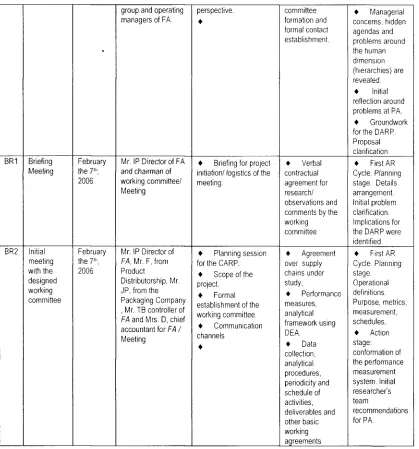
TABLE 5.11: CHRONOLOGICAL ACCOUNT FOR ACTIVITIES UNDER THE PRE
UNDERSTANDING STAGE 106 TABLE 5.21: CHRONOLOGICAL A C C O U N T FOR ACCESS NEGOTIATION (.FY ACTIVITIES)
WITH PA 110
TABLE 5.22: CHRONOLOGICAL A C C O U N T OF Till PLANNING STAGE IN THE F I R S T A R
CYCLE 114 TABLE 5.23 CHRONOLOGICAL A C C O U N T OF THE DATA COLLECTION PROCESS IN THE
FIRSTAR CYCLE 119 TABLE 5.24 : CHRONOLOGICAL A C C O U N T FOR OBSERVATION AND REFLECTION
ACTIVITIES IN IIIE CARP 124 TABLE 5.31: CHRONOLOGICAL ACCOUNT FOR ADDITIONAL DATA COLLECTION AND
ANALYSIS 130 TABLE 5.32: CHRONOLOGICAL ACCOUNT OF II IE PROCESS OF C A R P ' S KNOWLEDGE
TRANSFER TO PA 131
TABLE 5.33 CHRONOLOGICAL A C C O U N T OF THE COMPLEMENTARY D O C U M E N T A R Y
WORK 132 TABLE 5.34: PRODUCTOS ALIMENTICIOS INTERESTS ADAPTED FROM THOMSON
FINANCIAL. "THOMSON EXTEL CARDS D A T A B A S E " IN LEXISNEXIS ACADEMIC
UNIVERSE. ACCESSED ON THE 2 7t h OF M A R C H . 2007 138
TABLE 5.35: EXPECTED VALUES FOR CONTINGENCY VARIABLES INFLUENCE 149 TABLE 5.36: CHRONOLOGICAL A C C O U N T OF TI IE FIELDWORK RELATED ACTIVITIES 150
TABLE 6.41: ASITIS DIAGNOSTIC OF ORGANIZATIONAL INTEGRATION IN SC#1 A N D
SC#2 160 TABLE 6.42: ASITIS DIAGNOSTIC OF INFORMATION INTEGRATION IN SCJ1 AND SC#2 161
TABLE 6.43 ASITIS DIAGNOSTIC OF COORDINATION STRUCTURE INTEGRATION IN SC#1
AND SCJ2 162 TABLE 6.44: INTERACTIONS BETWEEN C O N T I N G E N T VARIABLES AND M A N A G E R ' S
INQUIRIES. THE CASE OF PA 172
TABLE 6.45: RESULTS OF THE PRESCRIPTIVE MODEL IN THE CASE OF FA 175
TABLE 6.51: THE INFLUENCE OF CONTINGENCY VARIABLES 179
TABLE 7.21: EXPECTED INFLUENCE OVER SCI OF CONTINGENT VARIABLE SUNDER THE
L I S T O F F I G U R E S
FIGURE 1.61: THE RELATIONSHIP BETWEEN CARP AND DARP. ADAPTED FROM ZUBLR
SKERRIT AND PERRY (2002. P. 177) 28 FIGURE 2.21 SCM FRAMEWORK IN ( L A M B E R T AND COOPER. 2000. P.70) 37
FIGURE 2.22: THE 3S F R A M E W O R K FOR SCM. ADAPTED FROM C.1ANNAK1S AND (.'ROOM
(2004) 38 FIGURE 2.23 DIAGRAM OF SCM. BASED ON MENTZER FT AL. (2001) 39
FIGURE 2.31 THE DELTA MODEL. ADAPTED FROM 1IAX AND WILDE (2001. P.10) 43
FIGURE 2.32: THE NO I ION OF STRATEGIC ITT 44 FIGURE 2.41 VERTICAL SCOPE OF AN INDUSTRY IN N U G E N T AND 11AMBLIN (1996) 49
FIGURE 2.42: DIMENSIONS OF VERTICAL INTEGRATION. ADAPTED FROM HARRIGAN
(1985) 50 FIGURE 2.43: A CONTINGENCY APPROACH TO VI. HARRIGAN (1985) 51
FIGURE 2.51: RECIPROCAL APPROACH TO UNDERSTAND THE INTERACTING DIMENSIONS OF SC COLLABORATION ADAPTED FROM (SIMA I UPANG AND SR1DHARAN. 2005)....57 FIGURE 2.52: A CONTINGENCY APPROACH TO SUPPLY CHAIN INTEGRATION ADAPTED
FROM BAGC111 AND SK.IOETTLARSEN (2002B) 58 FIGURE 3.11: DIMENSIONS OF ORGANIZATIONAL INTEGRATION 64
FIGURE 3.21: INFORMATION INTEGRATION DIMENSION 73 FIGURE 3.31: COORDINATION STRUCTURE INTEGRATION 78 FIGURE 3.41: INTERACTING DIMENSIONS OF" SUPPLY CHAIN INTEGRATION 82
FIGURE 4.11: ACTION RESEARCH CYCLE IMPLEMENTATION. (COUGIILAN AND
COUGHLAN. 2002) 87 FIGURE 4.21: PA'S STREAM OF' OPERATIONS. FA IN I III VALUE CHAIN 92
FIGURE 4.22: SC NUMBER 1 (CARDBOARD EXHIBITORS) 93
FIGURE 4.23: SC N U M B E R T W O (SUGAR C O O K I E S ) 95
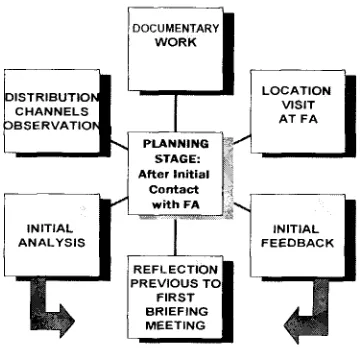
FIGURE 5.21: DIAGRAM SHOWING THE ACTIVITIES COMPRISING THE PLANNING STAGE
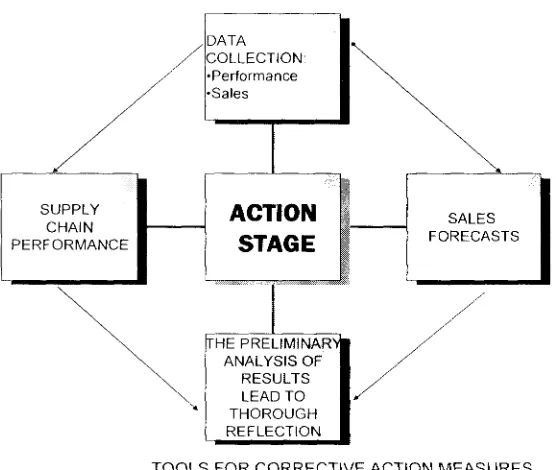
IN THE FIRST AR CYCLE 111 FIGURE 5.22 DIAGRAM SHOWING THE GENERAL ACTIVITIES COMPRISING THE ACTION
STAGE IN THE FIRST AR CYCLE 118 FIGURE 5.23 DIAGRAM SHOWING THE GENERAL ACTIVITIES COMPRISING THE
OBSERVATION AND REFLECTION STAGES IN THE FIRST AR CYCLE 122 FIGURE 5.31: THE STAGES DIMENSION OF SCI ADAPTED FROM (HARRIGAN. 1985). SC #1
134 FIGURE 5.32: THE STAGES DIMENSION OF SCI ADAPTED FROM (HARRIGAN. 1985). SC #2
134 FIGURE 5.33: THE BOTTOM RUNWAY FOR II IE PROPOSED PRESCRIPTIVE MODEL
(EVOLUTION) 142 FIGURE 5.34: THE TOP RUNWAY FOR H I E PROPOSED PRESCRIPTIVE MODEL FOR SCI (VI
DISINTEGRATION) 143 FIGURE 5.35: THE PROPOSED PRESCRIPTIVE MODEL FOR SUPPLY CHAIN INTEGRATION
145 FIGURE 5.36: MULTIDIMENSIONALITY IN THE PROPOSED PRESCRIPTIVE MODEL 147 FIGURE 5.37: A CONTINGENCY APPROACH IN THE PROPOSED PRESCRIPTIVE MODEL... 148 FIGURE 6.11: THE BOTTOM RUNWAY RANGES FROM I IN ARTICULATED FUNCTIONS
THROUGH EXTERNAL INTEGRATION STEVENS (1989) 152 FIGURE 6.12: THE TOP RUNWAY. FROM VI THROUGH SCI. N O T A MATTER OF" CHOICE
BUT ONE OF DEGREE 153 FIGURE 6.13: SCI INTENSITY IS M E A S U R E D ACROSS THREE DIMENSIONS:
ORGANIZATION. INFORMATION A N D COORDINATION STRUCTURE 155
FIGURE 6.31 PROPOSED FIVE STEPS FOR SCI 156 FIGURE 6.41: FA REVEALED A HIGH LEVEL OF" VI IN S C # 1 &2. UNDER PA'S VERTICAL
CONTROL 159 FIGURE 6.42: P O R T E R S FIVE FORCES D I A G R A M FOR THE BAKED PRODUCTS
INDUSTRIAL SEGMENT 166 FIGURE 6.43: THE PROPOSED STAND FOR SCI IN THE CASE OF lABRICA DE ALIMENTOS
174
FIGURE 6.51: C O N G R U E N C E OF" THE PRESCRIPTIVE MODEL FOR FA : AN SCHEMATIC
L I S T O F M E N T A L M A P S
MENTAL MAP 1: A S U M M A R I Z E D VIEW OF THE PRLUNDERS'LANDING STAGE 107
MENTAL MAP 2: A S U M M A R I Z E D VIEW OF THE FIRST AR CYCLE 112 MENTAL MAP 3: A S U M M A R I Z E D VIEW OF T HE ACTION STAGE IN THE FIRST AR CYCLE
121 MENTAL MAP 4: A S U M M A R I Z E D VIEW OT' THE OBSERVATION AND REFLECTION ST AGES
IN THE FIRST AR CYCLE 125 MENTAL MAP 5: SUMMARIZED VIEW OF THE MONITORING METASTEP 128
MENTAL MAP 6: A S U M M A R I Z E D VIIW OF THE DESIGN OF A PRESCRIPTIVE MODEL FOR
SCI 136 MENTAL MAP 7: A S U M M A R I Z E D VIEW OF THE PROCESS OF SKETCHING THE
PRESCRIPTIVE MODEL FOR SCI 145
P R E F A C E
This dissertation has four parts, divided into seven chapters. The first part deals with the nature of the problem as it relates with external pressures t o w a r d s disintegration and the need of precise guidelines that could orient managers of vertically integrated firms in their effort t o w a r d s supply chain integration. T h e main purpose of this research is to deepen understanding around SCI as it relates to VI firms.
The second part reviews the literature along the notions of supply chain management and vertical and supply chain integrations. T h e claim that firms need to expand their boundaries, transcending adversarial transactions and engage in relational exchanges is supported. M o r e o v e r section three deals with the notion that integration is a multidimensional concept, and for the present study is characterized by three proposed dimensions, namely: Organizational, information and coordination structure integration.
The third part supports the use of Action Research as the appropriate method of research, as well as explains the process for data collection and analysis. And in Section five it analyzes the actual data as collected in both the C A R and D A R projects, and concludes by establishing a prescriptive m o d e l of SCI, based on a process maturity approach.
The part n u m b e r four considers the actual implementation of the model in the case of PA a vertically integrated group that operates in the food retail sector, and includes the conclusions, limitations and implications for further research.
1. Introduction
For a better understanding of the significant changes that mold the s c h e m e of competition today, a brief review of the historical background of production and organizational relationships is d e e m e d appropriate.
The decades of the 1960s and 1970s, saw corporations focused on function optimization. Firms were organized under vertical hierarchies. E x c h a n g e s with v e n d o r s were mainly adversarial. Very few relationships were established, but only with strategic partners. Manufacturing systems concentrated on materials requirements planning ( M R P ) . Some firms, due to market failures and uncertainty, decided to produce its own inputs or control/own its distribution channels. Vertical Integration
(VI) and virtual monopolies seemed to be reasonable strategic decisions at the time.
Notwithstanding as a result of ferocious competition in the decades of the 1980s and 1990s, the profitability of N o r t h A m e r i c a n manufacturers c a m e under severe pressure, reflecting marketshare loss to overseas producers. American c o m p a n i e s shifted their strategic priorities in three w a y s : From lowcost production to quality, flexibility, short lead time and dependable delivery; implemented new technologies and philosophies of production m a n a g e m e n t (Johnston, 1994: Holmberg. 2000) and began the search for better opportunities to increase competitiveness, (Lonsdale, 1999; Mclvor, 2000) leading the w a y to what w a s called the outsourcing m o v e m e n t (Rao and Young, 1994; Mason. Cole et al.. 2002).
The analysis between costs and manufacturing conditions inhouse c o m p a r e d with capabilities available from external suppliers reinforced the idea that m a n y items in the value chain could be outsourced or subcontracted at lower total costs ( B r o w n .
1997). By the early 1990s, reengineering, total quality m a n a g e m e n t , downsizing, and outsourcing, among others, b e c a m e c o m m o n practices in the marketplace.
1.1. T h e n e w terms of c o m p e t i t i o n :
Even though such efforts aimed at optimizing the performance of certain processes, firms soon discovered that the performance advantages obtained from such
methods quickly eroded as competitors implemented similar a p p r o a c h e s . Eventually organizations realized that single firm operations would not result in appreciable system improvements, therefore inducing firms to seek a closer coordination and integration with suppliers and customers that w a s possible through adversarial relations, in order to remain competitive (Deffee and Stank 2005).
Today is a fact that organizations confront a d y n a m i c , c o m p l e x and unpredictable environment. C h a n g e s such as increasing global competition, complexity and uncertainty, new manufacturing philosophies, mergers and acquisitions, downsizing and outsourcing trends, deregulation, environmental awareness, innovation and greater use of information technology and value added activities in the supply chain, have caused a profound impact over firm behavior and performance.
Under the new term s of competition, the m a n a g e m e n t shift therefore is to recognize that competition now does not longer take place a m o n g individual businesses, but between entire value chains. T h e competitive imperative, w h i c h by any m e a n s is a matter of choice, becomes: finding the best w a y to get the right products, at the right place, at the right time for the right price for c o n s u m e r s . This challenge is beyond the basis for enterprise success and definitively b e c o m e s the key to survival. .
The new terms of global competition have forced corporations, particularly those historically organized around vertical hierarchies, to reorient their highlevel strategies, from independent operations characterized by adversarial transactions towards more articulated strategic partnerships. It can be generally alleged that the road to success now depends on assembling a team of c o m p a n i e s that can rise a b o v e a r n f s length relationships and work together to deliver greater value for c o n s u m e r s (Taylor, 2003).
1.2. Implementation p r o b l e m s o f Supply C h a i n M a n a g e m e n t ( S C M ) a n d Supply Chain Integration (SCI) initiatives
trade press and brochures for leading professional programs, yet reality s h o w s that very few companies have engaged in SCI. Indeed, few c o m p a n i e s have adopted and disseminated a formal S C M definition. Even fewer have meticulously mapped out their supply chains so that they know w h o their suppliers" suppliers or customers" c u s t o m e r s really are. Thus, a legitimate question arises: How do companies define and approach supply chain integration today? (Fawcett and M a g n a n , 2 0 0 2 )
Implementation of S C M is not without problems. Interestingly enough, on one hand there are many a c a d e m ic and trade publications, emphasizing the successful application of SCM initiatives. Yet on the other hand, there are empirical studies reporting many difficulties in S C M implementation, (Mentzer et al.. 2000; Fawcett and Magnan, 2002). The a b o v e m e n t i o n e d situation is amplified in the absence of theoretical and empirical d e v e l o p m e n t s linking the corresponding strategic m a n a g e m e n t notion of vertical integration with the applied concept of supply chain integration. Svenson (2005) argues that given the scarcity of theoretical d e v e l o p m e n t on successful SCM implementation, m a n a g e r s need further a c a d e m i c support at explaining, h o w can a vertically integrated firm engage in the process of supply chain integration? And even more, they lack contextual and practical guidelines that could orient their efforts at achieving such necessity.
As it has been shown above, vertically integrated (VI) firms, under strong competitive and environmental pressures for disintegration and differentiation, have the urge to evolve towards m o r e participative SC approaches. Yet, there are forces both external (environmental) and internal (managerial opposition to change), that delay, to say the least, such evolution. For that matter, practitioners and m a n a g e r s alike h a v e a strong need for a framework, linking corporate strategy with effective supply chain management that eventually could guide the integrative efforts of VI firms.
1.3. T h e purpose o f the p r e s e n t research
The main purpose of this study is to attain a deeper understanding about the [evolutionary process that vertically integrated firms need to undertake towards supply
;hain integration. More specifically three particular objectives are proposed:
1. Understand the main facilitators and inhibitors that affect VI firms in the process of supply chain integration.
2. Propose a prescriptive model that could guide managers of VI firms, in their efforts to achieve strategic supply chain integration.
3. Attempt to validate the c o n g r u e n c e of such model and its applicability in the contextual setting of '"Fdbrica de Alimenlos" (FA) a subsidiary of a large vertically integrated firm "Productos Alimenticios" (PA) in the Mexican food retail industry.
1.4. Research Q u e s t i o n s
The main questions addressed in the present research are:
1. What are the factors that enable SCI? What factors inhibit the establishment of SCI practices in a VI firm? , and h o w can they be o v e r c o m e ?
2. How can a congruent prescriptive model be traced to assist VI firms for their successful evolution towards supply chain integration?
1.5. U n i t of analysis a n d s t u d y s e t t i n g s :
In the present study the unit of analysis is a vertically integrated firm, undertaking a supply chain integration process. T h e strategic context of the study of the ;Vl firm is defined by its apparent adherence to a specific value discipline: In this case, Land following Treacy and W i e r s e m a (1993), either operational excellence or c u s t o m e r Intimacy. That is, whether the realized strategy of the firm appears to fall into one of the Value categories mentioned a b o v e (Mintzberg, 1978).
dramatic changes that have transformed its landscape in recent times. T h e nature of retail competition itself has changed, with an increase in business range and concentration. From being a local activity, retailing for some c o m p a n i e s has progressed through the national, international and in certain cases to a global scale. WalMart and Carrefour, number 1 and 2 as worldwide leaders in their activity, have successfully adopted SCM initiatives that have contributed towards w i d e n i n g the gap between them and the rest, and lead the w a y for long overdue imitations on behalf of competitors.
The interest in the food retail sector resides in the coexistence of world class retailers, global leaders in S C M initiatives with large VI firms, mainly family business, that struggle trough evolution t o w a r d s SCI. Contrasting with the full extent of SCI, the VI firm lags on S C M initiatives and continuously attempts to delay integration.
Interestingly enough, the strategy adopted by this later type of c o m p a n i e s has been to resort to distribution channels, with low degrees of integration, actually similar to their own. There is no need to mention that this survival strategy is temporary and only useful for deferring business failure.
Large vertically integrated firms are c o m m o n in the food and beverages industry in Mexico. For the present research Fdbrica de Alimentos a fullyowned subsidiary of a large VI public group in the Mexican food industry named Productos Alimenticios is considered a firm with a proper profile to be selected as the unity of analysis for this study.
Productos yllimenticios: The vertically integrated group
Productos Alimenticios is a large M e x i c a n corporate group, dominant in the pasta industry and with a stronghold in the flour processing, grain mill products, bakery, manufacturing processed foods and packaging. It is a public c o m p a n y with substantial family ownership that exhibits a vertical control corporate strategy, based on full ownership of firms comprising their corresponding value chains.
Two important subsidiaries of PA are considered in this research. FA is part o f the biscuit division and operates in the baked snacks industrial segment. And Product —Distributorship PD, that operates the distribution of most of the c o r p o r a t i o n ' s products
Supply chains under study
Two supply chains were selected for this study. Supply chain n u m b e r 1. containing Snacks in cardboard exhibitors of 4.47 Kg is dedicated to manufacturing and distributing various and differentiated baked snacks, individually wrapped, for sale through PA's distribution subsidiary PD.
Supply chain N u m b e r 2, namely Sweet Cookies in I Kg cardboard boxes
manufactures the simplest type of baked products which are distributed through t w o channels. In the first channel and using PA's brand name, FA sells the product to PD
and delivers directly in appropriate w a r e h o u s e s , which in turn wholesale to regional distributorships as in SC #1 above, with the exception of international sales that include large scale retailers.
The second channel is directed by a worldclass retailer. the focal firm w h o in turn provides the operation guidelines and procedures to be followed by FA, marketing the baked products under the retailer's generic brand n a m e for domestic consumption.
FA operates very differently under the t w o channels that comprise SC #2. In the first channel all transactions between suppliers and customers are adversarial. But on the second channel, the worldclass retailer e m e r g e s as the focal firm and establishes SCM initiatives leaving FA to a role of simply another supplier, part of the chain.
It is convenient to e m p h a s i z e that for the present research, the unit of analysis is the vertically integrated firm and as such only the supply chains where FA b e c o m e s the focal firm would be studied, that is Supply Chain n u m b e r 1 (Cardboard Exhibitors) and Supply Chain number two (Sweet Cookies) distributing through PD.
of efficiency in production and distribution, particularly in chains dominated by a worldclass retailer, as it s e e m s to be the norm in the marketplace.
These t w o SCs were selected as subjects of the present study because they arc representative of big family businesses, organized through vertical hierarchies that today are struggling to remain competitive under the new market conditions. PA until now has managed to delay integration, yet today it is found at the crossroad for deciding its next step. There are pending c h a n g e s and decisions to be m a d e and PA has decided to review its whole strategic approach, and closely considered integration.
Both the m a n a g e m e n t and research t e a m s are in the process of reviewing, designing and implementing an organizational c h a n g e t o w a r d s a SC approach and further through supply chain integration. T h e project initiates with the d e v e l o p m e n t of a SC balanced performance m e a s u r e m e n t system, and concludes with the proper design of a prescriptive model of SCI, w h e r e VI firms find s o m e guidelines about how to e n g a g e in such integration process. It is important to mention that the present research project, becomes a firsthand opportunity to reflect and orient, from within the firm, such desired transformation.
1.6. Project description and deliverables
The concurrence of events being, the nature of the problem, the questions envisioned, the purpose of the present study and a b o v e all the imperative of the firm to engage in organizational change, t o w a r d s an articulated approach to SCI provide the ground for selecting Action Research ( A R ) as the appropriate research method.
AR is initially characterized by four fundamental issues, which are clearly .reflected in the study (Coughlan and Coughlan, 2 0 0 2 ; Eden and H u x m a n . 2 0 0 2 ) :
1. AR refers to research in action. A scientific approach is used for the resolution, in this case, of an organizational problem jointly with those who directly experience it. 2. AR is participative. Here management participates in the solution of the problem,
instead of simply being the object under scrutiny.
3. AR is concurrent with action. Because organizational change takes place at the same time when there are developments in the body of knowledge
4. AR is a sequential approach to problem solving. Members of the research and management teams jointly participate the solution of the problem and in the research process itself, through various cycles of sequential steps of planning, action and evaluation
On one hand, the current market conditions and on the other, the stated objectives above, imply the e n g a g e m e n t of the firm under study, in a reflection process around its present VI strategy and the necessary steps a c t i o n required to include S C M initiatives in its operation and attempt to evolve through further stages of integration, in order to remain competitive. This d e m a n d s the interaction of the m a n a g e m e n t and research teams in a collaborative process of change in the organization, under different roles. Practitioners under their organizational roles, plan, design and execute the intended change, w h e r e a s researchers act as facilitators of the action and reflection within an organization attempting to understand both the process and the impact of such change, with a view to replication at another setting and with an ultimate perspective of contributing to theoretical a d v a n c e m e n t in the field (Coughlan and C o u g h l a n , 2 0 0 2 , p.227).
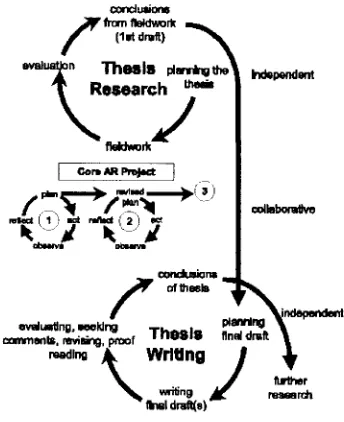
Therefore action research is selected as the proper methodology to respond to the research questions. T h e present study is framed in a research program characterized by two concurrent action research projects in SCI. T h e first is the Core Action Research Project ( C A R P ) , involving the researcher in an organization, with the specific purpose of contributing with m a n a g e m e n t to the solution of a reallife problem, namely the joint design of a Supply C h a i n Performance M e a s u r e m e n t System ( P M S ) for PA
based on balanced measures.
And second, the Dissertation Action Research Project, ( D A R P ) (ZuberSkerrit and Perry, 2002) w h e r e the candidate would concentrate on the thesiswriting, and its main purpose would be to m a k e a distinctive contribution to k n o w l e d g e , in the context of the strategic evolution of vertically integrated firms through SCI.
reinforcing cycles of four sequential p h a s e s : Plan. act. observe and reflect in both AR projects.
Figure 1.61: The relationship between C A R P and DARP. Adapted from (ZuberSkerrit and Perry, 2002)
The deliverables, in the case of the C A R project are: A SC based performance measurement system operating in the case of FA and in the D A R Project, a proposed prescriptive model for SCI applicable to VI firms with s o m e guidelines about its implementation and the covalidation of main elements in the first stages of SCI in the case of the firm under study.
1.7. R e l e v a n c e a n d s i g n i f i c a n c e o f research
The study of the integration of VI firms is important for several reasons: First the study has theoretical implications in the field of integration and S C M implementation in the sense that there is a gap in research, attempting to explain the evolution of a VI firm into m o r e articulated forms of integration.
Second, the proposed model w o u l d provide new descriptive and prescriptive tools for practitioners and m a n a g e r s alike, for attempting SCI, considered to be a pre requisite for successfully i m p l e m e n t i n g S C M initiatives.
condu*one
from ftoMwork (1 it draft)
oonduwra of thesis
[image:32.612.190.362.125.336.2]Third, by analyzing the adoption of integration by VI firms in emergent markets, the study would p r o v i d e richer contextual information about the d e v e l o p m e n t of SCM activities.
Fourth, the contextual setting is relevant. Retail landscape has dramatically changed in the last few years, and is now characterized by high concentration, extensive use of information technologies and successful S C M initiatives. Nevertheless, and not only in emergent m a r k e t s but e v e r y w h e r e , highly integrated firms, articulated small and medium enterprises ( S M E ) and large VI firms (quite a few familyowned) concur in the retail marketplace. Competition favors the coordination of the former and vertically integrated firms would only strive for survival in the medium range.
And last, the study w o u l d yield readily contextual and applicable k n o w l e d g e in SCI in the case of the Mexican food retail industry, with focus on suppliers.
1 8 D i s s e r t a t i o n O u t l i n e
As a result o f the D A R p r o j e c t this study would be structured along the following lines. T h e first chapter is a general introduction for this project. T h e chapter begins with an introduction to the problem under study from a historical perspective where the change in business d y n a m i c s gives place to competition through supply chains instead of firms. Vertically integrated firms have the urge to evolve, from a r m s length transactions to m o r e collaborative relationships and partnerships. It recognizes that managers and practitioners lack a framework linking SCI with strategic decisions and overall performance, laying the g r o u n d w o r k for this research.
Moreover, the chapter defines the problem under study, the associated objectives and research questions, the unit of analysis and the settings of the present study. It further explains the research program in supply chain integration, which is m a d e of t w o concurrent projects: T h e core action research and the dissertation action research. Expressly states the relevance and significance of this study.
m a n a g e m e n t . It is argued that such c o n c e p t s are widely used a n d misused in the literature, leading to a certain level of confusion. This chapter provides w o r k i n g definitions in use for this study.
T h e strategic perspective of S C M is also addressed in this second chapter. The relationship between S C M and competitive advantage is observed through the lens of strategic decisions in the firm. Strategy is defined as a pattern in a stream of decisions, overriding the conflict between intended and realized strategy.
Further the notion of vertical integration is introduced. This concept is analyzed under t w o m a i n s c h o o l s of thought, transaction costs e c o n o m i c s ( T C E ) and the resource based view of the firm ( R B V ) . These perspectives are c o m p l e m e n t e d through the core competences a r g u m e n t and m o r e o v e r vertical integration is defined as a multifaceted construct m a d e of four related d i m e n s i o n s : breadth, stages, degree and forms.
Supply chain integration follows from the notion that its theoretical foundation was initially based on the e c o n o m i c and financial theories of vertical integration, therefore considering SCI as an application and extension of VI theory. A complementary perspective for SCI s t e m s from the w o r k s of Porter ( 1 9 8 5 ) on its value chain approach and the concept of transvection devised by Alderson (1957). It is argued through the chapter, that SCI follows an evolving path. Based on the literature, a positive relationship between SCI and performance is established.
Chapter three recognizes that SCI is itself a multifaceted construct, and describes h o w for the present study, this c o m p l e x notion is identified and summarized to establish three articulated d i m e n s i o n s : Organizational; information and coordination structure. Hence, such d i m e n s i o n s c o m p r i s e several stages, which are articulated and interact to e n h a n c e the intensity of SCI.
T h e VI f i r m ' s m a n a g e m e n t must recognize t w o issues: i) That the e n g a g e m e n t in a SCI p r o c e s s implies a d v a n c e m e n t along the three articulated d i m e n s i o n s which are clarified as part of this chapter and ii) the need of a specific framework that could assist them in the identification of the concurrent steps to achieve such advancement.
Chapter four details the design of the study, describing and m a k i n g sense of the methods used for this research. Basically action research ( A R ) which is suitable for analyzing and implementing organizational changes trough supply chain studies. T h e nature of the research, the paradigm selection, the data collection and analysis m e t h o d s are discussed in this chapter.
Chapter five explicitly deals with the data analysis process. It explains the interaction of the literature review, the research t e a n f s experience as SC consultants, the data gathered and the reflection process generated as part of A R and c o n c l u d e s with a prescriptive model for evolving through SCI for VI firms.
T h e resulting model is based on an evolutionary approach and presents t w o runways. On one hand SCI implies the transition from adversarial transactions to relational e x c h a n g e s and on the other the throughput from vertical disintegration to supply chain integration. Integration intensity is modeled after a contingency approach, where the contingent variables are: T h e focal c o m p a n y ' s bargaining power, the industry, business e n v i r o n m e n t and the product type.
The model recognizes that the firm must diagnose the operation of its present VI strategy and reflect about the necessity to adopt a supply chain orientation in order to begin with the implementation of any S C M initiative, as a mean to o v e r c o m e organizational c h a n g e resistance.
Chapter six explains the operation of the prescriptive model through its application at Fabrica de Alimentos a subsidiary of Productos Alimenticios, a large VI publicly held group in M e x i c o . T h e firm is studied in its strategic context and the model is validated on its c o n g r u e n c e .
The guidelines for supply chain integration in Fabrica de Alimentos are set forth as part of this research program and the chapter further discusses its generalization potential in other VI firm related settings.
comprising information about the fieldwork at FA and a detail of c o m m u n i c a t i o n s among the w o r k i n g c o m m i t t e e .
2 T h e o r e t i c a l F r a m e w o r k for SCI
Supply Chain and Supply Chain M a n a g e m e n t are not only umbrella terms for different understandings o f such concepts, but also allow the application of different research m e t h o d o l o g i e s (Seuring et al.. 2 0 0 5 ) . T h e background of these t w o paramount concepts not only in m a n a g e m e n t and logistics but in m a n y other disciplines can be traced back to historical and theoretical d e v e l o p m e n t s in the field.
2.1. T h e n o t i o n o f Supply C h a i n
The concept of Supply Chain (SC) developed from the historical evolution of manufacturing into m o r e specialized and c o m p l e x operations. ''In the earliest versions of the supply chain concept, firms sought to achieve vertical integration, that is, a firm would establish control over the chain and obtain the desired efficiency and responsiveness by owning each element of the chain" ( L a L o n d e and Masters. 1994, p.39).
The d e p e n d e n c e on suppliers, at first and c o n s u m e r s later, developed into a chain of diverse links between organizations, brought together to fulfill the c u s t o m e r s ' final demand.
Forrester ( 1 9 5 8 . p.37) introduced the theoretical notion of SC. He recognized that successful industrial c o m p a n i e s needed to understand the integrative nature of organizational relationships arising from the interaction between flows of information, materials, money, labor and capital e q u i p m e n t .
Researchers and m a n a g e r s alike d e m a n d a clear understanding of the notions of supply chain and supply chain m a n a g e m e n t . Various definitions e m p h a s i z e s o m e characteristics of the supply chain, yet there is a need for an integrated w o r k i n g concept.
information flows. Further Oliver and W e b b e r (1992), state that a supply chain should be v i e w e d as a single entity that is "'guided by strategic decisionmaking."
T h e A P I C S Dictionary describes the supply chain as: 1) the processes from the initial raw materials to the ultimate consumption of the finished product linking across supplier user companies; and 2) the functions within and outside a company that enable the value chain to make products and provide services to the customer
(Cox and Blackstone. 2 0 0 1 ) . ( C o x . Blackstone et al., 1995; L u m m u s and Vokurka. 1 9 9 9 ) L u m m u s and V o k u r k a (1999) define SC as the network of entities through which material flows. A m o n g such entities suppliers, carriers, manufacturing sites, distribution centers, retailers, and c u s t o m e r s are included. Furthermore, Quinn (1997) defines the supply chain as all activities associated with m o v i n g goods from the raw materials stage through to the end user, including sourcing and procurement, production scheduling, order processing, inventory m a n a g e m e n t , transportation, w a r e h o u s i n g , c u s t o m e r service and m o r e o v e r it also e m b o d i e s the information systems necessary to monitor all of those activities.
A s the literature reveals, there is a consistent lack of clarity in the definition of such c o n c e p t s as a c o n s e q u e n c e of its indiscriminate use in various disciplines yet, there have been m a n y a t t e m p t s to conciliate on such differences (Harland, 1996).
Supply Chain: A definition for the present study
For the present study, following M e n t z e r et al. ( 2 0 0 1 , p.4) supply chain is defined " ...as a set of three or more entities (organizations or individuals) directly involved in the upstream and downstream flow of products, services, finances, and information, [or all of them], from a source to a customer". T h e authors further distinguish three degrees of complexity: A direct supply chain comprised by the focal firm and the firm's suppliers and c u s t o m e r s ; An extended c/?o/«including supplier's suppliers and c u s t o m e r ' s customers; A n d the ultimate chain including all participants in the value chain.
T h e abovecited definition implies that customers and suppliers should work together, yet in their o w n best interest, to trade and interact based on their functions and capabilities first a m o n g t h e m s e l v e s and eventually, in the creation of goods or services requested by final d e m a n d .
T o d a y , definitely supply c h a i n s exist, and firms are part of one or m a n y of them. Moreover their inclusion is not a decision to be m a d e on their own. The participation of a c o m p a n y in a particular supply chain is defined by either, suppliers and middle and highend m a n u f a c t u r e r s e.g. Original Equipment Manufacturers ( O E M ) and final goods p r o d u c e r s or both, or by c u s t o m e r s that buy such products or services.
2.2 S u p p l y C h a i n M a n a g e m e n t
T h e term Supply Chain Management has received great attention in both literature and practice. Research in the field of S C M has evolved from its core concerns around logistics/ operations processes through the incorporation of theoretical concepts and research in strategic m a n a g e m e n t , industrial organization, institutional and production e c o n o m i c s transaction costs, interorganizational relationships, k n o w l e d g e management and s y s t e m s theory ( G i a n n a k i s and C r o o m . 2 0 0 4 . p.29).
In the early literature, Jone s and Riley (1985) defined S C M as the planning and control of total materials flow from suppliers through customers. Later literature referred to the m a n a g e m e n t , not only of materials flow, but of both materials and
'' information flows. Houlihan (1985) argues that the explicit purpose of S C M is to meet customer service objectives, w h i l e at the same time, minimizing inventory, reducing i waste and related costs. Underlying this goal has been the need to boost competitiveness ! and profitability in increasingly tougher global markets.
t "
The origin of the term "supply chain management" is thought to reside in the
work of consultants during the early 1980s. Oliver and Webber (1992) discussed the
potential benefits of integrating the internal business functions of purchasing,
manufacturing, sales and distribution along the organization, yet the concept was
extended beyond the firm's boundaries to include "upstream" production chains and
"downstream" distribution channels. Yu et al. (2001) consider that SCM emphasizes the
overall and longtime benefit of all parties on the chain through cooperation and
information sharing
Harland (1996) describes a fourstage supply chain typology delimiting the main uses for the concept of SCM and classifies such approaches and definition attempts accordingly:
1. T h e internal supply chain w h i c h integrates b u s i n e s s functions involved in Ihe flow of materials and i n f o r m a t i o n , ( S t e v e n s . 1989; Oliver and W e b b e r . 1992: H o u l i h a n . 1985).
2. T h e m a n a g e m e n t of a d y a d with i m m e d i a t e suppliers. (Christopher. 1992: W'omack and J o n e s . 1994).
3. T h e m a n a g e m e n t o f a chain o f businesses including second tier suppliers and c u s t o m e r s ( H a y e s and W h e e l w r i g h t . 1984; M a c b e t h and F e r g u s o n . 1984).
4. T h e m a n a g e m e n t o f a n e t w o r k o f interconnected businesses involved in the ultimate provision of product and service p a c k a g e s required by end c u s t o m e r s ( H a k a n s s o n and Snehota, 1995)
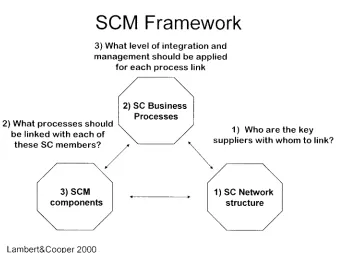
Lambert and Cooper (2000) developed a conceptual framework, as graphically
presented in Figure 2.21 emphasizing the interrelated nature of SCM. It consists of
three closely interrelated elements: the supply chain network structure, the supply chain
business processes, and the supply chain management components. The supply chain
network structure consists of the member firms and the links between these firms.
Business processes are the activities that produce a specific output of value to the
customer. The management components are the managerial variables by which the
business processes are integrated and managed across the supply chain.
The first element in Lambert's framework represents a key decision issue in SCM and answers the question with whom should the firm integrate? : The second
element answers the question about what business processes must be integrated? ; And
third, what level of integration is desired across the SC?
SCM Framework
3) W h a t l e v e l o f i n t e g r a t i o n a n d
m a n a g e m e n t s h o u l d b e a p p l i e d f o r e a c h p r o c e s s l i n k
2 ) W h a t p r o c e s s e s s h o u l d b e l i n k e d w i t h e a c h o f
t h e s e S C m e m b e r s ?
2 ) S C B u s i n e s s P r o c e s s e s
1 ) W h o a r e t h e k e y s u p p l i e r s w i t h w h o m t o l i n k ?
Lambert&Cooper 2 0 0 0
Figure 2.21 S C M framework in (Lambert and Cooper, 2000, p.70)
In an effort to incorporate unity in the discussion o f S C M , Mentzer et al. (2001) argue that t h e n u m e r o u s definitions o f S C M can be classified into three categories, namely: a management philosophy (Ellram and Cooper, 1990; Shapiro. 2 0 0 4 ) , the implementation of a management philosophy (Russell, 2 0 0 1 ; Handfield and N i c h o l s
1999a), and a set of management processes (Sengupta and Turnbull, 1996).
Tan (2001) traces the evolution o f S C M around t w o different paths: Purchasing and supply activities; and the transportation and logistics functions with focus on integration, visibility, cycle time reduction and streamlined channels.
[image:41.612.103.443.96.349.2]synergy between different actors in the network; and the synchronization of all operational decisions related to the control of the production and delivery of goods and services.
S y n t h e s i s : B u s i n e s s
a n d R e s o u r c e s
n e t w o r k
S C O M M O N G O A L S • W a s t e E l i m i n a t i o n S y n e r g y :
O f A c t o r s i n ' I n c r e a s e d e f f i c i e n c y n e t w o r k s
s s
Synchronization of operational
decisions In the network
F i g u r e 2 . 2 2 : T h e 3 S F r a m e w o r k f o r S C M , a d a p t e d f r o m G i a n n a k i s a n d C r o o m ( 2 0 0 4 ) .
N o t w i t h s t a n d i n g the a b o v e m e n t i o n e d diverse perspectives, Tan et al. (2002) assert that k n o w l e d g e about S C M has matured and eventually merged into a unified body of literature with a c o m m o n goal of waste elimination and increased efficiency.
M e n t z e r et al. (2001) differentiate Supply Chain Orientation ( S C O ) from Supply Chain m a n a g e m e n t . On one hand, S C O is a construct closer to the first category management philosophy and a prerequisite for S C M . Therefore, S C O is defined as the recognition by an organization of the systemic, strategic implications of the tactical activities involved in managing the various flows in a supply chain. On the other hand, SCM is m o r e closely related with the overt m a n a g e m e n t actions directed t o w a r d s implementing such m a n a g e m e n t philosophy.
F r o m that standpoint in this study, and following M e n t z e r et al. ( 2 0 0 1 , p. 18) SCM will be defined as ...the systemic, strategic coordination of the traditional business functions within a particular company and across businesses within the supply chain, for the purposes of improving the longterm performance of the individual companies and the supply
Supply Chain Management: A definition for the present study
chain as a whole, in a consistent m a n n e r with definitions also found on C S C M P (2005) and W i s n e r ( 2 0 0 3 ) .
Systemic coordination
S u p p l i e r ^ Organization T h e Focal
C u s t o m e r
Supplier
Primary Supplier
Finacial Institutions/
M a r k e t s
End C u s t o m e r
M a t e r i a l F l o w s
S e r v i c e s a n d i n f o r m a t i o n F l o w s
Figure 2.23 Diagram of SCM, based on Mentzer et al. (2001)
2.3. T h e Strategic N a t u r e of S C M :
"The challenges associated with getting a product or service to the right place at the right time intensified as competition in the 1990s did. In today's manufacturing environment, one of the key challenges is to he both efficient and contribute to high effectiveness" (Zailani and Rajagopal, 2 0 0 5 ) , p . 3 7 9 ) .
Perspectives on Competitive .Advantage
Early literature on competition serves antecedes the development of the concept of Sustained C o m p e t i t i v e A d v a n t a g e ( S C A ) . Alderson (1937) hinted at a basic tenet of SCA, that a fundamental aspect of competitive adaptation is the specialization of suppliers to meet variations in b u y e r ' s d e m a n d . T h i s author w a s one of the first to recognize that firms should strive for unique characteristics in order to distinguish themselves from competitors in the eyes of the c o n s u m e r .