
Enhancing vocabulary learning acquisition through the use of fairy tales
107
0
0
Texto completo
(2) 2. Note of acceptance __________________________________________________________ __________________________________________________________ __________________________________________________________ __________________________________________________________. _________________________________________________________ Advisor:. Juror:. __________________________________________________________ Juror:. Bogotá, DC. November, 2017.
(3) 3. Acknowledgements. To my mothe,r Miriam Castellanos, for everything she has done for me; without her, I would not have had the opportunity to study. I know I have not been the best daughter but I will be thankful for every single thing she helped me to overcome forever.. To my sister, brother, friends, and classmates for all the love, support and laughs in the hardest moments. They will always be in my heart.. To my grandparents for their unconditional love.. To God for giving me strength and faith to continue studying and working hard to finish my proposal and for being the light in my darkest moments.. To life for putting me in this place and in this moment to live what I am living. You only have one life and you should live following what you think, what you love, and the path you want to walk..
(4) 4. FORMATO RESUMEN ANALÍTICO EN EDUCACIÓN - RAE Código: FOR020GIB. Versión: 01. Fecha de Aprobación: 10-10-2012. Página 1 de 4. Tipo de documento. 1. INFORMACIÓN GENERAL Trabajo de grado. Acceso al documento. Universidad Pedagógica Nacional. Biblioteca Central. Título del documento. Enhancing vocabulary learning acquisition through the use of fairy tales. (Adquisición de vocabulario a través del uso de cuentos de hadas).. Autor(es). Huertas Castellanos, Paula Andrea. Director. Buitrago, Zulma. Publicación. Bogotá. Universidad Pedagógica Nacional, 2017. 107 p.. Unidad Patrocinante. Universidad Pedagógica Nacional. Palabras claves. ACQUISITION OF. VOCABULARY, VOCABULARY, FAIRY. TALES, TYPES OF COMMUNICATION, ENGLISH SKILLS.. 2. DESCRIPCIÓN El presente trabajo es un proyecto de investigación que se llevó a cabo en el Liceo Femenino Mercedes Nariño con estudiantes de cuarto grado. El principal objetivo era que las niñas a través del uso de cuentos de hadas y de las diferentes actividades desarrolladas lograran expandir su vocabulario en inglés. Cabe destacar que el proyecto no se quedó simplemente en la adquisición de vocabulario ya que también se propició que las niñas tuvieran alguna producción escrita o comunicativa haciendo uso de dicho vocabulario. Se propone una metodología para el análisis de datos basada en el enfoque. a priori, ya que este enfoque permite de antemano escoger las. categorías a analizar, para ya después encontrarlas en los diferentes instrumentos de recolección de datos. Esta implementación logró que las estudiantes adquirieran vocabulario e hicieran uso de este para generar diferentes producciones en el aula de clase..
(5) 5. 3. FUENTES Abdulla, E. S. (2012). The Effect of Storytelling on Vocabulary Acquisition. University of Tikrit. College of Education for Women /English Department. Vol. 10, 20-57. Barrera Gómez, M.A. (2010). How to use tales for the teaching of vocabulary and grammar in a primary education english class. RESLA 23, 31-52. Education Place Houghton Mifflin Harcourt. Word Recognition Skills and Strategies. (1997). Retrieved from https://www.eduplace.com/rdg/res/teach/rec.html Elliott, R and Timulak, L. (2005). Descriptive and interpretive approaches to qualitative research. In Miles, and Gilbert, P. A HANDBOOK OF RESEARCH METHODS FOR CLINICAL AND HEALTH PSYCHOLOGY. (328 Pages). Oxford. Gairns, R and Redman, S. (2012).Working with Words: A Guide to Teaching and Learning Vocabulary. Cambridge University Press. Garrido Barra.C.G (2008). Developing Language Learning Strategies. ISSN 1755-9715 Hanson. S and Padua J.F.M. (2011). Teaching Vocabulary Explicitly. Pacific Resources for Education and Learning. Lee, C. (2003). THE USES OF ENCHANTMENT: FAIRY TALES AS INSTRUCTIONAL MATERIALS TO FACILITATE PRIMARY ENGLISH LANGUAGE EDUCATION. Journal of National Taipei Teachers College, Vol.16, 29~48. NATIONAL TAIPEI TEACHERS COLLEGE. Lee, C.K. (2010). AN OVERVIEW OF LANGUAGE LEARNING STRATEGIES. ARECLS, 2010, Vol.7, 132-152. Lepin, M. (2008-2009). Fairy Tales In Teaching English Language Skills And Values In School Stage I. (Bachelor thesis). University Of Tartu. Estonia. Masmaliyeva, L., Moeller, A.K and Ketsman, O. (2009). The Essentials of Vocabulary Teaching: From Theory to Practice. University of Nebraska -Lincoln. Min, Y. K. (2013). Vocabulary acquisition: Practical strategies for ESL students. Journal of International Students, 3(1), 64-69 (N/A.). (2007). Multicultural & ESOL Program Services Education Dept. 25. Retrieved from: file:///C:/Users/Familia_PC/Downloads/1852_Vocabulary%20 (3).pdf. Oxford, R. L. (1990). Language learning strategies: What every teacher should know. New York, NY: Newbury House / Harper & Row. PIKULSKI.J.J and TEMPLETON.S. (2004). Teaching and Developing Vocabulary: Key to LongTerm Reading Success. Houghton Mifflin Reading.pag 1-12. Porras González, N.I. (2010). Teaching English through Stories: A Meaningful and Fun Way for Children to Learn the Language. Vol. 12, No. 1, 2010. ISSN 1657-0790. Bogotá, Colombia. Pages 95-106. Pometlová, K. (2006). Using fairy tales in teaching English. (Bachelor thesis). MASARYK UNIVERSITY IN BRNO. Czech Republic. Rafik.F. M. (2005). STORYTELLING AND VOCABULARY ACQUISITION AT THE ELEMENTARY LEVEL. (Magister degree). MENTOURI UNIVERSITY, CONSTANTINE. Algeria. “Vocabulary” Def. 1e. English Oxford dictionaries. 2017. Online dictionary. May 20, 2017.
(6) 6. Word. Recognition Skills and Strategies. (1997). https://www.eduplace.com/rdg/res/teach/rec.html. Syntactic. or. Word. Order. Clues.. 4. CONTENIDOS Este proyecto está dividido en 6 capítulos: El primer capítulo está compuesto por el contexto local e institucional, participantes, diagnóstico, justificación, problema del estudio, pregunta de investigación con sus respectivos objetivos generales y específicos. El segundo contiene el estado del arte y el marco teórico. El tercer capítulo abarca el tipo de estudio, los instrumentos de recolección de datos, diseño de investigación, la metodología para análisis de datos y los problemas éticos de la investigación. El cuarto capítulo engloba la propuesta pedagógica, así como también se define la visión de lenguaje y aprendizaje, diseño instruccional con la planeación de clases, cronograma de aplicación y significado de resultados. El capítulo cinco muestra cuales fueron los resultados encontrados de acuerdo al análisis de datos. Finalmente, el capítulo seis, comprende las conclusiones, limitaciones, implicaciones pedagógicas y las recomendaciones para futuras investigaciones.. 5. METODOLOGÍA El proyecto se llevó a cabo en un principio por medio de observaciones y la implementación de un diagnóstico se encontró un problema y a través de una pregunta de investigación se dio una posible solución para esta dificultad. Durante la investigación se siguieron tres etapas: En la primers etapa: knowing the princess and her world, se hizo una introducción al tema (cuentos de hadas) se hizo un primer acercamiento a algunos personajes y las niñas hicieron un reconocimiento parcial de las palabras. En la segunda etapa: princesses in context, las niñas aprendieron las palabras partipando en diferentes actividades. En la tercera etapa: Let´s try to write and speak, las niñas pasaron por un proceso de adquisición de vocabulario a la posibilidad de utilizar este vocabulario para manifestarlo en la escritura y en el habla..
(7) 7. 6. CONCLUSIONES Después del análisis de datos se puede concluir que por medio del uso de cuentos de hadas, las estudiantes lograron la adquisición de vocabulario proveniente de los cuentos de hadas y además de aprender este nuevo vocabulario, las niñas consiguieron hacer uso de este para situaciones comunicativas como escribir y expresar algunas frases en inglés. De esta manera, los cuentos de hadas deberían considerarse como una buena estrategia para ser utilizada en el salón de clase.. Elaborado por: Revisado por:. Paula Andrea Huertas Castellanos Zulma Buitrago. Fecha de elaboración del Resumen:. 13. 10. 2017.
(8) 8. ÌNDICE DE CONTENIDO. Table of Contents ABSTRACT CHAPTER 1 Context …………………………………………………………………………………….............. 12 CHAPTER 2 Literature review and theoretical framework …………………………………………………................................................................22 CHAPTER 3 Research Design……………………………………………………………………........................38 CHAPTER 4 Pedagogical intervention …………………………………………………………………………..........................45 CHAPTER 5 Data Analysis ……………………………………………………………….........................................52 CHAPTER 6 Conclusions…………………………………………………………………………….67.
(9) 9. ÌNDICE DE FIGURAS, TABLAS Y ANEXOS. LIST OF TABLES AND FIGURES Table1: Oxford’s strategy classification system…………………………………………. 35 Table 2: Description of the Units of Analysis. ………………………………………………………………………………………………… 42 Table 3: Time line………………………………………………………………………………….. 48 Table 4 : Categories of analysis .…………………………………………………………….................................................... LIST OF APPENDICES Appendix A: Field note A……………………………………………………………… Appendix B: Diagnosis sample…..……………………………………………………………………………….. Appendix C: Field note C……………………………………………………………….. Appendix D:Field note D....…………………………………………………................... Appendix E: Lessson plan sample…………………………………………………………………………………… Appendix F: Informed consent…………………………………………………………………………………... Appendix G: Informed consent……………………………………………………….. .. Appendix H: Informed consent………………………………………………………………………………….. Appendix I: Informed consent…………………………………………………………………………………. Appendix J: Informed consent………………………………………………………… Appendix K: Informed consent…………………………………………………………………………………. Appendix L: Informed consent……………………………………………………......... Appendix M: Informed consent………………………………………………………………………………..... Appendix N: Informed consent…………………………………………………………………………………. Appendix O: Informed consent……………………………………………………........ 55. 74 76 77 78 80 82 83 84 85 86 87 88 89 90 91. Appendix P: Informed consent…………………………………………………………………………………... 92. Appendix Q: Informed consent………………………………………………………………………………....... 93. Appendix R: Informed consent…………………………………………………………. 94.
(10) 10. Appendix S: Informed consent………………………………………………………….. 95 Appendix T: Informed consent………………………………………………………….. 96. Appendix V: Informed consent…………………………………………………………. 97 Appendix U: Informed consent…………………………………………………………. 98 Appendix W: Informed consent…………………………………………………………. 99 Appendix X: Informed consent…………………………………………………………. 100 Appendix Y: Informed consent…………………………………………………………. 101 Appendix Z: Informed consent…………………………………………………………. 102 Appendix Z-1: Informed consent……………………………………………………… 103 Appendix Z-2: Informed consent……………………………………………………… 104 Appendix Z-3: Informed consent……………………………………………………… 105 Appendix Z-4: Informed consent……………………………………………………… 106 Appendix Z-5: Informed consent……………………………………………………… 107.
(11) 11. Abstract In the teaching and learning of a foreign language one of the elements that is necessary in order to have a better language proficiency is the acquisition of vocabulary since it is through the different words learnt that one is able to express oneself and make oneself understood. Likewise, this study will seek to encourage fourth grade girls from Liceo Femenino Mercedes Nariño, to broaden their vocabulary through fairy tales so that they could communicate in the foreign language more relevantly and as is necessary in the classroom and in other environments (house, friends and family). Moreover, fairy tales will be a great tool that should be used continuously in the classes Therefore, in this project, fairy tales will help with the acquisition of vocabulary but it can also help to improve other skills like listening, speaking, reading and writing because these skills can be involved in the process of the acqusition of vocabulary. KEY WORDS: Acquisition of Vocabulary, Vocabulary, Fairy Tales, Types of communication, English skills..
(12) 12. CHAPTER I. In this first chapter the reader will find information about the specific context (local, institutional and the participants), the diagnosis that was applied and the valuable findings that were found in it, the rationale of the study and the statement of the problem.. Context Local Context The research was carried out at the Liceo Femenino Mercedes Nariño School. This school is located in Restrepo, which is a neighborhood in Bogotá, Colombia. This neighborhood has become part of the modern history of Bogotá since it is one of the commercial areas that generate more income for the district. Besides its surroundings there are also places of cultural importance for Bogotá, for example, “La Iglesia de 20 de Julio”. In other words, this area has developed into a commercial tract and people have taken the opportunity to start their own businesses around this place. Due to the increase in business of this neighborhood, it has become on one of the most visited districts in the city and it has also helped in the general recognition of this neighborhood in Bogotá. Other than the increased business in the area near to the school, people think that this neighborhood is a good one to live in. Those characteristics have contributed to the increase in a person who lives in this neighborhood and that is why the number of girls studying in this school has also increased..
(13) 13. Institutional Context. The school Liceo Femenino Mercedes Nariño is an institution that has sought to be a place that deals with the values of women. For instance, according to the student’ handbook (2017), the school has the mission of “propitiating the integral education, promoting the values of women such as respect, honesty, identity, solidarity and autonomy; generating the construction of their life project, aiming at transformation of contexts where they interact, ensuring the enjoyment of their lives” (p. 13). On the other hand, the vision of the school indicates that: In the year 2017, the school will be recognized at a national level for the quality of its service, students´ excellence with a myriad of students with their necessary knowledge for society, the management of the foreign languages: English and French and new TIC; as builders of a society respectful of themselves and others (student´ handbook, 2017. p. 13). It can be seen in both the mission and vision that this school promotes in each girl the possibility of thinking for themselves as subjects who are part of a society and at the same time they can be individuals who have their own perspectives and dreams and also they will achieve positive and functional changes in the world.. On the other hand, it is worth mentioning the benefits that this institution has established to bring more assertive changes for both the institution and for the students. For instance, the school offers morning and afternoon shifts. This is a great way to help students and their families to have more options to study with the best schedule so that each person has the right to an education within the conditions that each family and girl needs. This school has a great reception of the public with regards to studying in varied schedules. In addition.
(14) 14. to the curriculum, the school has several spaces and courses such as gymnastics and musical practice. These courses allow the girls to be outgoing and to share with their classmates. Besides, those courses develop new talents in the girls and a better disposition in the environment in the classroom since the girls become closer with each other. Likewise, the agreement that the school has with the district for giving the girls a snack is very valuable and necessary for the students. This agreement demonstrates the interest of the school for the integrity of the girls.. Participants There are 37 girls in the third grade 404; the age bracket of the girls is between 9 and 11. Some girls live near the school and other girls must take a school bus to get to school. The composition of families is different. The results of the survey showed that only one girl out of the 37-surveyed lived alone with one of her parents. 20 of these girls are living with a big family: mom, dad, brothers, uncles and grandparents and the 16-remaining live with both parents: mother and father. Most girls’ (29) families help them to do homework and the remaining 8 girls, their families do not. Many of the girls of this grade like to do activities such as playing, coloring, watching TV, reading, writing, and doing puzzles. Other girls like to do different activities such as running, figure skating and shopping. These girls were always talking and sharing with their peers in Spanish and they seem to have fun when they are doing it but when the English class begins their interaction changes.. They never tried to communicate with each other in the foreign. language. Therefore, it is seen that their attitude towards the English class always changes..
(15) 15. Diagnosis I collected information using four field notes, a survey and a test in which the four skills in English were evaluated. The survey sought to find out the girls’ interests in school, family, and their preferences for the English class. The survey was written in Spanish so that the girls could fill it out faster than in English. Furthermore, they could respond with all that they considered necessary without being limited by the language. To begin, the basic standards for the area of language proposed by the Ministry of Education, regarding the language competence is that in third grade, students must "express and point out basic objects within the classroom, answer questions about people, objects and places” (Ministerio de Educación, 2006, p. 19). This is not being applied in the classroom because students cannot express anything in English and this creates a gap in their educational process. It seems that the girls are lively when speaking and interacting with their peers in their mother tongue but when it comes to the matter of English that interaction changes and the English class becomes for them something mandatory. Thus, because of the lack of interest in the English class, the girls do not show any improvement in their communication in the foreign language. Through observations, I was able to notice that during each English class, the girls always looked confused and showed certain apathy towards the activities proposed by the teachers (Appendix A). It is important to keep in mind that these girls have not had English class since March and are only now going to retake this course. Thus, it is possible to understand why they are not feeling comfortable in the classroom. However, the teachers tried different activities but the students’ performances and attitudes did not improve. On the other hand, the treatment of teachers towards the girls has created a fear to speak in English because the girls feel insecure about themselves around their classmates and the.
(16) 16. teachers. Furthermore, when the girls were in their Spanish class they were always paying attention to the teacher and they like to participate in the class but that change when the English class begins. Also, the relationship with the homeroom teacher of the course, who is also the Spanish teacher, is better and they seem to trust and respect the teacher. In contrast, with the English teachers; the girls did not get along very well with them. The girls did not understand what the teachers tell them and that creates a problem between girls and teachers. Sometimes the teachers in despair treated the girls in a way not conducive to pedagogy and this creates a lack of confidence in the girls. Above all, the diagnosis (Appendix B) was divided into the four abilities: Speaking, writing, reading and listening; the lack of vocabulary especially in the speaking section became evident. In this section, these girls had to complete two conversations with their own information considering an example given by the teacher. 32 girls could not do it and they moved on to other parts of the test. The other five girls tried to complete the conversation but they did not do it correctly. For instance, one of the girls wrote in the question what is your name: “me voy.”.
(17) 17. On the writing segment, the girls had to write in English, who were the members of their families. Twenty - eight (28) girls wrote their family members but proved to have problems with spelling and phonics as they wrote things like: “moder and fader.” The other nine girls did not write anything and went on to the next part of the exam. In the reading part, the girls had to read a fragment from “The Fairly OddParents” and answer two questions. Twenty - nine (29) of the 37 girls did not answer anything and eight girls responded well to the questions. Here it should be noted that girls may have problems with vocabulary and therefore found it difficult to answer the questions. For the last component of the diagnosis, the girls had to listen to the teacher and place a cross on the words they heard. This skill was the one which they did better. Thirty-one (31) out of the thirty-seven (37) girls marked all the words and the other six girls only missed out two words. Through these assessments, it was possible to make evident, the difficulty in the speaking skill of these girls from fourth grade. This issue has several reasons that have increased the fear that the girls have in trying to communicate in the foreign language. For instance, the lack of practice, the lack of vocabulary and the treatment that the teachers maintain with the girls (Appendix C) have created a barrier between the girls and the possibility to interact in the foreign language..
(18) 18. Rationale of the study Teaching English to girls is a job that requires a lot of imagination and creativity; without these two characteristics, teaching would become somewhat monotonous and the girls would not get any benefit. In this project, as has been explained earlier, the problem was that girls are afraid to speak in English and this is mainly due to the lack of vocabulary because they do not know what certain words mean and thus an act of communication among the girls becomes really difficult. In order to solve the aforementioned issue for the development and implementation of this project, and taking into account the main issue for this project, fairy tales were used as a pedagogical tool to try to solve this problem (lack of vocabulary). Since they are girls and they find these stories to be something that is closely related to their childhood. In addition, they already know what each fairy tale is about in their native tongue and therefore it will be easier for them to learn vocabulary extracted from each fairy tale related to clothes, the parts of the body and places, to mention a few. Moreover, the main subject of this study was the acquisition of vocabulary with fairy tales. The girls were happier to work with this literature tool because with the good disposition that they had towards the different activities, this allowed them to acquire the new vocabulary and to search for more words on their own and perhaps in the future when they read some fairy tales, they may see some words or image and they can recognize those words or image from the English vocabulary that they learned in the classroom. They will internalize those words so that they can use those words not only in academic settings but also for their daily life; in this manner the acquisition of vocabulary helped them to improve their foreing language..
(19) 19. In addition to that, it is also important to mention that the curriculum of the school expects that fourth grade girls have an interaction with their other classmates but how can there be a communicative act when there is not a proper and meaningful level of vocabulary for the girls to express something in the second language? This project seeks precisely to lay a foundation so that a communicative act becomes gradually possible and for girls to not only work on this in class but also to be able to implement it in other situations. Consequently, childhood is one of the most rewarding stages in the life of a human being; what is experienced in this stage influences the future of each person. Sometimes teachers try to stop children from being children and this is a huge error because instead of forcing them to put aside their childhood, their enthusiasm should be used so that it could be part of the educational system. That is why this project will be based on fairy tales as girls love the princesses and everything that happens in fairy tales. And although they are governed by certain topics in their curriculum, it is possible that through a subject that they like (fairy tales), they can learn many things especially as is the aim of this project, searching and learning several words from each fairy tale and these words will then become part of their own dictionary for their lives.. Problem Statement The main problem found in the observation is the fear that the girls have to speak in English. This problem has to do with the girls’ lack of vocabulary and low self-esteem. Although they are so young, they are already afraid to speak in English in the class, so the.
(20) 20. only way for them to communicate in the class is always in Spanish. The absence of vocabulary can be the result of the lack of practice in the classroom and the short time that the girls have in the English class per week. They only have 45 minutes weekly and this is not enough time for them to learn and cover all the needs that they have in the foreign language. The paucity of self-esteem can do with the fear of making mistakes in front of their classmates and teachers; as could be seen in the observations, the girls are afraid to say even a word in English (Appendixe D). On the other hand, the atmosphere in the classroom and development of the class has become static and girls do not enjoy performing the activities proposed by the two English teachers the relationship with the teachers increases this fear to speak in English.. Research question(s) and objective(s) With the analysis of the data collected, the research question to be solved is: What could be the impact of using fairy tales as a pedagogical strategy to facilitate vocabulary acquisition in English in a group of 4th graders at Liceo Femenino Mercedes Nariño? Likewise, the question at hand has generated the following objectives: ●. General objective. To describe the impact of the use of fairy tales as a pedagogical strategy to facilitate vocabulary acquisition in English of a group of 4th graders at Liceo Femenino Mercedes Nariño..
(21) 21. ●. Specific objectives:. To analyze how the implementation of fairy tales promotes the use of new vocabulary. To describe the types of communication that came out form the fairy tales and its vocabulary. With the use of different data collection tools such as: field notes, a survey and a diagnosis; it was possible to conclude that the problem that occurs in this fourth grade is that they do not try to interact by speaking in English mainly because they do not know sufficient vocabulary in the foreign language. This problem can be treated with fairy tales to facilitate vocabulary acquisition in the foreign language. In chapter number two, the previous works and the most important constructs to support this study will be expounded upon..
(22) 22. Chapter II Theoretical Framework and Literature Review This section of the document presents five previous studies that will give an overview of the characteristics and results of working with the idea of vocabulary acquisition. Additionally, the theoretical framework with the principle constructs to support this study will be presented.. State of the Art To begin with, the first project, how to use tales for the teaching of vocabulary and Grammar in a primary education English class by Barreras Gómez (2010), deals with the importance of using fairy tales in order to make the learning process of students in a second language a more meaningful way to acquire vocabulary. The study gives many reasons and characteristics that provide an overview of what fairy tales can mean with regards to vocabulary acquisition as well as the author's acquired data can help to improve grammar, social skills and cultural knowledge. Moreover, the concepts of fairy tales and vocabulary acquisition were some of the theoretical constructs of the study.. In this project the different elements that are part of the teaching and use of fairy tales with primary courses is exposed in an orderly and clear way. These specifications of why it is valid to use fairy tales to acquire vocabulary demonstrate that fairy tales are significant for children and that because they are part of universal literature, they can help children become more interested in learning and having a better proficiency in the second language. In addition, the author also mentions that he must be very careful with the fairy tale that.
(23) 23. will be presented to the students, because if it is a fairy tale that they already know, it will be possible to make use of that previous knowledge so that they can understand and relate to it in the second language. This is of vital importance for the acquisition of vocabulary since with this prior knowledge of words it will be easier for students to learn those words in English. This project is relevant for the present study because it evidences through different arguments, the usefulness of fairy tales in the early school years. This means that the use of fairy tales can help students with their acquisition of vocabulary due to the fact that children can be interested in the topic and with the different strategies and activities, teachers will help students to acquire vocabulary that each fairy tale can provide. For these reasons, the cited project represents a meaningful reference to the acquisition of vocabulary which is the the principal aim of the present research study.. To continue, the second project, The Effect of Storytelling on Vocabulary Acquisition by Abdull (2012), inquires the difficulties faced by EFL learners to learn vocabulary in a second language. The aforementioned has to do with students having to memorize so many words that this process becomes somewhat monotonous and in the long run the results are not favorable for students. Then the author gives great value to the stories because they can be a motivational factor to learn vocabulary as EFL students.. The sample of the study were thirty (30) students, all of them women between twenty (20) and twenty-one (21) years old from Iraq. The researcher divided the group into a control group and an experimental group. The first activity was to approach the topic (storytelling); the teacher explained to the control group the topic in a more specific way.
(24) 24. than to the experimental group (this did not affect the understanding of the topic in the groups). Then, during the second week the teacher gave different short fairy tales to each group so that later they could tell them in their own words. At the end a test was applied and test validity and test reliability were the main procedures of the test. The experimental group obtained a better percentage of acquisition of vocabulary according to the author because they were given more freedom in the choice of stories and the way in which the teacher carried out the class was more amiable. The results of this study support the idea of using fairy tales to help students with the acquisition of vocabulary.. This study contributes to the present research project since it provides a good characterization of how vocabulary acquisition, through storytelling, positively affects a group of female EFL students. It also contributes to the fact that the fairy tales generate curiosity to acquire vocabulary or improve other skills. In the same way, this study worked with a group of women, and that allowed for the understanding on how to present the topic of the fairy tales to a group of women, since in this research project the subjects will also only be girls. It is also worth mentioning that although in the study the ladies were already adults, they still enjoyed the use and application of stories in college.. The third study, Teaching English through Stories: A Meaningful and Fun Way for Children to Learn the Language by Porras González (2010), reflects on the way in which we as teachers in training must learn to use stories in the classrooms for children to learn the second language. It is our task to use our imagination to create a meaningful and fun environment so that children acquire different words from each story..
(25) 25. After that, the study mentions that this study was carried out in a school in Bucaramanga. The eight teachers from Universidad Cooperativa de Colombia worked with children of second and third grade and although they were different populations, the results have some similarities in the valuable role that the stories have so that the children find meaningful, the learning of a second language and different vocabulary. For the methodology, the study uses observations, categorization and a syllabus that was created by the teachers themselves in order to implement this study. One of the conclusions was that teachers should be careful with the kind of methodology and strategies that are used with children because it affects the main aim that is to teach the second language in a meaningful way. Other conclusion affirms that if a story is familiar students will quicker internalize different words from each story. Having a relationship between the story and the context of the students will make it easier for them to learn those words to make them part of their academic life.. Consequently, this article was relevant for my study as it emphasized the importance of stories in order to help with the learning of a second language and as a positive outcome, the acquisition of new vocabulary. Moreover, this study also discusses how each teacher prepares and manages a class so that children can receive inputs that from the beginning make the topic that will be seen in the class clear and thus they will be able to better understand the story and therefore the words that are derived from that story. Furthermore, this study shows that it is also important to be careful with each story that we selected because it must take into account the age, grade and also whether or not the children like the stories..
(26) 26. The fourth study, Fairy Tales In Teaching English Language Skills And Values In School Stage II (Lepin 2008-2009), presents the idea that fairy tales are elements that can cause a great influence in the teaching of different skills in a second language. For the purposes of this research, the study mentions how fairy tales can help in the acquisition of vocabulary as stories will serve as a means of creativity for children to learn new words. Children are curious by nature and if during teaching, vocabulary from fairy tales are used, this will draw the attention of the children from the beginning, and thus they will be able to learn those words. In addition, if the context of the children is also used to relate these words, this will make the children more interested in the topic.. Furthermore, the final discussion of the study stated that fairy tales are generally a good strategy to implement in the classroom to teach some of the skills or some topics in English. With the new material created by researchers; this new material became part of various lesson plans for future teachers so that they could have a guide on how to explore fairy tales in the classroom. It is also emphasized that the people who valued this new material suggested some changes so that each activity is more appropriate according to the course to be tackled.. The aforementioned study contributes to the present research because it affirms that fairy tales do have an influence on the learning of different skills in English and for this study as a fundamental basis, the fairy tales help with the acquisition of vocabulary. By combining fairytales with words that have a great interest to students, this will not only enrich new vocabulary but also foster the development of other skills in English.. To conclude, the fifth study, The Uses of Enchantment: Fairy Tales as Instructional.
(27) 27. Materials to Facilitate Primary English Language Education (Lee, 2003), included fifth and sixth grade students and various features were analyzed to take into account the children from these grades. Characteristics such as intellectual development, attention span, sensory input, affective factors, authentic and meaningful language, and the age effect; all those characteristics allowed one to know the population more and to know how the implementation of fairy tales in the classroom could be.. Although the results were analyzed in quantitative terms, the authors presented two important conclusions; first the researcher contributes to this study by saying that fairy tales have different psychological, intellectual and cultural elements that can be used as insoumis of teaching and learning a second language. In addition to that, Lee concludes that fairy tales in the teaching program showed a great interaction between teachers and learners and thus it facilitates the learning of something in the second language.. The study previously reviewed is important for this project because it reveals how fairy tales can be used in different grades at school. For the above it is important to have prior knowledge of the population in order to prevent the thought that all children are equal in the sense that they will learn in the same way and within the same time range. In the same way, the author presents fairy tales as an excellent tool to be included in the curriculum of school education in order to teach other topics to the students and that this becomes a possible innovation within the educational system..
(28) 28. Theoretical Framework Vocabulary When it comes to the learning of the foreign language it is important to clarify the meaning and importance of vocabulary. The term vocabulary has been widely discussed by many authors. For example, in the Oxford dictionary vocabulary is defined as: “The body of words used in a particular language or the body of words known to an individual person” but the meaning of vocabulary is beyond its relation with words because vocabulary is a fundamental part of the cognitive process in a student. With the development of it, students may or may not be able to address another person in the foreign language (Gairns and Redman, 2012), having in mind that, Masmaliyeva, Moeller, and Ketsman, assert that vocabulary:. Vocabulary is central to the learning and teaching of a second language as it affords learners access to all forms of oral and written communication that includes literature, music, and content knowledge. Word knowledge is power as words serve as building blocks to learning (2009, pag. 1). In that manner, vocabulary allows an approach and development with different topics. Vocabulary is a world in itself and therefore what is inside that world will have much incidence in the development of the foreign language. When an individual has a sufficient and meaningful management of that world of words their relationship with the concrete world, that is to say, with the way of communicating with people and their own thinking will have a conceptual and practical enrichment for their life. Pyles and Algeo cited in Abdulla (2010) state that "vocabulary is the focus of language. It is in words that sound and.
(29) 29. meaning interlock to allow us to communicate with one another, and it is a word that we arrange together to make sentence, conversations, and discourse of all kinds”.. Likewise, in the teaching of the foreign language it is decisive to have a wise choice of the vocabulary which is going to be taught. With enough words, students will be able to have a more dynamic role and a more meaningful process inside and outside the classroom. In other words, the students will be able to recognize these words in other contexts and they will manage to address other people. There are many types of vocabulary but for the purpose of this study it will take into account the types of vocabulary proposed by Aeborsold and Field cited in Abdulla (2010). They established that vocabulary is divided in two types of vocabulary: active and passive vocabulary. The first one, as the authors mentioned is the type of vocabulary where the learner can use it in the listening and speaking skills. The active vocabulary is really hard to put into practice because students must know the correct pronunciation of the words and the correct grammar structure and the meaning of the words. This is not impossible to achieve but it requires more time. On the other hand, the passive vocabulary is about the words that students learn and recognize but they cannot produce or pronounce in the best manner while speaking or writing and it is also called productive. This study will seek to gradually go forward from passive to active vocabulary because it will be easier for the girls to learn the words and then to have a good proficiency using those words. Abdulla (2010) affirms that: “Nobody ever learns all the words in any language. We know and use the words that fit our particular purposes and learn new words as long as we live”. The prior statement evidences the importance of the words in each person because although words can be few, they can have an impact on people..
(30) 30. Vocabulary acquisition What was previously explained about vocabulary has a close relationship with its acquisition and how it develops in each person. The acquisition of vocabulary in the foreign language is a cognitive process that is being developed through time. When going through the word document Multicultural & ESOL Program Services Education Dept. 25, I encountered the quotation stated below:. Vocabulary development refers to the knowledge of stored information about the meanings and pronunciations of words necessary for communication. Vocabulary development is important for beginning reading in that when a student sounds out a word, he or she is also determining if the word makes sense based on his or her understanding of the word. (2007, pag. 1). Similarly, in many occasions what happens is that a person wants to say many things to another person who speaks a different language but not having a sufficient development in vocabulary makes the communication process difficult. It becomes a necessary exercise to learn and understand new terms as this ability over time increases but if it is not used regularly, students will not acquire new vocabulary. In other words, the acquisition of vocabulary is necessary because each student will be able to successfully communication with the other and with the acquisition of new words they can have knowledge of the other and of themselves (Min, 2013).. Moreover, vocabulary acquisition is a different process in each individual. We cannot.
(31) 31. expect all children to learn in the same way. What we can do is implement meaningful strategies in order to help them with the acquisition of vocabulary. Bunker (cited in Rafik, 2005, p. 52) believes that these teaching techniques can help the learners to develop vocabulary: 1- Use of common and familiar words so that other new words would be easily grasped and the message understood. 2- Consistency in the use of terms: the teacher must make sure to use The same words in the same contexts in order to emphasize the meaning of these words. 3- More than five repetitions of word: it has been noticed that the number of times a word appears counts in learning it. Some researchers agree that five repetitions are enough, while others are for a repetition of a word between seven and ten times in order to develop learning. 4- Definitions of words in contexts: words cannot have a full sense unless they are put in context; explanations of words in isolation cannot help the learners’ understanding and acquisition.. Those strategies are valuable because they allow the planning of how to present the different words to the students so that they go through a theoretical and practical process for the acquisition of vocabulary. Perhaps the girls who are the population of this study will have the possibility to acquire vocabulary through some of these strategies..
(32) 32. Fairy tales as an EFL learning tool The population of this study are girls and traditionally it is assumed that they have a liking for fairy tales. Fairy tales are magical stories that tell of the various adventures of good characters against bad characters. Fairy tales are stories that the girls have already heard before and therefore are already part of their literary environment. According to Rafik: A fairy tale, a fable, or a mere narrative story has the advantage of creating a magical, but also a meaningful context for learners, especially younger ones. However, this type of literature has been considered an old-fashioned way of widening children’s imagination and knowledge (2005, pag. 4).. As it was previously mentioned fairy tales are considered as a very traditional tool and therefore sometimes people and even teachers think that there must be a change by means of new tools in the classroom. However, for the effects of this study, fairy tales are the basis for acquiring vocabulary because of recognition and preference that girls have over fairy tales and in this way it will make it easier for them to acquire vocabulary for academic and daily use. The various fairy tales that are going to be used are: Cinderella, Sleeping Beauty, Beauty and the Beast, Snow White and The Little Mermaid; these fairy tales were chosen based on the fact that they are the most known tales and the girls are really enchanted with the idea of working with them. Fairy tales will be precise for the acquisition of vocabulary as was already mentioned; the easy recognition in these fairy tales and the association that they make of their knowledge in mother tongue with the word in the second language will serve them to be able to understand each word of the vocabulary that is going to be explored in each class..
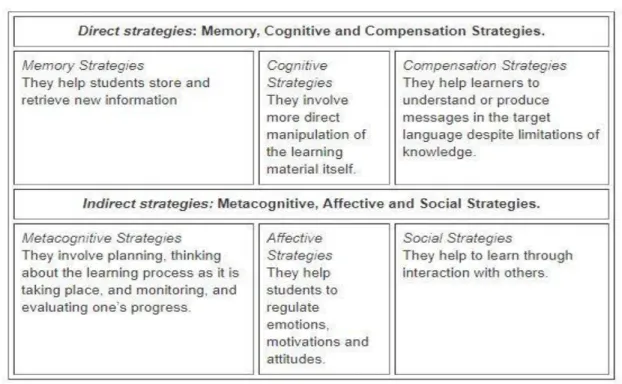
(33) 33. Pometlová claims that: We can use fairy tales already known to children, which would help them in case they do not understand all the words. They just remember the plot they know and so it is easier to guess the meaning of the word. (2006, p.12) Furthermore, fairy tales are an excellent input to use in the classroom. As teachers, we have to be creative in the ways we present and teach vocabulary to students. Fairy tales have various words to be taught and if we take advantage of that, the process of acquiring vocabulary will be easier for the girls. If teachers want students to truly learn vocabulary, they can use some strategies like the images of the fairy tale or their body language. In this way students will understand the meaning of the words that are incorporated in the new vocabulary (Pometlová, 2006). It is important to never forget that we are teaching children and we need to be careful with the way we approach the new topic. It is possible to use funny and creative strategies in order to achieve the goal of acquisition of vocabulary.. Cognitive strategies Cognitive strategies are a means that a person uses in order to successfully achieve the acquisition of a topic. Learning is a cognitive process that develops in different ways and within different time periods according to each individual. Thanks to the diverseness of the learning process, there are some strategies that help with the development of this process. One of the authors that has expounded upon this topic is Rebecca Oxford. She implemented a division of cognitive strategies: Direct and indirect strategies. According to, Ehrman and Oxford, cited in Lee (2010, pag. 140): “Direct strategies are specific ways that involve use of language, subdivided into memory, cognitive and compensation strategies. Indirect.
(34) 34. strategies do not directly involve using the language, but they support language learning and are further divided into metacognitive, affective, and social strategies,” These strategies can be a guide for the teacher and for the students. In other words, when a person is able to know which strategies suit the best for his or her learning process, this person will have a meaningful advantage in order to enrich his or her knowledge. According to (Armbruster, Lehr, & Osborn, 2001, pag.8) cited in Hanson and Padua “For example, students can learn vocabulary indirectly when they engage in conversations with others, through read alouds, and through independent reading”, the use of these exercises will increase not only the acquisition of vocabulary but also will help the interaction between the girls, this interaction will be possible with the new words or structures learned. With this it will be possible to have a learning procces that involves teamwork. Moreover, as stated by (Armbruster, et al., 2001, pag.8) cited in Hanson and Padua “Students can learn vocabulary directly when teachers target individual words and promote word-learning strategies”. In the classroom it is important to capture the attention of the students with different activities that can help them to figure out the meaning of a word and the use of that word in a particular situation..
(35) 35. To have a clearer view of these kinds of strategies it can be found in the table below with the differences: Table 1: Oxford’s strategy classification system (1990).. Retrieved from Garrido Barra.C.G (2008). Developing Language Learning Strategies.ISSN 1755-9715. Vocabulary acquisition in children and the skills they develop with it. Children are beings that by nature are very sensitive and to teach them a second language, care must be taken with how they approach different topics. It is not for this that we should devalue what children are capable of learning. For instance, the purpose of this study is to help girls through something that is of their personal taste (fairy tales), which can create a better proficiency in the foreign language. Also, they may improve on the four.
(36) 36. basic skills for learning a foreign language.. Listening and speaking These skills go hand in hand because through these two skills, the hearing is adjusted to new words and when students have clear not only sound, pronunciation and meaning, it will be easier for children to use this word or sentence in a communication. In accordance with (Agustín and Barreras 2007, pag.9): “The process of vocabulary acquisition takes a special character when young learners are they recipients of the instruction”. It is important to be aware of how they are listening to and understanding the words because if we as teachers pronounce something in a wrong way this mistake can be implanted into the minds of children; which would lead to future problems in their communication.. Reading and writing Sometimes children only like to stay in the stage of listening and repeating but this is not good because students are limiting themselves to not put in practice all their skills in order to have a better English level in all possible ways. As specified by (Pikulski and Templeton 2004, pag. 2): “Young children naturally learn to communicate through listening and speaking. In order to make the transition to communicating through reading and writing, they need a large meaning vocabulary and effective decoding skills”. In other words, children are capable of enhancing all the skills but we have to be smart with the kind of activities we proposed as teachers in a classroom. It is helpful for them, to have the possibility to try to read and give them the opportunity to write about what they understood. In this manner, children will continue increasing their liking for the different topics..
(37) 37. This chapter presented the state of the art and theoretical constructs of this project. Some previous investigations about the acquisition of vocabulary through fairy tales were explored. Then, the principal constructs of the project: vocabulary, vocabulary acquisition, fairy tales as EFL learning tool and cognitive strategies, vocabulary acqusition in children and the skills they develop with it, were explained. Those constructs were written to give validation to this study. In the next chapter, the methodological part with its different elements will be highlighted..
(38) 38. III Research Design Introduction In this chapter the reader will find the paradigm and type of the study, the data collection instruments, the data analysis, the analysis of the instruments and the ethical issues. Paradigm of the research The paradigm of research for this project is the qualitative research since it allows for the analysis and description of a problem in a comprehensive and real way. Besides the qualitative research, the causes of that event or problem that is happening at that time in that population would be determined (Hancock, Ockleford, and Windridge 2007). The information obtained during the investigation could be helpful for future social changes that can generate new and positive ideas to research many issues in the schools. Furthermore, the type of study that will brace this project is the action research since it allows reflecting and taking measures to help with a social situation. In the action research the researcher involves himself in the project as much as possible to try to understand the circumstances of the problem. Ferrance (2000) claims that: Action research can be a worthwhile pursuit for educators for a number of reasons. Foremost among these is simply the desire to know more. Good teachers are, after all, themselves students, and often look for ways to expand upon their existing (pag.13). In the action research, it is important to follow five steps (Ferrance, 2000). The researcher must limit the problem in order to focus on one problem at a time. The next is the data collection and organization. In this step the researcher must find.
(39) 39. the best instruments to gather the information that is going to be necessary in the project. The third step is the interpretation of the data. In this step it is required to point out the main topics or categories that will develop in the whole project. Then, it is time to gather the evidence. In this part, the innovation will take place; the researcher needs to make a change for the problem. Finally, it is mandatory to evaluate the results. Something that is essential is to give the reason of the success or failure of the project. All these five steps are a guide to enhance and develop the proposal in a more effective way. Data Collection Instruments All in all, it is worth mentioning the instruments that will be used during the intervention. These instruments will be the basis and support for the proposal. The instruments will be field notes, surveys and artifacts. Field notes Field notes are the written considerations in which I wrote all the data that is important to make evident the progress of the students. In these field notes all the actions, dialogues and ideas between the girls were relevant for the study. The selection of decisions was a fundamental point in the field notes as what I eventually decided to write had an immense impact in the proposal (Wolfinger, 2002). The field notes were useful to keep all the information and progress of the students in order as well as the activities. Example, (Appendix A). Surveys: At the beginning of the study, a survey was done in order to obtain the diagnosis of the girls about their environment and English level. Now, for the final step of the proposal another survey took place to determine the results of this proposal. (Freeman, 1998, page.
(40) 40. 94) defined surveys as: “Sets of written questions focusing on a particular topic or area, seeking responses to closed or ranked questions/options and/or open-ended personal opinions, judgments or beliefs. Used in non-face-to-face situations”. As it can be seen a survey is a meaningful and practical instrument because through it, the participants can have a clear exercise to put into practice with the different topics that they learnt during this study. Examples of the. surveys can be found in chapter five.. Artifacts The artifacts are all the types of products that the students will be making during the study. The different artifacts can give more elements to be considered in the process of the research. An artifact will address all the manifestations and efforts that the students will be doing in the project and it will give light to the study (Kalmbach and Carr, 2006). With the artifacts, it was possible to have more elements to take into consideration in the development of the proposal. During this study, one of the artifacts was the glossaries that the girls did during the progress of this proposal. The idea of making a glossary came out as a way of giving the girls the opportunity to continue learning all the words by practicing with this tool in the classroom and in their house. Other artifacts were worksheets for each fairy tale, photographs of some of their exercises; these artifacts were a good material for them not only for learning the words but also to give them the chance to be able to communicate with each other. Examples of the different artifacts can be found in chapter five..
(41) 41. Data analysis methodology For the analysis of the data, a priori analysis was used because with this approach the research has the opportunity to establish the categories beforehand and then the researcher can find those categories in the data instruments. According to (Freeman, 1998, pag. 103): “in this approach you are looking for things you have determined in advance”. The priori analysis marks the way the investigation will be carried out to have a good development of the elements that have been emerging with time in the proposal. Moreover, the a priori analysis gives order and accuracy to the study. Conforming to Freeman (1998):. Common form of analysis within an a priori approach involves measuring quantities or counting instances in the data. Determining the quantity of items in particular categories entails using numbers as a way to name what is in the data. When numbers are counted and compared to the total possible in the category, they become frequencies. Surveys and questionnaires provide perhaps the clearest examples of data collection methods that can be analyzed quantitatively; however, virtually all data have quantitative dimensions and can be analyzed accordingly (pag. 105). Even though, as it is mentioned before, the quantities has a huge effect with the a priori analysis in a study; for this study the information attained from those quantities will have an important effect on the analysis of the different categories and findings during this proposal. In addition to that, the triangulation is a process that gives credibility to the project and it can be used to give more reasons to continue working in the future with this idea (Freeman.
(42) 42. 1998). Moreover, the triangulation is the moment in which the researcher will put all the instruments together and a result from those instruments will be a relevant finding for the project. With the triangulation all the data will be analyzed and it will give validity to my proposal. Futermore, Freeman (1998):. At its most basic level, triangulation is about what makes something sturdy, able to support its own weight, and therefore dependable. In the physical world, things that are "triangulated" are better balanced and physically more dependable than things that are not, because they are able to stand by themselves (pag.96).. For the aim of this project it will be used the metodological triangulation. This kind of triangulation is the one that suits better to my proposal because I will apply several data instruments to work on the resolution of my research question. The methodological triangulation functions with a lot of information taken from the diferente data instrument to realice if the idea of project was sucessful or not. Table 2 Description of the Units of Analysis Units of Analysis Vocabulary acquisition. Categories. Subcategories Indicators. Fairy Tale vocabulary acquisition. Word recognition. I identify the words from the different fairy tales.. Using words in context. I recognize and use the words from the fairy tales taking into account some instructions..
(43) 43. Communicative purposes. Vocabulary Writing use for sentences communicative purposes Having simple exchanges. I am able to write sentences following a structure.. I use the vocabulary to share some sentences in English with my classmates.. Participants The participants of this project were a group of Colombian fourth graders at Liceo Femenino Mercedes Nariño. The group was composed of thirty students with ages from 9 to 11. The sampling for the data analysis was 26 participants (Appendixes from A-Z7) because that was the number of students that obtained permission from their parents to be part of the research.. Ethical issues For this project, the parents of the girls were asked for their informed consent due to the fact that the girls are not yet adults; this consent allows me to observe the girls and to develop the proposal in order to have a better process betwen the researcher and the students. Likewise, the respect of the identity of each student was always something essential for the development of the project. No girl´s name has been or will be mentioned in this study. This created a bond of trust between the researcher and students..
(44) 44. In this chapter, the type of the study was shown as well as the data collection instruments, the data analysis, the analysis of the instruments and the ethical issues. All previous elements will be an aid to the development and application of the project. Next, chapter four will be presented to give the reader a general view of the pedagogical intervention..
(45) 45. IV Pedagogical Intervention and Implementation. In this chapter one will read about the pedagogical intervention, the vision of language and of learning, the instructional design, the stages of the study and the significance for the proposal and the conclusion. Vision of language and learning Vision of language The vision of language was based on (Tudor, 2001, cited in Chaparro, W. and Uribe, L. (2015) and his theory that the vision of language is self-expression. As it was developed throughout the proposal, the main idea was that with the acquisition of vocabulary through fairy tales, the girls will be able to express their ideas, feelings and thoughts and thus they will be able to continue developing and putting in practice more and more the communicative process in the foreign language. Also, the girls having the possibility of self-expression will allow them to strengthen the relationship between themselves.. Vision of learning The vision of language was based on (Tudor, 2001, cited in Kumarand, S and Nazneen, S. (2016) and his definition of vision of language as a habit formation: developing automaticity. With the passing of the activities, the girls commenced incorporating the vocabulary in part of their daily and school life. The idea was that each girl develops the habit of relating each word with their fairy tale so that it also becomes part of their daily life..
(46) 46. Instructional design Lesson planning The lesson planning was based on (Jensen, 2001, cited in Celce-Murcia, M. (2001). Jensen (2001): “A lesson plan is an extremely useful tool that serves as a combination guide, resource, and historical document reflecting our teaching philosophy, student population, textbooks, and most importantly, our goals for our students (p. 443)”. The lesson plans in this project were a guide for the teacher. Each lesson plan allowed the teacher to be clear as to which steps are necessary to achieve the objective of the class. A lesson plan gives security to the teacher since it generates strategies to be applied in the classroom. Good teachers always prepare for their classes because it demonstrates to the students that the class has a solid foundation and will be of great help to them in their school life. One of the lesson plans that were carried out in this study can be found as (Appendixe E).. According to the objectives of this project the following stages were a vital element for the development of the project through the activities in each lesson.. Stage one: knowing the princess and their world In this stage, the main resource were fairy tales. All the fairy tales were selected because they are well known by the girls. During the first part of the implementation, in order to approach the girls to the new topic, the use of several images was necessary. Group work was the key strategy and thus, the word recognition was easier for them..
(47) 47. Moreover, big group, individual and couples were the instructional setting. The teacher was the planner and manager of the class. These functions allowed the topics to be explained and the girls could ask for new vocabulary. In this stage the fairy tales worked as the main language facilitator.. Identifying students' recognition of the fairy tale was the objective of this first stage, therefore they started to work with glossary and in the classroom a lot of worksheets were made. Taking into account all the images, activities, glossaries and worksheets the fairy tales used were: Cinderella, The Sleeping Beauty and the Beauty and the Beast.. Stage two: Princesses in context. Once the students were adjusted to the class and they were already adapted to the words recognition, they started working in more activities similar to the previous ones. Also, group work was still present in some activities but the students began an individual work. The goal was focus on the student’s words recognition using fragments, structures, figures and photos. In this phase the students used fairy tales like Snow White and The Little Mermaid.. The objective of this second stage was to identify students' words recognition from fairy tales. In order to achieve the goal, they continued to use the glossary for word recognition. Writing sentences was a fundamental part in this stage because the students were following.
(48) 48. a given structure to write a sentence about the fairy tale. In this case they again used all the fairy tales, including the previously used.. Stage three: Let´s try to write and speak In the previous stage the recognition and the writing skill were the principal focus. This third stage’s target was reinforcing all the words about fairy tales, writing and speaking, therefore they not only learned the vocabulary but also used it for another purpose (writing and speaking).. In respect of the activities, more activities for the whole group were made, activities were done with the theme of the princesses and thus, they had to talk about it in English, they were allowed to use the structures learned previously. The main goal in the three stages was to know the impact of using fairy tales as a pedagogical strategy to facilitate vocabulary acquisition in English of a group of 4th graders.. Timeline. Stage. Topics. Time. knowing the. Names, places, clothing, colors.. Feb, march, april, may. princess and her world.
Figure

Documento similar
In the preparation of this report, the Venice Commission has relied on the comments of its rapporteurs; its recently adopted Report on Respect for Democracy, Human Rights and the Rule
The independent variables that best relate to the bulk density of metallic pieces produced by selective laser melting and are therefore included in the dimensional analysis
In the “big picture” perspective of the recent years that we have described in Brazil, Spain, Portugal and Puerto Rico there are some similarities and important differences,
Keywords: iPSCs; induced pluripotent stem cells; clinics; clinical trial; drug screening; personalized medicine; regenerative medicine.. The Evolution of
Astrometric and photometric star cata- logues derived from the ESA HIPPARCOS Space Astrometry Mission.
The photometry of the 236 238 objects detected in the reference images was grouped into the reference catalog (Table 3) 5 , which contains the object identifier, the right
Through picture books we can work with Co- yle’s (2005) 4 C’s: The C of content, because the images incite the use of vocabulary; the C for communication, as there is an interaction
The broad “WHO-ICF” perspective on HrWB provided at Figure 1 has a significant implication also for HRQoL. The develop- ment of ICF and its conceptual approach has challenged to
