
Environmental strategy in the global banking industry within the varieties of capitalism approach: The moderating role of gender diversity and board members with specific skills
31
0
0
Texto completo
(2) ENVIRONMENTAL STRATEGY AND SUSTAINABLE DEVELOPMENT IN THE INTERNATIONAL BANKING INDUSTRY WITHIN THE VARIETIES OF CAPITALISM APPROACH: THE MODERATING ROLE OF GENDER DIVERSITY AND BOARDSPECIFIC SKILLS ABSTRACT This research sets out to analyse environmental disclosure in the banking industry considering the framework of the varieties of capitalism. This approach is concerned with the way companies interact strategically to resolve the coordination issues arising from their operations, and it is supported by prior research. This is a fruitful perspective for exploring the association between country-level factors and disclosure by firms, as in the case of environmental reporting. This research is based on an international sample of countries operating in coordinated market economies (CMEs) and liberal market economies (LMEs). The results obtained show that financial institutions operating in CME countries are involved in more environmental matters than banks domiciled in LME cultures. As regards the moderating variables, the evidence shows that those women on the boards of banks in CME countries encourage the reporting of environmental information, as predicted. Nonetheless, and contrary to our expectations, members with specific skills on boards of CME cultures do not favour the greater disclosure of environmental information compared to banks operating in LME contexts. Keywords: Environmental disclosure, banking industry, varieties of capitalism, coordinated market economies, liberal market economies, gender diversity, board-specific skills.
(3) 1. Introduction In recent years, the banking industry has become the global economic powerhouse, as it operates with companies belonging to other business sectors, public organisations, and other ambits of society. At the same time, financial institutions have to face their environmental responsibility and pressures from stakeholders, given that they lend to companies that contaminate and produce products that are harmful to the environment (Simpson & Kohers, 2002; Krasodomska, 2015). In addition, financial institutions consume environmental resources, such as paper and energy, and generate waste, so their policies on their environmental impact are an important aspect of their actions involving corporate social responsibility (CSR). Thus, banks, like other business sectors such as energy, manufacturing or chemicals cannot ignore environmental issues, and need to accept their environmental responsibility in order to achieve their own goals of an economic nature, improve their reputation, and record a better operating performance. According to Carnevale and Mazzuca (2014), the environmental policies pursued by banks are part of their competitive advantage. With a view to explaining the importance of these environmental policies, we need to understand the different institutional contexts in which banks operate. The framework of varieties of capitalism may explain the institutional differences and similarities across the economies of different countries. In this regard, Hall and Soskice (2001) contend that this approach focuses on the strategic interactions of the players involved, and the ways in which they are conditioned by the different institutions with which they interact, differentiating between coordinated market economies (CMEs) which are stakeholder-oriented, and liberal market economies (LMEs), which are shareholder-oriented. Based on the above reasoning, this research seeks to analyse environmental disclosure by the banking industry within the framework of varieties of capitalism. Furthermore, we also explore the moderating role that board gender diversity and board specific-skills within this framework have on environmental reporting, given that this approach addresses different contextual dimensions: the role of the state in the economy, the type and development of financial markets, the nature of the educational system and labour market, and shareholder and stakeholder orientation. Our research therefore contributes to the state-of-the-art in several ways. Firstly, we study an array of institutional contexts within the framework of varieties of capitalism worldwide, differentiating between CMEs and LMEs. By considering the different contexts within which banks operate, we gain a more objective view of the importance of institutional.
(4) contexts in the disclosure of environmental information within the banking industry. In addition, we conduct a more global analysis of the situation compared to other prior studies that refer solely to a specific country (Vormedal & Ruud, 2009). Secondly, we analyse a subject that thus far has been little explored, namely, the disclosure of environmental information in the banking sector. Banks’ interest in this matter has increased in recent years, as they are concerned about the environmental risks arising from their business and by the management of their lending operations, as they should preferable finance only those activities that do not pose a threat to the environment and which work to help the world advance toward greater environmental sustainability. Financial institutions are more exposed to public scrutiny, mainly that of their stakeholders, as banks have been apportioned much of the blame for the global financial crisis and for the deterioration in the environment by financing contaminating companies. To avoid outside pressures and safeguard their reputation, financial institutions in CME countries will be more engaged with social and environmental stakeholders’ demands through a higher disclosure of voluntary information, such as environmental matters, given that these cultures are more oriented toward stakeholders. Our evidence confirms this argument. Thirdly, our research includes two moderating factors: board gender diversity and board-specific skills. As regards board gender diversity, it may affect the environmental disclosure of financial institutions. Nevertheless, an analysis needs to be conducted to discover whether this moderating effect occurs in CME or LME cultures, given that the presence of women on boards may differ between these two types of economies. Our findings support our predictions on the positive moderating role that female directors on the boards of banks in CME cultures has on the reporting of environmental issues. Thus, this research contributes to the state-of-the-art by suggesting that women directors on the boards of banks domiciled in CME countries have an important role to play with respect to environmental disclosure. It seems that female directors in financial institutions become more relevant corporate mechanisms in CME contexts than in LME ones. Focusing on board-specific skills, there may be differences in the terms of educational system and labour market between LME and CME countries whereby board-specific skills behave differently in the disclosure of environmental information within the banking industry. In this regard, and contrary to our expectations, our evidence shows that directors with specific-skills on the boards of financial institutions do not encourage a higher disclosure of environmental information in CMEs compared to LMEs. This finding also contributes significantly to the literature on varieties of capitalism by showing how board-specific skills in varieties of capitalism have little or no impact on environmental reporting..
(5) The rest of the paper is organised as follows. The next section provides the theoretical framework and the research hypotheses. The third section describes the methodology used. The fourth section describes the results, and the final sections lays out the research’s conclusions and its implications. 2. Theoretical framework and hypotheses 2.1. Corporate environmental disclosure in the banking industry and varieties of capitalism Prior studies on environmental matters (Shi, 2004; Liu & Anbumozhi, 2009; Tagesson, Blank, Broberg, & Collin, 2009; De Villiers & Marques, 2015; Gallego-Álvarez, 2018) have excluded financial institutions by arguing that this business sector has a low environmental impact compared to other industries such as energy or chemicals. Albeit with some exceptions (Castelo & Lima, 2006), studies on CSR also exclude the financial sector from their cohorts of companies. Nevertheless, authors such as Thompson and Cowton (2004) maintain that companies in the banking sector may be the facilitators of industrial operations that cause environmental damage, whereby the operations they arrange, which may involve lending or investment policies, may likewise be considered equally sensitive for the environment compared to the direct impacts of companies in contaminating industries. Along these lines, Castelo and Lima (2006) consider that banks may report on their operations in order to ensure that their lending and investment policies do not facilitate those industrial activities that are harmful to the environment. In turn, financial institutions consume large amounts of environmental resources, such as paper and energy, and generate waste. Their policies on how they help to save energy and natural resources and their recycling activities are therefore important aspects of their CSR measures. Tarna (1999) describes this in a study conducted on the environmental information reported by twelve banks. The results obtained suggest that all the reports contained information on aspects related to the energy and materials involved in corporate operations (energy, paper, water, waste, emissions) and on product ecology (management of the environmental risk linked to financial products and specific environmental products, such as ecological or ethical investment products, and the financing of eco-friendly projects and investments). Similarly, Stephens and Skinner (2013) contend that banks are the backbone of the global economy, providing capital for innovation, infrastructures, the creation of jobs, and general prosperity. Moreover, they have an important part to play in society, impacting upon the growth of different industrial sectors. This means that as environmental impacts such as the global warming caused by greenhouse gas emissions become a feature of everyday life,.
(6) banks play a key role in shaping the future, as the companies they choose to finance will be a key component for addressing this environmental issue and ensuring the world economy moves away from fossil fuels and changes over to cleaner technologies. This could mean that banks will only finance companies whose operations do not pose environmental threats and which actively help the world advance toward environmental sustainability. Banks should therefore embrace environmental sustainability not only to generate the associated profits for the global community, but also to achieve their own strategic goals and comply with ever more stringent regulatory requirements (Goss & Roberts, 2011). Furthermore, as Clarkson, Li, Pinnuck, and Richardson (2015) contend, eco-friendlier banks are expected to record a better operating performance. Likewise, Gatzert (2015) considers that banks’ implementation of actions that respect the environment may enhance both their reputation and customer loyalty, which should lead to lower lending costs and greater financial stability. What’s more, a greater awareness of environmental issues avoids the negative reputation of being associated with borrowers that cause environmental damage (Weber, 2012), and may mitigate the loss of reputation that the recent financial crisis has prompted in the banking system as a whole. Considering the advantages that environmental policies have for the banking institutions that apply and disclose them, a theory needs to be established that upholds this environmental reporting. Accordingly, socio-political theories (Carnevale & Mazzuca, 2014) are based on the notion that a banking institution is an economic entity that cannot detach itself from the social context in which it exists and operates, and through which it is formed and influenced, and to survive it needs to garner its stakeholders’ backing and approval (Clarkson, 1995), whereby environmental disclosure is part of the reporting process needed to create and maintain this support. Environmental reporting is therefore a tool at a financial institution’s disposal for attracting support within its institutional context, and environmental disclosure practices are, in tun, influenced by the context in which each institution operates. According to Brammer, Jackson, and Matten (2012), institutional theory provides a suitable theoretical background for understanding and explaining how and why environmental disclosure adopts different guises in different countries. This theory contends that the institutional environment puts pressure on financial institutions to adopt specific behaviours or practices for achieving greater legitimacy (Meyer & Rowan, 1977). As institutional contexts tend to differ across countries or groups of countries (Deeg & Jackson, 2007) and the pressures exerted by institutions could differ (Aguilera, Williams, Conley, & Rupp, 2006; Jamali, Sidani, & El-Asmar, 2009), environmental disclosure could also differ across.
(7) countries (or groups of countries). Aguilera and Jackson (2003) argue that institutions can also create opportunities for specialization around various economic logics, and therefore produce comparative institutional advantages for different business systems (Whitley, 1999) or varieties of capitalism (Hall & Soskice, 2001), where institutional environments are different. Specifically, the institutional environment addressed in this research is what Hall and Soskice (2001) refer to as varieties of capitalism. According to Deeg and Jackson (2007), varieties of capitalism provides a new framework for understanding the institutional similarities and differences found across different economies, and focus mainly on how companies in different business sectors behave, including the banking industry, and how they interact within a particular institutional structure. The main scholarly emphasis in this field is placed on the distinctive nature of national institutional contexts, where the banking sector operates in different ambits and is subject to the influence of other social networks, such as labour unions and regulatory authorities. Thus, the institutional contexts within the system of varieties of capitalism is focused on coordinated market economies (CMEs) and liberal market economies (LMEs) (Hall & Soskice, 2001; Vitols, 2001; Amable, 2003). In LMEs, the rights of shareholders and creditors have a significant relevance in comparison to other stakeholders. Furthermore, this type of economy is characterized by market dominance and the premise of ownership rights (Hall & Gingerich, 2009). In CMEs, the state prevails, and the interests of organizations such as business associations and labour unions play an important role (Kang & Moon, 2012). Countries operating in CMEs are socially oriented and focus on satisfying the needs of a wide range of stakeholders, such as employees, suppliers, and shareholders (Dore, 2000; Hall & Gingerich, 2009). It is important to note that the system of varieties of capitalism is based on different contextual dimensions: on the one hand, the role of the state in the economy, as it may influence a country’s economy in several ways, either directly or indirectly, although among the different models of state we can single out LMEs and CMEs as the subject of our study. On the one hand, a type of regulatory state whose aim is to uphold legislation, and in which the protection of property rights is important, The United States is a good example of an LME country. On the other hand, there is the welfare state in which the wellbeing of its citizens is paramount from both an economic and social perspective. This type of CME country corresponds to, for example, Norway and Finland in Europe (Carney & Witt, 2012; Whitley, 2005; Fainshmidt, Judge, Aguilera, & Smith, 2018).
(8) A further dimension involves the type and development of financial markets (Whitley, 1999). We may therefore identify countries such as the US (LME), where the financial system is based on the capital market, and all enterprises turn to that market for their financing. In this case, transparency and accountability to investors is highly important (Ioannou & Serafeim, 2012; Aguilera & Jackson, 2003). On the other hand, there are countries such as Germany and France (CMEs), where banks are the ones that lend to organisations. The financial system in these countries does not therefore involve the capital market, as instead financial institutions are the ones providing capital. Salient aspects of these kinds of countries are that they tend to have small and little developed capital markets, and financing through bank loans involves strict capital supervision and contingent control of the company, which leads to long-term capital commitment (Aguilera & Jackson, 2003). The nature of the educational system and the labour market are also considered differentiating features in LME and CME countries. Thus, Matten and Moon (2008) contend that organisations in Europe have shown a greater propensity to pursue collective interests through national business federations or associations, which may provide greater benefits for employees, such as improved health and safety and better employment policies. At the same time, this may increase general awareness within society, as the workforce may act as an ambassador for the company’s social and environmental policy. According to Hall and Gingerich (2009), the presence of this close link may indicate a high level of industry-specific skills. Besides the above aspects, the shareholder and stakeholder orientation should be considered within our theoretical framework, because as Desender and Epure (2015) posit, the interactions in the shareholder model (LME), also referred to as market-oriented, are transactional. This model is based on the market’s strength for properly assigning resources within companies, and involves major incentives and outside control systems for disciplining managers and aligning their interests. According to Kang and Moon (2012), companies identified by this variety of capitalism focus on the interests of investors and managers as key players. By contrast, the stakeholder-oriented system (CME), also referred to as the internal model, focused on banks or credit-based financial institutions, involves debt financing and closely interconnected relational networks across companies, their commercial partners, and financial institutions. According to this conceptual framework of varieties of capitalism, considering different institutional contexts and shareholder and stakeholder orientations, this study explores whether operating in either an LME or CME country has an impact on.
(9) environmental disclosure in the banking industry, considering the moderating factors to be female directors on boards and board-specific skills. 2.2. Research hypotheses According to Clarkson (1995), environmental disclosure is a tool at a bank’s disposal for obtaining support within its institutional context. Environmental reporting practices are, in turn, influenced by the context within which that bank operates. Thus, the attitude of managers in the banking industry toward the disclosure of environmental practices may be affected by the shareholder or stakeholder orientation of a country’s economy. According to Desender and Epure (2015), countries with an LME base themselves on the strength of the market for assigning resources; in other words, the market economy prevails, and these are shareholder-oriented economies. Kang and Moon (2012) argue that companies identified by this variety of capitalism focus on the interests of investors and managers as key players. By contrast, countries with CMEs are stakeholder-oriented and bank lending becomes extremely important. Indeed, companies operating in CMEs have debt financing and relational networks that are closely interconnected across companies, their commercial partners and financial institutions. Managers that wish to show off their ethical and moral values to their company’s stakeholders become more involved in environmental matters, as will be the case in CME countries. By contrast, when managers decide to pay more attention to shareholders’ demands, they will be less involved in environmental matters, as will be the case in LME countries. Using the framework of varieties of capitalism, various studies have focused on analysing how CMEs and LMEs influence environmental disclosure. In CMEs, social and environmental disclosure aims to maintain the social order or the status quo necessary to sustain the business by establishing relationships among different stakeholders (Brammer et al., 2012). Therefore, companies in CMEs use environmental disclosure as a form of dialogue with stakeholders, and include stakeholders in the process of obtaining and communicating information (Kang & Moon, 2012; Campbell, 2007). In sum, CMEs recognise that stakeholders play an important role, whereby banks’ greater care for the environment may be reflected in their financing of more sustainable and more competitive companies with a greater capacity for stakeholder influence (Barnett, 2007). In addition, Rees and Rodionova (2015) consider that firms in this kind of institutional environment (CME) face pressures to participate in environmental practices. Along these same lines, Carnevale and Mazzuca (2014) have conducted a study on the banking industry in thirteen countries in Western.
(10) Europe, classified according to the varieties of capitalism approach. The results obtained show that there is more environmental reporting in CMEs than in LMEs, with the latter being traditionally characterises by a market-based economy with corporate responsibility oriented mainly toward shareholders (Vitols, 2001). In these countries, the financial system (based on the equity market) and industrial relations (based on markets) create a national system characterised by shareholders’ value. In an LME, management is particularly sensitive to shareholders’ demands, given the major dependence on the equity market as the source of business financing. Jackson and Apostolakou (2010) contend that the banks operating in LMEs, where shareholder protection is important, are more likely to adopt responsibility practices related to economic and corporate governance dimensions, such as disclosure and transparency toward shareholders. The same reasoning is followed by Kang and Moon (2012), who consider that banks operating in LME cultures tend to align themselves more with the interests of shareholders than those of stakeholders. This means there is less disclosure of environmental information in LME countries, as more importance is given to matters of corporate governance and economic aspects. In short, banking firms in CMEs are expected to use environmental disclosure as a tool for strategic coordination in multiple spheres and, therefore, in the relationships with the equity market and with stakeholders. In LMEs, we expect environmental disclosure to be less significant. Taking into account the differences between the varieties of capitalism described above, we posit the following hypothesis: Hypothesis 1: Environmental disclosure in the banking industry is higher in coordinated market economies than in liberal market economies. 2.3. Moderating effect of board gender diversity There is an increasing number of studies analysing the influence female board directors have on environmental disclosure. In this regard, prior research (Pucheta-Martínez, Bel-Oms, & Olcina-Sempere, 2016; Rogelberg & Rumery, 1996) also shows that the presence of female directors on the board can improve a company’s quality of financial reporting and the promotion of good business practices and strategic decisions. Within the context of the varieties of capitalism, the analysis of how the presence of women on the boards of banks galvanises the disclosure of environmental information merits our attention. We predict that female directors on the boards of financial institutions operating in CME cultures will affect the reporting of environmental issues in a different way to LME countries, as the role of women directors in both contexts is different..
(11) Prior studies (e.g., Robinson & Dechant, 1997) reveal the importance that women’s presence on boards has acquired in recent years, given their difference to men in terms of mindsets and communication and leadership styles (Pucheta-Martínez, Bel-Oms, & OlcinaSempere, 2018). Huse and Solberg (2006) contend that women feel more committed to society and engaged with it, and create a good atmosphere at board meetings. Women’s involvement in management may therefore have a positive impact on an organisation’s socially responsible behaviour (Barako & Brown, 2008; Jizi, 2017). Considering environmental disclosure to be an example of socially responsible behaviour, prior studies show that women on the board accept roles that are related to matters involving the environment and sustainable development, as these kinds of positions are more closely aligned with their roles in society (Liao, Luo, & Tang, 2015). For the banking industry, which plays a crucial role in promoting sustainable development through financial intermediary services, the prior evidence regarding the role of women on boards of directors is consistent with previous approaches. Accordingly, Barako and Brow (2008) stress that the presence of women on the board is positively and significantly correlated with financial institutions’ disclosure of social and environmental information. This will enable these institutions to legitimise their activities and business in line with the expectations of as many stakeholders as possible. Within the framework of the varieties of capitalism that focus on CMEs and LMEs, it is important to note that prior studies have reported that women on the board promote more environmental disclosure in step with their greater presence on the board, especially when they are more than three (Bear, Rahman, & Post, 2010; Webb, 2004). The number of women board members may be deemed pertinent when considering the disclosure of environmental information by firms in the banking sector. Nevertheless, an analysis should be made of the moderating effect that female directors on the boards of financial institutions have on environmental disclosure, depending on whether these institutions are operating in a CME or an LME, as the presence of women on boards may differ between these two types of economy. In this vein, several studies, such as those conducted by Terjesen, Aguilera, and Lorenz (2015) and Grosvold and Brammer (2011), indicate that in countries such as Norway, Sweden or Finland, which have CMEs, there are more women on boards than in countries with LMEs (e.g., UK and US). This means that the greater presence of women on the boards of banks operating in CME cultures will entail greater concern for environmental matters, as indicated earlier, which leads us to formulate the following hypothesis..
(12) Hypothesis 2: The higher reporting of environmental information in coordinated market economies is moderated by board gender diversity. 2.4. Moderator effect of board specific-skills Board specific-skills refer to the members of the board with specific knowledge and experience that render them more effective. For others, such as Johnson, Schnatterly, and Hill (2013), this human and social capital stems from the education, knowledge and experience acquired by these directors outside the firm. In turn, Matten and Moon (2008) argue that there are differences in the educational system and labour market between countries with LMEs and CMEs, which may mean that board-specific skills behave differently in the disclosure of environmental information in the banking industry. Matten and Moon (2008) consider that the educational system in LME countries provides more generic knowledge, whereas the knowledge acquired in CME countries is more specific, and will be of long-term use to the organisation. Along these lines, authors such as Dass, Kini, Nanda, Onal, and Wang (2014) report that certain companies can benefit by appointing board members with specific experience in related industries. Specifically, environmental sustainability is an area that can benefit from the specific expertise of board directors. In companies pertaining to the banking sector, specific human capital will be in a better position to provide guidance on environmental matters, and ensure companies have a better access to resources. It is therefore more likely that they will be able to explain environmental management matters more clearly than a board member without such experience, due to the numerous aspects of environmental issues, such as their complexity, environmental legislation, and the scope of the capital expenditures that the implementation of environmental practices might incur, among other matters. As regards the labour market, which is also considered to be different in LMEs and CMEs (Matten & Moon, 2008), European organisations in countries with CMEs have shown a greater propensity to pursue collective interests through labour unions and workers’ associations. This power of association may therefore exert pressure for obtaining more benefits for employees, focusing more on health and safety provisions, progressive industrial relations policies, and more services in the workplace, and they might put pressure on the community to become more engaged. The workforce may even raise general awareness within society by acting as an ambassador for the company’s social and environmental policies (Hall & Gingerich, 2009). In CME countries, this favours the greater reporting of.
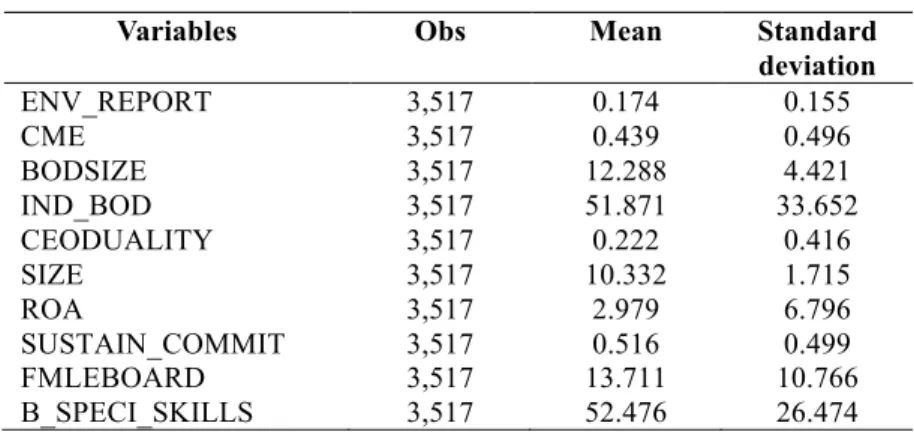
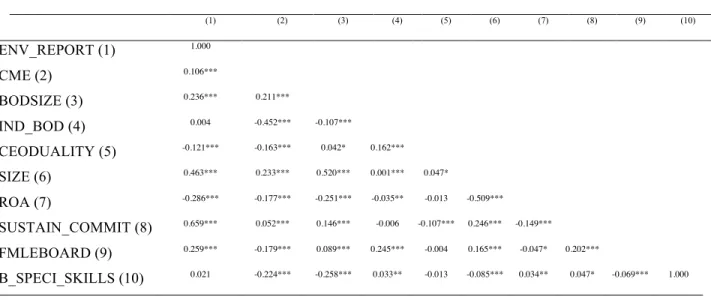
(13) environmental information, as the educational system and labour market inform boards with more specific skills. In view of the above, the following hypothesis is formulated: Hypothesis 3: The higher reporting of environmental information in coordinated market economies is moderated by board-specific skills. 3. Empirical design 3.1 Sample description This research is focused on the banking industry, composing our unbalanced panel data sample a total of 3,517 international financial entities-years observations from 2005 to 2016. As shown in Table 1, these financial entities operate in 34 countries: Australia, Austria, Belgium, Bermuda, Brazil, Canada, Chile, China, Czech Republic, Denmark, Egypt, Finland, France, Germany, Greece, Hong Kong, India, Ireland, Italy, Japan, Luxembourg, Malta, Mexico, Netherlands, Norway, Portugal, Russia, South Africa, Spain, Sweden, Switzerland, Thailand, United Kingdom and United States. The country with the highest presence of banks is United States with a 21.90% of representation, followed by United Kingdom with a 12.10%, Canada with a 9.30% and Australia with 8.30%. On the contrary, the lowest representation is for Luxembourg and Malta with a 0.1% each one, and Czech Republic and Ireland with 0.2% and 0.3%, respectively. Financial, corporate governance, economic and environmental data of all financial entities have been collected from Thomson Reuters database. [Insert Table 1] 3.2 Dependent variable In this research, our dependent variable is the disclosure of environmental information for international financial entities. This variable is denoted by ENV_REPORT. In line with preceding research (e.g., Iatridis, 2013; Helfaya & Moussa, 2017), which uses the aggregation of several items for measuring environmental disclosure, our dependent variable is calculated as the ratio between the aggregation of 54 environmental items considered and the total 54 items. Each environmental item will be coded 1 if the bank reports this item and 0, otherwise. The environmental disclosure score for each financial entity will range from 0 to 1. In Table 2, we show the 54 environmental items analysed, which refers to three environmental groupings: (a) Innovation, (b) resource use and (c) emissions. The environmental items addressed in each classification are provided in Table 2. [Insert Table 2].
(14) 3.3 Independent variable Our independent variable, Coordinated Market Economy, is labelled as CME and is calculated as a binary variable that takes the value 1 if the financial entity is domiciliated in a Coordinated Market Economy and 0, if the financial entity operates in a Liberal Market Economy (e.g., Gallego-Álvarez & Quina-Custodio, 2017; Kumar, Boesso, Batra, & Yao, 2019). For checking our two moderating hypotheses, we use the variables female directors and board specific-skills. The variable female directors is denoted by FMLEBOARD and is measured as the ratio between the total number of women directors on boards and the total number of directors on board (e.g., Grosvold & Brammer, 2011). The variable board specificskills is label as B_SPECI_SKILLS and is measured as the proportion of boards directors who have an industry-specific background or skills (Ramón-Llorens et al., 2018). Our two moderating variables will result of the product of CME with FMLEBOARD (CMExFMLEBOARD) and CME with B_SPECI_SKILLS (CMExB_SPECI_SKILLS). 3.4 Control variables In this research several control variables are considered. The first control variable used is board size, BODSIZE, calculated as the total number of board directors (Calza, Profumo, & Tutore, 2017). The second control variable employed is board independence, denoted by IND_BOD and measured as the ratio between the total number of independent directors on boards and the total number of directors on boards (Iatridis, 2013). CEODUALITY is another control variable used measured as a dummy variable that takes the value 1 if the chairman of the board is also the CEO of the bank and 0, otherwise (Helfaya & Moussa, 2017). Firm size is also controlled, labelled as SIZE and measured as the log of the total assets of the bank (Gallego-Álvarez & Quina-Custodio, 2017). In line with Iatridis (2013), the return on assets (ROA) is also employed. This variable is measured as the operating income before interests and taxes over total assets. The presence of a sustainability committee in the financial entity is also considered as a control variable. This variable is denoted by SUSTAIN_COMMIT and is coded as a binary variable that takes the value 1 if the bank has a sustainability committee and 0, otherwise (Helfaya & Moussa, 2017). Finally, year effects are also controlled, denoted by YEAR and in included in the model as a set of dummy variables. A summary of the variables is provided in Table 3. [Insert Table 3].
(15) 3.5 Methodology To check our main hypotheses, we propose the following Model 1: Model 1: ENV_REPORTit = β0 + β1 CMEit + β2 BODSIZEit + β3 IND_BODit + β4 CEODUALITYit + β5 SIZEit + β6 ROAit + β7 SUSTAIN_COMMITit + ∑ βj YEARt + €i + µit The moderating effect of female directors and board specific-skills on environmental disclosure is tested in Model 2 and 3, respectively: Model 2: ENV_REPORTit = β0 + β1 CMEit + β2 FMLEBOARDit. +. β3 CMEx. FMLEBOARDit + β4 BODSIZEit + β5 IND_BODit + β6 CEODUALITYit + β7 SIZEit + β8 ROAit + β9SUSTAIN_COMMITit + ∑ βj YEARt + €i + µit Model 3: ENV_REPORTit = β0 + β1 CMEit + β2 B_SPECI_SKILLS. it +. β3 CMEx. B_SPECI_SKILLSit + β4 BODSIZEit + β5 IND_BODit + β6 CEODUALITYit + β7 SIZEit + β8 ROAit + β9SUSTAIN_COMMITit + ∑ βj YEARt + €i + µit Where: The random error term (€i + µit) is split up into two elements: the unobservable heterogeneity (firm-specific effects) represented by €i, which is time-invariant and variable among individuals, and the disturbance term (µit) that varies the cross-time and cross-section joint effect. The control of firm-particular effects on environmental disclosure is addressed by considering firm-specific effects. The dynamic panel data estimator of the generalized method of moments (GMM) (Arellano & Bond, 1991; Blundell & Bond, 1998) has been used for estimating our models. With this methodology, the temporal dependency is taken into account by lagging the dependent variable. The GMM estimator is more efficient and consistent than other procedures because the unobservable heterogeneity (€i) is considered in this procedure by incorporating it as an individual effect and by deleting it with the first differences of the variables. The endogeneity is also addressed by the GMM estimator and the estimation bias is mitigated with it as well. The following tests are provided by the GMM estimator: the Wald χ2 test, the Arellano–Bond tests AR(1) and AR(2), and the Hansen test. The model fitness is tested by the Wald χ2 test. The Arellano–Bond test AR(2) allows us to notice the existence or not of a.
(16) second-order serial correlation in the first difference residuals. There is no second-order serial correlation if the null hypothesis of “no serial correlation” (p>0.1) is rejected. Finally, the Hansen test of over-identifying restrictions shows us the fitness of the instrumental variables employed in the estimated models. The rejection of the null hypothesis of “non-correlation between the instruments and the error term” (p>0.1) allows us to confirm that the instruments are appropriate. 4. Analysis of results 4.1 Descriptive statistics In Table 4, we present the mean and the standard deviation of our variables. Our dependent variable, environmental disclosure (ENV_REPORT), is, on average, 0.174. Banks should take more steps in order to increase the reporting of environmental issues. Additionally, the descriptive statistics show that 43.90% of the countries in our sample operate in CME economies, while 56.10% are domiciliated in LME cultures. Board size, BODSIZE, is 12.29 members, on average, 51.87% of the members are independent and the proportion of financial entities with sustainability committees is, on average, 51.60%. The percentage of women directors on boards is, on average, 13.71% and 52.48% of board members have an industry-specific background. Finally, in 22.20% of the financial entities’ boards, the chairman of the board serves simultaneously as CEO of the bank, firm size (SIZE) is 10.33 (expressed in thousands of euros) and the return on assets (ROA) is, on average, 2.98%. [Insert Table 4] The correlation matrix is provided in Table 5. As shown, none of the coefficients is higher than 0.8. In this regard, we can confirm that our findings are free of multicollinearity concerns, in line with prior research (e.g., Archambeault & DeZoort, 2001). [Insert Table 5] 4.2 Regressions analysis In Table 6, we present the findings for Model 1, Model 2 and Model 3. The Wald test is statistically significant for the three models and, therefore, the three models fit well. In the Model 1, we analyse the relationship between financial entities operating in CME countries and environmental disclosure. The variable CME provides a positive and significant sing, as predicted. This leads us to accept the firs hypothesis. This evidence demonstrates that banks domiciliated in CME contexts are more likely to report environmental information than banks operating in LME cultures, consistent with Carnevale and Mazzuca (2014) and Rees and Radionova (2015), who find similar evidence. This finding.
(17) suggests that financial entities operating in CME countries tend to disclose more environmental issues than banks in LME contexts because CMEs are more oriented toward stakeholders. Furthermore, the most important funding for firms operating in CME countries comes from banking industry. In this regard, financial entities’ managers will be interested in safeguarding their reputation and in showing their values and engagement with stakeholders’ needs and interests. The worldwide financial crisis damaged banks’ reputation since society accused them of being, to a large extent, responsible of this crisis. Specifically, the financial crisis hardly hit most CME countries. Additionally, banks reporting environmental information may avoid external pressures, basically from stakeholders. These arguments may support our finding of a positive relationship between financial entities place in CMEs and the reporting of environmental information. In Model 2, we explore the moderating effect of women directors on boards of financial entities in CMEs on environmental disclosure. The variable CME shows a positive sign, but is not statistically significant, and the variable female directors (FMLEBOARD) provides. a. negative. sign. and. is. not. significant. either.. The. interaction. term. (CMExFMLEBOARD) presents a positive sign and is significant from a statistical point of view. This leads us to accept the second hypothesis, as expected, and we can conclude that the presence of women directors on boards of banks operating in CME cultures affects positively the reporting of environmental information. Our result is consistent with Barako and Brown (2008). Female directors in banks’ boards of CME contexts seem to be more engaged with environmental issues and tend to be more sensitive and concern to social and environmental matters than men; maybe because these countries are more oriented toward stakeholders. In this regard, the female’s leadership style differs from that of male and, thereby, it will result in women and men directors behaving in a different way respecting environmental disclosure. In Model 3, the moderating impact of specific-skills of board directors of financial entities in CME cultures on environmental reporting is examined. The variable CME is positive but insignificant, the variable board specific-skills is positive and significant, while the interaction term (CMExBOD_SPECIF_SKIL) is negative and insignificant. The CME and board specific-skills variables behave in a different way when they are considered individually, but when interacting together, there is no effect of the interaction. Members with specific-skills in banks’ boards are more likely to report environmental issues, independently of whether financial entities operate in CME or LME cultures. However, the moderating effect of directors with specific-skills on banks’ board located in CME economies remains insignificant respecting the reporting of environmental information. Therefore, the third.
(18) hypothesis cannot be accepted and we show that board members with specific-skills in financial entities domiciliated in CME cultures are not more likely to disclose more environmental information than board members with specific-skills in financial entities in LMEs, contrary to our expectations. Although in CME contexts public policies on training, human resources in school education and labor market tend to focus on specific-skills, because these economies support the provision of these skills in firms and financial entities in the long term, board specific-skills do not result in a higher reporting of environmental information. Banks in both types of economies, CMEs and LMEs, give preference to other board characteristics different from specific-skills in order to disclose environmental issues. Board members with specific-skills in financial entities’ board are not a determinant for improving the reporting of more environmental matters and, therefore, in relation to environmental issues, members with general skills and experience can be appointed as directors in banks’ boards of both categories of economies. Relating to the control variables, in Model 1 and 2, board size is negative and significant, and CEO duality is positive and significant. The return on assets (ROA) is negative and only significant in Model 3 and the variable sustainability committee (SUSTAIN_COMMIT) shows a positive and significant sign in the three models. 5. Conclusions Environmental disclosure by firms is a relevant strategic decision because this shows, on the one hand, how firms engage with these issues and with stakeholders’ needs and interests and, on the other hand, their orientation and sensitivity toward environmental and social concerns. Specifically, environmental reporting becomes more interesting when it comes from financial entities, given that society, in general terms, blames them of financing polluting industries and of the financial crisis started years ago. However, according to the varieties of capitalism approach, the disclosure of environmental information is higher or lower, depending on where banks operate in CMEs or LMEs economies. In this regard, and drawing on varieties of capitalism perspective, this paper explores whether financial entities domiciled in CMEs economies report more or less environmental information than LMEs contexts, using an international sample of banks operating in different countries. Additionally, the moderating role performed by board gender diversity and board specific-skills in CMEs on the reporting of environmental issues is also examined. Our findings show that banks operating in CME cultures are more likely to disclose environmental matters in comparison to financial entities domiciled in LMEs economies. As.
(19) expected, our evidence also suggests that female directors sit on banks’ boards operating in CMEs encourage environmental disclosure. This result supports the positive and effective role performed by board gender diversity on boards of financial entities belonging to CMEs countries. Contrary to our predictions, directors with specific-skills sit on financial entities’ boards in CMEs do not result in a higher environmental disclosure respecting LMEs. This finding does not confirm the arguments of varieties of capitalism approach, which argues that board specific-skills in banks domiciled in CMEs countries are positively associated with the reporting of environmental issues. The likelihood of disclosing environmental information when banks’ board members have specific-skills is the same in CMEs and LMEs. The findings of our research have several implications. Firstly, our evidence of the positive association between banks operating in CMEs and environmental disclosure contributes to varieties of capitalism literature, since this approach supports this relationship. But, we also contribute to this perspective in another way since our findings also show, in contrast to what it suggests, that directors with specific-skills in banks’ boards operating in CMEs economies are not the most suitable directors for improving environmental disclosure in comparison to LMEs economies. There are no differences between both types of economies in this respect. Thus, this paper encourages other researchers to shed new light into this topic since past empirical evidence is not conclusive. By extending this research to other industries will also let us know more about board gender diversity and board specific-skills in CMEs and LMEs economies. Secondly, our evidence may be useful for policy-makers when regulating board composition, specifically concerning banks’ boards in LMEs countries. The presence of female directors on financial entities’ boards in CMEs countries has a positive effect on the disclosure of environmental information and is higher than in LMEs cultures. Regulators in the latter countries should encourage board gender diversity in banks, given the enhancement of environmental reporting. Policy-makers in both types of economies should go steps in promoting other board characteristics in banks’ boards different from directors with specific-kills. There are no differences between both economies when financial entities’ board have directors with specific-skills on environmental disclosure and these directors do not improve the reporting of environmental issues. Thirdly, stakeholders, specifically shareholders and potential investors, concern with environmental and social issues may find fruitful our evidence since it may help them take decisions regarding investing on certain banks, or pressuring those financial entities which do not commit with environmental concerns. Banks may avoid a negative reputation in case of financing pollution industries if they show a greater orientation and sensitivity toward environmental matters (Weber, 2012)..
(20) Finally, managers operating in CMEs and LMEs economies might decide to implement changes in banks’ boards regarding the presence of female directors and the appointment of members boards with specific-skills on them, basing on our evidence, if they were interested in improving environmental disclosure. Some future research lines may be derived from this paper. First, we encourage to extend this research to other varieties of capitalism different from CMEs and LMEs. Second, researchers may examine other moderating roles in CMEs and LMEs economies such as the presence of environmental or sustainability committees or the power of some institutional shareholders. Finally, it would be interesting to explore the role of banks in varieties of capitalism concerning other voluntary disclosure such as CSR issues or different dimensions within environmental information. References Aguilera, R. V., & Jackson, G. (2003). The Cross-National Diversity of Corporate Governance: Dimensions and Determinants. Academy of Management Review, 28, 447–465. Aguilera, R. V., Williams, C., Conley, J., & Rupp, D.E. (2006). Corporate Governance and Social Responsibility: A Comparative Analysis of the UK and the US. Corporate Governance: An International Review, 14(3), 147-158 Amable, B. (2011). Morals and politics in the ideology of neo-liberalism. Socio-Economic Review, 9, 3–30. Archambeault, D., & DeZoort, F. T. (2001). Auditor opinion shopping and the audit committee: An analysis of suspicious auditor switches. International Journal of Auditing, 5, 33-52. Arellano, M., & Bond, S. (1991). Some tests of specification for panel data: Monte Carlo evidence and an application to employment equations. The Review of Economic Studies, 58(2), 277-297. Barako, D.G., & Brown, A.M. (2008). Corporate social reporting and board representation: Evidence from the Kenyan banking sector, Journal of Management and Governance, 12, 309-324. Barnett, M. L. (2007). Stakeholder influence capacity and the variability of financial returns to corporate social responsibility. Academy of Management Review, 32(3), 794–816..
(21) Bear, S., Rahman, N., & Post, C. (2010). The impact of board diversity and gender composition on corporate social responsibility and firm reputation. Journal of Business Ethics, 97(2), 207–221. Blundell, R., & Bond, S. 1998. Initial conditions and moment restrictions in dynamic panel data models. Journal of Econometrics, 87, 115-143. Brammer, S., Jackson, G., & Matten, D. (2012). Corporate social responsibility and institutional theory: New perspectives on private governance. Socio-Economic Review, 10, 3–28. Calza, F., Profumo, G., & Tutore, I. (2017). Boards of directors and firms’ environmental proactivity. Corporate Governance and Organizational Behavior Review, 1 (1), 52-64. Campbell, J. L. (2007). Why would corporations behave in socially responsible ways? An institutional theory of corporate social responsibility, Academy of Management Review, 32, 946–967. Carnevale, C., & Mazzuca, M. (2014). Sustainability Reporting and Varieties of Capitalism, Sustainable Development, 22, 361–376. Carney, R. W., Witt, M. A. (2012). The role of the state in Asian business systems. http://papers.ssrn.com/sol3/papers.cfm?abstract_id=2188887. Castelo, M., & Lima, L. (2006). Communication of corporate social responsibility by Portuguese banks: A legitimacy theory perspective. Corporate Communications: An International Journal, 11 (2), 232-248. Chan, C.J., & Welford, R. (2005). Assessing corporate environmental risk in China: an evaluation of reporting activities of Hong Kong listed enterprises. Corporate Social Responsibility and Environmental Management, 12 (2), 88–104. Clarkson, M.B.E. (1995). A stakeholder framework for analyzing and evaluating corporate social performance. The Academy of Management Review, 20 (1), 92–117. Clarkson, P., Li, Y., Pinnuck, M., & Richardson, G. (2015). The valuation relevance of greenhouse gas emissions under the European Union carbón emissions trading scheme. European Accounting Review, 24(3), 551–580. Dass, N., Kini, O., Nanda, V., Onal, B., & Wang, J. (2014). Board expertise: Do directors from related industries help bridge the information gap?. Review of Financial Studies, 27(5), 1533–1592. Deeg, R., & Jackson, G. (2007). Towards a more dynamic theory of capitalist variety. SocioEconomic Review. 5 (1), 149–179,.
(22) De Villiers, C., & Marques, A. (2015). Corporate social responsibility, country-level predispositions, and the consequences of choosing a level of disclosure. Accounting and Business Research, 46 (2), 167-195 Dore, R. (2000). Stock Market Capitalism: Welfare Capitalism, Japan and Germany Versus the Anglo-Saxons, (Oxford University Press, Oxford). Desender, K., & Epure, M. (2015). Corporate governance and corporate social performance: The influence of boards, ownership and institutions. Barcelona GSE Working paper series, Working paper nº 730, Graduate School of Economics, Barcelona GSE, Spain. https://papers.ssrn.com/sol3/papers.cfm?abstract_id=2570963. Fainshmidt, S., Judge, W.Q., Aguilera, R.V., Smith, A. (2018). Varieties of institutional systems: A contextual taxonomy of understudied countries. Journal of World Business, 53 (3), 307-322. Gallego-Álvarez, I. (2018). Assessing corporate environmental issues in international companies: a study of explanatory factors. Business Strategy and the Environment, 27 (8), 1284-1294 Gallego-Álvarez, I., & Quina-Custodio, I.A. (2017). Corporate social responsibility Reporting and varieties of capitalism: an international analysis of state-led and liberal market economies. Corporate Social Responsibility and Environmental Management, 24(6), 478-495. Gatzert, N. (2015). The impact of corporate reputation and reputation damaging events on financial performance: Empirical evidence from the literature. European Management Journal, 33(6), 485–499. Goss, A., & Roberts, G. S. (2011). The impact of corporate social responsibility on the cost of bank loans. Journal of Banking & Finance, 35(7),1794–1810. Grosvold, J., & Brammer, S. (2011). National Institutional Systems as Antecedents of Female Board Representation: An Empirical Study, Corporate Governance: An International Review, 19(2), 116–135 Haniffa, R., & Cooke, T.E. (2005). Impact of Culture and Governance Structure on Corporate Social Reporting. Journal of Accounting and Public Policy, 24 (5), 391-430. Hall, P. A., & Solskice, D. A. (2001). Varieties of capitalism: The institutional foundations of comparative advantage. Oxford: Oxford, University Press. Hall, P., & Soskice, D. (2006). Variedades de Capitalismo: algunos aspectos fundamentales. Desarrollo Económico, 45 (180), 17..
(23) Hall, P., & Gingerich, D. (2009). Varieties of Capitalism and Institutional Complementarities in the Political Economy: An Empirical Analysis. British Journal of Political Science, 39, 449–482 2009. Helfaya, A., & Moussa, T. (2017). Do Board's Corporate Social Responsibility Strategy and Orientation Influence Environmental Sustainability Disclosure? UK Evidence. Business Strategy and the Environment, 26(8), 1061-1077. Huse, M., & Solberg, A. G. (2006). Gender-related boardroom dynamics: how Scandinavian women make and can make contributions on corporate boards. Women in Management Review, 21(2), 113–130. Iatridis, G. E. (2013). Environmental disclosure quality: Evidence on environmental performance, corporate governance and value relevance. Emerging Markets Review, 14, 55-75. Ioannou, I., & Serafeim, G. (20129. What drives corporate social performance? The role of nation-level institutions. Journal of International Business Studies, 45 (9), 834-864. Jackson, G., & Apostolakou, A. (2010). Corporate social responsibility in Western Europe: An institutional mirror or substitute?, Journal of Business Ethics, 94, 371–394. Jamali, D., Sidani, Y., & El-Asmar, K. (2009). A three country comparative analysis of managerial CSR perspectives: insights from Lebanon, Syria and Jordan. Journal of Business Ethics, 85 (2), 173–192. Johnson, S.G., Schnatterly, K., Hill, A.D. (2013). Board Composition Beyond Independence: Social Capital, Human Capital, and Demographics. Journal of Management, 39 (1), 232-262. Jizi, M. (2010). The Influence of Board Composition on Sustainable Development Disclosure. Business Strategy and the Environment, 26 (5), 640-655. Kang, N., & Moon, J. (2012). Institutional complementarity between corporate governance and Corporate Social Responsibility: a comparative institutional analysis of three capitalisms. Socio-Economic Review, 10, 85–108. Krasodomska, J. (2015). CSR disclosures in the banking industry. Empirical evidence from Poland. Social Responsibility Journal, 11 (3), 406-423. Kumar, K, Boesso, G, Batra, R, & Yao, J. (2019) Explicit and implicit corporate social responsibility: Differences in the approach to stakeholder engagement activities of.
(24) U.S. and Japanese companies. Business Strategy and the Environment, On line, https://doi.org/10.1002/bse.2306 Liao, L., Luo, L., & Tang, Q. (2015). Gender diversity, board independence, environmental committee and greenhouse gas disclosure. The British Accounting Review, 47, 409424. Liu, X., & Anbumozhi, V. (2009). Determinant factors of corporate environmental information disclosure: an empirical study of Chinese listed companies. Journal of Cleaner production, 17 (6), 593-600. Matten, D., & Moon, J. (2008). “Implicit” and “explicit” CSR: a conceptual framework for a comparative. understanding. of. corporate. social. responsibility.. Academy. of. Management Review, 33 (2), 404-424. Meyer, J.W., & Rowan, B. (1977). Institutionalized organizations: formal structure as myth and ceremony. The American Journal of Sociology, 83(2), 340–363. Pucheta-Martínez, M. C., Bel-Oms, I., & Olcina-Sempere, G. (2016). Corporate governance, female directors and quality of financial information. Business Ethics: A European Review. 25(4), 363-385. Pucheta-Martínez, M. C., Bel-Oms, I., & Olcina-Sempere, G. (2018). Asociación entre la diversidad de género del consejo de administración y la calidad de la información financiera, el desempeño empresarial y la divulgación de información sobre responsabilidad. social. empresarial.. Academia:. Revista. Latinoamericana. de. administración, 1(31), 177-194. Ramón-Llorens, C., García-Meca, E., & Pucheta-Martínez, M.C. (2018). The role of human and social board capital in driving CSR reporting. Long Range Planning, Online. https://doi.org/10.1016/j.lrp.2018.08.001 Rees, W, & Rodionova, T. (2015). The Influence of Family Ownership on Corporate Social Responsibility: An International Analysis of Publicly Listed Companies. Corporate Governance: An International Review, 23 (3), 184–202 Robinson, G., & Dechant, K. (1997). Building a business case for diversity. Academy of Management Executive, 11(3), 21–31. Rogelberg, S. G., & Rumery, S. M. (1996). Gender diversity, team decision quality, time on task and interpersonal cohesion. Small Gross Research, 27(1), 79–90..
(25) Shi, T. (2004). Ecological economics as policy science: rhetoric or commitment towards an improved decision-making process on sustainability. Ecological Economics, 48, 23– 36. Simpson, W. G., & Kohers, T. (2002). The Link between Corporate Social and Financial Performance: Evidence from Banking Industry. Journal of Business Ethics, 35, 97109. Stephens, C., & Skinner, Ch. (2013). Banks for a better planet? The challenge of sustainable social and environmental development and the emerging response of the banking sector. Environmental Development. 5, 175–179. Tagesson, T., Blank, V., Broberg, P., & Collin S.O. (2009). What Explains the Extent and Content of Social and Environmental Disclosures on Corporate Websites: A Study of Social and Environmental Reporting in Swedish Listed Corporations. Corporate Social Responsibility and Environmental Management, 16, 352-364. Tarna, K. (1999). Reporting on the environment: current practice in the financial services sector. Greener Management International, 26, 49-64. Terjesen, S., Aguilera, R.V., & Lorenz, R. (2015). Legislating a Woman’s Seat on the Board: Institutional Factors Driving Gender Quotas for Boards of Directors. Journal of Business Ethics, 128, 233–251 Thompson, P., & Cowton, C.J. (2004). Bringing the environment into bank lending: implications for environmental reporting. The British Accounting Review, 36, 197-218. Vitols, S. (2001). Varieties of corporate governance: Comparing Germany and the UK. In P. Hall & D. Soskice (Eds.), The varieties of capitalism: The institutional foundations of comparative advantage: 337–360. Oxford: Oxford University Press. Vormedal, I., & Ruud, A. (2009). Sustainability reporting in Norway – an assessment of performance in the context of legal demands and socio-political drivers. Sustainable Development, 18(4), 207–222. Webb, E. (2004). An examination of socially responsible firms’ board structure. Journal of Management and Governance, 8(3), 255–277. Weber, O. (2012). Environmental credit risk management in banks and financial service institutions. Business Strategy and the Environment, 21(4), 248–263. Whitley, R. (1999). Divergent Capitalisms: The Social Structuring and Change of Business Systems, Oxford University Press, Oxford. Whitley, R., 2005. How national are business systems? The role of states and complementary institutions in standardizing sys- tems of economic coordination and control at the.
(26) national level. In G. Morgan, R. Whitley, & E. Moen (Eds), Changing capitalisms? Internationalization, institutional change, and systems of economic organization: 190234. Oxford: Oxford University Press.. Country Australia Austria Belgium Bermuda Brazil Canada Chile China Czech Republic Denmark Egypt Finland France Germany Greece Hong Kong India Ireland Italy Japan Luxembourg Malta Mexico Netherlands Norway Portugal Russia South Africa Spain Sweden Switzerland Thailand United Kingdom United States Total. Table 1 Number of observations by country Observations Percentage 293 8.3 30 0.9 30 0.9 22 0.6 85 2.4 326 9.3 21 0.6 154 4.4 7 0.2 50 1.4 15 0.4 10 0.3 129 3.7 77 2.2 20 0.6 147 4.2 40 1.1 10 0.3 114 3.2 228 6.5 4 0.1 4 0.1 30 0.9 31 0.9 15 0.4 10 0.3 27 0.8 79 2.2 84 2.4 90 2.6 109 3.1 29 0.8 427 12.1 770 21.9 3,517 100. Cum. 8.3 9.3 10.2 10.8 13.2 22.5 23.1 27.5 27.7 29.1 29.5 29.8 33.5 35.7 36.2 40.4 41.5 41.8 45.0 51.5 51.6 51.7 52.6 53.4 53.8 54.1 54.9 57.1 59.5 62.1 65.2 66.0 78.1 100.0.
(27) Resource use Resource reduction policy. Table 2 Enviornmental items disclosed Emissions Policy emissions. Innovation Environmental products. Policy water efficiency. Targets emissions. Eco-design products. Policy energy efficiency Policy sustainable packaging. Biodiversity impact reduction. Noise reduction. Emissions trading. Hybrid vehicles. Policy environment supply chain. Climate change commercial risks opportunities. Environmental assets under MGT. Resource reduction targets. Nox and Sox emissions reduction. Equator principles. Environment management team. Voc or particulate matter emissions. Equator principles or environmental projects. Environment management training Voc emissions reduction. Environmental project financing. Environmental materials sourcing. Particulate matter emission reduction. Nuclear. Toxic chemicals reduction. Waste reduction total e-Waste reduction. Labeled wood. Renewable energy use Green buildings. Environmental supply chain management Environmental supply chain monitoring. Organic products initiatives Environmental restoration initiatives Staff transportation impact reduction. Product impact minimization Take-back and recycling initiatives Product environmental responsible use. Environmental expenditures investment Env supply chain partnership termination. GMO products Agrochemical products. Land environmental impact reduction Agrochemical 5% revenue Environmental controversies Animal testing in the last 12fy Animal testing cosmetics Animal testing reduction Renewable clean energy products Water technologies Sustainable building products.
(28) Table 3 Variables description Variables ENV_REPORT CME BODSIZE IND_BOD CEODUALITY SIZE ROA SUSTAIN_COMMIT FMLEBOARD B_SPECI_SKILLS. Description The ratio between the aggregation of 54 items concerning environmental issues and the 54 items considered Dummy variable that takes the value 1 if the banks operates in a coordinated market economy and 0, if the bank operates in a liberal market economy The total number of directors on boards The percentage of independent directors on boards= Total number of independent directors on boards/Total number of directors on boards Dummy variable that takes the value 1 if the chairman of the board also is the CEO of the firm and 0, otherwise The log of total assets Operate income before interests and taxes over total assets Dummy variable that takes the value 1 if the bank has a Sustainability Committee and 0, otherwise The proportion of female directors on boards= Total number of female directors on boards/Total number of directors on boards The percentage of board members who have an industry-specific background. Table 4 Descriptive analysis Variables ENV_REPORT CME BODSIZE IND_BOD CEODUALITY SIZE ROA SUSTAIN_COMMIT FMLEBOARD B_SPECI_SKILLS. Obs. Mean. 3,517 3,517 3,517 3,517 3,517 3,517 3,517 3,517 3,517 3,517. 0.174 0.439 12.288 51.871 0.222 10.332 2.979 0.516 13.711 52.476. Standard deviation 0.155 0.496 4.421 33.652 0.416 1.715 6.796 0.499 10.766 26.474. Mean and standard deviation. ENV_REPORT is calculated as the ratio between the aggregation of 54 items concerning environmental issues and the 54 items considered; CME is measured as a dummy variable that takes the value 1 if the country operates in a coordinated market economy and 0, if the country operates in a liberal market economy; BODSIZE is calculated as the total number of directors on boards; IND_BOD is measured as the the percentage of independent directors on boards= Total number of independent directors on boards/Total number of directors on boards; CEODUALITY is measured as a dummy variable that takes the value 1 if the chairman of the board also is the CEO of the firm and 0, otherwise; SIZE is calculated as the log of total assets; ROA is calculated as the operate income before interests and taxes over total assets; SUSTAIN_COMMIT is measured as a dummy variable that takes the value 1 if the firm has a Sustainability Committee and 0, otherwise; FMLEBOARD is calculated as the proportion of female directors on boards= Total number of female directors on boards/Total number of directors on boards; B_SPECI_SKILLS is measured as the percentage of board members who have an industryspecific background..
(29) Table 5 Correlation matrix (1). ENV_REPORT (1). (2). (3). (4). (5). (6). (7). (8). (10). 1.000. CME (2). 0.106***. BODSIZE (3). 0.236***. 0.211***. IND_BOD (4). 0.004. -0.452***. -0.107***. CEODUALITY (5). -0.121***. -0.163***. 0.042*. 0.162***. SIZE (6). 0.463***. 0.233***. 0.520***. 0.001***. 0.047*. ROA (7). -0.286***. -0.177***. -0.251***. -0.035**. -0.013. -0.509***. SUSTAIN_COMMIT (8). 0.659***. 0.052***. 0.146***. -0.006. -0.107***. 0.246***. -0.149***. FMLEBOARD (9). 0.259***. -0.179***. 0.089***. 0.245***. -0.004. 0.165***. -0.047*. 0.202***. 0.021. -0.224***. -0.258***. 0.033**. -0.013. -0.085***. 0.034**. 0.047*. B_SPECI_SKILLS (10). (9). -0.069***. 1.000. Correlation matrix. ENV_REPORT is calculated as the ratio between the aggregation of 54 items concerning environmental issues and the 54 items considered; CME is measured as a dummy variable that takes the value 1 if the country operates in a coordinated market economy and 0, if the country operates in a liberal market economy; BODSIZE is calculated as the total number of directors on boards; IND_BOD is measured as the percentage of independent directors on boards= Total number of independent directors on boards/Total number of directors on boards; CEODUALITY is measured as a dummy variable that takes the value 1 if the chairman of the board also is the CEO of the firm and 0, otherwise; SIZE is calculated as the log of total assets; ROA is calculated as the operate income before interests and taxes over total assets; SUSTAIN_COMMIT is measured as a dummy variable that takes the value 1 if the firm has a Sustainability Committee and 0, otherwise; FMLEBOARD is calculated as the proportion of female directors on boards= Total number of female directors on boards/Total number of directors on boards; B_SPECI_SKILLS is measured as the percentage of board members who have an industry-specific background. *p-value<0.1 **p-value<0.05 ***p-value<0.01..
(30) Table 6 Results of the Generalized Method of Moments. ENV_REPORT (t-1) CME BODSIZE IND_BOD CEODUALITY SIZE ROA SUSTAIN_COMMIT. MODEL 1 Coef.. MODEL 2 Coef.. MODEL 3 Coef.. (P.value). (P.value). (P.value). 0.702*** (0.000) 0.054* (0.065) -0.008*** (0.006) 0.000 (0.475) 0.077** (0.020) 0.004 (0.544) -0.002 (0.398) 0.176*** (0.000). FMLEBOARD. 0.726*** (0.000) 0.010 (0.757) -0.011** (0.015) 0.000 (0.856) 0.079* (0.064) 0.009 (0.177) 0.001 (0.639) 0.149*** (0.002) -0.000 (0.552). B_SPECI_SKILLS. 0.003** (0.036). CMExFMLEBOARD. 0.003* (0.056). CMExBOD_SPECIF_SKIL Year effect Wald test Arellano-Bond test AR(1) (z, p>|z|) Arellano-Bond test AR(2) (z, p>|z|) Hansen test (Chi-square, p>|Chi2|) Observations. 0.954*** (0.000) 0.217 (0.219) 0.014 (0.114) 0.119 (0.373) -0.000 (0.601) -0.003 (0.908) -0.090* (0.080) 0.049** (0.070). Yes 3299.09 (0.000) -6.96 (0.000) -0.58 (0.565) 14.73 (0.257) 3,079. Yes 2589.08 (0.000) -6.51 (0.000) 0.58 (0.563) 8.05 (0.235) 3,079. -0.001 (0.467) Yes 467.78 (0.000) -0.25 (0.802) -1.27 (0.204) 12.60 (0.126) 3,079. ENV_REPORT is calculated as the ratio between the aggregation of 54 items concerning environmental issues and the 54 items considered; CME is measured as a dummy variable that takes the value 1 if the country operates in a coordinated market economy and 0, if the country operates in a liberal market economy; BODSIZE is calculated as the total number of directors on boards; IND_BOD is measured as the percentage of independent directors on boards= Total number of independent directors on boards/Total number of directors on boards; CEODUALITY is measured as a dummy variable that takes the value 1 if the chairman of the board also is the CEO of the firm and 0, otherwise; SIZE is calculated as the log of total assets; ROA is calculated as the operate income before interests and taxes over total assets; SUSTAIN_COMMIT is measured as.
(31) a dummy variable that takes the value 1 if the firm has a Sustainability Committee and 0, otherwise; FMLEBOARD is calculated as the proportion of female directors on boards= Total number of female directors on boards/Total number of directors on boards; B_SPECI_SKILLS is measured as the percentage of board members who have an industry-specific background. *p-value<0.1 **p-value<0.05 ***p-value<0.01..
(32)
Figure
Documento similar
MD simulations in this and previous work has allowed us to propose a relation between the nature of the interactions at the interface and the observed properties of nanofluids:
In the “big picture” perspective of the recent years that we have described in Brazil, Spain, Portugal and Puerto Rico there are some similarities and important differences,
1. S., III, 52, 1-3: Examinadas estas cosas por nosotros, sería apropiado a los lugares antes citados tratar lo contado en la historia sobre las Amazonas que había antiguamente
Keywords: Metal mining conflicts, political ecology, politics of scale, environmental justice movement, social multi-criteria evaluation, consultations, Latin
In the previous sections we have shown how astronomical alignments and solar hierophanies – with a common interest in the solstices − were substantiated in the
Díaz Soto has raised the point about banning religious garb in the ―public space.‖ He states, ―for example, in most Spanish public Universities, there is a Catholic chapel
teriza por dos factores, que vienen a determinar la especial responsabilidad que incumbe al Tribunal de Justicia en esta materia: de un lado, la inexistencia, en el
Even though the 1920s offered new employment opportunities in industries previously closed to women, often the women who took these jobs found themselves exploited.. No matter
