
ERAWATCH country report 2008 an assessment of research system and policies Spain
50
0
0
Texto completo
(2) The mission of the JRC-IPTS is to provide customer-driven support to the EU policy-making process by developing science-based responses to policy challenges that have both a socioeconomic as well as a scientific/technological dimension.. European Commission Joint Research Centre - Institute for Prospective Technological Studies Directorate General Research Contact information Address: Edificio Expo. c/ Inca Garcilaso, 3. E-41092 Seville (Spain) E-mail: [email protected] Tel.: +34 954488318 Fax: +34 954488300 IPTS website: http://ipts.jrc.ec.europa.eu JRC website: http://www.jrc.ec.europa.eu DG RTD website: http://ec.europa.eu/research/. Legal Notice Neither the European Commission nor any person acting on behalf of the Commission is responsible for the use which might be made of this publication. Europe Direct is a service to help you find answers to your questions about the European Union Freephone number (*): 00 800 6 7 8 9 10 11 (*) Certain mobile telephone operators do not allow access to 00 800 numbers or these calls may be billed.. A great deal of additional information on the European Union is available on the Internet. It can be accessed through the Europa server http://europa.eu/ JRC 49546 EUR 23766 EN/1 ISSN 1018-5593 Luxembourg: Office for Official Publications of the European Communities © European Communities, 2009 Reproduction is authorised provided the source is acknowledged Printed in Spain.
(3) ERAWATCH COUNTRY REPORT 2008. An assessment of research system and policies. Spain Joint Research Centre Institute for Prospective Technological Studies (IPTS) Joaquín M. Azagra-Caro. Joint Research Centre Directorate-General for Research.
(4) Country report 2008: Spain. Acknowledgements and further information: This analytical country report is one of 27 reports for EU Member States prepared as part of the ERAWATCH project. ERAWATCH is a joint initiative of the European Commission's Directorates General for Research and Joint Research Centre. For further information on ERAWATCH see http://cordis.europa.eu/erawatch. The analytical framework and the structure have been developed by the Institute for Prospective Technological Studies of the European Commission's Joint Research Centre (JRC-IPTS, project officer: Jan Nill) and have been improved based on comments of DG Research, Ken Guy, Stefan Kuhlmann, Nikos Maroulis, Patries Boekholt, Aris Kaloudis, Slavo Radosevic and Matthias Weber. The report has been produced by JRC-IPTS. In particular for the system analysis, it builds on the JRC-IPTS ERAWATCH Analytical Country Report 2007 for Spain by the same author (http://ipts.jrc.ec.europa.eu/publications/pub.cfm?id=1682, EUR 23389 EN/4). It makes use of information provided in the ERAWATCH Research Inventory (http://cordis.europa.eu/erawatch/index.cfm?fuseaction=ri.home) with support of the ERAWATCH Network (country correspondent for Spain: Joost Heijs). It has benefited from comments and suggestions of Ken Guy and Prof. Emilio Muñoz Ruiz, who reviewed an earlier version. The contributions and comments of Jan Nill and Alexander Grablowitz from JRC-IPTS and Jan Larosse and Johan Stierna from DG Research are also gratefully acknowledged. The report is only published in electronic format and available on the ERAWATCH website: http://cordis.europa.eu/erawatch. Comments on this report are welcome and should be addressed to Mark Boden ([email protected]).. 2.
(5) Country report 2008: Spain. Executive summary As highlighted by the Lisbon Strategy, knowledge accumulated through investment in R&D, innovation and education is a key driver of long-run growth. Research-related policies aimed at increasing investment in knowledge and strengthening the innovation capacity of the EU economy are at the heart of the Lisbon Strategy. The strategy reflects this in guideline No. 7 of the Integrated Guidelines for Growth and Jobs, which aims to increase and improve investment in research and development, in particular in the private sector. This report aims to support the mutual learning process and the monitoring of Member States' efforts. The main objective is to characterise and assess the performance of national research systems and related policies in a structured manner that is comparable across countries. In order to do so, the system analysis focuses on key processes relevant for system performance. Four policy-relevant domains are distinguished, namely resource mobilisation, knowledge demand, knowledge production and knowledge circulation. This report is based on a synthesis of information from the ERAWATCH Research Inventory and other important publicly available information sources. Spain has a well developed and relatively smooth functioning research system. The system has strong responses to the challenges present in most of the principal domains: Domain Challenge Assessment of system strengths and weaknesses Resource Securing long term Considerable efforts to program long-term financing for research mobilisation investment in research and participate in European funding and shared infrastructure facilities Dealing with barriers Advanced tax incentives for R&D to reduce barriers to private to private R&D R&D investment but: (i) the industrial structure, which is mainly investment composed of SMEs in traditional sectors and only a small number of high tech firms, is a barrier to private R&D spending; (ii) lack of venture capital is another barrier to private R&D funding Providing qualified Satisfactory evolution of the number of people with university human resources degree but brain drain of young PhDs to other countries due to limited ability to absorb them; increasing participation of woman in science but under-representation of women in senior positions and in the private sector Justifying resource Legitimacy of devoting public resources to R&D, not under debate provision for research activities Knowledge Identifying the drivers Existence of institutions to bring together players from the demand of knowledge demand scientific, technological and entrepreneurial spheres to conduct prospective and monitoring activities Channelling Impressive coordination of policy efforts in R&D to channel knowledge demands knowledge demand but scant priority setting in the support to public science, even running counter the priority setting of the European Framework Programme Monitoring of demand Existence of institutions to assess progress and evaluate R&D fulfilment programmes, actions, centres, teams and projects, but access to some of their data and design of some indicators are underdeveloped Knowledge Improving quality and Focus on research stemming out of mono-disciplinarity, production excellence of fragmentation of research groups and short-term projects, not knowledge production leading to excellence. 3.
(6) Country report 2008: Spain Domain. Challenge Assessment of system strengths and weaknesses Ensuring exploitability Ineffective use of the existing tools to increase R&D activities in of knowledge companies, endangering the exploitability of knowledge. Knowledge Facilitating circulation circulation between university, PRO and business sectors. Good supply of institutions and existence of long-standing programmes to promote links between the public research system and industry but governance structure of science-innovation links at early stage, due to the split in responsibilities between two ministries Wide range of modalities for participation in international projects. Profiting from international knowledge Enhancing absorptive Gap for private companies between the available human capacity of knowledge resources and the technological needs in terms of human users resources, hampering absorptive capacity. However, one concern relates to problems of co-ordination across domains: knowledge production does not present any particular strength whereas knowledge circulation is strong to face most challenges, given the good supply of institutions and existence of long-standing programmes to promote links between public research system and industry. Remaining problems here relate to limited absorptive capacity of firms. Therefore, a shift of emphasis of research policy from knowledge circulation to production seems justified. Knowledge production in the public sector, weakened by the lack of multi-disciplinarity and the focus on short-term projects, is coherent with a strategy of adaptation to the low-tech economic profile that may lead to practical applications and enable Spain to catch up with its neighbours, but not to achieve a position of leadership. This coordination problem is reinforced by the traditional division of responsibilities on science and technology between two ministries and the inexistence of an integrated ministry until 2008. Although resulting in increased resources, the old stress on separating education and science from industrial issues has been ineffective at striking a balance between knowledge production and circulation. The creation of an integrated ministry in 2008 may constitute an opportunity to reverse the situation, but the effects remain to be seen and some division between domains still persists. The table below summarises the main opportunities and risks relating to recent policy dynamics. It shows that responding to the main policy priorities of the Lisbon Strategy has created many opportunities, such as improved framework conditions, sustained increase of public R&D spending in two subsequent planning periods, more publicprivate partnerships, incentives for private R&D, management of Public Research Organisations, qualification of researchers, etc. There is something of a lack of originality in the approach, however, as industry’s structure and specialisation are scarcely taken into account in priority setting. Going through the table, one may notice that, with exceptions, the current opportunities involve indiscriminate measures for the whole spectrum of firms, more funding through grants and credits and no act on the public awareness of the importance of science and technology. A more tailored interpretation of the Lisbon Strategy would place the accent on SMEs, rely less on tax incentives, and seek to bring about broader cultural changes. Apart from the substantial budget increase, it is not evident whether the Spanish R&D&I Plan 2008-2011 will provide new opportunities. The text emphasises the importance of measures regarding e.g. mobility of human resources, national and. 4.
(7) Country report 2008: Spain regional policy coordination or promotion of entrepreneurship, but the degree of novelty is yet to be seen. On the contrary, it may reinforce the lack of priority setting by a new organisation into instrumental lines and national programmes which is at least as wide as the former organisation into thematic lines. The Plan also stresses the new measures to increase R&D cooperation, but they do not respond to an idiosyncratic weakness of the Spanish case. Domain Resource mobilisation. •. • • • Knowledge demand. • •. Knowledge production. •. Knowledge circulation. •. •. •. Main policy-related opportunities Substantial budget increases in the last two planning periods, through INGENIO and the Spanish R&D&I Plan 2008-2011 Euroingenio Programme launched to increase participation in the EU Framework Programme Public R&D supported by increasing R&D related-EU Structural Funds Increased credit facilities for innovative activities at SMEs Attempt to meet demand for funding of large projects through simplified procedures Active procurement to help reduce information and communication technology gaps A specific programme to raise critical mass and research excellence (CONSOLIDER) Creation of the Ministry of Science and Innovation (MICINN), with responsibilities on science and industry links formerly divided into two ministries New programmes about R&D cooperation designed for SMEs, in response to their predominance in the industrial structure and their need for special incentives Grants and tax deductions to increase human capital in companies. •. Main policy-related risks Public R&D declining down due to drop in relative level of EU Funds received from the Framework Programme. •. Little priority setting, even in the Spanish R&D&I Plan 2007-2011, according to the industrial structure and specialisation. •. Limited involvement of international experts in the new measures for the evaluation of projects in national programmes Possible lack of information of SMEs about their opportunities. •. The Spanish R&D&I Plan 2008-2011 mentions the European Research Area (ERA) very often for several reasons. First, it is a benchmark for S&T indicators and case studies of good practices. Second, the ERA defines the framework for the Plan, for example through the Lisbon Strategy, the National Reform Programme for the European Commission, the 2002 European Council in Barcelona, etc. Third, the ERA provides funding schemes like the R&D Framework Programme and the EUREKA Programme in which there is an explicit interest to participate, in order to increase Spanish cooperation with Europe. Fourth, the ERA becomes a reference for designing the National Programmes and Strategic Actions within the Plan, for example in the justification to reach sufficient critical mass, assume leadership in European programmes, etc.. 5.
(8) Country report 2008: Spain The extent of the impact in the form of Europeanization of Spain could be assessed by a mention to the wide range of programmes, starting from the national context, for mobility of researchers; the existence of possibilities for foreign participation, still restricted although opening-up; the emerging experience in joint programming with other Member States; and the recent strategy on the further development of research infrastructures in an ERA context.. 6.
(9) Country report 2008: Spain. TABLE OF CONTENTS Executive summary. 3. Chapter 1. Introduction. 9. 1.1 Scope and methodology of the report in the context of the European Research Area and the Lisbon Strategy 9 1.2 Overview of the structure of the national research system and its governance 10 Chapter 2. Resource mobilisation. 13. 2.1 Analysis of system characteristics 13 2.1.1 Justifying resource provision for research activities 13 2.1.2 Securing long term investment in research 14 2.1.3 Dealing with uncertain returns and other barriers to private R&D investment 16 2.1.4 Providing qualified human resources 17 2.2. Assessment of strengths and weaknesses. 18. 2.3. Analysis of recent policy changes. 18. 2.4. Assessment of policy opportunities and risks. 20. 2.5. Summary of the role of the ERA dimension. 21. Chapter 3. Knowledge demand. 21. 3.1 Analysis of system characteristics 3.1.1 Identifying the drivers of knowledge demand 3.1.2 Channelling of knowledge demand 3.1.3 Monitoring demand fulfilment. 22 22 23 25. 3.2. Assessment of strengths and weaknesses. 26. 3.3. Analysis of recent policy changes. 26. 3.4. Assessment of policy opportunities and risks. 27. 3.5. Summary of the role of the ERA dimension. 28. Chapter 4. Knowledge production. 28. 4.1 Analysis of system characteristics 4.1.1 Improving quality and excellence of knowledge production 4.1.2 Ensuring exploitability of knowledge. 29 29 31. 4.2. Assessment of strengths and weaknesses. 32. 4.3. Analysis of recent policy changes. 32. 4.4. Assessment of policy opportunities and risks. 33. 4.5. Summary of the role of the ERA dimension. 34. 7.
(10) Country report 2008: Spain Chapter 5. Knowledge circulation. 34. 5.1 Analysis of system characteristics 5.1.1 Facilitating inter-sectoral knowledge circulation 5.1.2 Profiting from access to international knowledge 5.1.3 Enhancing absorptive capacity of knowledge users. 34 34 36 37. 5.2. Assessment of strengths and weaknesses. 38. 5.3. Analysis of recent policy changes. 38. 5.4. Assessment of policy opportunities and risks. 39. 5.5. Summary of the role of the ERA dimension. 40. Chapter 6. Overall assessment and conclusion 6.1. Strengths and weaknesses of research system and governance. 41 41. 6.2 Policy dynamics, opportunities and risks from the perspective of the Lisbon agenda 42 6.3. System and policy dynamics from the perspective of the ERA. 43. References. 44. Abbreviations. 45. 8.
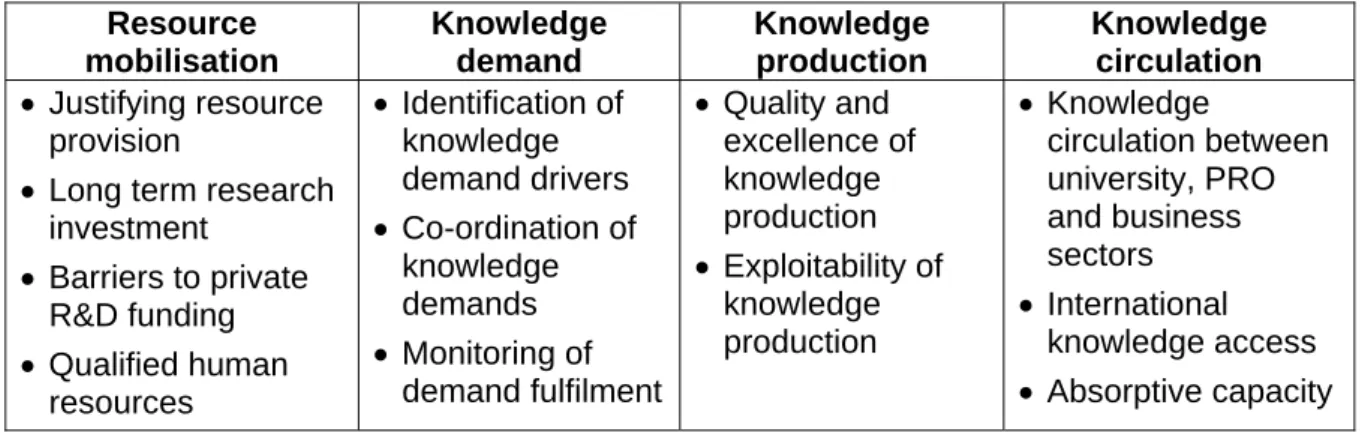
(11) Country report 2008: Spain. Chapter 1. Introduction 1.1 Scope and methodology of the report in the context of the European Research Area and the Lisbon Strategy As highlighted by the Lisbon Strategy, knowledge accumulated through investment in R&D, innovation and education is a key driver of long-term growth. Research-related policies aimed at increasing investment in knowledge and strengthening the innovation capacity of the EU economy are at the heart of the Lisbon Strategy. The strategy reflects this in guideline No. 7 of the Integrated Guidelines for Growth and Jobs. This aims to increase and improve investment in research and development (R&D), with a particular focus on the private sector. One task within ERAWATCH is to produce analytical country reports to support the mutual learning process and the monitoring of Member States' efforts. The main objective is to analyse the performance of national research systems and related policies in a comparable manner. The desired result is an evidence-based and horizontally comparable assessment of strength and weaknesses and policyrelated opportunities and risks. A particular consideration in the analysis is given to elements of Europeanisation in the governance of national research systems in the framework of the European Research Area (ERA), relaunched with the ERA Green Paper of the Commission in April 2007. To ensure comparability across countries, a dual level analytical framework has been developed. On the first level, the analysis focuses on key processes relevant to system performance in four policy-relevant domains of the research system: 1. Resource mobilisation: the actors and institutions in the research system have to ensure and justify that adequate public and private financial and human resources are most appropriately mobilised for the operation of the system. 2. Knowledge demand: the research system has to identify knowledge needs and how they can be met, thus determining priorities for the use of resources. 3. Knowledge production: the creation and development of scientific and technological knowledge is clearly the fundamental role of any research system. 4. Knowledge circulation: ensuring appropriate flows and distribution of knowledge between actors is vital for its further use in the economy and society or as the basis for subsequent advances in knowledge production. These four domains differ in terms of the scope they offer for governance and policy intervention. Governance issues are therefore treated not as a separate domain but as an integral part of each domain analysis. On the second level, the analysis within each domain is guided by a set of "challenges", common to all research systems, which reflect conceptions of possible bottlenecks, system failures and market failures (see list above). The way in which a specific research system responds to these generic challenges is an important guide for government action. The analytical focus on processes instead of structures is conducive to a dynamic perspective and eases the transition from analysis to assessment. Actors, institutions – and the interplay between them – enter the analysis in terms of how they contribute to performance in the four domains.. 9.
(12) Country report 2008: Spain Figure 1: Domains and generic challenges of research systems. • • • •. Resource mobilisation Justifying resource provision Long term research investment Barriers to private R&D funding Qualified human resources. Knowledge demand • Identification of knowledge demand drivers • Co-ordination of knowledge demands • Monitoring of demand fulfilment. Knowledge production • Quality and excellence of knowledge production • Exploitability of knowledge production. Knowledge circulation • Knowledge circulation between university, PRO and business sectors • International knowledge access • Absorptive capacity. Based on this framework, analysis in each domain proceeds in the following five steps. The first step is to analyse the current situation of the research system with regard to the challenges. The second step in the analysis aims at an evidence-based assessment of the strengths and weaknesses with regard to the challenges. The third step is to analyse recent changes in policy and governance in perspective of the results of the strengths and weaknesses part of the analysis. The fourth step focuses on an evidence-based assessment of policy-related risks and opportunities with respect to the strengths and weaknesses and in the light of Integrated Guideline 7; and finally the fifth step aims at a brief analysis of the role of the ERA dimension. This report is based on a synthesis of information from the European Commission's ERAWATCH Research Inventory1 and other important publicly available information sources. In order to enable a proper understanding of the research system, the approach taken is mainly qualitative. Quantitative information and indicators are used, where appropriate, to support the analysis. After an introductory overview of the structure of the national research system and its governance, chapter 2 analyses resource mobilisation for R&D. Chapter 3 looks at knowledge demand. Chapter 4 focuses on knowledge production and chapter 5 deals with knowledge circulation. Each of these chapters contains five main subsections in correspondence with the five steps of the analysis. The report concludes in chapter 6 with an overall assessment of strengths and weaknesses of the research system and governance and policy dynamics, opportunities and risks across all four domains in the light of the Lisbon Strategy's goals.. 1.2 Overview of the structure of the national research system and its governance Spain is a large developed country and thus a large R&D performer, although still lagging behind the most advanced economies in R&D activities. According to Eurostat, the latest available data provide a provisional figure for GERD in 2005 of €10,100 million. This represents 1.12 percent of Spanish GDP, which is below the EU 27 average of 1.84 percent. The Spanish contribution to EU 27 GERD is 5 percent and GERD financed from abroad accounts for 6 percent of total GERD. 1. ERAWATCH is a cooperative undertaking between DG Research and DG Joint Research Centre and is implemented by the IPTS. The ERAWATCH Research Inventory is accessible at http://cordis.europa.eu/erawatch/index.cfm?fuseaction=ri.home. Other sources are explicitly referenced.. 10.
(13) Country report 2008: Spain Since the enactment in 1986 of the Law for the Promotion and General Coordination of Scientific and Technological Research (“Law for Science” in short), the main responsibilities for research policy in Spain were divided between the Ministry of Education and Science (MEC) and the Ministry of Industry, Tourism and Trade (MITYC). An exception was the period 2000-2004, with the creation of a Ministry for Science and Technology. It assumed responsibilities from the former two, although not over all science related activities, e.g. universities and public research organisations (PROs) were part of the MEC. The change of party in the government in 2004 implied its abolition and a move back to the previous division of responsibilities between MEC and MITYC. However, in April 2008, the re-election has allowed for the foundation of a Ministry of Science and Innovation (MICINN) in April 2008. For the first time the Spanish government counts with a ministry that is responsible for almost all public R&D and innovation related activities. The MICINN counts with two Secretaries of State: Universities and Research (ERAWATCH Research Inventory, 2008). The Inter-ministerial Commission on Science and Technology (CICYT), created in 1986 as a consequence of the Law for Science, is the governmental body in charge of the design, planning, coordination and monitoring of national R&D policies. It acts as a strategic working group for the different ministries involved in R&D and since the reform introduced in 1996 is chaired by the Prime Minister. The CICYT is responsible for designing and implementing the Spanish Plan for Research, Development and Innovation (Spanish R&D&I Plan) (IPTS, 2006). The current Plan covering the period 2008-2011 was approved by the CICYT in its plenary session of July 12, 2007 and finally adopted by the Spanish Cabinet of Ministers in September of the same year. Figure 2: Main governance institutions of the Spanish research system. Source: ERAWATCH Research Inventory, http://cordis.europa.eu/erawatch/index.cfm?fuseaction=ri.content&topicID=35&countryCode=ES&parentID=34. On the moment writing this report no detailed data was available about the structure of the MICINN. What seems to be clear is that it is receiving all the R&D-related activities from MEC. The MEC administered the funding of the public research. 11.
(14) Country report 2008: Spain system, which is made up of universities (administratively dependent from the Autonomous Communities) and PROs. The incorporation of R&D activities in the university system in Spain culminated in 1983 with the Law for the Reform of Universities and the Law for Science in 1986 (ERAWATCH Research Inventory, 2007). PROs account for the bulk of the public R&D carried out in Spain, although there is an important diversity in the size and activity of individual PROs. Their role in the national R&D system is both as managers of certain programmes included in the Spanish R&D&I Plan and as performers of many of the R&D activities financed by public funds, through competitive mechanisms. The Law for Science (1986) defines their activities relating to the management and performance of some Thematic Areas of the Spanish R&D&I Plan, as well as some R&D activities agreed with the Autonomous Communities; their contribution to the designing and monitoring of the objectives of that Plan; and their role as consultative bodies for the national and regional governments (ERAWATCH Research Inventory, 2007). There were six PROs in Spain under the MEC, now under MICINN, including the largest and the only one with a multisectoral character, the Spanish National Research Council (CSIC)2. Other Ministries hold single PROs (ERAWATCH Research Inventory, 2007). To give idea of the importance of the government expenditure on R&D, notice that the ratio over GDP was 17 percent in 2006, higher than the EU27 average of 13 percent. This is a sign of the protagonism of the public sector on Spanish R&D, also confirmed because higher education institutions also spent on R&D more than the EU27 average (29 vs. 22 percent over GDP). The opposite occurs in the private sector: business enterprises and private non-profit institutions spent less than the EU 27 average (54 vs. 63 percent and 0.2 vs. 0.9 over GDP, respectively). The 1978 Spanish Constitution identifies 17 NUTS 2 regions, referred to as Autonomous Communities. They enjoy a high degree of decentralisation, political autonomy and financial capability. Regional Governments have had competences for innovation policies transferred to them, and they have designed their own regional strategies for R&D. Thus, the regions in Spain are playing an ever more significant role in R&D funding. According to the indicators analysed during the design of the INGENIO 2010 Programme (see section 2.2.2), in 2003 the contribution by Autonomous Communities and Municipalities was greater than that of the State (ERAWATCH Research Inventory, 2007). The Autonomous Communities also participate in the CICYT's advisory bodies in the General Council for Science and Technology, in the working party of General Directorates drawing up the Spanish R&D&I Plan and in the Sectoral Conference of the Regional Departments with Competence for the Promotion of R&D, with the MEC (ERAWATCH Research Inventory, 2007). The Autonomous Communities collaborate with the CICYT on the Annual Report of R&D Activities, which summarises the activities relating to the Spanish R&D&I Plan from throughout the country. The Information Exchange Working Party (Autonomous Communities-Central Administration) is an essential element in order to establish cooperation on science and technology between the regions and central government (ERAWATCH Research Inventory, 2007). 2. It is a research performer similar to CNRS in France or Max Planck Society in Germany, although with specific characteristics derived from the strong bureaucratic burdens imposed by the administrative dependence of CSIC`s personnel policies as well as of its strategic planning. A reform is underway to transform the organism into an Agency in an attempt to soften those constraints and foster the autonomy but subjected to thorough evaluation procedures. In September 2007, the Council of Ministers approved this transformation (ERAWATCH Research Inventory, 2008).. 12.
(15) Country report 2008: Spain The Spanish R&D&I Plan also contains some measures aimed at increasing interterritorial coordination, giving priority to the exchange of information on planning activities and programmes, the creation of competency centres, joint funding, support to the creation of infrastructures, participation in international programmes and the promotion of public understanding of science (IPTS, 2006). Each Autonomous Community has its own agency responsible for implementing regional R&D policy, although there is no homogeneity between them. In some Autonomous Communities there are regional R&D Plans, including technological innovation or not, whereas in others there are strategic or specific programmes to complement or to correct the deficit of the all national level initiatives. Regional agencies are usually entirely public and report to the regional and even the European authorities (ERAWATCH Research Inventory, 2007). Each autonomous community has its own R&D and innovation objectives (Spanish Prime Minister’s Economic Bureau, 2007).. Chapter 2. Resource mobilisation The purpose of this chapter is to analyse and assess how challenges affecting the provision of inputs for research activities are addressed by the national research system: its actors have to ensure and justify that adequate financial and human resources are most appropriately mobilised for the operation of the system. A central issue in this domain is the long time horizon required until the effects of the mobilisation become visible. Increasing system performance in this domain is a focal point of the Lisbon Strategy, guided by the Barcelona objective of a R&D investment of 3% of GDP in the EU as a whole and an appropriate public/private split. Four different challenges in the domain of resource mobilisation for research can be distinguished which need to be addressed appropriately by the research system and research policies: • Securing long-term investment in research • Dealing with uncertain returns and other barriers to private R&D investment • Providing qualified human resources • Justifying resource provision for research activities. 2.1 Analysis of system characteristics 2.1.1. Justifying resource provision for research activities. The legitimacy of devoting public resources to R&D and not to other activities is not under debate in Spain in the discourses both from public and private authorities. The recognition that science and technology is related to competitiveness and growth is present in the Spanish R&D&I Plan 2008-2011, since one of its explicit objectives is ‘to promote a highly competitive industrial network’ (MICINN and FECYT, 2008a). According to the INGENIO 2010 Programme (see section 2.2), R&D is considered a source of increased productivity and long-term growth and a means of promoting more and better employment (IPTS, 2006). The Programme also contains some measures aimed, among other things, at promoting the public understanding of. 13.
(16) Country report 2008: Spain science (IPTS, 2006). However, in practice there has been an underlying reluctance from the high level economic responsible actors to invest in R&D or consider this as a factor for growth and welfare. The Spanish Foundation for Science and Technology (FECYT) is a non-profit organisation (created by the government in 2001) that works as a multidisciplinary and inter-sectoral platform bringing together stakeholders from the scientific, technological and business fields, including the Conference of Spanish Universities' Chancellors (CRUE), the CSIC, entrepreneurial associations and the main innovating companies (IPTS, 2006). They meet because one of the strategic objectives of FECYT is to promote the dissemination of scientific knowledge so as to inform society of the results of R&D and create public awareness of the role of science. It also sets out to promote activities which producers of science and technology may carry out to make their achievements known to society (FECYT, 2007). There is no directly available information from existing assessments of system performance and achievements. As an indicator of good performance, it is worth noting that the share of GBAORD exceeded 2 percent of total government expenditure in 2004 and 2005, while it was 1.56 in 2004 in the EU 25. 2.1.2. Securing long term investment in research. Since 1988, national S&T policy has taken the form of four-year National R&D Plans, which are national government's main tool for programming long-term financing for research. The First Spanish National Plan for Scientific Research and Development (1988-1991) was launched after the Law for Science was passed in 1986. Since the fourth plan (2000-2003), following the establishment of the short-living Ministry for Science and Technology, the name has been the Spanish National Plan for Scientific Research and Development and Technological Innovation. The Plan is implemented through several Research Programmes (ERAWATCH Research Inventory, 2007) and was executed mainly through the MEC and the MITYC. The first supported public research, managing 28% of the budget for R&D and the second was responsible for programmes and incentives to business research, which receive 47% of the R&D budget (IPTS, 2006).3 MICINN is assuming both responsibilities in 2008. Function 46 is the budgetary instrument of the Spanish Budgets to finance R&D policy at the national level (European Trend Chart on Innovation, 2007).4 Nationally, the CSIC is the largest PRO, with an annual budget of €700 million, partly coming from the budget of the MEC (Guy and IPTS, 2006) –from MICINN in 2008–, essentially covering wages and maintenance expenses while the operating costs are obtained through competitive grants from public sources and contracts and licenses with the private sector. According to Eurostat, government-financed GERD directed at the public sector accounted for 33 percent of total government-financed GERD in 2004. Spain also benefits from European funding and shared infrastructure facilities. The provisional figures published by the Centre for the Development of Industrial Technology (CDTI) show Spain's participation in the VI Framework Programme to have been quite significant: 817 Spanish institutions (549 of which are companies) took part in 704 projects (out of a total of 1450), of which 83 acted as leaders, receiving funding of €440.5m (IPTS, 2006). The EU Cohesion Funds also play a very 3. The rest was executed by other ministries and PROs (ERAWATCH Research Inventory, 2007). However, after the process of decentralisation to the Autonomous Communities, the regional governments have developed their own models of university funding. 4. 14.
(17) Country report 2008: Spain important and growing role and increase R&D budgets substantially in eligible Spanish regions. The published data for the period 2000–2006 shows that 16% of these funds were used for R&D-relevant activities, and in the new programme there is a clear reorientation of funded activities towards R&D&I. Spain will receive until 2013 on average a regional oriented annual R&D budget of €2,127m, which is about 10% of overall Spanish R&D expenditure (calculated with the data of the year 2005). Although the total amount of Cohesion Funds for Spain is diminishing, the reorientation of these funds implies an increase in the total R&D&I-related budget. The distribution of Cohesion Funds is made jointly between the national and regional governments and parts of the programmes are based on co-finance with contributions from regional, national and European funds. In fact an important indirect impact of the Cohesion Funds is that there is a marked improvement in coordination between national government and the regions, especially in the case of support for large infrastructural facilities. (ERAWATCH Research Inventory, 2008). Moreover, Spanish policy-makers want to optimise the benefits of existing European policies by increasing participation in large-scale international infrastructures. The Spanish R&D&I Plan 2008-2011 promotes the effective use of such infrastructures as are offered by the European Strategic Forum on Research Infrastructures (ESFRI, launched in 2002), as the European coordinating body for such facilities. Spain contributes significantly to a broad range of these facilities and tries to enhance its percentage of return on that participation. It also promotes the role of Spanish industry in building and maintaining those infrastructures. (ERAWATCH Research Inventory, 2008) CDTI is Spain's representative on projects associated with large internationally financed research facilities, including the European Space Agency (ESA) the European Laboratory for Particle Physics (CERN) the European Synchrotron Radiation Facility (ESRF), Hispasat, Eumetsat and Spainsat (ERAWATCH Research Inventory, 2008). Regarding the management of these large scientific facilities, there is an advisory committee with the following functions (Tecnociencia, 2007): • Examining possible expressions of interest from different institutions of public administration in the establishment or enlargement of national large scientific facilities or in the participation of multinational large scientific facilities. • Evaluating the scientific and technological importance and the technical and economic viability of proposals. • Evaluating the relevance of proposals in terms of scientific, social and industrial impact, according to the needs of the scientific community. • Identifying facilities that might be built or enlarged in the medium to long term. • Promoting the participation of Spanish large scientific facilities in European R&D programmes and in the industrial environment. There is not much direct information available on the evidence from existing assessments on system performance and achievements. However, the efforts so far are improvable, since, according to Eurostat, publicly funded GERD in 2004 was 0.44% of GDP, while the average in the EU 27 in 2004 was 0.64%. Regarding Spanish participation in large-scale European facilities, in practice, the benefits of these R&D contracts are less significant or only as significant as the contribution paid by Spain in the first place, so in fact they are own national funds being returned to Spain (ERAWATCH Research Inventory, 2008).. 15.
(18) Country report 2008: Spain 2.1.3 Dealing with uncertain returns and other barriers to private R&D investment Following the trend of the total R&D expenditures, BERD in Spain has been rising steadily and has also increased in weight, both in terms of GERD (from 44.5% in 1995 to 48% in 2004) and as a percentage of GDP (from 0.38% in 1995 to 0.61% in 2005). The Spanish private R&D system is largely determined by its industrial structure, which is mainly composed of SMEs in traditional sectors with a small number of high tech firms and a few large firms (some of them former public monopolies in utility sectors). Those sectors where Spanish firms have made inroads on international markets are traditionally characterised by low R&D investments (e.g. banking, tourism, building…). Nearly 70% of Spanish business employment is in micro (less than 10 employees) and small enterprises (less than 49 employees), compared to an average of 50% in the European Union and 36% in the United States. On the other hand, only 18% of business employees are employed by large firms (more than 249 employees), compared to 34% in the EU and 50% in the United States. The Spanish share of high technology products in total manufacturing exports is quite low and barely increased between 1994 and 2003 (9.9% and 10.8% respectively) in contrast with most European countries, as the EU-25 average increased from 16.3% in 1994 to 21.9% in 2003 (OECD, 2006). Spanish venture capital instruments include “Public Venture Capital to new technology-based firms (NTBFs)”, involving the participation of the Spanish National Innovation Enterprise (ENISA), and the Official Credit Institute (ICO)'s financial facilities for investments aimed at increasing and improving enterprises' technological and innovative components (European Trend Chart on Innovation, 2007). There is also the NEOTEC Programme, which is an initiative to create some NTBFs, which was launched in 2001 and is managed by the CDTI. Although the initiative is not very large in volume, it is one of the longer running Spanish venture capital programmes for technology-based enterprises (European Trend Chart on Innovation, 2006). Tax incentives of R&D expenditures have been in place since 1995 and were modified in 2000 (to make them more attractive) and 2003 (in order to lower the bureaucratic hurdles). There are no limitations on research fields or company size/sector with access to tax deductions, which are usually around 30%, although they can reach 50% in certain cases (IPTS, 2006). All types of R&D are eligible for the tax reduction scheme (IPTS, 2006). Not counting tax incentives, the share of BERD financed by government was 12 percent of total BERD in 2004. Funding of this kind is mainly distributed by the MITYC, through the Technical Research Support Programme (PROFIT) (see also section 5.1.1) and by the CDTI, that grants financial aid to companies for the execution of both national and international research and development and innovation projects (see also section 3.1.2) (ERAWATCH Research Inventory, 2007). On the evidence from existing assessments of the system's performance and achievements, on the one hand, an indicator of a relatively low performance so far is that national business R&D funding was 0.51% of GDP in 2004, less than the EU 27's average of 1.01%. The European Trend Chart on Innovation (2007) has highlighted the lack of venture capital as a major barrier for start-up enterprises in new technology areas that are potential engines of growth. Existing venture capital mainly funds large projects by established firms where the risk is lower than in funding start-ups. According to the European Innovation Scoreboard, Spain has a poor showing due among, other factors, to a shortage of venture capital. The European Trend Chart on Innovation (2006) states that, with respect to the funding of 16.
(19) Country report 2008: Spain new enterprises and the entrepreneurial culture, a tax incentive supporting venture capital activities funding SME start-ups and technology-based projects, as suggested by the Economic Social Council (CES), would be a desirable complementary initiative. On the other hand, IPTS (2006) describes the Spanish R&D Tax Incentive System as one of the most advanced in the world. However, the uptake by companies was lower than expected and there were difficulties in applying the law (IPTS, 2006). This may be due to some characteristics of the structure of the Spanish innovative business sector, composed predominantly of SMEs and of NTBFs in some emerging sectors, e.g. biotechnology, still in the process of maturation. These types of firms hardly can profit of tax incentives applied to their sales. 2.1.4. Providing qualified human resources. The Spanish R&D&I Plan 2008-2011 includes the sub-objective of fostering the training and incorporation of new researcher, technologists and managers and other R&D personell in order to increase their number and qualification (MICINN and FECYT, 2008). Spain has increased the production of human resources in science and technology over the past few years and it ranks above the OECD average in terms of the share of university graduates with degrees in science and engineering (over 20%). There are currently some 80,000 students enrolled in PhD studies and some 8,000 PhDs graduate each year. The duration of PhD studies is relatively long in Spain compared to other countries: up to six years instead of the four years common elsewhere. Spain ranks close to the EU average in terms of researchers per 1,000 employees. About one third of Spanish researchers work in the business sector while the rest work in the public sector (universities or government research institutes) (OECD, 2006). The Spanish R&D&I Plan 2008-2011 contains a National Programme for the Training of Human Resources with the aim of guaranteeing the increase of the suplí of human reseoruces devoted to R&D&I in Spain (MICINN and FECYT, 2008a). This programme includes PhD fellowships. There are also two programmes to ensure career prospects for researchers (Guy and IPTS, 2006): • Launched in 2001, the Ramón y Cajal programme aims to support the employment of PhDs at Spanish research centres. The objective is to increase the job opportunities in the public research system and to reduce the gap between the demand for researchers and the number of researchers looking for a job. • Implemented in 2004, the Juan de la Cierva programme supports the recruitment of postdoctoral researchers by PROs on three-year contracts. The programme, which develops the lines of action of the National Programme for the Promotion of Human Resources, aims to increase the research capabilities of R&D groups and institutions in both the public and private sector by recruiting qualified researchers. On the attractiveness for foreign researchers, there are significant problems with the accreditation of foreign educational diplomas and in hiring non EU citizens, who cannot take up permanent positions because of public service regulations (OECD, 2006). The European Trend Chart on Innovation (2006) provides some assessments on system performance and achievements, when it states that the evolution of the number of people with a university degree is satisfactory. The OECD (2006) recalls that the limited ability of public and business research to absorb a constant stream of. 17.
(20) Country report 2008: Spain young PhDs has resulted in a brain drain to other EU countries and to North America. On the positive side, Spain has been able to increase the participation of women among its university science graduates and researcher population. Women account for 36.3% of researchers in Spain compared to 28.3% in Italy and 27.8% in France. However, most women researchers in Spain work in the public sector where they are under-represented in senior positions and only 6% of private-sector researchers in Spain are women (OECD, 2006).. 2.2 Assessment of strengths and weaknesses The main strengths and weaknesses of the Spanish research system in terms of resource mobilisation for R&D can be summarised as follows: •. Strengths Advanced tax incentives for R&D to reduce barriers to private R&D investment. Weaknesses • The industrial structure, which is mainly composed of SMEs in traditional sectors and only a small number of high tech firms, is a barrier to private R&D spending • Lack of venture capital is another barrier to private R&D funding. All the strengths and weaknesses refer to the same challenge –dealing with uncertain returns and other barriers to private R&D investment. It becomes therefore the central point in the domain of resource mobilisation.. 2.3 Analysis of recent policy changes Although traditionally there has not been a ministry dedicated exclusively to science and technology, the budget allocations for science have been continuously rising. The Spanish R&D&I Plan 2008-2011 has introduced a strong budget increase, which doubles that for the previous Plan 2004-2007 (Spanish Prime Minister’s Economic Bureau, 2007). The State General Administration will devote more than 47 000 million Euros in 2008-2011, i.e. a 100 percent increase compared to the previous four-year period. This comes in top of the INGENIO 2010 Programme, that greatly contributed to increasing the budget for R&D by 25% annually in 2005 and 2006 (IPTS, 2006). Most of this increase can be attributed to the INGENIO 2010 Programme. Challenge Securing long-term investment in research. Dealing with barriers to private R&D investment. Providing qualified human resources. Main policy changes Budget increases of 100% for the period 2008-2011 following the 6th R&D&I Plan, after an increase by 25% annually through the INGENIO 2010 Programme, plus an upgrading of the importance of the R&Drelated activities in the EU Framework Programme and the European Structural Funds Entrepreneurship Programme, with initiatives like ICOPYME, to extend credit facilities for SMEs, access to guarantees for loans to R&D projects and bonuses for social security contributions for research personnel -. 18.
(21) Country report 2008: Spain INGENIO 2010 was Spain’s response to the Lisbon Strategy. The programme was launched in 2005 and aims to align Spain with the European Union’s strategy to increase R&D expenditure to 3 percent of GDP by 2010. The intermediate target is to close the gap that currently separates Spain from its main competitors (European Trend Chart on Innovation, 2006). The programme itself is part of the broad-based National Reform Plan (NRP) launched by the government in 2005 to boost Spanish competitiveness. In addition to introducing new measures, it intends to complement initiatives envisaged in the Spanish R&D&I Plan 2004-2007 approved by the previous government, the national government has almost doubled public support to R&D and innovation (in the 2007 budget more than €8 billion was allocated). Through this massive increase in public funding, the government expects that GERD will reach 2% of GDP by 2010 (OECD, 2006)5 and that business participation in R&D activities will reach a 55% of total R&D by 2010 (ERAWATCH Research Inventory, 2007). Enlargement of the European Union has gradually made European funding less readily available for Spain, which is no longer considered a recipient but a donor (ERAWATCH Research Inventory, 2007). According to the CDTI, the official representatives of the European Framework Programme for Research in Spain, the financial support received by Spain from this programme has increased continuously over time. The Framework Programme is still one of the main sources of financial support to research carried out by the public and private research sectors in Spain. Nevertheless, the ratio of participation to contribution has decreased from the fifth edition of the Framework Programme to the sixth. This ratio is calculated as the relation between the financial support received by Spain through this programme and the Spanish contribution to the European Union's total budgets (relative to the GDP of each Member State), and is used by many countries as an indirect indicator of the success in their participation in the Framework Programme. The entrance of the New Member States and Associated Countries is highlighted as one of the possible reasons for this decrease, due to the greater competition between participants in the programme (ERAWATCH Research Inventory, 2007). However, Euroingenio was launched in 2007 to complement INGENIO 2010 with the overall goal of increasing Spain's participation in the Framework Programme from the 6% obtained in the Sixth Framework Programme to 8% in the Seventh Framework Programme 2007-2013. In the first round of funding, four initiatives were launched in 2007 with a total budget of 15 million euro, supporting participation in Europe-wide research by close to 100 companies and technology centres, 10 technology platforms and industry associations, 11 hospitals and over 40 universities and government research centres (Spanish Prime Minister’s Economic Bureau, 2007). The Third Conference of Presidents approved the establishment of a fund within the Euroingenio programme which would contribute up to 450 million euro to the funds of the Autonomous Communities whose researchers and companies improve their participation in the Seventh Framework Programme. The first resources from the Fund will be available in 2008 (Spanish Prime Minister’s Economic Bureau, 2007). In addition, the Action Plan (2007-2013) for European Structural Funds in Spain shows a clear upgrading of the importance of the R&D-related activities to be financed in the backward regions of Spain. The percentage dedicated to R&D is in fact double that of the former period (ERAWATCH Research Inventory, 2008). The potential role for each of the regions of those funds is very important and some of 5. INGENIO 2010 is managed by the same ministries that manage the Spanish R&D&I Plan (see section 1.1), mainly MITYC and MEC (37.1%), followed by far by the Ministry of Defence (5.0%) and the MSC (4.4%).. 19.
(22) Country report 2008: Spain them consider it as a last "big push" to create a better regional innovation system before losing -in 2013 - the support based on the European Cohesion Funds (ERAWATCH Research Inventory, 2008). The Entrepreneurship Programme complements INGENIO 2010 in the fields of startup financing and SMEs' participation in R&D. Its initiatives include (European Trend Chart on Innovation, 2006): • Extension of the Official Credit Institute (ICO) by adding a Small and MediumSized Enterprise Line (ICOPYME). This line has considerable potential to generate direct effects on company growth and modernisation. • More favourable treatment of companies seeking an ICOPYME loan and which are backed by a Reciprocal Guarantee Company (SGR). This will reduce the cost of outside financing. Furthermore, the MITYC has signed an agreement with CERSA to facilitate guarantees for loans to enterprises carrying out R&D projects. • Bonuses for social security contributions for research personnel. Unlike public aid for R&D in the form of corporation tax deductions, these bonuses can be applied irrespective of whether the company makes a profit or a loss, an aspect which is particularly important in the first years of the life of a company. • Reform of the University Teachers’ Statute to enable their participation in business projects and so introduce the entrepreneurial “way-of-doing things” to the universities. • Improvement of the technology-transfer system to companies, with particular attention on the Technological Centres.. 2.4 Assessment of policy opportunities and risks The main opportunities and risks for resource mobilisation in Spain arising from recent policy responses and in the light of the Lisbon Strategy can be summarised as follows: •. • • •. Opportunities Risks Substantial budget increases in the • Public R&D declining down due to last two planning periods, through drop in relative level of EU Funds INGENIO and the Spanish R&D&I received from the Framework Plan 2008-2011 Programme Euroingenio Programme launched to increase participation in the EU Framework Programme Public R&D supported by increasing R&D related-EU Structural Funds Increased credit facilities for innovative activities at SMEs. The first three opportunities respond to the challenge of securing long-term investment in research plus to a risk against this challenge –the relative decline of EU Funds. The fourth opportunity responds to the central point in the domain of resource mobilisation in Spain –dealing with uncertain returns and other barriers to private R&D investment, but some opportunities to compensate for the lack of venture capital are still missing. 20.
(23) Country report 2008: Spain. 2.5 Summary of the role of the ERA dimension The distribution of Cohesion Funds is made jointly between the national and regional governments and parts of the programmes are based on co-finance with contributions from regional, national and European funds. In fact an important indirect impact of the Cohesion Funds is that there is a marked improvement in coordination between national government and the regions, especially in the case of support for large infrastructural facilities. (ERAWATCH Research Inventory, 2008). Moreover, Spanish policy-makers want to optimise the benefits of existing European policies by increasing participation in large-scale international infrastructures. The Spanish R&D&I Plan 2008-2011 promotes the effective use of such infrastructures as are offered by the European Strategic Forum on Research Infrastructures (ESFRI, launched in 2002), as the European coordinating body for such facilities. Spain contributes significantly to a broad range of these facilities and tries to enhance its percentage of return on that participation. It also promotes the role of Spanish industry in building and maintaining those infrastructures. (ERAWATCH Research Inventory, 2008) CDTI is Spain's representative on projects associated with large internationally financed research facilities, including the European Space Agency (ESA) the European Laboratory for Particle Physics (CERN) the European Synchrotron Radiation Facility (ESRF), Hispasat, Eumetsat and Spainsat (ERAWATCH Research Inventory, 2008). On the attractiveness for foreign researchers, there are significant problems with the accreditation of foreign educational diplomas and in hiring non EU citizens, who cannot take up permanent positions because of public service regulations (OECD, 2006). The European Trend Chart on Innovation (2006) provides some assessments on system performance and achievements, when it states that the evolution of the number of people with a university degree is satisfactory. The OECD (2006) recalls that the limited ability of public and business research to absorb a constant stream of young PhDs has resulted in a brain drain to other EU countries and to North America.. Chapter 3. Knowledge demand The purpose of this chapter is to analyse and assess how knowledge demand contributes to the national research system's performance. It is concerned with the mechanisms used to determine the most appropriate use of, and targets for, resource inputs. Main challenges in this domain relate to governance problems stemming from specific features of knowledge and the need for priority setting. These include: • Identifying the drivers of knowledge demand • Co-ordinating and channelling knowledge demands • Monitoring and evaluating demand fulfilment Responses to these challenges are of key importance for the more effective and efficient public expenditure on R&D aimed at in the Lisbon Strategy Integrated Guideline 7.. 21.
(24) Country report 2008: Spain. 3.1 Analysis of system characteristics 3.1.1. Identifying the drivers of knowledge demand. The sectoral structure of the Spanish economy reflects the economic importance of supplier-dominated sectors based on the prominent role of traditional industries such as furniture, non metallic mineral products, textiles and the food industry, and has led to a low demand for R&D in comparison with other countries. Logically, the structure of Spanish BERD presents a relative bias according to the technological level of the manufacturing activities (compared to the EU figures): 36% (41%) in high-tech, 42% (48%) in medium-high-tech and 22% (11%) in medium-low-tech and low-tech, according to Eurostat data for 2002. Services sectors are also important, as well as BERD in those sectors, since the share of BERD performed in services was 27.3% in 2002, higher than the EU average of 15.1. This dual specialisation profile is highlighted by the analysis of the correlation between economic and R&D specialisation. In the manufacturing sector it is specialised in a number of medium- to low-tech sectors such as those mentioned above, plus transport equipment, shipbuilding and fabricated metals, in terms both of economic magnitudes (value added, employment and exports) and BERD. In the services sector, however, while it is specialised in terms of BERD in industries such as community services, other business activities, research and development and IT services, this specialisation is not translated into an economic specialisation, despite the fact that these sectors receive large shares of public funding for BERD (ERAWATCH Network, 2006). Slightly more than a quarter of public demand as expressed in government appropriations (GBAORD) is non-oriented (27 percent in 2005), while the main bulk (73 percent in 2005) is directed towards specific socio-economic objectives. Compared to the EU 15, Spain shows a degree of relative specialisation in human health, land use, industrial research, defence and agriculture. Over the 1993-2003 period, Spain lost its specialisation in the NABS categories "exploration and exploitation of earth" and "exploration and exploitation of space", while at the same time it gained in specialisation in the socioeconomic objectives of "infrastructure and general planning of land-use" and "defence". Particularly for this gain, the trend exhibited in Spain is the opposite to that of most EU15 countries (ERAWATCH Network, 2006). This may result from the decision made by the conservative party when it took the Spanish Government in 1996. It was then decided to include spending on military international projects aimed to develop weapons systems in the overall R&D budget. Although this has been since a hot debated issue, the correction of the situation from 2004 onwards with the new Socialist Government has taken a continuous but slow pace (Sebastián and Muñoz, 2006). FECYT is a non-profit organisation, which aims to play the role of a multidisciplinary and inter-sectoral platform to bring together players from the scientific, technological and entrepreneurial spheres (see section 2.1.4.)6. FECYT identifies opportunities and needs and makes proposals on R&D. Its governing body includes representatives from the MICINN, MEC, the Ministry of Health, PROs, universities and the CDTI. The governing body is supported by a Scientific and Technological Council, which has members from PROs, universities, scientific and technological parks, etc. (FECYT, 2007). To conduct prospective studies, FECYT uses its own strategies but also has recourse to the National Evaluation and Foresight Agency (ANEP). ANEP was 6. Note that it does not appear in the structure chart in section 1.1, because FECYT is a non-profit organisation with functional autonomy.. 22.
(25) Country report 2008: Spain created by the “Law for Science” as a basic instrument to develop the peer review system in the Spanish R&D system. ANEP was also foreseen as an instrument to carry out prospective studies. The Agency has gained general recognition in the first task, being less active and successful in the second one. The Spanish R&D&I Plan 2004-2007 set up the Integrated Monitoring and Evaluation System (SISE) - a mechanism to monitor the progress of the NRP in relation to R&D and innovation and to develop the National R&D and Innovation Programme and all its related instruments. SISE relies on the systematic collection of documents and information that is to be produced regularly by units and agencies with managerial responsibilities for programmes and actions within the R&D and innovation system or the diverse fields of science and technology. Some of the most basic SISE instruments are reports by the evaluation panels of programmes and actions; foresight studies; and technology watch activities (European Trend Chart on Innovation, 2007). Red.es is a public enterprise under the MITYC, which, amongst other functions, is an outstanding observatory on Information and Communication Technologies supporting the public authorities through sectoral Technology Watch and Scientific Foresight studies (ERAWATCH Research Inventory, 2007). In relation to the drivers of knowledge demand that are ‘intrinsic’ from the research sector itself, it seems that it still prevails a corporative attitude of the public research system (researchers defend their own particular private interest instead of the general interest of the system). Researchers with a public R&D background are highly represented within the policy-making system, which makes it more difficult to orient the R&D policies to the interests of the productive sector, and selection criteria for excellence are not always clearly defined as such. For example, the criteria of excellence to get support for R&D projects within the national plan are based on whether you got such projects in the past (at least within the last 15 years) and not the quality and excellence of the results obtained by the researchers (ERAWATCH Research Inventory, 2008). 3.1.2. Channelling of knowledge demand. The CICYT is the governmental body in charge of the design, planning, coordination and monitoring of national R&D policies, in particular the Spanish R&D&I Plans (2004-2007, 2008-2011). It is a strategic working group from the different ministries with R&D competencies, chaired by the Prime Minister (ERAWATCH Research Inventory, 2007). Two main consultative bodies support the CICYT: the "General Council for Science and Technology" and the "Advisory Council for Science and Technology Policy". The former has the main task of coordinating the Autonomous Communities (or regional governments) and the relations between them and national government. The latter was set up to promote the participation of society in the R&D policy (ERAWATCH Research Inventory, 2007), including business associations and the main innovating companies. The composition of the Permanent Commission of the CICYT is as high level as the CICYT, which leaves the effective day-to-day coordination of the Spanish R&D Plan in the hands of an informal institution: the Support and Follow-Up Unit of the CICYT (CAS-CICYT). The CAS-CICYT is chaired by the Director of the Economic Bureau of the Prime Minister and comprises two State Secretaries (Deputy Ministers), and the Secretary Generals and Director Generals who manage most of the annual budget for R&D (OECD, 2006). The CICYT’s tasks include the integration of the programmes initiated by the various. 23.
(26) Country report 2008: Spain sectors, proposing allocations of public funds to the various programmes under the Spanish R&D&I Plan and coordinating their implementation (OECD, 2006).7 The CICYT, through the Spanish R&D&I Plan, defines the following to be priority areas: the Life Sciences; Agro-food and Environmental Sciences; Space, Mathematics and Physics; Energy; Chemistry, Materials and Industrial Production; Safety and Defence; Information Society Technologies; Transport and Building; Humanities, Social and Economic Sciences (IPTS, 2006). According to the General State Budgets, the national budget for R&D included the following thematic programmes in 2004 and 2005 (IPTS, 2006): • R&D for the Information Society, around 7 to 8 percent of the total. • Defence R&D, around 6 to 7 percent of the total. • Health R&D, representing around 5 percent of the total. • Other programmes, which range from 8 to 9 percent of the total. Public procurement of innovative products and services is mainly encouraged by the CDTI. The CDTI gives financial support to R&D projects performed by enterprises, without any sectoral focus or size constraints (European Trend Chart on Innovation, 2007). In 2005, the main socio-economic objective, receiving 25% of the Government budget allocations, was Industrial production, followed by Research financed by general university funds (18%) and Defence (16%). Figure 3: GBAORD distribution by socio-economic objective, 2005 Nomenclature for the analysis and comparison of scientific programmes and budgets (NABS) 01 Exploration and exploitation of the earth 02 Infrastructure and general planning of land-use 03 Control and care of the environment 04 Protection and improvement of human health 05 Production, distribution and rational utilisation of energy 06 Agricultural production and technology 07 Industrial production, and technology 08 Social structures and relationships 09 Exploration and exploitation of space 10 Research financed from general university funds (GUF) 11 Non-oriented research 12 Other civil research 13 Defence 86 Total civil research and development appropriations 99 Total appropriations. Percentage 1.4 4 3 8.7 1.6 5.2 25.2 2.1 3.2 18.1 8.6 2.8 16.1 83.9 100 Source: Eurostat. The ERA initiative is discussed from time to time both in the Spanish press and in society at large, normally in the context of university education and study plans. It is, however, more usually discussed at policy-making level, though active efforts to convert ideas and arguments into specific instruments are less common. This may be 7. The CICYT also takes into account the information from FECYT (see section 3.1.1).. 24.
(27) Country report 2008: Spain because it is felt that EU funds are needed in order to do this – as in the Framework Programmes – from which Spain can benefit (ERAWATCH Research Inventory, 2008). On the one hand Spanish policy-makers want to optimise the benefits of existing European policies by increasing participation in large-scale international infrastructures and the Framework Programme (see section 2.1.2). Moreover, Spain wants to increase its level of participation in the Framework Programmes (see section on Lisbon-strategy related activities). These aims (optimising its participation in European programmes) were already included in the Spanish R&D&I Plans before the ERA initiative (ERAWATCH Research Inventory, 2008). On the other hand the Spanish government wants to contribute to the ERA initiative at the broader, international level (ERAWATCH Research Inventory, 2008). On existing assessments of system performance and achievements, regarding CICYT, on the one hand, Guy and IPTS (2006) consider that the number of structures coordinating policy efforts in the R&D and innovation domain is impressive. The authors highlight that CICYT has three levels of meetings: biannual meetings of ministers headed by the Prime Minister; 3-5 meetings per year of key ministers headed by the Deputy Prime Minister; and the bi-monthly meetings of the Secretaries of State. On the other hand, the OECD (2006) views the high level and broad composition of the Commission as limiting its practical ability to act as a decision-making body. There has also been criticism of the current system of public support to basic science in Spain on the grounds that it lacks clear priorities. In fact, almost every basic research field is covered, even if, in theory, the planning procedure considers the country's strengths and weaknesses. There may even be a tendency to partially offset the effects of EU choices, which try to establish priorities through the European Framework Programme in order to enable concentration of financial efforts on fewer research fields (Guy and IPTS, 2006). 3.1.3. Monitoring demand fulfilment. As mentioned in section 3.1.1, the Spanish R&D&I Plan 2004-2007 created the SISE. Besides its monitoring function, this is a mechanism with which to assess the progress of the NRP in relation to R&D and innovation and the development of the Spanish R&D&I Plan, as well as all related instruments (to date, ex-post evaluations of the results of R&D and innovation have been scarce and unsystematic). The SISE relies on the systematic collection of documents and information that must be produced regularly by units and agencies with managerial responsibilities for programmes and actions within the R&D and innovation system or the diverse fields of science and technology. The most basic SISE instruments are follow-up reports, reports monitoring R&D and innovation indicators and annual reports on R&D and innovation activities (European Trend Chart on Innovation, 2007). Created in May 2005 as part of SISE, the COSEP responds to the terms of reference defined by SISE by echoing the views of a hundred experts, distributed in different subcommissions, on the design and impact of the Spanish R&D&I Plan 2004-2007 (OECD, 2006). In 2005, COSEP presented its first report to the CICYT, which contained a number of policy recommendations (IPTS, 2006).8 This instrument is the collection of documents and information that units and agencies are required to 8. The COSEP report is not publicly available. However, according to OECD (2006), it praised the decisive contribution of the National Plans to the improvement of the Spanish innovation system, but criticises the fact that the Plan has become an excessively long list of thematic programmes (covering scientific-technical areas and sectors) that define scientific-technical priorities in too much detail. It also noted some deficiencies in the current implementation of the National R&D Plan.. 25.
(28) Country report 2008: Spain produce regularly on the progress of the programmes and actions they are responsible for running, as well as on the R&D system or the diverse fields of science and technology. CICYT uses the results for decision-making (ERAWATCH Research Inventory, 2007). Its impact is reported in section 3.2. The ANEP, also mentioned in section 3.1.1, belongs and reports to the MICINN. It is in charge of evaluating research centres, teams and projects.9 Another organisation under the aegis of the MICINN, the National Evaluation Commission of Research Activities (CNEAI), is responsible for assessing the research activities of university teaching staff (IPTS, 2006). For the OECD (2007), the statistical infrastructure for accessing data for SISE is underdeveloped. The government has created a basic database on indicators for industry and innovation but the lack of updated data limits the possibility of evaluating many of the recent policies and discrete instruments. In addition, there is a need to define better (micro-level) indicators that can be matched to programme objectives (OECD, 2007). Moreover, there is no public information about how SISE is going to operate under the Spanish R&D&I Plan 2008-2011, since SISE’s web page still presents it as linked to the former Plan (MICINN and FECYT, 2008b).. 3.2 Assessment of strengths and weaknesses The main strengths and weaknesses of the Spanish research system in terms of knowledge demand can be summarised as follows: Strengths • Impressive coordination of policy efforts in R&D to channel knowledge demand. Weaknesses • Scant priority setting in the support to public science, even running counter the priority setting of the European Framework Programme. Both bullet points refer to the challenge of identifying the drivers of knowledge demand, therefore key in the domain of knowledge demand in Spain.. 3.3 Analysis of recent policy changes The MEC, through the General Secretariat for Scientific Policy, launched the CONSOLIDER Programme to promote high quality research. CONSOLIDER is since 2008 a responsibility of MICINN. The actions envisaged in the programme are focused on a well defined population group, and are to be implemented by well established leading research teams. These groups must have research lines beyond the state of the art, be able to show previous high quality results and have an outstanding trajectory on the international stage (ERAWATCH Research Inventory, 2007). The overall budget is €1.5 billion (ERAWATCH Research Inventory, 2007). CONSOLIDER is part of the INGENIO 2010 Programme. Through it, two traditional demands from the most prestigious researchers in Spain will be addressed. The first is to finance projects that cannot currently be fitted in to the Spanish R&D&I Plan because of their scope, relevance or size. The second demand is to simplify and increase the flexibility of the procedures by which research funding may be obtained (ERAWATCH Research Inventory, 2007). 9. There is no ex-ante interaction between SISE and ANEP but, since both report to the CICYT, ex-post interaction occurs.. 26.
Figure



Documento similar
From 2015, the two companies, but especially Repsol, began to involve and try to carry out large investment projects in renewable energies in their short, medium and long term
and Dushnitsky, G., Venture capital, corporate venture capital, angel investment, crowdfunding and accelerators: a review and roadmap of entrepreneurial equity financing
Citrus trees are strongly affected by salinity, especially in countries where irrigation is required as a semi-arid Mediterranean agronomic region. The aims of the study were i)
Assessment of small bowel mucosal healing by video capsule endoscopy for the prediction of short‐term and long‐term risk of Crohn's disease flare: a prospective cohort study..
The aim of this research is to explore the impact of an anti-doping education program about substances perceived efficacy, ill-health short- and long-term effects, and the morality
In this study, the Surface Energy Balance Algorithm for Land (SEBAL) and meteorological data from the Global Land Data Assimilation System (GLDAS) were used to estimate long-term
This suggests the presence of short-term cycle strategy profits (short momentum) or long-term cycle strategy profits (long term reverse effect) in the Mexican stock exchange, an
“square-wave” [Ca 2+ ] c transients in young nuo-6 mutant worms was much smaller than that of controls, and their contribution to the mean peak width was marginal.. Figure S3
