
The importance of brand elements : effects of critical brand elements on wine purchase behavior
137
0
0
Texto completo
(2) Instituto Tecnológico y de Estudios Superiores de Monterrey. Escuela-EGADE Business School Campus Ciudad de México. The lmportance of Brand Elements: E.ffects of Critica/ Brand Elements on Wine Purchase Behaviour. Tesis que presenta: Lucía Fernández Reyes. Para obtener el grado de: Doctorado en Ciencias Administrativas. Director de tesis: Dr. Ricardo Lino Mansilla Corona Codirector de tesis: Dr. Fernando Andrés Moya Dávila. México D.F., Septiembre 2015. J... TECNOlÓGICO •. DE MOmtfflh' ¡¡. BIBLIOTECA. &JW:l!Msmc•1mu.
(3) f~l5. l-·q=~s4 15. 33 ,,-.t" f lt1' ?ol~. • r .;_• .. ,_,,..,.
(4) ,1~:;'EGADE® Business School TECNOLÓGICO DE MONTERREY. Hacemos constar que en la Ciudad de México, el día 28 de Septiembre de 2015, la alumna:. Lucía Fernández Reyes Sustentó el Examen de Grado en defensa de la Tesis titulada:. "The Importance of Brand Elements: Effects of Critical Brand Elements on Wine Pu rebase Behaviour" Presentada como requisito final para la obtención del Grado de:. DOCTORADO EN CIENCIAS ADMINISTRATIVAS. Ante la evidencia presentada en el trabajo de tesis y en el presente e:rnmen, el Comité Examinador, presidido por el Dr. Carlos Vigurí Bretón, ha tomado la siguiente resolución:. /. l. ansilla Corona. Dr. F, ando Andrés Moya Dávila Co-Di"r ctor. ~cE-W&?ezg C~v,; LLJ---f> Dr. Carlos Vigu i Bretón Lector. Dra. Hortensia Cuéllar Pérez Lectora. Calle del Puente No. 222 Col. Ejidos de Huipulco. Del. Tlalpan, México D.F., C P. 14380. Tel. +52 (55) 5483-1766. www.egade.mx.
(5) EGADE~ Business School TECNOLÓGICO DE MONTERREY. Dr. José Fernando Buendía Luna Director del Programa Doctoral. Calle del Puente No. 222 Col. Ejidos de Huipulco. Del. Tlalpan, México D.F., C.P. 14380. Tel. +52 (55) 5483-1766. www.egade.mx.
(6) ACKNOWLEDGEMENTS. I would like to express my appreciation to the following people: • Dr. Ricardo Mansilla: My Research Supervisor, whose friendship and humanity have at ali times been exceptional. • Dr. Hortensia Cuéllar and Dr. Carlos \'iguri: Whose assistance and support in their role ofreaders has been encouraging. • Dr. Femando Moya: Thank you so much for ali you have done to help me. • The three hundred participants ofthis study: Whose support for data collection was vital for this research. • Yaya, Pepe, Paby, Tito and Helga: My family.. 3.
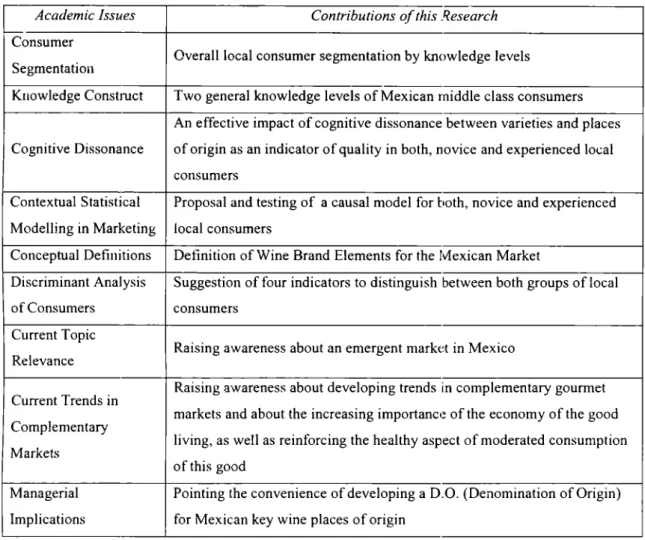
(7) ABSTRACT This research attempts to explore wine purchasing behaviour in the Mexican market in reference to the effects of brand elements used in wine marketing. The objectives of this research are to analyse the impact of externa! and interna! wine product cues in reference ·:o the credibility in wine, to explore the process that consumers follow in order to determine what ,:onstitutes a "wine of choice", to measure the variations in choice decisions in reference to familiar versus unfamiliar places of origin, and to describe in the process the status of middle class wine buyers. The study explores the dynamics of wine consumption in Mexico. Thc work adds results about wine marketing specifically by proposing a conceptualisation of a wine brand and exploring the levels of knowledge that the average middle class Mexican consumer has on the topic. It describes the role played by cognitive dissonance between grape varieties and places of e>rigin in the dynamics of wine appreciation among local consumers and, finally, recognises the impor1ance of destination branding in the marketing of a good whose production characteristics have positive connotations, both functional and symbolic.. 4.
(8) TABLE OF CONTENTS ACKNOWLEDGEMENTS ................................................................ ............ ......................................... 3 ABSTRACT ................................... ... ......... ....................................................................................... ...... .4 TABLE OF CONTENTS ............................................................... .. .. .. ...... .. .............................. :............ 5 LIST OF TABLES .................................................................................................................................. 7 LIST OF FIGURES ................................................................................................................................ 8 LIST OF APPENDICES ............. .................. .............. ............................................................................ 9 DECLARA TION ................................................................................................................................. 1O. CHJ\.PTER 1: ........................................................................................................................................11 INTRODUCTION ............................................................................................................................... 11 1.1 Effects ofBrand Elements on Choice ............................................................. .. ........... .... .............. 13 1.2 Macro Perspective ofWine Marketing ........................................................................................... 17 1.3 Significance of Wine Branding ....................................................................... .. .. ..... .. .. .... .. .. ... ........ 19 1.4 Impact of Place ofOrigin ofWine Brands ...................................................................................... 21 1.5 Wine Market Behaviour in Mexico ................................................................................................. 21 1.6 Contribution of the Study ....................................... .. ....... .. ..... ..... .. ..... .. ................. ...... ............ .. ....... 24 1.7 Sociological Aspects of a Brand .......... ............................................................................................ 25. CHAPTER 2: ........................................................................................................................................ 27 OBJECTIVES OF THE STUDY .............. .. ... ......... ... ... ... ... .. .... ... ...... .. ... ... .. .... .. ... ... ..................... .. ...... 27 2.1 General Objective ............................................................................................................................ 27 2.2 Specific Objectives .......................................................................................................................... 27 2.2.1 Specific Objective l. ................................................................... . .......... .27 2.2.2 Specific Objective II ............................................................................... 27 2.2.3 Specific Objective Ill ................................ .. ............................................ 27 2.2.4 Specific Objective IV ............................................................................. 27 2.3 Conceptual Map of Research Contributions in Wine Marketing anc. Wine Branding ................ 28 2.3.1 Significan! Contributions of this study ................................... . ........ .. .. .. ....... 31. CHAPTER 3: ........................................................................................................................................ 34 LITERA TU RE REVIEW ................................................................................................................. 34 3.1 PERCEPTIOJ\' COMPLEXITY ............................................................... .. ............................ .. ..... 34 3.1.1 Brand Perceptions ........................... .. ................................ . ........ ... ........ 34 3.1.2 Perception of Product Attributes ................................................................. 35 3.1.3 Perceived use value ................................................................................ 35 3.2 BRAND CONGRTJENCE ........................................... .. ... ....... ............................. ... .. ...................... 36. 5.
(9) 3.2.1 Brand Similarities ................................................................................. 36 3.2.2 Brand Value ..................... ................................................... ................ 36 3.2.3 Wine Market in Mexico ........................... . .. .. ........................................... 36 3.2.4 Place ofOrigin Branding Drivers ............................................... . ................ 37 3.2.5 lnvolvement and Knowledge .............. . ........ . ...... . .. ...... .... . ... . ..................... 38 3.2.6 Perceived Quality ................................................................................... 39 3.2.7 Perceived Risk ............ .... . ... . ...... ........................ .................................. 40 3.2.8 Purchase lntention ............................................................. .... . .. ... .... ...... .40. CHAPTER 4: ................................................................................................................ ....................... .45 STUDY DESIGN .................... ............... ... ... ........................................................................................ .45 4.1 SAMPLING ................................................................................................................................... .45 4.2 DATA COLLECTION .......................................................... ............ ..... ...... ... ........ ... ... ................ .46 4.3 RESPOND TRENO ............................................. ..... ..................................................................... .46 4.3.1 Pilot Study ...... . ................................................................................... .46 4.4 VARIABLES ........................................................... ..... .. .......... .. .. ... ... ......... ........ ... ..... .. .. ............... 54 4.5 CONSTRUCT OF MEASUREMENTS ........................................................................................ 55 4.6 FRAMEWORK OF RESEARCH HYPOTHESIS ........................................................................ 56. CHAPTER 5: ....................................................................................................................................... 59 ANALYSIS OF RESULTS ................................................................................................................. 59 5.1 MODEL SPECIFICA TION ..... .............................. . ... . .... .... . .......... . ........... .. .. ........ ........ 63. CHAPTER 6: ........................................................................................................................................ 70 DISCUSSION OF RESULTS ............................................................................................................... 70 6.1 A DISCUSSION ABOUT THE WINE TOPIC FROM THE PERSPECTIVE OF ASYMMETRIC INFORMATION ........................................................................................ . ........... 73 CHAPTER 7: ........................................................................................................................................ 79 CONCLUSIONS .................................................................................................................................... 79 7.1 CONCLUSIONS ANO MANAGERIAL IMPLICA TIONS ......................................................... 79 7.2 LIMITATIONS OF THE STUDY ANO FUTURE RESEARCH PATHS .................................... 81. REFERENCES ............................................................................................................................. ........ 82 APPENDICES ................................................................................................................................... 103. 6.
(10) APPENDIX 1: LIST OF TABLES Table 1.1 Recent Trends in the Mexican Wine Market (Source: Euromonitor, 2013 ) ..................... 18 Table 2.1 Conceptual Map for this Research ......................................................................................... 28 Table 2.2 Contributions ofthis Study ......... ............ ...... .................. ... ... ........ ... ...... ................................ 32 Table 3.2.1 Timeline ..................................................................................................... .41 Table 3.2.2 Timeline ......................... . ......................................................................................... .42 Table 6.1 Research Contributions .......................................................................................... 72 Table A.4 Involven1ent ......................... ... ... ... .............. ......... ... ... ........................................................ 103 Table A.5 Knowleclge ......................................................................................................................... 103 Table A.6 Quality-Price Relationship ................................................................................................. 104 Table A.7 Perceived Risk ................................................... . ... . ... . .......... . ... . ............. 105 Table A.8 Purchase Intention ............................................................................................................... 106 Table A.9 Methods and Analysis ......................................................................................................... 106 Table A.4.3.1 Wine lmage ............................................................................. . ......... 108 Table A.4.3.2 Consonance/Dissonance between Grape Variety and Country of Origin ................. 108 Table A.4.3.3 Ambience ................................................ ....................... ........ . ........ 108 Table A.4.3.4 Destination Branding ............................................................................ 109 Table A.4.3.5 lnvolvement .................................................................. . ... . .............. 109 Table A.4.3.6 Demographics and Constructs ................................................................ 110 Table A.4.3.7 Instrument Design ................................... . ...... . ... . ... . ...... . ... .... . ...... . ....... 111 Table A.5.1 Variable Construction based on Instrument ......................................................... 112 Table A.5.2 Proofs. ofthe Equality ofVariances (Group One and Group Two) ......................... 113 Table A.5.3 Proof ofEquality ofCo-variances (Group One and Group Two) ............................ 114 Table A.5.4 Proofs ofEquality ofMeans (Group One and Group Two) .................................. 114 Table A.5.5 Explained Variance (Group One) ................................................................ 115 Table A.5.6 Explained Variance (Group Two) ....... . ............ . ...... ................... .................. 115 Table A.5.7 Variable Weights (Group One) ......... . .. .. ................................................. . ... 116 Table A.5.8 Variable Weights (Group Two) ...................... . . . ................. . ...................... 116 Table A.5.9 Initial Variables within Factors (Group One) ........................................ . . . .. ... . .. 116 Table A.5.10 Initial Variables within Factors (Group Two) ............. .. ................................... 117 Table A.5.11 Component Matrix (Group One) SPSS 18 ..................................................... 117 Table A.5.12 Pattem Matrix (Group One) SPSS 18 ........................................... ............... l 17 Table A.5.13 Component Correlation Matrix (Group One) SPSS 18 .... . ... . .. .... . ... ................... 118 Table A.5.14 Component Matrix (Group Two) SPSS 18 ....................................... .. ...... . .... 118 Table A.5.15 Pattem Matrix (Group Two) SPSS 18 .......................................................... 118 Table A.5.16 Component Correlation Matrix (Group Two) SPSS 18 ............................... . ...... 119. 7.
(11) Table A.5.17 Regressions in Hypothesized Model (Group Two) AMOS 22. G 5 is Proxy of Brand Elements and Product Attributes ................................................................................ 119 Table A.5.18 Significant Relationships (Group One) AMOS 22 .............. . ............................ 120 Table A.5.19 Total Effects (Group One) AMOS 22 .......................................................... 120 Table A.5.20 Direct Effects (Group One) AMOS 22 ............ . ....... . ............ ........ . .............. 120 Table A.5.21 lndirect Effects (Group One) AMOS 22 ....................................................... 120 Table A.5.22 Standardized Regression Weights AMOS 22 .......................... . ...................... 121 Table A.5.23 Total Standardized Effects (Group One) AMOS 22 ......................................... 121 Table A.5.24 Direct Standardized Effects (Group One) AMOS 22 ............ . ..... ...................... 121 Table A.5.25 lndirect Standardized Effects (Group One) AMOS 22 ...................................... 121 Table A.5.26 CMIN Model Adequacy Criterion (Group One) AMOS 22 .............. . ................. 122 Table A.5.27 RMR/GFI Model Adequacy Criterion (Group One) AMOS 22 ............................ 122 Table A.5.28 Baseline Comparisons Model Adequacy Criterion (Group One) AMOS 22 ............. 122 Table A.5.29 Parsimony-Adjusted Measures Model Adequacy Criterion (Group One) AMOS 22 .................................................................................................................... 122 Table A.5.30 RMSEA Model Adequacy Criterion (Group One) AMOS 22 .............................. 123 Table A.5.31 HOELTER Model Adequacy Criterion (Group One) AMOS 22 ........... . ..... . ........ 123 Table A.5.32 Significant Estimates (Group Two) .................... . .... . .. ... .... . .. .... .... .... . .. ....... 123 Table A.5.33 Total Effects (Group Two) ...................... . ... . .. ........ ... ... . ... . ............ ........... 123 Table A.5.34 Direc:t Effects (Group Two) ......... . ........ . .................................................. 124 Table A.5.35 Indirect Effects (Group Two) .................................................................... 124 Table A.5.36 Standardized Regression Weights (Group Two) ............................................. 124 Table A.5.37 Standardized Total Effects (Group Two) ..................................................... 124 Table A.5.38 Standardized Direct Effects (Group Two) ............. . ... . ...... .... . .. ... . ... . ...... ... .... 125 Table A.5.39 Standardized Indirect Effects (Group Two) ............ . ... . .. . ............ . ... . ... . ... ...... 125 Table A.5.40 CMIN Model Adequacy (Group Two) AMOS 22 ......... .... ... ... . ... . ...... . ............. 125 Table A.5.41 RMR, GFI Model Adequacy (Group Two) AMOS 22 ........................ . ............. 125 Table A.5.42 Baseline Comparisons Model Adequacy (Group Two) AMOS 22 ........................ 126 Table A.5.43 Parsimony-Adjusted Measures Model Adequacy (Group Two) AMOS 22 .............. 126 Table A.5.44 RMSEA Model Adequacy (Group Two) AMOS 22 ......................................... 126 Table A.5.45 HOELTER Model Adequacy (Group Two) AMOS 22 ........... . ............ .............. 126. APPENDIX 11: LIST OF FIGURES. Figure 1.1: Figure 1.1 Wine Consumer Behaviour. ............................................................ 23 Figure 1.2: Grape Yariety and Place ofOrigin Dissonance .................................................... 24 Figure 4.2 Model. ..................................................... . .. .......................................... 55 Figure A.4.1: Dendogram ofFactors (Forty observations) ............. .... . ...... . ..... . .. ................. 127. 8.
(12) Figure A.5.1: Scree Plot (Group One) MATLAB 2009 ............................................. ......... 128 Figure A.5.2: Scree Plot (Group Two) MATLAB 2009 ..................................................... 128 Figure A.5.3: Initial Hypothetical Model tested in Group One and Grou¡: Two AMOS 22 ............ 129 Figure A.5.4: Model ofCausality (Group One) AMOS 22 ............ . .................... . ............... 129 Figure A.5.5: Model with Significant Estimators (Group One) ............ ................................ 130 Figure A.5.6: Model ofCausality (Group Two) AMOS 22 .................... . .. ... . ...... ...... ..... ...... 131 Figure A.5.7: Effccts and Significant Estimates (Group Two) .............................................. 131 Figure A.5.8: Discriminant Analysis with Indicators of G 1 (Groups One and Two) MA TLAB 2009 ... ····· · ··· ....... ........... ...................... .. ···· ··· ····· .. . ............ .... .... . ... ·· · ··· .............. 132. APPENDIX 111: LIST OF EQUATIONS l. Equations derived from model of Group One....... .. . . . . . . . . . . . . . . . . . . . . . .......... .... . ................. 133. 2. Equations derived from model ofGroup Two .................................................. . ........... 134. 9.
(13) DECLARATION. I certify that part of the material of the first chapters has been published as a research proposal under the name of the author of this thesis in the Journal of Business Compe1ition and Growth. The rest of the work is that of the author alone and has not been submitted previously, in whole or in part, to qualify for any other academic credentials; the content of the thesis is the result of research that has been carried out sin ce the official commencement date of the approved research work.. 07 October 2014. 10.
(14) CHAPTER I. l.. Introduction. Over the years, the use of wine for its capacity to satisfy concrete needi; has been enriched with new aspects. The set of functional properties attributed to wine is currently larger than it was at a more primitive stage in the world's wine culture. Originally, it was mainly employed to reach a modified or altered state of consciousness through which people could simply rcach a state of alienation or through which deeper perceptive dimensions might have been attained for elucidating answers to Jife's daily concerns. lt was also used for health and antiseptic purposes. However, the hedonistic function attributed to wine, that is the use of this satisfier to reach an exclusively pleasant social experience as part of a life style of well-being, was reinforced at a later date. The immediate association between good taste and wine that many consumers might share nowadays was a challenge that modern wine technology had to sort c,ut. Originally, the wine pots used to preserve wine were internally covered with fish fat to guarantee the liquid's proper conservation. This cover was in direct contact with the wine and presumably altered the wines' aromas, making them less appealing to the palate. Accordingly, many ofthe good traits ofthis product were diminished in the past. Briefly, wine underwent a transformation from being a satisfier of religious, health and septic needs to become a more powerful satisfier of needs. Wine's current aromatic richness, pleasant taste and susceptibility to match other edible products certainly contributed to enriching the functionalities of this product. Simultaneously, there were competing substitute goods in ,:he market of beverages. This was and continues to be the case of alcoholic beverages with higher alcohol content than wine that are still being offered in higher volumes due to the attractive margins they o:Jer to suppliers. Nowadays, wine is part of the aicoholic beverage category which unfonunately positions it alongside its positive bucolic and distinguished origin, especially in countries where tradition does not dictate its consumption on a regular basis, as happens to be the case with Mexico, which contributes to the process of giving wine a negative image. However, the alcohol conten-: in wine is less than in other alcoholic beverages and, in a conservative amount, does not pose a threat to consumers' health. Furthern10re, it contains different chemical components that are necessary for the proper functioning of the body's system. One of the most cited in the ad-hoc literature is Resveratrol, which has been identified as a powerful antioxidant and a component of wine with health-promoting properties (Kamholz, 2006; 01tuño, 2009). Just as a functional dimension has been linked to wine, its symbolic r.ature is also characteristic of wine. From this perspective, wine consumers derive value from director indirect personal experiences. 11.
(15) involving wine issues such as being exposed to the different places of origin of this product. In this way, wine links places to buyers or consumers and appears as a symbol of connection with different entities. In the academic literature relative to brand development, the marketing of a place by means of goods whose interna! attributes are naturally linked to the characteristics of their place of origin is known as destination branding. Wine clearly constitutes an example of a product whose role in marketing has been to act as an ambassador of its place of origin. Furthermore, the transference of images that wine consumers make from a place to the wine or vice-versa get enriched through the consumer exposun: to complementary goods coming from the same places, such as cheese or bread, and gets reinforced by means of increasing publicity in the radio, on TV, in newspapers, intemet blogs, or real-time electronic applications of wine information seard., around wine issues and the appeal of a good lifestyle. This link between places of origin and products has been successfully implemented in the case of wine from Chile. The country is an emblematic wine marketing case within Latin American countries (Visser, 2004) showing that wine clusters enhance regional developr1ent (Felzensztein and Deans, 2013 ). One of the reasons for this success has been the transformation of the focus of the economic policy of its primary sector which was redirected from thc mines to the vines. Chile is moving from a single commodity-based economy towards branching out its copper export product dependence. Copper still provides about half of the country's export earnings, as opposed to 60% in 1973, but globalization is helping to share the land richness with the wine world (Nelson, 2013). Thanks to the participation of prívate sector enterprises, the govemment and academic institutions, Chile has consolidated a salient position in the New World wine market (Knowles and Sharples, 2002), as a clear example of successful destination branding. lncidentally, its successful strategy implemented to penetrate the Mexican wine market was centred on cost reductions in both branded and non-branded wme. Wine's appeal has grown in time as well as its accessibility. Whcn wme started to be globally commercialised, it was considered a privilege of the nobles, top mc:mbers of religious hierarchies, prominent bureaucrats or rich merchants. This picture of consumption restriction due to budget inaccessibility and a limited set of uses contrasts with today's increasing reasons behind its consumption and the curren! wine market tendency of universal a,;cess to it. Wine appears as a product that transfers different types of information to the regular consumer and, therefore, interacts with the customer through different spheres of action. The physical ambience, the social ambience, and even the marketing trends affecting products in a unanimously wat, such as environmental concerns, organic altematives, curren! efforts to reverse increé,sing pattems of obesity and cardiovascular diseases, curren! interests in supporting small busine~;ses seeking to go global, social concems to support locally-made products, as well as the possibility of increasing the global penetration ofwine expertise, ali exert their influence on today's wine buyer.. 12.
(16) The wine expert of today's Mexican wine culture knows about the links of wines to a terroir. Wine experts also enjoy wine's hedonistic and health properties to better asses, the preferences and needs of potential consumers. The sommelier works hard as the marketer of the positive traits of wine, revealing the natural health effects of wine cited in scientific literature (Gennan a11d Walzem, 2000; Forester and Waterhouse, 2009) and taking moral, or in sorne countries legal, co-responsibility with customers who seek advice. Trained sommeliers are instructed to guide consumers through the compatibility between medicines and wine, the limits of recommended consumption, or even the suggested compatibility between food and wine. Wine experts and consumers are co-creating a culture ofhealthy well-being. The world ofwine appears more appealing than ever.. 1.1 Effects of Brand Elements on Choice A brand is a way of being perceived in the market. lt is a way of being distinctive among products or services of the same category. A brand is offered by suppliers who sell a product with a pre-built personality (Plummer, 1985). Brands start with a vision and a mission from the finn's stakeholders who embrace the task of r:urturing the elements of a dream and the goal of sharing the profits of the company with society through a concrete offering, by means of either a product or a service (Biggar and Selame, 1992). The vision and mission are transmitted directly to the finn's targeted consumer segments and channelled indirectly to wider members of society. As such, the finn has a direct effect on the customers and secondary effects on potential customers and th•! members of the community in which the brand is embedded (Aheame et al., 2005). A finn pushes the brand through the consumers and consumers disseminate it horizontally, that is, with other customers (Hirshleifer, 1973). Then there is a pull eCect moving from the people's perceptions about the firm's brand back to the company. This feedback continues as long as the finn is active, allowing for the exchange of impressions about a brand between ali participants. The quality of this multidirectional communication could be improved by means of positive referrals about the brand but it could also be diminished by the pull of negative impresiiions directed from the people to the brand. Therefore, companies sometimes strive in keeping the reputation of their brands afloat amid ali kinds of comments regarding the supplier and its daily operations. Clear transmission of the finn 's essence to consumers has been perfonned by aligning the corporate marketing strategy with the position of the product or service being promoted in a certain place and at a competitive price. Tactical manoeuvres have been then perforn1ed to align the supply and the dernand of the product or service based on previous exploration and detennination of the demographics and psychodynamics of targeted consumers. The firm tries to elucidate the needs that. 13.
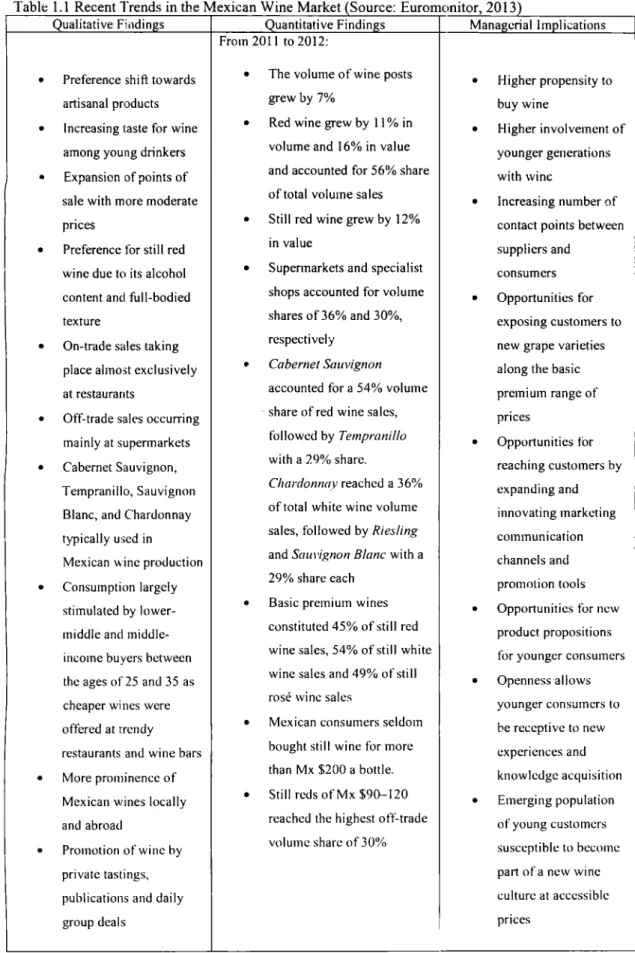
(17) their offer promises to fulfil and match these needs with its proposed sat.sfiers. Ideally, the promise of a brand could be synthesized successfully in a single name, an appealing image, and a unique offer. A brand is an intangible asset of a firm created with the purpose of making stakeholders' investments more profitable (Dowling, 2006). It is a conceptualization elaborated through evolving objective and subjective dimensions assigned by interna) and externa) stakeholders, as well as by consumers who refer to the firm by a name and recognize it by a limited number of traits. Sorne elements of the brand are objective, such as the colour of a logo, whereas othcrs ar,! subjective, such as being environmentally friendly. As an intangible asset of a firm, a brand represents both value created in excess of the closest above comparable reference in relative terms and value created upon a commodity leve) in absolute terms. A key aspect of a brand is its image. A brand image consists of a bundle of associations created with the aim at making the brand sustainable. Accordingly, the nature of a brand is malleable. As a dynamic entity (Stern, 2006), a firm 's image changes and adapts to new social contexts through even more innovative ways and in the process, the brand image gathers more connotations and relevance among people. As the brand gains more meanings with gradual changes, it links more externa) objects or concepts to the firm 's image. For example, the brand could be linked to the concern of being socially responsible, extending the brand image to include more properties. Everybody can have an experience of a brand, irrespective of being consumers or not. The reason is that the understanding of a brand is mainly the result of a corporate ccimmunication strategy directed either to current and potential consumers, or to externa! stakeholden. However, the way the brand message affects those people differs substantially. Product and brand attributes affect people in di fferent degrees. People may transfer any attribute to any object either voluntarily or unconsciously. The influence of the way people personally rank product and l::rand attributes based on their transferences to other objects affects purchase choice. Among common purchase facilitators stand notions of relative perceived quality, product desirability, product need, anticipated product or service satisfaction, anticipated product functionality, and probability of purchase, to mention justa few. lndeed buyers more easily recall ccrtain information. One particular attribute may not help the consumer to make any transference to his or her personal stock of knowledge, hut other attributes might help the consumer to bring to life familiar images, such as a popular person or a visited place. This said, a broad set of personal, social, or cultural transferences could be attached to th<! characteristics of the firm's offering with different durations and emotional content. The more associations created with the brand, the more ways to establish the brand in the minds of the people, and the higher the emotional content of these associations, the easier Lhey could be recalled.. 14.
(18) People buy brands when they are st:arching for status, image, and social recognition (Del Rio et al., 2001 ). They also place value on uniqueness and are willing to pay more for a product not associated with mass production, thereby feeling unique themselves when they perceive the uniqueness of the product. Sometimes people buy brands that have been elaborated by an expert, an artist, or a prestigious person looking for aesthetic, symbolic, functional, and ple:1.surable properties. According to the theory of ae:sthetic expression, managing brands involves the consideration of the way beauty empowers them to attract consumers. A practica! implication derived from the application of this theory to the branding field is that the most beautiful brands become visible through acts of cocreation that show regard for the artistry, plans and ideas ofthe brand's stakeholders (Hatch, 2012). Brands gain an origin when they have been supported financially ta expand abroad and carry the name of the place of origin that gave them birth (Ramachandran and Pant, 201 O). However, establishing a brand image abroad involves facing the extra challenge of penetrating local barriers of entrance. Perceptions about the quality of the place of origin and judgments about the quality in relation to the price of the offerings coming from foreign locations might not be favourable. However, experience with the place of origin may mediate between the origin and the disposition to buy products from unfamiliar places. In practice, there is no clear concept as a brand for wines. Even asking someone to recall a wine brand elicits answers from diverse categories, including grape variety, official production region, producer name, or brand name. This lack of standardization in wine recalling is due to preferred styles for branding wines in diffcrent regions of the world. In Europe for example, branding has been accomplished traditionally by focusing on the place of wine origin whereas in America, branding has been centrcd on the name of the grape variety. Accordingly, consumers refer to a v.,ine with different cues: its place of origin, grape variety, wine producer, or brand name. These key branding elements have been used nationally and intemationally in wine markets. The rest of the wine attributes on a bottle of wine, such as vintage, alcohol content, awards, critiques, wine stories, or food-pairing suggestions, have been used as complementary descriptors of the wine. In ali the cases, the commonality of the branding technique employed, such as the place of origin or the name of the producer, is the reference to a trusted source of origin. In light of these facts, the place of origin, the grape variety, and the producer would be at the top of the relevant attributes perceived by local consumers, followed by the vintage and the rest of the attributes. Incidentally, the current relative position of emergent marketing attributes in the local market, such as being organic, green, alcohol reduced, or suggested for diabetic people, still needs deeper analysis. A relevant gap in consumer behaviour studies in reforence to local wine markets is the alignment between brand elements purposely embedded in ¡:roducts by suppliers and the. 15.
(19) corresponding consumers' perceptions, a concerned that has been addressed academically as brand congruence. Consumers derive value from brand congruence, namely the alignment of product traits with imputable expectations amid competing products of the same category or close substitutes. A type of alignment between a product attribute and consumer expectations is 1he place of origin paired with quality expectations of a wine. Another related example of alignment between product attributes and consumer expectations is thc origin of the grape variety in association with the name of the grape variety and the corresponding consumer's expectations about the quality of the wine. The blocks of value consumers add to the commodity leve] of a product category based on this type of congruent cognitive associations are limitless. Products can offer as many intangible satisfiers as consumers are able to process, value, and demand. Congruence effects on buying behaviour might even escalate in complexity during real-time purchasing scenarios, where contextual, time, social, and personal factors also act upon consumer choice. The understanding of the interaction between product differences and e onsumer preferences remains a challenge for researchers and practitioners. The challenge for branding is making key product attributes identifiable amid a myriad of potential constraints for conwmers and then showing them attractive enough to surpass competition. This constitutes an opportunity for wine marketers because once preferred attributes have been identified, it is easier for sellers lo select wine imports for local markets, as well as to keep a proper inventory management poli,:y ro provide customers with appealing alternatives when facing saturation. ldentifying tlie critica) brand elements in wine markets therefore has relevant managerial irnplications. lt helps marketers to position their brands in a timely fashion, in the right place, and with convenient ambience. lt helps price setters to determine the value consumers confer to the characteristics of the products they sell. lt alt;o may anticipate the responses of product introductions and advertisement effects. This work explores the critica) brand elements that influence consumer wine recognition, Iikeness, and predisposition to buy wine in Mexico. Local consumers have tumed more receptive to a new wine culture characterized by a higher interest for matching wine with food. There is stronger interest of women and young people in combining wine with food and a renovated interest in incorporating wines in menus for expanding tourist attractions and commercial potential at intemational recreational resorts. There is greater familiarity with media programmes conceming health and wellbeing, a population that is tuming grey and is attracted by the hobby of wine learning, and a stronger interest in acquiring goods that were luxurious in a recen! past but have now extended into a broader consumer segmentation through lower prices. This is precisely the curren! state of the incipient wine culture appropriation process evolving in Mexico that calls for further refining and updating of wine. 16.
(20) customer descriptions and the identification of key wine attributes from the perspective of Mexican consumers.. 1.2 Macro Perspective of Wine Marketing The main Mexican wine producing provinces are Baja California, Coahuila, Querétaro, and Zac.:atecas. More than 40 wines from Baja California have been endowcd with the recognition ofbeing among the best wines in the world by their inclusion in the Guía Peñín, the most famous and comprehensive wine guide from Spain. The guide details the best wines from Spain, Chile, Argentina, and Mexico (ProMéxico, 2012). Recently in 2013, Mexico participated for the first time at Vinexpo, the main global wine expo that takes place in Bordeaux, France (ProMexico, 2013), showing an increasing competitive quality in the international context, branding Mexican wines on an international basis, and increasing the awareness of local consumers of wines produced in Mexico. Another sign of increased quality thrust of Mexican wine production has been its capacity to expand its brand portfolio beyond its national boundaries. Mexican wine is commercialised in 33 countries (Veracruzanos.lnfo, 2012). According to the Mexican Wine Council, a national institution with 14 associated wine related firms, approximately 20% of national wine production is exported (Veracruzanos.Info, 2012). The federal government has shown clear signs of interest in supporting the evolvement of the industry. Rccently, in 2012, the Ministry of the Eccnomy devoted 50 mi Ilion pesos to the enhancement of the productivity of the wine sector (Mexico Ministry of Economy, 2012). The monetary resources have been mainly aimed at developing financia! mechanisms to grow more grapevines. Incidentally, the national wine industry has an annual wine production of 18.4 million litres, while annual consumption is about 56.5 mi Ilion litres, showing opportunities for success of the subsidy (Mexico \1inistry ofEconomy, 2012). The key strategies employed to promote wine among local consumers that complement the cobranding activities that involved consumers naturally use to communicate information, lie in the service industry and have been mainly implemented through store personnel training and waitertraining seminars held at restaurants (El Economista, 2012). Beside:,, recent trends in the Mexican wine market are in line with potential branding opportunities (see Tab e 1.1).. 17.
(21) Table 1.1 Recent Trends in the Mexican Wine Market (Source: Euromonitor, 2013) Oualitative Findings Ouantitative Findings Managerial lmolications From 2011 to 2012:. •. Preference shift towards. •. Jncreasing taste for wine. •. among young drinkers. •. Expansion of points of. •. •. •. Preference for sti II red wine due to its alcohol. •. younger generations. and accounted for 56% share. with winc. •. lncreasing number of. Still red wine grew by 12%. contact points between. in value. suppliers and. Supermarkets and specialist. consumers. exposing customers to. res pee ti vel y. new grape varieties. On-trade sales taking. •. Off-trade sales occurring. Cabernet Sauvignon,. typically used in Mexican wine production Consumption largely stimulated by lower-. •. middle ancl middleincome buyers between. offered at rrcndy. •. restaurants and wi ne bars More prominence of Mexican wines locally and abroad Promotion ofwine by. along the basic premium range of. share of red wine sales,. prices. •. •. Opportunities for. with a 29% share.. reaching customers by. Chardonnay reached a 36%. cxpanding and. oftotal white wine volume. innovating marketing. sales, followed by Ries/ing. communication. and Saul'i¡;non Blanc with a. channels and. 29% share each. promotion tools. Basic premium wines. •. Opportunities for new. eonstituted 45% of still red. product propositions. wine sales, 54% of still whitc. for youngcr consumers. •. rosé wine sales. chcaper wi nes werc. Opportunitics for. Cabernet Sauvignon. wine sales and 49% ofstill. thc ages of 25 ancl 35 as. •. accounted for a 54% volume. followed by Tempranilla. Blanc, and Chardonnay. •. Higher involvement of. texture. Tempranillo, Sauvignon. •. •. volume and 16% in value. shares of 36% and 30%,. mainly at supermarkets. •. buy wine. content and full-bodied. at restaurants. •. Higher propensity to. shops accounted for volume. place almost exclusively. •. Red wine grew by 11 % in. oftotal volume sales. sale with more moderate prices. •. grew by 7%. artisanal products. •. The volume ofwine posts. Openness allows younger consumcrs to. Mcxican consumers seldom. be reccptive to new. bought still winc for more. expericnces and. than Mx $200 a bottle.. knowledge acquisition. Still reds ofMx $90-120. •. Emerging population. rcached thc highcst otl~trade. of young customers. volume share of 30%. susceptible to become. prívate tastings,. part of a new wine. publications and daily. culture at accessible. group deals. prices. 18.
(22) The research about wine in the Mexican market has not been approached based on structural model analysis ns it is going to be approached in this research, however general market statistics are obtained periodically as mentioned above, historical retrospective studies have been developed (e.g. Morfin, 1999 and Meraz, 2013), the country' s participation in the international wine market as a net importer has been documented (e.g. Sims, 199), and the topic has been deeply studied from a regional development perspective ( e.g. Trejo-Pech et al. 2011 ).. 1.3 Significance oj"Wine Branding A product's competitive advantage might be more significant when delivered via the tacit elements of strategy and management (Wilson and Liu, 2010). Branding is one of these key elements. Building a brand as a part of corporate strategy involves making the consumer aware of the values offered by a firm and has been proved to influence business performance (Wong and Merrilees, 2008). Specifically, the wine industry involves different stages during which it adds value to wine. Branded winemaking is more a process of stewardship than manufacturing. and this value added to the commodity during the wine preparation is transmitted to consumers to increase their willingness to buy it. Wine is also the result of different production technologies and :nnovations. The benefits of branding wine are considerable. Consumer brand awareness and loyalty allow for lower marketing costs. Furthermore, a brand enhances the perceived quality of a product, allowing a firm to charge higher prices than its competitors. Brands carry credibility that makes the sustainability of future brand extensions more viable. Brands also provide firms with a shield against price wars (Westling, 2001). A brand offers accessibility to exclusivity. Whcreas an inexpensive wine is purchased in most cases for its purpose rather than for its intrinsic qualities, branded wines are typically made from grapes from severa) sources, which may include many vineyards owned by prestigious companies (Westling, 2001) and therefore become attractive from the consumer's perspective. Brands have been meant to keep a substance but have been updated whenever necessary. Marketing control, role identity salience, and value congruence are antecedent factors of consumers' appropriations of a brand (Kaufmann et al., 2012). Rather than wine invariably being the same, it is necessary for it to offer a regular standard of quality within varying externa) constraints, given that consumers may actually search out such inconsistency (Charters, 2009). Consumers like to think about the producf s sustainability.. 19.
(23) The brand is an introduction card for a product to be traded abroad and to compete in foreign markets consistently with success (Onkvisit and Shaw, 1989). Wine consumers in emerging markets have shown a general preference for global brands over local brands (Tam and Elliott, 2011). In this respect, it has been found that a positive perception about the place of origin can have a positive impact on a brand image, going beyond any negative associations that a brand name may suggest (Ranchhod et al., 2011). In sorne countries, externa! openness to foreign consumers is even more significant than local involvement in explaining the success ofa wine finn (Giuliani, 2013). Mexico <loes not have appellations of origin for its wmes. This om1ss10n has advantages and disadvantages for national wines (Montén, 2005). On the one hand, the final consumer <loes not count a quality standard for wines produced within the country. On the other hand, production and marketing strateg:1es have been enriched with a broader set of innovative capacities to expand wine offerings. Accordingly, Mexico may be having the opportunity to utilise innovative production methods and to exploit production regions, such as sorne regions located in the centre of the country like Querétaro, Aguascalientes and Zacatecas, out ofthe conventional intemational wine strip. Besides this creative example of brand penetration, there have alnc:ady been important marketing efforts on behalf on national producers to channel wine to younger c.::msumer segments. The type of wines targeted to young people is more fruity and economical but less alcoholic to match their taste preference. Sorne examples ofwines that have incorporated these modifications are Monte Viña (Casa Madero), Sierra Blanca (L. A. Cetto), ST (Santo Tomás), and Calixa (Monte Xanic) (Cárdenas et al., 2009). More recently, during 2012, Mexican wmes have been promoted by stronger media diffusion campaigns, the development of an intemet portal for Mexican \vine, the setup of an itinerant exposition called ''Wine Pavilion" (SAGARPA, 2012), and the trainin: 5 ofservice personnel by means of didactic material known as "Practica! Wine" (SAGARPA, 2013). The latter is a too! that aims to connect the productive sector with the commercial sector by capacititing the personnel in the wine industry. Incidentally, the Ministry of Education has already recognised this didactic innovation officially as a tool for developing the labour competency of wine servi,:e personnel.. 20.
(24) 1.4 lmpact of Place of Origin of Wine Brands Wine consumers like to feel relief from routine and conventionalism and therefore show interest in geographic trips, the search for novel tastes in wine, and the transference from wine flavours to familiar objects. Sorne objects of reference in wine branding, such as the place of origin or the grape variety, attract the attention of consumers. Sorne wine varieties have been linked immediately to a country, such as the Tannat, which is typically associated with Uruguay. The capacity of Uruguayans to link a worldwide known variety with its country is au example of a i,uccessful branding strategy. In Mexico, no emblematic grape variety ora grape variety is associatcd with this country, though the efforts to produce quality wines with particular grape varieties are worth mentioning. This is the case of the producer LA. Cetto, popular for the grape varieties Nebbiolo, Sangiovese, and Syrah; Casa Madero linked with the grape variety Shiraz; or Santo Tomás, producer of popular wines from. Tempranilla and Barbera (Cárdenas et al., 2009). However, not all producers could possibly be linked to successful productions of certain wine varieties. The supply is c:xtremely abundant. Therefore, producers link their identities with different objects that appear on wine bottles to brand themselves in the market. A considerable quantity of wine labels is on the market. Consumers have been exposed to more than 2000 labels and they have to decide to make a wine choice amidst an overwhelming amount of simultaneous infom1ation. Labels come from plenty or regions of the world. For each 1O litres consumed worldwide, 4 litres do not come from the country where they are consumed (SAGARP A, 2012). However, this !abe! variety seems attractive from the point ofview ofwine enthusiasts. For the wine enthusiast, wine tasting is an adventure, a hobby, or even a ludicrous intellectual challenge. Sorne objects of reference in wine branding, such as the place of origin or the grape variety, particularly might be always capturing the attention of regular consumers.. 1.5 Wine Market Behaviour in Mexico In Mexico, there is the potential to exploit daily wine consumption under accessible prices due to the ease with which wine can be combined with food, the natural cultural attachment to food of Mexican people, and their likeness to hosting celebrations. Around 31 % of wine drinkers consume wine on special occasions and approximately 39% drink it as a suitable food pairing (Profeco, 2008). The natural compatibility of wine with food is superior to the match of food with other alcoholic beverages, such as Tequila, Whisky, and beer, already part of the national culture. In reference to wine taste, Mexican consumers prefer fruity flavours to those derived frorn barrelled or bottled reserves (Profeco, 2008).. 21.
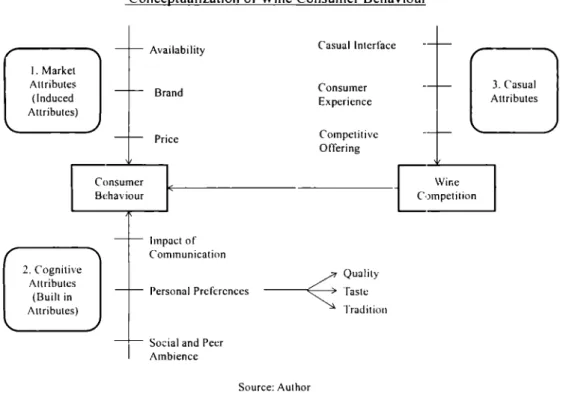
(25) The majority of wines consumed in Mexico are of foreign origin and account for 70% of local wine consumption. The most popular foreign wines are from Chile and Sp2:in due to similarities in culture and linguistics (Cárdenas et al., 2009). Argentina is succeeding at keeping a considerable market share by offering boutique wines at low prices. Around 88.6% of wine consumed is still red, 4.1 % is still white, and only 5.4% is sparkling. Preferred red varieties are Cabernet Sauvignon, Tempranilla, and. Malbec. Other red varieties, such as Merlot, Shiraz and Carménere, have found market resonance, along with white varieties, such as Viognier and Sauvignon Blanc. The Cabernet Sauvignon keeps ahead ofthe national ranking, with more than 40% of consumer preference (Cárdenas et al., 2009). In reference to gender biased buying prefercnces, days and reasons for buying show discrepancies.. From Mondays to Thursdays, housewives huy economically priced wines at supermarkets. Men buy wines at the weekend, mainly huy for meetings, and spend more money on it than women do (Notimex, 2012). ln general, local wine consumers huy wines that they have already tasted or wines that were highly recommended by friends or acquaintances. Besides oral referrals, 01:her cues that drive local wine consumption, but with lesser strength, are the name of the producer cind the place of origin. Finally, fewer consumers follow expert advice (Notimex, 2012). This apparent closeness to expert advice has a lot to do with cue receptivity. ln general, there are consumers who are open to leaming about wine matters and consumers who are not interested in accumulating wine knowledge but who merely react to occasional buying stimuli (Notimex, 2012). Wine enthusiasts drink wine frequently during informal meetings at home; gatherings can last around four hours where wine, and food matching has been performed freely without time restrictions. Lately, the liking for wine has been growing in two importan! segments: young adults from 20 years old or more and women, principally in executive positions (Notime,:, 2012). According to a report (Alimentaria Mexico, 2008), 46% of wine consumers in Mexico are women. In reference to wine education, 24% of Mexican drinkers who drink table wine on a regdar basis have attended a wine course ora wine tasting (Cárdenas et al., 2009). A conceptualization of wine consumer behaviour is presented in Figure 1.1. For the consumer to be disposed to acquire wine there must be exposure to the detonating attributes of the buying behaviour. Based on observation, it is possible to address a classification of attri Ju tes according to their source, obtained by induction (coming frorn the supply side), by casualty, or by interaction with consumers (coming from the demand side). An altemative classification might have been based on the nature of the effects on buying behaviour, either direct or collateral. Without exposure to the product, the consumer will not be aware ofth,~ existence ofthe brand. That is the reason why availability is a necessary condition for developing brand awareness. Other attributes,. 22.
(26) such as the price range and the range of brands, come from the supply side and induce wine buying behaviour. In reference to the market demand, it is possible to identify a set of cognitive attributes that exert a critica! influence on wine consumer behaviour and that consists of consumer preferences &bout quality, taste, and tradition, as well as mental alertness to brand communication and brand socialization, especially among peer groups.. Figure 1.1 Wine Consumer Behaviour. Conceptualization of Wine Consumer Behaviour Casual Interface. Availability 1. Markel Allributes (lnduced Allribules). Consumcr Bt:haviour. Brand. Consumer Experience. Price. Compelilivc Offering. J. Casual Allributes. IE--------G. Wir,e )mpetition. ....__--~----'. lmpact of Communication 2. Cognitive A11ributes (Built in Auributes). ~Qualily Personal Prcfncnces. ~. Tasle Tradition. Social and Peer Ambiencc So urce: Aul hor. Finally, it is realistic to include casual influences on purchase behaviour, such as random experience with the brand, casual interface with the brand, and occasional encounters with competitive alternatives. Direc:t effects on consumption have been either induced or built in, whereas indirect or collateral effects on consumption happen to be casual or non-systematic. In short, market opportunity, economic influence, and psychodynamics interact to produce wme consuming behaviour within a decision system consisting of three main attributes - the market, the ambience, and personal - as shown Figure 1.2.. 23.
(27) Figurel.2. Grape Variety and Place of Origin Dissonance. Conceptualization of Grape Variety and Place of Origin Dissonance. Availability 1. Market Attributes. Physical position of competing brands. 2. Ambience Attributes. Origin variety. 1. Price. lmpact of communication. Cognitive Consonance/ Dissonance. L. r-;:~rception of Quality. lmpact of personal preference. lmpact of knowledge. 3. Personal Attributes. lmpact of involvemcnt. Sourcc: Author. Briefly, Figure 1.2 above shows how environmental influences and personal characteristics of consumers interact to produce consonance between wine cues within a decision system consisting of three main casual forces: the market, the ambience, and the consumer itself.. 1.6 Contribution o( the Study. This study aims to explore the potential to exploit wine attributes in a :narket that is emerging into the global wine culture and that has growing potential for developing better consumer-centric targeting strategies and stro:1ger brand appeal. Maintaining an appropriate brand identity is essential for achieving a higher status, as well as aligning customer needs with branded product attributes. There has been no significant research undertaken in the Mexican market on wine involvement and wine knowledge leve! and their relationship with perceptions of quality and consumer preferences for a specific place of origin wine brands. This exploratory study seeks to investigate these issues and to see how wine knowledge is employed in buying decisions. This work will provide insights into the Mexican wine market and in the description. 24.
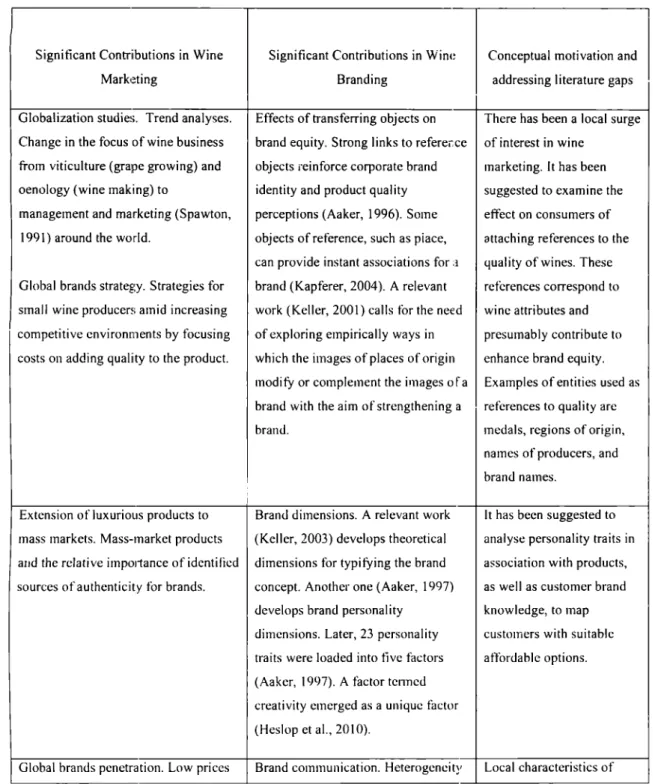
(28) of local consumers. Accordingly, wine exporters to the Mexican market will be able to focus greater marketing efforts on Mexican consumers, including easing and making the wine education process more attractive. This study is of value to researchers, wine educators, and practitioners, as well as wine exporters, as it will provide insights into the course and scope of place of origin preferences and the recognition and preference for wine branding elements. The topic is relevant in the context of an emerging wine culture where there are opportunities to develop markets with niche characteristics that have already been exploited in more developed countries. The topic is also relevant for Marketing given that this field requires information about the effect of brand elements on the objective consumer in order to allocate investments on consumer knowledge development and design tools that keep markets afloat. Suppliers look to invest in a profitable signalling strategy capable of eliciting a willingness to pay, high enough to recover the costs of differentiating the product. If brand elements are overused in the market or are quite similar in competitive products, it is difficult for the consumer to respond to the signa!, he gets confused and penalises the sell. In this line, this work helps to illustrate within a statistical framework those elements that are perceived by local consumers with different knowledge levels.. This work also advances en attribute dissonance research in reference to the interaction between grape variety and place of originas shown in Figure 1.2.. l. 7 Sociological Aspects of a Brand. The sociological aspect of the pairing "brand-price" could be explained as the phenomenon of attaching value to an object because it has been attached to the saml! object by a community. That is, it could be explained from the perspective of what has been called in literature brand communities. The concept of community can be traced back to the philosopher Tonnies who established a differencc between the concepts of society and community (Tonnies, 1887). He gave the name "community" to the collective born into social harmonious links and ·'society" to the collective bom into impersonal relationships. Community from this perspective offers its members a feeling of belonging and security and creates their need to interact with each oth,~r. People build self-confidence (Giddens, 1990) in this positive context and appropriate its uses and customs. Similarly, brand communities invite their members to belong to a group through the interaction with a symbolic apparatus that is useful to update positive relationships among agents and whose common awareness and interpretation often gives security and confidence to their members.. 25.
(29) Confidence creates loyalty towards a product and an organization. In t1Jm, loyalty results in future repurchases and payment of a price for a product. Tmst in a brand is not given beforehand; instead, as argued in the past (Giddens, 1990), it must be pursued. As this job is performed there is a mutual process of self-revelation that permits the establishment of the pairing "brand-purchase". The author explains in his work that the self is a reflexive project within Modemity and individuals seek their identity between the strategies and options provided by abstract systems. He adds that the interaction between expert k.'lowledge and appropriation, or update of knowledge on behalf on the non-expert when in contact with thP. expert source, is influenced by the experiences gained at the access points that in our contexts would be the brands themselves. In line with the idea of trust, for this author, feeling confidence while buying a brand means consumers have reached an equilibrium between trust ancl acceptable risk. After sorne considerations about branding have been explored, next chapter starts by stating the objective of statistically exploring an emergent market of wine in Mexico from the perspective of Branding and in particular using Keller' s proposal of brand know ledge creation (Keller, 1998; 2003) as a general guide: to operationalize sorne psychological and economical concepts frequently used to analyse consumer:; in marketing stuclies. This study tries to identify ifthere is brand knowledge about wine and if so at what leve 1, if consumers are involved with the topic, if branding by place of origin is relevant in this market, if consumers really trust wine branding, and if this trust leads to repurchase intentions. This work aims to find out what variables consumers are using as shortcuts to pick a wine and what type of variables should be useful to segment and better target consumers. Briefly, Chapter lII presents a literature review. Chapter IV deals with sampling issues. Chapter V analyses the sample and discusses results. Chapter VI reports conclusions and Chapter VII discusses managerial implications and future research paths.. 26.
(30) CHAPTER II. 2. Objectives of the Study This study has been aimed at identifying variables and factors that affect the consumer behaviour in reference to wine attributes. Specifically, the study raises the issues conc~rning the attributes Mexican consumers recognize when they purchase a brand of wine such as the importance of place of origin branding when selecting a brand and when substituting among brands. The results ofthis study will be important far marketers and far brand communication strategists in tcrms of improving customer facus strategies in promotional campaigns, leading to better segmentation and better understanding of pattems of change in a market not yet fully described in the Mexican marketing literature. 2. 1 General Objective This research attempts to explore wine purchasing behaviour in the Mexican market in reference to the effects of brand elements used in wine marketing. The specific objectives of this work are as stated below. 2.2 Specific Objectives 2.2.1. To analyse the impact of externa! and interna! wine product cues in reference to the credibility ofbrand in the product that drives the buying behaviour of consumers in Mexico. 2.2.2. To analyse 1he process that consumers fallow in arder to determine what constitutes a '·wine of choice" in reference to wine brand elements. 2.2.3. To measure the variations in buying decisions in reference to familiar versus unfamiliar place of origin brands. 2.2.4. To describe in the process of infarmation analysis the status of middle class wine buyers in Mexico. The above objectives are m line with previous studies that analyse wine trusted choice based on externa( or interna! cues (Mueller, et al., 2010; Bruwer and Buller, 2012; Priilaid, 2013) that show how brands compete across different retrieval cues affecting brand irr.age in the process (NenyczThiel et al., 2010). In addition, it has been observed that combining environmental cues with demographic characteristics could be advantageous far marketing wine products to consumers (Seock, 2009). The contributions of this study to existing literature and current body of research in reference to branding have been referred below.. 27.
(31) 2.3 Conceptual Map of Research Contributions in WinP Marketing and Wine Branding The foilowing research map consists ofthe contribution ofwine marketing and wine branding that has been derived from conceptual motivations and addressing the literature gaps.. Table 2.1 Conceptual Map for this Research. Significant Contributions in Wine. Significant Contributions in Winc. Conceptual motivation and. Mark,~ting. Branding. addressing literature gaps. Globalization studies. Trend analyses.. Effects of transferring objects on. There has been a local surge. Change in the focus of wine business. brand equity. Strong links to refere¡:ce. of interest in wine. from viticulture (grape growing) and. objects reinforce corporate brand. marketing. lt has been. oenology (wine making) to. identity and product quality. suggested to examine the. management and marketing (Spawton,. perceptions (Aaker, 1996). Sorne. effect on consumers of. 1991) around the world.. objects ofreference, such as piace,. attaching references to the. can provide instan! associations for. ,1. quality ofwines. These. Global brands strategy. Strategies for. brand (Kapferer, 2004). A relevant. refcrences correspond to. small wine producers amid increasing. work (Keller, 2001) ca lis for the need. wine attributes and. competitive environments by focusing. of exploring empirically ways in. presumably contribute to. costs on adding quality to the product.. which the images ofplaces oforigin. enhance brand equity.. modify or complement the images ofa. Examples of entities used as. brand with the aim of strengthening a. refcrences to quality are. brand.. medals, regions of origin, names ofproducers, and brand names.. 1. Extension of luxurious products to. Brand dimensions. A relevant work. lt has been suggested to. mass markets. Mass-market products. (Keller, 2003) develops theoretical. analyse personality traits in. aud the relative imprn1ance of identiticd. dimensions for typifying the brand. association with products,. sources of authenticity for brands.. concept. Another one (Aaker, 1997). as well as customer brand. develops brand personality. knowledge, to map. dimensions. Later, 23 personality. customers with suitable. traits were loaded into five factors. affordable options.. (Aaker, 1997). A factor tenned creativity emerged as a unique factor (Heslop et al., 2010). Global brands penetration. Low prices. Brand communication. Heterogeneity. Local characteristics of. 28.
(32) and strong brands sway consumers. in semantics concerning wine. consumers pose challenges. away from overpriced brands and. tenninology. In reference to single. to brand introduction.. poorly positioncd imported products. well-known wine tenns, low. Therefore, suppliers face. from the Old World (Pike and. involvement consumers differ from. the need to communicate. Melewar, 2006).. high-involved consumers in that thcy. effectively with pott:ntial. make different types of association:;. customers. Dissonance or. (Spielmann and Gelinas-Ghebat,. consonance between wine. 2012).. quality perceived through attributes needs to be furthcr analysed.. Brand equity. Conceptualizations about. Brand congruity, infonnation cue use,. Beyond consideration of. brand equity enhancement based on. and cue incongruity effects. Place-. consonance and dissonance. associations between corporate brands. related aspects and cultural symbol,. between attributes and wine. and different entities, such as brands,. represent authenticity and value.. marketing tenninology, it is. places, persons, product categories, and. Brands with dissonant brand namei.. advisable to examine if. institutions (Uggla, 2006).. succeed because of a favourable place. wine attributes add value to. of origin image (Ranchhod et al.,. products within the class. 2011).. category and affect purchase choice.. Opcrationalization ofthe involvement. Place equity and branding. Consumer. There are cultural. construct. lnvolvement. use of geographical information,. differenccs with respect to. operationalization conducted either on. including cour.try, state and region of. involvement with a product. one dimension: uní-dimensional. origin in the wine purchase decision in. category. As such, thc way. involvement (Zaichkowsky, 1985) or. relation with the type of consumers. consumers involve with. on more than one dimcnsion: Multi-. who utilize this gcographical. wine brands will. dimensional involvement (Houston and. information operationalized with. presumably differ between. Rothschild, 1978; Laurent and. levcls of self-perceived winc. local customers and their. Kapfcrer, 1985; Mittal and Lee, 1989).. knowledge (Atkin, 201 O).. foreign counterparts. Accordingly, variables subsumed in a construct might show local distinctivencss.. lnvolvement as mediating variable.. Destination branding. Place of origin. An emerging local wine. Branding implications of ditlerent wine. in interaction with brand name affects. culture may call for the. channcls considering differcnt value co-. pcrceptions of price. Brand name by. meas u re of thc effcct of. crcation propertics and diffcrcnt lcvels. itself and place oforigin by itsclf. different lcvels of. of involvemcnt asan anteceden! for. produces images a long personality. involvement on wine. modclling (Hollebcek and Brodie,. dimensions, as wcll as bchavioural. intcrpretation and winc. ---. 29.
(33) 2009). lnvolvement as on premise. expectations after purchase (Heslop et. choice. Rather than. behaviour. High-involved wine. al., 2010). Perceived quality ofa wine. detennining the effect of a. consumers are more concemed about. region raises the quality expectation. variable on purchase. functional reasons, while low-involved. of the sub-regions within the region. decision mediated by. wine consumers are more concemed. when appearing on wine labels. involvement, it might be. about social and time reasons for wine. (Johnson and Bruwer, 2007).. better to detennine the. drinking (Bruwer and Huang, 2012).. degree ofinvolvement in the emerging wine culture and the impact ofthis difference on wine choice.. Advances in local market segmentation,. Advances in local market. The study calls for an. target group selection and customer-. segrnentation, target group selection,. emerging classitication of. orientation. Marketing concems in. and customer-orientation. a) drinking. consumers based on local. France are related to the rate of. occasions, b) types ofwines. demographic and cultural. adoption ofwine by women and young. (price/quality}, c) consumer attitudc. characteristics. Differences. people while in the United States, the. types. d) consumers' consumption.. coneeming preference for. focus lies on older generatior.s anda. e) consumers' demographic Lypes. places of consumption and. more masculine image ofwine (Orth et. (Gluckman, 1990). Occasion:. healthy lifestyles or even an. al., 2007). A healthy lifestyle associated. 1.Special occasions 2. Casual. emerging ecological. occasions 3. Quantity drinking. Types. conscience of consumcrs. .. excitemenc·. a greater tendency to. of wines tied with the occasion:. could be detected given that. plan ahead, a tendency to cxperience. 1.Connoisseurs wines. 2. Good. global images ofwine. less role overload, older and more. wines, 3. Nice wines, 4. Plonk.. culture intluence the buying. educated women (Divine and Lepisto,. Consumption: 1. Heavy drinkers,. behaviour of local. 2005).. 2.Medium drinkers, 3. Light drinkers. consumers.. with less importancc on the value of 1. (Gluckman, 1990). Product attributes in cross-cultural. Wine consumption in cross-cultura. lt is necessary to find. exploratory studies. Quality associated. exploratory studies. Wine consumers. critica! attributcs. with the intrinsic attributcs of a. view laste, variety, and price as the. intluencing purchasc choice. traditional product has a positive and. most importan! buying cues ar.d are. of local customers who are. significan! influence on buying. inlluenced by the recommendations of. now part of a vibrant local. intcntions (Fandcs and Flavián. 2006).. people around them (Bruwer and. wine culture. Presumab!y,. Tht:se are .. good colour··, ··pleasant. Buller, 2012). Chinese consumers rely. taste, variety and price will. flavour'·, "special texturc·· ... appetising. more on place of origin when they. still be critica! attributcs for. look·· and ··charncteristic. agn::cable. purchase wine for spccial occasion~.. wine buying bchaviour.. aroma .... where they could be exposed to thc judgmcnt of others. By contras!, whcn purchasing wine for their own prívate consumption, place of origin assumes. 30.
Figure

+7

Documento similar
In the preparation of this report, the Venice Commission has relied on the comments of its rapporteurs; its recently adopted Report on Respect for Democracy, Human Rights and the Rule
The draft amendments do not operate any more a distinction between different states of emergency; they repeal articles 120, 121and 122 and make it possible for the President to
H I is the incident wave height, T z is the mean wave period, Ir is the Iribarren number or surf similarity parameter, h is the water depth at the toe of the structure, Ru is the
In the previous sections we have shown how astronomical alignments and solar hierophanies – with a common interest in the solstices − were substantiated in the
Díaz Soto has raised the point about banning religious garb in the ―public space.‖ He states, ―for example, in most Spanish public Universities, there is a Catholic chapel
teriza por dos factores, que vienen a determinar la especial responsabilidad que incumbe al Tribunal de Justicia en esta materia: de un lado, la inexistencia, en el
Our results here also indicate that the orders of integration are higher than 1 but smaller than 2 and thus, the standard approach of taking first differences does not lead to
In the “big picture” perspective of the recent years that we have described in Brazil, Spain, Portugal and Puerto Rico there are some similarities and important differences,
