
Worksheets based on deep cultural issues for reading comprehension in eleventh graders
145
0
0
Texto completo
(2) ii. WORKSHEETS ON DEEP CULTURE FOR READING COMPREHENSION. ___________________________ Note of acceptance. ________________________________ María Fernanda Téllez Téllez. Thesis Director. __________________________________ Astrid Núñez Pardo M.A. Juror.
(3) iii. WORKSHEETS ON DEEP CULTURE FOR READING COMPREHENSION Acknowledgments To God for giving me the strength, patience and health to finish this study at Externado de Colombia University and for having me guided to grow professionally and personally. Special thanks to my mom who has always been there giving me a hand, hug and support. All my gratitude to my special eleventh graders who made possible this study with their interest, help and contributions. And, finally, to my thesis director, Maria Fernanda Téllez and professor Astrid Núñez for their time, professionalism, dedication and great teachings who inspired me to be the best..
(4) iv. WORKSHEETS ON DEEP CULTURE FOR READING COMPREHENSION Abstract This research study describes the development and implementation of six worksheets based on deep cultural issues to enhance the reading comprehension process in eleventh graders. Due to the nature of this study in terms of observation, problem identification, description, analysis, intervention and assessment, the action research was the approach that covers this inquiry which took place at Tecnico Domingo Faustino Sarmiento school, a public institution in Rionegro, Bogota, Colombia. This study involved twelve students from eleventh grade, noon shift. After the intervention, I used the grounded approach to analyse the data gathered through the three instruments: students` artefacts (worksheets), field notes and a survey at the end of the process. As a result, I obtained that innovative materials with challenging activities, attractive presentation, appealing content, and the appropriate methodology that for this study was CLIL, are effective sources to improve not only reading skill but also writing and speaking skills. Regarding deep cultural issues, it is important to mention how relevant they were for the students who developed unconscious processes such as critical thinking, cultural awareness and problemsolving. Finally, the use of prior knowledge and several reading strategies (analysing the vocabulary, mapping, skimming and scanning) were precise to achieve the comprehension of texts.. Keywords: materials development, deep cultural issues, reading comprehension, critical thinking, cultural awareness, problem-solving and CLIL.
(5) v. WORKSHEETS ON DEEP CULTURE FOR READING COMPREHENSION Resumen Este proyecto de investigación describe el desarrollo e implementación de seis guías basadas problemas culturales profundos para mejorar el proceso de comprensión lectora en estudiantes de grado once. Debido a la naturaleza de este estudio en términos de observación, identificación de un problema, descripción, análisis, intervención y evaluación, la investigación acción fue el enfoque que cubrió esta investigación, la cual tomo lugar en la institución educativa distrital colegio Técnico Domingo Faustino Sarmiento, en Rionegro, Bogotá, Colombia. Este estudio involucro doce estudiantes de grado once, jornada tarde. Luego de la intervención pedagógica, use el enfoque basado en la teoría fundamentada en datos para analizar la información recolectada a través de tres instrumentos: trabajo de los estudiantes (guías), notas de campo y una encuesta al final del proceso. Como resultado, obtuve que materiales innovativos con actividades estimulantes, presentación atractiva, contenido interesante y una apropiada metodología que para este estudio fue CLIL, son recursos efectivos para mejorar no solo la habilidad de lectura sino también las habilidades de escritura y oralidad. En relación a los problemas culturales, es importante mencionar cuan relevantes ellos fueron para los estudiantes quienes desarrollaron inconscientemente procesos de pensamiento crítico, conciencia cultural y resolución de problemas. Finalmente, el uso del conocimiento previo y varias estrategias de lectura (analizar el vocabulario, mapas de ideas y escaneo) fueron precisas para lograr la comprensión de textos.. Palabras clave: desarrollo de materiales, problemas culturales profundos, comprensión de lectura, pensamiento crítico, conciencia cultural, resolución de problemas y CLIL.
(6) vi. WORKSHEETS ON DEEP CULTURE FOR READING COMPREHENSION Resumen Analítico en Educación - RAE. Página 1 de 19. Tipo de documento. 1. Información General Tesis de grado. Acceso al documento. Universidad Externado de Colombia. Biblioteca Central. Título del documento. Worksheets Based on Deep Cultural Issues for Reading Comprehension in Eleventh Graders. Autor(es). Edwin Armando Trujillo Amaya. Director. María Fernanda Téllez Téllez M.A.. Publicación. Universidad Externado de Colombia, 2017. Unidad Patrocinante Materials development, deep cultural issues, reading Palabras Claves. comprehension, CLIL, critical thinking, cultural awareness, and problem-solving. 2. Descripción This action research study describes the development and implementation of six worksheets based on deep cultural issues to enhance the reading comprehension process in eleventh graders at Domingo Faustino Sarmiento school, a public institution located in Bogota, Colombia. This study involved twelve students from eleventh grade, noon shift. After the intervention, I used the grounded approach to analyse the data gathered through the three data collection instruments: students’ artefacts (worksheets), field notes and a survey at the end of the process. I concluded that innovative materials with challenging activities, attractive presentation, appealing content, and appropriate methodology-.
(7) vii. WORKSHEETS ON DEEP CULTURE FOR READING COMPREHENSION CLIL, in this case - are effective sources to improve not only the reading skill but also writing and speaking. Regarding deep cultural issues, it is important to mention that they were essential for the students to develop unconscious processes such as critical thinking, cultural awareness and problemsolving. Finally, the use of prior knowledge and several reading strategies (analysing the vocabulary, mapping, skimming and scanning) were precise to achieve the comprehension of texts.. 3. Fuentes Alberta Teachers’ Association (ATA). (2003). Safe and caring schools for newcomer students. Edmonton, Alta: ATA. Retrieved from www.sacsc.ca/resources_school.htm. Atweh, B., Kemmis, S., & Weeks, P. (1998). Action research in practice. London: Routledge Falmer. Barrera Mora, M., & Cantor Trujillo, S. (2007). Socio-cultural stereotypes: exploring students’ perceptions regarding social issues. Bogotá, Colombia. HOW, Journal of Intercultural Communication, 14, 161-173 Bergaus. M.,Gorra. A. & Stottok. O. (2011). Colour coding: An alternative to analyse empirical data via grounded theory [PDF document]. Retrieved from: http://stottok.rollsport-nuernberg.de/2011-03-13_ECRM_Colour_Coding.pdf. Byram, M.(1987). Cultural studies in foreign language learning. Clevedon: Multilingual Matters. Blake, D. & Hanley, V. (1995) Dictionary of educational terms. Aldershot, England: Arena. Bolitho, R. (2003). Materials for cultural awareness. In B, Tomlinson. (Ed.). Developing Materials for Language Teaching (pp. 86-100). London: Continuum Press. Brown, H. D. (2007). Teaching by principles: an interactive approach to language pedagogy. (3rd ed.). San Francisco, CA: Pearson Longman..
(8) viii. WORKSHEETS ON DEEP CULTURE FOR READING COMPREHENSION Bryant, A. (2017). Grounded theory and grounded theorizing pragmatism in research practice. New York, NY: Oxford University Press. Burns, A. (1999). Collaborative action research for English language teachers. New York, NY: Cambridge University Press. Burns, A. (2010). Doing action research in English language teaching: A guide for practitioners. New York, NY: Routledge. Campaña Vargas, L. J. (2014). Improving oral interaction through the use of cooperative learning activities related to cultural issues (master's thesis), digital Ed. Universidad Externado de Colombia. Bogotá, Colombia. Chomsky, N. (2006). Language and mind. Boston, MA: Cambridge University Press. Castañeda, Hernandez C. A. (2015). An intercultural portfolio to foster writing micro-skills (master's thesis), digital ed. Universidad Externado De Colombia. Bogotá, Colombia. Charmaz, K. (2006). Constructing grounded theory: a practical guide through qualitative analysis. London: Sage. Charmaz, K. (2008). Grounded theory as an emergent method. In S. N. Hessse-Biber, & P. Leavy (Eds). Handbook of Emergent Methods (pp. 155-172). New York, NY: The Guilford Press. Cummins, J. (1991). Interdependence of first and second language proficiency in bilingual children. In E. Bialystok. (Ed.). Language processing in bilingual children. Cambridge: Cambridge University Press. Cummins, J. (1996). Negotiating identities: Education for empowerment in a diverse society. Ontario: California Association for Bilingual Education. Cummins, J. (2005). Teaching for cross- language transfer in dual language education: possibilities and pitfalls. Toronto, Canada: Symposium on Dual-Language Education..
(9) ix. WORKSHEETS ON DEEP CULTURE FOR READING COMPREHENSION Cunningsworth, A. (1995). Choosing your coursebook. Oxford, England: Heinemann. Dalton-Puffer, C. (2011). Content and language integrated learning: From practice to principles. Annual Review of Applied Linguistics, 31, 182-204. Denzin, N. K. (1989). The research act: a theoretical introduction to sociological methods. Englewood Cliffs, NJ: Prentice Hall. De Lano, L., Riley, L., & Crookes, G. (1994). The meaning of innovation for ESL teachers. System, 22, 487–496. Derewianka, B. (2003). Developing electronic materials for language teaching. In B. Tomlinson. (Ed.). Developing Materials for Language Teaching (pp. 199-220). London: Continuum Press. Doake, D. B. (1974) Comprehension and teaching strategies. In E. J. Merrit (Ed.). New horizons in reading: Proceedings of the international reading association world congress on reading (pp. 13-19). Viena, Austria: 800 Barksdale Road. Duke, N. K., & Carlisle. J. (2011). The Development of Comprehension. In M. L Kamil, P. Pearson, E.B. Moje, & P.P. Afflerbach (eds.), Handbook of reading research volume IV. New York, NY: Routledge. Education Alliance, Brown University. (2006). “Culturally Responsive Teaching.” Teaching Diverse Learners website. Retrieved from http://www.alliance.brown.edu/tdl/tl-strategies/crtprinciples.shtml Echeverri Acosta, L. M., & McNulty Ferri, M. (2010). Reading strategies to develop higher thinking skills for reading comprehension. PROFILE Issues in Teachers’ Professional Development, 12 (1), 107-123. Elliott, J. (1991). Action research for educational change. Milton Keynes: Open University Press. Freire, P. (1975). Pedagogy of the oppressed. New York, NY: Herder and Herder..
(10) x. WORKSHEETS ON DEEP CULTURE FOR READING COMPREHENSION Freeman, D. (1998). Doing teacher research: from inquiry to understanding. Pacific Grove, CA: Heinle & Heinle. Gaston, J. (1984) Cultural awareness teaching techniques. Brattleboro: Pro Lingua Associates. Gilmore, A. (2007). Authentic materials and authenticity in foreign language learning. Language Teaching, 40 (2), 97–118 Gomez Torres, N., & Avila Constain, J. J. (2009). Improving reading comprehension skills through reading strategies used by a group of foreign language learners. HOW, A Colombian Journal for Teachers of English, 16, 55-70. Graves, K (1996). Teachers as course developers. New York, NY: Cambridge University Press. Grabe,W. (2014). Key issues in L2 reading development. In X. Deng & R. Seow (Eds.), Alternative pedagogies in the English language & communication classroom: Selected papers from the fourth CELC symposium for English language teachers (pp. 8-18). Singapore: Centre for English Language Communication, National University of Singapore. Gunderson, L. (2009). ESL (ELL) Literacy instruction: a guidebook to theory and practice. (2nd ed.). New York, NY: Routledge. Hanley, J. (1999). Beyond the tip of the iceberg: Five stages toward cultural competence. Reaching today’s youth, 3 (2), 9-12 Harmer, J. (2007). How to teach English: An introduction to the practice of English language teaching. Harlow, England: Longman. Harwood, N. (2010). English language teaching materials: theory and practice. Cambridge: Cambridge University Press. Hirsch, E. D, Jr. (2003). Reading comprehension requires knowledge of words and the world. American Educator Journal, 12-44..
(11) xi. WORKSHEETS ON DEEP CULTURE FOR READING COMPREHENSION Hollins, E. R. (2008). Culture in school learning: revealing the deep meaning. New York, NY: Routledge. Hubbard, R. S., & Power, B. M. (1999). Living the questions: a guide for teacher-researchers. (2nd ed.). York, Maine: Stenhouse Publishers. Islam, C. & Mares, C. (2003). Adapting classroom materials. In B, Tomlinson. (Ed.), Developing Materials for Language Teaching (pp. 86-100). London: Continuum Press. Jimenez Jimenez, A. L. (2010). How reading strategies help to improve reading comprehension of short stories (master's thesis), Digital ed. Universidad Externado de Colombia. Bogotá, Colombia. Johnson, K., & Johnson, H. (1998). Encyclopedic dictionary of applied linguistics: A handbook for language teaching. Oxford, UK: Blackwell. Jolly, D. & Bolitho, R. (1998). A framework for materials writing. In Tomlinson, B. (Ed.), Materials Development in Language Teaching (pp. 90-115). England: Cambridge University Press. Junca, A. (2012). Encouraging Students to Become Strategic Readers. In A. Nuñez, M.F Téllez, & J. Castellanos (Eds.), Teacher researcher on English didactics (pp. 65-86). Bogotá: Departamento de publicaciones Universidad Externado de Colombia. Karavas-Doukas, K. (1998) Evaluating the implementation of educational innovations: Lessons from the past. In P. Rea-Dickins, D.K.Germaine. Managing Evaluation and Innovation in Language Teaching. London: Longman. Krashen, S.D (1982). Principles and practice in second language acquisition. Southern California, CA: Pergamon Press Inc. Krombab, A., & Harms, U. (2008). Acquiring knowledge about biodiversity in a museum: Are worksheets effective? Journal of Biological Education, 42 (4), 157–163..
(12) xii. WORKSHEETS ON DEEP CULTURE FOR READING COMPREHENSION Lankshear, C., & Knobel, M. (2004). A handbook for teacher research: From design to implementation. Maidenhead: Open University Press. Lee. Che-Di (2014) Worksheet usage, reading achievement, classes’ lack of readiness,and science achievement: A cross-country comparison. International Journal of Education in Mathematics, Science and Technology, 2 (2), 96-106. Lewis, M. (1993). The lexical approach: The state of ELT and a way forward. Hove, England: Language Teaching Publications. Luke, A. (2004). Two takes on the critical. In B, Norton., & K, Toohey. (Eds). Critical pedagogies and language learning. Cambridge: Cambridge University Press. Macnmara, D.S. (2006). Reading comprehension strategies. Theories, interventions and technologies. Retrieved from http://books.google.com.co/books?hl=es&lr=&id=fMl5AgAAQBAJ&oi=fnd&pg=PR3&dq=+t he+meaning+of+reading+strategies+&ots=ypdNDOSbOy&sig=IT0QUImDoo bhl WT2m_yg81R4dQ#v=onepage&q=the%20meaning%20of%20reading%20strategie &f=false Mahecha, R., Urrego, S., & Lozano, E. (2011, Bogotá, Colombia). Improving eleventh graders’ reading comprehension through text coding and double entry organizer reading strategies. PROFILE Issues in Teachers’ Professional Development, 13 (2), 181-199. Marsh, D. (2012). Content and Language Integrated Learning (CLIL). A Development trajectory. Cordoba: Servicio de Publicaciones de la Universidad de Cordoba. Marshall, C., & Rossman, G. B. (1999). Designing qualitative research. (3rd ed.). Newbury Park, CA: Sage Publications..
(13) xiii. WORKSHEETS ON DEEP CULTURE FOR READING COMPREHENSION Masuhara, H (1998). What do teachers really want from course books? In B, Tomlinson. (Ed.), Materials Development in Language Teaching (pp. 239-260). Cambridge, England: Cambridge University Press. Masuhara, H (2003). Materials for developing reading skills. In B, Tomlinson. (Ed.), Developing Materials for Language Teaching (pp. 340-363). London: Continuum Press. Mehisto, P. (2012). Criteria for producing CLIL learning material. Encuentro. Revista de Investigación e Innovación en la Clase de Idiomas, 21, 15-33 McCullough, E. C.M. (1974) Straws in the wind. In J. E, Merrit. (Ed). New horizons in reading: Proceedings of the international reading association world congress on reading (pp. 13-19). Viena, Austria: 800 Barksdale Road. McDonough, J., Shaw, C., & Masuhara, H. (2013). Materials and methods in ELT: A teachers guide. Chichester, West Sussex: Wiley-Blackwell. Meraji, S., & Zamanian, M. (2014) Incorporation of L1 culture into second language materials development: benefits vs. risks. Procedia - Social and Behavioral Sciences, 98, 1128 – 1133 Mertler, C. A. (2013). Action research: Improving schools and empowering educators. (4th ed.). Thousand Oaks, CA: SAGE. Mishan, F., & Timmis, I. (2015). Materials development for TESOL. Edinburgh: Edinburgh Univ. Press. Miles, M. B., & Huberman, A. M. (1994). Qualitative data analysis: an expanded sourcebook. Thousand Oaks, CA: Sage. Mills, G. E. (2011). Action research: A guide for the teacher researcher. (4th ed.). Boston, MA: Pearson..
(14) xiv. WORKSHEETS ON DEEP CULTURE FOR READING COMPREHENSION Ministerio de Educación Nacional (MEN). (2006). Serie Guías 22. Estándares básicos de competencias en lenguas extranjeras: inglés. Formar en lenguas extranjeras: ¡el reto! Lo que necesitamos saber y saber hacer. Bogotá, Colombia. Montes, F., B.A., Botero, M. P., B.Sc., & Pechthalt, T., B.A. (2010). Reading comprehension from a first to a second language. GIST Education and Learning Reasearch Journal, 1, 53-73. Munévar, M.I. (2017). Contextualized worksheets focused on tasks for two oral communication micro-skills. (Unpublished doctoral dissertation). Universidad de Colombia, Bogotá Nicholls, A. (1983). Managing educational innovations. London: Allen & Unwin. Nieto, S. (2010). Language, culture, and teaching: critical perspectives for a new century. New York, NY: Routledge. Nunan, D. (1989). Designing Tasks for the Communicative Classroom. New York, NY: Cambridge University Press. Núñez, A. (2010) The Teaching of English within the Theory-practice Alternance Model. En: Innovación y Competitividad. Memorias de la Jornada de Investigación. 32-54. Bogotá: Dirección de Investigaciones y Estudios Empresariales Fundación Universitaria Empresarial de la Cámara de Comercio de Bogotá Uniempresarial. Núñez, A. (2017). Theoretical foundations and practical insight for MD. Power Point Presentation for the Seminar on MD. Núñez, A., & Téllez, M. (2008) Meeting students’ needs. Enletawa Journal, 1, 65-68 Núñez, A., & Téllez, M. F. (2009). ELT materials: The key to fostering effective teaching and learning settings. PROFILE Issues in Teachers’ Professional Development, 11 (2), 171-186..
(15) xv. WORKSHEETS ON DEEP CULTURE FOR READING COMPREHENSION Núñez, A., & Téllez, M. F. (2015). Reflection on teachers’ personal and professional growth through a materials development seminar. HOW, A Colombian Journal for Teachers of English, 22 (2), 57-74. Núñez, A., Pineda, C., Téllez, M. (2004). Key aspects for developing your instructional materials. PROFILE: Issues in Teachers’ Professional Development, 5, 128-139. Núñez, A., Téllez, M. F., & Castellanos, J. (2012). A framework for materials development: A path for in-service teachers to build up the instructional design of their research projects. In A. Núñez, M. F. Téllez, & J. Castellanos (Eds.), Teacher research on English didactics issues (pp. 17-37). Bogotá: Departamento de Publicaciones Universidad Externado de Colombia. Núñez, A., Téllez, M. F., & Castellanos, J. (2013). Proposal for the research line materials development and didactics (Ascribed to the Research Group: Critical Pedagogy and Didactics for Social Transformation). Universidad Externado de Colombia, Bogotá. Núñez, A., Téllez, M. F., & Castellanos, J. (2017b). Teacher-developed materials in a master`s programme in education with emphasis on English didactics. Bogotá: Universidad Externado de Colombia. Núñez A., Téllez M., Castellanos J. & Ramos B. (2009). A practical materials development guide for EFL pre-service, novice, and in-service teachers. Bogotá: Departamento de Publicaciones Universidad Externado de Colombia. O'Malley, J., & Chamot, A. (1990). Learning strategies in second language acquisition. Cambridge, England: Cambridge University Press. Olson, D. (1989) Literate Thought. In Leong, C. K., & Randhawa, B. S. (Eds). Understanding literacy and cognition: Theory, research, and application. New York, NY: Plenum Press..
(16) xvi. WORKSHEETS ON DEEP CULTURE FOR READING COMPREHENSION Oxford, R. (1996). Language learning strategies around the world: Cross-cultural perspectives. Honolulu: University of Hawai I Press. Peacock, M. (1997). The effect of authentic materials on the motivation of EFL learners. ELT Journal 51 (2), 144–156. Pearson, P, D. (2009). The roots of reading comprehension. In S. E, Israel., and G. G, Duffy. (Eds.). Handbook of research on reading comprehension (pp. 32-53), New York, NY: Routledge. Pokrivcáková, S., & Malá. E. (2004). Developing Pluringuism in Slovakia: The CLIL Method, A starting point. PROFILE Issues in Teachers’ Professional Development, 5, 117-127. Richards, J. C., & Rogers, T. S. (2001). Approaches and methods in language teaching: A description and analysis (2nd ed.). Cambridge: Cambridge University Press. Saldaña, J. (2011). Fundamentals of qualitative research. New York, NY: Oxford University Press. Sapir, E. (1958[1929]) The status of linguistics as a science. In D.G. Mandelbaum (Ed.) Culture, Language and Personality. Berkeley, CA: University of California Press Sapir, E. (1970) The Status of Linguistics as a Science. Language 5. In D.G. Mandelbaum. ed. The selected writings of edward sapir in language, culture, and personality, (pp. 207-14), Berkeley, CA: University of California Press. Shaules, J. (2007). Deep culture: the hidden challenges of global living. Clevedon: Multilingual Matters Ltd. Shaules, J. (2007). The Debate About Cultural Difference: Deep Culture, Cultural Identity, and Culture’s Influence on Behavior. Rikkyo Journal of Intercultural Communication, 4, 61-80 Shaules, J. (2010). A beginners guide to the deep culture experience: Beneath the surface. Boston, MA: Intercultural Press..
(17) xvii. WORKSHEETS ON DEEP CULTURE FOR READING COMPREHENSION Sherman R.R., & Webb, R.B. (1988). Qualitative Research in Education: A focus. In R.R Sherman, & R.B. Webb (eds.). Qualitative research in Education: focus and methods. Bristol, Pa: Falmer Press Shunnarah, C. (2008) The Cross-cultural classroom, Newspaper article Spelleri, M. (2002). From lessons to life: Authentic materials bridge the gap. ESL Magazine, 5 (2), 16–18. Swaffar, J. K. (1985). Reading authentic texts in a foreign language: A cognitive model. The Modern Language Journal 69, (1), 15–34. Tawalbeh, A., & Al-zuoud, K, M. (2013). The effects of students’ prior knowledge of English on their writing of researches. International Journal of Linguistics, 5 (3), 156-163 Tomlinson, B. (1998). Materials development in language teaching. Cambridge, England: Cambridge University Press. Tomlinson, B. (2003) (ed.) Materials development for language teaching. London, England: Continuum Press. Tomlinson, B. (2012). Materials development for language learning and teaching. Language Teaching 45 (2), 143–179. Tudor, I. (2001). The dynamics of the language classroom. Cambridge: Cambridge University Press. UNESCO (1982) website on culture and development <http://www.unesco.org/culture/laws/mexico/ html_eng/page1.htm>. Verhoeven, L. (2011). Second Language Reading Acquisition. In M.L. Kamil, P. Pearson, E.B. Moje, & P.P. Afflerbach (eds), Handbook of reading research volume IV. New York, NY: Routledge. Vranken, J. (n.d). Social Challenges of Cities of Tomorrow. Of cohesion, exclusion, inclusion and diversity and of cities (1-14). Belgium: Centre OASeS University of Antwerp..
(18) xviii. WORKSHEETS ON DEEP CULTURE FOR READING COMPREHENSION Wallace, C. (1992). Reading. Oxford: O.U.P. Wallace, M. (1998). Action research for language teachers. Cambridge, England: Cambridge University Press. Wardhaugh, R. (2002). An introduction to sociolinguistics (4th Ed.). Oxford: Blackwell Publishers. Weaver, C. (2009). Reading process: Brief edition of reading process and practice. Portsmouth, NH: Heinemann Widdowson, H. G. (1978). Teaching language as communication. Oxford: Oxford University Press. Xiaotang, C. (2004). Current trends in syllabus design and materials development. Beijing: School of Foreign Language and Literature. 4. Contenidos Chapter I Research Problem Research Problem This study was carried out at Domingo Faustino Sarmiento school, a public institution located in the north of Bogota, with a group of eleventh graders. Although most of the students knew how to read in English, they did not comprehend all the information presented in the texts. This difficulty was not evident only in the English classes, but also in other subjects such as social studies, science, and history, among others. Therefore, I conducted a needs analysis and a diagnostic evaluation to identify and reaffirm that the majority of the students had serious weaknesses in reading comprehension, grammar, and vocabulary. In light of this, I decided to conduct a research study to improve the students’ reading skill because this ability helps learners to gain vocabulary and contributes to the development of their writing and speaking skills. Additionally, the needs assessment displayed that eleventh graders were interested in working some cultural issues. Hence, I considered fundamental to.
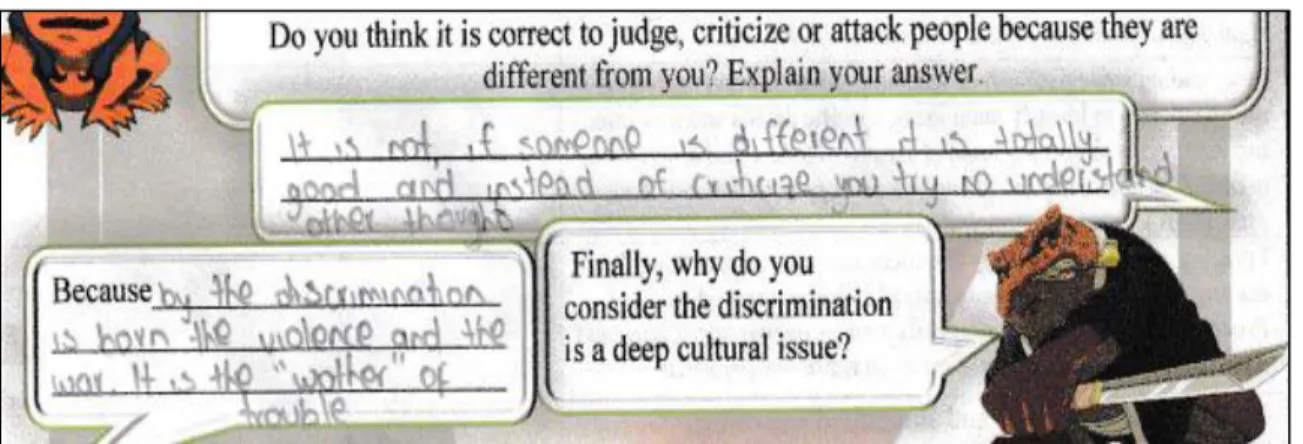
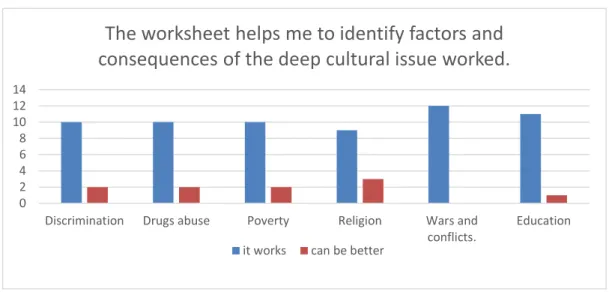
(19) xix. WORKSHEETS ON DEEP CULTURE FOR READING COMPREHENSION develop worksheets based on students’ preferences (deep cultural issues) to foster their reading comprehension. Research Question How do the development and implementation of worksheets based on deep cultural issues contribute to develop the reading comprehension process in eleventh graders at a public school? General Objective. To analyze how the development and implementation of worksheets based on deep-cultural issues contribute to the reading comprehension process in eleventh graders at a public school. Specific Objectives. (a)To assess the effectiveness and suitability of implementing and developing materials based on deep-cultural issues to foster eleventh graders’ reading comprehension; (b) to describe how deep cultural issues enhance students’ reading comprehension; and (c) to analyze the students’ reading comprehension before and after implementing the worksheets. Chapter II Literature Review This chapter explains the three main constructs of this research study: Materials development, deep cultural issues and reading comprehension. Materials Development (MD) The main authors that framed this construct were Tomlinson (2011) and Núñez and Téllez (2009) who attested that MD entails the production of suitable and effective teaching sources to foster learning. Similarly, Núñez (2010) claimed that teachers can combine authentic and non-authentic materials to make the resources meaningful and relevant for the students. For this pedagogical intervention, I designed a set of worksheets that, according to Núñez (2017) and Lee (2014), are contextualized sources to improve a language skill, which in this case was reading..
(20) xx. WORKSHEETS ON DEEP CULTURE FOR READING COMPREHENSION Deep cultural issues In this second construct, culture was defined by ATA (2003), Hanley (1999), Shaules (2007), and UNESCO (1982) as a system that comprises beliefs, thoughts, identities, behaviors and features of a group or a society. By the same token, Hanley (1999), Meraji and Zamanian (2014), and Sapir (1970) stated that culture makes part of the language that is taught and that language learning involves culture learning. Following these insights, I selected deep culture as a content rather than as a superficial aspect. In this regard, Shaules (2007) defined deep culture as hidden features that can shape behaviors and awareness. Reading comprehension According to McCullough (1974), reading is a skill that allows the individuals to interpret symbols. Additionally, Doake (1974) and Hirsch (2003) mentioned that reading comprehension is a continuous process in which the reader carries out a dialogue with the written information, linking prior experiences to what it has been read. Finally, scholars such as Brown (2007), Hammer (2007) and Macnamara (2006) argued that, to achieve effective comprehension, it is necessary to use appropriate reading strategies. Chapter III Methodological Design Research Design This section presents the approach and type of study that frame this enquiry. It also deals with the participants, context, and data gathering instruments. Instructional Design The instructional design is centered on the pedagogical intervention and its phases to enhance students’ reading comprehension. It presents the intervention as innovation, the pedagogical.
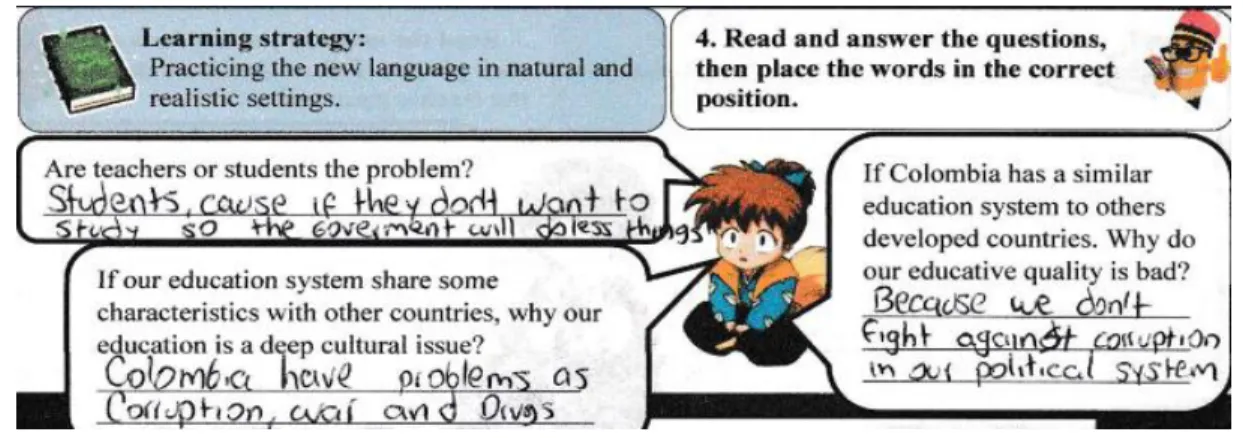
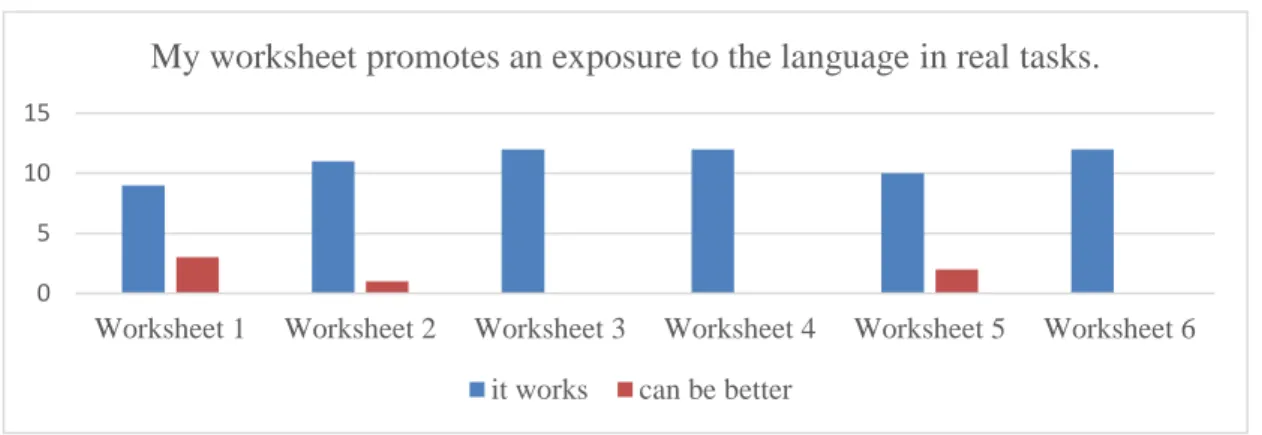
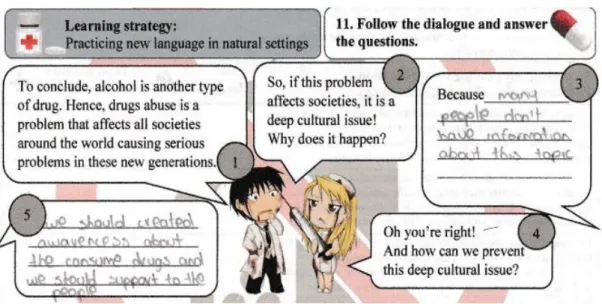
(21) xxi. WORKSHEETS ON DEEP CULTURE FOR READING COMPREHENSION dimensions, the theoretical foundations on the theory of language and language learning, and the relation of the pedagogical strategy with the research question. Similarly, it describes the features of the methodological approach, the instructional phases, the topic selection, the design of the reading worksheets based on deep cultural issues and the use of some reading strategies to improve students’ comprehension. Finally, it covers the implementation process. Chapter IV Data Analysis This chapter explores the data analysis and the categories and subcategories that emerged after analyzing the information obtained with the three instruments: students’ artefacts, field notes and survey. Category 1: Innovating through contextualized materials for language use. Catching attention and interest through attractive pictures and nice layout. (1) Attractive, meaningful, colorful, and enjoyable worksheets caught students’ attention (Núñez, Pineda & Téllez, 2004; Tomlinson, 2003). (2) Students were motivated and showed permanent interest in the worksheets due to their presentation and layout (Jolly and Bolitho, 1998). Varied and challenging activities through an appealing content. (1) Students developed challenging activities that promoted learning (Núñez, Téllez, Castellanos & Ramos, 2009). (2) Eleventh graders were interested in working on the varied content included in the six worksheets and broadened their knowledge of deep cultural issues. (Harwood, 2010; Marsh, 2012; Misshan & Timmis, 2015). Confidence in using the language naturally. (1) The reading practice promoted the development of other skills such as writing. The students increased their confidence to solve questions and develop different reading tasks (Christopher & Masuhara, 2013; Tomlinson, 2003). (2) Students expressed.
(22) xxii. WORKSHEETS ON DEEP CULTURE FOR READING COMPREHENSION their opinions, answered questions, and completed dialogues by using the language in a natural way (Mehisto, 2012; Tomlinson, 2003). (3) The application of some learning strategies helped students to solve tasks, thereby generating confidence (Oxford, 1996). Category 2: Deep cultural issues foster learning Reflection on cultural issues fosters learning. (1) Students learnt useful information from the content offered. This content helped eleventh graders to shape their own thoughts about cultural issues (Sapir, 1958; Shaules, 2007). (2) Students reflected on the issues that they normally experience and gave solutions to solve them (Shaules, 2010). Rising cultural awareness by using critical thinking. (1) The students developed their critical thinking and cultural awareness when conveying their opinions and answering questions (Bolitho, 2003; Byram, 1987; Gaston, 1984; Nieto, 2010). (2) The learners shaped their perception of cultural issues and adopted a strong posture, which demonstrated their cultural awareness and critical thinking. (3) Students worked on problem solving when proposing solutions to the issues presented in the worksheets (Shaules, 2010). Category 3: Fostering reading comprehension Gaining comprehension by being a strategic reader. (1) Students recognized and analyzed new vocabulary. Then, they used the new words to interpret the readings and make new assumptions (Grabe, 2014; Islam & Mares, 2014; Junca, 2012). (2) Eleventh graders became strategic readers because they could understand and comprehend key information from the texts by using reading strategies. Gaining new information by using background knowledge. (1) Students established connections between their previous knowledge and the new concepts they read (Cummins, 1996; Pearson, 2009;.
(23) xxiii. WORKSHEETS ON DEEP CULTURE FOR READING COMPREHENSION Tawalbeh & Al-zuoud, 2013). (2) Students presented relevant information in which it was possible to observe that they enjoyed reading and learning new vocabulary. Chapter V Conclusions and Pedagogical Implications This chapter displayed the most relevant information in regard to the findings of this research study. Likewise, it showed the pedagogical implications for me as a teacher-researcher and materials developer, for the students, for the institution where this study took place, and for the English language teaching community. This chapter also presented the limitations of the study and some further questions that may be considered in further research.. 5. Metodología Research design Research approach Due to the characteristics of this study, I adopted the qualitative research that, according to scholars such as Sherman and Webb (1988), Marshall and Rossman (1999), and Lankshear and Knobel (2004), permits the researchers to experience, feel, live, participate, interpret, and understand social and cultural phenomena that occur in natural and real contexts by observing, collecting data, describing and stating a possible intervention. Type of Study The type of study that meets the features of my inquiry is action research that, in Burns’ words (2010), allows to improve a social situation which connects the educational practice with the triple role of the teacher (teacher-researcher and materials developer). Participants.
(24) xxiv. WORKSHEETS ON DEEP CULTURE FOR READING COMPREHENSION Students. Eleventh grade had 30 students aged from 16 to 19. I selected 12 of these students due to their low results in an English proficiency test that I applied at the beginning of this research. Besides, they expressed their interest in improving their reading comprehension. The students were selected by means of the convenience sampling technique, which allows the researchers to choose the participants in accordance with their interests, likes or benefits. Teacher as researcher and materials developer. Burns (2010) stated that “a teacher becomes an ‘investigator’ or ‘explorer’ of his or her personal teaching context, while at the same time being one of the participants in it” (p. 2). In this sense, I performed a triple role along the implementation of this pedagogical intervention. As a teacher researcher, I constantly visualized, analyzed, and interpreted the situations that occurred in the classroom. As a materials developer, I designed six reading worksheets based on the students’ needs to improve their reading comprehension. Finally, as a teacher, I guided the activities and supported the eleventh graders’ learning process. Data Gathering Instruments: Artifacts. Hubbard and Power (1999) and Lankshear and Knobel (2004) stated that artefacts are relevant evidence of what students do in the classroom. Hence, the worksheets that I designed served the purpose of artifacts. Field notes. Wallace (1998), Hubbard and Power (1999), and Lankshear and Knobel (2004) claimed that field notes represent effective tools to collect detailed and precise information regarding the subject matter. For this pedagogical intervention, I used the field notes when students were working on the worksheets. Survey. Burns (2010) and Hubbard and Power (1999) attested that if a large group of people is desired to be interviewed, time becomes a constraint; thus, the survey becomes an appropriate instrument to obtain responses from several individuals. I selected this instrument to prioritize time.
(25) xxv. WORKSHEETS ON DEEP CULTURE FOR READING COMPREHENSION and resources, and to get solid and valid data concerning the students’ reading comprehension process. I administered an entrance survey and a final digital survey. Analysis Process Analyzing and interpreting the information implied the use of the grounded approach, which Charmaz (2008) and Bryant (2017) explained as collecting data to generate theory. This approach entails naming, grouping, finding relationships, and displaying. I used the color coding technique to highlight key words, similarities and commonalities. Then, I organized and reduced the data into categories and subcategories (Bergaus, Gorra & Stottok, 2011; Burns, 1998; Miles & Huberman (1994); Saldaña, 2011). Triangulation I used the theoretical and methodological triangulation approach, which implies the use of different sources of information to facilitate the validation of the analysis. Therefore, I supported my analysis with data from the field notes, surveys and artefacts (Denzin, 1989; Freeman,1998). Instructional design Pedagogical intervention The pedagogical intervention of this study embraced the development and implementation of six worksheets based on deep culture to enhance the eleventh graders’ reading comprehension process. Instructional objectives Main Objective: To design and implement six reading worksheets based on deep cultural issues to improve the reading comprehension process in eleventh graders at a public school. Specific Objectives: (a) to assess the effectiveness of worksheets based on cultural issues to enhance students’ reading comprehension; (b) to orientate the students’ prior knowledge about deep cultural issues; (c) to generate a learning environment where students improve their reading.
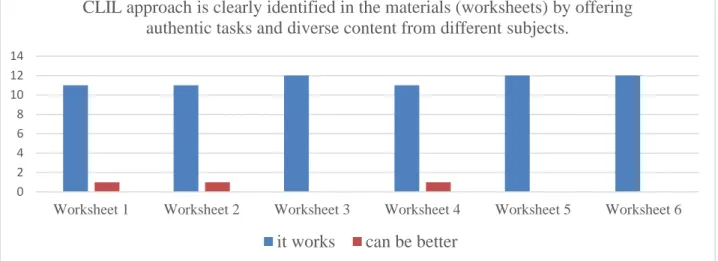
(26) xxvi. WORKSHEETS ON DEEP CULTURE FOR READING COMPREHENSION comprehension process; (d) to help students become aware of the reading strategies worked on the worksheets. Second Language Acquisition Principles For the purpose of this intervention, the worksheets had to be appealing and relevant, comprising useful content and challenging but attainable activities that encouraged students to use the foreign language naturally in daily situations. Likewise, the worksheets included varied activities that considered the students’ learning styles, offered diverse options in which the participants could make decisions and discover rules by themselves; and finally, they provided reading tasks so that eleventh graders had the opportunity to express their opinions and feel at ease (Tomlinson, 2003). Methodological Approach Underlying Pedagogical Intervention The methodological approach that supports this pedagogical intervention was Content and Language Integrated Learning (CLIL hereafter). Dalton (2011) defined CLIL “as an educational model for contexts where the classroom provides the only site for learners’ interaction in the target language” (p. 182). This approach allowed me to integrate culture, language learning, and contents from different subject matters (Lin, 2016; Nunan, 1989; Pokrivcáková & Malá, 2004; Widdowson, 1978). Intervention as innovation The fact of implementing worksheets based on deep culture to improve reading comprehension was new in DOFASA school because it transformed the previous practices. For students this intervention marked a change in their language learning process. It was also innovative for me as a teacher because it inspired me to develop effective, meaningful and appealing materials (Karavas, 1998; Nicholls, 1983; Núñez, Téllez & Castellanos, 2017)..
(27) xxvii. WORKSHEETS ON DEEP CULTURE FOR READING COMPREHENSION Theory of language and language learning. Tudor (2001) affirmed that there are several perspectives regarding the nature of language. The vision of language that better suits this intervention is the linguistic perspective because reading comprehension is a skill in which elements such as vocabulary, grammar, discourse and phonology need to be worked. I also kept in mind the culture and ideology perspective because the language itself entails characteristics of the sociocultural dimension. Moreover, the vision of language learning underlying this pedagogical intervention was the analytical view, which is related to the linguistic perspective. To this respect, Tudor (2001) mentioned that the analytical view is focused on how “explicit attention to the regularities of language and language use can play a positive role in learning” (p. 86) Thus, this view takes into account elements such as grammar, lexis and phonology. Bearing in mind that this pedagogical intervention attempts to improve the students’ reading comprehension, the analytical learning vision guided the students’ language learning process by using analytical skills and reflecting on their own advances. Connection of the pedagogical intervention with the research question. The implementation of six reading worksheets was a strategy for improving the eleventh graders’ reading comprehension. The benefits of enhancing the reading skill are noticeable because it allows the students to not only to improve their EFL performance, but also to construct meanings. Besides, it is pertinent to bear in mind that when a language is taught, part of its culture is transmitted too. Brown (2007) claimed that “whenever you teach a language, you also teach a complex system of cultural customs, values, and ways of thinking, feeling and acting” (p. 74). Thus, the materials implemented provided features of the students’ culture. Finally, the pedagogical intervention promoted the use of reading strategies that helped eleventh graders to improve their reading comprehension..
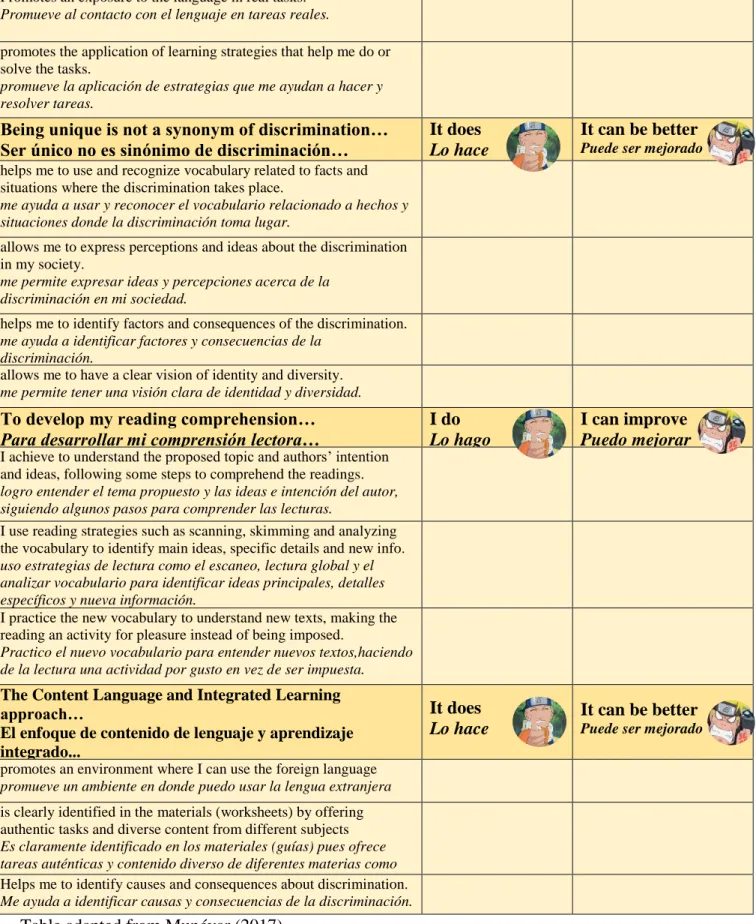
(28) xxviii. WORKSHEETS ON DEEP CULTURE FOR READING COMPREHENSION Suggested instructional phases. In this section I stated the seven phases I followed to develop the worksheets: Students` informed consent. I designed two consent letters: The first one for the principal of the institution asking for permission to conduct the study; and the second one for the parents and students. These letters clarified that the data gathered would be used exclusively for research purposes and that the students’ information would be confidential. Proposed framework for materials development. I created my own MD framework based on the ones suggested by Graves (1996), Masuhara (1998), Jolly and Bolitho (1998), Núñez et al., (2004), Núñez and Téllez (2009), Núñez et al., (2009) and Núñez et al., (2012). In this sense, I stated the following phases: establishing students’ needs, setting objectives and informing the participants about the purpose of the study, selecting the content, developing materials and activities; and making adjustments if it is required. Finally, I considered pertinent to include one more stage focused on adapting the approach –CLI– because it was new in the public institution where this study took place. Observation and identification students’ profile. I implemented a diagnosis activity to explore the eleventh graders’ abilities in the English class. Then, I administered a survey to identify the students’ profile by asking them about their English proficiency level, their experience with reading, the types of texts they liked to read, and the common problems they faced when working on reading activities. The data collected showed that the students had some difficulties with grammar, vocabulary and reading comprehension. Topic selection for reading comprehension. As I mentioned in the first phase, I conducted a survey to explore the topics in which students were interested in. This allowed me to organize both a sequence of diverse deep cultural issues that students experienced in their everyday life, and some topics from other subjects at school..
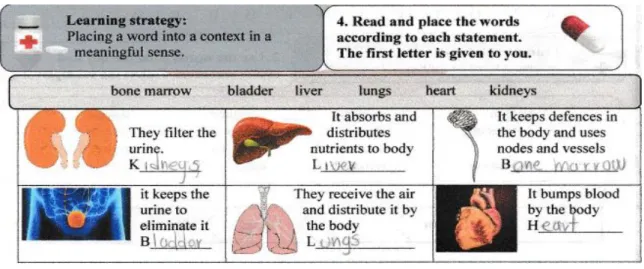
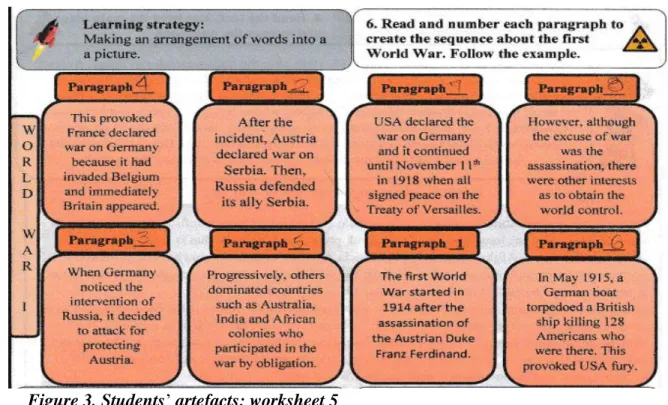
(29) xxix. WORKSHEETS ON DEEP CULTURE FOR READING COMPREHENSION Approach context adaptation. Considering the context where the study took place and the characteristics of the students, this phase sought to adapt the CLIL approach to transform the traditional teaching methodology. This phase integrated the content from different subjects and allowed the students to learn without being centered on grammar. Sensitization of reading comprehension. During this phase, I presented my students the objectives of this intervention and the characteristics of the reading comprehension process. I also explained the participants that the worksheets I designed were based on their needs and interests. Reconnaissance of the reading comprehension process. In this phase, I presented the students some strategies to develop reading comprehension exercises: recognizing grammatical word classes and rules, interpreting word order, skimming and scanning information, identifying the purpose of a text, among others (Brown, 2007). Moreover, the students identified some learning strategies suggested by Oxford (1996), which were included in the activities that followed the sequence of pre, while, and post- reading.. 6. Conclusiones Conclusions •. When developing materials, it is necessary to start by systematizing the information so that teachers are able to make decisions about the content, the language and learning necessities, and the activities that need to be included in the materials (Graves, 1996; Núñez, Téllez & Castellanos, 2017).. •. Effective materials are all those sources with appealing content, attractive presentation, diverse and challenging activities, reading sequences, and learning and reading strategies that lead.
(30) xxx. WORKSHEETS ON DEEP CULTURE FOR READING COMPREHENSION students to improve their reading comprehension process (Jolly & Bolitho, 1998; Núñez et al., 2004; Núñez & Téllez, 2009; Núñez et al., 2012; Tomlinson, 1998). •. CLIL was an adequate approach to enhance the reading skill because it promoted not only the content and language learning, but also the development of other abilities such as comprehension, conceptualization and appreciation of experiences (Mehisto, 2012).. •. When students are not focused on learning grammar, the use a foreign language becomes a natural activity that promotes content learning and language practice (Mehisto, 2012; Tomlinson, 2003).. •. The use of reading strategies allowed the eleventh graders to understand main ideas and specific details, link new concepts and meanings to their previous knowledge, and create the habit of reading for pleasure (Derewianka, 2003; McDonough, Shaw & Masuhara, 2013). Pedagogical Implications. •. Designing and creating materials was a great experience because it permitted me to grow professionally, incorporate the research practice in my daily classes, and become aware of the importance of developing innovative materials to promote meaningful and effective teaching sessions.. •. The implementation of materials with a specific learning methodology (CLIL), generated a change in the EFL classroom since the school did not have an appropriate methodological approach to teach English or foster the students’ reading competence, which is necessary for the eleventh graders to answer national examinations like the ICFES.. •. This study may be useful for the EFL community as it presents key information to boost the reading comprehension process through innovative materials based on deep cultural issues and reading strategies..
(31) xxxi. WORKSHEETS ON DEEP CULTURE FOR READING COMPREHENSION Limitations of the study •. Lack of time for implementing the worksheets. •. Different extra-curricular activities Further research. •. What is the role of deep culture in learning processes that foster critical thinking and problemsolving?. •. How do materials focused on CLIL benefit the writing process in English at a non-bilingual context?. Elaborado por: Revisado por:. Fecha de elaboración del Resumen:. 29. 03. 2018.
(32) xxxii. WORKSHEETS ON DEEP CULTURE FOR READING COMPREHENSION Table of contents. Acknowledgments.......................................................................................................................... iii Abstract .......................................................................................................................................... iv Resumen...........................................................................................................................................v Resumen Analítico en Educación - RAE ....................................................................................... vi Introduction ......................................................................................................................................1 Chapter I...........................................................................................................................................2 Statement of the Problem ............................................................................................................ 2 Research Question .............................................................................................................. 3 General Objective ............................................................................................................... 3 Specific Objectives ............................................................................................................. 3 Related Studies ............................................................................................................................ 3 Setting and Rationale .................................................................................................................. 7 Chapter II .......................................................................................................................................10 Literature Review...........................................................................................................................10 Materials Development..................................................................................................... 10 MD requisites or demands ................................................................................................ 11 Materials per se ................................................................................................................. 12 Types of materials ............................................................................................................ 12 Authentic versus non-authentic materials......................................................................... 13 Worksheets for reading comprehension ........................................................................... 14 Culture. ............................................................................................................................. 15 Culture and language ........................................................................................................ 16 Culture and learning ......................................................................................................... 16 Deep cultural issues .......................................................................................................... 17 Literacy ............................................................................................................................. 19 Reading as a skill .............................................................................................................. 20 Reading as a process ......................................................................................................... 21 Reading comprehension ................................................................................................... 21 Reading in EFL ................................................................................................................. 22 Reading approaches .......................................................................................................... 23 Reading strategies ............................................................................................................. 24 Chapter III ......................................................................................................................................26 Methodological Design ..................................................................................................................26 Research Design ........................................................................................................................ 26 Approach and type of study .............................................................................................. 26 Participants ....................................................................................................................... 27.
(33) xxxiii. WORKSHEETS ON DEEP CULTURE FOR READING COMPREHENSION Teacher ’s role. ................................................................................................................. 28 Data gathering instruments ............................................................................................... 28 Instructional design ................................................................................................................... 29 Pedagogical Intervention .................................................................................................. 30 Intervention as Innovation ................................................................................................ 33 The theory of the nature of language and language learning ........................................... 34 Methodological approach underlying the pedagogical intervention ................................ 36 Connection of the pedagogical strategy with the research enquiry .................................. 38 Suggested instructional phases ......................................................................................... 39 Sample of worksheet ........................................................................................................ 41 Chapter IV ......................................................................................................................................50 Data Analysis .................................................................................................................................50 Data Analysis Procedure ........................................................................................................... 50 Research Categories .................................................................................................................. 53 Innovating through contextualized materials for language use ........................................ 53 Deep cultural issues foster learning .................................................................................. 65 Fostering reading comprehension ..................................................................................... 76 Chapter V .......................................................................................................................................87 Conclusions and Pedagogical Implications ...................................................................................87 Pedagogical Implications .......................................................................................................... 91 Questions for further research ................................................................................................... 91 References ......................................................................................................................................92 Appendices ...................................................................................................................................104 Appendix A: Needs` analysis survey ...........................................................................................104 Appendix B: Field notes format ...................................................................................................108 Appendix C: Informed consent ....................................................................................................110 Appendix D: Informed consent ....................................................................................................111.
(34) 1. WORKSHEETS ON DEEP CULTURE FOR READING COMPREHENSION Introduction Working as an English Teacher I have observed that students have many difficulties in different English skills such as reading, speaking and writing. Moreover, the National policies ordered by National Ministry of Education (2004) (henceforth MEN) implemented the Bilingual Education program with the objective of having in 2019 students that finish their studies in Secondary and leave the school with an intermediate English Level (B1). In 2017, the objective of the Bilingual Program in Colombia was far from being achieved. According to the last English proficiency test conducted by Education First, and published in EF English Proficiency Index in 2016, showed that Colombia had a very low English level. Indeed, these results are negative for Colombia, and they are a sample of our students’ English low level. In this regard, I devised a plan to implement a new pedagogical strategy to enhance the English level of my students. Thus, I decided to observe my class sessions by using a teachers’ journal and analysing the results of a needs assessment conducted at the beginning of the research process and I found that students needed to enhance reading comprehension. Likewise, I decided to develop and implement worksheets based on deep culture to enhance such a skill in 11th graders at Técnico Domingo Faustino Sarmiento school, located in Bogotá, Colombia. This paper is divided into five chapters. In the first chapter, I present the statement of the problem, the related studies, the setting and rationale and the research question with its general and specific objectives. The second one shows the literature review which supports the theoretical constructs. The third chapter explains the methodological design that frames the research design and the instructional design. The fourth one shows the findings analysed from theoretical insights. To conclude, the fifth chapter refers to the conclusions, pedagogical implications, limitations and questions for further researchers..
(35) 2. WORKSHEETS ON DEEP CULTURE FOR READING COMPREHENSION Chapter I Statement of the Problem The learning of English as a Foreign Language (EFL) in Colombia is a complex endeavour, especially in the public sector. We, as teachers, need to deal with several deep cultural issues which affect students’ performance. For instance, the stereotypes of beauty, discrimination, gender differences, poverty, children and women rights, media manipulation, and racial differences, among others. Moreover, it is also important to mention that students face these issues and they also struggle with a system which constantly wants to obtain results without taking into account the process and real learning. Although most of the students knew how to read, they did not comprehend what they had read. Their difficulty in reading was not only exclusively for English subject but also for other subject matters such as social studies, science, and history, among others. Thus, fostering reading comprehension represented a possibility to know about other topics as local and global issues, considering that reading enhances other language skills such as writing. For this reason, I decided to work on improving reading at eleventh graders. Therefore, I conducted a needs analysis (See Appendix A) for needs analysis (Núñez & Téllez, 2008) and a diagnostic evaluation to identify and reaffirm that most of students had serious difficulties in reading comprehension, grammar, and vocabulary. They also displayed problems in their writing process (coherence and cohesiveness) and in their oral interaction. However, I decided to work on reading comprehension because this language skill helps students to gain vocabulary, and contributes to develop their writing and speaking abilities. Additionally, I asked the students about the type of activities they enjoyed doing in other subjects and they reported that they were motivated on participating in debates about cultural.
(36) 3. WORKSHEETS ON DEEP CULTURE FOR READING COMPREHENSION issues as inclusion, diversity and environmental issues, among others. Hence, I considered fundamental to motivate students to read and know about deep cultural issues. Once the problem was identified, I proceeded to keep my class observations in a reflective teacher´s journal, to make informal interviews, and three loop writing activities as a needs analysis process. Then, I analysed these instruments and drew the research question and stated the general and specific objectives for this study. Research Question How do the development and implementation of worksheets based on deep cultural issues contribute to develop reading comprehension process in eleventh graders at a public school? General Objective. To analyse how the development and implementation of worksheets based on deep-cultural issues contribute to reading comprehension process in eleventh graders at a public school. Specific Objectives. (a)To assess the effectiveness and suitability of implementing and developing materials based on deep-cultural issues to foster tenth graders` reading comprehension; (b) to describe how deep cultural issues enhance students’ reading comprehension.; and (c) to analyse the students’ reading comprehension before and after implementing the worksheets. Related Studies In accordance with the problem mentioned above, I followed the three theoretical constructs that supported this study: Materials development (worksheets), deep cultural issues and reading comprehension. They allowed me to have a vision of the study direction. In relation to materials development and reading comprehension Mahecha, Urrego and Lozano (2011) developed an action research study on an innovation project with a group of.
(37) 4. WORKSHEETS ON DEEP CULTURE FOR READING COMPREHENSION eleventh graders at Policarpa Salavarrieta School I.E.D. which consisted of improving reading comprehension of texts in English. The students liked English class but they had some problems to comprehend texts and questions. The researchers examined the low scores obtained in Instituto Colombiano para el Fomento de la Formación Superior (Henceforth ICFES) exam, for the last three years and implemented a plan using two reading strategies: text coding and double entry organizers. They designed and implemented lessons with two workshops and after teacher’s observation notes, the data analysis showed that using these reading strategies took advantage in the students’ reading comprehension. Finally, they concluded that the implementation of reading strategies not only improved reading comprehension for ICFES exam but also, helped students to enhance the oral interaction and written production, supporting the idea of my study about the benefits of implementing materials to develop reading comprehension. Additionally, Jiménez (2010) presented an action research study in a public school called Antonio Garcia School, located in Bogotá, Colombia with eleventh graders. In this research, Jimenez looked for improving the reading comprehension because the students had many difficulties to understand a text and they felt unmotivated. The researcher implemented instruments such as a questionnaire, field notes, and students and teacher’s portfolio in which he could observe, describe, and interpret the problem. Jiménez collected and analysed the information and proposed the development and implementation of five lesson plans based on short stories. She applied short stories lessons and the students gained new grammar structures, practiced the vocabulary they knew and improved their reading process. In this aspect, I considered this research as a useful implication to my study because to enhance the reading.
(38) 5. WORKSHEETS ON DEEP CULTURE FOR READING COMPREHENSION comprehension, the use of diverse sort of texts contribute to achieve this goal and to enrich students with new vocabulary. Regarding culture and materials, I decided to implement and design materials based on deep cultural issues considering that culture is an important contribution to the intercultural learning in a foreign language. Castañeda (2015) analysed the contribution of a portfolio based on intercultural topics in ninth graders to enhance the writing skill. This action research study was developed at Fernando Soto Aparicio School I.E.D in Bogotá. In this research, she mentioned that in the English learning and teaching field, the elements of culture are not worked deeply, omitting the real forms of culture. Hence, Castañeda affirmed that it was necessary to provide students with sociocultural interactions that occurred in different and real contexts. Castañeda studied how the content about intercultural topics aided students to develop their abilities to express their feelings and doubts about diverse aspects of the culture through a portfolio which allowed her to have a continuous and reflective feedback of the writing skill. Finally, Castañeda concluded that teachers had to adapt culture in all educational practices, designing materials and activities in which students can recognize each other and understand how to live together in a multicultural world. Thus, I considered this study as a remarkable outcome to my research study because culture include meanings related to a region, a group of people, lifestyles, beliefs, values, norms and ways to see the world. Similarly, Barrera and Cantor (2007) delved in how to involve the social issues from deep culture with the English teaching developing an action research study. In this inquiry, Barrera and Cantor made an important recognition to several cultural issues such as gender, race, and social class, among others. The researchers developed three workshops where ten grade students learned English by working on different Colombian social issues. Thus, they highlighted the.
(39) 6. WORKSHEETS ON DEEP CULTURE FOR READING COMPREHENSION importance of using some elements of our own culture instead of working on foreign culture to recognize and understand the diversity of our culture. In this respect, learning a language meant learning to discover and appreciate social and cultural identity. Barrera and Cantor conducted a qualitative study in a public school in Colombia where they concluded to point out the importance of enhancing students’ participation in each aspect of Colombian socio-cultural issues and how to enjoy the students’ perceptions to promote the social awareness. For this reason, I considered useful this research study to shape my proposal of developing worksheets based on deep cultural issues to foster students` consciousness regarding these issues Subsequently, reading comprehension as a skill should take into account different theories as part of the reading process. Echeverri and McNulty (2010) presented an action research study that analysed the reading comprehension in eighth graders at public school. They applied different strategies for comprehension, such as prediction, prior knowledge, graphic organizers and questions. This research took place in Envigado, Antioquia in Colombia where the researchers designed a plan to examine students’ reading process before, during, and after reading activities. They developed a journal that included students´ thoughts, feelings, ideas and experiences and it provided the necessary information for the data collection analysis. The report presented positive students’ perceptions in relation to reading and explained why the strategy was useful to understand what they had read. In summary, they affirmed that reading comprehension exercises praised students to write in English when trying to write their answers and the findings showed that to use reading strategies to activate background knowledge led students to be motivated to read, comprehend better, and learn more. In other words, this inquiry supports my research study to develop.
(40) 7. WORKSHEETS ON DEEP CULTURE FOR READING COMPREHENSION worksheets to improve reading comprehension skill by using reading strategies and a sequence of activities that favored the comprehension of different texts. Furthermore, Zabala (2004) developed an action research study on an innovation project with eleventh graders at a public school which consisted of improving reading comprehension competence by using some reading strategies through 13 workshops and deep culture as content. He conducted a survey in which he could find information about students’ perceptions in regard to the strategies used to improve the reading comprehension. Zabala used some strategies to read a text in the foreign language such as: passage completion, scrambled stories, cloze tests, hypothesis identification, propositions extraction, argumentative nets construction, and semantic relations, among others. These types of strategies were helpful for students improved their reading comprehension process. Finally, Zabala used some data techniques such as: questionnaires, recordings, diaries and interviews which allowed him to conclude that the use of diverse reading strategies helped students to enhance their reading comprehension process and raise social awareness. That is why, I selected this inquiry as an important contribution to my research study because through the strategies that Zabala mentioned and some others as skimming and scanning my students would be able to improve their reading comprehension process. Setting and Rationale This qualitative study was developed in a public institution, called Técnico Domingo Faustino Sarmiento I.E.D School. It is located in the north of Bogotá and it has two shifts, morning and noon. Tenth and eleventh grade students have an emphasis on finances, business and accounting by the Servicio Nacional de Aprendizaje (SENA henceforth) institution, so they have a full shift from morning to noon..
(41) 8. WORKSHEETS ON DEEP CULTURE FOR READING COMPREHENSION Likewise, the school´s institutional project (PEI) attempts to educate people with human and professional quality, promoting the care of the environment, human rights and a knowledge to serve the community (PEI Domingo Faustino Sarmiento, 2008). Subsequently, it has as mission: educational quality for an integral and labour formation and the objective of obtaining excellent academic results in the ICFES exam. When I started to analyse the real needs of students they were in tenth grade. I observed they had a low English level and they lacked confidence to work in English. Also, the institution counted with a non-intensive English program (three hours per week) and courses were made up of 45 students with an average age of seventeen years old. Thus, I decided to conduct an assessment to know the English level in reading and some other skills. The results showed that, in some oral questions the students were lost and did not answer them. Also, they did not have vocabulary to express their ideas, so they spoke Spanglish. On writing part, I found they did not know how to write basic phrases, they made mistakes like “I have 12 years old” and they wrote mixed words in English and Spanish. Likewise, they obtained low results regarding grammar, reading comprehension and vocabulary. Therefore, it was necessary to improve these three aspects because through them, there is a way to enhance language acquisition in the other three skills, listening, writing and speaking. As Harmer (2007) mentioned, when students read, they go to another universe that could be defined as the words world. This world can be enriched by new words (vocabulary), punctuation (contributes to develop oral and writing speech), grammatical structures in context (grammar), models to re-think knowledge (ways to write and speak), topics to stimulate the discussion (speaking and listening), and the acquisition of imaginative forms which enhance memory processes. That is the reason why I designed a plan to contribute in eleventh graders’.
(42) 9. WORKSHEETS ON DEEP CULTURE FOR READING COMPREHENSION reading comprehension. I developed six reading worksheets in which through deep cultural issues students increased cultural awareness and improved their reading skills. This contribution was not only for the students but also for the EFL community due to the multiple benefits which reading comprehension can offer to other skills and for the educational aims of MEN (2006). Finally, the development of six reading worksheets presented a contribution for the research line on Materials Development and Didactics, ascribed to the research group Critical Pedagogies and Didactics for Social Transformation (Núñez, Téllez & Castellanos, 2013), due to them being a novelty and their appealing content. Thus, once the problem was identified, I stated my research question..
Figure
+7
Documento similar
The expansionary monetary policy measures have had a negative impact on net interest margins both via the reduction in interest rates and –less powerfully- the flattening of the
Bearing in mind the need for a procedure to control malingering in judicial contexts, this study aims to assess the ability of women to simulate psychological
In the preparation of this report, the Venice Commission has relied on the comments of its rapporteurs; its recently adopted Report on Respect for Democracy, Human Rights and the Rule
Based on this procedure, NCLB is associated with statewide declines in average test score levels for reading and math of 2.6 percent and 0.6 percent, respectively, and
Consequently, in this study we aimed to elucidate the combination of multilingual state-of-the-art deep learning models based on semantic level and NLU techniques with ensemble
The main purpose of this thesis is to design and create a drag and drop application for editing sales applications on, mobile phones and web clients.. The idea is that vendors, who
In addition, as some authors point out, we can assume that the comprehension ability in itself is developed at an early age (Kendeou, van den Broek, White, & Lynch, 2007). That
This thesis covers the design and characterization of a microfluidic device for time-resolved fluorescence based on an array of CMOS SPADs. Chapter 2 introduces the SPAD detectors
