
Trophic ecology of abundant reef fish in a remote oceanic island: coupling diet and feeding morphology at the Juan Fernandez Archipelago, Chile
13
0
0
Texto completo
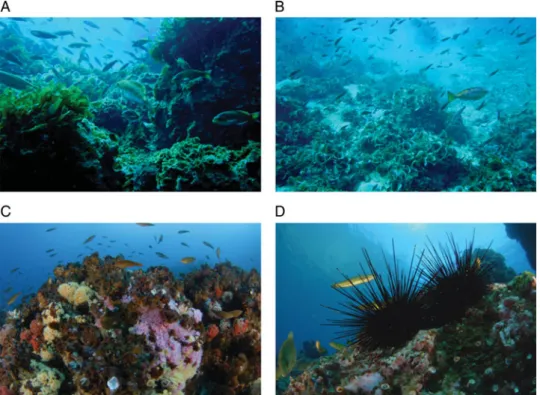
(2) 2. fabia’ n rami’ rez et al.. selective foraging strategy (Pyke et al., 1977; Medina et al., 2004; Griffin et al., 2012). Oceanic island ecosystems are expected to have lower prey availability when compared to continental systems (Andrews, 1976). Species richness on an island is the result of a balance between immigration and extinction events (MacArthur & Wilson, 1967), where larger islands have a lower extinction rate and in some cases greater immigration (Mora et al., 2003), while small islands and distant continents have a reduced immigration, and low species richness (Sandin et al., 2008). For these biogeographic conditions, oceanic island ecosystems are expected to have lower prey availability compared to continental systems (Andrews, 1976). Similarly, structured habitats tend to support more species than less structured habitats, and some oceanic islands are characterized by low habitat complexity. For instance, an absence of large brown macroalgae and mussel beds can result in low habitat complexity, since they provide structured habitat for a myriad of small organisms (Angel & Ojeda, 2001; Pérez Matus et al., 2007, 2012; Fariña et al., 2008; Villegas et al., 2008). These habitats are considered to be nursery zones for both coastal and oceanic fish (Landaeta & Castro, 2004). The absence of these habitats in oceanic island ecosystems may indicate a low presence of potential prey for reef fish (Taylor, 1998). There is a strong relationship between the morphology of organisms and their natural history (Wainwright & Bellwood, 2002). The study of morphology from an ecological context has become a useful tool for understanding how organisms with different body shapes and structures sizes acquired different abilities (Goatley & Bellwood, 2009). For example, morphological differences in the components of the pectoral fins and the relationship with caudal fins determine differences in locomotion (Wainwright et al., 2002; Collar & Wainwright, 2006) and adaptations to the life of fish at sites of varying wave exposure and current flow (see Floeter et al., 2007). On the other hand, morphological differences associated with mandible structures suggest different feeding strategies (Ferry-Graham et al., 2001; Wainwright & Bellwood, 2002; Horn & Ferry-Graham, 2006). The size of the jaw opening, diameter of eyes (Ferry-Graham et al., 2001; Goatley & Belwood, 2009) and surface of the pectoral fins (Wainwright & Bellwood, 2002; Wainwright et al., 2002; Denny, 2005) are essential to the understanding of the functional biology associated with foraging behaviour of fish. Another important sensory mechanism in fish is vision (Guthrie & Muntz, 1993; Myrberg & Fuiman, 2002), and from early larval stages fishes have the ability to detect prey at low light intensities (Job & Bellwood, 2000). A measurement of the diameter of the eye may be a good parameter to describe visual ability, because the diameter of the eye corresponds to the size of the retina and lens, which determines light sensitivity and acuity to hunt prey at low light intensities (Protas et al., 2007). Feeding and locomotion are closely related in different animal groups (Rice & Westneat, 2005; Vincent et al., 2005; Higham, 2007). In fish, individuals with greater stopping capability have great ability to stabilize their movement while feeding (Higham, 2007); this stabilization is achieved by having an extension of its pectoral fins (Rice & Westneat, 2005), thus a greater success in capturing benthic prey (Higham, 2007). Another important morphological component for understanding the foraging behaviour of fish. aspect ratio of the pectoral fin (AR) with respect to the swimming ability of each species (Wainwright et al., 2002). Fin measurements can be linked to the environment where fish species inhabit, for example in deep waters and with low flow we expect to find low values of AR while in shallow zones with more flow high values of AR are expected (Bellwood & Wainwright, 2001; Fulton et al., 2001). Consequently, the aim of this study is to identify the foraging ecology by coupling the diet with the feeding morphology of the most abundant component of the reef fish assemblage at Isla (Island) Robinson Crusoe. Secondly, we characterize the trophic structure of the coastal fish assemblage at the Juan Fernandez Archipelago.. MATERIALS AND METHODS. Sampling study area The Juan Fernandez Archipelago is a group of three islands, formed six million years ago (Burridge et al., 2006), and is located in the eastern South Pacific, 700 km west of Valparaiso, Chile (Haase et al., 2000). Islas (Islands) Robinson Crusoe and Santa Clara are the nearest to the continent, with areas of 47.9 and 2.2 km2, respectively, while Isla Alexander Selkirk, is 49 km2 and is located 178 km west of Isla Robinson Crusoe. This small group of islands has relatively low species diversity compared to continental Chile. The coastal fish fauna of the Juan Fernandez Archipelago is composed of 42 species, 12% of which are endemic to Isla Robinson Crusoe (Dyer & Westneat, 2010). The subtidal habitat in the Juan Fernandez Archipelago, is characterized by a rough topography and is dominated by rocky bottoms, allowing for the settlement of foliose brown algae Padina fernandeziana (Skottsberg & Levring, 1941) and Dictyota kunthii ((C.Agardh) Greville, 1830) (Eddy et al., 2008). A gastropod from the Vermetidae family (Serpulorbis sp.), and echinoderm Centrostephanus rodgersii (Agassiz, 1863) are both common in the rocky subtidal environments of these islands (Figure 1; see Eddy et al., 2008). The Juan Fernandez Archipelago is characterized by the absence of large brown macroalgae and mussel beds (Ramı́rez & Osorio, 2000). This study was carried out on the reef systems surrounding the Juan Fernandez Archipelago, during the austral spring (September and October) 2007 and summer (February) 2008. Our research focuses on Isla Robinson Crusoe (33837′ S–78851′ W) due to limited access to Islas Alejandro Selkirk and Santa Clara. We selected three sampling sites, located northeast of the Isla Robinson Crusoe (Figure 2). The first was Cumberland Bay, which is semi-protected from wave energy and is characterized by highly eroded substrata. This site has a sandy bottom with small rock formations, allowing for the settlement of macroalgae such as D. kunthii, P. fernandeziana, Colpomenia sinuosa (Mertens ex Roth) Derbès and Solier, 1851 and Ulva lactuca (Linnaeus, 1753), which dominate the subtidal environment. The second site was Sal si Puedes, which is semi-protected from wave action with shallow rocky reef topography (Eddy et al., 2008). At this site, some reefs were completely covered with foliose algae and sessile invertebrates,.
(3) feeding ecology of juan fernandez archipelago fishes. Fig. 1. Major habitats of subtidal environment of the island of Robinson Crusoe. (A) (date: 9/18/2007, depth: 8 m, visibility: 12.5 m, bottom temperature: 13.38C) and (B) (date: 10/1/2007, depth: 9 m, visibility: 16 m, bottom temperature: 13.48C) correspond to habitats dominated by foliose brown algae. (C) (date: 9/27/2007, depth: 15 m, visibility: 10 m, bottom temperature: 13.68C) and (D) (date: 9/14/2007, depth: 11 m, visibility: 17 m, bottom temperature: 13.28C) correspond to those habitats dominated by sessile invertebrates. Photographs A and B Fabián Ramı́rez, C and D Eduardo Sorensen.. represented by brown algae, cnidarians and gastropods of the family Vermetidae such as Serpulorbis sp., which is very common in the subtidal environment of these islands and reaches the highest abundance at this site. The third sampling. site was El Frances, which is more wave exposed compared to the other sites and is characterized by two reef platforms at different depths. The shallower reef (10 m) is closer to the coast and is characterized by eroded substrate, represented. Fig. 2. Map of study sites at Isla Robinson Crusoe: Bahı́a Cumberland (a) fishing community; Sal si Puedes; and el Francés. Major continental ocean currents also depicted.. 3.
(4) 4. fabia’ n rami’ rez et al.. by soft bottom and a high abundance of the sea cucumber, Mertensiothuria platei (Ludwig, 1898). The deeper reef platform (15 m) is characterized by a rocky topography and is dominated by algae and invertebrates, such as brown algae: D. kunthii, P. fernandeziana and C. sinuosa, Serpulorbis sp., gastropods, and the black urchin, C. rodgersii (Eddy et al., 2008).. Abundance of reef fish At each sampling site we placed a transect of 40 m perpendicular to the coastline to conduct ten monitoring stations, which were separated by 4 m each, between the depths of 5– 30 m. Surveys were conducted by one diver who surveyed each station for 2 min, counting, identifying and estimating the size of fish that passed through the sampling station area (4 m wide by 4 m long), resulting in an area of 160 m2 surveyed for each site.. Collection of fish We collected the most abundant fish (in order to avoid harmful effects on the population of unknown fish species). The collection of specimens was performed by two ways: Bahı́a Cumberland fishers performed hand-line fishing for the species (P. chilensis, P. chilensis, M. reticulatus, H. semicintum and N. gayi) at the same sites and depths as above. It is important to note that the fishers exploit these species during the season of the Juan Fernandez lobster fishery Jasus frontalis (Milne Edwards, 1837) (Eddy et al., 2010). Secondly, experienced fishers used a speargun to collect juvenile and adult S. chilensis individuals.. Subtidal habitats and zonation. using a scale from 0 to 1 where 0 indicates a completely empty stomach and 1 indicates a completely full stomach (Platell & Potter, 2001). Subsequently, prey items were scored according to presence in the sample of stomach contents for each individual fish on a scale of 0 to 10; where 0 indicates an absence of the prey item and 10 indicates that all of the stomach contents corresponded to that prey item (Feary et al., 2009). Finally, prey content was calculated by volume (%V), which was obtained by multiplying the satiety index with the rate of presence of each prey item (Krebs, 1999). To assess the importance of each group of prey in the diet, we calculated the frequency of occurrence of each prey item (%FO), which indicates the percentage of each prey item in the stomachs analysed. This is calculated by multiplying the number of stomachs where prey item appeared by 100 and dividing by the total number of stomachs analysed per species (Hyslop, 1980).. Morphological analysis Morphological analysis was carried out in 46 individuals, belonging to three of the most abundant species in the Juan Fernandez Archipelago (M. reticulatus, H. semicintum and S. chilensis). Measures were taken for: total length (TL), standard length (SL), horizontal opening of the mouth (OM), eye diameter (ED), upper jaw length (LMS), lower jaw length (LMI) pectoral fin area (PA) and caudal fin area (CA). OM was measured as the greatest horizontal distance that can be measured internally without visible distortion of the mouth (Goatley & Belwood, 2009). Eye diameter (ED) was measured as the maximum eye width extension outside of the globe. All measurements were made using digital calipers, with an accuracy of 0.05 mm. The aspect ratio of the pectoral (AR) fin was measured using the relationship: AR ¼ L2/a. Percentage cover of sessile organisms was obtained using 50 cm by 50 cm quadrats (0.25 m2) with equally spaced points of intersection (CPI), which were randomly placed in two positions at each sampling station along the transect (as above). At each transect swats we performed 20 quadrats. The count of sessile species was recorded in situ, and was identified to the lowest possible taxonomic level. Unidentified organisms were collected and stored in buffered formalin (5%) for later identification in the laboratory. Due to logistical constraints, we performed three transects (60 quadrats) at Bahı́a Cumberland and Sal si puedes and four (80 quadrats) at El Francés characterizing the subtidal habitat at Isla Robinson Crusoe.. where, L is the length of the upper edge of the fin, and a is the area of the pectoral fin (Wainwright et al., 2002). To measure the area of the pectoral fin, we removed the right fin and traced the outline on graph paper. The AR with respect to the swimming ability of the species is positively correlated with swimming performance (Wainwright et al., 2002); if values of AR are low, it will indicate a round-finned fish which will indicate swimming at low speeds, with greater manoeuvrability (Fulton et al., 2001), while edged fins with high values of AR will indicate higher and sustained swimming abilities (Denny, 2005).. Dietary analysis. Statistical analysis. Collected specimens were identified and measured for total length (TL) and standard length (SL) in the laboratory. Digestive tracts were removed from the oesophagus to the anus and were fixed in 5% formalin for subsequent dietary analysis. Stomach contents were placed in a Petri dish, separated and identified to lowest possible taxonomic level using a dissecting microscope. To determine the diet of subtidal fish from Isla Robinson Crusoe, we calculated the relative abundance of prey (measured in volume), mass or number and estimated as a proportion of total prey consumed (Hynes, 1950; Hyslop, 1980). First, we calculated the satiety index of each individual,. The dietary similarity of species was estimated by nonparametric statistics, using analysis of similarity (ANOSIM) to determine the average contribution of each prey item (%V). We also tested if diet differed among species. To determine the percentage contribution of each prey item, similarity indices were analysed using SIMPER (similarity percentage) analysis (Clarke, 1993; Clarke & Warwick, 1994). According to Berg (1979) and Medina et al., (2004) high and low values of Shannon –Wiener diversity index (H′ ) of prey consumed indicate euriphagic or stenophagic strategies, respectively. We calculated this index using the volumetric composition of prey items in the species studied. In order to.
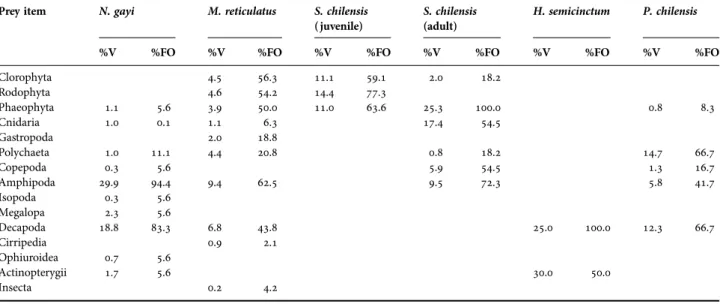
(5) feeding ecology of juan fernandez archipelago fishes. test differences in diversity (H′ ) of prey consumed by different species, a one-way analysis of variance (ANOVA) was conducted. The assumptions of evenly distributed variances and normal distribution were tested using Fligner –Killeen and Cochran tests, respectively (Crawley, 2007). A Tukey’s post hoc test was performed to determine if differences in dietary diversity were observed for the species studied. To compare the dietary similarity among species we conducted a Bray –Curtis similarity analysis (Bray & Curtis, 1957), using %V of each prey item. This result was illustrated with a dendrogram using the weighted average distance of individual nodes (group average), which established the common prey consumption of fish, which ultimately determines the formation of trophic groups; the formation of trophic groups was estimated by averaging the triangular matrix of Bray – Curtis similarity as per Robertson & Cramer (2009). To determine if fish utilized cranial or pairs (pectoral fins) structures in foraging, we utilized the relationship between OM, ED, PA, and CA, which were analysed using least squares linear regression models. We also performed analysis of covariance (one-way ANCOVA) for these parameters (Zar, 1999). To determine whether differences in the aspect of the pectoral fin in the fish studied, we performed an analysis of variance (one-way ANOVA). To test for the assumptions of ANOVA such a homoscedasticity of variances and normal distribution we performed the analysis of Fligner –Killeen and Cochran tests, respectively (Crawley, 2007). We performed a posteriori test (Tukey post hoc test) to determine differences in the aspect ratio of the pectoral fin of the species studied.. RESULTS. Fish abundance The visual census was carried out in eight different transects per site (N ¼ 24) and indicated that the wrasse (‘vieja’) Malapterus reticulatus was the most abundant species followed by Juan Fernandez mackerel, Pseudocaranx chilensis. The third most abundant species was the sweep (‘pampanito’), Scorpis chilensis. Caprodon longimanus (Ghünther, 1859) abundance was variable in abundance and present in large schools. The serranid, ‘Juan Fernandez cabrilla’, Hypoplectrodes semicinctum had low abundances but present at all sites. The jack mackerel Trachurus murphyi (Nichols, 1920) was not observed in Bahia Cumberland. The blenny (‘borrachilla’), Scartichthys variolatus (Valenciennes, 1836), presented similar abundance at all study sites. Whereas the morwong (‘breca’), Nemadactylus gayi had low abundance but was present in most of the surveys. The sand perch (‘rollizo de Juan Fernandez’), Parapercis dockinsi (McCosker, 1971), the Paratrachichthys fernandezianus (Günther, 1887) where frequently present but in low abundances (Figure 3). Species such as Lotella fernandeziana (Rendahl, 1921), Girella albostriata (Rendahl, 1921), Seriola lalandi (Valenciennes, 1833), Amphichaetodon melbae (Burgess & Caldwell, 1978), Chironemus bicornis (Steindachner, 1898), Gymnothorax porphyreus (Guichenot, 1848), Scorpaena fernandeziana (Steindachner, 1875), Scorpaena thomsoni (Günther, 1880), Callanthias platei (Steindachner, 1898), Paralichthys fernandezianus (Steindachner, 1903), Chironemus delfini (Porter,. 1914) and Umbrina reedi (Günther, 1880), were observed but with an average abundance less than 1 at all three sites. The abundances of catches recorded a total of 144 individuals; of these, 81 were collected in spring 2007 and 63 in summer 2008, which were represented by five species belonging to five families. Congruently with the visual surveys, the most abundant species in the catch was M. reticulatus (56 individuals), followed by juveniles and adults S. chilensis (37 individuals), which together contributed to the 65% of total number of captured fish (Table 1).. Subtidal habitat The habitat was characterized by the abundance of brown algae Padina fernandeziana, Colpomenia sinuosa and Dictyota kunthii, which were distributed at all study sites. Vermetids (Serpulorbis sp.) were also present at all study sites, but abundant in Sal si puedes. Red algae, were present in low presence measured in percentage cover at Bahia Cumberland and el Frances, and absent at Sal si puedes. The green algae had low abundance in percentage cover at all study sites. Sessile invertebrates such as cnidarians (Parazoanthus juanfernandezi (Carlgren, 1922) and Corynactis spp.) were present in low abundance at Sal si puedes and el Frances, were almost absent at Bahia Cumberland Bay (Figure 4).. Trophic structure The most important prey item by volume was the gammarid amphipods, which were the main prey species of N. gayi and M. reticulatus. Brown algae, were the main prey item of adults S. chilensis, polychaetes, are the main prey of P. chilensis, while red algae which were the main prey item of juvenile S. chilensis, meanwhile the main prey items of H. semicinctum were fishes. The most important secondary prey items were decapod crustaceans present in the diet of N. gayi, M. reticulatus, P. chilensis, and H. semicinctum. Prey items such as cnidarians and green algae were also important in adults S. chilensis, (Table 2). The dietary composition of each species was significantly different (ANOSIM, R ¼ 0.4, P , 0.001). SIMPER analysis, found that algae were important and contributed to the diet of S. chilensis juvenile and adult, where red algae were the most important in juvenile S. chilensis and contributed to 44.4% of their diet. Brown algae contributed most to the diet of adult S. chilensis with a 57.4% of contribution. Other important prey were amphipods in the diet of adults S. chilensis, M. reticulatus, P. chilensis and N. gayi, in the latter species is the most important prey, and contributed 67% of their diet. The decapod crustaceans were important in the diet of four other species, being of primary importance in H. semicinctum and P. chilensis, with a contribution rate of 100% and 45.1%, respectively. Polychaetes were important in the diet of P. chilensis, contributing over 44% of the diet of this species only (Table 3).. Dietary diversity Fish with the greatest diversity of prey species were the wrasse M. reticulatus (H′ ~ 1), followed by the adult S. chilensis with H′ ¼ 0.92 (Figure 5). Both species consumed a wide variety of taxa, from algae to decapod crustaceans. Fish from Isla. 5.
(6) 6. fabia’ n rami’ rez et al.. Fig. 3. Mean (+ SE) abundance of coastal fish at Isla Robinson Crusoe. ‘X’ correspond to species studied.. Robinson Crusoe differ significantly in dietary diversity (H′ ) (ANOVA, df ¼ 5, F ¼ 5.72, P ¼ 0.0001). The Tukey post hoc test suggests that M. reticulatus has higher dietary diversity in comparison to other members of the fish assemblage.. Trophic groups No objective trophic groups were formed among the fish assemblage at the study sites. The cut-off was set at 24% of diet dissimilarity (76% of diet similarity). However, two clusters were identified in the fish assemblage at Juan Fernandez. The first group was constituted by the juvenile S. chilensis and M. reticulatus. A second cluster was formed by adults S. chilensis, N. gayi and P. chilensis, the latter two species form a subgroup, this group is characterize by sharing amphipods and decapod crustacean (Figure 6).. Morphological analysis Morphological analysis indicated a positive relationship between all parameters measured in the species M. reticulatus and juvenile S. chilensis. Meanwhile, in H. semicinctum there was a positive relationship only in the ED vs OM relationship (Table 4). However, no significant differences between species were detected on parameters ED vs OM (ANCOVA df ¼ 2, F2,40 ¼ 3.23, P . 0.05), OM vs PA (ANCOVA df ¼ 2,. F2,40 ¼ 3.18, P . 0.05), ED vs PA (ANCOVA, F2,40 ¼ 3.23, P . 0.05), ED vs CA (ANCOVA, F2,40 ¼ 3.23, P . 0.05) and parameter OM vs CA (ANCOVA, F2,40 ¼ 3.23, P . 0.05). The pectoral fin shape, expressed as the aspect ratio (AR), ranged from an average of 1.81 in H. semicinctum to 4.74 in S. chilensis and this was variation significant among the study species (one-way ANOVA, F ¼ 19.51, P , 0.001). The posteriori test revealed that AR parameter on S. chilensis was significantly higher than in H. semicinctum and M. reticulatus (post hoc Tukey, both P , 0.001). The AR was also higher in M. reticulatus than H. semincuntum (post hoc Tukey, both P , 0.01) (Figure 7).. DISCUSSION. Herein the most abundant fish have been studied and these species are the numerous representatives of shallow subtidal habitats at Robinson Crusoe Island. Our results indicate the following. (a) The wrasse, Malapterus reticulatus is an abundant species in the sites studied. (b) Subtidal habitats are characterized by the dominance of brown algae (Dictyota kunthii, Colpomenia sinuosa and Padina fernandiazina) and secondly by encrusting invertebrates (vermetids and cnidarians).. Table 1. Family, species and total number of juvenile (J) and adult (A) individuals analysed, number of individuals with empty stomachs and average total (TL) and standard (SL) lengths in centimetres (cm) + standard error (SE). Family. Species. N (%). Empty (%). TL (cm)+ + SE. SL (cm) + SE. Serranidae Carangidae Kyphosidae. Hypoplectrodes semicinctum Pseudocaranx chilensis Scorpis chilensis juvenile Scorpis chilensis adult Nemadactylus gayi Malapterus reticulatus. 10 19 26 11 22 56. 8 (5.6) 7 (4.9) 4 (2.8) 0 (0) 4 (2.8) 8 (5.6). 17.2 + 0.6 18.8 + 0.1 8.8 + 0.3 28 + 1.7 38.1 + 2.1 16.6 + 1.3. 14.5 + 0.6 16.0 + 0.9 4.8 + 0.2 23.8 + 1.5 31.5 + 1.9 17.3 + 0.9. Cheilodactylidae Labridae. (6.9) (13.2) (18.1) (7.6) (15.3) (38.9).
(7) feeding ecology of juan fernandez archipelago fishes. Fig. 4. Kite diagrams of benthic species zonation by depth at the three study sites. Scale bar represents 40% of cover in 0.25 m2 quadrats. Number of transects (N ) are given per site.. (g) Morphological parameters indicated that all species use a foraging strategy that integrates cranial morphological structures (eyes and mouth) with paired structures such as pectoral fins, except for Hypoplectrodes semicinctum who use cranial structures for foraging.. (c) Decapod crustaceans and amphipods were prey items that contributed in number and volume in the diet of four of the five studied species. (d) According to Shannon diversity index (H′ ), the coastal fish assemblage of Robinson Crusoe presented a low diversity of prey in comparison with other temperate reef fish assemblages (see Medina et al., 2004). In turn the low trophic diversity in reef fishes at Juan Fernandez Islands may be related to the low complexity of the subtidal habitats of this island. (e) With respect to feeding habits, there are one herbivorous, four omnivorous and one carnivore species. (f) Objective trophic groups were not formed among fish assemblage.. The fish assemblage of Robinson Crusoe is composed of a small number of species (species richness), which are mostly endemic to the biogeographic province of the Juan Fernandez and Desventuradas Archipelagos (see Dyer & Westneat, 2010). Our research highlights the high presence of wrasses, which are one of the most important components of the fish fauna of coral reefs and other subtropical reefs of the world (Russell, 1988). This family features a wide variety. Table 2. Mean of the volumetric composition (%V) and frequency of occurrence (%FO) of the diet categories of five coastal fish from Robinson Crusoe Island. Prey item. N. gayi. M. reticulatus. S. chilensis ( juvenile). S. chilensis (adult). H. semicinctum. P. chilensis. %FO. %V. %FO. %V. %FO. %V. %FO. %V. %V. 11.1 14.4 11.0. 59.1 77.3 63.6. 18.2. 5.6 0.1. 25.3 17.4. 100.0 54.5. 0.8. 8.3. 1.0 0.3 29.9 0.3 2.3 18.8. 11.1 5.6 94.4 5.6 5.6 83.3. 56.3 54.2 50.0 6.3 18.8 20.8. 2.0. 1.1 1.0. 4.5 4.6 3.9 1.1 2.0 4.4 9.4. 62.5. 0.8 5.9 9.5. 18.2 54.5 72.3. 14.7 1.3 5.8. 66.7 16.7 41.7. 6.8 0.9. 43.8 2.1. 12.3. 66.7. 0.7 1.7. 5.6 5.6 0.2. 4.2. %V Clorophyta Rodophyta Phaeophyta Cnidaria Gastropoda Polychaeta Copepoda Amphipoda Isopoda Megalopa Decapoda Cirripedia Ophiuroidea Actinopterygii Insecta. %FO. 25.0. 100.0. 30.0. 50.0. %FO. 7.
(8) 8. fabia’ n rami’ rez et al.. Table 3. Percentage contribution among species using volumetric composition of diet and calculated using SIMPER analysis. Prey items that contributed most to the differences are shown in bold type. Prey Item Chlorophyta Rodophyta Phaeophyta Cnidaria Copepoda Amphipoda Decapoda Polychaeta. H. semicinctum. S. chilensis (J) 26.0 44.4 29.6. S. chilensis (A). 57.4 14.5 9.3 17.4. 100. of feeding habits (Ferry-Graham et al., 2002) and achieved a greater ability to adapt to different conditions that characterize coastal reef habitats. The subtidal habitat on the island Robinson Crusoe was mainly characterized by two types of habitats, the first dominated by brown algae (Dictyota sp. Colpomenia sinuosa and Padina spp.), and the second by encrusting invertebrates (Serpulorbis sp., Parazoanthus juanfernandezi and Corynactis spp.). The habitat type that is dominated by Dictyota kunthii was more evenly distributed and the most abundant; this may be due to the wide distribution of this alga in the Pacific Ocean, which manages to be mostly abundant in tropical and temperate regions (Clerck et al., 2006). The dominant habitat type at each site determined the presence of fish per study site. For example, el Frances was the most abundant in fish species and the two habitat types that dominate the subtidal of Robinson Crusoe were present herein, which eventually may provide a complex habitat which contributes to the greater abundance of fish in this site compared with others, and possibly also a greater. M. reticulatus. N. gayi. P. chilensis. 66.9 33.1. 9.9 45.1 44.1. 21.8 18.0 15.2. 27.3 12.2. abundance of prey. In terms of composition and dominance of wrasses, the coastal fish assemblage of Robinson Crusoe is more closely related to eastern Pacific regions than continental Chile, despite its closer proximity to continental Chile. The oceanic island fish assemblage we studied revealed the dominance of omnivores, one herbivore and one carnivore. Omnivorous species (N. gayi, M. reticulatus, P. chilensis and S. chilensis adult) fed mainly on small invertebrates (isopods and amphipods) and brown algae. The only carnivore (H. semicinctum), fed on larger organisms such as macroinvertebrates (decapod) and fish. Moreover, these species feed on mobile benthic organisms (isopods, amphipods, decapods, annelids and brittle stars) and some sessile species such as algae, cnidarians, barnacles and vermetids. These observations contradict results obtained in northern Chile, where subtidal fish assemblages in the absence of large brown algae consume prey items that live in pelagic environments (Angel & Ojeda, 2001). The low transport of pelagic species from nearby inland areas and the advective transport of. Fig. 5. Shannon – Wiener diversity index of diet composition for five fish species at Isla Robinson Crusoe with error bars (+ 2 SE)..
(9) feeding ecology of juan fernandez archipelago fishes. Fig. 6. Cluster showing the Bray –Curtis similarity index of diet for fish assemblages at Isla Robinson Crusoe. Cut off represents the 76% of similarity; see Materials and Methods section for more information.. plankton from ocean coastal areas, which can reach up to 200 nautical miles, do not reach the shores of the Juan Fernandez Archipelago, and may explain the absence of pelagic prey in the diet of the coastal fish assemblage at Isla Robinson Crusoe (Correa-Ramirez et al., 2007). In other oceanic islands of the Pacific and Atlantic Oceans, planktivorous fish, dominate these ecosystems (Eddy, 2011; Krajewski & Floeter, 2011), while omnivorous and carnivorous characterize the fish assemblage at Isla Robinson Crusoe. The most important prey items were decapod crustaceans and amphipods, which is similar to observations from the coast of continental Chile (Medina et al., 2004; Fariña et al., 2008; Pérez-Matus et al., 2012). Amphipods are considered. Table 4. Results of the linear regression analysis on the main morphological parameters associated with coastal fish species and feeding structures, the parameters marked with (∗∗ ) are those with P , 0.001 and those marked with (∗ ) correspond to P , 0.05 statistical significance. ED, diameter of the eye; OM, horizontal opening of the mouth; CA, area of the caudal fin; PA, pectoral fin area. Species. Parameter. a. s.e. b1. R2. Malapterus reticulatus. ED vs OM OM vs PA OM vs CA ED vs PA ED vs CA ED vs OM OM vs PA OM vs CA ED vs PA ED vs CA ED vs OM OM vs PA OM vs CA ED vs PA ED vs CA. 20.7 20.8 22.0 26.8 212.8 20.5 20.4 20.8 21.6 24.0 1.1 20.2 23.3 0.7 20.3. 0.2 0.8 1.6 1.6 3.6 0.2 0.2 0.6 0.6 1.5 0.4 3.5 5.4 2.4 3.9. 2.52 6.21 12.68 17.89 34.35 1.65 2.27 6.05 3.76 10.04 1.37 2.28 4.21 4.55 7.21. 0.8 ∗∗ 0.6 ∗∗ 0.6 ∗∗ 0.6 ∗∗ 0.6 ∗∗ 0.8 ∗∗ 0.9 ∗∗ 0.8 ∗∗ 0.7 ∗ 0.7 ∗ 0.6 ∗ 0.2 0.3 0.3 0.3. Scorpis chilensis. Hypoplectrodes semicinctum. one of the most important prey in the diet of coastal fish (Muñoz & Ojeda, 1998; Taylor, 1998; Boyle & Horn, 2006). The effects of mesograzers (amphipods and isopods) on macroalgae are often regulated by fish via trait and density mediated effects. The possible outcomes of the predatory effects from this island can be estimated (Pérez-Matus & Shima, 2010; Reynolds & Sotka, 2011). The important presence in volume of amphipods present in the diets of N. gayi and P. chilensis could indicate important trophic control of this prey population. Dietary diversity was low for most species, and significant differences in diversity indicated that only M. reticulatus and S. chilensis adults have a generalist diet, while other species concentrate their diet on small prey. According to Russell (1983), this describes the diet of Scorpis aequipinnis (Richardson, 1848) off the coast of New Zealand, this fish is. Fig. 7. Mean pectoral fin aspect ratio (2 + SE) for three fish species of the Robinson Crusoe island.. 9.
(10) 10. fabia’ n rami’ rez et al.. phylogenetically close to S. chilensis. Scorpis aequipinnis is a carnivore that feeds mainly on zooplankton, which does not coincide with those obtained in the present study, because S. chilensis adult has an omnivorous diet. This difference in feeding may be associated with the reduced availability of planktonic food in the island of Robinson Crusoe (Correa-Ramirez et al., 2007). For diet of P. chilensis stands diet whose main prey polychaetes, a situation similar to what occurs on the coasts of Australia with Pseudocaranx dentex (Bloch & Schneider, 1801), (Kailola et al., 1993) and Pseudocaranx wrighti (Whitley, 1931), (Platell et al., 1997; Platell & Potter, 2001). The morwong N. gayi had a large trophic spectrum (10 prey items), but with a marked selectivity for amphipods and decapods crustaceans, similar to what happens in the north and central coast of continental Chile, which describes the diet of such as Cheilodactylus variegatus (Valenciennes, 1833), a species phylogenetically close to N. gayi. The C. variegatus is a carnivore with a diet very diversified, which feeds mainly on macroinvertebrates as decapods and molluscs in northern Chile (Medina et al., 2004; Pérez Matus et al., 2012) and amphipods and gastropods in coastal central Chile (Muñoz & Ojeda, 1997; Pérez Matus et al., 2012). It also highlights the trophic characteristic of the species juvenile S. chilensis, which feeds exclusively on algae, the only strictly herbivorous fish analysed. This features an ontogenetic shift on adults S. chilensis, which has a higher trophic spectrum, and is considered an omnivore. Ontogenetic changes in diet are common on kyphosids from northern Chile as it has been documented in Girella laevifrons (Tschudi, 1846) (Aldana et al., 2002; Pulgar et al., 2003), Graus nigra (Philippi, 1887) on the coast of Chile Central (Muñoz & Ojeda, 1998) and Kyphosus incisor (Cuvier, 1831) on a reef subtropical Brazil (Silvano & Güth, 2006). The low diversity of prey in the diet of the species may be related to the low complexity of the subtidal habitats of this island, due to the absence of brown kelp forests that allow the settlement of potential prey, such as small benthic invertebrates (Angel & Ojeda, 2001; Farina et al., 2004; Pérez-Matus et al., 2007, 2012). In nearby areas, such as on the north and central coasts of continental Chile, habitats dominated by brown kelp forests result in a greater dietary diversity of the coastal fish assemblage (Quijada & Cáceres, 2000; Medina et al., 2004). The morphological parameters among species indicated that fishes integrate the cranial morphological structures (eyes and mouth) with pairs like pectoral fins while feeding. Except the serranid, H. semicinctum, which only had a positive relationship in cranial parameters with feeding the other two species (juvenile S. chilensis and M. reticulatus) integrate both morphological regions. This foraging strategy is associated with different subtidal zones, for species found deepest in the subtidal, where energy and water flow is less, we would expect that species may use cranial structures for feeding as we found in H. semicinctum. On the contrary, species living in shallow areas where the flow and current is greater, both sectors (head and the pectoral fins) were used for feeding (Fulton et al., 2001, 2005). Concomitantly, the aspect ratio of the pectoral fin can give us further insight into foraging tactics along a depth gradient. Species found in shallow subtidal areas such as, S. chilensis, where energy is higher, have an aspect ratio that is related to their diet, as they feed exclusively on algae present mostly on shallow habitats. On the contrary,. H. semicinctum had the lowest aspect ratio and was associated with habitats of greater depth, and also this was the only carnivore species studied. Finally M. reticulatus had intermediate aspect ratio values, which could indicate a more generalist diet, consistent with observations of wrasses in northern New Zealand (Denny, 2005). The parameters of niche space offer a useful description of the coexistence of fish in subtidal environments (Davis & Wing, 2012), and diet is an indicator to describe the biological niche space. In this respect the differences in the diet of the studied species and their vertical distribution suggest important adaptive changes in subtidal environments (see Krajewski et al., 2011). The potential trophic niche segregation among species may be the result of adaptations mediated by abiotic factors such as depth and flow of ocean currents of the ocean action (Fulton et al., 2005). The oceanic islands of the Juan Fernandez Archipelago provide an important platform for testing hypotheses of diversity in modes of feeding and adaptations to foraging. Consideration of other selective pressures on persistent features in foraging behaviour is central to understanding ecological communities. The niche segregation of species with different feeding habits could provide empirical examples of coexistence. To our knowledge this research provides the first contribution to the understanding of the feeding behaviour of coastal fish at the Juan Fernandez Archipelago, Chile.. ACKNOWLEDGEMENTS. We thank M. Rossi for logistical assistance in the field and for providing boat access and SCUBA gear. TE PAPA TONGAREWA museum of New Zealand (Dr C. Roberts and Dr A. Stewart), CONAF (Corporación Nacional Forestal) provided support during the field expedition at Isla Robinson Crusoe. We also thank Eduardo Sorensen for their assistance in the field and the photographs of the habitat types. Dr R. Melendez (UNAB) for collaboration during the dietary analysis and P. Diaz (UNAB) collecting samples; M. Paz and F. Sanchez for assistance in the laboratory. Dr J. Pulgar (UNAB) and two anonymous referees provided significant contributions to improve the present manuscript. Finally, we gratefully thank the fishers of the Juan Fernandez Archipelago, especially W. Chamorro for help collecting fishes for this study.. FINANCIAL SUPPORT. T.D. Eddy was supported by a Victoria University of Wellington Doctoral Scholarship. A.P.M. and T.D.E. received a grant from Education New Zealand Postgraduate Study Abroad Award.. REFERENCES Aldana M., Pulgar J.M., Ogalde F. and Ojeda F.P. (2002) Morphometric and parasitological evidence for ontogenetic and geographical shifts in trophic status of intertidal fishes. Bulletin of Marine Science 70, 55–74. Andrews R. (1976) Growth rate in island and mainland anoline lizards. Copeia 1976, 477–482..
(11) feeding ecology of juan fernandez archipelago fishes. Angel A. and Ojeda F.P. (2001) Structure and trophic organization of subtidal fish assemblages on the northern Chilean coast, the effect of habitat complexity. Marine Ecology Progress Series 217, 81–91.. Feary D.A., Wellenreuther M. and Clements K.D. (2009) Trophic ecology of New Zealand triplefin fishes (Family Tripterygiidae). Marine Biology 156, 1703–1714.. Bellwood D.R. and Wainwright P.C. (2001) Locomotion in labrid fishes: implications for habitat use and cross-shelf biogeography on the Great Barrier Reef. Coral Reefs 20, 139–150.. Ferry-Graham L.A., Wainwright P.C., Hulsey C.D. and Bellwood D.R. (2001) Evolution and mechanics of long jaws in butterflyfishes (Family Chaetodontidae). Journal of Morphology 248, 120 –143.. Berg J. (1979) Discussion of methods of investigating the food of fishes with reference to a preliminary study of the prey of Gobiusculus flavescens (Gobiidae). Marine. Biology 50, 263–273.. Ferry-Graham L.A., Wainwright P.C., Westneat M.W. and Bellwood D.R. (2002) Mechanisms of benthic prey capture in wrasses (Labridae). Marine Biology 141, 819–830.. Boyle K.S. and Horn M.H. (2006) Comparison of feeding guild structure and ecomorphology of intertidal fish assemblages from central California and central Chile. Marine Ecology Progress Series 319, 65–84.. Floeter S.R., Krohling W., Gasparini J.L., Ferreira C.E.L. and Zalmon I.R. (2007) Reef fish community structure on coastal islands of southeastern Brazil: the influence of exposure and benthic cover. Environmental Biology of Fishes 78, 147–160.. Bray R.J. and Curtis J.T. (1957) An ordination of the upland forest communities of southern Wisconsin. Ecological Monographs 27, 325–349.. Fulton C.J., Bellwood D.R. and Wainwright P.C. (2001) The relationship between swimming ability and habitat use in wrasses (Labridae). Marine Biology 139, 25–33.. Burridge C., Melendez R. and Dyer B. (2006) Multiple origins of the Juan Fernández kelpfish fauna and evidence for frequent and unidirectional dispersal of cirrhitoid fishes across the South Pacific. Systematic Biology 55, 566–578.. Fulton C.J., Bellwood D.R. and Wainwright P.C. (2005) Wave energy and swimming performance shape coral reef fish assemblages. Proceedings of the Royal Society, B 272, 827 –832.. Clarke K.R. (1993) Non-parametric multivariate analysis of changes in community structure. Australian Journal of Ecology 18, 117–143.. Goatley C. and Bellwood D. (2009) Morphological structure in a reef fish assemblage. Coral Reefs 28, 449 –457.. Clarke K.R. and Warwick R.M. (1994) Similarity-based testing for community pattern, the two-way layout with no replication. Marine Biology 118, 167–176.. Griffin R.B., Pearce B. and Handy R.D. (2012) Dietary preference and feeding selectivity of common dragonet Callionymus lyra in U.K. Journal of Fish Biology 81, 1019–1031.. Clerck O.D., Leliaert F., Verbruggen H., Lane C.E., De Paula J.C., Payo D.A. and Coppejans E. (2006) A revised classification of the Dictyoteae (Dictyotales, Phaeophyceae) based on rbcL and 26S ribosomal DNA sequence analyses. Journal of Phycology 42, 1271–1288.. Haase K.M., Mertz D.F., Sharp W.S. and Garbe-Schonberg C.D. (2000) Sr-Nd-Pb isotope ratios, geochemical compositions, and Ar-40/Ar- 39 data of lavas from San Felix Island (Southeast Pacific), implications for magma genesis and sources. Terra Nova 12, 1290–1296.. Collar D.C. and Wainwright P.C. (2006) Discordance between morphological and mechanical diversity in the feeding mechanism of centrarchid fishes. Evolution 60, 2575–2584.. Hajisamae S., Chou L.M. and Ibrahim S. (2003) Feeding habits and trophic organization of the fish community in hallow waters of an impacted tropical habitat. Estuarine, Coastal and Shelf Science 58, 89–98.. Correa-Ramirez M., Hormazábal S. and Yuras G. (2007) Mesoscale eddies and high chlorophyll concentrations off central Chile (29– 39S). Geophysical Research Letters 34, 1–5. Crawley M.J. (2007) The R book. Chichester: John Wiley and Sons. Davenport A.C. and Anderson T.W. (2007) Positive indirect effects of reef fishes on kelp performance, the importance of mesograzers. Ecology 88, 1548–1561. Davis J. and Wing S. (2012) Niche partitioning in the Fiordland wrasse guild. Marine Ecology Progress Series 446, 207–220. Denny C.M. (2005) Distribution and abundance of labrids in north eastern New Zealand, the relationship between depth, exposure and pectoral fin aspect ratio. Environmental Biology of Fishes 72, 33–43.. Hoey A.S. and Bellwood D.R. (2011) Suppression of herbivory by macroalgal density, a critical feedback on coral reefs?. Ecology Letters 14, 267–273. Higham T.E. (2007) Feeding, fins and braking maneuvers, locomotion during prey capture in centrarchid fishes. Journal of Experimental Biology 210, 107–117. Horn M.H. and Ferry-Graham L.A. (2006) Feeding mechanisms and trophic interactions. In Allen L.G., Horn M.H. and Pondella D.J. (eds) Ecology of California marine fishes. Berkeley, CA: University of California Press, pp. 387 –410. Hynes H.B.N. (1950) The food of freshwater sticklebacks (Gasterosteus aculeatus and Pygosteus pungitius) with a review of methods used in studies of the food of fishes. Journal of Animal Ecology 19, 36–58.. Dyer B. and Westneat M. (2010) Taxonomy and biogeography of the coastal fishes of Juan Fernández Archipelago and Desventuradas Islands, Chile. Revista de Biologı́a Marina y Oceanografı́a 45, 589–618.. Hyslop E.J. (1980) Stomach contents analysis, a review of methods and their application. Journal of Fish Biology 17, 411–429.. Eddy T., Ramı́rez F. and Pérez-Matus A. (2008) Oceanic Islands: the Chilean Juan Fernández Archipelago, from natural observations to management challenges. JMBA Global Marine Environment 7, 14–16.. Job S. and Bellwood D.R. (2000) Light sensitivity in larval fishes, implications for vertical zonation in the pelagic zone. Limnology and Oceanography 45, 362–371.. Eddy T.D. (2011) Recent observations of reef fishes at the Kermadec Islands Marine Reserve, New Zealand. New Zealand Journal of Marine and Freshwater Research 45, 153 –159.. Kailola P.J., Williams M.J., Stewart P.C., Reichelt R.E., McNee A. and Grieve C. (1993) Australian fisheries resources. Canberra: Bureau of Resource Sciences.. Eddy T.D., Gardner J.P.A. and Pérez-Matus A. (2010) Applying fishers’ ecological knowledge to construct past and future lobster stocks in the Juan Fernández Archipelago, Chile. PlosOne. 5, 1–12.. Krajewski J.P. and Floeter S.R. (2011) Reef fish community structure of the Fernando de Noronha Archipelago (Equatorial Western Atlantic), the influence of exposure and benthic composition. Environmental Biology of Fishes 92, 25–40.. Fariña J.M., Palma A.T. and Ojeda F.P. (2008) Subtidal kelp associated communities off the temperate Chilean coast. In McClanahan T.R. and Branch G.M. (eds) Food webs and the dynamics of marine benthic ecosystems. Oxford: Oxford University Press pp. 79–102.. Krajewski J.P., Floeter S.R., Jones G.P. and Leite F.P.P. (2011) Patterns of variation in behaviour within and among reef fish species on an isolated tropical island: influence of exposure and substratum. Journal of. 11.
(12) 12. fabia’ n rami’ rez et al.. the Marine Biological Association of the United Kingdom 91, 1359– 1368. Krebs C.J. (1999) Ecological methodology. Menlo Park, CA: Benjamin Cummings. Landaeta M.F. and Castro L.R. (2004) Concentration areas of ichthyoplankton around Juan Fernández Archipelago, Chile. Ciencia y Tecnologı́a del Mar 27, 43–53. Loeuille N. and Loreau M. (2004) Nutrient enrichment and food chains, can evolution buffer top-down control? Theorical Population Biology 65, 285–29. MacArthur R.H. and Pianka E.R. (1966) On optimal use of a patchy environment. American Naturalist 100, 603–609. MacArthur R.H. and Wilson E.O. (1967) The theory of island biogeography. Princeton, NJ: Princeton University Press. Medina M., Araya M. and Vega C. (2004) Alimentación y relaciones tróficas de peces costeros de la zona norte de Chile. Investigaciones Marinas 32, 33–47. Miller M.W. and Hay M.E. (1998) Effects of fish predation and seaweed competition on the survival and growth of corals. Oecologia 113, 231– 238. Mora C., Chittaro P.M., Sale P.F., Kritzer J.P. and Ludsin S.A. (2003) Patterns and processes in reef fish diversity. Nature 421, 933–936. Muñoz A.A. and Ojeda F.P. (1997) Feeding guild structure of a rocky intertidal fish assemblage in central Chile. Environmental Biology of Fishes 49, 471–479. Muñoz A.A. and Ojeda F.P. (1998) Guild structure of carnivorous intertidal fishes of the Chilean coast, implications of ontogenetic dietary shifts. Oecologia 114, 563–573. Myrberg A. and Fuiman L.A. (2002) The sensory world of reef fishes. In Sale P.F (ed.) Coral reef fishes: dynamics and diversity in a complex ecosystem. New York: Elsevier Science, pp. 123–160. Newcombe E.M. and Taylor R.B. (2010) Trophic cascade in a seaweed– epifauna–fish food chain. Marine Ecology Progress Series 408, 161–167. Paine R. (1966) Food web complexity and species diversity. American Naturalist 100, 65–75. Pérez-Matus A., Ferry-Graham L.A., Cea A. and Vasquez J.A. (2007) Community structure of temperate reef fishes in kelp dominated subtidal habitats of northern Chile. Marine and Freshwater Research 58, 1069–1085. Pérez-Matus A. and Shima J.S. (2010) Disentangling the effects of macroalgae on the abundance of temperate reef fishes. Journal of Experimental Marine Biology and Ecology 388, 1–10. Pérez-Matus A., Pledger S., Dı́az F.J., Ferry L.A. and Vásquez. J.A. (2012) Plasticity in feeding selectivity and trophic structure of kelp forest associated fishes from northern Chile. Revista Chilena de Historia Natural 85, 29–48. Platell M.E., Sarre G.A. and Potter I.C. (1997) The diets of two co-occurring marine teleosts, Parequula melbournensis and Pseudocaranx wrighti, and their relationships to body size and mouth morphology, and the season and location of capture. Environmental Biology of Fishes 49, 361–376. Platell M.E. and Potter I.C. (2001) Partitioning of food resources among 18 abundant benthic carnivorous fish species in marine waters of the lower west coast of Australia. Journal of Experimental Marine Biology and Ecology 261, 31–54. Protas M., Conrad M., Gross J.B., Tabin C. and Borowsky R. (2007) Regressive evolution in the Mexican cave tetra, Astyanax mexicanus. Current Biology 18, 27–29.. Pulgar J.M., Aldana M., Bozinovic F. and Ojeda F.P. (2003) Does food quality influence thermoregulatory behavior in the intertidal fish Girella laevifrons? Journal of Thermal Biology 28, 539 –544. Pyke G.H., Pulliarn H.R. and Charnov E.L. (1977) Optimal foraging: a selective review of theory and tests. Quarterly Review of Biology 52, 137–154. Pyke G.H. (1984) Optimal foraging theory: a critical review. Annual Review of Ecology and Systematics 15, 523–575. Quijada P.A. and Caceres C.W. (2000) Abundance, trophic composition and spatial distribution of the intertidal fish assemblage of South-central Chile. Revista Chilena de Historia Natural 73, 739–747. Ramı́rez M.E. and Osorio C. (2000) Patrones de distribución de macroalgas y macroinvertebrados intermareales de la isla Robinson Crusoe, archipiélago de Juan Fernández, Chile. Investigaciones Marinas 28, 1–13. Reynolds P.L. and Sotka E.E. (2011) Non-consumptive predator effects indirectly influence marine plant biomass and palatability. Journal of Ecology 99, 1272–1281. Rice A.N. and Westneat M.W. (2005) Coordination of feeding, locomotor and visual systems in parrotfishes (Teleostei, Labridae). Journal of Experimental Biology 208, 3503–3518. Robertson D.R. and Cramer K.L. (2009) Shore fishes and biogeographic subdivisions of the Tropical Eastern Pacific. Marine Ecology Progress Series 380, 1–17. Russell B.C. (1983) The food and feeding habits of rocky reef fish of northeastern New Zealand. New Zealand Journal of Marine and Freshwater Research 17, 121–145. Russell B.C. (1988) Revision of the labrid fish genus Pseudolabrus and allied genera. Records of the Australian Museum 9, 1–72. Sala E. and Boudouresque C.F. (1997) The role of fishes in the organization of a Mediterranean sublittoral community. I: algal communities. Journal of Experimental Marine Biology and Ecology 212, 25–44. Sandin S.A., Vermeij M.J.A. and Hurlbert A.H. (2008) Island biogeography of Caribbean coral reef fish. Global Ecology and Biogeography 17, 770–777. Shears N.T. and Babcock R.C. (2002) Marine reserves demonstrate top-down control of community structure on temperate reefs. Oecologia 132, 131 –142. Sih A. and Christennsen B. (2001) Optimal diet theory, when does it work, and when and why does it fail? Animal Behaviour 61, 379–390. Sih A., Englund G. and Wooster G. (1998) Emergent impacts of multiple predators on prey. Trends in Ecology and Evolution 13, 350–355. Silvano R.A.M. and Guth A.Z. (2006) Diet and feeding behaviour of Kyphosus spp. (Kyphosidae) in a Brazilian subtropical reef. Brazilian Archives of Biology and Technology 49, 623–629. Solomon M.E. (1949) The natural control of animal populations. Journal of Animal Ecology 18, 1–35. Taylor R.J. (1998) Density, biomass and productivity of animals in four subtidal rocky reef habitats, the importance of small mobile invertebrates. Marine Ecology Progress Series 172, 37–51. Verges A., Alcoverro T. and Ballesteros E. (2009) Role of fish herbivory in structuring the vertical distribution of canopy algae Cystoseira spp in the Mediterranean Sea. Marine Ecology Progress Series 375, 1 –11. Villegas M., Laudien J., Sielfeld W. and Wearntz W. (2008) Macrocystis integrifolia and Lessonia trabeculata (Laminariales; Phaeophyceae) kelp habitat structures and associated macrobenthic community of northern Chile. Helgoland Marine Research 62, 33–43..
(13) feeding ecology of juan fernandez archipelago fishes. Vincent S.E., Herrel A. and Irschick D.J. (2005) Comparisons of aquatic versus terrestrial predatory strikes in the pitviper, Agkistrodon piscivorus. Journal of Experimental Zoology 303, 476 –488. Wainwright P.C. and Bellwood D.R. (2002) Ecomorphology of feeding in coral reef fishes. In P.F. Sale (ed.) Coral reef fishes: dynamics and diversity in a complex ecosystem. San Diego: Academic Press, pp. 5 –32. Wainwright P.C., Bellwood D.R. and Westneat M.W. (2002) Ecomorphology of locomotion in labrid fishes. Environmental Biology of Fishes 65, 47–62. and. Zar J.H. (1999). Biostatistical analysis. 4th edition. Englewood Cliffs, NJ: Prentice-Hall.. Correspondence should be addressed to: A. Pérez-Matus Subtidal Ecology Laboratory, Estación Costera de Investigaciones Marinas, Pontificia Universidad Católica de Chile, Casilla 114-D, Santiago, Chile email: [email protected]. 13.
(14)
Figure


+2

Documento similar
The expansionary monetary policy measures have had a negative impact on net interest margins both via the reduction in interest rates and –less powerfully- the flattening of the
In our sample, 2890 deals were issued by less reputable underwriters (i.e. a weighted syndication underwriting reputation share below the share of the 7 th largest underwriter
The Dwellers in the Garden of Allah 109... The Dwellers in the Garden of Allah
The main objective of this study is to evaluate the effect of hydrothermal pretreatment at 120ºC and different times to enhance nutrient solubility in abundant
The synthesis and analysis of these properties were then featured by (i) the composition, geometry, and electronic and mag- netic structure of the exposed surfaces at the
1) to describe the food webs using carbon and ni- trogen stable isotopes, with emphasis on tempo- ral and habitat variations in the diet of P. clarkii occupies the same trophic
Nutrients derived from penguin colonies and other marine vertebrates altered the trophic interactions of communities within microbial mats, as well as the relative abundance and
AAV9-CnAβ1 decreases the expression of genes associated with heart failure and fibrosis in the remote myocardium post MI – AAV9-CnAβ1 administration at a dose of 3.5e10 VP,
