
Enterprise, government and civil society: Key partners to reach objectives of sustainable development The case for Mexico and The Netherlands Edición Única
167
0
0
Texto completo
(2) 2 ABSTRACT Sustainable Development is a raising issue in the debate in Mexico with weak empowerment. Some sectors do not even realize about the benefits and the sense of urgency to adopt a Sustainable Development approach, which is integrative, coherent and collaborative providing a framework for trust building and participative decision-making. The Netherlands tradition of consensus building and participation provide with some useful elements to elaborate the case of the need of a collaborative approach in the design, planning and implementation of projects with Sustainable Development goals and further grant some light to the Mexico’s search for consensus building not only to create an integrated approach towards sustainability but to unblock the current political gridlock which is a precondition to meet further sustainable development goals. Throughout this work, the evolution of the Sustainable Development concept and debate are described as a precondition to understand the complex challenges and the underlying beliefs that form the base for the current trends of Sustainability. The case for collaboration for sustainable development is drawn in order overcome and address global and local issues. The Trilemma Triangle methodology is used to map down the Sustainable development trade-offs between the three elements –economic, environmental and social considerations- according to local needs, political, cultural and environmental characteristics. The three sectors –government, business and civil society – main characteristics and drivers are described in order to facilitate the mutual understanding, to visualize opportunities and threats and to identify the space for collaboration. Different models of partnerships are described and analyzed highlighting some main components of a more effective model of multisectorial partnerships for Sustainable Development which are further analyzed and contrasted with real cases of study identifying opportunities and strengths according to the local characteristics. Leadership, trust, and decision-making processes are identified as key elements to further plan, design and implement sustainable development projects in Mexico. The role of government is identified as key to provide with the needed policy framework. Strong leadership on behalf of the business and civil society sectors is important to finally meet with sustainability goals..
(3) 3 RESUMEN El Desarrollo Sustentable es un tema de incipiente discusión en México sobre el que existe un conocimiento insuficiente y por ende existe impulso débil. Muchos sectores no se han dado cuenta de las ventajas y del sentido de urgencia que existe para adoptar el enfoque de Desarrollo Sustentable, como un marco integral que tiene elementos de colaboración y participación en la toma de decisiones. La experiencia de los Países Bajos en la construcción de consensos y participación proporcionan algunos elementos útiles para sustentar la necesidad de un enfoque colaborativo en el diseño, el planeación e implementación de proyectos con metas de Desarrollo Sustentable. Adicionalmente, proveen cierta luz a la necesidad de México para la construcción de consensos que no sólo ayuden a la adopción integral de la sustentabilidad en México sino para desbloquear la parálisis política actual que ha estancado e impedido la toma de decisiones en múltiples ámbitos necesarios para la planeación a largo plazo y la generación de políticas públicas integrales y coherentes, siendo esta una condición previa para alcanzar metas de sustentabilidad. A lo largo de este trabajo, se hace una revisión histórica sobre la evolución del concepto de desarrollo sustentable y se analiza la evolución del debate internacional entendiendo los desafíos, complejidad y creencias subyacentes que forman la base del Desarrollo Sustentable. Se analizan los argumentos que sustentan la necesidad de la colaboración como elemento clave para la superación de los retos que enfrenta el mundo en términos del cambio climático, pobreza, etc tanto en el ámbito mundial como local. La metodología del Triángulo Trilemma es utilizada y adaptada para entender los intercambios y compensaciones en la toma de decisiones tomando como base los tres elementos del Desarrollo Sustentable- aspectos económicos, ambientales y sociales- dichos intercambios y compensaciones deben tomar en cuenta las necesidades locales, las características políticas, culturales y ambientales. Por otra parte, se analiza el papel de los tres sectores - gobierno, empresas y sociedad civil – sus características y motivaciones de manera que es posible facilitar la comprensión mutua, la visualización de oportunidades y amenazas y la identificación del espacio para la colaboración. Diversos modelos de sociedades son descritos y analizados destacándose algunos componentes principales para la generación de un modelo eficaz para la generación de alianzas intersectoriales con objetivos de Desarrollo Sustentable. Dichos elementos son analizados y posteriormente contrastados con casos de estudio reales que identifican fortalezas, áreas de oportunidad y prioridades de acuerdo con las características locales. Se identifican como elementos clave para la generación de alianzas y la adopción del Desarrollo sustentable en México la toma de decisiones con enfoque colaborativo, la solidez en el liderazgo y la capacidad de generación de confianza..
(4) 4 INDEX 1. Introduction……………………………………………………………………………………7 2. Sustainable Development………………………………………………………… ...………10 2.1. Facts and Trends: Where we are………………………………………………… ……10 2.2. Sustainable Development: An evolving concept………………………………..………13 2.3. Historical perspective and challenges: The Time Tunnel…………………………….…19 3. Comparing frameworks………………………………………………………………………30 3.1. Complex world, complex problems……………………………………………..………30 3.2. The need for National Strategies for SD………………………………………...………34 3.3. A base for comparison……………………………………………………………….. ....42 3.3.1. Inequality in Society…………………………………………………………….…44 3.4. The Dutch experience…………………………………………………………………....50 3.4.1. Government and General Characteristics……………………………………..….50 3.4.2. The Dutch Environmental Policy: Setting the Bases for Sustainable Development………………………………………………………………….…54 3.5. The Mexican experience………………………………………………………………...66 3.5.1. Government and General Characteristics……………………………………..….66 3.5.2. The Mexican Environmental Policy: Setting the Bases for Sustainable Development…………………………………………………………………….69 4. Collaboration and Partnerships………………………………………………………………75 4.1. The Changing Arena – Basis for collaboration and our three actors………...…………75 4.1.1. Government………………………………………………………………………78 4.1.2. Business & Corporations (B&CS)…………………………………………….… 81 4.1.3. Civil Society…………………………………………………………………….. 84 4.2. Collaborative approach & Partnerships…………………………………………………90 4.3. Public-Private-Partnerships (PPPs)…………………………………..…………………99 4.4. Corporate Social Responsibility (CSR)……………………………………………..…105 4.5. Partnerships for sustainable development………………………………………..……113 4.5.1. Elements for effective partnerships…………………………………………...…117 5. Cases of Study……………………………………………………………………………...132 5.1. The Reconstruction of Roombeek, Enschede, The Netherlands………………………133 5.2. The Villages of Loreto Bay, Loreto, Baja California Sur, México……………………142 6. Conclusions…………………………………………………………………………………159 7. Bibliography…………………………………………………………………..……………164.
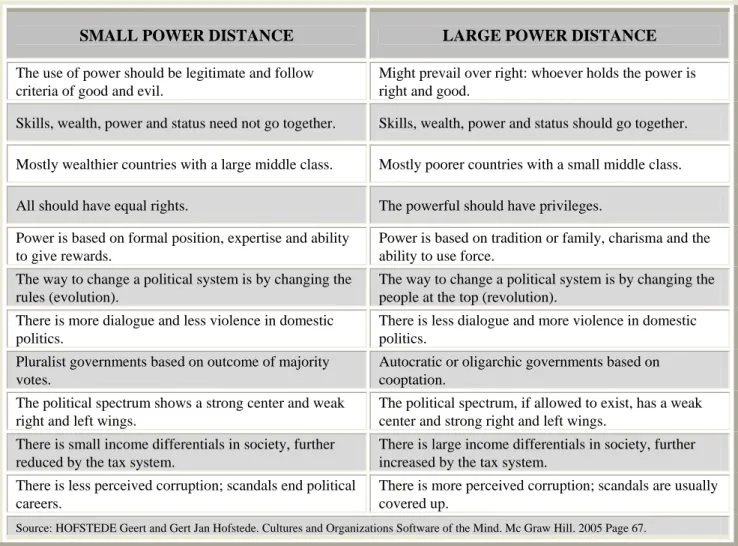
(5) 5 TABLES Table 3.1 Basic Comparisons Between Developed and Developing Country Strategy Processes……………………………………….………………………………………39 Table 3.2 2005 World Development Indicators………………………………….………………41 Table 3.3 Key Differences Between Small and Large-Power-Distance Societies: The State……44 Table 3.4 Key Differences Between Collectivist and Individual Societies: The State and Ideas..46 Table 3.5 Progressions of Environmental Measures……………………………………..………54 Table 3.6 Feedback Mechanism……………………………………………………………….…56 Table 3.7 The Ground Rules of Covenants………………………………………………………62 Table 4.1 The Dimensions of Business Power and Its Political Activities………………………81 Table 4.2 Nation-wide Opinion Poll Reflecting Mexican Levels of Trust in Institutions……….89 Table 4.3 Different Theoretical Approaches……………………………………………………..91 Table 4.4 Characteristics of Different Levels of Participation………………………………...…94 Table 4.5 General Components of Partnerships……………………………………………….…98 Table 4.6 Comparison Between Contracting-out Arrangements and Partnerships………………99 Table 4.7 Open-closed Behavioural Organizations…………………………………………..…100 Table 4.8 Two Approaches to Public-Private-Partnerships…………………………….………102 Table 4.9 Summary of Strengths and Concerns on the Different Approaches Towards CSR.…105 Table 4.10 Basic Complementary Competences for Tri-Sector Partnerships………………..…114 Table 4.11 Identifying Possible Partners and Areas of Common Interests…………….…….…118 Table 4.12 SD Goals Convergence…………………………………………………………..….120 Table 4.13 Consultations on the Building Process of Partnerships – Key Aspects……….……121 Table 4.14 Key Elements for Reaching Agreement in Partnership Building……………...……123 Table 4.15 Potential Resources from Organizations in the Development Triad……………..…124 Table 4.16 Modes of Governance- Market Hierarchy and Network ………………………...…127 Table 4.17 Networks, Markets and Hierarchies in a Partnership life cycle…………………….128 Table 5.1 Stakeholders Mapping……………………………………………………………..…137 Table 5.2 Identifying Possible Partners and Areas of Common Interest…………….…………149.
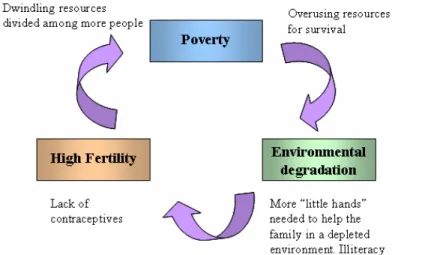
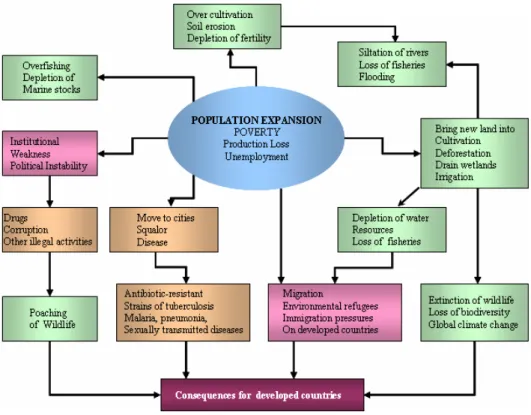
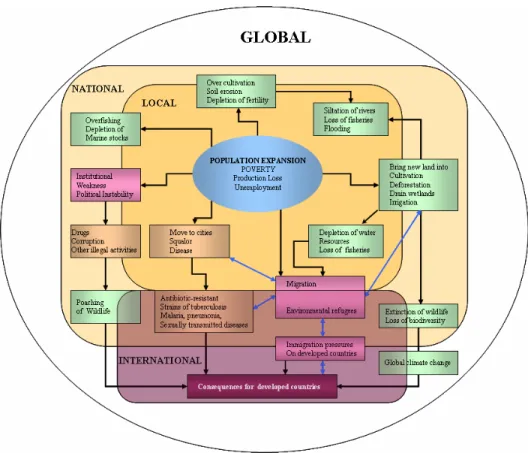
(6) 6 FIGURES Fig. 2.1 Sustainable Development: Trends and Pillars……………………………………….….15 Fig. 3.1 Poverty Cycle…………………………………………………………………………...28 Fig. 3.2 The Complex Cycle of Poverty………………………………………………………...29 Fig. 3.3 Interdependent Poverty Dimensions……………………………………………………30 Fig. 3.4 World’s Concerns Vs. the SD Model…………………………………………………...33 Fig. 3.5 The Trilemma Triangle…………………………………………………………………34 Fig. 3.6 The Sustainable Development Triangle…………………………………………...……35 Fig. 3.7 Elements to create a NSDS………………………………………..……………………36 Fig. 3.8 Rationale for systematic approach to NSDS……………………………………………37 Fig. 3.9 The Formal Process of Creating Law in The Netherlands…………………………...…51 Fig. 3.10 The NEPP Commitment Package………………………………………………….…..57 Fig. 3.11 The NEPP’s Structure…………………………………………………………………60 Fig. 3.12 General Overview of Creating Law……………………………………………...……66 Fig. 4.1 The Case for Collaboration…………………………………………………..…………74 Fig. 4.2 The Three Sectors of Society…………………………………………………...………83 Fig. 4.3 The Three Transnational Sectors in the International Domain………………...……….84 Fig. 4.4 A Graphic Evolution of the Power Configuration…………………………………...…85 Fig. 4.5 Mapping the Scene for Collaboration……………………………………………..……86 Fig. 4.6 Areas of Collaboration and Partnership Creation………………………………………96 Fig. 4.7 The Path Towards Sustainable Development…………………………………………112 Fig. 4.8 Mapping Sustainable Development Partnerships………………………………..……113 Fig. 4.9 Embracing Sustainability……………………………………………………………...115 Fig. 4.10 Self-assessment Mapping……………………………………………………………117 Fig. 4.11 Identifying Stakeholders and Contributions…………………………………………119 Fig. 4.12 The Virtuous Cycle……………………………………………………………….…124 Fig. 4.13 Attributes for Sustainable Development Partnerships………………………………125 Fig. 4.14 Accountability Factors for Achieving Results………………………………………129 Fig. 5.1 Map of Enschede (Netherlands)....................................................................................131 Fig. 5.2 Roombeek Rebuilding Process Vs. the SD Model……………………………………134 Fig. 5.3 Pulling Forces in Roombeek………………………………………………..…………135 Fig. 5.4 Mapping Roombeek Partnerships…………………………………………………..…139 Fig. 5.5 Loreto, Baja California Sur……………………………………………………………140 Fig. 5.6 Loreto Building Process Vs. the SD Model………………………………………...…148 Fig. 5.7 Pulling Forces in Loreto…………………………………………………….…………151 Fig. 5.8 Mapping Loreto Bay Co. Partnerships……………………………………………… 156.
(7) 7. 1. INTRODUCTION. “Sustainable Development will only be a intangible good dream without multisectorial participation and collaboration.” The decisions we make about the future are guided by a view of how the world works and what we think is possible. There are no inevitable futures if we understand the consequences of the decisions and actions taken now. At any case, there might not be enough political will to change behaviours at all levels, from the institutions, to the community, to the individuals. Sustainable Development is a long-term journey, not a destination. The destination is to improve the quality of life of most of the citizens of the world through a more efficient management of our economic and natural resources in order to achieve a more lasting and harmonized development of the human race in this planet. It implies a revaluation of the whole concept of life and interaction among humans and between them with their surrounding. Human beings have been the only ones capable to change the whole environment. In general, sustainable development is more than a concept, it is a way of living and viewing the world, it calls for the “collective awakening”, an act of collective consciousness in which we, humans, accept the intra and intergenerational responsibility of the decisions and actions with our own species and with the environment. At the heart of the concept of Sustainable Development, is the belief that social, economic and environmental objectives should be complementary and interdependent in the development process. Thus, policy changes are required in many sectors, and most importantly, coherence between them is essential. As we will review throughout the fist chapter, approaches to sustainable development have been varied, reflecting the diversity of challenges that each country face and even when the greatest challenges are universal, the responses have to be initiated locally. If we could think of the world as one human body, we would find its perfection in its harmony. The environment would be the circulatory system, economy would be the respiratory system and social issues would be the osseous system. Each one of them is vital for its existence. Along the second chapter, the evolution of Sustainable Development as a concept and as a consequence of the world’s economic order will be drawn. A theoretical discussion followed by a historic description of the major events and international trends that have shaped the world as it is now will be described taking into consideration the world greatest challenges are being faced and that are pushing nations to search for new paradigms creating alternative futures. Throughout this chapter, the meaning and dimensions of Sustainable Development are portrayed becoming the basis for the model developed throughout the whole work. In the most broadly accepted definition but also the most abstract one, Sustainable Development is defined as the.
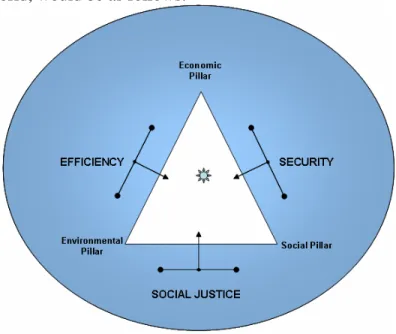
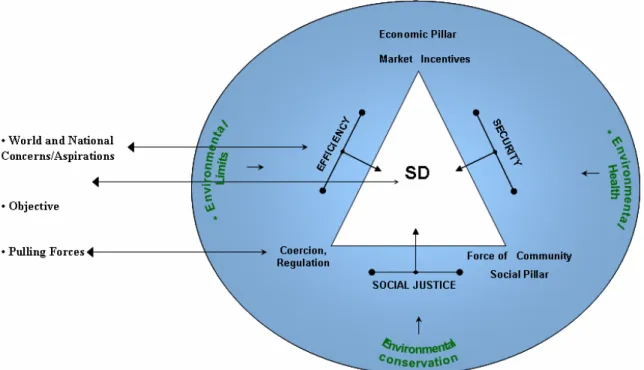
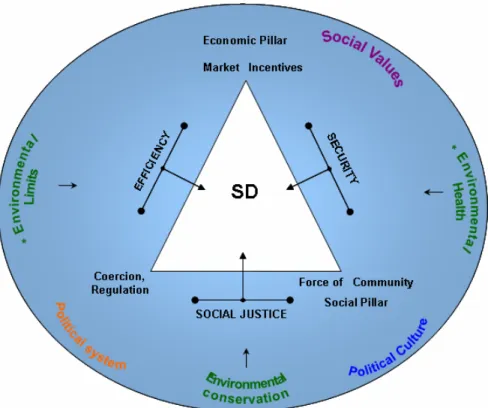
(8) 8 development that meets the needs of the present without compromising the ability of future generations to meet their own needs 1 ." Nevertheless, we will see through the third chapter the need to translate such definition according to local needs and circumstances embracing a unique meaning that can be turned into actions. We live in a complex world demanding collective actions to create solutions. These actions are made at the local, national and global level with interconnected actors. The world’s concerns and demands for better corporate governance, economic stability, energy supply, environmental conservation, ecoefficiency, technology improvement, capital flow, transparency, etc, play an important role in the world’s expectations. These pulling forces shape the Shell’s Scenarios Trilemma Triangle, a concept taken from the Rodrik Triangle 2 to explore relations of mutual exclusivity. This triangle is map that stresses that one cannot achieve the three objectives completely and simultaneously: a world that is totally efficient, cohesive and secure. This model will be important in defining the map for Sustainable Development objectives and partnerships throughout the following chapters. Consequently, it captures the different degrees to which the three objectives of efficiency, social cohesion and security are achieved through different combinations of the three forces 3 . Cultural and differences and values will set some important but not definitive basis for comparison beyond the classic developed and developing world. In this case a set of values and cultural characteristics will be important to understand the pros and cons of the approaches taken by two different countries in embracing Sustainable Development which will be reflected first in the development of a policy framework and secondly in partnerships creation approaches and experiences. The creation process of The Netherlands environmental policy framework is described highlighting three key moments that brought as a result an environmental policy model with some key components characteristic of Sustainable Development: minimum standards, rule of law, participation, consensus building, collaboration and partnership creation. The creation process of Mexico’s environmental policy framework is described highlighting three key moments that at a lower pace have set up the basis for a comprehensive environmental policy, and promotes participation. Although different, both countries are transiting towards a similar path, at different paces. In Chapter four the case for collaboration is outlined taking as a baseline the contradictory effects of globalization and the Sustainability challenges where all actors face the same crossroad at different levels, with different resources available (environmental, economic and social) and with different cultures and values; but at the end, all actors are searching for survival and growth. Therefore, the collective effort can bring greater outcomes than individual action making collaboration possible. 1. UN Brundtland Commission Our Common Future Oxford University Press 1987 Rodrik, Dani. How fall will Economic Integration Go? Journal of Economic Perspectives, Winter 2000. 3 Royal Dutch Shell plc The Shell Global Scenarios to 2025. The future business environment: trends, trade-offs and choices. 2005. 2.
(9) 9 Sustainable development calls for proactive transformation and collaboration from the three main actors: Governments, Businesses and Corporations and Civil Society Organizations. These actors are the main components and leaders of the current organization of the world power. Collaboration between these actors has taken different forms: public private partnerships, or corporate social responsibility. Not all actors are present in all the different ways of collaboration; some of those forms may create partnerships with different levels of involvement. Sustainable Development calls for proactive leadership and commitment for transformation to occur and since it touches all sectors of the human life, all actors should be active partners in order to gain more effective results. This is what builds the case for collaboration and the space for partnerships creation within the Sustainable Development Trilemma. Along this chapter, concepts of Corporate Social Responsibility and Public-Private-Partnerships are explored in more detail and some examples of how these concepts have been translated into national law or models are given (The Netherlands and Mexico). Finally, Chapter five takes two cases of study, one from the Netherlands and one from Mexico. Even though these projects are not comparable in the strict sense, they are taken as models of reference to apply the Sustainable Development Trilemma for partnerships assessment and mapping methodology developed throughout the previous chapters. Both cases do have the participation of the three sectors and do have environmental, social and economic components and therefore, some broad ideas can be extracted about how can a partnership can prioritize specific needs or interests and reflect those in their partnership creation and in the planning and implementation of a project. There will always be areas of improvement and best practices that can be shared, not to be replicated but to enrich the local project through an additional experience. However, by identifying the key characteristics of a project it is possible to identify areas of opportunity feasible for improvement and seizing collaboration and partnership creation in the benefit of the project and of sustainability goals..
(10) 10. 2. SUSTAINABLE DEVELOPMENT The most famous and commonly adopted definition is the one resulting from the Brundtland Commission which states that Sustainable development is development that meets the needs of the present without compromising the ability of future generations to meet their own needs 4 . The Mexican legal definition of Sustainable Development according to the General Law of Ecological Balance and Environmental Protection is “ the process assessable through environmental, economic and social criteria and indicators, which tends to improve life quality and productivity of people based upon appropriate measures for ecological balance preservation, environmental protection and exploitation of natural resources not endangering the satisfaction of the needs of future generations 5 . For Thailand, Sustainable Development is defined as a holistic development, which involves six dimensions: economic, social, environmental, politics, technology and knowledge, and mental and spiritual balance. 6. 2.1 FACTS AND TRENDS “In recent years, our society has been required to think again of the issues of the use and abuse of human beings. We understand, for instance, that the inability to distinguish between a particular Woman and any woman is a condition predisposing to abuse. It is time that we learn to apply the same understanding to our country. The inability to distinguish between a farm and any farm is a condition predisposing to abuse, and abuse has been the result. Rape, indeed, has been the result, and we have seen that we are not exempt from the damage we have inflicted. Now we must think of marriage.” Wendell Berry 7. Ever since the international community recognized the need to change the path of growth, many problems associated with the overexploitation of resources, poverty and diseases were highlighted and strategies to decrease that trend have been impelled. There have been international calls for all countries to develop strategies for sustainable development with the intention to translate ideas and commitments into actions and policies. Being that, the greatest challenge.. 4. UN Brundtland Commission Our Common Future Oxford University Press 1987 General Law of Ecological Balance and Environmental Protection Article 3. Fraction XI. 6 DALAL-CLAYTON, Barry Sustainable Development Strategies: A resource book. NSSD. 2002 7 BERRY, Wendell. What are people for? North Point Press. N.Y. 1990. 5.
(11) 11 On average, people in developing countries are healthier, better educated and less impoverished if compared with the figures in 1990 life expectancy in developing countries was increased by 2 years by the year 2000. There are 3 million fewer child deaths annually and 30 million fewer children out of school. More than 130 million people have escaped extreme poverty. Notwithstanding the progress achieved in some areas, there are still continuous pressures on development that point out negative trends. According to the 2005 Human Development Report (HDR) 8 , the year 2005 was considered as a crossroad for reaching the Millennium Declaration Goals 9 in terms of poverty reduction. According to the Millennium Declaration, 2005 was seen as the moment to either turn the next decade into the “decade of development”, or the year of an empty promise by continuing “business as usual”. In human development terms, the space between countries is marked by deep and widening inequalities in income and life chances. Life expectancy gaps are among the most fundamental of all inequalities. According to HDR 2005 10 , someone living in Zambia has less chance of reaching age 30 than someone born in England in 1840, and the gap is widening. Death rates among the world’s children are falling, but the trend is slowing and the gap between rich and poor countries is widening, being this an area in which slowing trends cost lives. : The world’s richest 500 people have a combined income greater than that of the poorest 416 million. The 2.5 billion people living on less than $2 USD a day (40% of the world’s population) account for 5% of the global income, whilst the richest 10% account for 54% of the global income. This inequality is also expressed in the fault lines that separate rural from urban and poor from rich regions in a country. In the case of Mexico, literacy rates in some states are comparable to those in high-income countries. However, in some poor rural indigenous municipalities like Guerrero, literacy rates for women are similar to those in Mali 11 . Paradoxically enough, HDR 2005 states that current spending on HIV/AIDS, pandemic considered as a key target due to its destructive potential claiming 3 million lives a year, represents three day’s worth of the global military spending. According to the World Development Report 2006 by the World Bank, unequal opportunities are large within many countries but they become truly staggering on a global scale: While 7 of every 1000 American babies die in the first year of their lives, 126 of every 1000 Malian babies do 12 . For some, international trade is a way to bring development and more equality; for others, it may amid poverty and deepen inequalities. So far, two trends can be observed: there has been a rapid growth of trade between developing countries- more than 40% of developing country exports are 8. UNDP Human Development Report 2005 International Cooperation at a crossroads. Hoechstetter Printing Co. NY, USA The world’s leaders held a meeting at the United Nations in the year 2000, at the dawn of the new Millennium, and agreed to a set of eight ambitious Goals. Developing countries, the most highly victimized by poverty, have been taking the lead in this campaign, especially regarding the first seven Goals which are related to direct improvements in human well-being. Whilst the eighth Goal includes steps for developed countries to take in support of the campaigns of developing countries to fight and to ultimately, eradicate poverty. Most of the targets set for progress on the MDGs are benchmarked for the period of 1990-2015. 9. 10. UNDP Human Development Report 2005 International Cooperation at a crossroads. Hoechstetter Printing Co. NY, USA UNDP Human Development Report 2005 International Cooperation at a crossroads. Hoechstetter Printing Co. NY, USA 12 The World Bank World Development Report 2006 Equity and Development. Oxford University Press. Washington DC. 11.
(12) 12 now destined for other developing countries. For instance, China and Mexico have increased their world market shares. However, contrasts between East Asia and Latin America demonstrate that export growth and export success are very different concepts. In manufacturing value added Latin America has been loosing market share relative to East Asia. Event Mexico, the most dynamic exporter in Latin America, has been loosing market share in comparison to China. Some reasons are that Mexico is a low value-added producer of high-value-added and high technology products 13 . Dependence on low-wage, low-skill export sector has left Mexico highly exposed to competition from lower wage economies such as China. On the other hand, employment has fallen by 180,000 since 2001. Mexico has one of the highest Gini coefficients in the world. Another wage inequality is that women’s wages are 11% lower than men’s 14 . Despite the fact that it has been growing slower than predicted a few years ago, world population now stands around the 6 billion and is still expected to increase before stabilizing in around two more billions, 97% of which, will be in the developing world 15 . The link between environment and poverty reduction is strong. Since the Rio Earth Summit in 1992, the importance of a sound environment to sustainable livelihoods has been widely acknowledged. The adverse impacts of climate change will be most striking in developing nations—and particularly among the poor—both because of their high dependence on natural resources and their limited capacity to adapt to a changing climate. The number of people impacted by water scarcity is projected to increase from 1.7 billion today to 5 billion by 202516 . Climate change, development and energy issues are closely connected. In 2005, the oil price crisis made its presence felt around the world. Public debate and consumer concern peaked at the end of August as oil prices briefly hit US$70 per barrel before dropping again later in the year. The oil price rises reflect a broader emerging concern about meeting the burgeoning global demand for energy. Estimates suggest energy demand will increase more than 50 per cent between 2005 and 2030. 17 Ecosystem services are the benefits that people obtain from ecosystems. This concept is the cornerstone of the Millennium Ecosystem Assessment (MA), the largest-ever international assessment of the world’s ecosystems and the consequences of ecosystem change for human well being. The MA involved more than 1 300 experts from 95 countries. This assessment reflected that approximately 60 per cent of the ecosystem services examined in the MA were found to be degraded or used unsustainably. In particular, at least 25 percent of commercially important fish stocks are over-harvested, and up to 25 per cent of global fresh water use exceeds long-term accessible supplies.. 13. UNDP Human Development Report 2005 Chapter 4 International Trade. Hoechstetter Printing Co. NY, USA International Monetary Fund Mexico: Selected Issues Country Report No. 04/418 Dec 2004. 15 UNEP The Global Environment Outlook (GEO) Year Book 2000 16 WRI .Word Resources 2005 The wealth of the Poor. Managing Ecosystem to fight poverty. In collaboration with UNDP, UNEP and World Bank. Washington DC, USA. 17 UNEP The Global Environment Outlook (GEO) Year Book 2005 14.
(13) 13 The MA also found that more land was converted to cropland in the 30 years between 1950 and 1980, than in the 150 years between 1700 and 1850. More than a third of the world’s coral reefs and mangroves have been destroyed or degraded in the last few decades of the 20th century 18 . This assessment concluded that degradation of ecosystem services poses a significant barrier to the achievement of the Millennium Development Goals (MDGs). Socioeconomic policy changes will play an important role in achieving the MDGs, but many of the MDGs and associated targets are unlikely to be achieved without sound management of ecosystems. The year 2005 highlighted the ever-growing environmental challenges created by humanity for biological diversity, the Earth’s ecosystems and the climate 19 . Collective action and response must continue to grow in order to bring hopes for a more equal and sustainable present and future. For the sake of effectiveness and efficiency, such collective action must be fostered by governments, endorsed by corporations and embraced by the communities of the world.. 2.2 SUSTAINABLE DEVELOPMENT: AN EVOLVING CONCEPT Understanding the forces that have moved the world and the paradigms behind the different models adopted by nations throughout world’s history, is key to understand how the debate of Sustainable Development has evolved. During the second half of the 20th century, a new paradigm emerged as a way to understand international politics and the evolution of the world and configuration of nations and power: the real politic. This theory states that the international politics is a struggle for power as the immediate objective. In this respect, the concept of power is understood as the control that man has over the mind and actions of others 20 . Therefore, the political power is constituted by mutual relations of control that take place among the public authority (entities and individuals) and the relationships between these and the general public. According to Robert Guilpin, the British Pax and the American Pax, as the Roman Pax, built a system of relative peace and security 21 executing their political power as hegemonic states. Thereafter, Great Britain and USA accordingly, imposed the “liberal” economic order. This order implied the adoption of the hegemony stability theory, which defines the hegemony as the preponderance of material resources. The most important resources according to this theory are: to have access to the vital raw materials, to have control over the main sources of capital, to have a wide market of imports, and to have competitive advantages in high-value-added products in a way that salaries and gains are relatively high 22 .. 18. PUSHPAM, Kumar Ecosystems and Human well-being. In partnership with the Millennium Ecosystem Assessment, World Resources Institute and Island Press, 2005. 19 UNEP The Global Environment Outlook (GEO) Year Book 2005 20 COX W. Robert Fuerzas socials, estados y órdenes mundiales: más allá de la teoría de las relaciones internacionales. Reimpreso de Millennium: Journal of International Studies 10 #2 . 1981. 21 GILPIN, Robert, War and Change in World Politics. Cambridge University Press. 1981. 22 KEOHANE O Robert, After Hegemony. Princeton University Press. 1984..
(14) 14 This paradigm favoured the conception of economic models that in practical terms, have divided the world into at least two broad extremes: the rich and the poor world, in other words, the “developed” and “developing” states. Some assumptions can emerge from that paradigm, one of which is the underlining idea that development may be a synonym for economic growth and prosperity and the idea that “development” is the destination towards which, all states are meant to reach in a horizontal timeline. As Javier Morillas highlighted 23 , economic growth is the numeric manifestation of macroeconomic dimensions without taking into account the social and environmental costs. Economic Development is the gradual growth that promotes the material and human resources of a country by economic transfers into a structure that tends to eradicate inequities. The liberal economic model suggests that economic growth is fostered by the exploitation of resources where individuals and states, search for their own interests. In this sense, it can be said that growth has been the dominant behaviour of the socioeconomic system of the last 200 years. 24 However, there are alternative paradigms that conceive development differently and which, for the purpose of this work, are more comprehensive. Emilio Martínez25 suggests that development is a state of being that necessarily takes into account a number of factors such as freedom, wellbeing, equity, security, cohesion and self consciousness and responsibility. Development would be, in a broad perspective, the set of mental, cultural, economic, social and institutional changes within a country that grant the human being with the possibility to operate its own growth with an important social cohesion, equity and respect. Therefore, development has an important qualitative reality where the human being executes its rights and duties in a responsible way. Understanding development in this way is not new, however, it has increasingly taken more prominence. The last decades of the 20th Century were marked by simultaneous events: vertiginous technological discoveries fostered by the military armament raise between USA and the Soviet Union that brought multiple changes within the communications sector and diverse technologic solutions to increase production and efficiency; and globalization. After the Second World War, even when the USA placed themselves as the winners, the Soviet Union placed itself as the big rival that counter balanced the hegemonic power of the USA. Due to that reason, USA saw as an opportunity to preserve its power the creation of multilateral institutions as the United Nations, the International Monetary Fund, the World Bank where USA would have the chance to intervene in the further development of other countries, possible allies or enemies. In this context, new actors appeared in the international arena due to the increasing flow of capitals and the opening of markets in the 80s. As Keohane states, new actors of a different 23 24. GAFO, Javier. 10 Palabras clave en ecología. Capítulo Desarrollo Sostenible Edit Verbo Divino 2ª. Edición 1998.. IDEM 25 MARTINEZ, Emilio. Etica para el desarrollo de los pueblos. Edit. Trotta S.A. 2000..
(15) 15 nature than the states, start to appear with increasing power and the costs of using the military force are higher 26 . This is how Keohane conceives the era of Global Interdependence that shapes the world through a new concept: cooperation. This concept grants with a qualitative change to the international system, which had been based on mere conflict. However, it is most important to highlight that for Keohane, this interdependence is asymmetric and therefore, the need for negotiating. Thus, power is no longer understood as the ownership of resources but as the capability to influence in the results. The complexity of this system is based on the increasing appearance of new international actors: NGOs, IGOs, multinational companies, ethnic groups, etc. Multinationals have had an increasingly important role in the international arena with great economic power and with the capability to affect different societies and the environment in direct and indirect ways. International Organizations also found the opportunity to appear as the guardians of international agreements and global discussions converting themselves as the forum for public scrutiny. These new actors are creating networks that go beyond national borders and state’s interests. This new configuration offers new opportunities but also more uncertainties. Although the military force is still a matter of concern and a characteristic of the hegemon (USA), especially after 9/11, there are some fields where the military threat is not a realistic tool, i.e., the improvement of environment. Under this world, the states are forced to cooperate whenever they want to reduce uncertainty. This cooperation needs to find common interests between the different parties and the mutual understanding that unilateral actions will have less beneficial outcomes 27 . The heritage of this framework will be the scene where sustainable development finds its way to be born. Nevertheless, it is important to remember the context in which this has evolved: Globalization. After Cold war ended, a new imperialism took place guided by USA. By that time, national capitals had been interpenetrated in such a way that the active capital in whichever territory is compound in different proportions by national and transnational capitals; the financial capital is more predominant than productive capital 28 ; globalization has taken place. Globalization has been seen as the topmost stage of capitalism with a long history, since the creation of national states, colonialism, world wars, economic and financial control of the states and regions, the fall of the Soviet Union, the technologic and communications revolutions 29 . However, the environmental and social crisis generated in the last decades of the 20th Century, forced the international community to try to rely more on the international institutions already in force (even when some may argue that this institutions are dying) to promote new agreements to. 26. KEOHANE, Robert and Joseph Nye. Poder e Interdependencia. Edit. GEL Buenos Aires KEOHANE, Robert. Institucionalismo Neoliberal Edit. GEL Buenos Aires. 28 PANITCH, Leo y Colin Leys El nuevo desafío imperial. Merlin Press CLACSO. 2004 29 FLORES, Víctor Crítica de la Globalización en ¿A dónde va el mundo? Fundación Cultural Tercer Milenio 2002 27.
(16) 16 foster a more sensitive development model that reflects and address the huge polarization of societies, and that is consistent with the shortage and limits of resources and growth. As Pieter Tijmes states that the relationships of people are decisive for their relationships with things, In traditional societies shortages were not uncommon, but people generally differed in managing them. Thus, solidarity involved sharing the shortages. Whilst, shortage would only be equal to scarcity if shortage became an issue of rivalry: the struggle for goods in a society of multiple desires 30 . This is the framework under which, the sustainable development concept evolves, still with the basis of liberalism but as an alternative model for development. The economic premise of the Sustainable Development approach is that resources are limited and therefore, the relationship between Man and resources is of mutual interdependence, as it was already stated by ancient cultures. However, the economic dimension has a technological component. Technology has been used to grant the hegemon with more economic and political power and to increase the amount of available resources. Nevertheless, sustainability has been commonly related and even confused with ecology but even when the first involves ecologic considerations, it is a broader concept and approach towards development. Ernst Haeckel was the first one to use the term “ecology” in 1866. Derived from the Greek oikos and logos meaning the “science of habitat”. In this way, ecology was born under the light of biology 31 . Since it first appeared, the concept of ecology has been enriched going from a mere biologic and systemic perspective, to combination of environmentalism -social expression of the environmental concerns- and the analysis of the human nature. Human ecology was established as a sociological field in the 1920's but it was until the 1970s when William R Caton and Riley E Dunlap introduced a new paradigm where Humans are no longer seen as an exceptional species that uses culture to adapt to new environments and environmental change, influenced more by social than by biological variables, but rather as one species out of many that interacts with a bounded natural environment 32 . There is a common, but mistaken, perception that environmental sustainability is the same as sustainable development. It is understandable since the environmental pillar of SD had been missing for many years within our development models, but it is needed to grant it with the correct importance to balance perceptions. However the more committed a country is to Sustainable Development (reflected in the greater institutional and policy consistence, solid regulatory basis and incentives in place to foster local and national action), the more capable is its society to differentiate and apprehend the Sustainability approach. 30. TIJMES, Pieter The context of Sustainable Development Ludus Vitalis Magazine #2 1997 Edit.Centro de Estudios Filosóficos, Políticos y Sociales Vicente Lombardo Toledano de la Secretaría de Educación Pública; Universidad Autónoma Metropolitana-Iztapalapa y la Universitat de les Illes Balears. 31 AMOR, José Ramón. Ecología en10 palabras clave en Ecología Javier Gafo Compilador. Edit. Verbo Divino 1999 32 GROSS, Matthias (2004): »Human Geography and Ecological Sociology: The Unfolding of a Human Ecology, 1890 to 1930 – and Beyond,« Social Science History 28.
(17) 17 As it has been stated, the evolution of the concept can be viewed in three stages, which have become the pillars of Sustainable Development. Firstly, Sustainable Development has evolved within the context of a liberal economic model, a model that in order to survive, it has grown to find ways to overcome the challenges and disruptions that it created. In addition, the current context, the era of globalization, enhances the challenges posed by the economic model but also fosters the possibilities of responses. Secondly, the realization and acceptance that economic growth has it limits and that those limits are endangering the natural habitat and ultimately, that is endangering human continuity, turned the world’s eyes into a more environmental oriented policy and concerns going from protection to conservation to a more rational, equilibrated an sustained use of natural resources and technology. And thirdly, the recognition of the importance of people and poverty as the greatest challenge to effectively achieve Sustainable Development builds upon the third pillar.. Fig. 2.1 Sustainable Development: Trends and Pillars. Responses to the above-mentioned crisis (environmental depletion, widespread poverty), globalization rises as the greatest threat and opportunity. Globalization –the accelerating interconnectedness of human activities, ideas, and cultures 33 – has vertiginously encompassed travel, information, trade and investment and thanks to technology, greater discoveries and learnings have been shared throughout the world. Nevertheless, there is also a globalization of diseases such as AIDS, Ebola, Hantavirus, Rift Valley fever; Avian Influenza, etc are a huge 33. WRIGHT, Richard Environmental Science Ninth Edition Prentice Hall. 2004.
(18) 18 threat. In the pursue of survival, it was within the same liberal economic model that leaded to globalization that has given birth to Sustainable Development as an alternative model attempting to change consumption and production patterns that necessarily should go hand in hand to political stability, valuing cultural differences, rational administration of environmental resources, and a more equitable distribution of wealth..
(19) 19. 2.3 HISTORICAL PERSPECTIVE OF SUSTAINABLE DEVELOPMENT: THE TIME TUNNEL Efforts to address environmental deterioration began in earnest during the late 1960s and early 1970s. The 1960s represent the edge of the modernity based on the idea of an unlimited progress and growth: the colonies were becoming into states (Africa), the man had reached the moon, science and economy were the leading principles to growth and with that, the relationship between humans and the environment changed. Occidental culture based its beliefs on the idea of progress through rationality and therefore, science was the maximum expression of rationality becoming itself into the instrument through which humans would become the owners of their destiny 34 Therefore, progress was indirectly defined by a greater good (material welfare) and this greater good was based on an individual perspective. 35 Nevertheless, this way of thinking also showed its counterparts, the first representatives of the post modernity characterized by the appearance of the first reports about the environmental depletion of the planet. An international group of businessmen and scientists with 30 years of continuous activity, The Club of Rome, caused a huge scandal with the publication of a book called Limits of growth done within the MIT under the advisory of Dennis Meadows. This report was an attempt to evaluate if the unlimited economic growth could continue existing in the future or if there were limits to such growth. The main conclusions were: •. If the current growth trends (population, industrialization, pollution, resources exploitation, food production) remain the same, limits to the planets growth would be reached somewhere within the following 100 years. The most possible outcome will be a huge fall down on the industrial capacity and population growth.. •. It is possible to change growth trends by establishing more stable economic and ecologic conditions able to continue in a sustain way into the future. The estate of global equilibrium is thought as the basic needs covered and where every person has equal opportunities to develop its own potentials.. •. Should the world’s population choose to follow the second path, more possibilities of success the world would have 36 .. The concern about pollution and the depletion of natural resources raised in the 1960s gave rise to the negotiation of a series of binding Multilateral Environmental Agreements (MEAs). The first generation of these was mainly sectoral agreements and legislation addressing specific 34. GAFO, Javier. 10 Palabras clave en ecología. Capítulo Desarrollo Sostenible Edit Verbo Divino 2ª. Edición 1998. IDEM 36 MEADOWS, DH et al. Mas allá de los límites del crecimiento. El País-Aguilar, Madrid 1992 35.
(20) 20 issues 37 . In 1971, the Ramsar Convention on Wetlands of International Importance especially as Waterfowl Habitat was signed in February. Recognition of the deteriorating environmental trends led to the 1972 UN Conference on the Human Environment in Stockholm, which in turn, led to the creation of the United Nations for Environmental Protection (UNEP). Stockholm granted with political attention to issues of environmental protection to safeguard conditions of health and safety for people and ecosystems. Thereafter, this conference allowed the creation of an impressive body of environmental legislation in many countries around the world: basic principles of environmental protection slowly entered legislation and the environmental thinking of people and businesses 38 It was in Stockholm where the policy principle of “the polluter pays” was born and slowly grew and was adopted by the OECD. In the same year and after Stockholm, a book was published with a shocking effect. Rene DuBois and Barbara Ward wrote Only One Earth: The Care and Maintenance of a Small Planet based on the findings of the UN 1972 Stockholm Conference, stating, “We are not sleepwalkers or sheep. If men have not hitherto realized the extent of their planetary interdependence, it was in part at least because, in clear, precise physical and scientific fact, it did not yet exist. The new insights of our fundamental condition can also become the insights of our survival. We may be learning just in time 39 ” In March 1972 the world's very first green party (the United Tasmania Group) was formed at a public meeting in Hobart, Australia. At about that same time, in Atlantic Canada, 'the Small party' was formed with similar goals. In May 1972 a meeting at Victoria University of Wellington, in Wellington, New Zealand, launched the Values Party, the world's first national green party. A year later in 1973, Europe's first green party, the UK's Ecology Party, came into existence 40 . The Green Party was originally formed as PEOPLE, or the Ecology Party, in Coventry in 1973, with the first edition of Manifesto for a Sustainable Society as the party's statement of philosophy and policies. This document was inspired by Blueprint for Survival, published by The Ecologist. The party changed its name to become the Green Party in the 1980s. 41 During the course of the 1980s the attention for issues of environmental quality protection broadened to include related ecological issues on the preservation of resource stocks (energy, water, biodiversity, minerals). In 1980, The World Conservation Strategy clarified the ideas of sustainable development. It focused on the link between the economy and the environment. The environmental programme 37. DALAL-CLAYTON, Barry Sustainable Development Strategies: A resource book. NSSD. 2002 KEIJZERS, Gerard Creating Sustainable Directions. Collaborative stakeholder approach of governments and businesses. 2003 ISBN 909016730-7 39 WARD, Barbara and Rene Dubois Only One Earth: The Care and Maintenance of a Small Planet.. WW Norton & Company 1972 40 WIKIPEDIA Worldwide green parties http://en.wikipedia.org/wiki/Green_parties 41 IDEM 38.
(21) 21 (UNEP) together with the International Union of the Conservation of the Nation (IUCN) and World Wildlife Fund (WWF) posed ideas to conserve nature. Therefore, suggesting that economic development and growth should be used to enhance the ability of societies to conserve nature. The main aim of the Strategy was to explain how development and conservation of the environment could work together. "This is the kind of development that provides real improvements in the quality of human life and at the same time conserves the vitality and diversity of the Earth. The goal is development that will be sustainable. Today it may seem visionary but it is attainable. To more and more people it also appears our only rational option" 42 . In May 1982, ten years after the Stockholm Conference, the world community of states solemnly reaffirmed in the Conference of Nairobi, its commitment to the Stockholm Declaration and Action Plan, as well as to the further strengthening and expansion of national efforts and international co-operation in the field of environmental protection. They reaffirmed their support for strengthening the United Nations Environment Programme as the major catalytic instrument for global environmental co-operation, and called for increased resources to be made available, in particular through the Environment fund, to address the problems of the environment. It urged all Governments and people of the world to discharge their historical responsibility, collectively and individually, to ensure that our small planet is passed over to future generations in a condition, which would guarantee a human dignity for all 43 . On December 10th1982, the United Nations Convention on the law of the Sea (UNCLOS) took place in Montego Bay. Commonly known as the Brundtland Commission, formally the World Commission on Environment and Development (WCED), known by the name of its Chair Gro Harlem Brundtland, was convened by the United Nations in response to the 1983 General Assembly Resolution A/38/161 - "Process of preparation of the Environmental Perspective to the Year 2000 and Beyond" welcoming the establishment of such a Commission. The Commission’s mandate was to: “(a) To propose long-term environmental strategies for achieving sustainable development to the year 2000 and beyond; (b) To recommend ways in which concern for the environment may be translated into greater co-operation among developing countries and between countries at different stages of economic and social development and lead to the achievement of common and mutually supportive objectives which take account of the interrelationships between people, resources, environment and development; (c) To consider ways and means by which the international community can deal more effectively with environmental concerns, in the light of the other recommendations in its report. 42 43. The World Conservation Strategy, IUCN, UNEP, WWF 1980 UN The Nairobi Declaration, 1982 http://www.unep.org/dpdl/Law/PDF/NairobiDeclaration1982.pdf.
(22) 22 (d) To help to define shared perceptions of long-term environmental issues and of the appropriate efforts needed to deal successfully with the problems of protecting and enhancing the environment, a long-term agenda for action during the coming decades, and inspirational goals for the world community, taking into account the relevant resolutions of the session of a special character of the Governing Council in 1982 44 " In 1987, Oxford University Press published The Report of the Brundtland Commission, Our Common Future. The report deals with sustainable development and the change of politics needed for achieving that. The Commission defined the term as: "Sustainable development is development that meets the needs of the present without compromising the ability of future generations to meet their own needs 45 ." At the heart of the concept is the belief that social, economic and environmental objectives should be complementary and interdependent in the development process. Sustainable development requires policy changes in many sectors and coherence between them 46 . The Montreal Protocol on Substances That Deplete the Ozone Layer is a landmark international agreement designed to protect the stratospheric ozone layer. The treaty was originally signed in 1987 47 and substantially amended in the following years. The Montreal Protocol stipulated that the production and consumption of compounds that deplete ozone in the stratosphere-chlorofluorocarbons (CFCs), carbon tetrachloride, and methyl chloroform--were to be phased out by 2000 (2005 for methyl chloroform). Scientific theory and evidence suggested that, once emitted to the atmosphere, these compounds could significantly deplete the stratospheric ozone layer that shields the planet from damaging UV-B radiation. In the late 1980s, a tightening of environmental regulations in industrialized countries led to a dramatic rise in the cost of hazardous waste disposal. Searching for cheaper ways to get rid of the wastes, “toxic traders” began shipping hazardous waste to developing countries and to Eastern Europe. When this activity was revealed, international outrage led to the drafting and adoption of the Basel Convention 48 . During its first Decade (1989-1999), the Convention was principally devoted to setting up a framework for controlling the “transboundary” movements of hazardous wastes. The criteria for “environmentally sound management” and a Control System, based on prior written notification, were developed and put into place. A central goal of the Basel Convention is “environmentally sound management” (ESM), the aim of which is to protect human health and the environment by minimizing hazardous waste production whenever possible. ESM means addressing the issue through an “integrated life-cycle approach”, which involves strong controls from the generation of a hazardous waste to its storage, transport, treatment, reuse, recycling, recovery and final disposal 49 . 44. UN General Assembly Resolution A/38/161 1983 UN Brundtland Commission Our Common Future Oxford University Press 1987 46 DALAL-CLAYTON, Barry Sustainable Development Strategies: A resource book. NSSD. 2002 47 UNEP The Montreal Protocol on Substances that Deplete the Ozone Layer as amended in London 1990, Copenhagen 1992, Vienna 1995, Montreal 1997 and Beijing 1997 http://hq.unep.org/ozone/Montreal-Protocol/Montreal-Protocol2000.shtml 48 UNEP Secretariat of the Basel Convention http://www.basel.int/pub/basics.html 49 UNEP Secretariat of the Basel Convention http://www.basel.int/pub/basics.html 45.
(23) 23 In 1991, the UICN, UNEP y WWF published the book Caring for the earth: a strategy for sustainable living in Gland, Switzerland. This book tried to outline some ways to help improve the condition of the world’s people, by defining two requirements. One is to secure a widespread commitment to the ethic for sustainable living and to translate its principles into practice. The other is to integrate conservation and development. 50 The UN Conference on Environment and Development held in Rio de Janeiro 1992, commonly known as the Earth Summit, was unprecedented in terms of both its size and the scope of its concerns. The UN sought to help Governments rethink economic development and find ways to halt the destruction of irreplaceable natural resources and pollution of the planet. The Summit’s message — stating that only through the transformation of our attitudes and behaviour would bring the necessary changes — in the path to Sustainability. This message was transmitted by almost 10,000 on-site journalists and heard by millions around the world. It reflected the complexity of the problems facing us: that poverty as well as excessive consumption by affluent populations place damaging stress on the environment. Governments recognized the need to redirect international and national plans and policies to ensure that all economic decisions fully took into account any environmental impact. 51 The Earth Summit had a strategic influence over all subsequent UN conferences, which have examined the relationship between human rights, population, social development, women and human settlements — and the need for environmentally sustainable development. The major achievements of the Conference were: • The Rio Declaration - broad set of idealistic agreements • Agenda 21 - how sustainable development should be achieved • Biological diversity, climate change and forest conservation strategies • International treaty on sustainable development In addition to the official documents produced at the Earth Summit a number of NGO documents were developed. Further development and implementation of these documents were undertaken within the UN through the creation of the following Commission and Programs: -. Commission on Sustainable Development – whose mandate was to follow up to Agenda 21 UN Development Programme UN Environment Programme UN Industrial Development Organisation UN Conference on Trade and Development. Agenda 21 was thought as a Plan of action to be adopted globally, nationally and locally by organizations of the United Nations System, Governments, and Major Groups in every area in which human impacts on the environment. More than 178 Governments at the United Nations 50 51. IUCN, UNEP, WWF Caring for the Earth: A Strategy for Sustainable Living. Earthscan, London. 1991. UN Herat Summit UN Conference on Environment and Development 1992 http://www.un.org/geninfo/bp/enviro.html.
(24) 24 Conference on Environment and Development (UNCED) adopted agenda 21 and the Statement of principles for the Sustainable Management of Forests. In December of the same year, the Commission on Sustainable Development (CSD) was created to monitor and report on implementation of the agreements at the local, national, regional and international levels. 52 Even though the Conference on Environment and Development became like a benchmark in terms of the public attention and the multiple outcomes, the documents produced were not legally binding as stated in the Preamble of the document, “successful implementation is first and foremost the responsibility of governments 53 “. Although Agenda 21 includes the discussion of social dimensions there was a lack of deeper discussions and commitments to fight against poverty. Nevertheless, its most important impact has been to focus attention on the core concept of sustainable development, providing policy-makers with a point of reference for linking environmental, social and economic issues 54 . By doing this, it highlighted but not stressed enough the importance to develop a National Sustainable Development Strategy in every country with supporting policy instruments for giving these effects. In real terms, Agenda 21 was a great compound of broad goals towards SD, but granted with little guidance about how to build the internal capacities to reach those goals. The International Conference on Population and Development (ICPD) was held in Cairo, Egypt, from 5 to 13 September 1994. Delegations from 179 States participated in the discussions to set up a Programme of Action on population and development for the following 20 years. The document, adopted endorses a strategy, which emphasized the numerous linkages between population and development and focused on meeting the needs of individual women and men rather than on achieving demographic targets. A key outcome was the recognition of the need to empower women and providing them with more choices through expanded access to education and health services and promoting skill development and employment. The Programme advocated for making family planning universally available by 2015, or sooner, as part of a broadened approach to reproductive health and rights, it provided with estimates of the levels of national resources and international assistance that would be required, and called on Governments to make these resources available 55 . The Programme of Action included goals in regard to education, especially for girls, and for the further reduction of infant, child and maternal mortality levels. It also addressed issues relating to population, the environment and consumption patterns; the family; internal and international migration; prevention and control of the HIV/AIDS pandemic; information, education and communication; and technology, research and development 56 .. 52 UN Department of Economic and Social Affairs / Division for Sustainable Development http://www.un.org/esa/sustdev/documents/agenda21/index.htm 53 UNCED Agenda 21 1992 54 DALAL-CLAYTON, Barry Sustainable Development Strategies: A resource book. NSSD. 2002 55 UN ICPD’94 Summary of the Program of Action http://www.un.org/ecosocdev/geninfo/populatin/icpd.htm 56 UN International Conference on Population and Development 1994 http://www.un.org/popin/icpd2.htm.
Figure
+7
Documento similar
Public archives are well-established through the work of the national archive services, local authority-run record offices, local studies libraries, universities and further
C ommitted to sustainable development and concerned about the global climate emergency, Tecnológico de Monterrey seeks to have a national and international impact through decisive
Keywords: iPSCs; induced pluripotent stem cells; clinics; clinical trial; drug screening; personalized medicine; regenerative medicine.. The Evolution of
Astrometric and photometric star cata- logues derived from the ESA HIPPARCOS Space Astrometry Mission.
The photometry of the 236 238 objects detected in the reference images was grouped into the reference catalog (Table 3) 5 , which contains the object identifier, the right
In addition to traffic and noise exposure data, the calculation method requires the following inputs: noise costs per day per person exposed to road traffic
And finally, using these results on evolving data streams mining and closed frequent tree mining, we present high performance algorithms for mining closed unlabeled rooted
The Task Team on Civil Society Development Effectiveness and Enabling Environment which launched to facilitate and monitor implementation of the civil
