Wise use of wetlands
Handbooks
4
thedition
The Convention on Wetlands (Ramsar, Iran, 1971) is an
intergovernmental treaty whose mission is “the conservation and wise use of all wetlands through local, regional and national actions and international cooperation, as a contribution towards achieving sustainable development throughout the world”. As of October 2010, 160 nations have joined the Convention as Contracting Parties, and more than 1900 wetlands around the world, covering over 186 million hectares, have been designated for inclusion in the Ramsar List of Wetlands of International Importance.
What are wetlands?
As defined by the Convention, wetlands include a wide variety of habitats such as marshes, peatlands, floodplains, rivers and lakes, and coastal areas such as saltmarshes, mangroves, and seagrass beds, but also coral reefs and other marine areas no deeper than six metres at low tide, as well as human-made wetlands such as waste-water treatment ponds and reservoirs.
About this series of handbooks
This series has been prepared by the Secretariat of the Convention following the 7th, 8th 9th, and 10th meetings of the Conference of the Contracting Parties (COP7, COP8, COP9 and COP10) held, respectively, in San José, Costa Rica, in May 1999, Valencia, Spain, in November 2002, Kampala, Uganda, in November 2005, and Changwon, Republic of Korea, October-November 2008. The guidelines on various matters adopted by the Parties at those and earlier COPs have been prepared as a series of handbooks to assist those with an interest in, or directly involved with, implementation of the Convention at the international, regional, national, subnational or local levels. Each handbook brings together, subject by subject, the various relevant guidances adopted by Parties, supplemented by additional material from COP information papers, case studies and other relevant publications so as to illustrate key aspects of the guidelines. The handbooks are available in the three working languages of the Convention (English, French, and Spanish). The table on the inside back cover lists the full scope of the subjects covered by this handbook series at present. Additional handbooks will be prepared to include any further guidance adopted by future meetings of the Conference of the Contracting Parties. The Ramsar Convention promotes an integrated package of actions to ensure the conservation and wise use of wetlands. In recognition of these integrated approaches, the reader will find that within each handbook there are numerous cross-references to others in the series.
Copyright © 2010, Ramsar Convention Secretariat Citation: Ramsar Convention Secretariat, 2010. Wise use of wetlands: Concepts and approaches for the wise use of wetlands. Ramsar handbooks for the wise use of wetlands, 4th edition, vol. 1. Ramsar Convention Secretariat, Gland, Switzerland.
Reproduction of material from this publication for educational and other non-commercial purposes is authorized without prior permission from the Ramsar Secretariat, providing full acknowledgement is given. Series Editor: Dave Pritchard Series Supervisor: Nick Davidson Design and layout: Dwight Peck
Handbook 1
4
edition, 2010
Wise use of wetlands
Concepts and
approaches for the
wise use of wetlands
This 4th edition of the Ramsar Handbooks replaces the series published in 2007. It includes relevant guidance adopted by several meetings of the Conference of the Parties, in particular
Acknowledgements
The work of preparing the guidance and a conceptual framework for the wise use of wetlands provided in this Handbook was undertaken as a collaborative effort during 2003-2005 by Ramsar’s Scientific and Technical Review Panel (STRP) Working Groups 1 (Inventory and assessment, led by Max Finlayson, then of the International Water Management Institute) and 2 (Wise use, led by Randy Milton, Canada). This team also prepared an underlying analysis and recommendations which were provided to the 9th meeting of the Conference of the Parties (COP9) as an Information Paper (COP9 DOC. 16). Major contributions to the work were made in particular by Randy Milton, Dave Pritchard, Max Finlayson, and the Ramsar Secretariat personnel.
The work of the STRP was greatly assisted by the concurrent work of the Millennium Ecosystem Assessment (MA), and in particular the MA’s conceptual framework for ecosystems and human well-being and its definition and description of the characteristics of ecosystems and ecosystem services (Millennium Ecosystem Assessment 2003. Ecosystems and Human Well-being: A Framework for Assessment. Island Press, Washington, D.C.).
The “Changwon Declaration”, also featured in this Handbook, was an initiative of the government of the Republic of Korea and was adopted as Resolution X.3 at COP10 in Changwon, Republic of Korea, in 2008. It was prepared through a collaborative process drawing upon the expertise of the STRP, the International Organization Partners (IOPs), the government of Korea as the COP10 host country, and the Ramsar Secretariat.
All Resolutions of the Ramsar COPs are available from the Convention’s Web site at www. ramsar.org/resolutions. Background documents referred to in these handbooks are available at www.ramsar.org/cop7-docs, www.ramsar.org/cop8-docs, www.ramsar.org/cop9-docs, and
www.ramsar.org/cop10-docs.
Table of Contents
Acknowledgements
Getting the most out of this Handbook Foreword
Concepts and approaches for the wise use of wetlands
Section I: A Conceptual Framework for the wise use of wetlands and the maintenance of their ecological character
Introduction
Wetland ecosystem terminology
A Conceptual Framework for wetland wise use
Updated definitions of “ecological character” and “change in ecological character” of wetlands
An updated definition of the “wise use” of wetlands
Section II: Human well-being and wetlands: the Changwon Declaration
Appendix 1: Ramsar’s wise use definition in relation to sustainable use, sustainable development and ecosystem approaches
Appendix 2: Additional guidance on the implementation of the wise use concept
Appendix 3: The Ramsar Handbooks for the wise use of wetlands: Contents of Handbooks 2-[20]
Appendix 4: Additional recent examples of Ramsar principles and guidance addressing particular drivers of change
Relevant Resolutions
Resolution IX.1: Additional scientific and technical guidance for implementing the Ramsar wise use concept
Resolution X.3: The Changwon Declaration on human well-being and wetlands
2 4 6 7 8
8 9 9 14
16 20 27
29 32
37
52
Getting the most out of this Handbook
The Handbooks in general
The purpose of the Ramsar Handbooks is to organize guidance material from relevant decisions adopted by the Contracting Parties over the years, according to subject themes. This helps practitioners to implement the internationally-agreed best practice in a way that is convenient to handle and more naturally matches their own everyday working environment.
The intended readership includes national and local staff of the government departments, ministries and agencies that act as Administrative Authorities for the Ramsar Convention in each country. Equally important users in many cases are managers of individual wetland areas, as some aspects of the guidance relate specifically to site management.
The Ramsar guidance has been adopted by member governments as a whole, and increasingly it addresses itself to the crucial roles of other sectors beyond the “environment” or “water” sectors. It is thus very important that these Handbooks should be used by all whose actions may benefit from or impact upon the wise use of wetlands.
A vital first step in each country therefore is to ensure adequate dissemination of these Handbooks to all who need or can benefit from them. Copies are freely available in PDF format from the Ramsar Secretariat in three languages on CD-ROM or by download from the Convention website (www.ramsar.org).
Other early steps would be, in each particular context, to clarify lines of responsibility and actively check how to align the terms used and approaches described with the reader’s own jurisdiction, operating circumstances, and organizational structures.
Much of the text can be used in a proactive sense, as a basis for framing policies, plans and activities, sometimes by simply importing relevant sections into national and local materials. It can also be used in a reactive sense as a source of help and ideas for responding to problems and opportunities, navigating subjects by the need of the user.
Cross-references, original sources, and further reading are liberally cited: the Handbooks will often not be the “last word”, but they provide a helpful “route-map” to further sources of information and support.
Strategic direction in the Ramsar Convention is provided by the Strategic Plan, the latest version of which was adopted by COP10 in 2008 for the period 2009-2015. All thematic implementation frameworks, including the Handbooks, sit within the context of the goals and strategies of this Plan and the priorities it highlights for the period covered.
This Handbook (Wise use of wetlands)
Goal 1 of the Strategic Plan covers wise use as one of the three main “pillars” of the Convention, and the Goal is expressed as “To work towards achieving the wise use of all wetlands by ensuring that all Contracting Parties develop, adopt and use the necessary and appropriate instruments and measures”, with the “Outcome sought” being phrased as “The wise use of all wetlands being achieved in all Parties, including more participative management of wetlands, and conservation decisions being made with an awareness of the importance of the ecosystem services provided by wetlands”.
Strategies for achieving this, elaborated in the Plan, include: 1.1 Wetland inventory and assessment
1.2 Global wetland information 1.3 Policy, legislation and institutions
1.4 Cross-sectoral recognition of wetland services 1.5 Recognition of the role of the Convention 1.6 Science-based management of wetlands 1.7 Integrated Water Resources Management 1.8 Wetland restoration
1.9 Invasive alien species 1.10 Private sector
1.11 Incentive measures
The Plan then sets out a total of 28 “Key Result Areas” to be achieved by 2015 for this set of Strategies.
The text in this Handbook is drawn mainly from Resolution IX.1 and its Annex A, as well as Resolution X.3 and its Annex, in addition to various extracts from other Resolutions. The
Foreword
This Handbook provides over-arching guidance on the use of the whole set of Ramsar Wise Use Handbooks, with each of the other Handbooks (2-20) of this 4th edition addressing one or more specific types of intervention under its “Conceptual Framework for the wise use of wetlands and the maintenance of their ecological character”. In addition to the list of titles provided here in Appendix 3, a summary guide to the scope of each of the Handbooks will be provided in the separate companion publication “A Guide to the Ramsar Wise Use Handbooks”.
The principles of “wise use” and the maintenance of “ecological character” of wetlands lie at the very heart of the Ramsar Convention. Maintaining the ecological character of wetlands designated as Wetlands of International Importance (Ramsar Sites) and securing, as far as possible, the wise use of the wetlands in their territory, is recognized in the text of the Convention adopted in 1971 as amongst the key outcomes of the implementation of the Convention by its Contracting Parties. But what precisely is meant by the terms “wise use” and “ecological character”? A definition of “wise use” was first adopted by Contracting Parties at COP3 in 1987. Subsequently, the Convention’s Scientific and Technical Review Panel (STRP) developed definitions of “ecological character” and “change in ecological character” which were adopted by COP7 in 1999.
Since the adoption of the 1987 “wise use” definition, the language of environmental conservation has evolved and changed, with new terminologies such as those of the 1987 Brundtland
Commission report on sustainable development, the 1992 Convention on Biological Diversity’s (CBD) use of the terms “ecosystem approach” and “sustainable use”, and more recently the Millennium Ecosystem Assessment’s (MA) definitions and descriptions of the characteristics of ecosystems and of “ecosystem services”. In order to ensure that the Ramsar definitions are up to date and consistent with such current language, in 2002 the Ramsar Parties requested the STRP to review the definitions and propose updated definitions as necessary. This Handbook provides these updated definitions, as adopted by COP9 in 2005 as Resolution IX.1 Annex A.
Concepts and approaches for the wise use of wetlands
Relevant implementation commitments made by Contracting Parties in COP Resolutions
Resolution IX.1:Additional scientific and technical guidance for implementing the Ramsar wise use concept
THE CONFERENCE OF THE CONTRACTING PARTIES
5. APPROVES the Conceptual Framework for the wise use of wetlands and the maintenance of their ecological character (Annex A to this Resolution) and its updated definitions of “wise use” and “ecological character”, and CONFIRMS that these supersede all previous definitions of these terms;
8. URGES Contracting Parties to draw [this framework] (…) to the attention of all relevant stakeholders, including inter alia government ministries, departments and agencies, water and basin management authorities, non-governmental organizations, and civil society; and FURTHER URGES Contracting Parties to encourage these stakeholders to take [it] into account, together with (…) the Ramsar ‘Toolkit’ of Wise Use Handbooks (…), in their decision-making and activities which relate to the delivery of the wise use of wetlands through the maintenance of their ecological character;
ResolutionX.3: The Changwon Declaration on human well-being and wetlands
4. WELCOMING the message of the Secretary General of the United Nations, delivered to this Conference on 28 October 2008, and NOTING the emphasis in that message on the vital link between wetlands, livelihoods, and the well-being of people around the world, as well as the importance of the Ramsar Convention in providing the guidance and mechanisms for underpinning this vital link and the valuable contribution that wetland ecosystem services can make to achieving the Millennium Development Goals;
7. INFORMED that the primary purpose of the “Changwon Declaration” is to transmit key messages concerning wetland-related issues to the many stakeholders and decision-makers beyond the Ramsar community who are relevant to the conservation and wise use of wetlands, to inform their actions and decision-making;
8. NOTING that the Declaration is designed to complement the Ramsar Strategic Plan 2009-2015, which provides the Convention and its bodies with their own future approach and priorities for implementation, and that a number of objectives in the Strategic Plan could be effectively progressed through implementation of the Changwon Declaration;
THE CONFERENCE OF THE CONTRACTING PARTIES
12. STRONGLY URGES Contracting Parties and other governments to bring the “Changwon
Declaration” to the attention of their heads of state, parliaments, private sector, and civil society, and to encourage them and all government sectors (including inter alia water management, human health, climate change, poverty reduction, and spatial planning sectors) and agencies responsible for activities affecting wetlands, especially in order to respond to the call for action for wetlands embodied in the Declaration;
Section I
A Conceptual Framework for the wise use of wetlands and the
maintenance of their ecological character
(adopted as Annex A to Resolution IX.1 by the 9th Conference of the Contracting Parties, Kampala, Uganda, 2005)
Introduction
1. Definitions of the key Ramsar Convention concepts of “wise use” and “ecological character” of wetlands were adopted by COP3 (1987) and COP7 (1999) respectively. Action 3.1.1 of the Ramsar Strategic Plan 2003-2008 requested the Convention’s Scientific and Technical Review Panel (STRP) to “review the wise use concept, its applicability, and its consistency with the objectives of sustainable development”. [See Appendix 1 for information on Ramsar’s wise use definition and its relation to sustainable use, sustainable development and ecosystem approaches.]
2. In addition, COP8 Resolution VIII.7 requested the STRP to further review and, as appropriate, develop guidance and report to COP9 concerning identified gaps and disharmonies in defining and reporting the ecological character of wetlands, including, inter alia, harmonization of definitions and terms in the guidance on inventory, assessment, monitoring and management of the ecological character of wetlands.
3. The work of the STRP has been greatly assisted by the concurrent work of the Millennium Ecosystem Assessment (MA), in particular the MA’s Conceptual Framework for Ecosystems and Human Well-being (Millennium Ecosystem Assessment 2003. Ecosystems and Human Well-being: A Framework for Assessment. Island Press, Washington, D.C.), and its definition and description of the characteristics of ecosystems and ecosystem services. 4. The STRP determined that it is appropriate to update and harmonize the
Convention’s “wise use” and “ecological character” definitions to take into account other now more-widely used terms and definitions relating to ecosystems and sustainable development, and that a conceptual framework for the delivery of “wise use” would be of assistance to Contracting Parties and others in determining when and where to make policy and management interventions to support this delivery.
5. This guidance covers harmonizing wetland ecosystem terminologies and provides both a conceptual framework for wetland wise use and updated and harmonized definitions of “ecological character”, “change in ecological character”, and the “wise use” of wetlands.
Wetland ecosystem terminology
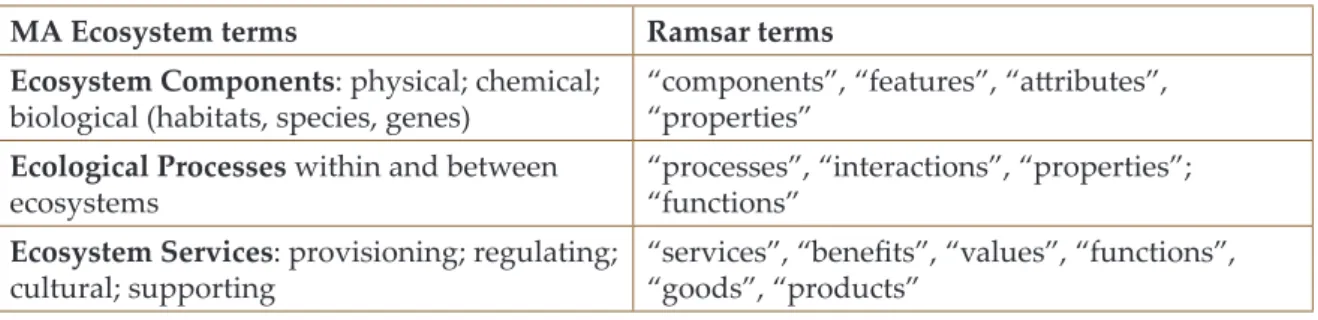
interacting (through Ecological Processes) as a functional unit which provides inter alia a variety of benefits to people (Ecosystem Services). 7. Included in “MA Ecosystem Services” are provisioning, regulating, and
cultural services that directly affect people, and supporting services which are needed to maintain these other services. Further information can be found in the Synthesis Report prepared by the MA for the Ramsar Convention (Finlayson, C.M., D’Cruz, R. & Davidson, N.C. 2005. Wetlands and water: ecosystem services and human well-being. World Resources Institute, Washington D.C). In the context of the Ramsar Convention this refers to products, functions and attributes as defined in Resolution VI.1 and expanded to include both material and non-material cultural values, benefits and functions as outlined in COP8 DOC.15 “Cultural aspects of wetlands”. 8. Terms […]used in previous Ramsar guidelines and documents are shown in
Table 1 alongside those used in the MA. Further review of the harmonization of definitions and terms related to ecosystem benefits/services (with
reference to Resolution VIII.7 (paragraph 15) and COP9 DOC. 16, taking into account the usage of such terms in other international fora) [was undertaken by the STRP in 2005-2008, and was reported to Parties in COP10 DOC.22: “The global use of terminologies concerning ecosystem services”. Among other things this found some confusion, and a need to clarify the conceptual difference between the term “ecosystem services” (the benefits provided by ecosystems to people) and “environmental services” (the benefits provided by people) in relation to payments for environmental services: such payments should be used as incentives to maintain ecosystems and the ecosystem services they provide, rather than as payment for the services provided to people by these ecosystems].
Table 1. Comparative terminology for describing wetland ecosystems
MA Ecosystem terms Ramsar terms
Ecosystem Components: physical; chemical;
biological (habitats, species, genes) “components”, “features”, “attributes”, “properties”
Ecological Processes within and between
ecosystems “processes”, “interactions”, “properties”; “functions”
Ecosystem Services: provisioning; regulating;
cultural; supporting “services”, “benefits”, “values”, “functions”, “goods”, “products”
A Conceptual Framework for wetland wise use
Additional information
Millennium Ecosystem Assessment
Ecosystems and Human Well-being: A Framework for Assessment
The Millennium Ecosystem Assessment (MA) was an international work programme that “focused on ecosystem services (the benefits people obtain from ecosystems), how changes in ecosystem services have affected human well-being, how ecosystem changes may affect people in future decades, and response options that might be adopted at local, national, or global scales to improve ecosystem management and thereby contribute to human well-being and poverty alleviation”. It was launched by UN Secretary General Kofi Annan in June 2001 and completed in March 2005. It is intended to help to meet assessment needs of the Convention on Biological Diversity, the Convention to Combat Desertification, the Ramsar Convention on Wetlands, and the Convention on Migratory Species, as well as the needs of others in the private sector and civil society.
According to its website, “the MA synthesized information from the scientific literature, datasets, and scientific models, and included knowledge held by the private sector, practitioners, local communities and indigenous peoples. All of the MA findings underwent rigorous peer review. More than 1,300 authors from 95 countries were involved in four expert working groups preparing the global assessment, and hundreds more [have undertaken] more than 20 sub-global assessments”. The four main volumes of the MA general report - entitled Current State and Trends, Scenarios,
Policy Responses, and Multiscale Assessments - as well as Our Human Planet (Summary for Decision Makers), are available for PDF download from the MA web site and for purchase in printed form from Island Press: http://www.millenniumassessment.org/en/index.aspx.
The Synthesis reports
In addition to the enormous general report, there are five synthesis reports that integrate the general findings that are significant to
five main subject areas. All with the general title “Ecosystems and Human Well-being”, the syntheses include Wetlands and Water
(prepared for the Ramsar Convention), Biodiversity (prepared for the CBD); Desertification (prepared for the UNCCD);
Opportunities and Challenges for Business and Industry; and
Health (with the WHO). These are available for PDF download from the Web link above.
The Wetlands and Water synthesis report was prepared by an MA Synthesis Team of more than twenty authors co-led
by Max Finlayson, Rebecca D’Cruz, and Nick Davidson. It includes a Key Messages section and a Summary for
Decision-Makers as well as chapters on the distribution of wetlands and their species; wetland services; drivers of loss and change to wetland ecosystems; human well-being; scenarios for the future of wetlands; and responses for the wise use of wetlands.
Key messages from the STRP
STRP’s 14 Key Messages from the Millennium Assessment for the Ramsar Convention and the future of wetlands
1. A cross-sectoral focus is urgently needed from policy- and decision-makers that emphasizes securing wetland ecosystems and their services in the context of achieving sustainable development and improving human well-being.
2. Management of wetlands and water resources is most successfully addressed through integrated management at the river (or lake or aquifer) basin scale that is linked to coastal zone management for coastal and near-shore wetlands and that takes into account water allocations for the ecosystems. 3. Wetlands deliver a wide range of critical and important services (e.g. fish and fiber, water supply, water
purification, coastal protection, recreational opportunities, and increasingly, tourism) vital for human well-being. Maintaining the natural functioning of wetlands will enable them to continue to deliver these services.
4. The principal supply of renewable fresh water for humans comes from an array of wetland types, including lakes, rivers, swamps and groundwater aquifers. Up to 3 billion people are dependent on groundwater as a source of drinking water, but such abstractions increasingly exceed their recharge from surface wetlands.
5. The services delivered by wetlands have been arguably valued at US$14 trillion annually. Economic valuation now provides a powerful tool for placing wetlands on the agenda of conservation and development decision-makers.
6. Wetlands encompass a significant proportion of the area of the planet; the global estimate is 1280 million hectares (equivalent to approximately 9% of land surface) and is recognized as an under-estimate.
7. The degradation and loss of wetlands is more rapid than that for other ecosystems. Similarly, the status of both freshwater and, to a lesser extent, coastal species is deteriorating faster than that of species in other ecosystems. Wetland-dependent biodiversity in many parts of the world is in continuing and accelerating decline.
8. Wetland loss and degradation has primarily been driven by land conversion and infrastructure development, water abstraction, eutrophication and pollution and over-exploitation. Losses tend to be more rapid where populations are increasing most and where demands for increased economic development are greatest. There are a number of broad, interrelated economic reasons, including perverse subsidies, why wetlands continue to be lost and degraded.
9. Global climate change is expected to further exacerbate the loss and degradation of wetland biodiversity including species that cannot relocate and migratory species that rely on a number of wetlands at different stages of their life cycle.
10. The continuing loss and degradation of wetlands are leading to reduction in the delivery of wetland ecosystem services, yet at the same time demand for these same services is projected to increase. 11. Current use of two wetland ecosystem services – freshwater and capture fisheries dependent on
natural reproduction - in some regions is now in excess of levels that can be sustained even at current demands, much less future ones.
12. The projected continued loss and degradation of wetlands will result in further reduction in human well-being, especially for poorer people in less developed countries where technological solutions are not as readily available.
13. Progress towards achievement of the Millennium Development Goals depends on maintaining or enhancing wetland ecosystem services.
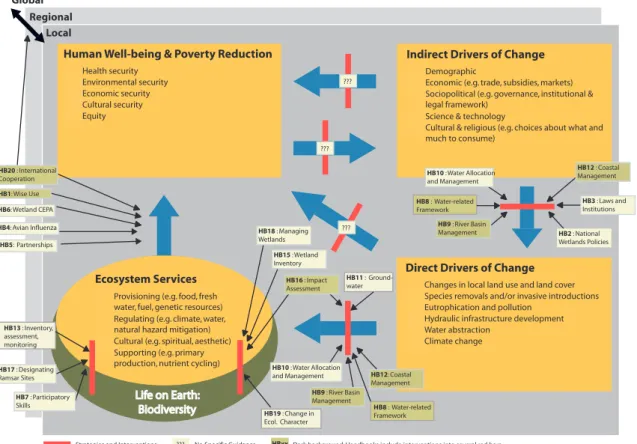
Figure 1. A Conceptual Framework for the Wise Use of Wetlands and the maintenance of their ecological character, and the application of the guidelines in the Ramsar ‘toolkit’ of Wise Use Handbooks 4th edition
(2010). (From the MA report to the Ramsar Convention: Ecosystem Services and Human Well-Being: Wetlands & Water: Synthesis. 2005. World Resources Institute, Washington D.C. [updated to reflect new Handbook titles
and numbering])
10. Mapping the Ramsar Wise Use toolkit contents onto this conceptual framework also permits an assessment of the toolkit’s coverage and gaps in coverage in relation to intervention opportunities and topics. It should be noted that many of the current Ramsar wise use guidelines concern strategies and interventions to ecosystems and their processes, or strategies and interventions addressing aspects of the direct drivers of change to ecosystems. Also, these concern interventions chiefly at local or national levels, since Ramsar guidance is for Contracting Parties acting within their territories, although some guidance also applies regionally and globally (e.g., aspects of the Guidelines for International Cooperation – Handbook [20]). 11. The strategies and intervention opportunities which are relevant for the
application of each of the guidelines of the Ramsar toolkit are listed in Table 2.
12. Only two current Ramsar wise use guidelines - National Wetland Policies and Reviewing Legislative and Institutional Frameworks - wholly concern interventions to indirect drivers of change, although some other guidelines include some policy aspects. However, it is clear that these ‘interventions’ onto the indirect drivers of change are important to have in place if efforts to manage wetland ecosystems sustainably through the application of the rest of the suite of Ramsar wise use guidelines are to be effective and efficient.
[See Appendix 3 for further information on the 4th edition of the Ramsar toolkit.]
Direct Drivers of Change
Changes in local land use and land cover
Climate change Water abstraction
Hydraulic infrastructure development Eutrophication and pollution
Species removals and/or invasive introductions
Indirect Drivers of Change
Demographic
Cultural & religious (e.g. choices about what and much to consume)
Science & technology
Sociopolitical (e.g. governance, institutional & legal framework)
Economic (e.g. trade, subsidies, markets)
Human Well-being & Poverty Reduction
Health security Equity Cultural security Economic security Environmental security Ecosystem Services
Provisioning (e.g. food, fresh water, fuel, genetic resources)
Cultural (e.g. spiritual, aesthetic) Regulating (e.g. climate, water, natural hazard mitigation) Supporting (e.g. primary production, nutrient cycling)
Life on Earth: Biodiversity Global Regional Local ??? ??? ???
Strategies and Interventions ??? No Specific Guidance HBxxDark background: Handbooks include interventions into several red bars
HB20 : International Cooperation
HB1: Wise Use
HB17 : Designating Ramsar Sites
HB7 : Participatory Skills
HB10 : Water Allocation and Management
HB9 : River Basin Management
HB12: Coastal Management
HB18 : Managing Wetlands
HB15 : Wetland Inventory
HB16 : Impact Assessment
HB10 : Water Allocation and Management
HB9 : River Basin
Management HB2 : National Wetlands Policies
HB3 : Laws and Institutions
HB12 : Coastal Management
HB13 : Inventory, assessment, monitoring
HB19 : Change in Ecol. Character
HB11 : Ground-water
HB8 : Water-related Framework
HB6: Wetland CEPA
HB4: Avian Influenza
HB8 : Water-related Framework
Without such a policy and legislative framework in place, there is a risk that other interventions will take place in a ‘political vacuum’ without a clear authorizing environment for their delivery, thus risking such efforts failing. 13. For some intervention opportunities indicated by the MA Conceptual
Framework – for example, between indirect drivers of change and human well-being and vice versa - there are currently no Ramsar guidelines developed.
14. All aspects of the outline Guidelines for the implementation of the wise use concept adopted by COP4 (Recommendation 4.10) and most aspects of the Additional guidance for the implementation of the wise use concept adopted by COP5 (Resolution 5.6) have now been superseded by the suite of elaborated
Additional information
The Millennium Ecosystem Assesment
The application of response options
At COP10 in 2008, the Ramsar Parties adopted Resolution X.18 on The application of response options from the Millennium Ecosystem Assessment (MA) within the Ramsar Wise Use Toolkit, referring to work undertaken by the STRP’s Wise Use Working Group which is due to be published as a Ramsar Technical Report. This Report will serve as a guide to Contracting Parties and others on the application of the MA response options to enhance the implementation of the Ramsar Convention at the national level. The work supplements the Wetlands and Water synthesis report, given that the latter had been prepared at the same time as the full MA reports were being finalised, and hence it had not been possible to review thoroughly all other MA volumes for relevant response options to include in the synthesis report.
Points from the STRP’s analysis include the following:
• the MA outputs concerning responses contain little detail on the wise use of wetlands, and where wetland wise use is treated in the response options, they are largely focused on addressing direct drivers of change (e.g., water abstraction, unsustainable harvest, and resource consumption);
• the MA outputs concerning responses contain few relevant options that address indirect drivers of change (e.g., economic and socio-political drivers) and a limited number that deal with trade-offs in decision-making relating to wetland wise use;
• the majority of the response options that address direct drivers of change in wetlands are already articulated within Ramsar’s toolkit of Wise Use Handbooks;
• exceptions are response options contained within the underlying MA chapters that deal with ecosystem services (e.g., nutrient cycling, food, human health, and climate change and air quality) and some MA chapters that deal with natural and human-made systems (e.g., urban systems, cultivated systems and dryland systems);
• some of the MA’s response options that are not covered by Ramsar’s Wise Use
Handbooks are included in other STRP products which have been brought to COP (for example, the material adopted by COP10 in Resolution X.23 on Wetlands and human
guidelines adopted by subsequent Conferences of Contracting Parties and compiled in the Ramsar toolkit of Wise Use Handbooks (see Table 2). However, three aspects of the COP5 guidance have not been further developed, those concerning “Research”, “Training” and “Technical issues” of sustainable technologies. [These sections of Resolution 5.6 are included here in Appendix 2.]. Some more recent examples of principles, guidance and other information considered by the COP, concerning ways in which particular drivers may be addressed in positive ways that integrate with the maintenance of wetland ecosystem services, are given in Appendix 4.
Updated definitions of “ecological character” and “change in
ecological character” of wetlands
15. Applying the MA’s terms and concepts, under which services form an integral part of ecosystems, an updated definition of Ramsar “ecological character” is:
“Ecological character is the combination of the ecosystem components, processes and benefits1/services that characterise the wetland at a given
point in time.”
16. The phrase “at a given point in time” refers to Resolution VI.1 paragraph 2.1, which states that “It is essential that the ecological character of a site be described by the Contracting Party concerned at the time of designation for the Ramsar List, by completion of the Information Sheet on Ramsar Wetlands (as adopted by Recommendation IV. 7).”
17. Furthermore, paragraph 2.3 of Resolution VI.1 states that “Contracting Parties are requested to verify the data which they have provided on Information Sheets on Ramsar Wetlands every six years, i.e., every second meeting of the Conference and to provide the [Secretariat] with updated sheets if necessary.” In addition, under paragraph 2.4 “Change in ecological character of a listed site should be assessed against the baseline status presented in the Information Sheet on Ramsar Wetlands, at the time of designation for the List (or at the time the Information Sheet was first provided to the [Secretariat]), together with any information which has been received subsequently.”
18. Essential to wetland management is baseline data that establishes the range of natural variation in components, processes and benefits/services at each site within a given time frame, against which change can be assessed. Contracting Parties have already adopted a range of guidance relevant to the identification, assessment, monitoring and management of the ecological character of Wetlands of International Importance and other wetlands, including wetland risk assessment (Resolution VII.10), impact assessment (Resolutions VII.16 and VIII.9), monitoring (Resolution VI.1), inventory (Resolution VIII.6), and management planning (Resolution VIII.14). In addition, […] [texts have been adopted on describing ecological character (Resolution X.15) and detecting, reporting and responding to change in ecological character (Resolution X.16) of wetlands].
Table 2. The application of guidelines in the Ramsar “Toolkit” of Wise Use Handbooks [4th Edition], supported by Ramsar Technical Reports, to different intervention
opportunities in the MA’s Conceptual Framework (see Figure 1).
Intervention opportunity(ies) Relevant Ramsar Wise Use Handbooks ([4th edition]) […] and Ramsar Technical Reports (RTR)
Indirect drivers è Direct drivers 2. National Wetland Policies 3. Laws and Institutions [8]. Water-related framework
[9]. River Basin Management (some parts) [10]. Water Allocation and Management (some parts)
[12]. Coastal Management (some parts)
Direct drivers è Wetland Ecosystems [8]. Water-related framework [9]. River Basin Management
[10]. Water Allocation and Management [11]. Groundwater
[12]. Coastal Management [15]. Wetland Inventory [16]. Impact Assessment RTR. 1 Rapid Assessment
RTR. 3 Economic valuation of wetlands RTR. 5 Vulnerability assessment
RTR. Environmental water requirements (in prep.)
Within Wetland Ecosystems [7]. Participatory Skills [9]. River Basin Management
[10]. Water Allocation and Management [11]. Groundwater
[13]. Inventory/assessment /monitoring framework
[15]. Wetland Inventory [16]. Impact Assessment [17]. Designating Ramsar Sites [18]. Managing Wetlands RTR 1 Rapid Assessment
RTR 2 GIS for inventory, assessment & monitoring
Covers several types of intervention opportunities (Indirect drivers è Direct drivers, Direct drivers è Wetland Ecosystems, and within Wetland Ecosystems)
1. Wise Use of Wetlands
[4. Avian Influenza and Wetlands] [5. Partnerships]
[6]. Wetland CEPA
[20]. International Cooperation
19. Consistent with the updated definition of “ecological character”, an updated definition of “change in ecological character of wetlands” is:
“For the purposes of implementation of Article 3.2, change in ecological character is the human-induced adverse alteration of any ecosystem
component, process, and/or ecosystem benefit/service.”
20. The inclusion of specific reference to Article 3.2 of the Convention text within the definition is designed to clarify the maintenance obligation for the ecological character of listed Wetlands of International Importance (Ramsar Sites) under Article 3.2, and to note that such change concerns only adverse change caused by the actions of people. This is in line with the context of Article 3.2 and Recommendation 4.8 (1990) establishing the Montreux Record, which was re-affirmed by COP8 Resolution VIII.8. For the purposes under the Convention, this definition therefore excludes the processes of natural evolutionary change occurring in wetlands and also excludes positive human-induced change.
21. However, it should be noted that other actions adopted by the Convention, such as those concerning assessing the overall status and trends of wetlands and Ramsar Sites, require information on all types of change in ecological character – positive and negative, natural and human-induced (as is recognized in COP8 DOC. 20 and by Resolution VIII.8). Likewise, the Ramsar Convention has also recognized that wetland restoration and/or rehabilitation programmes can lead to favourable human-induced changes in ecological character (Annex to Resolution VI.1, 1996) and are a key aspect of wetland management interventions (see, e.g., Annex to Resolution VIII.14 (Handbook [18]) and Handbook [19]).
An updated definition of the “wise use” of wetlands
22. An updated definition of “wise use”, taking into account the Convention’s mission statement, the MA’s terminology, the concepts of the ecosystem approach and sustainable use applied by the Convention on Biological Diversity, and the definition of sustainable development adopted by the 1987 Brundtland Commission, is:
“Wise use of wetlands is the maintenance of their ecological character, achieved through the implementation of ecosystem approaches2, within
the context of sustainable development3.”
23. The wise use provisions of the Convention apply, as far as possible, to all wetland ecosystems. Societal choice is inherent in advancing human well-being and poverty alleviation, which depends on the maintenance of ecosystem benefits/services. Pressures to follow sustainable development precepts, and to maintain environmental, economic and social sustainability
2 Including inter alia the Convention on Biological Diversity’s “Ecosystem Approach” (CBD COP5 Decision V/6) and that applied by HELCOM and OSPAR (Declaration of the First Joint Ministe-rial Meeting of the Helsinki and OSPAR Commissions, Bremen 25-26 June 2003).
3 The phrase “in the context of sustainable development” is intended to recognize that whilst some wetland development is inevitable and that many developments have important benefits to society, developments can be facilitated in sustainable ways by approaches elaborated under the Convention, and it is not appropriate to imply that ‘development’ is an objective for every wetland.
in land use decisions, encourage compromises (“trade-offs”) between individual and collective interests.
24. Within the context of ecosystem approaches, planning processes for promoting the delivery of wetland ecosystem benefits/services should be formulated and implemented in the context of the maintenance or enhancement, as appropriate, of wetland ecological character at appropriate spatial and temporal scales.
Additional information
Wetlands and Poverty Reduction Project: securing wetlands - sustaining
life
by Wetlands International
and updated by Ramsar staff for the 4th edition the Handbooks
The Wetlands and Poverty Reduction Project of Wetlands International ran from January 2005 to December 2008, and was dedicated to demonstrating and promoting the crucial role wetlands can play in poverty reduction. Together with partners from environmental and development organizations, the project took place in a context of WI’s Wetlands and Livelihoods Programme, which supports improved wetland management. The challenge is to overcome the conflicts of interest as well as lack of knowledge among people involved in wetland management.
The project developed clear views and information, offered training facilities and used advocacy and communication to bring knowledge to the right people. For optimal wetland management, leading to sustainable benefits for many, advocacy was also undertaken to promote reversal of adverse policies and practices and support of partnerships and policies that lead to long term solutions for the poor.
Knowledge: developing convincing information and views
The project worked on a knowledge base of information and clear views on various wetland topics in order to inform and convince those responsible for policies. Demonstration projects were set up in Africa and Asia to explore the potential of different kinds of wetlands for poverty reduction and how they can best be managed.
In the demonstration projects, local partnerships illustrated how poverty reduction can be achieved through the wise use of wetlands, showing in a practical way, how a resilient wetland ecosystem can both provide for human needs and sustain biodiversity. Stakeholders in the demonstration projects were encouraged to learn from the experience of others, especially indigenous stakeholders.
One of the funding criteria for the projects was the demonstrable commitment of an active partnership between conservation and development agencies and other sectoral interests in project planning and implementation.
Examples of the demonstration projects include:
MALI: Poverty reduction in the Inner Niger Delta
KENYA: Improved water management as an entry point for community livelihood
improvement, sustainable land use planning, and institutional development
ZAMBIA-MALAWI: Striking a balance – maintaining seasonal wetlands and their livelihood contributions in South Central Africa
SOUTH AFRICA: Coastal peat swamp forest conservation and poverty alleviation in and around the Greater St. Lucia Wetland Park
INDONESIA: Improving the livelihoods of poor and vulnerable communities in the buffer zone of Berbak and Sembilang National Parks through the wise use of wetlands.
Of course, a lot can be learned by looking at the successes and failures of wetland management in the past. This is our second source of knowledge: the development of ‘lessons learned’ from wetland management. Wetlands International itself also has a long history of wetland management from which we can learn. All this information forms the basis of our activities.
Training the right people
Training people who deal with wetland policies and management is key to success.
Therefore the project and its partners developed a large-scale training programme, consisting of two courses; one for high level policy makers and one for mid-level wetland managers. Partner institutions offered these courses in West and East Africa, respectively in French and English. In addition, 100 trainers were trained so that they also can offer these courses to many others.
Working on better policies
The project hoped to bring about
improvements in policies of specific international decision-making bodies like the Ramsar Convention, CBD and regional authorities in Africa, Latin America and Asia so that the role of wetlands in poverty alleviation is recognized in appropriate policy documents. At this international level, Wetlands International plays a visible role at
conventions; informing and supporting delegations representing governments as well as other non-governmental stakeholders.
Most of our ambitions are however on the development of national policies in developing countries. At this level we work in partnership with local NGOs. These NGOs are best able to identify opportunities to improve policies. They will also urge our mission with key people in other relevant NGOs, governments and companies.
Finally, we work with governmental and non-governmental donors to improve their policies on poverty reduction and conservation.
For more information visit http://www.wetlands.org.
Section II
Human well-being and wetlands: the Changwon Declaration
The “Changwon Declaration on human-well being and wetlands” was an initiative of thegovernment of the Republic of Korea in 2008, the year of Ramsar’s 10th meeting of the Conference
of the Contracting Parties (COP10) which was hosted in the Korean city of Changwon. The text of the Declaration was prepared through a collaborative process drawing on the expertise of the Convention’s Scientific and Technical Review Panel (STRP) , the International Organization Partners (IOPs), the government of Korea and the Ramsar Secretariat.
The Declaration was adopted at COP10 as the Annex to Resolution X.3; and it embodied the spirit of the theme of the COP, which was “Healthy wetlands, healthy people”. This slogan reflected key principles in the Convention’s evolution for the priorities of the 21st Century. The text of the
adopting Resolution is given at the end of this Handbook; and the Declaration itself is reproduced in the present Section below.
The Changwon Declaration is written in the form of key messages for decision-makers in other (i.e., non-wetland) sectors, those whose business both affects wetland conservation and wise use and depends on the maintenance of healthy wetlands, and it recognizes that this fact does not as yet appear to be widely understood. The Declaration was designed to be accessible for everyone to take out and use, at all scales, from local to international. There are key messages for five major sectors, covering:
• Water and wetlands
• Climate change and wetlands • People’s livelihoods and wetlands • People’s health and wetlands
• Land use change, biodiversity and wetlands
and on two types of cross-cutting mechanism which are helpful in delivering responses, namely: • Planning, decision-making, finance and economics
• Sharing knowledge and experience
The Resolution thanks the government of the Republic of Korea for its declared intention to champion the dissemination and uptake of this Declaration in future, and it sets out a range of actions by Contracting Parties, Convention bodies and others to make use of and promote the Declaration.
It may also be noted that the Changwon Declaration was prepared in such a manner as to permit the extraction of just the emboldened text from each key message to form a more succinct “summary for decision-makers”.
The Changwon Declaration on human well-being and wetlands
Where does this Declaration come from?
The Ramsar Convention on Wetlands is the global intergovernmental agreement concerned with the conservation and wise use of all the world’s wetlands. It was established in the city of Ramsar in the Islamic Republic of Iran on 2 February 1971.
The mission of the Convention on Wetlands (Ramsar, Iran, 1971)1 is:
“the conservation and wise use2 of all wetlands3 through local, regional and national actions and international cooperation, as a contribution towards achieving sustainable development
throughout the world”.
As the Ramsar Convention approaches four decades of existence, it continues to grow and to focus its agenda on the critical priorities for the environment at global, national and local levels. The Conference of the Convention’s Contracting Parties held its 10th meeting in Changwon, Republic
of Korea, from 28 October to 4 November 2008, on the theme of “Healthy wetlands, healthy people”4, focusing on the link between human well-being and the functions of wetlands and the
identification of positive actions in this regard. Who should use this Declaration?
WHY SHOULD YOU READ AND USE THIS DECLARATION?
Wetlands provide food, store carbon, regulate the water flows, store energy, and are crucial for biodiversity. Their benefits to people are essential for the future security of humankind. Conservation and the wise and use of wetlands are vital for people, especially the poor. Human well-being depends on many benefits provided to people by ecosystems, some of which come from healthy wetlands. Policymaking, planning, decision-making and management action by a wide range of sectors, at all levels from international to local, can benefit from the global consensus input that the Ramsar Convention provides. This includes the identification of the relevance of wetlands, the importance of their conservation and wise use, and ensuring security of the benefits that wetlands provide in terms of water, carbon storage, food, energy, biodiversity and livelihoods. It also includes technical know-how, guidance, models and support networks to help in putting this knowledge to practical use. The Changwon Declaration presents an overview of priority action steps that together show “how to” deliver some of the world’s most critical environmental sustainability goals. The Changwon Declaration is a statement and call to action from the 10th meeting of the
Conference of Contracting Parties to the Ramsar Convention on Wetlands, which was held in Changwon, Republic of Korea, from 28 October to 4 November 2008
The Changwon Declaration is relevant to all of us, everywhere, who are concerned with the future of our environment.
The Conference addresses this Declaration to all stakeholders in environmental governance and management, particularly those in positions of leadership, both in relevant fora at global level, including heads of government, and equally in “hands-on” delivery at local and river basin levels. Why is it not “just another Declaration”?
Declarations have been issued from many international environmental conferences. The Changwon Declaration aims not to cover “standard” ground, but to add value by:
• being directed primarily to audiences beyond the Ramsar Convention itself, and to opportunities for action;
• offering positive, practical action steps; and
• defining the ways in which the Declaration’s impact will be assured. What is in this Declaration?
The Declaration highlights positive actions for ensuring human well-being and security outcomes in the future under five priority thematic headings below, followed by two key areas of cross-cutting delivery mechanisms.
What does this mean in practice? Water and wetlands
The degradation and loss of wetlands is more rapid than that of other ecosystems, and this trend is accelerating, due to major changes in land use, water diversions, and infrastructure development. Access to freshwater is declining for 1-2 billion people worldwide, and this in turn negatively affects food production, human health, and economic development, and it can increase societal conflict.
There is an urgent need to improve water governance. Instead ofbeing demand-driven, which promotes over-allocation of water, water governance should treat wetlands as our “natural water infrastructure”, integral to water resource management at the scale of river basins. Continuing with “business as usual” is not an option.
Our increasing demand for, and over-use of, water jeopardizes human well-being and the environment. Access to safe water, human health, food production, economic development and geopolitical stability are made less secure by the degradation of wetlands driven by the rapidly widening gap between water demand and supply.
There is often not enough water to meet our direct human needs and to maintain the wetlands we need. Even with current attempts to maintain water flows for ecosystems, the capacity of wetlands to continue to deliver benefits to people and biodiversity, including clean and reliable water supplies, is declining. Actions to support water allocation to ecosystems, such as environmental flows, placing upper limits on water allocations (water ‘caps’), and new water management legislation, must be strengthened.
To close this “water gap”, we need to:
• use our available water more efficiently;
• restore our wetlands that are already degraded – this offers us an efficient and cost-effective means of increasing ground and surface water storage, improving water quality, sustaining agriculture and fisheries, and protecting biodiversity.
• wisely manage and protect our wetlands – by always ensuring that they have enough water for them to continue to be the source of the quantity and quality of the water we need for food production, drinking water and sanitation. Failure to do so makes our water problems worse, sincewetlands are the only source of water to which we have easy access.
Climate change and wetlands
Many types of wetlands play an important role in sequestering and storing carbon. They are particularly vulnerable to climate change impacts, while human disturbances of the same wetland systems can cause huge carbon emissions.
Wetlands are vital parts of the natural infrastructure we need for addressing climate change. Degradation and loss of wetlands make climate change worse and leave people more vulnerable to climate change impacts such as floods, droughts and famine. Many climate change policy responses for more water storage and transfers, as well as energy generation, if poorly implemented, may deleteriously impact on wetlands.
Climate change is increasing uncertainty in water management and making it more difficult to close the gap between water demand and supply. We will increasingly feel the effects of climate change most directly through changes in the distribution and availability of water, increasing pressures on the health of wetlands. Restoring wetlands and maintaining hydrological cycles is of utmost importance in responses for addressing climate change, flood mitigation, water supply, food provision and biodiversity conservation.
Coastal wetlands will play a major part in strategies established to deal with problems in coastal areas created by sea level rise.
Governments need to include water and wetland management in effective strategies for addressing climate change at national level. Decision-makers need to recognize the natural infrastructure of wetlands as a major asset in combating and adapting to climate change.
Water and well-functioning wetlands play a key role in responding to climate change and in regulating natural climatic processes (through the water cycle, maintenance of biodiversity, reduced greenhouse gas emissions, and buffering of impacts). Conservation and wise use of wetlands help to reduce the negative economic, social and ecological effects that may result.
Developing opportunities should be seized for collaboration among international technical bodies involved in climate change (e.g., the Intergovernmental Panel on Climate Change, the Ramsar Scientific and Technical Review Panel), to share understanding and harmonise analyses, especially in relation to wetlands/water/climate linkages.
People’s livelihoods and wetlands
When policies in different sectors are not harmonised, many major developments and infrastructure schemes aimed at poverty reduction can actually lead to the degradation of wetlands, thus undermining their ability to provide vital services for local communities and ultimately leading to further and deepening poverty.
by wetlands should be integral to Poverty Reduction Strategy Papers and related policies and plans.
Wise use, management and restoration of wetlands should help to build opportunities for improving people’s livelihoods, particularly for wetland-dependent, marginalised and
vulnerable people. Wetland degradation affects livelihoods and exacerbates poverty, particularly in marginalised and vulnerable sections of society.
Wetland/livelihoods linkages need to be better analysed and documented. Capacity and partnerships should be promoted at multiple levels to support learning, collecting and sharing knowledge about these linkages.
Sustainable wetland management should be supported by indigenous and traditional knowledge, recognition of cultural identities associated with wetlands, stewardship promoted by economic incentives, and diversification of the support base for livelihoods.
People’s health and wetlands
Wetlands are important for the health benefits they provide, and also as places that people can visit for education, recreation, ecotourism, spiritual and cultural experiences, or simply to enjoy their natural beauty.
Interrelationships between wetland ecosystems and human health should be a key component of national and international policies, plans and strategies.
Development sectors, including mining, other extractive industries, infrastructure
development, water and sanitation, energy, agriculture, transport and others can have direct or indirect effects on wetlands. These lead to negative impacts on wetland ecosystem services, including those that support human health and well-being. Managers and decision-makers in such development sectors need to be more aware of this and take all possible measures to avoid these negative impacts.
The health and wetland sectors need to co-manage the links between wetland ecological character5 and human health. Wetland and water managers must identify and implement
interventions that benefit both wetland ecosystem “health” and human health.
It is already clear that many of the continuing pressures on wetlands that are driving trends in human health are rooted in issues of water, as for example waterborne transmission of diseases and vectors and/or dwindling supplies of water of suitable quality for food production, sanitation, and drinking water.
Land use change, biodiversity and wetlands
Better knowledge and understanding of the costs and benefits of changes to wetland ecosystems lead to better decision-making. Decisions on land use change must integrate adequate knowledge of the range of benefits, and their values, that wetlands provide for people and biodiversity.
Decision-making should, wherever possible, give priority to safeguarding naturally-functioning wetlands and the benefits they provide, especially through ensuring the sustainability of
ecosystem services, while recognizing that human-made wetland systems can also make a significant contribution to water and food security objectives.
What types of cross-cutting mechanisms are most helpful in delivering all this? Planning, decision-making, finance and economics
Policy development and decision-making in response to each of the issues addressed in this Declaration very often require tradeoffs across policy objectives from multiple sectors. Sound decision-making depends upon wise balancing of legitimate objectives that are interconnected, even if full and detailed information is not available.
Good use of rapid and practical decision-support tools (such as rapid assessment, conflict resolution, mediation, decision-trees, and cost-benefit analysis) can often be of critical assistance in identifying issues and policy options.
Full recognition should be given to the significance of wetlands in spatial planning, especially Wetlands of International Importance (Ramsar Sites7), so that the values they represent can
properly inform land-use and investment priority-setting and the adoption of necessary safeguards.
Cost-benefit analyses should be sufficiently comprehensive to best reflect the economic value of wetlands, as well as the reality that investing in the maintenance of wetland ecological character is usually a much more cost-effective strategy than later remediation for the loss of wetland services.
Adequate and sustainable financing for wetland conservation and wise use is essential, and this can be helped by the use of innovative financial instruments and partnerships between those sectors and stakeholders outside the Ramsar Convention who might not have worked together on wetland issues in the past. Especially when resources are limited, activities relevant to wetland conservation and wise use should seek to maximise the efficiency of use of currently available resources.
Sharing knowledge and experience
Basic information on the global extent and characterisation of wetlands urgently needs to be enhanced. There are increasing opportunities to make good use of evolving earth observation techniques and other information technologies.
Organizations with shared interests in data and information and knowledge (including
indigenous and traditional knowledge) relevant to the issues covered in this Declaration should intensify efforts to seek common, harmonised and accessible approaches, so that knowledge and experience (for example, concerning good practices) can be shared more effectively, including through appropriate information technology applications.
Your call to action
Each and every one of us has a stake in the outcomes that are supported by this Declaration. Many groups around the world are already working towards the wise use of wetlands in just the way this Declaration calls for. There are valuable experiences and knowledge to be shared that can help us all to make real, tangible progress. Reach out, get connected, get wet!
Ensuring impact
• its existence becoming widely known, reported, translated and remembered;
• its messages being taken up in planning and decision-making in local and river basin level governance/management processes;
• its relevant elements being incorporated into national-level plans, decisions and action programmes;
• its elements being incorporated into international policy statements, decisions and action programmes, including through briefings for government delegations to relevant international meetings.
Notes:
1The Ramsar Convention on Wetlands is the lead intergovernmental authority on wetlands and
strives to ensure that the contributions wetlands make to all aspects of human well-being are recognized and strengthened in all sectors and at all levels of society.
2 “Wise use” of wetlands has been defined under the Convention as “the maintenance of their
ecological character, achieved through the implementation of ecosystem approaches, within the context of sustainable development”. (The phrase “in the context of sustainable development” is intended to recognize that whilst some wetland development is inevitable and that many developments bring important benefits to society, developments can be facilitated in sustainable ways by approaches elaborated under the Convention, and it is not appropriate to imply that ‘development’ is an objective for every wetland.)
3 “Wetlands” encompass a broader range of ecosystems than is often realised. Article 1.1 of the
Ramsar Convention defines them as “areas of marsh, fen, peatland or water, whether natural or artificial, permanent or temporary, with water that is static or flowing, fresh, brackish or salt, including areas of marine water the depth of which at low tide does not exceed six metres”.
4 In recent years, Ramsar Conferences of the Contracting Parties (COPs) have been given themed titles to reflect priority issues of the moment in the Convention’s evolution. Previous themes have emphasised different aspects of the links between wetlands and people, and the theme for COP10, “Healthy wetlands, healthy people”, positions the Convention in relation to an emerging understanding about the critical links between wetlands and human health and sets the context for the adoption of new decisions in this area.
5 The “ecological character” of wetlands is a key concept of the Ramsar Convention, defined as
“the combination of the ecosystem components, processes and benefits/services that characterise the wetland at a given point in time”. (Within this context, ecosystem benefits are defined in accordance with the Millennium Ecosystem Assessment definition of ecosystem services as “the benefits that people receive from ecosystems”).
6 The “2010 Biodiversity target”, adopted by the Convention on Biological Diversity (CBD) and by
Heads of State at the 2002 United Nations World Summit on Sustainable Development (WSSD), is “to achieve by 2010 a significant reduction of the current rate of biodiversity loss at the global, regional and national level as a contribution to poverty alleviation and to the benefit of all life on Earth.”
7 “Ramsar Sites” (Wetlands of International Importance) are recognized and designated by the
Appendix 1
Ramsar’s wise use definition in relation to sustainable use, sustainable
development and ecosystem approaches
(from Ramsar COP9 DOC. 16, paragraphs 11 and 14-20: Rationale for proposals for A Conceptual Framework for the wise use of wetlands and the updating of wise use and ecological character
definitions)
The 3rd Ramsar Conference of the Contracting Parties (COP3, 1987) defined the wise use of wetlands as:
“their sustainable utilisation for the benefit of humankind in a way compatible with the maintenance of the natural properties of the ecosystem.”
As part of its definition of the wise use of wetlands, COP3 also defined “sustainable utilisation” as: “human use of a wetland so that it may yield the greatest continuous benefit to present generations
while maintaining its potential to meet the needs and aspirations of future generations”. Also in 1987, the Brundtland Commission defined “sustainable development” as:
“development that meets the needs of the present without compromising the ability of future generations to meet their own needs.” (UN World Commission on Environment and Development.
1987. Our common future.)
Ramsar COP3 also recognized that both wise use policy and actions at site management levels are integral parts of sustainable development. Since the terms of the Brundtland definition and the Ramsar COP3 definition of “sustainable utilisation” are very similar, it follows that rather than equating wise use simply with sustainable utilisation (use), it is now more appropriate and relevant to define wise use in the context of sustainable development.
Furthermore, wise use as a sustainable development mechanism has subsequently been recognized by the Ramsar Convention in 1996 (COP6) through its adoption of the Convention’s mission statement in the Strategic Plan 1997-2002, reaffirmed by this amended mission statement in the Strategic Plan 2003-2008 (COP8 Resolution VIII.25):
“the conservation and wise use of all wetlands through local, regional and national actions and international cooperation, as a contribution towards achieving sustainable development
throughout the world.”
The Convention on Biological Diversity (CBD) has described its “ecosystem approach” as that Convention’s overarching approach for its implementation. CBD has described (in Decision V/6; COP5, 2000) the “ecosystem approach”as:
“a strategy for the integrated management of land, water and living resources that promotes conservation and sustainable use in an equitable way. Thus, the application of the ecosystem approach will help to reach a balance of the three objectives of the Convention: conservation; sustainable use; and the fair and equitable sharing of the benefits arising out of the utilization of
genetic resources.
An ecosystem approach is based on the application of appropriate scientific methodologies focused on levels of biological organization, which encompass the essential structure, processes, functions