CorSalud 2019 Ene-Mar;11(1):21-29
RNPS 2235-145 © 2009-2019 Cardiocentro Ernesto Che Guevara, Villa Clara, Cuba.
Artículo con Licencia de Creative Commons – CC BY-NC-ND 4.0 21
Sociedad Cubana de Cardiología
____________________________Artículo Original
El índice leucoglucémico es un predictor de mortalidad por todas las
causas al año en pacientes cubanos con infarto agudo de miocardio con
elevación del segmento ST
Dr. David Padilla-Cueto
1,2, Dr. Halbert Hernández-Negrín
2,3, Dr. José I. Ramírez-Gómez
1,2,
Dra. Arlenys Pérez-Valdivia
2,4, Dra. Ana L. Cárdenas-Sánchez
2y Est. Adrián
Alfonso-Izquierdo
21 Servicio de Cardiología, Hospital Arnaldo Milián Castro. Villa Clara, Cuba. 2 Universidad de Ciencias Médicas de Villa Clara. Villa Clara, Cuba.
3 Servicio de Medicina Interna, Hospital Arnaldo Milián Castro. Villa Clara, Cuba. 4 Departamento de Microbiología. Hospital Arnaldo Milián Castro. Villa Clara, Cuba.
Full English text of this article is also available
INFORMACIÓN DEL ARTÍCULO
Recibido: 28 de julio de 2018 Aceptado: 27 de agosto de 2018
Conflictos de intereses
Los autores declaran que no existen conflictos de intereses
Abreviaturas
ILG: índice leucoglucémico
IAM: infarto agudo de miocardio
D Padilla-Cueto
Calle A #29, e/ C. Camajuaní y Circunvalación. Santa Clara 50300. Villa Clara, Cuba. Correo electrónico:
RESUMEN
Introducción: El índice leucoglucémico (ILG) ha sido propuesto como marcador
pronóstico de muerte en pacientes con infarto agudo de miocardio; sin embargo, no existe evidencia sobre su valor pronóstico al año.
Objetivo: El objetivo del estudio fue determinar el valor pronóstico del ILG en la
mortalidad al año de pacientes cubanos con infarto agudo de miocardio con elevación del segmento ST.
Método: Los datos fueron obtenidos de las historias clínicas y el objetivo primario
fue la muerte por todas las causas al año. El ILG se calculó con los valores al ingreso. Para el análisis se dividieron los pacientes en terciles de ILG, se constru-yeron curvas de características operativas del receptor y de supervivencia de Kaplan-Meier. Para el análisis multivariable se utilizó la regresión de Cox.
Resultados:Se analizaron 344 pacientes (mediana de edad, 68 años; el 65,7%
mas-culino; un 25,6% diabéticos). La mortalidad fue de 25,6% y fue significativamente mayor en el tercil superior (55,7%; p<0,0001). Los pacientes fallecidos presentaron una mediana de ILG significativamente mayor que los sobrevivientes (2,18 y 1,34, respectivamente; p<0,0001). El área bajo la curva del ILG fue de 0,715 y el punto de corte: 2,2. Un valor de ILG mayor de 2,2 se asoció a una supervivencia significati-vamente menor (177 vs. 309 días; p<0,0001) y fue un predictor independiente de mortalidad (HR=3,56; IC 95%, 2,09-6,07; p<0,0001).
Conclusiones: El índice leucoglucémico es buen predictor de mortalidad al año,
por todas las causas, en pacientes con infarto agudo de miocardio con elevación del segmento ST.
Palabras clave: Índice leucoglucémico, Infarto de miocardio, Mortalidad,
Supervi-vencia, Leucocitos, Glucemia
The leucoglycaemic index is a predictor of one-year all-cause
mortality in Cuban patients with ST-segment elevation acute
myocardial infarction
ABSTRACT
Introduction:Theleuko-glycaemicindexhasbeen proposed as a prognostic mark-
Índice leucoglucémico como predictor de mortalidad en el infarto agudo de miocardio
CorSalud 2019 Ene-Mar;11(1):21-29
22
surrounding its prognostic value to predict one-year mortality.
Objectives: The aim of this study was to determine the prognostic value of
leuko-glycaemic index for one-year mortality in Cuban patients with ST-segment eleva-tion myocardial infarceleva-tion.
Method: The data were obtained from the medical records and all cause one-year
deaths was the primary endpoint. The leuko-glycaemic index was calculated from measurements at admission. The patients were divided into leuko-glycaemic index tertiles to be evaluated. Receiver operating characteristics and Kaplan-Meier sur-vival curves were performed. Cox regression model was used for all multivariable analysis.
Results: Three hundred and forty-four patients were assessed (median age, 68
years; 65.7% males; 25.6% diabetic). The mortality rate was 25.6%, being significant-ly higher in the upper tertile (55.7%, p<0.0001). The deceased patients presented a median of leuko-glycaemic index significantly higher than the survivors (2.18 and 1.34 respectively, p<0.0001). The area under the curve for leuko-glycaemic index was 0.715 and its cut-off value was 2.2. Any leuko-glycaemic index value higher than 2.2 was associated with significantly lower survival (177 vs. 309 days, p<0.0001) and it was an independent predictor of mortality (HR=3.56, CI 95%, 2.09-6.07, p<0.0001).
Conclusions: The leuko-glycaemic index is a good predictor for all cause one-year
mortality in patients with ST-segment elevation myocardial infarction.
Keywords: Leuko-glycaemic index, Myocardial infarction, Mortality, Survival,
Leu-kocytes, Blood glucose
INTRODUCCIÓN
Las enfermedades cardiovasculares han incremen-tado progresivamente su presencia en todo el mun-do, de tal modo que han llegado a ser la primera causa de mortalidad. A pesar de las mejoras sustan-ciales en las estrategias de reperfusión y la terapia médica, el infarto agudo de miocardio (IAM) perma-nece asociado a una morbilidad y mortalidad signifi-cativas1.
La inflamación desempeña un papel importante en el desarrollo de la enfermedad aterosclerótica y la trombosis coronaria2. Estudios previos han de-mostrado que niveles elevados de marcadores in-flamatorios están asociados con la gravedad de la enfermedad coronaria y con un peor pronóstico3-5. A pesar de existir novedosos marcadores (interleuci-nas, proteína C reactiva, homocisteína, péptidos natriuréticos, fibrinógeno, entre otros), el recuento de leucocitos y de sus componentes diferenciales constituye una herramienta rápida, universal y poco costosa para establecer la conducta a seguir y el pronóstico de estos pacientes6,7. Por su parte, la hiperglucemia inducida por la respuesta inflamatoria y adrenérgica al estrés isquémico, es frecuente y constituye un factor pronóstico independiente de muerte y complicaciones en el síndrome coronario agudo8,9.
La asociación de estos 2 parámetros en el índice
leucoglucémico (ILG) ha sido propuesta como un marcador pronóstico de muerte y complicaciones intrahospitalaria en los pacientes con IAM10-13. A
pe-sar de ello, aun es necepe-sario reproducir estos resul-tados en más estudios, así como evaluar su signifi-cado al año. Por estas razones, el objetivo de esta investigación fue determinar el valor pronóstico del ILG en la mortalidad por todas las causas al año, en pacientes cubanos con IAM con elevación del seg-mento ST.
MÉTODO
Población en estudio
Se incluyeron a los pacientes ingresados en el Hos-pital Universitario Arnaldo Milián Castro de Villa Clara (Cuba), con diagnóstico de IAM con elevación del segmento ST en el período comprendido entre enero de 2011 y diciembre de 2015. Se excluyeron aquellos con presencia de enfermedades infeccio-sas, inflamatoria sistémica o hematológica que pu-diera alterar el recuento leucocitario, así como los pacientes para los cuales no se supo su estado al final del seguimiento (vivo o fallecido).
Variables
Padilla-Cueto D, et al.
CorSalud 2019 Ene-Mar;11(1):21-29 23
mar, hipertensión arterial, diabetes mellitus, IAM previo, fibrilación auricular, angina de pecho e insu-ficiencia cardíaca), clínica y laboratorio al ingreso (frecuencia cardíaca, tensión arterial sistólica y dias-tólica, clasificación Killip-Kimball, conteo de leucoci-tos, neutrófilos, linfocileucoci-tos, glucemia y creatinina), y el tratamiento de reperfusión coronaria (trombólisis, intervención coronaria percutánea o ambas). Se tomó en cuenta la intervención coronaria percutá-nea realizada durante el ingreso ya que en nuestro centro no se realiza de forma primaria. La trombóli-sis se realizó con estreptoquinasa recombinante.
Índice leucoglucémico
Para el cálculo del ILG se tuvo en cuenta que el leu-cograma y la glucemia hubieran sido realizados en el momento del ingreso. Se utilizó la siguiente fórmu-la ILG=(glucemia[mg/dl]×leucocitos[106/l])/100010.
Definición del evento y seguimiento
Se definió como variable dependiente a la muerte por todas las causas de los pacientes diagnosticados con IAM con elevación del segmento ST, durante el período 2011-2015. Esta información se obtuvo com-binando una encuesta de seguimiento telefónico a los 365 días del ingreso con los datos del registro provincial de mortalidad, del Departamento de Es-tadística de la Dirección Provincial de Salud Pública.
Consideraciones éticas
La realización del estudio fue aprobada por el Comi-té de Ética de la institución. Los datos personales de los pacientes no fueron publicados y se siguieron los principios establecidos en la Declaración de Hel-sinki.
Análisis estadístico
Los pacientes fueron divididos en 3 grupos según los terciles del ILG. La prueba de Kolmogorov-Smirnov fue usada para evaluar la distribución nor-mal de las variables cuantitativas, que se expresaron como media ± desviación estándar y se compararon mediante ANOVA; las que no presentaron distribu-ción normal se expresan como mediana y rango intercuartílico; para su comparación se utilizaron las pruebas U de Mann-Whitney y Kruskal-Wallis.
Para determinar las diferencias entre los grupos establecidos, según variables cualitativas, se usaron las pruebas estadísticas Chi-cuadrado y la exacta de Fisher, según correspondiera. Con el fin de determi-nar el poder discriminatorio del ILG como predictor de mortalidad al año se evaluó el área bajo la curva
de características operativas del receptor (ROC), y se identificó el punto de corte óptimo. Se construye-ron curvas de supervivencia utilizando el método de Kaplan-Meier, según los terciles y punto de corte de ILG; la supervivencia de estos grupos fue compara-da a través del test Log-Rank.
Para determinar aquellos factores que de manera independiente se asociaron a la mortalidad, se utili-zó la regresión de Cox univariable y multivariable. Se incluyeron en el modelo aquellas variables clíni-camente significativas o posibles confusoras con in-dependencia de su significación estadística, y aque-llas que en el análisis univariable presentaron una significación p≤0,01. Se consideró estadísticamente significativo un valor de p bilateral <0,05.
Los datos fueron procesados con SPSS versión 20.0 y MedCalc versión 8.2.1, ambos para Windows.
RESULTADOS
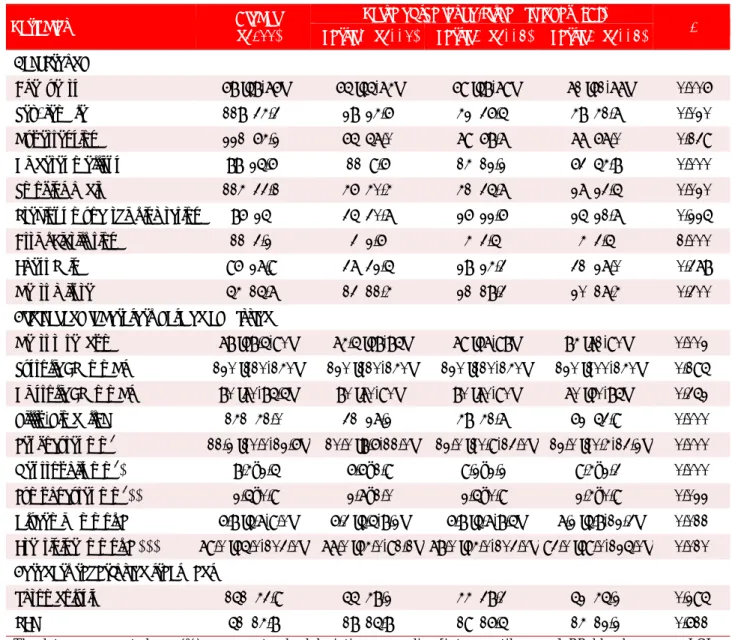
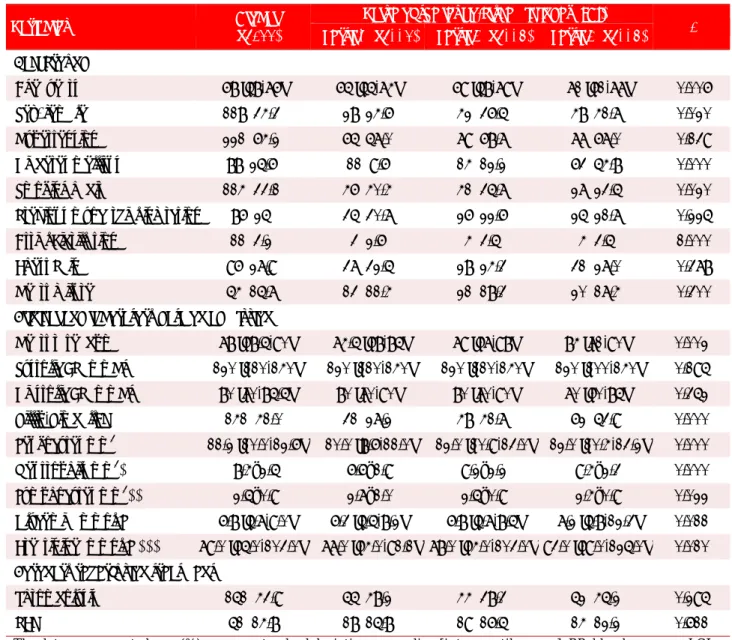
Se analizaron 344 pacientes consecutivos, la mayoría del sexo masculino (65,7%), y la mediana de la edad global fue de 68 años (rango intercuartílico 58-76). Destacan en los antecedentes personales que el 25% padecía de diabetes mellitus y había sufrido un IAM previo, el 64,2% presentaba hipertensión arterial y el 33,1% fumaba.
La mediana del ILG fue de 1,47. Se agruparon los pacientes según terciles de ILG que correspondieron a los percentiles 33 y 66, los cuales fueron 1,207 y 1,773, respectivamente. Al realizar un análisis de estos grupos, la mediana de la edad fue
significati-vamente superior según aumentaba el ILG (Tabla
1). Las mujeres y los diabéticos se presentaron con una frecuencia significativamente mayor en los terci-les más altos, mientras que los que tenían hábito de fumar predominaron en los más bajos. Otras carac-terísticas basales se detallan en la tabla 1.
En relación con las variables clínicas y de labora-torio al ingreso según terciles, no existieron diferen-cias en la tensión arterial sistólica y diastólica; sin embargo, la frecuencia cardíaca y los valores de glucemia, creatinina sérica, recuento de leucocitos, neutrófilos y linfocitos al ingreso fueron significati-vamente superiores en los pacientes de los terciles más altos. Igualmente estos grupos de pacientes presentaron peor clasificación Killip-Kimbal (> I). No se encontraron diferencias entre los pacientes de los distintos terciles en cuanto a los tratamientos de reperfusión coronaria (Tabla 1).
Índice leucoglucémico como predictor de mortalidad en el infarto agudo de miocardio
CorSalud 2019 Ene-Mar;11(1):21-29
24
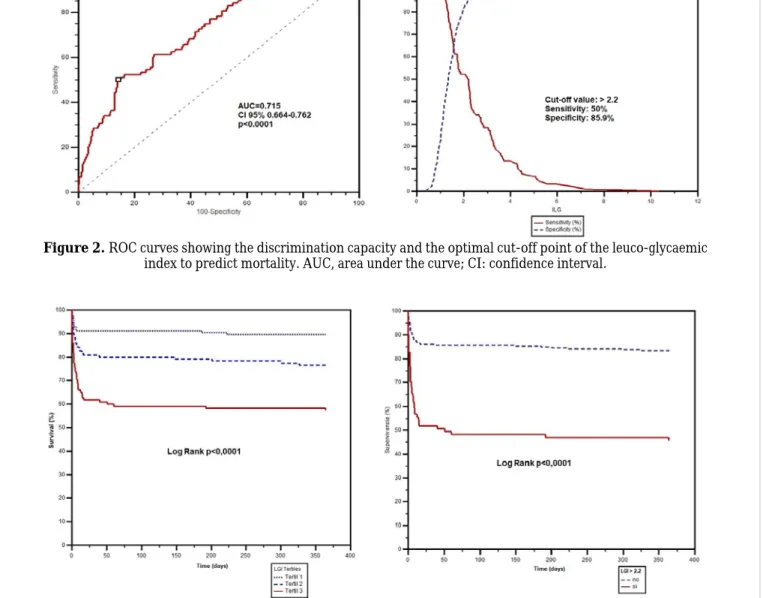
se registraron 88 muertes. La tasa de mortalidad fue de 25,6%, la cual se incrementó significativamente por terciles de ILG (p<0,0001) y alcanzó el 55,7% en el tercil 3 (Figura 1). La mediana de ILG entre los pacientes que sobrevivieron y fallecieron fue signifi-cativamente diferente, siendo mayor en los que fa-llecieron (1,34 vs. 2,18, respectivamente; p<0,0001).
El área bajo la curva del ILG fue de 0,715 (IC 95%: 0,664-0,762; p<0,0001). El valor de corte óptimo del ILG para predecir mortalidad fue 2,2; con una sensi-bilidad de 50% y especificidad de 85,9% (Figura 2).
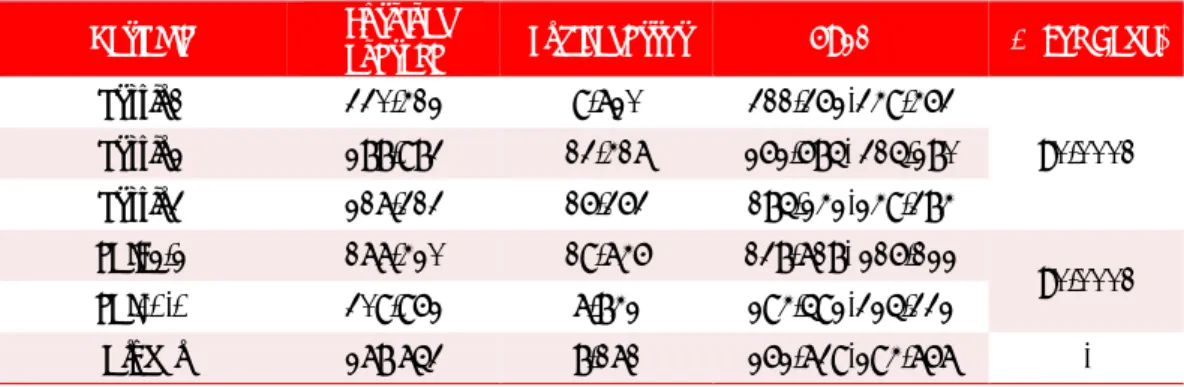
Existieron diferencias significativas al comparar la supervivencia, que decreció según los terciles de ILG (p<0,0001). La supervivencia también fue signifi-cativamente menor (Tabla 2 y Figura 3), en aque-llos pacientes con un ILG > 2,2 (p<0,0001).
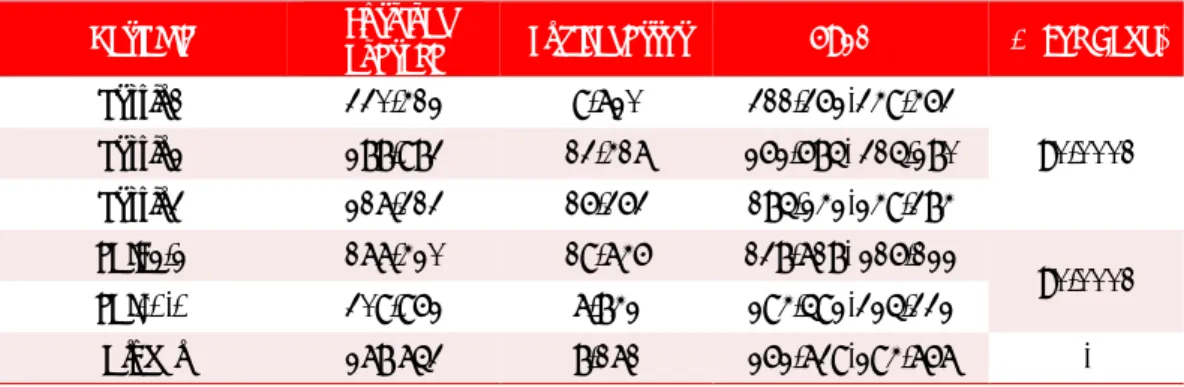
En el análisis multivariable, el ILG > 2,2 resultó un predictor de mortalidad al año por todas las causas (HR 3,562; IC 95%: 2,091-6,071; p<0,0001), indepen-dientemente de la edad, sexo, Killip-Kimball > I, ten-sión arterial sistólica, creatinina sérica y diabetes mellitus (Tabla 3).
Tabla 1. Datos demográficos, clínicos, laboratorio y tratamiento.
Variables (n=344) Global Tercil 1 (n=114) Tercil 2 (n=115) Tercil 3 (n=115) Valor del índice leucoglucémico (ILG) p
Antecedentes
Edad (años) 68 [58-76] 65 [55-74] 69 [58-79] 71 [61-77] 0,006
Sexo, femenino 118 (34,3) 28 (24,6) 42 (36,5) 48 (41,7) 0,020
Hipertensión arterial 221 (64,2) 65 (57,0) 79 (68,7) 77 (67,0) 0,139
Diabetes mellitus 88 (25,6) 11 (9,6) 14 (12,2) 63 (54,8) 0,000
Hábito de fumar 114 (33,1) 46 (40,4) 41 (35,7) 27 (23,5) 0,020
Infarto de miocardio previo 86 (25) 35 (30,7) 26 (22,6) 25 (21,7) 0,225
Fibrilación auricular 11 (3,2) 3 (2,6) 4 (3,5) 4 (3,5) 1,000
Angina 96 (27,9) 37 (32,5) 28 (24,3) 31 (27,0) 0,378
Insuficiencia cardíaca 54 (15,7) 13 (11,4) 21 (18,3) 20 (17,4) 0,300
Datos clínicos y de laboratorio al ingreso
Frecuencia cardíaca (lpm) 78 [68,5-90] 74,5 [68-85] 79 [67-98] 84 [71-90] 0,002
TA sistólica (mmHg) 120 [110-140] 120 [110-140] 120 [110-140] 120 [100-140] 0,195
TA diastólica (mmHg) 80 [70-85,5] 80 [70-90] 80 [70-90] 70 [60-85] 0,352
Killip-Kimball > I 141 (41,0) 31 (27,2) 48 (41,7) 62 (53,9) 0,000
Leucocitos mm3 11,2 [10,0-12,6] 10,0 [8,6-11,0] 12,0 [10,9-13,0] 12,0 [10,4-13,2] 0,000
Neutrófilos mm3* 8,4±2,5 6,6±1,9 9,2±2,2 9,4±2,3 0,000
Linfocitos mm3** 2,5±0,9 2,7±1,0 2,5±0,9 2,4±0,9 0,022
Glucemia (mmol/L) 6,8 [5,7-9,0] 6,3 [5,5-8,2] 6,8 [5,7-8,5] 7,2 [5,8-12,3] 0,011
Creatinina (mmol/L)*** 79,0 [65,0-103,0] 77,0 [64,0-91,1] 78,0 [64,0-103,0] 93,0 [69,0-125,0] 0,010 Tratamiento de reperfusión coronaria
Trombolisis 151 (43,9) 55 (48,2) 44 (38,3) 52 (45,2) 0,295
ICP 51 (14,8) 18 (15,8) 19 (16,5) 14 (12,2) 0,611
Los datos se presentan como n (%), media ± desviación estándar o mediana [rango intercuartílico]. ICP, intervencio-nismo coronario percutáneo; ILG, índice leucoglucémico TA, tensión arterial.
Padilla-Cueto D, et al.
CorSalud 2019 Ene-Mar;11(1):21-29 25
DISCUSIÓN
En el presente estudio se evaluó el valor pronósti-co al plazo de un año del ILG en los pacientes pronósti-con IAM con elevación del segmento ST. Varias inves-tigaciones han confirmado la importancia del re-cuento de leucocitos y su diferencial como predic-tor de muerte y otros sucesos adversos a largo plazo. Núñez et al6, en un estudio prospectivo en
1118 pacientes consecutivos con síndrome coro-nario agudo demuestra, durante un seguimiento promedio de 10 meses, que los pacientes con ma-yor conteo de glóbulos blancos en las primeras horas del ingreso poseen mayor probabilidad de fallecer. Otro estudio prospectivo14 con 1037
pa-Figura 2. Curvas ROC que muestran la capacidad de discriminación y el punto de corte óptimo del índice
leucoglucémico para predecir mortalidad. ABC, área bajo la curva; IC: intervalo de confianza.
Figura 3. Curvas de supervivencia de Kaplan-Meier de los pacientes estudiados, a los 365 días, según terciles
y punto de corte del índice leucoglucémico.
Figura 1. Incidencia de mortalidad según terciles de
Índice leucoglucémico como predictor de mortalidad en el infarto agudo de miocardio
CorSalud 2019 Ene-Mar;11(1):21-29
26
cientes, y un tiempo de seguimiento medio de 23 meses, establece que el recuento leucocitario y su diferencial se asocia a un peor pronóstico. También se ha evaluado extensamente una arista de este marcador inflamatorio: el índice neutro-linfocitario, con sólidas evidencias que apoyan al conteo de glóbulos blancos y su diferencial como marcador independiente de mal pronóstico a largo plazo15-21.
Se han propuesto numerosos mecanismos que explican dichos resultados. Los neutrófilos estimu-lados liberan radicales libres, enzimas proteolíticas y metabolitos del ácido araquidónico, los cuales aumentan el tamaño del infarto y llevan a la inestabi-lidad eléctrica del corazón mediante el daño endote-lial, la activación de la cascada de la coagulación, la agregación leucocitaria y su deposición en las mi-croarterias2,22. Las micropartículas derivadas de estos leucocitos polimorfonucleares activados pue-den favorecer la cascada de la coagulación y perpe-tuar la formación de trombos, ya que pueden activar y favorecer la expresión de la P-selectina plaqueta-ria23. Además, niveles elevados de marcadores
in-flamatorios en sangre han sido observados en pa-cientes con insuficiencia cardíaca por varias causas, lo que sugiere la relación potencial con el fallo de bomba24.
Por otra parte, la glucemia como marcador pro-nóstico a largo plazo en los pacientes con IAM tam-bién ha sido estudiada. En un valioso estudio con 11324 pacientes se demuestra que sus valores al ingreso constituyen un poderoso predictor de mor-talidad a los 20 años de haber sufrido un IAM25.
Pla-ner et al26, basados en los registros del ensayo
clíni-co multinacional HORIZONS-AMI, establecen que la glucemia en las primeras 24 horas del ingreso es un predictor independiente de mortalidad a los 30 días y a los 3 años. Similar resultado se obtuvo en un estudio previo de Monteiro et al27.
La hiperglucemia se relaciona con el tamaño del infarto, una clase Killip-Kimball mayor, baja fracción de eyección ventricular izquierda, shock cardiogé-nico, necesidad de resucitación por parada cardio-rrespiratoria y concentraciones aumentadas de mar-cadores de necrosis miocárdica28,29. El aumento,
Tabla 2. Supervivencia según terciles y punto de corte del ILG.
Variable supervivencia Media de Error típico IC 95% p (Log Rank)
Tercil 1 330,412 9,720 311,362-349,463
<0,0001
Tercil 2 288,983 13,417 262,685- 315,280
Tercil 3 217,313 16,363 185,242-249,384
ILG > 2,2 177,420 19,746 138,718- 216,122
<0,0001
ILG ≤ 2,2 309,962 7,842 294,592-325,332
Global 278 753 8,171 262,739-294,767 -
ILG, índice leucoglucémico
Tabla 3. Modelos de riesgos proporcionales de Cox, uni y multivariable, para evaluar los factores predictores de
mortalidad al año de los pacientes con IAM con elevación del segmento ST.
Variables Univariable Multivariable
p Hazard Ratio IC 95% p Hazard Ratio IC 95%
ILG >2,2 <0,0001 4,187 2,752-6,369 <0,0001 3,562 2,091-6,071
Killip Kimball>I <0,0001 5,868 3,589-9,593 <0,0001 3,502 2,083-5,888
Sexo femenino <0,0001 2,192 1,443-3,331 0,039 1,631 1,025-2,593
Edad (años) <0,0001 1,057 1,038-1,076 <0,0001 1,040 1,020-1,061
Creatinina (mmol/L) <0,0001 1,005 1,003-1,006 0,002 1,004 1,001-1,006
TA sistólica (mmHg) <0,0001 0,972 0,964-0,981 0,002 0,986 0,977-0,995
Diabetes mellitus <0,0001 2,393 1,566-3,655 0,612 0,863 0,488-1,525
Padilla-Cueto D, et al.
CorSalud 2019 Ene-Mar;11(1):21-29 27
durante la hiperglucemia, de factores vasoconstric-tores e inflamatorios, contribuye al daño de la fun-ción endotelial e incrementa la producfun-ción de radi-cales libres con el consiguiente estrés oxidativo30. Además, existe un estado de resistencia insulínica en el cual la lipólisis provoca liberación de ácidos grasos libres y estos dificultan el transporte de glu-cosa al interior de la célula miocárdica, y su oxida-ción genera aniones superóxido8. También produce una alteración en el metabolismo plaquetario y cambios en los mecanismos de señalización intra-plaquetaria, que pueden contribuir al desarrollo de las complicaciones aterotrombóticas31.
La evidencia teórica y práctica de los componen-tes del ILG por separado, como factores de peor pronóstico a corto y largo plazos, sugiere la lógica asociación de estos en un índice. Previas observa-ciones han demostrado que el ILG constituye un marcador de mal pronóstico durante la estadía hos-pitalaria. Quiroga et al10 fueron los primeros en
aso-ciar el ILG a muerte y complicaciones durante la estadía hospitalaria, mientras que Benítez Díaz y colaboradores13 fueron capaces de reproducir sus
resultados pero con un período de seguimiento de 30 días. Entre otras investigaciones que confirman el valor pronóstico del ILG mediante análisis multiva-riable11,12, destaca la de Hirschson et al12 al analizar
un total de 405 pacientes en 87 instituciones argenti-nas. Seoane et al32 en otro contexto clínico, el
post-operatorio de cirugía cardíaca, también demuestran –en 2743 pacientes– la utilidad del ILG como predic-tor de mala evolución intrahospitalaria.
No obstante, ninguno de los autores citados ana-liza el valor pronóstico del ILG para predecir morta-lidad más allá de los 30 días; cuestión que evalúa la presente investigación y lo identifica como predictor independiente de mortalidad al año, después de ajustar otras variables de reconocido valor pronós-tico. Además, en este trabajo se demuestra por pri-mera vez que el mayor ILG es un buen predictor de menor supervivencia a los 365 días en los pacientes con IAM.
El punto de corte óptimo obtenido por curva ROC para predecir mortalidad al año fue de 2,2. Es-tos resultados difieren con el resto de las investiga-ciones analizadas. Quiroga et al10, León-Aliz et al11,
Hirchson Prado et al12 y Seoane et al32 hallaron un
valor de corte óptimo de 1,6; 1,158; 1,00 y 2,0, res-pectivamente. Estas diferencias pueden ser atribui-das fundamentalmente al período de análisis ya que todos evalúan el valor pronóstico del ILG a corto plazo, con muestras heterogéneas en cuanto a su
tamaño y composición, y con objetivos finales pri-marios diferentes.
Limitaciones del estudio
Se trata de la experiencia de una sola institución y el tamaño de la muestra es relativamente pequeño, aunque esto no impidió arribar a resultados sólidos. No se dispuso de los datos de la fracción de eyec-ción del ventrículo izquierdo en la totalidad de la muestra, el estado de reperfusión miocárdica, ni la cantidad y gravedad de los vasos coronarios afecta-dos. Además, la baja disponibilidad de intervención coronaria percutánea primaria influye en la pobre supervivencia intrahospitalaria de los pacientes, lo que determina la ocurrencia de menores eventos finales tras el alta hospitalaria.
CONCLUSIONES
Los resultados que se derivan de este trabajo apo-yan el basamento teórico y práctico del índice leu-coglucémico como predictor de episodios adversos al año, en el contexto del infarto agudo de miocar-dio. Su sencillez, amplia disponibilidad, bajo costo y el hecho de ser parte de los exámenes paraclínicos de rutina que se realizan al momento del ingreso, en pacientes con síndrome coronario agudo, avalan aún más su potencial aplicación en la estratificación temprana de riesgo. Futuras investigaciones multi-céntricas y con mayores muestras son necesarias para confirmar las observaciones realizadas, así como la capacidad pronóstica del índice leucoglu-cémico en asociación con escalas de riesgo.
BIBLIOGRAFÍA
1. Roth GA, Johnson C, Abajobir A, Abd-Allah F,
Abera SF, Abyu G, et al. Global, Regional, and Na-tional Burden of Cardiovascular Diseases for 10 Causes, 1990 to 2015. J Am Coll Cardiol. 2017; 70(1):1-25.
2. Ruparelia N, Chai JT, Fisher EA, Choudhury RP. Inflammatory processes in cardiovascular dis-ease: a route to targeted therapies. Nat Rev Car-diol. 2017;14(3):133-44.
3. Eisen A, Giugliano RP, Braunwald E. Updates on acute coronary syndrome: A review. JAMA Car-diol. 2016;1(6):718-30.
af-Índice leucoglucémico como predictor de mortalidad en el infarto agudo de miocardio
CorSalud 2019 Ene-Mar;11(1):21-29
28
ter acute myocardial infarction in predicting one-year outcome. Int Heart J. 2006;47(6):833-42.
5. Prondzinsky R, Unverzagt S, Lemm H, Wegener
NA, Schlitt A, Heinroth KM, et al. Interleukin-6, -7, -8 and -10 predict outcome in acute myocardial in-farction complicated by cardiogenic shock. Clin Res Cardiol. 2012;101(5):375-84.
6. Núñez J, Fácila L, Llàcer À, Sanchís J, Bodí V, Ver-tomeu V, et al. Valor pronóstico del recuento leu-cocitario en el infarto agudo de miocardio: morta-lidad a largo plazo. Rev Esp Cardiol. 2005;58(6): 631-9.
7. Guasti L, Dentali F, Castiglioni L, Maroni L, Ma-rino F, Squizzato A, et al. Neutrophils and clinical outcomes in patients with acute coronary syn-dromes and/or cardiac revascularisation. A sys-tematic review on more than 34,000 subjects. Thromb Haemost. 2011;106(4):591-9.
8. Angeli F, Reboldi G, Poltronieri C, Lazzari L, Sordi M, Garofoli M, et al. Hyperglycemia in acute cor-onary syndromes: from mechanisms to prognos-tic implications. Ther Adv Cardiovasc Dis. 2015; 9(6):412-24.
9. Eitel I, Hintze S, de Waha S, Fuernau G, Lurz P, Desch S, et al. Prognostic impact of hyperglyce-mia in nondiabetic and diabetic patients with ST-elevation myocardial infarction: insights from contrast-enhanced magnetic resonance imaging. Circ Cardiovasc Imaging. 2012;5(6):708-18.
10.Quiroga W, Conci E, Zelaya F, Isa M, Pacheco G, Sala J, et al. Estratificación del riesgo en el infarto agudo de miocardio según el índice leucoglucé-mico. ¿El Killip-Kimball de laboratorio? Rev Fed Arg Cardiol. 2010;39(1):29-34.
11.León-Aliz E, Moreno-Martínez FL, Pérez-Fernán-dez GA, Vega-Fleites LF, Rabassa-López-Calleja MA. Índice leuco-glucémico como marcador pro-nóstico de la evolución intrahospitalaria en pa-cientes con infarto agudo de miocardio con ele-vación del ST. Clin Investig Arterioscler. 2014; 26(4):168-75.
12.Hirschson Prado A, Higa C, Merlo P, Domine E, Blanco P, Vázquez GA, et al. Valor pronóstico del índice leucoglucémico en el infarto agudo de miocardio. Resultados del Registro Multicéntrico SCAR. Rev Argent Cardiol. 2014;82(6):500-5. 13.Díaz Benítez RE, Correa Morales AM, Reyes
Her-nández LM, Carvajal Sánchez PA, Coronado He-rrera Y, González Rivera EM. Hemoglobina gluco-silada e índice leucoglucémico como determina-ciones pronósticas en el síndrome coronario agu-do. CorSalud [Internet]. 2016 [citado 18 Jul 2018];
8(3):153-63. Disponible en:
http://www.revcorsalud.sld.cu/index.php/cors/ar ticle/view/135/321
14.Dragu R, Khoury S, Zuckerman R, Suleiman M,
Mutlak D, Agmon Y, et al. Predictive value of white blood cell subtypes for long-term outcome following myocardial infarction. Atherosclerosis. 2008;196(1):405-12.
15.Arbel Y, Shacham Y, Ziv-Baran T, Laufer Perl M, Finkelstein A, Halkin A, et al. Higher neutrophil/ lymphocyte ratio is related to lower ejection frac-tion and higher long-term all-cause mortality in ST-elevation myocardial infarction patients. Can J Cardiol. 2014;30(10):1177-82.
16.Núñez J, Núñez E, Bodí V, Sanchis J, Miñana G, Mainar L, et al. Usefulness of the neutrophil to lymphocyte ratio in predicting long-term mortali-ty in ST segment elevation myocardial infarction. Am J Cardiol. 2008;101(6):747-52.
17.Cho KI, Ann SH, Singh GB, Her AY, Shin E. Com-bined usefulness of the platelet-to-lymphocyte ra-tio and the neutrophil-to-lymphocyte rara-tio in pre-dicting the long-term adverse events in patients who have undergone percutaneous coronary in-tervention with a drug-eluting stent. PloS One [In-ternet]. 2015 [citado 15 Jul 2018];10(7):e0133934. Disponible en:
https://journals.plos.org/plosone/article?id=10.13 71/journal.pone.0133934
18.Ayça B, Akin F, Celik O, Sahin I, Yildiz SS, Avci II,
et al. Neutrophil to lymphocyte ratio is related to stent thrombosis and high mortality in patients with acute myocardial infarction. Angiology. 2015; 66(6):545-52.
19.Tamhane UU, Aneja S, Montgomery D, Rogers
EK, Eagle KA, Gurm HS. Association between ad-mission neutrophil to lymphocyte ratio and out-comes in patients with acute coronary syndrome. Am J Cardiol. 2008;102(6):653-7.
20.Zhou D, Wan Z, Fan Y, Zhou J, Yuan Z. A combi-nation of the neutrophil-to-lymphocyte ratio and the GRACE risk score better predicts PCI out-comes in Chinese Han patients with acute coro-nary syndrome. Anatol J Cardiol. 2015;15(12):995-1001.
Padilla-Cueto D, et al.
CorSalud 2019 Ene-Mar;11(1):21-29 29
22.Kounis NG, Soufras GD, Tsigkas G, Hahalis G. White blood cell counts, leukocyte ratios, and eo-sinophils as inflammatory markers in patients with coronary artery disease. Clin Appl Thromb Hemost. 2015;21(2):139-43.
23.Pluskota E, Woody NM, Szpak D, Ballantyne CM, Soloviev DA, Simon DI, et al. Expression, activa-tion, and function of integrin alphaMbeta2 (Mac-1) on neutrophil-derived microparticles. Blood. 2008;112(6):2327-35.
24.Arruda-Olson AM, Reeder GS, Bell MR, Weston
SA, Roger VL. Neutrophilia predicts death and heart failure after myocardial infarction: a com-munity-based study. Circ Cardiovasc Qual Out-comes. 2009;2(6):656-62.
25.Deckers JW, van Domburg RT, Akkerhuis M, Nau-ta ST. Relation of admission glucose levels, short- and long-term (20-year) mortality after acute my-ocardial infarction. Am J Cardiol. 2013;112(9): 1306-10.
26.Planer D, Witzenbichler B, Guagliumi G, Peruga JZ, Brodie BR, Xu K, et al. Impact of hyperglyce-mia in patients with ST-segment elevation myo-cardial infarction undergoing percutaneous coro-nary intervention: the HORIZONS-AMI trial. Int J Cardiol. 2013;167(6):2572-9.
27.Monteiro S, Monteiro P, Gonçalves F, Freitas M, Providência LA. Hyperglycaemia at admission in
acute coronary syndrome patients: prognostic value in diabetics and non-diabetics. Eur J Cardi-ovasc Prev Rehabil. 2010;17(2):155-9.
28.Ladeira RT, Baracioli LM, Faulin TE, Abdalla DS, Seydell TM, Maranhão RC, et al. Unrecognized diabetes and myocardial necrosis: predictors of hyperglycemia in myocardial infarction. Arq Bras Cardiol. 2013;100(5):404-11.
29.Naber CK, Mehta RH, Jünger C, Zeymer U, Wien-bergen H, Sabin GV, et al. Impact of admission blood glucose on outcomes of nondiabetic pa-tients with acute ST-elevation myocardial infarc-tion (from the German Acute Coronary Syn-dromes [ACOS] Registry). Am J Cardiol. 2009; 103(5):583-7.
30.Koraćević G, Vasiljević S, Velicković -Radova-nović R, Sakac D, Obradović S, Damjanović M, et al. Stress hyperglycemia in acute myocardial in-farction. Vojnosanit Pregl. 2014;71(9):858-69. 31.Puig Domingo M. Función plaquetaria e
hiperglu-cemia en el síndrome coronario. Rev Esp Cardiol. 2014;67(1):3-5.
CorSalud 2019 Jan-Mar;11(1):21-29
RNPS 2235-145 © 2009-2019 Cardiocentro Ernesto Che Guevara, Villa Clara, Cuba.
Article licensed under a Creative Commons Attribution – CC BY-NC-ND 4.0 21
Cuban Society of Cardiology
____________________________
Original Article
The leucoglycaemic index is a predictor of one-year all-cause
mortality in Cuban patients with ST-segment elevation
acute myocardial infarction
David Padilla-Cueto
1,2, MD; Halbert Hernández-Negrín
2,3, MD; José I. Ramírez-Gómez
1,2, MD;
Arlenys Pérez-Valdivia
2,4, MD; Ana L. Cárdenas-Sánchez
2, MD; and Adrián Alfonso-Izquierdo
2,
Std
1 Servicio de Cardiología, Hospital Arnaldo Milián Castro. Villa Clara, Cuba. 2 Universidad de Ciencias Médicas de Villa Clara. Villa Clara, Cuba.
3 Servicio de Medicina Interna, Hospital Arnaldo Milián Castro. Villa Clara, Cuba. 4 Departamento de Microbiología. Hospital Arnaldo Milián Castro. Villa Clara, Cuba.
Este artículo también está disponible en español
ARTICLE INFORMATION
Received: July 28, 2018 Accepted: August 27, 2018
Competing interests
The authors declare no competing interests
Acronyms
AMI: acute myocardial infarction
LGI: leuko-glycaemic index
D Padilla-Cueto
Calle A #29, e/ C. Camajuaní y Circunvalación. Santa Clara 50300. Villa Clara, Cuba. E-mail address:
ABSTRACT
Introduction:Theleuko-glycaemicindexhasbeen proposed as a prognostic mark-
erof deathin patientswith acute myocardialinfarction,but there is uncertainty surrounding its prognostic value to predict one-year mortality.
Objectives:The aim of this study was to determine the prognostic value of
leuko-glycaemic index for one-year mortality in Cuban patients with ST-segment eleva-tion myocardial infarceleva-tion.
Method:The data were obtained from the medical records and all cause one-year
deaths was the primary endpoint. The leuko-glycaemic index was calculated from measurements at admission. The patients were divided into leuko-glycaemic index tertiles to be evaluated. Receiver operating characteristics and Kaplan-Meier sur-vival curves were performed. Cox regression model was used for all multivariable analysis.
Results: Three hundred and forty-four patients were assessed (median age, 68
years; 65.7% males; 25.6% diabetic). The mortality rate was 25.6%, being significant-ly higher in the upper tertile (55.7%, p<0.0001). The deceased patients presented a median of leuko-glycaemic index significantly higher than the survivors (2.18 and 1.34 respectively, p<0.0001). The area under the curve for leuko-glycaemic index was 0.715 and its cut-off value was 2.2. Any leuko-glycaemic index value higher than 2.2 was associated with significantly lower survival (177 vs. 309 days, p<0.0001) and it was an independent predictor of mortality (HR=3.56, CI 95%, 2.09-6.07, p<0.0001).
Conclusions:The leuko-glycaemic index is a good predictor for all cause one-year
mortality in patients with ST-segment elevation myocardial infarction.
Keywords:Leuko-glycaemic index, Myocardial infarction, Mortality, Survival,
Leu-kocytes, Blood glucose
El índice leucoglucémico es un predictor de mortalidad por todas
las causas al año en pacientes cubanos con infarto agudo de
miocardio con elevación del segmento ST
RESUMEN
Leucoglycaemic index is a predictor of mortality in acute myocardial infarction
CorSalud 2019 Jan-Mar;11(1):21-29
22
pronóstico de muerte en pacientes con infarto agudo de miocardio; sin embargo, no existe evidencia sobre su valor pronóstico al año.
Objetivo: El objetivo del estudio fue determinar el valor pronóstico del ILG en la
mortalidad al año de pacientes cubanos con infarto agudo de miocardio con ele-vación del segmento ST.
Método: Los datos fueron obtenidos de las historias clínicas y el objetivo primario
fue la muerte por todas las causas al año. El ILG se calculó con los valores al in-greso. Para el análisis se dividieron los pacientes en terciles de ILG, se constru-yeron curvas de características operativas del receptor y de supervivencia de Kaplan-Meier. Para el análisis multivariable se utilizó la regresión de Cox.
Resultados: Se analizaron 344 pacientes (mediana de edad, 68 años; el 65,7%
mas-culino; un 25,6% diabéticos). La mortalidad fue de 25,6% y fue significativamente mayor en el tercil superior (55,7%; p<0,0001). Los pacientes fallecidos presentaron una mediana de ILG significativamente mayor que los sobrevivientes (2,18 y 1,34, respectivamente; p<0,0001). El área bajo la curva del ILG fue de 0,715 y el punto de corte: 2,2. Un valor de ILG mayor de 2,2 se asoció a una supervivencia significati-vamente menor (177 vs. 309 días; p<0,0001) y fue un predictor independiente de mortalidad (HR=3,56; IC 95%, 2,09-6,07; p<0,0001).
Conclusiones: El índice leucoglucémico es buen predictor de mortalidad al año,
por todas las causas, en pacientes con infarto agudo de miocardio con elevación del segmento ST.
Palabras clave: Índice leucoglucémico, Infarto de miocardio, Mortalidad,
Supervi-vencia, Leucocitos, Glucemia
INTRODUCTION
Cardiovascular diseases have progressively in-creased their presence throughout the world, in such a way that they have become the leading cause of mortality. Despite significant improvements in reperfusion strategies and medical therapy, acute myocardial infarction (AMI) remains associated with significant morbidity and mortality1.
Inflammation plays an important role in the de-velopment of atherosclerotic disease and coronary thrombosis2. Previous studies have shown that
ele-vated levels of inflammatory markers are associated with the severity of coronary disease and with a worse prognosis3-5. Despite the existence of novel markers (interleukins, C-reactive protein, homocys-teine, natriuretic peptides, fibrinogen, among oth-ers), counting leukocytes and their differential com-ponents is a rapid, universal and inexpensive tool to establish both prognosis and possible
manage-ment6,7. Moreover, hyperglycemia caused by an
inflammatory and adrenergic response to ischemic stress is frequent and constitutes an independent prognostic factor of death and complications in acute coronary syndrome8,9.
The association of these 2 parameters in the leu-ko-glycaemic index (LGI) has been proposed as a prognostic marker of in-hospital death and complica-tions in AMI patients10-13. However, it is still
neces-sary to reproduce such results in more studies, as well as to evaluate their significance after one year. Hence, the objective of this study was to determine the prognostic value of LGI in all-cause mortality per year in Cuban patients with ST-segment elevation AMI.
METHOD
Study population
Patients admitted to the Hospital Universitario Ar-naldo Milián Castro, Villa Clara (Cuba) were includ-ed, with a diagnosis of ST-segment elevation AMI in the period between January 2011 and December 2015. Those with presence of systemic hematologi-cal/ inflammatory infectious diseases, that may alter blood count, as well as patients with an unknown condition at the end of the follow-up (alive or de-ceased) were excluded.
Variables
Padilla-Cueto D, et al.
CorSalud 2019 Jan-Mar;11(1):21-29 23
neutrophils, lymphocytes, glycemia and creatinine), and coronary reperfusion treatment (thrombolysis, percutaneous coronary intervention or both). The percutaneous coronary intervention performed dur-ing admission was taken into account since in our center it is not performed as a primary way. Throm-bolysis was performed with recombinant streptoki-nase.
Leuko-glycaemic index
For the calculation of LGI, we considered that the leukogram and blood glucose levels were performed at admission. The following formula LGI = (glycemia [mg/dl] × leukocytes [106/l])/1000 was used10.
Definition of the event and follow-up
We defined as a dependent variable death from all causes of patients diagnosed with ST-segment eleva-tion AMI during the 2011-2015 period. This informa-tion was obtained by combining a telephone follow-up survey 365 days after admission with data from the provincial mortality registry, from the Statistics Department of the Provincial Directorate of Public Health.
Ethical considerations
The study was approved by the Ethics Committee of the institution. The patients’ personal data were not published and the principles established in the Dec-laration of Helsinki were followed.
Statistical analysis
The patients were divided into 3 groups according to the LGI tertiles. The Kolmogorov-Smirnov test was used to evaluate the normal distribution of the quan-titative variables, which were expressed as mean ± standard deviation and compared by ANOVA; those that did not present a normal distribution are ex-pressed as median and interquartile range; the Mann-Whitney and Kruskal-Wallis U tests were used for comparison.
To determine the differences between the estab-lished groups, according to qualitative variables, Chi-square and Fisher's exact tests were used, as appropriate. In order to determine the LGI discrimi-natory power as a predictor of mortality per year, the area under receiver operating characteristic (ROC) curve was evaluated, and the optimal cut-off point was identified. Survival curves were con-structed using the Kaplan-Meier method, according to the tertiles and LGI cut-off point; the survival of
these groups was compared through the Log-Rank test.
To determine those factors independently asso-ciated with mortality, univariate and multivariable Cox regression was used. We included in the model those clinically significant variables or possible con-founders regardless of their statistical significance, and those that in the univariate analysis presented a significance p≤0.01. A bilateral p value <0.05 was considered statistically significant.
The data was processed with SPSS version 20.0 and MedCalc version 8.2.1, both for Windows.
RESULTS
A total of 344 consecutive patients were analyzed, most of them were male (65.7%), and the median of the overall age was 68 years (interquartile range 58-76). The personal history shows that 25% had diabe-tes mellitus and had suffered a previous AMI, 64.2% had high blood pressure and 33.1% smoked.
The median LGI was 1.47. The patients were grouped according to the LGI tertiles corresponding to the 33rd and 66th percentiles, which were 1.207 and 1.773, respectively. When analyzing these groups, the median age was significantly higher as the LGI increased (Table 1). Women and diabetics presented with a significantly higher frequency in higher tertiles, while those with smoking habit pre-dominated in the lowest. Other baseline characteris-tics are detailed in table 1.
Regarding the clinical and laboratory variables at admission according to tertiles, there were no differ-ences in systolic and diastolic blood pressure; how-ever, the heart rate, blood glucose, serum creatinine, blood count, neutrophil and lymphocyte count at admission were significantly higher in patients in the higher tertiles. Similarly, these groups of patients presented worse Killip-Kimbal classification (>I). No differences were found between the patients from different tertiles in terms of coronary reperfusion treatments (Table 1).
During mean follow-up of 278 ± 8 days, 88 deaths were recorded. The mortality rate was 25.6%, which was significantly increased by LGI tertiles (p<0.0001) and reached 55.7% in tertile 3 (Figure 1). The medi-an LGI among patients who survived medi-and died was significantly different, being higher in those who died (1.34 vs. 2.18, respectively, p<0.0001).
Leucoglycaemic index is a predictor of mortality in acute myocardial infarction
CorSalud 2019 Jan-Mar;11(1):21-29
24
0.664-0.762, p<0.0001). The optimal LGI cut-off value to predict mortality was 2.2; with a 50% sensitivity and an 85.9% specificity (Figure 2).
There were significant differences when compar-ing survival, which decreased accordcompar-ing to the LGI tertiles (p<0.0001). Survival was also significantly lower (Table 2 and Figure 3), in those patients with an LGI>2.2 (p<0.0001).
In the multivariate analysis, LGI>2.2 was a predic-tor of one-year mortality for all causes (HR 3.562, 95% CI: 2.091-6.071, p<0.0001), regardless of age, sex,
Killip-Kimball>I, systolic blood pressure, serum cre-atinine and diabetes mellitus (Table 3).
DISCUSSION
In the present study, the prognostic value at 1-year LGI was evaluated in patients with ST-segment ele-vation AMI. Several investigations have confirmed the importance of blood count and its differential as a predictor of death and other long-term adverse
Table 1. Demographic, clinical, laboratory and treatment data.
Variables (n=344) Global Tertil 1 (n=114) Tertil 2 (n=115) Tertil 3 (n=115) Value of the leuko-glycemic index (LGI) p
Background
Age (years) 68 [58-76] 65 [55-74] 69 [58-79] 71 [61-77] 0.006
Sex. female 118 (34.3) 28 (24.6) 42 (36.5) 48 (41.7) 0.020
Hypertension 221 (64.2) 65 (57.0) 79 (68.7) 77 (67.0) 0.139
Diabetes mellitus 88 (25.6) 11 (9.6) 14 (12.2) 63 (54.8) 0.000
Smoking habit 114 (33.1) 46 (40.4) 41 (35.7) 27 (23.5) 0.020
Previous myocardial infarction 86 (25) 35 (30.7) 26 (22.6) 25 (21.7) 0.225
Atrial Fibrillation 11 (3.2) 3 (2.6) 4 (3.5) 4 (3.5) 1.000
Chest Pain 96 (27.9) 37 (32.5) 28 (24.3) 31 (27.0) 0.378
Heart failure 54 (15.7) 13 (11.4) 21 (18.3) 20 (17.4) 0.300
Clinical and laboratory data on admission
Heart rate (bpm) 78 [68.5-90] 74.5 [68-85] 79 [67-98] 84 [71-90] 0.002
Systolic BP (mmHg) 120 [110-140] 120 [110-140] 120 [110-140] 120 [100-140] 0.195
Diastolic BP (mmHg) 80 [70-85.5] 80 [70-90] 80 [70-90] 70 [60-85] 0.352
Killip-Kimball>I 141 (41.0) 31 (27.2) 48 (41.7) 62 (53.9) 0.000
Leukocytes mm3 11.2 [10.0-12.6] 10.0 [8.6-11.0] 12.0 [10.9-13.0] 12.0 [10.4-13.2] 0.000
Neutrophils mm3* 8.4±2.5 6.6±1.9 9.2±2.2 9.4±2.3 0.000
Lymphocytes mm3** 2.5±0.9 2.7±1.0 2.5±0.9 2.4±0.9 0.022
Glycemia (mmol/L) 6.8 [5.7-9.0] 6.3 [5.5-8.2] 6.8 [5.7-8.5] 7.2 [5.8-12.3] 0.011
Creatinine (mmol/L)*** 79.0 [65.0-103.0] 77.0 [64.0-91.1] 78.0 [64.0-103.0] 93.0 [69.0-125.0] 0.010 Coronary reperfusion treatment
Thrombolysis 151 (43.9) 55 (48.2) 44 (38.3) 52 (45.2) 0.295
PCI 51 (14.8) 18 (15.8) 19 (16.5) 14 (12.2) 0.611
The data are presented as n (%), mean ± standard deviation, or median [interquartile range]. BP, blood pressure; LGI, leuko-glycaemic index; PCI, percutaneous coronary intervention.
Padilla-Cueto D, et al.
CorSalud 2019 Jan-Mar;11(1):21-29 25
events. Núñez et al6, in a prospective study of 1118
consecutive patients with acute coronary syn-drome, showed, during an average 10 months fol-low-up, that patients with a higher white blood cell count in the first hours of admission were more likely to die. Another prospective study14 with 1037 patients, and a mean 23 months follow-up, claims that blood count and its differential is asso-ciated with a worse prognosis. An edge of this inflammatory marker has also been extensively evaluated: the neutral-lymphocyte index, with solid evidence supporting the white blood cell count and its differential as an independent mark-er of poor long-tmark-erm prognosis15-21.
Figure 2. ROC curves showing the discrimination capacity and the optimal cut-off point of the leuco-glycaemic
index to predict mortality. AUC, area under the curve; CI: confidence interval.
Figure 3. Kaplan-Meier survival curves of the patients studied, at 365 days, according to tertiles and
leuco-glycaemic index cut-off point.
Figure 1. Incidence of mortality according to
Leucoglycaemic index is a predictor of mortality in acute myocardial infarction
CorSalud 2019 Jan-Mar;11(1):21-29
26
Many mechanisms have been proposed that explain such results. Stimulated neutrophils release free radicals, proteolytic enzymes and arachidonic acid metabolites, which increase the infarction size and lead to electric instability of the heart through endo-thelial damage, coagulation cascade activation, leu-kocyte aggregation and its deposition in microarter-ies2,22. Microparticles derived from these activated
polymorphonuclear leukocytes can favor the coagu-lation cascade and perpetuate thrombi formation, since they can activate and favor the expression of P-selectin on the platelet23. In addition, elevated
lev-els of inflammatory markers in the blood have been observed in patients with heart failure for several reasons, suggesting the strong relationship with pump failure24.
On the other hand, glycemia as a long-term prog-nostic marker in patients with AMI has also been studied. A valuable study with 11324 patients shows that their admission values are a powerful predictor of mortality 20 years after having suffered an AMI25.
Planer et al26, based on the records of the
multina-tional clinical trial HORIZONS-AMI, establish that glycemia in the first 24 hours of admission is an in-dependent predictor of mortality at 30 days and at 3 years. Similar results were obtained in a previous study by Monteiro et al27.
Hyperglycaemia is related to the size of the in-farction, a greater Killip-Kimball class, low left ven-tricular ejection fraction, cardiogenic shock, need for resuscitation due to cardiorespiratory arrest and increased concentrations of myocardial necrosis markers28,29. The increase of vasoconstrictive and
inflammatory factors during hyperglycemia contrib-utes to the damage of endothelial function and in-creases the production of free radicals with the con-sequent oxidative stress30. In addition, there is a state of insulin resistance in which lipolysis causes free fatty acids to be released which hinders the transportation of glucose into the myocardial cell, and its oxidation generates superoxide anions8. It also produces an alteration in platelet metabolism
Table 2. Survival according to tertiles and LGI cut-off point.
Variable Survival average Typical error CI 95% p (Log Rank)
Tertil 1 330.412 9.720 311.362-349.463
<0.0001
Tertil 2 288.983 13.417 262.685- 315.280
Tertil 3 217.313 16.363 185.242-249.384
LGI>2.2 177.420 19.746 138.718- 216.122
<0.0001
LGI≤2.2 309.962 7.842 294.592-325.332
Global 278 753 8.171 262.739-294.767 -
LGI, leuko-glycaemic index
Table 3. Cox, uni and multivariable proportional hazards models to evaluate the predictors of mortality per year of
patients with ST-segment elevation AMI.
Variables Univariable Multivariable
p Hazard Ratio CI 95% p Hazard Ratio CI 95%
LGI >2.2 <0.0001 4.187 2.752-6.369 <0.0001 3.562 2.091-6.071
Killip Kimball>I <0.0001 5.868 3.589-9.593 <0.0001 3.502 2.083-5.888
Female sex <0.0001 2.192 1.443-3.331 0.039 1.631 1.025-2.593
Age (years) <0.0001 1.057 1.038-1.076 <0.0001 1.040 1.020-1.061
Creatinine (mmol/L) <0.0001 1.005 1.003-1.006 0.002 1.004 1.001-1.006
Systolic BP (mmHg) <0.0001 0.972 0.964-0.981 0.002 0.986 0.977-0.995
Diabetes mellitus <0.0001 2.393 1.566-3.655 0.612 0.863 0.488-1.525
Padilla-Cueto D, et al.
CorSalud 2019 Jan-Mar;11(1):21-29 27
and changes in the intraplatelet signaling mechan-isms, which may contribute to the development of atherothrombotic complications31.
The theoretical and practical evidence of the LGI components separately, as factors of worse short and long term prognosis, suggests the logical associ-ation of these in an index. Previous observassoci-ations have shown that LGI constitutes a marker of poor prognosis during hospital stay. Quiroga et al10 were
the first to associate LGI with death and complica-tions during hospital stay, while Benítez Díaz et al13
were able to reproduce their results but with a 30-day follow-up period. Among other studies confirm-ing the prognostic value of LGI through multivariate analysis11,12,highlights that of Hirschson et al12 when
analyzing a total of 405 patients in 87 Argentinians institutions. Seoane et al32 in another clinical context
(postoperative period of cardiac surgery) also dem-onstrate –in 2743 patients– the usefulness of LGI as a predictor of poor in-hospital outcome.
However, none of the cited authors analyzes the prognostic value of LGI to predict mortality beyond 30 days; which is evaluated in the present investiga-tion and identified as an independent predictor of mortality per year, after adjusting other variables with recognized prognostic value. In addition, this work also demonstrates for the first time that the higher LGI is a good predictor of shorter survival at 365 days in patients with AMI.
The optimal cut-off point obtained by the ROC curve to predict mortality at one year was 2.2. These results differ with the rest of the analyzed research-es. Quiroga et al10, León-Aliz et al11, Hirchson Prado
et al12 and Seoane et al32 found an optimal cut-off
val-ue of 1.6; 1,158; 1.00 and 2.0, respectively. These dif-ferences can be attributed mainly to the analysis period and that all assess the prognostic value of LGI in the short term, with heterogeneous samples in terms of its size and composition, and with different primary end objectives.
Study limitations
It is the experience of a single institution and the size of the sample is relatively small, although this did not prevent obtaining solid results. No data were available on the left ventricular ejection fraction, myocardial reperfusion state, or quantity and severi-ty of the affected coronary vessels in the entire sam-ple. In addition, the low availability of primary per-cutaneous coronary intervention influences the poor in-hospital survival of patients, which determines the occurrence of fewer final events after hospital
discharge.
CONCLUSIONS
The results from this work support the theoretical and practical basis of the leuko-glycaemic index as a predictor of adverse events per year, in the context of acute myocardial infarction. Its simplicity, wide availability, low cost and the fact of being part of the paraclinical routine examinations performed at ad-mission, in patients with acute coronary syndrome, further support its potential application in early risk stratification. Future larger samples multi-center studies are necessary to confirm our observations, as well as the prognostic capacity of the leucogly-caemic index in association with risk scales.
REFERENCES
1. Roth GA, Johnson C, Abajobir A, Abd-Allah F,
Abera SF, Abyu G, et al. Global, Regional, and Na-tional Burden of Cardiovascular Diseases for 10 Causes, 1990 to 2015. J Am Coll Cardiol. 2017; 70(1):1-25.
2. Ruparelia N, Chai JT, Fisher EA, Choudhury RP. Inflammatory processes in cardiovascular dis-ease: a route to targeted therapies. Nat Rev Car-diol. 2017;14(3):133-44.
3. Eisen A, Giugliano RP, Braunwald E. Updates on acute coronary syndrome: A review. JAMA Car-diol. 2016;1(6):718-30.
4. Dimitrijevic O, Stojcevski BD, Ignjatovic S, Singh NM. Serial measurements of C-reactive protein af-ter acute myocardial infarction in predicting one-year outcome. Int Heart J. 2006;47(6):833-42.
5. Prondzinsky R, Unverzagt S, Lemm H, Wegener
NA, Schlitt A, Heinroth KM, et al. Interleukin-6, -7, -8 and -10 predict outcome in acute myocardial in-farction complicated by cardiogenic shock. Clin Res Cardiol. 2012;101(5):375-84.
6. Núñez J, Fácila L, Llàcer À, Sanchís J, Bodí V, Ver-tomeu V, et al. Valor pronóstico del recuento leu-cocitario en el infarto agudo de miocardio: morta-lidad a largo plazo. Rev Esp Cardiol. 2005;58(6): 631-9.
Leucoglycaemic index is a predictor of mortality in acute myocardial infarction
CorSalud 2019 Jan-Mar;11(1):21-29
28
Thromb Haemost. 2011;106(4):591-9.
8. Angeli F, Reboldi G, Poltronieri C, Lazzari L, Sordi M, Garofoli M, et al. Hyperglycemia in acute cor-onary syndromes: from mechanisms to prognos-tic implications. Ther Adv Cardiovasc Dis. 2015; 9(6):412-24.
9. Eitel I, Hintze S, de Waha S, Fuernau G, Lurz P, Desch S, et al. Prognostic impact of hyperglyce-mia in nondiabetic and diabetic patients with ST-elevation myocardial infarction: insights from contrast-enhanced magnetic resonance imaging. Circ Cardiovasc Imaging. 2012;5(6):708-18.
10.Quiroga W, Conci E, Zelaya F, Isa M, Pacheco G, Sala J, et al. Estratificación del riesgo en el infarto agudo de miocardio según el índice leucoglucé-mico. ¿El Killip-Kimball de laboratorio? Rev Fed Arg Cardiol. 2010;39(1):29-34.
11.León-Aliz E, Moreno-Martínez FL, Pérez-Fernán-dez GA, Vega-Fleites LF, Rabassa-López-Calleja MA. Índice leuco-glucémico como marcador pro-nóstico de la evolución intrahospitalaria en pa-cientes con infarto agudo de miocardio con ele-vación del ST. Clin Investig Arterioscler. 2014; 26(4):168-75.
12.Hirschson Prado A, Higa C, Merlo P, Domine E, Blanco P, Vázquez GA, et al. Valor pronóstico del índice leucoglucémico en el infarto agudo de miocardio. Resultados del Registro Multicéntrico SCAR. Rev Argent Cardiol. 2014;82(6):500-5. 13.Díaz Benítez RE, Correa Morales AM, Reyes
Her-nández LM, Carvajal Sánchez PA, Coronado He-rrera Y, González Rivera EM. Hemoglobina gluco-silada e índice leucoglucémico como determina-ciones pronósticas en el síndrome coronario agu-do. CorSalud [Internet]. 2016 [citado 18 Jul 2018]; 8(3):153-63. Disponible en:
http://www.revcorsalud.sld.cu/index.php/cors/ar ticle/view/135/321
14.Dragu R, Khoury S, Zuckerman R, Suleiman M,
Mutlak D, Agmon Y, et al. Predictive value of white blood cell subtypes for long-term outcome following myocardial infarction. Atherosclerosis. 2008;196(1):405-12.
15.Arbel Y, Shacham Y, Ziv-Baran T, Laufer Perl M, Finkelstein A, Halkin A, et al. Higher neutrophil/ lymphocyte ratio is related to lower ejection frac-tion and higher long-term all-cause mortality in ST-elevation myocardial infarction patients. Can J Cardiol. 2014;30(10):1177-82.
16.Núñez J, Núñez E, Bodí V, Sanchis J, Miñana G, Mainar L, et al. Usefulness of the neutrophil to lymphocyte ratio in predicting long-term
mortali-ty in ST segment elevation myocardial infarction. Am J Cardiol. 2008;101(6):747-52.
17.Cho KI, Ann SH, Singh GB, Her AY, Shin E. Com-bined usefulness of the platelet-to-lymphocyte ra-tio and the neutrophil-to-lymphocyte rara-tio in pre-dicting the long-term adverse events in patients who have undergone percutaneous coronary in-tervention with a drug-eluting stent. PloS One [In-ternet]. 2015 [citado 15 Jul 2018];10(7):e0133934. Disponible en:
https://journals.plos.org/plosone/article?id=10.13 71/journal.pone.0133934
18.Ayça B, Akin F, Celik O, Sahin I, Yildiz SS, Avci II,
et al. Neutrophil to lymphocyte ratio is related to stent thrombosis and high mortality in patients with acute myocardial infarction. Angiology. 2015; 66(6):545-52.
19.Tamhane UU, Aneja S, Montgomery D, Rogers
EK, Eagle KA, Gurm HS. Association between ad-mission neutrophil to lymphocyte ratio and out-comes in patients with acute coronary syndrome. Am J Cardiol. 2008;102(6):653-7.
20.Zhou D, Wan Z, Fan Y, Zhou J, Yuan Z. A combi-nation of the neutrophil-to-lymphocyte ratio and the GRACE risk score better predicts PCI out-comes in Chinese Han patients with acute coro-nary syndrome. Anatol J Cardiol. 2015;15(12):995-1001.
21.Sen N, Afsar B, Ozcan F, Buyukkaya E, Isleyen A, Akcay AB, et al. The neutrophil to lymphocyte ra-tio was associated with impaired myocardial per-fusion and long term adverse outcome in patients with ST-elevated myocardial infarction undergo-ing primary coronary intervention. Atherosclero-sis. 2013;228(1):203-10.
22.Kounis NG, Soufras GD, Tsigkas G, Hahalis G. White blood cell counts, leukocyte ratios, and eo-sinophils as inflammatory markers in patients with coronary artery disease. Clin Appl Thromb Hemost. 2015;21(2):139-43.
23.Pluskota E, Woody NM, Szpak D, Ballantyne CM, Soloviev DA, Simon DI, et al. Expression, activa-tion, and function of integrin alphaMbeta2 (Mac-1) on neutrophil-derived microparticles. Blood. 2008;112(6):2327-35.
24.Arruda-Olson AM, Reeder GS, Bell MR, Weston
SA, Roger VL. Neutrophilia predicts death and heart failure after myocardial infarction: a com-munity-based study. Circ Cardiovasc Qual Out-comes. 2009;2(6):656-62.
Padilla-Cueto D, et al.
CorSalud 2019 Jan-Mar;11(1):21-29 29
and long-term (20-year) mortality after acute my-ocardial infarction. Am J Cardiol. 2013;112(9): 1306-10.
26.Planer D, Witzenbichler B, Guagliumi G, Peruga JZ, Brodie BR, Xu K, et al. Impact of hyperglyce-mia in patients with ST-segment elevation myo-cardial infarction undergoing percutaneous coro-nary intervention: the HORIZONS-AMI trial. Int J Cardiol. 2013;167(6):2572-9.
27.Monteiro S, Monteiro P, Gonçalves F, Freitas M, Providência LA. Hyperglycaemia at admission in acute coronary syndrome patients: prognostic value in diabetics and non-diabetics. Eur J Cardi-ovasc Prev Rehabil. 2010;17(2):155-9.
28.Ladeira RT, Baracioli LM, Faulin TE, Abdalla DS, Seydell TM, Maranhão RC, et al. Unrecognized diabetes and myocardial necrosis: predictors of hyperglycemia in myocardial infarction. Arq Bras Cardiol. 2013;100(5):404-11.
29.Naber CK, Mehta RH, Jünger C, Zeymer U, Wien-bergen H, Sabin GV, et al. Impact of admission blood glucose on outcomes of nondiabetic pa-tients with acute ST-elevation myocardial infarc-tion (from the German Acute Coronary Syn-dromes [ACOS] Registry). Am J Cardiol. 2009; 103(5):583-7.
30.Koraćević G, Vasiljević S, Velicković -Radova-nović R, Sakac D, Obradović S, Damjanović M, et al. Stress hyperglycemia in acute myocardial in-farction. Vojnosanit Pregl. 2014;71(9):858-69. 31.Puig Domingo M. Función plaquetaria e
hiperglu-cemia en el síndrome coronario. Rev Esp Cardiol. 2014;67(1):3-5.
CorSalud 2019 Jan-Mar;11(1):21-29
RNPS 2235-145 © 2009-2019 Cardiocentro Ernesto Che Guevara, Villa Clara, Cuba.
Article licensed under a Creative Commons Attribution – CC BY-NC-ND 4.0 21
Cuban Society of Cardiology
____________________________
Original Article
The leucoglycaemic index is a predictor of one-year all-cause
mortality in Cuban patients with ST-segment elevation
acute myocardial infarction
David Padilla-Cueto
1,2, MD; Halbert Hernández-Negrín
2,3, MD; José I. Ramírez-Gómez
1,2, MD;
Arlenys Pérez-Valdivia
2,4, MD; Ana L. Cárdenas-Sánchez
2, MD; and Adrián Alfonso-Izquierdo
2,
Std
1 Servicio de Cardiología, Hospital Arnaldo Milián Castro. Villa Clara, Cuba. 2 Universidad de Ciencias Médicas de Villa Clara. Villa Clara, Cuba.
3 Servicio de Medicina Interna, Hospital Arnaldo Milián Castro. Villa Clara, Cuba. 4 Departamento de Microbiología. Hospital Arnaldo Milián Castro. Villa Clara, Cuba.
Este artículo también está disponible en español
ARTICLE INFORMATION
Received: July 28, 2018 Accepted: August 27, 2018
Competing interests
The authors declare no competing interests
Acronyms
AMI: acute myocardial infarction
LGI: leuko-glycaemic index
D Padilla-Cueto
Calle A #29, e/ C. Camajuaní y Circunvalación. Santa Clara 50300. Villa Clara, Cuba. E-mail address:
ABSTRACT
Introduction:Theleuko-glycaemicindexhasbeen proposed as a prognostic mark-
erof deathin patientswith acute myocardialinfarction,but there is uncertainty surrounding its prognostic value to predict one-year mortality.
Objectives:The aim of this study was to determine the prognostic value of
leuko-glycaemic index for one-year mortality in Cuban patients with ST-segment eleva-tion myocardial infarceleva-tion.
Method:The data were obtained from the medical records and all cause one-year
deaths was the primary endpoint. The leuko-glycaemic index was calculated from measurements at admission. The patients were divided into leuko-glycaemic index tertiles to be evaluated. Receiver operating characteristics and Kaplan-Meier sur-vival curves were performed. Cox regression model was used for all multivariable analysis.
Results: Three hundred and forty-four patients were assessed (median age, 68
years; 65.7% males; 25.6% diabetic). The mortality rate was 25.6%, being significant-ly higher in the upper tertile (55.7%, p<0.0001). The deceased patients presented a median of leuko-glycaemic index significantly higher than the survivors (2.18 and 1.34 respectively, p<0.0001). The area under the curve for leuko-glycaemic index was 0.715 and its cut-off value was 2.2. Any leuko-glycaemic index value higher than 2.2 was associated with significantly lower survival (177 vs. 309 days, p<0.0001) and it was an independent predictor of mortality (HR=3.56, CI 95%, 2.09-6.07, p<0.0001).
Conclusions:The leuko-glycaemic index is a good predictor for all cause one-year
mortality in patients with ST-segment elevation myocardial infarction.
Keywords:Leuko-glycaemic index, Myocardial infarction, Mortality, Survival,
Leu-kocytes, Blood glucose
El índice leucoglucémico es un predictor de mortalidad por todas
las causas al año en pacientes cubanos con infarto agudo de
miocardio con elevación del segmento ST
RESUMEN
Leucoglycaemic index is a predictor of mortality in acute myocardial infarction
CorSalud 2019 Jan-Mar;11(1):21-29
22
pronóstico de muerte en pacientes con infarto agudo de miocardio; sin embargo, no existe evidencia sobre su valor pronóstico al año.
Objetivo: El objetivo del estudio fue determinar el valor pronóstico del ILG en la
mortalidad al año de pacientes cubanos con infarto agudo de miocardio con ele-vación del segmento ST.
Método: Los datos fueron obtenidos de las historias clínicas y el objetivo primario
fue la muerte por todas las causas al año. El ILG se calculó con los valores al in-greso. Para el análisis se dividieron los pacientes en terciles de ILG, se constru-yeron curvas de características operativas del receptor y de supervivencia de Kaplan-Meier. Para el análisis multivariable se utilizó la regresión de Cox.
Resultados: Se analizaron 344 pacientes (mediana de edad, 68 años; el 65,7%
mas-culino; un 25,6% diabéticos). La mortalidad fue de 25,6% y fue significativamente mayor en el tercil superior (55,7%; p<0,0001). Los pacientes fallecidos presentaron una mediana de ILG significativamente mayor que los sobrevivientes (2,18 y 1,34, respectivamente; p<0,0001). El área bajo la curva del ILG fue de 0,715 y el punto de corte: 2,2. Un valor de ILG mayor de 2,2 se asoció a una supervivencia significati-vamente menor (177 vs. 309 días; p<0,0001) y fue un predictor independiente de mortalidad (HR=3,56; IC 95%, 2,09-6,07; p<0,0001).
Conclusiones: El índice leucoglucémico es buen predictor de mortalidad al año,
por todas las causas, en pacientes con infarto agudo de miocardio con elevación del segmento ST.
Palabras clave: Índice leucoglucémico, Infarto de miocardio, Mortalidad,
Supervi-vencia, Leucocitos, Glucemia
INTRODUCTION
Cardiovascular diseases have progressively in-creased their presence throughout the world, in such a way that they have become the leading cause of mortality. Despite significant improvements in reperfusion strategies and medical therapy, acute myocardial infarction (AMI) remains associated with significant morbidity and mortality1.
Inflammation plays an important role in the de-velopment of atherosclerotic disease and coronary thrombosis2. Previous studies have shown that
ele-vated levels of inflammatory markers are associated with the severity of coronary disease and with a worse prognosis3-5. Despite the existence of novel markers (interleukins, C-reactive protein, homocys-teine, natriuretic peptides, fibrinogen, among oth-ers), counting leukocytes and their differential com-ponents is a rapid, universal and inexpensive tool to establish both prognosis and possible
manage-ment6,7. Moreover, hyperglycemia caused by an
inflammatory and adrenergic response to ischemic stress is frequent and constitutes an independent prognostic factor of death and complications in acute coronary syndrome8,9.
The association of these 2 parameters in the leu-ko-glycaemic index (LGI) has been proposed as a prognostic marker of in-hospital death and complica-tions in AMI patients10-13. However, it is still
neces-sary to reproduce such results in more studies, as well as to evaluate their significance after one year. Hence, the objective of this study was to determine the prognostic value of LGI in all-cause mortality per year in Cuban patients with ST-segment elevation AMI.
METHOD
Study population
Patients admitted to the Hospital Universitario Ar-naldo Milián Castro, Villa Clara (Cuba) were includ-ed, with a diagnosis of ST-segment elevation AMI in the period between January 2011 and December 2015. Those with presence of systemic hematologi-cal/ inflammatory infectious diseases, that may alter blood count, as well as patients with an unknown condition at the end of the follow-up (alive or de-ceased) were excluded.
Variables