Print ISSN: 0009-7322. Online ISSN: 1524-4539
Copyright © 2002 American Heart Association, Inc. All rights reserved.
is published by the American Heart Association, 7272 Greenville Avenue, Dallas, TX 75231 Circulation
2002;106:3143
Circulation.
http://circ.ahajournals.org/content/106/25/3143.citation
World Wide Web at:
The online version of this article, along with updated information and services, is located on the
http://circ.ahajournals.org//subscriptions/
is online at: Circulation
Information about subscribing to Subscriptions:
http://www.lww.com/reprints
Information about reprints can be found online at: Reprints:
document. Permissions and Rights Question and Answer
available in the
Permissions in the middle column of the Web page under Services. Further information about this process is Once the online version of the published article for which permission is being requested is located, click Request
can be obtained via RightsLink, a service of the Copyright Clearance Center, not the Editorial Office. Circulation
Third Report of the National Cholesterol Education Program (NCEP) Expert Panel on
Detection,
Evaluation,
and Treatment
of High Blood
Cholesterol
in Adults
(Adult Treatment
Panel III)
Final Report
National Cholesterol Education Program National Heart, Lung, and Blood Institute National Institutes of Health
NIH Publication No. 02-5215
Evaluation
3145
National Cholesterol Education Program Expert Panel on Detection, Evaluation, and Treatment of High Blood Cholesterol in Adults (Adult Treatment Panel III)
Members: Scott M. Grundy, M.D., Ph.D. (Chair
of the panel), Diane Becker, Sc.D., M.P.H., R.N., Luther T. Clark, M.D., Richard S. Cooper, M.D., Margo A. Denke, M.D., Wm. James Howard, M.D., Donald B. Hunninghake, M.D., D. Roger Illingworth, M.D., Ph.D., Russell V. Luepker, M.D., M.S.,
Patrick McBride, M.D., M.P.H., James M. McKenney, Pharm.D., Richard C. Pasternak, M.D., F.A.C.C., Neil J. Stone, M.D., Linda Van Horn, Ph.D., R.D.
Ex-officio Members: H. Bryan Brewer, Jr., M.D.,
James I. Cleeman, M.D. (Executive Director of the panel), Nancy D. Ernst, Ph.D., R.D., David Gordon, M.D., Ph.D., Daniel Levy, M.D., Basil Rifkind, M.D., Jacques E. Rossouw, M.D., Peter Savage, M.D.
Consultants: Steven M. Haffner, M.D.,
David G. Orloff, M.D., Michael A. Proschan, Ph.D., J. Sanford Schwartz, M.D., Christopher T. Sempos, Ph.D.
Staff: Susan T. Shero, M.S., R.N., Elaine Z. Murray,
Susan A. Keller, M.P.H., M.S., B.S.N.
Manuscript Preparation: Angela J. Jehle
Executive Committee Advisor and Reviewers
Executive Committee Advisor to the Panel:
Stephen Havas, M.D., M.P.H., M.S.
Reviewers: Eugene Braunwald, M.D., W. Virgil Brown,
M.D., Alan Chait, M.D., James E. Dalen, M.D., Valentin Fuster, M.D., Ph.D., Henry N. Ginsberg, M.D., Antonio M. Gotto, M.D., D.Phil., Ronald M. Krauss, M.D., John C. LaRosa, M.D., F.A.C.P., Thomas H. Lee, Jr., M.D., Linda Meyers, Ph.D., Michael Newman, M.D., Thomas Pearson, M.D., Ph.D., Daniel J. Rader, M.D., Frank M. Sacks, M.D., Ernst J. Schaefer, M.D.,
Sheldon G. Sheps, M.D., Lynn A. Smaha, M.D., Ph.D., Sidney C. Smith, Jr., M.D., Jeremiah Stamler, M.D., Daniel Steinberg, M.D., Ph.D., Nanette K. Wenger, M.D.
National Cholesterol Education Program Coordinating Committee
The Third Report of the Expert Panel on Detection, Evaluation, and Treatment of High Blood Cholesterol in Adults was approved by the National Cholesterol Education Program Coordinating Committee, which comprises the following organizational representatives:
Member Organizations: National Heart, Lung, and
Blood Institute – Claude Lenfant, M.D., (Chair), James I. Cleeman, M.D. (Coordinator), American Academy of Family Physicians – Theodore G. Ganiats, M.D., American Academy of Insurance Medicine – Gary Graham, M.D., American Academy of Pediatrics – Ronald E. Kleinman, M.D, American Association of Occupational Health Nurses – Pamela Hixon, B.S.N., R.N., C.O.H.N-S, American College of Cardiology – Richard C. Pasternak, M.D., F.A.C.C., American College of Chest Physicians – Gerald T. Gau, M.D., American College of Nutrition – Harry Preuss, M.D., American College of Obstetricians and Gynecologists –
Thomas C. Peng, M.D., American College of Occupational and Environmental Medicine –
Ruth Ann Jordan, M.D., American College of Preventive Medicine – Lewis H. Kuller, M.D., Dr.P.H., American Diabetes Association, Inc. – Alan J. Garber, M.D., Ph.D., American Dietetic Association – Linda Van Horn, Ph.D., R.D., American Heart Association – Scott M. Grundy, M.D., Ph.D., American Hospital Association – Sandra Cornett, Ph.D., R.N., American Medical
Association – Yank D. Coble, Jr., M.D., American Nurses Association – To be named, American Osteopathic Association – Michael Clearfield, D.O., American Pharmaceutical Association – James M. McKenney, Pharm.D., American Public Health Association – Stephen Havas, M.D., M.P.H., M.S., American Red Cross – Donald Vardell, M.S., Association of Black Cardiologists – Karol Watson, M.D., Ph.D., Association of State and Territorial Health Officials – Joanne Mitten, M.H.E., Citizens for Public Action on Blood Pressure and Cholesterol, Inc. – Gerald J. Wilson, M.A., M.B.A., National Black Nurses Association, Inc. –
Linda Burnes-Bolton, Dr.P.H., R.N., M.S.N., F.A.A.N., National Medical Association – Luther T. Clark, M.D., Society for Nutrition Education – Darlene Lansing, M.P.H., R.D., Society for Public Health Education – Donald O. Fedder, Dr.P.H., M.P.H.
Associate Member Organization: American Association of
Office Nurses – Joyce Logan.
Federal Agencies: NHLBI Ad Hoc Committee on
Minority Populations – Yvonne L. Bronner, Sc.D., R.D., L.D., Agency for Healthcare Research and Quality – Francis D. Chesley, Jr., M.D., Centers for Disease Control and Prevention – Wayne Giles, M.D., M.P.H.,
I. Background and Introduction . . . . 1. Development of an evidence-based report . . . . 2. Features of ATP III similar to those of ATP I and II . . . . 3. New features of ATP III . . . . 4. Relation of ATP III to NCEP’s public health approach . . . . 5. Relation of ATP III to other clinical guidelines . . . .
II. Rationale for Intervention . . . . 1. Basic description of lipids and lipoproteins . . . . 2. LDL cholesterol as the primary target of therapy . . . . a. Serum LDL cholesterol as a major cause of CHD . . . . b. Serum LDL cholesterol as target of therapy . . . . c. Categories and classification of total cholesterol and LDL cholesterol . . . . 3. Other lipid risk factors . . . . a. Triglycerides . . . .
1) Elevated serum triglycerides (and triglyceride-rich lipoproteins) as
a risk factor . . . . 2) Lipoprotein remnants as atherogenic lipoproteins . . . . 3) VLDL cholesterol as a marker for remnant lipoproteins . . . . 4) Causes of elevated serum triglycerides . . . . 5) Categories of serum triglycerides . . . . 6) Elevated serum triglycerides and triglyceride-rich lipoproteins
as targets of therapy . . . . b. Non-HDL cholesterol . . . . 1) Non-HDL cholesterol as a risk factor . . . . 2) Non-HDL cholesterol as a secondary target of therapy . . . . c. High density lipoproteins (HDL) . . . . 1) Low HDL cholesterol as an independent risk factor for CHD . . . . 2) Causes of low HDL cholesterol . . . . 3) Classification of serum HDL cholesterol . . . . 4) Low HDL cholesterol as a potential target of therapy . . . . d. Atherogenic dyslipidemia . . . . 1) Atherogenic dyslipidemia as a “risk factor” . . . . 2) Atherogenic dyslipidemia as a target of therapy . . . . 4. Nonlipid risk factors . . . . a. Modifiable risk factors . . . . 1) Hypertension . . . . 2) Cigarette smoking . . . . 3) Diabetes . . . . 4) Overweight/obesity . . . . 5) Physical inactivity . . . . 6) Atherogenic diet . . . . b. Nonmodifiable risk factors . . . . 1) Age . . . . 2) Male sex . . . . 3) Family history of premature CHD . . . .
Contents 3147
Contents
3157 3157 3158 3158 3159 3159
3163 3163 3163 3164 3165 3167 3167 3167
3167 3168 3168 3168 3168
5. Emerging risk factors . . . . a. Emerging lipid risk factors . . . . 1) Triglycerides . . . . 2) Lipoprotein remnants . . . . 3) Lipoprotein (a) . . . . 4) Small LDL particles . . . . 5) HDL subspecies . . . . 6) Apolipoproteins . . . . a) Apolipoprotein B . . . . b) Apolipoprotein A-I . . . . 7) Total cholesterol/HDL-cholesterol ratio . . . . b. Emerging nonlipid risk factors . . . . 1) Homocysteine . . . . 2) Thrombogenic/hemostatic factors . . . . 3) Inflammatory markers . . . . 4) Impaired fasting glucose . . . . c. Subclinical atherosclerotic disease . . . . 1) Ankle-brachial blood pressure index (ABI) . . . . 2) Tests for myocardial ischemia . . . . 3) Tests for atherosclerotic plaque burden . . . . a) Carotid intimal medial thickening . . . . b) Coronary calcium . . . . 6. Metabolic syndrome . . . . a. Metabolic syndrome as multiple, interrelated factors that raise risk . . . . b. Diagnosis of metabolic syndrome . . . . c. Metabolic syndrome as a target of therapy . . . . 7. Primary prevention: persons without established CHD . . . . a. Scope of primary prevention . . . . b. Clinical strategy in primary prevention effort . . . . c. Concepts of short-term and long-term prevention . . . . d. Role of LDL lowering in short-term and long-term primary prevention . . . . e. Risk assessment in primary prevention . . . . f. Primary prevention with lifestyle changes . . . . 1) Basis for lifestyle recommendations for primary prevention . . . . 2) Dietary clinical trials of cholesterol lowering . . . . 3) Linkage of public health approach and clinical approach in
primary prevention . . . . g. Effectiveness of LDL-lowering drugs in primary prevention . . . . h. Selection of persons for short-term risk reduction with LDL-lowering drugs . . . i. Selection of older persons for short-term, primary prevention . . . . j. Selection of persons for long-term primary prevention in the clinical setting . . . k. LDL goals in primary prevention . . . . 8. Secondary prevention: persons with CHD . . . . a. Secondary prevention of recurrent CHD . . . . b. Effects of lipid-lowering therapy on stroke . . . . 9. Total mortality considerations and therapeutic safety . . . . 10. Magnitude of reduction in CHD risk . . . . 11. CHD as a risk indicator . . . . 12. Concept of CHD risk equivalents . . . . a. Other forms of clinical atherosclerotic disease . . . . 1) Peripheral arterial disease (PAD) . . . . 2) Carotid artery disease . . . . 3) Abdominal aortic aneurysm (AAA) . . . .
3182 3182 3182 3183 3183 3183 3184 3184 3184 3184 3184 3185 3185 3185 3186 3186 3186 3186 3187 3187 3187 3187 3188 3188 3189 3190 3190 3190 3190 3190 3191 3191 3193 3193 3193
b. Diabetes as a CHD risk equivalent . . . . c. High-risk persons with multiple risk factors . . . . 13. Models for clinical intervention: role of multidisciplinary team . . . . 14. Cost-effectiveness issues . . . . a. Purpose of cost-effectiveness analysis of LDL-lowering therapy . . . . b. Approaches to estimating cost-effectiveness of cholesterol-lowering therapies . . c. Criteria for cost-effectiveness therapies . . . . d. Cost-effectiveness analysis for LDL lowering for secondary prevention
(persons with established CHD) . . . . e. Cost-effectiveness analysis in persons with CHD risk equivalents . . . . f. Cost-effectiveness of primary prevention . . . . 1) Cost-effectiveness of dietary therapy for primary prevention . . . . 2) Cost-effectiveness of drug therapy for short-term primary prevention . . . . . 3) Cost-effectiveness for primary prevention based on WOSCOPS results . . . . 4) Cost-effectiveness of primary prevention based on the
AFCAPS/TexCAPS trial . . . . 5) Cost-effectiveness in long-term primary prevention . . . . g. Summary . . . .
III. Detection and Evaluation . . . . 1. Identification of risk categories for setting of LDL-cholesterol goals . . . . a. Identification of persons with CHD and CHD risk equivalents . . . . b. Risk assessment in persons without CHD or CHD risk equivalents
(starting with risk factor counting) . . . . 1) Identification of persons with multiple (2+) risk factors . . . . 2) Calculation of 10-year CHD risk . . . . 2. Determination and classification of LDL cholesterol . . . . a. Who should be tested for cholesterol and lipoproteins? . . . . b. Procedures of measurement . . . . c. Classification of lipid and lipoprotein levels . . . . d. Secondary dyslipidemias (see Section VII) . . . . 3. Atherogenic dyslipidemia and the metabolic syndrome . . . . a. Atherogenic dyslipidemia and classification of serum triglycerides . . . . b. Diagnosis of the metabolic syndrome . . . . 4. Role of emerging risk factors in risk assessment . . . .
Appendix III–A . . . . Distributions of Total Cholesterol, LDL Cholesterol,
HDL Cholesterol, and Triglycerides in the U.S. Adult
Population, NHANES III Data (1988-1994)(Serum) . . . .
IV. General Approach to Treatment—Goals and Thresholds . . . . 1. Therapeutic goals for LDL cholesterol . . . . 2. Management of LDL Cholesterol . . . . a. CHD and CHD risk equivalents . . . . 1) Baseline LDL cholesterol ≥130 mg/dL . . . . 2) Baseline LDL cholesterol 100–129 mg/dL . . . . 3) Baseline LDL cholesterol <100 mg/dL . . . .
Contents 3149
3212 3216 3216 3216 3217 3217 3219
3219 3220 3220 3220 3220 3220
3221 3221 3222
3227 3227 3227
3227 3228 3228 3232 3232 3232 3233 3233 3233 3233 3234 3234
3237
3237
b. Multiple (2+) risk factors . . . . 1) Multiple risk factors, and 10-year risk >20 percent . . . . 2) Multiple risk factors, and 10-year risk 10–20 percent . . . . 3) Multiple risk factors, 10-year risk <10 percent . . . . c. Zero to one risk factor . . . . d. Management of LDL cholesterol when risk assessment begins with
Framingham scoring . . . . e. Recommendations for persons whose LDL cholesterol levels are
below goal . . . . f. LDL-lowering therapy in older persons . . . . 3. Management of atherogenic dyslipidemia and the metabolic syndrome . . . . a. Atherogenic dyslipidemia . . . . b. Metabolic syndrome . . . .
V. Adopting Healthful Lifestyle Habits to Lower LDL Cholesterol and Reduce CHD Risk . . . .
1. Population approach: promoting a base of healthy life habits . . . . 2. General approach to therapeutic lifestyle changes (TLC) . . . . 3. Components of the TLC Diet . . . . a. Major nutrient components . . . . 1) Saturated fatty acids . . . . 2) Trans fatty acids . . . . 3) Dietary cholesterol . . . . 4) Monounsaturated fatty acids . . . . 5) Polyunsaturated fatty acids . . . . 6) Total fat . . . . 7) Carbohydrate . . . . 8) Protein . . . . b. Additional dietary options for LDL lowering . . . . 1) Increasing viscous fiber in the diet . . . . 2) Plant stanols/sterols . . . . 3) Soy protein . . . . c. Other dietary factors that may reduce baseline risk for CHD . . . . 1) n-3 (omega-3) polyunsaturated fatty acids . . . . 2) Vitamins/antioxidants . . . . a) Folic acid and vitamins B6and B12 . . . . b) Antioxidants . . . . 3) Moderate intakes of alcohol . . . . 4) Dietary sodium, potassium, and calcium . . . . 5) Herbal or botanical dietary supplements . . . . 6) High protein, high total fat and saturated fat weight loss regimens . . . . 4. Management of the metabolic syndrome through life habit changes . . . . a. Weight control . . . . b. Increased regular physical activity . . . . 5. Practical approach to life habit changes . . . . a. Role of the physician . . . .
1) Visit 1: Risk assessment, diet assessment, and initiation of
therapeutic lifestyle change . . . . 2) Visit 2: Intensifying the TLC diet for LDL cholesterol lowering . . . . 3) Visit 3: Decision about drug therapy; initiating management
of the metabolic syndrome . . . . 3245 3245 3245 3245 3245
3246
3246 3247 3247 3247 3247
3253 3253 3254 3258 3258 3260 3261 3261 3262 3263 3263 3264 3265 3265 3265 3265 3266 3266 3266 3268 3268 3268 3269 3270 3270 3271 3271 3271 3271 3272 3272
3272 3272
4) Visit N: Long-term follow-up and monitoring adherence to
therapeutic lifestyle changes (TLC) . . . . b. Role of nurses, physician assistants, and pharmacists . . . . c. Specific role of registered dietitians and other qualified nutrition
professionals . . . . 1) Role of the nutrition professional in LDL-lowering therapy . . . . a) First: dietary assessment . . . . b) Dietary guidance on adopting the TLC diet . . . . c) Specific foods and preparation techniques . . . . d) Recommendations by food group . . . . e) Other eating tips . . . . 2) Role of the dietitian in management of the metabolic syndrome . . . . 6. Improving patient adherence to life habit changes . . . .
Diet Appendix A . . . . Sample Dietary Assessment Questionaire MEDFICTS . . . .
Diet Appendix B . . . . TLC Sample Menus: Traditional American Cuisine: Male, 25–49 Years . . . . Traditional American Cuisine: Female, 25–49 Years . . . . Lacto Ovo Vegetarian Cuisine: Male, 25–49 Years . . . . Lacto Ovo Vegetarian Cuisine: Female, 25–49 Years . . . . Southern Cuisine: Male, 25–49 Years . . . . Southern Cuisine: Female, 25–49 Years . . . . Asian Cuisine: Male, 25–49 Years . . . . Asian Cuisine: Female, 25–49 Years . . . . Mexican-American Cuisine: Male, 25–49 Years . . . . Mexican-American Cuisine: Female, 25–49 Years . . . .
Diet Appendix C . . . . Saturated Fat, Total Fat, Cholesterol, and Omega-3 Content of Meat,
Fish, and Poultry in 3-Ounce Portions Cooked Without Added Fat . . . .
VI. Drug Therapy . . . . 1. Thresholds and goals for drug treatment . . . . a. Drug therapy to achieve treatment goals: overview . . . . b. Cholesterol management in persons with CHD or CHD risk equivalents . . . . 1) Baseline LDL cholesterol ≥130 mg/dL . . . . 2) On-treatment LDL cholesterol 100–129 mg/dL . . . . 3) Baseline LDL cholesterol 100–129 mg/dL . . . . 4) Baseline LDL cholesterol <100 mg/dL . . . . 5) Initiating cholesterol-lowering drugs in hospitalized patients . . . . 6) Special considerations for drug therapy in CHD patients . . . . c. General principles of primary prevention with drug therapy . . . . d. Drug considerations for persons with multiple (2+) risk factors . . . . 1) 10-year risk >20 percent . . . . 2) 10-year risk 10–20 percent . . . . 3) 10-year risk <10 percent . . . . e. Drug considerations for persons with 0–1 risk factor,
10-year risk <10 percent . . . . 2. Available drug therapies . . . . a. Overview and general approach . . . .
Contents 3151
3274 3275
3275 3275 3276 3276 3277 3277 3279 3279 3280
3283 3283
3287 3287 3288 3289 3290 3291 3292 3293 3294 3295 3296
3299
3299
3303 3303 3303 3304 3305 3305 3305 3306 3306 3307 3307 3307 3307 3307 3308
b. Major drugs . . . . 1) HMG CoA reductase inhibitors (statins)—lovastatin,
pravastatin, simvastatin, fluvastatin, atorvastatin . . . . 2) Bile acid sequestrants—cholestyramine, colestipol, colesevelam . . . . 3) Nicotinic acid . . . . 4) Fibric acid derivatives (fibrates): gemfibrozil, fenofibrate, clofibrate . . . . c. Other drugs . . . . d. n-3 (omega) fatty acids . . . . e. Hormone replacement therapy (HRT) . . . . 1) Selective estrogen receptor modulators (SERM)—Raloxifene . . . . f. Miscellaneous drugs and therapeutic approaches . . . . 1) Investigational drugs . . . . 2) Other approaches . . . . 3. Selection of drugs for elevated LDL cholesterol . . . . a. Practical advice on combined drug therapy . . . . 1) Statin—bile acid sequestrant combination . . . . 2) Statin—fibrate combination therapy . . . . 3) Statin—nicotinic acid combination therapy . . . . 4) Fibrate—nicotinic acid combination therapy . . . . 4. Initiation, monitoring and followup of drug treatment . . . . a. Initiation of LDL-lowering drug therapy . . . . b. Baseline measurements . . . . c. Interval of follow up . . . . d. Followup treatment decisions . . . .
VII. Management of Specific Dyslipidemias . . . . 1. Very high LDL cholesterol . . . . a. Familial hypercholesterolemia (FH) . . . . b. Familial defective apolipoprotein B-100 (FDB) . . . . c. Polygenic hypercholesterolemia . . . . 2. Elevated triglycerides . . . . a. Classification, causation, and clinical significance . . . . 1) Classification of serum triglycerides . . . . 2) Causes of elevated triglycerides . . . . 3) Relation of elevated triglycerides to CHD and other conditions . . . . b. Therapeutic considerations for persons with elevated triglycerides . . . .
1) Non-HDL cholesterol: secondary target for persons with
elevated triglycerides . . . . 2) Changes in life habits are primary therapy for elevated triglycerides . . . . 3) Special treatment considerations for different triglyceride categories . . . . 3. Low HDL cholesterol (without hypertriglyceridemia) . . . . a. Definition, causes and relationship to CHD . . . . b. Therapeutic considerations in persons with low HDL cholesterol . . . . 1) Clinical trial evidence . . . . 2) Recommendations for low HDL cholesterol in persons with
CHD or CHD risk equivalents, 10-year risk >20 percent . . . . 3) Considerations for persons with low HDL cholesterol in
other risk categories, 10-year risk ≤20 percent . . . . 4. Diabetic dyslipidemia . . . . a. Definition of diabetic dyslipidemia . . . .
3309
3309 3311 3313 3315 3318 3318 3318 3320 3320 3320 3320 3320 3322 3322 3322 3323 3324 3324 3324 3324 3324 3325
3329 3329 3330 3330 3330 3331 3331 3331 3331 3333 3333
3333 3334 3334 3336 3336 3337 3337
3338
b. Role of elevated LDL and other risk factors in causation of CHD in
persons with diabetes . . . . c. Therapeutic recommendations for lipoprotein disorders in persons
with diabetes . . . . 1) Special therapeutic considerations according to
LDL-cholesterol level . . . . 2) Comments on specific drug classes used in management of lipid
disorders in persons with diabetes . . . . 5. Other secondary dyslipidemias . . . . 6. Persons with high blood cholesterol and concomitant hypertension . . . . a. Therapeutic considerations . . . . b. Effects of antihypertensive agents on serum lipids . . . . c. Selection of antihypertensive therapy . . . . d. Selection of lipid-lowering therapy . . . . e. Compliance with therapy . . . .
VIII. Special Considerations for Different Population Groups . . . . 1. Middle-aged men . . . . 2. Women . . . . 3. Older persons (men ≥65 years; women ≥75 years) . . . . 4. Younger adults (men 20–35 years; women 20–45 years) . . . . 5. Racial and ethnic groups . . . . a. African Americans . . . . b. Hispanic Americans . . . . c. Native Americans (American Indians) . . . . d. Asian and Pacific Islanders . . . . e. South Asians . . . .
IX. Adherence . . . . 1. Recurrent themes and perspectives . . . . 2. Interventions to improve adherence . . . . a. Interventions focused on the patient . . . . 1) Simplify medication regimens . . . . 2) Provide explicit patient instruction and use good counseling techniques
to teach the patient how to follow the prescribed treatment . . . . 3) Encourage the use of prompts to help persons remember treatment
regimens . . . . 4) Use systems to reinforce adherence and maintain contact with
the patient . . . . 5) Encourage the support of family and friends . . . . 6) Reinforce and reward adherence . . . . 7) Increase patient visits for persons unable to achieve treatment goal . . . . 8) Increase the convenience and access to care . . . . 9) Involve patients in their care through self-monitoring . . . . b. Interventions focused on the physician and medical office . . . . 1) Teach physicians to implement lipid treatment guidelines . . . . 2) Use reminders to prompt physicians to attend to lipid management . . . . 3) Identify a patient advocate in the office to help deliver or prompt care . . . . 4) Use patients to prompt preventive care . . . . 5) Develop a standardized treatment plan to structure care . . . .
Contents 3153
3339
3340
3340
3342 3342 3343 3343 3343 3344 3344 3344
3349 3349 3350 3350 3351 3353 3353 3354 3355 3356 3356
3359 3359 3360 3360 3361
3361
3361
6) Use feedback from past performance to foster change in future care . . . . 7) Remind patients of appointments and follow up missed appointments . . . . . c. Interventions focused on the health delivery system . . . . 1) Provide lipid management through a lipid clinic . . . . 2) Utilize case management by nurses . . . . 3) Deploy telemedicine . . . . 4) Utilize the collaborative care of pharmacists . . . . 5) Execute critical care pathways in hospitals . . . .
List of Studies . . . .
References . . . . 3363 3364 3364 3364 3364 3365 3365 3365
3369
Evaluation
Treatment
Detection
I. Background and
3157
The Third Report of the Expert Panel on Detection, Evaluation, and Treatment of High Blood Cholesterol in Adults (Adult Treatment Panel III, or ATP III) presents the National Cholesterol Education Program’s (NCEP’s) updated recommendations for cholesterol testing and management. It is similar to Adult Treatment Panel II (ATP II)1,2in general outline and
fundamental approach to therapy. It focuses on the role of the clinical approach to prevention of coronary heart disease (CHD).* This report continues to identify low-density lipoprotein (LDL) as the primary target of cholesterol-lowering therapy. Since ATP II, a number of controlled clinical trials with newer cholesterol-lowering drugs have been reported. These trials demonstrated remarkable reductions in risk for CHD, in both primary and secondary prevention. Their results enrich the evidence base upon which the new guidelines are founded.
1. Development of an evidence-based report
The ATP III panel extensively analyzed the results of recent clinical trials whose findings strongly influenced the development of the new guidelines. The panel’s major goals were to review the literature objectively and to document and display the scientific evidence for ATP III recommendations. Prior to the appointment of the ATP III panel, the NCEP Coordinating Committee developed a list of important issues for the panel’s consideration. This list was presented to the panel, discussed, and modified appropriately. The literature pertaining to each defined issue was identified by the panel members and by a MEDLINE search. Panel members produced a series of issue papers that careful-ly reviewed the literature; these issue papers became the foundation for writing the first draft of the report. Modifications of drafts were made following review and discussion of additional evidence arising from the literature search. ATP III contains both evidence state-ments and specific recommendations based on these statements. Each evidence statement is qualified according to category of evidence (A–D) and strength of evidence (1–3), as follows:
Empirical data provide the foundation for recommen-dations; but research in the cholesterol field, as in almost any other, generally has addressed large ques-tions and has not necessarily provided answers to every specific question of clinical intervention. Thus, in the panel’s view, the general evidence (including type and strength) often fails to carry a one-to-one correspon-dence with needed specific recommendations.
Consequently, ATP III recommendations are based on the panel’s best interpretation of the relation between empirical evidence and issues of clinical intervention. The recommendations are crafted in language that best links general evidence to specific issues; they are not qualified quantitatively according to category and strength of evidence, which is implicit in the language of the recommendation. Finally, for complex issues, several evidence statements or recommendations may be grouped together.
I. Background and Introduction
Type of Evidence
Category of Type Description of Type of Evidence of Evidence
A Major randomized controlled clinical
trials (RCTs)
B Smaller RCTs and meta-analyses of
other clinical trials
C Observational and metabolic studies
D Clinical experience
Strength of Evidence
Category of Strength Description of Strength of Evidence of Evidence
1 Very strong evidence
2 Moderately strong evidence
3 Strong trend
This evidence-based report should not be viewed as a standard of practice. Evidence derived from empirical data can lead to generalities for guiding practice, but such guidance need not hold for individual patients. Clinical judgment applied to individuals can always take precedence over general management principles. Recommendations of ATP III thus represent general guidance that can assist in shaping clinical decisions, but they should not override a clinician’s considered judgment in the management of individuals.
The ATP III panel played four important roles in forging this evidence-based report. First, it systemati-cally reviewed the literature and judged which reports provided relevant information. Second, it synthesized the existing literature into a series of evidence state-ments. This synthesis also required a judgment as to the category and strength of evidence. Third, the panel developed recommendations based on the evidence statements; these recommendations represent a consensus judgment about the clinical significance of each evidence statement. Lastly, the panel created an integrated set of recommendations and guidelines based on individual recommendations.
2. Features of ATP III similar to those of ATP I and II
ATP III represents an update of recommendations for clinical management of high blood cholesterol and related abnormalities. It is constructed on the founda-tion of previous reports, ATP I3,4and ATP II.1,2The
NCEP periodically produces ATP clinical updates as warranted by advances in the science of cholesterol management. Each report has a major thrust. ATP I outlined a strategy for primary prevention of CHD in persons with high LDL cholesterol (>160 mg/dL) or in those with borderline-high LDL cholesterol (130–159 mg/dL) and multiple (2+) other risk factors. ATP II affirmed the importance of this approach and added a new feature: the intensive management of LDL cholesterol in persons with established CHD. For CHD patients, ATP II set a new, lower LDL-cholesterol goal of <100 mg/dL. ATP III maintains continuity with ATP I and ATP II. Before considering the new constituents of ATP III, some of the important features shared with previous reports are shown in Table I.2–1.
3. New features of ATP III
While ATP III maintains attention to intensive treat-ment of patients with CHD, its major new feature is a focus on primary prevention in persons with multiple risk factors. Many of these persons have a relatively high risk for CHD and will benefit from more intensive LDL-lowering treatment than is recommended in ATP II. Table I.3–1. shows the new features of ATP III.
Table I.2–1. Shared Features of ATP III and ATP II
■ Continued identification of LDL cholesterol lowering as the primary goal of therapy
■ Consideration of high LDL cholesterol (≥160 mg/dL) as a potential target for LDL-lowering drug therapy, specifically as follows:
– For persons with multiple risk factors whose LDL levels are high (≥160 mg/dL) after dietary therapy, consideration of drug therapy is recommended
– For persons with 0–1 risk factor whose LDL levels are 160–189 mg/dL after dietary therapy, drug treatment is optional; if LDL levels are ≥190 mg/dL after dietary therapy, drug treatment should be considered
■ Emphasis on intensive LDL-lowering therapy in persons with established CHD
■ Identification of three categories of risk for different LDL goals and different intensities of LDL-lowering therapy:
– CHD and CHD risk equivalents* (other forms of clinical atherosclerotic disease)
– Multiple (2+) risk factors†
– 0–1 risk factor
■ Identification of population groups, besides middle-aged men, for detection of high LDL cholesterol (and other lipid risk factors) and for clinical intervention. These include:
– Young adults
– Postmenopausal women
– Older persons
■ Emphasis on weight loss and physical activity to enhance risk reduction in persons with elevated LDL cholesterol
* A CHD risk equivalent is a condition that carries an absolute risk for developing new CHD equal to the risk for having recurrent CHD events in persons with established CHD.
4. Relation of ATP III to NCEP’s public health approach
To reduce the burden of coronary atherosclerosis in society, LDL-cholesterol concentrations and other CHD risk factors must be kept as near to an optimal level as possible through the public health (population)
approach. Lowering LDL-cholesterol levels in the
whole population and keeping them low requires adop-tion of a low saturated fat and low cholesterol diet, maintenance of a healthy weight, and regular physical activity. NCEP has separately produced a Population Panel Report5,6that outlines a strategy for the
public health approach. The population approach for controlling CHD risk factors will, in the long term, have the greatest impact on reducing the magnitude of cardiovascular disease in the United States.
Nonetheless, for persons in whom LDL-cholesterol concentrations are significantly elevated, a clinical
strategy is also required. NCEP’s recommendations for
the clinical approach are contained in the Adult Treatment Panel reports. The clinical and population approaches are complementary.7ATP III updates
NCEP’s clinical guidelines for cholesterol management. It also attempts to provide a bridge between clinical management and population strategy. Clinical profes-sionals are integral to the public health approach. The clinical approach alone cannot overcome the burden of atherosclerotic disease in the general population. A parallel and simultaneous effort must be made to promote changes in population life habits to retard atherogenesis. The clinical approach can, however, delay or prevent the onset of CHD and prolong the lives of many persons at increased risk.
5. Relation of ATP III to other clinical guidelines
Since the publication of ATP II, other bodies have pub-lished guidelines for CHD risk reduction. For persons with established CHD, ATP III recommendations large-ly match other guidelines. Recent clinical trials confer a strong scientific base for the benefit of cholesterol-low-ering therapy in secondary prevention, making it easier to achieve common ground with other guidelines. There is less congruence on guidelines for primary pre-vention through clinical therapy. Several recent guide-lines place almost exclusive priority for treatment on persons at high risk in the short term, (i.e., <10 years). This priority is dictated largely by cost considerations, particularly the costs of cholesterol-lowering drugs. ATP III likewise identifies individuals at high short-term risk who need intensive intervention. However, an important feature of the ATP III guidelines (as in ATP I and ATP II) is extension of the clinical approach to the reduction of long-term (i.e., >10-year) risk. By so doing, ATP III links clinical therapy to the public health approach and goes beyond the more restrictive recommendations of some guideline committees. The panel concluded that clinical guidelines should not be truncated to include only persons at high short-term risk. High serum cholesterol itself is a major cause of the build-up of coronary atherosclerosis, and hence of the development of CHD in the long term. For this
3159 I. Background and Introduction
Table I.3–1. New Features of ATP III
Focus on Multiple Risk Factors
■ Raises persons with diabetes without CHD (most of whom display multiple risk factors) to the risk level of CHD risk equivalent
■ Uses Framingham projections of 10-year absolute CHD risk (i.e., the percent probability of having a CHD event in 10 years) to identify certain patients with multiple (2+) risk factors for more intensive treatment
■ Identifies persons with multiple metabolic risk factors (metabolic syndrome) as candidates for intensified therapeutic lifestyle changes
Modifications of Lipid and Lipoprotein Classification
■ Identifies LDL cholesterol <100 mg/dL as optimal
■ Raises categorical low HDL cholesterol from <35 mg/dL to <40 mg/dL because the latter is a better measure of a depressed HDL
■ Lowers the triglyceride classification cutpoints to give more attention to moderate elevations
Support for Implementation
■ Recommends lipoprotein analysis (total cholesterol, LDL cholesterol, HDL cholesterol, and triglycerides) as the preferred initial test, rather than screening for total cholesterol and HDL alone
■ Encourages use of plant stanols/sterols and viscous (soluble) fiber as therapeutic dietary options to enhance lowering of LDL cholesterol
■ Presents strategies for promoting adherence to therapeutic lifestyle changes and drug therapies
reason, ATP III stresses the need for long-term preven-tion of coronary atherosclerosis, as well as short-term prevention of acute coronary syndromes resulting from advanced atherosclerosis.
A comment is required about the relationship of ATP III to what is commonly called global risk
assess-ment for CHD. In recent clinical guidelines, assessassess-ment
Evaluation
Treatment
Detection
II. Rationale for
3163
1. Basic description of lipids and lipoproteins
Cholesterol is a fat-like substance (lipid) that is present in cell membranes and is a precursor of bile acids and steroid hormones. Cholesterol travels in the blood in distinct particles containing both lipid and proteins (lipoproteins). Three major classes of lipoproteins are found in the serum of a fasting individual: low density lipoproteins (LDL), high density lipoproteins (HDL), and very low density lipoproteins (VLDL). Another lipoprotein class, intermediate density lipoprotein (IDL), resides between VLDL and LDL; in clinical practice, IDL is included in the LDL measurement.
LDL cholesterol typically makes up 60–70 percent of the total serum cholesterol. It contains a single apolipoprotein, namely apo B-100 (apo B). LDL is the major atherogenic lipoprotein and has long been identified by NCEP as the primary target of choles-terol-lowering therapy. This focus on LDL has been strongly validated by recent clinical trials, which show the efficacy of LDL-lowering therapy for reducing risk for CHD.
HDL cholesterol normally makes up 20–30 percent of the total serum cholesterol. The major apolipopro-teins of HDL are apo A-I and apo A-II. HDL-choles-terol levels are inversely correlated with risk for CHD. Some evidence indicates that HDL protects against the development of atherosclerosis, although a low HDL level often reflects the presence of other atherogenic factors.
The VLDL are triglyceride-rich lipoproteins, but con-tain 10–15 percent of the total serum cholesterol. The major apolipoproteins of VLDL are apo B-100, apo Cs (C-I, C-II, and C-III), and apo E. VLDL are produced by the liver and are precursors of LDL; some forms of VLDL, particularly VLDL remnants, appear to pro-mote atherosclerosis, similar to LDL. VLDL remnants consist of partially degraded VLDL and are relatively enriched in cholesterol ester. Strictly speaking, IDL belongs to remnant lipoproteins although, in clinical practice, IDL is included in the LDL fraction.
A fourth class of lipoproteins, chylomicrons, are also triglyceride-rich lipoproteins; they are formed in the intestine from dietary fat and appear in the blood after a fat-containing meal. The apolipoproteins of chylomi-crons are the same as for VLDL except that apo B-48 is present instead of apo B-100. Partially degraded chylomicrons, called chylomicron remnants, probably carry some atherogenic potential.
Although LDL receives primary attention for clinical management, growing evidence indicates that both VLDL and HDL play important roles in atherogenesis. In this report, therefore, VLDL and HDL receive consideration after LDL in the overall management of persons at risk for CHD.
2. LDL cholesterol as the primary target of therapy
ATP I and ATP II identified LDL as the primary target for cholesterol-lowering therapy, and ATP III continues this emphasis. This designation is based on a wide vari-ety of observational and experimental evidence
amassed over several decades from animal, pathologi-cal, clinipathologi-cal, genetic, and different types of population studies. Many earlier studies measured only serum total cholesterol, although most of total cholesterol is con-tained in LDL. Thus, the robust relationship between total cholesterol and CHD found in epidemiological studies strongly implies that an elevated LDL is a powerful risk factor. Subsequent studies have shown that LDL is the most abundant and clearly evident atherogenic lipoprotein. The role of LDL in atherogen-esis is confirmed by genetic disorders in which serum LDL cholesterol is markedly increased in the absence of other CHD risk factors. Notable examples of such genetic disorders are homozygous and heterozygous forms of familial hypercholesterolemia; in both, atherogenesis is markedly accelerated. Finally, a causal role for LDL has been corroborated by controlled clinical trials of LDL lowering; recent trials especially have revealed a striking reduction in incidence of CHD. Evidence for LDL being both a major cause of CHD and a primary target of therapy will be examined in some detail.
a. Serum LDL cholesterol as a major cause of CHD
The induction of hypercholesterolemia is a prerequisite for atherogenesis, and sometimes myocardial ischemia, in various experimental animals. In addition, certain species have hereditary forms of hypercholesterolemia and develop atherosclerosis spontaneously; a classical example is the WHHL rabbit, which carries the same molecular defect as human familial hypercholes-terolemia. In contrast, low LDL-cholesterol levels are well tolerated. LDL cholesterol as low as 25–60 mg/dL is physiologically sufficient.8Animal species that do
not develop atherosclerosis generally have LDL-choles-terol levels below 80 mg/dL. The LDL-cholesLDL-choles-terol concentration in the newborn infant is approximately 30 mg/dL, indicating that such low levels are safe. Moreover, persons who have extremely low levels of LDL throughout life due to familial hypobetalipopro-teinemia have documented longevity.9
Epidemiological investigations of human populations incriminate high levels of LDL cholesterol as being atherogenic. In population studies, the serum total cholesterol is a good surrogate for LDL-cholesterol levels. The Framingham Heart Study,10the Multiple
Risk Factor Intervention Trial (MRFIT),11and the
Lipid Research Clinics (LRC) trial12,13found a direct
relationship between levels of LDL cholesterol (or total cholesterol) and the rate of new-onset CHD in men and women who were initially free of CHD. The same relation holds for recurrent coronary events in people with established CHD.14-16Any LDL cholesterol above
100 mg/dL appears to be atherogenic. The prevalance of elevated levels in large part accounts for the near-universal development of coronary atherosclerosis in the United States and the high attendant risk for devel-oping CHD over a lifetime—49 percent for men and 32 percent for women.17
Studies across different populations reveal that those with higher cholesterol levels have more atherosclerosis and CHD than do those having lower levels.18-20People
who migrate from regions where average serum choles-terol in the general population is low to areas with high cholesterol levels show increases in their cholesterol levels as they acculturate. These higher levels in turn are accompanied by more CHD.21,22
The positive relationship between serum cholesterol levels and the development of first or subsequent
attacks of CHD is observed over a broad range of LDL-cholesterol levels; the higher the level, the greater the risk.11Early prospective data suggested that
the risk of CHD plateaued at lower cholesterol levels, but this apparent plateau has disappeared in larger studies.11,23,24Only in populations that maintain
very low levels of serum cholesterol, e.g., total cholesterol <150 mg/dL (or LDL cholesterol <100 mg/dL) throughout life do we find a near-absence of clinical CHD.19,23-28
Atherosclerosis generally can first be identified by gross pathological examination of coronary arteries in adolescence or early adulthood.29-31The subsequent
rate of atherogenesis is proportional to the severity of ambient risk factors including serum cholesterol levels. Moreover, the cholesterol level in young adulthood predicts development of CHD later in life. In three prospective studies with long-term followup,32-34
detection of elevated serum cholesterol in early adulthood predicted an increased incidence of CHD in middle-age.
The power of elevated LDL to cause CHD is shown most clearly in persons with genetic forms of hypercho-lesterolemia.8In these persons, advanced coronary
atherosclerosis and premature CHD occur commonly even in the complete absence of other risk factors. These disorders provide the strongest evidence that LDL is a powerful atherogenic lipoprotein.
Since LDL-cholesterol levels <100 mg/dL throughout life are associated with a very low risk for CHD in populations, they can be called optimal. Even when LDL-cholesterol concentrations are near optimal (100–129 mg/dL), atherogenesis occurs; hence, such levels must also be called above optimal. At levels that are borderline high (130–159 mg/dL), atherogenesis proceeds at a significant rate, whereas at levels that are high (160–189 mg/dL) and very high (≥190 mg/dL) it is markedly accelerated. These relationships are confirmed by the log-linear relationship between serum cholesterol levels and CHD risk observed in many populations.23,24
The relation of elevated LDL cholesterol to the development of CHD must be viewed as a multi-step process beginning relatively early in life.35-37The first
3165
cholesterol in fatty streaks is derived from LDL cholesterol. The second stage consists of fibrous plaques in which a layer of scar tissue overlies a lipid-rich core. Other risk factors contribute to plaque growth at this phase. The third stage is represented by the development of unstable plaques that are prone to rupture and formation of luminal thrombosis. Plaque rupture (or erosion) is responsible for most acute coronary syndromes (myocardial infarction, unstable angina, and coronary death).38-41Elevated
LDL cholesterol plays a role in the development of the mature coronary plaque, which is the substrate for the unstable plaque. Recent evidence also indicates that elevated LDL cholesterol contributes to plaque instabili-ty as well; conversely, LDL cholesterol lowering stabilizes plaques and reduces the likelihood of acute coronary syndromes. Clinical intervention with LDL-lowering therapy in patients with advanced coronary atherosclerosis (short-term risk reduction) thus aims to stabilize plaques and to prevent acute coronary sydromes.42,43In contrast, LDL lowering earlier in life
slows atherosclerotic plaque development, the founda-tion of the unstable plaque. This fact provides a rafounda-tion- ration-ale for long-term lowering of LDL cholesterol using both public-health and clinical approaches.
b. Serum LDL cholesterol as target of therapy
Notwithstanding this diverse evidence, the ultimate proof of the benefits of lowering LDL cholesterol is through clinical trial. A large number of clinical trials of cholesterol-lowering therapy have been carried out over the past four decades.44The history of
cholesterol-lowering trials records one of the major advances in modern medicine.44The initial encouraging findings of
earlier trials have recently been reinforced by the
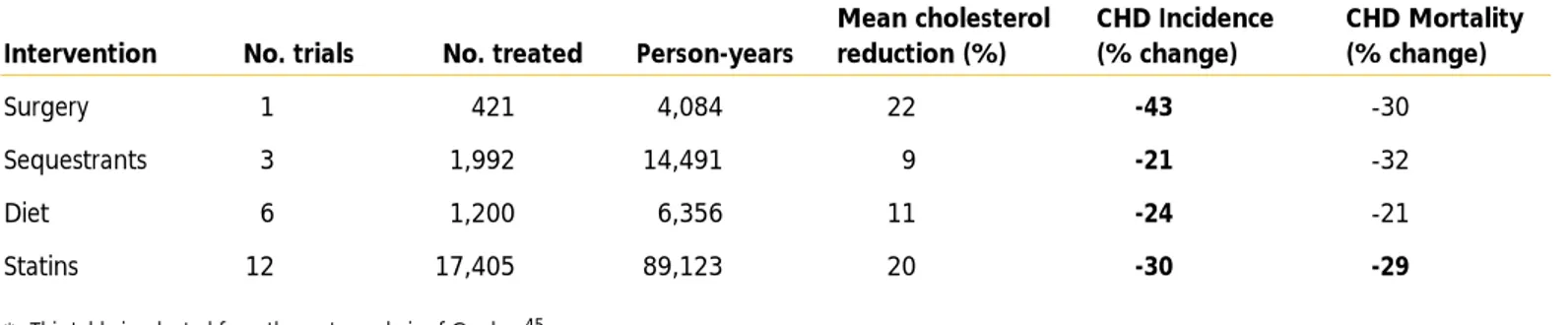
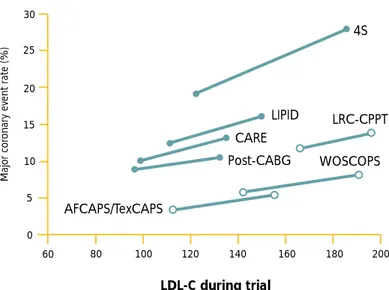
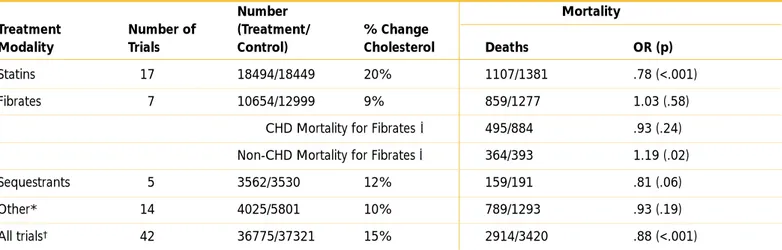
robust findings of a large number of studies, especially those using HMG CoA reductase inhibitors (statins). Clinical outcomes in terms of CHD incidence and CHD mortality are summarized in Table II.2–1 for pre-statin and statin trials in which LDL-cholesterol reduction was the major lipid response. The pre-statin trials provided strong evidence that CHD incidence is reduced by cholesterol-lowering therapy; statin trials extend the benefit to reduction of CHD mortality, and even to total mortality (see Section II.9).
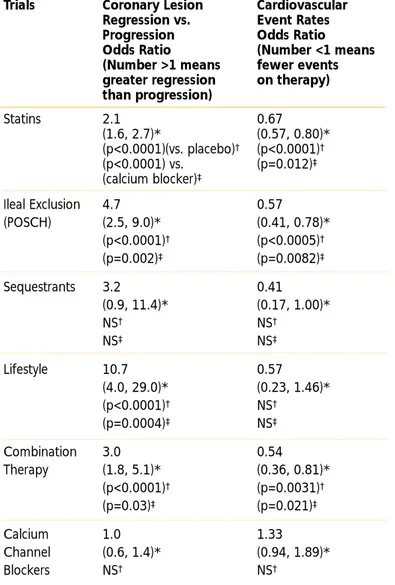
Additional evidence of the benefit of LDL lowering is provided by study of coronary lesion architecture through coronary angiography. A summary of the evidence from different categories of angiographic trials reveals that LDL-lowering therapy produces favorable outcomes for coronary lesions, with a strong trend for a beneficial outcome for major coronary events (Table II.2–2).
Both clinical trials and angiographic studies show reductions in CHD risk that are broadly consonant with what was projected from cohort studies. The issue of whether cholesterol-lowering therapy reduces total mortality is considered in detail subsequently (see Section II.9).
In recent trials, statin therapy reduced risk for CHD in men and women, in those with or without heart dis-ease, in older and younger subjects, in those with dia-betes and hypertension, and at most levels of choles-terol. These benefits for different subgroups are shown by meta-analysis prepared for ATP III by panel mem-bers and statistical consultants at NHLBI (Table II.2–3) and by a recent analysis from two combined secondary prevention trials (CARE and LIPID).47,48
II. Rationale for Intervention
Table II.2–1.* CHD Outcomes in Clinical Trials of LDL-Cholesterol-Lowering Therapy†
Mean cholesterol CHD Incidence CHD Mortality Intervention No. trials No. treated Person-years reduction (%) (% change) (% change)
Surgery 1 421 4,084 22 -43 -30
Sequestrants 3 1,992 14,491 9 -21 -32
Diet 6 1,200 6,356 11 -24 -21
Statins 12 17,405 89,123 20 -30 -29
* This table is adapted from the meta-analysis of Gordon.45
Results of clinical trials of LDL lowering find support from a review of world-wide prospective studies on the relation between serum cholesterol levels and CHD incidence. In fact, Law et al.23,24reported a high
congruence between results of prospective epidemiolo-gy studies and clinical trials. One advantage of epi-demiological studies is their ability to examine and predict long-term influences. Earlier clinical trials found that a 1 percent reduction in serum total choles-terol level reduces risk for CHD by about 2 percent. Recent clinical trials with statins indicate that a 1 percent decrease in LDL cholesterol reduces risk by about 1 percent. However, across-country epidemiolog-ical studies strongly suggest that maintaining a lower serum cholesterol for periods longer than the duration of clinical trials yields a greater reduction in risk than is predicted from clinical trials. In populations that maintain very low cholesterol levels throughout life, the population risk for CHD is much lower than in populations that habitually carry higher cholesterol levels.19,20In contrast, in high-risk populations, the
reduction in CHD attained with aggressive cholester-ol-lowering therapy still leaves absolute CHD rates far above those in low-risk populations. From another point of view, epidemiological studies suggest that beginning cholesterol-lowering therapy at an earlier age will lead to a greater risk reduction than starting later in life. For example, using data from a large number of cohort studies, Law et al.23,24 found that a
10 percent reduction in serum cholesterol level attained at age 40 yields a reduction in relative risk for CHD of 50 percent at age 40, whereas a 10 percent cholesterol reduction gives only a 20 precent reduction in risk if begun at age 70. This finding implies that the greatest long-term benefit is attained by early intervention; conversely, later intervention yields lesser benefit in risk reduction.
Evidence statement:Multiple lines of evidence from experimental animals, laboratory investiga-tions, epidemiology, genetic forms of hypercholes-terolemia, and controlled clinical trials indicate a strong causal relationship between elevated LDL cholesterol and CHD (A1, B1, C1).
Recommendation:LDL cholesterol should continue to be the primary target of cholesterol-lowering therapy.
Table II.2–2. Odds Ratios for Coronary Lesion Regression vs. Progression and for Cardiovascular Event Rates in
Angiographic Trials of LDL-Lowering Therapy
(Including Comparison with Placebo and Trials of Calcium Channel Blockers)
Trials Coronary Lesion Cardiovascular Regression vs. Event Rates Progression Odds Ratio Odds Ratio (Number <1 means (Number >1 means fewer events greater regression on therapy) than progression)
Statins 2.1 0.67
(1.6, 2.7)* (0.57, 0.80)*
(p<0.0001)(vs. placebo)† (p<0.0001)†
(p<0.0001) vs. (p=0.012)‡
(calcium blocker)‡
Ileal Exclusion 4.7 0.57
(POSCH) (2.5, 9.0)* (0.41, 0.78)*
(p<0.0001)† (p<0.0005)†
(p=0.002)‡ (p=0.0082)‡
Sequestrants 3.2 0.41
(0.9, 11.4)* (0.17, 1.00)*
NS† NS†
NS‡ NS‡
Lifestyle 10.7 0.57
(4.0, 29.0)* (0.23, 1.46)*
(p<0.0001)† NS†
(p=0.0004)‡ NS‡
Combination 3.0 0.54
Therapy (1.8, 5.1)* (0.36, 0.81)*
(p<0.0001)† (p=0.0031)†
(p=0.03)‡ (p=0.021)‡
Calcium 1.0 1.33
Channel (0.6, 1.4)* (0.94, 1.89)*
Blockers NS† NS†
* Confidence intervals.
† Statistical significance compared to placebo.
‡ Statistical significance compared to calcium channel blocker trials. NS Not significant.
This table was modified from a recently published meta-analysis provided by G.B.J. Mancini.46In this analysis, to assess trends and to synthesize the results of disparate
trials, the reported trial results were examined with respect to the main angiographic and clinical endpoints. Odds ratios were calculated comparing progression and regres-sion as dichotomous responses, excluding mixed or no-change responses. Odds ratios also were calculated for reported events. Tests of homogeneity were performed and were not significant, i.e., it may be assumed that the different trials in each category estimate a common odds ratio even though definitions of progression and regression and of clinical events differ somewhat among the trials. The significance of the calcu-lated pooled odds ratios as well as 95 percent confidence intervals (CI) were calculat-ed. Paired comparisons between combined odds ratios for different trial groups were carried out using Bonferroni’s correction for multiple comparisons. The clinical trials compared in these studies were the following:
Statin trials:∆LCAS, CIS, CARS, Post-CABG, REGRESS, PLAC I, CCAIT, MAAS, MARS Surgical therapy:∆POSCH
Sequestrant trials:∆STARS, NHLBI Type II
Lifestyle intervention:∆Heidelberg, STARS, Lifestyle Heart Trial
Combination drug therapy:∆HARP, SCRIP, SCOR, FATS (lovastatin/colestipol), FATS (nicotinic acid/colestipol), CLAS
Calcium channel blocker monotherapy trials∆: Montreal Heart Institute Study, INTACT
c. Categories and classification of total cholesterol and LDL cholesterol
ATP III maintains a classification of serum total cholesterol and LDL cholesterol similar to that in ATP II1,2 with some minor modifications. The ATP III
classification is shown in Table II.2–4.
3. Other lipid risk factors
a. Triglycerides
1) Elevated serum triglycerides (and triglyceride-rich lipoproteins) as a risk factor
Many prospective epidemiological studies have report-ed a positive relationship between serum triglyceride levels and incidence of CHD.49,50However, early
3167 II. Rationale for Intervention
Table II.2–3. CHD Risk Reduction (RR) in Cholesterol Trial Subgroups
CHD Risk Reduction in Cholesterol Trial Subgroups Trait Subgroup N Mean RR 95% CI P-Interaction* Trials†
Gender Male 21651 32% 26–36% AFCAPS, POSCH, CARE, LIPID,
Female 4147 34% 20–45% PLAC1, 4S, CCAIT
Age Younger 19119 33% 27–39% AFCAPS, POSCH, Upjohn, VAHIT,
Older 16549 30% 24–36% WOSCOPS, CARE, LIPID, PLAC1,
CCAIT
Hypertension No 14623 33% 25–39% 0.068 AFCAPS, POSCH, VAHIT, CARE,
Yes 8520 22% 12–31% LIPID
Smoker No 18343 23% 16–30% 0.075 AFCAPS, POSCH, VAHIT,
Yes 12193 32% 25–39% WOSCOPS, CARE, LIPID,
Newcastle, CCAIT
Diabetes No 25147 27% 21–32% 0.596 AFCAPS, POSCH, VAHIT, CARE,
Yes 2443 31% 17–42% LIPID, 4S
Cholesterol Lower 14180 27% 20–34% 0.480 POSCH, Upjohn, WOSCOPS,
Higher 7519 32% 22–40% CARE, LIPID
LDL Lower 11715 29% 22–36% 0.012 AFCAPS, POSCH, VAHIT,
Higher 16071 40% 35–45% WOSCOPS, CARE, LIPID, Helsinki
HDL Lower 16739 33% 27–38% 0.865 AFCAPS, POSCH, VAHIT,
Higher 17021 34% 28–39% WOSCOPS, CARE, LIPID, Helsinki
TG Lower 10791 30% 22–38% 0.567 AFCAPS, POSCH, VAHIT,
Higher 12192 27% 20–34% WOSCOPS, CARE, LIPID, Helsinki
* P-Interaction refers to the difference in treatment effect between the subgroups for each trait. The higher the number, the less is the difference in risk reduction between the two subgroups. The P-interaction term provides a statistical interpretation of the difference in relative risk reduction noted for the two subgroups. In statistical terms, the higher the number, the more homogeneous is the effect between the two subgroups. The dichotomous categories shown in this table vary in cutpoints depending on the results reported for each of the individual studies.
† See List of Studies appendix for listing of the full names of these clinical trials.
Table II.2–4. ATP III Classification of Total Cholesterol and LDL Cholesterol
Total Cholesterol (mg/dL) LDL Cholesterol (mg/dL)
<100 Optimal
<200 Desirable 100–129 Near optimal/
above optimal
200–239 Borderline High 130–159 Borderline High
≥240 High 160–189 High
≥190 Very High
0.759
multivariate analyses generally did not identify serum triglycerides as an independent risk factor for CHD.51
This failure results from the large number of intercor-related variables associated with elevated triglycerides. Lipoprotein metabolism is integrally linked, and elevations of serum triglycerides can be confounded by significant correlations with total, LDL, and HDL-cholesterol levels. Nonlipid risk factors of obesity, hypertension, diabetes, and cigarette smoking are also interrelated with triglycerides52as are several emerging
risk factors (insulin resistance, glucose intolerance, and prothrombotic state [see Section II.5]). Thus, many persons with elevated triglycerides are at increased risk for CHD, even when this greater risk cannot be inde-pendently explained by triglycerides. Still, renewed interest in the importance of elevated triglycerides has been stimulated by the publication of meta-analyses that found that raised triglycerides are in fact an
independent risk factor for CHD.49,50This
independ-ence suggests that some triglyceride-rich lipoproteins (TGRLP) are atherogenic.
2) Lipoprotein remnants as atherogenic lipoproteins
The most likely candidates for atherogenic TGRLP are remnant lipoproteins. These lipoproteins include small very low density lipoproteins (VLDL) and intermediate density lipoproteins (IDL). They are cholesterol-enriched particles and have many of the properties of LDL. Reviews of several independent lines of evidence support the atherogenicity of remnants.52-54Specific
evidence can be cited. In experimental animals, choles-terol-enriched remnants definitely cause atherosclero-sis.55,56Genetic hyperlipidemias characterized by the
accumulation of lipoprotein remnants commonly pro-duce premature CHD and peripheral vascular disease in humans.57,58In several clinical studies in which
rem-nants were specifically identified, their elevations emerged as strong predictors of coronary atherosclero-sis or CHD.59-69This relation of remnants to CHD was
also noted in several reviews.52,54Finally, drug
thera-pies that reduce remnant lipoproteins (fibrates, nico-tinic acid, and statins) are accompanied by reduced risk for CHD (see Section II.3.d).
3) VLDL cholesterol as a marker for remnant lipoproteins
Although a variety of methods have been developed to identify lipoprotein remnants, most are not applicable
to clinical practice; the most readily available measure for clinical practice is VLDL cholesterol. Some cholesterol in VLDL may reside in non-atherogenic TGRLP, but most of it apparently occurs in atherogenic remnants.59,70-72 Thus, VLDL cholesterol, as a marker
for remnant lipoproteins, is a potential target of cholesterol-lowering therapy.
4) Causes of elevated serum triglycerides
Several causes underlie elevated triglycerides in the general population.73,74
● Overweight and obesity ● Physical inactivity ● Cigarette smoking ● Excess alcohol intake
● Very high-carbohydrate diets (>60 percent of
total energy)
● Other diseases (type 2 diabetes, chronic renal
failure, nephrotic syndrome)
● Certain drugs (corticosteroids, protease inhibitors
for HIV, beta-adrenergic blocking agents, estrogens)
● Genetic factors
In persons with none of these factors, serum triglyc-eride levels typically are less than 100 mg/dL.75As
some of these triglyceride-raising factors develop, levels commonly rise into the range of 150 to 199 mg/dL.76,77Although several factors can elevate
triglyc-erides (see above), most common are overweight/ obesity and physical inactivity.76-81When triglycerides
rise to ≥200 mg/dL, these latter factors may contribute, but genetic influences play an increasing role as well.82
5) Categories of serum triglycerides
ATP II1,2adopted conservative definitions of serum
triglyceride ranges based on the perceived weak inde-pendent relationship of triglycerides to CHD.
Multivariate analysis of prospective studies at that time suggested that higher triglycerides carry little independent risk for CHD. After review of more recent evidence, the ATP III panel concluded that the link between serum triglycerides and CHD is stronger than previously recognized. Elevated triglycerides are widely recognized as a marker for increased risk, as revealed in univariate analysis.49-51In this context elevations in
nonlipid risk factors (elevated blood pressure), and for emerging risk factors (insulin resistance, glucose intolerance, prothrombotic state).52Thus, the finding
of elevated serum triglycerides helps to identify persons who are at risk and who need intervention for risk reduction. In addition, when triglyceride levels are ≥200 mg/dL, the presence of increased quantitites of atherogenic remnant lipoproteins can heighten CHD risk substantially beyond that predicted by LDL choles-terol alone.60,83 For these reasons, ATP III modified the
triglyceride classification to give more attention to moderate elevations.
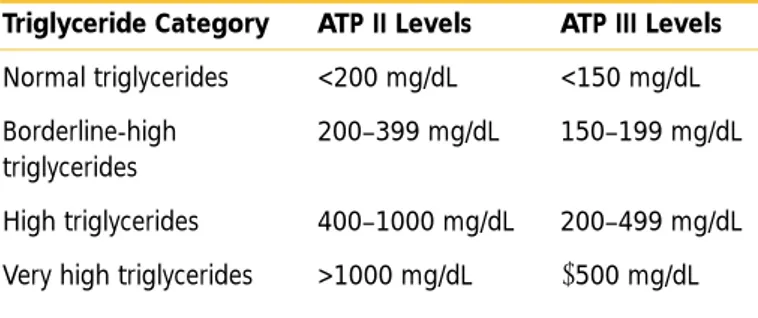
Table II.3–1 compares the older ATP II classification with the new ATP III classification for serum triglycerides.
6) Elevated serum triglycerides and triglyceride-rich lipoproteins as targets of therapy
Elevated triglycerides represent one factor within a set of risk-factor targets in persons who are overweight, obese, sedentary, or cigarette smokers. Life-habit changes—weight control, exercise, and smoking cessation—will favorably modify multiple risk factors including elevated triglycerides.78,79Thus, elevated
serum triglycerides are a potential target for therapeu-tic lifestyle changes.
Among triglyceride targets, remnant lipoproteins are the strongest candidates for direct clinical intervention designed to reduce risk for CHD. Atherogenic rem-nants can be lowered by weight reduction in over-weight and obese persons84and by lipid-lowering drugs
(statins, fibrates, and nicotinic acid).85-88However,
none of these therapies reduce only remnants; they modify either concentrations or characteristics of all lipoprotein species. This makes it difficult to confirm the efficacy of lowering remnants per se through
clinical trials. Nonetheless, the strong evidence for independent atherogenicity of elevated remnants makes them appropriate targets for cholesterol-lowering therapy.60,83,89
b. Non-HDL cholesterol
1) Non-HDL cholesterol as a risk factor
Since VLDL cholesterol is highly correlated with atherogenic remnant lipoproteins, it can reasonably be combined with LDL cholesterol to enhance risk predic-tion when serum triglycerides are high. The sum of VLDL+LDL cholesterol is called non-HDL cholesterol. It is calculated routinely as total cholesterol minus HDL cholesterol. Non-HDL cholesterol includes all lipoproteins that contain apo B. In persons with high triglycerides (200–499 mg/dL) most cholesterol occur-ring in the VLDL fraction is contained in smaller (rem-nant) VLDL.59,60,70-72Few prospective studies have
explicitly examined the predictive power of non-HDL-cholesterol levels versus LDL-non-HDL-cholesterol levels in a large group of persons with hypertriglyceridemia. However, Gordon et al.90reported that because
non-HDL cholesterol and HDL cholesterol are
3169 II. Rationale for Intervention
Table II.3–1. Classification of Serum Triglycerides
Triglyceride Category ATP II Levels ATP III Levels
Normal triglycerides <200 mg/dL <150 mg/dL
Borderline-high 200–399 mg/dL 150–199 mg/dL
triglycerides
High triglycerides 400–1000 mg/dL 200–499 mg/dL
Very high triglycerides >1000 mg/dL ≥500 mg/dL
Evidence statements:Elevated serum triglycerides are associated with increased risk for CHD (C1). In addition, elevated triglycerides are commonly associated with other lipid and nonlipid risk factors (C1).
Recommendation:Greater emphasis should be placed on elevated triglycerides as a marker for increased risk for CHD. First-line therapy for ele-vated serum triglycerides should be therapeutic lifestyle changes.
Evidence statement:Some species of triglyceride-rich lipoproteins, notably, cholesterol-entriglyceride-riched remnant lipoproteins, promote atherosclerosis and predispose to CHD (C1).
intercorrelated, they overlap in prediction, whereas LDL cholesterol is independent of HDL cholesterol as a predictor. Thus, some of the predictive power usually attributed to HDL cholesterol could be explained by elevations of non-HDL cholesterol. Frost and Havel91
proposed that existing data actually favor use of non-HDL cholesterol over LDL cholesterol in clinical evaluation of risk. This proposal is strengthened by a recent report from the follow-up of the Lipid Research Clinic cohort which showed a stronger correlation with coronary mortality for non-HDL cholesterol than for LDL cholesterol.92Moreover, non-HDL
cholesterol is highly correlated with total apolipopro-tein B (apo B);93,94 apolipoprotein B is the major
apolipoprotein of all atherogenic lipoproteins. Serum total apo B also has been shown to have a strong pre-dictive power for severity of coronary atherosclerosis and CHD events.63,95-105Because of the high
correla-tion between non-HDL cholesterol and apolipoprotein B levels,93,94non-HDL cholesterol represents an
accept-able surrogate marker for total apolipoprotein B in routine clinical practice; standardized measures of apolipoprotein B are not widely available for routine measurement. Potential uses of non-HDL cholesterol are for initial testing or for monitoring of response in the nonfasting state; the measurement is reliable in nonfasting serum, whereas calculated LDL cholesterol can be erroneous in the presence of postprandial hypertriglyceridemia.
In most persons with triglyceride levels <200 mg/dL, VLDL cholesterol is not substantially elevated,106
and further, non-HDL cholesterol correlates highly with LDL cholesterol;93,94therefore, adding VLDL
cholesterol to LDL cholesterol at lower triglyceride levels would be expected to provide little additional power to predict CHD. When triglyceride levels are ≥200 mg/dL, VLDL cholesterol levels are distinctly raised,106and LDL-cholesterol concentrations are
less well correlated with VLDL and LDL (non-HDL) cholesterol levels;93,94consequently, LDL cholesterol
alone inadequately defines the risk associated with atherogenic lipoproteins. In the presence of high serum triglycerides, non-HDL cholesterol therefore will better represent the concentrations of all atherogenic lipopro-teins than will LDL cholesterol alone. On the other hand, when triglyceride levels become very high (e.g., ≥500 mg/dL) some of the cholesterol in TGRLP resides in nonatherogenic forms of larger VLDL and
chylomicrons, and non-HDL cholesterol may be less reliable as a predictor of CHD risk.
2) Non-HDL cholesterol as a secondary target of therapy
Clinical trials of cholesterol-lowering therapy have not specifically identified non-HDL cholesterol (independ-ent of LDL) as a target of therapy; thus, it has been difficult to isolate the impact of lowering non-HDL cholesterol per se on CHD risk. However, the same statement could be made about LDL itself. For exam-ple, it has been widely assumed from primary and secondary prevention trials of statin therapy that risk reduction is a response to LDL cholesterol lowering. Of interest, however, the percentage reductions of LDL cholesterol and VLDL cholesterol on statin therapy are similar.93
Consequently, it is not possible to differentiate risk reduction due to LDL lowering from non-HDL choles-terol lowering. Most clinical trials have not specifically included persons with hypertriglyceridemia; thus it can be assumed that lowering of VLDL cholesterol was a minor contributor to risk reduction in statin trials. However, in clinical practice, the situation may be different; when triglycerides are high, a significant fraction of non-HDL cholesterol is contained in VLDL. Here LDL cholesterol may not be the only significant lipid risk factor. Consequently, when triglycerides are high, non-HDL cholesterol (including VLDL choles-terol) can serve as a secondary target of therapy.
A “normal” VLDL cholesterol can be defined as that present when triglycerides are <150 mg/dL; this value typically is ≤30 mg/dL.106Conversely, when triglyceride
levels are >150 mg/dL, VLDL cholesterol usually is >30 mg/dL. Thus, a reasonable goal for non-HDL choles-terol is one that is 30 mg/dL higher than the LDL-cho-lesterol goal. A specific goal of therapy for serum triglycerides is not identified in ATP III for two rea-sons: (a) triglyceride levels have more day-to-day vari-ability than non-HDL-cholesterol levels and thus are less reliable, and (b) non-HDL cholesterol as a target allows more flexibility in choice of therapies to reduce atherogenic lipoproteins contained in the combined LDL+VLDL fraction. Non-HDL cholesterol was chosen as a preferred secondary target of