UNIVERSIDAD ANDRES BELLO Facultad de Educación y Ciencias Sociales.
Departamento de Inglés
“DRAMA ACTIVITIES TO ENHANCE MOTIVATION AND ORAL PRODUCTION IN EFL HIGH SCHOOL STUDENTS FROM THE PROVINCE OF VALPARAISO,
CHILE”: A QUASI- EXPERIMENTAL RESEARCH
Tesis para optar al título de:
Profesor de Inglés para la Enseñanza Básica y Media y al Grado Académico de Licenciado en Educación
Autores:
Viviana Albarrán Navarro Valeria Alvarez Manzano
Lilia Rodríguez Serey
Begoña Durán Gatica Profesor Guía: Flora Mandiola Villalobos
I would like to thank my parents, Monica and Ivan, for giving me the chance to become what I never thought would end up being my greatest love: teaching. For giving me their unconditional support, for supporting my sudden mood changes and above all loving me.
I would also like to thank the most important person in my life my sister Jimena, who helped me with her infinite knowledge, without her I would have never achieved this. Finally, thank my fellow thesis partners for their perseverance and understanding,
“we did it colleagues”.
Viviana Albarrán Navarro.
I would like to thank my parents Marcelo and Paula, for giving me the possibility of becoming a professional, for taking care of me since I was little, for supporting me, understanding me, helping me to pursue what I believed was right for me and for loving me.
I would also like to thank my sister Macarena for being by my side as much as possible even if our differences usually makes us disagree on too many things. Finally, I would like to thank my thesis group for all of the effort, understanding and for doing their best during this process no matter the difficulties.
I dedicate this thesis to my parents Lilia and Fernando who have always loved me unconditionally, for their support and encouragement and whose good examples have taught me to work hard for the things I want to achieve.
I would also thank my brothers Patricio and Fernando whose have always been supporting and teaching me how to become a better person. And, Nicolas who has been one of my biggest support during these six years and for encourage me to do my best.
Finally, I would like to thank my thesis group for all the great moments we made doing this research.
Lilia Rodríguez Serey
I would like to thank my parents, Monica and Matias, for giving me the opportunity to study the profession that I’ve always pursuit, despite the difficulties that this implied. For their support and understanding.
I would also like to thank my family for always being inconditional. And Diego, who has always been by my side supporting me in all the difficult moments during this process and to encourage me not to giving up.
Finally, I would like to thank my thesis partners for their support, effort and for giving the best of them in this research.
Acknowledgments
Abstract
The importance of drama activities as a key element in the acquisition of a second language has been acknowledged by theorists and researchers of the area who consider this tool as an important factor to increase student’s motivation and to develop communicative skills such as oral performance. The main objective of this research was to prove empirically, through a quasi-experimental design, the effectiveness of drama activities to improve student’s oral production and motivation. These activities were adapted to the reality of the Chilean classroom according to the different contexts of foreign language learning in the Windmill College municipal school located in Villa Alemana, the subsidized school Embajadores del Rey, and finally the private school Hebreo Dr Jaim Weitzman located in Viña del Mar.
The quasi-experiment was implemented in high school, with the participation of 3 classes, making a total of 50 students. The implementation of drama took place in the second semester of 2018 and lasted approximately six weeks. The results show that the strategy is, in fact, effective in secondary education.
Resumen
La importancia de actividades dramáticas como un elemento clave dentro de la adquisición de un segundo idioma ha sido reconocida por teóricos e investigadores en el área quienes ven esta herramienta un factor importante para poder incrementar la motivación en los estudiantes y así también desarrollar otras habilidades como la oral. El principal objetivo de esta investigación fue probar de forma empírica, a través de un diseño cuasi- experimental, la efectividad del uso del drama en la sala de clases para el desarrollo de la producción oral.
Dicha estrategia fue adaptada a la realidad de la sala de clases chilena de acuerdo a los distintos contextos de aprendizaje de idioma extranjero en el colegio municipal Windmill College ubicado en Villa Alemana, el colegio Subvencionado Embajadores del Rey, y por último el colegio particular Hebreo Dr. Jaim Weitzman ubicado en Viña del Mar.
El cuasi-experimento se llevó a cabo en la enseñanza media, con la participación de 3 cursos, haciendo un total de 50 alumnos.
La implementación de drama se realizó durante todo el segundo semestre del año 2018 y la aplicación de la estrategia duró seis semanas. Los resultados muestran que la estrategia es, de hecho, eficaz en la enseñanza media.
Table of Contents
2.1.1 Extrinsic motivation……….…..16
2.1.2 Intrinsic motivation………18
2.2 Motivation in EFL learners………..19
2.3 Oral production……….21
2.5 Types of interaction……….24
2.6 Speaking difficulties in EFL teaching………26
2.7 The Role of drama………28
CHAPTER 4: RESULTS AND DATA ANALYSIS 4.0 Pearson’s Correlations coefficient r………..50
4.1 T-test Results………64
Annex 4: KET speaking rubric assessment………88
Annex 5: FCE speaking questions………..89
Annex 6: FCE speaking rubric assessment………...90
Annex 7: Public school lesson plannings………...91
Annex 8: Subsided school lesson plannings………102
Annex 9: Private school lesson plannings………110
Annex 10: Pearson correlation coefficient r values……….122
Annex 11: T-test formula……….123
Annex 12: T- test values ……….124
1 CHAPTER 1
1 Introduction.
Oral production in EFL settings in Chile has been a matter of concern for many teachers and educational authorities since they face the inherent difficulties caused by the lack of the necessary input for those students who are only exposed to the foreign language during the scarce hours of compulsory English lessons at public schools. As an additional challenge to the development of oral skills in a foreign language, the geographical location of the country makes it even worse as English-speaking countries seem too far away for most students as to become an incentive to communicate in that language. There are other factors that may make the communicative language teaching approach difficult to implement; such as the number of students in the classroom that ranges between 25 to 45 app. Thus, it is worthwhile looking for different ways to approach oral production in the Chilean classroom, so as to improve students’ abilities in that regard.
Motivation is regarded as the triggering factor that makes students active learners especially when oral production is concerned. Motivation is supposed to help defy the usual fear of learners of making fools of themselves and to help overcome frustration every time they fail in conveying meaning. Among the various techniques that can help students increase motivation towards the foreign language, Freire (1970) and Garcia-Huidobro (1996) mention drama. According to the latter, the advantages of using Drama activities in language teaching are varied: from just getting learners’ attention towards a dynamic activity to providing them with a meaningful and contextualized situation to develop oral skills.
3 1.1 Topic
Drama belong to teaching area.
Motivation belong to psychological area.
Oral production belong to language acquisition. 1.2 Problematic Situation
In spite of the ever-growing need all countries face to master English as a lingua franca in a globalized world, Chilean students have historically shown poor results in the English language at school. This has been shown in all standardized tests. As an example, the results of SIMCE 2014, EMOL (2014) and of previous years reveal that Chilean students of Public Schools show a lower level of English compared to private and subsidized schools. It is worth to consider the fact that the last English SIMCE took place the year 2014, therefore, this is the most recent data about this
national test. Agencia de la Calidad De Education EMOL (2014) established that only 7 % of Public School students achieve a certification with the expected English level. In private schools an 85 % of students meet the expectations set by the government. In the case of private-subsidized schools, students meet the standards in a 15%. Moreover, according to Education First,(Education First, 2017) Chile is placed in the 45th position out of 80 countries with an EPI (English Proficiency Index) of 51,50, that means a low English level, not to mention that only ‘’ 2 percent of the Chilean population are able to establish an English conversation’’, said Jose Manuel Sanchez ,Universidad San Sebastián (2015), the Co-founder of Poliglota.org. These phenomena have been extensively studied and one of the most important factors responsible for the poor results is the low level of motivation towards the language that students show, particularly in public schools.
1.3 Justification
4 to expose their students to EFL classes as soon as they reach first grade or in the case of some private schools from playgroup on.
EFL learners need to work on the four skills; writing, listening, reading and speaking. Therefore, Chilean students are supposed to develop those skills during their school years. In order to give English teachers guidelines to approach students training, the Ministry of education “MINEDUC” establishes a set of mandatory minimum contents that schools must comply with.
This program is updated on a yearly basis and in the last years, the emphasis has been set on the speaking skill since it has always been the most descended one among all the other skills. In spite of the Government efforts, it has been difficult to ensure that all institutions actually take this skill into consideration when creating their school curriculums. Oral production is still a challenge for teachers and learners. The way the Chilean government measures the general level of English of students is through a national test called SIMCE, but it only measures the skills of reading and listening, thus, oral production and oral communication skills are difficult to keep track of. In 2014, the latest English SIMCE took place, and the results were deficient. A study conducted by Jose Manuel Sanchez, Universidad San Sebastián (2015), the Co-founder of Poliglota.org (Social webpage to learn languages such as English, Spanish, Italian, French, among others) shows that only “two percent of the Chilean population has the capacity to establish a conversation in English’’ Jose Manuel Sanchez (2015) .
5 and contribute with informed evidence whether the incorporation of drama activities help students to increase motivation and thus oral production.
1.4 Research Question
Will the Incorporation of Drama Activities improve learners’ motivation and oral production in the EFL classroom?
1.5 Hypothesis
1.5.1 Null Hypothesis
The use of Drama Activities in high school students from an EFL classroom will not improve motivation of students from the province of Valparaiso, Chile.
The use of Drama Activities in high school students from an EFL classroom will not improve oral performance of students from the province of Valparaiso, Chile.
1.5.2 Working Hypothesis
The use of drama activities in high school students from an EFL classroom will improve motivation of students from the province of Valparaiso, Chile.
The use of Drama Activities in high school students from an EFL classroom will improve oral performance of students from the province of Valparaiso, Chile.
1.6 Objectives 1.6.1 General objective
To demonstrate that the implementation of Drama Activities in the EFL classroom will improve motivation and oral production of students in the Province of Valparaiso, Chile.
1.6.2 Specific Objectives
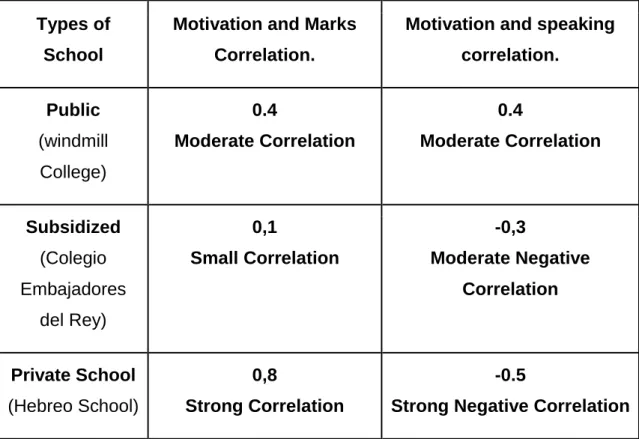
6 -To establish the correlation between motivation and oral production, using Pearson’s Correlation Coefficient r.
-To search for drama activities that are suitable for the different school contexts that will be assigned as the experimental unit.
-To conduct a quasi-experiment in which the students will be exposed to an experimental unit that will consist of drama “activities” and the control unit with normal activities (school plannings).
-To measure both motivation and oral performance at the end of the experiment (post-test) to contrast the results with those obtained at the beginning of the experiment.
-To apply the statistical t-test to corroborate whether there has been a significant improvement in the experimental unit after the post-test were taken.
1.7 Type of Research Quantitative- Quasi-Experiment.
1.8 Limitations and Delimitations
The researchers consider that time constraint is the most important limitation for the optimal materialization of the study. Generally, studies of this type require a period of time, no less than a school year to be carried out, since there are some previous formalities to comply with that impede researchers to start the study at the beginning of the school term.
The delimitations set by the researchers have to do with the type of school, in this case, one public, one subsidized and one private, and the age range of learners that are between fourteen and eighteenyears old.
1.9 Literature review.
7 various studies carried out in different countries that have been enlightening for the current study. Four studies will be extensively discussed in this paper. The first one was carried out by Junudom Ratchadapm & Wasanasomsithi Punchalee (2009), in Thailand. This article explores the utilization of drama as a tool to improve student's oral abilities and their positive attitude towards EFL learning. With this purpose an experiment was conducted with a group of 15 students from an EFL classroom in which, the participants were exposed to a great amount of quizzes, questionnaires and tests to make sure that, after being exposed to drama as a tool for teaching and learning, students would improve their English-speaking abilities and their attitudes towards the language. The results of this study show that the use of drama techniques actually improved the oral production of the subjects of study. In spite of the positive results, it is difficult to make generalizations as the amount of participants was limited.
In Spain, a similar study was carried out in a primary school class, in a sixth Grade composed by 26 students. This level was chosen because they had an elementary English level and none of the students presented learning difficulties. In order to develop communicative skills in English as a second language (through meaningful learning), Odriozda (2015) explains how to teach English through theatre in order to improve the student’s motivation and their academic performance. According to her research, theater favors the development and acquisition of all skills that learning a new language requires. She states that using familiar situations increases and strengthens student’s self-confidence. Moreover, she asserts that learning a new language through conventional techniques, such as, responding to alternatives and following a series of formulas will not allow the students to produce meaningful oral or written sentences correctly, which usually causes frustration towards learning a foreign language.
8 considered two randomly selected classes of 33 intermediate students of a female school in Tabuk. Twenty four students were selected to be the control group and the second class of 23 students was assigned as the experimental group. For this study, the researcher applied a pre-test (before starting the research) of creative thinking for both control and experimental groups, and a post-test at the end of the assigned unit to compare the results of each test. Therefore, the procedure used in this research was a Quasi- experiment that intended to confirm the effectiveness of teaching the English subject and develop their creative thinking, using drama. The participants were students of a first-year intermediate level class. The tools used for carrying out this research were a test to measure the creative thinking of students and four dramatic scenes where context, characters, dialogue, peer work and group work were stressed. The results of this research, revealed that there are statistically significant differences between the creative thinking of the control group (the traditional teaching method) and the creative thinking of the experimental group (those who studied using drama) according to the creative thinking post-test.
The fourth research was carried out by Torrico, (2015) in Spain. This study is related to strategies to improve speaking abilities and students motivation in a second-year of high school students through drama activities.
9 Finally, as a result of this study, the students increased their motivation with the implementation of Drama in the language acquisition, as well as the grades.
Unlike our country has been observed that the places where the previous studies were held such as Spain, Thailand and Saudi Arabia, are places where there is an important need and obligation to learn English since the economy of these countries
depends on tourism. Therefore, they need an effective oral communication to be
able to sell their products. In Chile, the economy is not equally dependent on the
10 CHAPTER 2
11 Introduction
The success in language learning in general, and in speaking production in particular, have often been associated to the degree of motivation of learners, whether this be intrinsic or extrinsic. Among the strategies that point at increasing student’s motivation in oral production is “Drama”, which is said to induce students to have greater freedom of expression and opinion, and gives them the opportunity
to develop communicative skills such as Speaking. . The following chapter will provide the state of the art regarding drama as a motivation
12 2.0 Definition of Motivation
Motivation has several definitions, among the most relevant ones is that of Piaget (1969), who defines motivation as the "will to learn". According to this, it can be understood that it is an inherent interest of the child to absorb new knowledge about everything in his/her surroundings.
According to Piaget (1969), motivation is what drives us to be able to carry out activities, acquire new knowledge or achieve personal goals. In education, motivation is essential because it aims to awake the interest of students to acquire new knowledge, therefore, stimulate the desire to learn.
Maslow (1943), has not only provided a thorough definition of motivation, but has also developed a theory that classifies it according to their priorities. He points at the impulse that the human being has to satisfy its needs, this author bases his theory on a pyramid where he classifies these needs in five stages:
Image 1: Maslow’s pyramid
Retrieved from https://www.simplypsychology.org/maslow.html Mat 21th, 2018.
13 related to our social relationship needs, called membership needs; in the fourth stage are those related to esteem towards oneself, called recognition needs, and ultimately, at the top, are the needs for self-realization; this refers to the internal needs of a person, such as the search for a specific mission in life, or also the
spiritual development as he expresses in the following quote.
“It is quite true that man lives by bread alone – when there is no bread. But what happens to man’s desires when there is plenty of bread and when his belly is
chronically filled?
“At once other (and “higher”) needs emerge and these, rather than physiological
hungers, dominate the organism. And when these in turn are satisfied again new (and still “higher”) needs emerge and so on, this is what we mean by saying that the basic human needs are organized into a hierarchy of relative prepotency” (Maslow,
1943, p.375)
However, Maslow (1987), states that sometimes there may be variations in the hierarchy of the pyramid, either by external circumstances, or individual differences of each human being, meaning that for a person, self-esteem may be more important than the need of love or friendship more important than security.
Another theoretician that has contributed with a solid notion of what motivation is
and what it produces in learners, is the Brazilian educator and expert in educational matters; Freire (1970). In his book “The Pedagogy of the Oppressed” he asserted
that ludic and drama activities help marginal students to increase their understanding
of the reality they live in with a constructive and critical viewpoint. Above all, this way
to approach the learning process is meant to enhance motivation, since learners
take an active role in their own learning process.
14 of students who are in social and economic risk, given their material precariousness. This is the reason why the subjects of study were chosen from a public, a subsidized, and a private school; to compare the reality among them. In public and subsidized schools there is a high percentage of students at social risk, whereas in private schools that is not the case. The scopes of Maslow’s and Freire’s theories can be contrasted in the following way: It is inferred from Maslow’s theory that a marginal student’s primary motivations are those of subsistence in such a way that the motivation for self-actualization only arises when all other needs are met. If this were so, marginal students would never be motivated to study unless they had reached the highest level of the pyramid. This sounds rather deterministic, since without a proper education, basic needs are difficult, if not impossible to meet. Freire (1970), on the contrary sees in education the only way to break the poverty circle and reach better living conditions. He suggested that teaching activities must be focused on student’s needs, as he sees in education a weapon for overcoming the social condition, meaning that oppression in the educational system is a problem for children as it prevents them from learning. From this, it can be disaggregated that the oppressor would be the system itself, and the teacher, the liberator who creates the conditions for freedom in the apprentices. If not, they would not be fulfilling their role. To develop critical thinking in students means to give them the tools to defy their fate. One of the ways in which critical thinking is enhanced, is through verbal interchange with others and also through role play. Drama activities are regarded by Freire as a way to understand reality from different perspectives. Doing this in a foreign language seems to be a difficult endeavour, however, since English is such a versatile subject in schools, it can well serve both purposes. In short, the students must be able to create their own world in order to be free and to learn.
15 "Teaching requires security, professional ability and generosity" (Paulo Freire, 1970, pg 32), with this sentence, he asserts that it is necessary for both, the educator and the learner to be liberated in their authentic thought, since men educate each other and if a teacher is not liberated, he cannot promote the liberation of his learners. Freire (1970), acknowledges in motivation a very important role for learning, and sees in theater a tool to educate through dialogues and actions. Thanks to the use of dialogue, the students and the educator have the possibility to express their
beliefs, opinions, and knowledge; contributing with the discussion to their critical
thinking that allows to have a position in front of different subjects. It is from the
dialogue that both, learners and educators get to know each other's ideas,
respecting them, but having the right to criticize and question them in a respectful
and intelligent way.
As it was mentioned before, Freire (1970) emphasizes the application of drama
activities to develop oral production and critical thinking. As he sees motivation as
an important factor on the learning process, it is important to take into account the
types of motivation that have been widely studied by several authors apart from him.
On the following section, motivation will be classified according to Penny Ur and
Douglas Brown.
2.1 Types of Motivation
“Various studies have found that motivation is very strongly related to achievement in language learning” (e.g. Gardner and Lambert, 1972; Gardner, 1980) in (Ur, 1996, 274) that is why, it is important to take into consideration whether the students are or are not motivated enough to learn the language. For this reason, it is that the authors have made distinctions between the different types of motivation and their characteristics.
16 has to do with the context of learning (classroom, total environment); and the third with the way the learner approaches the specific task at hand.
“-Situational motivation: for our purposes, we assume it is the classroom, but the other two may vary and be influenced by teacher action.
-Global motivation: may seem mainly determined by previous education and a multitude of social factors, but it is also affected by the teacher's own attitudes conveyed either unconsciously or through explicit information and persuasion.
-Task motivation: the third is probably where most of our effort is invested in practice: in making the task in hand as attractive as possible, and in encouraging our students to engage in it, invest effort and succeed.” (Brown, 1987 pg 276)
According to Ur (1996), the distinction between intrinsic and extrinsic motivation is probably the most useful for teachers. Intrinsic motivation is defined by her as “the
urge to engage in the learning activity for its own “sake” and 'extrinsic' motivation is the one derived from external incentives” (Penny Ur, 1996, pg 276). She asserts that both, intrinsic and extrinsic motivation are crucial in classroom settings, since it might be modified by teacher’s influence. “Intrinsic motivation is in its turn associated with what has been termed 'cognitive drive'- the urge to learn for its own sake, which is very typical of young children and tends to deteriorate with age.” (Penny Ur, 1996, pg 276)
Since in this thesis paper the definition of the different types of motivation will be taken from Penny Ur’s (1996), both extrinsic and intrinsic motivation will be thoroughly explained.
2.1.1 Extrinsic motivation
17 There are certain factors that affect extrinsic motivation, namely:
- Success and its rewards
This is the most common factor to increase extrinsic motivation. Usually, learners who have succeeded will have a better disposition towards learning, and they will have more confidence in their knowledge and as a consequence, they will be perseverant and put more effort to succeed again.
It is important to mention that success not necessarily involves having good marks. There are other indicators that teachers can recognize in the students when they have succeeded, such as; the production in the target language, the effort that they put to learn and their progress compared to the beginning of the year or a semester. According to Ur (1996), teachers have an important role, one of this is to make sure that students be conscious about their potential and achievement or have the ability to do better. For this, the teacher uses a reward system, however, this can be self-defeating when the teacher over-use it, because the students can become dependent on being praised all the time, or they can even lose the ability to recognize success without a recognition from the teacher, and see this as a disapproval or doubt about their abilities.
- Failures
Likewise, Ur (1996), states that learners need to be aware that failure is part of the learning process, and if they fail, they need to put more effort than they have done before, though, they must be aware that they are constantly failing. Teachers should be careful on the way they inform about their failures in order not to demoralize them or produce low self-confidence in the students who have difficulties to learn the language.
- Authoritative demands
18 rather than adults or teenagers, at the same time, they prefer to have clear instruction, for example: 'You need to do this assignment for next Tuesday', instead of, 'as soon as you finish give me the paper'.
According to Ur (1996), the demands can be misused because if the students will only comply with the task or activities without any notion of the objectives and the involvement in the learning process, they will lose the ability to develop personal responsibility. On the contrary, an over-emphasis on learner’s freedom and lack of authority by the teacher can result in low effort and low achievement. It is important that teachers use their authority in order to help their students to improve and give the push that they need sometimes, so that they could do it on their own. This is what Vygotsky (1962) called the "Zone of Proximal Development” (Vygotsky in Ur, Penny, 1996) and can only be obtained with the help and guide of the teacher.
- Tests
Ur (1996) asserts that the motivation is very usual, if the students are going to have a test the following class, they will be more motivated to study the target language because they are going to be tested and not just for the learning sake.
2.1.2 Intrinsic motivation
As stated by Ur (1996), intrinsic motivation is the one in which the learners willingly make an effort, because they think it is important to achieve. There is nothing more than their eagerness that pushes the person to do something. That is why teachers must look for some activities or methodologies that engage students to learn and develop this kind of motivation. Hence, this is the most difficult motivation to develop by the teachers and the most important, because this is the kind of motivation that can last longer.
19 thus, is devoted to the understanding how students’ motivation may work towards the acquisition of a foreign language.
2.2 Motivation in EFL learners
While learning a foreing language, it is clear that students in an EFL class are exposed to certain topics, grammar rules, types of speech and exercises that are designed to develop their own speaking, reading, writing and listening skills. This enterprise might be a difficult one if the learners do not see in the language a real need for their future development. The reasons why some students are driven to try and learn this foreign language are varied. It might be intrinsic motivation, being their own wishes to learn or extrinsic; just because it was stated in their school’s curriculum.
According to many teachers, psychologists and researchers, being Gardner (2007) one of them, motivation is crucial to acquire a language. Nevertheless, it is important to clarify that motivation is not a simple concept. There are many factors involved in the level of motivation students may have at the moment of facing an EFL class. From their own particular ones to the motivation teachers can use to engage them in the subject.
Gardner (2007) explains motivation in the following terms “It is not a trait, as some individuals contend, but it is a general characteristic of the individual that applies to any opportunity to learn the language. It is relatively stable, because of its presumed antecedents, but it is amenable to change ...” (Gardner, 2007, pg 11).
Taking Gardner’s explanation about motivation, it is sound to assume that motivation, (being closer to an emotion or a feeling and an abstract concept rather than a tangible one), will be different from student to student. There are many reasons why learners might be motivated or not with the task at hand while learning a foreign language. In Garder’s words (2007) “The focus is on the individuals = perception of the task at hand, and is largely state oriented. Obviously, it will be influenced
by a host of factors associated with the language class. Thus, it is clear that the teacher, the
20
characteristics of the student (such as studiousness, etc.,) will have an influence on the individual=s classroom learning motivation.” (Gardner, 2007, pg 11).
According to this, to know whether students are motivated or not while working in an EFL classroom is a very hard endeavor. Moreover, it is a challenge for teachers to take into consideration that every student inside the classroom is going to show a different level of motivation and that this will affect the learning process, makes it a challenge worthwhile to take.
Since motivation seems to be so determinant at the moment of learning, there is more than one theoretician that has tried to understand the causes and scopes of it. Maslow (1943), sees in motivation a survival trait, explaining that human being’s motivation only exists to help us, as a race, achieve what we need to survive. Our actions are driven by needs, rather than mere will. Maslow’s main theory states that motivation and happiness can be achieved if we are able to fulfill all of our basic needs first.
Motivation and the hierarchy of needs can be explained as a categorization of different needs human beings have, being these located in different “levels” from what we need the most, to what we need the least. According to Maslow (1943), motivation is going to be totally focused on fulfilling from the most basic to the most complex needs. Once the first needs are met, motivation is going to be focused on the following “level “of the pyramid, in other words humans are compelled to do things driven by their current needs.
Within Maslow’s hierarchy of needs we can find concepts like; physiological needs, need of safety, needs of love and validation, need of a good self-esteem and finally and most important for this thesis project: the need of self-actualization.
21 The need for self-actualization is a keyword and a key concept for learning itself, once students have met the first levels of the pyramid, they should feel the necessity of learning and increasing their knowledge. Therefore, taking this concept and ideas into account in an EFL classroom, it should be sensible to confirm that motivation is actually necessary in order to achieve learning.
As stated previously in this paper, Maslow’s theory seems rather deterministic and not very auspicious as to only rely on it. In environments where students are deprived of their basic needs, according to his theory, they would not have any motivation towards education. The scope of this theory has been vastly refuted by other theoreticians that will be profusely discussed and challenged further in this paper.
As seen before, motivation is a key factor for learning in general. This thesis project is focused on the improvement of oral production by increasing motivation through drama activities. In order to contextualize some key concepts regarding language learning, the following section has been devoted to explain how oral production is developed in the EFL class. However, it is important to take one more factor into consideration, the fact that motivation is not the only component that can influence learning as a whole, even though motivation is a key factor to improve not only oral production but also learning. According to Weiner (1979), factors such as fatigue and mood among others can also influence the act of learning and therefore, the performance of the student.
2.3 Oral production in EFL learners
Oral production is something that we need in order to socialize and communicate with the people around us and in order to survive as species. However, there are some other ways to communicate with other human beings apart from oral production, these other options are slower, less efficient and harder to learn.
22 reason of being the most difficult skill to develop, since it depends on external factors such as input. According to Chomsky (1965), there is a great difference between linguistic competence, being this the knowledge of English itself and their grammatical rules, and linguistic performance, being it the actual process of understanding the language to produce it effectively. Taking this theory into consideration, there is no possible way that students would be capable of communicating in this language without the proper training or practice that is required to effectively develop this skill.
Regarding motivation and oral production in EFL students, it is worth to take into consideration the theories and approaches teachers use in order to promote the development of oral production which play an important role. In the following section, the Communicative approach will be explained with the purpose of understanding how it works and how English teachers can apply it in EFL.
2.4 Communicative Approach.
In the latest years, there has been a lot of research and debate about how a foreign language should be taught. It is well known that there are four skills involved in acquiring a language: namely speaking, listening, reading, and writing.
In the 1960’s English used to be taught with grammatical and memorization methods, where “traditional approaches to language teaching gave priority to grammatical competence as the basis of language proficiency’’ (Richards, 2015, pg 6).
For many years, grammar and vocabulary were the focus of second language teaching, however, around the 1970’s the traditional method to language teaching was questioned because language ability involved more than just grammatical accuracy.
23 began to spread and many educators started to develop in their students what is called “communicative competence”. As Richards and Rodgers (2001) mentioned in their book ‘’Approaches and methods in language teaching’, “the Communicative approach in language teaching starts from a theory of language as a communication”. (Richards and Rodgers, 2001, p.69). In the late 90’s the communicative approach appeared, this approach focused on communicative competences and it was called Communicative Language Teaching (CLT).
The purpose of this approach was to produce meaningful learning with real-life situations and to develop communicative competence. As Hendrickson (1991) stated in his book “On Communicative Language Teaching’’, it is important to highlight the word “meaning” as the key component of communication “A communicative approach to language teaching involves the negotiation of meaning between speaker and listener or between author and reader. Meaning must be at the center of all communicative exchanges; indeed, it is impossible to communicate without meaning” (Hendrickson, 1991, pg 197).
24 In addition, it is worth to mention that the input for the acquisition of a foreign language is not as abundant as the mother tongue. It is necessary to bear in mind that EFL taught at schools devotes only few hours per week to the subject. This means that students’ exposure to the language is scarce or sometimes null. However, the process of acquiring either the first or a second language should be almost the same. The difference between the amount of input is what makes EFL students not to be as proficient as they are in their mother tongue.
Taking into account that communication involves necessarily interaction between or among learners and the teacher, it seems relevant to identify and distinguish the different types of interactions in the classroom.
2.5 Types of interactions
The most common type of classroom interaction is the one known as “IRF” (initiation – response – feedback), however, there are other types of patterns of interaction as expose in the following section.
Ur (1996), provides a list of the most common interaction patterns in an EFL classroom:
T – T: Teacher talking to the whole class, such as presenting a text, explaining grammar or giving instructions for an activity.
Examples:
Teacher talk: This type of interaction involve quiet students with a very passive role such as taking notes or writing from dictation.
S - T: Student initiates a conversation with the teacher, such as asking questions about a rule or an assignment.
Examples:
25 - Choral responses: The teacher gives a sentence or phrase as a model of the target content, and the students to repeat orally in chorus.
S : Students are active and the teacher is only receptive. Examples:
-Group work: Students get together in small groups developing tasks that involve interaction. For example; making decisions as a group on, looking for information. The teacher checks the student’s work
-Individual work: The teacher ask students to do the task and students work individually monitoring and correcting when it’s necessary.
-Collaboration: Student work in the same kind of task as individual work, but usually in pairs.
-Full-class interaction: The whole class works and interacts together in activities such as debates about a given topic. The teacher only intervenes to stimulate participation or to monitor.
S-S: Students doing their work individually such as reading, completing an exercise. Example:
Self-access: Students decide on the task they are going to work in and do it work independently.
26
2.6 Speaking difficulties in EFL learners
In order to understand the possible difficulties learners may have to learn a language, it is important to highlight the difference between learning and acquiring a language. As Yule (2006) mentioned in his book ‘’The Study of Language’’, acquisition is a process by which the learner develops certain abilities that can apply naturally in communicative situations. On the contrary, learning refers to a process by which learners are conscious of, focusing mainly vocabulary and grammar. That is why those students who are exposed to the learning process of an L2 tend not to be as proficient as those who are exposed to the acquisition process of L2. Moreover, it is unbelievable how easy it is for people to acquire their mother tongue in comparison to a foreign language. L1 is a process where people are not fully conscious about how they master their first language and it seems that people are born with the abilities to learn the language where they live. Unfortunately, this is not applicable for L2, especially, after the critical period.
`For most people, the experience with an L2 is fundamentally different from their L1 experience and it is hardly conductive to acquisition. They usually encounter the L2 during their teenage or adult years, in few hours each week of school time (rather than via the constant interaction experienced as a child), with a lot of other things going on (young children have little else to do), and with an already known language available for most of their daily communicative requirements.’’ (Yule, 2006, pg 163)
The reason behind this is the time people are expose the target language being different from L1. For first language acquisition learners are exposed to the language from the moment they are born and the input to the language is constant, on the contrary, the exposure time to the target language and the input to the L2 is significantly less.
27 a foreing language would not be as easy as for a Mexican or Spanish learner who are really close to the English-speaking countries like the United States or England. Apart from the border barriers that Latin American people may have to learn English, there are other factors that affect all people when acquiring a second language. According to Yule (2006), one difficulty when acquiring a second language is the affective factor, if a student feels uncomfortable or is having a bad day, the acquisition process of the L2 might be affected, as Yule (2006) stated “Basically, if we are stressed, uncomfortable, self-conscious or unmotivated, we are unlikely to learn anything” (Yule, 2006, pg 164)
Moreover, one of the greatest difficulties of EFL learners when speaking English is the reliance of the students in the L1 when speaking in L2, this means that students are still thinking, using expressions or structures from the L1 when they should be using L2, this is a process that Yule (2006) called the cross-linguistic influence. Finally, the most important factor that can affect students’ performance or competence on the target language is motivation. If students are motivated to learn, their language learning process would be pleasant and more significant, but for those students who are not motivated, their language learning would be completely tedious. As Yule (2006) point outs ‘’ A language learning situation that provides support and encourages students to try to use whatever L2 skills they have in order to communicate successfully must consequently be more helpful than one that dwells on errors, corrections and a failure to be perfectly accurate’’ (Yule, 2006 pg. 166). It should be noted that Yule mentioned that supporting and encouraging students to learn is the key factor in the acquisition of a target language and it helps students to overcome their difficulties when speaking in English.
28 among them. Drama has been pointed out as an effective strategy to promote oral performance, thus it will be extensively developed in the following section.
2.7 Role of Drama in Education
“Tell me, and I'll forget. Show me, and I may not remember. Involve Me, and I'll understand” (An old native American prover)
For many years, educators have been searching for activities and techniques to encourage and motivate students to communicate in the target language. The use of drama activities in EFL is an innovative way to enhance learners’ speaking abilities and it is also the perfect technique to motivate and involve students in the acquisition of a foreign language.
Drama is a powerful tool that enables students to develop their confidence when speaking the target language, however, most of the time it is very difficult for teenagers to express themselves even when they are using their mother tongue. Therefore, for them, it is even more demanding to express themselves in a foreign language, this is why they tend to rely on their first language.
29 acquisition of the language, Wessels (1987) stated that the benefits can be summarized in the following aspects:
- There is a fluent interaction in the target language, students speak and practice the L2 in context.
- The assimilation of pronunciation improves because students interact with others and act as if they were in a real conversation.
- The acquisition of new vocabulary increases and the use of grammatical structures are enhanced as a consequence of the use of drama activities. For instance, if they create a dialogue and apply vocabulary and grammatical structures, the acquisition is significant because they do it in a contextualized way.
- As a result of all the above, confidence also improves as a consequence of the exposure and training, students will not feel ashamed to use the L2 as an aftermath of practice, because they will have already experienced how to use the language in a real conversation.
Drama puts the teacher in the role of a guide for the learning process, hence the students take more responsibility for their learning. In a student-centered classroom, any student is a potential teacher for the group. Drama also offers activities to promote critical thinking and the chance for the students to be creative. A good example of this is the used of role-play in small groups. The ESL/EFL group will face many situations where they can develop their own ideas as well as skills of cooperation when interacting with classmates.
Finally, it is very important to consider the benefits of performing drama activities,
and it is also meaningful to consider other factors when including these types of activities, such as student’s confidence and the insecurity that may arise because of
this, the following section will present the different warm-up activities to prepare the
30 2.8 Warm- up activities.
All human beings are constant spectators of what is happening around them since we are continuously observing our environment. At the same time, we are actors who are actively participating in all human activities.
According to Boal (1998), there are different techniques to develop a class in an effective and entertaining way using easy activities based on “Image Theater”, these activities can be practiced by actors, as well as non-actors (students).
In the theatrical world, the actors speak, deliver ideas and express their feelings exactly as all human beings do in their daily lives.
Boal (1998) states that through activities related to theatre, or drama, students can be aware of what they are doing, it means that learners can represent their own experiences through this and see themselves in action, this gives them an image of how they project orally “The art of seeing ourselves” (Boal,1998. p33)
Furthermore, according to García-Huidobro (1996), Freire (1970), and Boal (1998), it is advisable to carry out a warm-up activity when applying theatrical or dramatic activities in the classroom, this, not only for the sake of students, but also to engage and prepare the teacher for the diversity of students that they could find in the classroom, such as; introverted students, shy students, hyperactive ones, etc. Carrying out these type of activities give students a sense of freedom and help them lose the fear of communicating orally, and in this way, they can produce dialogues, role plays, improvisations, among others.
The concept of “Image Theatre” proposed by Boal (1998), tends to remove internalized oppression. This is referred to the feeling of embarrassment that some students may present while performing an activity that involves being in front of more
people. Image Theatre as “Warm-up activities” helps these students to overcome
31 monologic activities, they are meant to face dialogic activities without feeling embarrassed or threatened by the audience.
Other kind of activities are those called “sensory exercises”, they are about feelings, and understanding through the sensations what certain foods produce. In this way, the students will remember those flavors and will be able to manifest them physically. It is not mimic; the idea is to feel again the sensation that food produces when tasting them. The same activity can be done with music, where the learners must pay attention to a melody, then all together must begin to produce the song mentally and at the teacher's signal they must start singing the same part, and there should be a coincidence.
Wheel of rhythm and movement: The students form a circle and make the moves they want along with emitting a sound, the rest of the students must repeat the action that the first student performed, then it is passed on to the next participant. This kind of activity causes the loss of fear by making a fool of themselves and showing that each one of them is different, that each person has their own way of being and acting.
The Italian Rain: Sitting in a circle, the students must emulate the sound of the rain and move their body along with producing the sounds of the rain, which will be transformed into a storm and then on a sunny day.
Drama is a term that involves a lot of activities that are suitable to be applied in the classroom. In the following section, several activities that may be used in the investigation process will be presented.
2.9 Types of Drama activities
32 teacher, equivalent to the other 50%)" (García-Huidobro, Manual of Theatrical Pedagogy, 1996, p11)
Drama activities allowed students to have freedom of expression as well as to have and articulate an opinion, develop critical thinking and to be able to develop their communicative skills.
According to García-Huidobro (1996), it is very important to develop the affective capacity of our students, so they can express their individual interests. This can be achieved through different drama activities that promote an active participation in all artistic activities, and in which learners can develop thoughtful and argumentative skills.
Taking this idea into consideration, it would be sensible to support the belief that the inclusion of theater is a pedagogical tool that “seeks to promote through dramatic games the development of the affective area in the human being" (García-Huidobro, Manual of Theatrical Pedagogy, 1996, pg 10). Moreover, it can be said that theater and dramatic activities provide an artistic retribution that decreases the affective frustration of the students, and at the same time provides the conditions for students to express themselves freely and develop oral skills. Apart from all the benefits already mentioned, by using drama activities in traditional pedagogy, students are able to accept their differences and thus, be part of an inclusive education.
According to the theatrical pedagogue, García-Huidobro (1996), there are four stages that have different objectives depending on the age of the child:
- 0 to 5 years: it is important to develop individual games where children can
get to know each other better.
- 5 to 9 years: it advisable that the game be led by someone who can guide it and therefore raise awareness about fantasy and reality, as well as develop improvisation.
33 companion leader. In this stage, students must strengthen their personality, since they are building their identities.
- 15 to 25 years: at this stage, young people need to install a daily situation or activity in which they can demonstrate their disagreement with the system that surrounds them, in this stage great ideals can be promoted.
The third and fourth stage are worth taking into account, because the participants of this research are between the ages range of 15 to 18 years old.
According to the Manual of the Theatrical Pedagogy (1996), for the application of dramatic games in a classroom, some preparation phases might be needed before hand, such as the perception of personal interests, games of disinhibition, exercises of personal concentration and voice emission exercises that consist of silent and voiced articulation.
Like any other educational activity, the games must be set according to the context, location, the environment and principally the interests of the students. In order to do so, it would be necessary to list and explain some types of drama activities that can be applicable in the classroom.
Mime: Dougill (1987) defines Mime as, “a nonverbal representation of an idea or story through gesture, bodily movement, and expression” (Dougill, 1987, p.13). This drama activity is intended to use facial and body expressions, here students are not concerned about the use of language, generally, this type of activity is used as a warm-up.
Role Play: this kind of activity helps students to be able to speak better, they can apply prior knowledge in the immediate action of representing something. That is, create a dialogue about a situation.
34 Different roles can be granted to students depending on their individual characteristics, if a student is introverted by nature, he or she can be given a role in which they would communicate little. Nevertheless, there are some disadvantages in this type of activity that must be evaluated beforehand, such as the physical space where the activity will be carried out and how much time is to be designated to the activity.
The role of the teacher in this kind of activities must be lesser than usual, as Livingstone (1985) points out “the teacher’s role during the role play phase is to be as unobtrusive as possible” (eg Livingstone 1985) (Dougill, 1987, p.14)
Furthermore Dougill (1987) suggests 6 steps that must be followed when participating on a drama activity. First, it is necessary to have a situation according to the student’s needs, interests, age, etc. choose a roleplay according to their age, consider the level of the student, and deliver a linguistic preparation. Afterwards, they should give a role to each student, and finally students should express their opinion.
Simulation: similar to role play, simulation seeks to get as close as possible to reality, students must bring their own personality to this game, this type of activity can be very significant because students will use their own identity in the game. Improvisation: This type of activity is based entirely on the creativity of the student, no one knows what will happen, it is an activity that does not have a certain outcome, the great advantage is that students can express themselves freely.
Scripts: when students must study a text and memorize it, they must characterize a given character, in the end, it is transformed into a play.
The advantage of working with scripts is the management of the development of oral production, and also discipline, pronunciation and fluency.
35 thanks to the application of drama activities to enhance oral production. The following section will be devoted to the connection that might exist between drama and oral production.
3.0 Drama and oral production
“Language Acquisition does not require an extensive use of conscious grammatical rules, and does not require a tedious drill” (Krashen, 1981 pg 7), this means that in order to actually acquire a language, it would be recommendable not to focus on what should be on paper like grammatical rules or theoretical rules related to the language, but instead he defends the idea of students learning through intuitions from experience.
Krashen (1981) states on his hypotheses of second language acquisition, that there are many factors that could and would affect the way in which students can learn a second language. In one of his hypotheses, he states that in order to acquire new knowledge, there are three factors or in which one that can influence language teaching and learning; methods, second language acquisition, and applied linguistics research, the already mentioned factors are extremely important, however, this author also mentions that ideas and intuitions from the student’s experience are vital in order to acquire a foreign or second language. Therefore, the student should experience language not only in a written way or by remembering the grammatical rules but also considering their own experience, being exposed to it and by making themselves produce orally on this language. Now, taking this idea into consideration, it is important to highlight drama as a vital factor to actually be able to enhance and improve oral production.
36 According to García-Huidobro (1996), drama activities have a great relationship with oral production, since through oral production is where all the drama information is channeled through oral production. She states that the key for having a successful class in where the students can correctly apply oral skills is through didactic activities that take into account students’ age and context.
Harmer (2012) points out that the role of the teacher must be almost omniscient, he/she must let the students produce and deliver feedback.
In drama activities there is an immediate vocal creativity, which seeks to make the student aware of his vocal apparatus, so they can exercise the expressive skills of the voice.
37 CHAPTER 3
38 Introduction
Based on the observations of the researchers in their own English Teaching Internships on subsidized, public and private schools, along with various theories that point at the relationship between motivation and speaking, on the one hand, and drama activities as a way to enhance both motivation and oral performance, on the other, this investigation seeks to establish whether there is actually statistical evidence that accounts for these correlations, in the Chilean context. In order to do so this, the statistical tool for correlations, Pearson’s R will be used. In the same line, the researchers intend to corroborate the effectiveness of using drama activities to enhance motivation as well as oral performance. For this purpose, the researchers will conduct a quasi-experiment in which drama activities will be used in experimental units, and regular classes will be conducted in the control units. The statistical instrument to measure the impact of the application of drama activities in motivations and oral performance will be the T-Test.
39 3.1 Research Paradigm
The present study is quantitative in nature, since it considers the analysis of data
using mathematical and statistical techniques. Gunderson (1999), states that a Quantitative investigation explains a phenomena by collecting numerical data that are analyzed using mathematically based methods” (Aliaga & Gunderson, 199, pp. 3-15).
The research design is considered a quasi-experiment with a dependent or paired sample, since the subjects were already grouped and there was no random grouping. Besides, there was no possibility to count with a control and an experimental group or class, since all the schools the researchers could intervene, only had one section per level. Therefore, as in any paired sample, the subjects of study were the same for the control and experimental units. The researchers worked with units, the first one as a control unit, and the second as an experimental one. The control unit was carried out following with their normal classes (using school planning, worksheets and books) and teacher methodologies, while in the second unit, drama activities were applied. This study aims to prove the effectiveness of the integration of drama activities in order to improve the oral production and also the motivation in an EFL class. With the implementation of drama activities it is expected that students also improve their oral performance and thus their marks on the experimental units.
3.2 Sampling
40 3.3 Variables
This research has three variables, one dependent and two independent. The independent variable of this research is Drama because our investigation is based on the application of drama activities.
The dependent variables are speaking and motivation since are the ones that will be measured upon the effects of the applied teaching strategy which is drama activities. 3.4 Settings
This study took place in three schools in the province of Valparaiso, Chile. The institutions chosen were a private school, a subsidized school, and a public school. In the following section the schools are thoroughly described.
The first setting where this research process took place is in a school called Windmill College, located in Madrid # 143, Villa Alemana. This educational establishment is a laical public school that belongs to the Villa Alemana Municipal Corporation, therefore the Municipality takes care of the economy and budget delivered to the school. Windmill College works with students from pre-school to high school with ages that fluctuate between 5 years old to 19 years old, with only one class per level, there are approximately 300 students and 45 teachers approximately. The school has a computer laboratory, a dinning area, 2 school yards, and a library. Also, the school promotes respect, responsibility, honesty and tolerance as its main values.
Socioeconomically speaking, the establishment receives students from diverse segments, however, according to the educational authorities of the school, most of the students are vulnerable.
41 This school has rooted its moral values on the Jewish Religion, providing students with the daily teaching under the Jewish culture. Values such as, collaboration, empathy, acceptance of diversity, kindness, among others are fostered.
In this establishment, students are exposed to very demanding tasks in all subjects, and they are constantly tested on their progress from a very young age. On the other hand, extra- curricular activities are very important for this school, they count with many workshops in order to encourage creativity.
Regarding teachers staff, the school counts with an approximate of 40 teachers, and most of them have been working at the institution for many years and all of them have a master’s degree, so they are considered highly qualified professionals.
In terms of payment, parents have to pay an instalment of $300.000 Chileans pesos from March to December, therefore, most of the students belong to a well- off class. The school counts with a big infrastructure for the large number of students they have. They count with computer labs, classrooms, and each student has his/her own computer. The school also provides them with stationary such as paper, pens, and board markers, among others. It also counts with an external stadium for major activities, and a roofed gymnasium.
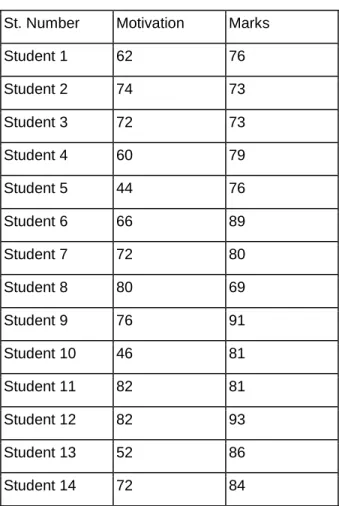
Finally, the third setting, is a subsidized school from Quilpue, the name of this institution is Colegio Cristiano Ingles Embajadores del Rey. The body of the students is composed by boys and girls from Kinder to 4° senior and there is also a night school for adults. There ages fluctuate from 5 to 19 years in the day shift and there are people from all ages in the adult’s education section with an approximate total of 1500 students.
42 The school is staffed by psychologists, speech therapists, social workers, special educational teachers, educational psychologist, with a total of approximate 42 teachers. It is subsidized school, this means that it is supported by the Christian church, the government and a small payment from the parents or tutors.
The school has two campuses, one is the Martin Lutero Willis Hoover campus, for students from 1st grade to 1st senior, and the Saint John G. Lake campus, for the students from kinder and from 2nd senior to 4th senior. There is only one section per level from kinder to 8th grade and two from 1st to 4th senior.
The school is equipped with computer labs, classrooms, a play yard, a dining area, and a library.
3.5 Participants
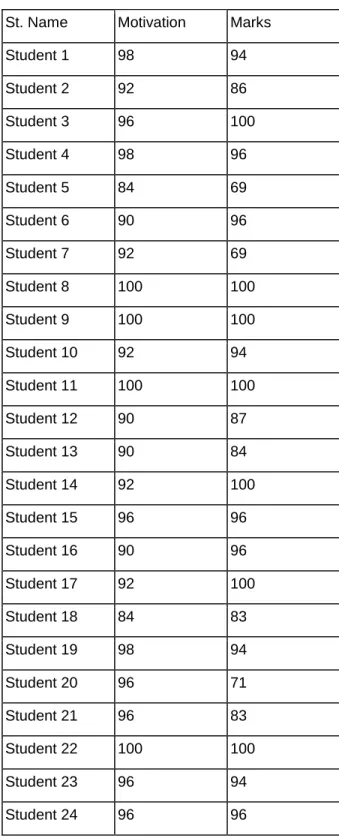
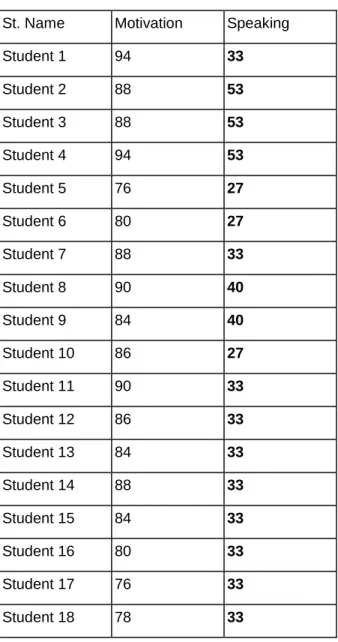
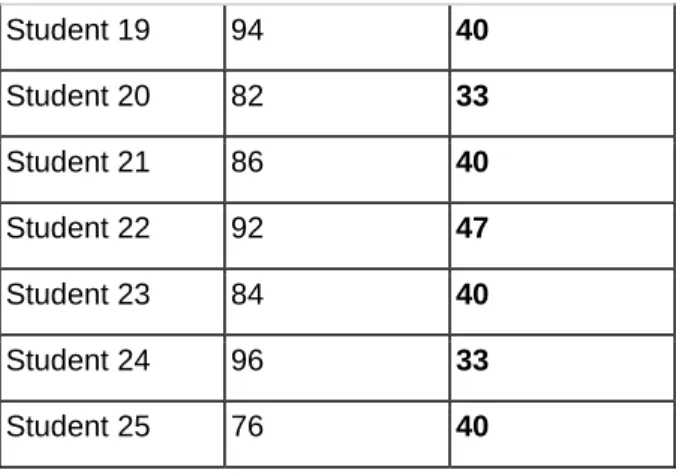
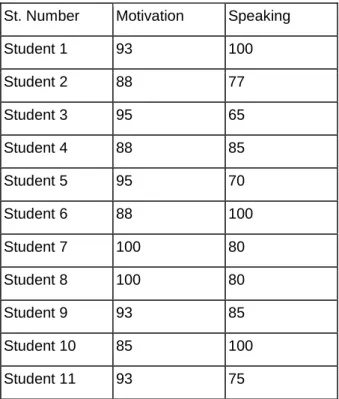
The participants of the research from the public school were 25 students of a third senior level. The group of students was composed of 16 girls and 9 boys, their ages ranged from 15 to 17 years old.
Regarding the schedule and the distribution of the English hours during the week, the hours are set only on 1 day, Tuesdays with 3 consecutive pedagogical hours from 8:30 am to 11:00 am.
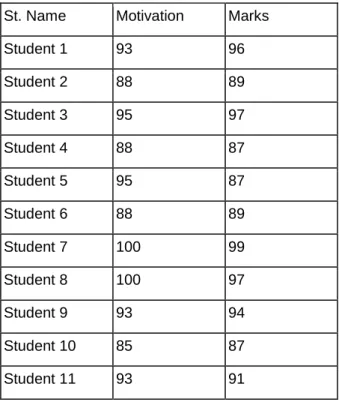
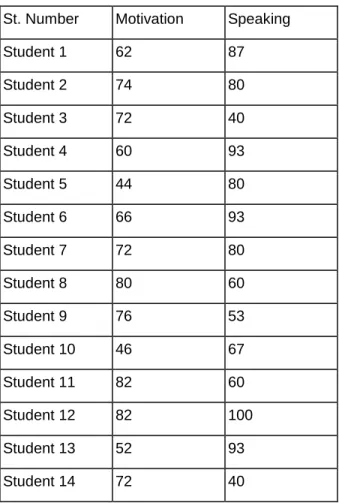
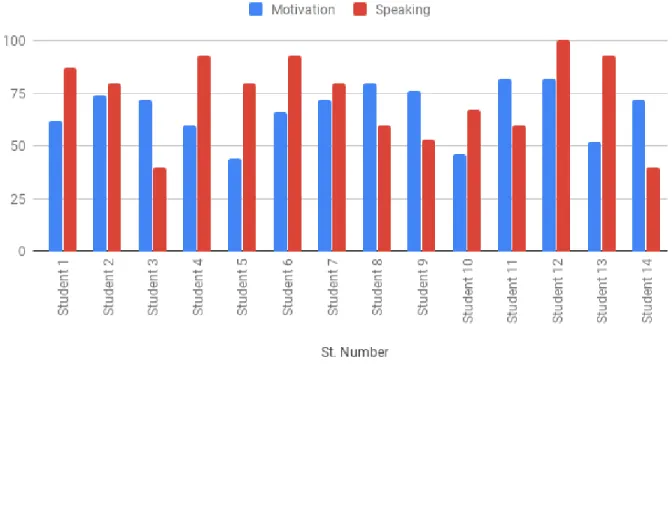
In the case of the private school, the third senior was chosen for the study. This class was composed of 11 students, 6 women and 5 men, it is important to mention that in this school classes are quite personalized since there are few students per class. Regarding the schedule and the distribution of the English hours during the week
are set in two blocks of two hours each, having a total of four hours a week. The first
block is set on Tuesdays from 16.00 till 17.45, the other block is set on Wednesdays
from 12.00 pm to 13.40 pm.
In this school, English is taught from Playgroup to 4th senior, and the youngest
students have more hours of English than third and fourth senior. The number of
hours students are exposed to, has allowed them to reach a good level of the