PROGRAMA DE DOCTORADO EN CONSERVACIÓN Y
USO SOSTENIBLE DE SISTEMAS FORESTALES
TESIS DOCTORAL:
Participation of society in breeding and
conservation programs for food tree
species in Niger (West Africa)
Participación de la sociedad en programas de mejora
y conservación de especies forestales alimenticias
en Níger (África Occidental)
Presentada por María Dolores Agúndez Leal
para optar al grado de
Doctora por la Universidad de Valladolid
Dirigida por:
Dr. Mario Soliño Millán
Prof. Dr. Ricardo Alía
Prof. Dr. Ali Mahamane
A Antonio y María Cristina, siempre fieles a mi vocación por África. A mis hermanos, María Cristina, Juan y Daniel, y especialmente a Antonio. Te fuiste sin entender bien qué hacía yo allí, ahora ya lo sabes.
AGRADECIMIENTOS
Esta tesis es el fruto de una ya larga trayectoria de vida profesional, y un reencuentro espiritual.
Empecé dando patadas a los piñotes en la provincia de Valladolid, en aquel entonces como técnica de la Brigada 2ª. Era una niña de ciudad que intentaba poner en práctica los escasos conocimientos académicos adquiridos, que de poco me servían en el trato con los agricultores de la tierra castellana. Algo más con los compañeros y con los agentes forestales, al menos teníamos un idioma casi común. A todos ellos les debo mi iniciación en el mundo forestal.
A los tres años, por avatares de la vida, mis pasos como técnica forestal me llevaron a la investigación sobre la diversidad de las especies forestales, en INIA, cuando tan solo sabía de eso que había pinares de silvestre en España que destacaban por su rectitud de fuste y calidad de la madera, y que había descritas varias subespecies de Pinus nigra. Me vi, sin saber muy bien cómo, iniciando con otras personas un equipo liderado por el joven Dr Alía. Por mi experiencia en el terreno, me dediqué a recoger semilla e instalar parcelas por gran parte de nuestra geografía, incluso a meterme en un laboratorio para apoyar a nuestro joven equipo en los análisis con marcadores genéticos. Tuve que aprender a marchas forzadas, en los libros, artículos, en el campo y en el laboratorio. Fueron años muy intensos de trabajo, de aprender de investigadores, becarios y capataces, de hacer buenas amistades que aún perduran. Es un mundo amplio este de la investigación, tantas personas que han pasado dejando poso, que sería imposible citarlas, permitidme solo una: Nuria, a ti te agradezco especialmente tu amistad y apoyo en los tiempos difíciles.
Y fuimos a Etiopía con Wubalem. Allí empecé a ser consciente de la realidad africana, y se me clavó como un puñal. Al poco tiempo de regresar a España, busqué como trabajar por África, con el siempre apoyo incondicional de R. Alía.
fácil inicio en África. Fruto de esa colaboración, fue el contacto con el Pr Ali Mahamane y el entonces doctorando Dr Soumana Douma. Douma, on a de l’avenir! Me recibieron cuando desde Benín realizaba mi primer trabajo de campo a Níger en mayo de 2010, asustada por introducirme en un mundo musulmán totalmente desconocido para mí hasta entonces, por los problemas de seguridad, y unas condiciones de vida extremadamente duras para la población rural, el norte de Benín se me representaba como un vergel. A partir de ahí empezamos una colaboración y relación que poco a poco se ha ido extendiendo ampliamente como en las familias africanas, y extendida más allá de los lazos puramente profesionales.
Este estudio se ha realizado gracias a la financiación de i) Instituto Nacional de Investigación y Tecnología Agraria y Alimentaria (INIA), a través de la colaboración entre Bioversity International y el Centro de Investigación Forestal de INIA-CIFOR, y diferentes países africanos socios de la red SAFORGEN, ii) la Agencia Española para la Cooperación Internacional al Desarrollo (AECID), a través de la acción innovadora “Acceso, conservación, gestión y valoración de especies leñosas alimenticias en Níger” (2014/ACDE/003520).
Quiero agradecer especialmente al equipo ACGVELA de la Universidad Dan Dicko Dankoulodo de Maradi (UDDM): los doctores Boubé Morou, Sitou Lawali, Abdoulaye Oumani y Abdoulaye Diouf, junto con Soumana Douma actualmente en la Universidad Abdou Moumouni de Niamey, y Pr Ali Mahamane, vicerrector de la UDDM y coordinador del equipo hasta su nombramiento en la Universidad de Diffa; a David Solano y Odile Koua, entonces en el CTFC, y a todos los participantes del INIA: Ricardo Alía, Mario Soliño, María Martínez Jaúregui, Fernando del Caño y Diana Barba, por todo el trabajo realizado en el marco del proyecto, que aún con incontables dificultades de todo tipo, conseguimos sacar adelante siempre con ilusión y profesionalidad. A los estudiantes de la UDDM que con sus TFM colaboraron con trabajo e ilusión en la generación de conocimiento sobre el valor de las especies leñosas alimenticias para las comunidades de Níger, a Arzika y a todos los encuestadores que hicieron posible la toma de datos en el terreno. A Javier Madrigal por interesarse y animarme siempre con mi trabajo con las comunidades locales en Níger, y por los análisis estadísticos para el primer artículo de esta tesis. A mi amigo del alma y compañero Jesús de Miguel, por la elaboración con todo esmero, paciencia e ilusión, de todo tipo de logos, figuras, tarjetas explicativas y de elección. Sin todos ellos esta tesis no hubiera podido ser elaborada.
diversidad vegetal de Níger y de muchos investigadores que siguieron sus pasos, que con su simple presencia transmite sabiduría, no digamos cuando le escuchamos. Siento no haber sido de mucha ayuda en la instalación del tan deseado herbario para el centro de diversidad vegetal de la UDDM. A Boubé Morou, Sitou Lawali, Abdoulaye Oumani, Abdoulaye Diouf, les agradezco profundamente su profesionalidad, total disponibilidad y claridad a la hora de participar y discutir sobre distintos temas de la tesis, su constante apoyo y tantos buenos ratos pasados en el despacho más acogedor que he conocido, el de Boubé, en las visitas al campo y a las comunidades locales, la visitas institucionales, las visitas a España, al INIA, la Universidad de Valladolid y al CTFC, y por las discusiones sobre la vida, la situación de Níger y del mundo, Dios y la religión, el respeto exquisito de estos buenos musulmanes hacia una mujer blanca y cristiana, favoreciendo la sinceridad en las discusiones y la búsqueda de puntos en común sobre nuestra forma de entender la vida, en favor de nuestra humilde aportación científica por intentar paliar una pequeña parte de las muchas situaciones críticas que vive la sociedad de Níger, hombres, mujeres, jóvenes y niños.
A mis directores de tesis, cada uno con un papel principal. Mario Soliño, gracias infinitas por aceptar dirigir esta tesis en la madurez de mi profesión, no ha debido ser fácil para un investigador en plena juventud intelectual, por confiar en mis ideas y brindarme tus conocimientos sobre economía ambiental para ponerlo al servicio de la ciencia y de los agricultores nigerinos, por estar siempre ahí pendiente sin fallar, cuando estoy en España y en mis estancias en Níger, por plantarte de raíz en tantas ocasiones ante el trabajo inacabado, por tu apoyo constante. Ricardo Alía, no podría agradecerte suficientemente todo el esfuerzo, trabajo y recorrido compartido, apoyo, ideas, discusiones, sobre la conservación de los recursos forestales, y en esta tesis, sobre su implicación en las sociedades rurales africanas, ánimos ante las dificultades, amistad. Mi profunda admiración y respeto por el Pr Ali Mahamane, actualmente rector de la Universidad de Diffa, en Níger en la convulsa región del Lago Chad, experto en ecología y conservación de la biodiversidad, luchando por la recuperación de hombres y mujeres que se unieron a las filas de Boko Haram. Nos ha abierto siempre de par en par las puertas al mundo académico nigerino y nos ofreció el mejor equipo siendo vicerrector de la UDDM. Su sabiduría, conocimiento científico y de la tradición, consejos, discreción, sencillez, y proximidad, han sido de un inmenso valor para la realización del trabajo en Níger.
Dedicatoria ... Artículo científico derivado de la tesis doctoral,
como requisito para su presentación y defensa...
INTRODUCTION... Food and nutritional security... The role of forests and forest systems in nutrition... The use of forest species for nutrition in the Republic of Niger... Illustration of the management of agroforestry systems
in the Sudanese-Sahelian zone of Niger... The value of Adansonia digitata (baobab)... Conservation and participation...
OBJECTIVES...
RESULTS... Towards a participatory conservation of food tree species... Farmers’ preferences for conservation of agroforestry food resources...
Description of the surveyed population... Species, uses, management and perception of threats... Contingent ranking results... Towards a participatory conservation of food tree species... Farmers’ preferences for conservation of agroforestry food resources ... Analysis of consumer preferences for baobab...
ANNEXES...
ANNEX STUDY 1... QUESTIONNAIRE 1: Focus group... QUESTIONNAIRE 2: Key Respondents...
ANNEX STUDY 2... QUESTIONNAIRE «Social preferences in the design of improvement and conservation programs of food tree species (FTS) in Niger»... EXPLANATORY CARDS... CHOICE EXPERIMENT CARDS... CONTIGENT VALUATION CARD...
ANNEX STUDY 3... Questionnaire: “Analysis of consumer preferences in the design of improvement and conservation programs of food tree species (FTS) in Niger”...
ANNEX APPLICATION OF THE RESULTS
«Conservation and use of genetic resources of A. digitata
in agroforestry systems: A review»... 113 115 115 116 119
119 127 130 136 137
137 141
SUMMARY
This thesis seeks as main objective to encourage the participation of society in its own development. More specifically, to involve the rural population, whose livelihood is found in low productivity agroforestry systems, in the promotion and improvement of their quality of life, nutritional and food security. Agroforestry systems of the Republic of Niger (West Africa), are based on (i) an arboreal and shrubby stratum remaining from the original forests, (ii) the extensive cultivation mainly of millet, and (iii) the livestock production also extensive and predominantly transhumant. The Sahel region, and Niger in particular, has seen its woody cover reduced due to worsening environmental conditions and unsustainable management practices, aggravated by the increase in population pressure. This has resulted in a problem of land availability, which, together with low agricultural productivity, causes populations to experience annual periods of food shortages that can range from 5 to 8 months, depending on the regions of the country. This, in turn, has led to a phenomenon assumed currently as usual, such as the seasonal migration of men and young to other countries in the sub region during a period from harvest until the new sowing.
This study takes two agroecological regions of Niger as a model for the conservation and improvement of food forest resources, within the production system in which they are found. The non-wood forest products (NWFP) have great importance as a source of food as part of the diet and even replacing the basic food in times of crisis. Trees in marginal lands and agroforestry systems have great ecological, economic, medicinal and nutritional value for rural populations. Some of these products, such as the leaves of Adansonia digitata (baobab) used daily in rural households, have become a priority sector for the Niger economy.
resources of the species. But, if we merely proposed the recovery of the arboreal part of the system, then the system would tend to revert to the current situation. We therefore want to incentivize farmers so that they participate in designing and implementing a sustainable program that all the players involved can agree upon: farmers, merchants, consumers, civil society, and the local and national administrations.
For that purpose, based on focus groups and individuals questionnaires (i) in study 1, local communities have prioritized the species and evaluated their current conservation status, (ii) in study 2, farmers have stated their willingness to work to perform conservation and breeding programs, and (iii) study 3, consumers have shown a positive willingness to pay to preserve and improve these natural resources.
Different statistical analyses gives us a general view of the perception of a declining occurrence of food woody species. A complex system of common threat factors emerges but not providing a univocal explanation for all species investigated, being the main ones identified overexploitation, pests and diseases, and drought.
Environmental economics methods showed that farmers and consumers would participate in the conservation and improvement of food tree species. Farmer’s preferred scenario for the recovery and improvement of the production system was that one based on the species conservation and breeding of A. digitata, by plantation of selected material in half-moons, with a 49% of the farmers participating for a minimum of 5 years and a 38.75% for an indefinite period. The reasons of consumers participating in the program are because of the tradition of using baobab products, which are good for health, because the conservation and improvement of baobab is important, and to ensure the availability of the leaves of baobab in the market.
RÉSUMÉ
Cette thèse a pour objectif principal d’encourager la participation de la société à son propre développement. En d’autres termes, impliquer la population rurale, dont les moyens de subsistance se trouvent dans des systèmes agroforestiers à faible productivité, dans la promotion et l’amélioration de leur qualité de vie, et dans leur sécurité alimentaire et nutritionnelle. Les systèmes agroforestiers de la République du Niger (Afrique de l’Ouest), un des pays les plus pauvres du monde, sont basés sur une strate arborée et arbustive originaire des anciennes forêts, sur la culture extensive principalement de mil, et un élevage aussi extensif et surtout transhumant. La région du Sahel, et le Niger en particulier, ont vu leur couvert arboré réduit en raison de la détérioration des conditions environnementales et des pratiques de gestion non durables, dû à la situation critique de changement climatique et de dégradation des sols, et aggravée par l’augmentation de la pression démographique. Cela s’est traduit par un problème de disponibilité des terres qui, conjugué à une faible productivité agricole, entraîne des périodes annuelles de pénurie alimentaire pouvant aller de 5 à 8 mois, selon les régions du pays. Ceci, à son tour, a provoqué un phénomène devenu habituel, tout comme la migration saisonnière des hommes vers d’autres pays de la sous-région pendant la période entre la récolte et la nouvelle semence.
Cette étude prend deux régions agroécologiques du Niger comme modèle pour la conservation et l’amélioration des ressources forestières alimentaires, au sein du système de production dans lequel elles se trouvent. Les produits forestiers non ligneux sont d’une grande importance dans le cadre du régime alimentaire et remplacent même les aliments de base en temps de crise. Les arbres dans les terres marginales et les systèmes agroforestiers ont une grande valeur écologique, économique, médicinale et nutritionnelle pour les populations rurales. Certains de ces produits, tels que les feuilles d’Adansonia digitata (baobab) utilisées quotidiennement par les ménages ruraux, sont devenus un secteur prioritaire pour l’économie nigérienne.
s’adapter aux conditions actuelles découlant du changement climatique et de l’augmentation de la pression humaine. De plus, les changements qui affectent la densité, la qualité et la composition de la couverture arborée ont un impact direct sur les ressources génétiques de l’espèce. De plus, si nous proposions simplement la récupération de la partie forestière du système, sans tenir en compte les besoins agropastoraux, cela aurait tendance à revenir à la situation actuelle. Par conséquent, nous voulons encourager les agriculteurs à participer à la conception et à la mise en œuvre d’un programme durable dans lequel tous les acteurs impliqués peuvent parvenir à un accord: agriculteurs, commerçants, consommateurs, société civile et administrations locales et nationales.
À cette fin, à travers des groupes de discussion et des questionnaires individuels (i) étude 1, les communautés locales ont hiérarchisé les espèces et évalué leur état de conservation actuel, (ii) étude 2, les agriculteurs ont déclaré leur volonté de participation par leur effort de travail iii) étude 3, les consommateurs ont montré une volonté positive de payer une prime pour préserver et améliorer ces ressources naturelles.
Différentes analyses statistiques nous ont permis d’avoir une vue générale sur la perception qu’a la société rurale sur la diminution de la présence d’espèces ligneuses alimentaires. Un système complexe de facteurs communs de menace découle de cette perception, sans fournir une explication univoque pour l’ensemble des espèces étudiées, les principaux facteurs étant la surexploitation, les ravageurs et les maladies, et la sécheresse.
Les méthodes d’économie environnementale, nous ont permis de montrer que les agriculteurs et les consommateurs participeraient à la conservation et à l’amélioration des espèces ligneuses alimentaires. Le scénario préféré par l’agriculteur pour la récupération et l’amélioration du système de production est celui qui envisage la conservation et l’amélioration de l’espèce A. digitata, par des plantations en demi-lunes et avec du matériel de reproduction sélectionné. Le 49% des agriculteurs participeraient pour un minimum de 5 ans et 38,75% pour une durée indéterminée. Les raisons pour lesquelles les consommateurs déclarent participer au programme sont dues à la tradition de l’utilisation des produits de baobab, car ceux-ci sont bons pour la santé, parce que la conservation et l’amélioration du baobab est important et à fin d’assurer la disponibilité des feuilles de baobab dans le marché.
RESUMEN
Esta tesis doctoral tiene como objetivo principal incentivar la participación de la sociedad en su propio desarrollo. Es decir, hacer partícipe principalmente a la población rural, cuyo medio de vida lo encuentra en sistemas agroforestales de baja productividad, en la promoción y mejora de su calidad de vida, y de su seguridad nutricional y alimentaria. Los sistemas agroforestales de la República de Níger (África Occidental), uno de los países más desfavorecidos del mundo, están basados en un estrato arbóreo y arbustivo remanente de los bosques originales, en el cultivo extensivo principalmente de mijo, y en una ganadería también extensiva y trashumante en su mayoría. La región del Sahel, y Níger en concreto, ha visto reducida su cubierta arbórea debido al empeoramiento de las condiciones medioambientales y las prácticas de manejo insostenibles para esta situación crítica de cambio climático y degradación de los suelos, agravadas por el aumento de la presión demográfica. Esto ha derivado en un problema de disponibilidad de tierras, que junto con la baja productividad agrícola, hace que las poblaciones padezcan anualmente periodos de carencia de alimentos que pueden ir de 5 a 8 meses, según las regiones del país. Esto a su vez, ha provocado un fenómeno asumido como habitual, como es la migración estacional de los hombres a otros países de la subregión durante el período comprendido entre la cosecha y la nueva siembra.
Este estudio toma dos regiones agroecológicas de Níger como modelo para la conservación y mejora de los recursos forestales alimenticios, dentro del sistema de producción en el que estos se encuentran. Los productos forestales no maderables tienen una gran importancia como parte de la dieta e incluso sustituyendo al alimento base en épocas de crisis. Los árboles en las tierras marginales y los sistemas agroforestales tienen un gran valor ecológico, económico, medicinal y nutricional para las poblaciones rurales. Algunos de estos productos, como las hojas de Adansonia digitata (baobab) utilizadas diariamente en la alimentación de los hogares rurales, se han constituido como sector prioritario para la economía de Níger.
(sobre todo en las regiones áridas) ha sido que la gestión tradicional no puede adaptarse a las condiciones actuales derivadas del cambio climático y del aumento de la presión humana. Además, los cambios que afectan la densidad, la calidad y la composición de la cubierta arbórea, tienen un impacto directo en los recursos genéticos de las especies. Pero, si simplemente propusiéramos la recuperación de la parte arbórea del sistema, sin tener en cuenta las necesidades agropastorales, este tendería a volver a la situación actual. Por lo tanto, queremos incentivar a los agricultores para que participen en el diseño y la implementación de un programa sostenible en el que todos los actores involucrados puedan ponerse de acuerdo: agricultores, comerciantes, consumidores, sociedad civil y las administraciones locales y nacionales.
Para tal fin, mediante grupos de discusión y cuestionarios individuales (i) en el estudio 1, las comunidades locales han priorizado las especies y evaluado su estado de conservación actual, (ii) en el estudio 2, los agricultores han declarado su voluntad de trabajar para realizar programas de conservación y mejora, y (iii) en el estudio 3, los consumidores han mostrado una disposición positiva a pagar para preservar y mejorar estos recursos naturales.
Diferentes análisis estadísticos nos han permitido obtener una visión general sobre la percepción que la sociedad rural tiene de la disminución de la presencia de especies leñosas alimenticias. Un complejo sistema de factores de amenaza comunes surge de esta percepción, sin proporcionar una explicación unívoca para todas las especies investigadas, siendo los principales factores la sobreexplotación, las plagas y enfermedades, y la sequía.
Los métodos de economía ambiental nos han permitido mostrar que los agricultores y consumidores participarían en la conservación y mejora de las especies de árboles alimenticios. El escenario preferido por el agricultor para la recuperación y mejora del sistema de producción es el que contempla la conservación y mejora de la especie A. digitata, por plantaciones en medias lunas con material de reproducción seleccionado. Un 49% de los agricultores participaría durante un mínimo de 5 años y un 38.75% por un período indefinido. Las razones de los consumidores declaran para participar en el programa se deben a la tradición de utilizar productos de baobab, porque estos son buenos para la salud, porque la conservación y mejora del baobab es importante y para garantizar la disponibilidad de las hojas de baobab en el mercado.
ESTRUCTURA DE LA TESIS DOCTORAL
Estudio 1. Conservación participativa de las especies leñosas alimenticias
Estudio 2. Preferencias de los agricultores para participar en un programa de conservación y mejora
Estudio 3. Preferencias de los consumidores para participar en un programa de conservación y mejora de A. digitata
Aplicación práctica. Acciones para el uso sostenible y la conservación de los recursos de baobab
Figura E1. Esquema de la tesis y de la progresión que siguen los tres estudios y su aplicación.
La tesis doctoral se estructura en tres estudios y la aplicación práctica de estos. La identificación de los problemas y las soluciones se han ido estudiando a lo largo de la tesis desde una visión más general en el esudio 1 hasta una aplicación práctica, que define los elementos necesarios para que las comunidades locales participen en la conservación y mejora de la especie leñosa alimenticia autóctona y prioritaria por excelencia para la sociedad nigerina, Adansonia digitata. A continuación se expone un mapa con los estudios o etapas seguidas en el desarrollo de la tesis (Figura E1).
El estudio 1 se basa en la consideración del conocimiento y las percepciones locales desde una fase inicial del diseño de las actividades de mejora y conservación. A la identificación de las especies leñosas prioritarias, le sigue una evaluación de la percepción de su estado de conservación y de los factores que actúan sobre la conservación de las especies. Los
Photos:
D
datos se han obtenido a partir de encuestas dirigidas a grupos de discusión y personas clave, y analizados con distintas herramientas estadísticas. Los resultados de este estudio nos han permitido identificar las cuatro especies prioritarias para diseñar un programa de conservación, dando paso al estudio 2.
Con el fin de proponer actividades participativas de gestión y conservación de acuerdo con las preferencias de las comunidades beneficiarias, en el estudio 2 se realiza un diagnóstico sobre la disposición a participar y la asignación óptima que garantizaría la participación de las comunidades locales en los programas de conservación y mejora de sus sistemas agroforestales. Para ello, se ha diseñado un ejercicio de valoración basado en métodos de elección discreta que permite predecir las preferencias y los valores que otorgan los agricultores a los elementos que constituyen el programa. La herramienta para la toma de datos se basa en encuestas a los agricultores. La especie A. digitata, conocida comúnmente como baobab, se muestra como la que mayor valor alimenticio proporciona a los agricultores, por lo que los siguientes estudios se centran en esta especie.
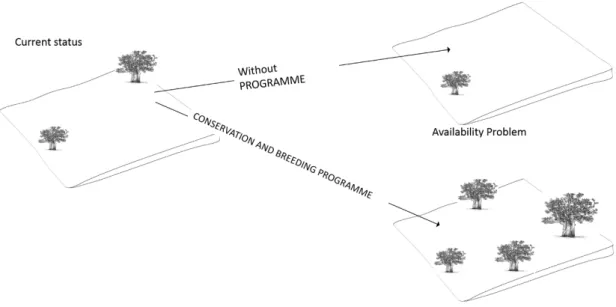
El estudio 3 trata de la participación de los consumidores en los programas de conservación y mejora. Nos centramos en el mercado y en el estudio de las preferencias de los consumidores de productos de baobab. Hemos aplicado el método de valoración contingente para comprobar si los consumidores están dispuestos a pagar un sobreprecio en su cesta de consumo con el fin de cofinanciar el programa de conservación. A los consumidores se les explica la situación actual de los recursos de A. digitata, y el efecto que se obtendría tras la aplicación de estos programas en los sistemas agroforestales, garantizando la disponibilidad de los productos de baobab en el mercado.
Artículo científico derivado de la tesis doctoral, como requisito para su presentación y defensa.
El estudio 1 ha sido publicado en la revista Forest Systems, Q3 en Forestry (JCR 2016).
Conservation of food tree species in Niger: towards a participatory approach in rural communities. Dolores Agúndez, Soumana Douma, Javier Madrigal, Almudena Gómez-Ramos, Barbara Vinceti, Ricardo Alía and Ali Mahamane.
Forest Systems 25(3), e080, 13 pages (2016) eISSN: 2171-9845
INTRODUCTION
This doctoral thesis discusses the promotion of food and nutritional security and the role played by forestry products in the promotion thereof in one of the most disfavored countries of the world, the Republic of Niger. The thesis therefore also discusses the conservation and breeding of woody species, trees, and shrubs of high food value in that country, where promotion efforts are designed for and include the participation of those who are directly involved. It is a study that offers a tool for assuring the conservation of, the availability of, and access to naturally occurring woody species that provide food products, in sufficient quantity and quality for both local communities and the Nigerien society as a whole. The results obtained will make it possible to convey the needs of this society and reinforce the capabilities of the agents who are directly involved in the production and consumption of these products, which must be seen as key elements in the processes of national planning and policy on the environment, agriculture, and food security.
Food and nutritional security
Hunger and malnutrition are the direct results of food insecurity. They restrict vital human functions, they threaten the right to life, and they block opportunities to develop capabilities, thereby preventing human development at a basic level. Approximately 795 million people in the world, more than one out of every nine persons, cannot consume enough food to lead a healthy life. The vast majority, approximately 780 million, live in developing regions. In sub-Saharan Africa, it is calculated that approximately 220 million people suffer from hunger (FAO, IFAD, WFP, 2015), meaning practically one out of every four people.
(MPI): 73.5% of the population of Niger is in a state of severe multidimensional poverty and 5.9% is in a state of near multidimensional poverty.
Food and nutritional security requires that foods be available, that they be accessible, and that they be in sufficient quantity and be of sufficient quality to assure good nutritional results. Adequate nutrition helps people to develop all their potential and take advantage of the opportunities offered by the development process (FAO, IFAD, WFP, 2015), and it allows people to make their own choices and build resilience to face crises. Building resilience, understood as the capacity to overcome critical moments and adapt and/or return to normalcy after experiencing an unusual and unexpected situation, is specific for local conditions. In Niger, both structural poverty and the persistent shortage of food production cause the population to be highly vulnerable to weather and economic disturbances.
The role of forests and forest systems in nutrition
This doctoral thesis focuses on the importance of forest systems in nutrition. It is calculated that, more than 10 millennia after the onset of agriculture, in the majority of regions in the world there are millions of small rural producers who still depend on wild products for their nutrition and subsistence (Wunder et al., 2014). Ickowitz et al. (2014) found a positive relationship between forest cover and diet diversity, which suggests that children in Africa who live in areas with more forest cover have more diverse and nutritional diets. At the same time, it is evident that forests and forest systems play an important role in complementing agricultural production by providing better and more nutritionally balanced diets (Vinceti et al., 2013).
Agroforestry systems and their non-wood forest products (NWFP) are a source of food, such as fruits, fats, oils, leafy vegetables, dried fruit and nuts, and condiments, which are used to complement the basic food crops in local diets (Faye et al., 2011; Kalinganire et al., 2007). Agroforestry is considered to be one of the few solutions that can provide a combination of food security and resilience to climate change and provide one of the best possible solutions for conserving the environment and biodiversity (Mbow et al., 2014). Trees and shrubs in marginal lands or in agroforestry systems have high ecological, economic, and nutritional value for the homes of poor rural communities (Pingali et al., 2014; Thiombiano et al., 2013; Assefa and Abebe, 2011; Larwarnou and Saadou, 2011).
identified in Western Africa and whose leaves and fruits are consumed daily by 90% of the people in semi-arid zones (Buchmann et al., 2010). In rural zones of Burkina Faso, local fruits play a fundamental role in the balance of diets, given the contribution by their content in proteins, fats, sugars, minerals, and mainly vitamins to satisfying nutrient needs (Lamien et al., 2009). These latter authors suggest that many deficiency diseases are avoided by children in Burkina Faso most likely as a result of consuming local fruits as if they were sweets or appetizers. As another example, in Niger the fruits and nuts of Sclerocarya birrea are a useful food supplement, not only for children but also for adults (Glew et al., 2004).
In addition to the fact that production from the trees play a direct role in nutrition, there are also normally more resistant to adverse ecological conditions than crops in agricultural production. The trees therefore constitute a safety net at times when the annual production from crops may be lost, as well as in periods of food shortage between two harvests (Blackie et al., 2014). For example, the seed of Boscia senegalensis (anza in local language), a wild shrub or small tree, is traditionally used as a staple food in times of food shortage in arid zones of Niger (Kim et al., 1997), and it continues to be associated with famines, considering anza’s use as a staple during the crises of 1970 and 2000.
Unfortunately, national and international communities don’t give forest systems the merit they deserve. They play a crucial role in achieving global food security by complementing agricultural production systems, especially by providing production and consumption systems that are resilient and accessible to the most vulnerable groups (Blackie et al., 2014; Keller et al., 2006; Shackleton and Shackleton, 2004). Even without this recognition, the foods coming from forests and forest systems will continue to form an essential part of the strategies of rural homes as a food source and as a way to achieve nutritionally balanced diets.
The use of forest species for nutrition in the Republic of Niger
of the population is based on traditional practices of subsistence farming through agricultural and livestock production (FAO, 2016). The beginning of the rainy season, which has major importance for growing cereals, comes increasingly later, with serious episodes of drought followed by major floods.
Figure 1. Semi-arid, Sudanese-Sahelian zone (modified from Karlson and Ostwald, 2015).
Agricultural production is generally insufficient to cover the needs of the local populations. A study conducted in Kollo (Tillaberi, Sudanese zone) illustrates this situation, where the majority of homes are involved in agriculture as the main activity. Nevertheless, all the homes are net buyers of food, because they do not produce enough to cover their food needs for the whole year. Some are even forced to sell part of their production as soon as it is harvested (when prices are low) in order to cover other needs, later having to purchase food when the prices have risen. 92.6% of homes state that they suffer from food scarcity at some point during the year (Zakari et al., 2014).
(Dan Guimbo et al., 2012) determined that 12% of the plants there are consumed during the entire year, while the remainder (88%) have high consumption value during the dry season.
The problem is that woody food species are under pressure for several reasons (Larwanou and Saadou, 2005; Abdou, 2013; Dan Guimbo et al., 2012; Douma et al., 2010). The region is subject to the combined effects of climate change and human pressure, which are resulting in insufficient agricultural production, a decrease in forest cover, and an increase in soil degradation, all of which is in detriment to both food security and the development of the human population. The direction of the change and the factors thereof are not entirely clear (uncertainty about the changes caused by man versus those caused by the climate), and they can vary from one place to another. Despite this uncertainty, there is a general perception that degradation of the vegetation is progressively occurring, with a different impact in the Sahelian and Sudanese agroecological zones due to their different environmental conditions, the ethnic composition, migration processes, and greening efforts (Jalloh et al., 2012; Hermann et al., 2005). This degradation process must be corrected, and management and conservation practices must be improved to ensure the continued use and preservation of resources from at-risk woody food species that have vital traits (for example, populations and/or individuals of species that are resistant to drought).
Illustration of the management of agroforestry systems in the Sudanese-Sahelian zone of Niger
The agroforestry systems in Niger, as in other parts of West Africa, are traditional systems in which native woody species are protected and maintained in crop and pasture lands. Farmers follow different stages to reach their current system of cultivation. The land is cleared, while selecting trees according to the farmers’ preferences, and those selected trees are subsequently pruned and protected, with the remainder being cut down. Once the production system is established, farmers eliminate any regeneration as it occurs and prune the trees that are kept (FAO, 2017).
Image 1. Aspect of an agroforestry system in Bodol (Makalondi, August 2016).
through. More recently, it is common to find growers who also keep a few head of small livestock. Consequently, growers use the millet or sorghum straw from the fields to feed their animals, or they may even harvest the straw for sale. These practices by farmers eventually become a problem for both livestock farmers, who cannot find land to feed their animals, and for growers, whose lands become more degraded every year.
The images shown below represent different aspects and situations of agroforestry systems. In image 1, we can see the general aspects of the millet agroforestry system, where different tree species can be noted. A partially harvested sorghum field can be observed in image 2, with two baobab trees and non-target species. The leaves of the baobab on the left were harvested at the time of the photograph (October 2016), but the baobab tree on the right still has foliage. Image 3 illustrates the passage of migratory cattle in a field of millet where crop remains were left. And finally, image 4 shows a Balanites aegyptiaca tree, which a boy has climbed in order to cut and throw down branches. Women and other children on the ground can subsequently harvest the leaves and flowers. B. aegyptiaca is a thorny tree, and the pulp from the fruit is used to suck on, with the seed being used for oil.
Image 2. Agroforestry system in Safo (Madarounfa, Maradi, October 2016).
Image 3. Migratory cattle in Kouré (Kollo, Tillabéri, April 2015).
Image 4. Women and children collecting leaves and flowers of B. aegyptiaca in Kouré (Kollo, Tillabéri, April 2015).
The value of Adansonia digitata (baobab)
The baobab has been and is an emblematic and highly important tree for humans throughout its entire area of distribution in Africa. The baobab constitutes a major source of food, of products for pharmacopeia and veterinary medicine, and of fibers and materials for tools. Plus it also performs important ecological functions that include participation in the nutrient cycle, regulating the climate and run-off, water purification, and soil formation, and it serves as a niche for accommodating high biodiversity (Hellekson, 2009). The baobab also forms a part of the cultural identity and the spirituality of the populations, and its use and harvesting are regulated according to rules that govern the life of the surrounding communities. Therefore, the baobab generates multiple ecosystem services that are associated with the values of direct use, indirect use, and passive use.
The species occurs naturally in semiarid regions of tropical Africa. The approximate area of distribution can be found in Assogbadjo and Loo (2011). Considering various models of climate change (Sanchez et al., 2011), the current distribution of A. digitata will be
reduced in the future. Baobab populations need to be managed in order to ensure that their genetic diversity is maintained over the long term, that the resources endure, and that baobab products remain available (Dhillion and Gustad, 2004; Schumann et al., 2010; Venter and Witkowski, 2011).
This is important not only for actual conservation of the species and its genetic resources, but also due to its socioeconomic value. The leaves of the baobab, which have a high content of proteins and minerals, especially magnesium, potassium, calcium, and iron, form a part of the daily diet of the rural populations in many areas of West Africa. Fresh leaves are boiled and consumed as vegetables or in a salad, and dry or ground leaves are used as a thickener for sauces that accompany the staple food. Surplus dried leaves are stored and sold in the market, thereby assuring the availability of this food throughout the year (De Caluwé et al., 2009). Its products are marketed in urban and rural markets, thus constituting a source of income for rural homes (Venter and Witkowski, 2011). Likewise, the production of baobab offers considerable market opportunities not just in Africa. In recent years, there has been growing international interest in the species, with acceptance of the baobab fruit pulp in the EU and USA. For example, in Europe there are over 300 products whose ingredients include some derivative of the baobab, ranging from food products (drinks and beverages, energy bars, sweets, and chocolates) to pharmaceuticals and cosmetics (Gebauer et al., 2016).
The products provided by the baobab, in addition to being common ingredients in the diet, are a source of income derived from trade within rural areas and between these areas and urban areas. For poor urban households, baobab leaves are the basic product for preparing the daily sauce of family meals. In recent times, a practice has been observed in which agricultural land is sold without the right to enjoy the products of the baobab trees that are present on the acquired land. This is due to the great value and economic return offered by baobab products. The management of baobab is conducted mainly for leaf production, and the common practice of leaf collection causes the trees to become mutilated, thereby preventing the production of flowers, fruit, and seeds (Agúndez et al., 2016).
current status of the baobab is in decline. This decline is attributed to climate change and to different factors of human pressure, such as land clearing, fires, livestock grazing, and actual collection of the leaves and fruit of the baobab, and to pest and diseases (Agúndez et al., 2016). Even in conservation zones such as the W Transborder (Benin, Niger and Burkina Faso) Park there is also a decrease of its presence (Schumann et al., 2012), with a very low density and a predominance of old, large-diameter trees and scarce regeneration in Niger (Douma et al., 2010).
Conservation and participation
African dry territories are among the most threatened and least studied agroforestry systems, and there is an urgent need to support the development of sustainable management and conservation policies (Blackie et al., 2014). The Sahel has experienced dramatic environmental changes during the last four decades, including the droughts during the 1970s and 1980s, the causes and effects of which are still under debate (Herrmann et al., 2005; Hiernaux et al., 2009; Lézine et al., 2011; Mertz et al., 2012; Nutini et al., 2013). Despite a recent trend of increasing rainfall over the last decade, the prevailing view is that a decline in annual rainfall has been the main driver of climate change at the regional level, operating in synergy with other factors, such as population trends, land management strategies, management of local natural resources and public policies (Mbow et al., 2008; Epule et al., 2014). There is a general gap in understanding of land use change in Niger (D’haen et al., 2013) and comprehensive studies are necessary to inform actions improving the resilience of the rural populations and buffering the current negative effects on agroforestry systems (van Vliet et al., 2013).
the conservation of woody species that currently have value or that could be a source of values (unknown up to now) and/or of products and services for future generations (Bozzano et al., 2014).
Social participation must be the focal point of any effective activity to conserve natural sources, including forest genetic resources. Local communities should be involved in every aspect: from identifying the problem to discovering the possible solutions, including the planning, organization, and implementation of conservation actions. One of the functions of scientific studies is to verify many of the perceptions of the problems in these communities and moreover collaborate on offering proposals that can be assumed by these communities to solve the problems. A participatory conservation strategy increases both the possibility of real implementation and the probability of success (FAO, FLD, IPGRI, 2004). Thus, in the national parks of Africa, Muhumuza and Balkwill (2013) suggested that conservation approaches should place more emphasis on the human facet of conserving biodiversity and should not be solely focused on purely scientific studies of species and habitats, which abound in literature.
The success of management plans is often based on community-based conservation interventions, including community knowledge and capacity to observe the process and gather key information (Rodríguez-Izquierdo et al., 2010; Waylen et al., 2010). Furthermore, recognizing how and why people value different resources minimizes the conflicts between stakeholders and promotes the social acceptability of management activities (Ives and Kendal, 2014).
development, local communities in contact with elephants in the Democratic Republic of the Congo would be willing to participate in conservation of the animal, as long as measures were established to prevent conflict between man and the elephant (Ngouhouo et al., 2016). The creation of protected areas has a relevant impact on poor rural communities that depend on those areas. For communities in the south of the Côte d’Ivoire, the conservation of an area subject to protection has notable passive use values. In some cases, the problem is not that conservation isn’t wanted, rather the problem is that the resources for undertaking the pertinent measures are not available, and external financing is needed to complement the market returns from products of the area to be protected (Amin and Koné, 2015).
Gender and ethnicity (e.g. in level of knowledge, preferences and types of use) may affect the management and conservation of natural resources (Koura et al., 2011; Gómez-Ramos et al., 2013). Indigenous knowledge may vary according to gender; for example in the assessment of the importance of an edible tree species, Blighia sapida, in Benin (Ekué et al., 2010), in the perception of vegetation changes in semi-arid areas in Niger (Wezel and Haigis, 2000), and in local attitudes towards conservation in northern Benin (Gómez-Ramos et al., 2013). In contrast, gender was not significant in indigenous knowledge of vegetation dynamics in Burkina Faso (Sop and Oldeland, 2011), wild fruit consumption in the Amhara region in Ethiopia (Fentahun and Hager, 2009), or identifying woody vegetation in south Western Niger (Ayantunde et al., 2008).
The participatory approach is a way of incorporating both traditional and scientific knowledge and can result in good outcomes when applied to natural resources conservation management. Participatory approach recognise the existence of different types of knowledge associated with the different stakeholders, and during the analysis phase, both traditional information and scientific knowledge, should be validated (Baia and Luisa, 2016).
The previous literature offers lists of useful wild plants from Niger, including edible species, and the nutritional value of some of them (Freiberger et al., 1998; Cook et al., 2000) but this thesis states the base line of the local perception of the food tree species status in two regions of Niger, to be used in participatory conservation planning. It constitutes the basis for a participatory planning, this is why the approach considered in this study is the Rapid Rural Appraisal Approach (RRA; Blumenthal and Jannink, 2000).
for the rural populations. Moreover, the resources to be protected tend to compete with other resources (agriculture, livestock), with different scales of space and time, thereby creating long-term sustainability problems. Knowing the factors that cause a loss of resources, comparing them with local perceptions (which can differ, depending on questions of age, sex, or ethnicity), and offering management alternatives are the way to minimize the conflicting commitments between different uses and to favor the resilience of agroforestry systems.
OBJECTIVES
The main objective of this doctoral thesis is to contribute to the sustainable management of woody food species, through their conservation and breeding, and taking into account the participation of Nigeriens as actors for their own development. The specific objectives included in the studies of this thesis are:
1. Establish the basis for the participation of the society in a program of conservation and breeding of woody food species (studies 1 to 3).
2. Identify the key woody food species and the perception of rural communities about their status of conservation (study 1).
3. Confirm that the perception of the factors that threaten the species is influenced by the food value attributed to them, the change in the occurence of the trees and the lack of regeneration, as well as the agroecological zone, the genus and the socio-cultural group to which the surveyed population belongs (study 1).
4. Estimate farmers’ preferences towards different elements of a conservation and breeding program and estimate the effort they would be willing to invest in the implementation of the proposed program (study 2).
5. Describe the market of baobab products and assess the preferences of consumers for co-financing the conservation and breeding program of the species (study 3).
MATERIAL AND METHODS
TOWARDS A PARTICIPATORY CONSERVATION OF FOOD TREE SPECIES
Study area
Four villages in Southwest Niger were selected, two in each of the main agroecological regions (Sudanian and Sahelian). The Sudanian agroecological region is characterized by an annual 7-month drought period, and a mean annual precipitation of 650 mm, while the Sahelian agroecological region has a 9-month drought period and a mean annual precipitation of 350 mm.
The traditional agrosilvopastoral system in both regions is extensive and highly vulnerable to drought. The start of the rainy season, of vital importance for cereal production, is subject to fluctuations and affected by delays. In both agroecological regions, the diet is largely based on cereals, mainly millet and sorghum, complemented with pulses (cowpea and Bambara groundnut). Consumption of food of animal origin, of fruit and vegetables (rich in micronutrients) remains low, and the consumption of milk, a tradition in an agro-pastoral context, is declining due to the reduction in the number of cattle. The use of wild edible plants (leaves and fruits) is rather a common practice during the dry season. The collection has become systematic after recurrent cases of very severe food shortage (FAO, 2009). Village dwellers are largely dependent not only on agricultural products but also on indigenous woody vegetation for their food security.
Park. They were forced later to leave their settlements when the W Transboundary Biosphere Reserve (Benin, Burkina Faso and Niger) was established in 2002.
Zarma and Hausa ethnic groups are smallholder farmers, practising extensive agriculture to produce millet for household consumption. Integration between agriculture and livestock is very low. Fallow reduction and changes in rainfall, combined with structural adjustment measures, have led them to depend increasingly on seasonal migration and small trading. The Zarma are autochthonous in the study sites, while the Hausa are immigrant from the Southwest of Niger.
Traditionally Fulani are nomads; but after many years of integration with other cultures, and due to adverse environmental conditions leading to a reduction of their herds (cows, sheep, goats and dromedaries), nowadays they largely rely on farming for their livelihood. So they are only partly nomadic, setting up temporary camps, where they exchange dairy products for cereals.
Fieldwork description
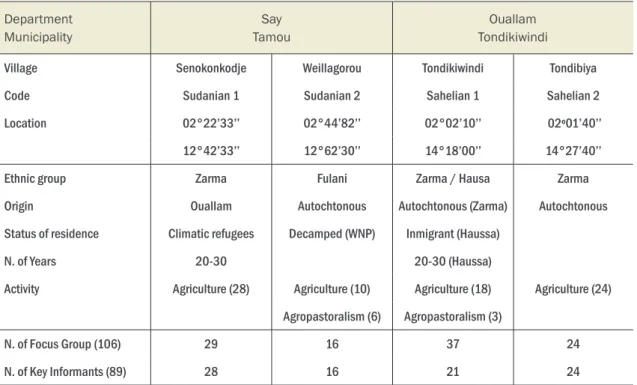
The field work at household level was divided in two parts: the focus group discussions and the individual interviews. The overall sample is presented in Table 1.1 and questionnaires in annexes. The local communities of the region suffer annually of food shortage and food crises due to severe drought, thus we were interested on involving the household representatives as the main actors.
Questionnaire was addressed to the head of the house, usually a man, considered as key informant. This questionnaire was focused on how the local communities prioritized the edible woody species, how they defined their conservation status, and their perception of the impact of biotic, abiotic factors, management and collection practices on the conservation status of the species. In some cases, the head of the household was a woman, either a widow or a woman leading the household where her husband was temporarily absent working in another region or country. Demographic data were collected for each individual interviewed.
Food value (Fv) was determined by each key informant attributing a ranking to the ten woody species most valued as food. The species list and ranking were generated independently by each informant. For each species, the informant was also asked to indicate his/her perception about the change in occurrence of the species in the area surrounding the village, over the previous 10 years. The parameter was defined as occurrence change (Oc) and a trend was identified by a score from 1 to 4, with 4 indicating a very high decline. A score indicating the status of regeneration (Rg) was also assigned to each of the top ten edible woody species (1=Lack of regeneration; 2= Presence of regeneration).
Code Sudanian 1 Sudanian 2 Sahelian 1 Sahelian 2
Location 02°22’33’’ 02°44’82’’ 02°02’10’’ 02º01’40’’ 12°42’33’’ 12°62’30’’ 14°18’00’’ 14°27’40’’
Ethnic group Zarma Fulani Zarma / Hausa Zarma
Origin Ouallam Autochtonous Autochtonous (Zarma) Autochtonous Status of residence Climatic refugees Decamped (WNP) Inmigrant (Haussa)
N. of Years 20-30 20-30 (Haussa)
Activity Agriculture (28) Agriculture (10) Agriculture (18) Agriculture (24) Agropastoralism (6) Agropastoralism (3)
N. of Focus Group (106) 29 16 37 24
N. of Key Informants (89) 28 16 21 24
WNP= W National Park
A total of 12 factors (Figure 2) had been pre-identified in the literature as common pressures, associated with management measures for agroforestry systems, harvesting practices for tree products, and biotic or abiotic factors (Assogbadjo and Loo, 2011; Gouwakinnou et al., 2011; Muok et al., 2011; Sanou and Lamien, 2011; Sop and Oldeland, 2011). Each key informant was asked to give a score from 1 to 4 (with 4 indicating a high effect on the given variable) on the factors driving the conservation status (Oc and Rg) of each species.
Figure 2. Pressure factors affecting the perception of the conservation status (occurrence change and regeneration).
Data analysis
Two different approaches were used to process the data generated by the individual interviews: i) the median value for all variables (Fv, Oc and Rg) and pressure factors was calculated. Median values were considered as the most appropriate indicators of respondents’ perception averages; exploratory approaches for data analyses using medians and non-parametric statistic methods are considered appropriate to treat the type of data collected in this study (Tukey, 1977). The dataset was not suitable for parametric tests, due to the large number of variables analysed in a relatively small dataset, the significant amount of missing values (absence of responses for some variables), and the strong autocorrelation among variables; ii) Seven pressure factors were included in the analyses and the species prioritized by at least 6 key informants were considered. The relationship between the 7 factors (dependent variables), the food value and the two variables associated with the conservation status of an edible woody species (Oc and Rg; independent variables) were analysed by Partial Least Squares multiple regression models (SIMPLS algorithm).
In order to test for the influence of respondents’ gender, ethnicity or status of residence on food value and occurrence change, the three most common species cited in the four villages were subjected to one-way ANOVA using the non-parametric Kruskall-Wallis test. Dependent variables were the food value of an edible woody species (0 to 10 scale) and occurrence change (1 to 4 scale). Regeneration was discarded from this analysis, as this parameter turned out not to have relation with gender, ethnicity or status of residence. Two levels were assigned to gender (male and female), three levels to ethnic group (Zarma, Hausa and Fulani) and four levels to village (one for each village).
FARMERS’ PREFERENCES FOR CONSERVATION OF AGROFORESTRY FOOD RESOURCES
The program
food interest that are deemed to have priority by the local population; 2) actions for increasing tree density; 3) tree density actions reinforced by soil conservation actions; and 4) the quality of the seed to be used in actions aimed at the conservation thereof through use. The purpose is to increase agricultural production and favor the implementation and production of native and naturalized food tree species in the studied regions.
The woody species of this program are the priority species for the local communities, and they are present in all the studied communes (municipalities): Adansonia digitata, Boscia senegalensis,Balanites aegyptiaca, and Ziziphus mauritiana. The selection was made considering the common species cited the most in Agúndez et al. (2016), thereby considering that they represent a different degree of presence and/or interest due to their food products. Moreover, the questionnaire included one question to confirm the selection of these species.
An increased interest in conserving woody species in Niger can be perceived, mainly due to the loss of natural forests. This has been partially caused by human pressure, which requires a considerable area of land for agricultural production (Lawarnou et al., 2012). In the majority of cases (Larwanou and Saadou, 2011), interventions by different cooperation projects have been highly appreciated in terms of restoration efforts on degraded lands, especially regarding erosion control, Farmer Managed Natural Regeneration (FMNR), and tree planting. FMNR is an approach for arable land restoration and reforestation that seeks to reconcile food production, soil conservation, and the protection of biodiversity. It involves helping and protecting regeneration based on the seed bank existing in the soil, on stems regrown from the live stumps of felled trees, and on pruning to achieve straight trunks. The two proposed levels for increasing tree density in the fields are FMNR and planting.
improve water retention and prevent the loss of organic fertilizer due to run-off. It has the advantage of allowing crops to be sewn even in periods of low rainfall. It involves preparation of the land in holes covered with mulch and organic fertilizer. This technique has been used successfully to increase the quantity and yield of millet in Niger. Preparing the soil in the form of half-moons is advantageous when rain is scarce and there is a slight slope. They slow run-off and allow collected water to be taken advantage of. They are used to restore degraded soils for vegetable crops, grazing, or forest plantations (Maisharou et al., 2015).
The changes that affect the density, quality, and composition of the tree cover cause a direct impact on the genetic diversity of the species that are present and on the corresponding current or potential value of this diversity. Regarding NWFPs, there is high variability in the desirable traits, such as the size of the fruit, the proportion of pulp, the content of vitamins, and the oil composition, which is an essential prerequisite for breeding and domestication. It also provides an excellent opportunity to develop cultivated varieties of phenotypically superior trees, although a greater understanding of the genetic aspects of production is currently required (Dawson et al., 2014).
The genetic quality of a seed and, in this case, the origin or source where it is collected are going to have an influence, first, on the adaptation of any new plants, and second, on the production and the results expected from using it. There are various types of seeds. By “non-selected” seed, we understand a seed whose origin we are unaware of, and farmers could even have acquired it in the market as a food product, later to be sewn. In the case of A. digitata, the pulp is purchased with seeds, but only the pulp is used. There is no certainty about the behavior of the plants obtained from the purchased sees, in terms of adaptation or in terms of production quality or quantity. A “selected” seed is one that is collected from trees identified by their good production, growth, and/or adaptation, normally by an officially recognized provider of seeds, wherefore we can forecast similar behavior. Finally, a “bred” seed comes from production breeding programs, with recommendations and guarantees for subsequent planting under certain ecological conditions.
In order to be able to evaluate the preferences of the local populations in terms of willingness to make sacrifices for implementing conservation and breeding programs (in this case, non-monetary sacrifices, rather sacrifices in the form of effort), the number of work days that the local population must work in order to succeed with the proposed programs has been included as an attribute (15, 30, 45, or 60 work days per year). Work time has been chosen instead of a monetary measure due to the fact that the majority of the population is subject to a subsistence economy. Posing a monetary attribute, which is normal in economic assessment exercises in countries with greater economic development, would hardly be credible for a population that experiences major periods of food scarcity. Nevertheless, follow-up questions that allow us to transform effort into a monetary cost have been included. Other, previous studies have already demonstrated the suitability of using work time and not monetary units to evaluate the willingness to pay in developing countries (Gibson et al., 2015; Rai and Scarborough, 2012, 2015; Abramson et al., 2011).
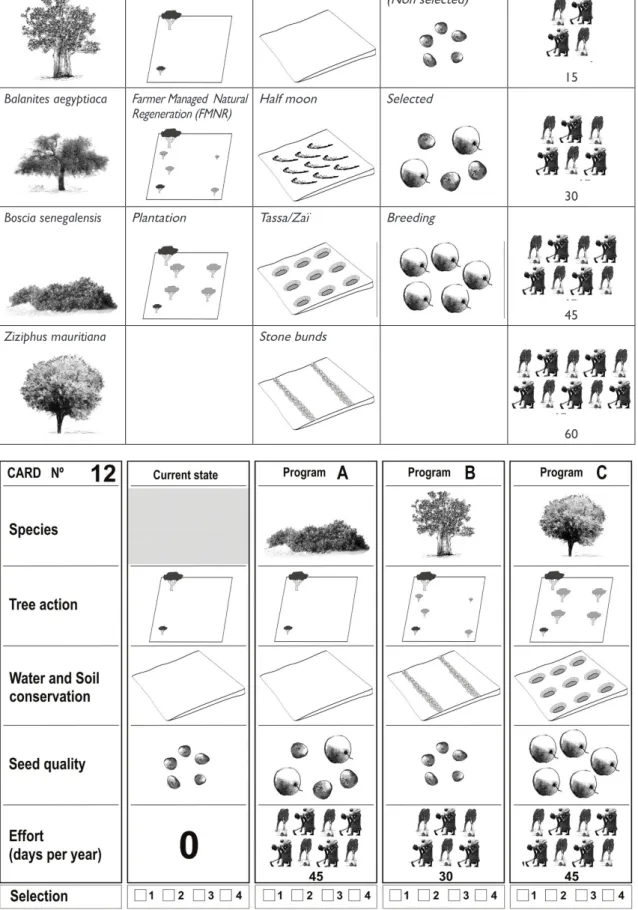
In summary, Table 2 presents the attributes and levels that would be comprised in the program to be evaluated. After having selected the attributes and levels, we create an experimental design that allows obtaining the necessary choice cards to obtain the individual preferences for each element of the program.
Table 2. Attributes comprised in the program and choice levels.
Species Treedensity action
Water and Soil conservation
Seed
quality Work force (days/year)
Adansonia digitata Status quo Status quo Status quo (Non selected)
15
Balanites aegyptiaca Farmer Managed Natural
Regeneration (FMNR) Half moon Selected
30
Boscia senegalensis Plantation Tassa/Zaï Breeding
45
Ziziphus mauritiana Stone bunds
60
The rankings made by the individuals were analyzed according to the econometric model proposed by Beggs et al. (1981) and the random parameters models popularized by Train (2003). The willingness to work (WTW) or to pay (WTP) was calculated considering that the coding of attributes and levels was in the form of effect codes and not as dummies (Lusk, 2003).
The sample
In order to gain a more in-depth understanding of the local population’s preferences for this type of program, we designed an assessment questionnaire targeted at the managers of Niger’s lands (farmers who are owners or who have rights of use). The respondents were offered several scenarios related directly to actions to be developed in the territory. The target population included the families of 40 villages, which were selected according to their different ecological characteristics and agroforestry practices, and they represented the agroecological zones where agriculture has the most importance. All the zones are subject to food vulnerability and need to improve the quality of the environment with respect to health, productivity, and yield, and they are highly affected by climate change. Figure 4 shows the locations of the 40 studied villages. A total of 401 surveys were taken of people likely to participate in and make decisions about the proposal of a conservation and breeding program.
ANALYSIS OF CONSUMER PREFERENCES FOR BAOBAB
Description of the study area and of the baobab market in Niger
The area of study includes the markets of two administrative regions (Maradi and Tillabéri), such that the three agroecological areas (described below) in which the trees and shrubs form a part of the production systems are represented. The Sahelian zone (8% of the surface area) has semi-arid conditions, clearly formed by shrubs or woodland, and the agropastoral system predominates. In the Sahel-Sudanese zone (7% of the surface area), the vegetation consists of a savannah of shrubs or trees with highly varied rates of production. This is an area with high agricultural potential, mainly dryland but also irrigated farming. Livestock is also heavily present in the agroforestry systems. Finally, in the Sudanese zone (1% of the territory), the vegetation is composed of one, more or less continuous, herbaceous layer and a woody layer formed by trees and shrubs that can form small tree stands locally.
In a typical market of Niger, the various products are displayed in sacks, piles, or mounds, and consumers choose what they want and pay for or negotiate the price of the selected product. Vendors of similar products are located in the same zone of markets, which are normally open-air, and they are generally located close to or even right next to each other in rural markets. There is no published information available that contains initial data on the market of baobab products in Niger. Nevertheless, our field work and visits to various markets allowed us to simulate the market. Some peculiarities included the fact that the amounts sold and the corresponding prices varied according to the location of the market and the time of year. It should be pointed out that scales are barely used, because operators prefer using local units of measure (LUM) for their transactions. The LUM used the most is the “tia” (cup) for cereals and agricultural products in general.
different qualities of dry leaves due to the drying process. It is possible to bargain and get a small reduction in the initial price, but prices are more or less fixed in the same season and market. There are also different qualities of pulp, which are distinguished by color and taste, but they are all sold at the same price (so it must be assumed that the measurement container could have a lower capacity for higher qualities).
In Niger, the market for baobab products is in the hands of both men and women. In rural markets, we find that leaves are only sold by women, and in urban markets the sellers of both leaves and pulp are predominantly men. The acquisition of these products by women is not as pronounced as in other countries of the sub-region (such as Benin, for example), and men may purchase the products that women need for cooking. The criterion when taking the surveys was to interview any person (male or female) who might acquire baobab products. The results of the subsequent analysis showed that there were no statistically significant differences by gender with respect to participating in the conservation program.
Image 5. Photos of the baobab products at the market.
Photo: D. Agúndez
Photo: D. Agúndez Photo: S. Bachir
Photo: D. Agúndez
regions identified for the study. It was thus possible to check if there were participation differences due to dependence on the product and/or due to the proximity of the production zone in rural areas or due to the possibility of finding replacement products in urban areas. Two urban markets and four rural markets were selected per region. One region is Maradi, with its two urban markets in the city of Maradi, and the other region is Tillabéri, with two urban markets in Niamey (Figure 5).
Figure 5. Market locations in two different regions of Niger and number of respondents (n). Urban markets of Maradi: 1-Kadro (50), 2-Kassua Mata (50); rural markets of Maradi: 3-Madarounfa (25), 4-Aguié (25), 5-Gabi (25), 6-Dan Saga (25); rural markets of Tillabéri: 7-Banne (25), 8-Simiri (25), 11-Tamou (53), 12-Allambare (27); urban markets of Niamey: 9-Harobanda (49), 10-Katako (53).
Contingent valuation method