
Differentiated instruction improving EFL reading comprehension and autonomy for young learners
71
0
0
Texto completo
(2) 1 Running head: DIFFERENTIATED INSTRUCTION: IMPROVING EFL READGIN COMPREHENSION Differentiated instruction improving EFL reading comprehension and autonomy for young learners. JESSICA IRINA ANILLO BABILONIA. Research Report submitted in fulfillment of the requirements for the degree of Master in English Language Teaching for Self-directed Learning (Online Program). Directed by: CAROLINA RODRIGUEZ BUITRAGO Department of Foreign Languages and Cultures Universidad de La Sabana Chía, Colombia September 2016.
(3) 2 DIFFERENTIATED INSTRUCTION: IMPROVING EFL READING COMPREHENSION.
(4) 3 DIFFERENTIATED INSTRUCTION: IMPROVING EFL READING COMPREHENSION Acknowledgements First, I would like to thank God for blessing me in many ways I also thank my family who is always there to help me in every step: Nelcy, Felipe and Jennifer. Additionally, I would like to express gratitude to Jermaine McDougald ho assigned me the best research counselor, Carolina Rodriguez, her guidance and constant supervision was key to completing this study. Special thanks to my friends, Michelle Garrett, Rossana Arteta and Sandra Torres for their kind encouragement which helped me in completion of this project..
(5) 4 DIFFERENTIATED INSTRUCTION: IMPROVING EFL READING COMPREHENSION Abstract Differentiated instruction: improving EFL reading comprehension and autonomy, is a systematic literature review of papers published between 2010 and 2016, in order to identify evidence based on rigorous research of the relationship between differentiated instruction, EFL reading comprehension, and autonomy in young learners. The research was divided in two phases: the first phase provides a characterization of the selected studies, while the second phase is an analysis of these studies to determine the degree of improvement in EFL reading comprehension and autonomy due to differentiated instruction. The author of this systematic review is an English teacher interested in promoting good practices; therefore, this proposal is an examination of how to empower learners with appropriate learning instruction and strategies to aid them in attending and solving their learning necessities. This project was developed under the systematic literature review paradigm which allows teacher-researchers to locate, appraise and synthesize the best available evidence related to a specific research question in order to provide informative and evidence-based answers. Regarding the findings and conclusions, the teacher-researcher found that differentiated instruction improves EFL reading comprehension and autonomy in young learners, based on only four studies out of more than 1.800 articles. Key words and expressions: Differentiated instruction; differentiated reading instruction; guided reading; EFL reading comprehension; autonomy..
(6) 5 DIFFERENTIATED INSTRUCTION: IMPROVING EFL READING COMPREHENSION Resumen Instrucción diferenciada: para el mejoramiento de la comprensión de lectura y autonomía, es una revisión sistemática de la literatura de estudios entre el 2010 y el 2016, para identificar información rigurosa de la relación entre instrucción diferenciada, comprensión de lectura y autonomía. La primera fase contiene una caracterización de los estudios seleccionados, mientras que la segunda fase del estudio determina el mejoramiento de comprensión de lectura y autonomía gracias a la instrucción diferenciada. La autora de esta revisión bibliográfica es una docente de inglés interesada en promover buenas prácticas pedagógicas. Por tal razón, esta propuesta es una revisión de cómo empoderar a los estudiantes con las herramientas apropiadas de aprendizaje con el fin de ayudarles a satisfacer todas sus necesidades en este proceso. Esta investigación fue desarrollada siguiendo todos los principios de una revisión bibliográfica, puesto que esta permitió a la investigadora localizar, apreciar y sintetizar la mejor evidencia posible relacionada a la pregunta problema, para proveer información y respuestas con evidencias. Con respecto a los hallazgos y conclusiones, el investigador encontró que la instrucción diferenciada mejora la comprensión de lectura y la autonomía en niños pequeños, basado en 4 artículos estudiados sobre más de 1.800 encontrados. Palabras clave y expresiones: instrucción diferenciada, lectura diferenciada, lectura guiada, comprensión de lectura y autonomía..
(7) 6 DIFFERENTIATED INSTRUCTION: IMPROVING EFL READING COMPREHENSION. Tabla de contenido Acknowledgements........................................................................................... 2 Abstract ............................................................................................................ 4 Resumen .......................................................................................................... 5 1.1 Introduction to the study .................................................................................... 8 1.2 Statement of the Problem ................................................................................ 10 1.3 Strategy selected to address the problem ......................................................... 12 1.4 Research question and objectives .................................................................... 13 1.4.1 Specific objectives ......................................................................................... 13. Chapter 2: Theoretical framework ................................................................ 14 2.2.1 Differentiated reading instruction by using guided reading..................... 18 Chapter 3: Research Design .......................................................................... 23 3.1 Introduction: Systematic literature review ...................................................... 23 3.2 Steps to carry out the systematic literature review .......................................... 25 3.2.1 Identifying the review question and writing the protocol .............................. 26 3.2.2 Developing the search strategy and applying inclusion criteria .................... 27 3.2.2.1 Search strategy ............................................................................................. 27 3.2.2.2 Applying inclusion and exclusion criteria .................................................... 29 3.2.1 Data extraction .............................................................................................. 30 3.2.4 Analysis and synthesis ................................................................................... 31 3.2.5 Writing up and editing .................................................................................. 31. Chapter 4: Results and Data Analysis ........................................................... 31.
(8) 7 DIFFERENTIATED INSTRUCTION: IMPROVING EFL READING COMPREHENSION 4.1 Introduction ..................................................................................................... 31 4.2 Results of the database extraction ................................................................... 32 4.3 Characterization of the studies and interpretation of findings ........................ 33 4.3.1. Guided reading ............................................................................................... 37 4.3.2 Differentiating text selection and using flexible grouping .............................. 39 4.4 Research question ............................................................................................ 41 4.4.1 Research question: Does differentiated instruction have an impact on EFL reading comprehension and autonomy of young learners? ..................................... 41. Chapter 5: Conclusions and Pedagogical Implications .................................. 43 5.1 Significance of the results ................................................................................ 43 5.2 Limitations of the present study ...................................................................... 44 5.3 Further research .............................................................................................. 45 5.4 Conclusions ...................................................................................................... 46. References ...................................................................................................... 47 Appendices .................................................................................................... 52. Table of figures Figure 1 Comparing classrooms ............................................................................ 17 Figure 2 A network of processing systems for reading ......................................... 38. Table of tables Table 1 Key steps to formulate the search strategy ............................................... 24.
(9) 8 DIFFERENTIATED INSTRUCTION: IMPROVING EFL READING COMPREHENSION Table 2 PICOT table ............................................................................................... 26 Table 3 Databases available for the seacrh ........................................................... 28 Table 4 Screening and selection tool ..................................................................... 30 Table 5 General information of the included studies ............................................. 33 Table 6 Aims and findings as reported in the stuides ............................................ 35. Chapter 1: Introduction 1.1 Introduction to the study One of the most important goals for a teacher is to understand the needs of every student, and use this information to plan accordingly. Lou et al., (1995) recognized that a current interest in what is called differentiated instruction in terms of learning English as a second language process, is due to the degree of academic diversity that teachers simply can no longer ignore (As cited in Tomlinson, Brighton, Hertberg, Callahan, Moon, Brimijoin, Conover & Reynolds, 2003). Differentiating instruction might be a key component for teachers to succeed in terms of achieving every students’ need. Kosanovich, Ladinsky, Nelson & Torgesen (2007) defined, “differentiated instruction as matching instruction to meet the different needs of learners in a given classroom” (p.1). Every teacher should then structure their teaching method using strategies that differentiated their instruction. Differentiating can be performed in a variety of ways, and if teachers are willing to use this philosophy in their classrooms, they opt for a more effective practice that responds to the needs of diverse learners (Tomlinson, 2000a, 2005, as cited in Subban, 2006)..
(10) 9 DIFFERENTIATED INSTRUCTION: IMPROVING EFL READING COMPREHENSION This systematic review intends to analyze the manner in which research informs our understanding of the impact of differentiated instruction on EFL reading comprehension. One of the main problems identified by the researcher and the core of the present literature review was first grade students’ ability to read and comprehend what is read. Indeed, this systematic review explores recent literature on foreign language learning that investigates differentiated instruction, more specifically the literature on how differentiated instruction improves EFL reading comprehension and fosters autonomy in young learners. A systematic review, as Gough, Oliver & Thomas (2012) proposed, is a review of research literature using systematic and explicit accountable methods (p. 2). Therefore, this systematic review targets recent studies on differentiated instruction, EFL reading comprehension, and autonomy in young learners, it identifies their main theoretical and methodological constructs and analyzes the evidence indicating improvement and learning outcomes of such reports. The present thesis report is divided into five chapters. Chapter 1 outlines the need for analysis, provides a problem statement and problem significance. This chapter also provides the main research question and its objectives. Chapter 2 provides a literature review focusing mainly on differentiated instruction, EFL reading comprehension and autonomy in young learners. Chapter 3 explains the importance of systematic reviews and offers the steps followed to obtain the data for analyses of this particular study. Chapter 4 contains a characterization of the studies obtained and provides an analysis of the findings. Finally, Chapter 5 offers the main conclusions and the pedagogical implications of this.
(11) 10 DIFFERENTIATED INSTRUCTION: IMPROVING EFL READING COMPREHENSION documental research. 1.2 Statement of the Problem The immediate context where the researcher was immersed in throughout the 2014-2015 school year, a private school in Barranquilla, Colombia, generated the research question studied in this systematic literature review. The school follows the principles of the Ignatian pedagogy, which is inspired by Catholic ideologies. This pedagogy “is the ongoing systematic incorporation of methods from a variety of sources which better contribute to the integral intellectual, social, moral and religious formation of the whole person” (Jesuit institute, 2013, p. 4). The Ignatian pedagogy is based on the relationship between experience, reflection and action. Starting with experience, the teacher creates conditions for students to gather and recall the material of their own experience in order to identify what they already understand. Then, the teacher engages students in skills and techniques of reflection. Reflection should be a formative process that shapes the consciousness of students and encourages them to move beyond, to move to actions where students apply what they’ve learned. Nevertheless, in the same context, it is nearly impossible to promote action for every learner when classes have more than 26 students with different learning styles, needs and expectations. Based on my informal observation of 24 hours of Language Arts, the fundamentals of the Ignatian pedagogy are not applied at all and do not lead to a process where the needs of every student can be addressed. Moreover, one of the main problems identified by the researcher and the core of the present literature review is the students’ ability to read and comprehend what is read. In.
(12) 11 DIFFERENTIATED INSTRUCTION: IMPROVING EFL READING COMPREHENSION this school with Catholic ideologies, students in the first grade showed low reading levels. This evidence was gathered through informal classroom observations of students’ performance and their results on a standardized test, that was applied this time to evaluate the reading section. The test STARTERS, the first official exam in the Cambridge English suite for young learners was administered, and only 3 students out of 26 obtained 80% percent (or higher) in the reading section. Additionally, through informal classroom observations another problem identified was that classes were planned for whole group instruction all the time, which makes it challenging to keep all students engaged with the same material. Likewise, Forsten, Grant and Hollas (2002) stated that, a single instructional response to a group of diverse learners often means that the teaching technique will help some while it ignores others (As cited in Ford, p. 2). In addition, there was an incapability of the teacher-researcher to perform a pedagogical implementation, during 2014-2015 school year in the context mentioned, due to contextual limitations and the lack of a population to conduct a pedagogical intervention. Consequently, the author of this systematic literature review became interested in finding out a strategy to engage all students in action and reflection about their own learning, while developing reading comprehension skills. In summary, the purpose of this systematic literature review is to investigate what it suggests about the improvement of EFL reading comprehension and autonomy through the implementation of a strategy to differentiate learning, to students with different styles and levels of proficiency within the same group, and through the identification of the appropriate teaching strategies to be used in Colombia to address the identified problems..
(13) 12 DIFFERENTIATED INSTRUCTION: IMPROVING EFL READING COMPREHENSION 1.3 Strategy selected to address the problem This paper uses a systematic literature review of papers published electronically between 2010 and 2016 in order to identify evidence, based on rigorous research, of the relationship between differentiated instruction, EFL reading comprehension and, autonomy in young learners. Books, book chapters and conference proceedings were not included in this literature review, to follow the purpose of this review, centered on reviewing online databases and academic articles. Plus, the study was focused on recent investigations that are easily found on online databases. The specific resources or number of them, depended on the purpose of the review and the research question (Boland et al., 2014). Given the difficulty of achieving the needs of every student when classes have more than 26 students with different learning styles, needs and expectations, and the lack of reading comprehension showed by students, the preferred strategy to be researched is differentiated instruction to improve EFL reading comprehension. That, for the remainder of this paper, will be described as a type of instruction that might improve EFL reading comprehension and autonomy in young learners. Specifically, this thesis explores a body of research on differentiated instruction, EFL reading comprehension, and autonomy, using a systematic method of literature review that provides specific steps to maximize results on the search of articles, applying categories of exclusion and inclusion, and provides an adequate report on the findings. It proposes a strategy to differentiate learning for students with different styles and levels of proficiency within the same group through the identification of the appropriate teaching procedures..
(14) 13 DIFFERENTIATED INSTRUCTION: IMPROVING EFL READING COMPREHENSION This type of review was selected by the researcher because a systematic review as a Masters’ thesis has some advantages: the researcher is in control of the learning process and the project; the researcher can focus on a topic that he/she would be interested in, the researcher does not have to gain formal ethical approval; the researcher does not have to recruit participants; and, the researcher can gain understanding of a number of different research methodologists (Boland, Cherry & Dickson, 2014), which is beneficial for the researcher of this study. Moreover, systematic reviews are considered the best way to synthesize the findings of several studies investigating the same or similar questions. 1.4 Research question and objectives For the purpose of this study and to conduct the steps of this systematic review, the research question was: Does differentiated instruction have an impact on EFL reading comprehension and autonomy of young learners? 1.4.1 Specific objectives The objectives to achieve in this research are: ● To determine through detailed examination of the proposed literature, the degree of improvement of EFL reading comprehension and autonomy through the implementation of differentiated instruction in young learners. ● To describe relevant aspects of electronic research studies from 2010 and onwards, focused on differentiated instruction as a classroom strategy that might improve EFL reading comprehension and autonomy in young learners. ●. To identify the required teaching procedures in order to promote EFL reading.
(15) 14 DIFFERENTIATED INSTRUCTION: IMPROVING EFL READING COMPREHENSION comprehension and autonomy by using differentiated instruction. ● To analyze and validate the idea that differentiated instruction has an impact on EFL reading comprehension and autonomy in young learners. This chapter provided an account of the study, the statement of the problem, the strategy to address the problem, and the review questions and objectives. It also reported on general characteristics, outlines the objectives, and research questions the researcher wants to address. Chapter 2: Theoretical framework 2.1 Introduction This chapter provides a theoretical overview, general constructs and definitions for the three mentioned areas. This section presents a general outline of the three conceptual areas that frame the present review: differentiated instruction, reading comprehension and autonomy. 2.2 Defining Differentiated Instruction One of the most important goals of teachers is to understand the needs of every student and to integrate them into their instructional planning in order to reach every student. Tomlinson (2014) noted that teachers will do a better job for more students if they address every need, than if teachers assess all students alike, and proposed differentiation as tailored instruction to meet individual needs. Likewise, Tomlinson (2005 as cited in Subban, 2006, p. 240) defines differentiated instruction as a philosophy of teaching that is based on the premise that students learn best when their teachers accommodate the differences in their readiness levels, interests and.
(16) 15 DIFFERENTIATED INSTRUCTION: IMPROVING EFL READING COMPREHENSION learning profiles in their teaching practice. In a differentiated classroom, the teacher is obliged to attend to these differences in order to maximize the learning potential of each student in the classroom (Tomlinson, 2000, as cited in Subban, 2006). Readiness refers to the point of entry of each student (Tomlinson, 2000a). While some students are typically at their grade level, others may be performing at below the level of their peers, and still others may be a year or so ahead, as noted in Subban, 2006, p. 942. Interest refers to a learner’s affinity, curiosity, or passion for a particular topic or skill. Learning profile has to do with the ways in which a learner learns, and according to Tomlinson (2014): “learning profile may be shaped by intelligence preferences, gender, or learning style”. Further, the degree of differentiation may be based on what teachers know about their students’ learning preferences (i.e., intelligences, talents, learning styles), allowing students to choose to work independently, with partners, or as a team; or providing varied work spaces that are conducive to various learning preferences (i.e., quiet work spaces, work spaces with tables instead of desks) (Anderson, 2007, p. 50). According to this idea, although there is not a single plan for what a differentiated instruction classroom should look like. Tomlinson, et al., (2003) & Tomlinson (2014) proposed that a differentiated classroom that effectively responds to the learner’s readiness, interest, and learning profile, should have the following characteristics that are focused on promoting the success of each learner: The learning environment actively supports learners and learning because it has an impact on students’ affective needs and it plays a role in cognition and learning..
(17) 16 DIFFERENTIATED INSTRUCTION: IMPROVING EFL READING COMPREHENSION Teachers who practice differentiation accept as a given that they will need to create a variety of paths toward essential learning goals and to help students identify the paths that work best in achieving success. In a differentiated classroom, teachers carefully fashion curriculum around the essential knowledge, understanding, and skills for each subject. Students should leave the class with a firm grasp of these items, but they won't leave with a sense that they have conquered all there is to know. Assessment in this type of classrooms is diagnostic and ongoing. It provides teachers with day to day data on students’ readiness for particular ideas and skills, their interest, and their approach to learning. In other words, “assessment is today’s means of understanding how to modify tomorrow’s instruction”. (Tomlinson, 2014, p. 373). Likewise, assessment in a differentiated classroom should help teachers understand how to modify their plans to benefit students (Tomlinson, 2014). The teacher in the differentiated classroom thoughtfully uses assessment data to guide modifications to content, process, product or learning environment. Content is what teachers want students to learn from a particular subject; process describes activities designed to ensure that students learn and transfer knowledge; and products are vehicles through which students demonstrate and extend what they have learned. Effectively differentiated instruction is learner centered. Borko et al., (1997) & Palinsar, (1984), proposed that in learner centered classrooms, teachers use a wide variety of instructional strategies and approaches to scaffold learning and to ensure that each student links solidly with the important knowledge necessary to achieve understanding and.
(18) 17 DIFFERENTIATED INSTRUCTION: IMPROVING EFL READING COMPREHENSION power (as cited in Tomlinson et al., 2003). In an effectively differentiated classroom, assessment, instruction, feedback, and grading take into account both group and individual goals and norms, while coaching students to continue developing their own particular capacities as learners and as human beings. The differentiated classroom is built around individuals, various small groups, and the class as a whole. To address the various learning needs that make up the class as a whole, teachers and students work together in a variety of ways. In addition, effective differentiated instruction varies the materials used by individuals and small groups of students in the classroom. Students’ gain is higher when there is a variety of instructional materials for differing instructional groups, rather than when the same materials are used for all groups (Kulik & Kulik, 1991; Lou et al., 1996, as cited in Tomlinson et al., 2003). Taking into account the characteristics of an effectively differentiated classroom, the following figure contrasts some ways in which approaches to teaching may vary in differentiated versus non-differentiated classrooms, suggested by Tomlinson (2014). Figure 1 Comparing classrooms The Traditional Classroom Students differences are often masked or acted upon when problematic. Assessment is most common at the end of learning to see who “got it”. The teacher believes some students are smart and some are not smart and teaches accordingly.. The Differentiated Classroom Students’ differences are valued and studied as a basis for planning. Assessment is ongoing and diagnostic to understand how to make instruction more responsive to learners’ needs. The teacher believes all students have the capacity to succeed and supports that belief through “teaching up” and differentiated instructional plans..
(19) 18 DIFFERENTIATED INSTRUCTION: IMPROVING EFL READING COMPREHENSION Students’ interest is infrequently tapped. Whole-class instruction dominates. Coverage of texts, curriculum guides, or content goals define the limits of instruction. The focus of learning is the mastery of facts or the use of skills out of context. Single option assignments are the norm. Time is relatively inflexible. A single text prevails. The teacher directs students’ behavior. The teacher solves most classroom problems.. Students are frequently guided and supported in making interest-based choices. Many instructional grouping are used. Student readiness, interest, and approach to learning guide instructional plans. Use of essential knowledge and essential skills to achieve or extend essential understanding is the focus of learning. Multi-option assignments are common. Time is used flexibly and in accordance with students’ needs. Multiple materials and other resources are provided. The teacher facilities development of student skills of self-reliance and collaboration. Students help other students and the teacher to solve problems.. Taken from: Tomlinson, 2014 p. 481.. 2.2.1 Differentiated reading instruction by using guided reading There are several strategies to use when differentiating reading instruction. One of them is suggested by Kosanovich et al., (2007), where differentiated instruction should be implemented during the designated block of time for reading instruction. In this model, whole group instruction is provided at first, and then classrooms and instruction are organized in the form of reading centers, which are special places organized in the classroom for students to work in small groups, pairs, or individually. When students are organized by small groups, teachers can work to develop every student’s needs and plan activities according to every group level. Moreover, in small groups, students gain the advantage of interacting with other students, having also the potential for direct and constant contact with the teacher. In.
(20) 19 DIFFERENTIATED INSTRUCTION: IMPROVING EFL READING COMPREHENSION addition, Ford and Opitz (2008) observed that reading instruction in small groups allows the teacher to vary the student membership of the groups and the level of texts used with each group. This might help the teacher-target instruction to better meet the needs of the students in a manner that isn’t as easy to achieve in large-group instruction. Besides, the teacher in a differentiated reading instruction should understand the components of successful reading, be aware of the students’ needs, see kids as individuals, and figure out how to be flexible with activities, time management and resources (Tomlinson, Pressley, & Spear-Swerling, 2014). When teachers work with small groups of students reading at similar instructional levels and providing them with problem-solving support with level-appropriate texts, they are using the strategy of guided reading (Guided Reading, n.d., para. 1). In accordance, Fountas & Pinnell (1996, p. 2) stated that, in guided reading the teacher supports each reader's development of effective strategies for processing novel text at increasingly challenging levels of difficulty Guided reading varies depending on the grade and the reading level of each group, but there are essential components that support all successful guided reading lessons (Guided Reading, n.d.; Fountas & Pinnell, 1996, p.2): •. The teacher assesses the students and forms small, flexible groups,. based on students’ strengths and needs. •. The teacher selects a text at their instructional level that provides some. opportunities for learning, while not being too challenging. •. The students’ levels in each group are similar in their development of a. reading process..
(21) 20 DIFFERENTIATED INSTRUCTION: IMPROVING EFL READING COMPREHENSION •. The process gives children the opportunity to develop as individual readers. while participating as individuals in a socially supported activity (Fountas & Pinnell, 1996). The teacher interacts with students as they read and supports them in ways that help them develop a successful processing system. •. The goal is for the students to read the whole text (or assigned portion). independently and silently after an introduction that supports the readers in the group, and then to discuss the meaning of the text (Guided Reading, n.d, para. 2). •. The focus is on helping the students read increasingly challenging books in a. variety of genres over time and across levels of a text gradient. As Fountas & Pinnell (1996) stated, this gives individual readers the opportunity to develop reading strategies so that they can read increasingly difficult texts independently. •. The teacher groups and regroups students in a dynamic process that involves. the teacher's ongoing observation and assessment of each student (Guided Reading, n.d., para. 2) Fountas & Pinnell, (1996) established the steps for a guided reading lesson as a strategy to differentiate reading instruction. In Fountas & Pinnell’s model, teachers set the purpose for reading, introduce vocabulary, make predictions, talk about the strategies good readers use before reading, while teachers observe students as they read. During reading, teachers guide the students, provide wait time, give prompts or clues as needed by individual students, such as "try that again”. And after reading, teachers strengthen comprehension skills and provide praise for strategies used by students during the reading. As expressed by Fountas & Pinnell (1996), students are invited to talk about the story they.
(22) 21 DIFFERENTIATED INSTRUCTION: IMPROVING EFL READING COMPREHENSION have read and their individual responses are valued by the teacher, and occasionally, children may be invited to extend the text through further discussion or activities such writing, or drama. The steps of a guided reading lesson will vary according to the needs of the students in the flexible group. As teachers become more comfortable planning and leading guided reading lessons, they will also become more skilled in structuring the lesson to best meet their students' needs. 2.3 Reading Comprehension Reading with comprehension means understanding what has been read. It takes practice, time, and patience to develop reading comprehension skills (Carrier, n.d.). It is the result of the interaction between the reader’s prior knowledge, the processes and strategies used to coordinate that interaction, and the textual information employed to meet the text demands (García, 2006; Snow & Sweet, 2003, cited in Gayol, et al., 2014). Reading comprehension strategies are taught in order to help students to internalize (Vygotsky, 1978) the psychological tools of monitoring and controlling their own textual representations. Pearson and Gallagher (Cited in Gutiérrez, Rodríguez, Salmerón, 2014) developed a dynamic model of the teacher’s role while teaching reading comprehension. This model consists of three phases: in the first phase, the students are still incapable of spontaneously using the learning strategies. Here, the teacher helps the students to learn what, how, when and why to use the strategies, by means of modelling and thinking aloud. In the second phase, there is a shared responsibility for doing a task and using the strategies, aided by guided practice and applying scaffolding. And in the third.
(23) 22 DIFFERENTIATED INSTRUCTION: IMPROVING EFL READING COMPREHENSION phase, when the students spontaneously use strategies, the teacher reduces the application of scaffolding in order to foster greater responsibility in using strategies and doing the task. In accordance, teachers might follow this model, while implementing the guided reading strategy with small groups activities support and level-appropriate texts. 2.4 Autonomy in young learners The word autonomy has several meanings. One of them, related to English learners, is the ability to take control of one's own learning (Benson, 2006, p. 22). The key element in definitions of this kind, is the idea that autonomy is an attribute of learners, rather than learning situations (Dickinson, 1987, as cited in Benson, 2006). As Little (1991) affirmed, autonomy in language learning depends on the development and exercise of a capacity for detachment, critical reflection, decision making and independent action (As cited in Benson, 2006). What this means is that, learners do not develop the ability to self-direct their learning simply by being placed in situations where they have no other option, but rather, where they would have the opportunity to choose how or when to do something that is relevant for them to learn. Regarding young learners, they should learn how to act independently and autonomously as well as to learn for themselves and together with others to achieve their goals. As Paul (2012) proposed, to help children move towards self-regulated learning there are certain methods such as the weekly plans, where students have to choose for themselves when they want to work at which assignments (p. 67). Moreover, Serravallo (2010) noted that in a balanced classroom, there are opportunities for students to watch the teacher demonstrate, opportunities for the student to.
(24) 23 DIFFERENTIATED INSTRUCTION: IMPROVING EFL READING COMPREHENSION practice with teacher support, and opportunities to practice independently, offering a bridge to independence. For the purpose of this literature review and related to the context of teaching English, autonomy will be taken, as mentioned before, as the ability to take control of one's own learning (Benson, 2006, p. 22). Chapter 3: Research Design 3.1 Introduction: Systematic literature review A literature review, as Dawidowicz (2010) proposed “is a systematic examination of knowledge available on a topic” (p. 2). This review can be done at all levels of education. It is the explicit and systematic approach that distinguishes systematic reviews from traditional reviews and commentaries (Khan, Kunz, Kleijnen & Antes, 2003). This thesis as mentioned, follows the steps to conduct a systematic literature review. Consequently, Khan et al., (2003); Dawidowicz, (2010); and Boland et al., (2014); agreed that whether a literature review is for an office project, a high school class, or an option for postgraduate students, the same principles will apply to each in order to maximize success, and they strongly recommend that some basic steps should be taken when carrying out a systematic review. The following are the steps that were followed in this study. 1.. Identifying the review question and writing the protocol: This step. refers to the process of identifying and defining the questions that can be answered with the available information in the literature about a topic, and as Dawidowicz (2003) expressed, the answers to those questions will help determine the content of a successful literature review. In other words, this step frames the question and purposes.
(25) 24 DIFFERENTIATED INSTRUCTION: IMPROVING EFL READING COMPREHENSION of the review (Khan, et at., 2003). This is the most important phase in any research project, given that the review question drives all other aspects of the review, just as research questions drive the focus of primary research (Gough et al., 2012). In addition, Boland et al., 2014, suggested the following steps to develop the review question: Identify a topic area of interest; carry out early scoping searches; focus the ideas to define the scope of the review; finalize the review question and develop the inclusion criteria; consider contacting experts in the topic area and, develop a review protocol. 2.. Developing a search strategy and applying inclusion criteria: This. step refers to researching the method by which the research identifies evidence to be included in the review. Namely, in this step the researcher would identify all of the available evidence relevant to the review question. According to Dawidowicz (2003), this is “the process to set a period of time to develop the paper and the type of literature that the specific topic requires” (p. 11). Some of the documents to be reviewed and included in this study are books, articles, book chapters, and studies. In this step, it is also essential to select resources related to the main topic and based on the search with the inclusion and exclusion criteria. As Gough et al., (2012) stated, all researchers have to make decisions about which information or ideas are going to be considered when addressing the research question. The following table establishes the key steps to consider when formulating a search strategy, suggested by Boland et al., (2014). Table 1.
(26) 25 DIFFERENTIATED INSTRUCTION: IMPROVING EFL READING COMPREHENSION Key steps to formulate the search strategy. Step 1 Consider the different type of available information. Step 2 Identify the specific resources for searching. Step 3 Identify the key search terms. Step 4 Outline the plans for minimizing bias. Step 5 Plan how to store and save result of the research. Note Taken from: Boland et al., 2014, p38 .. Furthermore, Gough et al., (2012) advised using a population, intervention, comparator, and time outcome (PICOT) framework to develop and scaffold the research question and start the first attempt to identify the inclusion criteria for the review. 3.. Data extraction: Once the articles for the review have been revised. through the inclusion and exclusion criteria, the researcher, in this step, identifies the data from each paper and summarizes these data. 4.. Analysis and synthesis: Researcher, in this step, summarizes the. information and the evidence obtained from the data extraction, either narratively or through meta-analysis. 5.. Writing up and editing: This step, involves writing up the background,. methods and results, discussing the findings and drawing conclusions from your review. 3.2 Steps to carry out the systematic literature review The following sections present the manner in which this systematic review was.
(27) 26 DIFFERENTIATED INSTRUCTION: IMPROVING EFL READING COMPREHENSION conducted after following the steps explained above. 3.2.1 Identifying the review question and writing the protocol This step refers to the process of identifying and defining the questions that can be answered with the available information in the literature about a topic, and as Dawidowicz (2003) stated, the answers of those questions will help determine the content of a successful literature review. Likewise, based on the PICOT table advised by Gough et al., (2012); the following table describes the selected research question of this review, the key components and its analysis through the PICOT table. Table 2 PICOT table. Research question Population Intervention Comparator Outcomes Time Study design. Does differentiated instruction have an impact on EFL reading comprehension and autonomy of young learners? EFL young learners. Differentiated instruction improving EFL reading comprehension and autonomy. Differentiated instruction in EFL compared with each other or without this instruction. Any positive impact in EFL reading comprehension and autonomy. Reading block Journal articles or systematic literature reviews reports published between 2010 and 2016. Note. Adapted from Gough et al., 2012.. Consequently, establishing the research question and defining the objectives allowed the processes of developing the constructs and searching in this systematic review: the question is established as a casual question, that aims to investigate the effect of one independent variable on two outcome variables (see section 1.4 in this paper)..
(28) 27 DIFFERENTIATED INSTRUCTION: IMPROVING EFL READING COMPREHENSION 3.2.2 Developing the search strategy and applying inclusion criteria Before starting the review, based on the questions and objectives of the literature, the researcher selected the sources, and established the search inclusion and exclusion criteria. Then, extracted the data and summarized the results to answer the question. 3.2.2.1 Search strategy When identifying relevant materials that met the aim of the review, the search in this study was limited to articles published between 2010 and 2016, as suggested by Gough et al., (2012) in the search strategy and screening. This stage involves conducting the search by including the established criteria, that was mainly, conducted electronically. The researcher conducted the search for five months, from April to August 2016 by using databases provided in the library at Universidad de La Sabana (Chía, Colombia). The search was developed in two phases, the first one did not yield enough articles to analyze, so a second search was conducted with synonyms of the concepts. Following the main objective of this systematic review, the first search sets the following combined terms: ●. “Differentiated instruction”. ●. “English as a Foreign Language” OR “English as a Foreign Language for. young learners” ●. “Reading comprehension” or “Reading comprehension in young learners”. OR “Reading comprehension” AND “Young learners”. ●. AND “Autonomy” OR “Autonomy in young learners”.
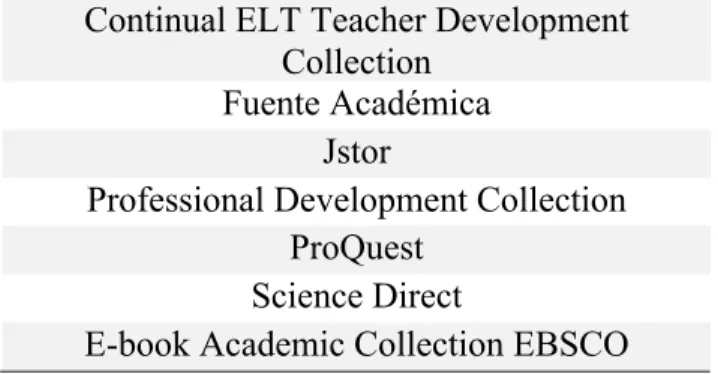
(29) 28 DIFFERENTIATED INSTRUCTION: IMPROVING EFL READING COMPREHENSION The second search sets the following combined terms: ●. “Differentiated reading instruction” OR “Differentiation for reading” OR. “Differentiated reading” ●. “English as a Foreign Language” OR “English as a Foreign Language for. young learners” ●. “Reading comprehension” or “Reading comprehension in young children”. OR “Reading comprehension” AND “Young children”. ●. AND “Autonomy” OR “Autonomy in young children”. The search was conducted by using quotation marks (“”) to limit the terms that were introduced. Boland et al., (2014) recommended combining the key terms by using “AND”, “OR” and “NOT”, also known as Boolean operators, which was done by the researcher. Five terms were selected to be implemented in the search to obtain the data for the systematic review, as suggested by Gough et al., (2012): “Differentiated instruction”, “EFL Reading comprehension”, “Reading comprehension in young learners”, “Autonomy”, and “Autonomy in young learners”. The data were selected in specialized articles that potentially included research in EFL for young learners, differentiated instruction, reading comprehension and, autonomy. The databases presented in Table 3, include peer-reviewed journals focused in the fields of education and foreign languages. Table 3 Databases available for the research Databases Academic Search Premier.
(30) 29 DIFFERENTIATED INSTRUCTION: IMPROVING EFL READING COMPREHENSION Continual ELT Teacher Development Collection Fuente Académica Jstor Professional Development Collection ProQuest Science Direct E-book Academic Collection EBSCO. Finally, the bibliographic software used to save and store the results of the research was RefWorks, which is is a tool that allows the researcher to extract and sort references into relevant groups, and to insert references into the thesis in the reference style required by the academic institution, APA style. The results of the two searches (Appendix A and B) appear in a flow chart that presents the databases (EBSCOhost, Jstor, ProQuest) and the results at every stage of the search when using the different combinations of the terms of this study. These three were the main used databases, because the others suggested repeated links to a search website. 3.2.2.2 Applying inclusion and exclusion criteria The articles for this study needed to address research on differentiated instruction, EFL reading comprehension, and autonomy for young learners, in the context of teaching EFL. Articles that would not potentially refer to teaching English as a foreign language were immediately discarded. Other criteria of inclusion required articles with qualitative, quantitative, or mixed methods. Besides, articles to be included in the review needed to focus only on young learners. Table 4 displays the specific criteria of inclusion and exclusion implemented in this review, following the conditions established before in the PICOT table (See Table 2)..
(31) 30 DIFFERENTIATED INSTRUCTION: IMPROVING EFL READING COMPREHENSION 3.2.1 Data extraction The initial database search provided more than 300 results of differentiated instruction articles only, and the second search provided more than 1.900 articles. Once the number (#) of articles for the review passed through the inclusion/exclusion filter, the information they contained was extracted according to pre-established categories on a data extraction sheet. Nine articles were finally obtained after conducting the two searches within the databases and were assessed by using the screening and selecting tool table (Table 4). After this, retrieved reports that met the inclusion and exclusion criteria were organized in the format name (Appendix C and D). Table 4 Screening and selecting tool Review question: Does differentiated instruction have an impact on EFL reading comprehension and autonomy of young learners? Inclusion criteria (based on PICOT) Population: EFL young learners. Intervention: Differentiated instruction. Comparator: Differentiated instruction in EFL reading comprehension compared with EFL without this instruction. Outcomes: Any positive impact in EFL reading comprehension and autonomy. Study design: Journal articles or systematic literature reviews reports published between 2010 and 2016 Differentiated instruction + EFL Reading Comprehension + Autonomy SCREENING AND SELECTING TOOL Reviewer name: Date: Author name/ Study ID: Year: Title: Journal:.
(32) 31 DIFFERENTIATED INSTRUCTION: IMPROVING EFL READING COMPREHENSION. Population. Include EFL Young learners (1st-2nd grade). Exclude Upper levels EFL learners No EFL learners. Interventions Comparators. Outcomes Study design. Overall decision. Differentiated instruction + EFL reading comprehension + autonomy. Differentiated instruction only Reading comprehension only Autonomy only. Differentiated instruction + EFL reading comprehension Differentiated instruction + autonomy Positive impact in EFL reading comprehension Positive impact in autonomy. Differentiated instruction only Reading comprehension only Autonomy only. Journal articles or systematic reviews from 2010 to 2016. Systematic reviews that report on other subjects, not related to the focus of the study, published out of the period time established. INCLUDED. EXCLUDED. Impact in another topic. Note Adapted from: Boland et al., 2014.. 3.2.4 Analysis and synthesis In this step, the information was analyzed and the evidence obtained was organized in instruments to develop the data extraction. 3.2.5 Writing up and editing The researcher summarized the information and the evidence obtained from the previous data extraction step. Chapter 4: Results and Data Analysis 4.1 Introduction This chapter provides an account of the search procedure applied to the studies.
(33) 32 DIFFERENTIATED INSTRUCTION: IMPROVING EFL READING COMPREHENSION obtained for this review. It also reports on the characteristics of the studies that have been included in this systematic review, and the ones which answered the research question. 4.2 Results of the database extraction Once the first and second searches within the databases were concluded, and according to the pre-established search criteria, approximately more than 1800 reports were excluded as they did not focus on differentiated instruction related to EFL, leaving 9 reports for further consideration. After implementing the final search filter, which was focused on the terms EFL reading comprehension and autonomy, 5 reports were excluded. In this regard a total of 4 articles were selected for the screening of titles and abstracts. From an initial search of 1.900 articles, a characterization of 4 studies of empirical research seems reduced. However, only those 4 articles fully aligned to the selection criteria designed for this study, and allowed the researcher to respond to the research question. The 9 articles were assessed for eligibility by using the inclusion and exclusion criteria designed prior to the search. A full list of the studies with reasons for inclusion and exclusion by using the selecting table are found in Appendixes C and D respectively. The 4 articles chosen for this review are pertinent for the topics in discussion about young learners. In order to provide the analysis of the data, a characterization of the studies was applied to the 4 articles by using a data extraction sheet (Appendix E). This characterization provides a general picture of the different contexts in which research on differentiated instruction has been pursued. Finally, the 4 studies were analyzed to answer the research question proposed for.
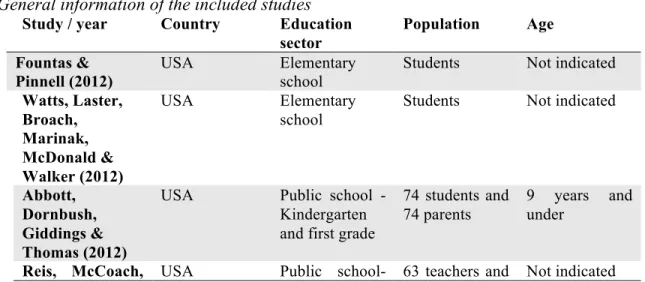
(34) 33 DIFFERENTIATED INSTRUCTION: IMPROVING EFL READING COMPREHENSION this systematic review. The research question aimed to analyze if differentiated instruction had an impact on EFL reading comprehension and autonomy in young learners. 4.3 Characterization of the studies and interpretation of findings The number of entries is significantly reduced when the concepts EFL reading comprehension and autonomy are added to the search. After the search, it can be concluded that differentiated instruction is a relatively new concept in the field of EFL reading comprehension and autonomy, as components that might be improved by this type of instruction. As cited in Tomlinson, et al., (2003), there is a current interest in what is called differentiated instruction in terms of learning English as a second language (Lou et al., 1995). However, in EFL contexts literature is still scarce, which opens doors for Colombian researchers interested in advancing the field. In the following section some general characteristics of the studies are identified, such as years and place of production/publication, population, and educational settings. Table 5 provides general information about the reviewed studies. Table 5 General information of the included studies Study / year Fountas & Pinnell (2012) Watts, Laster, Broach, Marinak, McDonald & Walker (2012) Abbott, Dornbush, Giddings & Thomas (2012) Reis, McCoach,. Country. Education sector Elementary school Elementary school. Population. Age. Students. Not indicated. Students. Not indicated. USA. Public school Kindergarten and first grade. 74 students and 74 parents. 9 years under. USA. Public school-. 63 teachers and. Not indicated. USA USA. and.
(35) 34 DIFFERENTIATED INSTRUCTION: IMPROVING EFL READING COMPREHENSION Little, Muller & Kaninskan (2011). Elementary school. 1.192 students. It is worth noting that there is a predominance of research in North American countries, as 4 of 4 studies were conducted in USA. In this country the notion of differentiated instruction is not new, it has become increasingly important for schools where large numbers of students are not achieving the highest levels of literacy (Fountas & Pinnell, 2012). On the other hand, as revealed by the literature, and because most differentiated instruction regarding language learning has been done in the field of ESL, opportunities arise for other countries to try this approach. Regarding the educational setting in which the reviewed studies were implemented, most of them were conducted in elementary schools rather than in high school or upper levels of instruction, which is convenient for the purpose of this study that focuses on young learners, also raising research opportunities to consider this process in children. Another important aspect of this characterization is that the main focus of these studies was on differentiated reading instruction, that is the basic strategy to be investigated by the researcher as an instruction that improves reading comprehension and autonomy in young learners. With reference to the structure of the studies, the research presented the main theoretical information related to differentiated instruction (Appendix F), including goals of the studies, positive impact, and teachings or strategies suggested by each author. In the majority of the reports, the investigators emphasized the importance of using a strategy to differentiate the instruction and improve reading comprehension. Nonetheless, only one of.
(36) 35 DIFFERENTIATED INSTRUCTION: IMPROVING EFL READING COMPREHENSION the studies mentioned that a truly differentiated classroom fosters students’ autonomy. Fountas & Pinnell (2012) stated that independent self-monitoring behavior and the ability to search for, and use a variety of sources of information in the text, are key to proficiency for accurate reading. The researcher in the current study sees the opportunity to explore the effects of differentiated instruction in students’ decision-making processes regarding their own reading comprehension. The aims of the analyzed articles are located in the following table. The intentions are related in general to some strategies for differentiated instruction. In other words, the aspirations of the reports can be divided into two sets: definition and purposes of differentiated instruction; and the implementation of differentiated instruction to foster reading comprehension. Table 6 Aims and findings as reported in the studies Article / Study Aim. Findings. Fountas & Pinnell (2012). To describe the exciting romance of guided reading, and the reality about the continuous professional learning, needed to ensure that this instructional approach is powerful.. (1) Classrooms are full of a wonderful diversity of children; differentiated instruction is needed to reach all of them. (2) The goal of guided reading is to help students build their reading power—to build a network of strategic actions for processing texts.. Watts, et al.,. To address the concept of differentiation by investigating what it means, the research base supporting it, what it can look like in both primary and intermediate-grade classrooms, and the teacher decision making behind it.. These reports showed that from kindergarten through third grade, students made greater gains in word reading and reading comprehension when their teachers differentiated instruction, using small, flexible learning groups during a center or station time, than did students whose teachers provided high-quality but primarily whole-class instruction. To improve the students overall reading ability by differentiating the instruction.. Through the use of guided reading, small instruction groups, students were provided ample support and time to utilize these new strategies, those increased our students’ overall reading achievement.. (2012). Abbott, Dornbush, Giddings & Thomas (2012).
(37) 36 DIFFERENTIATED INSTRUCTION: IMPROVING EFL READING COMPREHENSION Reis, McCoach, Little, Muller & Kaninskan (2011). To examine the effect of a differentiated, enriched reading program on students' oral reading fluency and comprehension.. This study demonstrated that the use of an enriched reading approach that resulted in high student engagement, coupled with differentiated instruction and a resulting reduction of whole group instruction, was as effective as or more effective than a more traditional whole group basal approach to reading instruction.. Regarding the first set, the works of Fountas & Pinnell (2012), and Watts et al. (2012) stated that differentiated instruction is responsive instruction designed to meet unique individual student needs. More specifically, Watts et al., (2012) address the concept of differentiation by investigating what it means, the research base supporting it, how it can appear in both primary and intermediate-grade classrooms, and the teacher decision making behind it. Similarly, Fountas & Pinnell (2012) established that differentiated instruction is needed to reach the diversity of every child. The second set of aims dealt with the improvement of reading comprehension while differentiating reading instruction. Abbott et al., (2012), for example, tried to improve the students’ overall reading ability by implementing differentiated instruction. Moreover, Reis et al., (2011) demonstrated that an enriched reading method, with differentiated instruction and less whole group instruction, was as effective as or more effective than a traditional whole group basal approach. The articles focused their research on English as a Second language (ESL) and literacy programs but not on English as a Foreign Language literacy programs. Some strategies were established in the articles to differentiate instruction for improving reading comprehension and autonomy. Those strategies are outlined as follows..
(38) 37 DIFFERENTIATED INSTRUCTION: IMPROVING EFL READING COMPREHENSION 4.3.1. Guided reading There is an important difference between implementing parts of a guided reading lesson and using guided reading to bring readers from where they are, to as far as the instruction can carry them in a given school year. The concept of guided reading is the idea that students learn best when they are provided strong instructional support to extend themselves by reading texts that are on the edge of their learning: not too easy but not too hard (Vygotsky, 1978, as cited in Fountas & Pinnell, 2012). Two of the most important procedures about guided reading are the type of books used and the way they are used. Teachers should learn to collect short texts at the levels they need and to use the levels as a guide for putting the right book in the hands of the students. Fountas & Pinnell (2012) suggested the following structure of a guided reading lesson (p. 269): selection of a text (teachers select a text that will be just right to support new learning for the group), introduction to the text (teachers introduce the text to scaffold the reading but leaves some problem solving for readers to do), reading the text (students read the entire text silently, discussion of the text (teachers invite students to discuss the text, guiding the discussion and lifting the student`s comprehension), teaching point (teachers make explicit teaching points, grounded in the text, and directed toward expanding the students´ systems of strategic actions), word work (teachers provide explicit teaching to help students become flexible and efficient in solving words, before they looked for them), and extending understanding optional (students extend their understanding of the text through writing or drawing)..
(39) 38 DIFFERENTIATED INSTRUCTION: IMPROVING EFL READING COMPREHENSION There are some fundamental purposes for guiding the reading instruction. Abbott et al., (2012), listed three of them: meet the varying instructional needs of all the students in the classroom, teach students to read increasingly difficult texts with understanding and fluency, and construct meaning while using problem solving strategies to figure out unfamiliar words that deal with complex sentence structures. In other words, one of the goals of guided reading is to help students build a network of strategic actions for processing texts (Fountas & Pinnell, 2012, p. 272). There are some strategic activities suggested by Fountas & Pinnell, 2012. Figure 2 displays 12 systems of strategic activities, all operating simultaneously in the reader’s head. Figure 2 A network of processing systems for reading. Note Taken from: Fountas & Pinnell, 2012 p. 273..
(40) 39 DIFFERENTIATED INSTRUCTION: IMPROVING EFL READING COMPREHENSION The strategic actions are organized into three categories. The first one is thinking within the text, the activities inside this category allow students to move through the text. Fountas & Pinnell (2012) stated that within these actions, students reconstruct the important information and use it to interpret the next part of the text. The second category is thinking about the text: the activities inside this category allow students to analyze and critique the text. Reading should be far more than looking at individual words and saying them. The last category is thinking beyond the text, and activities inside this category allow students to construct unique meanings through interacting background knowledge and expectation with the meanings the writer expresses. As Fountas & Pinnell (2012) stated, reading is a transition between the text and the reader (p. 273). The strategy of guided reading should be an effective teaching procedure, because through it, readers engage with texts within their control, teachers have the opportunity to see students taking on more challenging texts so that they can grow as readers, using the text gradient, as cited in Fountas & Pinnell (2012), as a “ladder of progress” (Clay, 1991, p. 215). Besides, guided reading provides opportunities for establishing good reading habits and strategies (Iaquinta, 2006, as cited in Abbott et al., 2012). 4.3.2 Differentiating text selection and using flexible grouping Because every child learns differently, and every child is different, the most effective instruction is designed to fit each learner (Connor et al., 2011, as cited in Watts et al., 2012). When differentiation is viewed in this way, the role of the teacher as an informed decision maker is vital. When teachers use material at the appropriate level, the students easily read a.
(41) 40 DIFFERENTIATED INSTRUCTION: IMPROVING EFL READING COMPREHENSION particular text, thus allowing more cognitive energy to be focused on making connections as evidence in shared details from their real lives. Tatum (2011) stated that teachers should teach students how to engage with a text, helping them make connections between the text and their own lives (As cited in Watts et al., 2012, p. 306). In addition, to improve reading comprehension it is important to have a nice balance between texts. Different texts are written with different structures and exposing students to them puts them at a greater position to comprehend a variety of text both in and out of the classroom (Ford & Opitz, 2008, as cited in Abbott et al., 2011). Teachers should also provide opportunities for extensive scaffolding so that all students will be able to independently apply the strategy of making connections to deepen their understanding of the text (Watts et al., 2012). Moreover, in the classroom that features flexible groups with a variety of literacy, tasks need to be designed to meet all the students’ needs. As cited in Abbott et al., (2011) small groups are effective because teaching is focused precisely on what the students need to learn next to move forward (Iaquinta, 2006). For instance, all the above suggested practices by theory, enrich the practices and improve the day to day work of teachers. A suggested by Watts et al., (2012) and Abbott et al., (2012) flexible groups ought to be designed to provide differentiated learning experiences for every student. Groups in which some students, meet several times during the week for practice, whereas other students meet only once or twice, depending on their needs. Differentiating text selection and using flexible grouping ensured that each student received effective small group instruction and had opportunities to engage in worthwhile literacy activities that met their.
(42) 41 DIFFERENTIATED INSTRUCTION: IMPROVING EFL READING COMPREHENSION own particular literacy needs. Besides Watts et al., (2012) explained that for example, the using of different texts and flexible small groups, can differentiate the instruction to improve comprehension for every text and every level. 4.4 Research question After outlining the general characterization of the selected articles, this section provides an answer to the research question. 4.4.1 Research question: Does differentiated instruction have an impact on EFL reading comprehension and autonomy of young learners? As has been previously shown, only four articles found have addressed aspects of implementing differentiated instruction and its relation with reading comprehension and learner autonomy. Two of the articles (Fountas & Pinnell, 2012; and Watts et al., 2012) focused on general definitions and purposes of differentiated instruction and autonomy. In addition, in two more articles (Watts et al., 2012; Abbott et al., 2012), the authors demonstrate a positive impact in reading comprehension due to differentiated instruction. Articles provide examples, teacher’s procedures, and strategies, to follow up this kind of instruction. All the studies displayed that there can be a positive impact in students’ reading comprehension when implementing differentiated instruction in the classroom, rather than whole group instruction. For instance, differentiated instruction has an impact on EFL reading comprehension and the autonomy of young learners. This instruction consists of several strategies. Watts et al., (2012) stated that differentiated instruction has incorporated a variety of strategies. The authors reported some that foster reading comprehension and.
(43) 42 DIFFERENTIATED INSTRUCTION: IMPROVING EFL READING COMPREHENSION autonomy in differentiated instruction environments. For example, Fountas & Pinnell (2012) explained that guided reading is a strategy with an instructional context for supporting each reader’s development of effective strategies for processing novel texts at increasingly challenging levels of difficulty. Within the guided reading strategy, teachers may work with small groups of students, reading at similar instructional levels, and providing them with problem-solving support, with level-appropriate texts (Guided Reading, n.d., para. 1). Differentiated instruction also has an impact on young learners’ autonomy. Fountas & Pinnell (2012) indicated that teachers are learning that accurate word reading is not the only goal: efficient, independent self-monitoring behavior, and the ability to search for and use a variety of sources of information in the text, are key to proficiency. Implementing guided reading not only improves accurate reading but also, build students´ reading power, which means, they build a network of self-action strategies for processing texts. These self-action strategies support the development of students’ autonomy, which is as an attribute of learners, rather than learning situations (Dickinson, 1987, as cited in Benson, 2006). Differentiated instruction, throughout the guided reading strategy, can have an impact on both EFL reading comprehension and autonomy in young learners. Abbott et al., (2012) agree in their study that the implementation of the different reading strategies (guided reading and small instruction groups) improved the targeted students reading comprehension and independence. Similarly, Reis et al., (2011), demonstrated in their results that an enriched reading approach, with differentiated instruction, and less whole.
(44) 43 DIFFERENTIATED INSTRUCTION: IMPROVING EFL READING COMPREHENSION group instruction, was as effective or more effective than a traditional, whole group basal approach. In conclusion, the limited literature identified informs us that differentiated instruction, through the guided reading strategy, can have an impact on EFL reading comprehension and autonomy while working with young learners. The steps of a guided reading lesson will vary according to the needs of the students in the flexible groups. As teachers become more comfortable planning and leading guided reading lessons, they will also become more skilled in structuring the lesson to best meet those students' needs. Chapter 5: Conclusions and Pedagogical Implications 5.1 Significance of the results It is important to recognize that, at the theoretical level, only four articles retrieved in this study provided insights into issues about the positive impact of differentiated instruction on EFL reading comprehension and autonomy. The retrieved literature showed that one of the strategies that might be used to differentiate instruction is guided reading. Indeed, researchers in the field have pointed that some types of instruction were more effective for some students and less effective for others. They stated that in kindergarten through third grade, students made greater gains in word reading and reading comprehension when their teachers differentiated instruction, using small, flexible learning groups during a center or station time, than those students whose teachers provided highquality but primarily whole-class instruction (Watts et al., 2010). The findings of this study not only can be useful for language teachers when designing lesson plans but also for curriculum developers who are interested in.
(45) 44 DIFFERENTIATED INSTRUCTION: IMPROVING EFL READING COMPREHENSION implementing differentiated instruction for English language teaching in EFL contexts. Nevertheless, it is important to take into account that the search of this study did not provide many articles for analysis, in fact, the strategies suggested in the previous chapter may give teachers an incipient idea of how to improve the practices about differentiated instruction and the benefit that comes with it. However, the limited findings in this document should not be taken as a general conclusion for every EFL classroom. Nonetheless, teachers could begin to use some of these strategies. For example,, when differentiating instruction through guided reading and small flexible groups, teachers could improve their practice by assessing students and forming small groups based on students’ strengths and needs, selecting texts at the group's instructional level that provide some opportunities for learning, interacting with students, and giving them the opportunity to develop as individual readers while participating as individuals in a group activity, and then, themselves monitor the results in a structured way. 5.2 Limitations of the present study This literature review intended to include a representative, if not exhaustive, number of studies. Several factors, however, may have contributed to a bias in the results. Firstly, two searches were necessary because it was not easy to find the three constructs combined in one single article. Also, one of the three components that appears less in the articles was autonomy reducing the search results. However, for the purpose of this study and due to the reduced quantity of articles obtained, articles with at least two of the constructs that were obtained in the second search, were analyzed. Another aspect to consider is that only English language articles were examined,.
Figure
Documento similar
SOLOMON (1989): The influence of prior reading instruction on fourth grade students 1 attitudes toward reading according to select national assessment of educa- tional
Special attention is paid to the opportunities to make decisions and solve problems, with the purpose to foster independent, responsible and critical
ABSTRACT: This study examined the effect of classifying vocabulary into parts of speech using Google Drive sheets in order to improve reading comprehension.. Participants were 20
The design, structuring and maintenance of a domestic differentiated value chain for the CN variety, together with income diversification measures and prior improvement on
As previously stated, the Motivation Self-Assessment Questionnaire (Table 1) was used to measure students' level of interest in the subject matter, satisfaction
The aim of this study was to analyze associations between motivational orientation and perceived autonomy support and satisfaction of three basic psychological
The ongoing work of the few joint missions and even more so of the very many Iranian missions has produced hundreds of reports and articles and already a few volumes published
Comparing Spanish and Japanese against the English language we found that both languages have fewer vowel and consonant sounds than in English. In the case of
