
Aligning the supply chain to business strategy Alineando
149
0
0
Texto completo
(2) Aligning the supply chain to business strategy Hernán David Pérez-Arroyave. Table of contents: Foreword ..................................................................................................................................... 10 Section 1: Introduction, literature review and methodology ............................................. 12 1.. Problem Statement .................................................................................................. 13. 2.. Justification.............................................................................................................. 15. 3.. Literature Review.................................................................................................... 15. 4.. Methodology ............................................................................................................ 18. Section 2: Development of “Supply Chain Roadmap TM” ...................................................... 25 5.. Defining Strategy ..................................................................................................... 26. 6.. General vision of the model for characterizing a supply chain ........................... 28. Section 3: Reference “Generic Supply Chain models” ........................................................... 43 7.. Characterization of the supply chain generic models .......................................... 44. 8.. Applicability of the supply chain generic models (SCGM) ................................. 57. Section 4: “Supply Chain Roadmap TM” method application ................................................ 68 9.. Case Analysis ........................................................................................................... 69. 10.. Own Case Analysis .................................................................................................. 90. Section 5: Model validation ..................................................................................................... 109 11.. Model validation .................................................................................................... 110. 12.. Conclusions ............................................................................................................ 125. Section 6: Model & Tools ........................................................................................................ 126 13.. Introduction to “Supply Chain Roadmap” guide .............................................. 127. 14.. Three-step method ................................................................................................ 130. Acknowledgements................................................................................................................... 144 Appendix ................................................................................................................................... 145 A1. Definition of the terms of reference ............................................................................. 145 A2. References ...................................................................................................................... 146. Maestría en Gerencia de Operaciones, Universidad de La Sabana Graduate Certificate in Global Logistics & Supply Chain Management, MIT. 1.
(3) Aligning the supply chain to business strategy Hernán David Pérez-Arroyave. Table of contents (detailed view): Foreword ..................................................................................................................................... 10 Section 1: Introduction, literature review and methodology ............................................. 12 1.. Problem Statement .................................................................................................. 13 1.1 Context ........................................................................................................................... 13 1.2 Research Statement ........................................................................................................ 14 1.3 General Objective .......................................................................................................... 14 1.4 Specific Objectives ........................................................................................................ 14. 2.. Justification.............................................................................................................. 15. 3.. Literature Review.................................................................................................... 15. 4.. Methodology ............................................................................................................ 18 4.1 Selection of the research methodology .......................................................................... 18 4.2 Analytical technique ...................................................................................................... 20 4.3 Applicability of the selected technique .......................................................................... 20 4.4 Verification of design quality......................................................................................... 21 4.5 Stages and methodology ................................................................................................ 22. Section 2: Development of “Supply Chain Roadmap TM” ...................................................... 25 5.. Defining Strategy ..................................................................................................... 26 5.1 What is strategy? ............................................................................................................ 26 5.2 What is an operations strategy?...................................................................................... 27 5.3 From the operations strategy to the supply chain strategy ............................................. 27. 6.. General vision of the model for characterizing a supply chain ........................... 28 6.1 The structure of a supply chain adapts to the business’s environment .......................... 28 6.2 Business Environment = Business Framework .............................................................. 28 6.3 Supply Chain Profile ...................................................................................................... 30 6.4 Supply chain strategy ..................................................................................................... 31 6.5 Supply Chain framework factors ................................................................................... 32 6.6 Supply chain profile ....................................................................................................... 34 6.7 Unique value proposal.................................................................................................... 38 6.8 Winners and Qualifiers: essence of the unique value proposal ...................................... 38 6.9 “Supply Chain Roadmap TM” model .............................................................................. 42. Section 3: Reference “Generic Supply Chain models” ........................................................... 43 7.. Characterization of the supply chain generic models .......................................... 44. Maestría en Gerencia de Operaciones, Universidad de La Sabana Graduate Certificate in Global Logistics & Supply Chain Management, MIT. 2.
(4) Aligning the supply chain to business strategy Hernán David Pérez-Arroyave. 7.1 Fisher’s approach ........................................................................................................... 44 7.2 Lee’s “Uncertainty Framework” .................................................................................... 46 7.3 Lee’s “Triple A Supply Chain” ...................................................................................... 49 7.4 Best Value Supply Chain ............................................................................................... 51 7.5 Gattorna “Dynamics Supply Chain” ............................................................................. 51 7.6 Christopher’s “Global Supply Chain Strategies” .......................................................... 54 7.7 Stavrulaki and Davis ...................................................................................................... 56 8.. Applicability of the supply chain generic models (SCGM) ................................. 57 8.1 A unique set of “Supply Chain Generic Models” .......................................................... 57 8.2 Efficient SCGM ............................................................................................................. 57 8.3 Continuous replenishment SCGM ................................................................................. 59 8.4 Agile SCGM .................................................................................................................. 60 8.5 LeAgile SCGM .............................................................................................................. 62 8.6 Flexible SCGM .............................................................................................................. 62 8.7 Other SCGM .................................................................................................................. 64 8.8 Reference SCGM ........................................................................................................... 64 8.9 Criterias for the Gap Analysis ........................................................................................ 65. Section 4: “Supply Chain Roadmap TM” method application ................................................ 68 9.. Case Analysis ........................................................................................................... 69 9.1 CrocsTM: Revolutionizing an industry’s supply chain model ......................................... 69 9.2 Tamago-Ya of Japan: Delivering lunch boxes to your work ......................................... 75 9.3 Toyota: Demand Chain Management, Scion experience ............................................... 80 9.4 Wills Lifestyle in India................................................................................................... 85. 10.. Own Case Analysis .................................................................................................. 90. 10.1 Applying “Supply Chain Roadmap TM” in your own case ........................................... 90 10.2 First case: FMCG Company........................................................................................ 96 10.3 Second case: Manufacturer of raw materials for textile industry.............................. 102 10.4 Adjusting “Supply Chain Roadmap TM” method........................................................ 107 Section 5: Model validation ..................................................................................................... 109 11.. Model validation .................................................................................................... 110. 11.1 Quality of research design .......................................................................................... 110 11.2 Meta-analysis or iterative triangulation...................................................................... 111 11.3 Own Case results ........................................................................................................ 124 Maestría en Gerencia de Operaciones, Universidad de La Sabana Graduate Certificate in Global Logistics & Supply Chain Management, MIT. 3.
(5) Aligning the supply chain to business strategy Hernán David Pérez-Arroyave. 11.4 Brand and Patent Pending .......................................................................................... 124 11.5 Future work ................................................................................................................ 124 12.. Conclusions ............................................................................................................ 125. Section 6: Model & Tools ........................................................................................................ 126 13.. Introduction to “Supply Chain Roadmap” guide .............................................. 127. 13.1 Several approaches to business strategy .................................................................... 127 13.2 Supply Chain Roadmap approach .............................................................................. 127 13.3 Supply Chain Roadmap model................................................................................... 128 13.4 When/Where to apply Supply Chain Roadmap?........................................................ 129 14.. Three-step method ................................................................................................ 130. 14.1 First step: Supply Chain Assessment ......................................................................... 130 14.2 Second step: Mapping ................................................................................................ 135 14.3 Third step: Gap analysis ............................................................................................. 137 14.4 Key question for the Gap Analysis ............................................................................ 142 14.5 Update and deployment.............................................................................................. 142 Acknowledgements................................................................................................................... 144 Appendix ................................................................................................................................... 145 A1. Definition of the terms of reference ............................................................................. 145 A2. References ...................................................................................................................... 146. Maestría en Gerencia de Operaciones, Universidad de La Sabana Graduate Certificate in Global Logistics & Supply Chain Management, MIT. 4.
(6) Aligning the supply chain to business strategy Hernán David Pérez-Arroyave. List of Figures: Figure 1, Chronological development of Generic Supply Chain ........................................... 15 Figure 2, Cross case synthesis + Meta analysis........................................................................ 20 Figure 3, Conceptual model. ..................................................................................................... 22 Figure 4, Stages and methodology ............................................................................................ 23 Figure 5, Business Framework and Supply Chain Profile ..................................................... 28 Figure 6, Forces governing competition in an industry .......................................................... 29 Figure 7, Business framework forces governing supply chain profile................................... 30 Figure 8, Elements of supply Chain profile ............................................................................. 31 Figure 9, Supply Chain Roadmap model ................................................................................. 31 Figure 10, components of three framework forces.................................................................. 33 Figure 11, Relationship among order cycle, production cycle and order penetration point36 Figure 12, Relationship among framework factors, profile key elements and buffering .... 37 Figure 13, Supply Chain Roadmap profile and framework................................................... 37 Figure 14, Unique Value Proposal ............................................................................................ 38 Figure 15, Winners & Qualifiers = Unique Value Proposal................................................... 38 Figure 16, Unique value proposal levels ................................................................................... 39 Figure 17, “Supply Chain Roadmap TM” “Graphic view” .................................................... 40 Figure 18, “Supply Chain Roadmap TM” model ...................................................................... 42 Figure 19, Lee’s “Generic Supply Chain Models” .................................................................. 46 Figure 20, Christopher’s “Generic Supply Chain Models” ................................................... 54 Figure 21, Comparison of supply chain characteristics,......................................................... 56 Figure 22, Crocs 2007: Supply Chain Roadmap ..................................................................... 71 Figure 23, Tamago-ya 2007: Supply Chain Roadmap ............................................................ 77 Figure 24, Toyota Scion: Supply Chain Roadmap .................................................................. 82 Figure 25, Wills: Supply Chain Roadmap ............................................................................... 87 Figure 26, Steps to apply “Supply Chain Roadmap TM” method in a real case ................... 90 Figure 27, “Supply Chain Roadmap TM” tool .......................................................................... 94 Figure 28, Category B, Omega Company under “Supply Chain Roadmap TM”. ................. 98 Figure 29, Alpha Company under “Supply Chain Roadmap TM”. ...................................... 104 Figure 30, “Three-step method” for applying “Supply Chain Roadmap TM”. ................... 108 Figure 31, Supply Chain Roadmap, prototype 1. .................................................................. 111 Figure 32, Supply Chain Roadmap, prototype 2. .................................................................. 111 Maestría en Gerencia de Operaciones, Universidad de La Sabana Graduate Certificate in Global Logistics & Supply Chain Management, MIT. 5.
(7) Aligning the supply chain to business strategy Hernán David Pérez-Arroyave. Figure 33, Supply Chain Roadmap, prototype 3 –Matrix-. ................................................. 112 Figure 34, Supply Chain Roadmap, prototype 4 – Cross-.................................................... 112 Figure 35, Supply Chain Roadmap, first version .................................................................. 113 Figure 36, Supply Chain Roadmap, second version ............................................................. 114 Figure 37, Supply Chain Roadmap, third version ................................................................ 115 Figure 38, Supply Chain Roadmap, intermediate version ................................................... 116 Figure 39, Supply Chain Roadmap, final version before Omega’s case ............................. 117 Figure 40, Supply Chain Roadmap, final version after cases feedback .............................. 118 Figure 41, Supply Chain Roadmap, final version after cases feedback .............................. 123 Figure 42, Several approaches about strategy ....................................................................... 127 Figure 43, Supply Chain Roadmap model ............................................................................. 128 Figure 44, Scenarios where is applicable Supply Chain Roadmap ..................................... 129 Figure 45, “Supply Chain Roadmap” three –step method. .................................................. 130 Figure 46, “Supply Chain Roadmap” Assessment scope...................................................... 131 Figure 47, First step. ................................................................................................................ 131 Figure 48, Assessment, questionnaire 1: Supply Chain Framework ................................... 132 Figure 49, Assessment, questionnaire 2: Supply Chain Profile ........................................... 133 Figure 50, Assessment, questionnaire 3: Unique Value Proposal. ....................................... 134 Figure 51, Assessment, questionnaire 4: Management focus. .............................................. 135 Figure 52, Second step ............................................................................................................. 135 Figure 53, Mapping tool. ......................................................................................................... 136 Figure 54, Third step. .............................................................................................................. 137 Figure 55, Gap analysis tool or SCGM parallel view............................................................ 138 Figure 56, Gap analysis tool, Dominant Behaviors. .............................................................. 139 Figure 57, Gap analysis tool, Dominant Supply Chain models. ........................................... 140 Figure 58, Gap analysis tool, Gaps definition. ....................................................................... 141 Figure 59, Three-step method’s cycle ..................................................................................... 142. Maestría en Gerencia de Operaciones, Universidad de La Sabana Graduate Certificate in Global Logistics & Supply Chain Management, MIT. 6.
(8) Aligning the supply chain to business strategy Hernán David Pérez-Arroyave. List of Tables: Table 1, Evolution of supply chain design criteria .................................................................. 16 Table 2, Main generic supply chain models ............................................................................. 17 Table 3, Supply chain strategy cases ........................................................................................ 18 Table 4, Methodological framework ........................................................................................ 19 Table 5, Validation of requirements of selected technique..................................................... 21 Table 6, tactical actions to assure research quality ................................................................. 22 Table 7, Business framework factors affecting supply chain strategy .................................. 32 Table 8, Framework forces evaluation ..................................................................................... 34 Table 9, Supply chain profile elements. ................................................................................... 35 Table 10, Supply Chain profile elements focus, according to unique value proposal .......... 39 Table 11, “Supply Chain Roadmap TM” “Parallel-Table” View ........................................... 41 Table 12, Fisher’s Efficient and Responsive Supply Chains. ................................................ 44 Table 13, Fisher’s Efficient and Responsive Supply Chains .................................................. 45 Table 14, Stable vs. evolving supply ......................................................................................... 46 Table 15, Lee’s proposal characterized under “Supply Chain Roadmap TM” model. ......... 48 Table 16, Lee’s “Triple A Supply Chain”. ............................................................................... 49 Table 17, Lee’s “Triple A Supply Chain”, Ketchen’s “Best Value Supply Chain” ............. 50 Table 18, A comparison of best value and traditional supply chains .................................... 51 Table 19, Buying behaviors ....................................................................................................... 52 Table 20, Gattorna’s “Dynamic Supply Chains” .................................................................... 53 Table 21, Christopher’s “Generic Supply Chains” ................................................................. 55 Table 22, Efficient Reference SCGM ....................................................................................... 58 Table 23, Continuous Replenishment Reference SCGM ........................................................ 59 Table 24, Agile Reference SCGM ............................................................................................. 61 Table 25, LeAgile Reference SCGM and Flexible Reference SCGM................................... 63 Table 26, Full view of “Reference SCGM” ............................................................................. 64 Table 27, Crocs 2007: Financial ratios compared with peers ................................................ 72 Table 28, Crocs 2007: gap analysis based on “Reference SCGM” ........................................ 73 Table 29,Tamago-ya 2007: gap analysis based on “Reference SCGM”................................ 78 Table 30, Toyota Scion: gap analysis based on “Reference SCGM”..................................... 83 Table 31, Wills: gap analysis based on “Reference SCGM” .................................................. 88 Table 32, Framework assessment tool ...................................................................................... 91 Maestría en Gerencia de Operaciones, Universidad de La Sabana Graduate Certificate in Global Logistics & Supply Chain Management, MIT. 7.
(9) Aligning the supply chain to business strategy Hernán David Pérez-Arroyave. Table 33, Profile assessment tool .............................................................................................. 92 Table 34, Focus assessment tool ................................................................................................ 93 Table 35, Reference SCGM tool (Gap Analysis) ..................................................................... 95 Table 36, Supply Chain Profile Assessment, Omega Company, Category B ....................... 96 Table 37, Framework Assessment, Omega Company, Category B ....................................... 97 Table 38, Framework Assessment, Omega Company, Category B ....................................... 97 Table 39, Category B, Omega Company gap analysis under “reference SCGM”. .............. 99 Table 40, Supply Chain Profile Assessment, Alpha Company ............................................ 102 Table 41, Supply Chain Framework Assessment, Alpha Company .................................... 103 Table 42, Supply Chain Focus Assessment, Alpha Company .............................................. 103 Table 43, Alpha Company, gap analysis under “reference SCGM”. .................................. 105 Table 44, Adjustments of the model. ...................................................................................... 108 Table 45, Method Validity and Reliability ............................................................................. 110 Table 46, Reference SCGM, first version .............................................................................. 119 Table 47, Reference SCGM, second version .......................................................................... 120 Table 48, Reference SCGM, version before own cases application ..................................... 121 Table 49, Reference SCGM, version before omega case application .................................. 122. Maestría en Gerencia de Operaciones, Universidad de La Sabana Graduate Certificate in Global Logistics & Supply Chain Management, MIT. 8.
(10) Aligning the supply chain to business strategy Hernán David Pérez-Arroyave. “The formulation of great strategies is an art, and it will always remain so. But the description of strategy should not be an art. If people can describe strategy in a more disciplined way, they will increase the likelihood of its successful implementation” Kaplan & Norton. Maestría en Gerencia de Operaciones, Universidad de La Sabana Graduate Certificate in Global Logistics & Supply Chain Management, MIT. 9.
(11) Aligning the supply chain to business strategy Hernán David Pérez-Arroyave. Foreword In a challenging competitive environment, where industrial companies are faced against worldwide and global-scale competitors, proper alignment of functional supply chain strategy with business framework is essential to maintain competitiveness. But a big question appears: How to validate the alignment and relevance of the supply chain functional strategy with respect to the business environment of an industrial organization? This is precisely the value proposition of "Supply Chain Roadmap", a three-step method for understanding, mapping and redesign of your supply chain strategy, assuring linkage with business strategy by understanding market forces and company’s competitive positioning. As is explained by Kaplan & Norton, “The formulation of great strategies is an art, and it will always remain so. But the description of strategy should not be an art. If people can describe strategy in a more disciplined way, they will increase the likelihood of its successful implementation”, this is just the positioning of “Supply Chain Roadmap”, “Supply Chain Roadmap” is not a new type of supply chain strategy, “Supply Chain Roadmap” is a method supported in the most important and recognized theories and practices about supply chain strategy, its contribution resides in the development of a simple and easy method to characterize and identify the relevance of the supply chain strategy with business framework of an organization by a threestep method: Assessment, Map and Rethink. “Supply Chain Roadmap” method is supported in two main pillars, the characterization method and the gap analysis, which compares any supply chain strategy with five reference supply chain models. “Supply Chain Roadmap” is not a quantitative method with a unique or predefined solution, “Supply Chain Roadmap” is a method where supply chain strategy could be gathered and reviewed in a systematic and organized approach supported by several team discussions where is analyzed current supply chain strategy compared against reference supply chain models, in order to define gaps and/or inadequate alignment between supply chain strategy and business strategy. Research was developed by a “Qualitative method”, due that, it was necessary to do extensive reviews (crossed analysis) and iterative refining of the method, which are developed in six sections: Section 1 presents an understanding about difficulties experienced by companies when they are outlining supply chain strategy; a literature review about supply chain strategy, understanding approaches defined by several authors and case studies, finding a gap between current state of the art and industry needs. Finally is proposed a research methodology for defining a new model that allows companies to characterize their supply chain strategy and verify the relevance of supply chain strategy with business framework. Section 2 presents understanding and crossed analysis of current theories about supply chain strategy, based on that, is developed the first pillar of “Supply Chain Roadmap” model, the method to characterize supply chain strategies of an industrial organization. Section 3 develops the second pillar of “Supply Chain Roadmap” model, the Reference “Generic Supply Chain models”, which are obtained after the characterization and crossed Maestría en Gerencia de Operaciones, Universidad de La Sabana Graduate Certificate in Global Logistics & Supply Chain Management, MIT. 10.
(12) Aligning the supply chain to business strategy Hernán David Pérez-Arroyave. analysis of generic supply chain models, proposed by several authors as Fisher, Lee, Gattorna, Christopher. Section 4 applies the “Supply Chain Roadmap” method in four cases developed by other authors, in order to adjust method based on an iterative refining. After that, method is applied in two own developed cases, in order to verify method relevance and adjust method deployment. Section 5 verifies method deduction based on the research methodology defined in Section 2, and presents conclusions. Section 6 presents a “How to apply” method’s guide. Welcome to “Supply Chain Roadmap”!!!. Maestría en Gerencia de Operaciones, Universidad de La Sabana Graduate Certificate in Global Logistics & Supply Chain Management, MIT. 11.
(13) Aligning the supply chain to business strategy Hernán David Pérez-Arroyave. Section 1: Introduction, literature review and methodology Chapters 1 and 2 present an understanding about difficulties experienced by companies when they are outlining supply chain strategy, and based on this opportunity are defined objectives of this project. Chapter 3 presents a literature review about supply chain strategy, understanding approaches defined by several authors and case studies, finding a gap between current state of the art and industry needs. Finally Chapter 4 shows a proposed methodology for defining a new model that allows companies to define their supply chain strategy aligned to business framework.. Maestría en Gerencia de Operaciones, Universidad de La Sabana Graduate Certificate in Global Logistics & Supply Chain Management, MIT. 12.
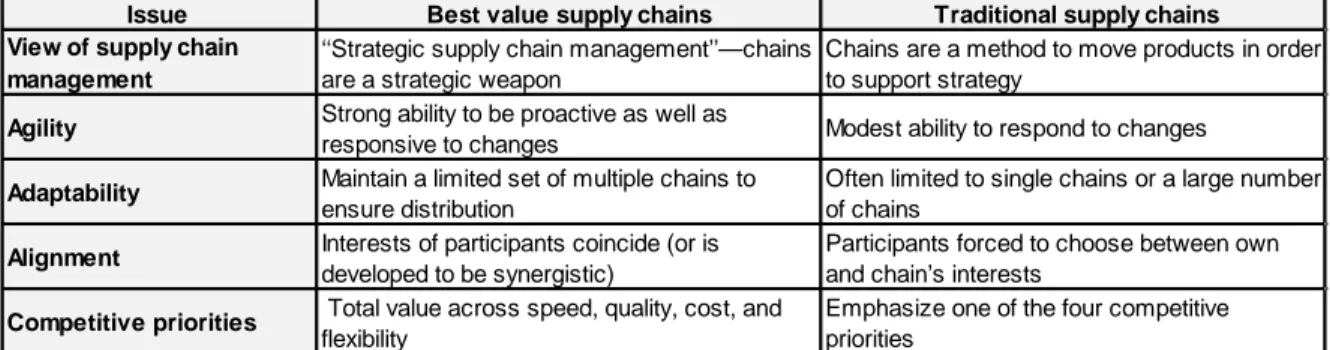
(14) Aligning the supply chain to business strategy Hernán David Pérez-Arroyave. 1. Problem Statement 1.1 Context Competition in diverse industrial and service sectors has increased to unimaginable levels in the past years. Factors such as product technological maturity, a greater number of suppliers in the market, free trade agreements and the advantage of scale that competitors with global reach have, are approximating diverse industrial sectors to product “commoditization” (loss of differentiation). In order to face this challenging competitive environment, organizations are developing several approaches for the business strategy, such as innovation, advantages in costs, the development of value-added services or a mix thereof, among others. At the same time, in the last ten years, the Supply Chain function has become a key element for competing and differentiating itself in the markets given that within its functional role it is in charge of coordinating the flow of information, products and money from the suppliers, passing through the manufacturing and transformation processes to then reaching the Customers, thus strongly affecting the organization’s competitiveness factors such as product cost, working capital, the speed with which it reaches the market and service perception, among others. The importance of these competitiveness factors has garnered the attention of many authors in respect of how one can approach organizations’ supply chain strategy so as to adequately support the business strategy and propose generic supply chain models, in accordance with several criteria. The first approach to these supply chain strategy design models was developed by Hill (1995), who focuses on the manufacturing field and introduces concepts such as order qualifiers and order winners and on which the proposal to define an organization’s manufacturing strategy is based, a work which he later perfected and evolved, but maintaining his approach towards manufacturing (Hill & Hill 2009). The first widely recognized proposal of a segmented model for a supply chain strategy arises from Fisher (1997), who in his classic article “¿What is the right supply chain for your product?” suggests that the design of the supply chain must be being defined with respect to the product type: for functional products he recommends efficient chains and for innovative products he recommends agile chains. Martin Christopher (2000, 2002), adds the lead-time criteria to Fisher’s product type criteria for the selection of the supply chain model by developing a 2x2 matrix and introduces agile, lean and lean agile supply chain concepts. Alongside, Lee (2002) develops the “uncertainty framework” concept, in which starting from the interaction between the uncertainty of demand and the uncertainty of sourcing, he introduces four types of supply chains as follows: Efficient, Agile, Rapid Response and Risk Coverage. Later, Christopher and Gattorna (p 119 2005) define the concept of “alignment of supply chains with the Customer’s needs” and introduce four generic supply chains: Collaborative, Efficient, Rapid Response and Innovative. Gattorna (2006) subsequently evolved this concept to “dynamic supply chains”, where he presents four types of supply chains: Agile, Efficient, Continuous Replenishment and Flexible. In the interim, the “Best Value Supply Chain” (Ketchen & Hult 2007) arises, which is a hybrid approach combining elements of the generic chains proposed previously by other authors. It is important to highlight that the authors use similar terminology for naming the generic supply chains, but develop different concepts in the modus operandi and in these generic chains’ applicability criteria, constituting a first element of confusion, thus making it difficult for supply chain professionals to understand concepts so they can correctly select and align the adequate supply chain model to their own business reality.. Maestría en Gerencia de Operaciones, Universidad de La Sabana Graduate Certificate in Global Logistics & Supply Chain Management, MIT. 13.
(15) Aligning the supply chain to business strategy Hernán David Pérez-Arroyave. In addition, discussions with people responsible for the supply chain function in several industrial sectors and those in professional and teaching practices in areas related to Supply Chain management, have allowed observing other factors contributing to the misalignment of the supply chain strategy with the business environment, in which the following stand out: • Non-existence of a supply chain strategy. • Organizations where the strategy has been defined informally without due technical discipline. • Lack of knowledge in “how to” formulate the functional strategy and its alignment with the business environment. • Gaps between the theoretical concepts of existing methodologies and the real world. From these factors arises the opportunity to develop a method for validating the supply chain functional strategy “geared towards implementation”, in which the needs of the productive sector are satisfied in regards to aligning the theoretical concepts to business realities, concepts that are understandable by people in different levels and with different training, and ensuring ease in implementation and deployment. This project intends to: (1) develop a method for characterizing supply chain framework factors affecting the supply chain strategy of an industrial organization, (2) develop a method for characterizing the supply chain strategy of an industrial organization (3) characterize and define the applicability of supply chain generic models reported in literature and (4) develop a method that identifies the coherence of the supply chain strategy with an organization’s business environment, based on the applicability of supply chain generic models. In this manner, a correct definition and execution of the supply chain strategy is sought in such a manner that will allow ensuring the organization’s key competitive factors such as product cost, working capital, the speed with which it reaches the market and service perception. 1.2 Research Statement How to validate the alignment and relevance of the supply chain functional strategy with respect to the business environment of an industrial organization? 1.3 General Objective Develop a methodology for characterizing and validating the applicability of an industrial organization’s supply chain functional strategy, verifying its alignment to the business environment and identifying the gaps that must be adjusted in order to increase the performance of the key competitive factors. 1.4 Specific Objectives • Develop a method for characterizing an organization’s supply chain functional strategy. o Define the variables that characterize an industrial organization’s supply chain functional strategy. o Define the supply chain framework factors that affect an industrial organization’s supply chain functional strategy. • Develop a method that identifies the coherence of the supply chain functional strategy with the business environment of an organization, based on the applicability of supply chain generic models. o Define the relationship between the supply chain framework factors and the supply chain profile for the supply chain generic models, identifying applicability ranges and events of inconsistency for each generic model.. Maestría en Gerencia de Operaciones, Universidad de La Sabana Graduate Certificate in Global Logistics & Supply Chain Management, MIT. 14.
(16) Aligning the supply chain to business strategy Hernán David Pérez-Arroyave. •. Validate the proposed methodology through the application in at least one real case, with the purpose of analyzing its relevance in industrial organizations.. 2. Justification Despite how new this topic is, literature and the evidence of cases is extensive, with a diversity in criteria and methods, thus generating a lack of consensus among supply chain professionals regarding which method is the most appropriate, reducing the dissemination of existing evaluation models in academia to the productive sector. This project is suitable for industrial organizations, regardless of their size, industrial sector and geographic coverage, given that it will analyze the theory and evidence of existing cases and after some fine-tuning will seek a convergence towards a method “geared towards implementation” for evaluation regarding the relevance of the supply chain strategy with the business’s strategic approach.. 3. Literature Review There are many proposals of supply chain generic models, which are developed starting from Fisher’s concepts (1997), and then evolve in the last fifteen years, as detailed in the timetable presented in Figure 1. Hill. Christopher. Duclos. Lee. Ketchen & Hult. Order Winners / Qualifiers. Lean & Agile Supply Chain. Flexible Supply Chain. Triple A Supply Chain. Best value supply chain. 1995. 1997. 2000. 2002. 2003. 2004. 2005. 2006. 2011. What is the right Supply Chain for your product?. Efficient, Responsive, Risk Hedging & Agile. Efficient, Quick Response & Innovative. Lean, Agile, Fully flexible, Continuous replenishment. Adaptable Supply Chain. Fisher. Lee. ATKearney. Christopher & Gattorna. Christopher. Figure 1, Chronological development of Generic Supply Chain Source: own elaboration. The analysis of contributions made in supply chain strategy allow classifying the principal works in four main currents: (1) Proposals of supply chain generic models, (2) Methodologies for supply chain design, (3) Report of quantitative case studies, (4) Report of qualitative case studies, the latter two being geared towards evaluating success or failure factors in the implementation of supply chain models. In order to select the principal proposals of supply chain generic models, it is necessary to dig deeper in the design criteria of the supply chain strategy, such criteria being grouped in five sets of factors in accordance with their nature, as follows: (1) Product Flow, whereby in accordance with the flow of materials and information on the plant floor, criteria for designing the manufacturing model is designed. (2) Product, business differentiation: models in which the supply chain is designed in accordance with several factors regarding the product’s behavior in the market and the Maestría en Gerencia de Operaciones, Universidad de La Sabana Graduate Certificate in Global Logistics & Supply Chain Management, MIT. 15.
(17) Aligning the supply chain to business strategy Hernán David Pérez-Arroyave. business environment. (3) Supply/demand uncertainty: where internal and external factors involving the stability of supply and demand in the supply chain define the most appropriate generic model. (4) Organizational competencies: models in which the development of functional competencies in the supply chain is promoted in order to create a competitive advantage. (5) Customer Segmentation: where the relative importance and the opening towards Customer collaboration define the generic model to be applied to each group of Customers. (6) Hybrid Models: combine several of the previous dimensions. Table 1 presents a summary of the main contributions in the development of supply chain strategy concepts and the corresponding supply chain generic models. Table 1, Evolution of supply chain design criteria Source: own elaboration Generic name. No apply. Author. Year. Umble & Srikanth. 1990. Hill. 1995. Fisher. 1997. Christopher. 2000. Dinamic Supply Lee Chain. 2002. Christopher & Gattorna. 2005. Gattorna. 2006. Flexible Supply Duclos Chain. 2003. Gunasekaran. 2007. ATKearney. ATKearney. 2004. Lee. 2004. Gattorna. 2008. Ketchen & Hult. 2006. Triple A. Best Value. Adaptable. Christopher. 2011. Criteria for supply chain design Product flow: plants A, V and T Order Winners & Order Qualifiers Product type: Functional or Innovative Product variety, demand uncertainty and volume Uncertainty Framework: Sourcing / demand uncertainty. Representative dimension Product flow Product differentation. Author's original name. They are oriented to operations management.. Product differentation. Efficient / Responsive. Sourcing / demand uncertainty. Lean / Agil / Leagile. Customers segmentation. Customers segmentation. Demand uncertainty and customers relationship Flexibility in business processes Hybrid Customers / product segmentation Agility, Adaptability and Aligment Use segmentación, value proposal, organizational competences Agility, Adaptability and Aligment. Sourcing / demand uncertainty and customers segmentation. Efficient / Responsive / Risk Hedging / Agile Lean / Agile / Fully flexible / Continuous replenishment Lean / Agile / Flexible / Continuous replenishment. Organizational competences. Flexible Supply Chain. Hybrid. Responsive Supply Chain Efficient, Quick Response & Innovative. Sourcing / demand uncertainty. Sourcing / demand uncertainty Organizational competences. Triple A Supply Chain. Hybrid. Triple A Supply Chain revisited. Organizational competences. Best value supply chain. Sourcing / demand uncertainty and organizational Supply Chain Volatility Index competences. Adaptable Supply Chain. From the previous table it is evident that some models have progressively evolved, reason why we have selected the proposals that are currently valid, having decide do six proposals. These proposals for supply chain generic models can be classified according to the number of proposed supply chain generic models, with the following two classifications: (1) Sole model proposals, where the respective author proposes a sole generic model, supported by multiple functional competencies, which level of development is defined with respect to the organization’s competitive environment as well as its business strategy, and (2) Multiple chain model proposals, in which there are several supply chain generic models, which selection depends on the design criteria (representative dimension) applicable to the case being studied. Each generic model defines a typical approximation for the management of processes and the development of some specific supply chain competencies. Table 2 lists the supply chain generic models along with their respective author. The second current in literature is geared towards defining methodologies for selecting the supply chain strategy, which are classified according to the design approach, in: (1). Maestría en Gerencia de Operaciones, Universidad de La Sabana Graduate Certificate in Global Logistics & Supply Chain Management, MIT. 16.
(18) Aligning the supply chain to business strategy Hernán David Pérez-Arroyave. Specific design processes, in which the focus is the preparation of specific designs in accordance with the business situation and the environment of the organization being studied. Table 2, Main generic supply chain models Source: own elaboration. Author Duclos Lee Christopher Ketchen & Hult Christopher AT Kearney. Generic model type Unique and adaptable to each organization Múltiple, acordding to design criterias. Generic supply chain model Flexible Supply Chain Triple A Supply Chain Adaptable Supply Chain Best Value Supply Chain Lean, Agile, Fully flexible, Continuous replenishment Efficient, Quick Response & Innovative. Among these authors, we highlight the following: Hill (1995 and 2009), who developed a stepby-step approach for strategic planning that focuses on operations, Chandra (2007), whose approach is complemented with the use of simulation tools, Schnetzler (2007), who developed the SCDD (Supply Chain Design Decomposition), the Supply Chain 2020 Project (MIT 2006), which develops a strategic planning methodology based on the diagnosis and reformulation of the strategy by means of the “controlled convergence” technique, and finally, the SCOR Method, which standardizes supply chain taxonomy, emphasizing the diagnosis of the situation and how to increase performance through the application of better practices proven by the program’s members. The latter is probably the method with greatest dissemination in the industry and emphasizes the phases for carrying out the dissemination and implementation of the strategy within the organization. (2) Refinement of supply chain generic models, where the supply-chain design for the organization being studied stems from the supply chain generic models. In this group one can highlight the work of Huang(2002), who relates process factors with the generic chains defined by Fisher, and Stavrulaki and Davis (2010), who integrate contributions from Fisher, Lee, Hau and other renowned authors, with concepts regarding the order entry point and the configuration of the productive process, giving a step forward in integrating generic models to practical concepts, thus becoming the closest referent to the objective this project intends to develop, but limiting themselves to developing their methodology under an eminently conceptual approach. The third and fourth currents are geared towards the level of implementation analysis, seeking to understand the reasons why different models succeed or fail, some of them by means of qualitative analysis and others by means of quantitative analysis, among the latter we highlight the works of: (1) Power (2001), who developed the relations between success factors and agile chains, based on a 1994 survey in the Australian industry, (2) Yusuf (2003), who validated the competitiveness of industries operating under agile chains in the United Kingdom, (3) Lo & Power (2010), in which work they validate, by means of a survey in the Australian industry, the relationship of product type with the supply chain model proposed by Fisher, (4) McKone (2009), whose research develops a taxonomic supply chain model based on factors regarding environment, competitive priorities and performance. Finally, there is (5) Li (2009), whose work validates the main factors an agile supply chain requires, through a study conducted on a group of North American companies associated to a university in the United States Midwest. At a qualitative analysis level, several case study reports,. Maestría en Gerencia de Operaciones, Universidad de La Sabana Graduate Certificate in Global Logistics & Supply Chain Management, MIT. 17.
(19) Aligning the supply chain to business strategy Hernán David Pérez-Arroyave. are highlighted, both single organizations and sectorial, some of which are the most representative and applicable for the project’s methodology, are detailed in Table 3: Table 3, Supply chain strategy cases Source: own elaboration.. Author. Companies. Sector. Focus. Sahay (2003) Landel (2003) Bay (2004) Lee (2005) Collin (2006) Nueno (2006) Hoyt (2007) Chopra (2007) Godsell (2010) Wee (2009). Several Bacardi Seagate Toyota Nokia Zara Crocs Wills BAT Ford. India Liquours Electronics Automotive Telecoms Apparels Apparels Apparels FMCG Automotive. Indian Supply Chain Migrating from push to agile Supply chain strategy reconfiguration Business strategy Agile supply chain Agile supply chain Agile supply chain Lean Supply Chain Supply chain strategy reconfiguration Lean Supply Chain Aligning supply chain strategy with business strategy. Koskinen (2009) Paper company. Paper. Literature offers an abundant availability of supply chain generic models, methodologies for selecting the supply chain model and reports of case studies, all of which confirm the opportunity of refining available information and developing a method that unifies the concepts for the characterization and evaluation of the relevance of the supply chain strategy with respect to the business environment, thus contributing with an integrating method, which closest development are: (1) the work of Stavrulaki and Davis (2010), but evolving from the conceptual design to practical development, by means of the contribution of case analysis and the integration of other design concepts and criteria. (2) Martinez and Shulk’s (2006) approach, where supply chain strategy is defined by some “segments” as: the decoupling point, process type, product type and process flow, based on these segments, company may to define alignment between supply chain strategy and business strategy. Despite the model has several variables that are relevant for characterizing a company’s supply chain, the model is too complex, doesn’t have a graphic tool in order to facilitate strategy understanding and deployment and it’s supported in a mathematical framework more than in a managerial model, which is more adequate for understanding and deployment purposes.. 4. Methodology 4.1 Selection of the research methodology The research statement “How to validate the alignment and relevance of the supply chain functional strategy with respect to the business environment of an industrial organization?”, is an open question that guides the development of a conceptual model based on refining existing theories and supported in qualitative research (p 50 Jonker 2010), which is corroborated in accordance with Yin (p 10 2009) and Meredith (p 445 1998), who define that “How”-type research questions are geared towards case analyses, stories or experiments. This is confirmed in the field of Operations Management, according to works developed by: (1) Stuart, who describes that research questions focused on process mapping and the identification of relationships between these variables, must be resolved with research structures based on case analysis (p 422 Stuart 2002), Maestría en Gerencia de Operaciones, Universidad de La Sabana Graduate Certificate in Global Logistics & Supply Chain Management, MIT. 18.
(20) Aligning the supply chain to business strategy Hernán David Pérez-Arroyave. and (2) Voss, who describes the use of cases analyses for developing theories and for refining existing theories, among others (pp 197, Voss, et al. 2002). The development of theoretical models deduced from case analyses is methodologically based on the Grounded Theory, which objective is the development of theories supported by practice (p 84 Jonker 2010), by means of the coding of information gathered in categories, the characterization of said categories and the identification of relationships among the different categories, nonetheless, case analysis has two great limitations: (1) the impossibility of covering a large number of cases due to cost and time limitations, which reduces the possibility of generalizing results (p 355 Lewis 1998) (p 340 Boyer, Swink 1998) and (2) the possibility of bias presented in the researcher (p 104 Jonker) given that it is a qualitative research method, in which the researcher’s interpretation contributes to the development of the theory. Both limitations are corrected with a research method specifically developed for Operations Management (OM), which is based on the Grounded Theory and is called “Iterative Triangulation” (Lewis 1998). This method corrects both limitations in the following manners: (1) a larger number of cases is analyzed, by using cases developed by other authors and (2) systematic iterations are conducted in order to triangulate the data among the literature revision, case analyses and the researcher’s intuition. The use of cases developed by other authors is also mentioned by Yin (2009), who is one of the most cited authors in research methodology geared towards cases analyses. Yin mentions five analytical techniques used for case analyses, the fifth of which he calls “Cross-Case Syntheses”, which “can be applied when individual case studies have been previously carried out as independent research studies (written by different people) or as part of one predesigned study”, likewise he mentions that if there is a large number of individual cases available, the synthesis can incorporate a goal-analysis, as proposed by Lewis (1999). In addition, Yin reports researches he developed based on “cross-case syntheses”. Other authors (Voss, et al. 2002) also mention the use of “case retrospectives” for the development and/or refining of theories in Operations Management, highlighting the possibility of “sampling by theoretical replication”, which is also mentioned by Yin as a key element for developing multiple cases. We can conclude that works geared towards both OM and SCH from Lewis (1998) and Voss (2002), as well as works with a more general orientation from Yin and Lewis (1999), provide relevance to the use of third-party case analyses supported in the goal analysis (Lewis’ iterative triangulation or goal triangulation) for developing and/or refining theories. Table 4 summarizes the project’s general methodological framework, based on the general process proposed by Yin (2009) and enriched with contributions from Lewis (1998, 1999) in regards to analytical techniques. Table 4, Methodological framework Source: own elaboration based on Yin (2009). Form of research question. "How…?". Method. Case study. Case study design. Multiple cases. Analitics strategy. Analitics technics. descriptive framework. (1) Cross case synthesis + (2) Meta analisis. Maestría en Gerencia de Operaciones, Universidad de La Sabana Graduate Certificate in Global Logistics & Supply Chain Management, MIT. 19.
(21) Aligning the supply chain to business strategy Hernán David Pérez-Arroyave. 4.2 Analytical technique The analytical technique selected according to the model proposed by Yin is a combination of “Cross-case Syntheses” and “Meta analysis”, which allow contrasting the analysis of multiple cases developed by other authors with other sources of evidence. As was previously explained, this analytical technique coincides with Lewis’ proposal in “Iterative Triangulation” in some aspects, a technique that Lewis subsequently migrated to a concept with greater scope called “Metatriangulation” (Lewis 1999, personal communication with Lewis 2011), which bases the development of the theoretical models on the iterative refining of the researcher’s deductions on (1) existing literature (2) cross-synthesis of cases previously developed by other researchers regarding the issue being discussed and (3) other sources of data. Based on Lewis and Yin’s contributions, the analytical technique model to be used in the research process is developed, which process is detailed in Figure 2 (adapted from Lewis 1998 and enriched with Yin 2009 concepts).. Figure 2, Cross case synthesis + Meta analysis Source: own elaboration based on Lewis (1998) and Yin (2009).. 4.3 Applicability of the selected technique By means of the systematic iteration of the information sources: (1) Existing theory in literature, (2) Cross-case synthesis, (3) the author’s experience and (4) other sources of evidence, the project intends to: • Develop a method for characterizing an organization’s supply chain functional strategy. • Develop a method that identifies the relevance of the supply chain functional strategy with an organization’s business environment, based on the applicability of supply chain generic models. Maestría en Gerencia de Operaciones, Universidad de La Sabana Graduate Certificate in Global Logistics & Supply Chain Management, MIT. 20.
(22) Aligning the supply chain to business strategy Hernán David Pérez-Arroyave. By crossing the previous objectives with the principles of the selected technique, it can be concluded that: the purpose of the project, the sources of information to be used and the applicability criteria satisfy the methodological requirements, as detailed in Table 5.. Table 5, Validation of requirements of selected technique Source: own elaboration based on Lewis (1998).. "Cross case synthesis + Meta analisis". Research project. Adapted from Lewis (1999), enriched by contributions from Yin (2009). Object. It aims to develop a theoretical model for Refinement of theoretical frameworks characterizing the strategy of the supply chain and identifying gaps with the business framework. Existing theory in the literature. Theories of several authors as Gattorna, Hill, Christopher, Fisher, Hau, and so on., Which are fragmented into multiple investigations and documents.. Information Multiple cases sources. Aplicability criterias. Multiple cases in the literature report the applicability and results of various models of supply chain strategy. Other data sources Case developed by the author. Interpretative non-neutral position, based on their Researcher interpretation experience. (a) there are sufficient cases availables Numerous authors have developed cases and literature in the literature on supply chain strategies (b) need to redefine and / or alignment There are different theories proposed by several of concepts authors to define supply chain models (c) search for the integration of multiple Integrating a model that brings together: fragmented fragmented research theories, author´s contribution and discard (d) search for relationships between conflicting theories and / or disposal of contradictory theories contradictory theories. 4.4 Verification of design quality Yin mentions four tests that are necessary for determining the quality of a case research design: • Validity of the Construction: Questions if there is a relationship and/or subjective effect between the manner in which the researcher has gathered the data sources and has constructed the concepts s/he is trying to study. (Adams 2007). • Internal validity: Define causality relationships, where certain conditions are taken into consideration, other conditions rule. • External validity: Define the domain in which the study’s findings can be generalized. • Reliability: Demonstrate that the operations of a study can be repeated with the same results. In this research, design quality shall be supported by tactical actions detailed in Table 6, which are adapted from Yin (2009). Maestría en Gerencia de Operaciones, Universidad de La Sabana Graduate Certificate in Global Logistics & Supply Chain Management, MIT. 21.
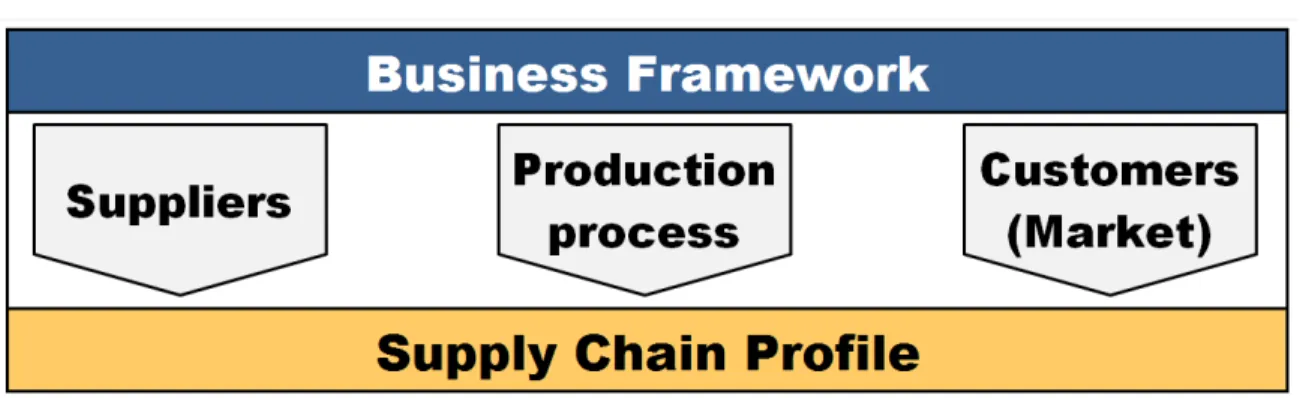
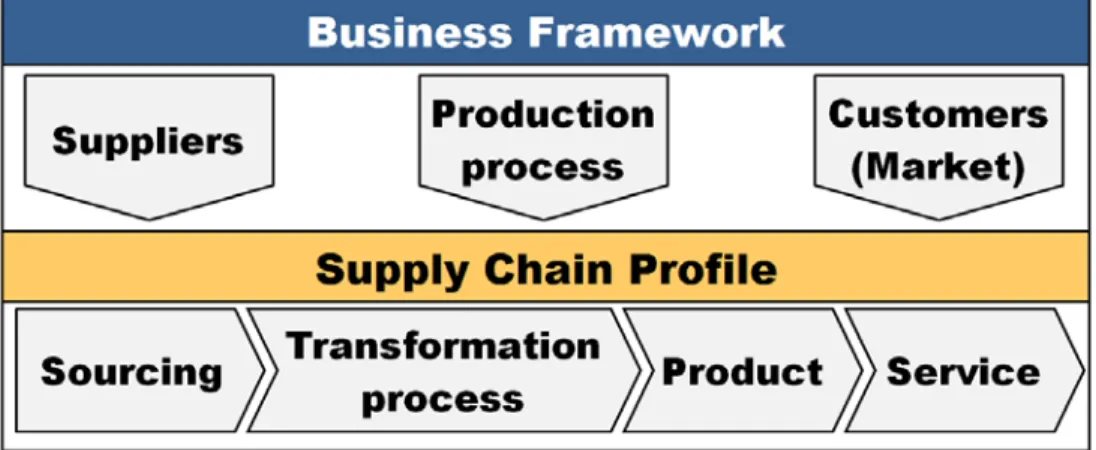
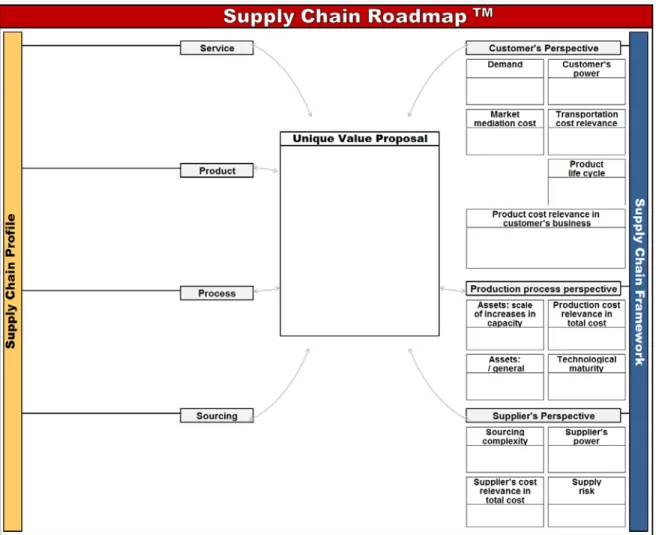
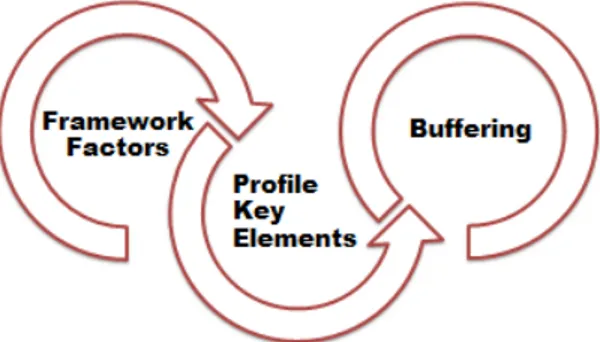
(23) Aligning the supply chain to business strategy Hernán David Pérez-Arroyave. Table 6, tactical actions to assure research quality Source: own elaboration based on Yin (2009).. Test. Construct validity. Internal validity External validity Reliability. Tactics applied to case studies. Phase of research where Application to research the tactic is applied. Multiple sources of evidence Data collection. Selecting multiple casesand theory reported since 1997. Establish chain of evidence. Data collection. Matrix of relationships between questions, data and conclusions. Key informants review the draft case study. Composition. Validation of questions and made some of the authors of the cases. Pattern matching Explantation building Use logic models Use replication logic in multiple case studies Use case sudy protocol. Data analysis Data analysis Data analysis. Cross case synthesis. Own case Data collection. Develop case study database Data collection. Detailed description of the protocol analysis of individual cases and synthesis of cross case Database cross-case synthesis. 4.5 Stages and methodology. Figure 3, Conceptual model. Source: own elaboration.. Maestría en Gerencia de Operaciones, Universidad de La Sabana Graduate Certificate in Global Logistics & Supply Chain Management, MIT. 22.
(24) Aligning the supply chain to business strategy Hernán David Pérez-Arroyave. The conceptual research model is comprised of five elements: (1) the definition of a model for characterizing the environment (Business Framework) and the organization’s supply chain profile (Supply Chain Profile), (2) the characterization of supply chain generic models (SCGM) presented in the literature, (3) definition of the “Reference SCGM”, which will be the “role models” for verification of the alignment between the environment and the supply chain profile of a company´s supply chain), (4) the characterization of the environment and the supply chain profile of the organization being studied, and (5) the search of gaps and opportunities for improving the organization’s supply chain strategy based on the “Reference SCGM”. The conceptual model is presented in Figure 3. The research is developed in five stages one after the other, which are detailed in Figure 4.. Phase. 1. Objective. Identify: (1) business framework factors Model for characterization of that affect performance and design of the supply chain and (2) variables that the business framework and supply characterize the functional supply chain chain profile strategy of an organization.. Cross case analysis. Meta analysis with literature and author's experience.. Suppl y Chain Fr amewor k ®, Suppl y Chain Pr of il e ®. Identify Generic supply chain models reported in the literature, and to characterize the environment and profile of these generic models.. Cross case analysis. Meta analysis with literature and author's. Characterization of generic supply chain. Define applicability ranges of supply chain generic models with the business framework, based on theoretical assumptions of models defined in the literature, author's own experience, and analysis of cases reported in the literature.. Cross case analysis. Meta analysis with literature and author's experience.. Ref er ence Model s. To characterize generic 2 supply chain models, using the model developed in phase 1. 3 Reference Models. 4. Methodology Deliverable. Develop a matrix that identifies the relevance of the functional supply chain Gap Analysis of supply chain strategy of an organization's business Parallel view of reference models model with the business framework. environment, based on the applicability of the generic models of supply chain.. Applying the model to evaluate the Model validation supply chain functional based on case business framework in an analysis. organization and identify gaps.. Application of the model in alignment of 5 strategy with an organization. Ref er ence Model s Mat r iz. Case study.. Figure 4, Stages and methodology Source: own elaboration.. Maestría en Gerencia de Operaciones, Universidad de La Sabana Graduate Certificate in Global Logistics & Supply Chain Management, MIT. 23.
(25) Aligning the supply chain to business strategy Hernán David Pérez-Arroyave. The first four stages are geared towards the development of a method for evaluating the relevance of the supply chain functional strategy to the business environment. Stage (1) Characterization Model, intends to define: (a) the factor of the business’s environment that affect the design of the organization’s supply chain strategy and (b) the variables that define the organization’s supply chain strategy. This stage is conducted by means of a cross analysis of the literature and the author’s experience. This stage defines the first two components of the proposed method: Business Framework and Supply Chain Profile. Stage (2) intends to characterize supply chain generic models in accordance with the model defined in the previous stage and is based on the interpretation of the theoretical models defined by the authors who developed the supply chain generic models. Stage (3) aims to find the applicability zone of the supply chain generic models in the different business environments. In this case, we shall use the cross-case synthesis based on the analysis of cases developed by third parties and literature that is relevant to the topic. This stage defines the third component of the proposed method: Reference Models. Stage (4) develops a matrix that allows evaluating the alignment of the supply chain profile with the business environment, based on the applicability of the supply chain generic models defined in the previous stage, which constitutes the fourth component of the proposed method: Reference models Matrix. Finally, stage (5) develops a case in which the method deduced in the previous stages is applied, with the purpose of validating and making the pertinent adjustments.. Maestría en Gerencia de Operaciones, Universidad de La Sabana Graduate Certificate in Global Logistics & Supply Chain Management, MIT. 24.
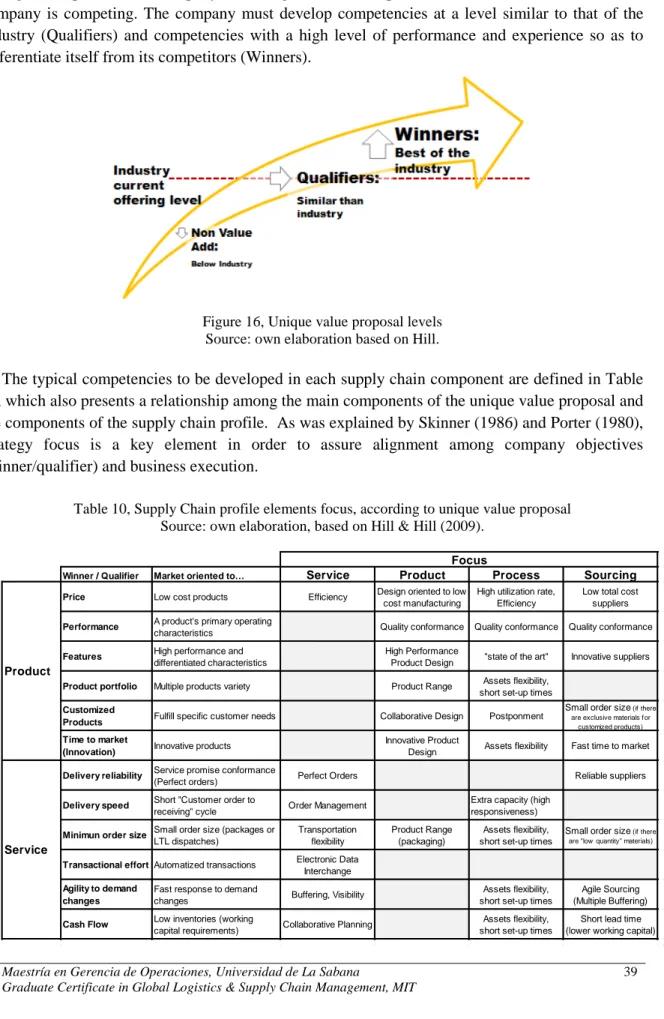
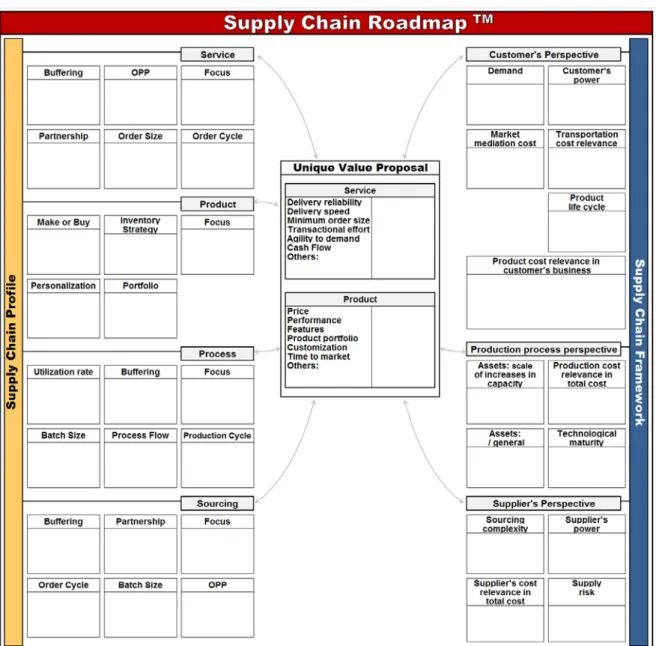
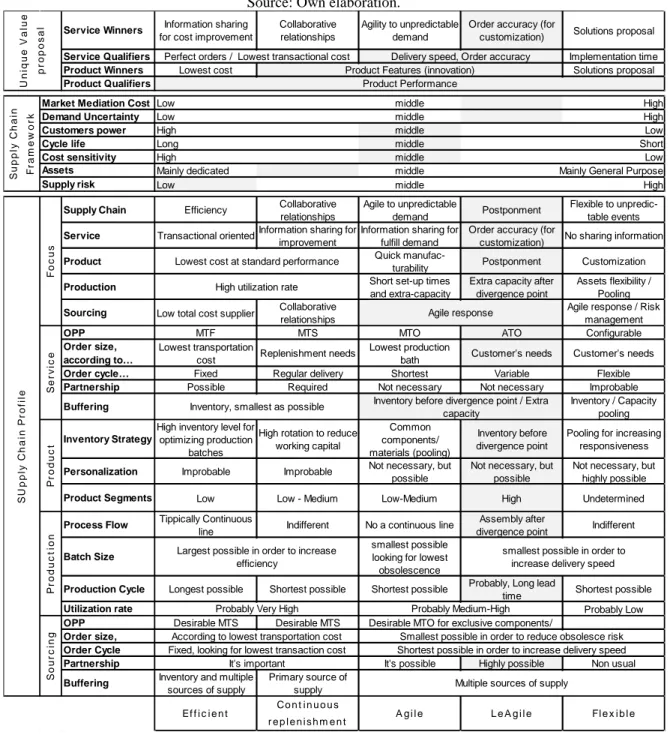
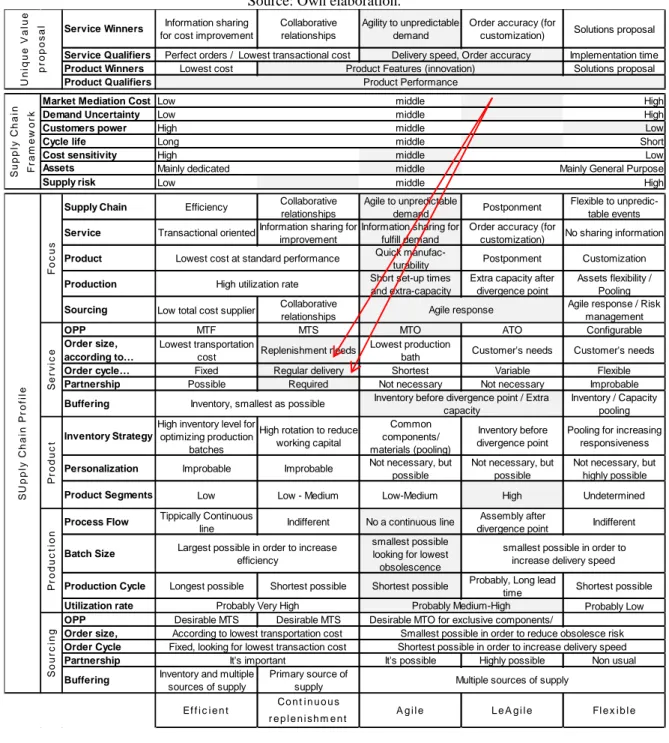
(26) Aligning the supply chain to business strategy Hernán David Pérez-Arroyave. Section 2: Development of “Supply Chain Roadmap TM*” Supply Chain Roadmap provides a method to characterize an organization’s supply chain strategy, in order to identify in a single drawing called “Supply Chain Roadmap TM”: business framework factors, supply chain profile elements and relationship among them. Based on “Supply Chain Roadmap TM”, is possible to identify proper alignment between supply chain strategy and business strategy. “Supply Chain Roadmap TM” could be implemented in several industrial and services sectors, following a general method oriented to gather information about business environment and current organization’s supply chain profile. Chapters 5 and 6 cover theory development of “Supply Chain Roadmap”, chapter 5 presents a brief definition about Strategy concepts applied to Supply Chain, based on contributions of the most important thinkers about strategy in the fields of business, operations and supply chain as Porter, Skinner, Metzer and Hill, among others. In chapter 6 is developed “Supply Chain Roadmap” model, which is based on a core concept “business framework and organization capabilities regulates design and performance of the supply chain”. Units 6.1 to 6.4 are oriented to define relationship between Business framework and Supply Chain profile. Unit 6.5 presents business framework components and how to assess them. Unit 6.6 shows supply chain profile elements and relationship among order cycle, production cycle and order penetration point, which are considered as “key profile elements” because them define critical aspects of a supply chain strategy. Units 6.7 to 6.8, introduce “unique value proposal” concept, which is the core of company’s strategy based on “winners” and “qualifiers” concepts introduced by Hill. To close this section, Unit 6.9, presents a final view of “Supply Chain Roadmap” model and instructions about how to characterize an organization’s supply chain. Section three is focused in applying characterization to “Generic Supply Chain models” and several case studies oriented to find general rules about relationship among business framework and supply chain profile, in order to support alignment analysis between current supply chain strategy and business strategy.. *. “Supply Chain Roadmap TM” is a “service mark” under registration. “Supply Chain Roadmap TM” method and system to characterize and design an organization's supply chain strategy is under patent pending in USPTO and other countries. Maestría en Gerencia de Operaciones, Universidad de La Sabana Graduate Certificate in Global Logistics & Supply Chain Management, MIT. 25.
Figure
+7

Documento similar
Government policy varies between nations and this guidance sets out the need for balanced decision-making about ways of working, and the ongoing safety considerations
The expansionary monetary policy measures have had a negative impact on net interest margins both via the reduction in interest rates and –less powerfully- the flattening of the
Jointly estimate this entry game with several outcome equations (fees/rates, credit limits) for bank accounts, credit cards and lines of credit. Use simulation methods to
In our sample, 2890 deals were issued by less reputable underwriters (i.e. a weighted syndication underwriting reputation share below the share of the 7 th largest underwriter
It ascertains, evaluates or measures the success of the supply chain by assessing the quality of services and goods offered, the competitiveness position of a business firm or
Below, the most important ontologies are presented in the field of business and the Supply Chain, with a focus mainly on the entities (by the term “entity” is meant the
The movements analysed in the report date from 2004 to 2020, in which we can observe different types of acquisitions in which several aspects have been analysed: the price of
The supply chain of the company comprises the on-growing farm, the processing plant, the logistics including warehousing of fish in cold store with
