Vol. 4, No. 2 April-June 2016 pp 117-122
Revista Mexicana de Ortodoncia
CASE REPORT
www.medigraphic.org.mx
INTRODUCTIONCurrently the specialist plays an important role when it comes to overcoming the loss of a first permanent molar by providing the patient solutions through orthodontic treatment. This approach prevents invasive therapies such as dental implants by means of a traditional mesialization of the posterior segment which is less aggressive and more durable
Compensation due to lower fi rst molar absence by means
of traditional unilateral mesialization of the posterior segment
Compensación por ausencia del primer molar inferior mediante
mesialización tradicional del segmento posterior unilateral
Evelyn Carrera Garrido,* Gabriel Sáez Espínola§
* Graduate.
§ Professor.
Orthodontics Department at the Division of Postgraduate Studies and Research of the Faculty of Dentistry, UNAM.
This article can be read in its full version in the following page: http://www.medigraphic.com/ortodoncia
RESUMEN
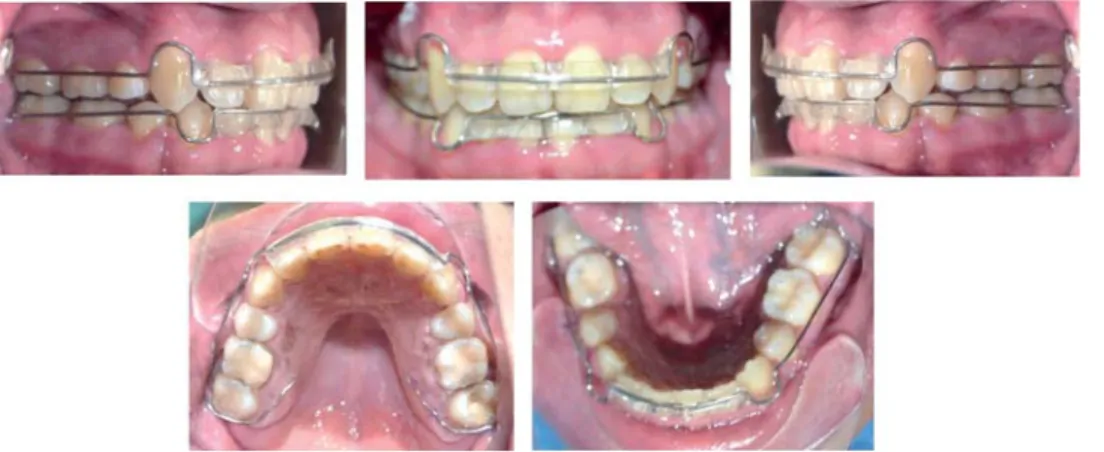
Este caso fue diseñado para compensar la ausencia del primer mo-lar inferior unilateral mediante mesialización tradicional del segmen-to posterior, devolviendo la función y estética perdida. Se realiza el movimiento mesial del segundo y tercer molar inferior, controlando la posición de los incisivos, cuando se requiere perder anclaje para cerrar el espacio del primer molar inferior. De esta manera la mesia-lización tradicional es importante en resolver los problemas que in-volucran la ausencia del primer molar, evitando la inclinación de las piezas adyacentes hacia el espacio, extrusión del molar antagonista o problemas periodontales que inducen una falta de apoyo, estimu-lación e higiene. Se presenta paciente masculino de 31 años de edad, quien a la consulta reporta «mejorar mis dientes chuecos». Al análisis clínico y radiográfi co aparentemente simétrico, dolicoce-fálico, hiperdivergente, clase II esquelética por protrusión maxilar, intraoralmente presenta clase I molar izquierda y derecha no valora-ble; clase canina no valorable ambos lados por desoclusión; apiña-miento moderado en arcada superior e inferior. Se utilizó la técnica de slot 0.022”, el tratamiento ortodóntico consistió en extracciones de primeros premolares superiores e inferiores, se colocó anclaje, alineación-nivelación .014” a .018” NiTi, la mesialización tradicional se realizó con el arco 0.019” × 0.025” SS, a cada lado a la altura de los caninos, lleva dos ansas en forma de ojo de cerradura, su acti-vación fue a través de una ligadura metálica que va desde el hook del molar hasta el ansa distal provocando su apertura 1 milímetro por mes. Una vez que se obtuvo la clase I canina, se colocaron elásticos cortos de arriba abajo para una mejor intercuspidación. Se lograron resultados faciales, dentales, estéticos y funcionales satis-factorios que se mantienen en la fase de retención con retenedor circunferencial superior e inferior.
Key words: Lower fi rst molar absence, mesialization. Palabras clave: Ausencia primer molar inferior, mesialización. ABSTRACT
This case was designed to compensate for the absence of the lower first molar by means of traditional mesialization of the posterior segment thus restoring the lost function and aesthetics. Mesial movement of the lower second and third molars was performed, while controlling the incisor position, when losing anchorage is required. Mesialization of the posterior segment is important to solve problems involving the absence of the fi rst molar since this procedure prevents tilting of adjacent teeth towards the edentulous space, extrusion of the antagonist, or periodontal problems, all of which induce a lack of support, stimulation and hygiene. The case reports a male patient of 31 years of age with a non-contributory medical history, who wished to «improve my crooked teeth». Clinical and radiographic analysis revealed an apparently symmetrical, dolichocephalic, hyperdivergent, skeletal class II due to maxillary protrusion. Intraorally, he presented a non-assessable molar class on the right side and a class I on the left; a non-assessable right and left canine class due to disocclusion and moderate crowding in upper and lower arch. Orthodontic treatment consisted in upper and lower fi rst premolar extractions; anchorage and 0.022” Roth fi xed appliances alignment and leveling was performed with the following archwire sequence: 0.014”-0.018” NiTi. For space closure, a 0.017” x 0.025” SS double keyhole loop archwire with Suzuki ligature was used. The segments were anchored for mesialization of teeth #47-48, using bilateral class II elastics; second order bends were done for tooth #47 to parallelize the roots and short up and down elastics were placed for better intercuspation. Satisfactory facial, dental, aesthetic and functional results were obtained. In the retention phase, an upper and lower circumferential retainer were used.
www.medigraphic.org.mx
be carefully considered the quality of the remaining alveolar bone in the edentulous space. The space should be adequate in a bucco-lingual dimension of the alveolar ridge for placing the new molar and there should be no periodontal defects in the teeth adjacent to the gap.2
The diagnosis and treatment plan, determine if the molars are maintained in their position or moved mesially. Alternatives that should be considered to perform traditional mesialization are: age of the patient, position occupied by the tooth, bone quality and quantity, status of the posterior segment, stability, inclination, torsion and rotation.3
Little and Reidel (1990) stated that traditional mesialization as an alternative in orthodontic treatment will depend on an adequate biomechanical system to achieve correct posterior intercuspation and few facial changes.4
According to the authors the magnitude of the applied force in traditional mesialization of the posterior segment should be continuous and controlled. A closing loop supplies acontinuous and controlled force that induces dental movement of approximately 1 millimeter per month without allowing it to exceed 2 millimeters, so that the movement ceases if the patient does not attend his or her monthly appointment. This closing loop must provide an ideal force with a 1.5 mm activation and must maintain a signifi cant portion of it at least until 0.5 mm are achieved.5,6
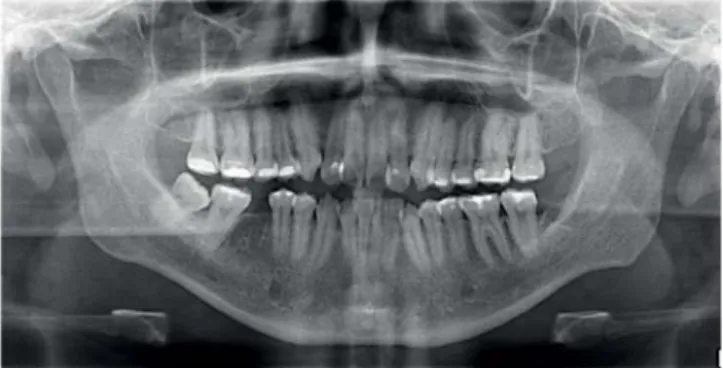
the extraoral assessment a dolichofacial biotype was observed as well as a lower dental midline deviated 2 mm to the left in relation to the facial; vertical growth, convex profi le and good lip contact. In the intraoral assessment an upper dentoalveolar discrepancy of -8 mm and a lower of -7 mm was noted; 1 mm overbite and 3 mm overjet, non-assessable left and right canine class due to disocclussion. The molar relationship was class I on the left side and non-assessable on the right due to fi rst molar absence
(Figures 1 to 4).
In this case, the continuous archwire with closing loops or double keyhole loops method was used. It consists of a stainless steel archwire that has two closing loops on each side for performing sagittal movements in the posterior segment with the purpose of closing spaces created by extractions. For this patient, a 0.022” slot technique was used/ with a 0.019” x 0.025” SS archwire. On each side of the canines two keyhole-shaped loops were made on the archwire. When this archwire is in place, the loops must be mesially and distally equidistant from the bracket of each canine. The archwire was placed once the upper and lower archeswere aligned, leveled and with good torque expression. Activation was through a wire ligature tied from the molar hook to the distal loop, causing it to open 1 millimeter. Once canine class I was obtained short up and down elastics were placed for better intercuspation
(Figure 5).
Figure 1.
Initial facial assessment: A. frontal,
B. smile, C. profi le.
w
w
w
w
w
w
w
w
w
w
w
w
w
w
w
w
w
w
w
w
w
w
w
w
w
w
w
w
w
w
w
w
w
w
w
w
w
w
w
w
w
w
w
w
w
w
w
w
w
w
w
w
w
w
w
w
w
w
w
w
w
w
w
w
w
w
w
w
w
w
w
w
w
w
w
w
w
w
w
w
w
w
w
w
w
w
w
w
w
w
w
w
w
w
w
w
w
w
w
w
w
w
w
w
w
w
w
w
w
w
w
w
w
w
w
w
w
w
w
w
w
w
w
w
w
w
w
w
w
w
w
w
w
w
w
w
w
w
w
w
w
w
w
w
w
w
w
w
w
w
w
w
w
w
w
w
w
w
w
w
w
w
w
w
w
w
w
w
w
w
w
w
w
w
w
w
w
w
w
w
w
w
w
w
w
w
w
w
w
w
w
w
w
w
w
w
w
w
w
w
w
w
w
w
w
w
w
w
w
w
w
w
w
w
w
w
w
w
w
w
w
w
w
w
w
w
w
w
w
w
w
w
w
w
w
w
w
w
w
w
w
w
w
w
w
w
w
w
w
w
w
w
w
w
w
w
w
w
w
w
w
w
w
w
w
w
w
w
w
w
w
w
w
w
w
w
w
w
w
w
w
w
w
w
w
w
w
w
w
w
w
w
w
w
w
w
w
w
w
w
w
w
w
w
w
w
w
w
w
w
w
w
w
w
w
w
w
w
w
w
w
w
w
w
w
w
w
w
w
w
w
w
w
ww
w
w
w
w
w
w
w
w
w
w
w
w
w
w
w
w
w
w
w
w
w
w
w
w
w
w
w
w
w
w
w
w
w
w
w
w
w
w
w
w
w
w
w
w
w
w
w
w
w
w
w
w
w
w
w
w
w
w
w
w
w
w
w
w
w
w
w
w
w
w
w
w
w
w
w
w
w
w
w
w
w
w
w
w
w
w
w
w
w
w
w
w
w
w
w
w
w
w
w
w
w
w
w
w
w
w
w
w
w
w
w
w
w
w
w
w
w
w
w
w
w
w
w
w
w
w
w
w
w
w
w
w
w
w
w
w
w
w
w
w
w
w
w
w
w
w
w
w
w
w
w
w
w
w
w
w
w
w
w
w
w
w
w
w
w
w
w
w
w
w
w
w
w
w
w
w
w
w
w
w
w
w
w
w
w
w
w
w
w
w
w
w
w
w
w
w
w
w
w
w
w
w
w
w
w
w
w
w
w
w
w
w
w
w
w
w
w
w
w
w
w
w
w
w
w
w
w
w
w
w
w
w
w
w
w
w
w
w
w
w
w
w
w
w
w
w
w
w
w
w
w
w
w
w
w
w
w
w
w
w
w
w
w
w
w
w
w
w
w
w
w
w
w
w
w
w
w
w
w
w
w
w
w
w
w
w
w
w
w
w
w
w
w
w
w
w
w
w
w
w
w
w
w
w
w
w
w
w
w
w
w
w
w
w
w
w
w
w
w
w
w
w
w
w
w
w
w
w
w
w.
w
w
w
w
w
w
w
w
w
w
w
w
w
w
w
w
w
w
w
w
w
w
w
w
w
w
w
w
w
w
w
w
w
w
w
w
w
w
w
w
w
w
w
w
w
w
w
w
w
w
w
w
w
w
w
w
w
w
w
w
w
w
w
w
w
w
w
w
w
w
w
w
w
w
w
w
w
w
w
w
w
w
w
w
w
w
w
w
w
w
w
w
w
w
w
w
w
w
w
w
w
w
w
w
w
w
w
w
w
w
w
w
w
w
w
w
w
w
w
w
w
w
w
w
w
w
w
w
w
w
w
w
w
w
w
w
w
w
w
w
w
w
w
w
w
w
w
w
w
w
w
w
w
w
.
.
.
.
.
.
.
.
.
.
.
.
.
.
.
.
.
.
.
.
.
.
.
.
.
.
.
.
.
.
.
m
m
m
m
m
m
m
m
m
m
m
m
m
m
m
m
m
m
m
m
m
m
m
m
m
m
m
m
m
m
m
m
m
m
m
m
m
m
m
m
m
m
m
m
m
m
m
m
m
m
m
m
m
m
m
m
m
m
m
m
m
m
m
m
m
m
m
m
m
m
m
m
m
m
m
m
m
m
m
m
m
m
m
m
m
m
m
m
m
m
m
m
m
m
m
me
m
m
m
m
m
m
m
m
m
m
m
m
m
m
m
m
m
m
m
m
m
m
m
m
m
m
m
m
m
m
m
m
m
m
m
m
m
m
m
m
m
m
m
m
m
m
m
m
m
m
m
m
m
m
m
m
m
m
m
m
m
m
m
m
m
m
m
m
m
m
m
m
m
m
m
m
m
m
m
m
m
m
m
m
m
m
m
m
m
m
m
m
m
m
m
m
m
m
m
m
m
m
m
m
m
m
m
m
m
m
m
m
m
m
m
m
m
m
m
m
m
m
m
m
m
m
m
m
m
m
m
m
m
m
m
m
m
m
m
m
m
m
m
m
m
m
m
m
m
m
m
m
m
m
m
m
m
m
m
m
m
m
m
m
m
m
m
m
m
m
m
m
m
m
m
m
m
m
m
m
m
m
m
m
m
m
m
m
m
m
m
m
m
m
m
m
m
m
m
m
m
m
e
e
e
e
e
e
e
e
e
e
e
e
e
e
e
e
e
e
e
e
ed
e
e
e
e
e
e
e
e
e
e
e
e
e
e
e
e
e
e
e
e
e
e
e
e
e
d
d
d
di
i
i
i
i
i
i
i
g
g
gr
r
r
r
r
r
r
r
r
r
r
r
r
r
r
r
r
ra
r
r
r
r
r
r
r
r
r
r
r
r
r
r
r
r
r
r
r
r
r
r
r
a
a
a
a
a
a
a
a
a
a
a
a
a
a
a
a
a
a
a
a
a
a
a
a
a
a
a
a
a
a
a
a
a
a
a
a
a
a
a
a
a
a
a
a
a
a
a
a
a
a
ap
a
a
a
a
a
a
a
a
a
a
a
a
a
a
a
a
a
a
a
a
a
a
a
a
a
a
a
a
a
a
a
a
a
a
a
a
a
a
a
a
a
a
a
a
a
a
a
a
a
a
a
a
a
a
a
a
a
a
a
a
a
a
a
a
a
a
a
a
a
a
a
a
a
a
a
a
a
a
a
a
a
a
a
a
a
a
a
a
a
a
a
a
a
a
p
p
p
p
p
p
p
p
p
p
p
p
p
p
p
p
p
p
p
p
p
p
p
p
p
p
p
p
p
p
p
p
p
p
p
ph
p
p
p
p
p
p
p
p
p
p
p
p
p
p
p
p
p
p
p
p
p
p
p
p
p
p
p
p
p
p
p
p
p
p
p
p
p
p
p
p
p
p
p
p
p
p
p
p
p
p
p
p
p
p
p
p
p
p
p
p
p
p
p
p
p
p
p
p
p
p
p
p
p
p
p
p
p
p
p
p
p
p
p
p
p
p
p
p
p
p
p
p
p
p
h
h
h
h
h
h
h
h
h
h
h
h
h
h
h
h
h
h
h
h
h
h
h
h
h
h
h
hh
h
h
hi
h
h
h
h
h
h
h
h
h
h
h
h
h
h
h
h
h
h
h
h
h
h
h
h
h
h
h
h
h
h
h
h
h
h
h
h
h
h
h
h
h
h
h
h
h
h
h
h
h
h
h
h
h
h
h
h
h
h
h
h
h
h
h
h
h
h
h
h
h
h
h
h
h
h
h
h
h
h
h
h
h
h
h
i
i
i
i
i
i
i
i
i
i
i
i
i
i
i
i
i
i
i
i
i
i
i
i
i
i
i
i
i
ic
i
i
i
i
i
i
i
i
i
i
i
i
i
i
i
i
i
i
i
i
i
i
i
i
i
i
i
i
i
i
i
i
i
c
c
c
c
c
c
c
c
c
c
c
c
c
c
c
c
c
c
c
c
c
c
c.
c
c
c
c
c
c
c
c
c
c
c
c
c
c
c
c
c
c
c
c
c
c
c
c
c
c
c
c
c
c
c
c
c
c
c
c
c
c
c
c
c
c
c
c
c
c
c
c
c
c
c
c
c
c
c
c
c
c
c
c
c
c
.
.o
.
.
.
o
o
o
o
o
o
o
o
o
o
o
o
o
o
o
o
o
o
o
o
o
o
o
o
o
o
o
o
o
o
o
o
o
o
o
o
or
o
o
o
o
o
o
o
o
o
o
o
o
o
o
o
o
o
o
o
o
o
o
o
o
o
o
o
o
o
o
o
o
o
o
o
o
o
o
o
o
o
o
o
o
o
o
o
o
o
o
o
o
o
o
o
o
o
o
o
o
o
o
o
o
o
o
o
o
o
o
o
o
o
o
o
o
o
o
o
o
o
o
o
o
o
o
o
o
o
o
o
o
o
o
o
o
o
r
r
r
r
r
r
r
r
r
r
r
r
r
r
r
r
r
r
r
r
r
r
r
r
r
r
rg
r
r
r
r
r
r
r
r
r
r
r
r
r
r
r
r
r
r
r
r
r
r
r
r
r
r
r
r
r
r
r
r
r
r
r
r
r
r
r
r
r
r
r
r
r
r
r
r
r
r
r
r
r
r
r
r
r
r
r
r
r
r
r
r
r
r
r
r
g
g
g
g
g
g
g
g
g
g
g
g
g
g
g
g
g
g
g
g
g
g
g.m
g
g
g
g
g
g
g
g
g
g
g
g
g
g
g
g
g
g
g
g
g
g
g
g
g
g
g
g
g
g
g
gg
g
g
g
g
g
g
g
g
g
g
g
g
g
g
g
g
g
g
g
g
g
g
g
g
g
g
g
g
g
g
g
g
g
g
g
g
g
g
g
g
g
g
g
m
m
m
m
m
m
m
m
m
m
m
m
m
m
mx
m
m
m
m
m
m
m
m
m
m
m
m
m
m
m
m
m
m
m
m
m
x
x
A B Cwww.medigraphic.org.mx
RESULTSIn this work traditional mesialization proved to be beneficial. By providing a 15o positive torque
in the posterior segment of the double keyhole loop archwire, the roots were moved away from the buccal cortical towards cancellous bone thus facilitating mesial movement of the right second and third molar. This provided the following benefits:
it improved the resilience of the incisors torque, avoided extrusion of the anterior segment, moved the lower second molar mesially while minimizing the effect of crown tipping and reduced the intrusion effect on the lateral sector.
Traditional mesialization of the second and third molars was further favored by decreasing the archwire caliber in the posterior teeth where friction increased. Mesialization took 8 months of the whole orthodontic treatment time and the applied force was 150 grams.
Second order bends were made for root parallelization at the level of the lower right second
Figure 2.
Initial intraoral assessment.
Figure 3. Initial lateral headfi lm.