
Visual worksheets: a tool to enhance fluency and accuracy in a student with Asperger Syndrome (AS)
93
0
0
Texto completo
(2) VISUALS TO ENHANCE SPEAKING OF A STUDENT WITH AS. ii. __________________ Note of acceptance. Julio Cesar Gomez Ph.D.. Thesis Director. María Fernanda Téllez M.A. Juror.
(3) VISUALS TO ENHANCE SPEAKING OF A STUDENT WITH AS. iii. Acknowledgments This study would have not been possible without the unconditional support of my beloved husband, who encouraged me to achieve my goals, my mother’s unlimited love, my little son, understanding my busy days, and my baby daughter, who was a blessing during this process. I do want to acknowledge my thesis director, Julio Cesar Gómez, whose experience, support and advice helped me nurture my research study. Finally, I would like to express my deep gratitude to my AS student, who was my inspiration to set on this journey; and to his mother for allowing me to be part of their lives..
(4) VISUALS TO ENHANCE SPEAKING OF A STUDENT WITH AS. iv. Abstract This case study demonstrates the impact of designing and implementing visual worksheets as a means to enhance fluency and accuracy of the speaking skill in the ESL learning process of a student with Asperger Syndrome. This study engaged an eighth grader student in a private school located in the northern area of Bogota, Colombia. The pedagogical intervention focused on the implementation of six visual worksheets designed in line with Second Language Acquisition principles and underpinned by the Material Development framework. Data collection emerged through artifacts, field notes, interviews and audio recordings, followed by the analysis aligned with the Grounded Approach and triangulation technique. The emergent outcomes of this case study disclosed the positive impact that the implementation of visuals had on the motivation and on the learning process of the student. In addition to the limited advances in fluency and accuracy as consequence of the syndrome features, the way the intervention influenced the development of self-confidence as a L2 learner, and the frustration towards intonation challenges and variation of some classroom behaviors are the repercussion of the syndrome. Keywords: Asperger syndrome, fluency, accuracy, features.
(5) VISUALS TO ENHANCE SPEAKING OF A STUDENT WITH AS. v. Resumen Este estudio de caso expone el impacto del diseño e implementación de guías de trabajo visuales como herramienta de potenciación de la fluidez y exactitud en la habilidad del habla en el proceso de aprendizaje en segunda lengua de un estudiante con Síndrome de Asperger. Este estudio se llevó a cabo con un estudiante de grado octavo en un colegio privado localizado en el norte de Bogotá, Colombia. La intervención pedagógica se enfocó en la implementación de seis guías de trabajo visuales, diseñadas de acuerdo con los principios de Adquisición de Segunda Lengua dentro del marco de Diseño de Material. La recolección de datos surgió a través de artefactos, notas de campo, entrevistas y grabaciones de audio. Seguida por el análisis desarrollado de acuerdo con la técnica de triangulación de la Teoría Fundamentada. Los resultados que surgieron de este estudio de caso revelaron el impacto positivo que tuvo la implementación de elementos visuales en la motivación y en el proceso de aprendizaje del estudiante. De igual forma, los pocos avances reportados en fluidez y exactitud en la habilidad de habla son consecuencia de las características del síndrome. Además de esto, la forma como la intervención influenció el desarrollo en la construcción de seguridad en sí mismo como aprendiz de una segunda lengua; la frustración hacia los retos generados por la entonación y la variación de algunos comportamientos de clase que son la repercusión del síndrome. Palabras clave: Síndrome de asperger, fluidez, precisión, características..
(6) VISUALS TO ENHANCE SPEAKING OF A STUDENT WITH AS. vi. Resumen Analítico en Educacion - RAE General Information Type of document: Magister Thesis Access to the document: Universidad Externado de Colombia Document tittle: Visual Worksheets: A Tool to Enhance Fluency and Accuracy in a Student with Asperger Syndrome (AS) Author: Jenny Andrea Carolina Correa Camargo Thesis Director: Julio Cesar Gómez Ph.D Publication : April, 2018 - 80 pages. Sponsor Unit: Universidad Externado de Colombia Key Word: Asperger syndrome, fluency, accuracy, features Description This case study demonstrates the impact of designing and implementing visual worksheets as a means to enhance fluency and accuracy of the speaking skill in the ESL learning process of a student with Asperger Syndrome. This study engaged an eighth grader student in a private school located in the northern area of Bogota, Colombia. The pedagogical intervention focused on the implementation of six visual worksheets designed in line with Second Language Acquisition principles and underpinned by the Material Development framework. The Data collection emerged through artifacts, field notes, interviews and audio recordings, followed by the analysis aligned with the Grounded Approach and triangulation technique. The emergent outcomes of this case study disclosed the positive impact that the implementation of visuals had on the motivation and on the learning process of the student. In addition to the limited advances in fluency and accuracy as consequence of the syndrome features, the way the intervention influenced the development of self-confidence as a L2 learner, and the frustration towards intonation challenges and variation of some classroom behaviors are the repercussion of the syndrome. This study was supported by three theoretical constructs: material development, speaking and micro-speaking skills and Asperger Syndrome. The authors consulted to understand the unexplored world of the Aspergers were Wire (2005), Connelly (2004) and Bullard (2004). About the speaking and micro-speaking skills Hymes (1972), McDonough and Shaw’s (1993), Brown (2007) that emphasizes in the accurate and fluent use of the language to achieve a competent level in the speaking skill. In the material development field the most representative authors consulted were Tomlinson (1995, 1998, 2003), Núñez and Téllez (2008, 2009, 2015), Nuñez, Tellez and Castellanos (2013) and Monitjano (2014) that establish this field as one of the most important to enrich the teaching practice inside the English learning process and inspire this pedagogical intervention. References Bell, J. (2014). Doing Your Research Project: A guide for first-time researchers. (6th Ed.) United Kingdom, UK: McGraw-Hill Education..
(7) VISUALS TO ENHANCE SPEAKING OF A STUDENT WITH AS. vii. Bell, J. (2005). Doing your research project a guide for first time researchers in education, health and social science. New York, NY: Open University Press. Bérubé, L. (1991). Terminologie de neuropsychologie et de neurologie du comportement. Montréal: Les Éditions de la Chenelière Inc. Bell, J. (1993). Doing your Research Project. (2nd Ed.) United Kingdom, UK: University of Nottingham. Blanton, R. J. (2014). Peer support: An intervention to facilitate second language aquisition in students with Asperger Syndrome and primary language deficits. Retrieved March 25, 2015 from http://digitalcommons.fiu.edu/ Broughton, G., Brumfit, C., Pincas, A., & Wilde, R. D. (2002). Teaching English as a foreign Language. New York, NY: Routledge. Brown, D. (2007). Teaching by principles: An interactive approach to language pedagogy. NewYork, NY: Pearson Education. Bullard, H.R. (2.004). Ensure the successful inclusion of a child with Asperger Syndrome in the general education classroom. Intervention in school and clinic, 39 (3), 176-180. Burns, A. (2003). Focus on speaking. National Centre for English Language Teaching and Research. New South Whales, NSW:Macquarie University. Bygate, M. (1987). Speaking. New York, NY: Oxford University Press. Conelly, M. (2004). Children with autism: strategies for accessing the curriculum key stages 3&4. Blackpool: North West Regional SEN Partnership. Coúkuna, Y. D., Tosuna, Ü., & Macarolua, E. (2009). Proceedings from World Conference on educational sciences: Classroom teachers styles of using and development materials of inclusive education. Estanbúl, TR. Cumine, V., Dunlop, J., & Stevenson, G. (2009). Asperger Syndrome: A practical guide for teachers. New York, NY: Routledge. Dondis, D. A. (1973). A primer of visual literacy. Cambridge, Mass: MIT Press. Dunn, W., Myles, B. S., & Orr, S. (2002). Sensory processing issues associated with Asperger syndrome: A preliminary investigation. American Journal of Occupational Therapy, 56(1), 97-102. Edmonds, G., & Worton, D. (2006). The Asperger Personal Guide: Raising Self-Esteem and Making the Most of Yourself as a Adult with Asperger's Syndrome. SAGE. Ghaziuddin, M., & Gerstein, L. (1996). Pedantic speaking style differentiates Asperger syndrome from high-functioning autism. Journal of autism and developmental disorders, 26(6), 585-595. Gibbons, M., & Goins, S. (2008). Getting to know the child with Asperger syndrome. Professional School Counseling, 11(5), 347-352. Graddol, D., (2006). English Next. London: The British Council. Retrieved August 20, 2015 from http: www.britishcouncil.org/learning-research Grandin, T., & Johnson, C. (2009). Animals in translation: Using the mysteries of autism to decode animal behavior. New York, NY: Suny Press. Grandin, T. and Johnson, C. 2008. Animals Make Us Human. New York, NY: Houghton Mifflin Harcourt. Graves, K. (1996). Teachers as course developers. New York, NY: Cambridge University Press. Greffee, D.T. (2012). An introduction to second language research method: Design and Data. USA: TESL-EJ Publications..
(8) VISUALS TO ENHANCE SPEAKING OF A STUDENT WITH AS. viii. Hymes, D. (1972). On communicative competence. In Pride, J.; Holmes, J. (Eds.). Sociolinguistics. Hasrmondsworth, UK: Penguin, 269-293. Hopkins, D. (1994). A teachers´ guide to classroom research. Philadelphia, PA: Open University Press. Jolly, D., & Bolitho, R. (1998). 4 A framework for materials writing. Materials development in language teaching, 90. Karavas-Doukas, K. (1998). Evaluating the implementation of educational innovations: Lessons from the past. In P. Rea-Dickens & K. Germein. (Ed.), Managing evaluation and innovation in language teaching. London: Longman. Kirkland, K., & Sutch, D. (2009). Overcoming the barriers to educational innovation. A literature review, Retrieved August 14, from: https://www.nfer.ac.uk/publications /FUTL61/FUTL61.pdf Klin, A., McPartland, J., & Volkmar, F. R. (2005). Asperger syndrome. Handbook of autism and pervasive developmental disorders, 1, 88-125. Klin, A., Volkmar, F. R., & Sparrow, S. S. (Eds.). (2000). Asperger syndrome. New York: Guilford Press. Lankshear, C., & Knobel, M. (2006). A handbook for teacher research: from design to implementation. New York, NY: Open University Press. Markee, N. (2001). The diffusion of innovation in language teaching. In Hall, R. & Hewings (Eds.), Innovations in English language teaching (pp.118-126). London: Routledge. Mcdonough, J., & Shaw, C. (1993). Materials and methods in ELT: A teacher’s guide. Oxford, UK: Blackwell. McKernan, J. (1996). Curriculum action research. A Handbook of Methods and resources for the Reflective Practitioner. (2nd Ed.) London: Kogan Page Limited. Meganathan, R., (2008). Proceedings from National Council of educational research and training: Materials development in English as a second language: An Indian experience. New Delhi. IN. Ministerio de Educación Nacional [MEN]. (2003). Parámetros y criterios para la prestación del servicio educativo a la población con Necesidades Educativas Especiales. Retrieved April 4, 2015 from http://www.mineducacion.gov.co/1621/articles5960_archivo_pdf.pdf Merriam, S. (1998). Qualtative research and case study applications in education. San Francisco, SF: Jossey-Bass Publishers. Moghadam, A. S., Karami, M., & Dehbozorgi, Z., (n.d) Second language learning in autistic children compared with typically developing children: “Procedures and Difficulties”. Retrieved March 17, 2015 from http://confbank.um.ac.ir/modules/conf_display/conferences/llt/cd50.pdf. Montaña, C., (2015). Improving oral fluency through vocabulary learning activities based on collocations. (Unpublished Master’s thesis). Universidad Externado de Colombia.Bogotá, Colombia. Montijano, M., (2014). Textbook use training in EFL teacher education. English as a foreign language teacher education: Current perspectives and challenges. 267-286 Morris, C.L., Grandin, T., Irlbeck, N.A. 2011. Companion animal symposium, environmental enrichment for companion, exotic and laboratory animals. Journal of Animal Science. 89:4227-4238. Moser C., & Kalton G., (1998). Designing a questionnaire: An overview. The British.
(9) VISUALS TO ENHANCE SPEAKING OF A STUDENT WITH AS. ix. Journal, volume 61, 547-550. Doi: 10.177/03082269806101204 Moser C., & Kaltones G., (1971). Sirvey methods in social investigation. United Kingdome, UK: Dartmouth Publishing Company. Nation, I. S., & Newton, J. (2009). Teaching ESL/EFL listening and speaking. New York, NY: Routledge. Núñez, A., & Téllez, M. F. (2015). Reflection on teachers’ personal and professional growth through a materials development seminar. HOW, A Colombian Journal for Teachers of English, 22(2), 57-74. Núñez, A. (2010). The teaching of English within the theory-practice alternance model. In Dirección de investigaciones y estudios empresariales Fundación Universitaria Empresarial de la Cámara de Comercio de Bogotá (Ed.). Innovación y competitividad:Memorias de la Jornada de Investigación 2010. Bogotá, CO: Uniempresarial. Núñez, A., & Téllez, M. (2008). Meeting student´s needs. Enletawa Journal. 1, 65-68. Núñez, A., Téllez, M.F., & Castellanos, J. (2012). A framework for Materials Development: a path for in-service teachers to build up the instructional design of their research projects. In A. Nuñez, M.F Tellez & J. Castellanos (Eds.) Teacher Research on English Didactics Issues (pp. 14 - 38). Bogotá: Universidad Externado de Colombia. Nuñez, A., Téllez, M., Castellanos, J., & Ramos, B. (2009). A practical materials development guide for EFL pre-service. Novice, and in-service teachers. Bogotá: Departamento de Publicaciones Universidad Externado de Colombia. Núñez, A., & Téllez, M. (2009). ELT Materials: The key to fostering effective teaching and learning settings. PROFILE Issues in Teachers’ Professional Development. 11 (2), 171185. Núñez, A., Pineda, & C., Téllez, M. (2004). Key aspects for developing your instructional materials. PROFILE, Issues in teacher professional development. 5:128-139. Oxford, R. L. (1990). Language learning strategies: What every teacher should know. Boston: Heinle & Heinle. Overton, J., Lawson, W., Jackson, J., Debbaudt, D., Attwood, T., Shore, S., & Willey, L. H. (2005). Coming out Asperger: diagnosis, disclosure and self-confidence. Jessica Kingsley Publishers. Panksepp, J. 1998. Affective Neuroscience. New York, NY: Oxford University Press. Panksepp, J. 2011. The basic emotional circuits of mammalian brains: do animals have affective lives?. Neuroscience & Biobehavioral Reviews, 35(9), 1791-1804. Ramos, B., & Aguirre, J. (2014). Materials development in the Colombian Context: Some considerations about its benefits and challenges. HOW, A Colombian Journal for Teachers of English, 21 (2), 134-150. Richards, J. C., & Rodgers, T. S (2001). Approaches and methods in language teaching. (2nd Ed.) Cambridge: Cambridge University Press. Richards, J. (2008). Teaching listening and speaking: From theory to practice. New York, NY: Cambridge University Press. Richards, J.C. (2006). Communicative language teaching today.United Kingdom, UK:Cambridge University Press. Richards. J. C., (2005). Proceedings from TESOL Convention ’05: Materials development and Research – Making the Connection. San Antonio, TX. Richardson, A. (1973). Implications for English Communication. Cambridge: New York. Shriberg, L. D., Paul, R., McSweeny, J. L., Klin, A., Cohen, D. J., & Volkmar, F. R..
(10) VISUALS TO ENHANCE SPEAKING OF A STUDENT WITH AS. x. (2001).Speech and prosody characteristics of adolescents and adults with highfunctioning autism and Asperger syndrome. Journal of Speech, Language, and Hearing Research, 44(5),1097-1115. Stake, R. (1994). The art of case study research. London, SAGE: Publications Ltd. Stewart, R. (1996). Motivating students who have autism spectrum disorders. IRCA Articles education, 1-3 Retrieved from htp//www.iidc.indiana.edu/index.php?pageld=430 Tanveer, M. (2007). Investigation of the factors that cause language anxiety for ESL/EFL learners in learning speaking skills and the influence it casts on communication in the target language. Scotland: University of Glasgow. Tomlinson, B. (1998). Materials development in language teaching. Cambridge: Cambridge University Press. Tomlinson, B., (1995). Developing materials to develop yourself ways of running courses for teachers and trainees. FOLIO, 2 (2). Tomlinson, B. (2003). Developing materials for language teaching. London, UK: Continuum. Thornbury, S. (2005). How to teach speaking. Harlow, England: Longman. Tudor, I. (2001). The dynamics of the language classroom. Cambridge: Cambridge University Press. Toquica, M. (2010). Multidimensional approach and multiple intelligence instruction-based activities: the key to promote students’ speaking skills. (Unpublished Master’s thesis). Universidad Externado de Colombia.Bogotá, Colombia. TDA. (2009). Including students with SEN and/or disabilities in secondary modern foreign languages. Manchester: Training and Development Agency for Schools. Velásquez, Y., (2011). Oral fluency improvement through communicative speaking activities making use of real life topics. (Unpublished Master’s thesis). Universidad Externado de Colombia. Bogotá, Colombia.. Wire, V., (2005). Autistic spectrum disorders and learning foreign languages. Support for Learning, the British Journal of Learning Support 20 (3), 123-128. Xiaotang, C. (2004). Current trends in syllabus design and materials development. School of Foreign Languages and Literature, Beijing Normal University. Beijing, China.. Content This case study contains five chapters. The first one entails the research problem, the statement of the problem, research question, general and specific objectives, related studies, setting and rationale. The second chapter comprehends on literature review, and the theoretical constructs. The third chapter involves the methodological design, research design, methodological approach; type of study, data gathering instruments, instructional design, the pedagogical intervention, the methodological approach, and instructional phases. The fourth chapter states data analysis procedure and evidences, data gathering instruments, instructional design, the pedagogical intervention, the methodological approach, and instructional steps. The fifth chapter reflects conclusions, pedagogical implications and limitations, including possible research questions for further studies..
(11) VISUALS TO ENHANCE SPEAKING OF A STUDENT WITH AS. xi. Methodology This study followed the theoretical principles of the qualitative approach. The main concern of this research was to “analyze and interpret in depth particular educational needs” which according with Patton and Burns (as cited in Merriam, 1998, p. 6) is the objective of this research approach. Furthermore, Merriam (1998) considered that this type of research characterizes by: (a) the understanding the participants have of the significance in relation with their real context; (b) the relevance of the researcher as a vehicle to collect and analyzing data; (c) the influence of the findings in the field of study; (d) the research methodology; and (e) the rigorous description of the information regarded in the study. All those features frame my case study within the qualitative research approach to achieve a descriptive and detailed analysis of the effectiveness of my pedagogical intervention, designed to foster some speaking skills of an English as a foreign language learner with the AS. The case study is one of the types of qualitative research in the education field, according to Merriam (1998). It embraces rigorous descriptions and analysis of the situations to accomplish the understanding of the meaning built by the subject of study. In that regard, Richardson (1973) defined the case study as a method that drives the research towards a specific feature of a topic, to be studied in detail over a period of time. In the same way, Stake (1994) established the case study as a means to explore individual cases. Both definitions are related to the current study, in which I focused my interest on helping an AS student to develop speaking skills. Conclusions The implementation of the visual worksheets had a positive impact on the English learning process of the AS student. The function of the visual is to clarify and exemplify the instructions to assist the AS student on the comprehension of the purpose of the tasks, which lowers anxiety feelings. About this, Quill suggested that, “Children with Asperger syndrome are visual learners and described visually cued instruction as a method to support them in instructional situations and communication” (as cited in Dunn, Myles, & Orr, 2002 p. 100). The real inconvenience occurred was intonation; the absence of intonation or the “flat voice” (feature of the syndrome) restricted the enhancement of the fluency. Another aspect presented in the speaking skill was the tendency to constrict the production to the models. The intervention encouraged the AS learner’s selfconfidence towards the English learning. The frustration the student experienced when he was aware of his lack of intonation. The data demonstrated that the AS student improved his social interaction through the activities performed in the pedagogical intervention; owing to the activities promoted work in groups and interaction in all the classes through the aloud participation, agreeing with Gibbons and Goins (2008)..
(12) VISUALS TO ENHANCE SPEAKING OF A STUDENT WITH AS. xii. Table of contents Acknowledgments .......................................................................................................................... iii Abstract ........................................................................................................................................... iv Resumen ........................................................................................................................................... v Resumen Analítico en Educacion - RAE ........................................................................................ vi Table of contents ............................................................................................................................xii Introduction ...................................................................................................................................... 1 Chapter I ........................................................................................................................................... 2 Research Problem............................................................................................................................. 2 Statement of the Problem ............................................................................................................. 2 Research Question ........................................................................................................................ 3 Research Objectives ..................................................................................................................... 3 General objective ...................................................................................................................... 3 Specific objectives .................................................................................................................... 3 Related Studies ............................................................................................................................. 3 Setting ........................................................................................................................................... 6 Chapter II ......................................................................................................................................... 9 Literature Review ............................................................................................................................. 9 Chapter III ...................................................................................................................................... 18 Methodological Design .................................................................................................................. 18 Research Design ......................................................................................................................... 18 Type of study. ......................................................................................................................... 18 Participants. ............................................................................................................................. 19 Teacher-researcher and text developer ................................................................................ 19 Data gathering instruments ..................................................................................................... 19 Instructional Design .................................................................................................................... 21 Pedagogical intervention. ........................................................................................................ 21 Instructional objectives ........................................................................................................... 23 Intervention as innovation....................................................................................................... 23 Theory of the nature of language and language learning ........................................................ 24 Methodological approach underlying the pedagogical intervention ....................................... 25 Connection of the pedagogical intervention with the research question ................................ 27 Instructional phases ................................................................................................................. 27 Proposed material development framework ........................................................................ 27 Informed consent ................................................................................................................. 28 Sample of worksheets ............................................................................................................. 30 ................................................................................................................................................. 30 ........................................................................................................................................................ 31 ........................................................................................................................................................ 31 Chapter IV ...................................................................................................................................... 35 Data Analysis Procedure ............................................................................................................ 35 Research Categories ................................................................................................................... 36.
(13) VISUALS TO ENHANCE SPEAKING OF A STUDENT WITH AS. xiii. References ...................................................................................................................................... 64 Appendices ..................................................................................................................................... 72 Appendix A: Field Notes Form .................................................................................................. 72 Appendix B: Interviews .............................................................................................................. 73 Appendix C: Informed Consent Form......................................................................................... 78.
(14) VISUALS TO ENHANCE SPEAKING OF A STUDENT WITH AS. 1. Introduction. Colombian educational policies established through “Resolution 2565” (MEN Ministry of National Education, 2003) defines parameters and criteria for the students with special educational needs (SEN, henceforth). Following those policies, the educational institution where this study took place fosters the inclusion of students with some SEN, the case of a boy with the Asperger Syndrome (AS, henceforth). The school provides a favorable environment, regarding the most relevant features of this syndrome. As stated above, this case study focuses on the enhancement of fluency and accuracy of a student in eighth grade with AS who faces some difficulties in the performance of the speaking activities in an EFL class. The learner has problems while participating in English speaking activities with his classmates, which became more evident during the observation of his English learning process. The student is also under performing in other class subjects in comparison to his classmates. In an intent to help this student, this case study centers the attention on fostering fluency and accuracy through the support of visual aids. This document comprises five chapters. Chapter I presents the research problem, the research question, general and specific objectives, followed by related studies, setting and rationale. Chapter II portrays the literature review and the theoretical constructs that frame my study. Chapter explains the methodological and instructional designs. Chapter IV provides detailed information about data-analysis procedures and findings of the case study. Finally, chapter V centers on conclusions and pedagogical implications for further research studies..
(15) VISUALS TO ENHANCE SPEAKING OF A STUDENT WITH AS. 2. Chapter I Research Problem Statement of the Problem This study emerged after six years of working with a student diagnosed with AS. During this time, I realized that the performance in the speaking activities of the student decreased throughout the years, due to his weakness in speaking fluency and accuracy in English and some special features of the syndrome, such as impairment of social interaction, impairment for verbal and non-verbal communication, impairment of flexible thinking and social imagination. Needs assessment is an important process in which the objective is to look and identify the student necessities inside their English learning process, as is defined by Nuñez and Téllez (2008). To identify the problem in the needs assessment stage of the current study I analyzed the low scores attained in the activities based on the textbook and the oral tests performed by the student during the course term. As already mentioned, according to the parameters established by the school, the student obtained a “low performance” and low scores in the final oral tests on speaking skill. The second needs assessment instrument used was a teacher’s journal, in which, according to Richards and Lockhart (as cited in Núñez & Téllez, 2008), the field notes used as a record of the particular features of students’ performance in different class activities, providing descriptive information about them. Therefore, I observed five classes where the student with ASD was involved in a communicative situation, in which he had to share his opinions about any topic using English as main resource; showing as a result evident lack of accuracy and fluency. Thence, I confirmed the importance of working to help this boy enhance his speaking skills through the implementation of visual worksheets motivating the AS student to participate naturally in any speaking activity taking place during the English class sessions..
(16) VISUALS TO ENHANCE SPEAKING OF A STUDENT WITH AS. 3. Research Question How do the development and implementation of visual worksheets contribute to the fluency and accuracy of a student with the Asperger Syndrome (AS)? Research Objectives General objective: To examine the contribution of developing and implementing visual worksheets in fluency and accuracy of a student with the Asperger Syndrome (AS). Specific objectives: (a) To evaluate the impact of following the CLT Meaningful Learning approach in the development and implementation of worksheets in the fluency and accuracy of a student with Asperger Syndrome; (b) to describe the features of fluency and accuracy in the student with the Asperger Syndrome; Related Studies The present case study aims at developing and implementing visual worksheets to foster the fluency and accuracy of an EFL student with AS. Regarding the development of materials, Núñez (2010) carried out a case study in a private university in Bogotá, Colombia. In this study, the researcher developed and implemented an in-house content –rich and strategy- based series of seven textbooks of English for general purposes and specific purposes to undergraduates in the theory-practice dual model to enhance the learning of English as a foreign language. This contextualized material was designed under the theory-practice alternance model (AM), combining the Communicative Approach with Cognitive Academic Language Learning Approach (CALLA) for the teaching of English for general purpose (EGP) and English for specific purposes (ESP). The data gathering instruments used in this research were a needs analysis survey, a focus group, a survey for subject matter teachers and field notes. After analyzing the instruments, the study shows the importance of the design of the material adjusted to the learners’ needs and contexts motivating the teachers to.
(17) VISUALS TO ENHANCE SPEAKING OF A STUDENT WITH AS. 4. update their methodologies and didactics when working on activities created according to the needs, and contributing to make the English language learning a more inclusive educational activity. This research study offers important information about relevant aspects such as the enhancement of students’ motivation and awareness particularly done, through the reflection upon the conscious choice and use of learning strategies, which were relevant during the material development implementation. This case study provides me with several important aspects to consider in the design and implementation of material for specific population, as the researcher kept in mind the students’ needs and interests associated with their field, as the starting point to design the material. Another research study related to mine, and conducted by Montaña (2015), was a qualitative research to explore the influence of the learning activities implemented according to the teaching of English for specific purposes. In this qualitative action research, the researcher collected data through three main instruments: field notes, audio and video recordings and surveys. The study highlights the impact of clear instructions of material designed on good results in communicative tasks; and the implemention of different communicative strategies, to foster the students’ self-confidence. Despite the different context where this study took place, it links with my study through the specific features that have to do with the material designed to promote the communicative interaction. The second construct related to speaking skills. Velásquez (2011) attempted to improve students’ fluency through communicative activities by using real-life topics selected by the students in a private school. The participants were ninth grade students who needed to develop their speaking skills. The data gathering instruments in this study were interviews, and audio and video recordings. The main findings revealed that students improved oral fluency and accuracy in.
(18) VISUALS TO ENHANCE SPEAKING OF A STUDENT WITH AS. 5. speaking by fostering participation. The information from this study provided strategies to work on students’ fluency and accuracy, which is the focus of my study. Another study in the local context that associates to the enhancement of speaking skills is the one conducted by Toquica (2010). This researcher designed a set of speaking activities based on Tomlinson’s (2007) Multidimensional Approach and Gardner’s (1993) Multiple Intelligences that combined visual imagery, inner speech, sensory imaging, life experiences and affective appeal to improve oral performance during speaking interaction of English students in a university in Bogotá. Data emerged through field notes, video recordings and group interviews. The findings of this study highlight the importance of connecting the material used in class with students’ lives and their own experiences focusing on the design of oral activities to encourage effective communicative interaction. This study was helpful to my study because it focused on the enhancement of speaking skills, using visual and sensory resources that involved the students in communicative situations; being the visual support one of the main characteristics in the worksheets of my study to enhance the fluency and accuracy. One of the most relevant aspects of my case study is the work with English instruction, as related to students with Special Educational Needs (SEN); however, due to the lack of studies in this area in the local context, I had to consult studies accomplished in international contexts. Two of these studies focused on students with AS learning English. Moghadam, Karami and Dehbozorgi (n.d) compared the ability of individuals with autism and typically developing individuals (considered as students without any cognitive disability) in learning a number of English words. The population for this study was about eight to twelve years old and this case study was conducted in Iran. The results of the study revealed that students with AS were able to learn the vocabulary, but it took longer for the ones with Autism than those typically developing girls and boys. To this respect, the teachers and the therapists stated that this kind of learners.
(19) VISUALS TO ENHANCE SPEAKING OF A STUDENT WITH AS. 6. needed more time and effort to learn a foreign language. This research study is relevant for my research because it underscores features of AS students learning English. Another relevant aspect for my study is the ASD (Asperger Syndrome Deficit). In this matter, Blanton (2014) conducted a case study in a secondary school, as additional means to alleviate the common language and socialization deficits this kind of learners had. The researcher paired up the ASD pupils with a student from senior year of high school, who had mastered the contents of the second language classes required. The supporter students had instruction in peer support techniques and attended the language classes of the students with the AS. The supporter students were chosen for their academic success, their appropriate socialization and their disposition to help other students. The AS students had tutorial sessions with their peer after every language class and at the same time the supporters had tutorial sessions with the teachers to acquire re-teaching techniques. As a result, this study showed advances on paired up activities, considerable improvement in grades, and regular communication with the people in the educational context was better. The information presented in this research provides me with a number of special recommendations about techniques to facilitate the foreign language acquisition focus on the special features of the Asperger Syndrome in the process of learning the language. Setting The private school where I accomplished my research study is located in Bogotá D.C. It has approximately 1.000 students and their teachers are professional in their fields. The students attend three levels of schooling: the first cycle is “Infantil”, from preschool to third (3rd) graders in elementary. The second cycle called “Junior”, consisted of students from fourth (4th) elementary grade to seventh (7th) grade of high school; and the last cycle is “senior”, with.
(20) VISUALS TO ENHANCE SPEAKING OF A STUDENT WITH AS. 7. students from eighth (8th) grade to eleventh (11th) grade of high school. It is worth mentioning that the participant in this study is a ‘senior student’ in his educational process. The English class groups are small because each grade has four subgroups of 15 to 18 students per class. The curriculum focuses on the communicative approach and the English time scheduled for this subject matter is seven hours per week; because of that, the students have enough time to practice and improve the English skills in comparison to other schools where English has three to five hours per week. The school is certified as Cambridge School, in which the students take the Starters, Movers, Flyers, KET, PET and FCE exams to certify their proficiency in English. This school is on the process to become a bilingual institution from prekinder to fourth grade, and from fifth to eleventh grade the modality is Intensive English program. In this institution, the students belong to social strata 3 to 6, which means that most of them have been abroad and have had exposure to speak English with English native-born speakers while being on vacation or on family trips. Besides, the institution promotes the student exchange to Canada and London. The AS student is 13 years old and has studied in this school since first grade, when he was diagnosed with AS. Since then, he has been on a treatment with recognized prestigious doctors on that field. He is an only child and has the support of his parents; his mother spends most of her time with him, and she has been by his side throughout the academic process. Rationale The rationale behind this study is directly connected to my professional growth as an EFL teacher, to the AS student, and the school. First, this study will shed light on my teaching methods so that I can address the AS student’s learning needs..
(21) VISUALS TO ENHANCE SPEAKING OF A STUDENT WITH AS. 8. Working with an AS student is unusual in our school system. This syndrome has special features in which lack of communication is one of the main weaknesses. Then, if a student is under a medical treatment, it is easier to manage this problem, which is the case of the student I focused this study on. The purpose of this study is to enhance fluency and accuracy of an AS student attending the English classes, by designing materials as support to the speaking activities developed in the classroom. In this regard, the pedagogical intervention of the current research study provides EFL teachers in my school with key strategies to keep in mind when planning and developing speaking exercises to achieve a better performance of the AS student. The contribution of this study for the local, regional and national academic English teaching community is the importance of using visual worksheets as a pedagogical resource to enhance the speaking skills of a student with the AS. The development and implementation of this material may foster the work on the language learning process of students with SEN. Furthermore, this case study turns into a contribution for the research line of material development and didactics ascribed to the research group, critical pedagogy and didactics for social transformation, because it deals with the design and implementation of didactic materials aimed at contributing to the language learning process of a student with the Asperger Syndrome..
(22) VISUALS TO ENHANCE SPEAKING OF A STUDENT WITH AS. 9. Chapter II Literature Review The field of the SEN in English learning hardly explored, especially in the area of the Asperger Syndrome, broadens the teachers’ view of learners as individuals. One of the features of this syndrome is coping with speaking the mother tongue accuractly and fluently; moreover, a foreign language. On the other hand, a strength for the AS learner is the visual memory; in that regard, visual artifacts and materials motivate the use of iconic memory, which is responsible of recording visual information that goes directly to the echoic memory that decodes images into phonics based on the auditory translation of images and pictures (Berube,1991). Noticing that AS students do prefer to interact visually before going beyond at the moment of speaking, visual workshops enhance the possibility of enriching speaking activities as they demand the interpretation of images and speaking situations from the students who needs to use English language as their main resource. Consequently, due to the straight impact of visual workshops on ASD’s speaking skills, I deemed assertive to frame this case study in Materials Development, Speaking Skills and Special Educational Needs. The following excerpts portray the theoretical constructs underlying the research on students with ASD learning process of learning English as foreign language. Materials Development Definition of materials. The first definition of Materials Development to mention is Tomlinson’s (2003). The scholar conceives it as a “field of study” and a “practical undertaking”. The process of Materials Development (MD, henceforth) implies the design and implementation of materials for language teaching and research work addressing students’ needs. In the same line of thought, Núñez and Téllez (2015) asserted that “language pedagogy and applied linguistics have recently recognised that MD is a field of study focused on the effect.
(23) VISUALS TO ENHANCE SPEAKING OF A STUDENT WITH AS. 10. of materials on the teaching-learning process of a foreign language” (p. 57), fostering the reflection and evaluation of the materials used in the English learning process. Although teachers follow the sequence of topics assigned in the school curriculum, they have the commitment to know and analyze their students’ needs and interests to create and adapt materials to increase their motivation to learn the language. MD as a field of study. It is worth mentioning that in the arena of the MD, any resource used to support the learning of a language associates to materials (Tomlinson, 2003). In view of that, during the English learning process, teachers and students need materials to learn effectively. As a rule, the textbooks used in most schools in the Colombian context come from British and American publishers, and encompass the influence of foreign cultural patterns, and methodologies that are irrelevant for learners regarding the teaching and learning requirements (Xiaotang, 2004). It means that the materials used in an English class are not only a resource but also a way to promote and motivate the learning of a foreign language, instead of strengthening their own one. In addition to this, the implementation of supplementary materials in the EFL classes as a support of the textbooks has increased, as well as the responsibility as teacher to be up to date on new methodologies that contribute to the process of learning a foreign language. According to Monitjano (2014), the teacher can activate the knowledge of the students by improving the lessons, and creating better conditions for students to learn. The interests of the students take an important place in this enhancement. In the process of learning English, teachers have the responsibility of monitoring the effectiveness of the materials they use. In this matter, the teacher’s role turns into that of a materials developer, articulating the teaching experience and the needs of the students. In this respect, Núñez and Téllez (2009) argued that “in the materials designed, language teachers need.
(24) VISUALS TO ENHANCE SPEAKING OF A STUDENT WITH AS. 11. to lead their students to have materials interacting appropriately with their needs and interests in order to facilitate learning” (p. 184). If the teacher identifies some special needs of a learner, the instructional material must become an instrument to fulfill the needs of the pupil in the process of learning English. In view of MD, Richards (2005) affirmed that this process is not only due to the teacher’s experiences, but it is also, the result of research studies accomplished to support the implementation of the syllabus, including the teacher, the learner and contextual variables. In this way, it is useful for the students and teachers to work with materials that address the realities of their context as they respond to the requirements of learning a language by providing the students with meaningful activities. Authentic and non-authentic material. Inside the English learning process, the materials can be classified in two; the first one, the authentic materials which in terms of Montijano (2014) were defined as “not specifically produced for language teaching purposes” (p. 281). This kind of materials can be very interesting for pupils because they provide them with samples of the languge use in real contexts, as well as reflect cultural aspects motivating them to interact. The second one is called non-authentic materials which refers to the worksheets, workshops and lessons created or adapted by the teachers and that focus on the achievement of specific language learning goals (Montijano, 2014). In the current study, the creation of worksheets designed to work specifically on the enhacenment of the fluency and accuracy of an AS student falls into the characteritics of non-authentic materials. Relevance of materials in language teaching. About the effectiveness of the materials development, Tomlinson considered that it is necessary “to find ways of bringing together researchers, teachers, writers and publishers so as to pool resources and to take advantage of.
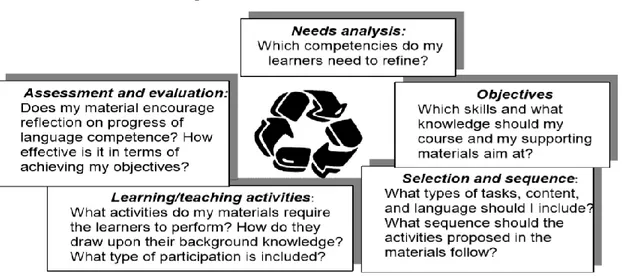
(25) VISUALS TO ENHANCE SPEAKING OF A STUDENT WITH AS. 12. different areas of expertise in order to produce materials of greater value to learners of languages” (as cited in Meganathan, 2008, p. 7). It refers to the necessity of an active participation from all the school agents in the improvement of the language learning process. Regarding the instructional materials in the Colombian context, Ramos and Aguirre (2014) affirmed that, this is a meaningful discipline resulting from the improvement of the teachers’ practices. Furthermore, they reveal that the objectives for designing material are linked with the impact these materials could have on students’ motivation; and at the same time the enhancement of the language teacher practice towards the specific learning needs of the students. In view of that, Núñez, Téllez, Castellanos and Ramos (2009) considered that the first reason for teachers to design materials is the innovation and the motivation that this represents for the students. The second reason is that, when developing materials for classes, the teachers are working and improving their own English level and teaching practice. In an intent to frame the teacher supporting material, Núñez, Pineda and Tellez (2004, p. 131) provide the following diagram in which they set up an effective process and main aspects under which materials development must be carried out:. Figure 1. The Process of Course and Material Design (Núñez et al., 2004, p. 131).
(26) VISUALS TO ENHANCE SPEAKING OF A STUDENT WITH AS. 13. Current literature on materials development shows that in this field, the teachers improve their practice and expertise through the implementation, design and adaptation of materials searching for the effectiveness of the language learning process of the students. In search of the effectiveness of the English learning process of the AS student, I designed 6 worksheets underpinned by the MD framework aforementioned and the speaking skill as the way for interacting and communicating in EFL. From Thornbury’s (2005) view, speaking is not only producing oral sentences under grammar rules but also enhancing the ability of the person to organize structures in a specific place to take turns with an interlocutor during a conversation. Within the speaking skill, there are some micro skills directly related to this study, described below. Speaking and micro-speaking skills One of the main goals of the English language instruction is to help learners develop communicative competence. A relevant aspect of instruction focuses on helping students develop their speaking skills. In this regard, Hymes (1972) pointed out that to be communicatively competent, in addition to have grammar knowledge of a language, it implies that the interlocutor knows how to answer, depending on the social and cultural context. That is why speaking a foreign language connects to communicative interaction in a conversation. Besides talking about interaction, it is paramount to define the term speaking. In McDonough and Shaw’s (1993) words, the speaking skill is not only the oral representation of the written production, but it also the variety of sub-skills that set up oral communication. Therefore, it is necessary to take into consideration the minimum vocabulary and grammar structures the student must have in a communicative situation as is stated by Bygate (1987). This is a relevant aspect in my case study due to the students with AS’s special ability for memorizing the vocabulary, although it is not easy for them to memorize the grammar structures. Therefore,.
(27) VISUALS TO ENHANCE SPEAKING OF A STUDENT WITH AS. 14. the teacher must give the student the specific parameters and provide the spaces for spontaneous participation. Another scholar difining the term speaking is Brown (2007), who asserted that “to speak English is the ability for carrying on a conversation reasonably competently” (p. 322); it refers to the good performance a non-native speaker could have in a communicative situation using English as a foreign language. Likewise, Bailey stated that “an issue that pervades all of language performance is the distinction between accuracy and fluency” (as cited in Brown, 2007, p. 323). However, accuracy is defined as the learners’ need to produce a message that is correct, in terms of word order, word endings, pronunciation, for the listener to understand. Similarly, fluency takes into account the features, which give speech the qualities of being natural and usual, including native-like use of pausing, rhythm, intonations, stress, rate of speaking, and use of interjections and interruptions. The speaking features mentioned above are vital for my study due to the periodical speaking test of the school. Among the pedagogical resources provided to foster the speaking skill it is possible to find the one related to the visual aid, as the way for promoting communication in the activities. In other words, it means visual literacy, which refers to the process of creating visual communication throughout the understanding of the verbal and the visual language (Dondis, 1973). Thereby, visual aids link the language communication and enable the student to understand the communicative intention required in the speaking activity. As one of the features of the AS student is the ability to remember what has seen, the visual aid plays a relevant role in the current study. As speaking skills mediate social interactions of students with special needs, Asperger children demand certain conditions directly connected to the level of verbal or nonverbal.
(28) VISUALS TO ENHANCE SPEAKING OF A STUDENT WITH AS. 15. language used. Thus, it is relevant to include these special needs to enhance fluency and accuracy in English as a foreign language. Special Educational Needs One important aspect of my case study is the Special Educational Needs (SEN). The Training and Development Agency for School ([TDA] 2009) established a set of steps and guidelines to include students with SEN and/or disabilities in secondary modern foreign languages. This booklet comprises principles to modify the curriculum according to the SEN of the students in favor of disabled students to participate in all fields and activities of a more inclusive school life. The principles suggested are: maintaining an inclusive learning environment, multi-sensory approaches, including information and communication technology (ICT), working with additional adults, managing peer relationships, adult-student communication, and formative assessment/assessment for learning, motivation and memory/consolidation. This information provides a framework for the implementation of my research study. Asperger Syndrome. Within the Special Educational Needs (SEN), an Autistic Spectrum Disorder (ASD), called Asperger Syndrome (AS), was defined as a high functioning autism or in Frith’s (as cited in Wire, 2005) words: ‘a dash’ of autism. In other words, these students do not have a considerable learning difficulty and the most common features of this ASD commonly known as the “Triad of Impairments”, deal with impairment of two-way social interaction, impairment of verbal and non-verbal communication and impairment of flexible thinking and social imagination, according to Connelly (2004). In view of that, Connelly provides a set of approaches to access the curriculum in modern foreign languages: One of the key features of pupils with ASD is difficulty with many aspects of their first language. They usually understand the literal meanings of.
(29) VISUALS TO ENHANCE SPEAKING OF A STUDENT WITH AS. 16. words and grammatical construction, but have difficulty with the pragmatics of language. i.e. using language in social situations and knowing what to say and how to talk to others. These difficulties will also be apparent when using a second language. (p. 20) In light of this and focus on the assumption that learners respond much better if the teacher provides a visual support of the information, this study proffers the AS student visual aids to overcome the difficulties mentioned before. Besides this, conversation skills are poor in their own language, hence, it is unlikely for them to able to ask questions or initiate conversations in another language as English. They will certainly not be able to vary their language for an audience or context, as this is an area of difficulty for AS. To help AS students develop their speaking skills in the foreign language, teachers can resort to strategies. In this regard, Bullard (2004) described twenty strategies to work with Asperger students. Those tips were incorporated into the school activities I developed addressing the special features an Asperger child has, to introduce him in a favorable school environment that encourages him to speak in English fluently and accurately. As I mentioned above, I adopted those suitable tactics directed in my study to address the Asperger student’s needs by developing and implementing visual worksheets as a pedagogical resource to enhance his speaking skills. To this respect, Coúkuna, Tosuna, and Macarolua (2009) proved in their research, the importance of the teachers in a school of Turkey, to develop and use instructional materials for the inclusion of students. After summarizing the theoretical insights, and research studies, it is pertinent to emphasize on the teachers’ responsibility of designing materials to fulfill their students’ needs as a strategy to improve the speaking skills in the English learning process. In addition, to focus on.
(30) VISUALS TO ENHANCE SPEAKING OF A STUDENT WITH AS. 17. the SEN the teachers must keep in mind the strengths and weaknesses of the students in this process to ameliorate challenges in their learning process..
(31) VISUALS TO ENHANCE SPEAKING OF A STUDENT WITH AS. 18. Chapter III Methodological Design In this chapter I explain important features of my pedagogical intervention with an English learner diagnosed with Asperger Syndrome (AS). The pedagogical intervention aims at improving the learner’s accuracy and fluency through the implementation of visual worksheets. Research Design Approach. This study followed the theoretical principles of the qualitative approach. The main concern of this research was to “analyze and interpret in depth particular educational needs” which according with Patton and Burns (as cited in Merriam, 1998, p. 6) is the objective of this research approach. Furthermore, Merriam (1998) considered that this type of research characterizes by: (a) the understanding the participants have of the significance in relation with their real context; (b) the relevance of the researcher as a vehicle to collect and analyzing data; (c) the influence of the findings in the field of study; (d) the research methodology; and (e) the rigorous description of the information regarded in the study. All those features frame my case study within the qualitative research approach to achieve a descriptive and detailed analysis of the effectiveness of my pedagogical intervention, designed to foster some speaking skills of an English as a foreign language learner with the AS. Type of study. The case study is one of the types of qualitative research in the education field, according to Merriam (1998). It embraces rigorous descriptions and analysis of the situations to accomplish the understanding of the meaning built by the subject of study. In that regard, Richardson (1973) defined the case study as a method that drives the research towards a specific feature of a topic, to be studied in detail over a period of time. In the same way, Stake (1994) established the case study as a means to explore individual cases. Both definitions are.
(32) VISUALS TO ENHANCE SPEAKING OF A STUDENT WITH AS. 19. related to the current study, in which I focused my interest on helping an AS student to develop speaking skills. It is worth mentioning, that some of the steps established and followed in this case study were: (a) determine and define the research questions; (b) select the cases and determine data gathering and analysis techniques; (c) prepare to collect the data; (d) collect data in the field; (e) evaluate and analyze the data, and (f) prepare the report. Participants. The main participant in this case study is a 13 year-old boy. He is an eighth grader, who has been studying in this school since he was in first grade when he was diagnosed with the AS. The diagnostic of that SEN has played a relevant role during his academic life in this institution. The recommendations provided by the neurologist and the psychiatrist must be reflected in the development of the classes for each one of the subjects, but in the case of the English subject matter some special needs were identified during the English Learning process, which turned to be the focus of my pedagogical intervention. Teacher-researcher and text developer. The special needs identified gave me, as English teacher and researcher, the opportunity to explore the field of research in the English teaching process, and focused on the features of this kind of autism. The design and implementation of a pedagogical strategy is the manner in which I have paid attention to lack of accuracy and fluency affecting his good performance in the speaking activities of the English class, and without a doubt, the beginning of my experience as Materials Developer. In this specific role, I carried out the process of designing, piloting, and implementing the visual worksheets created to enhance the fluency and accuracy of a student with the AS. Data gathering instruments. The instruments for data gathering I implemented in this case study are framed in the tenets of qualitative research; among them, I selected observational field notes, audio recording, artifacts and interviews as the main way to collect the information.
(33) VISUALS TO ENHANCE SPEAKING OF A STUDENT WITH AS. 20. required for this research. The selection process was followed by the piloting, in which I worked with the field notes and a sample of the artefacts to identify their effectiveness in this research. Artefacts. The documents established by the school as requirement for the teaching job are defined as artefacts by Lankshear and Knobel (2006); these contextualized files provide the researcher with useful information about the contexts and the educational parameters in which the participant is involved. For this specific study, the worksheets determined as concrete evidence of the daily routine of the student. These worksheets were designed based on the tenets of MD and besides under the parameters set by the school. Field Notes. One important data gathering instrument that is directly related to the teacher’s ongoing observation of students’ performance is the field notes. According to McKernan (1996), field notes give the researcher the opportunity to obtain clues about relevant aspects presented in real situations in which the participant is involved. In that regard, Clifford “describes good field notes as having a ‘you are there’ quality” (as cited in Lankshear and Knobel, 2006, p. 229); this means that the researcher can register events occurred spontaneously during the observation. The facts observed can be registered at the same time the events happen in the classroom; the researchers can record them immediately or after they happen by elaborating on key words that help them remember the events. They can do it as a manner of report or reflection; in my case, the field notes (See Appendix A) provide me with descriptive and useful information about the student’s behavior and his reaction towards the speaking activities performed in the English class. Audio Recording. In a research study, the information obtained through audio recording provides evidence of the real events occurred in class (Bell, 1993). The audio recordings of this study documented the AS student performance and his reactions towards the speaking activities.
(34) VISUALS TO ENHANCE SPEAKING OF A STUDENT WITH AS. 21. developed with the worksheets. The information recorded was transcribed, interpreted and analyzed. Interviews. The interviews were the vehicle to stablish contact with the AS student as well as the method to collected personal information about his English learning process. In terms used by Moser and Kalton (1971), the interview is a dialogue between two people, in which one of them is looking for specific information about a topic. In Grifee’s (2012) words, the goal of the interviews is finding information that could be considered as data to be analyzed. Both assumptions frame the interviews (See Appendix B) conducted in this qualitative research; thus, the information obtained demonstrates the feelings and perceptions about the impact of this pedagogical intervention towards the improvement of accuracy and fluency. Instructional Design Pedagogical intervention. The pedagogical intervention for this case study is focused on the implementation of visual worksheets to enhance accuracy and fluency of a student with the AS. For Brown (2007), communicative competence is developed naturally when there is a correct use of accuracy and fluency in terms of grammar and the speaking. The main issue in this study was the difficulty presented by the AS learner for speaking in English with eloquence and exactitude; difficulty that is related to the Triad of Impairments in which the features of this syndrome are framed (Conelly, 2004). This AS student was diagnosed when he was in first grade of primary school. Now, when he is in eighth grade, his low performance in the speaking activities of the English classes have become more evident. At the same time that the speaking activities have turned into a weakness for the English learning process of this student, the visual memory has shown to be a strength of the same process. For that reason, I designed the worksheets to encompass visual information to.
(35) VISUALS TO ENHANCE SPEAKING OF A STUDENT WITH AS. 22. the iconic and echoic memory (Berube, 1991). The first one refers to the recording of the visual information and the second one to the decoding of the images into phonics. The methodological approach suitable for this didactic strategy is the Communicative Language Teaching (CLT henceforth), framed in the Meaningful Learning principle. This principle and approach provides the students with communicative situations that allowed them to make associations between the acquired knowledge and the real life as well as to encourage the development of fluency and accuracy taking into account the context of the learner (Brown, 2007). Therefore, these communicative situations were included in the worksheets to promote his participation during the activities, and to help him improve these two features of speaking. To develop the worksheets, it was necessary to bear in mind the Triad of Impairments considered as special characteristics of the AS as well. On basis of these features, I took into account some of the most relevant principles to develop materials established by Tomlinson (1998). They include the need to take into account students’ different learning styles such as visual, auditory, kinesthetic, study, analytic, experimental, global, dependent, and independent. Related to this special aptitude, the visual learning style is the most important feature for AS students to remember what they see. It is relevant to include activities such as flashcards, comic strips, word puzzles and graphic organizers among others, in the pedagogical intervention, as a way to catch the attention of the student. Another relevant principle affirms: achieve impact through novelty, variety, attractive presentation, and appealing content; this entails the graphic design of the worksheets to achieve the visual impact required. Furthermore, the development of the aforementioned exercises converge and become similar in terms of the mental process involved in which an AS learner may reach a high concentration level; which refers to the tenet of allowing for a silent period at the onset of.
(36) VISUALS TO ENHANCE SPEAKING OF A STUDENT WITH AS. 23. instruction until learners have gained sufficient exposure to the target language and confidence in understanding it. Another suitable tenet for the design of the worksheets is the one that has as an objective to offer plenty of free practice. Bearing this in mind, this deals with accuracy and fluency stated for this study; thus, it is required to include some activities in which the AS pupil relates the new knowledge to real context to provide meaningful learning. In this regard, the activities may include: completing the speech bubbles of a conversation in places commonly visited by the student, common topics, turn-taking interaction, and pronunciation practice to enable communication, using intonation to convey meaning. The aforementioned process must be reflected in the design of the worksheets thinking about the content, form and personal traits; the SLA and MD tenets related for this pedagogical intervention were selected trying to work on the needs of the AS, who use visual materials to enrich their learning process and activate longer periods of work. Instructional objectives. The main instructional objective in this case study was to design and implement visual worksheets to enhance accuracy and fluency of an AS student. In the same way, there are three specific objectives established to achieve this main goal: (a) to expose the student to a variety of activities that motivate him to express his ideas with fluency.; (b) to provide the AS student with activities in which he can use his visual memory; and (c) to make the AS student aware of the importance of speaking English focusing on the correct use of language. Intervention as innovation. The term innovation in the education field had been defined by Rogers as “the application of a new resource or approach that changes social practice (…) by altering the social practice of teaching and learning” (as cited in Kirklan & Sutch, 2009, p. 11). In the same line of tought Nuñez, Castellanos and Téllez (2012) defined the term as “the ability to.
(37) VISUALS TO ENHANCE SPEAKING OF A STUDENT WITH AS. 24. generate something that may be regarded as new” (p.24). In that regard, innovation implies creating and presenting to the learner new concepts in different and meaningful ways to promote the learning and improve the teaching process. Likewise, Markee (2001), defined innovation as “proposals for qualitative change in pedagogical materials, approaches, and values hat are perceived as new by inividuals who comprise a formal (language) education system” (p. 120). It implies the renovation of the materials required in the English learning process towards the fostering of a specific need of the learners. Markee (2001) also argued that “the relationship between individuals and systems must be considered in a definition of innovation” (p. 120). This refers to the importance of taking into account the performance of the students inside the educational system and at the same time, bearing in mind their context to provide new strategies to support the learner process. All the definitions about innovation in the educational context involve the creation and implementation of original and assorted strategies and materials to achieve the main goal of enhancing the teaching and learning process towards a specific need. In the same line of thought, it is necessary to take into consideration the context, the characteristics of the population, the teacher and the student roles; as particular features of the innovation at the moment to implementing the pedagogical intervention (Karakavas, 1998). Above all, the innovation of the intervention in my case study is the advantage taken from the visual memory of a language learner diagnosed with the AS to foster his accuracy and fluency. Besides, despite the fact that the institution follows the recommendations given by the neuropsychiatrist, a pedagogical intervention or strategy has ever been carried out to foster the English language learning process of the AS student. Theory of the nature of language and language learning. The theory of language that frames this pedagogical intervention is established by Hymes, in which he relates the purpose of.
Figure
Documento similar
In the “big picture” perspective of the recent years that we have described in Brazil, Spain, Portugal and Puerto Rico there are some similarities and important differences,
Government policy varies between nations and this guidance sets out the need for balanced decision-making about ways of working, and the ongoing safety considerations
No obstante, como esta enfermedad afecta a cada persona de manera diferente, no todas las opciones de cuidado y tratamiento pueden ser apropiadas para cada individuo.. La forma
1) Students who work collaboratively obtain better results in terms of organization, fluency, complexity and accuracy in the production of written text than
In relation to language knowledge of L1/vehicular language (The teacher has knowledge of the L1/vehicular language in terms of fluency, accuracy, lexicon and
The following figures show the evolution along more than half a solar cycle of the AR faculae and network contrast dependence on both µ and the measured magnetic signal, B/µ,
In the previous sections we have shown how astronomical alignments and solar hierophanies – with a common interest in the solstices − were substantiated in the
17,18 Contrary to graphene, the band gap in ML-MDS separating the valence and conduction bands is naturally large and due to the absence of inversion symmetry in ML-MDS the
