
Received June 11, 2018, accepted July 11, 2018, date of publication July 31, 2018, date of current version August 28, 2018. Digital Object Identifier 10.1109/ACCESS.2018.2861331
A Novel Monitoring System for Fall Detection
in Older People
CARLA TARAMASCO1,2, TOMAS RODENAS1, FELIPE MARTINEZ3, PAOLA FUENTES3, ROBERTO MUNOZ 1,2, (Member, IEEE), RODRIGO OLIVARES1, (Member, IEEE),
VICTOR HUGO C. DE ALBUQUERQUE 4, (Member, IEEE), AND JACQUES DEMONGEOT5
1Escuela de Ingeniería Civil Informática, Universidad de Valparaíso, Valparaíso 2362735, Chile
2Centro de Investigación y Desarrollo en Ingeniería en Salud, Universidad de Valparaíso, Valparaíso 2362735, Chile 3Facultad de Medicina, Escuela de Medicina, Universidad Andrés Bello, Campus Viña del Mar. Viña del Mar 2531015, Chile 4Graduate Program in Applied Informatics, University of Fortaleza, Fortaleza 60811-905, Brazil
5University J. Fourier of Grenoble Faculty of Medicine, 38400 Grenoble, France
Corresponding author: Carla Taramasco ([email protected])
This work was supported in part by CORFO - CENS 16CTTS-66390 through the National Center on Health Information Systems, in part by the National Commission for Scientific and Technological Research (CONICYT) through the Program STIC-AMSUD 17STIC-03: ‘‘MONITORing for ehealth," FONDEF ID16I10449 ‘‘Sistema inteligente para la gestión y análisis de la dotación de camas en la red asistencial del sector público’’, and in part by MEC80170097 ‘‘Red de colaboración científica entre universidades nacionales e
internacionales para la estructuración del doctorado y magister en informática médica en la Universidad de Valparaíso’’. The work of V. H. C. De Albuquerque was supported by the Brazilian National Council for Research and Development (CNPq), under Grant 304315/2017-6.
ABSTRACT Each year, more than 30% of people over 65 years-old suffer some fall. Unfortunately, this can generate physical and psychological damage, especially if they live alone and they are unable to get help. In this field, several studies have been performed aiming to alert potential falls of the older people by using different types of sensors and algorithms. In this paper, we present a novel non-invasive monitoring system for fall detection in older people who live alone. Our proposal is using very-low-resolution thermal sensors for classifying a fall and then alerting to the care staff. Also, we analyze the performance of three recurrent neural networks for fall detections: long short-term memory (LSTM), gated recurrent unit, and Bi-LSTM. As many learning algorithms, we have performed a training phase using different test subjects. After several tests, we can observe that the Bi-LSTM approach overcome the others techniques reaching a 93% of accuracy in fall detection. We believe that the bidirectional way of the Bi-LSTM algorithm gives excellent results because the use of their data is influenced by prior and new information, which compares to LSTM and GRU. Information obtained using this system did not compromise the user’s privacy, which constitutes an additional advantage of this alternative.
INDEX TERMS Fall detection, older people, artificial neural networks.
I. INTRODUCTION
The effects of fertility decline, along with increased life expectancy, portend the acceleration of global population aging [1]–[3]. A total of 61 million people over the age of 65 in 2004 has been estimated to rise to 2 billion by 2050 [4], [5], which will have profound implications for planning and delivering health and social care [6]. Falls are especially relevant to patients and health systems because approximately one-third of adults older than 65 that live in a community suffer a fall each year [7]–[11]. According to [12], there is an estimation of 3 to 5 falls per 1,000 days of stay in a hospital.
Falls older people often result in more serious injuries than falls associated with younger patients, and the associated
costs with this are very high [13]. Moreover, the mortality rate of older people who have suffered some sort of fall is significantly higher than those who have not suffered any falls, with an odds ratio (OR) of 5.11 (CI 95% 1.84 - 14.17, p=0.002) [14]–[16].
Recently, numerous studies in the area of fall detection have arisen in an attempt to solve this problem [17]–[19]. In terms of sensor technology developed up to date, each proposed system can be classified into: a wearable-based system, a camera-based system, and an ambience device [20]. The focus of wearable devices consists in the user carry-ing some type of device with embedded sensors that detect changes in posture and body movement in order to use clas-sifiers or some type of AI that will detect falls. Thanks to
VOLUME 6, 2018
2169-35362018 IEEE. Translations and content mining are permitted for academic research only.
by choice or forgetfulness, therefore countermanding its main goal [22].
Devices based on cameras have multiple advantages, among them the ability to detect multiple events simulta-neously, not being intrusive systems, and possessing high precision in fall detection. For example, [19], formulates the use of video cameras to detect falls through the implemen-tation of Exponentially Weighted Moving Average based on Support Vector Machines (MEWMA-SVM), which achieved high precision in fall detection (97.2%), which contrasted with other algorithms. However, in spite of the multiple advantages the use of cameras provides to detection of events such as falls, their implementation in homes of older people is complicated due to the invasion of privacy that is implicit in their use. Although the system only processes information locally and does not rebuild images for its operation, users may still not accept it, considering it an intrusion to their privacy.
The other type of device involving fall detection consists on ambient devices. These systems can use one or multi-ple non-intrusive sensors to measure variables within the environment in which the user is interacting. Some exam-ples include the detection of pressure on the floor, infrared temperature, sound, electromagnetic waves, etc. Based on these sensors and the application of intelligent algorithms, it is possible to detect, with high precision, when a person suffers a fall. For example, in [23], a proposal is made for the use of low-cost infrared sensor arrays to detect falls, along with a performance demonstration of known artificial intelligence algorithms used with this sensor.Using MLP and GRU-ATT algorithms, the investigators reported a 97% precision to detect falls. Although the use of these sensors is generally limited to controlled environments, their use is more accepted by users compared to the use of video cameras [22].
In this study, we present the development of a fall-detection system applied to very low-resolution infrared sensors for classifying potential falls suffered by older people. This sys-tem was developed to alert caretakers that a fall has occured. Sensors of the proposed system are equipped with an array of 16×2 pixels, which assures that the privacy of users is not infringed while the device is being used. The system is designed to be employed in homes of older people that live alone. To process the data from the sensors, three models of recurrent neural networks (RNN) were implemented, analyz-ing temporal sequences to compare results. These are LSTM, GRU, and Bi-LSTM; we have used these RNNs because they have been highly used for classification problems [24]–[26].
rizes work already developed in this area of study and the contribution of each one of these works. Sections III
and IV detail the used methodology, such as the imple-mented system and the algorithms used in the processing of information, the test environment, sensor characterization, and used dataset. Section V shows the obtained results in the classification of falls along with a brief discussion in Section VI. Finally, conclusions and future work are pre-sented in SectionVII.
II. RELATED WORK AND CONTRIBUTION
The utilization of infrared sensor arrays in fall detection has been previously addressed in other publications, in which architectures and proposed algorithms have been designed with varied results in their precision. The use of low-resolution thermal sensors is a viable alternative for this pur-pose, given that they are cost-effective, non-intrusive, and can yield distinct types of information such as position, velocity, acceleration, and human body temperature in a controlled environment [22], [23], [27], [28].
Sixsmith and Johnson [22] performed one of the first studies using low-resolution infrared sensor arrays (16×16 pixels). His system, which was trained with 108 sce-narios and 10,000 training vectors, uses MLP neural networks to classify falls. Furthermore, the system is equipped with a module to send alerts via GSM. Although his results were not encouraging due to his training set, it is explained that the motivation behind using these sensors is for their excellent acceptance by users in respect to privacy (in comparison to camera-based systems).
Taniguchi et al. [28] utilizes two low-resolution sensor arrays (16 × 16 pixels), one located on the wall and the other one on the ceiling. The system algorithm consists of estimating body posture and detecting a fall by means of changes in posture over time. The diagnostic accuracy of the system in its worst scenarios were around 72.7%. His work concludes that this system detects falls successfully and that it could be considered for implementation in monitoring.
such as voice recognition, image processing, and signal pro-cessing, etc. [29].
The principal contribution of our work, with respect to the state of the art, is the implementation of recurrent neu-ral networks with a convolutional layer applied to infrared sensors (16× 2 pixels) for fall detection. Due to growing computational resources, recurrent neural networks (RNNs) (which have been around for decades, but their full potential has only recently begun to become widely recognized in forms such as convolutional neural networks (CNNs)) have recently generated a significant development in the domain of deep learning [30]. Our work employs four 1×8 pixels sensors with the aim of reducing the amount of information processed by the neural network, thus optimizing resources and, in addition, increasing the user’s perception of privacy. The sensors are located on two horizontal planes: two sensors at 1 meter from the floor, and the other two at 10 cm from the floor. Both horizontal planes cover approximately 124◦of the surrounding scenario with a resolution of 16×1 pixels.
Regarding the algorithm proposed for fall detection, which corresponds to Bi-LSTM, it considers a temporal data sequence in order to obtain a result; for this reason, its appli-cation in the detection of falls is of interest given that a fall cannot be solely determined by one temporary sample, but should also consider prior samples into consideration [28]. F In addition, other recurrent neural network approaches (LSTM and GRU) are evaluated as well in order to provide comparative data of the different algorithms. Every algorithm was implemented with a convolutional input layer, which was used to extract hierarchical characteristics from input signals. Algorithms were tested using a low-cost single board computer to assess the feasibility of its implementation in future smart homes.
III. METHODOLOGY
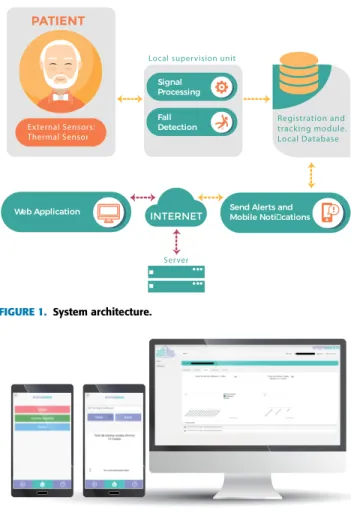
In this study, a non-intrusive fall detection system for con-trolled enviroments was implemented. The system does not use invasive components, such as cameras or microphones and is aimed at improving care for the elderly (see Figure1). Figure 1 shows the high-level architecture of the pro-posed system. The system measures the ambient temperature through low-resolution thermal sensors. These sensors are responsible for detecting the body-heat of the user without having to be in contact with the older people (maximum distance of 4 meters). The data is stored in a local database and transmitted to a server for further analysis. In parallel, through the implementation of AI algorithms, it is possible to classify if there has been a fall with 93% accuracy. If the fall occurs, the system sends emergency alerts to their families and the health service staff.
IV. MATERIALS & METHODS
The tests and implementation of the system were approved by the Comité de Bioética de la Universidad de Valparaíso (Universidad de Valparaíso Bioethics Committee, code CB086-15). In addition, each participant voluntarily
FIGURE 1. System architecture.
FIGURE 2. Web and mobile platforms.
expressed his interest to participate in the research by the approval and signature of an informed consent. In order to detect falls, passive infrared sensors of continuous measure-ment were used due to the fact that they constantly record the temperature generated by an object, unlike other sensors such as Passive Infrared Motion Sensor (PIR), which only reacts to changes in infrared radiation.
A. SYSTEM ARCHITECTURE
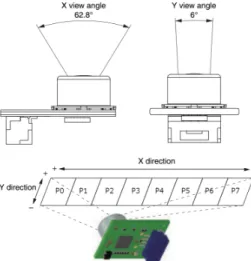
FIGURE 3. Field of view OMRON D6T-8L-06 sensor.
B. HARDWARE IMPLEMENTED
The sensor used was an OMRON D6T-8L-06, which is made up of a cap with a silicon lens, MEMS thermopile sensor chips, a dedicated analog circuit, and a logic circuit for converting to a digital temperature value on a single board through an I2C interface with a 100kHz clock. The silicon lens collects radiated heat with an object onto the thermopile sensor in the module, generating an electromotive force, which is used to calculate the temperature through an analog circuit and which is consulted via I2C protocol. This sensor has an array chip of 8 channels (1×8 pixels), which gives a view angle of 62.8◦×6◦, as depicted in Figure3.
The computer used to capture, process data, and send alerts was a powerful, low-cost, single-board ODROID-C1+
computer. This mini PC has a 1.5Ghz quad-core proces-sor, MaliTM-450 MP2 GPU, 1Gbyte DDR3 SDRAM, 40pin GPIO, and runs Ubuntu 16.04. In order to operate this system, it was necessary to connect four OMRON sensors to an ATMEGA328P microcontroller, which reads sensor data and sends it to the ODROID-C1+via UART interface with a baud rate of 115,200 and a sample rate of 5[Hz]. Figure4(a) shows an schematic diagram of the system. The cost of this system amounts to US$150.
The system is designed to be placed in a corner of a room, measuring the heat received in two horizontal planes: one plane located at one meter away from floor level (Upper Plane) and another plane about 10[cm] above the floor (Bot-tom Plane) (see4). Due to the fact that each sensor is capable of covering 62.8◦, it is necessary to install 2 sensors to avoid leaving any blind areas, increasing coverage to 125.6◦. Thus, it has 16 resolution pixels for both planes as shown in Figure4(b)).
C. ALGORITHMS
The focus of this article refers to the utilization of Deep Learning to detect falls, using the information from each pixel in the temperature sensors as a source. Given that the action of falling involves a dynamic process that varies over
FIGURE 4. Coverage angle and measurement planes. (a) Proposed system. (b) Pixels and program for processing data.
time, temporal data sequences are taken into account in order to classify them, implementing recurrent neural networks. The architecture used is composed of four layers, which are shown in Figures 8 and 9, and whose details are described as follows:
• Convolutional layer: Receives the input vector in order to extract hierarchical characteristics that improve clas-sification.
• MaxPooling layer: Reduces the quantity of hierarchical characteristics, leaving the most important ones.
• RNN layers: Consists of the implementation of two RNN layers of type LSTM, GRU, or Bi-LSTM.
• Dense layer: Consists of a perceptron-type neural net-work used to obtain an ouput between 0 and 1 through the function of sigmoid activation, which would indicate whether a fall occurs or not.
1) CONVOLUTIONAL LAYER
A 1-dimensional convolutional layer with a 3 element linear kernel is implemented with the objective of extracting hierar-chical characteristics from the pixels captured by each sensor (vector of 32 elements). By using this approach, the next recurrent layer extracts more precise information that will be used to establish the essential elements that can be processed in a temporal format. Additionally, this helps to reduce com-putational expenditure that is made in the recurrent layer. The convolutional layer is implemented with the ReLU activation function due to its characteristics that allow it to reduce the effects of vanishing gradient, achieving faster learning [31].
2) MAXPOOLING LAYER
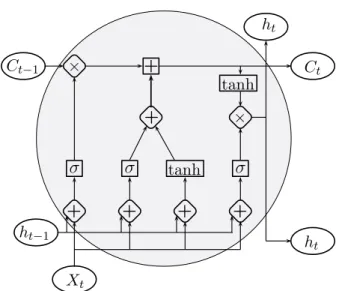
FIGURE 5. Schematic LSTM unit.
of implementation, and therefore a reduction of parameters is necessary in order to improve performance.
3) LONG SHORT-TERM MEMORY (LSTM) MODEL DESCRIPTION
This recurrent neural network was introduced and designed by Hochreiter and Schmedhuber (1997) [33] to handle tempo-ral data sequences and also to be able to confront the explod-ing and vanishexplod-ing gradient problems, which is a recurrexplod-ing problem with traditional RNNs. This type of neural network is equipped with a memory cell, which can store values that are recorded over time in correspondence with past infor-mation. The memory cell can be controlled in the following manner: the forget gate is tasked with storing or deleting information, the input gate is tasked with adding new infor-mation and the output gate controls the output flow. LSTM network generates two states at every single time-step: a cell state that is transferred into the next time-step and a hidden state that is the output vector of the time-step [34]. Figure5
shows a schematic of the LSTM recurrent neural network. The model of this neural network can be described by the following equations:
ft =σ Wt·[ht−1,xt]+bf (1)
it =σ (Wi·[ht−1,xi]+bi) (2) Ct0 =tanh(Wc·[ht−1,xt]+bc) (3)
Ct =ft∗Ct−1+it∗Ct0 (4) ot =σ (Wo·[ht−1,xt]+bo) (5)
ht =ot∗tanh(Ct)) (6)
Where * indicates element-wise multiplication andσ indi-cates element-wise sigmoid function. ft, it, and ot corre-spond to forget gate, input gate, and output gate, respectively. bf, bi, bc, and bo correspond to the bias units of forget gate, input gate, output gate, and memory cell, respectively. ct is the state of the memory cell; ht is the output vec-tor, and Wf, Wi,Wc, and Wo are trained weight matrices.
FIGURE 6. Schematic GRU unit.
While LSTMs possess the ability to learn temporal depen-dencies in sequences, they have difficulty with long term dependencies in long sequences [24].
4) GATED RECURRENT UNIT (GRU) MODEL DESCRIPTION
This recurrent neural network model is very similar to LSTM, since it addresses the vanishing gradient problem and its internal structure is more simple and rapid to train. However, instead of being equipped with three control gates, it only has 2: reset gate and update; this means that less computations are necessary to update its hidden state. This model was proposed in [26], and the corresponding schematic is shown in Figure6.
The equations that define this recurrent neural network model are given by:
rt =σ (Wr ·[ht−1,xt]+br) (7) zt =σ (Wz·[ht−1,xt]+bz) (8)
¯
ht =tanh(Wh·[rt·ht−1,xt]+bh) (9) ht =zt·ht−1+(1−zt)· ¯ht (10)
Wherezt andrt correspond to update gate and reset gate, respectively, whileht¯ is a candidate for a new state and ht corresponds to the activation of the state. xt corresponds to input in time t. Wz, Wr, and Wh are trained weight matrices, while the bias vectors are represented by br, bz, andbh.
BIDIRECTIONAL LSTM (BI-LSTM) MODEL DESCRIPTION
FIGURE 7. Bidirectional recurrent neural network.
FIGURE 8. Implemented architecture for LSTM and GRU units.
This bidirectional LSTM network is implemented through the following equations:
E
ht =LSTM
xt,Eht−1; EW
(11)
ht =LSTMxt,ht−1;W
(12)
yt =hhE,h
i
(13)
WhereEht,ht,WE andW are hidden states and weight matrices of the forward and backward layers, respectively. Outputytis determined by the concatenation ofEht withht.
5) RECURRENT NEURAL NETWORK ARCHITECTURE
The architecture implemented consists on a hybrid model that utilizes a 1D convolutional layer with a 3-element ker-nel, tasked with highlighting special relevant characteristics through trained filters. Then, a MaxPooling layer reduces the number of characteristics, leaving only the most important ones, and therefore mitigating the effects of changes in scale and orientation over different training data. This helps to reduce the effects of overfitting and also lessens computa-tional cost. Two recurrent layers are then implemented for both the LSTM model and the GRU model, whose outputs pass through a dense layer with a sigmoid activation function. Figure8shows the architecture described for both LSTM and GRU models.
The architecture implemented for the neural network Bi-LSTM is similar to the previous one, the difference being that the recurrent layer implemented is bidirectional. This allows it to recognize temporal sequences, taking into account forward and backward data. Figure9shows the architecture implemented for Bi-LSTM.
FIGURE 9. Implemented architecture for Bi-LSTM unit.
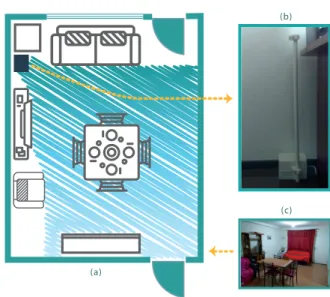
FIGURE 10. Testing environment. (a) System coverage area. (b) Fall system design. (c) Testing room.
V. EXPERIMENTS TESTING ENVIRONMENT
The system was placed in a corner of a 4x5 meter room and tested.
Figure10 (a) shows a schematic of the room where the fall sensor is represented by a blue box and the data capture area is represented by green color. The ambient temperature during the experiment varied from 16[◦C] to 20[◦C]. The whole system was mounted on a structure especially designed for this purpose with a 3D printer (see Figure10(b)). Finally, Figure10(c) shows the room where the tests were made.
A. TESTING TEMPERATURE SENSOR
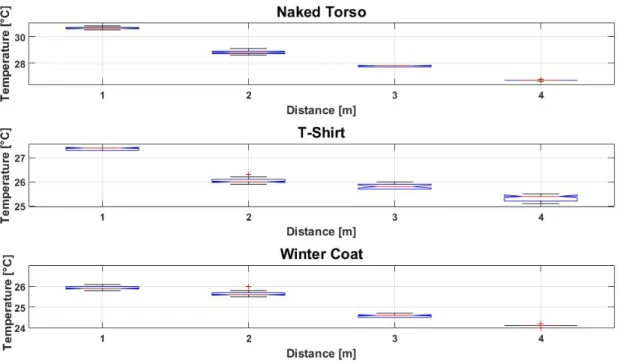
FIGURE 11. Changes in the temperature detected by the pixel being in the presence of a person with different clothes and at different distances from the sensor.
winter jacket were obtained. Figure11shows the changes in the temperature detected by the pixel being in the presence of a person with different clothes and at different distances from the sensor.
In Figure11, it can be seen that the temperature measure-ment is affected by the distance of the person from the sensor, since the area occupied by the person in the field of vision of the sensor becomes smaller, increasing the distance; in this way, the ambient temperature tends to prevail.
To check the temperature variation ranges within the test environment, data was obtained from the sensors at a sam-pling rate of 1Hz for a 24-hour period. The data obtained for each pixel in each plane are shown in Figure12. Each pixel delivers temperature values consistent with those measured by a conventional mercury thermometer and the dispersion of the temperature values per pixel vary in a small range, negligible in comparison to the presence of a person as seen in Figure11.
Given a set of temperature values of upper and bot-tom planes, PU = {PU0,PU1, . . . ,PUN-1} and PB =
{PB0,PB1, . . . ,PBN-1}respectively, with N =16. Figure13
shows the information obtained from the temperature sensor for the last 8 pixels (PU8 to PU15 for the upper plane and
PB8 to PB15 for the lower plane) when observing a person’s
behaviour. It can be seen in the first few seconds that the person walked at a distance of 2 meters from the sensor and then at 9.5 [s] suffers a lateral fall to the left and, as a consequence, the pixels in the upper plane only detect the ambient temperature in their monitored field and the pixels in the lower plane detect a higher temperature as the person is lying on the floor.
TABLE 1.Characteristics of participants.
B. DATA SET EXTRACTION
The dataset was obtained through four test subjects whose ages are in the range of 25 to 37 years; this is due to the fact that real falls in older people cannot be simulated due to the risk of injury. The characteristics of the participants are shown in Table1.
The ways in which a person can suffer a fall vary, which implies limiting a certain number of situations representative of this event for the evaluation of the system. Usually a forward fall begins with loss of balance, causing the person to advance a couple of steps to recover by stretching out arms and possibly falling onto the knees. Another scenario is that the person, when falling backward, sits down to reduce the impact of the fall. The scenarios that were be evaluated for fall detection, as well as those that represent daily-life movements, are shown in Table2 and Table3. Participants simulated each of the aforementioned scenarios (in Table2
and Table 3), and a total of 208 iterations were obtained comprising 96 falls and 112 daily-life movements.
C. TRAINING PROCCESS
FIGURE 12. Temperature variation in one day for each pixel.
FIGURE 13. Temperature detected in 8 pixels in response to a person walking and then falling at 9.5[s].
each measurement. The sequences were entered in batches of 4 for each epoch.
With the objective of fixing the optimal number of epochs in each case, a validation set equivalent to 20% of the training set was used in order to apply early stopping. Both database and the implemented models can be revised in [35].
TABLE 2. Scenarios of evaluation of falls.
TABLE 3. Scenarios of evaluation of daily-life movements.
process [37], making the model conform to the specific dis-tribution of each mini batch.
VI. RESULTS AND DISCUSSION
The performance of systems was evaluated by the calculation of accuracy, sensitivity, and specificity. To carry out the calcu-lation, we labelled the true positives asTP, the false positives as FP, the true negatives as TN, and the false negatives as FN. The calculations of accuracy, sensitivity, and specificity are obtained by means of the expressions:
Accuracy= TP+TN
TP+TN +FP+FN (14)
Sensitivity = TP
TP+FN (15)
Specificity = TN
TN +FP (16)
Table 4 summarizes the results obtained with each of the implemented models, trained with the published datasets in [30]:
From the architectures tested, satisfactory results were obtained for each of the models. However, it is pertinent to highlight the differences in detection capacity, robustness against possible false positives, and performance.
Detection capacity gives an account of how well the system recognizes a fall and represents the main objective of this work, since the physical integrity of a person can depend on this. The model that best served in this aspect was Bi-LSTM, thanks to its ability to analyze the temporal sequences in both directions, achieving 93% sensitivity in contrast to LSTM and GRU, which achieved 89% and 85%, respectively. On the other hand, the specificity of each model reached 93% for
Bi-LSTM, 93% for LSTM, and 89% for GRU. This is because GRU has fewer gates than the other two models, being able to consider a lesser number of determining aspects. By imple-menting each of the models in the ODROID C1 single-board computer, the responsing time were 38 ms for LSTM, 35 ms for GRU and 45 ms for Bi-LSTM, which is negligible for the developed application. However, it is expected that the GRU algorithm has a lower response time by having fewer gates and requiring less computing capacity.
In our dataset, Bi-LSTM algorithms showed the best com-bination of sensitivity and specificity which reached 93% in both cases. The least successful estimates were obtained with GRU analysis strategies. In order to facilitate comparisons between these different approaches, 95% confidence intervals were calculated for each of the diagnostic accuracy estimates. As shown in Table4, no evidence of a statistically significant contrast was observed amongst the aforementioned analysis strategies.
In its current version, this system is designed to be used in controlled homes of elderly people who live alone, since the presence of more people or pets might affect system perfor-mance. The tests performed showed good diagnostic accuracy in the detection of falls, however there was a lower number of false positives due to the increase of temperature in objects. This might be relevant whenever these elements come into contacto with the human body. In this way, the presence of objects with temperatures higher than room temperature, such as heaters, can generate false positives that affect system performance.
accuracy in the detection of falls. Furthermore, the location of the sensors is essential in obtaining accurate results, because the presence of obstacles such as furniture can create blind spots where the person could suffer a fall and not be detected. Despite these limitations, if the conditions are optimal, this system can deliver accurate results through an easy system implementation in households.
VII. CONCLUSIONS AND FUTURE WORK
The number of older people living alone worldwide increases daily. In Chile, the elderly represent roughly 330.000 per-sons, which represents more than 2% of the population [38]. A significant proportion of these persons lives alone, which makes obtaining help in the case of a fall much more difficult [8]–[11]. In this work, we propose a non-intrusive fall-detection system for controlled environments that does not compromise the privacy of the user based. This developent is based on thermal sensor array for older people living alone. Three algorithms of recurrent neural networks have been implemented: Bi-LSTM, LSTM, and GRU, showing a good performance on each one of these when detecting falls, highlighting among them the model Bi-LSTM. Although the proposed system has certain disadvantages, such as being prone to uncertainty on ambient temperature and the pres-ence of objects in the area of coverage, its installation in controlled households represents an important contribution to their care.This system shows promise as a device that might allow the provision of timely assistance should a fall occur, and could also lower costs associated with these accidents. As future works, we plan to test similar thermal sensors in dif-ferent locations to evaluate their results and to perform tests in less-controlled clinical environments to further validate this system.
REFERENCES
[1] W. Lutz, W. Sanderson, and S. Scherbov, ‘‘The coming acceleration of global population ageing,’’Nature, vol. 451, pp. 716–719, Jan. 2008. [2] D. E. Bloom, D. Canning, and G. Fink, ‘‘Implications of population
ageing for economic growth,’’Oxford Rev. Econ. Policy, vol. 26, no. 4, pp. 583–612, 2010.
[3] World Health Organization. (2015). World Population Ageing 2015. [Online]. Available: http://www.un.org/en/development/desa/population/ publications/pdf/ageing/WPA2015_Report.pdf
[4] K. G. Kinsella and D. R. Phillips,Global Aging: The Challenge of Success, vol. 60, no. 1. Washington, DC, USA: Population Reference Bureau, 2005. [5] A. Clegg, J. Young, S. Iliffe, M. O. Rikkert, and K. Rockwood, ‘‘Frailty in
elderly people,’’Lancet, vol. 381, no. 9868, pp. 752–762, 2013.
among older adults: A review of the literature,’’Maturitas, vol. 75, no. 1, pp. 51–61, 2013.
[11] A. M. V. Coimbra, N. A. Ricci, I. B. Coimbra, and L. T. L. Costallat, ‘‘Falls in the elderly of the family health program,’’Arch. Gerontol. Geriatrics, vol. 51, no. 3, pp. 317–322, 2010.
[12] D. Oliver, F. Healey, and T. P. Haines, ‘‘Preventing falls and fall-related injuries in hospitals,’’Clin. Geriatrics Med., vol. 26, no. 4, pp. 645–692, 2010.
[13] World Health Organization.Falls. Accessed: Jul. 14, 2018. [Online]. Avail-able: http://www.who.int/mediacentre/factsheets/fs344/en/
[14] J. S. Sampaliset al., ‘‘Assessment of mortality in older trauma patients sustaining injuries from falls or motor vehicle collisions treated in regional level I trauma centers,’’Ann. Surg., vol. 249, no. 3, pp. 488–495, 2009. [15] J. C. Davis, M. C. Robertson, M. C. Ashe, T. Liu-Ambrose, K. M. Khan,
and C. A. Marra, ‘‘International comparison of cost of falls in older adults living in the community: A systematic review,’’Osteoporosis Int., vol. 21, no. 8, pp. 1295–1306, 2010.
[16] E. Principi, D. Droghini, S. Squartini, P. Olivetti, and F. Piazza, ‘‘Acoustic cues from the floor: A new approach for fall classification,’’Expert Syst. Appl., vol. 60, pp. 51–61, Oct. 2016.
[17] W. Min, H. Cui, H. Rao, Z. Li, and L. Yao, ‘‘Detection of human falls on furniture using scene analysis based on deep learning and activity characteristics,’’IEEE Access, vol. 6, pp. 9324–9335, 2018, doi:10.1109/ access.2018.2795239.
[18] Y.-Z. Hsieh and Y.-L. Jeng, ‘‘Development of home intelligent fall detec-tion IoT system based on feedback optical flow convoludetec-tional neural network,’’IEEE Access, vol. 6, pp. 6048–6057, 2018, doi:10.1109/access. 2017.2771389.
[19] F. Harrou, N. Zerrouki, Y. Sun, and A. Houacine, ‘‘Vision-based fall detection system for improving safety of elderly people,’’IEEE Instrum. Meas. Mag., vol. 20, no. 6, pp. 49–55, Dec. 2017, doi:10.1109/mim. 2017.8121952.
[20] X. Yu, ‘‘Approaches and principles of fall detection for elderly and patient,’’ in Proc. IEEE 10th Int. Conf. e-Health Netw., Appl. Services (HealthCom), Jul. 2008, pp. 42–47.
[21] C. Wanget al., ‘‘Low-power fall detector using triaxial accelerometry and barometric pressure sensing,’’IEEE Trans. Ind. Informat., vol. 12, no. 6, pp. 2302–2311, Dec. 2016.
[22] A. Sixsmith and N. Johnson, ‘‘A smart sensor to detect the falls of the elderly,’’IEEE Pervasive Comput., vol. 3, no. 2, pp. 42–47, Apr. 2004. [23] X. Fan, H. Zhang, C. Leung, and Z. Shen, ‘‘Robust unobtrusive fall
detection using infrared array sensors,’’ inProc. IEEE Int. Conf. Multi-sensor Fusion Integr. Intell. Syst. (MFI), Daegu, South Korea, Nov. 2017, pp. 194–199.
[24] F. Karim, S. Majumdar, H. Darabi, and S. Chen, ‘‘LSTM fully convo-lutional networks for time series classification,’’ IEEE Access, vol. 6, pp. 1662–1669, 2018, doi:10.1109/access.2017.2779939.
[25] A. Graves, S. Fernández, and J. Schmidhuber, ‘‘Bidirectional LSTM net-works for improved phoneme classification and recognition,’’ inProc. Int. Conf. Artif. Neural Netw.. Berlin, Germany: Springer, 2005, pp. 799–804. [26] K. Cho, B. van Merriënboer, C. Gulcehre, D. Bahdanau, F. Bougares, H. Schwenk, and Y. Bengio. (Sep. 2014). ‘‘Learning phrase representations using RNN encoder-decoder for statistical machine translation.’’ [Online]. Available: https://arxiv.org/abs/1406.1078
[27] S. Mashiyama, J. Hong, and T. Ohtsuki, ‘‘A fall detection system using low resolution infrared array sensor,’’ inProc. IEEE 25th Annu. Int. Symp. Pers., Indoor, Mobile Radio Commun. (PIMRC), Sep. 2014, pp. 2109–2113.
[29] R. Dey and F. M. Salemt, ‘‘Gate-variants of gated recurrent unit (GRU) neural networks,’’ in Proc. IEEE 60th Int. Midwest Symp. Circuits Syst. (MWSCAS), Boston, MA, USA, Aug. 2017, pp. 1597–1600. [30] C. Yin, Y. Zhu, J. Fei, and X. He, ‘‘A deep learning approach for
intru-sion detection using recurrent neural networks,’’IEEE Access, vol. 5, pp. 21954–21961, 2017, doi:10.1109/access.2017.2762418.
[31] J. Chen, Y. Wang, Y. Wu, and C. Cai, ‘‘An ensemble of convolutional neural networks for image classification based on LSTM,’’ inProc. IEEE Int. Conf. Green Inform. (ICGI), Aug. 2017, pp. 217–222.
[32] A. Giusti, D. C. Cireşan, J. Masci, L. M. Gambardella, and J. Schmidhuber, ‘‘Fast image scanning with deep max-pooling convolutional neural networks,’’ inProc. 20th IEEE Int. Conf. Image Process. (ICIP), Sep. 2013, pp. 4034–4038.
[33] S. Hochreiter and J. Schmidhuber, ‘‘Long short-term memory,’’Neural Comput., vol. 9, no. 8, pp. 1735–1780, 1997.
[34] B. Xu, X. Shi, Z. Zhao, and W. Zheng, ‘‘Leveraging biomedical resources in Bi-LSTM for drug-drug interaction extraction,’’IEEE Access, vol. 6, pp. 33432–33439, 2018, doi:10.1109/access.2018.2845840.
[35] UValpoLabitec. Repository Github. Accessed: Jul. 14, 2018. [Online]. Available: https://github.com/UValpoLabitec/FallDetectionModels [36] N. Srivastava, G. Hinton, A. Krizhevsky, I. Sutskever, and
R. Salakhutdinov, ‘‘Dropout: A simple way to prevent neural networks from overfitting,’’J. Mach. Learn. Res., vol. 15, no. 1, pp. 1929–1958, 2014.
[37] S. Ioffe and C. Szegedy, ‘‘Batch normalization: Accelerating deep network training by reducing internal covariate shift,’’ inProc. Int. Conf. Mach. Learn., 2015, pp. 448–456.
[38] D. Bravo and E. Hughes, ‘‘Las personas mayores que viven solas en Chile,’’ Centro UC Encuestas y Estudios Longitudinales, Santiago, Chile, Tech. Rep., 2017.
CARLA TARAMASCOreceived the B.Eng. degree in computer engineering from the Universidad de Valparaíso, Chile, in 2001, the M.Sc. degree in cognitive science from Ècole Normale Supèrieure in 2006, and the Ph.D. degree(summa cum laude) from Ècole Polytechnique, France, in 2011. Her thesis was on obesity and social structures. She was a Post-Doctoral Fellow at CNRS from 2011 to 2013. She is currently a Researcher and a Professor with the Computer Science Department, Universi-dad de Valparaíso. She has scientific publications in books, journals, and conference proceedings. She has organized over 10 international work-shops/sessions and has acted as coordinator for over 20 national and inter-national projects. She was involved in the development of networks for sci-entific collaboration between Africa, South America, and Europe. She was, for five years, the coordinator of the Latino America Committee of Complex Systems Society. She has involved in the investigation and development of technological solutions for health-monitoring software and hardware. Her main academic interests are: 1) health, which includes mHealth, ambient assisted living for older people, e-health, telemedicine and telerehabilitation, and supervision of chronic diseases and 2) complex social systems, including dynamic networks, socio-semantic networks, analysis of trajectories both individual and collective, among others. She currently teaches both at the undergraduate and graduate levels, along with scientific divulgation.
TOMAS RODENASreceived the B.Sc. degree in electronic civil engineering from Universidad Téc-nica Santa María, Chile, in 2016. He is currently pursuing the Ph.D. degree with the Universidad de Valparaíso (UV). He has been a Researcher with UV since 2016, focused on the design of electron-ics devices for elder healthcare. His research inter-ests include signal processing, machine learning, and pattern recognition.
FELIPE MARTINEZ received the M.D. degree from the Universidad de Valparaíso, Chile, and specializes in internal medicine, and the M.Sc. degree in evidence-based healthcare from the Uni-versity of Oxford, U.K. He currently teaches both undergraduate medical students and residents undergoing training in critical care medicine. He is currently a Physician at the Intensive Care Unit, Hospital Naval Almirante Nef, Viña del Mar, Chile, and a Professor of internal medicine at Uni-versidad Andrés Bello.
He has conducted several studies in providing care for the older. His thesis focused on preventing delirium amongst patients admitted to acute hospitals in Chile. He has also involved in several projects aimed at devel-oping sensors for monitoring clinical events amongst the elderly. His current lines of research include care for the critically-ill patients, delirium in the intensive care unit, and the development of information technologies in medical education.
PAOLA FUENTES received the M.D. degree from the Universidad de Valparaśo (UV) in 2005. In 2009, she obtained a specialty in Internal Medicine at UV and in 2011 she obtained a sub-specialty in Geriatrics at the Pontificia Universidad Católica de Chile. She is currently with Hospi-tal Naval Almirante Nef, Viña del Mar, and is a Professor at the Universidad Nacional Andrés Bello, Viña del Mar. Her current research areas include clinical geriatrics, principally in patients with delirium and orthogeriatric.
ROBERTO MUNOZ received the Ph.D. degree in computer engineering and the master’s degree in computer engineering, engineering science, and education. He is currently an Associate Professor with the School of Informatics Engineering and an Adjunct Researcher at the Center of Cognition and Language and at the Center for Research and Development in Health Engineering, Universidad de Valparaíso. He has authored over 50 scientific papers in refereed international conferences and journals. His research areas are focused on multimodal learning analytics, human–computer interaction, and health informatics.
systems, and visualization and interaction, with specific interest in pattern recognition, artificial intelligence, and image processing and analysis, as well as automation with respect to biological signal/image processing, image segmentation, biomedical circuits, and human/brain–machine interaction, including augmented and virtual reality simulation modeling for animals and humans. He is currently an Assistant VI Professor of the Graduate Program in applied informatics and a coordinator of the Laboratory of Bioinformatics with the University of Fortaleza. In addition, he is currently involved in the microstructural characterization field through the combination of non-destructive techniques with signal/image processing and analysis, and pattern recognition. He is the Leader of the computational methods with the Bioin-formatics Research Group. He has authored or co-authored over 160 papers in refereed international journals, conferences, four book chapters, and four patents. He has been a TPC member of many international conferences. He is an Editorial Board Member of the IEEE ACCESS,Computational Intelli-gence and Neuroscience, theJournal of Nanomedicine and Nanotechnology Research, and theJournal of Mechatronics Engineering. He has been a lead guest editor of several high-reputed journals.
![FIGURE 13. Temperature detected in 8 pixels in response to a person walking and then falling at 9.5[s].](https://thumb-us.123doks.com/thumbv2/123dok_es/3661127.636466/8.864.119.740.529.916/figure-temperature-detected-pixels-response-person-walking-falling.webp)

