THE SOCIAL RELEVANCE OF NANOTECHNOLOGY IN MEXICO LA RELEVANCIA SOCIAL DE LA NANOTECNOLOGÍA EN MÉXICO
EDGAR ZAYAGO LAU
UNIVERSIDAD AUTONOMA DE ZACATECAS
POSTDOCTORAL FELLOW CENTER FOR NANOTECHNOLOGY IN SOCIETY −UNIVERSITY OF
CALIFORNIA [email protected]
Recibido: 29/04/2013 Aceptado: 22/05/2013
Abstract
The author explores the institutional and policy changes that have shaped nanotechnology development in Mexico. It illustrates how the science and technology platform has changed from a science push strategy (based on the Sabato´s Triangle) to a marked driven (Triple Helix) approach. Mexican public policy in NT, while not explicitly stated, is based on the Triple Helix
model, and it is in this milieu that businesses, government and universities interact to transform the potential of this technology into an increase in competitiveness. However, there are important aspects that are ignored in the confluence of the socioeconomic dynamic of the country that might obscure the positive social impacts of nanotechnology.
Introduction
Social relevance, in principle, involves a series of conditions, derived from historic-structural changes, which can be seen reflected quantitatively and qualitatively in the lives of the majority of the population. This requires a deep analysis of those social relations that result in the problems of poverty, hunger and migration, whose origins often are hidden in the reduction of the polemic to a failure of “innovation”, “competitiveness” or “economic growth”. The neutral approach advocates changes in public policy, small adjustments that lead to no change in the status quo or address the hegemony of the groups that control power and decision-making. Social relations are never neutral; on the contrary, they reflect the interests of certain social classes over others with little social concern. Within this neutral posture, technology is promoted as a solution to social problems that, ultimately, are products of the very structure of society. It argues that the problems of poverty, inequality and hunger can be resolved through the application of technologies that, once introduced into the market, will liberate society of such burdens. This is the wrong approach. Technologies reflect the interests of the social classes that drive them and it is not possible to separate said relationship under socially hegemonic relationships. It is not the objective of this chapter to explore the theory behind the roots of the structural problematic of the social relevance of capitalist technology, in this case, that of nanotechnology (NT). However, we describe here the institutional changes that, under this neutral logic, have oriented scientific research and that have affected the trajectory of NT development in Mexico.
In the first section we describe the evolution of the paradigm of Sabato’s Triangle through to what we understand today as the Triple Helix. The latter is today the dominant paradigm in Science and Technology (S&T) public policy in Mexico and in the world. In the second section, we explore the institutional changes in Mexico that facilitated the adoption of a science-push model (Sabato, a model subordinated to the market (triple helix). In the third section of this chapter, we recount the way in which public policy has been redirected to drive NT, that is, the organization of specialized clusters. In the fourth section we analyze these developments as to their particular social relevance.
1. S&T: from Sabato to the Triple Helix
orientation and, from 1960 to the middle of the 1990s, Latin American thinking was nourished by science and technology policy.
In those years, Latin America confronted significant socio-economic challenges. There were several key problems: a limited formal labor market, a lagging industrial stage, poverty and inequality. Possible solutions for these challenges arose from two contrasted socio-economic alternatives. Both incorporated S&T in their analysis. On one hand, social relations of production and the class struggle were key elements that arose in the understanding of dependency and the productive backwardness of Latin America; and the idea of creating endogenous technologies out of the capital-labor relationship was key to overcoming that reality (Frank, 1972; Dos Santos, 1971; Marini, 1974).
On the other, the less-radical point of view proposed the involvement of the Stat in facilitating the interaction between key actors promoting S&T (knowledge-producing institutions, businesses and government) to stimulate the growth of stalled economies (Sabato, 1975; Sabato and Mackenzie, 1982). Despite methodological differences, both visions shared one objective: the development of independent, productive and endogenous S&T.
However, the agenda of international institutions, that advanced a vision of development according to the interests of Washington, ended up dominating the Latin American scene. The radical, structural and critical vision became diluted little by little when confronted by the spread of the other alternative. The less-radical approach took up the banner to drive S&T and promoted a model that came to be known as the Sabato Triangle.
In the Sabato Triangle, the driving force of the system is innovation; this implies adapting self-generated or imported knowledge in order to construct or improve a productive process. Once the knowledge spreads, productivity as a whole is improved (Sabato, 1975, p.4). However, the adaptation and spread of knowledge does not occur in a spontaneous manner. On the contrary, innovation requires incentives and is subject to various factors; such as war –simulated or real–, new needs of the market, the scarcity of raw materials, the availability of the labor-force and investment. At the same time, in this period the stage was set to drive Latin American industrialization, through Import-Substitution Industrialization (ISI). The ISI model owed its success to the active participation of the State in three areas: 1) active industrial policy (subsidies and the promotion of national substitute products); 2) protectionism from external trade; and 3) a fixed exchange policy. The ISI model and the Sabato Triangle were complementary and mutually reinforcing.
promote S&T. In various cases, the State participated as a producer through the creation of para-state businesses and stimulated knowledge creation in the public universities through the application of financing. Secondly, the productive complex was organized in a conglomerate where all productive sectors participated – public and private – to satisfy the demand of local goods and services. The objective was to create productive chains with forward and backward linkages to energize the entire economy. The scientific-technological infrastructure, which formed the third plane of the triangle, was charged with the constant generation of knowledge and represented the integration of the entire triangle; that is to say, it linked the education system, research laboratories, juridical-administrative mechanisms and the productive apparatus with economic and financial resources (Sabato, 1975).
Various factors combined to put an end to the ISI model. It is not our objective here to develop an exhaustive analysis of the factors which led to this; rather, we make mention of some of the contributing factors that put into perspective our historical analysis. Since the decade of the 1980s, pressure from the social sector and the productive apparatus in Latin America led to changes in the political economy of development. The region experienced a political and ideological bombardment, pushing it to align with the hegemonic development model. The S&T agenda was called into question for not having brought about the promised results. For some (Katz, 2004; Cimoli et al., 2006), the ISI regime failed due to the deficient role of the State in the exercise of its power, a lack of investment in education and S&T, and the lack of internal and external competitiveness.
As a consequence, the limits of public policy in S&T were defined by a new development regime, whose direction revolved around a policy of structural adjustment imposed by the World Bank (WB) and the International Monetary Fund (IMF). That policy called for the privatization of public assets, the liberalization of the internal market, embracing a floating exchange rate and seeking to achieve a new level of international competitiveness. Presumably, an open economy would incorporate the best practices in production and adopt the best technologies, due to the pressure to be internationally competitive, and would force domestic business to adopt such measures. This led to two immediate consequences on the agenda of public policy for development in the region: 1) the withdrawal of the State from regulatory and productive functions; and 2) the insertion of the national economy onto the global stage, waving the flag of liberalization and competitiveness (Vacarezza, 1998).
Despite the changes brought about by the policies of structural adjustment, endogenous knowledge and its coupling with the productive sector continued to be a priority. However, the arrangement of how to innovate and who participated in the process changed substantially. Various international institutions (e.g., the Organization for Economic Co-operation and Development (OECD) and the WB) pressured the underdeveloped countries to increase the participation of private businesses in scientific research. In this period arose the concept of the National System of Innovation (SNI) that came to influence S&T policies (Freeman, 1995; Lundvall, 1992). The idea of S&T was augmented with the concept of innovation (I) as a necessary component for the promotion of economic growth, becoming in what today we know as Science, Technology and Innovation (ST&I). Currently, ST&I is the language employed when one makes reference to the Triple Helix model (Foladori & Zayago).
The SNI is intended to be an integral policy focused on the development of a country’s internal innovation and functions as an enclave for the Triple Helix model. Freeman defines the NSI/SNI as “the network of public sector and private institutions in which their activities and interactions instigate, prioritize, modify and disseminate new technologies” (Freeman, 1987, p.1). For Nelson (1988, 1993), the SNI is articulated through the interaction between businesses and private research institutions with universities, laboratories, public bodies and military agencies. In 1997, the OECD published the document: National Systems of Innovation, which intended to identify the linkages and interactions between the actors of the SNI in the generation of new knowledge (OECD, 1997, p.3). The OECD document offered a typology of ways of creating knowledge depending upon the linkages between businesses, between businesses and universities or research centers, and by kind of information flow. This knowledge, however, ought to advance S&T policies and coordinate with productive chains.
The SNI is linked in a sequential manner to the concept of the knowledge economy. First Drucker (1969) and, later, Porter (1990), placed emphasis on the generation of knowledge to create competitive advantages in the economy. The WB concluded that countries that innovate rapidly are those that emphasize the development of new technologies and those that produce more sophisticated knowledge (World Bank, 2007). The OECD (1997), Etzkowitz and Leydesdorff (2001) and the World Bank (2007) concluded that the interaction among businesses, the government and universities led innovation driven by knowledge. This is the analytical nucleus of the approach known as the Triple Helix (Foladori & Zayago, 2012).
guarantee of profit. Consequently, various governments and international institutions promote initiatives conducive to the transformation of economies based on manufacturing into those based on brain power. In the knowledge economy, universities are key players:
As innovation arises from knowledge, and knowledge is the product, essentially, of the universities, strategies must be created that put universities in the role of principle actor; this is the thesis of the triple helix. The strategies that make up the Triple Helix are especially important for the less-developed countries and in particular the countries of Latin America, which scarce research and development (R&D) activities undertaken by businesses and with most concentrated in the universities and research institutes. The Triple Helix model in underdeveloped countries places the universities at the lead in the creation and diffusion of knowledge (Ezkowitz and Carvalho 2004, p.198).
The universities in underdeveloped countries are the focus of the generation of knowledge, given that the private sector in those countries demonstrates little participation or interest. This has been an historic problem; the common denominator in the majority of R&D in Latin America, therefore knowledge generation is primarily performed by the public universities. In Mexico, for example, roughly 60% of R&D investment is financed by the government (SIICYT, 2011).
In the Triple Helix model, all actors must take the initiative in the quest for innovation; this contrasts with the operation of the Sabato Triangle where the government drives the process:
In contrast to the Sabato triangle, in which the impetus of innovation comes from the government, in the triple helix the initiative is the responsibility of each individual actor or in collaboration with one or more actors. As a consequence, it is hoped that industry and academia take up the leadership role as much as the government (Ezkowitz and Carvahlo, 2004, p.165).
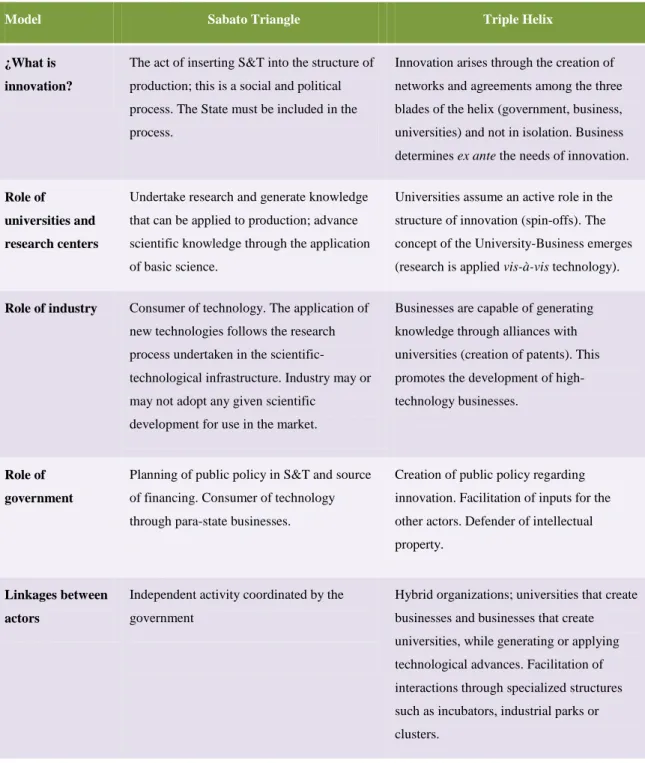
Table 1. The Sabato Triangle and The Triple Helix
Model Sabato Triangle Triple Helix
¿What is innovation?
The act of inserting S&T into the structure of production; this is a social and political process. The State must be included in the process.
Innovation arises through the creation of networks and agreements among the three blades of the helix (government, business, universities) and not in isolation. Business determines ex ante the needs of innovation.
Role of universities and research centers
Undertake research and generate knowledge that can be applied to production; advance scientific knowledge through the application of basic science.
Universities assume an active role in the structure of innovation (spin-offs). The concept of the University-Business emerges (research is applied vis-à-vis technology).
Role of industry Consumer of technology. The application of new technologies follows the research process undertaken in the scientific-technological infrastructure. Industry may or may not adopt any given scientific
development for use in the market.
Businesses are capable of generating knowledge through alliances with universities (creation of patents). This promotes the development of high-technology businesses.
Role of government
Planning of public policy in S&T and source of financing. Consumer of technology through para-state businesses.
Creation of public policy regarding innovation. Facilitation of inputs for the other actors. Defender of intellectual property.
Linkages between actors
Independent activity coordinated by the government
Hybrid organizations; universities that create businesses and businesses that create universities, while generating or applying technological advances. Facilitation of interactions through specialized structures such as incubators, industrial parks or clusters.
Source: Author’s own analysis and creation.
and research centers offered S&T that could be (or not) absorbed by businesses; alternately, the
Triple Helix has the business as the main customer, driving demand for a particular kind of research designed from the beginning to be adopted.
Despite the differences in how innovation is organized, both models share the ultimate objective: create knowledge to increase business competitiveness: in the Sabato Triangle
businesses can be public or private, while in the Triple Helix the are completely private. The technological development within the Sabato Triangle is distinctly oriented toward the advancement of science (science push), while in the Triple Helix, S&T is guided by the market (market pull) (Foladori & Zayago, 2012). The latter is what has molded the development of S&T in Mexico.
2. S&T in Mexico: institutionalization of the hand of the marketi
Institutionalization of S&T in Mexico
In 1935, the first steps were taken toward implementing an S&T agenda in Mexico. President Lázaro Cárdenas (1934-1940) pushed for a policy with a nationalist vision, focused on the socio-economic needs of the country. The political economy of development was linked with health, employment and the well-being of the population, and led to the creation of national technologies under an ISI strategy (Casas, 2005). The ISI model consolidated the basic manufacturing sector in Mexico (Aboites and Soria, 1998; Katz, 1994) and strengthened the home appliance, automobile, chemical and petroleum industries that drove the internal market (Rocha and López, 2003). S&T was aligned to the principles of the Sabato Triangle; resulting in the production of knowledge with a scientific and social vision, whereas before it had a purely commercial purpose.
Modernization Program was created to assist in the creation of technological activities and promote the competitiveness of private businesses.
In 1994 Mexico joined the OECD and asked that body to perform an evaluation of its scientific-technological system. The OECD recommended various measures to create a scientific-technologically competitive industry, among them: the creation of an institute to oversee all S&T; the creation of an S&T policy linked to the needs of business; a search for external funding; and the restructuring of CONACYT (OECD, 1994).
To achieve the S&T policy changes recommended by the OECD, Mexico borrowed $700-million from the World Bank in 1997. These funds were used to finance scientific and technological research, create linkages between universities and businesses, restructure the public research centers and improve the technology available to the private sector (World Bank, 1998). During the mandate of President Vicente Fox (2000-2006), the remaining OECD policy recommendations were fulfilled, with the exception of the amount of public financing directed toward R&D, which still had not reached 0.5% of Gross Domestic Product (GDP) when it should have reached at least 1%.
The North American Free Trade Agreement (NAFTA) played an important role in the changes made to Mexico’s S&T model. Although the trade agreement has no specific clause regarding S&T, it does address investment and technology transfer. With regard to investment, for example, the agreement forbids the establishment of any sort of performance requirements for investments from the other partner countries (Davis, 1994). Foreign businesses were permitted to set up shop in the country without any minimum technological requirements, no obligation provide worker training, nor any commitment for technology transfer. In fact, it became possible for businesses to enter the receiving country without the latest technological advancements, running counter to the idea that this opening to foreign investment would bring improved competitiveness.
The Science and Technology Special Program 2008-2012 (PECyT 2002-2012) consisted of a model in which businesses drove the demand for a specific kind of research from scientific institutions. The orientation is explicit. The vast majority of financial support for research programs went directly to businesses or organizations that were composed of academics and private business in partnership. Essentially, the concept of competitiveness came to be the flag under which all S&T policy marched from the beginning of this century to the present. In 2009, the Science & Technology Law was modified to emphasize the tendency toward privatization of the generation of scientific knowledge. With that change, Public Research Centers (CPIs) and para-state bodies of public administration could and should promote private spin-offs:
...the formation of strategic partnerships, technological alliances, consortia, linking and knowledge transfer organizations, new technology-based businesses, and regional innovation networks in which the adoption of innovative technological developments produced in those centers could be realized, as well as the engagement of researchers trained within them... (LCyT, 2009: 28).
Further, it facilitated the transfer of scientific and technological knowledge to businesses, contributing some 70% of the royalties for intellectual property rights awarded to the researchers who developed commercial applications. The aim is to provide incentives to the scientist so that they may become an entrepreneur. In January, 2012, the Public-Private Partnership Law (LAPP) was announced (DOF, 16 January 2012). This legalized the Services Delivery Projects and included support to applied research or technological innovation projects. The LAPP conceived of knowledge generation as a competitive activity, linked to private business. Additionally, it increased the tendency of scientific and technological production to be tied to the market, making any reversal of that approach increasingly difficult, since the contracts that it governs are of medium- and long-term (25 to 40 years), and their funding has priority over any other expense that may arise (Laurell, 2011). This vision –utilitarian and mechanical– subordinates the role of S&T advances to the interests of the private sector, while curtailing activities in the social sciences and humanities. This is reflected, for example, in the publicly-financed programs under National Science and Technology Council (CONACYT). In 2010, of its 40 programs promoting ST&I, 33 were explicitly directed toward the business sector and only 7 to the social sciences and humanities (FCCyT, 2010, p.17).
government met to prepare a document titled: Toward a National Agenda for Science, Technology and Innovation (HANCTI). It outlines the priorities and social commitments of Mexican science. The document begins with...
...Mexico is not oblivious to that, it meets challenges great and complex... what is needed is the design of public policies with a vision of the future and of sustainability that would led to a solution. It will have to take better-informed decisions, based on the most concrete knowledge. That which is created via science, technology and innovation... clearly, the product of the investments in ST&I is, in reality, an investment to encourage competitiveness and the creation of quality jobs (HANCTI, 2012, p.2).
The “Pact for Mexico” is a political compromise among the formal powers that establishes a series of agreements intended to improve the political, economic and social climate in Mexico. This document, signed by the top political forces in the country, reaffirms their conviction to align S&T to this model. The objective is to stimulate the knowledge economy in the country and to that end, act on three fronts: invest 1% of GDP in S&T, define relevant national and regional policies and encourage researchers to register more patents.
S&T Policy vis-à-vis NT
There is no national plan or initiative that guides the development of NT in Mexico. NT is mentioned for the first time in the economic program PECYT 2001-2006. The program explicitly called for the development of NT as a strategic area within advanced materials research, as well as in the energy sector, and makes note of the relevance of this technology to national development goals. PECYT 2001-2006 established that catalysts, polymers, nano-structured materials, thin films, semiconductors, metallurgy, biomaterials, optical materials, advanced ceramics and the simulation and modulation of processes are nanotechnological areas of interest to the country.
3. Nanotechnology Clusters in Mexicoiii
S&T policy follows the logic of the Triple Helix model and although there is no specific public policy for NT, it clearly has the aim of linking the three actors responsible for innovation (businesses, government and universities) to increase competitiveness. An agreement signed in 2009 between the Secretary of the Economy and CONACYT, with the support of the Nacional Financiera (NAFINSA),iv directed $149-million for the creation of 13 technological parks, significantly increasing the number that were already operating or under construction (Cruz, 2009). A number of these parks seek to develop NT, with some projects abandoned and a few others playing a leadership role.
The Silicon Border Development Science Park, located on the border between Mexicali and San Diego, is touted as the leading high-technology park in America that specializes in nanocomponents. Within this park universities, businesses –primarily transnational– and the office of economic development of the government of Baja California would work in partnership. The German business Q Cells planned to be the first to set up shop and bring an investment valued at $3,500-million. However, with the pretext of the world economic crises, to which were added legal problems with property in the park, the German firm cancelled its entry into Mexico (Haro and Cruz, 2012). The Government of Baja California officially suspended the program, which ended what would have been the largest investment in the history of the state (Delgado, 2012).
There is another development –though not configured as a cluster– that is relevant to our topic: this is the Bi-National Sustainability Laboratory (BNSL), which sponsors research in the field of Micro- and Nanotechnologies. Located in New Mexico near the border with the Mexican state of Chihuahua, it is only a few kilometers from the cities of El Paso and Ciudad Juárez. The BNSL was launched with $400-million in funding from the U.S. Economic Development Administration of the Department of Commerce, with matching funds from CONACYT in Mexico, and a further $100-million from the Department of Economic Development, New Mexico (SNL, 2005; Acosta, 2006). On the BNSL website, it identifies one of its clients as the “Paso del Norte MEMs Packaging Cluster”, in which the universities of New Mexico, Texas, Chihuahua, Nuevo León and the Sandía Military Laboratories are participants.
Development of the State of Puebla have donated $20-million (15 and 5, respectively) to top up the Motorola donation. This laboratory is involved in joint projects with IBM and Intel, also in the Electronics and Communications sector, the Secretary of Health and the National MEMs Network, as well as the National Microelectronics Center in Barcelona, Spain.
The Research and Technological Innovation Park (PIIT) located in the city of Monterrey, State of Nuevo León, was built on a property covering 175 acres, with an investment of some $100-million for infrastructure and $150-$100-million for equipment; it also has two specialized incubators in emergent technologies: one for biotechnology and the other for NT. It is also the headquarters of the Nuevo León NT Cluster (CNNL), which is the PIIT’s signature project. The CNNL’s objective is to develop specialized human resources, create new businesses with NT applications, attract financing and drive regional productivity and competitiveness (González, 2010).
The CNNL opened its doors in June, 2008, with 16 institutional members; by 2010, that number rose to 28. The CNNL brings together actors from government, the academic sector and the business sector. The government’s presence is represented by CONACYT (federal) and its financing programs; the government of Nuevo León by its Institute of Innovation and Technological Transfer (I2T2) and the Secretary of Economic Development. The academic sector’s presence is found in the CIMAVv, which coordinates the cluster; the Technological Institute of Higher Studies of Monterrey (ITESM); the Autonomous University of Nuevo León; the University of Monterrey (UdeM); the Research and Advanced Studies Center of the National Polytechnic Institute (CINVESTAV-IPN); various sub-centers from CONACYT’s Public Research Centers, such as the Applied Chemistry Research Center (CIQA); the Engineering and Industrial Development Center (CIDESI); and foreign universities such as Arizona State University (ASU); the University of Texas-Austin (UT-Austin) and the University of Texas (A&M).
There are also 18 businesses: Proleg (GE), Nanomateriales, Whirlpool, CopaMex, Vitro, Cydsa, Sigma, Cemex, Iza VentureCapital, Lamosa, Viakable, Univex, Grupo Simplex, Industrias Vago, Verzatec and Owens Corning (clusternano.org, 2010). The CNNL intends to have, by 2015, 100 NT-related businesses competing at the global level (González, 2010). Nacional Financiera recently announced that it will designate $186-million to support aerospace, biotechnology and NT industries in the park; which, undoubtedly, will reinforce the growth trend at the CNNL. There are 42 nanotechnology businesses operating in the state of Nuevo León, of which 26 can be found in the CNNL.
contact in the area of NT. In this arrangement, R&D is oriented toward fulfilling the needs of business, an ex ante process for innovation. In other words, the businesses determine the research agenda, as the product of that research must be inserted into productive activity and cover designated market segments. This means that most research is determined by the market, by sales and –consequently– by the expected profits.
4. NT’s Social Relevance in Mexico
The National Development Plan (PND) 2007-2012 states that the linking of education and S&T should promote development and improve the living conditions of all Mexicans. The Plan’s second thematic section, competitive economy and the creation of jobs, it states:
Scientific development, technological adoption and innovation, constitute one of the principle driving forces of economic growth and material well-being of modern societies. Businesses innovate to maintain their competitive position and to avoid losing their place in the market to competitors. In Mexico, the science and technology sector is made up of institutions from the public sector, institutions of higher education that train post-graduates and undertake research, and the businesses that invest in technological development and innovation (PND, 2007, p.119).
The improvement in the material conditions of society, through the application of ST&I, are the responsibility of three main actors within the Triple Helix. Mexico has signed off on this model and driven the development of NT accordingly. The three threads of the helix determine its development according to a production logic that is subsumed to private and capitalist production relations; and, in this context, it is worth analyzing the implications.
development, but it remains unclear how the Triple Helix model and, in this case, the form in which it shapes the development of NT will serve this purpose.
Another concern arises with the pressure applied to researchers to transform themselves into entrepreneurs / business-owners / business-persons. The law providing for public-private partnerships encourages such an occurrence; going beyond the scientist’s desire to make a living in the field of science, in this case, nanoscience. With that motivation, what interest would the scientist have in finding technical solutions to the problems of national development? Another question arising in this context is the mandate, ever more prominent, of CONACYT in the financing of projects on the condition that they include a business partner?
Mexico is the tenth-largest economy according to Purchasing Power Parity (PPC) (World Bank, 2012). At the same time, according to the most recent report of the National Council for the Evaluation of Social Policy (CONEVAL), poverty has risen dramatically in Mexico: 44.5% of the population were poor in 2008, rising to 46.2% in 2010 (CONEVAL, 2012). This means that 48-million Mexicans were living in poverty in 2008, and that figure rose in 2010 to 52-million people.
From Japan to China, the European Union to the United States, from Brazil to Mexico, all of these countries justify their financing of NT with the argument of increased competitiveness. They seek to use NT’s potential and its promise of bringing about the next industrial revolution in favor of their national economies. The success of the global economy is based on innovation, which puts those countries with limited resources in a disadvantageous position. The investment in technology appears to be more of a need than an option in that context.
If inequality and poverty are historical-structural problems in Mexico, does it then follow that the drive for new technologies along the priorities of the most wealthy is worthwhile? Whirlpool, CopaMex, Vitro, Cydsa, Sigma, Cemex, Iza VentureCapital, Lamosa, Viakable and other companies dominate the R&D priorities for NT in the CNNL, as do other businesses in the Distrito Federal or en Puebla. That does the increase in competitiveness for high-technology businesses have to do with the reduction of poverty?
unemployment has risen at the rate of 400-million workers by the end of 2012 and the causes lie, among others, with new technologies (El Universal, 2012; ILO, 2012).
Conclusions
In Latin America, two approaches were implemented for the development of S&T: the Sabato Triangle and the Triple Helix. The first led to a linear process in the generation of basic science and was applied in Mexico with relative success. This agenda followed the guidelines and priorities of the ISI model, that is, advancing State capitalism and strengthening the nation’s industrial sector. Geo-economic events and political interests accelerated the dismantling of ISI policies and the Sabato Triangle for S&T throughout Latin America. The arrival of a new model –open, deregulated and privatizing– brought about changes in the country’s scientific and technological public policies, and since the 1980s, Mexico began to subordinate the development of S&T to the demands imposed by the private sector. This resulted in the establishment of a model that shaped a generation of scientific knowledge under a marketable model, which demanded the application of specific technologies for commercialization before it could be fully developed. The change in agenda was put in place following the prescriptions of international organizations like the WB and the IMF.
The change in model affected the entire scientific and technological agenda in Mexico. Even more, the generation of knowledge began to be evaluated from the viewpoint of its productive-market utility and not according to its social relevance. Today, this process is deepening; it can be seen in the objectives identified in the majority o the S&T projects in the country. If there is no certainty that the generated knowledge or the topic under investigation will pay dividends (vis-à-vis the private sector, the head of the Triple Helix), its relevance, or even its scientific qualities, is questioned. Increasingly, universities and research centers are assessing the social utility of scientific knowledge around its usefulness to the private sector.
Public policy in NT, while not explicitly stated, is based on the Triple Helix model, and it is in this milieu that businesses, government and universities interact to transform the potential of this technology into an increase in competitiveness. NT research networks and industrial parks (or clusters) in the country reflect the ideals of this model. However, there are at least three aspects that are ignored in the confluence of the socioeconomic dynamic of the country that directly affect efforts in NT in its current configuration.
initiatives that guide the NT sector according to their capabilities and market opportunities. This is not the reality in Mexico. There is duplication of effort and of activities among the various research centers on the subject. The public policy disorder that permeates across various spheres of national life also affects NT.
The second significant problem is the lack of financing. The delay in S&T investment, in the gathering of high-level resources and in scientific infrastructure in Mexico is a historic phenomenon. Recently, President Peña Nieto declared a need to direct 1% of the GDP to S&T. It remains to be seen whether this will come to fruition, as there have been previous, similar declarations that failed to deliver a reliable budget. Investment, however, is not everything; perhaps of equal importance, or more, lies in knowing why to invest and who will benefit. The latter is key, and has direct implications on the social sustainability of all knowledge.
The third aspect is the generation of high-level human resources to satisfy demand in the NT sector. NT is a technology that transcends the limits of the scientific disciplines. One must understand physics, chemistry, materials, optics and other areas in order to know how to take advantage of its potential at the molecular level. Mexico trains about three-thousand PhDs per year (across all areas of knowledge), while Brazil prepares 11-thousand and the USA 50-thousand in the same period (Drucker, 2012). This is where the scientific infrastructure deficit occurs, which means the few who manage to undertake high-level research or obtain an academic degree abroad, above all in the natural sciences and engineering, end up unemployed since there is no place where they can apply what they have learned. As a consequence, for example, there are more Mexican PhDs in the USA than in the National System of Researchers (SNI) of CONACYT: 20-thousand vs. 16-thousand (Melesio, 2011).
Bibliography
Aboites, J. and Soria, M. (1998). Innovación, propiedad intelectual y estrategias tecnológicas: La experiencia de la economía mexicana. México DF: Siglo XXI-UAM.
Acosta, M. (2006 Spring). Building Businesses on the Border: The Bi-National Sustainability
Laboratory As An Engine of Economic Change. Economic Development America.
Washington, DC. Pp. 7-9.
Casas, R. (2005). El Estado y la política de la ciencia en México. Cuadernos deInvestigación Social, num. 11, Instituto de Investigaciones Sociales, UNAM.
Cimoli, M., Dosi, G., Nelson, R. & Stiglitz, J. (2006). Institutions and Policies Shaping Industrial Development: An introductory Note. LEM Papers Series 2006/02, Laboratory of Economics and Management (LEM), Sant'Anna School of Advanced Studies, Pisa, Italy.
CNNL (Cluster de Nanotecnología de Nuevo León) (www.clusternano.org) (2012). <http://www.clusternano.org/ >, Accessed April 14, 2012.
CONACYT (Consejo Nacional de Ciencia y Tecnología) (2002). Programa especial de ciencia y tecnología 2001-2006. Consejo nacional de Ciencia y Tecnología. [See also Vol. II].
CONEVAL (Consejo Nacional para la Evaluación de la Política Social) (2012). Informe de Evaluación de la Política de Desarrollo Social 2012. <http://www.coneval.gob.mx> Accessed December 2, 2012.
Cruz, A. (2009). Destinarán 4 mil 340 mdp a innovación tecnológica. Milenio on-line, <http://impreso.milenio.com/node/8519299>. Accessed January 2, 2011.
Davis, C. (1994). Competitiveness, Sustainability, and the North American System of
Innovation. Ottawa: International Development Research Centre. Paper presented to the Trinational Institute on Innovation, Competitiveness and Sustainability. Whistler, B.C.
Delgado, J. (9 March 2012). Truena la inversión más importante del sexenio de FCH. El mexicano on-line, <
http://www.el-
mexicano.com.mx/informacion/noticias/1/3/estatal/2012/03/09/554289/truena-la-inversion-mas-importante-del-sexenio-de-fch.aspx> Accessed March 15, 2012.
(DOF). Diario Oficial de La Federación. Ley de Asociaciones Publico-Privadas. LAPP, DOF
(01701/2012).
Drucker, P. (1969). The Age of Discontinuity: Guidelines to our Changing Society. London: Heinemann.
Drucker, R. (30 May 2012), Formación de más doctores en México. El universal online,
<http://www.eluniversal.com.mx/articulos/71103.html> Accessed January 12, 2013.
Dunning, J. H. and Lundan, S. M. (2008). Multinational enterprises and the global economy.
Surrey, UK: Edward Elgar Publishing.
El Universal (26 November 2012). Crisis, tecnología y desigualdad, afectan mercado laboral. El universal on line, <http://www.eluniversal.com.mx/notas/885669.html> Accessed November 26, 2012.
Etzkowitz, H. and Leydesdorff, L. (2001). The Transformation Of University-industry-government Relations. Electronic Journal of Sociology, 5(4), 101-117.
Etzkowitz, H. and Carvalho de Mello, J. M. (2004). The rise of a triple helix culture. Innovation in Brazilian economic and social development. International Journal of Technology Management and Sustainable Development, 2(3), 159-171.
FCCyT (Foro Consultivo Científico y Tecnológico) (2010). Programas para el Fomento Empresarial y la Vinculación 2010. México: FCCyT.
Foladori, G. & Zayago Lau, E. (2012). Las nanotecnologías y los sistemas nacionales de innovación. En Márquez, H., Soto, R. & Zayago Lau, E. (eds.), Visiones del Desarrollo. Mexico D.F.: Miguel Ángel Porrúa.
Frank, A. (1972). The Development of Underdevelopment, in James D. Cockcroft, Andre, F., and Dale, J., (eds.), Dependence and Underdevelopment. Garden City, New York: Anchor Books.
Freeman, C. (1995). The National System of Innovation in Historical Perspective. Journal of Economics, 19 (1), 5-24.
Freeman, C. (1987). Technology Policy and Economic Performance: Lessons from Japan.
London: Frances Pinter.
González, J. (2010, 16 November). Desarrollo de un cluster. La experiencia del cluster de nanotecnología de Nuevo León. Powerpoint Presentation delivered at the Nanoscience and Nanotechnology Symposium at UAM-X. México, D.F.
(HANCTI). Hacia una agenda nacional de ciencia, tecnología e innovación (2012), < http://red-
Haro, S. and Cruz, J. (2012). Suspenden Silicon Border y Punta Colonet. Reporte Zeta Online,
<http://www.zetatijuana.com/html/Edicion1855/Reportajez_Fracasan_mega_proyectos_e n_BC.html> Accessed 3 March 2012.
ILO (International Labor Organization) (2012). Tendencias Mundiales del Empleo 2012: El mundo enfrenta el desafío de crear 600 millones de empleos, advierte la OIT.
< http://www.ilo.org/global/about-the-ilo/newsroom/news/WCMS_171704/lang--es/index.htm> Accessed December 3, 2012.
INAOE (Instituto Nacional de Investigación en Astrofísica, Óptica y Electrónica) (n/d). Laboratorio Nacional de Nanoelectrónica. <http://wwwelec.inaoep.mx/lnn/index.php> Accessed December 18, 2010.
Katz, J. (1994). Technology, Economics and Late Industrialization. In Salomón J.; Sagasti F.; y Sachs-Jeantet, C.; (eds.) The Uncertain Queso: Science, Technology y Development. Japan: UNU.
Laurell A. C. (La Jornada, 9 December 2011). Ley de Asociaciones Publico-Privadas: la investigación como negocio particular. La jornada en linea,
<http://www.jornada.unam.mx/2011/12/09/ciencias/a03a1cie> Accessed January 2, 2012
LCyT (Ley de Ciencia y Tecnología) (2009). Diario Oficial de la Federación, DOF 12/06/09.
Lundvall, B.A. (ed.) (1992). National Innovation Systems: Towards a Theory of Innovation and Interactive Learning. London: Pinter.
Marini, R. (1974). Subdesarrollo y revolución. Siglo XXI Editores, México.
Melesio, L. (11 May 2011). México: desempleo y fuga de cerebros afectan a doctores. Scidev news, < http://www.scidev.net/es/news/m-xico-desempleo-y-fuga-de-cerebros-afectan-a-doctores-.html> Accessed January 10, 2013.
Nelson, R. (1993). A Retrospective. In Nelson, Richard (editor), National Innovation Systems. A Comparative Analysis. New York / Oxford: Oxford University Press.
Nelson, R. (1988). Institutions Supporting Technical Change in the United Status pp. 312-329. In Dosi, Giovanni et al. (editors), Technical Change and Economic Theory. London / New York: Pinter.
OECD (Organización para la Cooperación y el Desarrollo Económico). 1994, Review of National Science and Technology Policy: Mexico, Examiners report DSTI/STP (94) 11. Paris: OECD.
Parada, J. (2009). Monterrey. Internacional City of Knowledge Program. In Wessner, C. (editor)
Understanding Research, Science and Technology Parks: Global Best Practice: Report
of a Symposyum. Washington: Nacional Research Council.
(PND) Plan Nacional de Desarrollo 2007-2012. <http://www.pnd.calderon.presidencia.gob.mx> Accessed December 3, 2012.
Petras, J. and Veltmeyer, H. (2003). La globalización desenmascarada El imperialismo en el siglo XXI. México: Miguel Ángel Porrúa
Porter, M. (1990). The competitive advantage of nations. New York: Free Press.
Rocha, A. and López, R. (2003). Política en ciencia y tecnología en México: un análisis
retrospectivo. In Aboites, J. y Dutrénit, G. (coord.) Innovación, aprendizaje y creación de capacidades tecnológicas. México DF: Miguel Ángel Porrúa.
Sabato, J. and Mackenzie, M. (1982). La producción de tecnología. México, D.F.: Editorial Nueva Imagen.
Sabato, J. (1975). La ciencia y la tecnología en el desarrollo futuro de América Latina. Buenos Aires: Editorial Paidós.
(SIICYT) Sistema Integrado de Información sobre Investigación Científica, Desarrollo Tecnológico e Innovación (2011).
<http://www.siicyt.gob.mx/siicyt/cms/paginas/IndCientifTec.jsp> Accessed March 24, 2012.
SNL (Sandia National Laboratories). (2005). BiNational Sustainability Laboratory opens shop, hopes to create ‘necklace of labs’ along Mexican border. NEWS RELEASES,
<http://www.sandia.gov/news-center/news-releases/2005/gen-science/binational.html> Accessed July 3, 2012.
Vaccarezza, L. (1998). Ciencia, Tecnología y Sociedad: el estado de la cuestión en América Latina”, Revista Iberoamericana de Educación, 18, en
<http://www.rieoei.org/oeivirt/rie18a01.pdf> Accessed August 18, 2011.
World Bank (2012). World Development Indicators 2011.
<http://databank.worldbank.org/ddp/home.do?Step=12&id=4&CNO=2> Accessed July 12, 2012.
World, Bank (1998). Project Appraisal Document on a Proposed Loan in the Amount of US$300 Million to Mexico for a Knowledge and Innovation Project. Washington DC: World Bank.
Záyago Lau, E. (2011). Nanocluster in Nuevo Leon, Mexico. Reflections on its Social Significance. Nanotechnology, Law and Business Journal Vol. 8 Num. 49, pp. 49-59.
iThis section is based on Foladori & Zayago (2012)
ii
It is worth noting that in November, 2012, a meeting was organized to publish a document titled:
Guidelines for NT regulations to drive competitiveness and to protect the environment, health and security of consumers. This document marked a step forward in regulatory policy, particularly regarding the impact that nanoparticles could have on health and the environment. However, the synergetic logic of the document held as its ultimate goal the increase in competitiveness. This is an objective that, in many cases, was difficult to mesh with the improvement in the social well-being of the majority.
iiiThis section is an updated summary of Zayago 2011.
iv NAFINSA was created in 1989 by the Mexican Federal Government to endorse the creation of small
and medium enterprises. v