molecules
Article
The Unusual Acid-Accumulating Behavior during
Ripening of Cherimoya (
Annona cherimola
Mill.) is
Linked to Changes in Transcription and Enzyme
Activity Related to Citric and Malic Acid Metabolism
Mauricio González-Agüero1,*, Luis Tejerina Pardo2, María Sofía Zamudio1, Carolina Contreras1, Pedro Undurraga3and Bruno G. Defilippi1
1 Instituto de Investigaciones Agropecuarias, INIA La Platina, Santa Rosa 11610, Santiago 8831314, Chile;
[email protected] (M.S.Z.); [email protected] (C.C.); [email protected] (B.G.D.)
2 Facultad Ciencias Biológicas, Escuela de Ingeniería en Biotecnología, Universidad Andrés Bello,
República 217, Santiago 8370146, Chile; [email protected]
3 Facultad de Agronomía, Pontificia Universidad Católica de Valparaíso, Calle San Francisco s/n, Casilla 4-D,
Quillota 2260000, Chile; [email protected]
* Correspondence: [email protected]; Tel.: +56-2-2577-9161; Fax: +56-2-2577-9104
Academic Editor: Derek J. McPhee
Received: 11 February 2016; Accepted: 21 March 2016; Published: 25 April 2016
Abstract: Cherimoya (Annona cherimolaMill.) is a subtropical fruit characterized by a significant increase in organic acid levels during ripening, making it an interesting model for studying the relationship between acidity and fruit flavor. In this work, we focused on understanding the balance between the concentration of organic acids and the gene expression and activity of enzymes involved in the synthesis and degradation of these metabolites during the development and ripening of cherimoya cv. “Concha Lisa”. Our results showed an early accumulation of citric acid and other changes associated with the accumulation of transcripts encoding citrate catabolism enzymes. During ripening, a 2-fold increase in malic acid and a 6-fold increase in citric acid were detected. By comparing the contents of these compounds with gene expression and enzymatic activity levels, we determined
that cytoplasmic NAD-dependent malate dehydrogenase (cyNAD-MDH) and mitochondrial citrate
synthase (mCS) play important regulatory roles in the malic and citric acid biosynthetic pathways.
Keywords:Annona cherimola; organic acids; gene expression
1. Introduction
During ripening, fruits are transformed into palatable consumer products, and consumer preference for a specific fruit or variety is determined by its organoleptic attributes. These attributes depend on many factors, such as the genotype, growing conditions, harvest time and storage conditions. Moreover, organoleptic qualities are related to many other characteristics such as firmness, color, aroma, sweetness and acidity, which are associated with specific metabolic pathways that are
coordinated during fruit development and ripening [1]. Throughout this process, a series of changes
in fruit composition occur, including the synthesis and degradation of pigments, volatile compound
accumulation, and changes in the concentration of sugars and organic acids [2].
Flavor, one of the most important traits affecting fruit quality, is a complicated attribute that
is mainly controlled by the level and ratio of different sugars and organic acids [3]. In fruits, these
components are involved in both primary metabolism and in the biosynthesis of secondary metabolites,
including amino acids, vitamins and aroma volatiles, which further influence quality [4]. Sugars and
organic acids, the traits most commonly associated with fruit taste, are mainly measured as total
soluble solids (TSS) and titratable acidity (TA), respectively [5], and the relationship between TSS
and TA plays an important role in consumer acceptance of several species, such as citrus [6], table
grapes [7] and cherries [8].
In fruit species such as apples, grapes and tomatoes, acidity has long been considered one of the
most important quality attributes [9,10]. Several organic acids contribute to the acidity levels in fruit,
though citric (or its conjugate base citrate) and malic acids (or malate) are the major contributors [11].
Organic acids accumulate during fruit development and are consumed as respiratory substrates in glycolysis and the tricarboxylic acid (TCA) cycle; these acids also serve as gluconeogenesis substrates during fruit ripening [10].
Inside the cell, malic acid is formed from phosphoenolpyruvate (PEP) through the activities of
phosphoenolpyruvate carboxylase (PEPC) and malate dehydrogenase (MDH) [9], and cytosolic malate
is transported to and sequestered in the vacuole [12]. Malate can be degraded by the reversible reaction
of MDH and NADP-malic enzyme (NADP-ME).
Citric acid synthesis is thought to occur in the mitochondria via the TCA cycle. Mitochondrial
citrate synthase (mCS) is proposed to catalyze the controlling step of citrate synthesis, with
aconitase (ACON) and NAD-dependent isocitrate dehydrogenase (NAD-IDH) controlling citrate
degradation [10]. AlthoughmCSactivity has been positively correlated with citrate accumulation in
citrus and strawberries [13,14], the lower activity ofACON, which catalyzes the conversion of citrate
into isocitrate, could be responsible for the increase in citrate concentration during fruit growth in sour
lemons [15]. NAD-IDH is present in mitochondria but rarely identified in fruits, and no links with
citrate accumulation have been found [16]. Therefore, the molecular mechanism responsible for citrate
degradation remains largely unknown.
In general, fruit ripening is accompanied by organic acid degradation and therefore a decrease in
acidity, as has been described in such fruits such as pears [16], peaches [17], and apples [18]. However,
some fruit species exhibit different acidity patterns during ripening. For example, an increase in
TA has been described during ripening in “mangaba” (Hancornia speciosa), a tropical plant native
of Brazil, “soursop” (Annona muricata) and cherimoya [19–21]. In particular, the rise in acidity in
cherimoya is attributed to the production of organic acids during ripening [22,23] and to higher malic
acid accumulation caused by the action of MDH as the fruit ripens [24]. However, little is known
about the reason for this particular trend in cherimoya and the pathways responsible for the synthesis, regulation and accumulation of organic acids during development and ripening.
In this study, we focused on understanding the balance between organic acid levels during cherimoya development and ripening and enzymatic activity/gene expression related to the synthesis and degradation of these metabolites. For this purpose, cherimoya cv. “Concha Lisa” was collected at
different growth stages, and mature samples were ripened at 20˝C. Standard fruit quality parameters,
the organic acid content, enzymatic activity and the expression of several key genes encoding putative enzymes related to citric and malic acid metabolism were evaluated. Our results are expected to provide baseline information for elucidating the mechanisms involved in organic acid metabolism in
ripeningA. cherimolafruit.
2. Results and Discussion
2.1. Changes in Organic Acid Content during Growth of Cherimoya
Fruits of cherimoya cv. “Concha Lisa” at nine different growth stages were collected between
January and November 2013 (Table1); the fruits were classified by phenological stage using the
Biologische Bundesanstalt,Bundessortenamt und Chemische Industrie(BBCH) scale, according to Cautín
and Agustí [25]. For example, the initial state collected (S1) corresponds to growth stage 71 at the
beginning of ovary growth, a time when the green ovary is surrounded by the dying petal crown. An intermediate stage of development (S5) corresponds to stage 75, at which the fruit has reached half of
Molecules2016,21, 398 3 of 16
Table1. As development progresses, both fruit weight and diameter (data not shown) exhibit a double
sigmoid curve with a short latency period (stage II), which is typical growth for this fruit during a
season with predominantly low temperatures [26]. Although a series of studies have examined the
composition of organic acids during cherimoya ripening [21,23,24,27], there is no evidence to date on
what occurs during the development of this fruit.
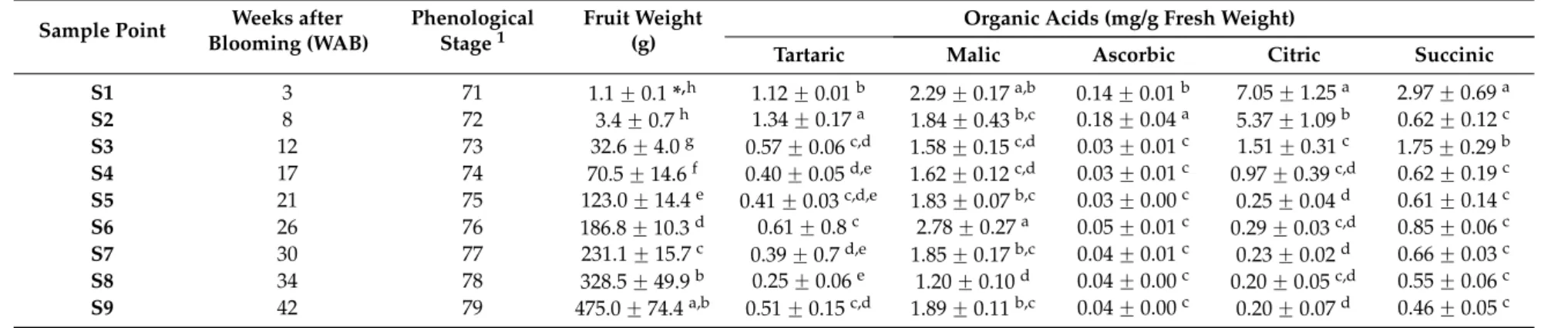
Our analysis showed the predominance of citric acid in the early stages of development, decreasing to very low levels (0.20 mg/g of fresh weight [FW]) when the fruits reached the commercial harvest stage. In contrast, the malic acid levels remained constant throughout the development, becoming the predominant acid at nearly 64% of the total acids analyzed at harvest. This is consistent
with the reports of Paullet al.[20] and Aliqueet al.[27], who found that malic acid is the major organic
acid contributing to the increase in TA in soursop and cherimoya, respectively. Levels of both malate and citrate were also highly correlated with many important regulators of ripening in an independent
study focused on early tomato fruit development [28]. As opposed to the observations for cherimoya,
malic acid increases in other fruits such as grape (Vitis vinifera) at earlier stages and then decreases
during ripening [29]. In early stages of development, malic acid primarily accumulates through the
metabolism of sugars, whereas malate acts as a vital source of carbon for different pathways, mainly the
TCA cycle, respiration, gluconeogenesis and secondary compound production, during ripening [30].
With regard to the other acids analyzed, such as tartaric, succinic and ascorbic, the general trend was a decrease in content as the fruits developed, showing no major changes from 17 weeks after blooming (WAB) until harvest. It is noteworthy that the high levels of succinic acid in the early stages of development decreased to below 0.4 mg/g FW at harvest. Similar results were reported by
Forteset al.[31] in grapes, in which succinic acid may serve as a substrate for the synthesis of primary
sugars and other metabolites. Tartaric acid accumulated during the early fruit stages and remained unchanged for most of cherimoya development. Other authors have reported this pattern, whereby
tartaric acid remains low during ripening because it is not metabolized in the fruit [32].
2.2. Sequence Analysis of Organic Acid-Related Genes from Cherimoya
Full-length cDNAs encoding cytoplasmic NAD-dependent malate dehydrogenase (cyNAD-MDH),
NADP-dependent malic enzyme (NADP-ME), NAD-dependent malic enzyme (NAD-ME), ATP
citrate synthase (ATP-CS) also called ATP-citrate lyase, NADP-dependent isocitrate dehydrogenase
(NADP-IDH) and mitochondrial citrate synthase (mCS) were identified, as were partial-length
transcripts sequences encoding phosphoenol pyruvate carboxylase (PEPC), aconitate hydratase 1
(ACON). BLASTp was used to confirm homology, and the protein products were designated
Ac-cyNAD-MDH (332 amino acids—aa), AcNADP-ME (587 aa), AcNAD-ME (606 aa), AcATP-CS
(423 aa), AcNADP-IDH (416 aa), Ac-mCS (473 aa), AcPEPC(164 aa), and AcACON (473 aa). The
data provided in Table2indicate high identity of cherimoya malic and citric acid-related genes with
Table 1.Organic acid contents of cherimoya fruit at nine stages of development, collected during 42 weeks. Results are expressed as the mean˘standard error (SE) of four separate extractions and determinations.
Sample Point Weeks after Blooming (WAB)
Phenological Stage1
Fruit Weight (g)
Organic Acids (mg/g Fresh Weight)
Tartaric Malic Ascorbic Citric Succinic
S1 3 71 1.1˘0.1*,h 1.12˘0.01b 2.29˘0.17a,b 0.14˘0.01b 7.05˘1.25a 2.97˘0.69a
S2 8 72 3.4˘0.7h 1.34˘0.17a 1.84˘0.43b,c 0.18˘0.04a 5.37˘1.09b 0.62˘0.12c
S3 12 73 32.6˘4.0g 0.57˘0.06c,d 1.58˘0.15c,d 0.03˘0.01c 1.51˘0.31c 1.75˘0.29b
S4 17 74 70.5˘14.6f 0.40˘0.05d,e 1.62˘0.12c,d 0.03˘0.01c 0.97˘0.39c,d 0.62˘0.19c
S5 21 75 123.0˘14.4e 0.41˘0.03c,d,e 1.83˘0.07b,c 0.03˘0.00c 0.25˘0.04d 0.61˘0.14c
S6 26 76 186.8˘10.3d 0.61˘0.8c 2.78˘0.27a 0.05˘0.01c 0.29˘0.03c,d 0.85˘0.06c
S7 30 77 231.1˘15.7c 0.39˘0.7d,e 1.85˘0.17b,c 0.04˘0.01c 0.23˘0.02d 0.66˘0.03c
S8 34 78 328.5˘49.9b 0.25˘0.06e 1.20˘0.10d 0.04˘0.00c 0.20˘0.05c,d 0.55˘0.06c
S9 42 79 475.0˘74.4a,b 0.51˘0.15c,d 1.89˘0.11b,c 0.04˘0.00c 0.20˘0.07d 0.46˘0.05c
1According to Cautín and Agustí [25], using the BBCH-scale. * In the same column, different letters indicated differences among development stages atpď0.05 by LSD test.
Table 2.Isolated genes related to organic acid metabolism inAnnona cherimola.
Gene GenBank
Access Length (aa) Coding Enzyme and Type of Sequence Identified
Orthologous Sequence: Specie and
GenBank Access1 Identity (%)
Ac-cyNAD-MDH KU524480 332 Cytosolic NAD-malate dehydrogenase, complete sequence Annona cherimola—AHY99589 100 AcNADP-ME KU524481 587 Putative NADP-dependent malic enzyme, complete sequence Theobroma cacao—EOY15729 85
AcNAD-ME KU524482 606 Putative NAD-dependent malic enzyme, complete sequence Theobroma cacao—EOX96044 85 AcATP-CS KU524483 423 Putative ATP-citrate synthase, complete sequence Ricinus communis—XP_002512567 91 AcNADP-IDH KU524484 416 Putative isocitrate dehydrogenase protein, complete sequence Prunus persica—AAL11503 90 Ac-mCS KU524485 473 Putative mitochondrial citrate synthase, complete sequence Cucumis sativus—XP_004135902 88 AcPEPC KU524486 164 Putative phosphoenolpyruvate carboxylase, partial sequence Elaeis guineensis—AEQ94112 86 AcACON KU524487 473 Putative aconitate hydratase 1, partial sequence Citrus clementina—CBE71056 91
Molecules2016,21, 398 5 of 16
2.3. Expression of Citric and Malic Acid-Related Genes during A. cherimola Fruit Growth
The expression of four genes related to malic acid metabolism and four citric acid-related genes
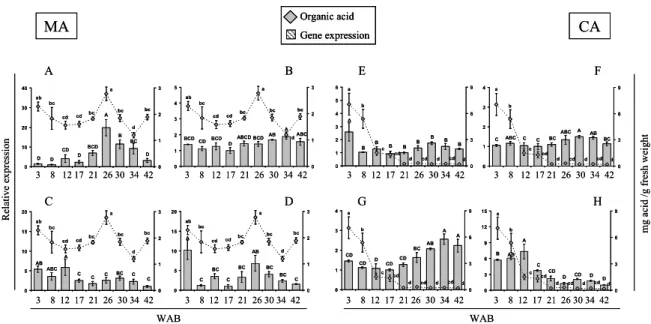
was analyzed by real-time quantitative PCR (qPCR) in developing fruits at nine stages (Figure1).
Expression patterns for these organic acid-related genes or the activities of key enzymes differ among
species, such as peach [17], strawberry [14], apple [15], pear [16], and melon [34]. Although no major
changes in malic acid were found during cherimoya fruit development, the expression patterns of genes related to its synthesis and degradation do not necessarily correlate with the timing of the
observed changes in organic acid content (Figure1).AcPEPC, which codes for the enzyme responsible
for producing oxaloacetate (OAA) at the beginning of the malate synthetic pathway, showed the
highest expression at 26 WAB and then declined (Figure1A). This expression pattern correlates with
the malate concentration. Another gene involved in the synthesis of malate,Ac-cyNAD-MDH, did
not exhibit significant changes in expression, except for a slight increase in the last stages of fruit
development (Figure1B). The profiles of theAcPEPCandAc-cyNAD-MDHgenes might explain the
pattern of a low malate exchange rate; similarly, decreases in the expression of genes,AcNADP-ME
(Figure1C) andAcNAD-ME(Figure1D), responsible for the degradation of this metabolite may also
explain this behavior during cherimoya development.
Molecules 2016, 21, 398 5 of 15
2.3. Expression of Citric and Malic Acid-Related Genes during A. cherimola Fruit Growth
The expression of four genes related to malic acid metabolism and four citric acid-related genes was analyzed by real-time quantitative PCR (qPCR) in developing fruits at nine stages (Figure 1). Expression patterns for these organic acid-related genes or the activities of key enzymes differ among species, such as peach [17], strawberry [14], apple [15], pear [16], and melon [34]. Although no major changes in malic acid were found during cherimoya fruit development, the expression patterns of genes related to its synthesis and degradation do not necessarily correlate with the timing of the
observed changes in organic acid content (Figure 1). AcPEPC, which codes for the enzyme responsible
for producing oxaloacetate (OAA) at the beginning of the malate synthetic pathway, showed the highest expression at 26 WAB and then declined (Figure 1A). This expression pattern correlates with
the malate concentration. Another gene involved in the synthesis of malate, Ac-cyNAD-MDH, did not
exhibit significant changes in expression, except for a slight increase in the last stages of fruit
development (Figure 1B). The profiles of the AcPEPC and Ac-cyNAD-MDH genes might explain the
pattern of a low malate exchange rate; similarly, decreases in the expression of genes, AcNADP-ME
(Figure 1C) and AcNAD-ME (Figure 1D), responsible for the degradation of this metabolite may also
explain this behavior during cherimoya development.
Figure 1. Expression profiles of putative organic acid-related genes during the growth of cherimoya cv. “Concha Lisa”. Quantitative real-time PCR assays were performed in duplicate on samples from 3 to
42 weeks after blooming (WAB). The genes analyzed related to malic acid (MA) were, (A) phosphoenol
pyruvate carboxylase, AcPEPC; (B) cytoplasmic NAD-dependent malate dehydrogenase,
Ac-cyNAD-MDH; (C) NADP-dependent malic enzyme, AcNADP-ME; and (D) NAD-dependent malic enzyme,
AcNAD-ME. The genes analyzed related to citric acid (CA) were; (E) citrate synthase, Ac-mCS; (F)
aconitate hydratase 1, AcACON; (G) NADP-dependent isocitrate dehydrogenase, AcNADP-IDH; and
(H) ATP citrate synthase, AcATP-CS. Expression was normalized to a reference gene (AcUbiq, GenBank
FJ664263) and the value is expressed against the lowest value of relative abundance. The relative expression of each gene (bars) was compared with the concentration of the respective acid (gray rhombus). Different letters (capitals for expression and lower cases for activity) between each time
point represent significant differences at p ≤ 0.05 by the LSD test.
Regarding citric acid metabolism, the expression patterns of Ac-mCS (Figure 1E), which is
implicated in citrate synthesis, AcACON (Figure 1F) and AcNADP-IDH (Figure 1G), both related to
citrate degradation, may account for the high accumulation of this acid at the initial stages and their
rapid decline as cherimoya development progresses. Interestingly, a relationship between Ac-mCS and
the citric acid pattern was found in cherimoya; this is different from that observed by Iannetta et al. [14]
in strawberry, where Fa-mCS1 expression did not correlate with either enzyme activity or citric acid
3 8 12 17 21 26 30 34 42 3 8 12 17 21 26 30 34 42
Figure 1.Expression profiles of putative organic acid-related genes during the growth of cherimoya cv. “Concha Lisa”. Quantitative real-time PCR assays were performed in duplicate on samples from 3 to 42 weeks
after blooming (WAB). The genes analyzed related to malic acid (MA) were, (A) phosphoenol pyruvate
carboxylase,AcPEPC; (B) cytoplasmic NAD-dependent malate dehydrogenase,Ac-cyNAD-MDH; (C)
NADP-dependent malic enzyme,AcNADP-ME; and (D) NAD-dependent malic enzyme,AcNAD-ME.
The genes analyzed related to citric acid (CA) were; (E) citrate synthase, Ac-mCS; (F) aconitate
hydratase 1,AcACON; (G) NADP-dependent isocitrate dehydrogenase,AcNADP-IDH; and (H) ATP
citrate synthase,AcATP-CS. Expression was normalized to a reference gene (AcUbiq, GenBank FJ664263)
and the value is expressed against the lowest value of relative abundance. The relative expression of each gene (bars) was compared with the concentration of the respective acid (gray rhombus). Different letters (capitals for expression and lower cases for activity) between each time point represent significant
differences atpď0.05by the LSD test.
Regarding citric acid metabolism, the expression patterns ofAc-mCS (Figure 1E), which is
implicated in citrate synthesis,AcACON (Figure1F) andAcNADP-IDH (Figure1G), both related
to citrate degradation, may account for the high accumulation of this acid at the initial stages and their
the citric acid pattern was found in cherimoya; this is different from that observed by Iannettaet al.[14]
in strawberry, whereFa-mCS1expression did not correlate with either enzyme activity or citric acid
accumulation. In the case ofAcATP-CS(Figure1H), a gene possibly related to citrate degradation, the
expression pattern showed no relationship with the accumulation of this organic acid.
2.4. Changes In Quality Parameters and Organic Acid Patterns during Cherimoya cv. “Concha Lisa” Ripening
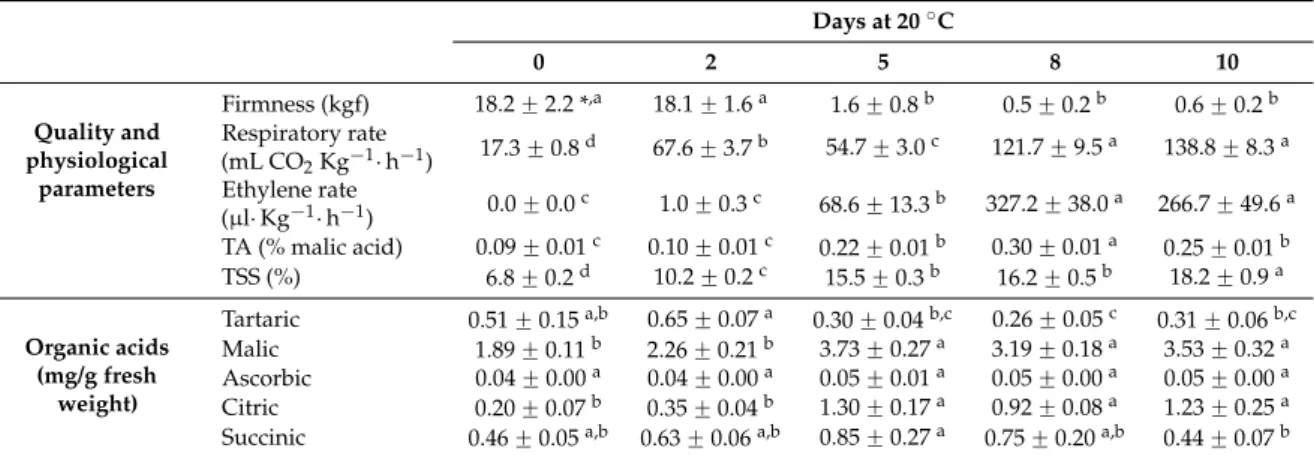
As expected, firmness was very high at harvest, reaching values of 18 kgf and remaining constant
until day 2, at which a rapid softening was observed at 20˝C (Table3). This change in pulp firmness
coincided with a significant increase in ethylene production after 5 days, with a peak observed at 8
days at 20˝C. Importantly, we observed the particular behavior of cherimoya as a climacteric fruit that
shows a double peak in respiratory rate [27,35]. Moreover, an increase in TSS and TA was observed
during cherimoya ripening (Table3), similar to the results reported by Manríquezet al.[23]. The TA
increases coincidently with the respiratory rate, and after 5 days at 20˝C the TA shows an increase
(2.4 fold) immediately after the first CO2peak. This result is similar to that reported in soursop, with
the authors suggesting that the increase might be a consequence of the glycolysis induced by harvest,
with intense glucose oxidation and starch hydrolysis [36].
Table 3.Quality, physiological parameters and organic acid contents of cherimoya fruit during ripening
at 20˝C. Results are expressed as the mean˘SE of a series of separate determinations and extractions.
TSS: total soluble solids, and TA: titratable acidity.
Days at 20˝C
0 2 5 8 10
Quality and physiological
parameters
Firmness (kgf) 18.2˘2.2 *,a 18.1˘1.6a 1.6˘0.8b 0.5˘0.2b 0.6˘0.2b Respiratory rate
(mL CO2Kg´1¨h´1) 17.3˘0.8d 67.6˘3.7b 54.7˘3.0c 121.7˘9.5a 138.8˘8.3a Ethylene rate
(µl¨Kg´1¨h´1) 0.0˘0.0c 1.0˘0.3c 68.6˘13.3b 327.2˘38.0a 266.7˘49.6a TA (% malic acid) 0.09˘0.01c 0.10˘0.01c 0.22˘0.01b 0.30˘0.01a 0.25˘0.01b TSS (%) 6.8˘0.2d 10.2˘0.2c 15.5˘0.3b 16.2˘0.5b 18.2˘0.9a
Organic acids (mg/g fresh
weight)
Tartaric 0.51˘0.15a,b 0.65˘0.07a 0.30˘0.04b,c 0.26˘0.05c 0.31˘0.06b,c Malic 1.89˘0.11b 2.26˘0.21b 3.73˘0.27a 3.19˘0.18a 3.53˘0.32a Ascorbic 0.04˘0.00a 0.04˘0.00a 0.05˘0.01a 0.05˘0.00a 0.05˘0.00a Citric 0.20˘0.07b 0.35˘0.04b 1.30˘0.17a 0.92˘0.08a 1.23˘0.25a Succinic 0.46˘0.05a,b 0.63˘0.06a,b 0.85˘0.27a 0.75˘0.20a,b 0.44˘0.07b * In the same row, different letters indicated differences among sample points atpď0.05 by LSD test.
In relation to the organic acid content, our analysis revealed almost no changes in ascorbic, tartaric
and succinic acid levels during cherimoya ripening (Table3); this was similar to what was found by
Manríquezet al.[23] in “Concha Lisa” and “Bronceada” (another cherimoya cv.), where the tartaric
acid concentration was very low from harvest to the last stages of ripening. In contrast, malic and citric acids were predominant and increased significantly as the fruits ripened; indeed, the ripening of “Concha Lisa” cherimoya fruit was accompanied by a 2-fold increase in malic acid and a 6-fold increase in citric acid. Both acids peaked at 5 days after harvest, declining thereafter and remaining
constant (Table3). Interestingly, the increase in malic and citric acids at 20˝C parallels the increase in
TA, suggesting that both acids may be responsible for the changes in TA during cherimoya ripening.
2.5. Gene Expression and Activity Analysis of Key Enzymes Related to Malic and Citric Metabolism during Cherimoya Ripening
The expression of eight genes and the activity of three enzymes were analyzed and compared to the increase in the respective organic acids during cherimoya ripening. Four genes related to
malic acid metabolism (Figure2) were analyzed by qPCR. One of them,AcPEPC(Figure2A) showed
Molecules2016,21, 398 7 of 16
the increase in malic acid detected during cherimoya ripening. Rises in malic acid concentration increases the availability of OAA during the first days of ripening, and this OAA is subsequently
metabolized in other fruit species such as melon [34] and loquat [37].PEPCactivity increased during
the early stages and then decreased, revealing a relationship betweenPEPCactivity and organic acid
concentration [34].
Molecules 2016, 21, 398 7 of 15
stages and then decreased, revealing a relationship between PEPC activity and organic acid
concentration [34].
Figure 2. Expression profiles for four genes related to malic acid metabolism during ripening of
“Concha Lisa” cherimoyas at 20 °C. The following genes were analyzed by qPCR: (A) phosphoenol
pyruvate carboxylase, AcPEPC; (B) cytoplasmic NAD-dependent malate dehydrogenase,
Ac-cyNAD-MDH; (C) NADP-dependent malic enzyme, AcNADP-ME; and (D) NAD-dependent malic enzyme,
AcNAD-ME. Expression was normalized to a reference gene AcUbiq (GenBank FJ664263) and the
value is expressed against the lowest value of relative abundance. The expression of each gene (bars) was compared with the concentration of malic acid (gray rhombus). Different letters between each
sample point represent significant differences at p ≤0.05 by the LSD test.
In the case of Ac-cyNAD-MDH (Figure 2B), which is responsible for the synthesis of malate from
OAA in the cytoplasm, a slight increase in expression was found when the fruits ripened (10 days at 20 °C), and this could be related to the increase in malic acid concentration. Likewise, an increase in the NAD-MDH activity (8 days at 20 °C) was observed (Figure 3A). NAD-MDH activity represents a combination of cytosolic and mitochondrial activities; therefore it is not uncommon to find some divergence between activity data and the expression of this cytoplasmic gene. While, there is no
temporal coincidence between the perceived rise on Ac-cyNAD-MDH expression and NAD-MDH
activity; both, gene expression and protein activity increase and may be related with the high accumulation of malic acid. These results are consistent with and support the observations of Muñoz et al. [24], who suggested that the in vitro properties of these enzymes and the fact that the activity of
NAD-MDH is higher than the activity of NADP-ME account for the particularly high titratable acidity
of “Fino de Jete” cherimoyas during ripening.
Although we did not measure the activity of NADP-ME, the enzyme responsible for malic acid
degradation, we did analyze expression of the AcNADP-ME gene (Figure 2C). We found increased
ME transcript abundance, which was not correlated with the malate behavior. Both, the decrease in
expression of Ac-PEPC and the increase in AcNADP-ME, may suggest that the biosynthesis of malate
that normally occurs via PEPC and NAD-MDH, switches to pyruvate kinase and NADP-ME activities
during ripening, similar to what has been found in other fruits, including non-climacteric fruits such
as grapes [9]. Moreover, the AcNAD-ME gene, encoding the enzyme responsible for the conversion
of malic acid to pyruvate, showed a decrease in expression at the end of ripening (Figure 2D).
Relat
ive ex
pr
ession
Days at 20°C
A B
Days at 20°C
A B
Figure 2.Expression profiles for four genes related to malic acid metabolism during ripening of “Concha
Lisa” cherimoyas at 20˝C. The following genes were analyzed by qPCR: (A) phosphoenol pyruvate
carboxylase,AcPEPC; (B) cytoplasmic NAD-dependent malate dehydrogenase, Ac-cyNAD-MDH;
(C) NADP-dependent malic enzyme, AcNADP-ME; and (D) NAD-dependent malic enzyme,
AcNAD-ME. Expression was normalized to a reference geneAcUbiq(GenBank FJ664263) and the
value is expressed against the lowest value of relative abundance. The expression of each gene (bars) was compared with the concentration of malic acid (gray rhombus). Different letters between each
sample point represent significant differences atpď0.05 by the LSD test.
In the case ofAc-cyNAD-MDH(Figure2B), which is responsible for the synthesis of malate
from OAA in the cytoplasm, a slight increase in expression was found when the fruits ripened
(10 days at 20˝C), and this could be related to the increase in malic acid concentration. Likewise, an
increase in the NAD-MDH activity (8 days at 20˝C) was observed (Figure3A). NAD-MDH activity
represents a combination of cytosolic and mitochondrial activities; therefore it is not uncommon to find some divergence between activity data and the expression of this cytoplasmic gene. While,
there is no temporal coincidence between the perceived rise on Ac-cyNAD-MDHexpression and
NAD-MDH activity; both, gene expression and protein activity increase and may be related with the high accumulation of malic acid. These results are consistent with and support the observations
of Muñozet al.[24], who suggested that thein vitroproperties of these enzymes and the fact that
the activity of NAD-MDH is higher than the activity ofNADP-MEaccount for the particularly high
titratable acidity of “Fino de Jete” cherimoyas during ripening.
Although we did not measure the activity ofNADP-ME, the enzyme responsible for malic acid
degradation, we did analyze expression of theAcNADP-MEgene (Figure2C). We found increased
expression ofAc-PEPCand the increase inAcNADP-ME, may suggest that the biosynthesis of malate
that normally occurs viaPEPCand NAD-MDH, switches to pyruvate kinase andNADP-MEactivities
during ripening, similar to what has been found in other fruits, including non-climacteric fruits such
as grapes [9]. Moreover, theAcNAD-MEgene, encoding the enzyme responsible for the conversion of
malic acid to pyruvate, showed a decrease in expression at the end of ripening (Figure2D).
Molecules 2016, 21, 398 8 of 15
Figure 3. Activity profiles of organic acid-related enzymes during “Concha Lisa” cherimoya ripening. Assays were performed in duplicate using samples of 4 fruits per time point during ripening at 20 °C.
The following enzymes were analyzed: (A) NAD-dependent malate dehydrogenase, NAD-MDH; (B)
citrate synthase, CS; and (C) aconitate hydratase, ACON. In each panel, enzymatic activity (black
rectangles) is related to and compared with the concentration of the respective organic acid (gray
rhombus). Different letters between each sample point represent significant differences at p ≤0.05 by
the LSD test.
Chen et al. [37] reported that ME may play a significant role in decreasing malic acid concentrations during the ripening of loquats, which is different from the observations of Saradhuldhat and Paull [38], who described no correlation with malic acid in pineapples. These different results show how interesting it would to learn more about the activity of this enzyme and its intracellular environment in different species.
With regard to citric acid metabolism, the first step in the TCA cycle is catalyzed by mCS. Our
results showed that the increase in citric acid concentration was accompanied with enhanced CS
activity (Figure 3B) and Ac-mCS gene expression (Figure 4A). These findings suggest that mCS may
play a significant role in citric acid biosynthesis during ripening of “Concha Lisa” cherimoyas, similar
to what has been reported in melons by Tang et al. [34]. Nonetheless, as citric acid is degraded by ACON
in the TCA cycle, the citric acid concentration is expected to increase as ACON activity decreases.
Figure 4B shows that the citric acid concentration in cherimoya increased linearly, with a
significant rise in AcACON expression, at the final stages of ripening. However, ACON activity
increased rapidly after harvest but declined after 2 days at 20 °C (Figure 3C), consistent with previous
findings in lemon, whereby reductions in ACON activity were found to play a role in citric acid
accumulation [15,39]. Morgan et al. [39] report an increase in citrate proportional to the decrease in
aconitase during ripening of transgenic and introgression lines of tomatoes, suggesting that aconitase activity is a major determinant, which affects not only the citrate levels, but also led to a substantial increase in malate and a decrease in succinate and fumarate concentrations on ripe fruits. Otherwise,
similarly to the observations for AcNADP-ME in malate metabolism, expression of the AcATP-CS
gene, which is also involved in the degradation of citric acid, surprisingly increased to approximately 60 times higher than the minimum value expressed during cherimoya ripening (Figure 4C); this was
opposite to the citric acid content measured. However, this significant increase in AcATP-CS expression
could be related to an increase in activity of this enzyme, which has been reported during ripening
of mango fruit [40]. The increase of ATP-CS activity could switch the citrate metabolism away from
the TCA cycle towards the supply of acetyl-CoA and OAA for other metabolically active pathways
a Days at 20°C
mm Days at 20°C
mmo Days at 20°C
a Days at 20°C
mm Days at 20°C
mmo Days at 20°C
Figure 3.Activity profiles of organic acid-related enzymes during “Concha Lisa” cherimoya ripening.
Assays were performed in duplicate using samples of 4 fruits per time point during ripening at 20˝C.
The following enzymes were analyzed: (A) NAD-dependent malate dehydrogenase, NAD-MDH;
(B) citrate synthase, CS; and (C) aconitate hydratase,ACON. In each panel, enzymatic activity (black
rectangles) is related to and compared with the concentration of the respective organic acid (gray
rhombus). Different letters between each sample point represent significant differences atpď0.05 by
the LSD test.
Chenet al.[37] reported that ME may play a significant role in decreasing malic acid concentrations
during the ripening of loquats, which is different from the observations of Saradhuldhat and Paull [38],
who described no correlation with malic acid in pineapples. These different results show how interesting it would to learn more about the activity of this enzyme and its intracellular environment in different species.
With regard to citric acid metabolism, the first step in the TCA cycle is catalyzed bymCS. Our
results showed that the increase in citric acid concentration was accompanied with enhanced CS
activity (Figure3B) andAc-mCSgene expression (Figure4A). These findings suggest thatmCSmay
play a significant role in citric acid biosynthesis during ripening of “Concha Lisa” cherimoyas, similar
to what has been reported in melons by Tanget al.[34]. Nonetheless, as citric acid is degraded byACON
in the TCA cycle, the citric acid concentration is expected to increase asACONactivity decreases.
Figure 4B shows that the citric acid concentration in cherimoya increased linearly, with a
significant rise inAcACON expression, at the final stages of ripening. However, ACONactivity
increased rapidly after harvest but declined after 2 days at 20˝C (Figure3C), consistent with previous
findings in lemon, whereby reductions inACON activity were found to play a role in citric acid
accumulation [15,39]. Morganet al.[39] report an increase in citrate proportional to the decrease in
Molecules2016,21, 398 9 of 16
increase in malate and a decrease in succinate and fumarate concentrations on ripe fruits. Otherwise,
similarly to the observations forAcNADP-MEin malate metabolism, expression of theAcATP-CS
gene, which is also involved in the degradation of citric acid, surprisingly increased to approximately
60 times higher than the minimum value expressed during cherimoya ripening (Figure4C); this
was opposite to the citric acid content measured. However, this significant increase inAcATP-CS
expression could be related to an increase in activity of this enzyme, which has been reported during
ripening of mango fruit [40]. The increase ofATP-CSactivity could switch the citrate metabolism
away from the TCA cycle towards the supply of acetyl-CoA and OAA for other metabolically active
pathways (e.g., flavonoids and isoprenoids) during fruit ripening [2]. Importantly, the malate and
citrate metabolism are intimately connected, and the net synthesis of malate byATP-CShas yet to
be demonstrated in fruits [9], but to the best of our knowledge, this is the first report about it fact.
Finally,AcNADP-IDH(Figure4D), which is indirectly involved in the degradation of citrate, remained
unchanged during ripening. Previous studies in peach [17] and melon [34] have shown that the
expression patterns of genes involved in organic acid metabolism are not necessarily correlated with changes in organic acid content.
Molecules 2016, 21, 398 9 of 15
(e.g., flavonoids and isoprenoids) during fruit ripening [2]. Importantly, the malate and citrate
metabolism are intimately connected, and the net synthesis of malate by ATP-CS has yet to be
demonstrated in fruits [9], but to the best of our knowledge, this is the first report about it fact. Finally, AcNADP-IDH (Figure 4D), which is indirectly involved in the degradation of citrate, remained unchanged during ripening. Previous studies in peach [17] and melon [34] have shown that the expression patterns of genes involved in organic acid metabolism are not necessarily correlated with changes in organic acid content.
Figure 4. Expression profiles of putative genes related to the synthesis or degradation of citric acid
during ripening of cherimoya cv. “Concha Lisa”. The following genes were analyzed by qPCR: (A)
citrate synthase, Ac-mCS; (B) aconitate hydratase 1, AcACON; (C) ATP citrate synthase, AcATP-CS;
and (D) NADP-dependent isocitrate dehydrogenase, AcNADP-IDH. Expression was normalized to
the reference gene AcUbiq (GenBank FJ664263) and the value is expressed against the lowest value of
relative abundance. In each panel, gene expression (bars) was compared with the concentration of citric acid (gray rhombus). Different letters between each time point represent significant differences
at p ≤ 0.05 by the LSD test.
3. Materials and Methods
3.1. Plant Materials
Samples of developing cherimoya cv. “Concha Lisa” fruits were obtained from trees located at the La Palma experimental station at the Pontificia Universidad Católica de Valparaíso, Quillota
(Chile), latitude −32.898574°, longitude −71.210712° and elevation 200 m. Samples were collected at
nine stages of development between January and November 2013, and the phenological stage was classified according to Cautín and Agustí [25] using the BBCH-scale. The samples were transported to the Postharvest Laboratory facility at INIA to record the total fruit weight and equatorial diameter
and were subsequently stored at −80 °C until use. Harvest-mature (November) samples were
collected considering ground color as a harvesting index and then ripened at 20 °C for up to 10 days until the ready-to-eat stage was reached.
3.2. Fruit Parameters
Quality parameters were determined for each sample point during ripening from six fruits as biological replicates, and the results were expressed as the mean ± standard error (SE). Ethylene
Relat
ive ex
pression
Days at 20°C
A B
Days at 20°C
A B
Figure 4.Expression profiles of putative genes related to the synthesis or degradation of citric acid during ripening of cherimoya cv. “Concha Lisa”. The following genes were analyzed by qPCR:
(A) citrate synthase,Ac-mCS; (B) aconitate hydratase 1,AcACON; (C) ATP citrate synthase,AcATP-CS;
and (D) NADP-dependent isocitrate dehydrogenase,AcNADP-IDH. Expression was normalized to
the reference geneAcUbiq(GenBank FJ664263) and the value is expressed against the lowest value of
relative abundance. In each panel, gene expression (bars) was compared with the concentration of citric acid (gray rhombus). Different letters between each time point represent significant differences at
pď0.05 by the LSD test.
3. Materials and Methods
3.1. Plant Materials
Samples of developing cherimoya cv. “Concha Lisa” fruits were obtained from trees located at the La Palma experimental station at the Pontificia Universidad Católica de Valparaíso, Quillota
nine stages of development between January and November 2013, and the phenological stage was
classified according to Cautín and Agustí [25] using the BBCH-scale. The samples were transported to
the Postharvest Laboratory facility at INIA to record the total fruit weight and equatorial diameter and
were subsequently stored at´80˝C until use. Harvest-mature (November) samples were collected
considering ground color as a harvesting index and then ripened at 20˝C for up to 10 days until the
ready-to-eat stage was reached.
3.2. Fruit Parameters
Quality parameters were determined for each sample point during ripening from six fruits as
biological replicates, and the results were expressed as the mean˘standard error (SE). Ethylene
production and the respiration rate were determined using intact fruits with a static system. Briefly, fruits from each ripening stage were weighed and placed in 1.56-L jars, which were sealed
and kept at 20 ˝C for 30 min prior to measurements. The concentrations of carbon dioxide
(mL CO2kg´1¨h´1) and ethylene (µL C2H4kg´1¨h´1) in the jar headspace were then determined
using a gas analyzer (PBI-Dansensor Checkmate 9900, Ringsted, Denmark) and a gas chromatograph (Shimadzu 8A, Tokyo, Japan) equipped with a flame ionization detector (FID). Fruit firmness was assessed by two measurements performed on opposite sheets of peeled fruit using a penetrometer (Effegi, Milan, Italy) equipped with a 4-mm (at harvest) or 8-mm (when fruits were nearly ripe) plunger; the values are expressed in kgf. Each fruit was subsequently halved, and one half was immediately
frozen in liquid nitrogen and stored at´80˝C until further analysis. From the other half, a sample of 10
g was homogenized in a mortar, and the juice was analyzed for TSS and TA. TSS was measured using a temperature-compensated refractometer (ATC-1e, Atago, Tokyo, Japan), and the value is expressed as a percentage. TA measurements were performed by titration with 0.2 N NaOH until pH 8.2 was reached; the values were expressed as a percentage of malic acid.
3.3. Organic Acid Extraction and Measurement
Samples from each developmental stage and ripening point were prepared from 5 g of frozen homogeneous tissue sample from each fruit; six replicates at each sampling time were considered. Organic acids were extracted and analyzed by HPLC according to the methodology described by
Manríquezet al.[23]. Organic acids were analyzed in a chromatography system with an L-4250A
UV-VIS ultraviolet detector (Merck-Hitachi, Tokyo, Japan) for absorbance measurement at 195 nm with a D-6000 interface (Merck-Hitachi). Concentrations of tartaric, malic, ascorbic, citric, and succinic
acid were determined according to a standard curve; the values are expressed as mg¨g´1fresh weight
(FW) of fruit. All standards were obtained from Sigma-Aldrich (St. Louis, MO, USA).
3.4. Crude Protein Extraction and Enzyme Assays
Total protein from each 3 g sample of homogenized tissue was extracted using 5 mL of grinding buffer (0.2 M Tris-HCL pH 8.2, 0.6 M sucrose and 10 mM isoascorbic acid); the mixture was centrifuged
for 5 min at 4˝C at 4000ˆg, and the supernatant was centrifuged again (at 4000ˆg) for 10 min at
4˝C. The supernatant (4 mL) was mixed with 1 mL extraction buffer (0.2 M Tris-HCL pH 8.2, 10 mM
isoascorbic acid, Triton 0.1%v/v), and 2 mL (tube A) was centrifuged at 15,000ˆgfor 15 min at 4˝C;
the supernatant was discarded, and the precipitate was resuspended in another 2 mL of extraction buffer. The volume of this fraction (3 mL) was brought to 6 mL with extraction buffer, another 2 mL aliquot was taken (tube B), and the remaining 4 mL (tube C) was dialyzed for 10 h against 800 mL of
buffer. The protein concentration in the crude extract was determined by the method of Bradford [41]
using the Bio-Rad protein assay reagent (Bio-Rad, Hercules, CA, USA) and bovine serum albumin as the standard. Extracts from tubes A, B and C were used for activity measurements with a Jenway 6715 UV/visible spectrophotometer (Bibby Scientific Limited, Staffordshire, UK). The reaction mixtures
Molecules2016,21, 398 11 of 16
final volume of 500µL, incubated at room temperature for 5 min, and started by the addition of the
enzyme extract followed by immediate measurement after mixing.
‚ Aconitase (ACON): 40 mM Tris-HCl (pH 7.5), 0.1 M NaCl and 200µMcis-aconitate, with 100µL
from tube A; measurement at 240 nm.
‚ Malate dehydrogenase (MDH): 40 mM Tris-HCl (pH 8.2), 2 mM MgCl2, 10 mM KHCO3, 0.5 mM
GSH, 2 mM oxaloacetate and 150µM NADH, with 100µL from tube B; measurement at 340 nm.
‚ Citrate synthase (CS): 40 mM Tris-HCl (pH 9), 40µM DTNB, 40 µM acetyl-CoA and 4 mM
oxaloacetate, with 100µL from tube C; measurement at 412 nm.
3.5. RNA Extraction and cDNA Synthesis
Total RNA from 2–4 g of frozen tissue from each development and ripening stage was extracted
using the modified hot borate method [42]. The quantity of RNA was assessed using a Qubit®2.0
fluorometer (Invitrogen™, Eugene, OR, USA); the quality was assessed by measuring A260/280 and 260/230 ratios and by electrophoresis through a 1.5% formaldehyde-agarose gel. First-strand
cDNA was obtained by reverse transcription reactions using 2 µg of DNase I-treated total RNA
(Fermentas, Thermo Fisher Scientific Inc., Waltham, MA, USA) as the template, MMLV-RT reverse transcriptase (Promega, Madison, WI, USA) and oligo dT primers according to a standard procedure. The concentration of cDNA was assessed by measuring the absorbance at 260 nm. Each cDNA sample
was diluted to 50 ng/µL prior to use in qPCR assays.
3.6. Isolation of Partial cDNAs for Organic Acid-Related Genes
To amplify cDNAs encoding isocitrate dehydrogenase (NADP-IDH, EC 1.1.1.42), aconitate
hydratase 1 (ACON, EC 4.2.1.3), NADP-dependent malic enzyme (NADP-ME, EC 1.1.1.40),
NAD-dependent malic enzyme (NAD-ME, EC 1.1.1.39), phosphoenolpyruvate carboxylase (PEPC, EC
4.1.1.31), mitochondrial citrate synthase (mCS, EC 2.3.3.1), ATP-citrate synthase (ATP-CS, EC 2.3.3.8)
and cytosolic NAD-malate dehydrogenase (cyNAD-MDH, EC 1.1.1.37), heterologous or degenerate
primers were designed according to conserved regions in the corresponding protein in other plant species; alternatively, those cited by Yanget al.[43], Moinget al.[44] or Iannettaet al.[14] were used.
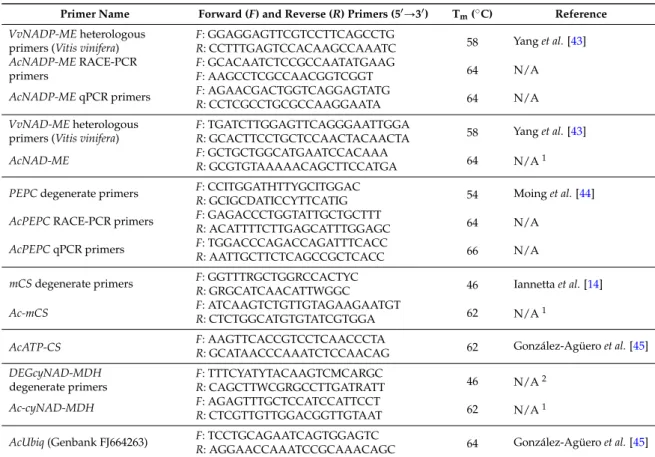
The sequences of the forward and reverse primers used are given in Table4. In general, the PCR
programs involved an initial denaturation step at 94˝C for 1 min, followed by 30–35 cycles of 94˝C
for 30 s, 50–60˝C (depending upon the primers) for 30 s, and 72˝C for 60 s, and a final extension step
at 72˝C for 10 min. All PCR reactions were performed in a MyCycler thermal cycler (Bio-Rad). The
PCR products were verified by electrophoresis through a 1.5% (w/v) agarose gel containing ethidium
bromide and then cloned into the pGEM-T Easy vector (Promega) followed by sequencing (Macrogen Corp., Seoul, Korea). All primary sequences were compared to sequences from National Center for
Biotechnology Information (NCBI) using BLAST alignment programs [33].
Table 4.Heterologous, degenerate and specific primers used for isolating cDNAs from cherimoya cv. “Concha Lisa”, RACE-PCR and qPCR assays.
Primer Name Forward (F) and Reverse (R) Primers (51Ñ31) T
m(˝C) Reference
PpNADP-IDHheterologous
primers (Prunus persica)
F: GGCCATGTACAACACTGATGAG
58 Yanget al.[43]
R: CATTGTCATCCAACTTTGCCCTG
AcNADP-IDH FR: TCCAAATGGAAGTCAAAGTTCGAG: CCTTTCTGGTGAACACGGTAATG 64 N/A1
CmACONheterologous primers
(Citrus maxima)
F: GAAGCAATCACCAAAGGGAATC
52 Yanget al.[43]
R: TACTACGGTGAATTCGCTCAAAG
AcACONRACE-PCR primers FR: ACCATGTCCCCTCCTGGCCC: TCCACATTGGATTTCCTTTCGTG 64 N/A
AcACONqPCR primers FR: GCAGGCACGGTTGACATTGATT 64 N/A
Table 4.Cont.
Primer Name Forward (F) and Reverse (R) Primers (51Ñ31) T
m(˝C) Reference
VvNADP-MEheterologous
primers (Vitis vinifera)
F: GGAGGAGTTCGTCCTTCAGCCTG
58 Yanget al.[43]
R: CCTTTGAGTCCACAAGCCAAATC
AcNADP-MERACE-PCR
primers
F: GCACAATCTCCGCCAATATGAAG
64 N/A
F: AAGCCTCGCCAACGGTCGGT
AcNADP-MEqPCR primers F: AGAACGACTGGTCAGGAGTATG 64 N/A
R: CCTCGCCTGCGCCAAGGAATA
VvNAD-MEheterologous
primers (Vitis vinifera)
F: TGATCTTGGAGTTCAGGGAATTGGA
58 Yanget al.[43]
R: GCACTTCCTGCTCCAACTACAACTA
AcNAD-ME FR: GCTGCTGGCATGAATCCACAAA: GCGTGTAAAAACAGCTTCCATGA 64 N/A1
PEPCdegenerate primers F: CCITGGATHTTYGCITGGAC 54 Moinget al.[44]
R: GCIGCDATICCYTTCATIG
AcPEPCRACE-PCR primers FR: GAGACCCTGGTATTGCTGCTTT: ACATTTTCTTGAGCATTTGGAGC 64 N/A
AcPEPCqPCR primers FR: TGGACCCAGACCAGATTTCACC: AATTGCTTCTCAGCCGCTCACC 66 N/A
mCSdegenerate primers FR: GGTTTRGCTGGRCCACTYC 46 Iannettaet al.[14] : GRGCATCAACATTWGGC
Ac-mCS F: ATCAAGTCTGTTGTAGAAGAATGT 62 N/A1
R: CTCTGGCATGTGTATCGTGGA
AcATP-CS F: AAGTTCACCGTCCTCAACCCTA 62 González-Agüeroet al.[45]
R: GCATAACCCAAATCTCCAACAG
DEGcyNAD-MDH
degenerate primers
F: TTTCYATYTACAAGTCMCARGC
46 N/A2
R: CAGCTTWCGRGCCTTGATRATT
Ac-cyNAD-MDH FR: AGAGTTTGCTCCATCCATTCCT: CTCGTTGTTGGACGGTTGTAAT 62 N/A1
AcUbiq(Genbank FJ664263) F: TCCTGCAGAATCAGTGGAGTC 64 González-Agüeroet al.[45]
R: AGGAACCAAATCCGCAAACAGC
1Specific primer forA. cherimoladesigned for RACE-PCR and also used for qPCR assays;2Degenerate primers designed using conserved domain by a ClustalW alignment from sequences of several plant NAD-MDHs.
3.7. Cloning of Full-Length Annona Cherimola Organic Acid-Related Genes
To obtain the full-length cDNAs of organic acid-related genes,A. cherimola-specific primers
(Table4) were designed using Primer Premier 5.0 software (Premier Biosoft International, Palo Alto,
CA, USA). RACE-PCR assays were performed using the adaptors, primers, enzymes, and procedures
of the GeneRacer kit (Invitrogen, Breda, The Netherlands). Amplified 51 and 31 RACE fragments
were analyzed by agarose gel electrophoresis, and selected DNA fragments were cloned into pGEM T-Easy (Promega) according to the manufacturer’s recommendations. Both strands were sequenced and compared using BLAST alignment programs. The nucleotide sequence of each new A. cherimola organic acid-related gene was translated, and open reading frames (ORFs) were identified using ORF
Finder [46] and Swiss-Model Tools [47]. The subcellular localization of predicted cytoplasmic and
mitochondrial proteins, as based on the identification of a transit peptide, was analyzed using TargetP software [48].
3.8. Real-Time Quantitative PCR Assays
The transcript abundance of the nine organic acid-related genes identified in this study was
analyzed by qPCR with a LightCycler®96 Real-Time PCR System (Roche Diagnostics, Mannheim,
Germany) using LC-FastStart DNA Master SYBR Green I to measure amplified RNA-derived DNA
products and gene-specific primers (Table4), similar to García-Rojaset al.[49]. Real-time quantitative
PCR was performed on each of four biological samples in duplicate, and the gene expression values
Molecules2016,21, 398 13 of 16
3.9. Statistical Analyses
All data were subjected to statistical analyses of variance, and the means were separated by an LSD test at the 5% significance level using Statgraphics Centurion Plus 5 (Manugistics Inc., Rockville, MD, USA).
4. Conclusions
In this work we conducted a comprehensive investigation of organic acid biosynthetic pathways in cherimoya fruit. To the best of our knowledge, this is the first study to evaluate the expression of genes, enzyme activities, and metabolites related to organic acid pathways, which are possibly related
to the particular behavior of titratable acidity during cherimoya ripening. A total of eight novelA.
cherimolagenes showing various levels of expression throughout cherimoya development and ripening were identified and characterized. In addition, citric and malic acids were demonstrated to be the most abundant organic acids in “Concha Lisa” cherimoya fruits. These results reveal an early accumulation of citric acid as well as other changes associated with the abundance of transcripts encoding malate and citrate catabolism enzymes at the beginning of ripening; however, this stage may not define the particular acidity behavior of cherimoya during ripening. The increase in malic acid at the last stage may be due to increased activity of NAD-MDH during ripening, an increase in the transcript levels of
Ac-cyNAD-MDHand down-regulation ofAcNAD-ME. Similarly, the greater amount of citric acid could
be due to an increase in the activity of CS, up-regulation of theAc-mCSgene, and a decrease inACON
activity throughoutA. cherimolaripening. Finally, the objective of this research was to understand
why this particular increase in acidity occurs during cherimoya ripening; thus, future experiments for
characterizing in more detail the individual components of organic acid metabolism (e.g.,Ac-mCS)
and other factors related to the transport and accumulation of organic acids could help broaden our
understanding of the molecular mechanisms involved in these biosynthetic pathways inA. cherimola.
Acknowledgments:Mauricio González-Agüero gratefully acknowledges the FONDECYT 1130630 project for financial support.
Author Contributions:The conception and design of experiments was performed by Mauricio González-Agüero, with the collaboration of Bruno G. Defilippi and Pedro Undurraga in the interpretation and discussing of the results. Mauricio González-Agüero, Luis Tejerina Pardo and María Sofía Zamudio performed the experiments. Mauricio González-Agüero, María Sofía Zamudio and Carolina Contreras wrote the paper. All authors revised the draft and approved the version submitted.
Conflicts of Interest:The authors declare no conflict of interest.
Abbreviations
The following abbreviations are used in this manuscript:
cyNAD-MDH cytoplasmic NAD-dependent malate dehydrogenase
mCS mitochondrial citrate synthase
TSS total soluble solids
TA titratable acidity
TCA tricarboxylic acid cycle
PEP phosphoenolpyruvate
PEPC phosphoenolpyruvate carboxylase
NADP-ME NADP-malic enzyme
ACON aconitase
NAD-IDH NAD-dependent isocitrate dehydrogenase
BBCH Biologische Bundesanstalt, Bundessortenamt und Chemische Industrie
FW fresh weight
NAD-ME NAD-dependent malic enzyme
ATP-CS ATP citrate synthase
aa amino acids
qPCR real-time quantitative PCR assays
OAA oxaloacetate
SE standard error
ORF open reading frame
References
1. Giovannoni, J.J. Molecular biology of fruit maturation and ripening.Annu. Rev. Plant Physiol. Plant Mol. Biol.
2001,52, 725–749. [CrossRef] [PubMed]
2. Giovannoni, J.J. Genetic regulation of fruit development and ripening. Plant Cell2004, 16, S170–S180.
[CrossRef] [PubMed]
3. Kader, A.A. Flavor quality of fruits and vegetables.J. Sci. Food Agric.2008,88, 1863–1868. [CrossRef]
4. Obenland, D.; Collin, S.; Mackey, B.; Sievert, J.; Fjeld, K.; Arpaia, M.L. Determinants of flavor acceptability
during the maturation of navel oranges.Postharvest Biol. Technol.2009,52, 156–163. [CrossRef]
5. Ferguson, I.B.; Boyd, L.M. Inorganic nutrients and fruit quality. InFruit Quality and its Biological Basis;
Knee, M., Ed.; CRC Press LLC: Boca Raton, FL, USA, 2002; pp. 17–45.
6. Pehrson, J.E.; Ivans, E.M. Variability in early season navel orange clone maturity and consumer acceptance.
Proc. Int. Soc. Citric.1988,4, 1631–1635.
7. Crisosto, C.H.; Crisosto, G.M. Understanding American and Chinese consumer acceptance of “Redglobe”
table grapes.Postharvest Biol. Technol.2002,24, 155–162. [CrossRef]
8. Crisosto, C.H.; Crisosto, G.M.; Metheney, P. Consumer acceptance of “Brooks” and “Bing” cherries is mainly
dependent on fruit SSC and visual skin color.Postharvest Biol. Technol.2003,28, 159–167. [CrossRef]
9. Sweetman, C.; Deluc, L.G.; Cramer, G.R.; Ford, C.M.; Soole, K.L. Regulation of malate metabolism in grape
berry and other developing fruits.Phytochemistry2009,70, 1329–1344. [CrossRef] [PubMed]
10. Etienne, A.; Génard, M.; Lobit, P.; Mbeguié-A-Mbéguié, D.; Bugaud, C. What controls fleshy fruit acidity?
A review of malate and citrate accumulation in fruit cells. J. Exp. Bot. 2013,64, 1451–1469. [CrossRef]
[PubMed]
11. Bai, Y.; Dougherty, L.; Cheng, L.; Xu, K. A co-expression gene network associated with developmental
regulation of apple fruit acidity.Mol. Genet. Genom.2015,4, 1247–1463. [CrossRef] [PubMed]
12. Schulze, J.; Tesfaye, M.; Litjens, R.; Bucciarelli, B.; Trepp, G.; Miller, S.; Samac, D.; Allan, D.; Vance, C.P.
Malate plays a central role in plant nutrition.Plant Soil2002,247, 133–139. [CrossRef]
13. Sadka, A.; Dahan, E.; Or, E.; Roose, M.L.; Marsh, K.B.; Cohen, L. Comparative analysis of mitochondrial
citrate synthase gene structure, transcript level and enzymatic activity in acidless and acid-containing Citrus
varieties.Funct. Plant Biol.2001,28, 383–390. [CrossRef]
14. Iannetta, P.P.M.; Escobar, N.M.; Ross, H.A.; Souleyre, E.J.F.; Hancock, R.D.; Witte, C.P.; Davies, H.V.
Identification, cloning and expression analysis of strawberry (FragariaXananassa) mitochondrial citrate
synthase and mitochondrial malate dehydrogenase.Physiol. Plant.2004,121, 15–26. [CrossRef] [PubMed]
15. Sadka, A.; Dahan, E.; Cohen, L.; Marsh, K.B. Aconitase activity and expression during the development of
lemon fruit.Physiol. Plant.2000,108, 255–262. [CrossRef]
16. Sha, S.F.; Li, J.C.; Wu, J.; Zhang, S.L. Changes in the organic acid content and related metabolic enzyme
activities in developing “Xinping” pear fruit.Afr. J. Agric. Res.2011,6, 3560–3567.
17. Etienne, C.; Moing, A.; Dirlewanger, E.; Raymond, P.; Monet, R.; Rothan, C. Isolation and characterization of
six peach cDNAs encoding key proteins in organic acid metabolism and solute accumulation: Involvement
in regulating peach fruit acidity.Physiol. Plant.2002,114, 259–270. [CrossRef] [PubMed]
18. Ackermann, J.; Fischer, M.; Amado, R. Changes in sugars, acids, and amino acids during ripening and
storage of apples (cv. Glockenapfel).J. Agric. Food Chem.1992,40, 1131–1134. [CrossRef]
19. Gutierrez-Carnelossi, M.A.; Costa de Sena, H.; Narain, N.; Yaguiu, P.; da Silva, G.F. Physico-Chemical
Quality Changes in Mangaba (Hancornia speciosagomes) Fruit Stored at Different Temperatures.Braz. Arch.
Molecules2016,21, 398 15 of 16
20. Paull, R.E.; Deputy, J.; Chen, N.J. Changes in organic acids, sugars, and headspace volatiles during fruit
ripening of soursop.J. Am. Soc. Hortic. Sci.1983,108, 931–934.
21. Palma, T.; Aguilera, J.M.; Stanley, D. A review of postharvest events in cherimoya.Postharvest Biol. Technol.
1993,2, 187–208. [CrossRef]
22. Gutierrez, M.; Lahoz, J.M.; Sola, M.M.; Pascaul, L.; Vargas, A.M. Postharvest changes in total soluble solids
and tissue pH of cherimoya fruit stored at chilling and non-chilling temperatures.J. Hortic. Sci.1994,69,
459–463. [CrossRef]
23. Manríquez, D.; Muñoz, P.; Gudenschwager, O.; Robledo, P.; Defilippi, B. Development of flavor-related
metabolites in cherimoya (Annona cherimolaMill.) fruit and their relationship with ripening physiology.
Postharvest Biol. Technol.2014,94, 58–65. [CrossRef]
24. Muñoz, T.; Sanchez-Ballesta, M.T.; Ruiz-Cabello, J.; Escribano, M.I.; Merodio, C. The acid metabolism of
Annonafruit during ripening.J. Hortic. Sci. Biotechnol.2004,79, 472–478. [CrossRef]
25. Cautín, R.; Agustí, M. Phenological growth stages of the cherimoya tree (Annona cherimolaMill.).Sci. Hortic.
2005,105, 491–497. [CrossRef]
26. Higuchi, H.; Utsunomiya, N.; Sakuratani, T. High temperature effects on cherimoya fruit set, growth and
development under greenhouse conditions.Sci. Hortic.1998,77, 23–31. [CrossRef]
27. Alique, R.; Oliveira, G. Changes in sugar and organic acids in cherimoya (Annona cherimolaMill.) fruit under
controlled-atmosphere storage.J. Agric. Food Chem.1994,42, 799–803. [CrossRef]
28. Mounet, F.; Moing, A.; Garcia, V.; Petit, J.; Maucourt, M.; Deborde, C.; Bernillon, S.; le Gall, G.; Colquhoun, I.;
Defernez, M.;et al. Gene and metabolite regulatory network analysis of early developing fruit tissues
highlights new candidate genes for the control of tomato fruit composition and development.Plant Physiol.
2009,149, 1505–1528. [CrossRef] [PubMed]
29. Ruffner, H.P.; Hawker, J.S. Control of glycolysis in ripening berries ofVitis vinifera.Phytochemistry1977,16,
1171–1175. [CrossRef]
30. Famiani, F.; Walker, R.P.; Tecsi, L.; Chen, Z.H.; Proietti, P.; Leegood, R.C. An immunohistochemical study of
the compartmentation of metabolism during the development of grape (Vitis viniferaL.) berries.J. Exp. Bot.
2000,51, 675–683. [CrossRef] [PubMed]
31. Fortes, A.M.; Agudelo-Romero, P.; Silva, M.S.; Ali, K.; Sousa, L.; Maltese, F.; Choi, Y.H.; Grimplet, J.;
Martinez-Zapater, J.M.; Verpoorte, R.; Pais, M.S. Transcript and metabolite analysis in Trincadeira cultivar
reveals novel information regarding the dynamics of grape ripening.BMC Plant Biol.2011,11, 149. [CrossRef]
[PubMed]
32. DeBolt, S.; Cook, D.; Ford, C. L-Tartaric acid synthesis from vitamin C in higher plants. Proc. Natl. Acad.
Sci. USA2006,103, 5608–5613. [CrossRef] [PubMed]
33. The Basic Local Alignment Search Tool. Available online: http://blast.ncbi.nlm.nih.gov/Blast.cgi (accessed
on 9 December 2015).
34. Tang, M.; Bie, Z.; Wub, M.; Yi, H.; Feng, J. Changes in organic acids and acid metabolism enzymes in melon
fruit during development.Sci. Hortic.2010,123, 360–365. [CrossRef]
35. Pareek, S.; Yahia, E.M.; Pareek, O.P.; Kaushik, R.A. Postharvest physiology and technology ofAnnonafruits.
Food Res. Int.2011,44, 1741–1751. [CrossRef]
36. Bruinsma, J.; Paull, R.E. Respiration during postharvest development of soursop fruit,Annona muricataL.
Plant Physiol.1984,76, 131–138. [CrossRef] [PubMed]
37. Chen, F.X.; Liu, X.H.; Chen, L.S. Developmental changes in pulp organic acid concentration and activities
of acid-metabolising enzymes during the fruit development of two loquat (Eriobotrya japonicaL.) cultivars
differing in fruit acidity.Food Chem.2009,114, 657–664. [CrossRef]
38. Saradhuldhat, P.; Paull, R.E. Pineapple organic acid metabolism and accumulation during fruit development.
Sci. Hortic.2007,112, 297–303. [CrossRef]
39. Morgan, M.J.; Osorio, S.; Gehl, B.; Baxter, C.J.; Kruger, N.J.; Ratcliffe, R.G.; Fernie, A.R.; Sweetlove, L.J.
Metabolic engineering of tomato fruit organic acid content guided by biochemical analysis of an
introgression line.Plant Physiol.2013,161, 397–407. [CrossRef] [PubMed]
40. Mattoo, A.; Modi, V. Citrate cleavage enzyme in mango fruit. Biochem. Biophys. Res. Commun. 1970,39,
895–904. [CrossRef]
41. Bradford, M.M. A Rapid and quantitative method for quantitation of microgram quantities of protein
42. Gudenschwager, O.; González-Agüero, M.; Defilippi, B.G. A general method for high-quality RNA isolation
from metabolite-rich fruits.S. Afr. J. Bot.2012,83, 186–192. [CrossRef]
43. Yang, L.T.; Jiang, H.X.; Qi, J.P.; Chen, L.S. Differential expression of genes involved in alternative glycolytic
pathways, phosphorus scavenging and recycling in response to aluminum and phosphorus interactions in
Citrus roots.Mol. Biol. Rep.2012,39, 6353–6366. [CrossRef] [PubMed]
44. Moing, A.; Rothan, C.; Svanella, L.; Just, D.; Diakou, P.; Raymond, P.; Gaudillere, J.P.; Monet, R. Role
of phosphoenolpyruvate carboxylase in organic acid accumulation during peach fruit development.
Physiol. Plant.2000,108, 1–10. [CrossRef]
45. González-Agüero, M.; Cifuentes-Esquivel, N.; Ibañez-Carrasco, F.; Gudenschwager, O.; Campos-Vargas, R.;
Defilippi, B.G. Identification and characterization of genes differentially expressed in cherimoya
(Annona cherimolaMill.) after exposure to chilling injury conditions.J. Agric. Food Chem.2011,59, 13295–13299.
[CrossRef] [PubMed]
46. Wheeler, D.L.; Church, D.M.; Federhen, S.; Lash, A.E.; Madden, T.L.; Pontius, J.U.; Schuler, G.D.;
Schriml, L.M.; Sequeira, E.; Tatusova, T.A. Database resources of the National Center for Biotechnology.
Nucleic Acids Res.2003,31, 28–33. [CrossRef] [PubMed]
47. Arnold, K.; Bordoli, L.; Kopp, J.; Schwede, T. The SWISS-MODEL Workspace: A web-based environment for
protein structure homology modelling.Bioinformatics2006,22, 195–201. [CrossRef] [PubMed]
48. TargetP software. Available online: http://www.cbs.dtu.dk/services/TargetP/ (accessed on 6 June 2015).
49. García-Rojas, M.; Gudenschwager, O.; Defilippi, B.G.; González-Agüero, M. Identification of genes possibly
related to loss of quality in late-season “Hass” avocados in Chile. Postharvest Biol. Technol. 2012,73, 1–7.
[CrossRef]
Sample Availability:No available.