1
CREATING A BUSINESS MODEL FOR LEAN INTERNATIONALIZATION: THE CASE OF SHIPSTRA
Jorge Mario Giraldo Díaz Cod. 201620011165
Advisor: Sascha Fuerst (PhD)
EAFIT UNIVERSITY SCHOOL OF MANAGEMENT
MASTER IN INTERNATIONAL BUSINESS MAY 2018
Creating a Business Model for Lean
Internationalization: The Case of Shipstra
Jorge Mario Giraldo – Master in International Business - Universidad Eafit 2018
Getting to know each other
It was June 2007, I was nervous and awaiting to get interviewed by Juan Felipe Betancur at Medellin’s Maersk office in Colombia, South America (see Appendix 1 for a map of the Americas). It was one-in-a-lifetime opportunity. Getting into the Maersk International Shipping (MISE) program, a top global training for talented young professionals. Eventually, I made it to the program, 2007 batch. Juan Felipe, a MISE himself from 2002 batch and I, formed good personal and professional relationship.
2 “user story”1 and I looked for the software and application developer in Medellin.
The idea of working almost everything out of Medellin made our development and operations much leaner in terms of cost. Medellin has been gaining attention and fame as an innovation environment in the region. Sound cooperative start-up programs between the public and private sector, an entrepreneurial mindset embodied in many locals plus a high availability of cheap talent makes up a good cocktail for entrepreneurs and investors. Just to briefly exemplify, the price of one (1) hour of software development in Medellin goes from USD 15 to USD 20, whereas in the US it can be USD 150, best case scenario.
From corporate ladder to entrepreneurship
Deciding to focus all my efforts and time to the project, was a simple decision after finishing a 9 years’ career in the corporate world. Entrepreneurship is a word I first learned deeply about in 2011 while in Denmark, during my first expatriation job. I had been in the corporate life for 4 years and just starting to understand the subtleties in climbing its ladder.
Having the chance of working within the market intelligence department at the head quarters strengthened not only my vision and drive to concept, design and execute global scale projects; but also to identify improvement opportunities to be seized in the form of my own business.
The container shipping industry has remained almost unchanged for half century. There are traditional factors difficult to challenge. For example, the
1 In software development, User Story is a very high-level definition of a requirement, containing just enough
need for physical transportation of goods is there, no matter what. The raise of internet together with an explosion in software development created an unprecedented efficiency boost.
Nevertheless, Booking confirmation, traceability functions, customer service, and invoicing were the main processed affected by information and communication technologies. Even though rate quotations were submitted via email, the calculation was time consuming and therefore response time to customer was high. That was a constant in almost every single shipping carrier. There were a few on-line real time alternatives, but rates were rather uncompetitive, thus the high incentive from customers to go through traditional means (email or phone) to get better rates.
Shaping the business opportunity
It was then when I first thought of an automatic rate management tool to facilitate quicker decision making and achieving more transparency for shippers. I checked out within our department and there was a side project working on a similar idea. However, it solved the problem for our company only, and therefore partially for our customers, since as a shipper you cannot make a decision based on a quick and (possibly) good rate without comparison. Some companies because of good practices and international standard procedures need to have at least three offers before selecting a supplier.
4 all modes: Full Container Load (FCL), LCL (Less then Container Load)2, airfreight and rail freight.
For the next 5 years I never abandoned the idea, but neither made the decision to put efforts on it. I mistakenly blame the comfort zone of having a great job and being economically stable with growth prospects in a learning and challenging environment. But everything changed when I left the company early 2016. I went back to Colombia filled with knowledge about the international logistics industry, good work experience and a good network of contacts worldwide.
Juan Felipe’s career path has always been within the corporate world. First in Maersk Line, holding management positions in Colombia, Brazil and Panamá and then in Citibank passing by Chile, Costa Rica and finally the United States, his current location where he performs as Vice President of Product and Wealth Management. Both of us see ourselves in the long-term as business owners rather than as employees. This common trait, plus our logistics background, network and entrepreneurial spirit gave shape to Shipstra.
A traditional industry with plenty of potential!
According to a white paper from the World Economic Forum about the logistics industry, digitalization could create USD 10Bn of value up to 20253 for all
2Full Container Load (FCL). Full Container Load means that all goods in the container are listed on one Bill of Lading,
and as such are owned by one party. It does not matter how full the container is. Payment is made on the basis of one container. Less Than Container Load (LCL) means Transporting a shipment with other goods in the container is referred to as LCL. Thus multiple LCL shipments with different Bills of Lading and different owners can be loaded in a single container. Any space used in the container is subject to a charge. Retreived from
https://www.logisticsglossary.com/
3 Information retrevied from report available at this site
stakeholders involved, namely: suppliers, companies, consumers and investors.
Container shipping has been rather basic: As a manufacturer or retailer you have a cargo to import or export. Then, depending on the cargo volume and weight you make calculations to choose a container size, knowing the origin and destination, you request a quotation to the shipping line or Freight Forwarder, and usually based on price you select the best alternative. This whole process I just described is performed entirely manual, either by phone or email in almost every geography.
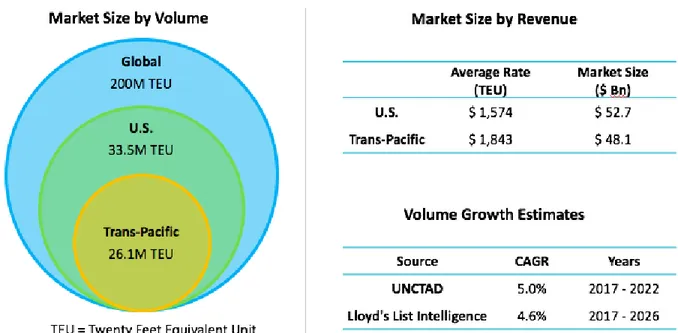
Freight Forwarders act as simple middle-men between carriers and cargo owners. They integrate all links of the supply chain and are able to contract and operate sea transportation, rail, truck, customs brokerage, warehousing and even distribution for you, in summary, all-in-one provider or a single-stop-shop. In the last four decades Freight Forwarders have gained power by growing in controlled volume and therefore are able to negotiate better freight rates than those got by cargo owners directly with carriers. The volume transported worldwide by sea exceeded 200 million TEU (Twenty-foot Equivalent Unit containers) in 20174 with 5.7% of CAGR up to 2022, from those Freight Forwarders handle around 30%. When it comes to market share, 65% of this volume is handled by top 6 shipping lines, and the consolidation trend is set to continue as per industry analysts.
4 Information retreived from Global Container Terminal Operators Annual Review and Forecast 2017, available at:
6
Figure 1. Global container shipping volume. Source: Review of Maritime Transport 2017 - UNCTAD
Even though digitalization efforts are recently increasing in the industry, they are quite new and limited to big players in developed countries. Local companies keep relying on old legacy systems mainly for its financial and administrative processes. User experience is way behind.
Both carriers and Freight Forwarders are evidencing the need to improve their digital journey, by automatizing transactions and making the user experience much smoother. In this awake, some start-ups are emerging.
A motivation boost!
US and Europe. At the beginning I took it as a threat and it somehow undermined my motivation. Precisely by those days, I was presenting my business idea as the final project in the International Entrepreneurship course, part of the Master In International Business (MIB) at EAFIT University.
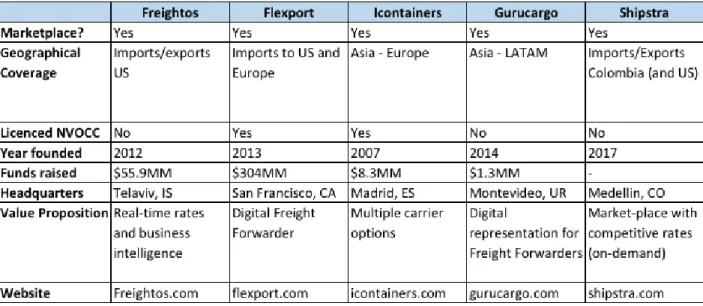
During the pitch to few “fake investors” however people with great experience and top entrepreneurial profile, one of the investors asked me “What does keep you awake at night with your business idea?”, My response was simple: “There are already some competitors succeeding in the market plus few big companies such as Amazon investing in similar ideas, this posed a huge threat for us”. Freightos, Flexport, IContainers and Gurucargo (see Table 2 for benchmark reference) had achieved not only traction and recognition in the global scene, with only over 2 years of operation since inception, but had also raised funds of around USD 200 million combined.
8
Table 1: Shipstra’s competitors benchmark. Source: www.crunchbase.com
Getting Started: The Painful Journey Towards MVP 1.0
Once we had a clearer idea of the features that our platform will have and problema it will solve, we started to look for a software developer. The idea was to hire an CTO from the beginning, a person interested in developing the tool, first as a supplier and then joining the founding team to become a partner. Neither Juan or me knew the start-up ecosystem in Medellin or developers within our family or close circle. So we posted our need in Facebook topic groups, we attended Ruta N5 meetings, posted the “job” through EAFIT and other Universities’ job portal, asked in different co-working spaces, only to very soon realize how difficult this task was. The market in Colombia has currently a shortage of over 90.000 computer scientists and software developers. This shortage comes a result of many multinationals arriving to the market to offer above average compensation packages for home-office
5Ruta N is a public founded program that facilitate the economic development of Medellin through start up
contracts or free-lance schemes. The result we have is local companies increasing their offered salaries but also trying to attract developers from medium size cities in Colombia, such as Manizales, Pasto, Bucaramanga scarifying some working quality.
After three weeks of looking around, and via post on Facebook we managed to get a couple of referrals, agreed on an appointment with one of them, Tenebil who understood immediately our needs and presented a very sound proposal. Without having other data to compare with and much information about market fares for hour of software development, we agreed on their terms. A six-weeks project with weekly sprints.
It took us less than a week to complete the user stories for Tenebil. The start was pretty smooth, there was a sense of understanding and a clear goal and plan. In fact, the first 4 sprints and reviews went OK, we were feeling comfortable with the pace and pretty satisfied with the product, its design and features.
During this time, we worked on some practicalities for our company. First we chose a name and a website. Truth be told, there was not much thinking about it, we only made some combinations of words related to freight and shipping and the only website available for purchase was Shipstra it sounded catchy to us, so we took it. Later on, we found out that Shipstra could stand for Shipping Strategy, a matter of chance. We also hired a Graphic Designed to get the logo done, something simple yet attractive, it was a matter of two weeks before getting something we liked.
10 around three weeks. And the post Customer Service and maintenance of the site were painful indeed. In any case, it was done and the real quest for building a product started: With an MVP programmed, we had now the platform to show to the Freight Forwarders, not only an idea to pitch.
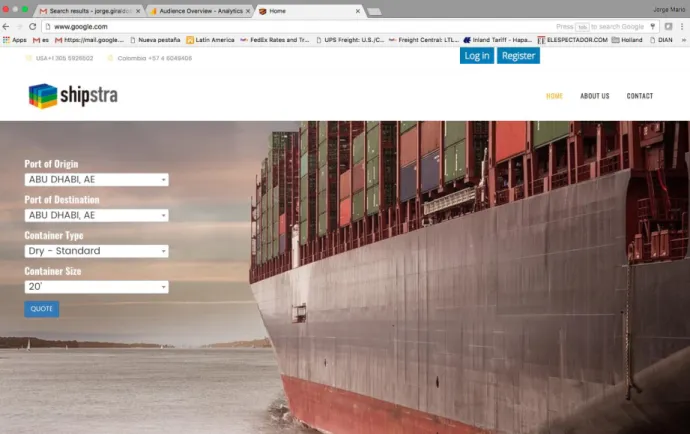
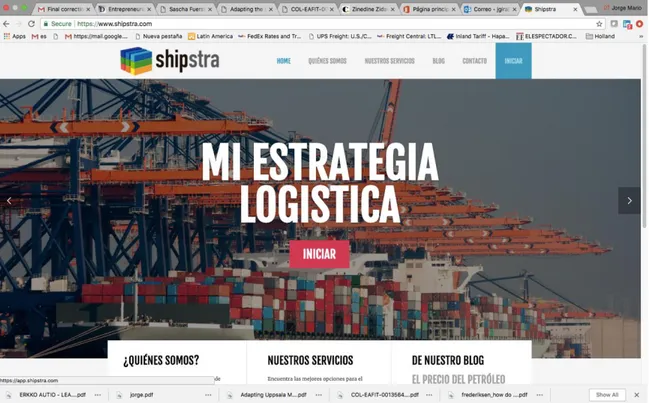
This first MVP consisted on a real-time market place with freight rates, transit time and schedule information for easy comparison. Customer could go to www.shipstra.com and only with Port of Loading, Port of Discharge and Container Size, obtained in real-time quotations from several Freight Forwarders to book online. We do not charge the final customer for accessing our site, we only take a percentage fee (2.5%) of the total service or freight from the Freight Forwarder selected for every booking made. We call this fee a Success Promotion Charge, as what we are doing is only promoting their service through our website.
However, getting Freight Forwarders on-board was not an easy task. I contacted and visited total of 21 local Freight Forwarders. The first reaction was not entirely positive, whereas they all felt the industry was going through a modernization by digital means and the future was all about digitalizing the customer experience, Shipstra’s business model seemed too aggressive. Having live rates online basically meant that competition could at any moment do benchmarks exercises by looking at what others offer. This was not welcome, since many players in the industry still see the price as a competitive advantage
12 Figure 3 – This figure shows results alternatives for a rate look up Shanghai – Seattle. Source: www.shipstra.com
From mid May to mid July I focused all my efforts and time in selling Shipstra service. A list of 50 clients were segmented from a market research tool that we purchased. Starting with visits to clients via referrals and then through cold calls. The feedback was in general positive; clients saw a lot of value, and around 85 queries were performed during two months in the tool but they were critic about two aspects: Only three freight forwarders available and non-competitive rates. We found out that our associated Freight Forwarders were only uploading tariff rates, which are almost useless in closing deals. Their incentive for uploading better rates was not big, since they did not have more information about the client, and did not want to get exposed with shipping lines and other Frieght Forwarders. Despite many efforts, none other Freight Forwarder was willing to participate and therefore forced us rapidly re-think our business model and pivot it.
A confident pivotal point with a partner CTO
During the above mentioned commercialization period, I made a trip to Bogota with two objectives in mind, visit few clients I had cold called, and try to get on-board some other Freight Forwarders. One of the scheduled meetings was with Javier Rodriguez a former colleague from Maersk, who currently performs a Liner Manager for a Chinese shipping line. He was positive impressed with Shipstra’s model, but from his job there was little room for support. However, in our conversation I briefly mentioned that Juan Felipe and myself were looking for a Software Developer, a person to partner with for Shipstra. He straightaway thought of a colleague’s son, who was apparently a nascent start in the tech world.
Indeed, Nicolas Rojas is a raw diamond, his first success came at a very early age: When he was 17 he developed Mundiapp6, an app to handle stickers for the Soccer World Cup. Mundiapp had over 700.000 downloads from the Apple store and ranked among top 5 apps at that time. He later founded his app development company Imagine Apps at 18, and has since then worked with many companies and people bringing more apps to the market. As industrial and software engineer he is skilled not only in coding but in understanding processes, and simplifying issues. He is a full stack developer, with knowledge in both back and front end development, his specialty however is data-bases and data-science.
Coming to an agreement with Nicolas was also simple, we presented our needs, provided him with “user stories” and asked him for a quotation to develop what we call our MVP 2.0, as he would act first as software development supplier. Upon satisfactory delivery of this MVP 2.0, Nicolas would receive a payment for the development, 5% shares of Shipstra and the
14 Chief Technology Officer job offer. This 5% would increase to 10% in first year and 15% in third year.
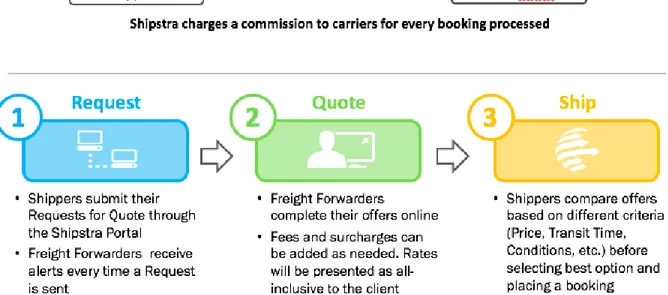
We realized the need for a quick pivot following the principles of lean start-up, and Nicolas was instrumental in the design and execution of our MVP 2.0, there was an immediate connection, and everything was carried out via virtual work with two reviews per week and close follow up and communication. This help in strengthening our relationship as founding team. Nicolas delivered and excelled in every sprint we had. Our new business model consisted now of on-demand quotations: Clients logged, they input a query and Freight Forwarders submit a quotation based on that rate query (usually within 4 hours business time).
Developing this MVP 2.0 took 5 weeks, all of them through virtual work. Nicolas sitting in Bogota, Juan Felipe in Miami and myself in Medellin. Virtual work is nowadays quite common and its effectiveness is with reason a matter of debate. However, it seemed to work for us, we all were carrying out our tasks timely and effectively. Nicolas was motivated by our proposal to become founding partner and actively participated in improving some functions. (see Figure 4 and 5 for a visual idea of MVP 2.0).
16
Figure 5 – Shipstra application page for rate request. Source: www.shipstra.com
Shipping Lines Traditional
Freight Forwarders
Shipstra
Scope Port to port Integrated
services Integrated services
Rates Market tariffs for
SMEs Ad-hoc, spot, usually depending on volume
Multiple
alternatives and spot negotiated case by case
Customer
experience Standard. Contact Centers
like.
Phone, usually
customized Digital
Information flow Email Email Through the
platform
Business
Intelligence Nill Nill Automated reports
Table 2: Industry players’ functional comparison
Table 2 above depicts differences in the business model of the shipping industry as it has operated for decades, compared to what Shipstra brings new.
Field-sales, a mistake?
18
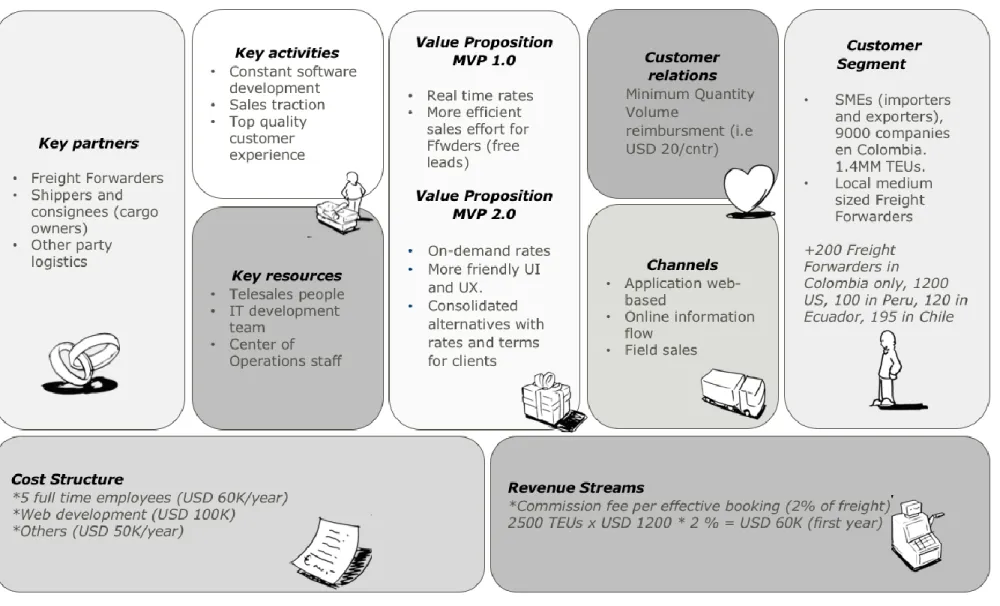
Figure 3 – Shipstra Business Model. Source: Own intellectual production.
While the effectiveness of the field sales approach seemed to be high, it was very expensive to acquire a new prospective client (every visit took 45 to 60 mins, plus 30 mins displacement in and out; the same equivalent for 10 to 15 calls). Valeria and myself kept on this duty and slowly the number of queries through Shipstra started to rise to 3 per week by mid December. While number of queries is an indicator of value creation, we were not capturing it as none client had placed a booking yet. I had started to have concerns about our product and moreover about the next steps, any move would take time and more money. My savings were coming to a point where I no longer wanted to have all eggs in the same basket. The need to look for a job, started to round my mind; I did not, though.
Getting commercial mentorship and moving to telesales.
20 en Madrid and currently works at Drop-off a last mile delivery start-up company in the US.
With Maria Antonia’s help we started a more structured selling approach, first segmenting the clients according to their volume and with focus on the specific trade lane of Asia – Colombia imports, which as per our statistics counts for 68% of total containers moved in and out of Colombia. In this new approached we moved back to telesales and performed a 5 touches cycle per customer, consisting basically of introduction, qualification and follow-up touches. We also introduced a marketing approach in which Juan Felipe writes every week an article related to shipping industry, new trends, technology are digitalization are the main topics. This article is shared with both customers and Freight Forwarders through email, giving our commercial strategy some branding and marketing support.
As result of our new commercial mentorship we also decided to focus some of our time in approaching Bogota’s market and found there is a more diligent reception to digital initiatives there. So our potential customer portfolio mix now has a 40% from Bogota. Last important decisions also include a new investment to radically improve our UX (User Expiriencie) and UI (User Interface) on the application, this basically means having a friendlier platform with fewer clicks in the process and an improved and richer graphic. Last few weeks we have also mixed our telesales with some field sales, trying to gain more specific feedback from customers, not sure whether a MVP 3.0 is feasible.
From the beginning Shipstra was thought to be implemented in Colombia as a validation market, but our ambition was to quickly expand to other geographies, starting by the United States. Despite the poor results evidenced so far, we decided to translate the website and the application to launch soon our product in US. Juan Felipe will play the most important role on this stage. Previously planned the launch of the application in English coincides with his paternity leave, a 2-month period that he will almost fully invest in contacting Freight Forwarders and clients to sell Shipstra.
Juan Felipe, although having a stable job with his current employer, portraits himself as a business owner in the mid term. He has had this ambition for quite long, and now with the Green Card permission approaching, there is more flexibility to make it happen.
Going international, the US!
We feel confident that Shipstra can have more traction in the US compared to what it had Colombia. US American businesses adopt new technology at a higher speed and rely on it as long as they save time and it makes their work more efficient. The need for face to face meetings is also less compared to Colombia.
Juan Felipe has been in contact with some Venture Capital companies and seed investors in the US. The ecosystem DukeGEN7 Global Entrepreneurship Network from Fuqua Business School at Duke University is one of them. Juan briefly pitched the idea, and it appeared attractive to them, however it is clear that some traction and few bookings placed are necessary before a more serious talk.
22 It is said that networking counts for a great share of your success in professional life. Along Shipstra journey we have evidenced how true this is. First we managed to hire an exceptional CTO and partner, through the recommendation of a former colleague. Also many Freight Forwarders contacted opened their doors thanks to a referral received from a common acquaintance. Launching Shipstra US more quickly is also a matter of networking. Our associated Freight Forwarders in Colombia have representative partners in the countries they operate in. Those representatives will be our associated partners to start offering our service, first in Florida, and then expanded towards North and West.
The challenges and learnings in Shipstra’s journey have been undoubtedly stronger than the financial achievements. Still a bit far from getting the traction needed to have serious talks with Venture Capitalists, we encounter ourselves with not minor questions around our heads as to how to better steer the ship from now onwards:
1. Why Shipstra as a digital platform and why Colombia as a market validator? Discuss advantages and disadvantages
2. Does the Shipstra team have the right combination of skills? What could be holding the team back from getting better results?
3. Is the virtual team considerably affecting the speed of development and decision making? What can be done in this regard?
4. Should we keep on investing on Colombia’s market given current results? What is needed to change for getting off ground in Colombia? 5. Is US the right market to approach and why?
24 Source: Retrieved from www.d-maps.com
APPENDIX 2 – Founders Profiles
Juan Felipe Betancur – Chief Executive Officer
Executive with over 15 years of international and management experience in shipping and banking industry. Entrepreneur with proven results in product development and wealth management.
B.Sc. International Business – Universidad EAFIT - 2002 MBA – Duke University – 2011
VP Product Management & Wealth Management – Citibank, (Miami), Oct 2013 – Present
Assistant VP – Management Associate Program – Citibank (Miami), Jun 2011 – Sep 2013
Co-founder – Med Logistics Services – (Medellin), Jun 2007 – Dec 2009 Pricing and Yield Manager Caribbean Cluster – Maersk Line (Panama), Jun 2008 – Jul 2009
Branch Manager Medellin – Maersk Line (Medellin) – Jan 2007 – Jun 2008 Ocean and Air Freight Manager for South America – Maersk Line, (Sao Paulo) – Apr 2005 – Dec 2006
MISE (Maersk International Shipping Education) Leadership Program, Maersk Line (Bogota), Jul 2002 – Apr 2005.
Source: https://www.linkedin.com/in/juan-betancur-09700315/
Entrepreneur specialized in developing digital products for my company ImagineApps. Full stack web developer with 5 years of experience and an Industrial Engineering major from Universidad de los Andes in Bogotá Colombia. His development career portrays him as a Full Stack Web Developer, He has held roles as a front-end developer as well as full-stack. His experience accounts for a remote job for Miami-based FOB Software, a full time employment in AlternativeAirlines.com in London and CTO positions for startups in Bogotá.
B.Sc. Industrial Engineer – Universidad de Los Andes, Bogotá. - 2018
Chief Technology Officer – Shipstra (Bogotá), June 2017 - Present Premium Instructor – Udemy, Dec 2015 – Present
CTO – Car B (Bogota), Feb 2017 – Dec 2017
Front End Developer – Alternative Airlines (London), Jul 2016 – Jan 2017 Web Developer – FOB Software (Bogotá), Jan 2016 – Jul 2016
CEO – Co-founder – ImagineApps (Bogotá), Jul 2015 – Present
Source: https://www.linkedin.com/in/nicol%C3%A1s-rojas-67762b66/
Jorge Mario Giraldo – Chief Operations Officer
26 B.Sc. Production Engineering – Universidad EAFIT – 2008
Master in International Business – Universidad EAFIT – 2018
Chief Operations Officer – Shipstra (Medellin), Apr 2017 – Present
Business Development Director – Construk (Medellin), Jun 2016 – Apr 2017 Head of Product – Project Logistics Americas – DAMCO (Houston), Aug 2015 – May 2016
Procurement Manager – Oil & Gas – DAMCO (Bogota), Dec 2013 – Aug 2015 Regional Project Manager LATAM – DAMCO (Panama), Jun 2013 – Dec 2013 Carrier Manager LATAM – DAMCO (Panama), Aug 2011 – Jun 2013
Market Intelligence Analyst – Maersk Line (Copenhagen), Jan 2011 – Aug 2011
Country SCM Supervisor – DAMCO - (Medellin), Jan 2010 – Jan 2011 MISE (Maersk International Shipping Education) Leadership Program – Maersk Line (Bogota), Jun 2007 – Dec 2009.