
An Educational Strategy from a Dentistry Approach to Increase Breastfeeding Knowledge, Attitudes, and Skills
26
0
0
Texto completo
(2) Villavicencio, Colombia PC 500001. Abstract: A strategy from a dentistry perspective, involving educational strategies among other measures, was developed to respond to the need to promote breastfeeding in Colombia considering its role in children's oral and craniofacial development. The objective of this study was to design and implement a dentistry-based educational strategy to increase the knowledge, attitudes and skills (KAS) of pregnant women and nursing mothers. The study involved four phases: 1. Application of a validated questionnaire to measure breastfeeding KAS and babies' craniofacial development. 2. Design of an educational strategy based on the information gathered. 3. Implementation of the strategy in the same population. 4. Second application of the survey six months later to determine the impact of the strategy. In Phase 1, it was detected that of 82.9% of the women had a high level of knowledge, 85.6% had a high level of attitudes, and 50.2% of skills. Phase 2 involved the design of an educational strategy based on the findings, which highlighted the importance of breastfeeding for the newborn's craniofacial development. In Phase 4, following strategy implementation, it was found that the KAS of the 221 women who remained in the study, increased significantly (knowledge 99.5%, attitudes 99.1% and skills 86%, p=0.00). An important increase was also detected in terms of the concept of breastfeeding children up to two years of age, which went up from 17.6% of the mothers surveyed to 51.1%. The educational strategy developed in this study increased the knowledge, attitudes, and, 2.
(3) especially, the skills of pregnant women and nursing mothers. It also clarified concepts that contribute to the exercise of this activity.. Keywords: Breastfeeding, child development, education, public health, preventive dentistry. Introduction Breastfeeding is a natural medium for a child's nutrition, and its importance for the child’s immunological, physiological, psychological, social, economic, and even environmental wellbeing (Dewey et al., 1992; Imdad et al., 2011; Prell & Koletzko, 2016) is often referred to in the literature. The World Health Organization (WHO) highlights that infants should be exclusively breastfed during their first six months and that, following this period, breastfeeding complemented by food should continue for up to two years (World Health Organization, 2016). Similarly, American paediatrics' associations such as the American Academy of Paediatrics (AAP) and the American Academy of Paediatrics Dentistry (AAPD) emphasize that breastfeeding during the first six months of life influences correct oral and occlusion development, suction, breathing, and swallowing, and it contributes to correct oral muscular function and to craniofacial and dental development (Agarwal et al., 2012; Salone et al., 2013). In fact, studies have shown increased malar growth in relation to the duration of breastfeeding, a reduction of the risk of anterior-posterior alterations, and changes in relation to arch length and palatal depth (Agarwal et al., 2012). Other benefits include a correct intermaxillary relationship, the prevention of dental caries due to the bactericidal action and the type of sugar (lactose) contained in breast milk, 3.
(4) which is not easily fermented by cariogenic bacteria (Salone et al., 2013; Anyanechi et al., 2017). To promote breastfeeding worldwide, international organizations have established programmes and policies such as the WHO Baby-friendly Hospital Initiative (World Health Organization & UNICEF, 2009), the UNICEF Women- and Child-friendly Institutions Initiative (IAMI) (UNICEF, 2005), the Pan-American Health Organization's (PAHO) Integrated Management of Childhood Illnesses (IMCI) (Figueiras et al., 2011), and the UN's International Code of Marketing of Breast-milk Substitutes (World Health Organization, 1981). Other strategies include the support of counsellors via home visits or by phone, group counselling, awareness raising campaigns, and educational strategies. In a systematic review, Sinha et al. (2015) mention that educational strategies and counselling are among the strategies with the greatest impact on promoting exclusive breastfeeding. The educational strategies can be individual or group-based, implemented in prenatal or postnatal periods (Lumbiganon et al., 2011), and they can include topics such as the benefits and principles of breastfeeding, the most common myths and problems, solutions, and skills training (Guise et al., 2003). In Colombia, the State has promoted breastfeeding through decree No. 1397 of 1992, its Ten-year Breastfeeding Plan 2010-2020, and its National Plan for Feeding and Nutrition (MinSalud & Profamilia, 2011), obliging health care providers (EPS) and the State Social Enterprises (ESE) to guarantee compliance with the constitutional mandate. Despite Colombian plans and policies to promote breastfeeding, its practice is not widespread, and of every hundred children born, only 56 are breastfed. Another factor is that breastfeeding usually only goes on for a relatively short period of time: generally, 1.8 4.
(5) months of exclusive breastfeeding and 14.9 months with complementary feeding (MinSalud & Profamilia, 2011). Understanding the need to promote breastfeeding in Colombia and considering its role in the child's oral and craniofacial development, the School of Dentistry at Universidad Cooperativa de Colombia, in Villavicencio, developed an educational strategy to improve pregnant women and nursing mothers' knowledge, attitudes and skills (KAS) in this respect. To do so, the KAS in a sample of mothers at the Villavicencio ESE were determined, and, based on the information gathered, a strategy was designed and applied in order to determine the impact. Materials and Methods A quasi-experimental intragroup before and after study with no control group was conducted between 2014 and 2016. The study received the approval of the Ethics Subcommittee of Universidad Cooperativa de Colombia. A sample of 275 expectant mothers belonging to the Villavicencio ESE (Porfía, la Esperanza, el Popular and el Morichal) was selected, with a standard error of ±4.4 and a reliability interval of 95%, using stratified random sampling. For this study, informed consent was applied, as were inclusion criteria such as being in the third trimester of pregnancy or having children up to three months old at the time of strategy application. The phases are shown in Figure 1.. Phases to improve pregnant women and nursing mothers' KAS. 5.
(6) Phase 1. Application of a survey validated by the researchers (Cronbach's Alpha >0.7) to a population with similar characteristics to those included in this study to measure the knowledge, attitudes and skills (KAS) of the importance of breastfeeding for babies' craniofacial development in a representative sample (IC 95%) of 275 pregnant women who attended four health centres. The mothers' personal information revealed whether they were primiparous or multiparous. Each section was made up by a contextualization question and five questions that measured the variables for each section. The Knowledge section included questions on the way in which breastfeeding favours stomatognathic system functions and maxillofacial development. In the Attitudes section, the questions determined the mothers' willingness to breastfeed; and in the Skills section, the questions were related to activities that they should engage in during the breastfeeding period.. Phase 2. Design and strategy. Once the information on the KAS was gathered, an educational strategy was developed using teaching materials to be applied in a groupbased strategy in the mothers' pre and postnatal period. The teaching material was produced by the researchers themselves and consisted of an explanatory leaflet on the benefits of breastfeeding and breastfeeding techniques, and a complementary video focusing on babies' rooting reflex, the mothers' nipple position, and correct attachment (Fig 3).. Phase 3. The strategy developed in this study (Fig 3) was implemented four months after survey application to 235 women who continued to be in the study. Phase 4. Strategy impact: the validated survey was applied a second time to women who continued to be in the study (n=221) six months after strategy implementation.. 6.
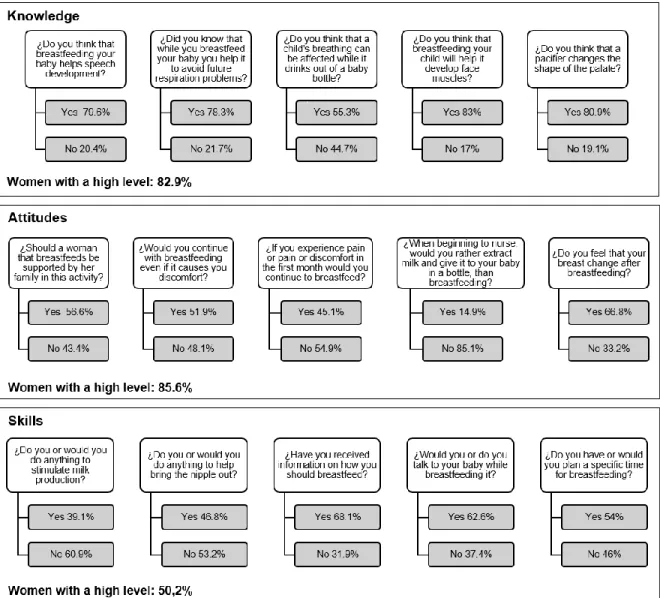
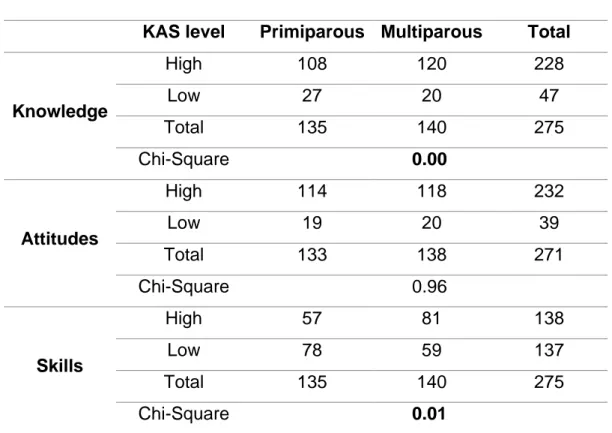
(7) STATISTICS ANALYSIS The data were analyzed using SPSS version 25 (IBM Corp, Armonk, NY, USA), determining the frequency of the mothers' correct answers for each section (Knowledge, Attitudes and Skills). If the mother answered three or more out of the five questions in each section correctly, this would be considered a high level of knowledge, attitudes, or skills, depending on the section. To establish comparisons between primiparous and multiparous mothers' KAS levels, a Chi2 test was used at a significance level of p < 0.05. The McNemar test with a significance level of p < 0.05 was applied to determine KAS levels before and after strategy implementation in both the whole sample of participants and the groups of primiparous and multiparous mothers.. Results The sample for the study included pregnant women residing in Villavicencio, Colombia, aged 14-43, with a predominant age range of 18-29, 65.8% (n=182). Fifty-one per cent (n=135) were primiparous mothers and 49% (n=140) were multiparous. Phase 1. Knowledge, attitudes and skills at the beginning of the study. Some 82.9% (n=228) of the mothers had a high level of knowledge, 85.6% (n=232) had a high level of attitudes, and 50.2% (n=138) of skills (Figure 2). Significant differences were detected (p<0.05) in the level of knowledge and skills in primiparous and multiparous expectant mothers (p=0.01) (Table 1).. 7.
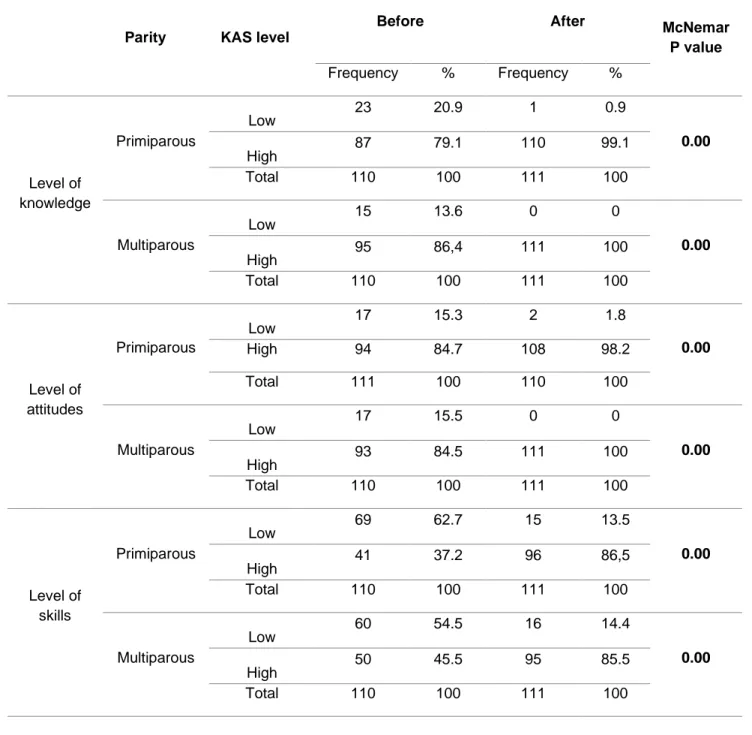
(8) The contextualization questions showed that most of the mothers (78.7%, n=174) associated the exercise of breastfeeding with the term nursing. Some 41.2% (n=91) considered that nursing should go on until the baby is six months old, while 17.6% (n=39) considered that it should go on until the baby is two years old. When asked from whom they had received the instruction to nurse, most (63.3%, n= 140) asserted that it had been from a relative, while only 20.4% (n=45) said that they had received instruction from a specialist in the topic (Table 2).. Phase 2 and 3. Strategy design and implementation.. According to the result obtained in the first phase, the study detected that even though most women had a high level of knowledge and attitude in terms of breastfeeding, the percentage was much lower in relation to skills. An educational strategy was designed to promote breastfeeding among the women, care for the mother and oral hygiene for the child, and the baby's craniofacial development. It also highlighted nursing techniques and correct attachment to the nipple to improve breastfeeding skills (Figure 3). The women attended a talk, they were given a pamphlet with advice and nursing techniques, and they watched a video with a photographic sequence to illustrate the development of the baby's rooting reflex for correct attachment to the nipple.. Phase 4. Impact of strategy implementation. The study detected that the knowledge, attitudes and skills of the 221 women who remained in the study increased significantly (McNemar's test p value <0.05) reaching 99.5% (n= 220) for knowledge, 99.1% (n=219) for attitudes, and 86% (n=190) for skills after six months of strategy implementation (Table 3). 8.
(9) The contextualization questions detected an important increase in understanding the benefits of nursing babies up to two years of age, with the percentage rising from 17.6% of the participating mothers (n=39) to 51.1% (n=113). When asked from whom they had received the instruction to nurse, after the strategy, the number of those who manifested that they had received instructions from a specialist in the topic rose from 20.4% (n=45) to 45.7% (n=101) (Table 2). A comparison between the knowledge, attitudes, and skills of primiparous and multiparous mothers before and after strategy implementation reveals a significant increase of KAS in mothers after strategy implementation (p<0.05), where this variable did not directly influence an increase in the level of knowledge, attitudes and skills in general (Table 4).. Discussion Dentists, and especially paediatric dentists, play a fundamental role in the collective social responsibility for the promotion of breastfeeding. In a review based on evidence on breastfeeding, Agarwal et al. (2012) concluded that paediatric dentistry must motivate mothers to increase the rate and duration of breastfeeding as it has been considered a determining factor for babies' craniofacial development, exercise of the orofacial muscles, mandibular sagittal growth, correction of the intermaxillary relationship, and protection against malocclusion (Roscoe et al, 2018). This study, conducted mainly with pregnant women, reveals that most of the women have a high level of knowledge (82.9%) regarding the effect of breastfeeding on oral, speech, and respiration development. This may be due to the mothers having known the importance of breastfeeding for the baby's. 9.
(10) development in general -and not because they were provided with information on the topic- given that most of the pamphlets and information on breastfeeding provided by the EPS in Colombia focus on its nutritional, immunological, respiratory, and affective benefits. In contrast, the study conducted with Nigerian mothers of newborn babies in which they determine the knowledge and perception of the benefits of breastfeeding in the prevention of child oral and dental diseases, revealed that most of the women (89.3%) had insufficient knowledge on diseases that can be prevented as a result of breastfeeding (tooth decay, thrush, snoring, abnormal jaw development, facial deformity, atypical swallowing pattern, malocclusion and sleep apnoea) (Anyanechi et al., 2017). The above was true despite the fact that 85% of the mothers reported having attended talks about breastfeeding during the prenatal period. Similarly to the knowledge factor, most of the mothers in the study (85.6%) presented good attitudes with regards breastfeeding that were conditioned by family support and the implications for the mother, including pain and changing breast shape. These factors are included by Radzyminski and Callister, 2016, as determinants for attitudes. The high percentage of mothers with a high level of knowledge and attitudes in this study may be related to the State's promotion of the practice through the EPS and ESE. However, although 68.1% of the mothers affirmed having been provided with information on how they should nurse before the strategy, only 20.4% (n=45) were advised by a health specialist, while most received information from relatives (63.3%). The value detected in this study was below the value detected in the Colombian Demographic and Health Survey 2010, which reports that 50% of the mothers surveyed nationally received 10.
(11) some type of breastfeeding training by health personnel (MinSalud & Profamilia, 2011). This may indicate the influence and differences in the way in which Colombian EPS promote breastfeeding, whereby some limit themselves to providing informational leaflets but no talks or direct instruction. It is also important to highlight that, although a high percentage of the women were found to have good levels of knowledge and attitudes, a significant percentage of these (42%) considered that babies should be breastfed only for the first six months. This is far from the timespan considered ideal by the World Health Organization and this lack of clarity among the Colombian population, is corroborated. by a qualitative study involving. pregnant women, nursing mothers, and carers of under two-year-olds in the municipalities of Caldas, Colombia, where most of their lack of knowledge and skills were found to involve the ideal time for exclusive breastfeeding and weaning (Benjumea et al., 2013). In the Skills section, the questions were related to activities that promote good skills such as the stimulation of milk production and of the nipple, obtaining instructions on how to breastfeed, interaction with the baby during breastfeeding, and breastfeeding on demand (Tedder, 2015). The results showed that only 50.2% of the interviewed population presented high level of skills, indicating that, although most had high level of knowledge and attitudes, when it came to actually breastfeeding, they had little correct information, possibly due to the fact that a higher percentage of the women (63.3%) that received information about breastfeeding had done so from a relative. A study conducted by Mejia et al. (2016) involving Peruvian mothers with newborn babies, found an association between the number of incorrect answers and information received from people outside the health sector, arguing that this may have a negative impact on breastfeeding. 11.
(12) Additionally, studies conducted by Gamboa et al. (2008) and Veramendi-Espinoza et al. (2012) affirm that there is no association between knowledge and practices, given that the number of mothers that breastfeed is below those that have adequate knowledge. This study detected the need to consolidate the information, knowledge, and attitudes regarding the correct skills for breastfeeding. As such, an educational strategy was designed and implemented to evaluate the impact of the strategy on the knowledge, attitudes and skills of pregnant women and nursing mothers who used the ESE health centres in Villavicencio. Six months after the implementation of the educational strategy, the study detected a significant increase in the women's knowledge in terms of the benefits of breastfeeding for the infant's craniofacial development, as well as increased knowledge about nursing for up to two years. In the study conducted by Anyanechi et al. (2017), after being informed of the benefits of breastfeeding for oral health, women were more willing to breastfeed their babies for longer periods of time. This occurred in 87.4% of the mothers. The percentage of mothers with high level of attitudes and skills also increased, with the highest increase following strategy implementation, being obtained for the latter. A significant increase in KAS occurred among both multiparous and primiparous mothers, regardless of the fact that, in the beginning, the percentage of multiparous mothers with good knowledge and skills was significantly higher than the knowledge and skills of primiparous mothers, highlighting the importance of the implementation of breastfeeding promotion strategies. In their study for Kenya, Mohamed et al., 2018 did not find significant differences between the KAP on exclusive breastfeeding among primiparous and multiparous mothers involved in the study. The authors argue that this is due to the 12.
(13) different strategies used in the interventions conducted by the country's Health Ministry and non-governmental organizations. The positive effect of educational strategies to increase breastfeeding knowledge and practice around the world is also corroborated by systematic reviews (Haroon et al., 2013 and Kim et al., 2018) and meta-analyses (Sinha et al., 2015). In Latin America, the study conducted by Santana et al. (2014) and by Guerra et al. (2017), on nursing and pregnant mothers in Argentina and Cuba respectively, found increased knowledge following strategy implementation, with 87.5% and 96.7% -respectively- of the mothers obtaining a good level of knowledge. The study by Guerra et al. (2017) also detected that over 90% of the mothers who benefited from the educational strategy, nursed their children exclusively until they were six months old. Thus, the implementation of the educational strategies, regardless of sociocultural differences, parity, knowledge and attitudes with respect to breastfeeding, are fundamental in promoting breastfeeding skills in all mothers. Such strategies must be based. on. the. cultural. beliefs. and. environmental. circumstances surrounding. breastfeeding, (World Health Organization & UNICEF, 2003), as well as those of the health professional, among which dentists and, in particular, paediatric dentists. The limitations of the study include the lack of determination of the duration of the breastfeeding period as well as the proportions of exclusively breastfed children, following the educational strategy. However, we hope that the fact that the mothers improved their knowledge, attitudes and skills, contributed to improving their breastfeeding practice. It is important, however, to bear in mind that improving KAS is not the only factor that contributes to improved breastfeeding practices, as, for example, concluded by 13.
(14) Rodríguez-García & Acosta- Ramírez (2008), “breastfeeding is conditioned by individual characteristics, family-related factors, and attitudes and strategies of the healthcare provision systems”. Thus, an educational strategy would only influence individual characteristics such as the mothers' perceptions and knowledge. According to the results of this study, we recommend that a strategy should be implemented involving pregnant and breastfeeding mothers, in order to improve the breastfeeding KAS. To ensure the efficiency of said strategy, it is important to complement this with other types of strategy that support the mother during breastfeeding, such as the initiative implemented by Hospital Amigo del Niño, as well as interventions combined with educational strategies, counselling, and home-based strategies, among others that have been the most effective in terms of exclusive breastfeeding (Kim et al, 2018). Conclusions: In this study, we detected that most of the participating mothers, had a good level of knowledge and attitudes about breastfeeding, but only half had the appropriate skills. Most of the women had no idea about the length of time babies should be breastfed for, they had not received specialized advice on the topic, and there were significant differences in the level of KAS between primiparous and multiparous mothers. Thus, an educational strategy was developed focusing mainly on breastfeeding skills and on clarifying concepts that were detected as lacking in the first phase of the study, as well as mentioning the importance of breastfeeding for babies' oral and craniofacial development. The implementation of this educational strategy designed from a dentistry perspective, significantly increased breastfeeding knowledge, attitudes and skills in 14.
(15) nursing mothers who attended a number of health centres of the public network in Villavicencio, regardless of whether they were primiparous or multiparous mothers.. Disclosure Statement No competing financial interests exist.. 15.
(16) REFERENCES Agarwal, M., Ghousia, S., Konde, S., Raj, S., & Price, W. (2012). Breastfeeding: Nature ‘s Safety Net. International Journal of Clinical Pediatric Dentistry, 5(1), 49–53. doi:10.5005/jp-journals-10005-1133 Anyanechi, C. E., Ekabua, K. J., Ekpenyong, A. B., & Ekabua, J. E. (2017). Parturients ‘awareness and perception of benefits of breast feeding in the prevention of infant and Childhood oral and dental diseases. Ghana Medical Journal, 51(2), 83–87. doi:http://doi.org/10.4314/gmj.v51i2.6 Benjumea, M. V., Falla, N. C., & Jurado, L. (2013). Knowledge and practices of pregnant women and caregivers about breasfeeding in five municipalities from Caldas, Colombia. Hacia Promoc Salud, 18(2), 66–78. Dewey, K. G., Heinig, M. J., Nommsen, L. A., Peerson, J. M., & Lönnerdal, B. (1992). Growth of breast-fed and formula-fed infants from 0 to 18 months: The DARLING study. Pediatrics, 89(6), 1035–1041. Figueiras, A. C., Neves de Souza, I. C., Ríos, V. G., & Benguigui, Y. (2011). Manual para la vigilancia del desarrollo infantil (0-6 años) en el contexto de AIEPI. Washington, D.C: PAHO. Gamboa, E. M., López, N., Prada, G. E., & Gallo, K. Y. (2008). Conocimientos, Actitudes y Prácticas relacionados con lactancia materna en mujeres en edad fértil en una population vulnerable. Revista Chilena de Nutrición, 35(1), 43–52. Guerra, E., Martínez, M. E., Arias, Y., Fonseca, R. L., & Martínez, A. (2017). Impacto de Estrategia educativa sobre lactancia materna a futuras madres. 2005-2016. Multimed, 21(2), 28–46. Guise, J. M., Palda, V., Westhoff, C., Chan, B. K., Helfand, M., & Lier, T. A. (2003). The Effectiveness of Primary care- based interventions to promote breastfeeding: Systematic evidence review and meta-analysis for the US preventive services task force. The Annals of Family Medicine, 1(2), 70–78. Haroon, S., Das, J. K., Salam, R. A., Imdad, A., & Bhutta, Z. A. (2013). Breastfeeding promotion interventions and breastfeeding skills: A systematic review. BMC Public Health, 13(3), doi:10.1186/1471-2458-13-S3-S20 Imdad, A., Yakoob, M. Y., & Bhutta, Z. A. (2011). Effect of breastfeeding promotion 16.
(17) interventions on breastfeeding rates with special focus on developing countries. BMC Public Health, 11(3),doi:10.1186/1471-2458-11-S3-S24 Kim, S. K., Park, S., Oh, J., Kim, J., & Ahn, S. (2018). Interventions promoting exclusive breastfeeding up to six months after birth: A systematic review and meta-analysis of randomized controlled trials. International Journal of Nursing Studies, 80, 94– 105. doi:10.1016/j.ijnurstu.2018.01.004 Lumbiganon, P., Martis, R., Laopaiboon, M., Festin, M. R., Ho, J. J., & Hakimi, M. (2011). Antenatal breastfeeding education for increasing breastfeeding duration. Cochrane. Database. of. Systematic. Reviews,. 11,. CD006425.. doi:10.1002/14651858.CD006425.pub2 Mejia, C .R., Cárdenas, M. M., Cáceres, O. J., García-Moreno, K. M., Verastegui-Díaz, A., & Quiñones-Laveriano, D. M. (2016). Actitudes y prácticas sobre lactancia materna en puérperas de un hospital público de Lima, Perú. Revista Chilena de Obstreticia. y. Ginecología,. 81(4),. 281–287.. doi:10.4067/S0717-. 75262016000400003 MinSalud, & Profamilia. (2011). Encuesta Nacional de Demografía y Salud 2010. Colombia: Ministerio de Salud y Protección Social-Profamilia. Mohamed, M. J., Ochola, S., & Owino, V. O. (2018). Comparison of knowledge, attitudes and skills on exclusive breastfeeding between primiparous and multiparous mothers attending Wajir District hospital, Wajir County, Kenya: A cross-sectional analytical study. International Breastfeeding Journal, 13, 11. doi:10.1186/s13006018-0151-3 Prell, C., & Koletzko, B. (2016). Breastfeeding and complementary feedingrecommendations on infant nutrition. Deutsches Arzteblatt international, 113, 435– 444. doi:10.3238/arztebl.2016.0435 Radzyminski, S., & Callister, L. C. (2016). Mother’s beliefs, attitudes, and Decision making related to infant feeding choices. The Journal of Perinatal Education, 25(1), 18–28. doi:10.1891/1058-1243.25.1.18 Rodríguez-García, J., & Acosta-Ramírez, N. (2008). Factores asociados a la lactancia materna exclusiva en población pobre de áreas urbanas de Colombia. Revista de Salud Pública, 10(1), 71–84. 17.
(18) Roscoe, M. G., da Silva-Bonifacio, S. V., da Silva, T. B., Pingueiro, J. M. S., Lemos, M. M., & Feres, M. F. N. (2018). Association of breastfeeding duration, nonnutritive sucking habits, and malocclusion. International Journal of Clinical Pediatric Dentistry, 11(1), 18–22. doi:10.5005/jpjournals-10005-1477 Salone, L. R., Vann, W. F. Jr., & Dee D. L. (2013). Breastfeeding: An overview of oral and general health benefits. The Journal of the American Dental Association, 144(2), 143–151. doi:10.14219/jada.archive.2013.0093 Santana, S. C., Cepero, M. T., & Expósito, O. (2014). Resultados de un programa educativo sobre lactancia materna a madres de niños menores de seis meses. Revista. Médica. Electrónica. PortalesMedicos.com.. Retrieved. from. https://www.revista-portalesmedicos.com/revista-medica/programa-educativolactancia-materna/ Sinha, B., Chowdhury, R., Sankar, M. J., Martines, J., Taneja, S., Mazumder, S., & Bhandari, N.(2015). Interventions to improve breastfeeding outcomes: A systematic review and meta-analysis. Acta Paediatrica, 104(467), 114–134. doi:10.1111/apa.13127 Tedder, J. (2015). The Roadmap to breastfeeding success: Teaching child development to extend breastfeeding duration. The Journal of Perinatal Education, 24(4), 239– 248. doi:10.1891/1058-1243.24.4.239 UNICEF. (2005). Iniciativa Instituciones Amigas de la Mujer y la Infancia en el marco de los derechos-IAMI. Bogotá: UNICEF. Veramendi-Espinoza, L. E., Zafra-Tanaka, J. H., Ugaz-Soto, L. M., Villa-Santiago, N. M., Torres-Bravo, L. A., Pinto-Arica, A. A., & Moras-Rosado, M. M. (2012). Conocimientos, actitudes y prácticas de lactancia materna en madres de niños de comunidad rural peruana y su asociación con la diarrea aguda infecciosa. CIMEL, 17(2), 82–88. World Health Organization. (1981). International Code of Marketing of breast-milk Substitutes. Geneva: WHO. World Health Organization. (2016). Breestfeeding. Retrieved from http://www.who.int/topics/breastfeeding/en/ World Health Organization & UNICEF. (2003). Global strategy for infant and young child feeding. Geneva: WHO. 18.
(19) World Health Organization & UNICEF. (2009). Baby-friendly hospital initiative. Geneva: WHO.. 19.
(20) Pregnant women and nursing mothers. Inclusion criteria and informed consent Phase 1. Application of a survey validated by the researchers " (n=275 women). Phase 2. Design and intervention.. Phase 3. The strategy was implemented four months after (n=235 women).. Phase 4. Intervention impact: six months after intervention (n=221).. Figure 1. Phases of the study to improve the Knowledge, Attitudes and Practices of pregnant women and nursing mothers.. 20.
(21) Figure 2. Level of knowledge, attitudes and skills of pregnant women.. 21.
(22) •General information •Benefits highlighting craniofacial development. •Breastfeeding techniques •Advice to improve breastfeeding practices. 1. Invitation to pregnant and breastfeeding women. 2. Educational talk to promote and strengthen breastfeeding practices. 4. Complementary video on the breast crawl instinct, nipple position and grip.. 3. Delivery of the information leaflet designed •. •Benefits of breastfeeding that include craniofacial development •Care of the mother •Hygiene of the baby's mouth.. •Explanation of breastfeeding techniques.. Figure 3. Educational intervention to promote breastfeeding and craniofacial development. 22.
(23) Table 1. Knowledge, attitudes and skills among primiparous and multiparous women. KAS level. Knowledge. Primiparous Multiparous. High. 108. 120. 228. Low. 27. 20. 47. Total. 135. 140. 275. Chi-Square. Attitudes. 0.00. High. 114. 118. 232. Low. 19. 20. 39. Total. 133. 138. 271. Chi-Square. Skills. 0.96. High. 57. 81. 138. Low. 78. 59. 137. Total. 135. 140. 275. Chi-Square. 23. Total. 0.01.
(24) Table 2. Contextualization questions for knowledge, attitudes and skills in the survey. Before*. After*. Contextualization Frequency. %. Frequency. %. KNOWLEDGE Which of the following terms do you associate with the Practices of breastfeeding for your child?**. Amamantar. 174. 78.7. 183. 82.8. Dar pecho. 40. 18.1. 31. 14.0. Dar teta. 6. 2.7. 6. 2.7. Dar de mamar. 1. 0.5. 1. 0.5. Six months. 91. 41.2. 33. 14.9. A year. 69. 31.2. 38. 17.2. A year and a half. 22. 10.0. 37. 16,7. Two years. 39. 17.6. 113. 51.1. Relative. 140. 63.3. 99. 44.8. Internet. 22. 10.0. 13. 5.9. Friends. 14. 6,3. 8. 3.6. Specialists. 45. 20.4. 101. 45.7. ATTITUDES. How long do you think you should be nursing?. SKILLS. Who did you receive instructions about nursing from?. * Values for the mothers who remained in the study during impact measurement **Popular terms used in Colombia. 24.
(25) Table 3. Levels of knowledge, attitudes and skills before and after the intervention.. KAS level. Knowledge. Attitudes. Skills. Before*. McNemar p value. After*. Frequency. %. Frequency. %. Low. 39. 17.6. 1. 0.5. High. 182. 82.4. 220. 99.5. Total. 221. 100. 221. 100. Low. 34. 15,4. 2. 0.9. High. 187. 84.6. 219. 99.1. Total Low. 221 129. 100 58.4. 221 31. 100 14.0. High. 92. 41.6. 190. 86.0. Total. 221. 100. 221. 100. 0.00. 0.00. 0.00. * Values for the mothers who remained in the study during impact measurement. 25.
(26) Table 4. Level of knowledge, attitudes, and skills according to multiparous and primiparous mothers Before Parity. Low Primiparous High Total. Level of knowledge. Low Multiparous High Total. Primiparous. Low High Total. Level of attitudes. Low Multiparous High Total Low Primiparous High Total. Level of skills. Low Multiparous High Total. 26. After. McNemar P value. KAS level Frequency. %. Frequency. %. 23. 20.9. 1. 0.9. 87. 79.1. 110. 99.1. 110. 100. 111. 100. 15. 13.6. 0. 0. 95. 86,4. 111. 100. 110. 100. 111. 100. 17. 15.3. 2. 1.8. 94. 84.7. 108. 98.2. 111. 100. 110. 100. 17. 15.5. 0. 0. 93. 84.5. 111. 100. 110. 100. 111. 100. 69. 62.7. 15. 13.5. 41. 37.2. 96. 86,5. 110. 100. 111. 100. 60. 54.5. 16. 14.4. 50. 45.5. 95. 85.5. 110. 100. 111. 100. 0.00. 0.00. 0.00. 0.00. 0.00. 0.00.
(27)
Figure

Documento similar
Government policy varies between nations and this guidance sets out the need for balanced decision-making about ways of working, and the ongoing safety considerations
The expansionary monetary policy measures have had a negative impact on net interest margins both via the reduction in interest rates and –less powerfully- the flattening of the
Jointly estimate this entry game with several outcome equations (fees/rates, credit limits) for bank accounts, credit cards and lines of credit. Use simulation methods to
In our sample, 2890 deals were issued by less reputable underwriters (i.e. a weighted syndication underwriting reputation share below the share of the 7 th largest underwriter
Method: This article aims to bring some order to the polysemy and synonymy of the terms that are often used in the production of graphic representations and to
In addition, this research study has other uses: to use the media to promote equality in the design, production and management of science and technology; to
The study group comprises 171 patients examined at the Oral Medicine Unit at Department of Dentistry Cli- nic Charles University in Prague, Faculty of Medicine and
Due to its many sources and to the fact that it involves researchers and individuals who preserve popular knowledge, ethnobotany plays an important role in local development issues,
