
Developing reading comprehension through content based activities
115
0
0
Texto completo
(2) DEVELOPING READING COMPREHENSION. Developing Reading Comprehension through Content Based Activities. Nubia GUALTERO ARANDA. Research Report submitted in partial fulfillment of the requirements for the degree of Master in English Language Teaching – Autonomous Learning Environments. Directed by Dario BANEGAS Department of Foreign Languages and Cultures Universidad de La Sabana Chía, Colombia June 2016.
(3) DEVELOPING READING COMPREHENSION Declaration. I hereby declare that my research report entitled: Developing Reading Comprehension through Content Based Activities . is the result of my own work and includes nothing which is the outcome of work done in collaboration except as declared and specified in the text;. . is neither substantially the same as nor contains substantial portions of any similar work submitted or that is being concurrently submitted for any degree or diploma or other qualification at the Universidad de La Sabana or any other university or similar institution except as declared and specified in the text;. . complies with the word limits and other requirements stipulated by the Research Subcommittee of the Department of Foreign Languages and Cultures;. . has been submitted by or on the required submission date.. Date: June 2016 Full Name:. Signature:. Nubia Gualtero Aranda.
(4) DEVELOPING READING COMPREHENSION. i. Abstract In this information era reading comprehension is an essential skill. Recent standardized international and national test results have demonstrated the students’ low level in reading comprehension skills, especially those who attend public schools. Bearing in mind this fact, this qualitative research study intends to determine to what extent the implementation of contentbased activities might develop A1 (CEFR) eleventh grade students’ reading comprehension and higher order thinking skills (HOTS) of a public school. This proposal is a qualitative action research study in which the teacher is involved in the research as a researcher and as a teacher. Data were collected by implementing a pre and post students’ questionnaires, a pre and post reading comprehension KET test as well as students’ artifacts. The data collected were analyzed by following the stages proposed by the grounded theory principles which are open coding, axial coding and selective coding to determine the most relevant aspects to examine during the implementation of content based activities at this specific context. The analysis of data revealed that content based activities foster learners’ reading comprehension, analysis and evaluation thinking skills. This study extends the understanding of the effectiveness of implementing content based activities in A1 (CEFR) students’ reading comprehension and higher order thinking skills in non-bilingual schools. It also presents noteworthy activities to facilitate the integration of content and language learning into beginner levels, ensuring students’ lifelong learning and success in their academic and professional lives. Key words: content-based instruction; reading comprehension; thinking skills..
(5) DEVELOPING READING COMPREHENSION. ii. Resumen En esta era de la información, la comprensión lectora es una habilidad esencial. Los resultados de pruebas estandarizadas nacionales e internacionales recientes que evalúan esta habilidad han evidenciado el bajo nivel en la comprensión de lectura de los estudiantes colombianos especialmente en las instituciones educativas públicas. Teniendo este hecho en cuenta, esta investigación cualitativa busca determinar en qué medida la implementación de actividades basadas en contenidos puede desarrollar la comprensión de lectura y habilidades de pensamiento de nivel superior de estudiantes de nivel A1 de inglés según el Marco Común Europeo de Referencia para las Lenguas. Los datos fueron recolectados a través de la implementación de encuestas y pruebas de comprensión de lectura KET aplicados a los estudiantes antes y después de la intervención y artefactos de los estudiantes. Estos datos fueron analizados siguiendo las etapas propuestas por los principios de la teoría fundamentada, las cuales son codificación abierta, axial y selectiva para determinar los aspectos a analizar en la implementación de actividades basadas en contenidos en este contexto especifico. El análisis de los datos reveló que la implementación de actividades basadas en contenidos mejora la comprensión de lectura y habilidades de pensamiento (análisis y evaluación). Este estudio amplia el entendimiento de la efectividad de la implementación de la enseñanza de lenguas basada en contenido en la comprensión de lectura y habilidades de pensamiento de estudiantes de nivel básico en colegios no bilingües y presenta actividades para facilitar la integración de aprendizaje de una lengua extranjera y contenidos en niveles principiantes garantizando el aprendizaje permanente de los estudiantes y éxito en su vida profesional y académica. Palabras claves: comprensión de lectura, enseñanza de lenguas basada en contenidos, habilidades de pensamiento..
(6) DEVELOPING READING COMPREHENSION. iii. Table of Contents Abstract ...................................................................................................................................... i Resumen .................................................................................................................................... ii Table of Figures ........................................................................................................................ vi Table of Tables ......................................................................................................................... vi Chapter 1: Introduction ...............................................................................................................1 1.1. Introduction to the study ......................................................................................1. 1.2. Rationale of the study...........................................................................................3 1.2.1 Needs analysis and problem statement ......................................................3 1.2.2 Justification of problem’s significance ......................................................4 1.2.3 Strategy selected to address problem .........................................................5. 1.3. Research questions and objectives ........................................................................6. 1.4. Conclusion ...........................................................................................................7. Chapter 2: Theoretical Framework & State of the Art ..................................................................8 2.1. Introduction .........................................................................................................8. 2.2. Theoretical framework .........................................................................................8 2.2.1 Content-based approach ............................................................................8 2.2.2 Reading comprehension .......................................................................... 10 2.2.3 Higher level thinking skills - Bloom's taxonomy ..................................... 14. 2.3. State of the art .................................................................................................... 16. 2.4. Conclusion ......................................................................................................... 20. Chapter 3: Research Design ...................................................................................................... 22 3.1. Introduction ....................................................................................................... 22. 3.2. Type of study ..................................................................................................... 22.
(7) DEVELOPING READING COMPREHENSION 3.3. iv. Context .............................................................................................................. 23 3.3.1 Participants ............................................................................................. 23 3.3.2 Researcher’s role .................................................................................... 24 3.3.3 Ethical considerations ............................................................................. 25. 3.4. Data collection instruments ................................................................................ 25 3.4.1 Descriptions and justifications ................................................................ 25 3.4.1.1. Students’ perceptions questionnaires ..................................... 26. 3.4.1.2. KET tests .............................................................................. 26. 3.4.1.3. Artifacts ................................................................................ 27. 3.4.1.4. Reading comprehension rubric .............................................. 28. 3.4.2 Validation and piloting ........................................................................... 28 3.5. Conclusion ......................................................................................................... 29. Chapter 4: Pedagogical Intervention and Implementation .......................................................... 30 4.1. Introduction ....................................................................................................... 30. 4.2. Visions of language, learning, and curriculum .................................................... 30 4.2.1 Vision of language .................................................................................. 30 4.2.2 Vision of learning ................................................................................... 31 4.2.3 Vision of curriculum ............................................................................... 32. 4.3. Instructional design ............................................................................................ 32 4.3.1 Lesson planning ...................................................................................... 33 4.3.2 Implementation ....................................................................................... 34. 4.4. Conclusion ......................................................................................................... 35. Chapter 5: Results and Data Analysis ........................................................................................ 36.
(8) DEVELOPING READING COMPREHENSION. v. 5.1. Introduction ....................................................................................................... 36. 5.2. Data management procedures ............................................................................. 36 5.2.1 Validation .............................................................................................. 36 5.2.2 Data analysis methodology ..................................................................... 37. 5.3. Categories .......................................................................................................... 37 5.3.1 Overall category mapping ....................................................................... 38 5.3.2 Discussion of categories ......................................................................... 40 5.3.2.1. Enhancing reading skills........................................................ 40. 5.3.2.2. Vocabulary development ....................................................... 43. 5.3.2.3. Background knowledge building ........................................... 45. 5.3.2.4. Activities for facilitating reading comprehension................... 47. 5.3.2.5. Thinking skills development.................................................. 48. 5.3.3 Core category ......................................................................................... 51 5.4. Conclusion ......................................................................................................... 51. Chapter 6: Conclusions and Pedagogical Implications ............................................................... 53 6.1. Introduction ....................................................................................................... 53. 6.2. Comparison of results with previous studies’ results........................................... 54. 6.3. Significance of the results .................................................................................. 56. 6.4. Limitations of the present study ......................................................................... 57. 6.5. Further research ................................................................................................. 58. 6.6. Conclusion ......................................................................................................... 59. References ................................................................................................................................ 61.
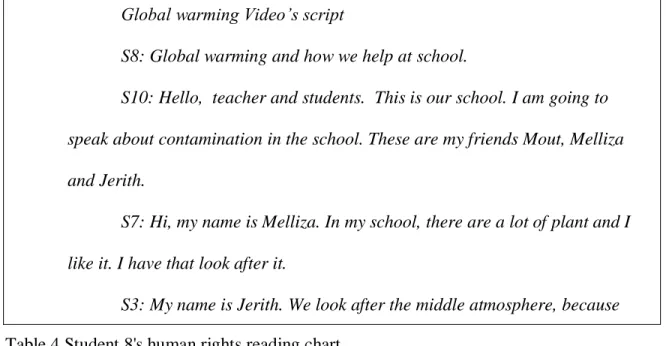
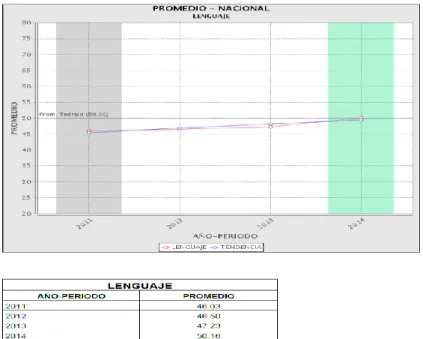
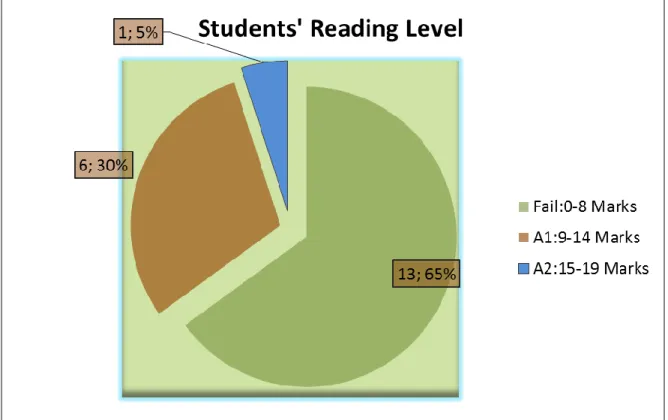
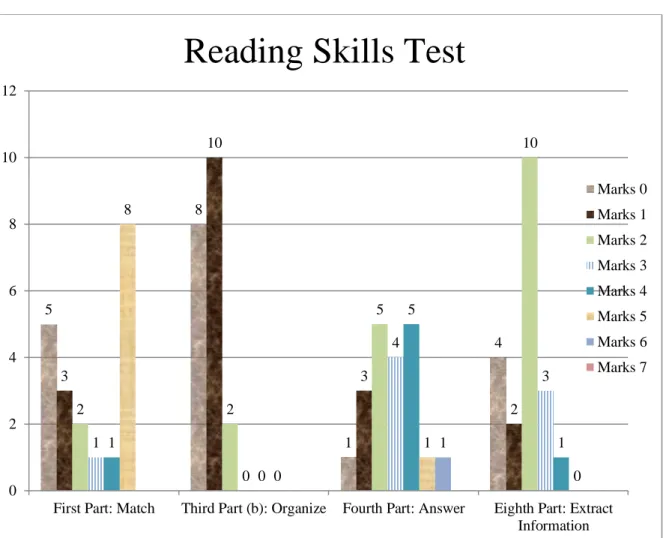
(9) DEVELOPING READING COMPREHENSION. vi. Table of Figures Figure 1 Revised Bloom's higher order thinking skills ................................................... 15 Figure 2 Mapping ......................................................................................................... 40 Figure 3 Pre KET and post KET results ........................................................................ 41 Figure 4 Reading comprehension ICFES test results ..................................................... 76 Figure 5 Need analysis KET test results ....................................................................... 77 Figure 6 Need analysis KET test results ....................................................................... 78 Figure 7 KET test implemented before the pedagogial intervention ............................... 89 Figure 8 KET test implemented after the pedagogical intervention ............................... 94. Table of Tables Table 1 Initial coding after open coding ......................................................................... 38 Table 2 Axial coding sample .......................................................................................... 39 Table 3 Student 12's perceptions of his thinking skills. ................................................... 48 Table 4 Student 8's human rights reading chart ............................................................. 50.
(10) DEVELOPING READING COMPREHENSION. 1. Chapter 1: Introduction 1.1. Introduction to the study Nowadays, reading comprehension has become one of the most important skills in order. to succeed in modern society not only as an ability used to pursue and achieve academic goals but also as a tool to understand and face every day challenges. It is due to the substantial amount of information that people are expected to deal with on a daily basis, especially with the information boom provoked by the internet, which is permanently changing the way the former is spread around the world, that developing reading comprehension has turned into a requirement at several human settings, mainly scholarly. In this line of thought, it is students who are in need to be able to identify, select and value information in order to make informed decisions about it so that they can account for the best use of such data. To this respect, the new challenge attempted by teachers relies on the fact to enable learners to not only decode words and phrases for meaning, but also to make connections between the written texts and their reality. Particularly, to the purpose of the present study, this has not gone unnoticed by researcher. To this respect, the importance of improving students’ reading comprehension level for their professional and social development, gains high relevance in education fields. In fact, researchers Duke and Pearson (2002), Nuttall (2005), and Tovani (2000) implemented studies to uncover the causes and aspects involved in the reading comprehension processes. Their reports indicated most of the benefits pupils discover and later, apply at varied subjects once their reading comprehension was fostered. The aforementioned reasons have inspired Colombian schools to search for the best way to encourage their students to develop their reading skills. Specifically, curriculums have accounted for the important task to qualify learners to read texts comprehensively; however,.
(11) DEVELOPING READING COMPREHENSION. 2. most of the times the attempts to fulfill the expectations are simply related to include sample papers of standardized tests of the country, as they are: ICFES2 (Instituto Colombiano para el Fomento de la Educación Superior) or SABER test3 without pragmatically focusing on the real needs of the students’ language skills. Therefore, the lack of effectiveness of the strategies used so far is evidenced in the poor scores of the students on the ICFES/ SABER (Appendix A), PIRLS (Progress in International Reading Literacy Study) (ICFES, 2012) and PISA (Programme for International Student Assessment; Clavijo, 2014) tests as claimed by Bos, Ganimian, Vegas and Álvarez (2014). Additionally , according to the Centro Regional para el Fomento del Libro en América Latina y el Caribe 4 (2012) and the Departamento Administrativo Nacional de Estadistica5 (2014), a large number of students do not actually read or only spend little time doing it. It seems either they are not interested in improving their reading skills or the exposure to the activity is not rewarding enough. From this point of view, it urges the need to look for different tools to help students improve their reading comprehension as well as to raise their awareness on the importance reading has in achieving their academic and personal goals. In this perspective, the present study is intended to use content-based activities in order to enable EFL students to improve their reading comprehension, as so it is a necessary skill for daily success. The implementation of this kind of activity allows students to learn the Foreign Language (FL) by using this target language with a real purpose, instead of involving them in artificial circumstances.. 2. Colombian institute responsible for the promotion and monitoring of higher education. A standardized test administered prior graduation in high schools in Colombia. 4 An intergovernmental organization which is responsible of promoting the development of book publishing in Latin America and the Caribbean. 5 The entity responsible for the planning, collection, processing, analysis, and dissemination of Colombia’s official statistics. 3.
(12) DEVELOPING READING COMPREHENSION 1.2. 3. Rationale of the study 1.2.1 Needs analysis and problem statement This project was conducted with a group of eleventh graders of a public school. These. students are expected to be B1 (pre-intermediate) level according to El Ministerio Nacional de Educación6 (MEN). However, needs analysis results indicate that this population does not achieve the expected level requirements (Appendix B). According to the Common European Framework of Reference (CEFR) these students are classified at the A1 level, which points out their profiency is two levels behind. Characteristically, students involved in this research study are able to: . understand the general idea of simple informational texts and short simple descriptions.. . understand very short, simple texts, putting together familiar names, words and basic phrases.. . follow short, simple written instructions.. . recognize familiar names, words and very simple phrases on simple notices in the most common everyday situations.. . understand short, simple messages. (Verhelst, Van Avermaet, Takala, Figueras, & North, 2009, p. 26). Although these standardized tests evaluate the knowledge of the students in different. content areas and language separately, students are required to have an optimal level of reading comprehension to be able to get good scores in all of the subjects evaluated. The results also evidence the low scores obtained by language students in which reading comprehension skills. 6. It is the Colombian state agency responsible for monitoring the appropriateness and accurateness of the education processes in public and private educational organizations..
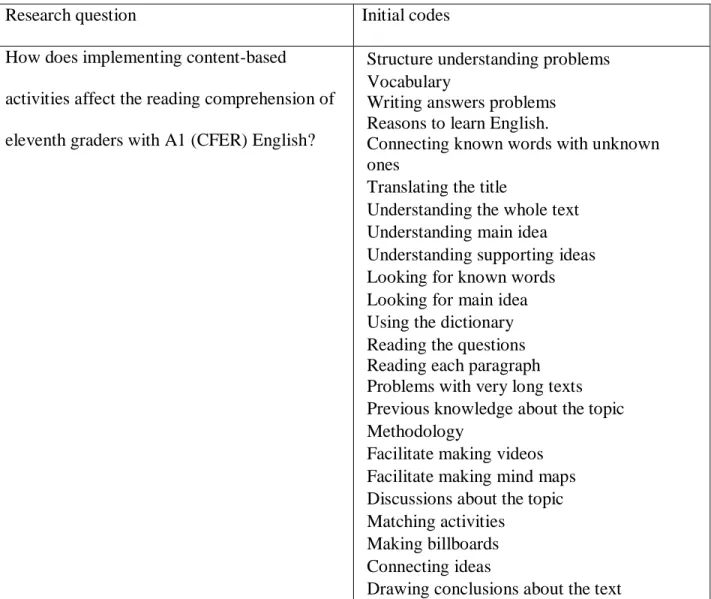
(13) DEVELOPING READING COMPREHENSION. 4. are evaluated directly (Subdirección de Calidad y Pertinencia, Dirección de Evaluación de la Educación Secretaría de Educación del Distrito, 2014). These tests demonstrate the need for a new methodology aimed at improving learners’ reading comprehension. Equally, PIRLS (Progress in International Reading Literacy Study) report (ICFES, 2012) also presents the perceptions of the students about their reading comprehension skills, which seems to be an area where Colombian students have the most room for improvement. Expressly, only 24% of fourth grade students is confident about their reading skills which interestingly, according to the aforementioned study, may affect the accurate performance of the students likely in academic and social goals. Importantly, the test demonstrated that there is a link between the high confidence of the students about their skills and higher students’ achievements obtained in the test (ICFES, 2012). This fact might constitute a proof of shortage of reading skills of the students which represents a difficulty when they are administered national and international proficiency tests. 1.2.2 Justification of problem’s significance Most of the students in public schools of Bogota score the lowest levels of performance on SABER tests. These tests are implemented by ICFES and were taken by students at different grades in 2009, 2012, 2013 and 2014 in order to be graded at diverse knowledge and skills. Hence, after being assessed, eleventh graders could be more aware of their reading comprehension difficulties as mirrored in their scores. This is known because SABER test classifies high school students according to their abilities to analyze and understand written information related to school subjects. However, good results have been elusive to the majority of the learners. Getting good results in this test opens doors and gives students better opportunities to join to well-known.
(14) DEVELOPING READING COMPREHENSION. 5. university programs and in the same way, confers these pupils’ teachers a higher academic status in schools. “Helping students perform well on state academic assessments is no longer optional but rather essential to a teacher´s career and financial well-being” (Tankersley, 2007, p. 9). Therefore, the development of reading comprehension skills has become a priority in the teaching and learning process in schools all over the country. Although the national and district governments have implemented different reading and writing strategies to improve these students’ abilities such as the Plan Nacional de Lectura y Escritura –PNLE7- (Ministerio de Educación Nacional, 2011) and Plan Distrital Inclusión en la Cultura Escrita8 –DICE- (Secretaría de Cultura, Recreación y Deporte (Coordinación Plan DICE), Secretaría de Educación Distrital, Biblored, 2011), the efforts have not been enough to overcome this issue, it is reflected in the results achieved on international tests in which Colombia has participated, as they are PISA and PIRLS tests. On these tests, students have indicated a progressive improvement in reading comprehension, but these results are still below accepted international standards levels (Clavijo, 2014; ICFES, 2012). Hence, there is a clear need to implement a strategy which engages students learn the foreign language in a natural way without feeling the pressure to learn but the pleasure to understand, instead. 1.2.3 Strategy selected to address problem Reading comprehension is a process that involves the use of different strategies to decode a text. However, mastering these strategies requires training and precise selection of activities to properly exercise those (Duke & Pearson, 2002). Purposely, the implementation of content based activities makes students connect their prior knowledge with the text which leads students into. 7. It is a project created to promote reading in Colombia. It is led by MEN. It is a district plan created to establish the policies regarding reading and writing skills development in Bogota. 8.
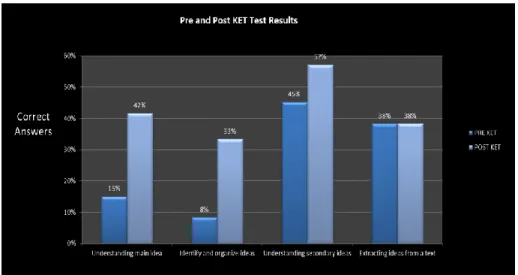
(15) DEVELOPING READING COMPREHENSION. 6. better textual comprehension and provides students with a natural context to learn the language (Corrales & Maloof, 2011). For this reason, content-based activities appear to accurately fit the purpose of the present study once they serve as key strategies to enrich the reading comprehension level of students and the attempt to enhance their language proficiency as well. Accordingly, the development of reading comprehension through the implementation of content based activities could memorably encourage students to get involved in classroom reading activities that not only include the schools subjects but also would increase the acquisition of the L2 in a more independent mode (Dueñas, 2004). It is also possible that the students involved in learning a second or foreign language through content instruction can certainly obtain better results in the learning of the target content than the second language learning itself. In fact, another possibility can be to experience the contrary. Thus, they might develop their second language competence more than their competence in the target subject competence, which as a matter of fact, constitutes the objective of this study. Additionally, other subject teachers could acknowledge a positive effect on their classes because it is possible to weave English into the other subject areas; that is to say, once students are able to recall vocabulary and knowledge acquired specifically in English lessons, other subjects lessons are academically enriched and nurtured by this advantage . Hence, this experience provides students with the opportunity to learn more specific lexis related to different topics, and subsequently, be used to better score in SABER test. 1.3. Research questions and objectives The target population of the present study showed constant difficulty in: understanding. main ideas, detailed information, extracting ideas and organizing a text; nevertheless the areas with major drawbacks were: understanding the gist of the message and organizing ideas.
(16) DEVELOPING READING COMPREHENSION. 7. (Appendix C). After identifying the points in question and analyzing the need to implement strategies to develop these learners’ reading comprehension, the researcher intends to answer the following questions: . “How does implementing content based activities affect the reading comprehension of eleventh graders with A1 (CFER) English?”. . “How can the implementation of content-based activities contribute to the enhancement of eleventh graders’ higher order thinking skills?”. Accordingly, this study’s research objectives were: . To analyze to what extent the implementation of content based activities might develop students’ reading comprehension.. . To determine the impact of the implementation of content based activities in the improvement of students´ higher order thinking skills.. 1.4. Conclusion Reading comprehension is a skill by which students need to accomplish the goals they. have set for themselves. Therefore, the significance of finding strategies to foster students’ reading comprehension should not be underestimated. Duke and Pearson (2002) highlight reading, as one important aspect in reading, which they call, “reading for real purposes” which can be achieved through the implementation of content based activities. Thus, it is necessary to review the main constructs that support this study, which are Content based Instruction (CBI), reading comprehension and higher order thinking skills..
(17) DEVELOPING READING COMPREHENSION. 8. Chapter 2: Theoretical Framework & State of the Art 2.1. Introduction The former chapter described the aspects taken into account by the researcher to conduct. this study. Respectively, this chapter presents the literature review about the main constructs of this research project, namely: Content- based approach, reading comprehension, and thinking skills with a special focus on higher order thinking skills. The chapter also reports the findings of different studies regarding these matters. 2.2. Theoretical framework 2.2.1 Content-based approach The content- based approach or Content Based Instruction (CBI) uses the content of. another topic as a vehicle for learning a second language (SL). In this approach, students learn a target language different from their first language through the learning of content (Madrid & García, 2001). Brinton, Snow and Wesche (2003) define CBI as “the integration of particular content with language-teaching aims”. Thus, learners are expected to learn SL and content simultaneously which for the purpose of the study addresses the needs of the target population. Banegas (2012) highlights that there is no single pedagogy or model to integrate language and content learning. However, he asserts that different authors suggest five models in secondary levels: dual-school education, bilingual education, interdisciplinary module approach, language based projects, and specific-domain vocational CLIL (Content and Language Integrated Learning). These models differ primarily in that they are more language or content driven in their theoretical basis and accordingly, promote the learning of language and content at the same time without specifically addressing either of the two components (Dale & Tanner, 2012)..
(18) DEVELOPING READING COMPREHENSION. 9. Furthermore, in order to intensify reading comprehension at language and content levels, Madrid and García (2001) outline the main hypotheses and rationales involved in content-based approach as follows: •. The use of the SL to improve students’ proficiency level.. •. Content, topics and themes developed in different areas are the focus of the lessons based on learners’ interests and needs.. •. Language and content are integrated. Therefore, students develop SL and content learning at the same time.. •. It promotes the connection of students’ prior knowledge with the new content. Thus, students are involved in meaningful learning.. •. It includes intralingua, experiential and implicit teaching and learning techniques.. Regarding the strategies used in CBI, Crandall (Cited in Stoller, 2004) highlights cooperative learning, task based, experiential learning, whole language strategies and the use of graphic organizers as strategies that support the implementation of content-based lessons successfully. Grabe and Stoller (1997) also point out the effectiveness of collaborative learning in CBI contexts based on some classroom training research as well as the implementation of metacognitive/learning strategy instruction and extensive reading. To the same degree, Gallardo del Puerto, Gomez and Garcia (2009) present and analyze the findings of different research conducted in European countries and in Canada in which students’ outcomes in regular foreign language classes were compared to the results obtained by students involved in immersion programs in which the second or foreign language was used as a means to learn content. The author outlines the positive and higher results of the latter students in all their language skills. This study also analyzes the effects of the implementation of content.
(19) DEVELOPING READING COMPREHENSION. 10. based activities on students’ reading comprehension and discusses key considerations about this skill based on literature findings. Moreover, considering that CBI entails using language as a real tool of communication, it encompasses learning the language in a natural way by making students more autonomous (Stryker & Leaver, 1997) since students take advantage of both subject matters, either language or content both independently and integrated. Another benefit of CBI is that it presents language within a context, which is more challenging for students and improves their academic skills (Pessoa, Hendry, Donato, Tucker, & Lee, 2007, p. 103; Wei, 2006); thus, when facing varied challenging topics, learners are enabled to cope with the different topics of detailed contents as well as make appropriate language use. In conjunction, Spratt (2012), addressing the negative findings about integrating content and second or foreign language learning, presents some researchers’ conclusions. For instance, some studies have indicated better results when learning a subject in L1 than learning it in L2 and, another shows how the reduction of L1 instruction may cause confusion in younger students. What is more, Gallardo del Puerto, Gomez and Garcia (2009) also highlight that there is no evidence of pronunciation gains when implementing second or foreign language to teach content. Nonetheless, this study analyzes the effects of the implementation of content based activities on students’ reading comprehension and will discuss key considerations about this skill based on literature findings. 2.2.2 Reading comprehension Reading has become one of the most important skills to develop in students because of the large amount of information human beings have to process on a daily basis. Therefore, it is essential that teachers enable students to comprehend written texts not only to successfully.
(20) DEVELOPING READING COMPREHENSION. 11. accomplish the achievements of a subject or course but also to analyze these texts and build new knowledge based on this process. From this standpoint, reading becomes the core of this process which attempts to take the best of the target language and the content of the different subject matters in order to value comprehension as one of the most important aspects to attain high order thinking skills. To begin with, Wallace (1992) defines reading as “meaning-making”. Therefore, in this process there is the need to take into account the writer’s and the reader’s purposes, contexts and experiences as well as the different ways in which the reader interacts with the text with the intention of making meaning. Thus, learners can see texts can have different levels of understanding and positions. On the other side, Tovani (2000) presents reading as “thinking”; in specific, it occurs when readers construct meaning with and through the text and connect it with their previous knowledge and experience. In regards to the concept of reading, students must not only decode a text but also understand it by connecting it with their own context. In addition, Nuttall (2005) defines reading as “the transfer of meaning from writer to reader”. This indicates that the only way in which the reading process may be conceived is when the reader gets meaning from reading. In fact, Nuttall (2005) also highlights the need of having foreign language reading as a purposeful activity more than a subject of study so that learners can embody meaning. Markedly, a reading process focused only on developing language discourages students regarding their reading process. Concerning these considerations, Nuttall (2005) establishes as a general aim for reading instruction processes - to enable students to enjoy and understand authentic texts. The aforementioned authors have stated important aspects which make the need of exploring the implementation of content based activities to improve reading comprehension.
(21) DEVELOPING READING COMPREHENSION. 12. significant since, in this approach, students are expected to read in order to achieve a content goal. This gives reading a purpose, that is, pupils are used to reading for meaning along with reading to understanding and developing their reading skills. Because of the power of reading, it is necessary to know what the different processes that make up what is understood as “reading” are. Accordingly, this paper will present some considerations about reading skills below. The reading process involves the recognition of phrases or sentences (bottom up and textdriven) and the processing of what it is read with background knowledge (top-down and conceptually-driven). These two actions result in a certain degree of comprehension, however, comprehending a text is not always an easy task. Essentially, reading offers teachers different strategies to be purposely applied, nevertheless, it is common to afford comments about the lack of competence students experience on this aspect; however it is not usual that teachers determine which part of the reading process is not developed in their students. Basically, Nuttall (2005) affirms that individual skills exist, and are linked; in fact, they work together in the reading process which establishes a close relationship between skills and strategies, showing the skill or strategy training as essential aspects in the development of students’ reading skills. In this order of ideas, Carrell, Devine and Eskey (1988) state the most important perspectives of reading - during the recent history of second language reading theories - which are condensed in three main views: bottom up, top down and interactive driven approaches. Initially, reading was seen as a bottom up process of decoding the meaning of a text from its smallest units (letters and words) to its larger units (phrases and clauses). Later, reading was taken as a top down process in which the readers’ background about the topic and their linguistic knowledge were essential in the language skill. Finally, current theories state the need of bottom up and top down processes to ensure effective and efficient reading processes..
(22) DEVELOPING READING COMPREHENSION. 13. Duke and Pearson (2002) outline some effective reading comprehension strategies based on the characteristics of good readers which have been adequately stated in different research studies. For instance, these strategies are predicting, thinking aloud, textual structure, visually presenting the text, summarizing and questioning. Recognizing the characteristics of good readers facilitates teachers to set appropriate goals to develop students’ reading comprehension skills and, to identify what strategies are more effective to support the enhancement of students’ reading skills. Remarkably, reading has a social dimension. In general, human beings have the ability to read almost every printed paper that comes to their hands, for instance, the newspaper in the morning, a menu in a restaurant, the movie listings and the like. Every day people are usually involved in tasks based on what they have read, such as commenting, asking for opinions or replying to others’ opinions on a written work. Therefore, reading does not happen at very specific places or moments to be done; it can happen everywhere, anytime. To tell the truth readers need a large number of strategies to decode and understand a written text, such as skipping words they do not know, predicting meaning, trying to understand the meaning of a word by the syntax of a sentence, and studying pictures and illustrations. To make sense of a written text, readers could overtly use some strategies that are related to the eye movement, for example to read the newspaper headline and the first paragraph to determine what the whole piece is about. Within all strategies, the most common are: skimming (a quick reading to find a general idea) and scanning (a quick reading to locate specific information) (Gebhard, 2006). Regarding the development of reading skills through the implementation of content based activities, there are several studies which claim better outcomes in students involved in second or.
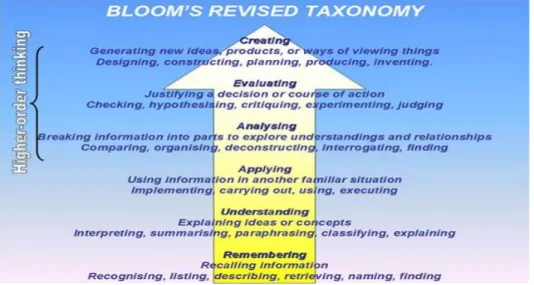
(23) DEVELOPING READING COMPREHENSION. 14. foreign language and content and language integrated learning than those who are learning the language in regular EFL lessons (Dalton-Puffer, 2006). In the same line, Wolff (2009) states the importance of reading and reading skills in CLIL due to the fact that students are required to interact with written texts in order to acquire content knowledge. Therefore, CBI and CLIL students have a real communicative purpose when they are asked to develop reading comprehension tasks. 2.2.3 Higher level thinking skills - Bloom's taxonomy Wong (2014) defines Bloom’s taxonomy as “a classification system for level of cognitive processes, learning and intellectual behavior-” (p. 359) used to determine goals and objectives in educational contexts. The original model presents six levels of cognitive skills: knowledge, comprehension, application, analysis, synthesis and evaluation, these levels are organized from basic to a more complex level. Bloom’s taxonomy was revised by other authors who adapted the levels to the educational challenges. As a result, the revised levels are remembering, understanding, applying, analyzing, evaluating and creating (Wong, 2014). In the revised Bloom’s taxonomy, Anderson and Krathwohl (2001), (Cited in Forehand, 2010) provide an explanation of the levels (figure 1). Each level is described and includes subcategories called cognitive processes presented with verbs (Krathwohl, 2002). The exercise of accurate activities attempting to develop thinking skills tend to properly assist reading comprehension at educational settings.
(24) DEVELOPING READING COMPREHENSION. 15. Figure 1 Revised Bloom's higher order thinking skills. The main objective of a teaching and learning process must be to provide students with activities through which they can foster their higher order thinking skills due to the requirements of the actual society (Miri, David, & Uri, 2007). Specifically, higher order thinking skills involve critical and creative thinking. For this reason, learners who have somehow developed critical thinking are able to analyze situations in a different way; that is to say, these pupils are able to evaluate them logically and reflect upon what they have come to learn. Meanwhile, enhancing creative thinking involves providing students with opportunities to develop tasks of inventing and synthesizing (Conklin, 2011). In order to achieve the goal of enhancing higher order thinking skills in students, teachers must incorporate the analysis, evaluation and creation skills of what their second language aims entail. Such purposes can be developed with scaffolding activities that can promote higher order skills of the students, - activities which according to Iakovos, Iosif and Areti (2011) are involved in CBI processes..
(25) DEVELOPING READING COMPREHENSION 2.3. 16. State of the art CBI is not a new approach. It has been implemented around the world and there are. several research projects that have determined the impact of this approach on foreign language teaching and learning processes. In substance, some researchers have presented their findings and implications in different compendiums such as Ruiz de Zarobe and Jimenez (2009), DaltonPuffer (2011) and Escobar, Evnitskaya, Moore and Patiño (2011) or have analyzed in depth the findings made by different researchers (Grabe & Stoller, 2011; Ruiz de Zarobe, 2008; Tedick & Wesely, 2015) describing the effects of the integration of content and second language learning on students’ language and content learning. These research studies have been devoted specifically to determining which strategies that have implemented CBI have been more effective (Kong & Hoare, 2011; Lo, 2014; McBain & Mhunpiew, 2014; Padilla & Armellini, 2013; Pessoa et al., 2007). Such strategies have been administered to feed students’ collaborative work, graphic organizers and reading strategies and the benefits of implementing CBI primarily in language outcomes (Brevik & Moe, 2012; Corrales & Maloof, 2011; MacNeill, 2014; Rodgers, 2006; Várkuti, 2010; Wei, 2006). In Colombia, Mariño (2014), Bryan and Habte-Gabr (2008) and Rojas (2011) analyzed the strategies for implementing content based courses having similar outcomes as concerns reading comprehension benefits. Regarding reading comprehension, the researchers have focused their attention on determining the effectiveness of the implementation of different reading strategies (Lahuerta Martinez, 2009; Ruiz de Zarobe & Zenotz, 2015) and vocabulary instruction (Zhang & Anual, 2008) to develop or improve learners’ reading skills. Being the analysis of the implications of vocabulary instruction thoroughly discussed..
(26) DEVELOPING READING COMPREHENSION. 17. In particular, The National Reading Panel (2000) analyzed the findings of 203 studies for reading comprehension texts developed from 1979 to 2000. Its analysis was mainly focused on the following aspects: vocabulary instruction, text comprehension instruction and teacher preparation and comprehension strategies instruction. They Panel members outlined the importance of vocabulary and reading strategies instruction as well as the teachers’ preparation on reading comprehension instruction. In effect, in Colombia, there are also plenty of researchers interested in finding strategies to foster students’ reading comprehension, some of them are Lopera (2012), Aguirre and Ramos (2009), Gómez (2012), Romero (2013) and Moreno (2013) whose findings exposed the relevance reading strategies have when enhancing comprehension at diverse academic stages. In relation to the development of High Order Thinking Skills (HOTS), there are several studies analyzing the effects of involving the implementation of ICTs (Barak & Dori, 2009; Stoney & Oliver, 1999; Yaniawati, 2013) and different strategies (Menden, 2012; Vijayaratnam, 2012) in the development of thinking skills in diverse areas of instruction. In these aforementioned studies, authors outline the importance of including HOTS instruction in learning processes. In regards to the effects of the implementation of content based activities in EFL learners’ reading comprehension, Eguiluz (2013), McKeown, Beck and Blake (2009) and Tsai and Shang (2010) analyzed the effects of CBI on students’ reading comprehension concluding great benefits. Although, these studies were implemented with different populations (elementary, secondary and university students), they agree in concluding that CBI fosters students’ reading comprehension. Furthermore, Eguiluz (2013) outlined that CBI increases students’ motivation.
(27) DEVELOPING READING COMPREHENSION. 18. towards foreign language learning and Tsai and Shang (2010) mentioned the enhancement of critical thinking skills as a result of involving students in CBI practices. Other research studies have focused their attention on analyzing the development of reading comprehension through reading strategies instruction in CBI contexts. To illustrate, Skogen (2013) analyzed the difference between the process of reading in CLIL and regular EFL classes regarding reading proficiency and reading strategies used with tenth graders in Norway. In effect, the research findings showed that the L2 content subject classes obtained better results regarding their reading proficiency and use of reading strategies. In Colombia, different research studies have been conducted, particularly, in reading comprehension of science and math texts in which the implications of involving reading strategies instruction were deeply examined. Some of these research studies were developed by Reina (2013), Bogoya (2011) and Blanco(2014). All of them focused their analysis on the implementation of intensive reading skills to improve students’ reading comprehension. Although Bogoya’s (2011) study was developed in a private bilingual school and the other two (2012)studies were developed in non-bilingual public schools, their findings revealed the effectiveness of involving reading strategies instruction to enhance students’ reading comprehension. Genuinely, Reina (2013) and Bogoya (2011) also highlighted the improvement in students’ knowledge of the subjects content, whereas Blanco (2014), pointed out the enhancement of vocabulary learning via the implementation of reading strategies and CBI. Regarding the development of higher order thinking skills in CBI contexts, there is a plethora of research studies focusing on adults’ language learning. A few of them are the studies developed by Hopson, Simms and Knezek (2001) and Heong, Yunos, Othman, Hassan and Mohamad (2011). On the one hand, the former one analyzed the effects of the implementation of.
(28) DEVELOPING READING COMPREHENSION. 19. a technology-enriched classroom environment in the development of higher order thinking skills of fifth and sixth grade adult students and, on the other hand, the latter one determined the needs of learning higher order thinking skills for generating ideas in a group of technical students. Both in their results show that technology-enriched classroom dynamics which had a positive effect on students’ acquisition of higher order thinking skills, disclosing higher levels of improvement in analysis and evaluation skills and the importance of involving students in HOTS instruction. In the case of Hanesová’s (2014) and Shen’s (2005) conducted studies, the researchers evaluated the effectiveness of the implementation of some proven techniques and instructional approaches in the development of learners’ thinking skills. Positively, Hanesová (2014) evaluated some of the techniques proposed in the revised Bloom’s taxonomy (Forehand, 2010) by analyzing 11 seminal empirical studies on three instructional approaches to L2 reading comprehension. Similarly, Shen (2005) analyzed the implementation of book clubs, literature circles and instructional conversations. The authors concluded that students improved their thinking skills by doing activities based on the proven techniques in both higher educational levels and primary schools. In Colombia, Norato and Cañón (2008) and Echeverri and McNulty (2010) developed studies involving the use of reading strategies to advance secondary students’ HOTS in a private and a public school. Their results showed that HOTS instruction increases students’ motivation and enhances the development of students’ thinking skills. Precisely, Echeverri and McNulty (2010) determine that activating background knowledge, making predictions, completing graphic organizers and answering questions also foster learners’ reading comprehension. Liaw (2007) developed a study in Taiwan in which the effectiveness of promoting learners’ critical thinking skills and EFL skills with a content-based approach was examined.
(29) DEVELOPING READING COMPREHENSION. 20. through the design and implementation of a content-based syllabus. Participants involved in this study were thirty two junior high school students who are between 12 to 13 years old. Findings revealed that students gained in content area knowledge, English language proficiency, thinking skills, confidence and motivation towards their foreign language learning. The aforementioned research studies reveal the positive effects of the implementation of content based activities on the development of reading comprehension and higher order thinking skills. Thus, they have been bear in mind and used as reference to the design and implementation of this research study since they are close to analyze its main constructs. However, only one of these studies involved all of three components, which was Liaw’s (2007). In the study reported by Liaw (2007) the participants had a higher level of proficiency compared to the target population of this research project. Moreover, although Liaw’s study (2007) presented important findings about CBI effects on reading and, writing and critical thinking in general, the author did not present findings related to specific aspects of reading comprehension and higher order thinking skills. Therefore, a deeper inquiry into the real effects of content based activities on the development of learners’ reading comprehension and HOTS would be beneficial. 2.4. Conclusion According to the different research studies mentioned, the implementation of content. based activities is an effective means to improve students’ reading comprehension. However, it is necessary to include the use of effective strategies to achieve these goals. Additionally, there is a gap in research as concerns the effects of the content based activities on this skill at the A1 (CEFR) level for students of public and non-bilingual schools. egarding the development of higher order thinking skills, there are research studies that demonstrated the need for implementing strategies to develop them; usually, by involving.
(30) DEVELOPING READING COMPREHENSION. 21. students in the use of reading strategies. However, there are few research studies that have analyzed the effects of the implementation of content based activities in students’ higher order thinking skills development which gives research foundations to the present study. This chapter reviewed significant theoretical framework regarding the importance of the implementation of content based activities, reading comprehension and the development of higher order thinking skills in students as well as research findings about the main constructs of this research study. The following chapter will describe different aspects considered in the implementation of this study such as the type of study, research method, the context and instruments chosen to carry out the current proposal..
(31) DEVELOPING READING COMPREHENSION. 22. Chapter 3: Research Design 3.1. Introduction The previous chapter demonstrated the encouraging effects of content-based. implementation on the development of students’ reading comprehension in different contexts supported by different theories and research findings. It also validated the importance of conducting this research study to fill the gap in researching about the effects of the implementation of content based activities in students’ reading comprehension at public schools. To this respect, this chapter is intended to state an overview of the principles of the type of study; additionally, it describes the context, participants and data collection instruments considered to carry out this proposal. In point of fact, the aim is to determine the effects of the implementation of content based activities on the development of the students’ reading comprehension. In the same way, students’ pre and post questionnaires, a pre and post KET (Key English Test) tests were selected to be applied before and after the implementation of the study and a reading comprehension progress rubric was designed to analyze the participating students’ artifacts, namely, worksheets which are also considered to be data collection instruments for the purposes of this study. 3.2. Type of study This study is a qualitative action research study in which the teacher is involved in the. research as a researcher and as a teacher. According to Burns (2010), an action research study “involves taking a self-reflective, critical, and systematic approach to exploring your own teaching contexts” (p. 2). Similarly, Crane (2011) states “Action Research combines getting a better understanding of a context we are part of with trying to improve aspects of it” (p. 3). Thus, the researcher not only analyzes a problem but also designs and implements strategies to solve.
(32) DEVELOPING READING COMPREHENSION. 23. the target problem by following a systematic processes and principles which facilitate the researchers comply with both roles they assume in the study (Koshy, 2005). This study focuses on students who have difficulties to comprehend English texts and in response to this fact, after having analyzed different strategies, the researcher decided to implement content based activities as a strategy to foster students’ reading comprehension. 3.3. Context This study was implemented at José Joaquin Castro Martinez Institución Educativa. Distrital School, a public school located in the South of Bogotá (Localidad San Cristobal). José Joaquin Castro Martinez Institución Educativa Distrital School has two branches, branch A for pre-school, primary and secondary levels and branch B for pre-school and primary. This school does not have a special emphasis on academic achievement, instead students are involved in the learning of the common school subjects and its PEI (Proyecto Educativo Institucional) is “Toma de Conciencia”. Therefore, the school also aims to promote human values to guarantee positive social interactions due to the difficult context where students live. In regards to EFL, the school provides its students with 4 hours of instruction a week from the sixth grade and up. There is no text book and worksheets are used. This school is not bilingual, the English lessons are mainly grammar focused. Thus, students are not familiarized with CBI practices and consequently, their reading comprehension does not cope with the syllabus expectations; as a matter of fact, these reasons are some of the facts that need to be taken into account to reach the B1 level expected. . 3.3.1 Participants The participants were 14 eleventh graders from which 9 were women and 5 men between 16 and 19 years old and who have had four hours of English instruction per week. Most of them.
(33) DEVELOPING READING COMPREHENSION. 24. presented difficulties in their reading comprehension process and disliked reading for various reasons. Essentially, they understood words in isolation and the strategy that they used to comprehend a text was translating it into L1. Moreover, their vocabulary was mainly basic and limited to simple expressions related to personal details and everyday activities. As the target population was a group of teenagers, the fear of public embarrassment was an imperative factor to be considered at the moment of planning the lessons. Additionally, the lack of motivation to learn a foreign language was another key hard point for this population. For such a reason, when planning the lessons and instruments for this research study, motivation played a key role. Actually, the lessons had to be especially appealing to in order to spark their interest. Due to the fact, these students were not used to sharing their ideas in public, they did not feel comfortable enough when they were expected to create new original work that involved their prior and new knowledge studied during the lessons. Essentially, it was noticeably these students had more training in basic thinking tasks than in the higher order ones. For, example, they could introduce themselves, but expressing their opinion on things constituted a much more difficult task. Thus, it was necessary to include activities in the lesson plans in which critical and creative thinking were enhanced. 3.3.2 Researcher’s role The researcher was involved in the study as the person who implemented the strategy as well as the person who observed the pedagogical intervention. As it is stated by Bell (2010) “It is applied research, carried out by practitioners who have themselves identified a need for change or improvement” (p. 8). Therefore, the researcher taught, researched and analyzed the implications of the implementation of the proposed strategy. Even though it seems to be hard work, many more are the benefits which embrace these roles for the teacher-researcher, as they.
(34) DEVELOPING READING COMPREHENSION. 25. are: the fact to know what the learners’ needs are, lesson plan activities based on contextual facts, and observe, analyze and motivate pupils to reinforce their academic skills 3.3.3 Ethical considerations Bell (2010) asserts that “special care needs to be taken both for data collection and the dissemination of findings as it would be easy to recognize people and events within local situations”. Banegas and Villacañas (2015) emphasize that “collaboration and participation need to be voluntary and participants must be autonomous and free to withdraw at any time without any consequences” (p. 60). Hence, in this study, participants were involved and completed the activities concerning this research study voluntarily. Additionally, they were informed of two considerations, to begin with, they were free to opt out whenever they considered it necessary and, secondly, they were informed about the confidentiality and anonymity of their participation. Therefore, two consent letters were designed, one for the permission of the school and another for the students’ parents authorization (Appendices D and E). Moreover; the students were asked to use nicknames in all the questionnaires, tests, worksheets and activities implemented in this study. 3.4. Data collection instruments 3.4.1 Descriptions and justifications The data collection instruments were designed to: first, gather evidence of the effects of. the implementation of the proposed strategy, also, the perception of the students about their reading comprehension process, and to obtain data to answer the research questions proposed in this study. In order to obtain these data, a pre and post questionnaires, a pre and post KET test, students’ artifacts, namely student worksheets, and a reading comprehension rubric were implemented with all of the 14 participants..
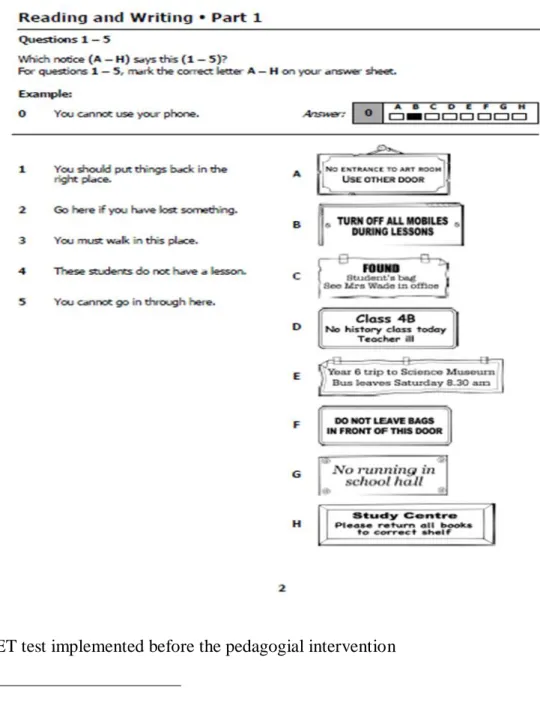
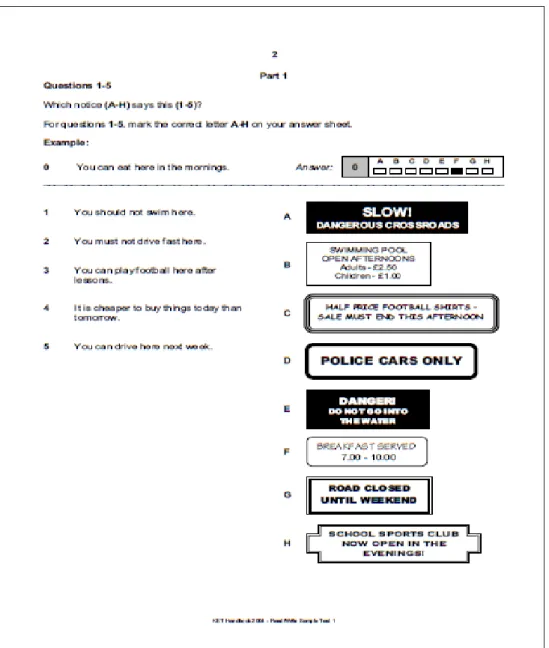
(35) DEVELOPING READING COMPREHENSION 3.4.1.1. 26. Students’ perceptions questionnaires. Koshy (2005) asserts that “the use of a questionnaire provides you with a simple means to collect information on student attitudes before any intervention takes place”. For this reason; a questionnaire was implemented to determining the students’ perception about their reading comprehension process before and after the pedagogical intervention. (Appendix G and H). This method was most appropriate since participants were required to answer similar questions which allowed the researcher to describe, compare, establish relationships and demonstrate that certain features were important and needed to be taken into account (Bell, 2010). 3.4.1.2. KET tests. These tests were administered to evaluate the students’ level of reading comprehension. In nature, these tests are designed to certify the level of A2 students (Key English Test: Handbook for teachers, 2012). In this perspective, the implementation of this standardized general English test allowed the researcher to analyze the level of the students’ reading comprehension; thus, the data collected avoided the possible biased conclusions with tests designed by the researcher which could have included specific content or questions whose answers students may already have known and which sometimes can be answered with the knowledge that the students have about the topic without implying the use of reading comprehension skills. In its characteristics, the complete test includes 3 papers, reading and writing, listening and speaking, Taking into account that the main objective of this research study is to analyze the effects of the implementation of content based activities on students’ reading comprehension only some selected parts of the reading and writing paper were applied. This paper comprises a total of nine sections from which only 1, 2, 3a, 3b, 4, 5 and 8 were taken and later, analyzed once.
(36) DEVELOPING READING COMPREHENSION. 27. the target population’ reading comprehension was tested. (Appendix I and J). Although, the complete reading and writing test is planned to be taken in 70 minutes, participants of the study were given an hour to answer the chosen sections of the test since the participants exposure to this kind of tests had been little previously. That is to say, they might have needed a little more time in order to answer the test. Despite the level expected for this grade according to the standards from the Ministerio Nacional de Educación is B1 according to the Common European Framework of Reference, to this target population administering a PET test, which certifies B1 level students, was not applied as the researcher considered that it could frustrate them due to their level of proficiency in the use of the foreign language 3.4.1.3. Artifacts. Content-based reading comprehension worksheets were designed to be completed by the students. These worksheets were collected in order to analyze the implementation progress of the strategy during the whole process. According to Koshy (2005), this kind of source “can often provide a useful background and context for the project and also can be very illuminating, especially when you are comparing what is claimed and what has happened in practice” (p. 96). Thus, this instrument allows the researcher to follow the progress of the study during and after the implementation of this research study. These worksheets were designed taking into account the students’ level of English and knowledge of the subject (Appendix O). Additionally, students were involved in the development of tasks from which they were asked to present a product such as a video or a comic strip based on the concepts worked in the lessons. These products and the answers provided by the students in the reading worksheets were analyzed with a reading comprehension rubric (Appendix K)..
(37) DEVELOPING READING COMPREHENSION 3.4.1.4. 28. Reading comprehension rubric. A reading comprehension rubric was designed to analyze the development of the thinking skills in reading comprehension of the students during the implementation (Appendix K) , this instrument is useful when the researcher knows precisely what he needs to observe (Sagor, 2000). Therefore, a predefined rubric helped to collect specific data according to the objectives of this study allowing the researcher to evaluate the effects of the proposed strategy on the students’ reading comprehension during the implementation. In fact, this instrument made it possible to recognize the activities that could be more effective in improving students’ reading skills, so that research and academic results could be much more attainable. 3.4.2 Validation and piloting The validation and piloting of this research study was carried out taking into account the concepts of validation, reliability and triangulation. According to Siniscalco and Auriat (2005) “validation concerns the degree to which a question measures what it was intended to measure” and “reliability concerns the consistency of a measure”. Thus, the data collection instruments aforementioned were piloted with a similar group of students as the group involved in this research to validate the accuracy and appropriateness of these tools for this study purposes. Moreover, identical questionnaires and two different KET test were applied to each one of the students before and after the pedagogical intervention. Later, a KET test was applied to validate the effects of the strategy proposed in students’ levels of reading proficiency which is the main objective of this study. Finally, Burns (2010) defines triangulation as a combination of the different types of instruments to collect data that are applied to give more objectivity to the results. Therefore, a.
(38) DEVELOPING READING COMPREHENSION. 29. questionnaire and KET test were implemented to collect not only students’ perceptions about reading comprehension but also information about students’ real level of proficiency. Moreover, the progress of the effects of the strategy during the process was evidenced with the data collected with students’ artifacts. In this case, students’ artifacts were analyzed to strengthen research reliability. In such case, all triangulation procedures were effectuated. 3.5. Conclusion This study was made following the principles of a qualitative action research study taking. into consideration the students’ academic and social background and needs as well as the context and the purpose of the project. Additionally, the research design included the consent of the school and participants’ parents equally, ensuring the participants’ anonymity and confidentiality. In the same way, the planning and piloting of the data collection instruments were clearly presented; furthermore, the stages to implement and collect the data and the role of the researcher were claimed. For such reasons, this chapter established the fundamental parameters that constitute this research study. In this order, the next chapter offers a detailed description of the pedagogical implementation..
(39) DEVELOPING READING COMPREHENSION. 30. Chapter 4: Pedagogical Intervention and Implementation 4.1. Introduction The previous chapter presented a description of the distinctive traits that compose this. research study. This present chapter describes the basic foundations taken into consideration during the design and the development of the pedagogical intervention, a detailed description of the instructional design, and lesson planning and implementation processes. 4.2. Visions of language, learning, and curriculum 4.2.1 Vision of language In this study, language is seen as a tool used by human beings to communicate their ideas. and feelings. Unreservedly, it entails that language is conceived within a sociocultural perspective in which according to Mitchell, Myles and Marsden (2013), language is defined as a collaborative process of making meaning in which culture is involved (p. 200). In the same manner, Halliday (cited in Jordan, 2004) states language as a systematic resource for expressing meaning in context. Therefore, the act of learning a language implies interaction with others in a context. In this respect, this study provides students with opportunities to learn the language by reading in an academic context through the implementation of content based activities which eventually will nurture not only their comprehension but also their high order thinking skills. Furthermore, the implementation of content based activities motivated students to learn the foreign language in a natural way since pupils repeatedly used language for real purposes. In brief, learners in this case, truly learn content and were exposed to more authentic opportunities to use the foreign language to communicate their ideas (Grabe & Stoller, 1997). Thus, as it is stated by Smagorinsky, Hansen and Fink (2013) citing Vygotsky’s work, speech –relevant social language component - is conceived “as a tool for generating new ideas through the process of.
(40) DEVELOPING READING COMPREHENSION. 31. speaking”. In this perspective, language learning is a process that focuses more on enabling students to produce ideas more than the correctness of the language and to promote the development of students’ thinking skills. Besides, the inclusion of effective content based activities that involved students in negotiating meaning, highly contribute benefits to language learning as well as to reading comprehension. 4.2.2 Vision of learning This research study conceived learning as a process in which the student plays an active role that is the learners construct their own learning. However, the construction of learning itself is a process in which interaction and collaborative work are essential aspects as knowledge and learning are social products obtained by the interaction of the individuals with their culture and context (Pritchard & Woollard, 2010). Therefore, in this proposal, students were involved in collaborative work in which they could interact with their peers and context to ensure the effectiveness of the learning process. According to Smith and MacGregor (1992) collaborative work “demands responsibility, persistence and sensitivity, but the result can be a community of learners in which everyone is welcome to join, participate and grow”. Therefore, participants in the study were involved in an environment in which everybody constructed knowledge by interacting and supporting their peers’ learning process. In brief, a whole social experience of learning through collaborative methods. Additionally, supporting learning process entails promoting the use of learning strategies which are habits that learners acquire to be more effective in their learning process. These habits may be acquired without training by some students (Simister, 2007). However, teaching and learning processes should ensure every student is able to use effective learning and thinking strategies so their academic performance is enriched at the development of any task. Another.
(41) DEVELOPING READING COMPREHENSION. 32. important aspect taken into consideration in this study was to provide students with meaningful learning in the classroom. Hence, activities intended to recall students’ prior knowledge and relate it with the new, facilitating students’ understanding of the old and new concepts and lifelong learning were deemed to be vital (Getha-Eby, Beery, Xu, & O'Brien, 2014). Therefore, activities were carefully planned taking into account students’ prior knowledge and interests to ensure students’ motivation and engagement through the exploration of content. 4.2.3 Vision of curriculum Learners are the focus of any teaching and learning process. This study assumed that the curriculum planning would bear students’ interests, background, context and culture in mind to determine what was to be learned. In short, this is a relevant issue that should be the main concern when planning and designing any sort of curriculum (Kelly, 2004). Thus, when having these considerations in mind, the researcher determined that content-based curriculum is the most appropriate approach for the needs of the target population and for the purposes of this research study. As concerns the content-based approach, this study had at is core philosophy to plan and design a curriculum, objectives and activities intended to lead students into real-life tasks or singular simulations of them including interdisciplinary knowledge in order to achieve rich outcomes (Cenoz & Genesee, 1998). For this reason, students were involved in content based activities in which the connection with their prior knowledge, real context and new knowledge and the interaction with their peers were the basis of the effectiveness of the learning process. 4.3. Instructional design The chapter fully describes the steps and processes followed to solve the problem, a. description of materials and how the didactic units and lessons were built..
Figure
+7
Documento similar
Based on this theoretical framework and the review of previous research in the use of mobile technologies, this article addresses the uses and consumption of tablet
This paper proposes an extension to Kintsch’s Construction-Integration mode of text comprehension, which changes its mathematical implementation and emphasizes
In addition, as some authors point out, we can assume that the comprehension ability in itself is developed at an early age (Kendeou, van den Broek, White, & Lynch, 2007). That
With the aim of determining which is the contribution of the content of carnosic acid and carnosol to the antitumor activity of the RE’s, and thus explain the different activities
The development of the Programme based on the Intercultural Approach to improve reading comprehension in 3rd grade students of Simón Bolívar High school from
ABSTRACT: This study examined the effect of classifying vocabulary into parts of speech using Google Drive sheets in order to improve reading comprehension.. Participants were 20
The Dwellers in the Garden of Allah 109... The Dwellers in the Garden of Allah
that when looking at the formal and informal linguistic environments in language acquisition and learning it is necessary to consider the role of the type of
