
Aesthetic impact of solar energy systems
25
0
0
Texto completo
(2) 1. INTRODUCTION. Solar energy has been promoted in recent decades as an alternative to fight against climate change, and its use has increased significantly. Photovoltaic and solar thermal energy systems (SES) have therefore been in a continuous process of improvement and the energy sector continues to strive to implement them as efficiently as possible. Nowadays, more and more, we find SES in the form of solar farms in rural landscapes, but also SES integrated into the envelope of buildings as part of the urban landscape. The installation of solar thermal systems is more limited in form and design since, for efficiency reasons, they are accompanied by the water facility they serve. However, in the case of photovoltaic systems, the features of their components allow greater freedom in design, being used in the field of architecture where the formal aspect is of great importance. Thus, the photovoltaic installations in buildings are classified in BIPV (building-integrated photovoltaics) when the system is fully integrated into the building envelope as an additional building material, or BAPV (buildingapplied photovoltaics) when the system are simply located on the roof with a metallic support structure. Whether in urban or rural environments, several studies support the environmental benefits obtained by using SES [1–3]. On the other hand, we also find studies that reveal certain negative aspects to be taken into account [4–10]. However, even accepting that SES implementation causes environmental impacts such as water usage, wildlife impacts, land use intensity, noise, or hazardous emissions among others, this technology in general is much environment-friendly than traditional energetic sources, even considering wildlife and land use impacts [2]. The aesthetic perception of the landscape has been the subject of numerous studies for decades [11–14], including rural and urban landscape. From an architectural point of view, aesthetic aspects are fundamental, because it is not enough to be functional, as function does not necessarily determine form [15]. Aesthetic perception of SES implementation has also been considered a relevant question regarding its environmental impacts [7,16–24]. In fact, if we aspire to normalize and promote the exploitation of solar energy, it would be fundamental to increase the acceptance of society, transferring indeed this awareness to everyday life [25]. In this sense, we must bear in mind that, in urban environments, the visual appearance of the installation plays a very important role in the end user’s preferences [26,27]. Additionally, in rural settings, the perception of the photovoltaic plants has been shown to depend on the visual relationships established by the observers with its environment [7,20]. Consequently, the requirement to consider visual impacts becomes imperative. Precisely, the aim of this study was to conduct a review of the literature about aesthetic impact of SES in both rural and urban landscapes. Three relevant features are identified: objective factors, subjective perception and methods. Objective factors refer to those taken into account, or for which its influence on aesthetic perception has been analysed, such as colour, visibility, fractality, etc. Methods include the relationship processes within objective factors and subjective perceptions (such as weighted sum of objective factors). Based on the literature review, a new qualitative and theoretical framework is proposed to serve as a starting point for future research on the aesthetic perception of SES impact. The literature review and the framework proposed here are discussed, considering the limitations of the study, and their application in different areas such as photovoltaic integration assessment or site location.. 2. LANDSCAPE AESTHETICS. The history of landscape studies can been traced in two broad fields of inquiry [28]: geographical research; and art and landscape painting, which make the landscape itself an object worthy of aesthetic admiration. In the twentieth century, new tools and concepts enriched and diverted this approach into a wide array of disciplines. On the one hand, a broader geographical and anthropological branch of landscape studies has considered land and the interactions between 2.
(3) human activities and physical geography. On the other hand, cultural geography has incorporated aesthetic and symbolic readings of the landscape with the geographical and art traditions. More recently, social geography has filled the gap between regional studies (i.e., landscape assessment, and cultural geography; landscape perception, by exploring the question of social and individual wellbeing). The art tradition was joined with garden architecture and the cultural component of geographical analysis resulting in landscape architecture and landscape planning. A landscape-based approach can be considered particularly useful for the highly complex research field on society-ecosystem interactions in the context of sustainability [29]. Ecosystem services [30] and the related Landscape character [31] have become general concepts for the expression of values assigned by people to different landscapes. Ecosystem services are the benefits that humans obtain from ecosystems, and they are produced by interactions within the ecosystem. Four broad types of service have been recognized: (1) those that cover the material or provisioning services (e.g. food, water, wood, etc.); (2) those that cover the way ecosystems regulate other environmental media or processes (e.g. climate and flood regulation); (3) those related to the cultural or spiritual needs of people (e.g. aesthetic, spiritual, educational, etc.); and finally, (4) the supporting services that underpin these other three categories (e.g. nutrient cycling, soil formation, etc.). Changes in the landscape affect the human well-being. Land use intentionally and unintentionally influences the biodiversity as well as the structure and functions of ecosystems. Two types of land use interventions are usually considered in impact assessments: land transformation (or land use change), besides land occupation [32]. In accordance with the ecosystem services of the Millennium Ecosystem Assessment [30], life cycle assessment covers two main impacts [33]: the biodiversity damage potential and the ecosystem services damage potential. The former includes the protection of global species diversity, as well as the functional diversity of species in ecosystems. The latter includes the impact on the production of biomass, the impact on climate by influencing the carbon sequestration in the top soil and land cover, the impacts on water quantity and quality, as well as the impacts on soil quantity and quality. Moreover, landscapes exhibit diversified and interconnected types of values, not all them with objective measures of the impact, such as visual-aesthetic, recreational and touristic values. Visual impact assessment often uses the term “unity” as the degree to which all visual elements combine to form a coherent, harmonious pattern [34], being therefore usually directly related to physical features. From this perspective, aesthetic impact can be related visual disturbance due to perceived interventions occurring in the landscape as a result of human-made elements that have a disruptive effect because of their size, incongruous style or lack of integration with the context and original settings [35]. The concept of aesthetic derives from the design theories, linking the descriptors related to landscape with terms developed in other different fields, such as philosophy, psychology and art, posteriorly transferred to landscape contexts [13]. Several theories explain landscape aesthetics in terms of perception and preferences, which are usually divided into evolutionary and cultural preference models. The former theories describes landscape perception and preferences as a dimension of human fitness and survival, reflecting landscape qualities that satisfies human biological needs to survive as specie. The latter theoretical models argue that perception and experience of landscapes predominantly depend on the cultural background and personal attributes of the observer, emphasizing that aesthetic appreciation differs over time and across regions, as well as individuals. These theories usually focus more on affective responses and personal attributes such as age, gender, occupation, academic background and familiarity in order to explain the landscape preference (for a review, [13]). In this context, the. 3.
(4) ecological aesthetic models link preferences for landscape and ethics, suggesting a predisposition for ecologically sound landscapes [36]. More recently, several approaches to landscape aesthetics have tried to recognize the influence of both cultural (learned) and biological (innate) factors in order to explain landscape preferences [34]. According to this new perspective, genetically based preferences are challenged by experience and cultural influences and a synthesis of both points of view is more appropriate for further research concerning the aspects of the visual landscape that most humans respond to. In addition, as the capacity to unfold aesthetic appreciation seems to manifest universally, so this sensitivity should be an intrinsic part of the human biology that has developed throughout the evolution of our species [37]. One interesting approach that relates landscape architecture with art is the Aesthetic Creation Theory [38]. This theory states that art function is to have aesthetic properties in virtue of having certain non-aesthetic properties. Thus, aesthetic properties, which must be delineated with reference to beauty and ugliness as the central aesthetic properties, would depend on non-aesthetic ones [39].. 3. OBJECTIVE FACTORS. Bishop theory divided the visual impact aspects that we can quantify into three groups: factors related to objects (size, colour), factors related to the environment (visual quality, visual absorption capacity), and factors related to the observer (activity, exposed population). Nevertheless, his research concluded that the greatest interest resides precisely in the relationship between the object and the environment [40,41]. This relationship should be analysed by means of objective factors from the scene itself that can also be easily quantified. However, from a subjective point of view, the influence of the observers themselves should not be underestimated, since several studies have reported a clear influence of the individual´s type of professional training on their aesthetic perception [42,43]. A review of the literature focused on the objective or physical factors influencing on the impact and perception of SES has been carried out, and the most relevant findings are summarized in Table 1. Although research in the area of perception and aesthetic impact is very extensive, the literature is rather scarce and recent when we limit the search to the application in the field of SES. Indeed, a total of 24 studies have been analysed, being the oldest published in 2009. Regarding the means and materials used, most of the studies analysed relied on the use of photographs to carry out the work while a few were based on computer-simulated images or other sources such as GIS tools. In fact, numerous studies support the use of pictures to analyse the aesthetic assessment of the landscape or the built environment, both on paper and through online surveys [23,40,43–45]. The aesthetic assessment of products or artworks has been the research focus of research in numerous studies, as shown by the extensive literature on this subject (e.g. [18,19,56–61]). However, when this aesthetic assessment refers to SES, we find a greater dispersion or lack of consensus concerning the methodology and the specific relevant factors to be taken into account. Indeed, one thing that should be emphasized is that the approach of the studies summarized in Table 1 is quite broad. In the early years, research mainly focused on the impact of photovoltaic plants on rural environments. However, this trend has been changing, with urban environments increasingly being considered until becoming the principal focus of research in 2017. Thus, 50% of the reviewed studies limit their analysis to the rural environment, 20% to the urban environment, whereas 30% include both environments in their research.. 4.
(5) OBJECTIVE FACTORS PAPER [23]. FD Cl Vi x. x. SP F Cc Sh PoV ID. x. x. [47]. CSP Ph. x. x. x. x. x. x x. x x x. x. [16] [53]. x. x x x. x. x. x. x. Visual impact of large-scale plants. R. Aesthetic impact of PV plants. R. x x x. x. x x. x. x x. x. x x. x. x. x. x x x. x. x. x. x. x. x. x x. x. [55]. x x. R. x GIS. x. [26]. Glare impact. x x. x. x x. x. x. x. x. x. KE R. GIS x x. x. TOPIC Aesthetic impact of PV plants. x. x x. Others. x. x. [48]. [21]. TA Pa. x. [18]. [54]. Fr. x. [46]. [9] [20] [51] [43] [7] [22] [52]. VS Tr. x. [8]. [17] [19] [49] [50]. Gl. MEANS. x. x. x x. Visual impact measure with GIS. R. BIPV possibilities. U. Preferences for residential solar panels Aesthetic impact of PV plants Glare impact Visual impact measure with GIS. U R R+U R. Glare impact Landscape Integration of PV plants Glare impact Q-sort in urban and rural settings Review Aesthetic assessment in environmental impact assessments Glare impact in design of airports Preference for residential solar PV systems and trade-offs among functionality and price Willingness to accept and willingness to pay Social acceptance of PV and BIPV systems. R+U R R+U R+U R+U R R. Localization optimization including visual impact. R. BIPV visual impact using the saliency method. U. Aesthetic impact of buildings with PV systems. U. [27] x x x Q-sort of PV in urban landscape FD: Fractal Dimension; Cl: Colour; Vi: Visibility; SP: Surface Patterns; F: Frame; Cc: Concurrence; Sh: Shape; PoV: Point of View; ID: Integration Degree; Gl: Glare; VS: Visual Saliency; Tr: Transparency (only for BIPV elements); Fr: Fragmentation of the installation; TA: Topographic Alterations; Pa: Pattern; CSP: Computer Simulation Pictures; Ph: Photos; GIS: Geographical Information System; KE: Kind of Environment assessed; R: Rural landscapes; U: Urban landscapes. Table 1 Relevant information of the literature review of visual/aesthetics influences in solar energy installations. 5. U R U. U.
(6) According to Zangwill’s Aesthetic Creation Theory [38], which classifies the properties of a landscape as aesthetics (elegance, balance, etc.) or non-aesthetics (shape, size, etc.), all the factors considered in Table 1 belong to the non-aesthetics group. That theory stated that there are no non-aesthetic properties that imply a good aesthetic result, but on the other hand, some non-aesthetic properties might exclude it. As shown in Table 1, according to previous literature, a considerable number of objective factors have been somehow addressed by prior studies. However, we must bear in mind that some of these objective factors were found only in one or two investigations, having little continuity in the experimental or theoretical literature. To this extent, certain concepts might result a bit confusing finding also several objective factors that can be grouped together because they are closely related. The analyses performed in this study revealed that the most used objective factors have been visibility (13), colour (9), glare (8), and integration degree (7). A more detailed analysis of these objective factors certainly helped us to identify the most interesting ones to assess aesthetic impact, as well as to better understand the relationship among them. As a result, we could establish a reduced number of objective factors that, according to prior literature, should be considered as the most influential features for further research in the field of aesthetic perception. 3.1. VISIBILITY. In accordance with literature, visibility appears to be a very relevant, primary factor both for measuring the aesthetic impact and for assessing pleasure of SES implantation. Indeed, the current revision suggests that visibility is the most used and clear influence factor, as it seems quite logical that there is no aesthetic impact when it is not visible, with the exception of the land use alteration. There are several indexes to measure visibility [46] and the application of this factor vary depending on the purpose for which it is intended. In the studies where the objective was to measure the quantity of aesthetic impact that the PV plant caused on the rural landscape, visibility was considered by the percentage of area that the PV installation took up with respect to the total landscape area [18,19,23]. For site selection on new SES, literature provides geographic information systems methods (GIS) [46,47,50,54] and two approaches can be distinguished: one option consist in considering as potentially visible any installation included in a certain radius (5-10 km) around cities, roads, natural and historical monuments and landscape with scenic value [54]; and the other approach is directly related to its observability [7,47,50]. When the SES is not visible from the places frequented by people, its visual impact will be negligible. Conversely, the visual impact of the PV plant increases when it is visible from more places and for more people. Even with a fixed number of people for whom the plant is visible, its visual impact is raised with an increase in the possible hours of observation [47,50]. In this sense, it is very important to take into account the “point of view” from which the images to be evaluated are taken, since the visibility of the installation depends largely on it. All authors who have assessed visibility and integration level of PV systems have confirmed its influence in aesthetic perception. The impact of the visibility has even been quantified at 64% [23], and this value has been accepted and posteriorly applied in further investigations [18,19]. 3.2. INTEGRATION DEGREE. Integration degree is a demonstrated influencing factor whose complexity lies in the way it is measured and applied. Indeed, it has been considered as one of the two objective factors that most influence visual impact [7]. Some studies have taken this factor into account, although with some variations when applying it. For example, SES can be classified in three categories “non-integrated”, “partially or semi6.
(7) integrated” and “integrated” [27,43], although no explanation of the criteria used for this classification has been provided by these authors. Other researchers only differentiate BIPV installations [53]. Additionally, it can be also established a categorization according the following criteria “the PV installation is seen, perceived and understood”, “part of the PV installation is seen and perceived” and “the PV installation is not seen” [21]. In general, a good level of integration of photovoltaic systems is highly recommended, but it has been shown that, while less experienced people tend to prefer more hidden solutions, experts tend to prefer well integrated designs even if they are visible [43]. In addition, there is a clear trend showing that the more people see and perceive the photovoltaic installation the less they score the liking [21]. 3.3. COLOUR. Colour contrast has been considered as a relevant and significant factor for aesthetic perception in numerous studies [7,18–20,23,26,45,62]. It is also linked to the degree of visibility, understood as perception [27]. Generally, the colour has been identified based on three parameters (hue, saturation and brightness) by using Photoshop’ software. In addition, Lab colour space seems to reflect better the human perception system of the colour response than RGB coordinates [60]. Neighbouring colours always affect the perception of a specific colour. In this sense, the colour of the walls and the roof are very important for the harmony of the whole [62]. Indeed, the impact of the colour has been quantified at 19% [23], and this value has been accepted and applied by other authors in their research [18,19]. In relation to this factor, we also need to emphasize the “frame”, which is evaluated in some studies considering different frame colours or even the absence of it. It is the case of [17], who found a certain preference for dark-coloured frames, as well as [26], who found that the importance of the frame colour was close to zero. 3.4. GLARE. Glare is a visual sensation caused by excessive and uncontrolled brightness. It can be disabling or simply uncomfortable. An excessive light produces the disability glare, which consists of immediate reduced visual performance and inability to see given objects because the excessive amount of light causes a photophobic response in the observer, who reacts squinting, blinking or looking away. An excessive contrast between illuminated and dark parts of the visual field produces the discomfort glare, which causes in turn a progressive degradation of the visual performance and leads to premature tiring of the eyes with a subsequent onset of a feeling of discomfort or other symptoms such as headaches. In the literature, various different indices have been proposed to asses or predict glare (for a review, see [63]). Glare from SES has been described as a potential risk impact [8,9,16]. However, as the inconvenience is temporary, it has not been included in any impact assessment model along with other objective factors, even though computer software tools are currently able to quantify and visualize glare situations for a specific situation [9,49]. In addition, reflection could be certainly reduced by selecting the most suitable glass or materials used in the building envelope [51]. Several countries have special regulations for solar installations to guarantee traffic safety, especially nearly to airports. For these situations, specific design procedures and protocols have been described in order to enable the use of PV in most airports [52].. 7.
(8) 3.5. PATTERN - TEXTURE. Texture/Pattern has been explored in several studies by using different terms, but all of them considered the surface appearance as an influential factor in the aesthetic evaluation. For instance, the term “surface complexity” has been used, defining different levels of texture and ornamentation on the façade in order to assess their influence to subjective impressions for choice. The conclusion was that there is a high correlation between texture and preference [64]. The influence of the texture of agro-industrial buildings on the preference for integration has also been analysed [65]. In this case, texture was evaluated based on four parameters: grain size (relative to the total size of the picture), density (elements per unit area), internal contrast (diversity of colours and surface luminosity), and regularity (homogeneity level of the spatial distribution). In general terms, texture does not seem to be a determining factor in prior research, but the conclusions of that research highlighted the important role that “distance” plays in relation to texture, which is a factor that has a great influence on the urban environment. If we focus on the factors that can influence solar energy installations, the term "pattern" has been used more often to define the physical characteristics of the panels [7,26]. However, the term “surface appearance” has been similarly used [17]. In all of these investigations, the factor being measured is actually the texture of the panel surface, which was found to be valuable in relation to the visual appeal of PV panels. To this extent, the less evident these patterns were, the more appealing the panels became. Within the term pattern, we can include concepts such as the “density/porosity” [7], as well as the “transparency possibilities” in the case of BIPV installations [48]. 3.6. FRACTALITY. Fractality -normally applied through the unit of measurement of the Fractal Dimension (FD)- is a geometric feature incorporated in aesthetic landscape studies since Mandelbrot began to perform mathematical analyses of fractal geometry on the nature [66]. The term fractal has been explained in several studies, but a simple and clear definition could be that “a fractal is a visual image some features of which repeat at many different scales” [67]. The use of FD in research has been strongly related to the mathematical description of geometry and especially applied to nature. We find several studies where fractality was used to analyse perception and preference of artworks [56,58,60]. Similarly, we also find another group of studies where this parameter is calculated for skylines and silhouettes in order to analyse its influence on landscape perception and preference [19,23,45,67–69]. Some of these authors have used the expression “silhouette complexity” in a similar way to the FD of the skyline or the silhouette [19,23,45,64,69]. Another term related to fractality is “shape” [18], used instead of fractality with the aim to apply the indicator OAISSP to some case studies [23]. This term has been similarly used, but on another scale, by other authors [26], although it was not related to fractality but rather to additional parameters such as pattern or texture, since these researchers considered the shape of the photovoltaic cells that make up the panel. Without any doubt, the fractal dimension has been repeatedly used for judging aesthetics of landscape and impacts; however, we cannot affirm that its relevance to aesthetic preference has been proved. “Urban design decisions regarding skylines should not assume that matching fractal dimension of skylines and landscapes is a good idea” [67], however, “the significant relationship between preference and the fractal dimension”, highlighting the limitations of working with contours [69]. On the other side, the influence of fractality on aesthetic impact was quantified as 9%, behind other factors such as visibility or colour [23,45]. However, even though fractal describes fractured shapes which repeat patterns and fractal dimension seems to 8.
(9) be an ideal factor for judging the aesthetics of a pattern [69], it is striking that this factor related to the analysis of texture or pattern has not been used in closer environments such as the urban landscape. This lack of coherence in the results is justified by the disparity in the methodology used for measuring fractal data [70]. For this reason, their work is focused on establishing a new framework to compare the built and natural environment, using the box-counting method of fractal analysis and performing a previous categorisation of graphical data into similar types (line drawings, perspectives, 2D photograph, etc). 3.7. OTHER FACTORS. The “visual saliency” is a concept borrowed from the computer vision domain, which means the probability of a particular image region attracting human visual attention in comparison to its surrounding. The saliency models extract information from colour contrast, light contrast and orientation of the image. Additionally, render images are generated with a software that is capable of following the physical behaviour of the light [55]. Note how this objective factor includes, at least partially, other significant objective factors mentioned above, such as colour and glare. “Fragmentation” of the installation has also been considered in rural landscapes as “the way the components of the PV installation are grouped together” [20]. In this case, plausible impact would come from unoccupied spaces where land is visible (creating colour contrast), being greater when the distribution of the rows breaks the natural contour lines, then causing the observer to lose visual references to the natural environment. The same authors have additionally considered the “topographic alterations” as an interesting visual factor referring to the introduction of geometrical shapes and lines, non-traditional materials, and with high reflectivity. In other words, the fact of causing important alterations of the relief and, as a result, the lack of coherence and legibility of the landscape [71]. Without belonging properly to the installation or being able to be considered as objective factor of the SES, the “climatic conditions” are a parameter that affects the aesthetic of the picture, and may vary factors such as visibility or colour [18,19,23]. Thus, when comparing installations, it would be advisable to take photographs on similar days and under optimal atmospheric conditions in order not to interfere with perception.. 4 4.1. EMOTIONS AND AESTHETIC PERCEPTION EMOTION CONCEPTUALIZATION AND STRUCTURE. For many authors, an emotional response begins with appraisal of the personal significance of an event [72,73], which in turn gives rise to an emotional response involving subjective experience, physiology, and behaviour [74–77]. The review of literature regarding aesthetic perception shows that is not merely a cognitive process but also involves feelings within diverse domains such as music, literature, film, painting, advertisements, design, and architecture [61]. Aesthetic pleasure or displeasure sensations thus conceived correspond somehow to affective responses that might guide our adaptive behaviour [78], and support perception in many different contexts [79]. A considerable amount of researchers have been interested in this topic over the last three decades. However, psychologists and affective neuroscientists have not reached consensus, neither in the definition of what is an emotion, nor in the elements that should be taken into account to accurately measure human emotions. This lack of agreement reflects the open debate regarding the structure of the emotional world, which some authors prefer to explain in terms of a number of discrete, basic emotions, while another scientists propose that is better 9.
(10) described considering a few fundamental dimensions that organize emotional responses. The most commonly assumed dimensions are hedonic valence, arousal, and approach-avoidance [80–82]. Most researchers focused on human emotions commonly adopt a multi-level framework that involve three distinct components: (1) a subjective experience (i.e., labelling, rating feelings); (2) physiological changes in brain and body (i.e., sweating palms, racing heartbeat, rapid breathing); and (3) a behavioural or expressive response [83]. The convergence across measures of emotion of each component has been scarce, reflecting the level of complexity underlying the emotion world [84]. Emotions, therefore, are multiply determined rather than characterized by a one process, and cannot be captured with any single measure alone [85]. Due to the complexity nature of emotions, at the moment there is no ‘‘gold standard’’ measure of emotional responding. More exactly, experiential, physiological, and behavioural correlates are all similarly relevant to understanding emotional perception and emotional reactions, and cannot be assumed to be interchangeable or excluding measures of emotion [85]. According to the dimensional perspective, numerous researchers currently adopted a framework where emotions can be considered as basically organized around two motivational systems, one appetitive and one defensive, which have developed to mediate transactions in the environment that either promote or threaten physical survival [86]. In addition, the motivational model accounts for emotion basic parameters: hedonic valence and arousal, as defined by previous research on affective language and feeling. Thus, judgements of pleasure or displeasure would indicate which motivational system is active (i.e., pleasant-appetitive vs. unpleasant-defensive), whereas judgements of emotional arousal would reflect the intensity of motivational activation. Even though these reports might be influenced by personal, situational or cultural factors, the underlying biological determination has been supported by many different experimental studies along the past three decades. In fact, when people are asked to rate or judge the hedonic valence and arousal of a wide range of emotional stimuli such as pictures, sounds, words, movies, and music, the resulting bi-dimensional affective space has been clearly replicated, consistently furthermore with the above motivational model [86]. 4.2. ASSESSMENT OF AESTHETIC EMOTIONS OF LANDSCAPE. Interestingly for our revision concerning the impact of SES, elicitors of aesthetic emotions are not limited to the arts in the precise sense, but extend to design, built environments, constructions, nature and landscape (e.g. [14,87,88]). For instance, exposure to nature has been linked to reduced fear and physiological activation, besides more awake relaxation [14,89]. In addition, [90] showed a greater aesthetic preference for natural environments as compared with built cultural habitats, which could be partially explained by the affective reinstatement in natural environments. Measuring the emotions that occur in response to the perceived aesthetic appeal of such a broad range of stimuli (i.e., music, literature, film, painting, advertisements, design, architecture, nature and landscape) has been a challenge for many decades for researchers interested in aesthetic perception. Indeed, many different instruments with a variety of scales and measured constructs have been used across the variety of specific domains, adding difficulties when comparing emotion profiles across domains or replicating prior results (for a review, see [61]). In relation to aesthetic perception, there has also been also a lack of agreement in terms of which specific particular emotions are relevant in particular domains. In general, empirical studies throughout numerous art domains have mainly focused on three different categories of emotion: (1) prototypical positive aesthetic emotions (e.g., the feeling of beauty, being moved, 10.
(11) fascination, and awe); (2) epistemic emotions (e.g., interest and insight); and (3) emotions indicative of amusement (e.g., humor and joy). Additionally, some instruments in this field have also tried to capture the activating (energy and vitality) and the calming (relaxation) effects of aesthetic experiences, together with negative emotions that may contribute to explain the perceived aesthetic displeasure that sometimes is reported by the spectator (e.g., the feeling of ugliness, boredom, and confusion (for a review, [61]). In the field of aesthetic perception, current research points out that affective responses should necessarily be taken into account as they play a central role in accounting how stimuli are processed and impact in the observer [61]. Additionally, in the specific case of the SES, the new use of land causes strong landscape contrasts that result in a clear visual impact that might certainly be perceived as negative by the citizens. To this extent, researchers have mainly employed general measures of emotion developed to assess basic emotion dimensions rather than specific emotions related to experiences of the aesthetic appeal of stimuli. For example, “Scales of Affective Quality Attributed to Places” a self-report questionnaire was used for assessing aesthetic perception in built and natural environments [91,92]. 4.3. ASSESSMENT OF AESTHETIC EMOTIONS OF SOLAR ENERGY SYSTEMS (SES). In the line with the dimensional perspective, we find several studies based on the semantic differential technique, in which the basic parameters to assess emotions were hedonic valence and arousal [93,94]. Accordingly, [95] developed the Self Assessment Manikin (SAM), based on these basic dimensions, proposing this non-verbal instrument that includes a pictorial scale for assessing emotional reactions free of language interferences. The use of this instrument for the evaluation of the aesthetic perception of photovoltaic installations in prototype solar dwellings (in terms of hedonic valence and emotional arousal) was satisfactorily used [21]. In this study, participants were presented with pictures of different BIPV and BAPV prototypes and they had to rate how pleasant-unpleasant and arousing felt when seeing these stimuli. Semantic differential method was also applied by [23] in order to analyse the aesthetic impact of different solar power plants on humans. Based on the studies of [96], the concepts used in this study were “Pleasantness”, “Complexity”, “Coherence”, “Openness”, “Affection” and “Originality”. This research concluded that a combination of objective and subjective aspects would help to control their aesthetic impact. Subsequently, another study adds 4 more concepts to this list: “Naturalness”, “Liveliness”, “Stimulation”, “Degree of protection” [7]. On the other hand, [26] evaluated the preference for photovoltaic systems integration through 1-7 Likert scales. And also, investigations such as those of [27] and [43] collected subjective perceptions and preferences of the individuals about PV systems, by asking to sort pictures according to the level of their subjective aesthetic liking. Awarding points to this ranking allows them to measure the preference.. 5. AESTHETIC IMPACT METHODS. In this section, we present a review of the literature on methods that link objective factors and subjective perception of the aesthetic impact of SES, beyond the use of statistical validation techniques. Some of these methods can be used to valuate aesthetical impacts, although initially they were used to determine the most influential objective factors from subjective perception. 5.1. WEIGHTED SUM. During several years, the weighted sum method was the only one published to measure the aesthetic impact of solar systems. The method initially created for wind farms [45] was. 11.
(12) posteriorly applied by the same authors to SES [23], being thereafter replicated in subsequent investigations [18,19]. The aesthetic impact indicator can be defined as a weighted average of individual impacts obtained from objective factors. The objective factors considered are the visibility of the plant, the colour compared to the colour of the immediate surrounding, the fractality of the panels and the concurrence of various forms and types of panels in the same plant. Each individual impact is calculated through a curve determined through a survey of ten experts and evaluators [23]. The weights have been given by expert judgement in a Delphi procedure, and analysed by means of the analytical hierarchy process (AHP) in a multicriteria approach. This method has been tested with a population survey, in which over 80% of the overall aesthetic impact measured with this method was attributed to the visibility and colour of the plant [18]. 5.2. MIXED LOGIT. The user preference for different attributes of a solar panel was modelled using the mixed logit model [26]. Here, the utility is a measure of preferences over different alternatives. The inputs of the model are discrete value of the objective factors: colour, shape, pattern and frame. The weighted coefficients are not fixed. They can be estimated by maximizing the log-likelihood of the probability of observed choices. However, the coefficients of the mixed logit models are not estimated on an absolute scale; conversely, the Attribute Importance is generally estimated, which is a standardized measure of the weight of each objective factor [97]. As a result, the importance of colour is the most critical factor of visual appearance. However, the contribution of shape and pattern has similar values, whereas the significance of the frame seems to be close to zero. An additional set of images has been constructed with solar panels installed on the roofs of houses, suggesting that colour might be a major factor in visual preference. Indeed, all solar panels were rated higher when observed on a roof with the same colour [26]. 5.3. VISUAL Q. Visual Q methodology has been used to assess the impact of photovoltaic applications on the landscape in urban and rural areas of Italy [43], as well as in urban areas of China [27]. Q methodology combines quantitative statistical methods with the qualitative evaluation of individual preferences. Using a visual Q-methodological approach, the landscape and land use may be measured through the qualitative ranking of items in a forced distribution by different individuals. During Q sorting, each participant expresses his/her personal viewpoint by ranking the visual items. The resulting Q sorts are then factor analysed in order to recognize common patterns and identify specific points of view surrounding the topic under investigation. Q methodology follows the customary five steps [98]: definition of a “concourse” of images, selection of a Q sample, selection of the P set, collection of Q sorts, and factor analysis. Different photographs have been selected in order to investigate the perspectives of experts and non-experts towards the impact of photovoltaic systems on the landscapes. In the two studies analysed here (i.e. [27,43]), the landscape had three levels as photovoltaic plants that were ‘non-integrated’, ‘partially integrated’, and ‘integrated’. In addition, the first factor was photovoltaic systems integrated with landscape structures (with more of 25% of the explained total variance). Both studies also matched in a factor that emphasized photovoltaic applications on roofs that were out of the public eye. Other factors focused on offering economic or social benefit together environmental benefits. Additionally, all participants showed a preference for integrated photovoltaic applications rather than semi-integrated or non-integrated photovoltaic applications.. 12.
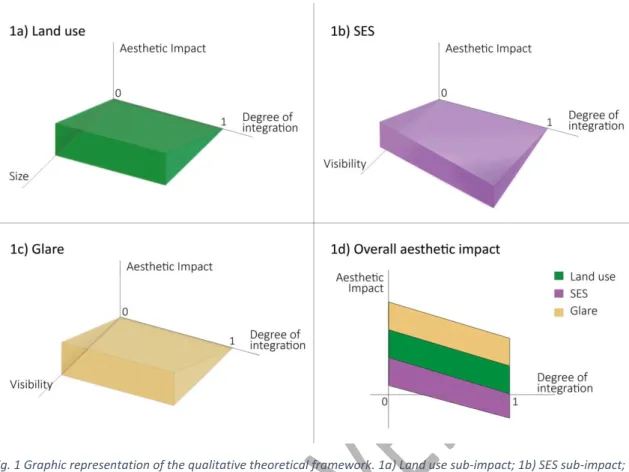
(13) 5.4. ECONOMICAL VALUATION. Nonmarket valuation techniques are used when the market cannot provide decision-makers with price information about goods or services. This is the case of eliciting welfare changes caused by the operation of SES, since these impacts are not “traded” in markets. The environmental impacts are mostly experienced locally, while the benefits from cleaner energy seem to be shared by all. For this reason, two economic nonmarket valuation techniques could complementary be used [16]: eliciting the willingness of local respondents to accept for local impacts (i.e., willingness to accept or WTA), or eliciting the willingness of national respondents to compensate local residents for local impacts (i.e., willingness to pay or WTP). Glare is the only objective factor considered in the two models [16] for large grounded SES, although a generic landscape factor is also included in the WTP model. Nuisance from the glare effect has a significant level in the two models. WTP has also been used to estimate the land use impacts due to the loss of naturalness as consequence of the installation of SES [99].. 6. THEORETICAL FRAMEWORK. The wide range of factors found in the literature and the lack of consensus regarding how to apply them in order to assess the impact of SES implementation, make it very difficult to compare them. It was therefore imperative to carry out a detailed review of the factors and methods used in the literature and an in-depth synthesis exercise to define a theoretical framework to serve as a starting point for future research on the aesthetic impact of SES. In order to be able to relate objective factors with perception, in the theoretical framework proposed here the aesthetic impact is broken down into three levels or sub-impacts. The first level, called Land use, considers the alteration in the quality of the landscape because of the SES installation. This sub-impact depends on the size. Note that in life cycle impact assessment, land use inventory flow for land occupation and land transformation are relative to the size of the disturbance, being measured in m2.years and in m2 [33]. The level Land use explains the different aesthetic perception of the same installation in different locations [43,99]: nil (or near nil) in urban landscape and negative in landscapes of high quality not transformed by man. There are no Land use impacts from residential and commercial rooftop systems as they utilize rooftops of existing buildings [99]. The second level, called SES, considers the aesthetic perception of the own SES, regardless of location. This sub-impact depends on visibility and the degree of integration. Visibility is related to the size of the facility but also to the human factor (see section 0). Perception for SES improves with higher degrees of integration [7,21,27,43]. The degree of integration is not unique to the building envelope (BIPV), but should also consider the overall integration with the landscape [7]. The value of this sub-impact is influenced by other objective factors such as colour, texture, fractality, that nuance the visibility or degree of integration of the SES [7,18– 20,22,23,26]. The aesthetic perception for this level is expected to be almost zero or negative when the degree of integration is zero. On the contrary, the aesthetic perception is expected to be between zero and positive when the level of integration is at its maximum, since then the positive perception of solar energy prevails [21,27,43]. The third level, called Glare, includes the negative perception produced by glare [8,9,16,49]. This sub-impact depends on visibility [27], referring to the visibility of the glaring beam. In addition, note that the time scale for the human factor here is different from the second level. The value of this sub-impact is influenced by the reflection properties of the materials [51].. 13.
(14) Fig. 1 Graphic representation of the qualitative theoretical framework. 1a) Land use sub-impact; 1b) SES sub-impact; 1c) Glare sub-impact; and 1d) Overall aesthetic impact.. Fig. 1 shows graphically the framework proposed. The sub-impacts Land use, SES and Glare are represented on 3D in 1a, 1b and 1c, respectively. The overall aesthetic impact is represented on 2D in 1d, without considering the size-visibility axis. Aesthetic impact is always referred to visual perception and is represented on the Z-axis. This impact increases as the perception decreases. A positive perception corresponds to a negative aesthetic impact and the other way around. Aesthetic impacts are expressed in ranges because perception varies from person to person, and from landscape to landscape [28]. The degree of integration is represented on the X-axis. A minimum value of zero has been set when no effort was made to integrate the installation (e.g. solar panels placed on the roof and oriented to receive the highest amount of radiation). The maximum value would be one when there is a perfect integration of the installation in the landscape or in the building. The Y-axis represents the size of the facility when assessing the impact of the sub-impact Land use and the visibility when assessing the sub-impacts SES and Glare. For the three levels, the aesthetic impact would be zero for the y-axis equal zero.. 7. DISCUSSION. The analysis of the objective factors found in the literature revealed the lack of unanimity in applying them to assess the different levels of impact. The most important factor that should always be taken into account when assessing aesthetic impact of a SES implementation is visibility. Nevertheless, the importance of a nuanced concept of visibility has been demonstrated, which would refer to the size when evaluating the aesthetic impact of Land use [33,54]; the visible percentage of the installation to assess the aesthetic impact of a SES [18,19,23]; and the observability of the glaring beam to evaluate the aesthetic impact of Glare [9,49].. 14.
(15) Integration degree has turn out to be the second most relevant objective factor. However, it should be borne in mind that this factor could be influenced in turn by numerous factors such as colour contrast, pattern-texture or fractality. For instance, harmonious colour contrast and less evident patterns enhances integration [7,17,26,62]. Additionally, fractality should be considered when analysing perception in a natural environment [18,19,23,67,69]. Recently, the adoption of the saliency from the computer vision to the aesthetic impact of SES has opened the door to new and interesting measures [55]. Future research should combine other measures indicative of aesthetic perception beyond selfreport questionnaires, in order to evaluate more accurately the affective reactions linked to this appreciation, independently of which specific emotions or broad dimensions are emphasized [61]. These additional measures should include either behavioural observations in field studies and laboratory (e.g., eye movements, time spent in a specific location, viewing time, preferences for specific environments, movement speed and pattern), or physiological correlates (e.g., facial muscle activity, pupillary dilation, brain activation, electrodermal and cardiovascular changes, respiration rate, and body temperature, among other measures). In addition, further studies should explore plausible differences between the aesthetic experiences of experts and laypersons in the assessment of perceived aesthetic virtues of landscape and SES impact [61]. While attenuated emotional responses to positive and negative artworks have been found in experts [100], this finding may hold true only for the negative and positive emotions studied. In this line, it is possible that experts show more intense prototypical aesthetic emotions and epistemic emotions such as greater interest, compared to novices [101]. Another possibility for future research would be to explore which personal characteristics might contribute to the experience and perception of aesthetic emotions. For instance, empathy [102] and openness to experience [103] seems to facilitate the experience of prototypical aesthetic emotions. Further studies could therefore help determine whether some relevant personality traits are strongly related to specific aesthetic emotions, and whether these associations between personality and emotional perception account for individual differences in aesthetic preferences in a broad range of domains, including negative or disruptive impact in landscape derived of SES implantation. The literature review for SES shows very few studies in which aesthetic perception has been valued besides very little variety of methods. Literature about perception and emotions in other fields presents interesting alternatives based on fuzzy, cognitive maps, intelligent agents, etc. [104]. Obviously, these models alike the emergent results from computational aesthetics offer new research possibilities for the aesthetic assessment of SES. Recently, researchers in computer vision have also gained interest for the aesthetic topic, giving rise to the field of computational aesthetics, for a review [105]. For aesthetic perception of SES is especially significant the research in prediction of ratings. Initially in this field, objective factors (or features) were used to train a classifier on a dataset of images so that it can learn to predict aesthetic ratings given by humans. In recent years, computational aesthetics has progressed thanks to the use of generic features developed for other purposes in computer vision like object detection and classification or image retrieval. This development has reached a zenith with the development and widespread use of deep neural networks, in particular convolutional neural networks (CNN) [106–108]. Nevertheless, little attempts have been made to apply CNNs as the underlying model for aesthetic perception [107]. Here, the goal is to find out on what grounds aesthetic judgement are made by human observers and what their biological basis and evolutionary purpose might be. CNN and generic features basically represent a black-box approach that lacks of interpretability. Understanding deep representations in the future, the drawback of deep learning approaches may eventually turn out into an asset for understanding aesthetics [105]. 15.
(16) The proposed framework presents a significant limitation as a result of the fact that it is absolutely based on the literature reviewed and there is no data to prove its validity. However, given the lack of consistency in the papers revised, the authors have tried to synthesize the results found in prior investigations in order to establish a common meeting point on which to base future research in the field of SES aesthetic perception. An interesting line of future research would be the verification of the framework proposed in this article or the provision of data to improve its approach. The final objective would be to be able to foresee the social aesthetic acceptance of the new technologies of photovoltaic integration in design phases. Although landscape values are closely connected to landscape patterns, intensity of use and structure, they cannot be assessed in terms of purely material site attributes. Moreover, people needs experience landscapes and engage with them in the course of landscape-related practices [28]. Although all authors researching in this field tend to make an effort to find objective factors that are measurable and comparable, it should be borne in mind that the integration degree factor has a certain subjective component. This brings some uncertainty to the results where this factor is taken into account. Consequently, it would be desirable for future work to establish a measurable and comparable scale for this specific factor. Findings of the review and the theoretical framework proposed are discussed below applied for future research and innovation in building photovoltaic integration and for SES site location and its environmental impact assessments. 7.1. APPLICATION TO BUILDING PHOTOVOLTAIC INTEGRATION ASSESSMENT. In European countries, public opinion about energy developments is generally positive for renewable energy systems (RES), even though the acceptance of many projects of on-ground large PV plants might cause local resistance or discontent [7]. However, studies assessing the aesthetic perception concerning photovoltaic integration have generally shown very favourable results [21,27,43,53]. Differences between the integration of SES in buildings and rural landscapes are evident. This change of scale provide a different level of complexity and other design parameters should be considered [7]. Moreover, architectural design objectives sometimes conflict with energy performance and certain degree of customization might be recommended. As is well known, the integration of PV systems into the building envelope can be done through the elements that make up the roof or the façade. Nevertheless, the availability of good customizability and convincing aesthetics will determine in part the success of the BIPV market (for a review, see [109]). In the application of the new theoretical framework proposed to BIPV assessment, the first subimpact, Land use, could be neglected since there is no alteration in the quality of the landscape in an artificial environment built by man such as the city. The sub-impact of the SES would be the most important and influenced by the visibility, but especially by the degree of integration. Regarding the visibility, in urban settings, the viewpoint from which the images are taken to carry out the study is of great importance [19]. Parameters such as perspective, distance or height must be considered to obtain photographs that faithfully reproduce what the citizen sees [21]. Therefore, images taken from the sky or by using drones from angles or heights that are impossible in the normal movement of people would not be valid. With this in mind, prior results obtained with aerial photographs of PV installations could be questioned (e.g. [43]). Similarly, the integration degree, it is obviously an influent factor to assess BIPV impact. However, seeing the lack of consensus in how this factor must be measured, it would be 16.
(17) strongly advisable to establish a clear criterion for measuring integration. Good integration and better concealment of the installation from the observer is better valued. Nevertheless, it should be borne in mind that parameters such as the type of professional training of the observer have influenced the aesthetic perception of PV systems, whilst ordinary people was more heterogeneous in likings [42,43]. When we refer to BIPV systems, whether the installation is seen, the degree of integration would become the most important factor. A good integration will not only depend on the ability to combine the solar installation with other construction elements, but will also be influenced by physical characteristics that help to aesthetically harmonise the system with the building, such as colour or texture. The literature reviewed supports the importance of the colour, which should be definitively taken into account in further research. Attention to harmony and continuity of colour in design phases will be essential if architects and engineers wish to achieve a good integration aesthetically accepted by society. To this aim, it might be interesting to obtain a good visual simulation of the installation, mainly because of the colour and shape [18]. According with the literature, the best way to work with this parameter seems to be identifying the colour based on the three parameters: hue, saturation and brightness in order to assess the relationship and harmony with the environment. Additionally, matching the digital colour of the picture to the true colour is critical [62]. Additionally, the texture is an interesting factor that, in the case of buildings, is given by the materials used in the envelope. Since the PV integration takes place into the building envelope, this factor will need to be taken into account because, as is well known, the selection of building materials influences for achieving integration with the environment [110]. Following the terminology used in the revised literature, it seems more correct to use the term “pattern” when we assess BIPV, among other concepts such as the density of cells or the transparency [7,26,48]. Furthermore, special attention should be paid to the distance when taking photographs to assess, since “the influence of the texture is greater in the urban setting, where observer distances are shorter” [110]. With regard to fractality, it must be noticed that all the studies reviewed using this factor are somehow related to nature where the objective was comparing the fractal dimension between built and environmental landscape, or assessing the aesthetic impact into the natural environment. This is reinforced for the concept that fractal dimension is a perceived dimension that can be used to judge the aesthetics of a pattern, and therefore to identify the natural qualities and the naturalness of the pattern [69]. And also supported by literature which states that fractal analysis is one of the few methods that allows us to quantitatively compare the geometric properties of nature with those of architecture [70]. We might therefore think that when we analyse the aesthetic impact and liking for photovoltaic integration in buildings, without the intervention of a natural environment, the use of the fractal dimension as an influence factor may not be the most appropriate. However, this factor could be related to patterns analysis when the distribution of the installation, or the shape of the cells, are considered. Finally, the third sub-impact, Glare, should also be considered in order to assess BIPV impact. Glare is a very peculiar factor and probably less common in urban environments than in rural ones because of the type of materials used. However, it must be taken into account because if glare does occur, which is normally temporary, it can be very annoying. Current software tools make it possible to calculate and quantify this factor precisely [9,49]. In the case of evaluating BIPV in urban environments, where this problem does not only affect people on the street but can even be annoying for people using nearby buildings through their windows, the calculation should be extended to the façades of buildings that may be affected. 17.
(18) To summarize, the aesthetic impact of BIPV systems should be broken down into two subimpacts: SES, the most important, and Glare. For the SES impact, the visibility and especially the integration degree are the most influential objective factors; however, colour and pattern can help to improve integration. The increasing use of computer tools for this type of study could facilitate the analysis of objective factors together in the future, as has being recently done in some research focused on colour and glare using the concept of visual salience [55]. 7.2. APPLICATION TO SITE LOCATION AND ENVIRONMENTAL IMPACT ASSESSMENT. The literature provides a large number of examples where GIS are combined with multi-criteria decision-making methods, multi-objective optimization, or probabilistic approaches for site location of SES [111]. Land use is often included in the problem of solving site location as a restriction [54,111–114]. Nevertheless, the sub-impacts and objective factors discussed in this article are usually not considered, with the exception of visibility of SES in [54]. [22] reviewed 29 projects of renewable energies in Italy with environmental impact assessment reports (EIA), including seven photovoltaic projects, according with the Landscape Character Assessment Guidance for England and Scotland [31]. All the photovoltaic projects considered the visual component of the SES, two take also into consideration the effects on morphological, symbolic and chromatic components, while another also takes into account impact on enjoyment limitation and connotative characteristics. Perception of the aesthetic impacts through surveys or interviews to understand the viewpoint of the people involved are not usually included in EIA reports of SES projects [22]. Predicting human perception based on objective factors should fill this gap, especially since in these studies it may be necessary to know the perception of various scenarios in order to select the best option. Selection of the best sites and environmental impact assessment for the construction of photovoltaic solar farms should provide the least disturbance to the landscape and the appropriate selection of objective factors to improve their aesthetic perception through the three sub-impacts proposed in the framework: Land use, not only as restriction, depending on size and quality of the land use; SES, depending on visibility and degree of integration and Glare, depending on visibility. Moreover, integration of other methods to estimate visibility based on its observability [47,50] and glare risk [9,49] with current GIS-based methods should lead to results to improve the aesthetic perception of the inhabitants of the zone.. 8 CONCLUSION In this article, a theoretical review of the objective factors, methods and analyses performed in the field of aesthetic impact assessment of the SES integration has been carried out. On the one hand, a clear lack of consensus has been detected in the application of objective factors and methodologies. On the other hand, bearing in mind the importance of relating objective factors with the subjective assessment of the observer, no one has ever established a clear relationship between both issues when evaluating the aesthetic impact of solar installations. Our main contribution is the establishment of the most influential objective factors based on the revised literature: visibility (or size) and degree of integration. As a result, a theoretical qualitative framework is proposed with the intention of offering a working basis for future research. In the theoretical framework the aesthetic impact is broken down into three levels or sub-impacts: Land use, which depends on the size; SES, which depends on visibility and degree of integration and Glare, which depends on visibility.. 18.
(19) The aesthetic impact of BIPV systems should be broken down into two sub-impacts: SES and Glare. For the SES impact, the visibility and especially the integration degree are the most influential objective factors. In addition, colour and pattern can help to improve integration. For site location and EIA of SES, the three sub-impacts should be considered. Moreover, integration of other methods to estimate visibility based on its observability and glare risk with current GIS-based methods should lead to results to improve the aesthetic perception of the inhabitants of the zone. For further research, interesting alternatives already used in other fields about perceptions and emotions such as methods based on fuzzy, cognitive maps, intelligent agents, CNN, etc. could be useful and relevant for the aesthetic assessment of SES. This research did not receive any specific grant form funding agencies in the public, commercial, or nor-for-profit sectors.. 9. REFERENCES. [1]. Wiser R, Millstein D, Mai T, Macknick J, Carpenter A, Cohen S, et al. The environmental and public health benefits of achieving high penetrations of solar energy in the United States. Energy 2016;113:472–86. doi:10.1016/J.ENERGY.2016.07.068.. [2]. Turney D, Fthenakis V. Environmental impacts from the installation and operation of large-scale solar power plants. Renew Sustain Energy Rev 2011;15:3261–70. doi:10.1016/J.RSER.2011.04.023.. [3]. Gunerhan H, Hepbasli A, Giresunlu U. Environmental impacts from the solar energy systems. Energy Sources, Part A Recover Util Environ Eff 2008;31:131–8. doi:10.1080/15567030701512733.. [4]. Dubey S, Jadhav NY, Zakirova B. Socio-economic and environmental impacts of silicon based photovoltaic (PV) technologies. Energy Procedia 2013;33:322–34. doi:10.1016/J.EGYPRO.2013.05.073.. [5]. Delfanti L, Colantoni A, Recanatesi F, Bencardino M, Sateriano A, Zambon I, et al. Solar plants, environmental degradation and local socioeconomic contexts: A case study in a Mediterranean country. Environ Impact Assess Rev 2016;61:88–93. doi:10.1016/j.eiar.2016.07.003.. [6]. Hernandez RR, Easter SB, Murphy-Mariscal ML, Maestre FT, Tavassoli M, Allen EB, et al. Environmental impacts of utility-scale solar energy. Renew Sustain Energy Rev 2014;29:766–79. doi:10.1016/J.RSER.2013.08.041.. [7]. Scognamiglio A. “Photovoltaic landscapes”: Design and assessment. A critical review for a new transdisciplinary design vision. Renew Sustain Energy Rev 2016;55:629–61. doi:10.1016/j.rser.2015.10.072.. [8]. Chiabrando R, Fabrizio E, Garnero G. The territorial and landscape impacts of photovoltaic systems: Definition of impacts and assessment of the glare risk. Renew Sustain Energy Rev 2009;13:2441–51. doi:10.1016/J.RSER.2009.06.008.. [9]. Rose T, Wollert A. The dark side of photovoltaic - 3D simulation of glare assessing risk and discomfort. Environ Impact Assess Rev 2015;52:24–30. doi:10.1016/j.eiar.2014.08.005.. [10]. Beylot A, Payet J, Puech C, Adra N, Jacquin P, Blanc I, et al. Environmental impacts of large-scale grid-connected ground-mounted PV installations. Renew Energy 2014;61:2–6. doi:10.1016/J.RENENE.2012.04.051.. [11]. Daniel TC. Whither scenic beauty? Visual landscape quality assessment in the 21st century. Landsc Urban Plan 2001;54:267–81. doi:10.1016/S0169-2046(01)00141-4.. [12]. Lothian A. Landscape and the philosophy of aesthetics: is landscape quality inherent in the landscape or in the eye of the beholder? Landsc Urban Plan 1999;44:177–98. doi:10.1016/S0169-. 19.
(20) 2046(99)00019-5. [13]. Tveit M, Ode Å, Fry G. Key concepts in a framework for analysing visual landscape character. Landsc Res 2006;31:229–55. doi:10.1080/01426390600783269.. [14]. Ulrich RS. Human responses to vegetation and landscapes. Landsc Urban Plan 1986;13:29–44. doi:10.1016/0169-2046(86)90005-8.. [15]. Scruton R. The aesthetics of architecture. Princeton University Press; 1979.. [16]. Botelho A, Lourenço-Gomes L, Pinto L, Sousa S, Valente M. Accounting for local impacts of photovoltaic farms: The application of two stated preferences approaches to a case-study in Portugal. Energy Policy 2017;109:191–8. doi:10.1016/j.enpol.2017.06.065.. [17]. Chen HQ, Honda T, Yang MC. Approaches for identifying consumer preferences for the design of technology products: a case study of residential solar panels. J Mech Des 2013;135:061007. doi:10.1115/1.4024232.. [18]. Chiabrando R, Fabrizio E, Garnero G. On the applicability of the visual impact assessment OAISPP tool to photovoltaic plants. Renew Sustain Energy Rev 2011;15:845–50. doi:10.1016/j.rser.2010.09.030.. [19]. Kapetanakis IA, Kolokotsa D, Maria EA. Parametric analysis and assessment of the photovoltaics’ landscape integration: Technical and legal aspects. Renew Energy 2014;67:207–14. doi:10.1016/j.renene.2013.11.043.. [20]. Mérida-Rodríguez M, Lobón-Martín R, Perles-Roselló M. The production of solar photovoltaic power and its landscape dimension. Renew. Energies Eur. Landscapes. Lessons from South. Eur. Cases, Dordrecht: Springer Netherlands; 2015, p. 255–77. doi:10.1007/978-94-017-9843-3_14.. [21]. Sánchez-Pantoja N, Vidal R, Pastor MC. Aesthetic perception of photovoltaic integration within new proposals for ecological architecture. Sustain Cities Soc 2018;39:203–14. doi:10.1016/J.SCS.2018.02.027.. [22]. Tolli M, Recanatesi F, Piccinno M, Leone A. The assessment of aesthetic and perceptual aspects within environmental impact assessment of renewable energy projects in Italy. Environ Impact Assess Rev 2016;57:10–7. doi:10.1016/j.eiar.2015.10.005.. [23]. Torres-Sibille, Cloquell-Ballester V-A, Cloquell-Ballester V-A, Artacho Ramírez MA. Aesthetic impact assessment of solar power plants: An objective and a subjective approach. Renew Sustain Energy Rev 2009;13:986–99. doi:10.1016/j.rser.2008.03.012.. [24]. von Möllendorff C, Welsch H. Measuring renewable energy externalities: evidence from subjective well-being data. Land Econ 2017;93:109–26. doi:10.3368/le.93.1.109.. [25]. Zoellner J, Schweizer-Ries P, Wemheuer C. Public acceptance of renewable energies: Results from case studies in Germany. Energy Policy 2008;36:4136–41. doi:10.1016/J.ENPOL.2008.06.026.. [26]. Bao Q, Honda T, El Ferik S, Shaukat MM, Yang MC. Understanding the role of visual appeal in consumer preference for residential solar panels. Renew Energy 2017;113:1569–79. doi:10.1016/j.renene.2017.07.021.. [27]. Lu M, Lin A. The impact of photovoltaic applications on urban landscapes based on visual Q methodology. Sustainability 2018;10:1–15. doi:10.3390/su10041051.. [28]. Plieninger T, Kizos T, Bieling C, Dû-Blayo L Le, Budniok M-A, Bürgi M, et al. Ecology and Society: Exploring ecosystem-change and society through a landscape lens: recent progress in European landscape research. Ecol Soc 2015;20 (2). doi:10.2307/26270213.. [29]. Bennett EM, Cramer W, Begossi A, Cundill G, Díaz S, Egoh BN, et al. Linking biodiversity, ecosystem services, and human well-being: three challenges for designing research for sustainability. Curr Opin Environ Sustain 2015;14:76–85. doi:10.1016/j.cosust.2015.03.007.. 20.
(21) [30]. MA. Ecosystems and Human Well-Being. 2005.. [31]. Tudor C. An approach to landscape character assessment. Natural England; 2014. doi:NE579.. [32]. Lindeijer E. Review of land use impact methodologies. J Clean Prod 2000;8:273–81. doi:10.1016/S0959-6526(00)00024-X.. [33]. Koellner T, Baan L, Beck T, Brandão M, Civit B, Margni M, et al. UNEP-SETAC guideline on global land use impact assessment on biodiversity and ecosystem services in LCA. Int J Life Cycle Assess 2013;18:1188–202. doi:10.1007/s11367-013-0579-z.. [34]. Bell S. Landscape: Pattern, Perception and Process. London: E&FN Spon; 1999.. [35]. Pachaki C. Agricultural landscape indicators: a suggested approach for the scenic value. In: Dramstad W, Sogge C, editors. OCDE, Agric. impacts landscapes Dev. Indic. policy Anal., 2003, p. 240–50.. [36]. Carlson A. Aesthetic preferences for sustainable landscapes: seeing and knowing. For Landscapes New York CABI Publ 2001:31–42.. [37]. Berghman M, Hekkert P. Towards a unified model of aesthetic pleasure in design. New Ideas Psychol 2017;47:136–44. doi:10.1016/J.NEWIDEAPSYCH.2017.03.004.. [38]. Zangwill N. Aesthetic creation. Oxford University Press; 2007.. [39]. van Etteger R, Thompson IH, Vicenzotti V. Aesthetic creation theory and landscape architecture. J Landsc Archit 2016;11:80–91. doi:10.1080/18626033.2016.1144688.. [40]. Bishop ID. Testing perceived landscape colour difference using the Internet. Landsc Urban Plan 1997;37:187–96. doi:10.1016/S0169-2046(97)80003-5.. [41]. Bishop I, Dartnell P, Davie S, Drew J, McDonald T. Object, environment and observer related variables in the visual effect of electricity transmission lines. Landsc Aust 1990.. [42]. Gifford R. Decoding Modern Architecture. A lens model approach for understanding the aesthetic differences of architects and laypersons. Environ Behav 2000;32:163–87.. [43]. Naspetti S, Mandolesi S, Zanoli R. Using visual Q sorting to determine the impact of photovoltaic applications on the landscape. Land Use Policy 2016;57:564–73. doi:10.1016/j.landusepol.2016.06.021.. [44]. ShuttleworthS. The use of photographs as an environment presentation medium in landscape studies. J Environ Manage 1980;11.. [45]. Torres Sibille, Cloquell-Ballester V-A, Cloquell-Ballester V-A, Darton R. Development and validation of a multicriteria indicator for the assessment of objective aesthetic impact of wind farms. Renew Sustain Energy Rev 2007;13:40–66. doi:10.1016/j.rser.2007.05.002.. [46]. Rodrigues M, Montañés C, Fueyo N. A method for the assessment of the visual impact caused by the large-scale deployment of renewable-energy facilities. Environ Impact Assess Rev 2010;30:240–6. doi:10.1016/j.eiar.2009.10.004.. [47]. García-Garrido E, Lara-Santillán P, Zorzano-Alba E, Mendoza-Villena M, Zorzano-Santamaría P, Fernández-Jiménez LA, et al. Visual impact assessment for small and medium size PV plants. Adv. Power Energy Syst., 2012, p. 57–61.. [48]. Cerón I, Caamaño-Martín E, Neila FJ. ‘State-of-the-art’ of building integrated photovoltaic products. Renew Energy 2013;58:127–33. doi:10.1016/j.renene.2013.02.013.. [49]. Ho CK, Sims CA, Yellowhair JE, Bush E. Solar Glare Hazard Analysis Tool (SGHAT). 2015.. [50]. Fernandez-Jimenez LA, Mendoza-Villena M, Zorzano-Santamaria P, Garcia-Garrido E, LaraSantillan P, Zorzano-Alba E, et al. Site selection for new PV power plants based on their observability. Renew Energy 2015;78:7–15. doi:10.1016/j.renene.2014.12.063.. 21.
Figure

Documento similar
imaging, and maybe also low resolution spectroscopy,between now and the arrival of Europa Clipper (~ 2035 (??)) using 23m to 39m aperture. what might be specialized time frames
Despite the excessive energy consumption and the great uncertainty of the laboratory- based single-junction and tandem PSCs, their environmental impacts are lower than for silicon PV.
The fractal dimension (FD) is a quantitative parameter that has been used in neuroimaging to analyze structural patterns of the human brain. Metrics of FD are
In winter time, solar energy is collected by the solar roof to assist the conditioning system in heating the building and producing domestic hot water.. Figure 4, shows a
According to the results, the study area of Saiss (Morocco) needs more irrigation time and thus, a higher energy demand in comparison with the Spanish case.. By considering these
In the construction sector, the integration of photovoltaic systems, better known as BIPV (Building Integrated Photovoltaics), has numerous advantages since, by generating
Convection heat loss from cavity receiver in parabolic dish solar thermal power system: A review. Application of phase change materials for thermal energy storage in concentrated
Keywords: Billingsley dimension, computability, constructive dimen- sion, fractal geometry, geometric measure theory, iterated function system, Hausdorff dimension, packing
