Bioaccessibility of metals and human health risk assessment
in community urban gardens
M. Izquierdo, E. De Miguel
*,M.f. Ortega,]. Mingat
Environmental Geochemistry Research and Engineering Laboratory, Universidad PolitecnicadeMadrid, Alenza4,28028 Madrid, Spain
ABSTRACT
Pseudo-total (Le. aqua regia extractable) and gastric-bioaccessible (Le. glycine+HCl extractable) concen-trations ofCa, Co, Cr, Cu, Fe, Mn, Ni, Pb and Zn were determined in a total of 48 samples collected from six community urban gardens of different characteristics in the city of Madrid (Spain). Calcium carbonate appears to be the soil property that determines the bioaccessibility of a majority of those elements, and the lack of infiuence of organic matter, pH and texture can be explained by their low levels in the samples (organic matter) or their narrow range ofvariation (pH and texture). A conservative risk assess-ment with bioaccessible concentrations in two scenarios, Le. adult urban farmers and children playing in urban gardens, revealed acceptable levels of risk, but with large differences between urban gardens depending on their history of land use and their proximity to busy areas in the city center. Only in a worst-case scenario in which children who use urban gardens as recreational areas also eat the produce grown in them would the risk exceed the limits of acceptability.
1. Introduetion
In 2000, aH United Nations member states signed the
Millennium Declaration, which includes the Millennium
Development Goals, eight international development purposes to be achieved by the year 2015 addressing, among other aspects, eradication of extreme poverty and hunger and ensuring environ-mental sustainability (UN, 2001). However, recent world food crises and increasing food prices during the last years prove that we are far away from these targets. A promising strategy in this context is urban agriculture, which has spread worldwide in recent years as it enhances a sustainable urban development and a greener econ-omy. Ihis is even more relevant ifwe consider the world population projections, which predict an increase ofurban population from 3.6 billion in 2011 to 6.3 billion in 2050 (UN, 2012).
*
Corresponding author.E-mailaddress:[email protected](E.De Miguel).
Urban agriculture has multiple benefits for human health (physical exercise, weH-being, fresh air, sunlight exposure) (Leake et al., 2009; Van den Berg et al., 2010), community betterment (self-supplying food and source of income in developing countries, social network improvement, cultural inheritance preservation) (Ramos and Pinto, 2008) and environmental protection (organic agriculture, agro-biodiversity conservation, organic solid waste recycling by composting, energy saving in transportation and soil erosion reduction) (Brown and Jameton, 2000). However, there are also some drawbacks, and of particular concern is the risk as 50-ciated with conducting agricultural practices or the ingestion of products grown in potentiaHy contaminated urban soil.
(1 )
et al., 2006), while in agricultural soils in Castellon, a Spanish Mediterranean region, the levels were higher than the maximum established for horticultural crops in seven ofthe thirty fields sam-pled (Peris et al., 2007). Saumel et al. (2012) found that most crop samples from inner city sites had significantly higher trace metal contents than equivalent supermarket samples and that more than half of the samples exceeded standards for Pb concentration in food crops. As a last example, in Wroelaw (Poland), a city with a thermal power station and several chemical and metalworking industries, 35% of urban gardens tested were unsuitable for veg-etable production according to Polish quality standards of soil and earth (I<abala et al., 2009).
Most of these soil quality guidelines derive from risk assess-ments that are based on aqua-regia extractable concentrations in soil and oral toxicity values obtained from studies in which the hazardous substances were administered in a soluble formo Therefore, they may overestimate the risk associated with acciden-tal soil ingestion since only a portion of the elements would be effectively absorbed by the human body (i.e. bioavailable). This fact has generated an increasing interest in incorporating bioavailabil-ity into risk assessments (Ge et al., 2002), which is estimated from
ín vívatests using laboratory animals. However, due to bioethical
considerations and to constraints in costs and time, during the last few yearsín vítraextraction tests are being developed to determine the oral bioaccessibility, i.e. the fraction of a substance that is sol-uble in the gastrointestinal environment and is available for absorption (Ruby et al., 1999), as a conservative estimate of bioavailability: HCl extractions, RBALP (Relative Bioaccessibility Leaching Procedure), SBET (Simple Bioaccessibility Extraction Test) or PBET (Physiologically Based Extraction Test).
The bioaccessibility of trace elements in soil is strongly trolled by soil matrix characteristics. The main soil properties con-trolling the speciation, mobility and retention of metals are soil pH, redox conditions, organic matter, carbonate and phosphate miner-als, elay partieles and aluminum, iron and manganese (hydr)oxides (Pelfrene et al., 2013). Texture, in turn, is an important variable controlling the level of exposure to trace elements in soil: fine par-tieles adhere preferentially to human skin and are more easily resuspended in air, and the accompanying trace elements can thus be inhaled and absorbed through the skin.
Urban gardening is spreading worldwide and so is the concern of following a diet that ineludes food plants grown in urban sites due to possible exposure to contaminants during farming and recreational activities at these gardens. In consequence, the aims of the present study were: (i) to determine the pseudototal and bioaccessible trace element contents in soils and to explain the dif-ferences in the degree of contamination; (ii) to investigate the effect of major elements and soil properties on the bioaccessibility of metals; and (iii) to assess the potential risk for children and adults in those scenarios.
2.Materials and methods
2.1. Study laeatían, saíl samplíng and preparatían
Six urban gardens were selected from those ineluded in the main network of food growers in Madrid (ReHdMad), all of them located in the inner city of Madrid within the M-40 ring road (Fig. 1). Table 1 presents past land uses and the main sources of trace element contamination potentially affecting these gardens. In each urban garden, six sampling points were randomly selected. Composite samples, made up of three subsamples, were collected in each sampling point from the arable soillayer (0-20 cm depth) with a stainless steel hand auger set and transferred into air-tight polyethylene bags for transport to the laboratory. The 36 soil
samples were air-dried at room temperature for one week and then oven-dried for 48 h at 105 oc. Dry samples were then gently disaggregated with a rubber mallet, homogenized, passed through a 2 mm plastic-mesh sieving set and divided up in quarters: one for soil characteristics determination, another for trace element con-tent (which was further sieved to <100¡lm) and the remaining two were sto red as backup samples. Additionally, during the site visit, a field reconnaissance was conducted in order to register aspects that may infiuence the concentration and bioaccessibility of trace elements in soil, i.e. traffic intensity in the vicinity of the urban garden, use (or not) and type of amendments, type of agri-cultural practices or produce cultivated. AIso a questionnaire was distributed among farmers using the selected urban gardens to estimate the value of exposure factors for the risk assessment (e.g. visiting frequency or age).
2.2. Saíl analysís
Soil physicochemical properties were determined on the <2 mm size fraction in order to explore their infiuence on the bioaccessi-bility of trace elements: soil pH was measured in a soil/water sus-pension (1 :2.5 w/v), partiele size distribution was determined after soil dispersion with a sodium hexametaphosphate solution by the hydrometer method (Bouyoucos, 1936), calcium carbonate content was evaluated using a Bernard calcimeter (AlIison and Moodie, 1965) and organic matter by means of a wet oxidation with 1<2Cr207 (Walkley, 1935).
Pseudototal contents were determined following an aqua regia extraction protocol (adapted from ISO 11466:1995): 1.5 g of dried soil «100¡lm) were transferred to a polypropylene tube with a mixture of 10.5 mL HCl and 3.5 mL HN03 ,allowing to stand
over-night for 16 h. The solution was then heated at 95 oC for 2 h in a mid-temperature graphite digestion block, filtered through Albert paper No. 240 and made up to 50 mL with 1% HN03 .
Bioaccessible contents were obtained by a simplified bioacces-sibility extraction test (SBET) as described by Mingot et al. (2011): 0.5 g of soil «100¡lm),mixed with 50 mL of gastric solu-tion (glycine 0.4 M adjusted to pH 1.5 with HCl), were digested at 37 oC for 1 h in a thermostatized shaker. The mixture was cen-trifuged at 2000 rpm for 4 min and the supernatant filtered through paper Lab No. 1300/80.
The concentrations of trace and major elements in samples were measured by fiame atomic absorption spectrophotometry. Instrument detection limits were 0.03 mg kg-1
for Cu, 0.04 mg kg-1
for Ni, 0.06 mg kg-1
for Co, 0.05 mg kg-1
for Ca, Mn and Zn, and 0.17 mg kg-1 for Cr, Fe and Pb. A quality assurance
and quality control protocol was implemented to as sess the accu-racy and precision ofthe extraction and analysis methods: To cor-rect for instrumental drift a multi-element standard test solution was measured every 18 samples (maximum variation was fixed to be ±15%). Six sample triplicates, a blank digestion triplicate and a certified standard reference soil material (WEPAL ISE 987) were ineluded for each batch of 36 samples. The relative standard deviation of the pseudototal replicates was below 10% for all ele-ments, except for Ni (1.81-33.41%). The statistical analyses ofthe data were carried out using R software (R Development Core Team, 2013).
2.3. Bíaaccessíbílíty determínatían
The average trace element bioaccessibility was estimated in three different ways, depending on the value of the "weight",W¡,
in the general expression:
A~
N
1.Batán (BAT)
2. Dehesa (DEH)
3. GRAMA (GRA)
4. Esta es una Plaza (PLZ)
5. Retiro (RET)
6. Siglo XXI (SIG)
Fig. 1. Location of urban gardens sampled in Madrid.
Table 1
Sources of contamination potentially affecting the urban gardens included in the study.
where
Í3
represents the average bioaccessibility(%),andx andythe aqua regia and glycine extractable contents (mg kg-1),respectively.
The three equations used were:
2.4. Exposure assessment andrískcharacterízatíon
(5)
C x IRs x EF x ED -6
ADDsoil ingestion = BW x AT x 10
Three possible exposure scenarios were considered: (a) agricul-tural, where the receptor is assumed to be an adult taking an active role in cultivation and exposed through the routes of direct acci-dental ingestion of soil, inhalation of resuspended particles, dermal absorption of toxic elements in particles adhered to skin and inges-tion of self-produced vegetables; (b) recreainges-tional, in which the RME (reasonable maximum exposure) receptors are children play-ing in the urban gardens and exposed through the same pathways as in the previous case, except for food intake; and (c) recre-ational+produce ingestion, a worst-case scenario in which chil-dren who play in the urban gardens also eat the produce grown in them by their parents. The average daily doses (ADD) and the exposure concentration in air (Cair) were estimated using the stan-dard equations proposed by the US Environmental Protection Agency:
exert a stronger infiuence on the estimate of the average bioacces-sibility than samples with high concentrations. Lastly, ifWiex:1
/xf'
Eq. (4) is obtained, the average bioaccessibility is calculated as the average quotient between each value of bioaccessible tion divided by the corresponding value of pseudototal concentra-tion, and the estimate is infiuenced even more strongly (squared) by low values near the origino
(2)
(3) Description
On a wasteland used as a dump site for brickworks and close to a major road
On former plant nurseries and near a bunker from the Spanish Civil War
Evidences of parking and waste disposal uses Abandoned for over 30 years, previously occupied by a jewelry factory
Next to a plant nursery with fuel-burning heating systems and to the old building of the City Hall workshops (carpentry, locksmith)
Adjacent to a busy street, with a plant barrier between them
Dehesa (DEH) Urban garden
Batán (BAT)
Siglo XXI (SIC) CRAMA(CRA) Esta es una
Plaza(PU)
Retiro (RET)
(4) C x EF x ED
Cair= PEF x AT (6)
where C (mg kg-1
)is the upper limit ofthe 95% confidence interval
of the mean of the aqua-regia concentration calculated with ProUCL 5.0.00 software (USEPA, 2013), multiplied by the average bioacces-sibility in Eqs. (5)-(7), and by a bioconcentration (BCF) or In Eq. (2), Wi is constant (i.e. aH data have the same "weight"
since Wi is independent ofXi) and the average bioaccessibility is
calculated as the slope of a linear regression, forced to intercept the origin, of bioaccessible concentrations on pseudototal concen-trations, assuming constant variance of residuals and zero bioac-cessibility at zero pseudototal concentration. If the weight Wi is
proportional to the inverse ofXi, Eq. (3) is obtained, in which the average bioaccessibility is calculated as the quotient of the sum of bioaccessible concentrations divided by the sum of pseudototal concentrations. SinceWiex:l/xi, samples with low concentrations
ADD _ C x SA x AF x ABS x EF x ED 10-6
dermal contact - BW x AT x
C x BCF xIRv x EF x ED -3
AD Dvegetables ingestion= AT x 10
(7)
3.Results and discussion
Chemical specific parameters and toxicity values used in the analysis were taken from the U.S. Department of Energy's RAIS databas e (USDoE, 2013), except for Pb, whose reference doses have been derived from the World Health Organization's Guidelines for Drinking Water Quality (WHO, 1993). Dermal toxicity values have been determined from oral values, multiplying reference doses and dividing slope factors by a gastrointestinal absorption factor (GSI, 2013).
soil-to-plant uptake factor (Bechtel, 1998) for the vegetable inges-tion exposure pathway (Eq. (8)); EF is the exposure frequency (75 days year-1
) estimated from the on-site survey, and for the
remaining exposure factors default values were taken from the USEPA (1991,2004,2011): exposure duration, ED (30years for adults and 6 years for children); body weight, BW (70 kg for adults and 15 kg for children); soil ingestion rate, IRS (100 mgday-l for adults and 200 mg day-l for children); particle emission factor, PEF (1.36xl09m3kg-1
); exposed skin area, SA (5700cm2 for
adults and 2800 cm2 for children); skin adherence factor, AF
(0.07 mg cm-2
for adults and 0.2 mg cm-2
for children); dermal absorption factor, ABS (0.01 for all elements); bioconcentration fac-tor, BCF (element specific) and vegetable ingestion rate, IRV (3.7 g kg-1
day-l for adults and 7.1 g kg-1
day-l for children). The averaging time, AT was set at ED x 365 days for non-cancer and 25,550 days for carcinogenic contaminants.
To characterize the systemic and carcinogenic risk, a Hazard lndex (Eq. (9)) and a level of Cancer Risk (Eq. (10)) respectively, were determined using the corresponding reference dose (RfD), reference concentration (RfC), slope factor (SF) or unit risk (UR), and assuming additivity of adverse health effects for mixtures of elements and multiple exposure routes.
RISK = ~RISK¡ RISK¡ = ADD[Cair ] .SF[UR]
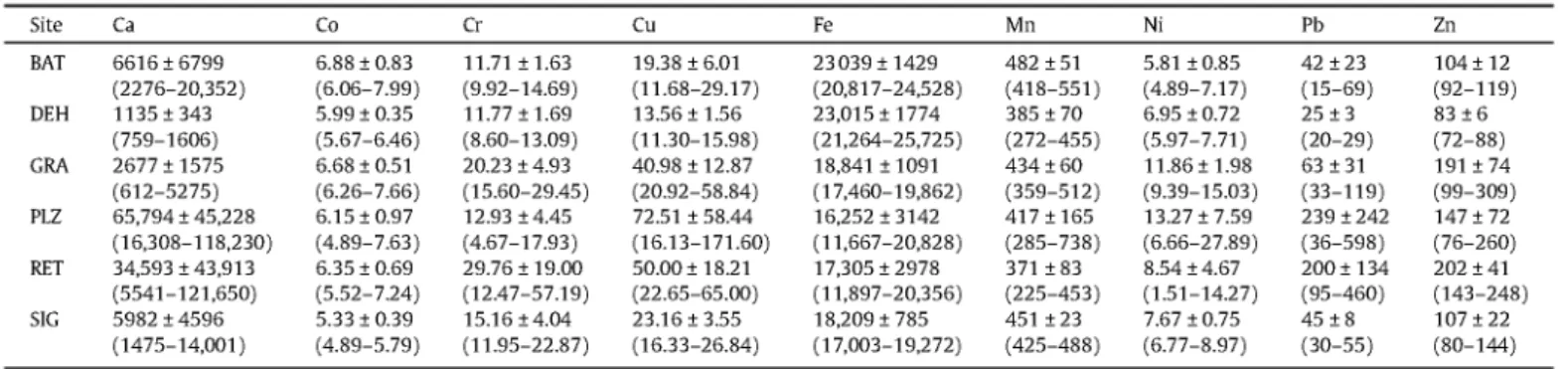
Table 2 summarizes the analytical results for the aqua regia extracts in urban garden soil samples of Madrid. Average concen-trations are similar to those reported by De Miguel et al. (1998) for Madrid's urban soil, except for Cr, whose concentration is lower in this study. In the case of Pb, the average concentration in urban gardens exceeded the permissible value of 75 mg kg-1for
agricul-tural land use in Madrid. Results from other research groups are presented in Table 3. Although sampling, preparation and analyti-cal methods are relatively different, overall contents are in the same range, except for Pb, which is particularly high in two urban gardens (PLZ and RET) in this study.
Average concentrations varied widely among urban gardens, reaching differences of up to one order of magnitude for certain elements. A multiple contrast (Tukey) test revealed a significant difference (at p-value<0.05) between the mean concentrations in the different urban gardens of all trace elements except Co and Mn. This high spatial variability occurred not only between gardens, but also within the same garden. Large intra-garden devi-ations could usually be explained by the occurrence of singular samples with specific characteristics different from those of the rest within the same urban garden (for example, presence of deb-ris, native vs. tilled or amended soil, different substrate treatment, or affected by industrial activities that did not infiuence other sam-pling locations).
A cluster analysis using scaled data, Ward's method and Euclidean distance, revealed that the urban gardens included in the study could be divided in two large groups, with the degree of contamination arising from previous land uses as clustering fac-tor (Fig. 2). On the one hand, urban gardens grouped in Cluster 1 exhibited the highest concentrations of typically urbanjindustrial trace elements: Cu, Pb and Zn. Two of these gardens (PLZ and RET) are located in the city center and their soil has sustained atmospheric deposition and direct waste disposal from onsite industrial activities (foundry and jewelry production, blacksmith workshop). The third urban garden in this first group was formerly an unpaved parking loto On the other hand, there is no evidence that polluting activities have taken place in or near the three urban gardens grouped in Cluster 2.
3.2. Elemental contents
(9)
(10) HQ = ADD[Cair ]
RfD[RfC]
HI=~HQ¡
3.1. Soíl characterístícs
The range of pH values in the urban gardens included in this study was narrow, varying between 6.72 and 7.78. Texture was also quite homogenous (i.e. sandy loam), with clay fraction con-tents in all urban gardens below 16%. Average carbonate concon-tents ranged between 1.5% and 10%, and the level of organic matter was generally low «1.5%), with only a limited number of samples col-lected from soils with organic amendments presenting concentra-tions between 2% and 5%.
3.3. Bíoaccessíbílíty
Results of average bioaccessibility obtained with Eqs. (3) and (4) are similar but differ from those arrived at with Eq. (2) (Table 4). These differences are due, as explained in Section 2.3 to the higher infiuence of low values on the estimates using Eq. (3) and even more pronouncedly with Eq. (4), while the slope of the linear regression in Eq. (2) is weight-balanced and all data exert the same infiuence. In Table 4, p-values of the slope estimator (considering
Table 2
Pseudototal contents (in mg kg-1
)in urban gardens of Madrid (mean value ± standard deviation. minimum-maximum).
Site Ca Co Cr Cu Fe Mn Ni Pb Zn
BAT 6616 ± 6799 6.88 ± 0.83 11.71 ± 1.63 19.38 ± 6.01 23039 ± 1429 482 ± 51 5.81 ± 0.85 42 ±23 104 ± 12
(2276-20.352) (6.06-7.99) (9.92-14.69) (11.68-29.17) (20.817-24.528) (418-551) (4.89-7.17) (15-69) (92-119)
DEH 1135 ± 343 5.99 ± 0.35 11.77 ± 1.69 13.56 ± 1.56 23.015 ± 1774 385 ± 70 6.95 ± 0.72 25 ±3 83 ±6
(759-1606) (5.67-6.46) (8.60-13.09) (11.30-15.98) (21.264-25.725) (272-455) (5.97-7.71) (20-29) (72-88)
CRA 2677 ± 1575 6.68 ± 0.51 20.23 ± 4.93 40.98 ± 12.87 18.841 ± 1091 434 ±60 11.86 ± 1.98 63 ±31 191 ± 74
(612-5275) (6.26-7.66) (15.60-29.45) (20.92-58.84) (17,460-19.862) (359-512) (9.39-15.03) (33-119) (99-309)
PLZ 65.794 ± 45.228 6.15 ± 0.97 12.93 ± 4.45 72.51 ± 58.44 16.252 ± 3142 417 ± 165 13.27 ± 7.59 239 ± 242 147 ± 72
(16.308-118.230) (4.89-7.63 ) (4.67-17.93) (16.13-171.60) (11.667-20.828) (285-738) (6.66-27.89) (36-598) (76-260)
RET 34.593 ± 43.913 6.35 ± 0.69 29.76 ± 19.00 50.00 ± 18.21 17.305 ± 2978 371 ± 83 8.54 ±4.67 200 ± 134 202 ± 41
(5541-121.650) (5.52-7.24 ) (12.47-57.19) (22.65-65.00) (11.897-20.356) (225-453) (1.51-14.27) (95-460) (143-248)
SIC 5982 ± 4596 5.33 ± 0.39 15.16 ±4.04 23.16 ± 3.55 18.209 ± 785 451 ± 23 7.67 ± 0.75 45 ±8 107 ± 22
Jable 3
Comparison with other urban soils with agricultural use (mean concentrations in mg kg-1
).
Study Co Cr Cu Mn Ni Pb Zn
Madrid urban gardens 6.09 16.93 36.60 423.46 9.02 98.46 139.17
Szolnoki et al. (2013): Urban gardens, Hungary 6.09 31.32 59.01 22.62 15.71 80.17
Kabala et al. (2009): Allotment gardens, Poland 62.6 91.7 252
Mikula and Indeka (1997): Allotment gardens, Poland 8.4 9.1 219 8.8 313
Ruiz-Cortés et al. (2005): Areas of agricultural use in Seville, Spain 35.0 42.4 394 19.5 156 91.6
Luo et al. (2011): Vegetable garden, China 12.3 324 8.83 95.6 122
Pelfrene et al. (2012): Agricultural soils, France 153 311
Cluster Dendrogram
CLUSTER 2
---
CLUSTER 1---:E el
.¡¡¡
I o
o
Fig. 2. Cluster analysis of samples (linkage method: ward; distance measure: euclidean).
Jable 4
Average gastric bioaccessibility using three different mathematical models.
Equation Co Cr Cu Mn Ni Pb Zn
[3(2) 32.21 8.15'" 39.43'" 39.73" 25.37'" 46.54'" 16.69
[3(3) 37.0' 4.66'" 24.62'" 40.23'" 31.61 59.38'" 21.65'
[3(4) 33.46 6.20'" 30.50'" 40.04" 26.84' 54.27'" 19.88
p-value<0.05. " p-value<0.01. ".p-value<0.001.
slope=Oas the null hypothesis) for the3models are also refiected. Ihese estimators were significant for most elements, except for Co and Zn calculated with Eqs. (2) and (4), and Ni using Eq. (3).
Ihere are large differences in the bioaccessibility of the differ-ent elemdiffer-ents, ranging from less than 10% for Cr up to 90% for Pb in some samples, which indicates that they are bound to different fractions of the soil (carbonate, organic matter, clay surfaces, (hydr)oxides) and with different strengths. Average bioaccessibili-ties followed the order Pb>Mn>Co>Ni "" Cu>Zn »Cr. Ihe sequence does not exactly coincide with the one determined by De Miguel et al. (2012) in playground soils in Madrid: Cu=Pb=Zn>Co>Ni>Cr, but neither is the soil matrix the same.
10check the infiuence of soil properties on the bioaccessibility of trace elements simple and multiple linear models were con-ducted. A relationship could not be established with soil pH or tex-ture, probably because of the low variability of these parameters. Likewise, organic matter content did not affect bioaccessibility, except for Mn with which there is a positive correlation. On the other hand, bioaccessibility was found to depend significantly on the concentration of calcium carbonate for Co, Cu, Ni and Pb. Ihis correlation, which was positive in all cases, can be explained
by the fact that at low pH values, such as those ofthe gastric phase extraction, the carbonate bound elements can be easily mobilized. However, after they enter the intestine, the neutral environment would probably cause the precipitation or the re-adsorption of these elements, reducing the amount that is actually bioavailable (Li and Zhang, 2013; Mingot et al., 2011).
3.4.Rísk assessment
Ihe calculated risk for adult urban farmers and for children playing in urban gardens (Iable 5) fall below the threshold of unac-ceptability (HI=1 or Risk=10-5),but it has a significant
Jable 5
Hazard Quotients and Cancer Risk in the agricultural (adult) and recreational+produce intake (child) scenarios.
Agri cultural Co Cr Cu Mn Ni Pb Zn :EHQjRiskRoute
HQsoil ing 2.21E-03 1.05E-04 9.14E-05 3.78E-04 4.42E-05 9.24E-03 3.19E-05 1.21E-02
RiSksoi1 ing 6.76E-08 1.18E-07 1.85E-07
HQnermal 1.10E-04 1.68E-04 6.40E-06 2.51E-04 4.41E-05 2.46E-03 6.36E-06 3.04E-03
Riskdermal 1.08E-07 3.13E-08 1.39E-07
HQ¡nhalation 5.68E-05 1.62E-06 5.44E-04 5.05E-06 6.08E-04
Riskinhalation 1.31E-12 5.85E-12 5.07E-14 8.56E-14 7.30E-12
HQvegetables ing 5.75E-03 6.01E-03 7.67E-03 8.15E-03 7.89E-03 2.81E-Ol 1.03E-02 3.27E-Ol
Riskvegetables ing 3.87E-06 3.59E-06 7.45E-06
I:H<2Element 8.12E-03 6.29E-03 7.77E-03 9.32E-03 7.99E-03 2.93E-Ol 1.04E-02 Hh~0.34
I:RiskElement 1.31E-12 4.04E-06 5.07E-14 3.74E-06 RT~7.78E-6
Recreat.+prod. Co Cr Cu Mn Ni Pb Zn :EHQjRiskRoute
HQsoil ing 2.06E-02 9.82E-04 8.53E-04 3.52E-03 4.12E-04 8.62E-02 2.97E-04 1.13E-Ol
RiSksoi1 ing 1.26E-07 2.20E-07 3.46E-07
HQnermal 7.21E-04 1.10E-03 4.19E-05 1.64E-03 2.89E-04 1.61E-02 4.16E-05 1.99E-02
Riskdermal 1.41E-07 4.10E-08 1.82E-07
HQ¡nhalation 5.68E-05 1.62E-06 5.44E-04 5.05E-06 6.08E-04
Riskinhalation 2.63E-13 1.17E-12 1.01E-14 1.71E-14 1.46E-12
HQvegetables ing 5.15E-02 5.39E-02 6.87E-02 7.29E-02 7.07E-02 2.52E+00 9.25E-02 2.93E+00
Riskvegetables ing 6.92E-06 6.43E-06 1.34E-05
I:HOElement 7.28E-02 5.59E-02 6.96E-02 7.87E-02 7.14E-02 2.62E+00 9.29E-02 HIT~3.06
I:RiskElement 2.63E-13 7.19E-06 1.01E-14 6.69E-06 RT~1.39E-5
both systemic and carcinogenic risks exceed the standard limits of acceptability and, as in the case of adult farmers, produce intake is by far the exposure pathway with the highest contribution to the overall risk experienced by those receptors.
Among the suite of elements included in the study, the largest contributor for systemic toxicity is lead, which accounts for 85%
of the aggregate Hazard index in the agricultural and worst-case scenarios and 77% in the recreational scenario. For carcinogenic risk, lead and chromium, the only two elements among those ana-lyzed with carcinogenic effects through the route of ingestion, have a similar contribution. These results are consistent with those obtained by Sipter et al. (2008) in their site-specific risk assess-ment of contaminated vegetable gardens. With respect to the con-tribution of the different exposure routes, vegetable ingestion accounts for 95% of the total risk in the agricultural and worst-case scenarios and accidental soil ingestion has the highest contribution in the recreational scenario, while dust inhalation is negligible in all cases.
Several uncertainties affecting the results of the risk estimates must be acknowledged. Regarding food intake, the exposure parameters used in the risk assessment may overestimate the risk because bioaccumulation factors are quite conservative, since they are not specific for a particular plant species. Additionally, a bioac-cessibility factor from vegetables to humans should also be deter-mined, as has been done with soil. Of particular infiuence in the quantitative results of the risk assessment is the conservative deci-sion to include lead as a systemic toxic element with an oral Reference Dose derived from the WHO's Guidelines for Drinking Water Quality, despite its apparent lack of threshold. Had lead been included only as a carcinogen, the output of the systemic risk assessment would have been almost an order of magnitude lower and acceptable for the three scenarios considered. Finally, additive effects of contaminants was assumed, but the combined intake of trace elements may result in antagonistic or synergistic effects.
4. Conclusions
As urban gardening increases worldwide, so does the concern that conducting agricultural practices or ingesting products grown in potentially contaminated urban soil might result in adverse
health effects. A risk assessment, using gastric-bioaccessible con-centrations and several simplifying assumptions that may tend to overestimate risk results in unacceptable levels of risk for a worst-case scenario in which children who use urban gardens as recreational areas also eat the produce grown in them. These quan-titative results should be interpreted with caution since they arise from a risk assessment model which incorporates highly conserva-tive assumptions. They do highlight, however, the need for a site-specific assessment of the soil quality in urban gardens since the numerical estimate of risk significantly varies among them, depending on the history of past industrial activities at the site and the rate of deposition of urban aerosol. Pb and Cr are the ele-ments of most concern among those analyzed. For children only playing in urban gardens, the highest level of risk is associated with accidental ingestion of soil particles during games, whereas for adult farmers and children who eat the garden produce the most significant exposure pathway is ingestion of vegetables.
The use of bioaccessible concentrations has a significant impact on the numerical results of the risk assessment: if bioaccessibility had not been taken into account, the results ofthe risk assessment with a standard pseudototal (i.e. aqua regia) extraction would have indicated an unacceptable level of carcinogenic risk in all the con-sidered scenarios. Bioaccessibilities range from less than 5-8%
(depending on the mathematical model used to calculate them) for Cr to46-60%for Pb. For the soils analyzed in Madrid, with very uniform pH values and clay contents, and with low levels of organic matter, calcium carbonate seems to be the determining factor that explains those differences in bioaccessibility.
values taken from the scientific !iteratme provide a va!id indica-tian, these variables are papulatian-specific and needta be
deter-mined lacally.
References
Allison. L.E.. Moodie. eD.. 1965. Carbonate. In: Black. CA (Ed.). Methods of Soil Analysis. Part 2. American Society of Agranomy Ine.. Wisconsin. pp. 1379-1396. Bechtel jacobs Company LLC. 1998. Empirical Models for the Uptake of Inorganic Chemicals fram Soil by Plants. BjC/OR-133. Bechtel jacobs Company LLC. Oak Ridge. TN.
Bouyoucos. G.j.. 1936. Directions for making mechanical analyses of soils by the hydrameter method. Soil Sci. 42. 225-230.
Brawn. K.H.. jameton. AL.. 2000. Public health implications of urban agriculture. J. Public Health Po!. 21. 20-39.
De Miguel. E.. jiménez de Grado. M.. Llamas. J.F.. Martín-Dorado. A. Mazadiego. L.F.. 1998. The overlooked contribution of compost application to the trace element load in the urban soil of Madrid (Spain). Sci. Total Enviran. 215. 113-122. De Miguel. E.. Mingot. ].. Chacón. E.. Charlesworth. S.. 2012. The relationship
between soil geochemistry and the bioaccessibility of trace elements m playgraund soi!. Enviran. Geochem. Health 34. 677-687.
Ge. Y.. Murray. P.. Sauvé. S.. Hendershot. W.. 2002. Low metal bioavailability in a contaminated urban site. Enviran. Toxico!. Chem. 21. 954-961.
GSI (GSI Enviranmental Ine.). Chemical Praperties Database. <http://www.gsi-net.comj> (accessed jul. 2013).
ISO (International Organization for Standardization). 1995. Soil Quality - Extraction of Trace Elements Soluble in Agua Regia. Geneva. Switzerland.
Kabala. C. Chodak. T.. Szerszen. L.. Karczewska. A. Szopka.K..Fratczak. U.. 2009.
Factors influencing the concentration of heavy metals in soils of allotment gardens in the city of Wraclaw. Poland. Fresen. Enviran. Bul!. 18. 1118-1124. Leake. J.R.. Adam-Bradford. A. Rigby. J.E.. 2009. Health benefits of "graw your own
food" in urban areas: implications for contaminated land risk assessment and risk management. Enviran. Health 8 (Suppl 1). 56.
Li. Y.. Zhang. M.. 2013. A comparison of physiologically based extraction test (PBET) and single-extraction methods for release of CU. Zn. and Pb fram mildly acidic and alkali soils. Enviran. Sci. Pollut. Res. 20. 3140-3148.
Luo. C. Liu. C. Wang. Y.. Liu. X.• Li. F.. Zhang. G.. Li. X.• 2011. Heavy metal
contamination in soils and vegetables near an e-waste pracessing site. south China. J. Hazard. Mater. 186.481-490.
Mikula. W.. Indeka. L.. 1997. Heavy metals in allotment gardens close to an oil refinery in Plocl<. Water Air Soil Pollut. 96. 61-71.
Mingot. ].. De Miguel. E.. Chacón. E.. 2011. Assessment of oral bioaccessibility of arsenic in playgraund soil in Madrid (Spain): a three-method comparison and implications for risk assessment. Chemosphere 84. 1386-1391.
Pelfrene. A. Waterlot. C. Mazzuca. M.. Nisse. C. Cuny. D.. Richard. A. Denys. S.. Heyman. C. Roussel. H.. Bidar. G.. Douay. F.. 2012. Bioaccessibility of trace elements as affected by soil parameters in smelter-contaminated agricultural soils: a statistical modeling appraach. Enviran. Pollut. 160. 130-138. Pelfrene. A. Waterlot. C. Douay. F.. 2013. Influence of land use on human
bioaccessibility ofmetals in smelter-impacted soils. Enviran. Pollut. 178. 80-88. Peris. M.. Micó. C. Recatalá. L.. Sánchez. R.. Sánchez.].. 2007. Heavy metal contents in horticultural craps of a representative area of the Eurapean Mediterranean region. Sci. Total Enviran. 378.42-48.
Pruvot. C. Douay. F.. Hervé. F.. Waterlot. C. 2006. Heavy metals in soil. craps and grass as a source of human exposure in the former mining areas. J. Soils Sediments 6. 215-220.
R Development Core Team. 2013. R 3.0.1: Software pragramming language and enviranment for statistical computing and graphics. R Foundation for Statistical Computing. <http://www.r-praject.org> (accessed May. 2013).
Ramos. R.AR.. Pinto. R.5.B.F.F.. 2008. Urban pollution and the impacts in urban kitchen gardens sustainability. In: Praceedings of the 2nd International Conference on Waste Management. Water Pollution. Air Pollution. Indoor Climate (WWAr08). October 26-28. 2008. Corfu. Greece. World Scientific and Engineering Academy and Society. pp. 188-193.
Ruby. M.V.. Schoof. R.. Brattin. W.. Goldade. M.. Post. G.. Harnois. M.. Mosby. D.E.. Casteel. S.W.. Berti. W.. Carpenter. M.. Edwards. D.. Cragin. D.. Chappell. W.. 1999. Advances in evaluating the oral bioavailability ofinorganics in soil for use in human health risk assessment. Enviran. Sci. Techno!. 33. 3697-3705. Ruiz-Cortés. E.. Reinoso. R.. Díaz-Barrientos. E.. Madrid. L.. 2005. Concentrations of
potentially toxic metals in urban soils of Seville: relationship with different land uses. Enviran. Geochem. Health 27. 465-474.
Saumel.l..Kotsyuk.l..Holscher. M.. Lenkereit. C. Weber. F.. Kowarik.l..2012. How
healthy is urban horticulture in high traffic areas? Trace metal concentrations in vegetable craps fram plantings within inner city neighbourhoods in Berlin. Germany. Enviran. Pollut. 165. 124-132.
Sipter. E.. Rózsa. E.. Gruiz. K.• Tátrai. E.. Morvai. V.. 2008. Site-specific risk
assessment in contaminated vegetable gardens. Chemosphere 71. 1301-1307.
Szolnoki. Z.. Farsang. A. Puskás.l..2013. Cumulative impacts of human activities on
urban garden soils: origin and accumulation of metals. Enviran. Pollut. 177. 106-115.
UN (United Nations). 2001. Road Map Towards the Implementation of the United
Nations Millennium Declaration. Report of the Secretary-General.Aj56j326.
New York.
UN (United Nations). 2012. World Urbanization Praspects. the 2011 Revision. UN Population Division. Department ofEconomic and Social Affairs. ESAjPjWPj224. New York.
USDoE (U.5. Department of Energy). RAIS: Risk Assessment Information System. <http://rais.orn!.gov> (accessed jul. 2013).
USEPA (0.5. Enviranmental Pratection Agency). 1991. Risk Assessment Guidance for Superfund. Volume 1: Human Health Evaluation Manual. Supplemental Guidance for Standard Default Exposure Factors. Oswer Directive 9285.6-03. Office of Solid Waste and Emergency Response. 0.5. Enviranmental Pratection Agency. Washington. De
USEPA (0.5. Enviranmental Pratection Agency). 2004. Risk Assessment Guidance for Superfund. Volume 1: Human Health Evaluation Manual. Part E: Supplemental
Guidance for Dermal Risk Assessment.EPAj540jR-99j005.Office of Solid Waste
and Emergency Response. 0.5. Enviranmental Pratection Agency. Washington. De
USEPA (0.5. Enviranmental Pratection Agency). 2011. Exposure Factors Handbook:
2011 Edition. EPAj600jR-09j052F. Office of Solid Waste and Emergency
Response. 0.5. Enviranmental Pratection Agency. Washington. De
USEPA (U.5. Enviranmental Pratection Agency). 2013. PraUCL 5.0.00: Statistical Software for Enviranmental Applications For Data Sets with and without Nondetect Observations. USEPA Technical Support Center. <http://www. epa.govjospjhstljtscjsoftware.htm>.
Van den Berg. AE.. van Winsum-Westra. M.. de Vries. S.. van Dillen. S.M.E.. 2010. Allotment gardening and health: a comparative survey among allotment gardeners and their neighbors without an allotment. Enviran. Health 9. 74. Walkley. A. 1935. An examination of methods for determining organic carbon and
nitragen in soils. J. Agrie. Sci. 25. 598-609.