
The impact of direct, coded, oral and written feedback on the improvement of paragraph writing of B1 level EFL students at university
115
0
0
Texto completo
(2) DOCUMENTO DIGITAL PARA REPOSITORIO. El presente formulario debe ser diligenciado en su totalidad como constancia de entrega del documento para ingreso al Respositorio Digital (Dspace).. TITULO. The impact of Direct, Coded, Oral and Written Feedback on the Improvement of Paragraph Writing of B1 level EFL Students at University Level. SUBTITULO Alvira Quiroga, Roberto AUTOR(ES) Apellidos, Nombres (Completos) del autor(es) del trabajo. PALABRAS CLAVE (Mínimo 3 y máximo 6). Habilidades de escritura. Andamiaje. Retroalimentación. Herramientas web 2.0. Autonomía. Ha habido un interés creciente en la enseñanza de la redacción en inglés en Colombia. Paradójicamente, las debilidades en esta materia de los estudiantes al terminar sus estudios de secundaria se están incrementando. Paralelamente, los empleadores están exigiendo que los candidatos a cargos de alto nivel posean un alto nivel de redacción. La falta de profesores RESUMEN DEL CONTENIDO (Mínimo 80 máximo 120 palabras). cualificados representa un obstáculo para satisfacer esta necesidad. Este estudio propone en una. metodología para el suministro de retroalimentación a los trabajos de escritura en estudiantes universitarios con nivel B1 de lengua inglesa. Los hallazgos de este estudio nos permiten decir que el uso de la metodología propuesta arrojó resultados positivos en términos de la mejora en el nivel de escritura de los estudiantes. Autorizo (amos) a la Biblioteca Octavio Arizmendi Posada de la Universidad de La Sabana, para que con fines académicos, los usuarios puedan consultar el contenido de este documento en las plataformas virtuales de la Biblioteca, así como en las redes de información del país y del exterior, con las cuales tenga convenio la Universidad.. De conformidad con lo establecido en el artículo 30 de la Ley 23 de 1982 y el artículo 11 de la Decisión Andina 351 de 1993, “Los derechos morales sobre el trabajo son propiedad de los autores”, los cuales son irrenunciables, imprescriptibles, inembargables e inalienables..
(3) Running head: FEEDBACK ON WRITING STRATEGIES. 1. The impact of Direct, Coded, Oral and Written Feedback on the Improvement of Paragraph Writing of B1 level EFL Students at University Level. Roberto Alvira Quiroga. Research Report submitted in partial fulfillment of the requirements for the degree of Master in English Language Teaching – Autonomous Learning Environments. Directed by: Carl Edlund Anderson. Department of Foreign Languages and Cultures Universidad de La Sabana Chía, Colombia May 2013.
(4) STRATEGIES FOR PROVIDING FEEDBACK ON WRITING. 2. Declaration I hereby declare that my research report entitled:. The impact of Direct, Coded, Oral and Written Feedback on the Improvement of Paragraph Writing of B1 level EFL Students at University Level is the result of my own work and includes nothing which is the outcome of work done in collaboration except as declared and specified in the text; is neither substantially the same as nor contains substantial portions of any similar work submitted or that is being concurrently submitted for any degree or diploma or other qualification at the Universidad de La Sabana or any other university or similar institution except as declared and specified in the text; complies with the word limits and other requirements stipulated by the Research Subcommittee of the Department of Foreign Languages and Cultures;. has been submitted by or on the required submission date.. Date: _____________May 8th 2013________________________________________ Full Name: ______Roberto Alvira Quiroga__________________________________ Signature:. _____. ________________________________________.
(5) STRATEGIES FOR PROVIDING FEEDBACK ON WRITING. 3. Abstract Despite the growing interest in the teaching of writing in Colombia, both in English and in Spanish, the flaws that students paradoxically have as writers at the end of their high school studies are growing year by year. This new emphasis is linked to the fact that employers increasingly demand a good level of writing in the candidates for positions in their companies. They need employees with the capacity to write appropriately different types of reports and also give high-quality presentations. The lack of good level of writing of many teachers and the poor training they receive to provide feedback to students are obstacles to this endeavor. The present study is focused on the provision of feedback on writing in English to university students with an intermediate level of language. The study proposes a specific methodology to provide feedback and relies on a Web 2.0 tool called Screencast. The findings of the study permit us to say that the use of the proposed methodology was widely accepted by the students and yielded positive results in the improvement of the students’ skills to write different types of paragraphs with the correctness required by the syllabus.. Key Words: writing skills, feedback, autonomy, scaffolding, Web 2.0 tools.
(6) STRATEGIES FOR PROVIDING FEEDBACK ON WRITING. 4. Resumen A pesar del énfasis que se ha venido dando en lo últimos años en Colombia a la enseñanza de la redacción tanto en español como e inglés, son mayores las dificultades que tienen los estudiantes al término del bachillerato por la baja calidad de su redacción, en ambas lenguas. Este nuevo énfasis está relacionado con las demandas de los empleadores para que sus empleados tengan niveles aceptables de redacción para escribir diferentes tipos de reportes y hacer presentaciones ante diferentes tipos de audiencias. El bajo nivel de escritura de muchos profesores y la baja capacitación recibida para enseñar redacción y para dar retroalimentación a los estudiantes. El presente estudio se centra en la retroalimentación en los trabajos de escritura en inglés a estudiantes universitarios con nivel intermedio de lengua. El estudio propone una metodología específica de retroalimentar y cuenta como instrumento para hacerlo con una herramienta web 2.0 llamada ‘screencast’ o imágenes en pantalla. Los hallazgos nos permiten decir que el uso de la metodología propuesta gozó de aceptación por parte de los estudiantes y arrojó resultados positivos en la mejora de la capacidad de los estudiantes para escribir diferentes tipos de párrafos con la corrección exigida por el programa. Palabras clave: habilidades de escritura, retroalimentación, autonomía, andamiaje, herramientas web 2.0..
(7) STRATEGIES FOR PROVIDING FEEDBACK ON WRITING. 5. Table of Contents Abstract. 3. Resumen. 4. Table of Contents. 5. Chapter 1:. 7. Introduction. Research topic Statement of the problem situation Research question Research objective Rationale. Chapter 2:. Theoretical Framework. Writing Skills Feedback on writing Scaffolding Process writing Web 2.0 tools: definition Screencasts Screencasts for oral and written feedback. CHAPTER 3: Research Design Type of study Research objective Research question Setting and participants Instruments of data collection Pre and Post Questionnaires Writing format to gather samples of students’ written production Instrument design and validation process Researcher’s role Ethical considerations Action plan (Appendix E. Action Plan) Validity Reliability and triangulation. Chapter 4: Pedagogical Intervention and Implementation Pedagogical Approach Objectives. Chapter 5: Data Analysis and Findings Data Analysis Methods Data Management Data Reduction Open Coding Axial Coding Selective Coding Core Category First Part of the Core Category: Developing and Encouraging Autonomy Second Part of the Core Category: Developing and Encouraging Writing Skills Summary. 8 8 9 9 10. 14 14 17 19 20 23 23 25. 26 26 30 30 30 31 31 32 32 33 33 33 33 34. 36 37 38. 41 41 42 42 42 44 45 45 46 51 57.
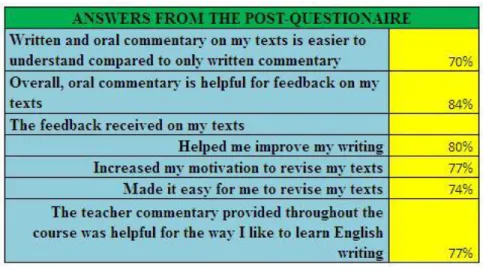
(8) STRATEGIES FOR PROVIDING FEEDBACK ON WRITING. 6. CHAPTER 6: conclusions, pedagogical implications, limitations and further research 58 Conclusions Paragraph structure Coherence and cohesion Grammar Pedagogical implications Limitations Further research References Appendices Appendix A: Pre Questionnaire Appendix B: Post-questionnaire Appendix C: Invitation and Informed Consent Form for English Language Teachers Appendix D: Consent Form for Developing English Language Writers Appendix E. Action Plan Appendix F: Lesson Planner Appendix G: Students’ Samples Appendix H: Data Reduction Appendix I: Data analysis. 58 59 60 60 61 64 64 66 74 74 77 79 81 83 85 92 105 108. Tables Figures List of Tables and Figures Tables Table 1. Summary of the research project ........................................................................... 26 Table 2. Time allotted to activities in the pre-writing stage .................................................. 36 Table 3. Topics, types of paragraphs and grammar points in each cycle ................................ 40 Table 4. Open coding ........................................................................................................ 43 Table 5. Axial coding ........................................................................................................ 44 Table 6. Core category ...................................................................................................... 45 Table 7. Some of the answers in the post-questionnaire which show students’ acceptance ...... 52 Figures Figure 1. Hayes’s and Flower’s approach to teaching writing. Retrieved from http://www.sciencedirect.com/science/article/pii/S0169814108001601. Figure 2. Hayes and Flower’s model after Hayes’s revision in 1996. Retrieved from http://www.um.es/tonosdigital/znum20/secciones/estudios-19-didactica_de_la_composicion.htm.
(9) STRATEGIES FOR PROVIDING FEEDBACK ON WRITING Chapter 1:. Introduction. The objective of most English as a Foreign Language (EFL) and English as a Second Language (ESL) classrooms is to teach the four linguistic skills. Recently there has been a growing demand in the teaching of English writing due to the globalization process in which Colombia is embedded which demands a good level of writing skills in English in practicing professionals in all fields. Also, as Cushing (2009) notes, the development of the writing skills goes beyond the mere communicative aspect and is associated with the development of other skills such as critical thinking: Teaching them to write well gives students a powerful thinking and learning tool. Writing and critical thinking are seen as closely linked, and expertise in writing is seen as an indication that students have mastered the cognitive skills required for university work. (Cushing, 2009, p. 5). Given the fact that most university professors complain about the deficiencies students have in their logical thinking, as found in their writings and even in their oral discourse, the teaching of writing offers an efficient way to fix this flaw, as stated by Cushing in the quotation above. In most if not all universities in Colombia students receive writing classes but the principles of writing should not only be limited to this class but should be a cross-curricular discipline where all teachers should be able to remind the students continuously of the same writing principles. In the case of the teaching EFL in Colombia, the teaching of writing has not yet been allotted specific courses but only as a component in the general EFL courses. For this reason students always face limitations to develop their writing skills and this situation can lead to. 7.
(10) STRATEGIES FOR PROVIDING FEEDBACK ON WRITING. 8. negative consequences for the students. Tribble (1997) highlights the fact that failing to learn to write excludes a person from a wide range of social roles, including those associated with power and prestige. Unfortunately, English teachers frequently lack both writing skills and training to teach writing. At the same time, there is a growing body of research, which favors the teaching of English writing as a key component of university studies. Feedback on writing plays an important role in the teaching of writing skills as it does in all educational fields. Feedback is vital in just about all learning contexts (Race, 2011). This study focuses on direct, coded, oral and written feedback strategies on writing. It makes use of a Web 2.0 tool called Screencast to provide the feedback. This tool is as a screen-recording software that turns screen output into a video. It enables the teacher to provide feedback by using a video of the students’ writings and to making a voiceover recording to underpin the provision of feedback. Research topic The research topic of this project is the impact of direct, coded oral and written feedback on the improvement of paragraph writing in B1 level EFL students at University Level.. Statement of the problem situation The impact of feedback on EFL students’ writing skills has been long discussed with a number of authors holding the idea that it is not beneficial. Other recent authors, however, assert the contrary: Straub (1997), Ferris (2007), Leki (1990), McGarrell and Verbeem (2010), Nelson, M. & Schunn, C. (2007) among many others, favor providing feedback to ESL students on their writings. As Fanselow (1987) states, “to teach is to provide feedback” and writing is certainly not an exception. A different topic worth discussing is that of what can be considered the.
(11) STRATEGIES FOR PROVIDING FEEDBACK ON WRITING ‘appropriate’ type of feedback that should be given to students. This point is of paramount importance for students’ progress in writing since their performance in the writing tasks evidences many flaws up to the point where it is frequently difficult to establish the difference between the writings of students undertaking courses of different levels of the Common European Framework of Reference for Languages (CEFR) which is a guideline used to describe achievements of learners of foreign languages (Council of Europe, 2001). Research question This study intends to respond to the following question: What is the impact of direct, coded oral and written feedback, within the context of process writing, on the improvement of writing of paragraphs? The question above originated when observing the low level of progress shown in the student’s writings at the end of the semester after having received at least three times detailed feedback from their teachers at least three times. During the writing process the lack of progress students make is noticeable. Some students are able to actually become aware of the steps they need to take to improve their writing process but this awareness is not clear for the many of the students. Research objective Establish the impact of direct, coded, oral and written feedback, within the context of process writing, using approximately 150–word paragraphs on the improvement of paragraph writing of B1 level English as a Foreign Language (EFL) students at university level.. 9.
(12) STRATEGIES FOR PROVIDING FEEDBACK ON WRITING. 10. Rationale The leading inspiration for undertaking this project is to set a specific methodology to use in the researcher’s EFL classes and to help other teachers to perform efficiently this endeavor efficiently. EFL teachers have to endure many pitfalls when giving feedback on writing to their students. On the one hand, unstructured feedback might be too teacher-time consuming; on the other hand, there are serious doubts that feedback is doing any good to the students’ learning process as argued by Truscott (1996), who had a strong view against error correction as a strategy to teach writing. More recently, Ferris (2007) argues that there are better types of feedback than others. Overall, almost all researchers uphold the idea that feedback on writing can be very beneficial to students’ learning process as long as it embraces certain conditions. Hartshorn (2008), e.g., addresses four characteristics: manageability, timeliness, meaningfulness, and constancy. Types of written feedback have been categorized as direct or indirect. With direct feedback, students are provided with an explicit correction. This correction can be of many ways: the crossing out of an unnecessary word/phrase/ morpheme, the insertion of a missing word/phrase/morpheme, the provision of the correct form or structure and/or the provision of a code and –in some cases– with the help of oral form-focused instruction (Bichtener & Knoch, 2010). On the other hand, indirect feedback has been defined as the one that only indicating the existence of an error without providing an outright correction of mistakes. There have been arguments in favor of both indirect and direct feedback as a means to improve writers’ accuracy. Those supporting indirect feedback state that it helps to engage students in problem solving and guided learning thus promoting the type of reflection that fosters long-term learning. On the other hand, those in favor of direct feedback argue that: one, it reduces.
(13) STRATEGIES FOR PROVIDING FEEDBACK ON WRITING. 11. confusion caused by failing to understand or remember the feedback received; two, it gives information useful for correcting more complex errors; three, it is more explicit and more immediate and thus more effective to address L2 writers’ course objectives (Bichtener & Knoch, 2010). The relevance of the aforementioned statements that favor direct feedback to our study is best summarized by Ferris (2010) when she argues that the use of indirect feedback is preferred in the case of composition with L1 learners, while direct feedback has been preferred in cases where learners are L2 who have language limitations. As for the use of codes, it is considered a form of direct feedback since it provides additional meta-linguistic information about the types of errors made by students and commented on by the teacher (Bitchtener & Knoch, 2010) made with the idea of helping students to find ways to improve their writings, in particular grammar and mechanics. For example, the insertion of a code such as ‘‘SP’’ for a spelling mistake supplies learners a form of direct meta-linguistic feedback. The provision of written feedback continues to be the most frequently practiced form of teacher commentary (Straub & Lunsford, 1995) despite the fact of the increasing use of electronic means (Ferris, 2003). Written feedback started to become widely used in the late 1980s and early 1990s when scholars started focusing on writing as a process rather than as a final product. This new approach justified the provision of feedback given the multiple-drafting cycles where drafts were revised by the teacher rather than only after the final composition had been submitted (Ferris, 2003). Written feedback can be highly effective, as stated by Ferris (2003). An example of this is a study conducted by Bitchener and Knoch in 2008, where the research subjects were divided.
(14) STRATEGIES FOR PROVIDING FEEDBACK ON WRITING. 12. into four groups, three of which received different types of written corrective feedback. The outcome was that students in the three treatment groups outperformed students in the control group. The provision of oral individualized feedback is a practice that can be out of reach of most teachers in Colombia, especially because of time constraints. As a means to counterbalance these constraints, asynchronous audio feedback offers a way to facilitate oral and written feedback.. (Ice, Swan, Kupczynski, and Richardson, 2008). On the grounds of direct oral feedback in combination with direct written feedback, the idea is to take advantage of the benefits of the two strategies. The feasibility of this was demonstrated in this study, which is in line with a study conducted by Bitchener, Young and Cameron (2005), which demonstrates how this mixture had a greater effect than direct written feedback alone on accuracy over time, and also demonstrated that the combined feedback option helped to better the more ‘‘treatable’’, rule-governed aspects (verb tense) as well as less ‘‘treatable’’ aspects (prepositions). The authors highly recommend that teachers provide L2 students with both oral feedback as well as written feedback on a regular basis. In our case feedback to students was provided throughout the three cycles mentioned in chapter four, where students developed pre-writing activities in class intended to familiarize them with the topic, the rhetorical structure of paragraphs, the grammar and the vocabulary. Once students uploaded their writings onto the university’s system platform of the University, the teacher-researcher gave them oral and written feedback through screencasts. The direct feedback was provided by commenting on students’ writings with general comments such as: “... you have been making a big effort…”, “… you still have to improve your writing…”, and.
(15) STRATEGIES FOR PROVIDING FEEDBACK ON WRITING. 13. then more specific comments related to the aspects mentioned in the previous paragraph and chapter four, were given, such as: “… in order to overcome the problems you are having with the second conditional, please develop the exercises uploaded this week in virtualsabana (the university platform); or, “This is exactly the same mistake in the use of the modal ‘should’ as in the previous writing. Then the code WW which stands for ‘wrong word’ was inserted. Please check again the exercises developed in week 5 in virtualsabana again”. Also, the teacher-researcher would refer to content with remarks of this type: “Are you sure Colombian culture is the only one that includes ‘arepas’ in the daily diet? I suggest that you talk to some of the Venezuelan students at the University”. The blend between oral and written feedback was made complementary by writing down on the MSWord file a summary of the feedback and by furthering the remarks orally, with the use of screencasts. This way the evolution of students’ writing skills was traced and assessed by the teacher throughout the semester. With this research study, the teacher-researcher expects to contribute to the development of the field of the teaching of writing skills to EFL and ESL learners and, secondly, to improve his own teaching skills with regard to writing..
(16) Running head: FEEDBACK ON WRITING STRATEGIES. 14. Chapter 2: Theoretical Framework Writing Skills While writing can be defined as the use of graphic marks to represent specific linguistic utterances (Rogers, 2005), writing skills are specific abilities, which help writers put their thoughts into words in a meaningful form and to mentally interact with the message (SIL International, 1999). Writing has not received as much attention as the other three skills in foreign language education. In fact, teaching second/foreign language writing as a skill is relatively a new endeavor. The emphasis given in the ESL/EFL classroom was primarily to the teaching of vocabulary, grammar and reading comprehension. This was justified since the goal of language learning was “to learn a language in order to read its literature or in order to benefit from the mental discipline and intellectual development” (Richards & Rodgers, 2001, p. 5). Writing was regarded as a tool to learn the other skills. As a consequence, writing activities were limited to “the teaching of handwriting skills ..., and filling in the blanks of grammar and reading comprehension exercises” (Reid, 1993, p. 22). At this point, we are still far from the. communicative language teaching approach. The interest in writing in the 20th century started in the late 1970s. So called “free writing activities” started to appear in textbooks. For example, “Dicto-comps” and sentence-combining were among those activities. In DictoComps, sentence combining exercises learners are supposed to write a short passage by heart after listening to it many times, and sentence-combining requires “the combing of ‘base’ or ‘kernel’ sentences into one longer compound or complex sentence” (Raimes, 1983, p. 107). These activities, and many others used in that period, were still essentially language-centered because they do not involve creating meaning (Zen, 2005)..
(17) STRATEGIES FOR PROVIDING FEEDBACK ON WRITING. 15. The importance of writing becomes more salient every day because it is a necessary skill for participating in society in the modern world. Tribble (1997) –as quoted above- highlights the importance of writing to participate in society.. The importance of writing is increasing. Some authors consider writing to be the most important form of communication (Kelly, 2011). Nowadays people tend to communicate through writing texts more frequently than before due to the increasing use of chats, e-mails and texting. The following quote from David Crystal highlights this point, “Questions and answers fly around the world now in written form which are very similar to those that would be used if the participants were talking to each other” (Crystal, 2005, p. 4); the need for writing well is thus increasing. The type of writing Crystal refers to is casual but it is at least a beginning stage for more complex writing genres such as business and especially academic writing; the need for this type of writing goes far beyond the need for immediate communication, for it is a keystone of intellectual development. Writing is an intellectually demanding skill that plays an important role in education; moreover, the achievement of high level writing skills denotes the achievement of higher level thinking skills, as noted by Cushing, 2009 in the aforementioned quote.. The days when only “writing professionals” such as journalists, teachers and lawyers were the only people that had the need to hone their writing skills are gone. Nowadays everyone who wants to participate in society needs to have the ability to blurt his or her ideas out in written words. This is the case of letters to the editor, in newspapers, or comments left by readers below a piece of news or an article in the electronic version of a newspaper or a magazine. It is clear that this type of written communication has become essential in the way people participate in their communities, not to mention the way the internet is boosting the need of well-developed writing skills..
(18) STRATEGIES FOR PROVIDING FEEDBACK ON WRITING. 16. There is no professional career where writing does not play an important role in the professional performance of a person; thus, efforts to improve the teaching of writing have to be made, given its importance and the difficulties learners face into harnessing this skill. Kelly (2007) justifiably said that writing is difficult to master due to the need for thought and organization for honed writing skills. There is increasing awareness of the need for writing nowadays for all people in modern society and for specific groups of professionals. Investigations are being performed in the European Union intended to foster the teaching of writing to all citizens. An example of this is a study conducted by the Universidad de Granada, Spain, based on the idea of the importance of writing to train twenty-first century societies’ citizens. In the case of computer science professionals, for example, Chen, Jiang, Klein, and Miller, (2005) identified the need to train those professionals in communication topics including interpersonal skills, writing skills, listening skills and presentation skills. In the case of accounting students, Cleaveland & Larkins (2004) assert that to prepare students for successful accounting careers, educators must be committed to in the development of students’ written communication skills. Also, for the case of business in general, Raciti, Tracey & Dagger (2004) found that written communication has a significant impact on customers' perceptions of the relationship they have with their service provider. There is probably no other field where writing plays such an important role as in the academic world where the overwhelming majority of communication is performed in writing. Books, journals, research reports, among many others, are the instruments through which academic work is registered. In this world, the need for honed writing skills is felt even before starting studies in an English speaking environment, when EFL students have to take.
(19) STRATEGIES FOR PROVIDING FEEDBACK ON WRITING. 17. international exams such as the TOEFL test, that require a certain level of development of writing skills. Once in an academic context, students find that their actual needs in terms of writing go far beyond the minimum entrance requirements. Alister Cumming (2006) conducted a research study about the goals for academic writing of ESL. Her findings were related to different aspects. Language was one aspect. This includes the vocabulary and grammar of English, ranging from clauses to morphemes or punctuation. Another aspect was related to rhetoric or genres, including conventional discourse or text structure. The next aspect had to do with the composing processes (planning, drafting, editing, and revising a text). The next one is ideas and knowledge (concepts and information for written texts); this includes the background knowledge of each writer and the preparation activities as well. Another one is related to affective states and the conceptions and misconceptions of learners about writing, including past experiences. The last aspect was identity and self-awareness (awareness of self, self-image, or selfconcept related to social functions of writing). All these findings bespeak clearly the need of learning how to write.. Feedback on writing In education, the importance of feedback is crucial to giving learners an idea of their progress in the path to achieving educational goals. Truscott’s (2002) claim about the harmfulness of feedback on writing, rather than discouraging the practice of feedback, triggered a very enriching academic debate that has yielded many fruits in favor of raising the theoretical support for feedback on writing. This debate shows that feedback on writing is a complex topic that requires skilled and well-trained teachers (Ferris 2003). Nowadays, the importance of feedback in an educational setting is generally accepted, although what is the way of doing it best remains under discussion (Nelson & Schunn, 2007)..
(20) STRATEGIES FOR PROVIDING FEEDBACK ON WRITING. 18. The situation with feedback on content has also been problematic. Research has demonstrated that the teacher comments on feedback on content are usually vague, contradictory and provide no guidance to the student. (Cohen & Cavalcanti, 1990; Leki, 1990; Fregeau, 1999; Fathman & Walley, 1990). The outcome of this situation is that students often become discouraged. This situation leads to reactions of the students such as neglect of the comments. As reported by Leki (1990), there are three types of reactions of the students to written feedback on content: students may not read the annotations at all, may read them but not understand them, or may understand them but not know how to respond to them. It is clear that these flaws hinder the possibility that of students improving their writing skills (Williams, 2005).. For feedback to be effective, it has to comply with some features that were depicted by Hartshorn (2008) such as manageability, meaningfulness, timeliness and constancy. In terms of meaningfulness the statements given in this research study are based on the work of McGarrell and Verbeem (2007) according to whom feedback on writing should prioritize content over form to have the students focus on the communicative purpose of writing. As for manageability, this is a key point. Feedback has to be manageable if the teacher wants it to be useful. In this sense, the specific circumstances of the context have to be taken into consideration. An average teacher can deal with from one hundred to two hundred students on a regular basis; the time constraints are then obvious. So, how teacher time-consuming feedback on writing is becomes a key factor of a good feedback on writing. The third trait addressed by Hartshorn is timeliness. It appears obvious to say that this trait can be put into practice if the previous trait is a reality. For a learner it is not the same to receiving feedback on writing the next day after it was submitted, compared to receiving it weeks later..
(21) STRATEGIES FOR PROVIDING FEEDBACK ON WRITING. 19. The fourth trait, constancy, takes into consideration an educational keystone. If not practiced, knowledge can be forgotten hence improvement in writing could be hindered (Leki 1990). As stated by Alghazo and Khitan (2009), the nature and amount of the information given by the teacher to the learner is important since it is obvious that any learner has a limited capacity for assimilating information. For this reason focused feedback is preferable to unfocused feedback. Focused feedback refers also to the length of the writings to be corrected. Correcting only one paragraph at a time encourages concentration of the learner on a few mistakes and also benefits manageability. A blend between direct and indirect feedback is depicted in this study (Hedgcock, 1985), beginning with direct outright feedback on mistakes and moving on to indirect feedback as soon as the learners’ writing skills improve. Another useful characteristic of a good feedback methodology is that of a short teacherstudent conference (Bitchener, Young & Cameron, 2005). Having a person-to-person conference might sound ideal but given the constraints addressed above it is not usually always possible. For this reason, the teacher can rely on Web 2.0 tools such as screencasts where the learner can have access to written corrections be guided by the voice of the teacher. Scaffolding The concept of scaffolding is of key importance to this research project due to the fact that it is a must to empower students to perform their own learning process. Manageability dictates that the time and effort devoted by the teacher to giving feedback must be proportionate. If the teacher is overwhelmed, feedback will be abandoned. For this reason, students must become gradually independent from the teacher and this process of becoming autonomous in their learning process is called scaffolding. Well-scaffolded learners can become good instructors and.
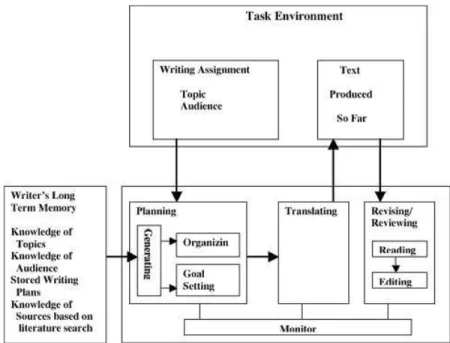
(22) STRATEGIES FOR PROVIDING FEEDBACK ON WRITING. 20. scaffolders of their own peers (Santoso, 2008). In its deepest sense, scaffolding is an instructional strategy that involves supporting novice learners by limiting the complexities of the context and gradually removing those limits as learners gain capabilities to cope with the full complexity of the context (Young, 1993). In the endeavor of scaffolding writers, teachers should create instructional opportunities that allow students to apply problem-solving solutions to their writing (Dorn & Soffos, 2001). The nature of the tasks the students are given plays an important role in this process. According to Van Der Stuyf (2002), scaffolds are temporary. As learners’ skills improve, scaffolds are gradually withdrawn until the learner can complete the task on his own. If learners have been appropriately scaffolded, as stated by Van Der Stuyf (2002), a consequence is that demand for teacher’s time decreases with time as learner’s competence increases. Process writing Process writing is an approach to the teaching of writing, which differs from the traditional product-oriented approach (Nunan 1999). While the latter focuses on models learners are supposed to imitate and in order to produce error-free writings, the former addresses the fact that students’ writings may not be perfect, but that they will approach perfection when they work on successive drafts of the same writing (Simpson 2009). This approach demands a great deal of participation and autonomy from the learner. The teacher’s role in process writing is to facilitate and support the students throughout the process (Gedera, D. S. P., 2011).. The first influential model of the process approach, which was proposed by Hayes and Flower (1980) is exemplified in figure 1..
(23) STRATEGIES FOR PROVIDING FEEDBACK ON WRITING. 21. Figure 1. Hayes’s and Flower’s approach to teaching writing. Retrieved from http://www.sciencedirect.com/science/article/pii/S0169814108001601. The flow diagram in this figure shows the mental behaviors of writers at work. The boxes represent processes and the arrows indicate information flow. This model has helped to identify writing sub-skills and to understand composition teaching holistically. For Hayes and Flower (1980) writing is not linear, but complex, multi-layered and reiterative, and allows for simultaneousness of various processes.. One trait that has fostered the strengthening of this model is that it has allowed for the inclusion of emotional and social influences on writers. In the graph, these influences are in the left; also, is the information flow is "double-headed," like the arrows that represent it. So, for example, editing can lead to more reading and to redesign the goals, which sends the writer back.
(24) STRATEGIES FOR PROVIDING FEEDBACK ON WRITING to those stored writing plans. As for the monitor, it seems to oversee all the steps of the process and plays the role of a quality-assurance mechanism (Goucher College, 2012). Figure 2 shows the model after Hayes’ revision in 1996, including the task component, the physical component and the individual environment, which include motivation and affect. These components play important roles in the development of the writing skill.. Figure 2. Hayes and Flower’s model after Hayes’s revision in 1996. Retrieved from http://www.um.es/tonosdigital/znum20/secciones/estudios-19-didactica_de_la_composicion.htm. 22.
(25) STRATEGIES FOR PROVIDING FEEDBACK ON WRITING. 23. Melgarejo (2010) considers that this approach focuses on the process, which aims at the final product. It helps students-writers to understand their own composing process, to develop strategies for prewriting, drafting, and rewriting and gives students time to write and rewrite; it highlights the process of revision and allows students to discover what they want to say as they write. It also provides students with timely feedback as they attempt to bring their expression closer and closer to intention, encouraging feedback from both the instructor and their peers. All the characteristics above fit the idea of seeing writing from a perspective in which the students feel that they are participating in a course of action. Consequently, they get involved in meaningful activities that guide them towards having a broader view of what writing is.. The process writing approach contains traits of the product-based approach since the learner has to bear in mind where he is heading. In fact, Nunan (1999) argues that there is no reason why a writing program should only focus on one approach overlooking the advantages of the other. This is the context in which the following identifiable stages that compose the process as stated by Meriwether (1997) are considered: 1.. Prewriting (selecting a topic and planning what to say). 2.. Writing (putting a draft version on paper). 3.. Revising (making changes to improve the writing). 4.. Evaluation (assessment of the written work). In this research study feedback is embedded in the revision stage. Web 2.0 tools: definition Screencasts.
(26) STRATEGIES FOR PROVIDING FEEDBACK ON WRITING. 24. The concept of "Web 2.0" was coined by Darcy DiNucci in her 1999 article "Fragmented Future.” She predicted that the Web we knew at that time was just an embryo of the Web to come. She said that the Web 2.0 was at the early stages. She thought that the Web would be understood as a transport mechanism. The concept was later popularized by O’Reilly (2005) in a conference held in San Francisco where he and Dale Doughtery, a Web expert, highlighted the fact that the Internet had become increasingly important. They saw a breaking point in the collapse of many dot.com companies for the beginning of a new era where the companies that survived the crisis of the nineties and the ones that had started to appear had a common trait: a call to action. They also used the term “Web 2.0” as opposed to “Web 1.0”.. An overview of the possibilities of Web 2.0 in language teaching were soon envisioned by Alm (2006) who identified the following: one, the possibility of creating a learning environment; two, relatedness, meaning the capacity of the tools to connect the learner with two learning communities, the learning community and the L2 community; three, competence, meaning the ability of the tool to find all types of teaching and learning materials suitable to the learners’ capacity; finally, he mentions the capacity of Web 2.0 tools to promote autonomy in the learners due to the way these tools encourage learners to be self-initiating, to solve problems independently and receive autonomy-supporting feedback.. Conole and Levizou (2010) report additional educational possibilities of Web 2.0 tools which are applicable in the entire educational field. The cases cited are, inquiry-based and exploratory learning, new forms of communication and collaboration, new forms of creativity, co-creation and production, and richer contextualization of learning. These cases are exactly what the possibilities that the Web 2.0 tool called screencast can offer, especially in the case of.
(27) STRATEGIES FOR PROVIDING FEEDBACK ON WRITING. 25. collaboration and richer contextualization of learning thanks to the use of video plus audio to record teacher commentary about the students’ writings. Screencasts for oral and written feedback Screencasts are digital recordings of the activity on one’s computer screen, accompanied by voiceover narration. Screen casting can be used by teachers in any class to respond to any assignment that is submitted in an electronic format, be it Word, text, PowerPoint, Excel, Website, or video (Thompson & Lee, 2012). These authors reported that experimentation with screencasts in traditional and online classes had provided new approaches to motivate students, and improve feedback. In their research study they found that student reaction to feedback was overwhelmingly positive and students preferred it to traditional written comments.. There are other research studies such as the aforementioned study conducted by Ice, Swan, Kupczynski, and Richardson (2008), which underpins the use of screencasts to provide feedback. These authors were optimistic about their findings related to the overwhelming student preference for audio feedback compared to traditional text based feedback. Also, a study conducted by Olesova, Weasenforth, Richardson, and Meloni (2011) draws conclusions that favor the use of screencasts to give feedback on students’ writing assignments. All these findings plus the previous personal experience of the researcher reinforced the idea of using these Web 2.0 tools in this research study. In our case, the screencast that was adopted was Jing, which is free and easy to use and its quality is excellent..
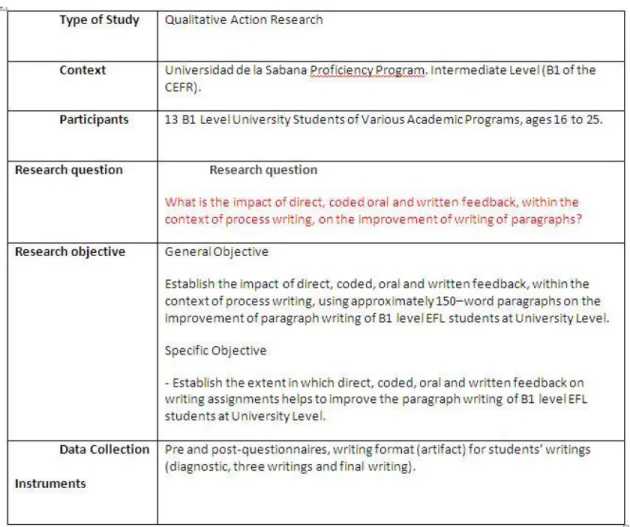
(28) STRATEGIES FOR PROVIDING FEEDBACK ON WRITING. CHAPTER 3: Research Design This chapter deals with the research design of this action research project. Table 1 shows a summary of this chapter. Table 1. Summary of the research project. Type of study The characteristics and purposes of the study definitely match the principles and characteristics of qualitative action research, as have been stated by many authors. The remarks. 26.
(29) STRATEGIES FOR PROVIDING FEEDBACK ON WRITING. 27. in this study are based on Kemmis and McTaggart (1992), who have summarized the principles of action research and some of them were commented on to make evident how this study matches those characteristics. 1. “Action research is an approach to improving education by changing it and learning from the consequences of changes. It is participatory: it is research through which people work towards the improvement of their own practices” (p. 22). In the case of this study, it is aimed at improving the way feedback on writing is being given to the subjects of the research study to help them improve their writing skills. Also, this research project can be useful to other practitioners interested in feedback on writing.. 2. “Action research develops through the self-reflective spiral: a spiral of cycles of planning, acting (implementing plans), observing (systematically), reflecting, and then re-planning, further implementation, observing and reflecting. ...” (p. 22). This is exactly what was done from the beginning of the research study to the end: needs analysis, reflection, implementation, data collection, and then again back to analysis and the implementation of changes throughout the process. 3. “Action research is a systematic learning process in which people act deliberately, though remaining open to surprises and responsive to opportunities. ...” ( p. 22). This point also has a strong ethical implication because the researcher cannot work based on preconceptions and assumptions but instead must work with a focus on the objective outcome of the research. 4. “Action research requires that people put their practices, ideas and assumptions about.
(30) STRATEGIES FOR PROVIDING FEEDBACK ON WRITING. 28. institutions to the test by gathering compelling evidence which could convince them that their previous practices, ideas and assumptions were wrong or wrong-headed” (p. 23). This is one of the most attractive traits of research: It leads people to change and continuously revise their pedagogical practices. 5. Action research is open-minded about what counts as evidence (or data) – it involves not only keeping records which describe what is happening as accurately as possible . . .. but also collecting and analyzing our own judgments, reactions and impressions about what is going on. It involves keeping a personal journal in which we record our progress and our reflections about two parallel sets of learnings: our learnings about the practices we are studying . . . and our learnings about the process (the practice) of studying them (p. 23). This was applied in the project through the use of instruments in which the students’ performance was registered along with the teacher’s reflections. 6. Action research starts small, by working through changes which even a single person can try, and works towards extensive changes – even critiques of ideas or institutions which in turn might lead to more general reforms of classroom, school or system-wide policies and practices (p. 24). Regarding this point, it is important to highlight the fact that in the case of this research study, it can have meaningful and deep influence on the teaching practices at the institution where the teacher-researcher performed the pedagogical intervention. Due to the complex nature of feedback on writing, through this project there can have significant impact on the researchers’.
(31) STRATEGIES FOR PROVIDING FEEDBACK ON WRITING own teaching practice in the field of writing; also on that of other teachers at the Universidad de la Sabana and even on other teachers given the fact that the university performs teacher development activities that are attended by English teachers of other institutions. To perform these teaching-development activities, the university relies on the research work of its own professors. And this is precisely one of the roles of action research according to Hult and Lennung (1980) and McKernan (1991) who state that action research contributes to a science of education. 7. “Action research starts with small cycles of planning, acting, observing and reflecting which can help to define issues, ideas and assumptions more clearly so that those involved can define more power questions for themselves as their work progresses” (p. 24). This is exactly what happens in the case of this study. Every time the project is worked on, new ideas and insights arise. 8. Action research allows us to build records of our improvements: records of our changing activities and practices, records of the changes in the language and discourse in which we describe, explain and justify our practices, records of the changes in the social relationships and forms of organization which characterize and constrain our practices, and records of the development in mastery of action research (p. 25). This is a valuable and rewarding trait of action research that can enrich the researcher’s pedagogical practice. Keeping record of the research work -as the process advances- can provide valuable new information. Noffke and Zeichner’s (1987) assertions about action research confirm this. They state that it improves teacher performance.. 29.
(32) STRATEGIES FOR PROVIDING FEEDBACK ON WRITING. 30. 9. “Action research allows us to give a reasoned justification of our educational work to others because we can show how the evidence we have gathered and the critical reflection we have done have helped us to create a developed, tested and critically-examined rationale for what we are doing” (p. 25). The capability of giving sound justification of the pedagogical work of the students’ progress has paramount importance for the pedagogical practice because it provides the teacher-researcher with stronger rationale for the work. Research objective To analyze the impact of direct, coded, oral and written feedback on the improvement of paragraph writing of the subjects of the research. Research question The question below originated when observing the low level of progress shown in the student’s writings at the end of the semester after having received detailed feedback from their teachers for at least three times during the course. What is the impact of direct, coded, oral and written feedback on the improvement of paragraph writing? Setting and participants The study was performed with a group of thirteen students from the Universidad de la Sabana, a private university located in the outskirts of Bogota, Colombia, in a town called Chia.. English plays an important role in the University curriculum and, in general terms, students are aware of the importance of English for their professional performance and this fact.
(33) STRATEGIES FOR PROVIDING FEEDBACK ON WRITING. 31. motivates them to study. The Department of Languages and Cultures is in charge of English as a. Foreign Language (EFL) program, which is composed of seven courses of the language. At the end of the seven courses the students must take an international exam such as IELTS of TOEFL. and to get ranked in the B2 level as a requirement that has to be fulfilled prior to taking their professional practice. The size of the class groups is between thirteen to thirty students who study different academic programs at the University. The research subjects were ranked in level CEF A2 at the beginning of the course. Instruments of data collection To collect data three types of instruments were used: a pre-questionnaire and a postquestionnaire, plus a blank Microsoft Word file necessary to gather samples of students’ written. production. There was also a diagnostic writing, a final writing and three in-course writings. These writings are composed of draft writing and a revised version of each of them. The teacher-. researcher provided students with feedback on each of the three writings, through the Microsoft Word files and the screencasts. All these instruments and artifacts provided the teacher-researcher. with abundant information from sources that could be contrasted with each other. Pre and Post Questionnaires The pre-questionnaire (see Appendix A: Pre Questionnaire) was designed to gather basic information about the students: ages, their major programs, age, years of study of English and some of their ideas about English language learning and the way they prefer to receive feedback on writing. The post-questionnaire (see Appendix B: Post-questionnaire) was intended to ascertain the students’ impressions about the feedback provided. The reason for using this instrument for.
(34) STRATEGIES FOR PROVIDING FEEDBACK ON WRITING. 32. this purpose is that surveys and questionnaires have proved to be a useful tool for collecting data about students’ perceptions, feelings or attitudes about skills, concepts, and other classroom issues (Phillips & Carr, 2010). The main focus of this instrument was students’ perceptions about the use of Jing. It was applied at the end of the pedagogical intervention. This way it was possible to assess the change in the students’ opinions and perceptions due to the strategy implemented in the feedback process. Writing format to gather samples of students’ written production Two written samples from each student were collected in each stage of the process writing. cycle. As the improvement of the students’ level of paragraph writing was the main purpose of feedback, and consequently of this study, it was necessary to gather evidence of the students’ progress throughout the process. The students’ writings provide the most important piece of evidence that could be collected. These samples (see Appendix G: Students’ Samples) were gathered when the students wrote the first draft of their paragraphs and also when they submitted. their final paragraphs. This is the process that was performed in every cycle of the process. Instrument design and validation process The questionnaires were designed from scratch. Multiple choice questions were included. to make it easy to answer it. At the beginning, a writing format and an outline format were piloted and they were eventually put aside. Basically, this piloting led to some changes in both questionnaires and to choosing a simple format for the writings without any parts or sections, just. a simple Word.doc file. As for the outline, Peter Elbow’s (1998) advice was followed, of not forcing students to make one. In this sense, the usefulness of making an outline was explained to the students; so, ultimately making an outline was not mandatory. For the use of screencasts, see. the end of chapter 2..
(35) STRATEGIES FOR PROVIDING FEEDBACK ON WRITING. 33. Researcher’s role The researcher´s role in this study was that of teacher-researcher and observer. These roles were useful to accomplish the goal of “to continually engage and delight in the learning process with the goal of improving our own practice, the learning environment for our students, and the greater school community” (Phillips & Carr, 2010, p. 35). Ethical considerations The principles of research ethics were taken into account. This means that the participation was voluntary, there was informed consent because the students knew exactly the type of research they were involved in, and all its implications; confidentiality and anonymity were kept (Cohen et al., 2007) and both teachers and students signed consent letters (Appendix. C:. Invitation and Informed Consent Form for English Language Teachers and Appendix D: Consent Form for Developing English Language Writers). Action plan (Appendix E. Action Plan) The format used for the action plan of the research study (see Appendix E.. Action. Plan) contains the timeline of all the activities developed throughout the research study. Validity To ensure the truthfulness of the data, which is at the core of the concept of validity, and that refers to whether the data gathered actually reflect the phenomena they claim to (Sagor 2004), the instruments were designed based on the research question. On the other hand, the carefulness with which the data was collected is due to the fact that validity has been linked to honesty and the disinterestedness or objectivity of the researcher (Cohen, Manion & Morrison, 2007/8) and also trustworthiness (Seale, 1999). All these.
(36) STRATEGIES FOR PROVIDING FEEDBACK ON WRITING. 34. characteristics have also been addressed through a careful design of the instruments. Another point is that external validity refers to the degree to which the results can be generalized to the wider population, cases or situations (Cohen at al. 2007/8). Patton (2001) addresses generalizability as one of the criteria for quality case studies. In the case of this study, external validity was accomplished because its findings could be applied to giving feedback on writing to students in other levels, elementary school and high school. However, it must be recognized that the application of the findings in other contexts should entail further research.. Reliability and triangulation Reliability refers to the accuracy of data. To ensure the reliability of the data, a sound triangulation strategy was implemented, including the use of the same instruments various times and applying here what was stated by Cohen et al. (2007) in the sense that triangulation can be “defined as the use of two or more methods of data collection in the study of some aspect of human behavior” (p. 141). Triangulation is typically a strategy for improving the validity and reliability of research or evaluation of findings (Golafshani, 2003) and it has been playing an important role in naturalistic and qualitative approaches to evaluation for the control of bias (Mathison, 1988) and to strengthen a study by combining methods (Patton, 2001). Barbour (1998) recognizes that in the case of data exceptions in qualitative research, they lead to modifications in the theories (Golafshani, 2003). In order to reach validity and reliability a validity procedure, which is what Creswell and Miller (2000) call triangulation, was used with the purpose of eliminating the researcher’s own perspectives (Denzin, 1978). In the case of this research study, the procedure consists of the use of various data collection instruments and artifacts mentioned under the title “instruments of data.
(37) STRATEGIES FOR PROVIDING FEEDBACK ON WRITING collection” in this chapter.. 35.
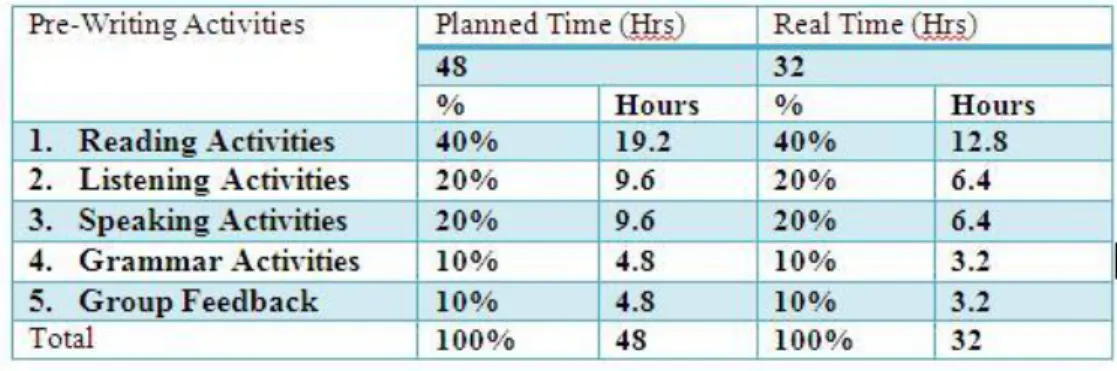
(38) STRATEGIES FOR PROVIDING FEEDBACK ON WRITING. 36. Chapter 4: Pedagogical Intervention and Implementation The pedagogical intervention contains a description of the underlying pedagogical approach of the process that was performed during the first semester of 2012. Also, the objectives of the pedagogical intervention are stated and a detailed description of each of the three cycles developed throughout the course is presented, with all its components including the process-writing activities that were done and the feedback provided by the teacher-researcher. The pedagogical intervention was performed over twelve weeks of the semester. Each week of the course was composed of one two-hour face-to-face session, one one-hour face-to-face session and one-hour asynchronous virtual session, plus the independent work activities. The writing of the first draft in every cycle took place mostly in the two-hour face-two-face session.. The following chart shows how time was distributed in the pre-writing activities of the pedagogical intervention: Table 2. Time allotted to activities in the pre-writing stage. The reason for not being able to devote as much time as planned for the intervention was that the administration of the Department of Languages and Cultures decided to change one.
(39) STRATEGIES FOR PROVIDING FEEDBACK ON WRITING. 37. weekly face-to-face hour to an online class. However, the time finally allotted was enough to perform the implementation. Pedagogical Approach The pedagogical approach that overarches this pedagogical intervention and implementation is the autonomous learning approach in the way it has been stated by Chan (2000), according to whom autonomous learners need to make significant decisions about what, how, and when to learn (Van Lier, 1996). In the process, they define their own agenda for learning (Little, 1994), which includes planning, pacing, monitoring, and evaluation of the learning process. The ways in which autonomous learners undertake their own learning in most cases are: (a) setting of own learning goals, (b) identifying and developing learning strategies to achieve such goals, (c) developing study plans, (d) identifying and selecting relevant resources and support, and (e) evaluating their own progress. In our case, the direct feedback supplied by the teacher played a key role since it scaffolded students by showing them their mistakes with codes and through using Jing to suggest ways to overcome their problems while leaving room for students’ autonomous work and decision making. For example, in the writing about technology (see Appendix G: Students’ Samples), the teacher asked students a question and provided them with a suggestion: “Are you sure you followed the paragraph structure studied in class? Check that and revise it before you submit your final writing”. Another remark that left room for the students’ initiative was one given to student 1 (see Appendix G: Students’ Samples) on the first writing about sentence structure exercises: “choose one, do it and send it to me”.. Then feedback provided by the teacher to each student followed these steps: (a) The teacher would read the whole writing..
(40) STRATEGIES FOR PROVIDING FEEDBACK ON WRITING. 38. (b) The teacher would write error conventions next to each mistake and would write brief observations at the end of the paper. (c) The teacher would start the oral feedback by giving general and encouraging remarks such as “You´re improving your level of writing”, as in the case of student 3 (see Appendix G: Students’ Samples). (d) Then the teacher would comment orally on the weaknesses of the writing and would give recommendations to improve those aspects. (e) In many cases the teacher would recommend the that student developed some exercises intended to help him improve his writing within a time limit. (f) Once the student submitted his final version, the teacher would assess the writing based on the criteria shown in the next section (Objectives) and would grade the student’s writing. Objectives The objectives were the following: students had to be able to write coherent and cohesive paragraphs, including all the components: a clear topic sentence, supporting ideas and a closing sentence. The grammar and the vocabulary had to be in accordance with their English level and the course objectives. Various pre-writing activities were performed with the idea of preparing students for the writing stage. Pre-writing and writing activities were done in a two-hour face-to-face session. Students wrote their first draft in this session in the resource center of the university and the teacher sent the feedback to them two days after the session and then had students do their final writings by themselves, usually at home or at the resource center of the university. Finally, the teacher gave feedback on the final writing. The same process was repeated in the.
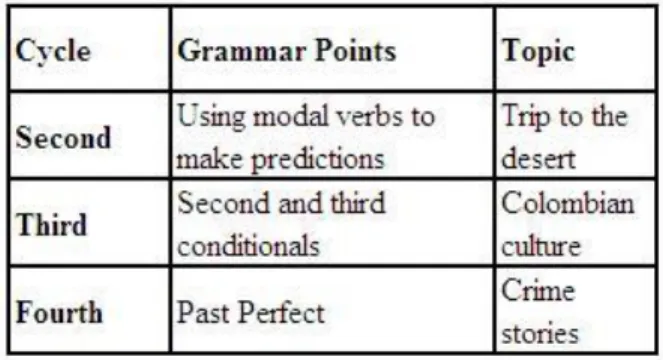
(41) STRATEGIES FOR PROVIDING FEEDBACK ON WRITING. 39. following weeks up to three cycles. Students developed a diagnostic and a final writings before and after the three cycles started.. How the cycles were performed will be exemplified with the first one: The first cycle began with pre-writing activities at the beginning of a two-hour session that started with a discussion about a piece of news. Both the teacher and the students had the opportunity to discuss in a free practice speaking activity. Next, the teacher introduced some of the vocabulary that could be useful for students to do their writings. Then the teacher explained about types of paragraphs, in special narrative paragraphs, and had students develop two exercises about paragraphs, where they had to identify the parts and to complete the missing parts of a paragraph. After that, students performed a short reading activity about the influence of technology in today’s world; this reading included some of the vocabulary taught at the beginning of the lesson. Finally students wrote a draft narrative paragraph on the topic “How has technology influenced my homeland?” Once finished, students uploaded their draft onto the systems platform of the University for the tto give them feedback as explained in the previous section. The process continued for two more cycles. The following table shows the grammar point, the types of paragraphs and the topics students worked on during the other two cycles:.
(42) STRATEGIES FOR PROVIDING FEEDBACK ON WRITING. 40. Table 3. Topics, types of paragraphs and grammar points in each cycle. The way a face-to-face session was given is presented in Appendix F: Lesson Planner, which contains the corresponding lesson plan..
(43) STRATEGIES FOR PROVIDING FEEDBACK ON WRITING. 41. Chapter 5: Data Analysis and Findings Data Analysis Methods A blend of content analysis and grounded theory was used to reduce the amount of written data to make it more manageable and understandable (Cohen, Manion & Morrison, 2007/8) and to facilitate the building of a valid theory from the data analyzed. Content analysis was used because it entails a systematic set of procedures for the rigorous analysis, examination and verification of the contents of written data (Cohen, Manion & Morrison, 2007/8). The units of analysis were taken (words, phrases or sentences) out of samples of texts, and were coded and organized into meaningful categories. Grounded theory is an inductive process that helped to create theory; this is because theories emerge from the data gathered and analyzed systematically through constant comparison and their patterns and theories are embedded within the data. Theory generation is the outcome resulting from establishing natural connections systematically using methodology of theoretical sampling, coding, constant comparison and the identification of a core variable (Cohen, Manion & Morrison, 2007/8). Content analysis was used as a context for acquiring data and grounded theory as an overall method for the same objectives (Suddaby, 2006). This approach actually did help to reduce the amount of written data collected which is its objective as stated by Cohen, Manion and Morrison, (2007) and to facilitate building a sound theory based on the analysis of these data which is actually the strength of grounded theory..
(44) STRATEGIES FOR PROVIDING FEEDBACK ON WRITING. 42. Data Management Students filled out the pre-questionnaire and provided the draft and revised version of the three writing tasks; also, they had to hand in a final version of their writings based on the teacher’s feedback and, finally, they had to fill out the post-questionnaire. The students did all the writings in class sessions and the teacher was always present. In the case of the pre and post-questionnaires, the researcher put them all in the same MS Word file to have easy access to each of the students’ statements. To maintain participants’ anonymity, each participant was assigned a number. Data Reduction Once all the data had been collected, the grounded theory principles (Corbin & Strauss, 2008) started to be implemented. In this phase data was selected, simplified and transformed to suit the subject of the research study. The sampling process followed was the one suggested by Corbin and Straus (2008) according to whom it is necessary to detect the nature of the situation being studied. With the collected data smaller units are organized including lines, paragraphs or sections. Once they are coded, a new understanding of the situation is produced in which similarities and differences are identified. Grounded theory entails three types of coding. processes: open, axial and selective coding. See Appendix H:. Data Reduction.. Open Coding Open coding was performed to explore the data and to identify units of analysis to code for meanings, feelings, actions, events and so on. The data was coded up, creating new codes and categories and subcategories where necessary, to integrate codes where relevant until the coding was complete (Cohen et al., 2007/8)..
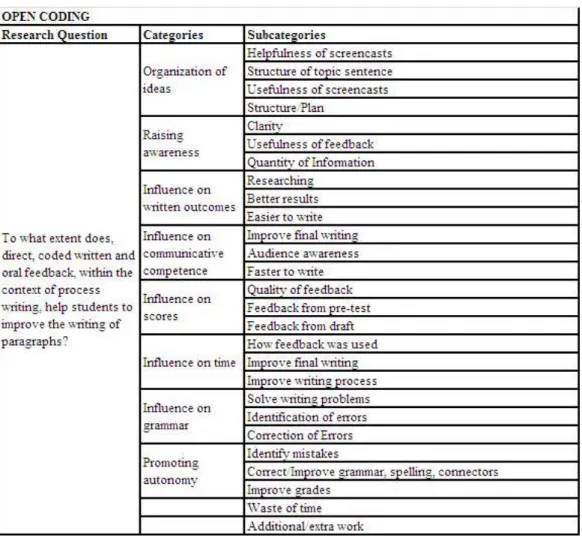
(45) STRATEGIES FOR PROVIDING FEEDBACK ON WRITING To achieve this, language was collected using the research tools of the study with the idea in mind of coding the data to identify frequencies in which the data appeared. A relationship between the research question and the answers given by the subjects of the study was established. Color-coding was used to perform this process. The following chart shows the relationship between the research question and the categories and subcategories obtained after the open coding process:. Table 4. Open coding. 43.
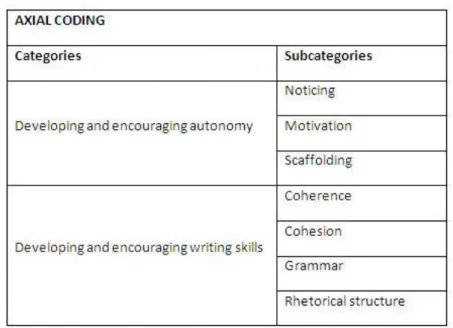
(46) STRATEGIES FOR PROVIDING FEEDBACK ON WRITING. 44. Axial Coding This stage was performed with the objective of reducing data in order to make it more meaningful and manageable. To do so, links: connections, comparisons and triangulations between the codes and the categories (Ezzy, 2002) shown above were made since the essence of axial coding is the interconnectedness of categories (Cresswell 1998); this process permitted the integration of the categories into higher level categories. This process ultimately led us to identify a focus and to give validity and reliability to the research study. The chart below shows the outcome obtained after performing this process, which let the teacherresearcher find out students' feelings and opinions about the impact of the feedback received from the teacher on the development of their writing skills.. Table 5. Axial coding. The difference between open and axial coding performed is evident at a first glance due to the noticeably different amount of information between the two. This is a consequence of having.
(47) STRATEGIES FOR PROVIDING FEEDBACK ON WRITING. 45. grouped the data more logically; this step permitted the teacher-researcher to reduce the data and thus make it more manageable. The two main categories this process brought were: Developing and encouraging autonomy Developing and encouraging writing skills Selective Coding In selective coding a core code was identified and the relationship between this core code and other codes was made evident, as suggested by Ezzy (2002). The outcome was compared with theory. A ‘‘story line’’ was identified. The following table shows the core category. Core Category Table 6. Core category. The two components of the core category are explained in depth below, and the story line can be summarized thus:. Feedback on writing is a tool to enhance writing because it increases motivation and also leads to scaffolding and this improvement can be evidenced in grammar, coherence and cohesion..
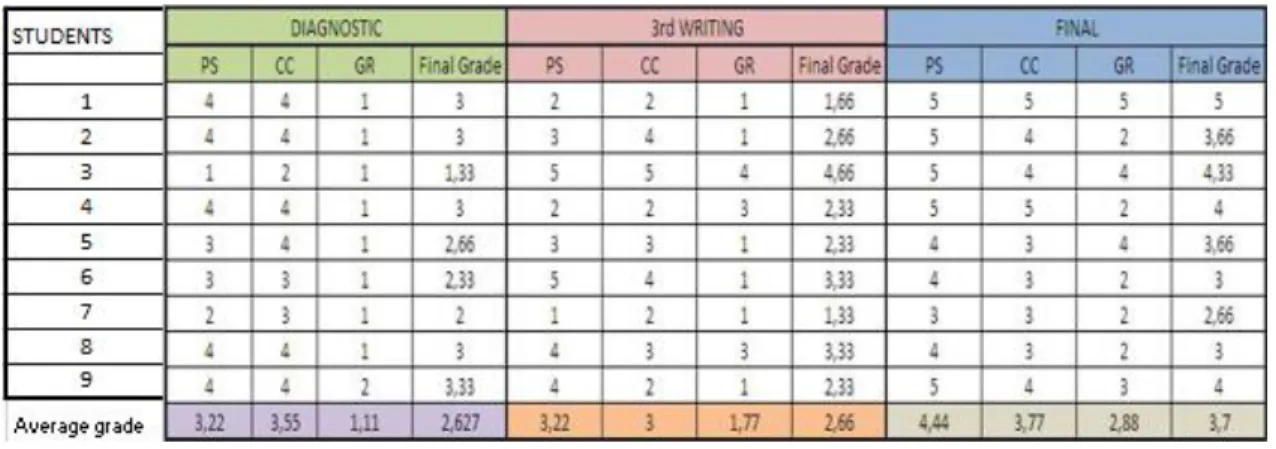
(48) STRATEGIES FOR PROVIDING FEEDBACK ON WRITING. 46. The process that led to this core category started from a classroom situation related to feedback on writing that the teacher-researcher had been dealing with for years but had never had the opportunity to tackle formally through a research study. Due to the fact that students at level B1 showed difficulty to improve their level of writing despite the efforts of their English teachers to provide them with detailed and time-consuming feedback, the teacher-researcher decided to undergo a research work study intended to try a feedback methodology he had been working on for various years. The teacher-researcher proposed that direct, coded written and oral feedback was an effective strategy for the teaching of writing paragraphs. The categories found show how coherence, cohesion, grammar and rhetorical structure are improved through this type of feedback which promotes motivation, noticing, scaffolding and autonomy. All the research work is in line with the state of the art theory about feedback on writing such as that proposed by Ferris (2003) and McGarrell (2011). See chapter 2, theoretical framework. Evidence of the effectiveness of the feedback given is shown in Appendix H: Data Reduction, which contains samples of students’ writings and feedback provided by the teacher-researcher (writings 1 and 2) and a different experienced teacher who assessed the other writings (diagnostic, writing 3 and final writing). First Part of the Core Category: Developing and Encouraging Autonomy The way in which autonomy was fostered is shown through a number of reasons given by students in the instruments used. So, concepts such as motivation, independent work, writing improvement, awareness of mistakes, motivation, usefulness of feedback, and personalization of feedback were encountered. These are only ways of how and why autonomy was fostered. For.
(49) STRATEGIES FOR PROVIDING FEEDBACK ON WRITING. 47. this reason the analysis made does not delve deeply into each one of them but they are only treated up to the extent where they serve the purpose of highlighting the way in which autonomy was fostered. The teacher-researcher of this study had the opportunity to witness the process of students becoming more independent writers. According to Hyland (2000) “teachers should encourage students to take more responsibility for their own writing, by allowing them to make their own decisions about their use and sources of feedback” (p. 33). And this is exactly what happened in this research study. In all of the feedback given to students on the writings, the teacher-researcher provided guidance on what students needed to work on to improve their writings.. There are ways in which the guidance provided to students left room for students’ own initiative in choosing additional feedback sources on their own, and other sources of information to further the feedback given by the teacher. The first form was teacher’s continuous reminding students of the possibility of having additional feedback in the language resource center of the university. All students at the university have access to this service. On the other hand, the teacher usually told students about their errors and gave them information about additional sources they could access to improve their drafts. These reminders played the role of scaffolds that were provided to students until they needed them (Van Der Stuyf, 2002). Scaffolding is precisely one of the categories that emerged in the axial coding. Here are two examples of how the teacher left room for students’ own initiative to search for additional feedback sources: At the bottom of the MS Word file in which student 9 had written her draft of the writing. about a trip to the desert and was submitted to the teacher on April 19th 2012, the teacher wrote.. Interesting story! Do some sentence structure exercises. Make your own vocabulary list.
Figure

+7

Documento similar
ABSTRACT Transformation of the Specialized Knowledge of Future Primary Teachers on Fraction Division
From the phenomenology associated with contexts (C.1), for the statement of task T 1.1 , the future teachers use their knowledge of situations of the personal
In the preparation of this report, the Venice Commission has relied on the comments of its rapporteurs; its recently adopted Report on Respect for Democracy, Human Rights and the Rule
The draft amendments do not operate any more a distinction between different states of emergency; they repeal articles 120, 121and 122 and make it possible for the President to
We seek to characterize the transport in a time-dependent flow by identifying coherent structures in phase space, in particular, hyperbolic points and the associated unstable and
The program is based on the following pillars: (a) students become the main agents of their learning by constructing their own knowledge; (b) the teacher must be the guide to
In the previous sections we have shown how astronomical alignments and solar hierophanies – with a common interest in the solstices − were substantiated in the
Díaz Soto has raised the point about banning religious garb in the ―public space.‖ He states, ―for example, in most Spanish public Universities, there is a Catholic chapel
teriza por dos factores, que vienen a determinar la especial responsabilidad que incumbe al Tribunal de Justicia en esta materia: de un lado, la inexistencia, en el
