FACULTY OF BUSINESS AND ECONOMICS
DEPARTAMENT OF ECONOMY AND BUSINESS ADMINISTRATION PhD PROGRAMME IN BUSINESS ECONOMICS
DOCTORAL DISSERTATION
INTERNATIONAL DOCTOR MENTION
GOVERNANCE AND FINANCIAL VULNERABILITY OF
NONPROFIT ORGANIZATIONS: AN ANALYSIS OF THE
NGDOS FROM SPAIN AND THE UNITED KINGDOM
PhD Candidate: Íñigo García Rodríguez
Supervisors:
Dr. Pablo de Andrés Alonso
Dr. M. Elena Romero Merino
FACULTAD DE CIENCIAS ECONÓMICAS Y EMPRESARIALES
DEPARTAMENTO DE ECONOMÍA Y ADMINISTRACIÓN DE EMPRESAS DOCTORADO INTERUNIVERSITARIO EN ECONOMÍA DE LA EMPRESA
TESIS DOCTORAL
MENCIÓN DOCTORADO INTERNACIONAL
GOBIERNO Y VULNERABILIDAD FINANCIERA DE LAS
ENTIDADES NO LUCRATIVAS: UN ANÁLISIS DE LAS ONGDS
DE ESPAÑA Y REINO UNIDO
Doctorando:
Íñigo García Rodríguez
Directores:
Dr. D. Pablo de Andrés Alonso
Dr. D.ª M. Elena Romero Merino
DOCTORAL DISSERTATION:
GOVERNANCE AND FINANCIAL VULNERABILITY OF
NONPROFIT ORGANIZATIONS: AN ANALYSIS OF THE
NGDOS FROM SPAIN AND THE UNITED KINGDOM
GOBIERNO Y VULNERABILIDAD FINANCIERA DE LAS
ENTIDADES NO LUCRATIVAS: UN ANÁLISIS DE LAS ONGDS
DE ESPAÑA Y REINO UNIDO
PhD Candidate
Íñigo García Rodríguez
Supervisors:
Dr. Pablo de Andrés Alonso
(Autonoma University of Madrid)
Dr. M. Elena Romero Merino
He de comenzar esta tesis doctoral agradeciendo a todas aquellas personas que han permitido que, más allá de momentos puntuales, recuerde esta etapa como un periodo de aprendizaje, apertura y crecimiento.
En primer lugar, gracias a mis Directores de Tesis, los doctores D. Pablo de Andrés Alonso y D.ª M. Elena Romero Merino. Sin ellos, el resultado de esta tesis doctoral hubiera sido sin duda diferente. A Pablo, por su acogida en Madrid, por sus ideas, por todo lo enseñado, en todos los aspectos. A Elena, por su empatía, su trato cercano y su organización. Un auténtico placer haber sido su primer doctorando. Nunca les estaré lo suficientemente agradecido.
Gracias al Ministerio de Economía y Competitividad por el contrato predoctoral (BES-2013-063669) y a los proyectos de investigación del Ministerio de Economía y Competitividad (ECO2012-32554) y de la Comunidad de Madrid (S2015/HUM-3353). Todo ello me ha permitido una sostenibilidad económica que me ha facilitado la realización de estancias de investigación y la asistencia a congresos que, en su conjunto, han mejorado notablemente esta tesis.
Gracias a la Vrije Universiteit Brussel, a Queen Mary University of London, a la Universidad de Valladolid, y, en particular, a Marc Jegers, Almudena Sevilla, Valentín Azofra y Gabriel de la Fuente. Dichas estancias me aportaron conocimientos, relaciones y experiencias realmente valiosos.
Gracias a la Universidad Autónoma de Madrid, en particular al Departamento de Financiación e Investigación Comercial. El mero hecho de haber sido la institución donde he impartido mis primeras clases universitarias ya hace que siempre le vaya a guardar un especial cariño. Sin duda, una experiencia enriquecedora la vivida durante estos años.
durante todo este periodo. Aun sabiendo que en estas líneas no puedo incluir a todos los que debería, he de particularizar. Gracias a Marcos, tanto por su ayuda e involucración en la etapa final de esta tesis como por haberme permitido la posibilidad de incorporarme a una línea de investigación que me apasiona tanto como esta tesis doctoral. Gracias también a Juan, por su preocupación, siempre más allá de su responsabilidad como coordinador del máster y del programa de doctorado, y por sus siempre motivadoras palabras. Y, por supuesto, gracias a Begoña, por haberme dado ese empujón necesario para iniciar esta aventura.
Cómo no, gracias a mis compañeros doctorandos del departamento por tantos momentos de necesaria desconexión, pero también de colaboración. Incluyo aquí también a los del programa interuniversitario, con los que he compartido grandes experiencias en Salamanca y en distintos congresos. En particular, Clara y Paula, gracias por estar presentes tanto en este párrafo como en el siguiente.
A los amigos que han ido llegando a mi vida a lo largo de los años, gracias por una amistad que considero imprescindible. Siempre es un placer disfrutar siquiera unos minutos de la compañía de cada uno de ellos. Referencia especial a todos con los que he tenido la suerte de compartir horas y horas de música, vocal e instrumental.
Gracias a mis padres y hermanos por su apoyo, silencioso pero notorio, constante y fundamental. Por supuesto, gracias también al resto de mi familia, de la que me siento verdaderamente orgulloso, por su interés y preocupación. Mención particular se merece la experiencia zambiana, pues permite conocer la verdadera realidad en el terreno y relativizar toda nuestra investigación y, en definitiva, nuestra vida.
Por último, gracias Lucía, por estar ahí, siempre, día tras día, incondicionalmente. Gracias, por no dejar de enseñarme (como maestra que eres) a disfrutar de cada momento y a intentar ser mejor persona.
TABLE OF CONTENTS
–
INTRODUCCIÓN ... 1
INTRODUCTION ... 13
CHAPTER 1: GOOD GOVERNANCE IN PHILANTHROPY AND NONPROFIT ORGANIZATIONS ... 25
1. INTRODUCTION ... 28
2. DEFINING NONPROFIT CORPORATE GOVERNANCE AND GOVERNANCE MECHANISMS ... 30
3. THE NORMATIVE APPROACH TO NONPROFIT GOVERNANCE ... 33
4. THE RESOURCE DEPENDENCY APPROACH TO NONPROFIT CORPORATE GOVERNANCE ... 35
5. THE AGENCY THEORY APPROACH TO THE NONPROFIT CORPORATE GOVERNANCE ... 36
6. TOWARDS AN EXTENDED MODEL OF NONPROFIT CORPORATE GOVERNANCE ... 40
7. CONCLUSIONS AND FUTURE LINES OF RESEARCH ON NONPROFIT CORPORATE GOVERNANCE ... 43
CHAPTER 2: THE DANGERS OF ASSESSING THE FINANCIAL VULNERABILITY OF NONPROFIT ORGANIZATIONS USING TRADITIONAL MEASURES: THE CASE OF THE NON-GOVERNMENTAL DEVELOPMENT ORGANIZATIONS IN THE UNITED KINGDOM ... 45
1. INTRODUCTION ... 48
2. FINANCIAL VULNERABILITY IN THE NONPROFIT SECTOR ... 49
3. SAMPLE AND METHODOLOGY ... 51
4. DESCRIPTIVE RESULTS ... 52
5. EXPLANATORY RESULTS ... 55
6. DISCUSSION OF RESULTS AND PROPOSED IMPROVEMENTS ... 58
7. CONCLUSIONS ... 62
CHAPTER 3: DISENTANGLING THE FINANCIAL VULNERABILITY OF NONPROFIT ORGANIZATIONS... 65
1. INTRODUCTION ... 68
3.2. Second Dimension: Leverage Vulnerability ... 79
3.3. Third Dimension: Liquidity Vulnerability ... 80
3.4. A Comprehensive Model ... 80
4. EMPIRICAL APPLICATION ... 81
4.1. Analysis of Traditional Variables ... 81
4.2. Analysis of the Three-Dimensional Model ... 83
4.3. Comparison between the Assessments of NPOs’ Financial Vulnerability Performed with Traditional Measures and our Multidimensional Proposal ... 88
5. CONCLUSIONS ... 91
CHAPTER 4: THE ROLE OF BOARDS IN THE FINANCIAL VULNERABILITY OF NONPROFIT ORGANIZATIONS ... 95
1. INTRODUCTION ... 98
2. LITERATURE REVIEW AND HYPOTHESES DEVELOPMENT ... 100
2.1. Board Structure ... 101
2.2. Board Experience and Education ... 103
3. SAMPLE,VARIABLES AND METHODOLOGY ... 104
3.1. Sample ... 104
3.2. Variables ... 105
3.3. Methodology and Model ... 108
4. RESULTS ... 109
4.1. Descriptive Results ... 109
4.2. Explanatory Results ... 113
5. DISCUSSION AND CONCLUSIONS ... 120
GENERAL CONCLUSIONS ... 123
CONCLUSIONES GENERALES ... 137
Table 2.1. Descriptive Statistics for Years 2008-2012 ... 54
Table 2.2. Estimations of Logit Analysis. Dependent Variable: Reduction in Net Assets over Three Years ... 57
Table 2.3. Estimations of Logit Analysis. Dependent Variable: Reduction in Program Expenses over Three Years ... 58
Table 3.1. Definitions of Financial Vulnerability in the Nonprofit Literature ... 75
Table 3.2. Variation of Net Assets ... 84
Table 3.3. Ratio of Total Assets to Total Debt ... 85
Table 3.4. Ratio of Current Assets to Short-term Debt ... 86
Table 3.5. Number of NPOs with Financial Vulnerability Problems. Years 2011 and 2012 ... 87
Table 3.6. Comparison of Vulnerable NPOs according to the Traditional Variables and the Multidimensional Model ... 89
Table 4.1. Variables ... 107
Table 4.2. Descriptive Statistics ... 110
Table 4.3. Comparison between Vulnerable and No Vulnerable NGDOs and Mann Whitney Test ... 112
Table 4.4. Bivariate Correlation Matrix ... 114
Table 4.5. Estimations of Logit Analysis. Dependent Variable: FINVULN ... 116
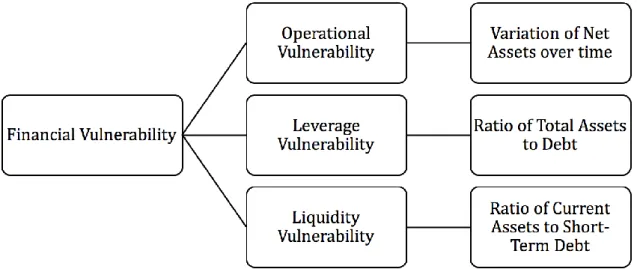
Figure 3.1. Three-dimensional model of financial vulnerability ... 77 Figure 3.2. Number of financially vulnerable NPOs according to the traditional
variables 2008-2011 ... 82 Figure 3.3. Number of financially vulnerable NPOs according to the traditional
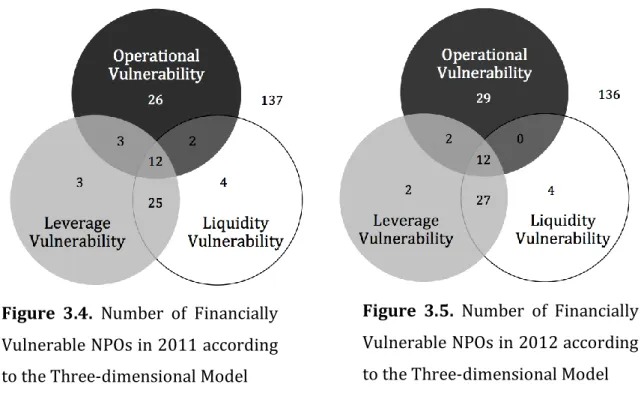
variables 2009-2012 ... 82 Figure 3.4. Number of financially vulnerable NPOs in 2011 according to the
three-dimensional model ... 88 Figure 3.5. Number of financially vulnerable NPOs in 2012 according to the
“Cuando creíamos que teníamos todas las respuestas, de pronto, cambiaron todas las preguntas”
Mario Benedetti
INTRODUCCIÓN
que han soportado las arcas públicas) como de las donaciones privadas (como consecuencia de las dificultades económicas que han atravesado muchos hogares familiares durante este periodo) han puesto en peligro la continuidad de las ENLs. De hecho, son numerosas las organizaciones que han cesado su actividad como consecuencia de una inadecuada financiación (como ejemplos, la Fundación Desarrollo Sostenido [FUNDESO1], la Confederación de Minusválidos Físicos de
Castilla-La Mancha [COCEMFE2], o la Asociación Emaús de Altea3).
Es precisamente en este contexto en dónde se enmarca la presente tesis doctoral al abordar la interrelación entre la estructura financiera de estas organizaciones, su estructura de gobierno corporativo materializada en el consejo (board of trustees en terminología anglosajona) y su probabilidad de quiebra medida a través de su vulnerabilidad financiera. El estudio de los factores que atañen a la quiebra y al financial distress de las organizaciones del sector no lucrativo constituye ya un auténtico reto en sí mismo porque, entre otras dificultades, la información sobre las ENLs desaparecidas no se suele transmitir de manera automática a los registros pertinentes (Hager, 2001). Es por ello que la literatura sobre el tercer sector ha optado por el estudio indirecto de la quiebra a través de lo que se ha denominado vulnerabilidad financiera, entendida esta como la “probabilidad de que la organización reduzca su oferta de servicios cuando experimente un shock financiero” (Tuckman & Chang, 1991: 445). No obstante, aunque existe cierto consenso en la definición del concepto de vulnerabilidad financiera, la manera de materializarlo está aún lejos de ser comúnmente aceptada. Si bien la literatura ha testado diversas medidas hasta el momento, las variables y modelos utilizados tradicionalmente como predictores de la situación de vulnerabilidad financiera de las ENLs no parecen ser muy eficaces (Jegers, 2008). No obstante, la investigación se encuentra aún en ciernes analizándose, entre los mecanismos para evitar la vulnerabilidad financiera (y en última instancia de quiebra), la estructura de gobierno de estas organizaciones. En concreto, cabe destacar el papel del órgano
de gobierno interno por excelencia, esto es, el consejo. El papel del consejo en las ENLs resulta especialmente relevante dado, no lo olvidemos, el carácter no lucrativo de estas organizaciones. La restricción legal de no distribución de beneficios determina la inexistencia de derechos residuales económicos y, por tanto, de propietarios reales con incentivos a ejercer labores de control y supervisión. En ausencia de propietarios, el consejo se convierte en el órgano central de gobierno de estas organizaciones. Es por ello que uno de los objetivos de la presente tesis doctoral sea analizar el papel del consejo, como principal órgano de gobierno de las ENLs, sobre su grado de vulnerabilidad financiera.
El objeto de nuestra tesis requiere enmarcarla dentro de un contexto, teórico y social. De acuerdo con Holmstrom y Tirole (1989), cualquier planteamiento de un marco económico coherente para explicar una organización, requiere esclarecer por qué existen dichas organizaciones (la teorías o teorías que explican su existencia) y cuál es su ámbito de actuación, esto es, sus límites. Así, en el caso que aquí nos ocupa, antes de profundizar en la relación entre el consejo y la vulnerabilidad financiera de las ENLs, procederemos a describir brevemente las teorías que explican la existencia de estas organizaciones y el papel que este sector ocupa en la sociedad actual.
Con respecto a la existencia del tercer sector en las sociedades modernas son varias las teorías que justifican su existencia. Siguiendo la agrupación realizada por Romero Merino (2007) podemos encontrar dos grandes grupos de teorías, desde el lado de la demanda (considerando las motivaciones de agentes externos, tales como donantes, administraciones públicas, beneficiarios, etc.) y desde el lado de la oferta (teniendo presentes las motivaciones de los agentes internos de la propia organización).
su parte, la teoría del fallo del Voluntariado (Salamon, 1987a, 1987b) señala que la aparición de las ENLs es previa a la acción gubernamental, y que estas entidades perviven cuando la realización de las mismas actividades por los poderes públicos es menos eficiente que cuando son efectuadas por las propias ENLs. Finalmente, de acuerdo a la teoría del fallo contractual, la ausencia de información perfecta para todos los partícipes, la racionalidad limitada de los mismos y la imposibilidad de diseñar contratos completos, provocan que la asignación de recursos no sea siempre lo más eficiente posible. En este contexto, la restricción de no distribución de las ENLs (Hansmann, 1980) parecería limitar la aparición de los problemas del oportunismo precontractual (selección adversa) y postcontractual (riesgo moral).
Con respecto a los límites y el ámbito que el sector no lucrativo ocupa en la sociedad actual, es necesario comenzar acotando el concepto de ENL. Basándonos en la caracterización que de estas entidades han realizado numerosos estudios llevados a cabo por la Universidad Johns Hopkins (Anheier & Salamon, 1998; Ruiz Olabuénaga, 2000, 2001), definimos a las ENLs como aquellas entidades jurídicas constituidas legalmente, privadas, sin ánimo de lucro, que poseen una gestión autónoma y que cuentan con un nivel significativo de participación voluntaria. En relación con su papel en las sociedades actuales, contrasta la creciente relevancia del sector con la ausencia de datos concretos que se presenten de manera sistemática. Así, la cuantificación del sector dista mucho de ser unánime. Para el caso concreto de España, en 2002 el número de organizaciones de este sector se elevaba a 362.654, el número de voluntarios era de 4,2 millones de personas, el número de empleos equivalentes a jornada completa ascendía a 692.336, y el gasto total suponía el 4,7% del Producto Interior Bruto (PIB), sin incluir a los voluntarios, o el 6,4% incluyendo a estos últimos (Ruiz Olabuénaga, 2006). Años más tarde, la importancia del tercer sector, considerado en sentido amplio, se eleva hasta el 10% del PIB (Gimeno, 2005). En todo caso, estos estudios coinciden en la creciente importancia económica del sector no lucrativo en conjunto durante las últimas tres décadas.
Cultura e Integración Social4, Anesvad5, la Fundación Trías Fargas6, la Asociación
Nadia Nerea7 o L’Arche de Zoé8). Tales escándalos han suscitado inquietud social,
directivos al mismo tiempo que asesor, contribuyendo a la elaboración de la estrategia de la organización. Consideramos que un correcto desempeño de tales roles, permite al consejo afrontar con garantías los efectos de un shock económico como el que ha supuesto la reciente crisis financiera y económica para el sector no lucrativo (altamente dependiente de subvenciones públicas y donaciones privadas voluntarias) y evitar situaciones de vulnerabilidad financiera o, en última instancia, de quiebra.
investigación en estas organizaciones es que, como consecuencia de su papel como actores de la AOD, las ONGDs han padecido de forma especialmente significativa el impacto de la crisis en España. Así, entre 2009 y 2015 la AOD española descendió en torno al 70% de su cuantía, pasando de suponer el 0,46% de la Renta Nacional Bruta al 0,13% (Organización para la Cooperación y el Desarrollo Económicos [OECD], 2016), lejos del objetivo del 0,7%. Por último, en este subsector, cobran gran importancia las coordinadoras nacionales de ONGDs debido a que agrupan a las entidades más importantes, inciden en la divulgación de buenas prácticas y, a nivel práctico, permiten acotar la muestra. A nivel europeo existe una confederación de estas coordinadoras (CONCORDE), que agrupa a las 28 plataformas nacionales. En nuestro caso, a lo largo de la investigación empírica, hemos acudido a la CONGDE y a Bond en Reino Unido. En el caso español, es especialmente relevante la actividad dinamizadora que la CONGDE ha adoptado en los últimos años, promulgando un Código de Conducta de obligado cumplimiento para sus miembros y con el diseño de unos indicadores de transparencia y buen gobierno que inciden en la responsabilidad que estas organizaciones tienen frente a la sociedad, pues sus fondos provienen fundamentalmente de donaciones privadas y de subvenciones públicas. En conjunto, estas herramientas de autorregulación del sector nos han permitido un mejor acceso a datos sobre composición del consejo de las entidades, así como a su información económico-financiera. Todas estas razones justifican, desde nuestro punto de vista, el análisis de las ONGDs en términos de gobierno corporativo y vulnerabilidad financiera.
“When we thought we had all the answers, suddenly, all the questions changed”
Mario Benedetti
INTRODUCTION
during this period) have jeopardize the continuity of the NPOs. In fact, numerous organizations have ceased their activity as a result of an inadequate funding (as example, Fundación Desarrollo Sostenido [FUNDESO9], Confederación de
Minusválidos Físicos de Castilla-La Mancha [COCEMFE10], or Association Emaús de
Altea11).
It is precisely in this context where this PhD thesis is framed, as it addresses the interrelationship between the financial structure of these organizations, their corporate governance structure embodied in the board of trustees and their probability of bankruptcy measured through their financial vulnerability. The study of the factors concerning bankruptcy and financial distress of NPOs is already a real challenge in itself because, among other difficulties, information on defunct NPOs is not often automatically transferred to the appropriate registers (Hager, 2001). This is why the literature on the third sector has opted for the indirect study of bankruptcy through what has been called financial vulnerability, understood as “the likelihood that the organization cuts back its service offerings immediately when it experiences a financial shock" (Tuckman & Chang, 1991: 445). Nevertheless, although there is some consensus referring to the concept of financial vulnerability, its operationalization is still far from being commonly accepted. Despite the literature has tested various measures to date, the variables and models traditionally used as predictors of the financial vulnerability of NPOs do not appear to be very effective (Jegers, 2008). However, the research is still in a preliminary stage, as it analyzes, among the mechanisms to avoid the financial vulnerability (and ultimately the bankruptcy), the governance structure of these organizations. In particular, it is important to highlight the role of the internal governing body par excellence, that is, the board of trustees. The role of the board in NPOs is especially relevant given (we should not forget it) the nonprofit nature of these organizations. The legal restriction of the non-distribution of profits determines the lack of residual economic rights and, therefore, of real owners with
incentives to exercise control and supervision. In the absence of owners, the board becomes the central governing body of these organizations. This is why one of the objectives of this doctoral thesis is to analyze the role of the board, as the main governing body of the NPOs, on its level of financial vulnerability.
The object of our thesis requires framing it within a theoretical and social context. According to Holmstrom and Tirole (1989), any approach of a coherent economic framework to explain an organization requires elucidating why these organizations exist (the theory or theories that explain their existence) and their scope of action, that is, their limits. Thus, in our case, before going deeper into the relationship between the board and the financial vulnerability of NPOs, we will briefly describe the theories that explain the existence of these organizations and the role that this sector occupies in the current society.
With regard to the existence of the third sector in modern societies, there are several theories that justify its existence. Following the classification proposed by Romero Merino (2007), we can find two large groups of theories, from the demand side (considering the motivations of external agents, such as donors, public administrations, beneficiaries, etc.) and from the supply side (taking into account the motivations of the internal agents of the organization itself).
non-distribution constraint of NPOs (Hansmann, 1980) would seem to limit the occurrence of the problems of pre-contractual (adverse selection) and post-contractual opportunism (moral hazard).
NPOs was 362,654 in 2002, the number of volunteers was 4.2 million, the number of full-time equivalent jobs was 692,336, and the total expenditure represented 4.7% of Gross Domestic Product (GDP), not including volunteers, or 6.4% when including them (Ruiz Olabuénaga, 2006). Some years later, the importance of the third sector, broadly considered, amounts to 10% of GDP (Gimeno, 2005). In any case, these studies agree on the growing economic importance of the nonprofit sector over the last three decades.
This rise in the volume of resources (both human and financial) managed by NPOs has generated an increase in the society's concern for the correct use of such resources, as well as for the search for mechanisms to ensure the efficient use of them. For years, it was thought that the essential characteristics of these organizations –the lack of for-profit aim, the non-distribution constraint, the explicit support of public administrations and the voluntary nature of many of their workers– turned NPOs into agents without risk of suboptimal or opportunistic behavior. However, the reality has shown that the sector is not exempt from these problems (examples of these problems are some of the recent scandals involving NPOs such as Fundación Deporte, Cultura e Integración Social12,
Anesvad13, Fundación Trías Fargas14, Asociación Nadia Nerea15 or L’Arche de
Zoé16). Such scandals have raised social concerns, which has accentuated the need
in the NPOs makes it the main governance mechanism. These studies have generally focused on analyzing the influence of the board on organizational performance measures adapted to the sector (i.e., administrative efficiency, allocative efficiency or fundraising efficiency) (Andrés-Alonso, Azofra-Palenzuela & Romero-Merino, 2010; Andrés-Alonso, Martín-Cruz, Romero-Merino, 2006; Brown, 2005; Callen & Falk, 1993; Callen, Klein & Tinkelman, 2003). However, the board should not only keep in mind the efficiency of the organization, but it must also ensure that the ultimate consequence of an inadequate functioning of the NPO (i.e., its disappearance) is avoided, so that it can continue to serve society on a decisions, as well as advisor, contributing to develop the organizational strategy. We consider that a correct performance of such roles allows the board to successfully face the effects of an economic shock, such as the recent financial and economic crisis has meant for the nonprofit sector (highly dependent on public subsidies and voluntary private donations), and also to avoid situations of financial vulnerability or, ultimately, the bankruptcy.
CHAPTER 1:
GOOD GOVERNANCE IN PHILANTHROPY AND NONPROFIT ORGANIZATIONS17
Abstract
This chapter reviews the literature on governance of nonprofit organizations. After defining the concepts of governance and governance mechanisms of the nonprofit sector, we review the different approaches and theories that previous literature has used to explain the problem of governance, focusing on both resource dependence and agency theories. In this way, we reach an extended model of governance that combines aspects coming from different approaches. Finally, we present the main lines of future research.
Keywords: governance, nonprofit organizations, agency theory, resource dependence approach, prescriptive literature
Resumen
Este capítulo repasa el estado del arte de la literatura sobre gobierno de las entidades no lucrativas. Después de definir los conceptos de gobierno y mecanismos de gobierno en el sector no lucrativo, se realiza un repaso a los diferentes enfoques y teorías que se han empleado para explicar el problema de gobierno, centrándonos en el enfoque de dependencia de recursos y en la teoría de la agencia. De esta manera, se llega a un modelo ampliado de gobierno que combina aspectos provenientes de distintos enfoques. Finalmente, se presentan las principales líneas de investigación futura.
Palabras clave: gobierno, entidades no lucrativas, teoría de la agencia, enfoque de recursos, literatura prescriptiva
1. INTRODUCTION
As philanthropy, and the nonprofit sector more generally, has grown in size and importance, questions of governance have become an ever more prominent concern. Various scandals, combined with a realization that “the angelic” sector has a “darker side”, explored by Smith, Eng and Albertson (2016), have led to increasing calls for novel perspectives on, and approaches to, governance research and practice within the field (Cornforth & Brown, 2014). Traditionally, work on governance within the nonprofit sector has focused on boards’ performance, on their roles in fundraising and their linking to the community. Furthermore, such studies have tended to be descriptive, normative and lacking strong theoretical and empirical foundations (Miller-Millesen, 2003). When attempting to explain the complexities of nonprofit governance systems, and the contexts within which these operate, such an approach seems too narrow. Not only does it overlook the more holistic meaning of the word “governance”, from the Greek kybernân, “steering a ship or a chariot”, and the broader governing responsibilities derived therefrom, but it also ignores wider aspects of governance mechanisms relevant for philanthropic organizations.
grantmakers and grantees that arise from a stronger focus on measuring impact in philanthropy (Schnurbein, 2016).
The most used approach in the early studies on nonprofit governance is the resource dependence theory, which is focused on explaining the service role of the board. This approach views boards as a resource absorption mechanism, and the human and social capital of their members as the core of its effectiveness. The other relevant economic approach to corporate governance is the agency theory. Although featured in the corporate governance literature in the for-profit field, the agency arguments have been applied, later and more reluctantly, to NPOs. For many years, the altruism and voluntary character of the workers in the nonprofit sector seemed to be enough to protect donors from expropriation, fraud, or opportunistic managerial behavior. Unfortunately, scandals such as United Way18
or Covenant House19 drew attention to agency issues, and the monitoring role of
the governance systems (not only the board) became common subjects of research in the nonprofit sector. However, despite the progress, none of the theories in isolation seemed to provide valid responses for the optimal configuration of the governance system of nonprofits. To overcome their limitations, recent studies have opted to include arguments from both of the approaches to build a multi-theory and multidisciplinary perspective of nonprofit governance more complete in scope and content. This chapter will therefore concentrate on the issues raised by resource dependency and by agency theory, and how their insights can, and should, be integrated with more recent ideas from cognitive perspectives.
Within the philanthropy arena, governance studies have tended to focus on private, grant-making foundations. The argument has been that these display certain characteristics that make them distinct from other nonprofit organizations (NPOs) and their governance requirements. Such foundations: usually have a single donor and do not need to fundraise from a broader donor base; tend to spend the earnings from their capital investment; and fund other organizations to
do their work (Stone, 1975). However, as Harrow, Jung and Phillips (2016) and Leat (2016) highlight, private foundations are only one set of players within the wider philanthropic foundation game. As such, it is important to acknowledge that some of the insights provided by the governance literature in general, and the one on nonprofit governance in particular, might not be applicable across the entire foundation field. Simultaneously, though, one should not take too narrow a perspective. With philanthropic foundations reinventing themselves in the social finance and social investment landscape, and some traditional grantmaking foundations reflecting on, and moving towards, fundraising approaches to counteract decreasing capital income and/or increasing social needs, broader nonprofit governance issues suddenly arise in, and become relevant to, this area. Consequently, this chapter takes a broad perspective; it draws on the wider insights that emerge on nonprofit governance and reflects how these relate to the composition of philanthropic foundations’ boards.
2. DEFINING NONPROFIT CORPORATE GOVERNANCE AND GOVERNANCE
MECHANISMS
This is not to say that there is no potential for drawing insights from the private sector literature. Charreaux (1997, cited in Charreaux, 2004: 2), for example argues that governance is “the set of organizational and institutional mechanisms that define the powers and influence the managers’ decisions, in other words, that ‘govern’ their conduct and define their discretionary space”. In this line, Cornforth and Chambers (2010: 1) cast nonprofit governance as “the systems and processes concerned with ensuring the overall direction, control and accountability of an organization”. This definition then follows the etymological roots of the governance concept, by referring to the ways in which the organization (and its managers) is guided and controlled. To do so, governance mechanisms must play a dual role. They must be able to act as both advisors to, and monitors of, the executive team. Governance, thereby, covers what has traditionally been referred to as “service and control tasks” (Zahra & Pearce, 1989). Service tasks are related to the organization’s guidance. It includes not only advice and counsel for managers, but also the provision of external legitimacy and networking (Hillman & Dalziel, 2003). The governance mechanisms can thus be considered as an active part, as playing a critical role in guiding management in strategic decision making processes (Andrews, 1980; Minichilli, Zattoni & Zona, 2009). The control or monitoring task, on the other hand, supposes that managers are opportunistic. Consequently, the main task of governance mechanisms is to protect the resource contributors (shareholders in firms, or founders, funders and donors in philanthropic foundations) from managerial misappropriation. To do so, governance mechanisms must control the organization’s performance, monitor its activities, and assess the management team or its philanthropic equivalent (Johnson, Daily & Ellstrand, 1996).
interest, and role, in the foundation world (Healy & Donnelly-Cox, 2016; Phillips & Smith, 2016), a trend that extends to the wider nonprofit field: governments set standards for the configuration of the internal structure of NPOs by encouraging professionalization (Guo, 2007) and by supporting only those organizations that meet codes of good governance requirements (Ostrower, 2007). Furthermore, governments decide the activities or projects they support by setting clear boundaries. This can influence the strategic plans and ambitions of these organizations and serve as an organizational control mechanism (Andrés-Alonso, Martín-Cruz & Romero-Merino, 2006). Within philanthropy, this is prominently reflected, for example, in the case of governmental flow-through funding for community foundations. This directive and control function is likely to increase as governments focus on “impact” philanthropy. Finally, governments also act as regulators for the field through legislation, though the empirical evidence base in how far this translates to good governance warrants further development (Alexander, Young, Weiner & Hearld, 2008; Hyndman & McDonell, 2009; Ostrower, 2007).
Mirroring governments, in the case of philanthropic foundations the founder(s), and/or the individuals or organizations providing the resources can similarly act as a guide and monitoring body. They can influence both the type of activities governing body in the same way governments do. These donors can influence not only the type of activities the NPOs develop but also the composition of their board (Andrés-Alonso, Azofra-Palenzuela & Romero-Merino, 2009).
as a governance mechanism in so far as that a higher level of financial resources involved (either to the foundation or from the foundation) is likely to result in increased financial monitoring. Across the wider nonprofit field research on this topic is still in its infancy, but a number of studies have been emerging over the last few years (Jegers, 2011; Jegers & Verschueren, 2006). In addition, foundations can use accounting information and transparency in financial statements to monitor financial performance, especially by using external auditing to reduce uncertainty about the validity of the figures (Jegers, 2002). Thus, transparency and accountability measures can be considered as positive governance mechanisms for NPOs as in many countries these are open to public inspection (Boozang, 2007; Harrow, 2016).
Finally, one should not forget boards of trustees as absolute protagonists in the nonprofit governance literature. Boards of trustees –the nonprofit equivalent of boards of directors– are responsible for protecting the interests of the founders, donors, beneficiaries and society in general by guiding the organization with care, skill and integrity (Andrés-Alonso et al., 2006, 2009). For many years, boards have been perceived in a relative narrow way. They were considered as mere fundraisers, cheerleaders or even as simply rubberstamping bodies. But, as will be seen throughout the rest of this chapter, boards play a far more active role in the nonprofit sector when compared to the corporate world (Coombes, Horris, Allen & Webb, 2011). As nonprofits grew and their internal structure became more complex, the directors absorbed more and more duties and tasks. Currently, theories about nonprofit corporate governance have evolved while the responsibilities of boards are growing and deepening.
3. THE NORMATIVE APPROACH TO NONPROFIT GOVERNANCE
that directors had to develop (e.g., Carver, 1990; Chait, Holland & Taylor, 1991; Houle, 1989).
This normative approach is not yet outdated. Not only has this tendency continued (e.g., Cornforth, 2001a; Miller-Millesen, 2003), but the spectrum of expectations has become increasingly wide. The board is expected to cover: strategic planning; selection and evaluation of managers; monitoring programs and services of the organization; managing and controlling financial resources; improving the public image of the organization; and selection and training of new directors. As part of this, a plethora of self-assessment toolkits for board members has been developed by academics, consultants and umbrella organizations. Tools, such as the Board Self-Assessment Questionnaire (BSAQ) (Holland, 1991), the Board Self-Assessment Tool (McKinsey & Company, ND), the Governance Self-Assessment Checklist (GSAC) (Gill, Flynn & Reissing, 2005), the Good Governance Tool Kit (VicSport, 2015), or the Charities Toolkit (Kingston Smith, 2013), are designed to assess the skillset of directors and the degree of compliance of board members with essential tasks.
underpinnings (Speckbacher, 2008). The next section will therefore outline key theoretical frameworks that can inform our understanding of nonprofit governance and assess the extent to which these perspectives are supported by empirical evidence.
4. THE RESOURCE DEPENDENCY APPROACH TO NONPROFIT CORPORATE
GOVERNANCE
For many years, the most influential theory in governance studies was “resource dependency”. This perceives organizations as open systems, constrained by their context. As Pfeffer and Salancik (1978: 1) state, "to understand the behavior of an organization you must understand the context of that behavior –that is, the ecology of the organization–”. To reduce environmental uncertainty and dependency, an organization can accumulate power or control over vital resources (Hillman, Withers & Collins, 2009; Ulrich & Barney, 1984).
Within NPOs, this was understood as a need to develop a strong board, one that includes directors who are in a position to influence the outside world to the NPO’s advantage (Callen, Klein & Tinkelman, 2010). Boards, thereby, are considered to function as resource catalysts: they provide linkages to necessary resources and act as “boundary spanners” (e.g., Brown, 2005; Harlan & Saidel, 1994; Provan, 1980). Such boundary spanning can take various forms and cover numerous activities. Reflecting the notions of treasure, time and talent, these can range from fundraising activities, as for example required by community foundations, to developing a foundation’s relationships with external stakeholders, such as government, public relations, or offering specific advice and counsel.
as well as to individual features of the directors, such as demographic characteristics, knowledge and skills. Early studies concentrated on the ability of the board to accumulate resources (e.g., Green & Griesinger, 1996; Herman & Renz, 2000; Provan, 1980), but soon a growing body of work emerged that recognized the strategic role of the board as a key factor in affecting nonprofit performance (e.g., Green & Griesinger, 1996; Herman et al., 1997).
Thus, all studies from the resource dependence approach were only concerned with obtaining resources for the nNPOs’ activities. However, none of them chose to evaluate the proper allocation of financial resources (donations) or the fulfilment of the strategic plan proposed by the board. In the next stage of the development of the literature, various authors proposed to introduce the agency arguments within the nonprofit governance debates.
5. THE AGENCY THEORY APPROACH TO THE NONPROFIT CORPORATE
GOVERNANCE
According to agency theory, an organization is a legal fiction, a nexus of contracts that allows individuals to develop an activity together (Jensen & Meckling, 1976). The main concerns of this perspective are the issues that arise between those who act (agents) on behalf of others (principals) while performing some service in the organization. This agency relationship requires that the principals delegate some decision making authority to the agent, who usually has the knowledge and skills to act on behalf of the principal. However, the agent might not always act in line with the principal’s expectations (Berle & Means, 1932). The resulting conflict of interests between principal and agent is the “agency cost” and governance mechanisms are aimed at reducing this through monitoring the agent’s behavior.
Jegers, 2014), the principal-agent argument has wider applicability; it is relevant to relationships between actors of any kind. Within a foundation, for example, the board is responsible for the effective use of resources and the avoidance of their expropriation: the principal is the donor and those administering and running the foundation are the agents (Andrés-Alonso et al., 2006; Fama & Jensen, 1983; Miller, 2002).
Nevertheless, as Harrow and Phillips (2013) contend, there is also ongoing debate within NPOs as to who “owns” them –in the case of foundations, the original funders or their descendants, the business which created them, the multiple donors and contributors in foundations which fundraise, or combinations of these groups, salaried employees and volunteers–. For foundations seeking, or having, a specifically local presence, their community engagement decisions may include expansion of board membership to local “voices”, who are not themselves donors, whilst also not beneficiaries (Harrow, 2011).
When studying the optimal board composition from an agency perspective, one usually finds one of the following areas as the central focus of research: the board size, its independence, or the presence of donors among its directors. With respect to size, agency theory considers that smaller boards reduce agency problems because they speed up decision making, reduce potential free rider behaviors, and consequently cut down administrative costs (Jensen, 1993; Yermack, 1996). In the nonprofit field, though, boards are usually larger than their counterparts in for-profit organizations (Forbes & Milliken, 1999; Steane & Christie, 2001). Empirical data as to whether this has any negative effects on their performance is inconclusive (Andrés-Alonso et al., 2006; Callen, Klein & Tinkelman, 2003; Dyl, Frant & Stepphenson, 2000; O’Regan & Oster, 2005). On the subject of board independence, agency theory holds that the presence of outsiders on the board positively affects the performance of the organization (Fama & Jensen, 1983). The assumption is that outsiders provide greater objectivity and independence of perspectives, thus reducing the potential for opportunistic behavior (Andrés-Alonso et al., 2006; Brickley, Van Horn & Wedig, 2010; Callen & Falk, 1993; Dyl et al., 2000; O’Regan & Oster, 2005; Oster, 1995). While boards of trustees are generally composed of a majority of outsiders (Oster, 1995), the effects on NPO’s performance are uncertain.
monitoring power appears to be even greater, although the sense of “ownership” will also be diffused. Public donors may have enough power and access to information to become efficient monitors (Herman & Renz, 2000; O’Regan & Oster, 2002) because they usually demand detailed plans, financial budgets and information on each project they finance (Andrés-Alonso et al., 2006; Callen et al., 2003; Frumkin & Kim, 2001).
Finally, capital structure and nonprofit transparency have recently been introduced as governance mechanisms in the nonprofit field. From an agency perspective, debt is considered as an indirect way to limit managerial behavior (Jensen, 1986); managers are curtailed by debt and interest payment obligations and by the continuous screening of their lenders. While traditionally of less relevance to philanthropic foundations than the wider nonprofit sector, this might increase as some foundations recast themselves as foundations banks and social investors (Salamon, 2014). In this line, transparency supposes an increase in the exposure of managerial and board decisions to social screening. Although there is no empirical evidence of the direct effect of these two mechanisms on performance, they might be an effective disciplinary governance mechanism.
6. TOWARDS AN EXTENDED MODEL OF NONPROFIT CORPORATE GOVERNANCE
So far, efforts of building an extended model of governance for the nonprofit field have been geared towards effectively configuring a board of trustees. To this end, it is useful to combine the issues raised by agency theory with the underlying principles of resource dependency (Callen et al., 2010; Hillman & Dalziel, 2003; Miller-Millesen, 2003). To better understand the social processes that guide behaviors on boards, incorporating group/decision theories also seems relevant (Brown, 2005), while a cognitive approach helps to delve deeper into the processes involved in innovation and knowledge creation (Andrés-Alonso et al., 2010). Some of these factors encourage monitoring while discouraging the board’s strategic role and vice versa (Callen et al., 2010; Ostrower & Stone, 2010). As such, it is necessary to reflect on the potential challenges and opportunities for bringing these perspectives together to inform research and practice.
interactive decision processes to create value, which in turn is relevant to cognitive conflict and strategic decision making (Andrés-Alonso et al., 2010).
Relating this to practical questions surrounding board configuration, potential conflicts do, however, arise: board size and independence need to be considered, alongside board capital, board diversity, and the proactive character of the directors and their group dynamics. While agency theory recommends smaller and more independent boards to reduce costs and increase objectivity in the monitoring activity, once the cognitive role of the board is included, the assumptions surrounding board size and board independence on the organization’s performance are questioned: more board members, though slower in decision making, would provide more information and cognitive resources (Bantel & Jackson, 1989; Olson, 2000), resulting in a positive effect on NPO’s performance (Abzug, DiMaggio, Gray, Useem & Kang, 1993; Aggarwal, Evans & Nanda, 2012; Ostrower, 2002; Ostrower & Stone, 2010). Similarly, outsiders, although potentially more objective in monitoring proceedings, might lack specific knowledge to support innovation and creative decision-making, as well as the commitment and motivation of those more closely related to the cause. While we have not found empirical evidence to support a positive relationship between insiders and NPO’s performance, many authors maintain that directors’ motivation is a determinant of board effectiveness (Steane & Christie, 2001; Taylor, Chait. & Holland, 1991). Therefore, the influence of board size and independence on the organization’s performance must be reconsidered in an extended model of governance.
NPOs to access key networks within their respective organizations and in the communities they serve (King, 2004). Taken together, these factors are also considered as determinant of board performance (Brown, 2007; Brown, Hillman & Okun, 2012; Hillman & Dalziel, 2003; Preston & Brown, 2004) by both being cumulative, but also by offering another important factor: diversity.
Diversity strengthens the creativity of a board (Bantel & Jackson, 1989) and, thus, its strategic role. It relates to both observable attributes, such as ethnicity, age, or gender, and to less visible ones, such as education, technical abilities, functional and socioeconomic background, status, personality characteristics or values (Milliken & Martins, 1996; Tsui, Egan & O’Reilly, 1992). Heterogeneous groups have a greater breadth of perspective to bring to decision-making and, as they can draw on a wider set of expertise, might arrive at more potential solutions to a problem (Hambrick & Mason, 1984; Van der Walt & Ingley, 2003). Diversity thus has a positive effect on board effectiveness and, consequently, on NPO’s performance, a view empirically supported by the work of Andrés-Alonso et al. (2010). Whether, as part of that, it is more important for board members to be proactive (Andrés-Alonso et al., 2010; Brown et al., 2012; Coombes et al., 2011; Ingley & Van der Walt, 2001) or for boards to act as a team (Nicholson, Newton & McGregor-Lowndes, 2012) is unclear, with further research combining the two needed to examine board effectiveness and NPO’s performance.
7. CONCLUSIONS AND FUTURE LINES OF RESEARCH ON NONPROFIT
CORPORATE GOVERNANCE
Although theoretical approaches on nonprofit corporate governance have advanced greatly in recent decades, there is still a long way to go in terms of empirical testing. Especially in relation to “good” governance for foundations and NPOs in general, much more work is required. While this chapter has pointed to some of the key studies, a lot of them are derived from cross-sectional data from the United States (US) nonprofit sector: as Wellens and Jegers (2014) suggest, longitudinal and cross-country research is necessary to draw overall conclusions.
This line of research is difficult to implement, though, given the lack of structured databases of these organizations, especially outside the US. As such, researchers must currently develop their studies on the basis of primary data (surveys, interviews, case study), which makes it challenging to obtain cross-national or longitudinal samples. In addition, the latest theoretical advances introduce variables related to cognitive schemata and group thinking that require very specific information about individuals, reiterating the need for better and more overarching research approaches that can be applied across times and contexts.
vice versa”. For foundations, this inter-twining will be especially relevant, for example, when they decide to collaborate with governments or fellow foundations.
CHAPTER 2:
THE DANGERS OF ASSESSING THE FINANCIAL
VULNERABILITY OF NONPROFIT ORGANIZATIONS USING
TRADITIONAL MEASURES: THE CASE OF THE
NON-GOVERNMENTAL DEVELOPMENT ORGANIZATIONS IN
THE DANGERS OF ASSESSING THE FINANCIAL VULNERABILITY OF NONPROFIT ORGANIZATIONS USING TRADITIONAL MEASURES: THE CASE OF THE NON-GOVERNMENTAL DEVELOPMENT ORGANIZATIONS IN THE UNITED
KINGDOM20
Abstract
This chapter analyzes the financial vulnerability of 228 Non-Governmental Development Organizations (NGDOs) from the United Kingdom during the period 2008-2012. To do this, we use the Financial Vulnerability Index developed by Trussel et al. (2002). This index is commonly used in the literature on nonprofit organizations. However, we observe a very poor adaptation of the index to the reality of this industry, at least in predictive terms. The chapter goes deeply into each of the variables that are used to calculate this index, and we offer explanations of their inadequacy to this subsector of nonprofit organizations.
Keywords: financial vulnerability, nonprofit organization, development cooperation, United Kingdom
Resumen
Este capítulo analiza la vulnerabilidad financiera de 228 Organizaciones No Gubernamentales para el Desarrollo (ONGDs) de Reino Unido durante el periodo 2008-2012. Para ello, empleamos el Índice de Vulnerabilidad Financiera desarrollado por Trussel et al. (2002). Este índice es comúnmente usado en la literatura sobre entidades no lucrativas. Sn embargo, observamos una adaptación de este índice a la realidad del sector, al menos en términos predictivos. Este capítulo profundiza sobre cada una de las variables empleadas para calcular el índice, ofreciendo explicaciones sobre su inadecuación a este subsector de entidades no lucrativas.
Palabras clave: vulnerabilidad financiera, entidades no lucrativas, cooperación al desarrollo, Reino Unido
1. INTRODUCTION
Corporate financial diagnosis has been exhaustively studied, especially since the work of Altman (1968). Academicians have repeatedly attempted to find suitable models to predict, first, corporate bankruptcy (Altman, 1968; Ohlson, 1980) and, afterward, financial distress (Frydman, Altman & Kao, 1985; Zmijewski, 1984). However, financial vulnerability of nonprofit organizations has been ignored by the academic literature until the 1990s. Since then, the great economic growth of this sector and, most important, the several fluctuations of the global economy, have led to the need to take into account this topic in the nonprofit sector also. Because of the lack of data on nonprofit bankruptcies, the first challenge was to define when a nonprofit organization (NPO) is considered financially vulnerable.
In 1991, Tuckman and Chang elaborated a model to evaluate NPOs’ financial problems. After them, authors such as Trussel and Greenlee have tried to develop predictive models to detect in advance potential financial problems without reaching conclusive results (Greenlee & Trussel, 2000; Trussel 2002; Trussel & Greenlee, 2004; Trussel, Greenlee & Brady, 2002). Some of these researches have stressed the importance of considering the specific characteristics of each subsector so as to obtain better predictors of the financial vulnerability (Hager, 2001; Trussel, 2002; Trussel et al., 2002).
Moreover, the strong impact of the recent financial and economic crisis in this sector has revealed the importance of appropriate income and expense structures to mitigate the consequences of a financial shock and, consequently, to enable these organizations to continue providing their services to society.
Particularly, we evaluate the ability of the Financial Vulnerability Index (FVI) introduced by Trussel et al. (2002) and broadly used by academics and practitioners, to predict the financial situation of NGDOs. According to our results, this index cannot reflect the reality of this subsector of NPOs. Considering these results, we describe the main problems of the index, and we explain the limitations of each of its components, particularly some contradictions with organizational efficiency.
The remainder of the chapter is organized as follows: the chapter begins with a review of the literature on financial vulnerability in the nonprofit sector. Then we describe the sample and the methodology used, and we present the obtained results by using traditional techniques. The chapter finishes with a discussion of the results and presentation of the main conclusions.
2. FINANCIAL VULNERABILITY IN THE NONPROFIT SECTOR
assets) to define this nonprofit financial vulnerability. Nevertheless, none of them seems to excel above the others.
But it is not necessary only to find a conclusive definition; the estimation of financial vulnerability is a developing field. Beginning this line of research, Tuckman and Chang (1991) were the first researchers who evaluated nonprofit vulnerability by using accounting ratios.
Particularly, they proposed that a NPO is financially vulnerable if it is in the lowest quintile of at least two of the following four ratios: net assets, administrative costs, revenue sources, and operating margin. Tuckman and Chang (1991) consider that a NPO is financially vulnerable if it is “likely to cut back its service offering immediately when it experiences a financial shock” (p. 445). So, implicitly, they understand NPOs’ financial vulnerability as a large decrease of program expenses.
Using this definition of financial vulnerability almost a decade later, Greenlee and Trussel (2000) developed the first predictive model in this field with four variables similar to those introduced by Tuckman and Chang (1991). They observed the variables during three consecutive years to ensure that it was not a situational trouble, and they used a logit model, which constitutes a reference for future research. Shortly afterward, Hager (2001) applied the Tuckman and Chang (1991) model to the nonprofit arts sector, concluding that it is necessary to adapt this measure to each subsector. Finally, Thomas and Trafford (2013) developed a Financial Exposure Index (the mean value of the four Tuckman and Chang [1991] ratios), but they proposed to exclude the administrative costs ratio because of its dichotomy between efficiency and financial vulnerability.
In recent years, other researchers have been attempting to improve the prediction of NPOs’ financial vulnerability by considering other variables. Bowman (2011) included the effect of inflation and differences between the short and long-term by considering concepts such as capacity, sustainability and resilience. Gordon, Fischer, Greenlee and Keating (2013) compared four models of financial vulnerability from nonprofit and for-profit sectors to identify the most significant ratios. They included in their model variables such as the existence of an audit, the existence or absence of restricted net assets, and financial ratios such as fundraising expenses to total expenses and program-related officers’ compensation to program expenses. However, these developments are not settled in the literature yet.
In brief, after more than twenty years of research activity, there are no firm conclusions on this issue except that it is important to consider the specific sector of activity because it causes differences among the financial behavior of NPOs. In this line, we assess financial vulnerability on the international cooperation and development sector. Moreover, our sample, composed of NPOs from the United Kingdom (UK), could provide different empirical evidence on this issue, highly dominated by North American samples.
3. SAMPLE AND METHODOLOGY
We have used not only the website of the Charity Commission for England and Wales21 but also the websites of each NGDO to obtain their financial statements.
Once we had the sample, we calculated the FVI defined by Trussel et al. (2002) (and also utilized by Hodge and Piccolo [2005]) to assess the financial position of each NGDO using the following equation:
FVI = 1 / (1 + e-z),
where e = 2.718; and z = 0.7754 + 0.9272 DEBT + 0.1496 CONCEN - 2.8419 MARGIN + 0.1206 ADMIN - 0.1665 SIZE; being DEBT the leverage ratio defined by total liabilities to total assets; CONCEN a Herfindahl-Hirschman Index (HHI) calculated as ∑ (Revenuesi / Total revenues)2; MARGIN the surplus margin
measured as total revenues minus total expenses, divided by total revenues; ADMIN the administrative cost ratio defined by administrative expenses to total revenues; and SIZE the natural log of total assets.
According to Trussel et al. (2002), the decision rule of the results of the previous equation is that low index values (FVI < 0.10) indicate a healthy position of the nonprofit; high index values (FVI > 0.20) indicate a vulnerable financial position of the nonprofit; and, intermediate index values (0.10 < FVI < 0.20) do not allow a conclusive evaluation.
4. DESCRIPTIVE RESULTS
We include in Table 2.1 the main descriptive parameters of the index, its components, and also some other variables (related to the components) that can help us to better interpret the index and its results.
As we can appreciate in the table, the proportion of debt (excluding provisions and pension schemes) is around 24% of total assets, a lower percentage than in other
studies of this field (Trussel, 2002; Tuckman & Chang, 1991). Also, we can observe how it is majority composed (around 85%) by short-term debt.
Related to the revenue concentration, Table 2.1 shows a high value of the index (around 0.84) during the five years. This value is higher than those obtained in prior literature (Greenlee & Trussel, 2000; Hager, 2001; Trussel, 2002; Trussel & Greenlee, 2004). This concentration is derived from the high volume of voluntary income (above 60%) of these NPOs. According to the financial statements, income is classified into “voluntary income”, “activities for generating funds”, “investment income”, “incoming resources from charitable activities”, and “other incoming resources”. As we can see in Table 2.1, the most important income source is the one related with voluntary income (above 60%); income derived from charitable activities is the second source, with less than a half of the previous one (above 25%). Following the explanation given by the Charity Commission (2005), and attempting to reflect the income emanated from donations, we have added the “voluntary income” and the “activities for generating funds” to approximate our measure to those traditionally used by the nonprofit literature (income from donations, income from sold products and provided services to the beneficiaries, and investment income) (Gordon et al., 2013). The income derived from sold products and provided services to the beneficiaries is represented by “incoming resources from charitable activities”. Finally, income originated from investment is calculated by adding “investment income” to “other incoming resources”.
Table 2.1. Descriptive Statistics for Years 2008 -2012
Name Definition Year Mean Max. Min. SD
Variables included in the Trussel et al. (2002)’s equation
FVI Financial Vulnerability Index
OTHER_INC Ratio of “Other income” to total revenues
2008 0.01 0.40 0.00 0.04
2012 0.00 0.07 0.00 0.01
INCOME Total revenues (£millions) 2008 15.27 644.82 0.00 53.67
2012 18.06 781.29 0.03 63.43
EXPENSES Total expenses (£millions) 2008 14.69 619.19 0.00 51.62
2012 18.10 785.33 0.03 64.01
CHAR_EXP Ratio of “Charitable expenses” to total expenses
The administrative costs ratio is around 14% over the analyzed period, which is in line with the results obtained in previous studies (Greenlee & Trussel, 2000; Trussel & Greenlee, 2004). We have considered as administrative expense every outflow that is not intended for the mission of the nonprofit. So, along with the usual format of these financial statements, we have supposed as administrative costs those classified as “governance”, “fundraising”, and “others”.
These NPOs have on average more than £15 million in assets in 2012. Most of these assets are current assets (around 85%); in fact, 17% of the NPOs have only currents assets in their balance. Similarly to the incomes and expenses, the amount of assets has increased during the analyzed period (22% from 2008 to 2012).
Finally, Table 2.1 reflects the FVI, which has been calculated with the previous variables. As Table 2.1 reflects, this index remains stable from 2008 to 2012 with a value greater than 0.20. So, the UK NGDOs would be on average in a delicate financial situation. Nevertheless, this value, that seems quite hopeless, could not correctly reflect the reality of this subsector of the nonprofit field. To assess its predictive ability, we have conducted a more detailed analysis of the index in the following section, where we attempt to test its predictive ability along the guidelines of Trussel et al. (2002).
5. EXPLANATORY RESULTS
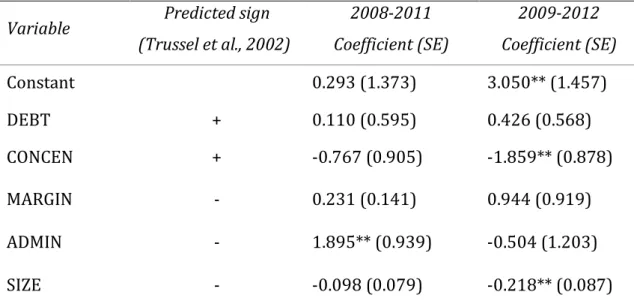
Along with Trussel et al. (2002), the FVI allows us to predict the financial vulnerability of NPOs measured by a reduction of at least 20 percent of the entity’s net assets during a three-year period. With our sample, we can calculate the index value in 2008 and 2009, and we can test afterward whether the net assets of the vulnerable NPOs have been effectively reduced (at least 20%) in 2011 and 2012, respectively (after the three-year period).