
Clinical Application of the COPD Assessment Test: Longitudinal Data From the COPD History Assessment in Spain (CHAIN) Cohort
73
0
0
Texto completo
(2) Page 1 of 71. d. ge ile iv Pr un. m. m. Co n. tio. a ic. 1 2 3 4 5 6 7 8 9 10 11 12 13 14 15 16 17 18 19 20 21 22 23 24 25 26 27 28 29 30 31 32 33 34 35 36 37 38 39 40 41 42 43 44 45 46 47 48 49 50 51 52 53 54 55 56 57 58 59 60. CHEST. ScholarOne - http://mchelp.manuscriptcentral.com/gethelpnow/index.html - (434) 964-4100.
(3) CHEST. Clinical Application of the COPD Assessment Test: Longitudinal Data from the CHAIN Cohort Juan P. de-Torres MD1, Jose M. Marin MD 2, 23, Cristina Martinez-Gonzalez MD 3, Pilar de Lucas-Ramos MD 4, Isabel Mir-Viladrich MD 5, Borja Cosio MD 6, 23, German PecesBarba MD 7,23, Miryam Calle-Rubio MD 8, Ingrid Solanes-García MD 9, Ramón Agüero Balbin MD 10, Alfredo de Diego-Damia MD 11, Nuria Feu-Collado MD 12, Inmaculada Alfageme Michavila MD 13, Rosa Irigaray MD 14, Eva Balcells MD 15,23, Antònia Llunell Casanovas MD 16, Juan Bautista Galdiz Iturri MD 17,23, Margarita Marín Royo MD 18, Juan J. Soler-Cataluña MD19, 23, Jose Luis Lopez- Campos MD20, 23, Joan B. Soriano MD 21 and Ciro Casanova MD22, for the COPD History Assessment In SpaiN (CHAIN) cohort. ge ile iv Pr. 1. Pulmonary Department, Clínica Universidad de Navarra, Pamplona, Spain 2. Pulmonary Department, Hospital Universitario Miguel Servet, Zaragoza 3. Pulmonary Department, Hospital Central de Asturias, Oviedo 4. Pulmonary Department I, Hospital Gregorio Marañon, Madrid 5. Pulmonary Department, Hospital Son Llátzer, Palma de Mallorca 6. Pulmonary Department, Hospital Son Espases, Palma de Mallorca 7. Pulmonary Department, Fundación Jimenez Diaz, Madrid 8. Pulmonary Department, Hospital Clinico San Carlos, Madrid 9. Pulmonary Department, Hospital San Pablo y la Santa Cruz, Barcelona 10. Pulmonary Department, Hospital Marques de Valdecilla, Santander 11. Pulmonary Department, Hospital Universitario y Politécnico La Fe, Valencia 12. Pulmonary Department, Hospital Universitario Reina Sofía, Cordoba 13. Pulmonary Department, Hospital Universitario de Valme, Sevilla 14. Pulmonary Department, Hospital de Manacor, Mallorca 15. Pulmonary Department, Hospital del Mar, Barcelona 16. Pulmonary Department, Hospital de Terrassa, Terrassa 17. Pulmonary Department, Hospital de Cruces, UPV/EHU, Bilbao 18. Pulmonary Department, Hospital General de Castellon, Castellón 19. Pulmonary Department, Hospital General de Requena, Valencia 20. Unidad Médico-Quirúrgica de Enfermedades Respiratorias. Instituto de Biomedicina de Sevilla (IBiS). Hospital Universitario Virgen del Rocío. Sevilla 21. Epidemiology and Clinical Research, CIMERA, Bunyola, Mallorca 22. Pulmonary Department, Hospital Ntra Sra de Candelaria, Tenerife, Spain 23. CIBER de Enfermedades Respiratorias (CIBERES). Instituto de Salud Carlos III, Madrid. d. un. m. m. Co. n. Running Head: Clinical application of the COPD Assessment Test Word count: 3617 Methods Word count: 759. tio. Corresponding author: Juan P. de Torres MD Pulmonary Department Clinica Universidad de Navarra Pamplona – SPAIN 31200 Phone : 0034 948255400 Fax : 0034 948296500 Email: [email protected]. a ic. 1 2 3 4 5 6 7 8 9 10 11 12 13 14 15 16 17 18 19 20 21 22 23 24 25 26 27 28 29 30 31 32 33 34 35 36 37 38 39 40 41 42 43 44 45 46 47 48 49 50 51 52 53 54 55 56 57 58 59 60. Page 2 of 71. None of the authors have declared a conflict of interest with the data presented.. ScholarOne - http://mchelp.manuscriptcentral.com/gethelpnow/index.html - (434) 964-4100.
(4) Page 3 of 71. Abstract Rationale: The Chronic Obstructive Pulmonary Disease (COPD) Assessment Test (CAT) was proposed for assessing health status in COPD, but little is known about its longitudinal changes.. ge ile iv Pr. Objective: To evaluate one-year CAT variability in stable COPD patients and relate its. variations to changes in other disease markers.. Methods: We evaluated the following variables in smokers with and without COPD at. baseline and after one year: CAT score, age, gender, smoking status, pack-years history, BMI, modified Medical Research Council (MMRC) scale, 6MWD, lung function, BODE index, hospital admissions, Hospital and Depression Questionnaire, and the. d. Charlson comorbidity score. In COPD patients we explored the association of CAT. Co. scores and its one-year changes with the studied parameters. Results: 824 smokers with COPD and 126 without were evaluated at baseline, and 441. m. smokers with COPD and 66 without one year later. At 1 year, CAT scores for COPD patients were similar (±4 points) in 56%, higher in 27%, and lower in 17%.. m. Interestingly, MMRC scores were similar (± 1 point) in 46% of patients, worse in 36%. un. and better in 18% at 1 year. One-year CAT changes were best predicted by changes in MMRC scores (β coefficient 0.47, p<0.001). A similar behavior was found for CAT and MMRC in smokers without COPD.. a ic. Conclusions: One-year longitudinal data shows variability in CAT scores among stable. tio. COPD patients, similar to what happened to MMRC that was the best predictor of one-. n. 1 2 3 4 5 6 7 8 9 10 11 12 13 14 15 16 17 18 19 20 21 22 23 24 25 26 27 28 29 30 31 32 33 34 35 36 37 38 39 40 41 42 43 44 45 46 47 48 49 50 51 52 53 54 55 56 57 58 59 60. CHEST. year CAT changes. Further longitudinal studies should confirm the long-term CAT variability and it clinical applicability. Keywords: COPD; Health Related Quality of life Word count: 248. 1 ScholarOne - http://mchelp.manuscriptcentral.com/gethelpnow/index.html - (434) 964-4100.
(5) CHEST. Introduction Chronic obstructive pulmonary disease (COPD) remains a major public health problem and is expected to be the fifth burden of disease worldwide in 2020 (1). COPD is characterized by a persistent airflow limitation that is usually progressive and associated. ge ile iv Pr. with an enhanced chronic inflammatory response in the airways and lung to noxious. particles or gases, primarily cigarette smoke (2). The recently updated Global Initiative for Chronic Obstructive Lung Disease (GOLD) strategy (2) recommends that the assessment of COPD severity include an evaluation of the severity of the airflow limitation, degree of dyspnea, impairment of the patient’s health status, and the risk of future events (e.g., exacerbations, hospital admissions).. d. The GOLD strategy recommends the use of the COPD Assessment Test (CAT), a. Co. validated eight-item questionnaire designed to assess and quantify the impact of COPD. m. symptoms on patients’ health status (3). CAT scores correlate well with other specific heath-related quality of life indicators in COPD patients (4), capturing the effect of. m. different treatments, such as those included in COPD exacerbation or pulmonary. un. rehabilitation (5, 6). CAT scores have been associated with important representative parameters of the disease (5), such as lung function, dyspnea, exercise capacity, and. a ic. exacerbation in the previous year, and behave well across different European countries (4). However, little is known about its longitudinal behavior.. tio. Therefore, we explored the database of the COPD History Assessment In SpaiN. n. 1 2 3 4 5 6 7 8 9 10 11 12 13 14 15 16 17 18 19 20 21 22 23 24 25 26 27 28 29 30 31 32 33 34 35 36 37 38 39 40 41 42 43 44 45 46 47 48 49 50 51 52 53 54 55 56 57 58 59 60. Page 4 of 71. (CHAIN) cohort, a large ongoing longitudinal Spanish study that aimed to determine the natural history of the disease through a multidimensional evaluation of COPD patients. The main objective of the present work was to evaluate one-year follow-up. 2 ScholarOne - http://mchelp.manuscriptcentral.com/gethelpnow/index.html - (434) 964-4100.
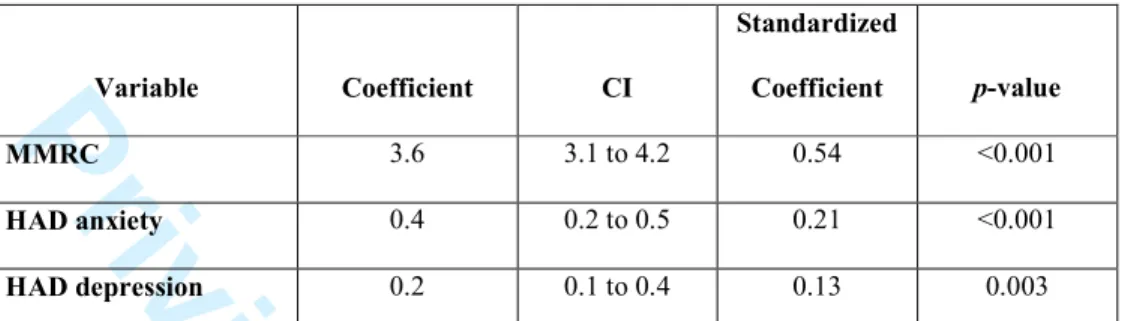
(6) Page 5 of 71. CAT variability in stable COPD patients and relate its changes to changes in other wellrecognized disease markers.. Methods. ge ile iv Pr Participants. CHAIN is a Spanish multicenter study carried out at pulmonary clinics that includes active and former smokers with COPD and a control group of non-COPD patients. COPD was defined by a history of smoking at least 10 pack-years and FEV1/FVC ratio. less than 0.70 after 400 µg of inhaled albuterol. The main goal of this prospective observational study was to perform a multidimensional evaluation of the evolution of. d. COPD patients to better define the natural history and phenotypes of the disease. Co. (ClinicalTrials.gov Identifier: NCT01122758). The control group included active or former smokers without COPD, defined by a history of smoking at least 10 pack-years. m. and an FEV1/FVC ratio ≥ 0.70 after 400 µg of inhaled albuterol. The recruitment period. m. was January15, 2010 to March 31, 2012. The patients are currently in the follow-up. un. period, but the data analyzed in the present study were from the baseline and one year appointment data available at the time of analysis (February 2013). We evaluated. a ic. anthropometric data (i.e., age, gender, height, weight, and body mass index (BMI)), comorbidities, smoking status and pack-years history, respiratory symptoms (modified. tio. Medical Research Council (MMRC) scale), self-reported exacerbations during the. previous year (hospital admissions), health-related quality of life using CAT, anxiety. n. 1 2 3 4 5 6 7 8 9 10 11 12 13 14 15 16 17 18 19 20 21 22 23 24 25 26 27 28 29 30 31 32 33 34 35 36 37 38 39 40 41 42 43 44 45 46 47 48 49 50 51 52 53 54 55 56 57 58 59 60. CHEST. and depression, treatments, respiratory function (i.e., spirometry, lung volume, diffusion capacity), exercise capacity (6-minute walking distance (6MWD)), arterial blood gases, and the BODE index in COPD patients. The methodological aspects of the study were published previously (7). Patient data were anonymized in a database with hierarchical. 3 ScholarOne - http://mchelp.manuscriptcentral.com/gethelpnow/index.html - (434) 964-4100.
(7) CHEST. access control in order to guarantee secure access to the information. To participate in the study, the participants provided informed consent as approved by each of the ethics committees of the participating centers (“Comité de Etica de la Investigación, Universidad de Navarra IRB nº: 043/2006”).. ge ile iv Pr. Clinical and physiological measurements In a personal interview, trained personnel obtained the following information at the time of recruitment and yearly appointments: age, gender, and BMI. A specific questionnaire was used to determine smoking status (current or former) and smoking history (age at initiation and discontinuation, as well as intensity). From this information, we calculated the total smoking exposure and expressed it as pack-years. The presence of. d. comorbidities was evaluated by the Charlson comorbidity index (8). Pulmonary. Co. function tests were performed following ATS guidelines (9). The diffusion capacity for carbon monoxide (DLCO) was determined by the single breath technique following the. m. ERS/ATS guidelines (9). Arterial blood gases were measured from an arterial radial puncture at rest (after 15 minutes), breathing room air at least 45 minutes in the sitting. m. position. The 6MWD test measured the better of two walks separated by at least 30. un. minutes (10). Dyspnea was evaluated by the MMRC scale (11). The FEV1 %, BMI, 6MWD, and MMRC values were integrated into the BODE index as previously described (12).. tio. COPD Assessment Test (CAT). a ic. To evaluate health-related quality of life, we used the CAT, a validated eight-item. questionnaire designed to assess and quantify the impact of COPD symptoms on patient. n. 1 2 3 4 5 6 7 8 9 10 11 12 13 14 15 16 17 18 19 20 21 22 23 24 25 26 27 28 29 30 31 32 33 34 35 36 37 38 39 40 41 42 43 44 45 46 47 48 49 50 51 52 53 54 55 56 57 58 59 60. Page 6 of 71. health status. The resulting score out of 40 indicates disease impact, with a higher score associated with a worse health-related quality of life. (3). We used the Spanish validated version of CAT (6), and it was self-administered by each patient.. 4 ScholarOne - http://mchelp.manuscriptcentral.com/gethelpnow/index.html - (434) 964-4100.
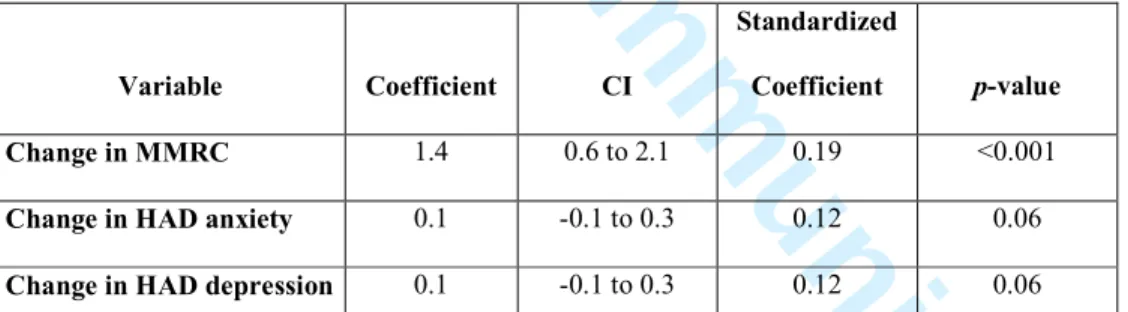
(8) Page 7 of 71. Hospital Anxiety and Depression Questionnaire (HAD) The HAD is a self-administered test with a 14-item scale that generates ordinal data (13). The score is designed to assess both anxiety and depression symptoms; seven of the items relate to anxiety and seven relate to depression. The scores are categorized as. ge ile iv Pr. normal (0-7), mild (9-11), and moderate or severe (12-15). Statistical analysis. Quantitative data with a normal distribution were described using mean and standard deviation (SD). Quantitative data with non-normal distribution were described by median and interquartile range (IQR). Categorical data were described using relative frequencies. Associations between baseline CAT scores and the studied parameters. d. were estimated using a univariate linear regression model. Significant associations. Co. (p<0.05) were included in a multiple regression model to determine those that best predict CAT scores. We arbitrarily defined two cut-off values for changes in the CAT. m. scores at one year: +4 and –4 points, a variation previously described to be associated with exacerbations (5, 6, 13, 14), and +2 and –2 points, a variation recently proposed by. m. Jones (15) for mapping the 4 points associated with the minimum clinically important. un. difference (MCID) in the Saint George’s Respiratory Questionnaire (SGRQ). For changes in the CAT score, we explored its association with the other studied parameters. a ic. using univariate and multivariate linear regression models as described for baseline CAT scores. Calculations were performed using statistical package SPSS version 20.0 Inc. (Chicago, IL, USA).. n. tio. 1 2 3 4 5 6 7 8 9 10 11 12 13 14 15 16 17 18 19 20 21 22 23 24 25 26 27 28 29 30 31 32 33 34 35 36 37 38 39 40 41 42 43 44 45 46 47 48 49 50 51 52 53 54 55 56 57 58 59 60. CHEST. Results A total of 824 smokers with COPD and 126 smokers without COPD were evaluated at baseline. Their clinical and physiological characteristics are provided in Table 1. This. 5 ScholarOne - http://mchelp.manuscriptcentral.com/gethelpnow/index.html - (434) 964-4100.
(9) CHEST. mainly middle-aged male population of COPD patients had a median smoking history of 50 pack-years, one-third still smoke, and represented all degrees of airway obstruction with few comorbidities and hospital admissions. The COPD patients had mild symptomatic impairment with a median MMRC score of 1, median CAT score of. ge ile iv Pr. 11, and median anxiety and depression scores of 12 and 8, respectively, implying that these patients had symptoms of anxiety and depression. Figure 1 and 2 in the Appendix section provide the frequencies of each CAT score for COPD patients and smokers. The COPD patients were older than the smokers without COPD, had a greater number of. pack-years smoking, fewer were actively smoking, impaired lung function parameters, less exercise capacity, and higher CAT scores. However, the two groups had similar. d. BMI, comorbidity index values, and HAD scores.. Co. Table 2 shows the independent association between CAT scores and representative parameters of the disease. CAT scores were directly associated with female gender,. m. pack-years, MMRC scale, BODE index, and HAD scores and indirectly associated with FEV1%, PaO2, and 6MWD. Table 3 shows the results of a multivariate linear regression. m. model, indicating that MMRC, HAD anxiety, and HAD depression were the best independent predictors of baseline CAT scores.. un. At the time of this analysis, only 441 smokers (53.5%) with COPD and 66 smokers. a ic. (52.3%) without COPD were able to complete the follow-up at one year. At one year, 96% (423/441) of COPD patients remained on the same treatment. The baseline. tio. characteristics of the COPD patients lacking one-year follow-up data are provided in the Appendix. No differences were found between the COPD patients with and without. n. 1 2 3 4 5 6 7 8 9 10 11 12 13 14 15 16 17 18 19 20 21 22 23 24 25 26 27 28 29 30 31 32 33 34 35 36 37 38 39 40 41 42 43 44 45 46 47 48 49 50 51 52 53 54 55 56 57 58 59 60. Page 8 of 71. one-year follow-up data (p>0.05 for all comparisons). The intra-class correlation coefficient between baseline and one year CAT scores was r= 0.58 (p<0.001) for COPD patients. CAT scores improved in 27% and worsened in. 6 ScholarOne - http://mchelp.manuscriptcentral.com/gethelpnow/index.html - (434) 964-4100.
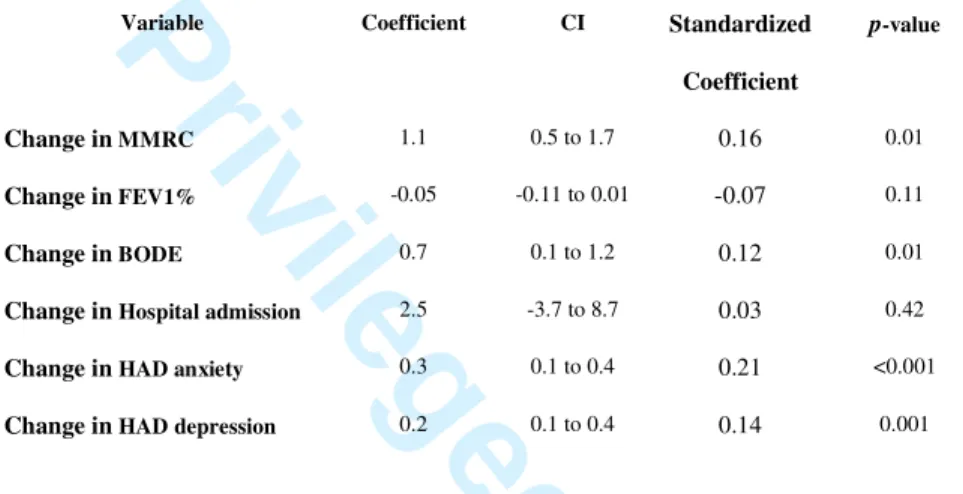
(10) Page 9 of 71. 17% of COPD patients using ±4 points as the cut-off value (Fig. 1A), whereas CAT scores improved in 32% and worsened in 21% of COPD patients using ±2 points as the cut-off value (Fig. 1B). The intra-class correlation coefficient between baseline and one year CAT scores was r= 0.60 (p<0.001) in smokers without COPD. Figure 2 shows the. ge ile iv Pr. changes in CAT score at one year in smokers without COPD. Using ±4 points as the. cut-off value, the CAT scores improved in 21% and worsened in 14% of smokers without COPD (Fig. 2A), whereas CAT scores improved in 36% and worsened in 26% of smokers without COPD using ±2 points as the cut-off value (Fig. 2B). Interestingly,. when we evaluated one-year changes in MMRC (at least ± 1 point), we found that the MMRC score improved (36%), worsened (18%), or remained the same (46%) in a. d. similar percentage of COPD patients as when the 4-point cut-off was used for changes. Co. in the CAT score. The MMRC scores improved in 27%, worsened in 11%, and remained the same in 62% of smokers without COPD.. m. Figures 1 and 2 clearly show regression to the mean ;high scores tended to decrease. m. when measured again in the following year. Therefore, this phenomenon was considered when the multivariate analysis was performed.. un. COPD patients that exhibited greater variability at one year had baseline scores between. a ic. 10 and 25. As shown in Table 4, changes in the CAT scores at one year were independently associated with changes in MMRC, BODE, HAD anxiety, and HAD. tio. depression but not with changes in FEV1% or hospital admissions during the previous year. Only 40 COPD patients (9%) suffered at least one hospital admission during the. n. 1 2 3 4 5 6 7 8 9 10 11 12 13 14 15 16 17 18 19 20 21 22 23 24 25 26 27 28 29 30 31 32 33 34 35 36 37 38 39 40 41 42 43 44 45 46 47 48 49 50 51 52 53 54 55 56 57 58 59 60. CHEST. follow-up. Patients who were admitted to the hospital had higher baseline CAT scores. (11; 11 to 19) than those who were not (11; 7 to17, p<0.05), but this admission did not cause changes in the CAT score during the following year (-1; -4 to 3 vs. 0; -4 to 3, p>0.05).. 7 ScholarOne - http://mchelp.manuscriptcentral.com/gethelpnow/index.html - (434) 964-4100.
(11) CHEST. The multivariate linear regression analysis shown in Table 5 indicates that the best predictors of changes in the CAT scores of COPD patients were changes in MMRC dyspnea, with borderline prediction by HAD scores. Interestingly, patients with baseline HAD scores >7, indicating at least mild anxiety and depression symptoms, had greater. ge ile iv Pr. variation in their median changes compared to normal baseline HAD scores (median; 25-75th percentiles: -1; -6 to 2 vs. 0; -3 to 3, p=0.02).. Discussion. This one-year longitudinal observational study of a well-characterized cohort of stable COPD patients who were maintained on the same treatment demonstrated that changes. d. in CAT scores are associated only with changes in the degree of dyspnea measured by. Co. the MMRC scale. The one-year longitudinal CAT scores of stable COPD patients exhibited variability similar to that of their MMRC scores or the CAT scores in smokers. m. that lacked airway obstruction. The MMRC scale and CAT perform equally well in smokers with and without airway obstruction.. m. Current guidelines for COPD management recommend a multidimensional evaluation. un. of the disease, including assessment of the patient’s health status. The 2013 update to the GOLD strategy includes the use of the CAT to evaluate symptoms, defining a score. a ic. ≥10 as health impairment and including them in GOLD grades B and D (2). CAT is an easy to use, validated, and reproducible tool that allows disease severity to be. tio. categorized (4) and is sensitive to health status changes during exacerbation and. following pulmonary rehabilitation (PR) (5). The CAT behaves the same way across. n. 1 2 3 4 5 6 7 8 9 10 11 12 13 14 15 16 17 18 19 20 21 22 23 24 25 26 27 28 29 30 31 32 33 34 35 36 37 38 39 40 41 42 43 44 45 46 47 48 49 50 51 52 53 54 55 56 57 58 59 60. Page 10 of 71. different European countries (4). The CAT is also associated with other descriptors of the disease, such as dyspnea evaluated by the MMRC score, degree of obstruction evaluated by FEV1%, exercise capacity evaluated by the 6MWD, the presence of. 8 ScholarOne - http://mchelp.manuscriptcentral.com/gethelpnow/index.html - (434) 964-4100.
(12) Page 11 of 71. comorbidities, and the number of exacerbations reported during the last 12 months (5). The association of CAT scores with other important prognostic parameters, such as the BODE index, PaO2, and potential determinants of patient health status, including anxiety and depression, is unknown. Most importantly, nothing is known about the. ge ile iv Pr. longitudinal behavior of CAT scores at one year in patients in stable condition. Cross-sectional data. Jones et al. (3) first reported that the negative relationship between CAT scores and FEV1% is weak (r=-0.23, p<0.001) when studying a large sample of European COPD. patients (n= 1817). In a later, smaller study Jones et al. (5) investigated changes in CAT scores following exacerbation and PR, exploring the response to PR (n = 61-121). They. d. found association of CAT scores at baseline with FEV1% (-0.23, p=0.07), MMRC. Co. (0.42, p=0.007), and 6MWD (-0.24, p=0.009), and the number of exacerbations during the previous 12 months (-0.12, p=0.30). The present work confirmed these associations. m. and the lack of association with the number of exacerbations during the previous year, which was unexpected. This finding was confirmed by the longitudinal data and. m. indicates that the number of admissions during the one- year follow up inthe present. un. study did not affect changes in the CAT score. Similarly, our data support the presence of comorbidities having little impact on CAT scores (4).. a ic. The novel information presented by this study indicates that an important physiological prognostic parameter, such as the degree of arterial oxygenation (PaO2), is indirectly. tio. and significantly associated with CAT scores. This finding can be explained by the fact that patients with low PaO2 levels have an important effect on some of the most. n. 1 2 3 4 5 6 7 8 9 10 11 12 13 14 15 16 17 18 19 20 21 22 23 24 25 26 27 28 29 30 31 32 33 34 35 36 37 38 39 40 41 42 43 44 45 46 47 48 49 50 51 52 53 54 55 56 57 58 59 60. CHEST. important items evaluated by the CAT score: breathless going up hills/stairs, activity limitations at home, sleep, and energy.. 9 ScholarOne - http://mchelp.manuscriptcentral.com/gethelpnow/index.html - (434) 964-4100.
(13) CHEST. Another finding is the direct association with the BODE index, a multidimensional evaluation of disease severity that predicts mortality in COPD patients (12). This finding could imply that the CAT is an easy to use tool that can capture the multidimensional aspects of the disease represented in the BODE index: nutritional. ge ile iv Pr. status, airway obstruction, dyspnea, and exercise capacity. Lastly, the present study also showed that CAT scores are directly associated with symptoms of anxiety and depression measured by the HAD questionnaire. This association has not been previously reported in COPD patients and highlights the importance of anxiety and depression symptoms and their impact on health status.. Longitudinal changes at one year. d. The present study presents the first longitudinal data on CAT scores in a large. Co. population of stable COPD patients. Previous longitudinal data on CAT scores came from two small studies investigating changes in CAT scores after exacerbation (14. m. days) or a PR program (42 days) (5) and another Spanish study in which CAT scores were measured at the time of exacerbation and 4 weeks later (6). Here, we presented a. m. different type of longitudinal data not related to any intervention and with the aim of. un. investigating the stability of the signal at one year. The data at one year indicated that the CAT has a strong and significant intra-class association (r=0.58, p<0.001) with. a ic. baseline scores. Interestingly, the same association was also found in smokers without COPD (r=0.60, p<0.001). This information indicates the consistency of CAT. tio. measurements at one year. Based on the previous data published on CAT score. n. 1 2 3 4 5 6 7 8 9 10 11 12 13 14 15 16 17 18 19 20 21 22 23 24 25 26 27 28 29 30 31 32 33 34 35 36 37 38 39 40 41 42 43 44 45 46 47 48 49 50 51 52 53 54 55 56 57 58 59 60. Page 12 of 71. variations during COPD exacerbation (5, 6, 14), we arbitrary designated ±4 points as a significant longitudinal variation in the CAT score. We acknowledge the potential limitations of this cut-off value, but due to the limited information available on longitudinal changes in CAT scores, we decided to use the available data to select a. 10 ScholarOne - http://mchelp.manuscriptcentral.com/gethelpnow/index.html - (434) 964-4100.
(14) Page 13 of 71. score that is known to indicate changes beyond the natural variation and is associated with an exacerbation of the disease. With the onset of exacerbation, Mackay et al. showed an increase of 4.7 points (14) and Agustí et al. (6) a “much better” and “slightly better” health status associated with a decrease of 8.9 and 4.6 points, respectively. In the. ge ile iv Pr. present study, more than 50% of the patients had the same CAT score (baseline score ±4. points), which was similar in smokers without COPD, probably indicating a similar variability in the signal at one year in this population with lower baseline CAT scores (median; 25-75th percentiles: 6; 2.5-11.5). If we decide to use the ±2 points proposed by. Jones as the possible MCID for the CAT associated with significant changes after PR (5, 16), a lower percentage of COPD patients and smokers without COPD had similar. d. scores at one year (47% and 38%, respectively). This finding suggests great variability. Co. in the CAT score at one year in stable COPD patients with the same maintenance therapy.. m. The patients with greater variability were those with baseline CAT scores between 10 and 25 (Figure 1 A). In this CAT score range, a greater proportion of smokers with. m. COPD improved at one year, indicating the beneficial effect of being incorporated into a. un. longitudinal follow-up study. This information should be considered in the longitudinal clinical follow-up of COPD patients because they have baseline scores compatible with. a ic. an impaired health status that is susceptible to changes at one year and are potential targets of specific therapies.. tio. In patients in whom the CAT scores changed, the changes were significantly associated. n. 1 2 3 4 5 6 7 8 9 10 11 12 13 14 15 16 17 18 19 20 21 22 23 24 25 26 27 28 29 30 31 32 33 34 35 36 37 38 39 40 41 42 43 44 45 46 47 48 49 50 51 52 53 54 55 56 57 58 59 60. CHEST. with only MMRC dyspnea. These variations were not associated with exacerbations. during the previous year or with physiological domains of the disease, but they were associated with the most important predictor of health status in COPD, the degree of dyspnea. This association is not surprising, considering that the CAT includes 2. 11 ScholarOne - http://mchelp.manuscriptcentral.com/gethelpnow/index.html - (434) 964-4100.
(15) CHEST. questions that evaluate breathless and exercise limitation: “When I walk up hill or one flight of stairs I am very breathless” and “I am very limited doing activities at home”. This information implies that treatment options that target the degree of dyspnea may be associated with changes in health status captured by the CAT, as recommended by the. ge ile iv Pr GOLD strategy.. Interestingly, when we compared the longitudinal behavior of the CAT to another. patient-centered outcome (PCO), the MMRC dyspnea score (17), both signals had a similar profile of change over one year. This finding supports the previous report from Oga et al. (18) indicating that dyspnea (MMRC) and health status (CAT) reflect the longitudinal variability of PCOs in a multidimensional disease like COPD.. d. In a cross sectional study of 1817 COPD patients, including a well representation of all. Co. grades of disease severity, Jones et al (19) showed a clear relationship between MMRC with health status scores measured by different tools (CAT, SGRQ, Short –Form Health. m. Survey and the Functional Assessment of Chronic Illness Therapy Fatigue). Interestingly, an MMRC score ≥1 and CAT score ≥10 were approximately equivalent in. m. determining low-symptom patients, and some patients with MMRC grade 0 had. un. modestly elevated health status scores (CAT 11.7±6.8).. As mentioned by its developers, the CAT is a health status tool for the assessent and. a ic. quantification of COPD patients’ symptoms. The present study also suggests that CAT captures a symptomatic domain present in some smokers without COPD, wich changes. tio. over a one-year time period to a similar degree as in COPD patients. This symptomatic. n. 1 2 3 4 5 6 7 8 9 10 11 12 13 14 15 16 17 18 19 20 21 22 23 24 25 26 27 28 29 30 31 32 33 34 35 36 37 38 39 40 41 42 43 44 45 46 47 48 49 50 51 52 53 54 55 56 57 58 59 60. Page 14 of 71. signal captured by the CAT is consistent in smokers with and without COPD and. behaves the same as the signal captured by the MMRC scale. This a novel finding based on the inclusion of a control group of smokers without COPD.. 12 ScholarOne - http://mchelp.manuscriptcentral.com/gethelpnow/index.html - (434) 964-4100.
(16) Page 15 of 71. Another interesting finding of the present work was that CAT scores need to be evaluated based on the baseline psychological status of the patient because patients with HAD values >7 (suggesting mild anxiety and depression symptoms) have greater changes in longitudinal CAT scores at one year. This important information should be. ge ile iv Pr. considered in the longitudinal evaluation of COPD patients using the CAT. The present study has limitations. First, this study is only a one-year follow up assessment that could include measurements noise, therefore serial measurements for a longer period of time would likely show a reliable trend of variability. Anyway this the first study showing one year longitudinal data in COPD patients. Second, the findings should be restricted to the type of patients studied. Third, the impact of maintenance. d. therapy over health status was not studied, as it was not the aim of the study. Most. Co. (96%) of the patients received the same maintenance therapy, and the potential impact that the different treatments could have had on disease exacerbation did not seem to. m. impact health status. Fourth, we selected an arbitrary cut-off value to determine a longitudinal change in the CAT score. This selection was based on the available. m. evidence (5,6,14) and the proposed score suggested by mapping the MCID of the SGRQ. un. (15). As previously mentioned, the MCID for the CAT is unknown and appropriately designed longitudinal studies will determine this threshold. This study also has several. a ic. strengths; this is the first report of longitudinal data for the CAT in COPD patients that also includes a control population of smokers without COPD.. tio. In conclusion, in this large well-characterized cohort, CAT scores exhibited variability at one year in a high percentage of stable COPD patients similar to the observations in. n. 1 2 3 4 5 6 7 8 9 10 11 12 13 14 15 16 17 18 19 20 21 22 23 24 25 26 27 28 29 30 31 32 33 34 35 36 37 38 39 40 41 42 43 44 45 46 47 48 49 50 51 52 53 54 55 56 57 58 59 60. CHEST. MMRC dyspnea. This behavior was also found in smokers without COPD. In COPD patients, one-year variations in CAT scores were associated with changes in the degree of dyspnea evaluated by the MMRC score. The MMRC scale and CAT perform equally. 13 ScholarOne - http://mchelp.manuscriptcentral.com/gethelpnow/index.html - (434) 964-4100.
(17) CHEST. well in smokers with and without airway obstruction. Our data suggest that either tool could allow a longitudinal evaluation of changes in COPD patients’ symptoms. Further long-term longitudinal studies should confirm our findings and help elucidate the applicability of these tools in clinical practice, as suggested by the GOLD Guidelines.. d. ge ile iv Pr un. m. m. Co n. tio. a ic. 1 2 3 4 5 6 7 8 9 10 11 12 13 14 15 16 17 18 19 20 21 22 23 24 25 26 27 28 29 30 31 32 33 34 35 36 37 38 39 40 41 42 43 44 45 46 47 48 49 50 51 52 53 54 55 56 57 58 59 60. Page 16 of 71. 14 ScholarOne - http://mchelp.manuscriptcentral.com/gethelpnow/index.html - (434) 964-4100.
(18) Page 17 of 71. Acknowledgments and Funding Conception and design: JPdT, CC, JMM, PdL, GPB, JJSC, JLLP, JS Analysis and interpretation: JPdT, CC, JMM, CMG, PdL, IMV, BC, GPB, MCR, ISG, RAB, AdDD, NFC, IAM, RI, EB, ALC, JBGI, MMR, JJS, JLLC, JS. Drafting the manuscript for important intellectual content: JPdT, CC, JMM, PdL,. ge ile iv Pr GPB, JJSC, JLLP, JS. JPdT is the guarantor of the paper, taking responsibility for the integrity of the work as a whole, from incepton to published article. The PII DE EPOC of SEPAR endorsed this study. We thank AstraZeneca for their partial financial support of this study. The funders had no role in study design, data collection and analysis, decision to. publish, or manuscript preparation.. d un. m. m. Co n. tio. a ic. 1 2 3 4 5 6 7 8 9 10 11 12 13 14 15 16 17 18 19 20 21 22 23 24 25 26 27 28 29 30 31 32 33 34 35 36 37 38 39 40 41 42 43 44 45 46 47 48 49 50 51 52 53 54 55 56 57 58 59 60. CHEST. 15 ScholarOne - http://mchelp.manuscriptcentral.com/gethelpnow/index.html - (434) 964-4100.
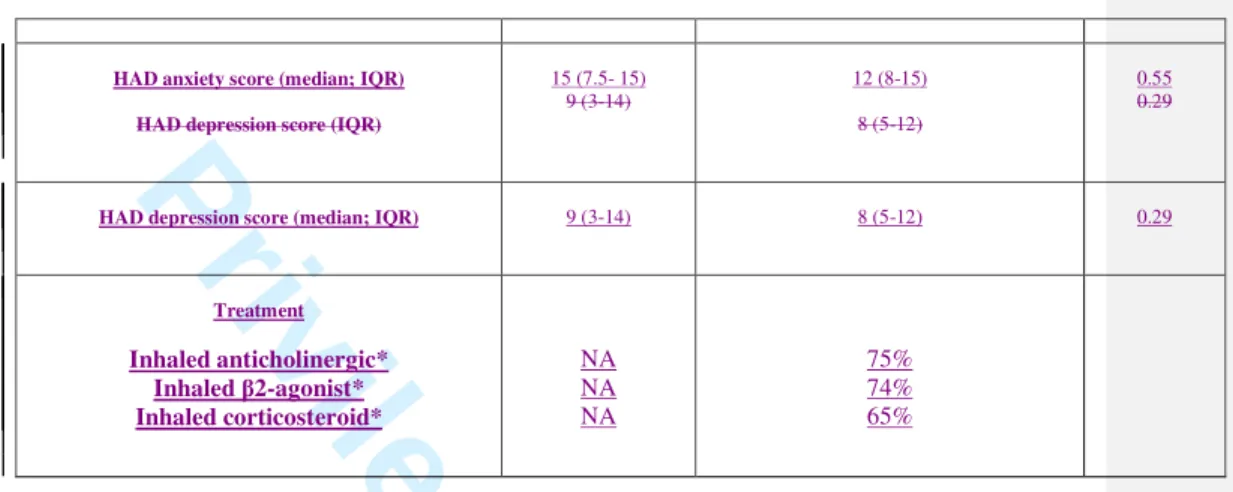
(19) CHEST. Table 1. Baseline characteristics of all participants. Clinical and Physiological Characteristics. Smokers Without COPD. All COPD patients p-value n=824. n=126 57(10). 67 (9). <0.001. Gender (%male/%female). (66/33). (81/19). <0.001. BMI in kg/m2 (mean; SD). 28 (5). 28 (5). 0.22. Pack-years (median; IQR). 40 (26-57). 50 (37-70). <0.001. Current Smoking %. 63. 29. <0.001. MMRC points (median; IQR). 0 (0-1). 1 (1-2). <0.001. FEV1% (mean; SD). 93 (16). 59 (20). <0.001. 97 (15). 88 (64). <0.001. 77. 52 (11). <0.001. NA. 17; 48; 28; 7. NA. 19-44-3.4-33.6. NA. Age in years (mean; SD). d. ge ile iv Pr FVC% (mean; SD). FEV1/FVC (mean; SD). GOLD obstruction levels I-II-III-IV %. 2011 GOLD clasification A-B-C-D %. m. Co. NA. m. PaO2 (mean; SD). 77 (9). 67 (10). <0.001. DLCO % (median; IQR). 84 (72-99). 74 (57-90). <0.001. 6MWD metes (median; IQR). 525 (441-579). 446 (374-510). <0.001. BODE index (median; IQR). NA. Charlson score (median; IQR)CAT scores by GOLD grades (median; IQR). un. a ic 2 (0-3). NA. 1 (1-1) NA. 1 (1-1)A: 7;4-10 B: 12; 8-17 C:6; 3-11 D: 13; 9-18. 0.20. CAT score (IQR). 6 (2.5-11.5). 11 (7-17). <0.001. Hospital admissions (median; IQR). 0 (0-0). 1 (1-2). 0.004. HAD anxiety score (median; IQR). 15 (7.5- 15). 12 (8-15). HAD depression score (median; IQR). 9 (3-14). 8 (5-12). NA. 75%. n. tio. 1 2 3 4 5 6 7 8 9 10 11 12 13 14 15 16 17 18 19 20 21 22 23 24 25 26 27 28 29 30 31 32 33 34 35 36 37 38 39 40 41 42 43 44 45 46 47 48 49 50 51 52 53 54 55 56 57 58 59 60. Page 18 of 71. Treatment. Inhaled anticholinergic*. 16 ScholarOne - http://mchelp.manuscriptcentral.com/gethelpnow/index.html - (434) 964-4100. 0.55. 0.29.
(20) Page 19 of 71. NA NA. Inhaled β2-agonist* Inhaled corticosteroid*. 74% 65%. BMI: body mass index; MMRC: Modified Medical Research Council dyspnea scale; FEV1: forced respiratory volume in the 1st second; FVC: forced vital capacity; GOLD: Global Initiative for Obstructive Lung Diseases; PaO2: arterial oxygen pressure; DLCO: carbon monoxide diffusion capacity; 6MWD: six minute walking distance; BODE: body mass index+obstruction+dyspnea+exercise capacity; CAT: COPD Assessment Test; HAD: Hospital Anxiety and Depression scale.. ge ile iv Pr. Table 2. Univariate analysis with baseline CAT scores in COPD patients as the dependent variable.. Variable. Age. BMI. Coefficient. CI. Coefficient. p-value. -0.01. -0.07 to 0.04. -0.01. 0.64. 1.9. 0.5 to 3.3. 0.09. 0.007. 0.4. -0.13 to 0.05. -0.03. 0.37. 0.01 to 0.05. 0.12. <0.001. 3.09 to 3.9. 0.50. <0.001 <0.001. Pack-years. 0.03. MMRC. 3.5. FEV1%. -0.11. m. m. Co. Gender (female vs male). Standardized. d. -0.31. PaO2. -0.18. -0.26 to –0.10. -0.24. <0.001. 6MWD. -0.01. -0.02 to –0.01. -0.21. <0.001. BODE. 1.6. 1.3 to 1.8. Hospital admission. 1.6. -0.5 to 3.7. HAD anxiety. 0.4. 0.3 to 0.5. HAD depression. 0.4. 0.3 to 0.5. -0.14 to -0.09. un. a ic 0.41. <0.001. 0.10. 0.12. 0.29. <0.001. 0.30. <0.001. tio. BMI: body mass index; MMRC: Modified Medical Research Council dyspnea scale; FEV1: forced respiratory volume in the 1st second; PaO2: arterial oxygen pressure; DLCO: carbon monoxide diffusion capacity; 6MWD: six minute walking distance; BODE: body mass index+obstruction+dyspnea+exercise capacity; CAT: COPD Assessment Test; HAD: Hospital Anxiety and Depression scale.. n. 1 2 3 4 5 6 7 8 9 10 11 12 13 14 15 16 17 18 19 20 21 22 23 24 25 26 27 28 29 30 31 32 33 34 35 36 37 38 39 40 41 42 43 44 45 46 47 48 49 50 51 52 53 54 55 56 57 58 59 60. CHEST. 17 ScholarOne - http://mchelp.manuscriptcentral.com/gethelpnow/index.html - (434) 964-4100.
(21) CHEST. Table 3. Multivariate analysis with baseline CAT scores in COPD patients as the dependent variable.. Standardized Variable. Coefficient. ge ile iv Pr. CI. Coefficient. p-value. MMRC. 3.6. 3.1 to 4.2. 0.54. <0.001. HAD anxiety. 0.4. 0.2 to 0.5. 0.21. <0.001. HAD depression. 0.2. 0.1 to 0.4. 0.13. 0.003. MMRC: Modified Medical Research Council dyspnea scale; HAD: Hospital Anxiety and Depression scale. Variables included in the model: gender, pack-years, MMRC, FEV1%, PaO2, 6MWD, HAD anxiety, and HAD depression. r2=0.86. d un. m. m. Co n. tio. a ic. 1 2 3 4 5 6 7 8 9 10 11 12 13 14 15 16 17 18 19 20 21 22 23 24 25 26 27 28 29 30 31 32 33 34 35 36 37 38 39 40 41 42 43 44 45 46 47 48 49 50 51 52 53 54 55 56 57 58 59 60. Page 20 of 71. 18 ScholarOne - http://mchelp.manuscriptcentral.com/gethelpnow/index.html - (434) 964-4100.
(22) Page 21 of 71. Table 4. Univariate analysis with CAT changes in COPD patients at one year as the dependent variable. Standardized Variable. Coefficient. ge ile iv Pr. CI. Coefficient. p-value. Change in MMRC. 1.1. 0.5 to 1.7. 0.16. 0.01. Change in FEV1%. -0.05. -0.11 to 0.01. -0.07. 0.11. Change in BODE. 0.7. 0.1 to 1.2. 0.12. 0.01. Change in Hospital admission. 2.5. -3.7 to 8.7. 0.03. 0.42. Change in HAD anxiety. 0.3. 0.1 to 0.4. 0.21. <0.001. Change in HAD depression. 0.2. 0.1 to 0.4. 0.14. 0.001. MMRC: Modified Medical Research Council dyspnea scale; FEV1: forced respiratory volume in the 1st second; BODE: body mass index+obstruction+dyspnea+exercise capacity; HAD: Hospital Anxiety and Depression scale.. d. Co. Table 5. Multivariate analysis with CAT changes in COPD patients at one year as the dependent variable. Coefficient. m CI. Coefficient. p-value. Change in MMRC. 1.4. 0.6 to 2.1. 0.19. <0.001. Change in HAD anxiety. 0.1. -0.1 to 0.3. Change in HAD depression. 0.1. -0.1 to 0.3. Variable. Standardized. un. m. 0.12. 0.06. 0.12. 0.06. a ic. MMRC: Modified Medical Research Council dyspnea scale; HAD: Hospital Anxiety and Depression scale. Variables included in the model: MMRC, HAD anxiety, and HAD depression. r2= 0.34 adjusted. n. tio. 1 2 3 4 5 6 7 8 9 10 11 12 13 14 15 16 17 18 19 20 21 22 23 24 25 26 27 28 29 30 31 32 33 34 35 36 37 38 39 40 41 42 43 44 45 46 47 48 49 50 51 52 53 54 55 56 57 58 59 60. CHEST. 19 ScholarOne - http://mchelp.manuscriptcentral.com/gethelpnow/index.html - (434) 964-4100.
(23) CHEST. Figure 1. Panel A. d. ge ile iv Pr Panel B. un. m. m. Co n. tio. a ic. 1 2 3 4 5 6 7 8 9 10 11 12 13 14 15 16 17 18 19 20 21 22 23 24 25 26 27 28 29 30 31 32 33 34 35 36 37 38 39 40 41 42 43 44 45 46 47 48 49 50 51 52 53 54 55 56 57 58 59 60. Page 22 of 71. 20 ScholarOne - http://mchelp.manuscriptcentral.com/gethelpnow/index.html - (434) 964-4100.
(24) Page 23 of 71. Figure 2. Panel A. d. ge ile iv Pr Panel B. un. m. m. Co n. tio. a ic. 1 2 3 4 5 6 7 8 9 10 11 12 13 14 15 16 17 18 19 20 21 22 23 24 25 26 27 28 29 30 31 32 33 34 35 36 37 38 39 40 41 42 43 44 45 46 47 48 49 50 51 52 53 54 55 56 57 58 59 60. CHEST. 21 ScholarOne - http://mchelp.manuscriptcentral.com/gethelpnow/index.html - (434) 964-4100.
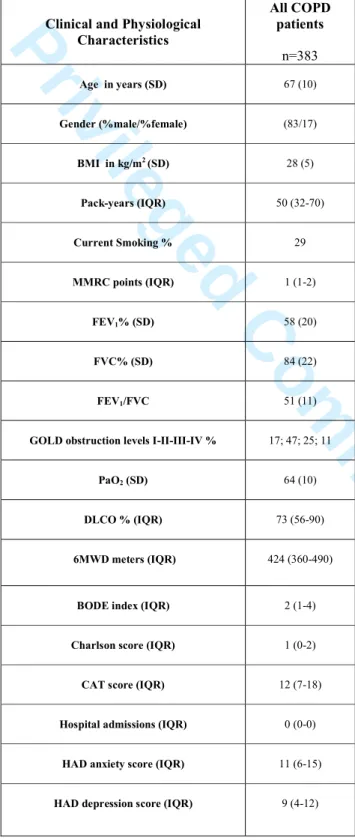
(25) CHEST. Appendix Table 1. Clinical and physiological characteristics of the patients lacking one-year follow-up data All COPD patients. Clinical and Physiological Characteristics. ge ile iv Pr. n=383. Age in years (SD). 67 (10). Gender (%male/%female). (83/17). BMI in kg/m2 (SD). 28 (5). Pack-years (IQR). 50 (32-70). Current Smoking %. 29. MMRC points (IQR). 1 (1-2). d. FEV1% (SD). 58 (20). FVC% (SD). Co. FEV1/FVC. 84 (22). 51 (11). m. GOLD obstruction levels I-II-III-IV %. 17; 47; 25; 11. PaO2 (SD). 64 (10). DLCO % (IQR). 73 (56-90). 6MWD meters (IQR). 424 (360-490). BODE index (IQR). 2 (1-4). Charlson score (IQR). 1 (0-2). CAT score (IQR). 12 (7-18). Hospital admissions (IQR). 0 (0-0). HAD anxiety score (IQR). 11 (6-15). HAD depression score (IQR). 9 (4-12). un. m n. tio. a ic. 1 2 3 4 5 6 7 8 9 10 11 12 13 14 15 16 17 18 19 20 21 22 23 24 25 26 27 28 29 30 31 32 33 34 35 36 37 38 39 40 41 42 43 44 45 46 47 48 49 50 51 52 53 54 55 56 57 58 59 60. Page 24 of 71. 22 ScholarOne - http://mchelp.manuscriptcentral.com/gethelpnow/index.html - (434) 964-4100.
(26) Page 25 of 71. Figure 1. Appendix. d. ge ile iv Pr Figure 2. Appendix. un. m. m. Co n. tio. a ic. 1 2 3 4 5 6 7 8 9 10 11 12 13 14 15 16 17 18 19 20 21 22 23 24 25 26 27 28 29 30 31 32 33 34 35 36 37 38 39 40 41 42 43 44 45 46 47 48 49 50 51 52 53 54 55 56 57 58 59 60. CHEST. 23 ScholarOne - http://mchelp.manuscriptcentral.com/gethelpnow/index.html - (434) 964-4100.
(27) CHEST. Figure legends. Manuscript Figures. ge ile iv Pr Figure 1.. A: Changes in the CAT scores of COPD patients at one year compared to baseline (cut-. off values ±4 points).. B: Changes in the CAT scores of COPD patients at one year compared to baseline (cut-. off values ±2 points).. Figure 2.. d Co. A: Changes in the CAT scores of smokers without COPD at one year compared to baseline (cut-off values ±4 points).. m. B: Changes in the CAT scores of smokers without COPD at one year compared to baseline (cut-off values ±2 points).. Appendix Figures. un. m. Figure 1.. n. Figure 2.. tio. Distribution of different CAT scores in COPD patients.. a ic. 1 2 3 4 5 6 7 8 9 10 11 12 13 14 15 16 17 18 19 20 21 22 23 24 25 26 27 28 29 30 31 32 33 34 35 36 37 38 39 40 41 42 43 44 45 46 47 48 49 50 51 52 53 54 55 56 57 58 59 60. Page 26 of 71. Distribution of different CAT scores in smokers.. 24 ScholarOne - http://mchelp.manuscriptcentral.com/gethelpnow/index.html - (434) 964-4100.
(28) Page 27 of 71. CHAIN participants. ScientificCommittee: Ciro Casanova (coordinator), Pilar de Lucas, Juan P. de Torres, José Luis Lopez-Campos, José María Marín, German Peces-Barba, Juan José Soler. ge ile iv Pr Cataluña, Joan B Soriano.. ANDALUCÍA. José Calvo Bonachera, Hospital de Torrecárdenas, Almería. Nuria Feu Collado, Hospital Universitario Reina Sofía, Córdoba. Celia Lacárcel Bautista, Hospital Ciudad de Jaén, Jaén. Adolfo Domenech, Hospital Universitario Carlos Haya, Málaga. Inmaculada Alfageme Michavila, Hospital Universitario de Valme, Sevilla.. d. ARAGÓN. José María Marín Trigo, Hospital Universitario Miguel Servet, Zaragoza.. Co. ASTURIAS. Cristina Martínez González, Hospital Central de Asturias, Oviedo. BALEARES. Rosa Irigaray, Hospital de Manacor, Manacor. Borja García-Cosío. m. Piqueras, Hospital Son Espases, Mallorca. Isabel Mir Viladrich, Hospital Son Llátzer, Mallorca.. m. CANARIAS. Carlos Cabrera López, Hospital Dr. Negrín, Las Palmas de Gran Canaria.. un. Alejandro Sánchez Acosta, Hospital Insular de Las Palmas, Las Palmas de Gran Canaria. Ciro Casanova Macario, Hospital Universitario de la Candelaria, Santa Cruz de. a ic. Tenerife. Juan Abreu González, Hospital Universitario de Canarias, Santa Cruz de Tenerife.. tio. CANTABRIA. Ramón Agüero Balbin, Hospital Marqués de Valdecillas, Santander. CATALUÑA. Eva Balcells, Hospital del Mar, Barcelona. Elena Miguel Campos,. n. 1 2 3 4 5 6 7 8 9 10 11 12 13 14 15 16 17 18 19 20 21 22 23 24 25 26 27 28 29 30 31 32 33 34 35 36 37 38 39 40 41 42 43 44 45 46 47 48 49 50 51 52 53 54 55 56 57 58 59 60. CHEST. Hospital Sant Joan Despí, Barcelona. Alicia Marin, Hospital German Trias y Pujol, Badalona, Barcelona. Ingrid Solanes García, Hospital San Pablo y la Santa Cruz,. 25 ScholarOne - http://mchelp.manuscriptcentral.com/gethelpnow/index.html - (434) 964-4100.
(29) CHEST. Barcelona. Antonia Llunel Casanova, Hospital de Tarrasa, Tarrasa. Amalia Moreno, Hospital ParcTaulí, Sabadel. EXTREMADURA. Francisca Lourdes Márquez Pérez, Hospital Infanta Cristina, Badajoz. Juan Antonio Riesco Miranda, Hospital San Pedro Alcántara, Cáceres.. ge ile iv Pr. GALICIA. Julia Tabara Rodríguez, Hospital Juan Canalejo, La Coruña. Rafael Golpe Gómez, Hospital General Calde, Lugo. MADRID. Germán Peces-Barba Romero, Fundación Jiménez Díaz, Madrid. Miriam Calle Rubio, Hospital Clínico San Carlos, Madrid. Javier de Miguel Díez, Hospital Gregorio Marañón, Madrid. Pilar de Lucas Ramos, Hospital Gregorio Marañón, Madrid. Francisco García Río, Hospital La Paz, Madrid. Salvador Díaz Lobato,. d. Hospital Ramón y Cajal, Madrid.. Co. NAVARRA. Juan Pablo de Torres, Clínica Universidad de Navarra, Pamplona. PAÍS VASCO. Juan Bautista GaldizIturri, Hospital de Cruces, Bilbao.. m. VALENCIA. Margarita Marín Royo, Hospital General de Castellón, Castellón. Juan José Soler Cataluña, Hospital General de Requena, Requena. Alfredo de Diego Damia, Hospital Universitario La Fe, Valencia.. un. m. n. tio. a ic. 1 2 3 4 5 6 7 8 9 10 11 12 13 14 15 16 17 18 19 20 21 22 23 24 25 26 27 28 29 30 31 32 33 34 35 36 37 38 39 40 41 42 43 44 45 46 47 48 49 50 51 52 53 54 55 56 57 58 59 60. Page 28 of 71. 26 ScholarOne - http://mchelp.manuscriptcentral.com/gethelpnow/index.html - (434) 964-4100.
(30) Page 29 of 71. References. 1. Murray CJ, Lopez AD.Alternative projections of mortality and disability by cause 1990-2020: Global Burden of Disease Study. Lancet. 1997;349(9064):1498-504.. ge ile iv Pr. 2. Global Strategy for the Diagnosis, Management, and Prevention of Chronic Obstructive Pulmonary Disease: GOLD Executive Summary. http://www.goldcopd.org/uploads/users/files/GOLD_Report_2013_Feb20.pdf Last accessed April 15th 2013. 3. Jones PW, Harding G, Berry P, Wiklund I, Chen WH, Kline Leidy N. Development and first validation of the COPD Assessment Test. Eur Respir J. 2009;34(3):648-54.. d. 4. Jones PW, Brusselle G, Dal Negro RW, Ferrer M, Kardos P, Levy ML, Perez T,. Co. Soler Cataluña JJ, van der Molen T, Adamek L, Banik N. Properties of the COPD assessment test in a cross-sectional European study. Eur Respir J. 2011;38(1):29-35.. m. 5. Jones PW, Harding G, Wiklund I, Berry P, Tabberer M, Yu R, Leidy NK. Tests of the responsiveness of the COPD assessment test following acute exacerbation and. m. pulmonary rehabilitation. Chest. 2012;142(1):134-40.. un. 6. Agustí A, Soler JJ, Molina J, Muñoz MJ, García-Losa M, Roset M, Jones PW, Badia X. Is the CAT questionnaire sensitive to changes in health status in patients. a ic. with severe COPD exacerbations? COPD. 2012;9(5):492-8.. 7. López-Campos JL, Peces-Barba G, Soler-Cataluña JJ, Soriano JB, de Lucas Ramos. tio. P, de-Torres JP, Marín JM, Casanova C; en nombre del grupo de estudio CHAIN. Chronic obstructive pulmonary disease history assessment in Spain: a. n. 1 2 3 4 5 6 7 8 9 10 11 12 13 14 15 16 17 18 19 20 21 22 23 24 25 26 27 28 29 30 31 32 33 34 35 36 37 38 39 40 41 42 43 44 45 46 47 48 49 50 51 52 53 54 55 56 57 58 59 60. CHEST. multidimensional chronic obstructive pulmonary disease evaluation. Study methods and organization. Arch Bronconeumol. 2012;48(12):453-9.. 27 ScholarOne - http://mchelp.manuscriptcentral.com/gethelpnow/index.html - (434) 964-4100.
(31) CHEST. 8. Charlson ME, Pompei P, Ales KL, MacKenzie CR. A new method of classifying prognostic comorbidity in longitudinal studies: development and validation. J Chronic Dis. 1987; 40:373-83. 9. American Thoracic Society Statement. Lung function testing; selection of reference. ge ile iv Pr. values and interpretative strategies. Am Rev Resp Dis 1991; 144: 1202-1218.. 10. ATS Statement: Guidelines for the Six-Minute Walk Test. Am J Respir Crit Care Med 2002; 166: 111-117.. 11. Mahler D, Weels C. Evaluation of clinical methods for rating dyspnea. Chest. 1988; 93: 580-586.. 12. Celli BR, Cote C, Marin JM, Casanova C, Montes de Oca M, Mendez R, Pinto-Plata. d. V, Cabral H. The Body Mass Index, Airflow Obstruction, Dyspnea, Exercise. Co. Performance (BODE) Index in Chronic Obstructive Pulmonary Disease. N Engl J Med 2004; 350: 1005-1012.. m. 13. Dowson C, Laing R, Barraclough R, Town I, Mulder R, Norris K, et-al. The use of the Hospital Anxiety and Depression Scale (HADS) in patients with chronic. m. obstructive pulmonary disease: a pilot study. N Z Med J. 2001; 114:447-9.. un. 14. Mackay AJ, Donaldson GC, Patel AR, Jones PW, Hurst JR, Wedzicha JA. Usefulness of the Chronic Obstructive Pulmonary Disease Assessment Test to. a ic. evaluate severity of COPD exacerbations. Am J Respir Crit Care Med. 2012;185:1218-24.. tio. 15. Jones PW. COPD Assessment Test -Rationale, Development, Validation and Performance. COPD. 2013;10:269-71.. n. 1 2 3 4 5 6 7 8 9 10 11 12 13 14 15 16 17 18 19 20 21 22 23 24 25 26 27 28 29 30 31 32 33 34 35 36 37 38 39 40 41 42 43 44 45 46 47 48 49 50 51 52 53 54 55 56 57 58 59 60. Page 30 of 71. 16. Dodd JW, Marns PL, Clark AL, Ingram KA, Fowler RP, Canavan JL, Patel MS, Kon SS, Hopkinson NS, Polkey MI, Jones PW, Man WD. The COPD Assessment. 28 ScholarOne - http://mchelp.manuscriptcentral.com/gethelpnow/index.html - (434) 964-4100.
(32) Page 31 of 71. Test (CAT): short- and medium-term response to pulmonary rehabilitation. COPD. 2012;9:390-4. 17. Nishimura K, Izumi T, Tsukino M, Oga T. Dyspnea is a better predictor of 5-year survival than airway obstruction in patients with COPD. Chest. 2002;121:1434-40. ge ile iv Pr. 18. Oga T, Tsukino M, Hajiro T, Ikeda A, Nishimura K. Analysis of longitudinal changes in dyspnea of patients with chronic obstructive pulmonary disease: an observational study. Respir Res. 2012 Sep 25;13:85.. 19. Jones PW, Adamek L, Nadeau G, Banik N. Comparisons of health status scores with MRC grades in COPD: implications for the GOLD 2011 classification. Eur Respir J. 2013;42:647-54. doi: 10.1183/09031936.00125612.. d un. m. m. Co n. tio. a ic. 1 2 3 4 5 6 7 8 9 10 11 12 13 14 15 16 17 18 19 20 21 22 23 24 25 26 27 28 29 30 31 32 33 34 35 36 37 38 39 40 41 42 43 44 45 46 47 48 49 50 51 52 53 54 55 56 57 58 59 60. CHEST. 29 ScholarOne - http://mchelp.manuscriptcentral.com/gethelpnow/index.html - (434) 964-4100.
(33) CHEST. d. ge ile iv Pr m. Co Changes in the CAT scores of COPD patients at one year compared to baseline (cut-off values ±4 points). 254x190mm (96 x 96 DPI). un. m n. tio. a ic. 1 2 3 4 5 6 7 8 9 10 11 12 13 14 15 16 17 18 19 20 21 22 23 24 25 26 27 28 29 30 31 32 33 34 35 36 37 38 39 40 41 42 43 44 45 46 47 48 49 50 51 52 53 54 55 56 57 58 59 60. Page 32 of 71. ScholarOne - http://mchelp.manuscriptcentral.com/gethelpnow/index.html - (434) 964-4100.
(34) Page 33 of 71. d. ge ile iv Pr m. Co Changes in the CAT scores of COPD patients at one year compared to baseline (cut-off values ±2 points). 254x190mm (96 x 96 DPI). un. m n. tio. a ic. 1 2 3 4 5 6 7 8 9 10 11 12 13 14 15 16 17 18 19 20 21 22 23 24 25 26 27 28 29 30 31 32 33 34 35 36 37 38 39 40 41 42 43 44 45 46 47 48 49 50 51 52 53 54 55 56 57 58 59 60. CHEST. ScholarOne - http://mchelp.manuscriptcentral.com/gethelpnow/index.html - (434) 964-4100.
(35) CHEST. d. ge ile iv Pr m. Co Changes in the CAT scores of smokers without COPD at one year compared to baseline (cut-off values ±4 points). 254x190mm (96 x 96 DPI). un. m. n. tio. a ic. 1 2 3 4 5 6 7 8 9 10 11 12 13 14 15 16 17 18 19 20 21 22 23 24 25 26 27 28 29 30 31 32 33 34 35 36 37 38 39 40 41 42 43 44 45 46 47 48 49 50 51 52 53 54 55 56 57 58 59 60. Page 34 of 71. ScholarOne - http://mchelp.manuscriptcentral.com/gethelpnow/index.html - (434) 964-4100.
(36) Page 35 of 71. d. ge ile iv Pr m. Co Changes in the CAT scores of smokers without COPD at one year compared to baseline (cut-off values ±2 points). 254x190mm (96 x 96 DPI). un. m. n. tio. a ic. 1 2 3 4 5 6 7 8 9 10 11 12 13 14 15 16 17 18 19 20 21 22 23 24 25 26 27 28 29 30 31 32 33 34 35 36 37 38 39 40 41 42 43 44 45 46 47 48 49 50 51 52 53 54 55 56 57 58 59 60. CHEST. ScholarOne - http://mchelp.manuscriptcentral.com/gethelpnow/index.html - (434) 964-4100.
(37) CHEST. d. ge ile iv Pr m. Co Distribution of different CAT scores in COPD patients. 254x190mm (96 x 96 DPI). un. m n. tio. a ic. 1 2 3 4 5 6 7 8 9 10 11 12 13 14 15 16 17 18 19 20 21 22 23 24 25 26 27 28 29 30 31 32 33 34 35 36 37 38 39 40 41 42 43 44 45 46 47 48 49 50 51 52 53 54 55 56 57 58 59 60. Page 36 of 71. ScholarOne - http://mchelp.manuscriptcentral.com/gethelpnow/index.html - (434) 964-4100.
(38) Page 37 of 71. d. ge ile iv Pr m. Co Distribution of different CAT scores in smokers. 254x190mm (96 x 96 DPI). un. m n. tio. a ic. 1 2 3 4 5 6 7 8 9 10 11 12 13 14 15 16 17 18 19 20 21 22 23 24 25 26 27 28 29 30 31 32 33 34 35 36 37 38 39 40 41 42 43 44 45 46 47 48 49 50 51 52 53 54 55 56 57 58 59 60. CHEST. ScholarOne - http://mchelp.manuscriptcentral.com/gethelpnow/index.html - (434) 964-4100.
(39) CHEST. Clinical Application of the COPD Assessment Test: Longitudinal Data from the CHAIN Cohort. ge ile iv Pr. Juan P. de-Torres MD1, Jose M. Marin MD 2, 23, Cristina Martinez-Gonzalez MD 3, Pilar de Lucas-Ramos MD 4, Isabel Mir-Viladrich MD 5, Borja Cosio MD 6, 23, German PecesBarba MD 7,23, Miryam Calle-Rubio MD 8, Ingrid Solanes-García MD 9, Ramón Agüero Balbin MD 10, Alfredo de Diego-Damia MD 11, Nuria Feu-Collado MD 12, Inmaculada Alfageme Michavila MD 13, Rosa Irigaray MD 14, Eva Balcells MD 15,23, Antònia Llunell Casanovas MD 16, Juan Bautista Galdiz Iturri MD 17,23, Margarita Marín Royo MD 18, Juan J. Soler-Cataluña MD19, 23, Jose Luis Lopez- Campos MD20, 23, Joan B. Soriano MD 21 and Ciro Casanova MD22, for the COPD History Assessment In SpaiN (CHAIN) cohort 1. Pulmonary Department, Clínica Universidad de Navarra, Pamplona, Spain 2. Pulmonary Department, Hospital Universitario Miguel Servet, Zaragoza 3. Pulmonary Department, Hospital Central de Asturias, Oviedo 4. Pulmonary Department I, Hospital Gregorio Marañon, Madrid 5. Pulmonary Department, Hospital Son Llátzer, Palma de Mallorca 6. Pulmonary Department, Hospital Son Espases, Palma de Mallorca 7. Pulmonary Department, Fundación Jimenez Diaz, Madrid 8. Pulmonary Department, Hospital Clinico San Carlos, Madrid 9. Pulmonary Department, Hospital San Pablo y la Santa Cruz, Barcelona 10. Pulmonary Department, Hospital Marques de Valdecilla, Santander 11. Pulmonary Department, Hospital Universitario y Politécnico La Fe, Valencia 12. Pulmonary Department, Hospital Universitario Reina Sofía, Cordoba 13. Pulmonary Department, Hospital Universitario de Valme, Sevilla 14. Pulmonary Department, Hospital de Manacor, Mallorca 15. Pulmonary Department, Hospital del Mar, Barcelona 16. Pulmonary Department, Hospital de Terrassa, Terrassa 17. Pulmonary Department, Hospital de Cruces, UPV/EHU, Bilbao 18. Pulmonary Department, Hospital General de Castellon, Castellón 19. Pulmonary Department, Hospital General de Requena, Valencia 20. Unidad Médico-Quirúrgica de Enfermedades Respiratorias. Instituto de Biomedicina de Sevilla (IBiS). Hospital Universitario Virgen del Rocío. Sevilla 21. Epidemiology and Clinical Research, CIMERA, Bunyola, Mallorca 22. Pulmonary Department, Hospital Ntra Sra de Candelaria, Tenerife, Spain 23. CIBER de Enfermedades Respiratorias (CIBERES). Instituto de Salud Carlos III, Madrid. d. un. m. m. Co. n. tio. Corresponding author: Juan P. de Torres MD Pulmonary Department Clinica Universidad de Navarra Pamplona – SPAIN 31200 Phone : 0034 948255400 Fax : 0034 948296500 Email: [email protected]. a ic. 1 2 3 4 5 6 7 8 9 10 11 12 13 14 15 16 17 18 19 20 21 22 23 24 25 26 27 28 29 30 31 32 33 34 35 36 37 38 39 40 41 42 43 44 45 46 47 48 49 50 51 52 53 54 55 56 57 58 59 60. Page 38 of 71. Running Head: Clinical application of the COPD Assessment Test Word count: 3617. Methods Word count: 759. ScholarOne - http://mchelp.manuscriptcentral.com/gethelpnow/index.html - (434) 964-4100.
(40) Page 39 of 71. None of the authors have declared a conflict of interest with the data presented.. d. ge ile iv Pr un. m. m. Co n. tio. a ic. 1 2 3 4 5 6 7 8 9 10 11 12 13 14 15 16 17 18 19 20 21 22 23 24 25 26 27 28 29 30 31 32 33 34 35 36 37 38 39 40 41 42 43 44 45 46 47 48 49 50 51 52 53 54 55 56 57 58 59 60. CHEST. 1. ScholarOne - http://mchelp.manuscriptcentral.com/gethelpnow/index.html - (434) 964-4100.
(41) CHEST. Abstract Rationale: The Chronic Obstructive Pulmonary Disease (COPD) Assessment Test (CAT) was proposed for assessing health status in COPD, but little is known about its. ge ile iv Pr. longitudinal changes.. Objective: To evaluate one-year CAT variability in stable COPD patients and relate its variations to changes in other disease markers. Methods: We evaluated the following variables in smokers with and without COPD at baseline and after one year: CAT score, age, gender, smoking status, pack-years history, BMI, modified Medical Research Council (MMRC) scale, 6MWD, lung function, BODE index, hospital admissions, Hospital and Depression Questionnaire scores, and. d. the Charlson comorbidity score. In COPD patients we explored the association of CAT. Co. scores and its one-year changes with the studied parameters.. Results: 824 smokers with COPD and 126 without were evaluated at baseline, and 441. m. smokers with COPD and 66 without one year later. At one year, CAT scores for COPD patients were similar (±4 points) in 56%, higher in 27%, and lower in 17%.. m. Interestingly, MMRC scores were similar (± 1 point) in 46% of patients, worse in 36%,. un. and better in 18% at 1 year. One-year CAT changes were best predicted by changes in MMRC scores (β coefficient 0.47, p<0.001). A similar behavior was found for CAT and MMRC in smokers without COPD.. a ic. Conclusions: One-year longitudinal data shows high variability in CAT scores among. stable COPD patients, similar to smokers without COPD.what happened toand MMRC that was the best predictor of one-year CAT changes. Further longitudinal studies. tio. Comment [AP1]: This was awkward and unclear. Please review that the intended meaning is intact.. n. 1 2 3 4 5 6 7 8 9 10 11 12 13 14 15 16 17 18 19 20 21 22 23 24 25 26 27 28 29 30 31 32 33 34 35 36 37 38 39 40 41 42 43 44 45 46 47 48 49 50 51 52 53 54 55 56 57 58 59 60. Page 40 of 71. should confirm the long-term CAT variability and its clinical applicability. Keywords: COPD; Health Related Quality of life Word count: 248. 2. ScholarOne - http://mchelp.manuscriptcentral.com/gethelpnow/index.html - (434) 964-4100.
(42) Page 41 of 71. Introduction Chronic obstructive pulmonary disease (COPD) remains a major public health problem and is expected to be the fifth burden of disease worldwide in 2020 (1). COPD is. ge ile iv Pr. characterized by a persistent airflow limitation that is usually progressive and associated with an enhanced chronic inflammatory response in the airways and lung to noxious particles or gases, primarily cigarette smoke (2). The recently updated Global Initiative for Chronic Obstructive Lung Disease (GOLD) strategy (2) recommends that the assessment of COPD severity include an evaluation of the severity of the airflow limitation, degree of dyspnea, impairment of the patient’s. d. health status, and the risk of future events (e.g., exacerbations, hospital admissions).. Co. The GOLD strategy recommends the use of the COPD Assessment Test (CAT), a validated eight-item questionnaire designed to assess and quantify the impact of COPD symptoms on patients’ health status (3). CAT scores correlate well with other specific. m. heath-related quality of life indicators in COPD patients (4), capturing the effect of. m. different treatments, such as those included in COPD exacerbation or pulmonary. un. rehabilitation (5, 6). CAT scores have been associated with important representative parameters of the disease (5), such as lung function, dyspnea, exercise capacity, and exacerbation in the previous year, and behave well across different European countries (4). However, little is known about its longitudinal behavior.. Therefore, we explored the database of the COPD History Assessment In SpaiN (CHAIN) cohort, a large ongoing longitudinal Spanish study that aimed to determine. n. tio. a ic. 1 2 3 4 5 6 7 8 9 10 11 12 13 14 15 16 17 18 19 20 21 22 23 24 25 26 27 28 29 30 31 32 33 34 35 36 37 38 39 40 41 42 43 44 45 46 47 48 49 50 51 52 53 54 55 56 57 58 59 60. CHEST. the natural history of the disease through a multidimensional evaluation of COPD patients. The main objective of the present work was to evaluate one-year follow-up. 3. ScholarOne - http://mchelp.manuscriptcentral.com/gethelpnow/index.html - (434) 964-4100.
(43) CHEST. CAT variability in stable COPD patients and relate its changes to changes in other wellrecognized disease markers.. ge ile iv Pr. Methods. Participants. CHAIN is a Spanish multicenter study carried out at pulmonary clinics that includes active and former smokers with COPD and a control group of non-COPD patients. COPD was defined by a history of smoking at least 10 pack-years and FEV1/FVC ratio less than 0.70 after 400 µg of inhaled albuterol. The main goal of this prospective. d. observational study was to perform a multidimensional evaluation of the evolution of COPD patients to better define the natural history and phenotypes of the disease. Co. (ClinicalTrials.gov Identifier: NCT01122758). The control group included active or former smokers without COPD, defined by a history of smoking at least 10 pack-years. m. and an FEV1/FVC ratio ≥ 0.70 after 400 µg of inhaled albuterol. The recruitment period. m. was January15, 2010 to March 31, 2012. The patients are currently in the follow-up period, but the data analyzed in the present study were from the baseline and one year. un. appointment data available at the time of analysis (February 2013). We evaluated. anthropometric data (i.e., age, gender, height, weight, and body mass index (BMI)),. a ic. comorbidities, smoking status and pack-years history, respiratory symptoms (modified Medical Research Council (MMRC) scale), self-reported exacerbations during the. previous year (hospital admissions), health-related quality of life using CAT, anxiety. tio. and depression, treatments, respiratory function (i.e., spirometry, lung volume, diffusion capacity), exercise capacity (6-minute walking distance (6MWD)), arterial blood gases,. n. 1 2 3 4 5 6 7 8 9 10 11 12 13 14 15 16 17 18 19 20 21 22 23 24 25 26 27 28 29 30 31 32 33 34 35 36 37 38 39 40 41 42 43 44 45 46 47 48 49 50 51 52 53 54 55 56 57 58 59 60. Page 42 of 71. and the BODE index in COPD patients. The methodological aspects of the study were. Comment [AP2]: some nouns require articles. published previously (7). Patient data were anonymized in a database with hierarchical. 4. ScholarOne - http://mchelp.manuscriptcentral.com/gethelpnow/index.html - (434) 964-4100.
(44) Page 43 of 71. access control in order to guarantee secure access to the information. To participate in the study, the participants provided informed consent as approved by each of the ethics committees of the participating centers (“Comité de Etica de la Investigación,. ge ile iv Pr. Universidad de Navarra IRB nº: 043/2006”). Clinical and physiological measurements. In a personal interview, trained personnel obtained the following information at the time of recruitment and yearly appointments: age, gender, and BMI. A specific questionnaire was used to determine smoking status (current or former) and smoking history (age at initiation and discontinuation, as well as intensity). From this information, we calculated the total smoking exposure and expressed it as pack-years. The presence of. d. comorbidities was evaluated by the Charlson comorbidity index (8). Pulmonary. Co. function tests were performed following ATS guidelines (9). The diffusion capacity for carbon monoxide (DLCO) was determined by the single breath technique following the. m. ERS/ATS guidelines (9). Arterial blood gases were measured from an arterial radial puncture at rest (after 15 minutes), breathing room air at least 45 minutes in the sitting. m. position. The 6MWD test measured the better of two walks separated by at least 30. un. minutes (10). Dyspnea was evaluated by the MMRC scale (11). The FEV1 %, BMI, 6MWD, and MMRC values were integrated into the BODE index as previously described (12). COPD Assessment Test (CAT). To evaluate health-related quality of life, we used the CAT, a validated eight-item. tio. a ic. questionnaire designed to assess and quantify the impact of COPD symptoms on patient health status. The resulting score out of 40 indicates disease impact, with a higher score. associated with a worse health-related quality of life. (3). We used the Spanish validated. n. 1 2 3 4 5 6 7 8 9 10 11 12 13 14 15 16 17 18 19 20 21 22 23 24 25 26 27 28 29 30 31 32 33 34 35 36 37 38 39 40 41 42 43 44 45 46 47 48 49 50 51 52 53 54 55 56 57 58 59 60. CHEST. version of CAT (6), and it was self-administered by each patient.. 5. ScholarOne - http://mchelp.manuscriptcentral.com/gethelpnow/index.html - (434) 964-4100.
(45) CHEST. Hospital Anxiety and Depression Questionnaire (HAD) The HAD is a self-administered test with a 14-item scale that generates ordinal data (13). The score is designed to assess both anxiety and depression symptoms; seven of. ge ile iv Pr. the items relate to anxiety and seven relate to depression. The scores are categorized as normal (0-7), mild (9-11), and moderate or severe (12-15). Statistical analysis. Quantitative data with a normal distribution were described using mean and standard deviation (SD). Quantitative data with non-normal distribution were described by median and interquartile range (IQR). Categorical data were described using relative frequencies. Associations between baseline CAT scores and the studied parameters. d. were estimated using a univariate linear regression model. Significance associations. Co. (p<0.05) were included in a multiple regression model to determine those that best. Comment [AP3]: The target journal we edited for uses capital, italicized P for statistics. predict CAT scores. We arbitrarily defined two cut-off values for changes in the CAT. m. scores at one year: +4 and –4 points, a variation previously described to be associated with exacerbations (5, 6, 13, 14), and +2 and –2 points, a variation recently proposed by. m. Jones (15) for mapping the 4 points associated with the minimum clinically important. un. difference (MCID) in the Saint George’s Respiratory Questionnaire (SGRQ). For. changes in the CAT score, we explored its association with the other studied parameters. a ic. using univariate and multivariate linear regression models as described for baseline. CAT scores. Calculations were performed using statistical package SPSS version 20.0 Inc. (Chicago, IL, USA).. n. Results. tio. 1 2 3 4 5 6 7 8 9 10 11 12 13 14 15 16 17 18 19 20 21 22 23 24 25 26 27 28 29 30 31 32 33 34 35 36 37 38 39 40 41 42 43 44 45 46 47 48 49 50 51 52 53 54 55 56 57 58 59 60. Page 44 of 71. A total of 824 smokers with COPD and 126 smokers without COPD were evaluated at baseline. Their clinical and physiological characteristics are provided in Table 1. This. 6. ScholarOne - http://mchelp.manuscriptcentral.com/gethelpnow/index.html - (434) 964-4100.
(46) Page 45 of 71. mainly middle-aged male population of COPD patients had a median smoking history of 50 pack-years, one-third still smoke, and represented all degrees of airway obstruction with few comorbidities and hospital admissions. The COPD patients had. ge ile iv Pr. mild symptomatic impairment with a median MMRC score of 1, median CAT score of 11, and median anxiety and depression scores of 12 and 8, respectively, implying that these patients had symptoms of anxiety and depression. Figures 1 and 2 in the Appendix provide the frequencies of each CAT score for COPD patients and smokers. The COPD patients were older than the smokers without COPD, had a greater number of packyears smoking, fewer were actively smoking, impaired lung function parameters, less exercise capacity, and higher CAT scores. However, the two groups had similar BMI,. d. comorbidity index values, and HAD scores.. Co. Table 2 shows the independent association between CAT scores and representative parameters of the disease. CAT scores were directly associated with female gender,. m. pack-years, MMRC scale, BODE index, and HAD scores and indirectly associated with FEV1%, PaO2, and 6MWD. Table 3 shows the results of a multivariate linear regression. m. model, indicating that MMRC, HAD anxiety, and HAD depression were the best independent predictors of baseline CAT scores.. un. At the time of this analysis, only 441 smokers (53.5%) with COPD and 66 smokers. a ic. (52.3%) without COPD were able to complete the follow-up at one year. At one year, 96% (423/441) of COPD patients remained on the same treatment. The baseline. characteristics of the COPD patients lacking one-year follow-up data are provided in the Appendix. No differences were found between the COPD patients with and without. n. one-year follow-up data (p>0.05 for all comparisons).. tio. 1 2 3 4 5 6 7 8 9 10 11 12 13 14 15 16 17 18 19 20 21 22 23 24 25 26 27 28 29 30 31 32 33 34 35 36 37 38 39 40 41 42 43 44 45 46 47 48 49 50 51 52 53 54 55 56 57 58 59 60. CHEST. The intra-class correlation coefficient between baseline and one year CAT scores was r= 0.58 (p<0.001) for COPD patients. CAT scores improved in 27% and worsened in. 7. ScholarOne - http://mchelp.manuscriptcentral.com/gethelpnow/index.html - (434) 964-4100.
(47) CHEST. 17% of COPD patients using ±4 points as the cut-off value (Fig. 1A), whereas CAT scores improved in 32% and worsened in 21% of COPD patients using ±2 points as the cut-off value (Fig. 1B). The intra-class correlation coefficient between baseline and one. ge ile iv Pr. year CAT scores was r= 0.60 (p<0.001) in smokers without COPD. Figure 2 shows the changes in CAT score at one year in smokers without COPD. Using ±4 points as the cut-off value, the CAT scores improved in 21% and worsened in 14% of smokers without COPD (Fig. 2A), whereas CAT scores improved in 36% and worsened in 26% of smokers without COPD using ±2 points as the cut-off value (Fig. 2B). Interestingly, when we evaluated one-year changes in MMRC (at least ± 1 point), we found that the MMRC score improved (36%), worsened (18%), or remained the same (46%) in a. d. similar percentage of COPD patients as when the 4-point cut-off was used for changes. Co. in the CAT score. The MMRC scores improved in 27%, worsened in 11%, and remained the same in 62% of smokers without COPD.. m. Figures 1 and 2 clearly show regression to the mean; high scores tended to decrease when measured again the following year. Therefore, this phenomenon was considered when the multivariate analysis was performed.. un. m. COPD patients that exhibited greater variability at one year had baseline scores between 10 and 25. As shown in Table 4, changes in the CAT scores at one year were. a ic. independently associated with changes in MMRC, BODE, HAD anxiety, and HAD. depression but not with changes in FEV1% or hospital admissions during the previous year. Only 40 COPD patients (9%) suffered at least one hospital admission during the. follow- up time. Those that hadPatients who were admitted to the a hospital admission. tio. Comment [AP4]: As requested, we only edited the red text. We made grammatical and verbal changes in an attempt to increase readability and/or correctness. These changes will not be called out with a comment balloon unless likely to affect content. Please review the text carefully to ensure the meaning has not been inadvertently altered at any point. Thank you.. n. 1 2 3 4 5 6 7 8 9 10 11 12 13 14 15 16 17 18 19 20 21 22 23 24 25 26 27 28 29 30 31 32 33 34 35 36 37 38 39 40 41 42 43 44 45 46 47 48 49 50 51 52 53 54 55 56 57 58 59 60. Page 46 of 71. havehad a higher baseline CAT scores (15; 11 to 19) compared withthan those that dowho were not admitted (15; 11 to 19 vs. 11; 7 to17, p<0.05), althoughbut this. 8. ScholarOne - http://mchelp.manuscriptcentral.com/gethelpnow/index.html - (434) 964-4100.
Figure

+4

Documento similar
The variables used to explain the score in the final exam: shift, type of teaching, the weight of the continuous evaluation in the assessment of the subject and the performance of
The following variables related to demographic and clinical information were col- lected: age, gender, smoking behavior (current smoking or former smoker), obesity or high
The Dwellers in the Garden of Allah 109... The Dwellers in the Garden of Allah
In a subanalysis of the WISDOM study, patients with severe or very severe COPD and a history of exacerba- tions who had blood eosinophil counts of ≥4% (≥300 cells/μL) were at
Methods: The Community Assessment of COPD Health Care (COACH) study is a national, observational, randomized, non-interventional, national clinical audit aimed at evaluating
PROMISE: Predicting Outcome using Systemic Markers in Severe Exacerbations of Chronic Obstructive Pulmonary Disease; BODE: body mass index, airflow obstruction, dyspnoea,
Patients with persistent disease control more frequently used bronchodilators for monotherapy (53%) at recruitment, although by the end of the follow‑up period, 20% had scaled
The study aimed to determine the associations of Peak Inspiratory Flow (PIF), inhalation technique and adherence with health status and exacerbations in participants with COPD using
