
Improving reading comprehension skills on a short fictional text using mind maps in a tenth grade foreign language class
39
0
0
Texto completo
(2) IMPROVING READING COMPREHENSION SKILLS USING MIND MAPS. Table of Contents INTRODUCTION ........................................................................................................................ 5 STATEMENT OF THE PROBLEM. ................................................................................................. 6 RESEARCH QUESTION ............................................................................................................... 7 THEORETICAL FRAMEWORK ...................................................................................................... 7 LEARNING STRATEGIES ............................................................................................................. 8 METACOGNITIVE STRATEGIES. .................................................................................................. 9 MIND MAPS ........................................................................................................................... 10 READING COMPREHENSION. ................................................................................................... 11 METHODOLOGY...................................................................................................................... 12 PARTICIPANTS ........................................................................................................................ 13 CONTEXT .................................................................................................................................. 13 INSTRUMENTS............................................................................................................................ 14 PEDAGOGICAL INTERVENTION ........................................................................................................ 16 DATA ANALYSIS ...................................................................................................................... 19 FINDINGS ............................................................................................................................... 20 MIND MAPS AS AN EFFECTIVE LEARNING STRATEGY ............................................................................. 21 CO-CONSTRUCTION OF A MIND MAP............................................................................................... 23 DISCUSSION............................................................................................................................ 25 CONCLUSION .......................................................................................................................... 25 REFERENCES ........................................................................................................................... 27 APPENDIXES ........................................................................................................................... 30. 4.
(3) IMPROVING READING COMPREHENSION SKILLS USING MIND MAPS. Improving Reading Comprehension Skills on a Short Fictional Text using Mind Maps in a tenth grade Foreign Language class. Abstract Many foreign language students face challenges in the classroom when dealing with reading comprehension activities. Therefore, this study aims at helping tenth-grade students in a public school located in Santander to improve their reading comprehension skills on a short fictional text by using mind maps as a learning strategy and also to help students become independent and self-directed learners. A pre-test and a post-test, as well as field notes, were used to analyze students' usage of mind maps to demonstrate comprehension of a short fictional text. The results of this study showed that students benefited from the teacher's modeling of the mind maps in order to understand a short text because students were able to add more details to their mind maps after the intervention. Furthermore, the evidence indicated that mind maps benefited a student with learning impairment to improve his vocabulary and reading comprehension skills of a short reading text. Keywords: learning strategies; metacognitive strategies; mind maps; reading; reading comprehension. Introduction The academic and professional requirements of the 21st century demand a more proactive, independent and self-directed learning style from the part of students. In a public school in Santander, on the other hand, most of the students are unable to fulfill these requirements due to many factors including lack of study habits, learning strategies use and motivation to learn English as a foreign language. These variables are reflected in the standardized test results and in their academic performance in everyday classes. Which 5.
(4) IMPROVING READING COMPREHENSION SKILLS USING MIND MAPS reveals a low level of language skills and reading comprehension in the target language. On this basis, this study aimed at improving reading comprehension skills through the use of mind maps as a learning strategy in a tenth-grade foreign language class. Furthermore, the data was gathered using teacher’s field notes and a rubric was used to evaluate student’s pre-test and post-test. Then, the results of the rubric were used to analyze students’ mind maps during the pre-test and the post-test. These results were tabulated and entered into an Excel spreadsheet in order to quantify, compare the results and analyze the development of the strategy. These results helped the teacher determine that there was a significant improvement in reading comprehension skills on a short text and in the use of mind maps as a learning strategy. Through this rubric, it was also possible to determine that there is not only one right way of doing or creating mind maps, there are many ways in contrast to those proposed in the theoretical framework, and it all depends on the particular talents and skills that every student has to use his/her imagination in the application of this strategy. It is worthwhile to highlight that future research should also consider the use of checklists that raise students’ awareness of the use of mind maps as a learning strategy. Statement of the problem. In the last two years, the standardized test results “Saber 11” have shown that students have had a low performance in English as a second language in this public school, located in Velez, Santander, Colombia. Saber 11 is a national standardized test that is required for admission to higher education in Colombia (ICFES, 2018). Additionally, students must attain a certain score in their tests if they want to be placed in a B1 level according to the CEFR and the government; this requires that students achieve a greater understanding of what they read in their L1 and L2. In order to achieve the expected level of proficiency in the 6.
(5) IMPROVING READING COMPREHENSION SKILLS USING MIND MAPS aforementioned test, students are required to have some background knowledge in certain class subjects such as Science, Geography, and Technology. However, most of the students who attend this public school in Velez, Santander, have difficulties when reading because they do not use or have an effective learning strategy that facilitates lifelong learning. As a result, they cannot achieve the level of performance in the language expected by the government and the school so that, they can pursue higher education degrees. Thus, tenth and eleventh graders in this school have not met the expected levels in the language section of this standardized test due to different factors in their learning process. For these reasons, this study aims at helping tenth-grade students to improve their reading and comprehension skills on a short fictional text through the use of mind maps as a learning strategy. Research question The research question that supports this study is: What does the use of mind maps reveal about tenth graders´ reading comprehension skills of a short fictional text in a public school in Velez, Santander? Theoretical framework This section explains the main constructs that led this study and explores the evolution of the theoretical concepts underpinning the foreign language learning field in the last three decades. It highlights some definitions of learning strategies, mind maps, and metacognitive strategies, as well as a definition of reading comprehension. These concepts were considered and presented in light of foreign language learning theories.. 7.
(6) IMPROVING READING COMPREHENSION SKILLS USING MIND MAPS Learning strategies The use of learning strategies has been an important issue of discussion during the last three decades in the foreign language teaching field. Different authors have discussed the benefits of these strategies for students' academic performance (Buran & Filyukov, 2015; Fun & Maskat, 2010; Merchie & Van Keer, 2012). In spite of the effort of many authors such as Ellis (1994), O’Malley & Chamot (1990) and Oxford (1990) to define learning strategies, its definition is "fuzzy” as stated by Ellis (1994). However, they all agree on one aspect, learning strategies are conscious steps used by learners to acquire a second language. Oxford (1990) defined learning strategies as "specific actions taken by the learner to make learning easier, faster, more enjoyable, more self-directed, more effective, and more transferable to new situations" (p.8). This definition is in line with what was described by Zare (2012) learning strategies are "any set of operations, steps, plans, routines, used by the learner to facilitate the obtaining, storage, retrieval, and use of information" (p.163). These definitions could be applied to this study when students are taught how to use mind maps when reading short texts in the target language. Another definition by O’Malley & Chamot (1990) suggests that "strategies are the thoughts and behavior that learners use to help them comprehend, learn, or retain information" (p. 1). Once the learner has found his own learning strategy, the learning process will become much easier and quicker. This idea is supported by Nunan (1991), who found that "effective language learners displayed a high degree of autonomy and were able to reflect on and articulate the processes underlying their own learning" (p.171). Moreover, one of the biggest challenges researchers face is that learning strategies use cannot be directly observed. These strategies can only be inferred from the learners' language attitudes and through a variety of approaches or taxonomies that help researchers 8.
(7) IMPROVING READING COMPREHENSION SKILLS USING MIND MAPS gather information about good language learners and what it is they do that makes them more successful than other language learners (O’Malley & Chamot, 1990; Oxford, 1990). Additionally, the most well-known is Oxford's taxonomy. Oxford (1990) classified learning strategies into six categories: cognitive strategies, metacognitive strategies, memory-related strategies, compensatory strategies, affective strategies, and social strategies. This taxonomy has helped many other researchers to have a deeper and better understanding of learners' learning processes. The following section explores in greater detail the key definitions of metacognitive strategies. Metacognitive strategies. Research shows that the most successful language learners use a set of strategies to facilitate and even accelerate their learning language process. Once they have consciously selected a set of strategies, those strategies can activate and develop self-regulated learning. Gu (2010) (as cited in R L Oxford, 2013), defined self-regulated learning as "ways of tackling the learning task at hand and managing the self in overseeing the learning process... under the constraints of the learning situation and learning context for the purpose of learning success" (p,2). Therefore, the best way to accelerate academic language learning is to train learners on how to learn more effectively and efficiently by using metacognitive strategies. According to Flavell (1976) (as cited in Rahimi & Katal, 2012), metacognitive knowledge is "one's knowledge concerning one's own cognitive processes and products, or anything related to them, e.g., the learning-relevant properties of information or data" (p. 232). Oxford (2011) also states that the meaning of metacognitive is "beyond the cognitive and includes strategies that provide general management (control) of cognitive strategies" (p,16). Similarly, Rubin (1987) states that metacognitive strategies are "management steps 9.
(8) IMPROVING READING COMPREHENSION SKILLS USING MIND MAPS or operations by which learners control and manage their learning or problem-solving process via planning, monitoring, evaluating, and modifying their learning approaches" (p. 23). Flavell (1979) (as cited in Rahimi & Katal, 2012), argues for the positive effects metacognition has on learning: I believe that metacognitive knowledge can lead you to select, evaluate, revise, and abandon cognitive tasks, goals, and strategies in light of their relationships with one another and with your own abilities and interests with respect to that enterprise. Similarly, it can lead to any of a wide variety of metacognitive experiences concerning self, tasks, goals, and strategies, and can also help you interpret the meaning and behavioral implications of these metacognitive experiences. (p. 908). In this respect, once students have become aware of their own learning process, they require a plan or a tool in order to maximize their own learning process. It has been demonstrated that mind maps help students to learn more effectively, they may help to improve students’ memory and cognitive skills. Buzan (2006). Mind maps Mind maps are powerful and effective tools to help students to become more independent learners, these essential learning skills are necessary for school and future learning. According to Buzan (2006), mind maps "are a graphic, networked method of storing, organizing and prioritizing information (usually on paper) using a key or trigger words and images, each of which will 'Snap-On' specific memories and encourage new thoughts and ideas" (p,138). For Budd (2004) a mind map is “an outline in which the major categories radiate from a central image and lesser categories are portrayed as branches of larger branches" (p,36). 10.
(9) IMPROVING READING COMPREHENSION SKILLS USING MIND MAPS On the other hand, in the last three decades, it has been reported in the literature that working with mind maps has several benefits in helping learners to summarize and study subject matter (Brinkmann, 2003; Farrand, Hussain, & Hennessy, 2002). Other authors like Hilbert & Renkl (2008) and Nesbit & Adesope (2006) have stated that working with mind maps can also trigger the use of metacognitive strategies during the learning process. In this respect, Brinkmann (2003), Davies (2011), Farrand, Hussain, & Hennessy (2002) have also indicated that mind maps might prompt cognitive strategy use when learning, searching and associating concepts in the text. For these reasons, mind maps are an important part of the learning and teaching process because they not only help students to make connections while reading a text passage but also to organize information and ideas when reading. Mind maps not only have helped second language learners but also, they have helped nursing students to improve their academic performance. In a study made by Rosciano in 2015 found that "mind mapping helped students explore the concept and its key associations in an organized, colorful, vibrant, and logical manner" (p,96). In a study conducted by Rooda (1994) (as cited in (Rosciano, 2015), mind mapping was introduced as a learning strategy in an introductory level nursing course. The results showed that students who used mind maps had higher exam scores compared to students who did not use mind maps and those who used mind maps could store and remember a great volume of complex information. Reading comprehension. Second language learners often struggle with reading because this skill takes time and effort to develop. As stated by Nassaji (2011), reading is "a complex cognitive skill, involving many subskills, processes, and knowledge sources" (p,173). Additionally, Urquhart & Weir (2014) affirmed that "reading is the process of receiving and interpreting 11.
(10) IMPROVING READING COMPREHENSION SKILLS USING MIND MAPS information encoded in language form via the medium of print" (p. 22). Additionally, Nunan, (1991) states that reading is “usually conceived of as solitary activity in which the reader interacts with the text in isolation.” (p.72) On the other hand, research has demonstrated that reading strategies use is strongly intertwined with learning strategies especially with metacognitive strategies. As stated by Auerbach and Paxton (1997) (as cited in Oxford, 2013), "metacognition in reading entails knowledge of strategies for processing texts, the ability to monitor comprehension, and the ability to adjust strategies as needed" (p, 246). Likewise, Zhussupova & Kazbekova (2016) affirmed that "mеtаcоgnіtіоn, or thinking аbоut one's thinking, is the fоundаtіоn for оthеr rеаdіng cоmprеhеnsіоn strаtеgіеs. Prоfіcіеnt rеаdеrs cоntіnuаllу mоnіtоr thеіr own thoughts, controlling thеіr еxpеrіеncе with the text and enhancing thеіr understanding" (p, 594). Methodology This section describes all the aspects considered for the design of this study: The type of study used, participants, context, description of the instruments and the pedagogical intervention. This study used a mix method approach which took into account a quantitative and qualitative perspective to collect and analyze the data in order to make a comprehensible analysis of the research question. According to Creswell (2003), a mixed research method is “an approach to inquiry involving collecting both quantitative and qualitative data, integrating the two forms of data, and using distinct designs that may involve philosophical assumptions and theoretical frameworks” (p.14). In this respect, the data that was collected from different instruments such as a pre-test and a post-test, a rubric, the field notes, and observation, followed the common principles underlying the mixed-method approach. 12.
(11) IMPROVING READING COMPREHENSION SKILLS USING MIND MAPS Participants The participants of this study were tenth-grade students from a public school in Vélez, Santander in Colombia. This group was composed of 27 students all of them with different needs and educational backgrounds. Additionally, one of these students was suspected to have a learning disability or impairment. All participants’ ages ranged from 14 to 16 years. They attended English classes, 3 lessons (50 minutes each) per week at school. They were required to have English lessons as a fulfillment of the school syllabus and the Colombian policies and guidelines for language teaching (General Education Law (1994), Curriculum Guidance (1998) and the Basic Standards of Competencies in English (2006). On the other hand, through classroom activities and school tests, it could be identified that they had acquired solid basic knowledge of English, but they struggle with vocabulary and some reading comprehension tasks. Despite the fact that they have had many years of English instruction, their level of proficiency in the language is low compared to what has been stipulated in the Basic Standards of Competencies for this grade. For these reasons, this study aimed at improving reading comprehension skills on a short fictional text through the usage of mind maps as a learning strategy. Context This study was carried out in Vélez Santander, Colombia. There are three schools in this town: Nacional Universitario School, Sagrado Corazón de Jesús School, and Isabel Valbuena Cifuentes School. The latter is located in the center of the town. Isabel Valbuena Cifuentes School has around 1212 students in two different branches (A and B) both shift morning and afternoon. It offers kindergarten, primary and secondary education. Most of the students come from the rural area, it is composed of 43 villages or "veredas”. The main. 13.
(12) IMPROVING READING COMPREHENSION SKILLS USING MIND MAPS economic activity is agriculture followed by cattle farming and it is famous for its guava sweets industry. Some of the students in this school are children of employees from the industry mentioned above, taxi drivers and businessmen. But there are some families that face difficulties in their lives because they do not have a formal or well-paid job. The socioeconomic level is predominantly middle and low middle-income class. Concerning the syllabus, it is important to clarify that it is built based on the basic standards provided by the Ministry of Education and it is in their majority grammar-based. At the beginning of every year, teachers make adjustments to the syllabus taking into account the activities developed during the classes. Additionally, these students do not have a textbook or content materials to develop different activities. Some students seem eager to improve their English and academic level in order to have better results in the national standardized test, but unfortunately, there are other students who do not like studying English because they do not perceive it as an important element for their learning process despite the benefits it offers. Instruments Several instruments were used to collect the data in this study: Instrument 1: Rubric The rubric (see Appendix B) was designed to analyze students’ mind maps taking into account what has been stipulated in the theoretical framework. It had 6 categories (vocabulary, content, grammar and spelling, format and layout, picture and/or images, usage of arrows and/or connectors) besides, it had a scale from 1 to 4 where 1 was low basic and 4 was highly advanced, for a total of 24 points in all categories. The same rubric was used to grade the 27 students during the pre-test and the post-test.. 14.
(13) IMPROVING READING COMPREHENSION SKILLS USING MIND MAPS Instrument 2: Pre-test and post-test A pre-test and a post-test were implemented at the beginning and at the end of the study to compare scores and to monitor the students’ progress before and after the intervention. The instructions in the pre-test (see Appendix E) were written in Spanish and English in order to avoid confusion. Students were asked to create a mind map where they retold the selected story using their own ideas and words. Subsequently, a post-test (see Appendix F) was administered after the intervention, once again, students were asked to follow the same instruction presented in the pre-test. but this time, they were familiar with mind maps as learning strategies. Instrument 3: Mind maps Mind maps were selected as the learning strategy because they had been documented that they help students to comprehend, learn vocabulary, connect and create new ideas about a topic and at the same time, they foster and reinforce students’ creativity. (Buran & Filyukov, 2015) There were used taking into account the steps that have been stipulated in the theoretical framework. Instrument 4: Field notes In order to complement the process of gathering data, the teacher used field notes (see Appendix C) during a period of four weeks to register important events such as students’ behavior, attitudes, and comments before, during, and after the intervention process. These notes were valuable because they served as a solid base for collecting significant information regarding students’ advances made during and after the intervention.. 15.
(14) IMPROVING READING COMPREHENSION SKILLS USING MIND MAPS Pedagogical intervention Several important steps were taken before, during and after the intervention. In phase 1, four lesson plans (see Appendix D) were designed. Only six lessons were designed because it was the end of the school year and the end of the fourth term, so an initial limitation of this project was a time constraint. A total of six lessons were implemented, three lessons per week, 50 minutes per lesson besides it followed the established planner format of the school. All the lessons followed the same sequence of activities along the implementation, taking into account the difficulties stated in the statement of the problem. It was the end of the fourth term and students were working on past simple events and contextualizing this tense in the reading of biographies. Additionally, students watched the movie called Pirates of the Caribbean: The Curse of the Black Pearl. This was the starting point for this research because students watched it in the original language and with English closed captions. Then, at the end of the fourth term, the teacher selected an excerpt from the book that inspired this movie: Pirates of the Caribbean: The Curse of the Black Pearl by Penguin readers. Chapter 3, Jack Sparrow (see Appendix A), pages 6 and 7 were used before, during and after the intervention. In phase 2, the teacher used a PowerPoint slide to show students the rubric and the 6 categories previously mentioned. It was explained and communicated to students in order to ensure that the learning expectations about mind maps were clearly understood. Each lesson started with a warm-up activity that helped students to review the topic of the previous lesson while introducing the new topic. In the first and second lessons, the teacher devoted a considerable amount of time teaching, modeling and acting out the key vocabulary, phrases, and verbs from chapter 3. Students were able to make predictions and could activate their background knowledge about the text because they had already watched the movie. 16.
(15) IMPROVING READING COMPREHENSION SKILLS USING MIND MAPS On October 1st, the pre-test (see Appendix E) was applied in order to assess the student’s ability to re-tell the selected story and to see if students had any idea on how to create and use the mind map, this was the phase 3. Students used a piece of paper with the instructions of what they had to do; at this stage, some students were not aware of the mind map strategy. Students spent 40 minutes creating and doing their mind maps. Then, the teacher collected all the pre-tests and scanned them all for its analysis. In phase 4, the teacher started to look for patterns in the data, used the rubric and later tabulated these results into an Excel spreadsheet. In this respect, this rubric ensured that each student received a more objective result and score. In phase 5, the teacher applied the same methodology from lessons one and two; but this time, the teacher used the second part of the reading to show students how to create a mind map using the text information. Subsequently, during the intervention, the teacher used a picture of a mind map and a YouTube video to show how a mind map was created. Then, a software called MindManager was used in the classroom to show students how this strategy would help them comprehend the text better. So, the teacher and students used it to work together to create a mind map. This app is a free trial software that can be downloaded from www.mindjet.com/mindmanager-mac/?nav=p-mmm. It is very simple and easy to use because users can share their maps with others. It is important to mention that this app was only used in the intervention phase of the study. Phase 6, started on October 31st, once mind maps as a learning strategy had been taught and explained, the post-test was applied. The teacher used a new piece of paper with the same instructions presented in the pre-test, students were allowed to see their first version of their mind maps and they could add more details to it. By doing this, students could compare the development of their mind maps, they spent 45 minutes to complete them. At 17.
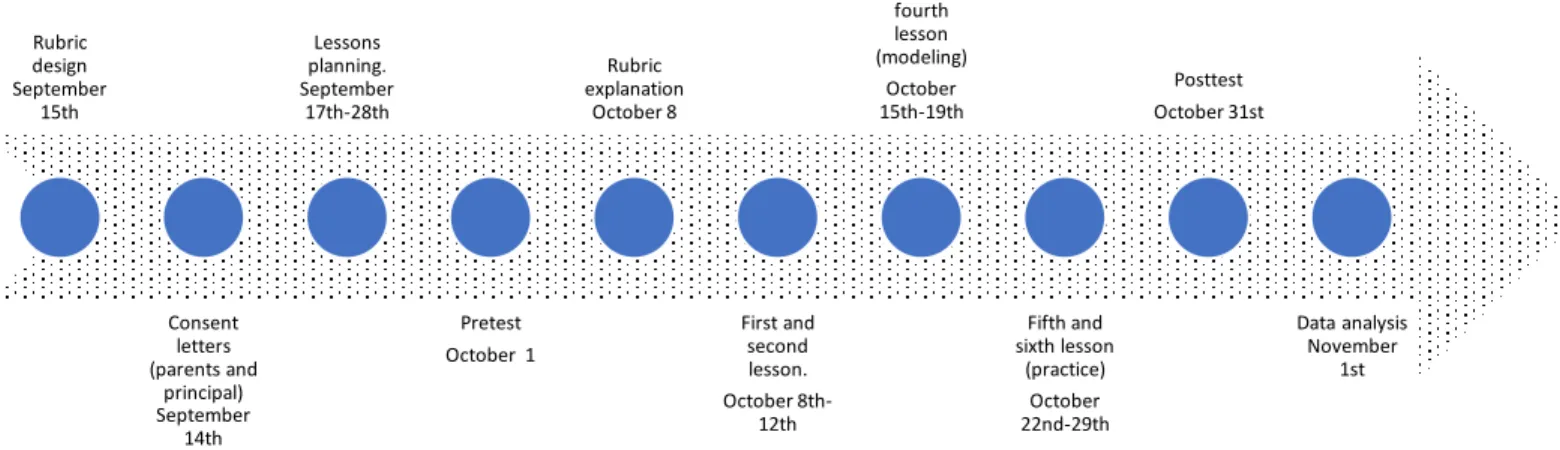
(16) IMPROVING READING COMPREHENSION SKILLS USING MIND MAPS this stage, the main purpose of the activity was to promote positive attitudes towards mind maps use and its benefits. In general, in these lessons, students were engaged and motivated about mind maps because they had never done something related to this kind of strategy. Subsequently, the teacher collected all the post-tests and scanned them all for its analysis. In the final phase, the results from the rubric (pre-test and post-test) were tabulated and entered into an Excel spreadsheet (see Appendix G) in order to quantify and to compare the results of each student. The teacher entered the grades into the rubric scores, and it showed a grade from 0 to five (5 being the highest rating) and also a percentage. Additionally, in order to complement the data-gathering process, the teacher used the field notes during a period of four weeks in order to register important events such as students’ behavior, attitudes, and comments before, during, and after the intervention process. The implementation of this study took place at the end of the school year, October 2018, as shown in figure 1.. Rubric design September 15th. Lessons planning. September 17th-28th. Consent letters (parents and principal) September 14th. Thrid and fourth lesson (modeling) October 15th-19th. Rubric explanation October 8. Pretest October 1. First and second lesson. October 8th12th. Posttest October 31st. Fifth and sixth lesson (practice) October 22nd-29th. Data analysis November 1st. Figure 1. Implementation timeline.. 18.
(17) IMPROVING READING COMPREHENSION SKILLS USING MIND MAPS Data Analysis This section shows the procedure used to collect and analyze the data. It used a mixedmethod in which both quantitative data and qualitative data were used to understand the implication of mind maps as a learning strategy on tenth graders’ reading comprehension skills. The quantitative data were gathered from a rubric and students’ mind maps (pre-test and post-test) and the qualitative data were collected from the teacher’s field notes and direct observation. The starting point for this study was the presentation of the rubric. By doing so, it was guaranteed that all students knew the scores, the grade and the categories that we're going to be evaluated in each mind map. As soon as the relevant explanations about vocabulary and the key phrases from the selected chapter were provided, the pre-test was applied. As expected, the results showed that students did not know how to use mind maps as a learning strategy. Worst of all, it was also evidenced that students did not use any of the key phrases, and, what is more; some of them used their mother tongue to retell the story. These results were obtained from the rubric previously mentioned, each pre-test was listed alphabetically, analyzed and then tabulated into an Excel spreadsheet, from this process a grade and a percentage were generated. When the intervention started, the teacher showed a picture and a YouTube video about how to use and create mind maps. Then both teacher and students worked together to create a new mind map considering the categories established in the rubric. To do so, it was used software called MindManager was used to model the second part of the reading, as the strategy was developed, students’ reactions and comments were immediate, as evidenced in the field notes. They expressed that they knew a similar strategy called conceptual maps, but. 19.
(18) IMPROVING READING COMPREHENSION SKILLS USING MIND MAPS they liked mind maps because they were more colorful and visually appealing. That is to say, students were aware and motivated towards using mind maps. Lastly, the post-test was applied, it had the same recommendations and instructions given in the pre-test. This time students were more knowledgeable about the vocabulary and the key phrases from the text. This new version of the mind maps was more colorful, included arrows, bubbles, and drawings; and above all, they retold the text in a creative way. Once again, these results were tabulated and subsequently compared to the data gathered in the pre-test. These results provided evidence that mind maps as a learning strategy could help any student including those who have learning disabilities to improve their reading comprehension skills of a short fictional text. In addition, in this way, it could be concluded that there is not only one way of creating effective mind maps, but there are also many ways, it all depends on the skills and the commitment students had put into obtaining better results in the activity. Additionally, mind maps have demonstrated to be a powerful and effective tool to equip students with the necessary skills for school and academic future life. Findings The results of this study showed that a significant number of the students had an improvement in their reading comprehension skills on a short text and their capacity to visualize, summarize, and classify the key concepts and ideas through a mind map, as shown in figure two. Figure number two summarizes the results gathered from the pre-test and the post-test, likewise, it shows an improvement in the usage of mind maps as a learning strategy. These percentages showed that most students successfully used mind maps to improve their reading comprehension skills; it means, that their reading comprehension skills were strengthened after the implementation of the strategy previously mentioned. 20.
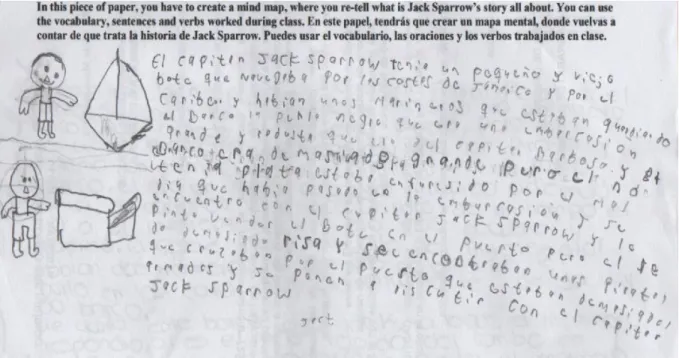
(19) IMPROVING READING COMPREHENSION SKILLS USING MIND MAPS. Number of students. Students' results 18 16 14 12 10 8 6 4 2 0 0-25%. 26-50% Pre-test. 51-75%. 76-100%. Post-test. Figure 2. Pre-test and post-test results. This section shows the findings from students’ data collected as well as the data from the teacher’s field notes. Mind Maps as an effective learning strategy The strategy of mind maps was very effective for some students, especially for a student in this group, the one who was suspected to have learning disabilities. This particular student received the same instructions and was exposed to the strategy during the intervention like anybody else in the classroom. Besides, he had a significant improvement in his learning because of the intervention made by the teacher despite he does not have the same learning rhythm or the same comprehension speed as the rest of the students. However, this was not a limitation for him since he could interact with others and complete his tasks at a slower pace, also he was able to organize and retrieve the information on his own. For instance, in his pre-test it can be seen that he used Spanish to compensate the lack of ability in the target language. Nevertheless, in the writing, he included only the necessary information about the text, he demonstrated that he understood the text because he was able to use key phrases and 21.
(20) IMPROVING READING COMPREHENSION SKILLS USING MIND MAPS vocabulary but in his first language while re-telling the story. Sometimes, it is hard to understand some sentences due to his illegible handwriting as can be seen in figure 3, so a great effort has to be made in order to understand it. Subsequently, the rubric was used to evaluate and analyze this pre-test, the results of this pretest were not satisfactory. In the pre-test, this student scored 41.67 % (10 points out of 24) because in this stage he had not received any instruction about mind maps, or anything related to it. He got this score because he did not use the keywords and phrases, the content was not accurate, the use of colors, bubbles, shapes arrows, and the connectors were absent. After the intervention and the guide on the implementation of the mind maps as a learning strategy, it can be seen that the achieved results are better than those achieved in the pre-test. In his post-test, he scored 79.17 % (19 points out of 24) a significant increase compared to the pretest results. This is due, in part, to the fact that he correctly used the key phrases in English, bubbles, colors, etc. In other words, he followed all the steps to create an. Figure 3. Pre-test.. 22.
(21) IMPROVING READING COMPREHENSION SKILLS USING MIND MAPS effective mind map and of course, without forgetting the content and the message he wanted to transmit as can be seen in figure 4.. Figure 4. Post-test. Co-construction of a Mind Map The teaching strategy of modeling and discussing with students the strategy of mind maps resulted in positive effects for students’ comprehension of a short fictional text. For instance, the following excerpt from the field notes shows that students identified the purpose of using mind maps as a learning strategy. One student said that “he already knew this strategy, but he did not know its name” and other students said that this was “the first time that they saw something like this”. Nicolle said that this mind map is like a “concept map” and that it was a wonderful tool to organize their ideas. This was the moment when I introduced the use of mind maps as a learning strategy, Students mentioned that this strategy was going to help them to learn better for the. 23.
(22) IMPROVING READING COMPREHENSION SKILLS USING MIND MAPS forthcoming tests. We discussed the benefits of using them and how they can be included into their daily school life (Taken from the teacher’s notes after each class) Excerpt 1. Fieldnotes Taking into account what has already been mentioned, it can be said that students in this study were aware of the benefits of this strategy and they were able to use them without any problem. Being aware and responsible for their own learning, are the first steps for selfdirected learning. In addition, it could be observed that the mind map strategy promotes teamwork and also allows students to interact with each other in order to compensate students’ academic weaknesses and at the same time, it fosters student’s creativity, learning and above all, it builds trust and confidence to work with others. … “the image from chapter number 3 was projected so they could watch it while they (students) were working. Once they started working, I could observe that there was support among them, and some tried to help those who had problems with some words and phrases” “… some students said, “we are going to become experts in mind maps” Excerpt 2. Fieldnotes Creative ways to represent reading comprehension While creating and designing the mind maps, students used different techniques and representations of mind maps such as arrows, bubbles, drawings and pictures, keywords and phrases in English and Spanish and connectors. Resulting in a colorful and visually appealing mind map. Students followed step by step all the instructions about how to create an effective mind map but in the end, each mind map was different, and each one had its own style. From these variations, it can be concluded that there is not only one way of creating effective mind maps, but there are also many ways, it all depends on the particular talents that every student has to use his imagination in the use of this learning strategy. So, it is highly recommended 24.
(23) IMPROVING READING COMPREHENSION SKILLS USING MIND MAPS that students use mind maps as metacognitive strategy to improve on the understanding of a short text. Mind maps have demonstrated to be a powerful and effective tool to equip students with the essential skills necessary for school and academic future. Discussion The results of this study indicate that mind maps enhanced students’ skills in writing, organizing and summarizing ideas, vocabulary learning, and reading. Which in turn means that this strategy not only increased students’ imagination and creativity but also, they promoted self-direction in students. However, there is some consideration that should be looked into for future research. The first consideration is, therefore, the use of a reading test, because it would complement the data collection process and at the same time it can be used as a pre-test and post-test to measure the reading comprehension skill. These data can later be used to compare to any data collected from any controlled group. In this study this test could not be used because of time constraints. The second consideration is time constrain due to this study was scheduled at the end of the school year in October and November 2018. For this reason, it was not possible to teach many more lessons and to implement a checklist that raised students’ awareness of the use of mind maps as a learning strategy, instead a rubric was used to familiarize students with the categories and the aspects that were going to be evaluated. From these results it can be concluded that mind maps are a great learning strategy that promotes teamwork and independence in some students. Conclusion The study confirmed that the implementation of mind maps as a learning strategy was effective because they helped students to comprehend better, summarize, visualize, and 25.
(24) IMPROVING READING COMPREHENSION SKILLS USING MIND MAPS classify the key concepts and ideas in the target language of a short fictional text. The data gathered from the pre-test and post-test, strongly suggest that mind maps as a learning strategy benefited a student that was suspected to have learning disabilities because he could enhance his vocabulary and understanding skills. This study also showed that students performed best in the post-test thanks to the teacher’s instruction, and this strategy would help them to learn faster and better than following traditional teaching methods. Additionally, these results demonstrated what had been stated in the theoretical framework about mind maps: mind maps are an important part of the learning and teaching process because they not only helped students to make connections while reading a short text but also to organize information and ideas when reading. So in order for this strategy to be successful, teachers must be aware of how important it is to teach and discuss with students the usage of this learning strategy, so the teacher’s intervention plays an important role in this process, consequently he becomes a guide and a facilitator meanwhile students become responsible for their own learning process. Moreover, it was possible to determine that there is not only one right way of doing or creating mind maps, there are many unlike those proposed in the theoretical framework, it all depends on the particular talents and skills that every student has in order to use his/her imagination in the application of this strategy. It is worth mentioning the importance of the rubric in the data gathering process and how it guaranteed that all students receive a reliable score and a more objective result.. 26.
(25) IMPROVING READING COMPREHENSION SKILLS USING MIND MAPS References Brinkmann, A. (2003). Graphical Knowledge Display-Mind Mapping and Concept Mapping as Efficient Tools in Mathematics Education. Mathematics Education Review, 16. Budd, J. W. (2004). Mind Maps As Classroom Exercises. The Journal of Economic Education, 35(1), 35–46. https://doi.org/10.3200/JECE.35.1.35-46 Buran, A., & Filyukov, A. (2015). Mind Mapping Technique in Language Learning. Procedia - Social and Behavioral Sciences, 206(November), 215–218. https://doi.org/10.1016/j.sbspro.2015.10.010 Buzan, T. (2006). Mind Mapping. BBC Active. Creswell, J. W. (2013). Research Design: Qualitative, Quantitative, and Mixed Methods Approaches. SAGE Publications. Retrieved from https://books.google.com.co/books?id=EbogAQAAQBAJ Davies, M. (2011). Concept mapping, mind mapping and argument mapping: what are the differences and do they matter? Higher Education, 62(3), 279–301. Ellis, R. (1994). The study of second language acquisition. The study of second language acquisition. Oxford University Press, 1994. Farrand, P., Hussain, F., & Hennessy, E. (2011). The efficacy of the `mind map’ study technique. Medical Education, 36(5), 426–431. https://doi.org/10.1046/j.13652923.2002.01205.x Fun, C. S., & Maskat, N. (2010). Teacher-Centered Mind Mapping vs Student-Centered Mind Mapping in the teaching of accounting at Pre-U level- An action research. Procedia - Social and Behavioral Sciences, 7(2), 240–246. https://doi.org/10.1016/j.sbspro.2010.10.034 27.
(26) IMPROVING READING COMPREHENSION SKILLS USING MIND MAPS Hilbert, T. S., & Renkl, A. (2008). Concept mapping as a follow-up strategy to learning from texts: what characterizes good and poor mappers? Instructional Science, 36(1), 53–73. Merchie, E., & Van Keer, H. (2012). Spontaneous Mind Map Use and Learning from Texts: The Role of Instruction and Student Characteristics. Procedia - Social and Behavioral Sciences, 69(Iceepsy), 1387–1394. https://doi.org/10.1016/j.sbspro.2012.12.077 Nassaji, H. (2011). Issues in Second-Language Reading: Implications for Acquisition and Instruction. Reading Research Quarterly, 46(2), 173–184. Retrieved from http://www.jstor.org/stable/41203420 Nesbit, J. C., & Adesope, O. O. (2006). Learning with concept and knowledge maps: A meta-analysis. Review of Educational Research, 76(3), 413–448. Nunan, D. (1991). Language teaching methodology: a textbook for teachers. Prentice-Hall. O’Malley, J. M., & Chamot, A. U. (1990). Learning Strategies in Second Language Acquisition. Cambridge University Press. Oxford, R L. (1990). Language learning strategies: what every teacher should know. Newbury House Publisher. Oxford, R L. (2013). Teaching & Researching: Language Learning Strategies. Taylor & Francis. Oxford, Rebecca L. (2011). Strategies for learning a second or foreign language. Language Teaching, 44(2), 167–180. https://doi.org/10.1017/S0261444810000492 Rahimi, M., & Katal, M. (2012). Social and Metacognitive strategies awareness and success in learning English as a foreign language : an overview, 31(2011), 73–81. https://doi.org/10.1016/j.sbspro.2011.12.019 28.
(27) IMPROVING READING COMPREHENSION SKILLS USING MIND MAPS Rosciano, A. (2015). The effectiveness of mind mapping as an active learning strategy among associate degree nursing students. Teaching and Learning in Nursing, 10(2), 93–99. https://doi.org/10.1016/j.teln.2015.01.003 Rubin, J. (1987). Learner strategies: Theoretical assumptions, research history and typology. Learner Strategies in Language Learning, 15–30. Urquhart, A. H., & Weir, C. J. (2014). Reading in a Second Language: Process, Product and Practice. Taylor & Francis. Zare, P. (2012). Language Learning Strategies Among EFL / ESL Learners : A Review of Literature, 2(5), 162–169. Zhussupova, R., & Kazbekova, M. (2016). Metacognitive strategies as points in teaching reading comprehension. Procedia - Social and Behavioral Sciences, 228(June), 593– 600. https://doi.org/10.1016/j.sbspro.2016.07.091. 29.
(28) IMPROVING READING COMPREHENSION SKILLS USING MIND MAPS Appendixes CONSENT FORM (PADRES DE FAMILIA) Institución educativa: Colegio Isabel Valbuena Cifuentes. Municipio: Vélez Santander Yo_____________________________________________________ mayor de edad,[ ] padre,[ ] acudiente[ ] o representante legal del estudiante: ____________________________ de _____ años de edad, he sido informado acerca del proyecto de investigación que adelanta el profesor: WILLIAM VILLARREAL MANOTAS, docente de esta institución, y estudiante de la Maestría en Enseñanza de Lenguas Extranjeras de la Universidad de La Sabana, se encuentra desarrollando un proyecto de investigación el cual pretende mejorar las habilidades de comprensión de lectura a través de la implementación de mapas mentales con los estudiantes del grado decimo, el cual se desarrollará en el transcurso del presente año (2018) con los estudiantes del grado 10-2 de la jornada de la mañana. Luego de haber sido informado(a) sobre las condiciones de la partición de mi hijo(a), o del estudiante de quien soy acudiente o representante legal, resuelto todas las inquietudes y comprendo en su totalidad la información sobre esta actividad, entiendo que: ❖ La participación en fotos o videos de mi hijo(a) o del estudiante de quién soy acudiente o representante legal, no tendrá repercusiones o consecuencias en sus actividades escolares, evaluaciones o calificaciones. ❖ La participación en fotos o videos de mi hijo(a) o del estudiante de quién soy acudiente o representante legal no generará ningún gasto, ni recibirá remuneración alguna por su participación. ❖ No habrá ninguna sanción para mi hijo(a) o del estudiante de quién soy acudiente o representante legal, en caso de que no autoricemos su participación. ❖ La identidad de mi hijo(a) o del estudiante de quién soy acudiente o representante legal, no será publicada, ni las imágenes registrados en fotos, ni los audios y videos. Estos sólo se usarán únicamente para propósitos especificados y como evidencia de la práctica educativa de las personas encargadas. ❖ La entidad y las personas a cargo garantizarán la protección de las imágenes y videos de mi hijo(a) o del estudiante de quién soy acudiente o representante legal, y el uso de estas, de acuerdo con la normatividad vigente, durante y posteriormente al proceso. Atendiendo a la normatividad vigente sobre consentimiento informado (Ley 1581 de 2012 y Decreto 1377 de 2012), y de forma consciente y voluntaria: [] DOY EL CONSENTIMIENTO [ ] NO DOY EL CONSENTIMIENTO Lugar y fecha: ______________________ ____________________________ FIRMA MADRE. ______________________________ FIRMA PADRE. ______________________________________ FIRMA ACUDIENTE O REPRESENTANTE LEGAL 30.
(29) IMPROVING READING COMPREHENSION SKILLS USING MIND MAPS Señor: JORGE ALBERTO ORTIZ, Rector Colegio Isabel Valbuena Cifuentes. Vélez Santander Asunto: Solicitud de autorización para proyecto de investigación en el aula.. El profesor WILLIAM VILLARREAL MANOTAS, docente de esta institución, y estudiante de la Maestría en Enseñanza de Lenguas Extranjeras de la Universidad de La Sabana, se encuentra desarrollando un proyecto de investigación el cual pretende mejorar las habilidades de comprensión de lectura a través de la implementación de mapas mentales con los estudiantes del grado decimo, el cual se desarrollará en el transcurso del presente año (2018) con los estudiantes del grado 10-2 de la jornada de la mañana.. Le informo sobre las condiciones de la partición de los estudiantes de dicho grado: ❖ La participación en fotos o videos de los estudiantes no tendrá repercusiones o consecuencias en sus actividades escolares, evaluaciones o calificaciones. ❖ La participación en fotos o videos de los estudiantes no generará ningún gasto, ni recibirá remuneración alguna por su participación. ❖ No habrá ninguna sanción académica para de los estudiantes, en caso de que se autorice su participación. ❖ La identidad de los estudiantes no será publicada, ni las imágenes registrados en fotos, ni los audios y videos. Estos sólo se usarán únicamente para propósitos especificados y como evidencia de la práctica educativa de las personas encargadas. ❖ La entidad y las personas a cargo garantizarán la protección de las imágenes y videos de los estudiantes, de acuerdo con la normatividad vigente, durante y posteriormente al proceso.. Agradezco mucho su colaboración.. Firma _________________________. Fecha: _________________________. 31.
(30) IMPROVING READING COMPREHENSION SKILLS USING MIND MAPS Appendix A Chapter 3. 32.
(31) IMPROVING READING COMPREHENSION SKILLS USING MIND MAPS. Appendix B Mind Map Rubric Category. 1 Low Basic. 2 High Basic. Vocabulary. Candidate. Candidate. 3 Low advanced Candidate. 4 High Advanced Candidate. (use of keywords. seems to have. seems to have. seems to have. seems to have. and/or phrases. no. a partial. a good. a complete. that allow. understanding. understanding. understanding. understanding. students´. of the. of the. of the. of the. comprehension. keywords. (0. keywords. (8. keywords. (16. keywords. (24. of the text). or 7 words. to 15 words. to 23 words. to 30 words. were used. were used. were used. were used. correctly in the. correctly in the. correctly in the. correctly in the. mind map). mind map). mind map). mind map). Content. Candidate. Candidate. Candidate. Candidate. (The mind map is. presents no. misses most of. includes some. includes the. accurate with the. main points. the main. of the main. main points. information. from the. points from. points from the. from the. presented). reading in the. the reading in. reading in the. reading in the. mind map and. the mind map. mind map and. mind map and. it is difficult to. and it is. it is easy to. it is easy to. understand.. difficult to. understand.. understand.. Score. understand. Grammar and. Candidate. Candidate. Candidate. Candidate. Spelling. makes many. makes many. makes some. makes a few. (Student uses. serious errors. errors in. errors in. errors in. accurate. in grammar. grammar. grammar. grammar. grammar and. and/or. and/or. and/or. and/or. spelling in the L1. spelling.. spelling.. spelling.. spelling.. Format & Layout. Candidate uses. Candidate. Candidate uses. Candidate. (use of colors and. no colors,. made some. colors, bubbles. creatively uses. the usage of. bubbles, or. effort to use. or any other. colors, bubbles. or L2). 33.
(32) IMPROVING READING COMPREHENSION SKILLS USING MIND MAPS bubbles or. any other. color, bubbles. shape to show. or any other. shapes). shape, to show. or any other. connections. shape to show. connections. shape to show. among ideas.. connections. among ideas.. connections. among ideas.. among ideas. Picture and/or. Candidate. Candidate uses. Candidate uses. Candidate. images. does not use. some pictures,. pictures,. creatively uses. (drawings). pictures,. images,. images,. a lot of. images,. symbols and. symbols and. pictures,. symbols and. drawings in. drawings in. images,. drawings in. the mind map.. the mind map.. symbols and. the mind map.. drawings in the mind map.. Usage of arrows. Candidate. Candidate uses. Candidate uses. Candidate uses. and/or connectors. does not use. a few arrows. some arrows. arrows and. arrows and. and connectors. and connectors. connectors to. connectors to. to show. to show a. show a. show. connection. connection. connection. connection. between ideas.. between ideas.. between ideas.. between ideas. _____ / 24 points. 34.
(33) IMPROVING READING COMPREHENSION SKILLS USING MIND MAPS Appendix C Field notes Fieldnotes. Class number #1 -October 18th, 2018. This class has thirty-one students, they ranged in age from fourteen to sixteen years. And it was developed as it was planned, all students participated actively, and they made the proposed activities taking into account the teacher’s instructions. At the beginning of the class, students were asked if they had watched the movie “Pirates of the Caribbean, the curse of the Black Pearl”. Their answer was that “it was a funny, lovely and exciting movie” and they would watch it again if necessary. There was only one student who answered that he hadn’t watched it, so I decided to share it with him when the class finished. Then the teacher projected a picture of a pirate to introduce the topic and asked questions about him. The students shouted, “Jack Sparrow” and the teacher asked question about him, they only said words such as “mean, funny, smart” and some words in Spanish such as “malo, feo, bonito, etc.”. the new vocabulary was presented by means of visual aids, and some verbs were acted out. Some words were explained in students' first language (L1). I think that this was a disadvantage; but generally, students did not show any problem understanding the vocabulary because most of the words drew on from students’ existing knowledge of the language, so the activity relied heavily on learners’ prior knowledge on the movie, so I consider that the activity was not complicated for some students. The teacher managed to explore every opportunity to allow students express themselves. After the warming up activity, the teacher explained to the students that they were about to develop an activity based on the movie that they had been discussing earlier. The teacher projected a picture of the reading and introduced the key words. First, students were asked to read the first part of the text by themselves without any help. After doing so, the teacher made some comprehension question and they continued reading the second part of text. Students’ interpretation of the text was promoted but I could notice that some students had some problems. 35.
(34) IMPROVING READING COMPREHENSION SKILLS USING MIND MAPS trying to understand what the topic of the text was. Accordingly, the teacher devoted a considerable amount of time and effort making questions in order to make sure that everyone was able to understand the passages from the text. Once the students finished the reading, the teacher read the whole text sentence by sentence with the students. While the students were reading the text out loud, they were a little bit nervous and insecure, so the teacher encourage students to do it two more times and afterward they felt conformable with what they were reading. At the same time, the teacher asked if there is any connection between the text and the movie. On this, it is worth highlighting that one problem with big groups is that the largest the group is, the longest the activities will take, so I could not complete the activities in the time they were originally planned. Although, I encouraged learners’ participation at all times, it was difficult to get everyone to follow at the same time: at times, some students were not paying attention and talked among themselves. In addition, in order to maximize the students’ opportunities for participation, the teacher responded to every student’s contribution individually. Until this moment everything was going well but when they were asked to work individually, and to create and re-tell Jack Sparrow’s story using a mind map following the instructions on the piece of paper, they were puzzled because most of them did not know what a mind map was, at the end, they managed to complete the activity. I could see that most of students were just writing a summary, a drawing, and others were doing something like a conceptual map (it demonstrates that students are aware of the use of learning strategies).. 36.
(35) IMPROVING READING COMPREHENSION SKILLS USING MIND MAPS Appendix D Lesson plan example Pirates of the Caribbean Lesson plan (practice) Aims. ✓ Students will be able to understand that a good reader pays close attention to word choice to better comprehend a text. ✓ Students will be able to make connections of background knowledge to the story they read. ✓ Students will be able to understand the second part of chapter number 3 (Pirates of the Caribbean). ✓ Students will be able to have enough practice to create their mind map following the teacher’s instructions. ✓ Students will be able to make a mind map using a made-up story.. Age/level. A1/tenth graders.. Time 60 minutes.. Materials. Dictionary, video projector, and Laptop. Procedure. Introduction. This lesson is the follow up of the previous class. Students were instructed in the usage of mind maps as a learning strategy. The teacher taught and showed Ss how to do it. In this class, students will be practicing individually to refine their skills in the usage of mind maps as a learning strategy. At the same time, Ss will improve the mind map made in the previous class.. 1. Warming up (10minutes). ✓ T wishes to recall the importance of mind maps to improve students’ memory and cognitive skills. ✓ T will re-introduce the vocabulary. ✓ Ss share ideas on how to create an effective mind map. ✓ T will show the mind map made in the previous session and T will ask students if they would like to modify or improve it.. 37.
(36) IMPROVING READING COMPREHENSION SKILLS USING MIND MAPS ✓ T will tell students that they have to read the same text again but this time they are going to add more information to the mind map. 2. Task 1 (30 minutes). 3. Task 2 (20 minutes). ✓ T and Ss will use the reading of Jack Sparrow to improve the new mind map. ✓ T and Ss will read the text again as a complement to what students have already studied. T and Ss have to go back and forth checking the text. ✓ Ss will be able to modify the mind map created by the teacher in the last class. They can add more information. ✓ Twill modify the mind maps with students’ suggestions. ✓ It is expected that the students participate in the lesson actively. ✓ All these activities are going to be made with guidance from the teacher ✓ Ss will create a mind map using a made-up story and they will share it with the group. ✓ Ss will write their impressions about the activities made during this class. ✓ The whole class will discuss the improved version of the mind maps.. 38.
(37) IMPROVING READING COMPREHENSION SKILLS USING MIND MAPS Appendix E Pre-test example. 39.
(38) IMPROVING READING COMPREHENSION SKILLS USING MIND MAPS Appendix F Post-test example. 40.
(39) IMPROVING READING COMPREHENSION SKILLS USING MIND MAPS Appendix G Excel spreadsheet with the rubric scores (pre-& post-test) Pre-test Name A. CAMILA A. A. NATHALIA C. ANGIE P. C. JESICA L. C. ANDRES F. C. JONARD AN C.LAURA V. C. JULIETH A. D. JULIAN A. G. ANDRES F. H. ANGY J. H. JUAN S. H. HARVI N. L. JUAN C. M. SHARIK N. M. KAROLL L. M. JUAN P. M. JAIDER M. YIMMY L. O. VAIRON S. P. BRAYAN S. P. JULIETH D. R. XIMENA A. R. LAURA D. S. PAULA A. S. NATASHA A. S. MILENA. Score pre-test Grade pre-test Percentage pre 14 2.92 58.33 12 2.50 50.00 13 2.71 54.17 12 2.50 50.00 15 3.13 62.50 10 2.08 41.67 13 2.71 54.17 13 2.71 54.17 6 1.25 25.00 11 2.29 45.83 15 3.13 62.50 6 1.25 25.00 10 2.08 41.67 13 2.71 54.17 15 3.13 62.50 12 2.50 50.00 8 1.67 33.33 6 1.25 25.00 6 1.25 25.00 6 1.25 25.00 15 3.13 62.50 14 2.92 58.33 10 2.08 41.67 13 2.71 54.17 12 2.50 50.00 13 2.71 54.17 7 1.46 29.17. Post-test Score postGrade Percentage test post test post 23 4.79 95.83 22 4.58 91.67 20 4.17 83.33 21 4.38 87.50 20 4.17 83.33 20 4.17 83.33 18 3.75 75.00 21 4.38 87.50 13 2.71 54.17 14 2.92 58.33 19 3.96 79.17 20 4.17 83.33 19 3.96 79.17 15 3.13 62.50 18 3.75 75.00 19 3.96 79.17 18 3.75 75.00 21 4.38 87.50 12 2.50 50.00 22 4.58 91.67 20 4.17 83.33 21 4.38 87.50 18 3.75 75.00 20 4.17 83.33 15 3.13 62.50 19 3.96 79.17 17 3.54 70.83. 41.
(40)
Figure

Documento similar
The aim of this paper is to demonstrate that reading authentic literary material in the English as a Foreign Language (EFL) classroom can improve students’ language learning skills as
8 Thus, this thesis contrasts the metaphorical expressions and their underlying conceptual metaphors identified in AmE and PneSp, showing the differences between
In the current study, we explore di fferent aspects that a ffect DNN performance, with a special focus on very short utterances and real-time applications. We believe the
All in all, writing a synthesis text, based on multiple sources, requires three main high level processes: (1) the sources must be read integratively, that implies that readers
SOLOMON (1989): The influence of prior reading instruction on fourth grade students 1 attitudes toward reading according to select national assessment of educa- tional
In this section, different cogeneration alternatives with diesel engines and gas turbines are analyzed. The possible solutions in which the steam took part were discarded
The development of the Programme based on the Intercultural Approach to improve reading comprehension in 3rd grade students of Simón Bolívar High school from
ABSTRACT: This study examined the effect of classifying vocabulary into parts of speech using Google Drive sheets in order to improve reading comprehension.. Participants were 20
