
The effect of the self assessment cycle in the literal reading comprehension of a1 high school students
132
0
0
Texto completo
(2) Running head: SELF-ASSESSMENT TO IMPROVE LITERAL READING COMPREHENSION The Effect of the Self-assessment Cycle in the Literal Reading Comprehension of A1 High School Students. University de La Sabana Master in English Language for Self-directed Learning (Online Program). Chía, 2016. Yudy Andrea MALDONADO BARRIGA Emma Yohana RUSSI PAZ. Signature:. i.
(3) SELF-ASSESSMENT TO IMPROVE LITERAL READING COMPREHENSION The Effect of the Self-assessment Cycle in the Literal Reading Comprehension of A1 High School Students. Yudy Andrea MALDONADO BARRIGA Emma Yohana RUSSI PAZ. Submitted in fulfillment of the requirements for the degree of Master in English Language for Self-directed Learning (Online Program). Directed by: Prof. Claudia Acero Department of Foreign Languages and Cultures Universidad de La Sabana Chía, 2016. ii.
(4) Declaration We hereby declare that our research report entitled: The Effect of the Self-assessment Cycle in the Literal Reading Comprehension of A1 High School Students. . is the result of our own work and includes nothing which is the outcome of work done in collaboration except as declared and specified in the text;. . is neither substantially the same as nor contains substantial portions of any other similar work submitted or that is being concurrently submitted for any degree or diploma or other qualification at the Universidad de La Sabana or any other university or similar institution except as declared and specified in the text;. . complies with the word limits and other requirements stipulated by The Research Subcommittee of the Department of Foreign Languages and Cultures;. . has been submitted by or on the required submission date. Date: October 27th 2016 Full names: Yudy Andrea MALDONADO BARRIGA Emma Yohana RUSSI PAZ Signatures:.
(5) SELF-ASSESSMENT TO IMPROVE LITERAL READING COMPREHENSION. iii. Acknowledgements We would first like to thank God for being our strength and guide in this process. We also thank our families for their patience. To our beloved husbands, for being fathers and mothers, to our children for their time, to our parents to become more than grandparents for our children, to all of you, for your constant support for being there when we needed you more. Our thanks and special gratitude to our counselor Claudia Acero for her constant guidance on this process, her support and great ideas that contributed to this research project to be achieved. Special thanks and appreciations to the principals and coordinators for making part of the research process, allowing us to carry it out in the institutions and to our students for actively participating in this project and letting us evolve professionally and as human beings with them..
(6) SELF-ASSESSMENT TO IMPROVE LITERAL READING COMPREHENSION. iv. Abstract This research focused on the effect of self-assessment on the literal reading comprehension and self-directed reading of 71 A1 ninth and tenth graders in two public schools in Bogota, Colombia. Teacher-researchers, following the action research approach, carried out ten facilitating sessions where a cycle to promote self-assessment was implemented looking for changes in the learning and teaching practices to improve the levels of literal reading comprehension. Quantitative and qualitative data were gathered through the development of diagnostic and closing tests, pre and post literal reading comprehension tests, students’ journals, teachers’ classroom observation, focus groups interviews and students’ work samples. The analysis of data revealed that students got familiar with the self-assessment cycle which enhanced students’ self-directed reading since it allowed them to be aware of their weaknesses and strengths, set their own reading goals and learn to monitor their own reading process. It was also evident that students showed progress in their reading and reported to have more learning strategies to cope with literal reading tasks. Key words: literal reading comprehension, self-assessment cycle, self- directedness, setting reading goals, self- monitoring..
(7) SELF-ASSESSMENT TO IMPROVE LITERAL READING COMPREHENSION. v. Resumen El objetivo de este proyecto fue determinar el efecto del ciclo de auto-evaluación en la comprensión lectora literal y la lectura auto dirigida en los estudiantes de dos colegios públicos de Bogotá, Colombia. 71 estudiantes de noveno y décimo grado entre 14 y 16 años y cuyo nivel de inglés como lengua extranjera corresponde al nivel A1 según el Marco Común Europeo de Referencia para las Lenguas participaron en la investigación. Siguiendo un modelo de investigación acción participación, los investigadores llevaron a cabo diez sesiones donde se implementó el ciclo de auto-evaluación con el propósito de generar cambios en la práctica de enseñanza y aprendizaje del proceso de comprensión de lectura literal. Se recolectaron datos cuantitativos y cualitativos por medio de cuestionarios diagnósticos y finales, pruebas de comprensión de lectura literal inicial y final, diarios de estudiantes, observaciones de clase de los profesores, entrevistas de grupo focalizadas y muestras del trabajo de los estudiantes que incluían pruebas de lectura literal cada sesión. El análisis de los datos revelo que los estudiantes se familiarizaron con el ciclo de autoevaluación el cual promovió la lectura auto dirigida de los participantes ya que les permitió ser conscientes de sus debilidades y fortalezas, establecer su propias metas de lectura y aprender a monitorearlas en un proceso cíclico. Este además afecto de forma moderada la comprensión de lectura literal considerando que la mayoría de ellos no alcanzo una mejoría significativa, no obstante los estudiantes mostraron progreso y reportaron haber adquirido más herramientas para enfrentarse a tareas de comprensión de lectura literal. Palabras claves: comprensión de lectura literal, ciclo de autoevaluación, autodirección, objetivos de lectura, auto monitoreo..
(8) SELF-ASSESSMENT TO IMPROVE LITERAL READING COMPREHENSION. vi. Table of Contents Introduction ..................................................................................................................................... 1 Statement of the Problem ............................................................................................................ 3 Research Question ....................................................................................................................... 6 Research Objectives .................................................................................................................... 6 Rationale...................................................................................................................................... 7 Theoretical Framework ................................................................................................................. 10 Reading Comprehension ........................................................................................................... 10 Literal reading comprehension. ............................................................................................. 11 Literal Comprehension Sub-skills ......................................................................................... 12 Specific information........................................................................................................... 12 Main Idea. .......................................................................................................................... 12 Sequence of events. ............................................................................................................ 12 Comparison. ....................................................................................................................... 13 Cause and effect. ................................................................................................................ 13 From Self-Directed Learning to Self-Directed Reading ........................................................... 13 Self-assessment. ..................................................................................................................... 17 Goal Setting. ...................................................................................................................... 19 Self-monitoring. ................................................................................................................. 20 State of the Art .......................................................................................................................... 21 Research Design ........................................................................................................................... 24 Type of study............................................................................................................................. 24 Context ...................................................................................................................................... 27.
(9) SELF-ASSESSMENT TO IMPROVE LITERAL READING COMPREHENSION. vii. Participants ................................................................................................................................ 28 Researchers’ role ....................................................................................................................... 30 Ethical considerations ............................................................................................................... 31 Data collection instruments and procedures.............................................................................. 32 Data collection instruments. .................................................................................................. 32 Questionnaires.................................................................................................................... 33 Literal reading tests. ........................................................................................................... 34 Focus group interviews. ..................................................................................................... 35 Teachers’ classroom observation. ...................................................................................... 35 Students’ reading journal. .................................................................................................. 36 Validation Procedures ............................................................................................................... 36 Pedagogical Intervention and Implementation ............................................................................. 38 Instructional Design .................................................................................................................. 38 Stage 1: Towards an understanding of the learners ............................................................... 38 Stage 2: Introducing literal reading and self-assessment cycle strategy ............................... 40 Stage 3: Starting to self-assess literal reading ....................................................................... 42 Stage 4: Getting familiar with self- directed reading ............................................................ 43 Stage 5: The self-assessment cycle and the improvement of the literal reading process ...... 43 Data analysis and findings ............................................................................................................ 44 Data Management Procedures ................................................................................................... 44 Quantitative Data Analysis........................................................................................................ 45 Qualitative Data Analysis.......................................................................................................... 47 Data Interpretation..................................................................................................................... 50.
(10) SELF-ASSESSMENT TO IMPROVE LITERAL READING COMPREHENSION. viii. Category 1 Literal .................................................................................................................. 50 Reading Comprehension. ................................................................................................... 51 Performance. ...................................................................................................................... 55 Category 2 Self-directed reading. .......................................................................................... 60 Active role in reading......................................................................................................... 61 Self-assessment. ................................................................................................................. 66 Other Findings ....................................................................................................................... 75 Conclusions and Pedagogical Implications .................................................................................. 78 Conclusions ............................................................................................................................... 78 Pedagogical Implications .......................................................................................................... 80 Limitations ................................................................................................................................ 81 Further Research ....................................................................................................................... 82 References ..................................................................................................................................... 84 Appendixes ................................................................................................................................... 92.
(11) SELF-ASSESSMENT TO IMPROVE LITERAL READING COMPREHENSION. ix. Table of Tables Table 1. The Staged Self- Directed Learning Model .................................................................... 15 Table 2. Data Collection Instruments ......................................................................................... 33 Table 3. Stages to Become Self-directed Learners ...................................................................... 39 Table 4. Codes Obtained from the Open Coding Phase. .............................................................. 48 Table 5.Comparative Percentages of Q4 during Diagnostic and Closing Questionnaires. .......... 55 Table 6. Literal Reading Comprehension Test, Descriptive Statistics ......................................... 56 Table 7. Ongoing Literal Reading Tests. Descriptive statistics .................................................... 57 Table 8. Final Literal Reading Results ......................................................................................... 57 Table 9. Pre and Post Tests Percentages per Correct Items .......................................................... 58 Table 10. Reading Time Records.................................................................................................. 58 Table 11. Setting Reading Goals .................................................................................................. 70 Table 12. Awareness to Set Reading Goals .................................................................................. 70 Table 13. Self-monitoring Actions to Verify Understanding ....................................................... 73 Table 14. Reading Strategies Awareness ...................................................................................... 74 Table 15. Self- directed Reading Done by Students. .................................................................... 63.
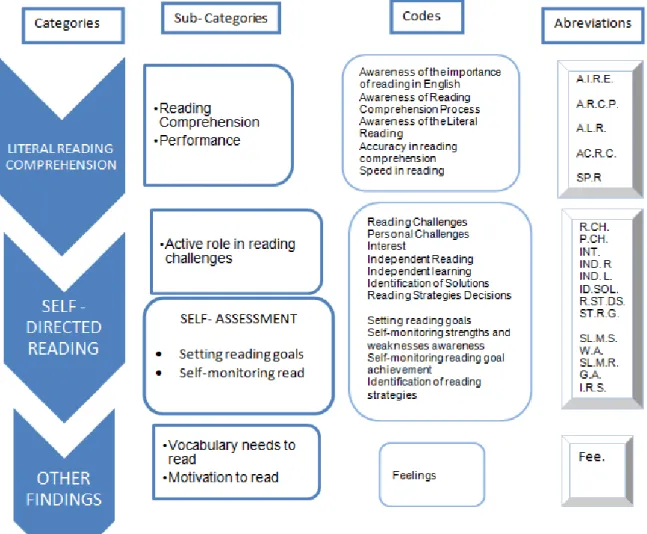
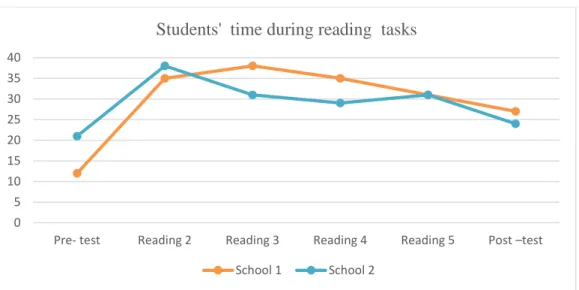
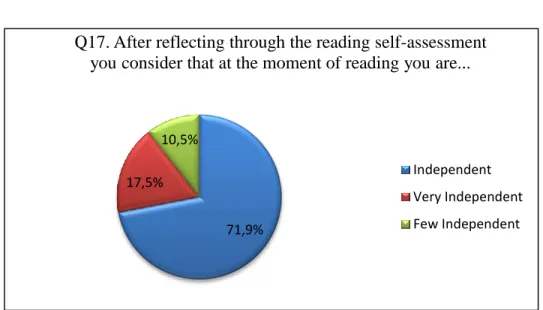
(12) SELF-ASSESSMENT TO IMPROVE LITERAL READING COMPREHENSION. x. Table of Figures Figure 1. Participants’ reading comprehension performance perceptions ...................................... 5 Figure 2. Diagram of the action research cycle. ........................................................................... 27 Figure 3. Self- assessment cycle to become self- directed readers ............................................... 40 Figure 4. Categories and subcategories after axial coding process. ............................................. 49 Figure 5. Students’ reading times. ................................................................................................ 59 Figure 6. Students' perceptions about themselves as independent readers ................................... 64.
(13) SELF-ASSESSMENT TO IMPROVE LITERAL READING COMPREHENSION. xi. Appendixes Appendix A. Students’ Characterization Questionnaire ............................................................... 92 Appendix B. Self-assessment Perceptions Questionnaire ............................................................ 97 Appendix C. Pre-literal Reading Test ......................................................................................... 102 Appendix D. Post- literal Reading Test ...................................................................................... 104 Appendix E. Focus Group Interview Questions ......................................................................... 106 Appendix F. Teachers’ Classroom Observation ......................................................................... 107 Appendix G. Students’ Reading Journal ..................................................................................... 108 Appendix H. Research Timeline ................................................................................................ 109 Appendix I . Lesson Plan Sample ............................................................................................... 110 Appendix J. Self-Assessment Protocol ...................................................................................... 114 Appendix K. Independent Reading Work ................................................................................... 116 Appendix L. Data Management Spreadsheet sample ................................................................ 118.
(14) SELF-ASSESSMENT TO IMPROVE LITERAL READING COMPREHENSION. 1. Introduction “To teach a man how he may learn to grow independently, and for himself, is perhaps the greatest service that one man can do another”. - Benjamin Jowett In a global world where time and space boundaries have disappeared, learners need to develop a set of skills that help them break language obstacles, deal with new challenges and take advantage of the growing amount of information. Among those skills, learning English becomes essential for learners, paying special attention to reading comprehension since it is the tool to comprehend the information which citizens of the 21st century are exposed to every day and a way to improve language learning; Mikulecky (2008) points out that “effective reading is essential for success in acquiring a second language” (p.1). In addition, globalization also demands that current education fosters capable learners to participate in their learning process and helps them acquire strategies that facilitate them to become lifelong learners. One way to do it is by developing skills to understand the information changeable sources offer and know how to manage them to benefit their own purposes. In regard to this, Elley refers that “reading ability is necessary for many occupations and a prerequisite for future and lifelong learning” (as cited in Fazeli, 2010, p. 375). So, it is important that language learners, in their role of global readers, become aware of their reading comprehension processes and can take decisions by themselves in order to find the best strategies to understand a text in a foreign language. In this regard, the Colombian government has also shown interest in the area of communicative skills in Spanish as the mother language and English as a foreign language. The national government has considered these specific skills require particular efforts that allow learners to have the same opportunities to succeed in their personal, academic and professional.
(15) SELF-ASSESSMENT TO IMPROVE LITERAL READING COMPREHENSION. 2. fields; for that reason, different programs such as the National Reading and Writing Plan (2011) and COLOMBIA Very Well! 2015 – 2025 have been designed. While the first one attempts to strengthen the institutions in order to educate learners to be able to use reading and writing in a meaningful way to guarantee the access to reading and writing, and to promote the education as autonomous readers and writers; the second one attempts to improve learners’ English level to B1 at the end of high school education, with a particular approach to reading comprehension since this is the way to measure learners’ language proficiency. Bearing in mind the important role of English reading comprehension in tackling global and national concerns, the issue of how to help learners better understand texts in foreign languages arises since it is not a naturally developed skill like speaking and listening (Grabe, 2008, p.103) and it comprises a set of skills to reach specific reading goals. Hence, the current report intends to present a research that was carried out with the purpose to implement a selfassessment cycle to influence learners’ comprehension and their independence when reading; the study was conducted in two public schools of Bogota, Colombia: Marsella IED1 and Floridablanca IED, where difficulties at the literal reading comprehension level were discovered. This was a chance to introduce self-assessment, as a cyclical strategy, that allowed learners to be aware of their literal reading comprehension process and helped them move towards independent reading since they had the opportunity to identify their weaknesses and strengths, set their own reading goals, self-monitor, evaluate and restart the self-assessment process. Aebersold and Field (1997) emphasize that “to become better readers, students need to become aware of how they are reading and what they could do to improve comprehension” (p. 95).. 1. IED stands for District Educative Institution..
(16) SELF-ASSESSMENT TO IMPROVE LITERAL READING COMPREHENSION. 3. Along the following chapters, teacher-researchers present in detail the aspects considered to carry out the process and to solve the research question. They include the problem description, the importance of the study, the theoretical support, relevant studies done in the field, specific features of the participants, context, type of study and instruments, the pedagogical stages and the conclusions based on the data analysis. Statement of the Problem In 2006, the Common European Framework of Reference for Languages (CEFR) was adopted as the baseline of the competences that a Colombian foreign language learner should develop during their English instruction at schools to be competitive. The purpose of introducing this languages’ framework was to accomplish the goal set in the document Vision Colombia 2019, where it is stated that Colombian students in the last grade, before tertiary education, should reach a B1 level that allows them to communicate in the language, acquire new knowledge and use them effectively in real communicative situations. For instance, as it is stated in the Basic Standards of Competencies in Foreign Language: English (2006) a general reading standard to be developed in the last level of high school is to understand different kinds of texts about general and academic topics, and to select and apply appropriate reading strategies according to the text and the task (p. 27). However, Saber 11, the national test that informs the academic community about the basic competences that high school last grade students’ have developed during their school life, shows a low performance in English . Since reading comprehension is the tool to evaluate learners’ language proficiency, every year English teachers analyze the results and set strategies in their schools annual operational plan to strengthen the reading skill and get better results in the test, but the scores obtained in the Saber 11 keep on a low average year after year. For about four.
(17) SELF-ASSESSMENT TO IMPROVE LITERAL READING COMPREHENSION. 4. years (2010-2013), results in Marsella IED and Floridablanca IED schools did not show an improvement in the English language performance. In Marsella IED, there were scores which fluctuated from 45.98 to 50.23 points out of 100 and Floridablanca IED students got scores between 43, 39 and 47, 08 during the same period. The results obtained showed that students had difficulties when reading in English. Besides, some teachers such as Moreno (2013), Rincón (2013), Mendez, Ortiz & Sánchez, (2014) have focused their interests on reading skill in their graduate program dissertations; they have commonly reported that despite the foreign language instruction, learners present a low reading comprehension level and a lack of independence when developing the reading process. Teacher-researchers in Marsella IED and Floridablanca IED schools also realized the same reading comprehension problems, issue that was confirmed when two questionnaires and a literal reading comprehension test were applied before the pedagogical intervention. The diagnostic questionnaires, which were designed with the aim at obtaining personal data from participants, their needs, reading habits and strategies, revealed that half of the learners from both schools determined their language performance in a basic level. In addition, a quarter of the total group of 71 placed themselves in a low level and the same quantity of learners in a high level. Taking into account what is stated in the Basic Standards of Competencies in Foreign Language: English (2006) criteria for the A1 level a low level corresponds to learners who understand and use daily expressions of frequent use and give basic personal information; basic level, to a learner who understands and uses common expressions of frequent use and describes in simple terms past facts; and high level, a learner who understands familiar texts and produces simple texts about their personal interests. Nevertheless, students who chose a basic or high level of English performance argued to have language problems. At the moment to explain that decision,.
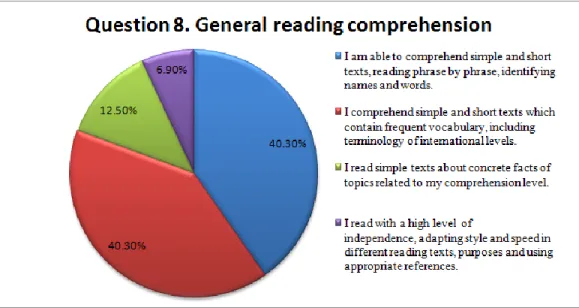
(18) SELF-ASSESSMENT TO IMPROVE LITERAL READING COMPREHENSION at least ten students argued to have difficulties when reading a text; therefore there was no relation between their choices on the level and their arguments. In addition, in the diagnostic questionnaires as it is shown in Figure 1, a high percentage of students (40, 3%) reported to comprehend short and simple texts which contain frequent vocabulary, including a range of international terminology. Nonetheless, the diagnostic questionnaires also showed that 63% of students could hardly identify the main idea of a text. They also mentioned to have difficulties with connectors of cause and effect, but they stated being able to easily recognize connectors of sequence and contrast. The Pre- reading test also confirmed the problem, since most of the participants (72.5%) had a low level of literal reading comprehension in English since they got less than six correct answers; they especially had problems with the main idea, sequence of events, cause and effect and contrast of the facts. It demonstrates in a way, the lack of literal comprehension skills at the moment to read and in relation to the findings reported above, it was concluded that students were not aware of their own and real reading process. They considered having a basic or high level, but the test demonstrated they did not.. Figure 1. Participants’ reading comprehension performance perceptions. 5.
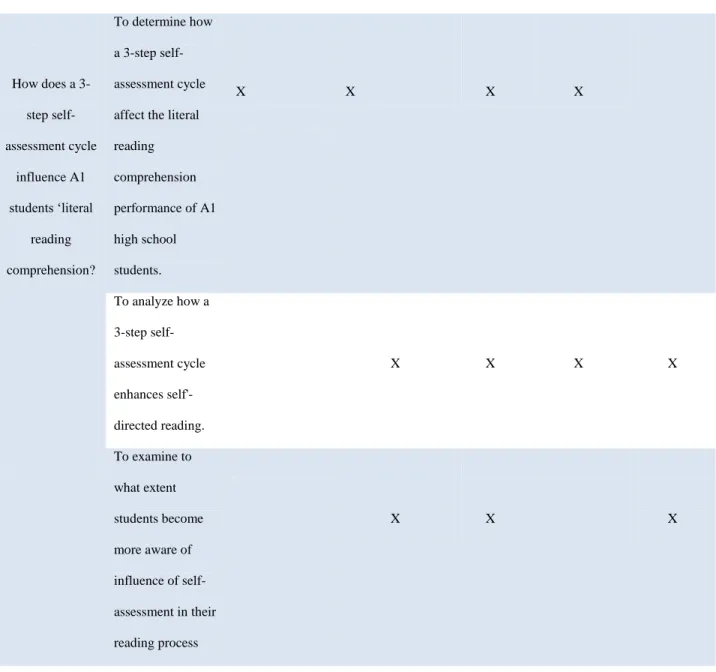
(19) SELF-ASSESSMENT TO IMPROVE LITERAL READING COMPREHENSION. 6. The researchers also identified in the analysis of the diagnostic questionnaires that students were not aware of their reading process since they did not have a clear concept and steps to selfassess their reading and have an active role in their learning. It was found that participants had common strategies they applied when reading, such as the use of the dictionary and re- reading; students were also able to mention the actions they carried out to read, but they did not realize their impact in the comprehension process. Moreover, they did not demonstrate knowledge of other kind of strategies and steps to succeed in a literal reading task. The students’ lack of knowledge about their reading process affected their levels of literal reading comprehension; that was the reason researchers were concerned about the students’ literal reading comprehension level overview and how to facilitate them the necessary strategies to become aware of their reading and play an active role in the process. Research Question Therefore, the following question led the current research: How does a 3-step self-assessment cycle influence A1 students’ literal reading comprehension?. Research Objectives The expected aims to achieve were: . To determine how a 3-step self-assessment cycle affect the literal reading comprehension performance of A1 high school students.. . To analyze how a 3-step self-assessment cycle enhance self-directed reading.. . To examine to what extent students become more aware of the influence of selfassessment in their reading process..
(20) SELF-ASSESSMENT TO IMPROVE LITERAL READING COMPREHENSION. 7. Rationale The current research study was conducted considering that the educational contexts of 21st century require teachers and learners assume a different role in the classroom. The teacherresearchers realized that more than transmitting information, they had to identify their learners’ needs to tackle specific problems in their English language classroom and look for new ways of teaching but, especially effective strategies for their learners to acquire new knowledge and be participants of the process. These alternatives were a possibility for learners to play an active role in their learning process and be provided with strategies that let them face situations in several contexts in and outside the classroom; in other words, autonomous learners qualified to solve problems. For this reason, the current project was carried out in two public schools where literal reading difficulties were identified in the high school students; teacher-researchers attempted to define strategies to improve this reading area and bring students and teachers the chance to deal with reading tasks from a different perspective. The reading skill is considered an important source of language input to improve linguistic patterns such as vocabulary, grammar, expressions, syntax, among others; as it is stated by Krashen and McQuillan, “studies confirm students who do L2 reading can read better, write better, spell better, have better grammatical competence, and have larger vocabulary in the target language” (as cited in Splangler and Mazzante, 2015, p. 1). However, in contrast to other language skills like speaking , according to Wren (2000), reading “is not a natural process”, citing as number one in his top ten myths influencing present-day reading instruction the idea that “learning to read is a natural process” (par. 1). On the contrary, it is a process that requires students’ determination to succeed and advance in the comprehension being aware of their strengths and weaknesses to set their own goals and strategies taking into account their needs and.
(21) SELF-ASSESSMENT TO IMPROVE LITERAL READING COMPREHENSION. 8. letting them assess their performance, assuming these roles they can scaffold their process to become self-directed readers. Usually, most of the learners are not aware of their abilities and potential to work by themselves to enrich their learning process, even though “self-directed learning allows learners to be more effective learners and social beings” (Abdullah, 2001, p.2). Regarding the identified needs of the participants in the reading skill, the process carried out with ninth and tenth graders was focused on strengthening students’ literal reading skills to let them recognize the information that is required at the moment of performing a reading task; at the same time to develop certain awareness of the reading process itself to achieve and success in comprehension, and foster independent reading processes. Hence, developing literal reading sub-skills in the beginners learners is the basis to start the scaffolding process in the reading comprehension; in literal reading tasks students acknowledged the benefits of locating specific information, identifying main ideas and following sequence events among others, to facilitate learners’ understanding and comprehension, taking into account their own reading pace and performance; it was a way to contribute to the development of inferential and evaluative reading sub-skills as it is mentioned by Flores, Moran & Orzo (2004), “to aid young learners in the inferential comprehension of the text, students are taught to identify key elements in their literal understanding of the text" (p.4). Moreover, the self-assessment cycle strategy provided students with a set of reading tools and training to facilitate the literal reading comprehension, and boosted self- reflection upon their performance to give students the chance to keep their processes by redefining their reading goals based on their own reading needs, learning styles and pace, as is stated in Afflerbach (2014) “accurate self-assessment gives readers a sense of control and contributes to reading.
(22) SELF-ASSESSMENT TO IMPROVE LITERAL READING COMPREHENSION. 9. achievement; both foster high self-efficacy. Students’ awareness of past performances and the challenges they overcome lead them to approach reading with a ‘can-do’ attitude” (p. 30). The purpose of this research was to promote self- assessment as a strategy that “put students in a good position to control and succeed at reading” (Afflerbach (2014) p.30); therefore, students could play an active role making decisions on their performance and stating their own reading goals. They were also able to assess themselves by reflecting on their own actions and in that way to modify the perception towards reading, and once the process was acquired by students, they could become more self- directed learners and readers as well. To this regard, English language teachers may implement this strategy to guide their practices in a different direction by using self- assessment to reach and promote better environments for learning. It is an opportunity to give students control of their learning process, and demonstrate how students can be engaged themselves in their learning processes by assuming an independent role. The strategy suggested in this research report could also be seen as an opportunity for schools that want to implement news strategies that take advantage of the learners’ difficulties and needs regarding reading in the foreign language; considering self-assessment as a cyclical process could also be an strategy that teachers from other subjects could implement to reinforce reading not only in English as a foreign language but in their mother tongue to improve comprehension and promote language learning autonomy. Furthermore, it can be shared and replied in different contexts with similar features, since just some research about the literal reading comprehension and the use of self-assessment as a cyclical process has been carried out..
(23) SELF-ASSESSMENT TO IMPROVE LITERAL READING COMPREHENSION. 10. Theoretical Framework The three main constructs that led the current study -literal reading comprehension, self directed reading and self-assessment- are introduced in this section, highlighting their importance and how they were managed for the purposes of the research. Moreover, the related research literature on the main constructs is further presented and analyzed in order to review what has been studied in the field in the national and international contexts and determine the gap that supports this project. Reading Comprehension Reading skill plays an essential role in the foreign language learning process, as a way to facilitate knowledge of the language and develop essential competencies to produce texts. AlJawi (2010) mentions that “a rich exposure to listening and reading is required to attain mastery and proficiency in natural production” (p. 2). As defined in Urquhart & Weir (2013), “reading is the process of receiving and interpreting information encoded in language form via the medium of print” (p. 22). However, reading does not only imply to decode a set of symbols; it goes beyond and requires other cognitive process which let learners move towards comprehension. According to Koda (2004) “comprehension occurs when the reader extracts and integrates various information from the text and combines it with what is already known” (p.4). Additionally, this process also demands from the reader a set of skills which facilitate comprehension of the text, since “comprehension is not a unitary phenomenon, but rather a family of skills and activities” as Kendeou, van den Broek and White (2006, p. 28) concluded from Kintsch and Kintsch, (2005); Rapp and van den Broek, (2005) and van den Broek et al. (2005)..
(24) SELF-ASSESSMENT TO IMPROVE LITERAL READING COMPREHENSION. 11. Besides, the action of decoding, reading comprehension is also determined by the reading goals and the kind of activities readers face, how they manage their attitudes and aptitudes towards the comprehension of the text and the accomplishment of specific goals. “Reading comprehension results when the reader knows which skills and strategies are appropriate for the type of text, and understands how to apply them to accomplish the reading purpose” (The National Capital , 2004). Related to this, using the Bloom’s taxonomy as a departure point to explain the different categories or activities that students can carry out in order to comprehend a text, Barrett (as cited in Munro, 2010) proposed five levels of reading: the literal comprehension, reorganization, inferential comprehension, evaluation, and appreciation. Nevertheless, these categories have been reduced in some cases to three levels of comprehension: literal, inferential and evaluative. According to Kintsch “different levels of reading ability, different purposes for reading, and different types of texts (or text genres) being read will also lead to more emphasis (as cited in Grabe, 2008, p.46 ). Thus, literal reading comprehension may be considered as the starting point for beginner readers to scaffold inferential and evaluative comprehension. Literal reading comprehension. Taking into consideration that the reading comprehension process involves several levels of comprehension that correspond to the kind of cognitive skills the learner carries out during reading , it is necessary to consider the initial level which is usually demanded as the first step to scaffold subsequent levels, since “a certain level of literal understanding provides an essential basis for the analytical and cognitive activities that facilitate a higher level of comprehension” (Ismail, Petras, Mohamed & Eng, 2015, p. 47). Literal reading comprehension is the basis in which students identify and develop their initial literal reading subskills to facilitate the students´ recognition of information and details that are presented in the text, and help them reach more complex levels of understanding. Based on Barrett's taxonomy,.
(25) SELF-ASSESSMENT TO IMPROVE LITERAL READING COMPREHENSION. 12. “Literal comprehension focuses on ideas and information which are explicitly stated in the selection. Purposes for reading and teacher’s questions designed to elicit responses at this level may range from simple to complex. A simple task in literal comprehension may be the recognition or recall of a single fact or incident. A more complex task might be the recognition or recall or a series of facts or the sequencing of incidents in a reading selection” (Munro, 2010). Literal comprehension requires scaffolding students in a set of literal sub-skills which let them comprehend information from a text such as -specific information, main idea, sequence, comparison, cause and effect- each sub-skill has a different purpose and definition to contribute to literal reading understanding. Literal Comprehension Sub-skills Students are required to develop the following sub-skills for literal reading understanding as they are defined by Munro (2010) based on Barrett’s taxonomy: Specific information. The student is required to locate or identify facts such as the names of the characters, the time of the story, or the place of the story (or only about any other kind of explicit fact or detail requiring literal comprehension.) Main Idea. The student is asked to locate or identify an explicit statement in or from a selection which is the main idea of a paragraph or a larger portion of the selection. Sequence of events. The student is required to locate or identify the order of incidents or actions explicitly stated in the selection..
(26) SELF-ASSESSMENT TO IMPROVE LITERAL READING COMPREHENSION. 13. Comparison. Seeing likenesses and differences, seeing relationships, and making comparisons between characters, incidents, and situations are fairly synonymous at these levels. Cause and effect. The student in this instance is required to locate or identify the explicitly stated reasons for certain happenings or actions in the selection. (Cause and effect are not restricted to motivations and interests. For example, there are cause and effect relationships which are inorganic.) For the purpose of this study, considering the concepts of reading, reading comprehension and Barrett's taxonomy, the participants’ scaffolding was oriented to the practice of the above five literal comprehension sub-skills. Their literal reading comprehension was addressed in terms of accuracy to answer questions which took into account the sub-skills and the average time they spend in the whole reading process. From Self-Directed Learning to Self-Directed Reading The concept of self- directedness is a key definition to start explaining the process of involving students in the path of self-directed reading. Some principles are adapted and adopted from the theory of Self- Directed Learning (SDL) to build up a concept that allows students recognize the self- assessment cycle as a meaningful strategy, which implies to set their reading goals and monitor them, for their own independent literal reading comprehension process in and outside the classroom. Becoming a self- directed learner requires a strategy in which students play an active role in the process of learning and their individualities - learning styles, rhythms of learning and necessities – lead their main objective; they also discover how to achieve and success in learning.
(27) SELF-ASSESSMENT TO IMPROVE LITERAL READING COMPREHENSION. 14. English as a foreign language. In the 1970’s Malcom Knowles defined Self- directed Learning (SDL) as “ a process by which individuals take the initiative, with or without the assistance of others, in diagnosing their learning needs, formulating learning goals, identify human and material resources for learning, choosing and implement appropriate learning strategies, and evaluating learning outcomes”(as cited in Smith, 2002, para.36) and although it was a concept initially developed as part of andragogy (adults education) it has broadened its limits to young learners and many teachers are interested in challenging education by promoting students’ awareness about themselves as a strategy to affect their academic outcomes and learning processes. Abdullah (2001) affirms “self-directed learning, which has its roots in adult education, is an approach that has also been tried with learners in elementary and secondary schools” (p.2). Over years, several authors cited in Beard (2011) like Kasworm,1983; Brockett & Hiemstra,1991; and Gibbons, 2002 have defined the self-directed learning concept, considering it as a complex evolving process where learners assume the main responsibility for the learning experience and where the instructional process as the internal characteristics of the learners play an essential and active role. Thus, taking into account the setting and needs of the population selected for the study, the self-directed learning concept was purposely directed to self-directed reading and it was considered as an opportunity for learners to be trained in a self-assessment cycle that allowed them to be active subjects of the reading process by reflecting about themselves and in which they could discover their own strategies to facilitate their literal reading comprehension..
(28) SELF-ASSESSMENT TO IMPROVE LITERAL READING COMPREHENSION. 15. The self-directed learning model considered for this research to guide learners towards selfdirected reading is the one proposed by Grow in 1991. As Table 1 shows, the Grow’s selfdirected learning model suggests four different stages in which the teachers’ role reduces the degrees of authority and support. The students’ role moves from being dependent on the teacher to be self-directed. Initially, teachers start the process being the authority; then they delegate more responsibility on the learners during each stage, to the point that students are able to work independently, along the stages student’s degrees of independent work appear and teachers’ role in terms of support decrease. In terms of this research, the model was adapted considering the sequence of the stages to scaffold self- directed reading in which the attempt was to move participants from dependent reading stages to more self- directed reading and also to affect the teachers’ practice in the classroom. Table 1. The Staged Self- Directed Learning Model Stage. Student. Teacher. Example. Stage 1. Dependent. Authority Coach. Coaching with immediate feedback. Drill. Informational lecture. Overcoming deficiencies and resistance. Stage 2. Interested. Motivator, Guide. Inspiring lecture plus guided discussion. Goalsetting and learning strategies.. Stage 3. Involved. Facilitador. Discussion facilitated by teacher who participates as equal. Seminar. Group project.. Stage 4. Self- directed. Consultant, Delegator. Internship, dissertation, individual work or selfdirected study-group.. Grow, G. (1991, p. 129).. Becoming a self- directed learner requires a plan in which there is a set stages to follow a sequence, in this process students reflect constantly to become aware of their needs and possible.
(29) SELF-ASSESSMENT TO IMPROVE LITERAL READING COMPREHENSION. 16. solutions to succeed in a determined task, Smith (2002) confirms that Self-directed Learning (SDL) is “the opportunity for reflection and exploration” (para. 42). Additionally, authors like Knowles have considered self-directed learning in a linear set of steps, however, others like Danis (1992) Merriam and Caffarella (1999) and Matuszowicz (1996) proposed models that not only include the linear Knowles’ steps towards autonomy but also elements like learning strategies, phases of the learning process, the content, the learner and the instructional design (as cited in Khodabandehlou, Jahandar, Seyedi & Mousavi, 2012, p.5-6). In this regard, one important contribution about self-directed learning, and related to the present study, was done by Victori and Lockhart who consider that self-direction fosters metacognition in a cyclic diagnosis that allows learners to determine their objectives, strategies, and activities according to their own needs (as cited in Khodabandehlou et al., 2012, p.5). It has been considered that thinking about the learning process through metacognitive strategies is one of the successful factors for learners’ independence. The role of metacognition in this research was considered from a cyclical view where participants were expected to become self-directed readers involving them in a learner- centered classroom where they assumed the main role in the reading process. Based on O’Malley, Chamot, Stewner-Manzanares, Kupper & Russo’s set of metacognitive strategies, the current. research attempted to adopt them as part the self-directed reading through the self-assessment cycle in which students learnt how to plan and set achievable reading goals as well as monitor their process, progress and performance in their literal reading comprehension (as cited in Zare, 2012, p. 164). In this way, the self- directed readers became aware of how they were learning and improving their literal reading comprehension..
(30) SELF-ASSESSMENT TO IMPROVE LITERAL READING COMPREHENSION. 17. Self-assessment. Different views and concepts of assessment, self- assessment and selfgrading carry out in learning as a foreign language provides information and clarify about the key construct self- assessment and the cyclical process that address students to promote SD reading and awareness in the literal reading comprehension performance. Assessment is an essential strategy in the classroom that focuses not only in a grade for a certain task or a final result but also in the process carried out by students from the beginning to the end. It is currently seen from the formative and summative views about students’ performance; according to Crooks, assessment is “any process that provides information about the thinking, achievement or progress of students” (2001, par.1), which is contrasted with the traditional assessment practices. Boud (2003) affirms that “assessment was related to experiences of failure, feelings of unfairness when being assessed, increasing doubts about the validity of the judgments of others, and a slow dawning that it was not others whom I should be satisfied in my learning endeavors, but myself ” (p.3). Now, having in mind these definitions and the importance of assessment in the academic life, learners should not face it only as the judgments of a particular production in which it may get positive and negative perceptions from others. It is relevant to mention that the focus of this research was to give students voice in the reading assessment process in which they could recognize and overcome difficulties. Thus, learners may realize of playing an active role in the assessment process which did not only involve numbers as a result, but it might affect the way of learning by getting students familiar with the reflective practice upon their own processes, through the self- assessment cycle as a self-directed reading strategy to improve their literal reading comprehension. Becoming a self-directed reader requires learners to develop awareness of themselves and an important step is boosting reflection on the literal reading performance as the starting point of.
(31) SELF-ASSESSMENT TO IMPROVE LITERAL READING COMPREHENSION. 18. self- assessment. Rodríguez (2007) states that “self-assessment practices, hence, should be a space in which reflection becomes the most important aspect to be considered in the hard process of learning English as a foreign language” (p. 231). In terms of reading the concept of selfassessment fosters students’ acknowledgment of their own capabilities to overcome reading difficulties in every reading task with the aim to reach and redefine their reading goals and succeed in the process. Afflerbach (2014) describes that “Self-assessment involves strategies that put students in a good position to control and succeed at reading. Consider what successful readers do: They plan their reading, set goals, gauge their ongoing progress at constructing meaning, keep an eye out for difficulty and blockages, determine the nature of difficulties when encountered, address and fix them, and get back on track. They continually assess their work in relation to their goals, which includes comprehension and the use of the knowledge they gain from reading” (p.30). Additional to this, it is important to clarify that self-assessment is not self-grading (although the latter may be part of the former). Self-grading, by allowing students to determine their own grades for some classroom work, purports to encourage students to assume more responsibility for their learning process. But while this has been shown to be true for well-motivated students, McGeever reports that "others are motivated to take it easier and learn less and that these two tendencies pretty well balance one another off in the statistics” (as cited in LeBlanc, Painchaud, 1985, p. 674). From another viewpoint of self-grading, Warne specifies that “self- assessment seems to be a tool well- suited to helping learners to develop appropriate goals and self- regulate or monitor their efforts” (as cited in Meihami & Varmaghani, 2013, p.42) and it is not only being considered just related to numbers or grades..
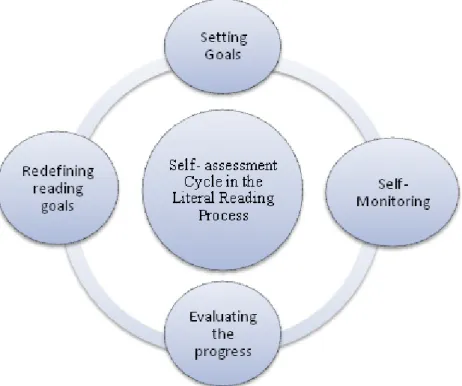
(32) SELF-ASSESSMENT TO IMPROVE LITERAL READING COMPREHENSION. 19. Based on the foregoing statements, self- assessment is a constant process to promote awareness and achievement in the literal reading development and it is defined as a cycle in which students have the opportunity to create self- assessment routines, which let them make decisions to improve the language learning. For the purposes of this research, the selfassessment cycle was the way to encourage learners to sort out what sub-skills of the literal reading they had developed, and then make adjustments so that their comprehension performance came closer to reach the chosen goals; it also involved that students became familiar with a reflective exercise to succeed in the literal reading comprehension and independent reading. The self-assessment cycle as a strategy was seen by researchers as a way to promote literal reading comprehension determined by some issues which guided the learners to accomplish a specific task. In this case in a reading task, the cycle of self- assessment consisted of learners’ scaffolding in discovering their weaknesses and strengths, setting their own reading goals, monitoring their performance during the reading process and assessing their results. Goal Setting. In this section, it is compulsory to define the importance of setting goals and its influence in the reading tasks. According to the Oxford English Dictionary, a goal is: ‘the object to which effort or ambition is directed; the destination of a (more or less laborious) journey; an end or result towards which behavior is consciously or unconsciously directed’. Based on research, goal setting in language learning is commonly regarded as one of the strategies that encourage learner’s autonomy and it is defined as the process of establishing clear and usable targets, or objectives, for learning (Moeller, Theiller & Wu, 2012, p.153). In the case of the present research, setting goals was a step in the self- assessment cycle, which attempted to focus students on the accomplishment of a literal reading task. Students had to determine their reading.
(33) SELF-ASSESSMENT TO IMPROVE LITERAL READING COMPREHENSION. 20. challenges and then reflect on them, then redefine their goals for future reading tasks. The departure point to become a self-directed learner and the first step in the self- assessment cycle is to identify their own learning strengths and weaknesses that later on would lead them to set clear learning goals to succeed in the reading skill and language learning. Collins & Hammond (2004) conclude that “once existing strengths and weaknesses have been identified, learners are ready to draft learning agreements which they will specify what learning must be done to meet the learning needs they have diagnosed” (p.128). Self-monitoring. The second concept that is important to define is self- monitoring as part of the self- assessment cycle while students read in English. According to Ylvisaker (2006) “Selfmonitoring is the process of observing one's behavior and evaluating it in relation to goals” (par. 1), through self-monitoring learners are able to verify what they understand, identify comprehension problems, make appropriate decisions to solve them and evaluate their progress. In the self-assessment cycle, self-monitoring allows learners to check their comprehension, being aware of specific literal reading sub-skills, difficulties that do not allow them to reach the needed comprehension and finding appropriate solutions; therefore, “while they are reading, they might monitor understanding by adjusting their reading speed to fit the difficulty of the text or use their “fix-up” strategies to reread, read ahead, or identify the area of confusion” (Guisinguer, 2016). Students reflect upon their performance, taking into account the established reading goal and redefine them for subsequently reading session completing the self-assessment cycle. Through the self-assessment cycle, students get familiar with their learning and reading processes; it means that in the class students can plan their own goals, set their own goals and monitor their progress in terms of weaknesses and strengths as a cyclical and come and go.
(34) SELF-ASSESSMENT TO IMPROVE LITERAL READING COMPREHENSION. 21. process to decide if they move to another level; otherwise, to rethink goals to better accomplish the reading task and thus identify their own pace and strategies to succeed. Now, that the main constructs that led this research study have been presented in the light of theory, the next section presents how they have been considered in the framework of research developed in the national and international contexts. An analysis of the kind of problems addressed, methodologies and results obtained are described. State of the Art Even though, a considerable amount of research literature from national and international researchers is focused on improving the general reading comprehension and its sub-skills as a matter to foster learners’ autonomy, little research about literal reading comprehension performance and self-assessment practices has been conducted. In the national context, the specific topic of self-assessment has not been widely studied in relation to reading comprehension and self-directedness. However, research articles published in languages, applied linguistics and English teachers’ journals in Colombia provided literature where the self-assessment was included during different stages and with different purposes. For instance, Torres (2009) included it during the implementation phase looking for improvement of the general language level, Rodríguez (2007) focused it on the improvement of another language skill or like Mendieta et al., (2015) and Lopera, (2015) who used it as a final stage for general reading comprehension development. These studies demonstrated a positive effect of selfassessment on reading comprehension, self-confidence and acquisition of reading strategies (Mendieta et al, 2015, Lopera, 2015), listening comprehension receptive skill (Rodríguez, 2007) and critical thinking skills (Torres, 2009). In relation to self-directed learning, Mendieta et al. (2015), Torres (2009) and Lopera (2015) found that alternative assessment practices like self-.
(35) SELF-ASSESSMENT TO IMPROVE LITERAL READING COMPREHENSION. 22. assessment addressed foreign language learners to be aware of the learning process and selfdirection stages like identifying their weaknesses and strengths, goal setting and self-monitoring. From another perspective, Muñoz (2009) who carried out a research study with English teachers found there is a teachers’ lack of qualitative and alternative assessment practices for facilitating reading comprehension skills and concluded teachers need to introduce them to current EFL reading comprehension programs. It is also remarkable, the attempts novice researchers have carried out in different private and public contexts to conduct studies promoting learners’ self-direction and general reading comprehension as a requirement for their master’s programs degree. For instance, students enrolled on the METSDL (Master in English Teaching for Self-directed Learning) have shown a particular interest in the implementation of cognitive reading strategies (Romero, 2013; Moreno, 2013); or the metacognitive ones (Méndez, Ortiz & Sánchez, 2014) through the use of technological resources (Romero, 2013; Moreno, 2013). Their findings showed that these strategies contributed to foster autonomy and to obtain positive effects in the reading comprehension processes. Although, self-directed learning is considered a key goal for these novice researchers, it is only promoted considering some aspects, activities or principles of the self-direction and there are not clear stages to scaffold learners to achieve it. On the other hand, only Romero (2013) considered learners’ reflection through the use of students’ logs. Nevertheless, self-assessment, that is a key practice to become self-directed learners in the reading process, is not taken into account either as a stage or as a process. Other studies focused on self-assessment and its impact on reading comprehension has been published in international languages or applied linguistics journals within the last 6 years. Selfassessment strategy has been considered in some of these international studies.
(36) SELF-ASSESSMENT TO IMPROVE LITERAL READING COMPREHENSION. 23. (Baniabdelrahman, 2010; Shahrakipour, 2014; Shams and Tavakoli, 2014) to improve reading comprehension. In spite of being considered just at the end of reading activities (Baniabdelrahman, 2010; Shams and Tavakoli, 2014) or in the whole process that involves a cyclical practice (Shahrakipour, 2014), in two of these studies, the researchers found the selfassessment strategy had a positive effect on the improvement of general reading comprehension. In contrast, the results obtained by Shams and Tavakoli (2014) showed just a slight improvement of the reading skill, however according to the researchers’ analysis the time of intervention was not enough to completely develop the strategy. From a different perspective, Al-ghazo’s (2015) study developed with teachers argues that self-assessment is not a frequent method to assess students’ reading comprehension ability as a way to discover needs that strength the reading process and the learners’ autonomy. Taking into account the foregoing national and international research, teacher-researchers identified the positive effects of self-assessment in the general reading comprehension; then, the current research attempted to introduce the self- assessment cycle as a strategy to encourage learners to become more effective and self-directed readers (SDR). For the purpose of this research and in contrast with the previous studies, the concept of self-assessment became a cyclical strategy and not a final and isolated stage in the reading comprehension process. Considering the theory and the analysis of related research on the topic, decisions made by researchers in relation to specific features of the study are presented and supported in the next section. They introduce the type of research, context, participants and instruments..
(37) SELF-ASSESSMENT TO IMPROVE LITERAL READING COMPREHENSION. 24. Research Design This section describes the type of research that was considered for this study, the context where the research took place, the participants’ characteristics, the researchers’ role, ethical considerations, the instruments used to collect data and the procedures to validate data.. Type of study The section presents the kind of research approach adopted to carry out the current study. This study was conducted under the action research design on account of the advantages it brought for the teacher-researchers due to the fact that teachers usually reflect on their practices looking for new opportunities to improve teaching and learning processes in their classrooms but, as Chamot, Barnhardt & Dirstine (2011) state teachers in constant reflection, unfortunately do not keep a careful and systematic track of those reflections (p.1). Action research was an opportunity for the teachers who carried out this project to reflect about their teaching and their students´ learning situations in the language classroom. Besides, it allowed teachers to develop “a systematic documented inquiry … and to gain understanding of teaching and learning within one’s classroom and to use that knowledge to increase teaching efficacy/student learning” (Chamot, Barnhardt & Dirstine, 2011, p.1).That is why, teacher-researchers considered the action research and its principles as the appropriate type of research to tackle the specific difficulties on the literal reading comprehension and participants’ self-directed reading. Other benefit that this kind of research offered to the project was it took place in the real teaching-learning environment and affected it directly, since as Wallace mentions “some of the most beneficial things about teacher action research are that it is small scale, contextualized, localized, and aimed at discovering, developing, or monitoring changes to practice” (as cited in Haley, Midgely, Ortiz, Romano, Ashworth & Seewald, 2005, p.2). This type of research let.
(38) SELF-ASSESSMENT TO IMPROVE LITERAL READING COMPREHENSION. 25. teacher-researchers determine through constant reflection appropriate solutions for their real situations in the language classroom to improve the teaching- learning practices which resulted in concrete actions that were implemented in their classrooms, as Haley et al. (2005) suggested. The action research cyclical process suggests stages that were used to organize and systematize the research experiences. Considering that action research “generally involves inquiring into one's own practice through a process of self- monitoring that generally includes entering a cycle of planning, acting, observing and reflecting on an issue or problem in order to improve practice” (Farrel, 2007, p. 1), this research was planned, designed and implemented in a continuous monitoring process following the research cycle considering five main stages as follows: . Initial stage: identification of the problem. Teacher-researchers identified a problematic situation in the language classroom and gathered evidence through characterization of the students and self-assessment perceptions questionnaires.. . Second stage: development of an action plan. The problem was refined; then an exhaustive literature revision related to the research focus was carried out in order to identify its status and the strategy that was to be implemented. In addition, a timeline was set to define actions and times. In this stage, a 10-session pedagogical intervention was planned to scaffold the learning of the strategy and to define the periods in which the instruments were to be applied.. . Third stage: instruments design and data collection. Five data gathering instruments were designed - diagnostic and closing questionnaires, literal reading tests, students’ reading journal, teachers’ classroom observation and focus group interview- and their.
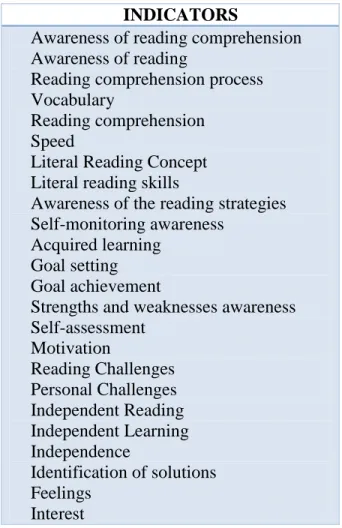
(39) SELF-ASSESSMENT TO IMPROVE LITERAL READING COMPREHENSION. 26. corresponding protocol to be administered. The instruments were applied in twelve different sessions to obtain quantitative and qualitative data. . Fourth stage: data analysis. Qualitative and quantitative data were digitized and organized in digital files to facilitate the analysis; due to the amount of information collected, strict records were kept in matrices. The researchers analyzed the data collected keeping in mind the research question and objectives previously set. Once the data were digitized, the researchers used codes to classify and categorize the data gathered to look for patterns and relationships within the collection of data. Then a number of categories was defined and data was organized in order to design graphical representations. The data allowed researcher to compare and contrast the findings in both schools.. . Fifth stage: setting conclusions. After analyzing the data, researchers reflected on the influence of the strategy implemented on the students’ literal reading comprehension. Based on the results obtained from the data analysis, the researchers stated the conclusions. They were organized and presented around each research objective. The final report was consolidated to present the findings.. From the beginning of the process, teacher-researchers constantly revised and adjust the action plan according to the needs and situations that emerged. Figure 2 shows the stages of the cycle considered to carry out this study:.
(40) SELF-ASSESSMENT TO IMPROVE LITERAL READING COMPREHENSION. 27. Identification of the problem. Setting conclusions. Data analysis. Development of an action plan. Instruments' design and data collection. Figure 2. Diagram of the Action Research Cycle adapted from Kolk, M. (2016). Taking into account that action research demands a constant cyclical reflection process, the researchers determined that not only quantitative data collected through questionnaires, pre and post-reading tests and students’ work could support the expected results of this research. Therefore, teacher-researchers considered necessary to obtain information from the students and the teachers during the process through several collection instruments like questionnaires, focus group interviews, teachers’ class observation, and students’ journals. It means, this action research used a mixed method for data collection and analysis which according to Dornyei “involves the collection or analysis of both quantitative and qualitative data in a single study with some attempts to integrate the two approaches at one or more stages of the research process” (as cited in Nunan & Bailey, 2008, p. 439). Context This research was carried out in two public schools in Bogota, Colombia: Marsella (School 1) and Floridablanca (School 2). Both schools tend to students from kindergarten to eleventh grade (K-11) and they have two shifts: morning (6:00 A.M. -12:00 P.M.) and afternoon (12:30-6:30.
(41) SELF-ASSESSMENT TO IMPROVE LITERAL READING COMPREHENSION. 28. P.M) in which different students and teachers attend. They have approximately 1500 students each one. In relation to the foreign language instruction, learners in these schools take four hours of English Foreign Language per week. The language curriculum is based on grammar and topics are taught considering some principles of the Communicative approach. Other conditions which are common for both schools are: the number of students per class, forty to forty-five students. Technology available: smart TVs, computers, tablets and internet connection; though, having access to them is very difficult since they are not enough for the whole population. Marsella IED This school is located in Marsella neighborhood, west part of Bogota. It was founded in 1967, its academic activities started with four classes of Primary school , secondary education was established some years later and pre-school was opened in 2015. This school educational project “Humanistic training and research skills development” is focused in the construction of the learners’ life project through humanism, the science and the research. Floridablanca IED This school is located in the North West side of the city. It has three headquarters: Rafael Pombo, Floridablanca I and Floridablanca II. This school was founded in 1991 and initially, it started with some grades of secondary school. Later in 1997, the other headquarters were added and the primary and secondary education was completed. Its institutional educational project is oriented to develop learners’ values and three specific subjects: accounting, information technology and English. Participants The groups selected for this study were students from tenth and ninth grade; their ages range between fourteen and sixteen years. Researchers took the decision to work with the whole.
(42) SELF-ASSESSMENT TO IMPROVE LITERAL READING COMPREHENSION. 29. population as a personal interest to follow the process of those students who presented a high and low level and to get an overall result in the heterogeneous group. Besides, considering the type of research carried out which looked for improving teaching and learning practices, teacherresearchers determined to take into account the different features and needs of the public school students. Initially, it was considered to carry out the study with classes conformed by 40 students each one. However, due to the absence of some students during the application of diagnostic questionnaires, pre-reading test or final gathering sessions, the first group was reduced to 35 and the second to 36 for the data analysis. The whole group was composed of 27 boys (38, 4%) and 44 girls (61.6%). Among the groups, there are students with different language proficiency levels that vary from very limited to poor knowledge of language; that according to the Common European Framework of Reference for Languages are considered in A1 level. The diagnostic questionnaire revealed that a great percentage of the students placed themselves at a low (20, 5%) or basic (52, 1%) level of language despite most of the learners have received English Foreign Language instruction during the elementary school, at least one hour per week. Only 15% of the learners have attended English lessons at private language institutions. Regarding students’ reading comprehension in both schools, 74 % of them agreed that reading in English is a very important skill to succeed in their academic life. However, they were asked about their English reading comprehension level and most of them (41.1%) considered that they are in the lowest reading comprehension level; it means they can read short texts, sentence by sentence and identify names, words, and phrases. Only 6, 8% of the group considered themselves at the highest reading comprehension level because they read in English with a high independence grade adapting the reading style and speed to different kind of texts..
Figure

+6

Documento similar
Government policy varies between nations and this guidance sets out the need for balanced decision-making about ways of working, and the ongoing safety considerations
Keywords: Metal mining conflicts, political ecology, politics of scale, environmental justice movement, social multi-criteria evaluation, consultations, Latin
Díaz Soto has raised the point about banning religious garb in the ―public space.‖ He states, ―for example, in most Spanish public Universities, there is a Catholic chapel
Even though the 1920s offered new employment opportunities in industries previously closed to women, often the women who took these jobs found themselves exploited.. No matter
It is generally believed the recitation of the seven or the ten reciters of the first, second and third century of Islam are valid and the Muslims are allowed to adopt either of
In the preparation of this report, the Venice Commission has relied on the comments of its rapporteurs; its recently adopted Report on Respect for Democracy, Human Rights and the Rule
Although some public journalism schools aim for greater social diversity in their student selection, as in the case of the Institute of Journalism of Bordeaux, it should be
In the “big picture” perspective of the recent years that we have described in Brazil, Spain, Portugal and Puerto Rico there are some similarities and important differences,
